America has always had a soft spot for the strange and the wonderfully absurd. Across the country, you can find half-buried cars, buildings shaped like animals, and art made entirely from corn.
Some of these places started as jokes, some as advertising stunts, and a few were built by one very determined person with a very unusual dream. What they all share is the remarkable ability to turn heads, earn loyal fans, and somehow outlast every prediction that they would be forgotten.
These landmarks did not become famous because they fit neatly into any category. They became famous because they refused to.
From a concrete troll hiding under a Seattle bridge to a six-story elephant standing near the Jersey Shore, each stop on this list proves that the strangest ideas often leave the most lasting mark. Get ready for a road trip you will not forget.
1. Cadillac Ranch, Amarillo, Texas
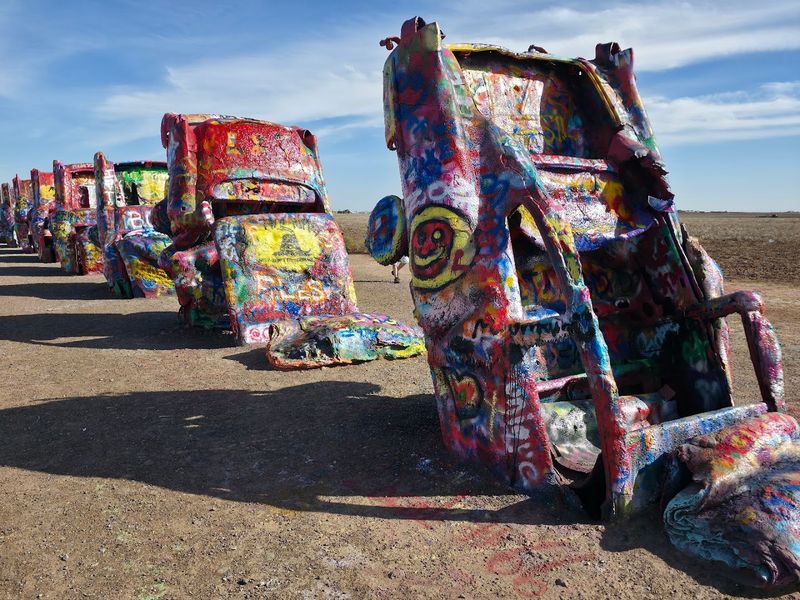
Ten Cadillacs are buried nose-down in a dusty Texas field, and somehow that became one of the most photographed roadside attractions in the entire country.
Installed in 1974 by an art group called Ant Farm, Cadillac Ranch was always meant to be a commentary on American car culture and the rise and fall of the tailfin era.
The cars are arranged in a neat diagonal row and spray-painted by thousands of visitors every single year. The artwork never stays the same for more than a few days.
Travelers pull over on Route 66, grab a can of paint, and add their own mark to the collection. The whole thing is free, open every day, and wonderfully unpretentious.
Few places in America let you become part of the art so easily.
2. The Corn Palace, Mitchell, South Dakota
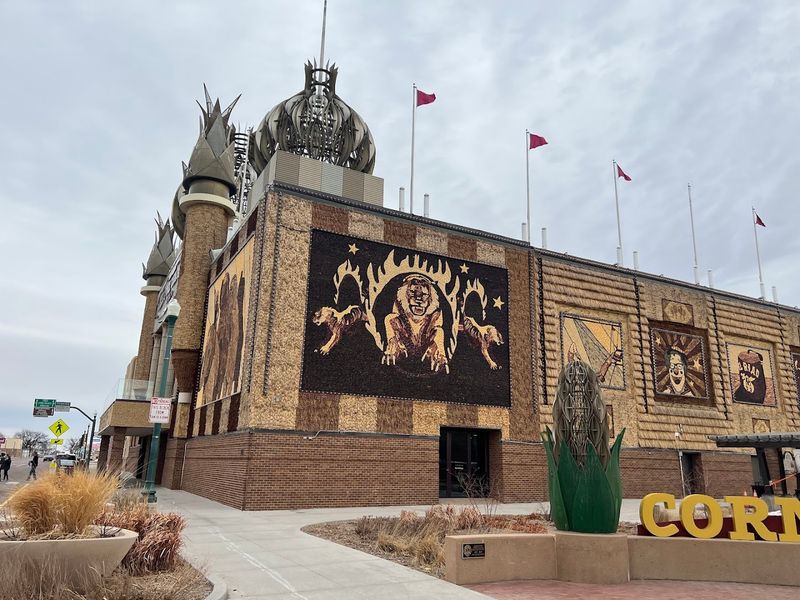
Every year, a team of artists climbs up the outside of a building and creates enormous murals using nothing but corn, grains, and native grasses.
The Corn Palace in Mitchell, South Dakota has been doing exactly this since the tradition began in 1892, when local farmers wanted to show off their harvest pride in the most dramatic way possible.
The designs change annually, which gives repeat visitors a genuine reason to return. Past themes have celebrated Native American heritage, South Dakota history, and American rural life.
Inside, the building functions as a concert hall, basketball arena, and festival venue throughout the year. It is not just a decoration; it is a working community center wrapped in agricultural art.
Somehow, the most absurd idea became one of South Dakota’s top tourist draws.
3. Salvation Mountain, Niland, California
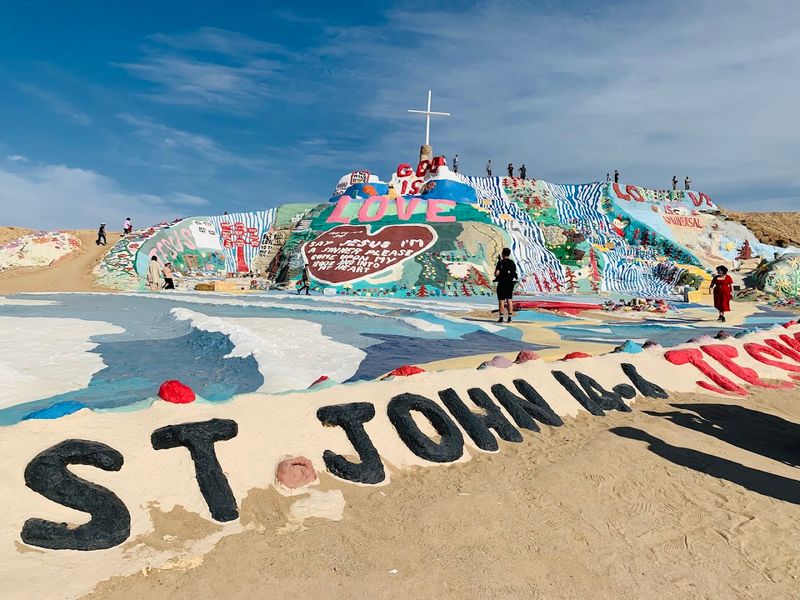
Leonard Knight spent 28 years building a mountain by hand in the California desert, and he did it using adobe clay, straw, and roughly half a million gallons of donated latex paint.
Salvation Mountain stands near the Salton Sea in Niland, California, and covers a natural hillside with Bible verses, painted flowers, trees, and scenes celebrating the message that God is love.
Knight worked alone for most of those decades, living in a truck nearby and accepting paint donations from visitors who stopped to watch the project grow.
Photographers and travelers now treat it as one of the American Southwest’s most striking examples of outsider art. Its explosion of color against the flat brown desert makes it impossible to ignore.
Knight passed away in 2014, but the mountain he built continues to attract visitors from around the world.
4. Lucy the Elephant, Margate City, New Jersey
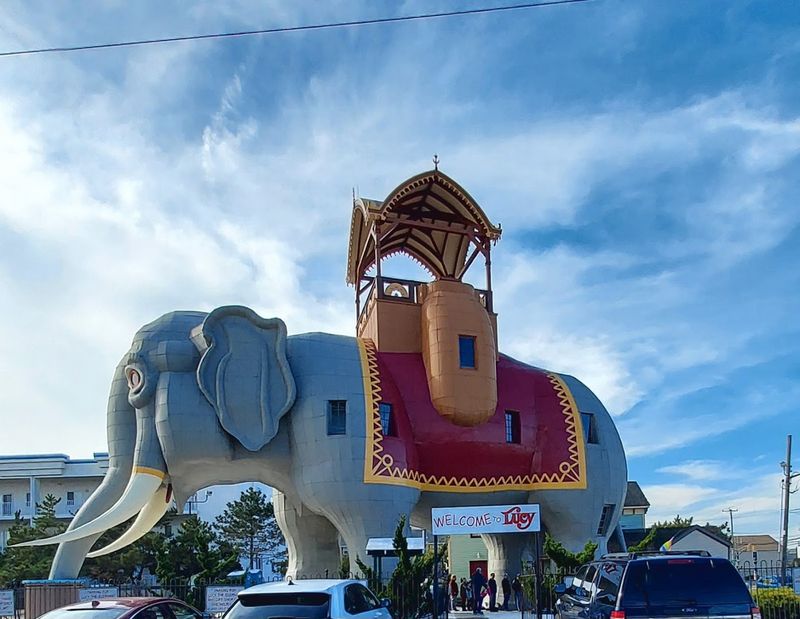
Built in 1881 as a real-estate marketing gimmick, Lucy the Elephant is a six-story wooden structure shaped like an elephant, and she has outlasted every single prediction of her demolition.
Developers James Lafferty designed her to attract buyers to the Margate City shoreline, and she worked. Over the following decades, Lucy served as a tavern, a private cottage, and eventually a full tourist attraction.
Visitors can climb a spiral staircase inside her body and reach the howdah on her back, which offers views of the surrounding neighborhood and the Atlantic Ocean beyond.
Preservationists saved Lucy from destruction in the 1970s and moved her to a safer location nearby. She was designated a National Historic Landmark in 1976.
More than 140 years after her construction, Lucy remains one of New Jersey’s most cheerfully bizarre landmarks.
5. Carhenge, Alliance, Nebraska
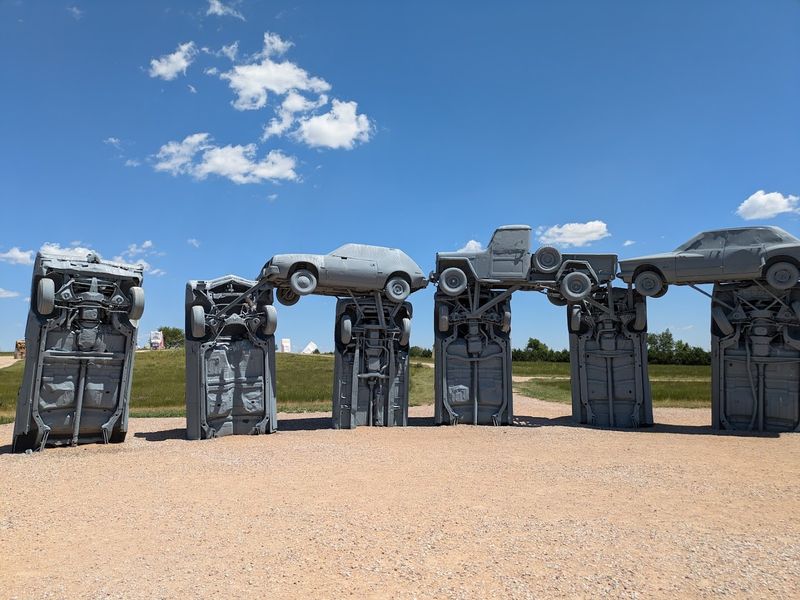
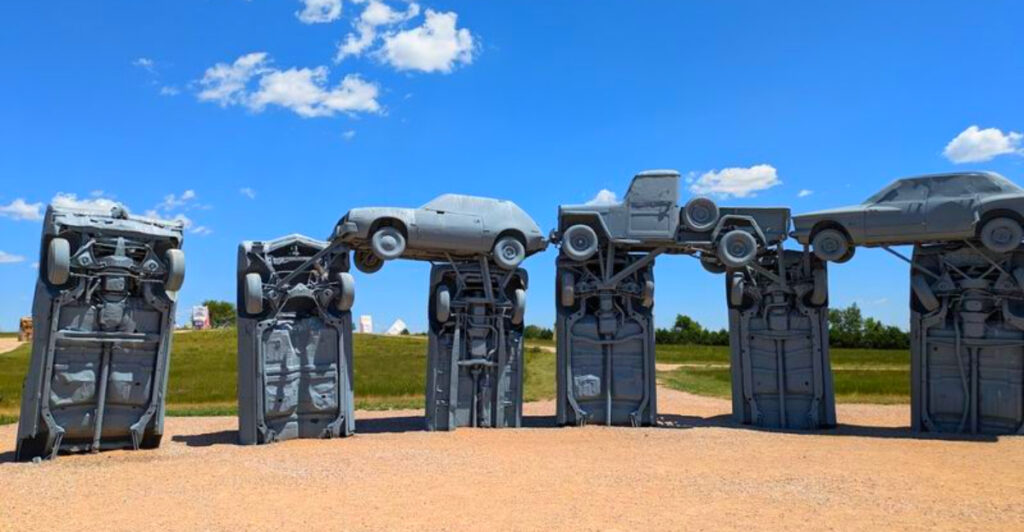
Artist Jim Reinders built a full-scale replica of England’s Stonehenge using 39 vintage American cars, painted every one of them gray, and dedicated the whole thing on the summer solstice in 1987.
Carhenge draws more than 60,000 visitors every year to Alliance, Nebraska, a town that otherwise sits quietly on the edge of the Great Plains.
The structure is remarkably accurate in its proportions. Reinders studied Stonehenge carefully before positioning each vehicle, some of which are partially buried upright in the ground.
A Car Art Reserve surrounds the main circle, featuring additional sculptures made from old car parts and scrap metal contributed over the years.
Carhenge is equal parts tribute, parody, and genuine artistic achievement. It proves that a great idea does not need expensive materials to become legendary.
6. The World’s Largest Ball of Twine, Cawker City, Kansas
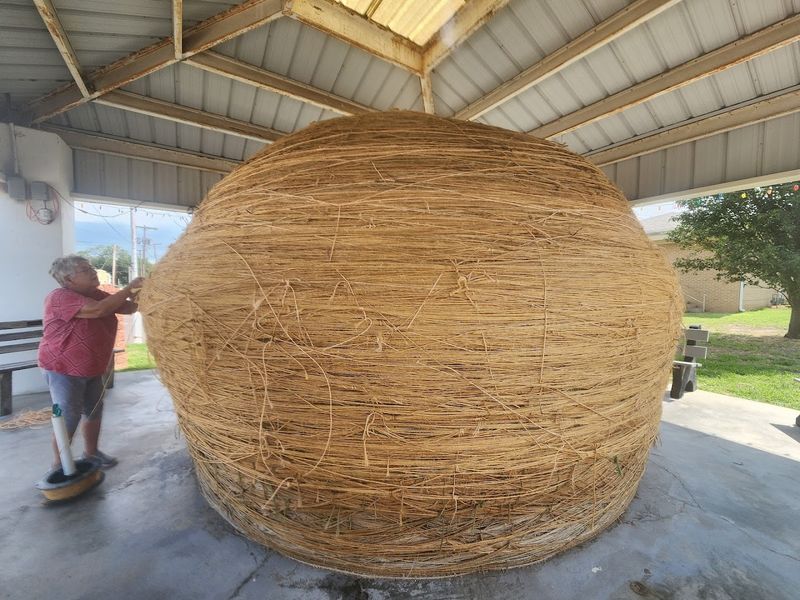
Frank Stoeber started wrapping twine in 1953, and by the time he donated his creation to the town of Cawker City, Kansas, the ball already weighed nearly 5,000 pounds.
The community adopted the project enthusiastically and kept it growing. An annual Twine-a-Thon festival invites visitors to add their own contribution, which means the ball is technically never finished.
Today it weighs several tons, measures over 40 feet in circumference, and contains millions of feet of sisal twine wrapped across decades of community effort.
Travelers who stop often admit they are not sure why they find it so satisfying to look at. That confusion is part of the experience.
The World’s Largest Ball of Twine is the kind of attraction that makes perfect sense only after you have already driven two hours out of your way to see it.
7. Foamhenge, Natural Bridge, Virginia
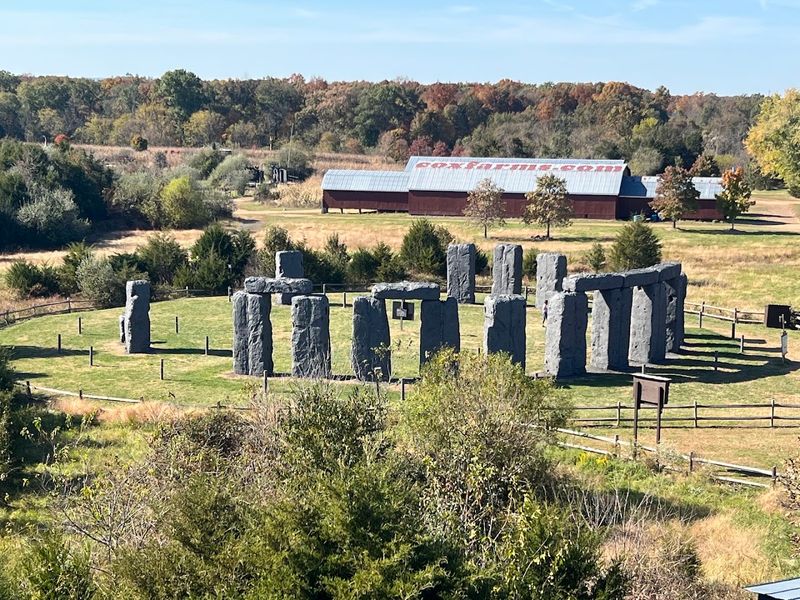
Mark Cline built a full-size Stonehenge replica out of Styrofoam in just three weeks, installed it in a Virginia field in 2004, and watched it become a roadside legend almost overnight.
Foamhenge was designed to look convincing from a distance, with carefully painted gray surfaces and accurate proportions based on the original British monument. Up close, the illusion collapsed in the best possible way.
Visitors loved the absurdity of standing next to a towering ancient-looking structure and tapping it to hear the hollow plastic thud underneath.
The installation was eventually dismantled and relocated, but its reputation lived on. Foamhenge proved that a sense of humor and a few hundred dollars worth of foam could create a genuinely memorable landmark.
Cline went on to build other quirky Virginia attractions, but Foamhenge remains his most celebrated creation.
8. The Mystery Spot, Santa Cruz, California
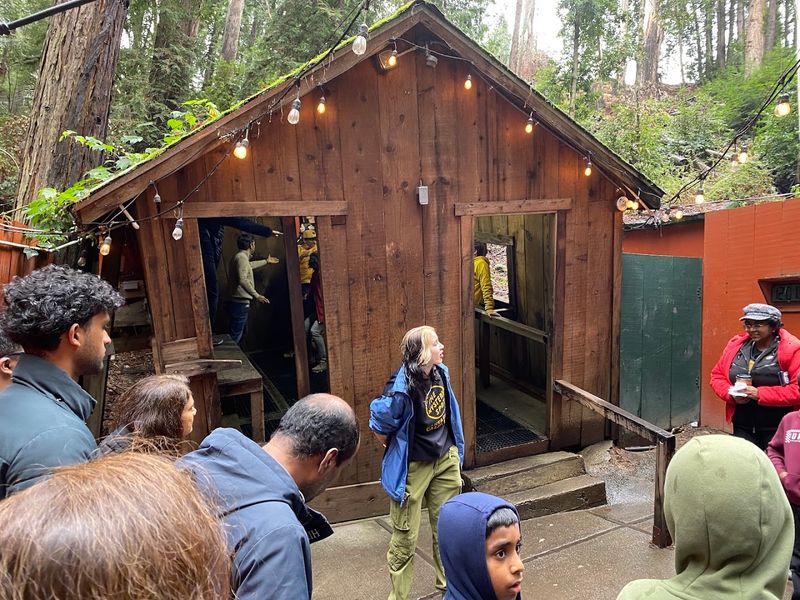
Since 1940, the Mystery Spot has been convincing tourists that the laws of physics simply do not apply within its boundaries, and business has been excellent ever since.
The attraction centers on a small tilted cabin on a hillside near Santa Cruz, California, where visitors appear to shrink or grow depending on where they stand, and balls seem to roll uphill on their own.
Scientists attribute the effects to a combination of tilted surfaces and the surrounding trees creating a disorienting visual frame. The Mystery Spot has never officially agreed with that explanation.
Tour guides deliver the experience with a straight face, letting visitors draw their own conclusions. The gift shop sells bumper stickers that have appeared on cars across the country for decades.
Whether you believe in the mystery or not, the confusion itself is completely genuine.
9. Bottle Tree Ranch, Oro Grande, California
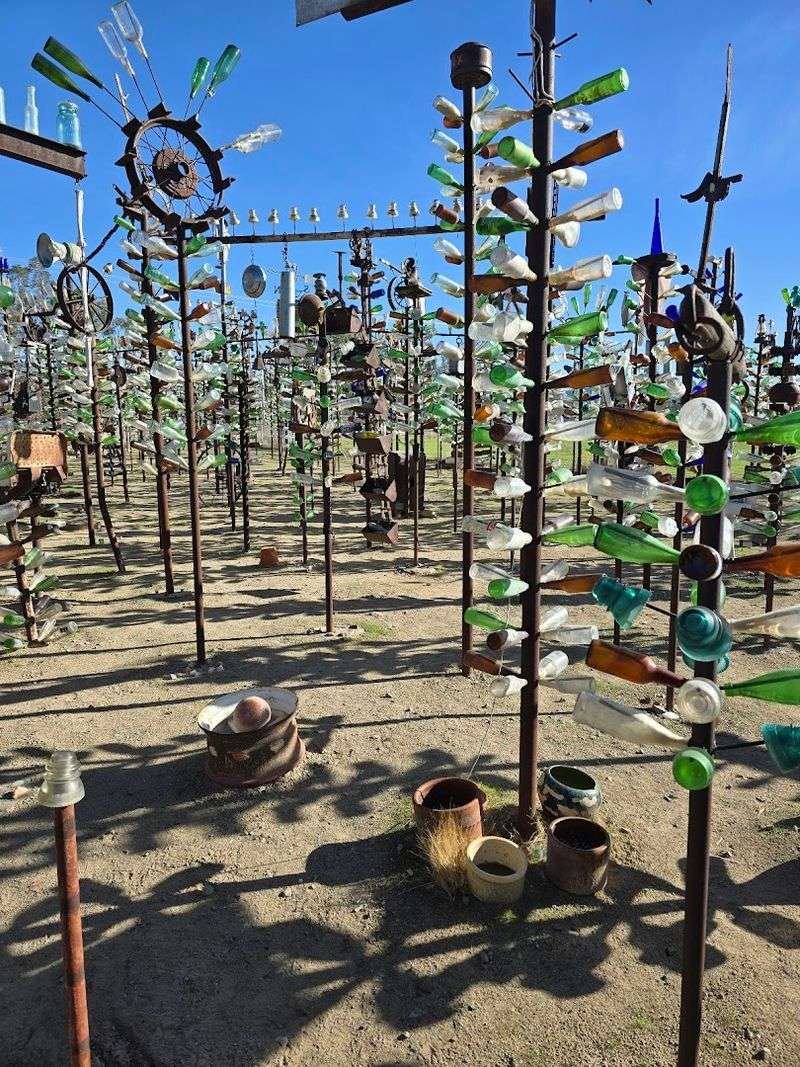
Elmer Long spent years collecting old bottles, metal scraps, and desert junk, then arranged them all into an elaborate outdoor sculpture garden along Route 66 in Oro Grande, California.
Thousands of glass bottles in every color are mounted on metal poles and rebar, creating a dense forest of recycled art that stretches across a large desert property.
Long built the ranch almost entirely by himself, adding new pieces regularly until his passing in 2019. His creation now stands as one of California’s most distinctive examples of folk art.
Travelers driving Route 66 often spot the glittering colors from a distance before they can identify what they are looking at. The closer you get, the more detail reveals itself.
Admission is free, and the ranch remains open to visitors who want to walk the winding paths between the sculptures.
10. The Big Duck, Flanders, New York
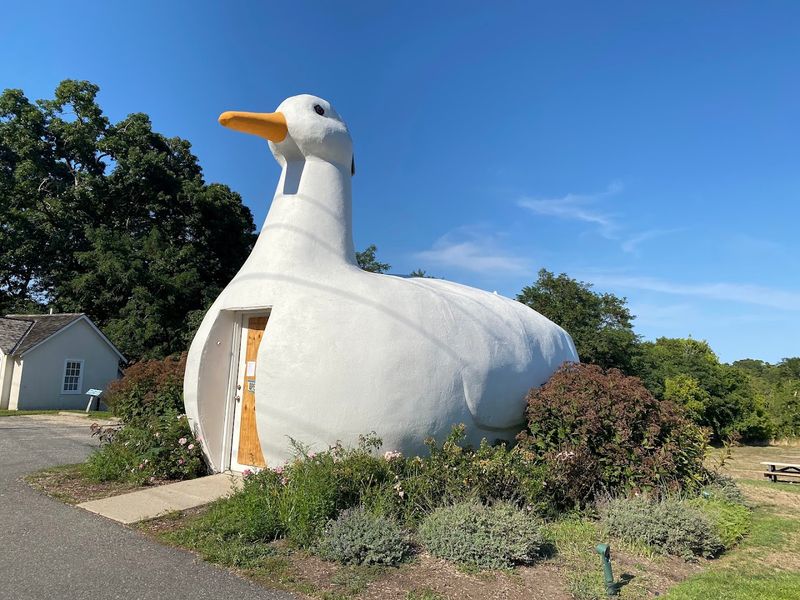
Long before roadside mascots became a marketing staple across America, a Long Island farmer built a giant duck-shaped building in 1931 and accidentally started an architectural movement.
Martin Maurer constructed the Big Duck to sell ducks and eggs from his farm in Flanders, New York. The building is shaped exactly like a Pekin duck, complete with red glass eyes that once lit up at night.
Architects later used the Big Duck as the defining example of a design concept called duck architecture, where a building’s shape communicates its purpose directly.
The structure was moved twice to protect it from development and is now a New York State Historic Landmark. A small gift shop operates inside the duck’s hollow body.
Few buildings in American history have had such an outsized influence on design theory while also selling poultry.
11. International Banana Museum, Mecca, California
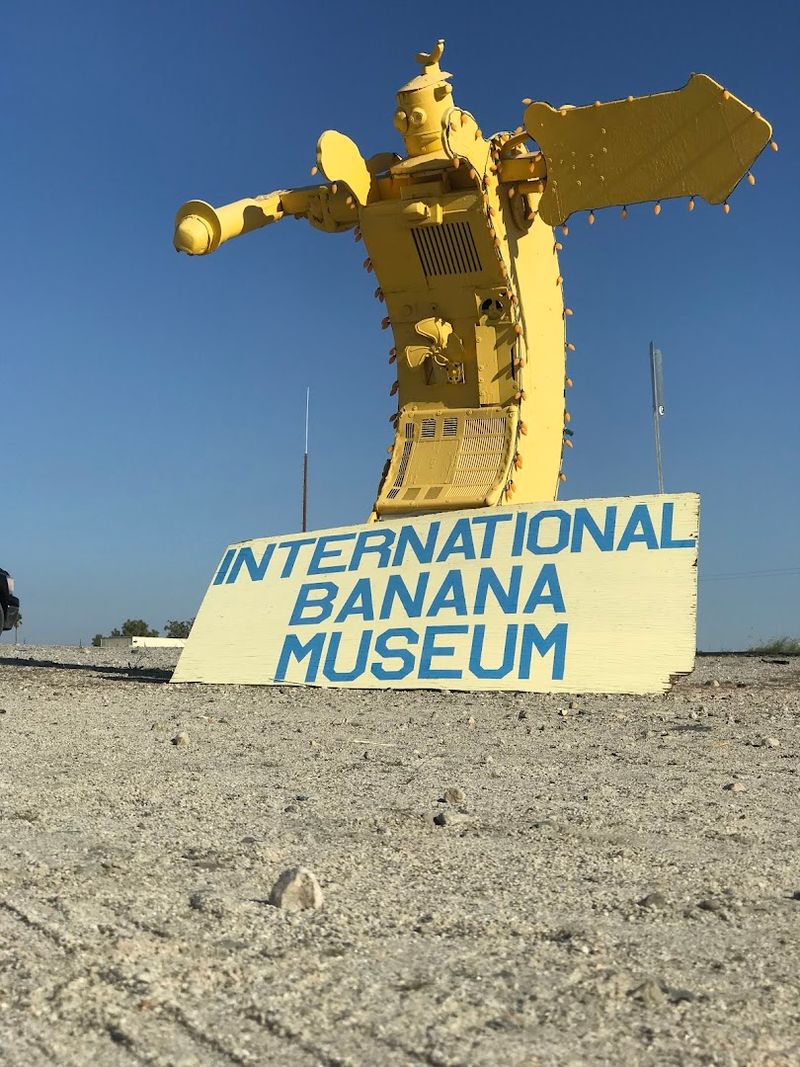
Somewhere in the California desert, a building holds the world’s largest collection of banana-themed objects, and it is exactly as committed to the concept as that sentence suggests.
The International Banana Museum in Mecca, California contains more than 20,000 banana-related items, ranging from vintage toys and vinyl records to kitchen gadgets, clothing, and decorative art.
The collection was assembled over many years by founder Fred Garbutt, who accepted donations from visitors around the world. The museum is recognized by the Guinness World Records for its category.
Visitors can also order banana milkshakes at the small counter inside, making it a destination for both collectors and curious road-trippers passing through the Coachella Valley.
The sheer specificity of the theme is what makes it unforgettable. You leave wondering how one fruit inspired so many objects.
12. The Fremont Troll, Seattle, Washington
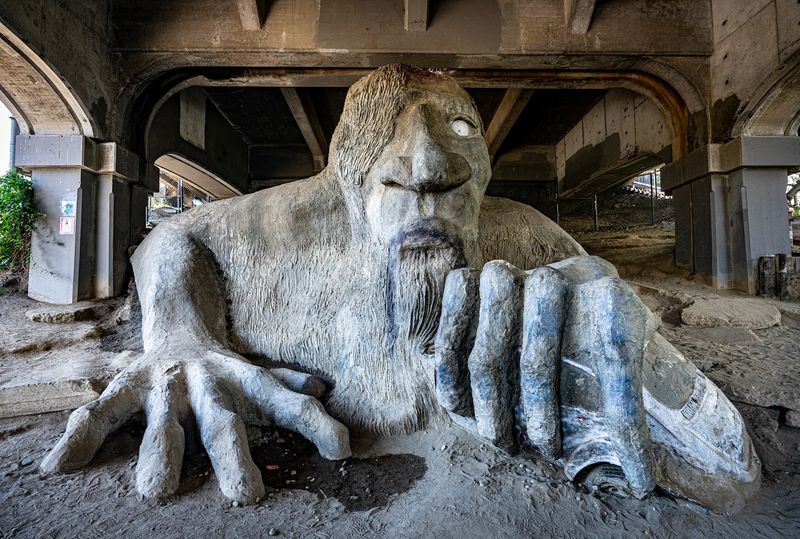
A giant concrete troll crouches beneath the Aurora Bridge in Seattle’s Fremont neighborhood, one fist wrapped around a real Volkswagen Beetle that has been embedded in the sculpture since day one.
The troll was created in 1990 by four local artists who won a public art competition organized to revitalize an area under the bridge that had become run-down and unwelcoming.
The finished sculpture stands about 18 feet tall and weighs roughly 13,500 pounds. Its single hubcap eye stares upward with an expression that manages to be both menacing and oddly charming.
Locals and tourists climb on it constantly for photos, and the Fremont neighborhood has embraced the troll as a symbol of its creative, offbeat identity.
Seattle has many landmarks, but few inspire the same immediate affection as a monster hiding under a bridge.
13. The Blue Whale of Catoosa — Catoosa, Oklahoma
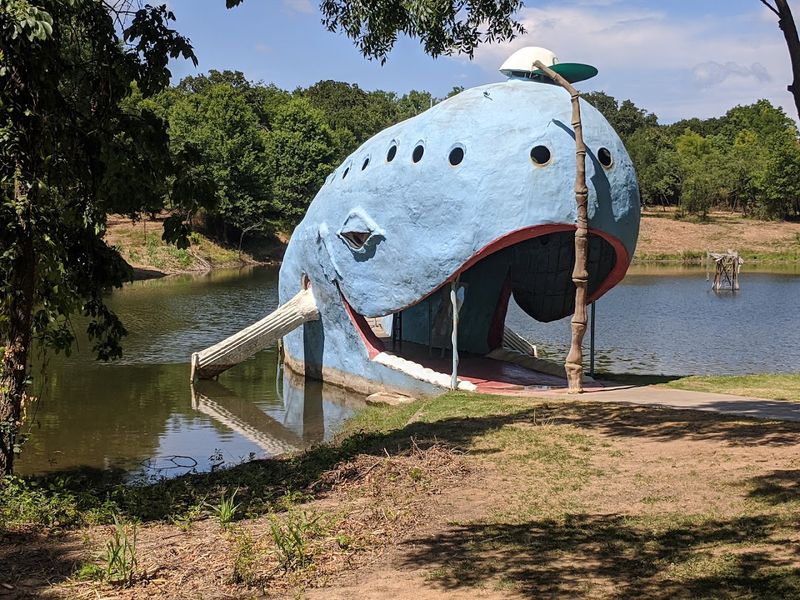
Hugh Davis built a giant smiling blue whale in a pond near his home in Catoosa, Oklahoma, as an anniversary surprise for his wife, and somehow it became one of Route 66’s most beloved icons.
Completed in the early 1970s, the whale originally served as the centerpiece of a small swimming area where families could picnic and children could slide off the whale’s tail into the water below.
The attraction fell into disrepair after Davis passed away, but local volunteers and community members organized a restoration effort that brought the whale back to its cheerful original condition.
Today it sits beside the highway as a free stop for travelers, its wide painted smile visible from the road long before you reach the parking area.
Nothing on Route 66 quite captures mid-century roadside optimism the way this whale does.
14. Enchanted Highway Sculptures, North Dakota
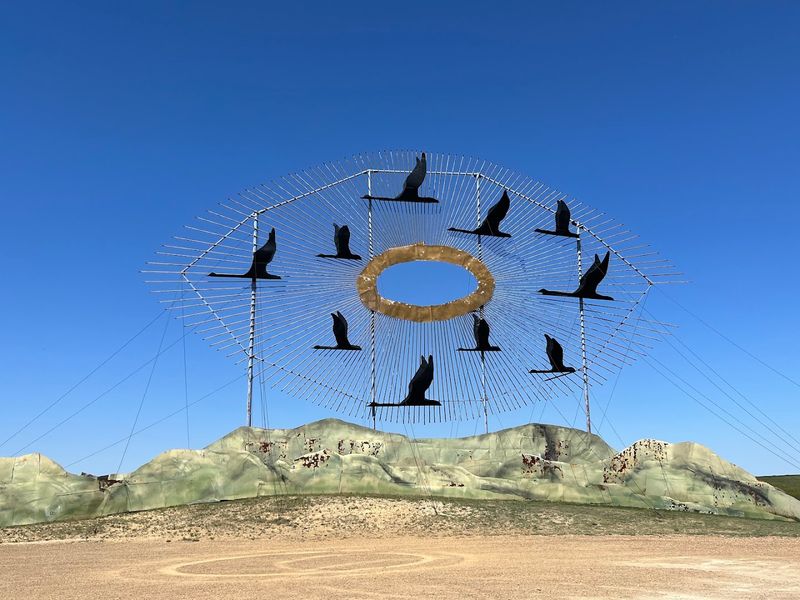
Gary Greff quit his job as a school principal, moved back to his tiny hometown of Regent, North Dakota, and started welding colossal metal sculptures along a 32-mile stretch of rural highway.
His goal was straightforward: bring visitors to a part of North Dakota that was losing population and needed a reason for travelers to stop. The sculptures he created are anything but ordinary.
The largest installation, called Geese in Flight, features metal birds with wingspans of up to 110 feet positioned above the roadside as if caught mid-migration. Other pieces depict giant grasshoppers, a massive pheasant, and Teddy Roosevelt on horseback.
Some sculptures rise several stories into the prairie sky, making the drive feel genuinely surreal compared to the flat landscape surrounding them.
Greff built all of them using recycled car parts, farm equipment, and scrap metal, largely with his own hands.
15. Winchester Mystery House, San Jose, California
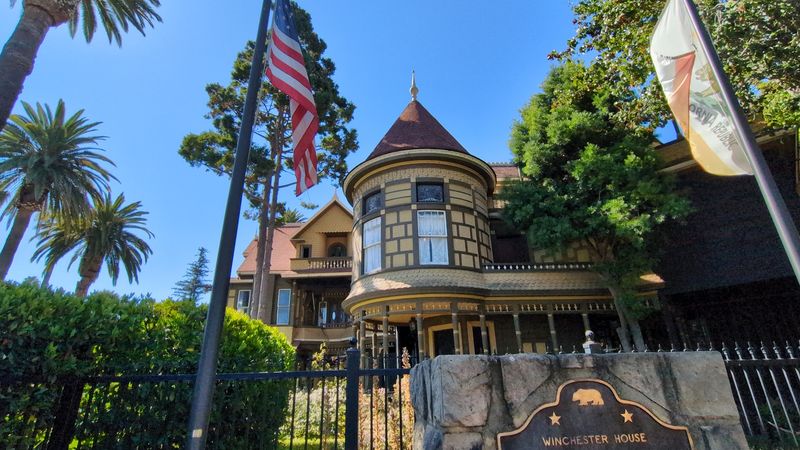
Sarah Winchester inherited a fortune from the Winchester rifle company and then spent the next 38 years continuously building onto her San Jose mansion, reportedly to confuse the spirits she believed were haunting her family.
The result is one of the most architecturally bizarre buildings in the United States. The Winchester Mystery House contains staircases that end at ceilings, doors that open directly into walls, and windows built into interior floors.
Construction never stopped during Winchester’s lifetime. Crews worked around the clock, seven days a week, adding rooms, corridors, and oddly shaped spaces until she passed away in 1922.
The mansion now contains 160 rooms, 2,000 doors, 10,000 windows, and 47 staircases, many of which lead absolutely nowhere.
Guided tours run daily, and the combination of Victorian grandeur and total architectural chaos makes every visit feel like walking through a puzzle with no solution.
16. Wall Drug, Wall, South Dakota
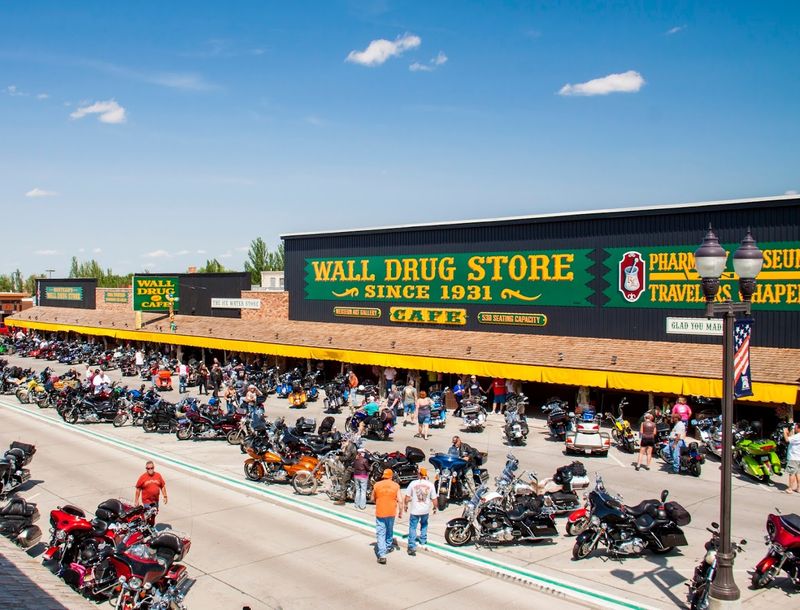
In 1936, a struggling drugstore in Wall, South Dakota started putting up billboards along the highway offering free ice water to passing travelers, and the strategy worked so well it changed the entire town.
Wall Drug now covers nearly 76,000 square feet and includes restaurants, gift shops, a chapel, a western art gallery, and a collection of animatronic figures that have delighted and mildly terrified children for decades.
Billboards advertising Wall Drug stretch for hundreds of miles in every direction across the American highway system. Signs have even appeared in locations outside the United States as a running joke among travelers.
The store grew entirely through advertising persistence rather than any single remarkable product. The ice water is still free.
Stopping at Wall Drug during a cross-country drive has become something close to a national tradition, even for people who had no intention of stopping.
Share this story