Europe has a secret, and it blooms in the most spectacular ways imaginable. Across the continent, you will find botanical gardens so breathtaking that they look like paintings brought to life.
From ancient university gardens to island paradises covered in rare tropical plants, these places have been inspiring artists, scientists, and daydreamers for centuries. Pack your curiosity and get ready to explore seventeen botanical masterpieces that genuinely feel too beautiful to be real.
Royal Botanic Gardens, Kew — London, England
Covering more than 300 acres on the banks of the River Thames, Kew Gardens is basically a living encyclopedia of every plant on Earth. It holds one of the largest and most scientifically important collections of living plants anywhere in the world, with over 50,000 species represented.
Scientists here work around the clock to study, protect, and catalog plants before they disappear forever.
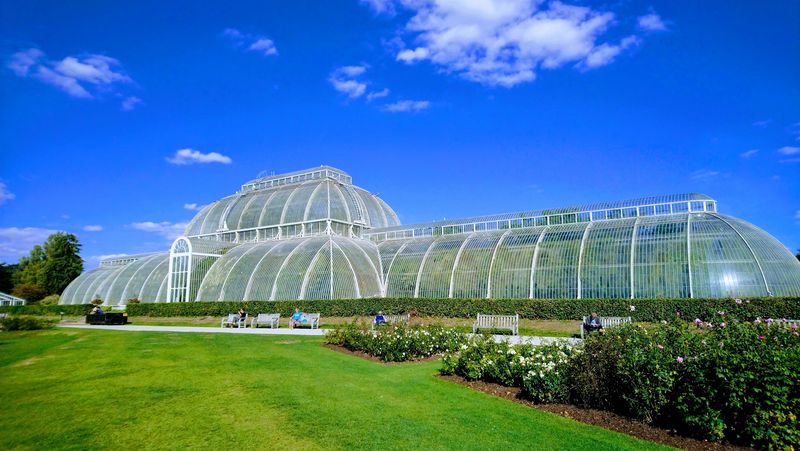
The iconic Palm House is a stunning iron-and-glass Victorian greenhouse that looks straight out of a fantasy novel. Inside, you will find towering tropical trees, exotic ferns, and plants that most people will never see growing anywhere else.
The Temperate House, which is the largest Victorian glasshouse on the planet, is equally jaw-dropping.
Kew also features a treetop walkway that lets visitors stroll 18 meters above the ground through the forest canopy. UNESCO added it to the World Heritage List in 2003, recognizing its global importance.
Whether you spend two hours or two days here, Kew Gardens always leaves visitors wanting more.
Keukenhof — Lisse, Netherlands
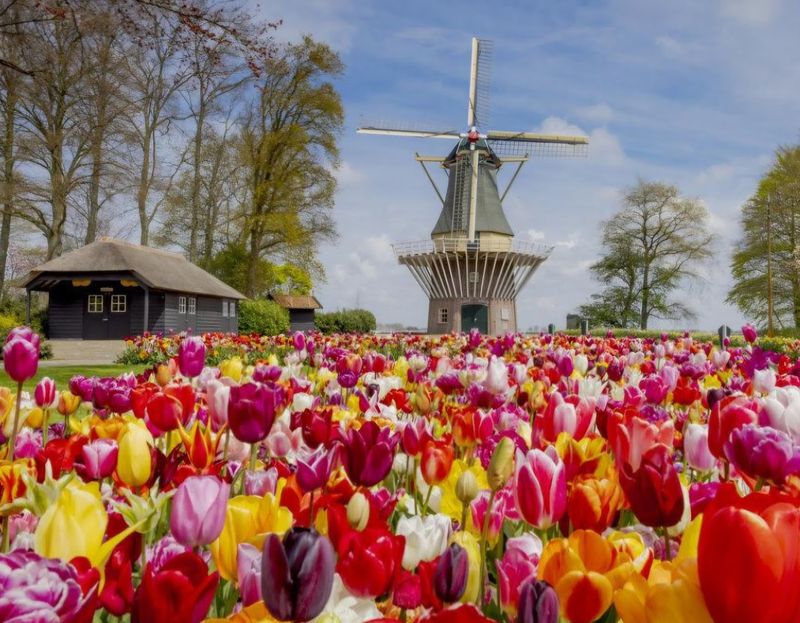
Nowhere on Earth do flowers put on a show quite like Keukenhof. Open for only about eight weeks each spring, this legendary garden near Amsterdam transforms into a living tapestry of color that has to be seen to be believed.
More than seven million flowering bulbs burst into bloom across 79 beautifully landscaped acres every single year.
Tulips in every shade imaginable steal the spotlight, but hyacinths, daffodils, and narcissus fight hard for attention too. The garden is designed so that something new is always blooming as the weeks progress, meaning no two visits feel exactly the same.
Professional garden designers spend months planning each year’s arrangements to create maximum visual impact.
Keukenhof started in 1949 as a showcase for Dutch flower growers, and it has since welcomed over 100 million visitors from around the globe. The windmills dotting the surrounding countryside add an extra layer of charm that feels almost too picturesque to be real.
Arriving early in the morning on a weekday gives you the best chance to enjoy the flowers without the crowds.
Mainau Island — Germany
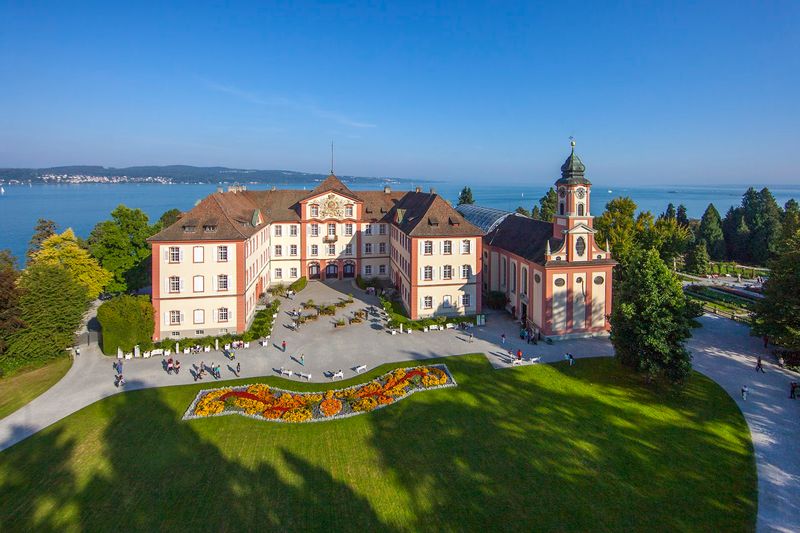
Sitting in the middle of Lake Constance like a jewel dropped from the sky, Mainau Island earns its nickname as the Flower Island with absolute confidence. The warm microclimate created by the surrounding lake allows Mediterranean and even subtropical plants to thrive here despite being located in southern Germany.
Walking off the boat and into this garden genuinely feels like stepping into another climate zone.
The island covers about 110 acres and bursts with millions of seasonal blooms throughout the year. Spring brings tulips and rhododendrons, summer explodes with dahlias and roses, and autumn arrives wrapped in chrysanthemums and colorful foliage.
A magnificent baroque palace sits at the heart of it all, adding a regal backdrop to every photo you take.
The butterfly house on the island is a wonderful bonus, letting visitors walk among hundreds of tropical butterflies in a warm, lush enclosure. Mainau is owned and managed by the Bernadotte family, descendants of Swedish royalty, who have lovingly maintained its gardens for decades.
Families, photographers, and garden enthusiasts all leave with full memory cards and very happy hearts.
Jardim Botanico da Madeira — Funchal, Portugal
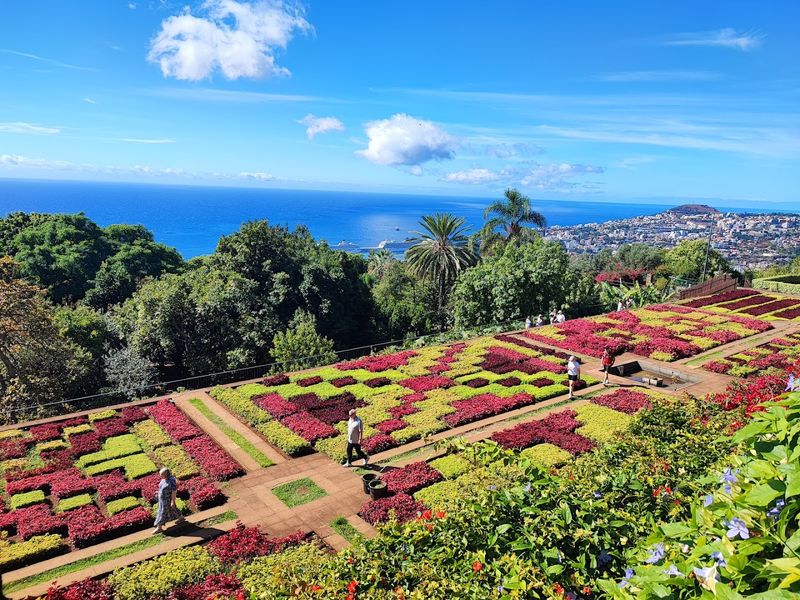
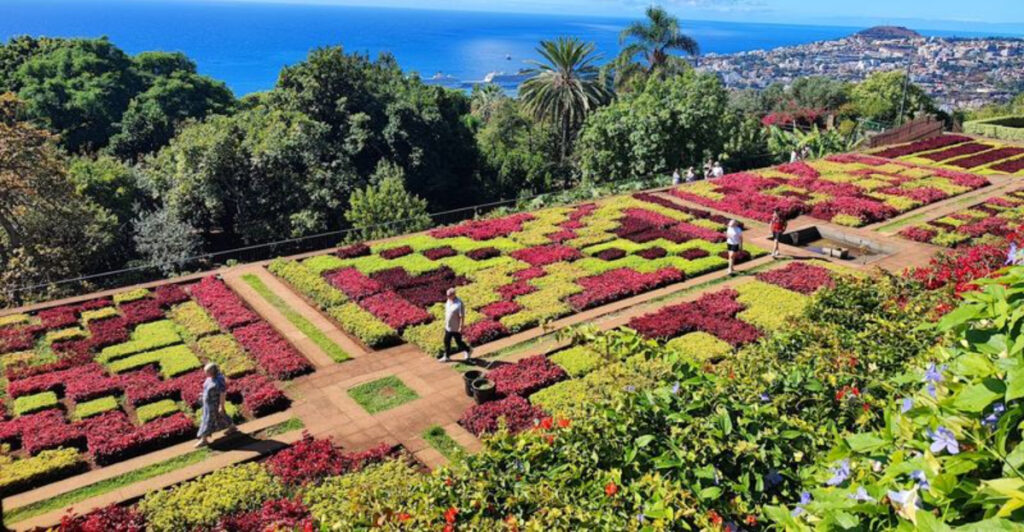
Perched dramatically above the city of Funchal with the Atlantic Ocean glittering in the distance, Madeira’s botanical garden is one of those places that makes you stop walking and simply stare. The garden was established in 1960 on the grounds of a former private estate, and its hillside setting creates a natural amphitheater of plants and color.
Every turn along the winding paths reveals a new and unexpected view.
The geometric flower beds are the garden’s most photographed feature, arranged in bold patterns using plants with contrasting colors and textures. Rare orchids, towering succulents, and exotic tropical specimens fill every corner of the terraced grounds.
There is even a small natural history museum on site dedicated to Madeiran wildlife and ecology.
The climate of Madeira is perfect for growing plants from all over the world, which is why the island is sometimes called the Island of Eternal Spring. The botanical garden takes full advantage of this, housing plants from South America, Africa, Asia, and beyond.
Visiting in the morning means cooler temperatures and better light for photography, plus you get to enjoy the ocean views before the afternoon haze rolls in.
Villa d’Este Gardens — Tivoli, Italy
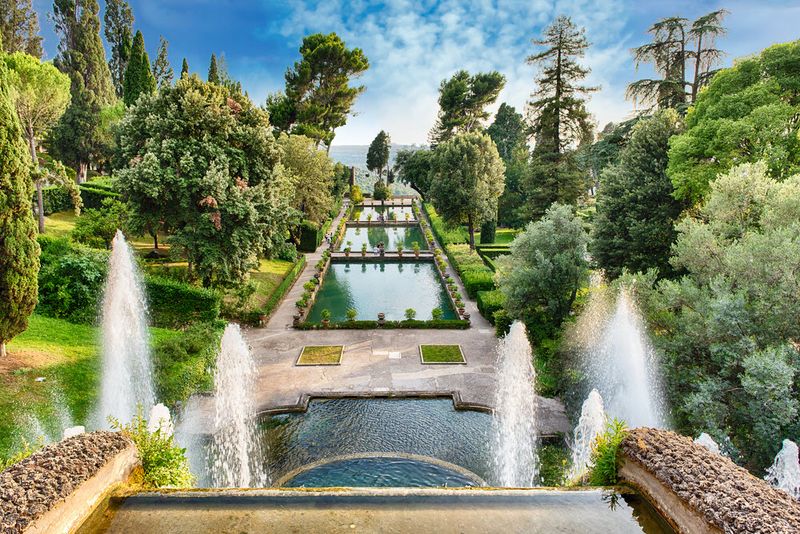
Few places in the world have inspired as many landscape architects as the gardens of Villa d’Este in Tivoli, just outside Rome. Built in the 16th century for Cardinal Ippolito II d’Este, these terraced Renaissance gardens are essentially one giant water show powered entirely by gravity.
The engineering genius behind the fountains was so impressive that it attracted visitors from across Europe for centuries.
The garden contains over 500 fountains, jets, basins, and water features, all fed by the nearby River Aniene without a single pump. The Fountain of Neptune and the famous Organ Fountain, which actually plays music using water pressure, are highlights that draw gasps from first-time visitors.
Moss and ferns have crept over many of the stone surfaces over the years, giving the garden a wonderfully ancient, almost mystical atmosphere.
UNESCO recognized Villa d’Este as a World Heritage Site in 2001, cementing its status as one of Italy’s greatest cultural treasures. The tall Italian cypress trees lining the pathways cast dramatic shadows in the afternoon sun.
Visiting in the early evening when the fountains are lit up adds a completely magical quality to an already extraordinary experience.
Isola Bella Gardens — Lake Maggiore, Italy
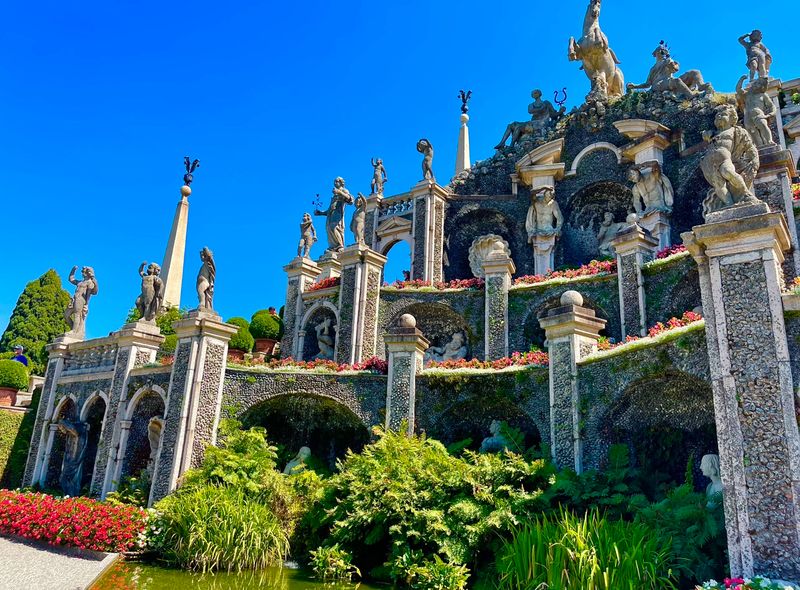
Imagine taking a tiny island in a stunning Alpine lake and turning it into a ten-tiered baroque garden palace. That is exactly what the Borromeo family did with Isola Bella in the 17th century, and the result is one of the most theatrical garden spectacles in all of Europe.
The island is so small that the garden and the palace take up almost every square meter of it.
White peacocks roam freely through the terraces, adding a surreal and rather regal charm to every garden stroll. Rare plants, lemon trees, camellias, and exotic flowers fill the stone planters and beds that climb the island’s tiered structure.
Classical statues of gods and mythological creatures stand guard at every level, watching over the lake with stony expressions.
The views from the upper terraces are absolutely breathtaking, with Lake Maggiore stretching out in every direction and the Italian Alps rising dramatically in the background. A short boat ride from Stresa is all it takes to reach this little paradise.
Isola Bella is proof that with enough ambition and a good sense of drama, humans can create something that genuinely rivals nature.
Claude Monet’s Garden — Giverny, France
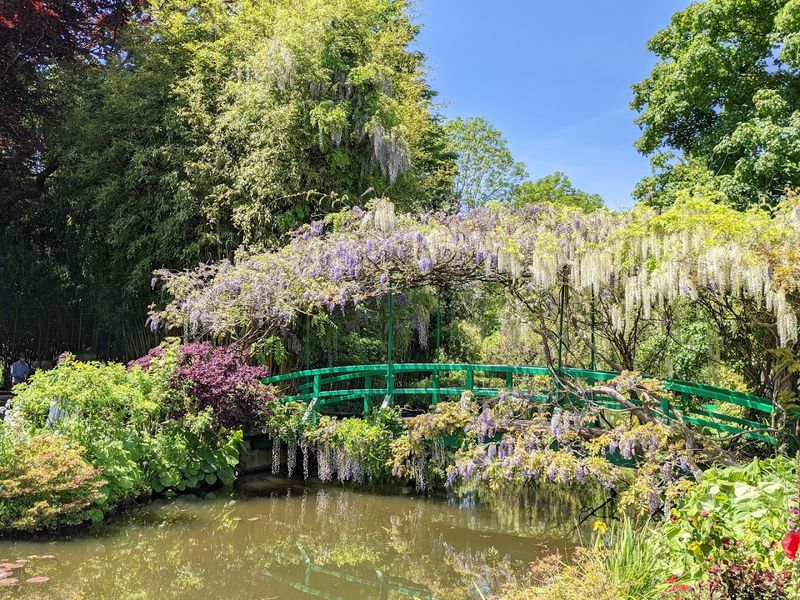
Standing beside Monet’s famous water lily pond in Giverny feels like walking directly into one of his paintings. The artist designed this garden himself in the late 19th century, and it served as the primary subject of his work for the last 30 years of his life.
He reportedly cared more about his garden than almost anything else, spending enormous amounts of time and money perfecting every detail.
The Japanese bridge draped in wisteria is the garden’s most iconic feature, and it looks just as dreamy in person as it does in Monet’s canvases. The flower garden, called the Clos Normand, is planted in long rows of color that create a painterly effect when viewed from a distance.
Roses climb up arches, nasturtiums spill across paths, and irises stand tall like brushstrokes of purple and yellow.
The garden is open from April through October, and the peak bloom period in May and June is when everything looks most spectacular. Monet’s house, painted in cheerful pink and green, can also be visited and gives fascinating insight into how the artist lived.
Getting there early on a weekday is the best strategy for avoiding the very enthusiastic crowds this magical place attracts.
Chateau de Villandry Gardens — Loire Valley, France
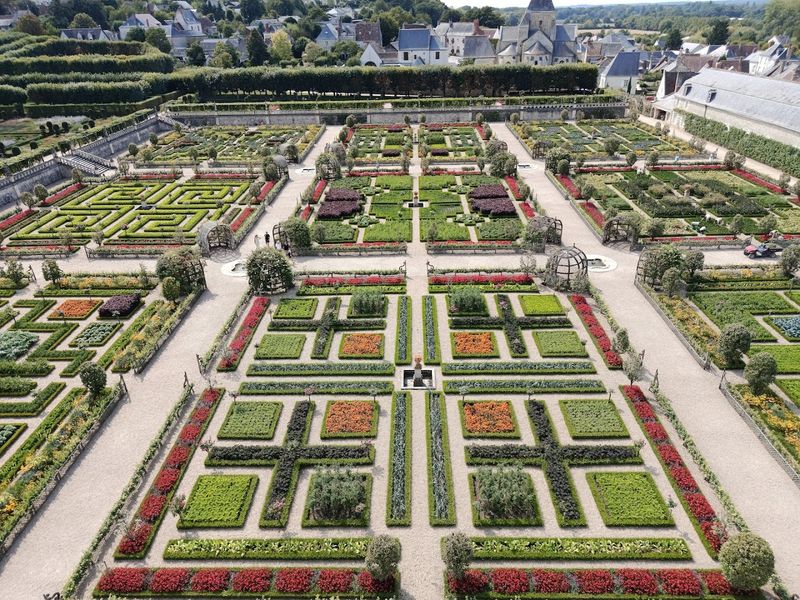
Villandry is the garden that makes you realize vegetables can be as beautiful as any flower. The ornamental kitchen garden here, known as the potager, is arranged in a breathtaking geometric pattern of squares and rectangles, each filled with different colored vegetables, herbs, and edible plants.
Seeing rows of purple cabbages, bright red lettuces, and golden squash laid out like a mosaic is genuinely mind-bending.
The garden is divided into three main levels: the water garden at the top, the ornamental flower garden in the middle, and the famous vegetable garden at the bottom. Every hedge, every path, and every plant is meticulously trimmed and maintained according to the original 16th-century French Renaissance design principles.
The precision involved is almost hard to comprehend when you see it up close.
Villandry was actually in terrible shape in the early 20th century before the Carvallo family purchased it and spent decades restoring it to its former glory. Today it is considered one of the finest examples of French Renaissance garden design in existence.
The chateau itself provides a magnificent backdrop, and the views from the garden’s upper terraces over the Loire Valley countryside are absolutely stunning.
Mirabell Gardens — Salzburg, Austria
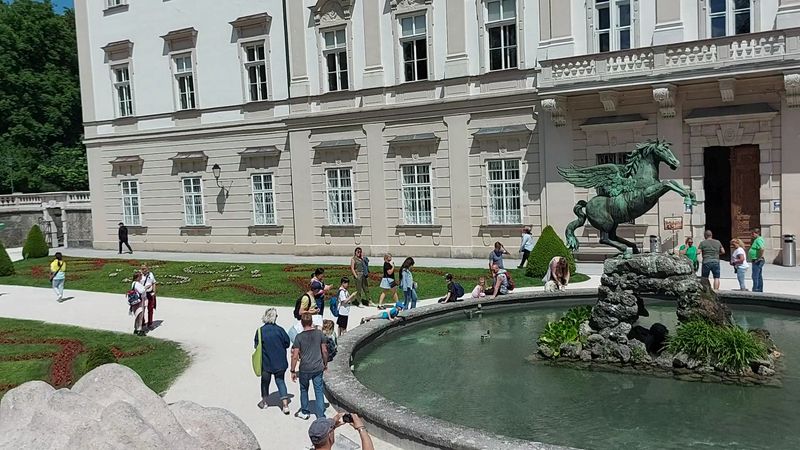
You might recognize Mirabell Gardens from The Sound of Music, where a very enthusiastic governess and several children sang their way through its perfectly clipped hedges and flower beds. That scene was not exaggerated for dramatic effect.
The gardens genuinely look like a baroque stage set, complete with fountains, statues, and the fortress of Hohensalzburg looming magnificently in the background.
Originally laid out in the early 17th century for Archbishop Wolf Dietrich von Raitenau, the gardens were redesigned in their current baroque form in 1730 by court architect Johann Lucas von Hildebrandt. The famous Pegasus fountain sits at the center of it all, surrounded by four groups of stone sculptures representing the elements of earth, fire, water, and air.
Colorful seasonal flower beds are replanted multiple times a year to ensure constant visual impact.
The gardens are free to enter and sit right in the heart of Salzburg’s old town, making them an easy and rewarding stop for anyone visiting the city. Mozart, who was born just across the river, likely walked these same paths as a child.
Mirabell is living proof that baroque garden designers knew exactly what they were doing when they aimed for pure theatrical beauty.
Alnarp Botanical Garden — Sweden
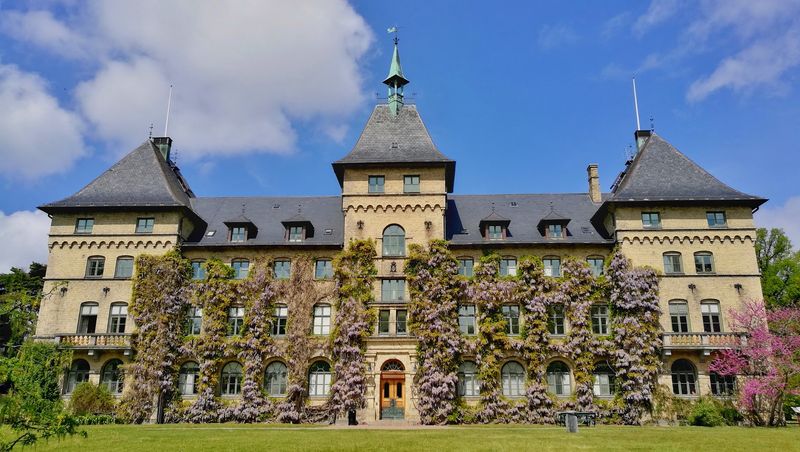
Sweden is not the first country most people think of when imagining spectacular botanical gardens, but Alnarp has a way of quietly changing that assumption. Located in Skane, Sweden’s southernmost province, this garden is part of the Swedish University of Agricultural Sciences and serves as both a research facility and a genuinely beautiful public green space.
The combination of academic purpose and natural beauty gives it a unique character that feels refreshingly unpretentious.
The garden changes personality with every season, which is part of what makes it so compelling. Spring brings cherry blossoms and flowering bulbs, summer fills the grounds with roses and perennial borders, autumn turns the tree collection into a spectacular display of gold and crimson, and winter reveals the elegant structure of bare branches against pale Scandinavian skies.
Each visit feels like a completely different experience.
Alnarp also features a therapeutic garden that has been used in research on how green spaces help people recover from stress and illness. The historic manor house at the center of the grounds adds a storybook quality to the landscape.
For garden lovers who appreciate a quieter, more contemplative atmosphere over tourist crowds, Alnarp is an absolute hidden gem worth going well out of your way to visit.
Botanical Garden of Padua — Italy
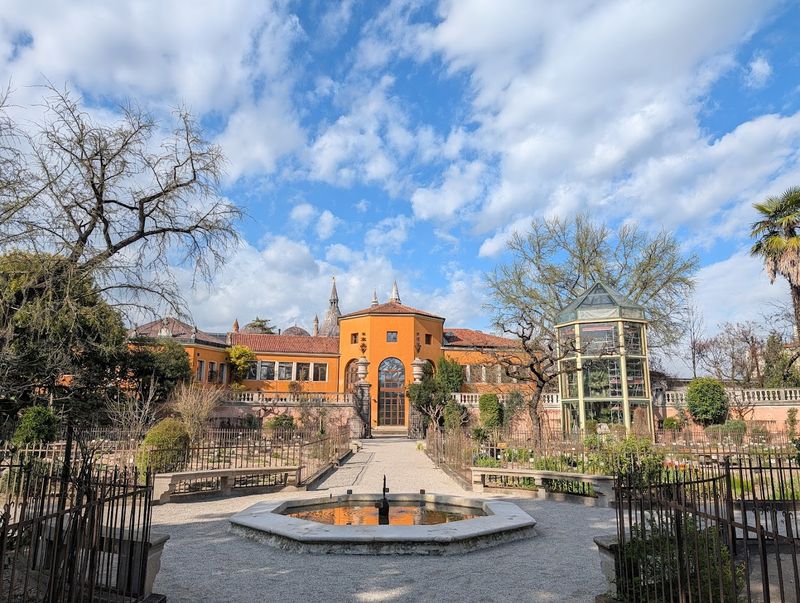
Founded in 1545, the Botanical Garden of Padua holds a record that no other garden in the world can claim: it is the oldest university botanical garden still operating in its original location. Nearly 500 years of continuous botanical research and plant cultivation have taken place within these walls, making it a living monument to human curiosity and scientific inquiry.
That kind of history is almost impossible to wrap your head around.
The garden was established by the Republic of Venice to grow medicinal plants for the University of Padua’s medical school, and it quickly became one of the most important centers of botanical science in Europe. A ginkgo tree planted in 1750 still stands proudly in the garden today, having outlived countless generations of students and professors.
The original circular garden layout, surrounded by a stone wall and moat, remains beautifully intact.
UNESCO recognized Padua’s botanical garden as a World Heritage Site in 1997, acknowledging its extraordinary cultural and scientific significance. The garden introduced many plants to Europe for the first time, including sunflowers, potatoes, and lilacs.
Strolling through it feels less like visiting a garden and more like walking through the birthplace of modern botany itself.
Palmengarten — Frankfurt, Germany
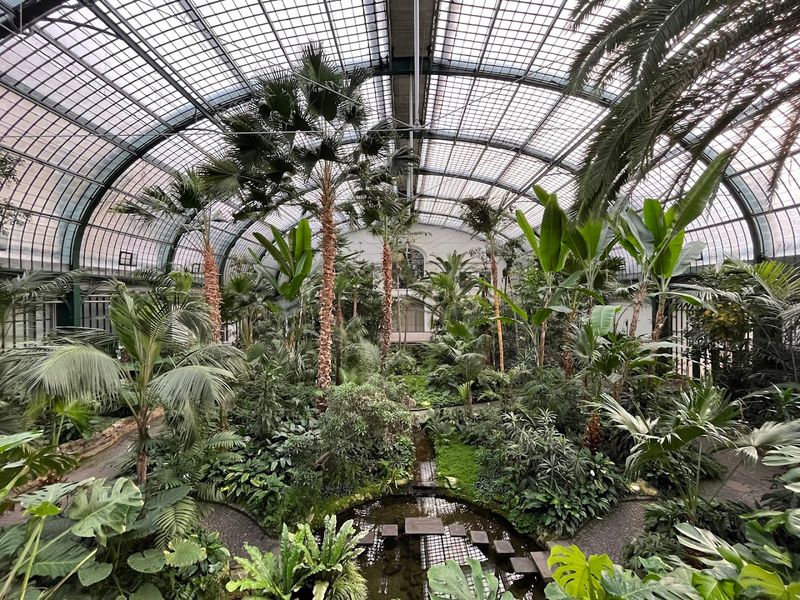
Right in the middle of one of Europe’s busiest financial cities, Palmengarten offers a lush, green escape that feels almost rebellious in the best possible way. Frankfurt’s botanical garden has been welcoming visitors since 1871, making it one of Germany’s oldest and most beloved public gardens.
Its motto might as well be: leave the stock market behind and come look at some extraordinary plants.
The garden covers about 22 hectares and packs in an astonishing variety of plant habitats. Tropical greenhouses house towering palms and exotic flowering trees, while the desert house showcases dramatic cacti and succulents from around the world.
The rose garden is a highlight in summer, with hundreds of varieties filling the air with fragrance on warm evenings.
Palmengarten also hosts concerts, festivals, and cultural events throughout the year, making it a lively social hub as well as a botanical showcase. The large lake in the center of the grounds is perfect for peaceful walks and watching ducks argue loudly over bread crumbs.
For families, the children’s garden and play areas make this a place where everyone finds something to enjoy, regardless of how enthusiastic they actually are about plants.
Royal Greenhouses of Laeken — Brussels, Belgium
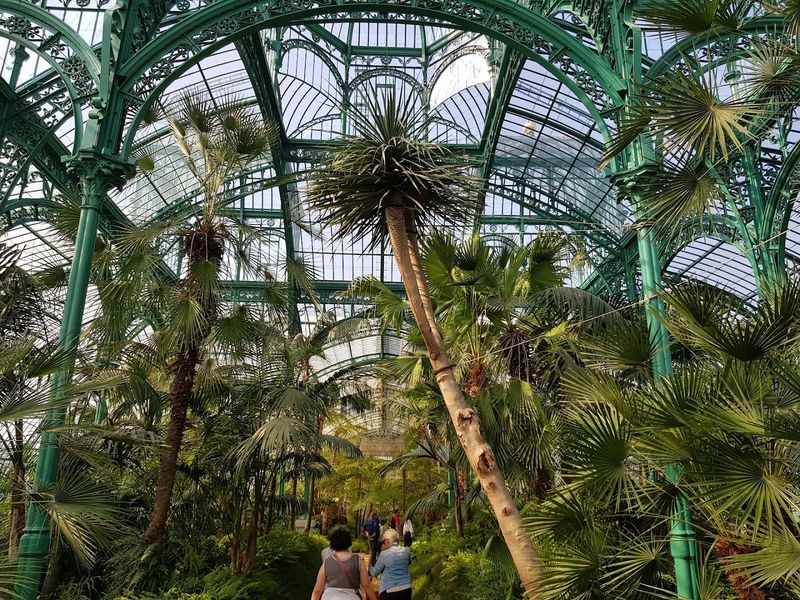
For most of the year, the Royal Greenhouses of Laeken are completely off-limits to the public, hidden behind the gates of the Belgian Royal Palace. But for a magical few weeks each spring, the doors swing open and visitors get to step inside one of Europe’s most extraordinary horticultural secrets.
The anticipation alone is enough to make the experience feel special before you even arrive.
Architect Alphonse Balat designed these stunning iron-and-glass structures in the 1870s for King Leopold II, who was passionate about exotic plants and architectural grandeur. The result is a complex of interconnected greenhouses covering over 2.5 hectares, filled with rare camellias, azaleas, palms, tree ferns, and tropical plants collected from across the globe.
Some of the camellia trees inside are over 200 years old and reach several meters in height.
The central dome is particularly breathtaking, soaring 25 meters high and flooding the interior with natural light. Walking through the interconnected glass corridors surrounded by century-old plants in full bloom is a sensory experience unlike anything else in Europe.
The limited opening period, usually just three to four weeks in April and May, means that tickets sell out quickly and advance planning is absolutely essential.
Hortus Botanicus — Leiden, Netherlands
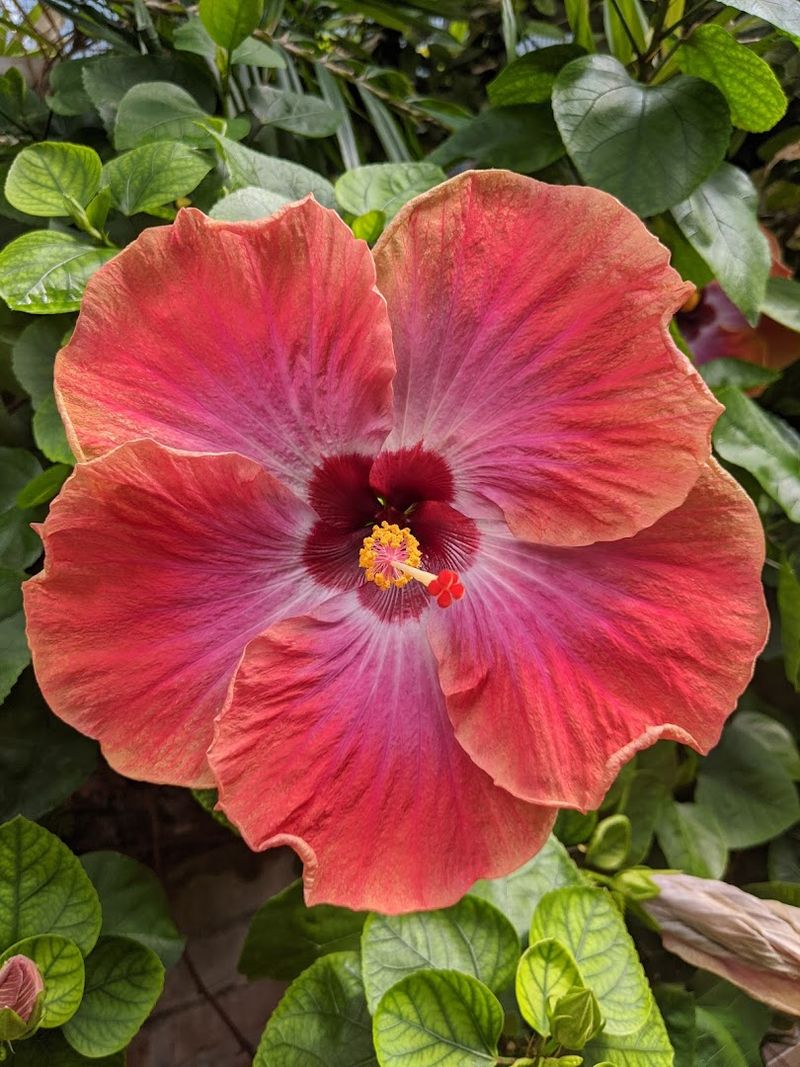
Established in 1590, the Hortus Botanicus in Leiden is one of the oldest botanical gardens in the world, and it carries its age with remarkable elegance. The garden was originally created by the University of Leiden to grow medicinal plants, but its influence on European botany quickly spread far beyond medicine.
It was here that Carolus Clusius, one of history’s greatest botanists, first cultivated tulips in the Netherlands, unknowingly sparking what would become the famous Dutch tulip trade.
That single tulip planting in the 1590s helped launch an entire industry that still defines the Netherlands today, which is a pretty impressive legacy for one small garden. A descendant of Clusius’s original tulip still grows in the garden, making it one of the most historically significant plants in horticultural history.
The garden also houses a 350-year-old Eastern Cape cycad, one of the world’s oldest potted plants.
The Hortus covers about 1.2 hectares, which is actually quite compact compared to many botanical gardens, but every square meter is used thoughtfully. The three interconnected glasshouses contain impressive tropical, subtropical, and desert plant collections.
Leiden’s charming canal-side setting makes visiting the Hortus feel like combining a history lesson with a genuinely beautiful afternoon stroll.
San Anton Gardens — Malta
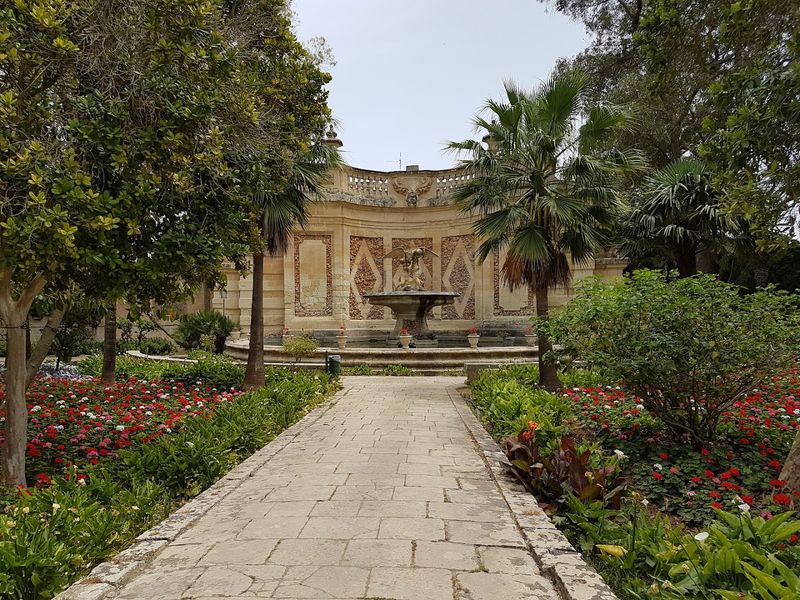
Malta is a tiny island nation packed with history, sunshine, and some surprisingly lush green spaces, and San Anton Gardens is the crown jewel of them all. Surrounding the Presidential Palace in the village of Attard, these historic gardens have been a beloved public retreat since 1882 when they were first opened to the Maltese people.
Before that, they were the private pleasure grounds of Grand Masters and colonial governors who clearly had excellent taste.
The garden’s mature trees provide welcome shade in Malta’s intense Mediterranean heat, creating cool avenues that are perfect for a slow afternoon walk. Ornamental ponds filled with water lilies and golden carp sit at the heart of the grounds, surrounded by carefully tended flower beds that bloom with bougainvillea, roses, and seasonal plants.
Peacocks wander freely through the grounds, adding an unexpectedly grand touch to this compact paradise.
The garden covers about 4.5 acres, which sounds small but feels wonderfully generous given Malta’s limited land area. It is free to enter, making it one of the most accessible botanical attractions in all of Europe.
Locals bring their children here on weekend mornings, giving San Anton a warm, community-centered atmosphere that larger, more touristy gardens sometimes struggle to maintain.
Botanical Garden of the University of Coimbra — Portugal
High on a hillside above the ancient city of Coimbra, the university’s botanical garden has been quietly growing more beautiful since it was founded in 1772. Created during the enlightened reforms of the Marquis of Pombal, the garden was designed to support scientific education and botanical research at one of Europe’s oldest universities.
Centuries later, it still fulfills that role while also being one of Portugal’s most atmospheric and underrated green spaces.
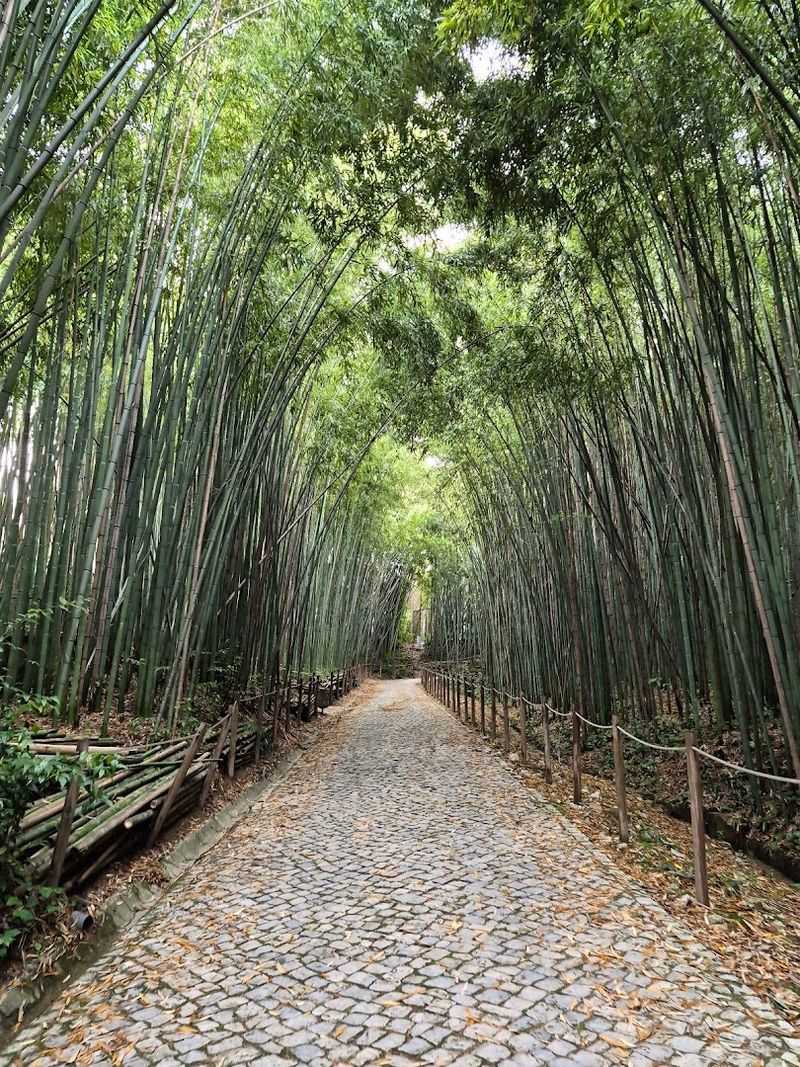
The garden’s bamboo grove is genuinely impressive, with towering stalks creating a dense green tunnel that blocks out the sunlight and muffles the sounds of the city below. Rare trees from across the globe grow throughout the formal terraces, many of them labeled with their scientific and common names for curious visitors.
The 19th-century iron greenhouse, recently restored to its former elegance, houses tropical and subtropical plant collections.
Panoramic views from the upper terraces sweep across Coimbra’s rooftops and down to the Mondego River winding through the valley below. The garden connects directly to the historic university campus, meaning a visit here pairs beautifully with exploring the stunning baroque library that is widely considered one of the most beautiful in the world.
Together they make for an unforgettable afternoon in one of Portugal’s most captivating cities.
Giardini Botanici Hanbury — Liguria, Italy
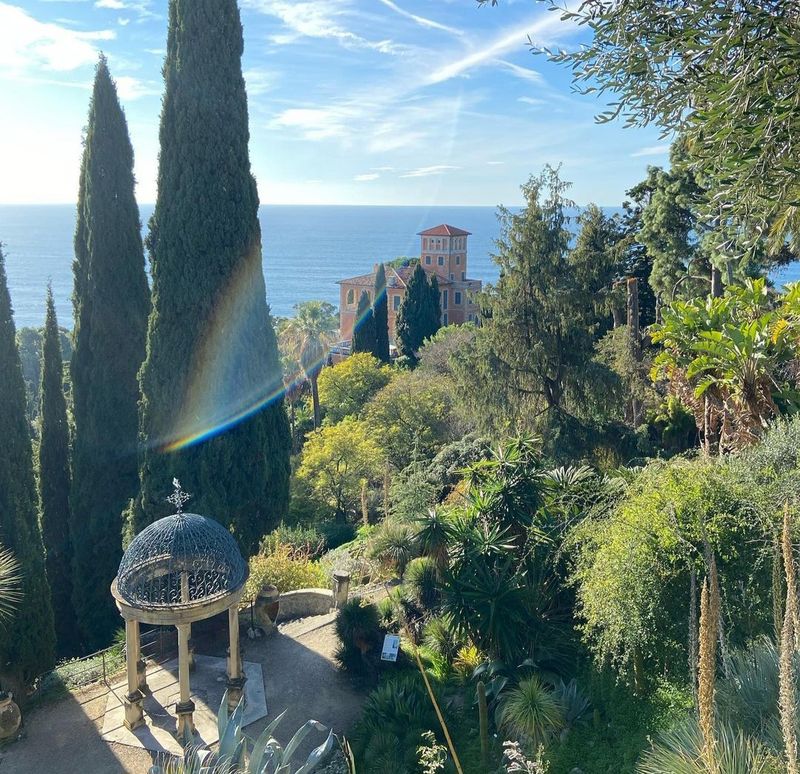
Stretching down a sun-drenched hillside toward the sparkling Mediterranean Sea just a few kilometers from the French border, the Hanbury Gardens are one of Italy’s most spectacular and least-known botanical treasures. British merchant Thomas Hanbury purchased the estate in 1867 and spent decades transforming it into an extraordinary collection of exotic plants gathered from every corner of the globe.
His passion project became one of the finest private botanical gardens in 19th-century Europe.
The garden takes advantage of its exceptional microclimate, where warm Mediterranean sunshine, mild winters, and sea breezes allow plants from Australia, South Africa, Mexico, and Asia to thrive outdoors year-round. Ancient Roman ruins discovered on the property have been incorporated into the garden’s design, adding a layer of archaeological intrigue to the botanical experience.
Winding stone paths lead visitors through different plant communities, each one feeling like a distinct journey to another part of the world.
The views from the upper paths looking down over the terraced gardens to the glittering sea below are among the most breathtaking coastal vistas in all of Italy. The University of Genoa now manages the property and continues to develop its scientific collections.
Visiting in late winter or early spring, when the coastal wildflowers join the exotic plantings in bloom, turns the experience into something truly unforgettable.
Share this story