 Unearth The Voyage
Imagine walking through cobblestone streets where knights once marched, merchants haggled, and castles stood guard over bustling marketplaces. Medieval towns across Europe have preserved their historic magic, offering visitors a chance to step back in time and experience centuries of culture, architecture, and stories.
From fortified hilltop villages to canal-lined cities, these enchanting destinations showcase the beauty and craftsmanship of the Middle Ages. Whether you’re a history buff or simply love charming old-world settings, these seventeen medieval towns promise unforgettable adventures.
Rothenburg ob der Tauber — Germany
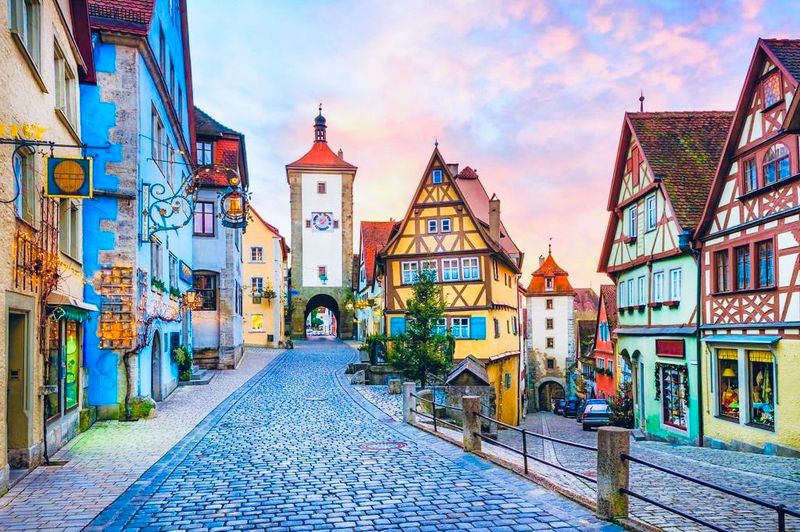
Rothenburg ob der Tauber looks like it stepped straight out of a fairytale. Encircled by intact medieval walls and towers, this Bavarian town has preserved its historic character with winding cobblestone streets, half-timbered houses, and charming market squares that have inspired artists and travelers for centuries.
Strolling along its ramparts offers breathtaking views of the red-roofed buildings below. You can walk almost the entire length of the town walls, peeking through narrow windows and imagining medieval guards keeping watch.
The Plönlein, a picturesque fork in the road flanked by colorful houses and towers, is one of the most photographed spots in Germany. Watching the town light up at dusk evokes a vivid sense of what life was like in medieval Europe.
The Night Watchman tour brings history to life with tales of plagues, wars, and daily medieval routines. Its preserved fortifications and museum-lined streets make it one of the continent’s most unforgettable historic towns, perfect for anyone seeking authentic old-world atmosphere.
San Gimignano — Italy
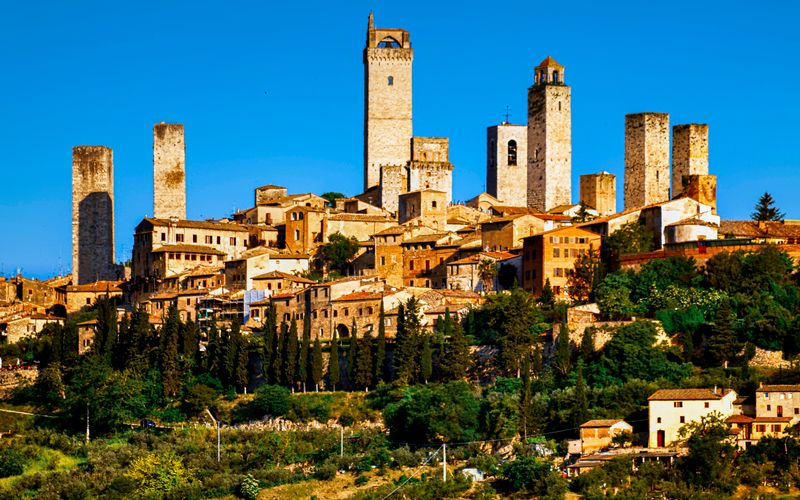
San Gimignano’s skyline — dominated by its surviving medieval towers — is one of Tuscany’s most iconic sights. These tower houses once signified the wealth and influence of noble families during the Middle Ages, and today they stand as a testament to the town’s enduring legacy.
Originally, seventy-two towers competed for dominance, but only fourteen remain standing. Each tower was a symbol of power and prestige, built as high as resources allowed.
Climbing Torre Grossa, the tallest tower still open to visitors, rewards you with sweeping views of vineyards and olive groves stretching to the horizon. Wander through its narrow streets to discover frescoed churches, traditional shops, and panoramic views of the surrounding Tuscan hills.
The Piazza della Cisterna, with its ancient well and triangular shape, buzzes with café culture and gelato vendors. San Gimignano perfectly balances authentic medieval ambience with lively town life, making every moment feel like a journey back in time.
Český Krumlov — Czech Republic
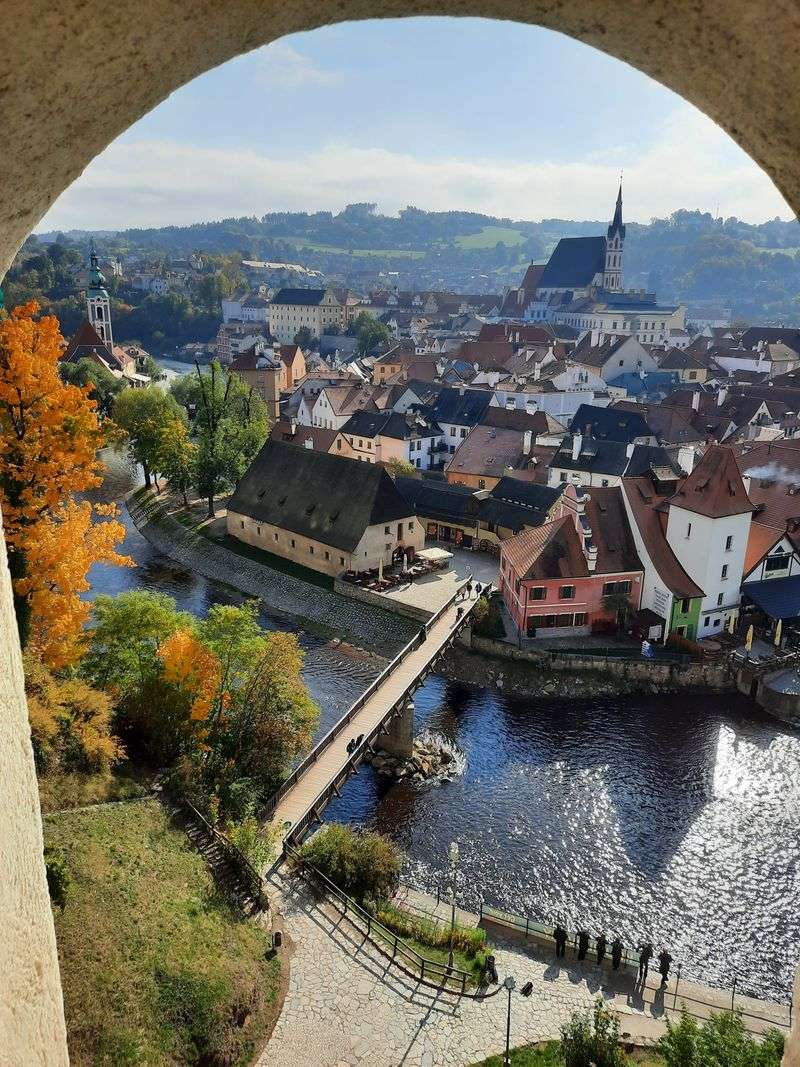
Perched above the meandering Vltava River, Český Krumlov enchants with its fairytale castle, Gothic and Renaissance facades, and compact medieval centre. This UNESCO-listed town feels like a storybook brought to life: cobblestone alleys wind past patrician houses and artisan workshops, while the castle complex — complete with gardens and a baroque theatre — crowns the historic core.
The castle itself is the second largest in the Czech Republic, featuring painted towers and courtyards that transport you centuries into the past. Its preserved baroque theatre is one of only a handful remaining in the world.
Exploring the castle grounds takes hours, with surprises around every corner including a bear moat still home to real bears. Whether exploring its riverbanks by boat or climbing to panoramic viewpoints, visitors find that Krumlov’s medieval charm stays with you long after you leave.
The town hosts lively festivals celebrating medieval culture, complete with costumed performers and traditional crafts.
Óbidos — Portugal
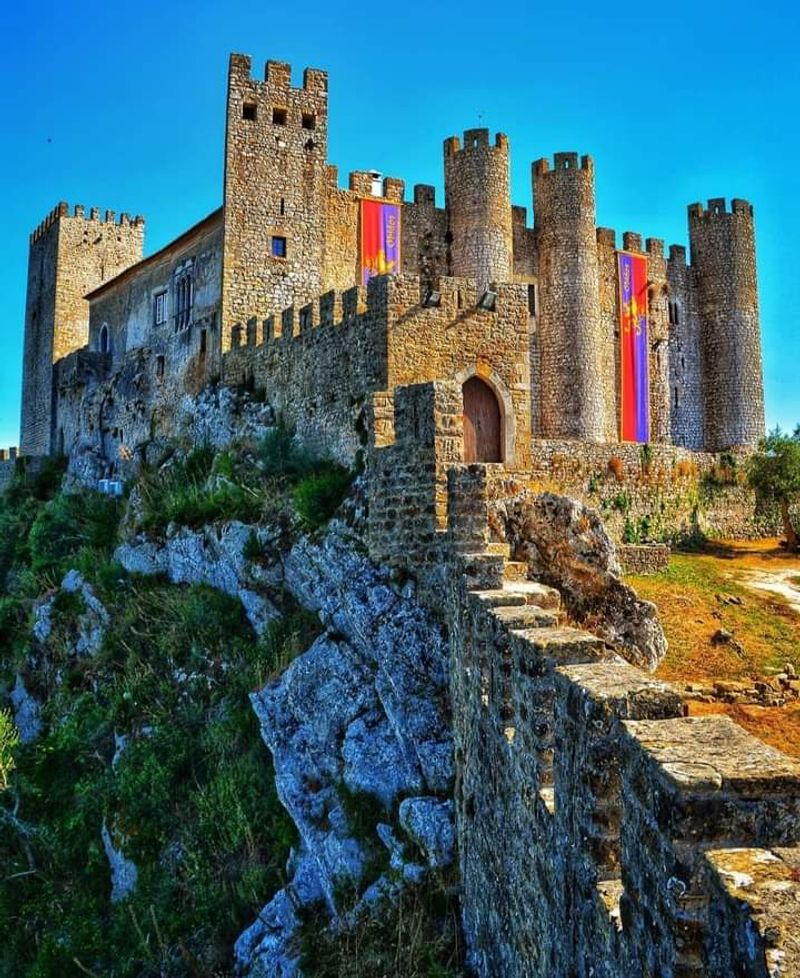
Encircled by 13th-century walls and painted in brilliant white with splashy bougainvillea, Óbidos is one of Portugal’s most delightful medieval hilltop towns. A stroll through its narrow, winding Rua Direita — lined with traditional shops, cafés, and historic homes — feels like an escape into another century.
The town’s well-preserved castle now serves as a luxury pousada (historic hotel), preserving its medieval identity while welcoming modern travelers. Walking along the top of the fortified walls provides stunning views of terracotta rooftops below and the countryside beyond.
The walls stretch almost two kilometers around the entire town, offering an unforgettable perspective. Local traditions remain strong here, especially the famous ginjinha, a sour cherry liqueur served in edible chocolate cups. Óbidos also hosts medieval fairs and Christmas markets that transform the town into a living history experience.
Its compact size makes it easy to explore in an afternoon, yet the atmosphere lingers in your memory much longer.
Dinan — France
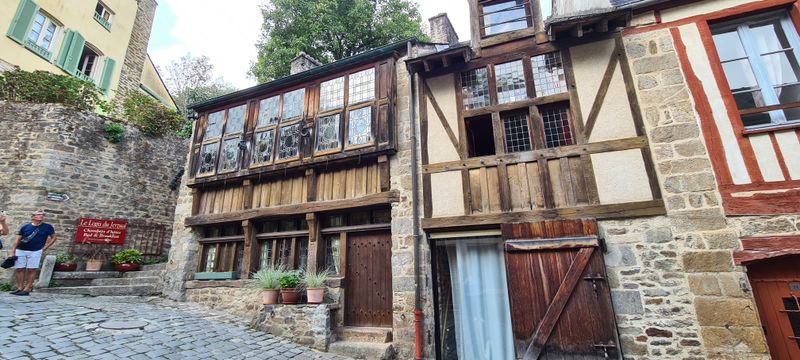
In Brittany, Dinan stands as a quintessential medieval fortified town, with nearly three kilometres of ancient ramparts guarding half-timbered houses and a lively port quarter. Walking up the steep Rue du Jerzual — once a pilgrimage and trade route — brings you through history toward sweeping views over the Rance River.
The cobbled street descends dramatically from the old town gates to the medieval port below, lined with artisan workshops, galleries, and cafés housed in centuries-old buildings. Each step feels like traveling backward through time.
The ramparts themselves invite exploration, with towers and gates still standing strong after hundreds of years. Its medieval architecture and guild heritage remain palpable, making Dinan one of France’s most enchanting hidden gems.
The town hosts a biennial medieval festival that recreates life from the era with jousting tournaments, craft demonstrations, and costumed parades. Clock Tower offers panoramic views worth the climb, revealing the town’s perfect preservation from above.
Eguisheim — France
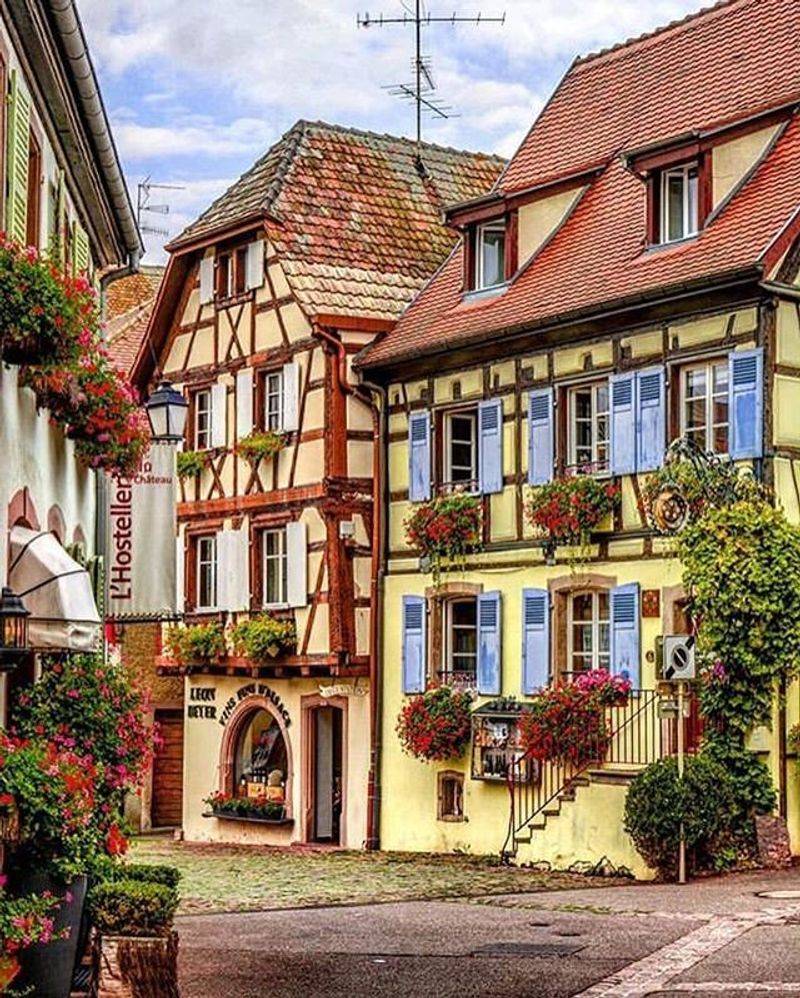
One of Alsace’s most picturesque medieval towns, Eguisheim’s circular street layout reflects its origins as a planned settlement around a central castle. Timeless half-timbered homes adorned with flowers, historic wine cellars, and its intimate Market Square make Eguisheim feel warmly lived-in yet steeped in centuries of tradition.
The concentric streets form three rings around the octagonal castle square, creating a unique urban design that’s rare in medieval planning. Walking these circles takes you past wine producers’ courtyards, fountain squares, and brightly painted facades that look like illustrations from a children’s book.
The town has won multiple awards as one of France’s most beautiful villages. Its fairy-tale charm has earned it praise across Europe as one of the region’s best preserved medieval centres.
Eguisheim is also the birthplace of Pope Leo IX, adding historical significance to its visual appeal. The surrounding vineyards produce excellent Alsatian wines, and many cellars offer tastings in atmospheric medieval settings.
Rye — England
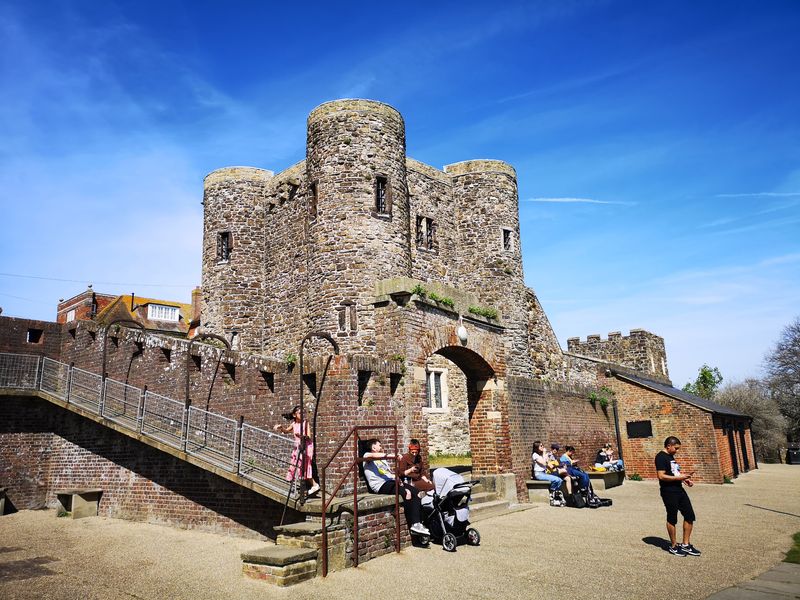
Perched atop a hill in East Sussex, Rye’s medieval streets have remained virtually unchanged since the Middle Ages. Mermaid Street — with its steep cobbles and bias-leaning timbered houses — conjures images of millennia past, while landmarks like St. Mary’s Church and the 13th-century Ypres Tower anchor the town’s historic atmosphere.
The town was once an important Cinque Port, defending England’s southeastern coast from invasion. Its maritime past echoes through narrow lanes once walked by smugglers and sailors.
The Mermaid Inn, dating from 1420, still operates as a pub and hotel, complete with secret passages and ghost stories. St. Mary’s Church features one of England’s oldest functioning church clocks, and climbing its tower rewards visitors with breathtaking views across Romney Marsh to the sea.
Its maritime past and medieval legacy make Rye unforgettable for history lovers. The town’s antique shops, tea rooms, and bookstores add modern charm without diminishing its authentic medieval character.
Avila — Spain
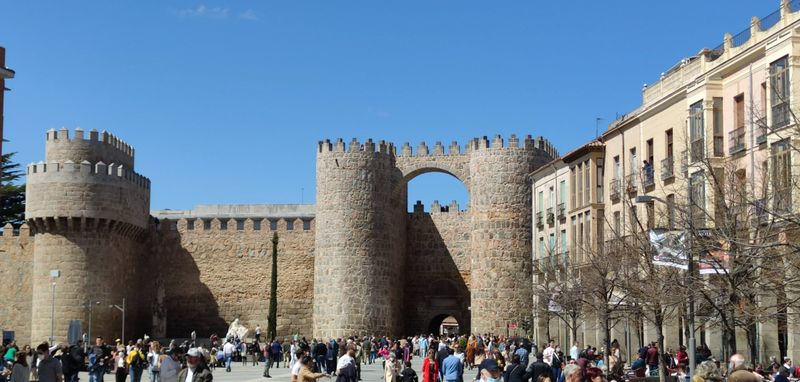
Ávila boasts some of Europe’s best-preserved medieval walls — a continuous fortification ringing its historic centre. Within those ramparts, cobbled streets, ancient churches, and palaces weave a tapestry of Spanish medieval life.
The walls stretch nearly two and a half kilometers, featuring eighty-eight towers and nine gates that have protected the city since the 11th century. Walking along the top of the ramparts provides an extraordinary perspective on both the medieval city within and the modern world beyond.
The sheer scale and completeness of these fortifications are breathtaking. Explore the Cathedral Basilica, wander plazas that once hosted merchants and medieval tournaments, or simply savor an evening drink while sunlight bathes the walls in golden hues. Ávila is also famous as the birthplace of Saint Teresa, a mystic and reformer whose legacy adds spiritual depth to the town’s history.
Its authentic historic atmosphere feels both grand and inviting, making it a must-visit for anyone fascinated by medieval Spain.
Quedlinburg — Germany
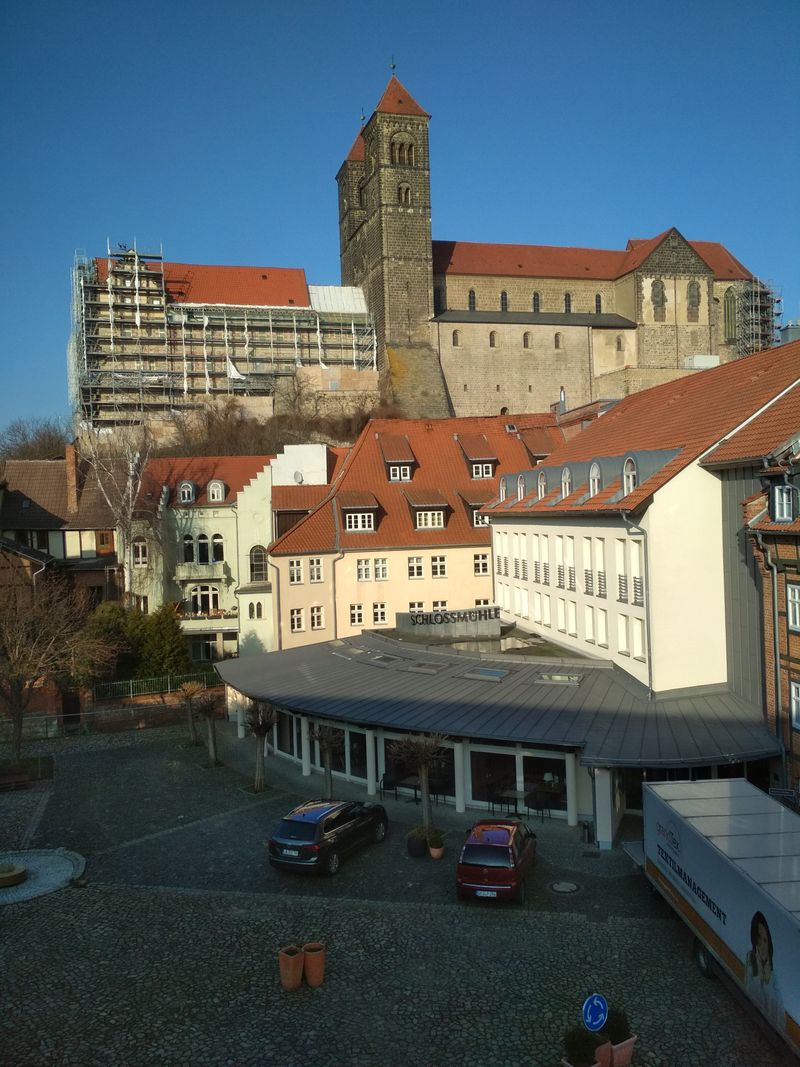
Quedlinburg’s old town — with some 2,000 half-timbered houses spanning five centuries — is a living museum of medieval and Renaissance architecture. Recognised as a UNESCO World Heritage Site, this Saxon town welcomes you with gently winding lanes, timber beam-framed facades, and the imposing castle church above.
The sheer number and variety of half-timbered buildings create an architectural wonderland where every street corner reveals new details. Some houses lean at impossible angles, their wooden beams weathered by centuries.
The Market Square pulses with life, surrounded by guild halls and the Renaissance town hall. Medieval guild traditions and festivals help the town feel timeless yet vibrant, making Quedlinburg a must-see for lovers of history and architecture.
The castle complex crowning the hill houses a treasury of medieval art and manuscripts. Walking through Quedlinburg feels like flipping through a beautifully illustrated history book, with each chapter more captivating than the last.
Sibiu — Romania
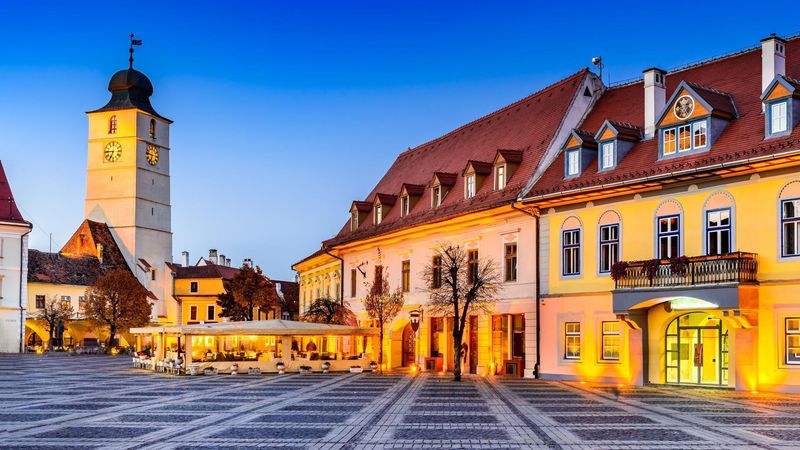
Sibiu’s historic centre blends medieval fortifications with Renaissance plazas and Gothic towers, creating one of Transylvania’s most charismatic towns. Its colourful buildings and cultural heritage reflect centuries of Saxon settlement, while nearby fortified churches add to the region’s rich medieval legacy.
The town’s unique architecture includes houses with small windows that look like eyes watching passersby, giving Sibiu a distinctive personality. Three main squares connect through narrow passages, each offering different architectural treasures and atmospheric cafés.
The Council Tower provides panoramic views over the terracotta rooftops and surrounding Carpathian Mountains. Sibiu has emerged as a culture hub, revived yet deeply connected to its past, making it both authentic and unforgettable.
Named European Capital of Culture in 2007, the town successfully balances preservation with contemporary arts and festivals. Walking the medieval walls or exploring the Lower Town’s artisan workshops reveals layers of history waiting to be discovered in every corner.
Carcassonne — France
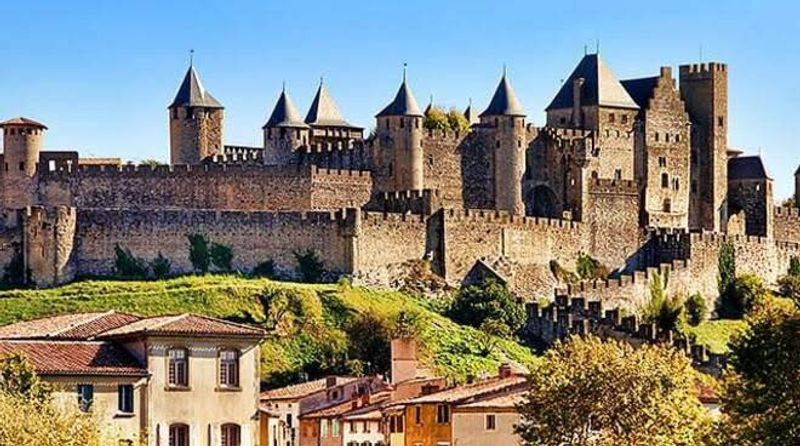
The double-walled citadel of Carcassonne rises like a medieval fantasy on the plains of southern France. Its vast walls and watchtowers — restored with breathtaking precision — encircle a classic old town where knights and merchants once walked.
With fifty-two towers and three kilometers of ramparts, Carcassonne represents the ultimate medieval fortress. The restoration work in the 19th century by architect Viollet-le-Duc saved the citadel from ruin and created the magnificent structure visitors see today.
Walking between the inner and outer walls feels like entering a time machine. Wandering its cobblestones and crossing stone bridges into bastion rings feels like entering a living medieval fortress.
The Basilica of Saints Nazarius and Celsus showcases stunning stained glass windows, while the Château Comtal museum explains the citadel’s turbulent history. Summer evenings bring the fortress to life with theatrical performances and fireworks that illuminate the ancient stones.
Carcassonne remains one of Europe’s most impressive and complete medieval fortifications.
Toledo — Spain
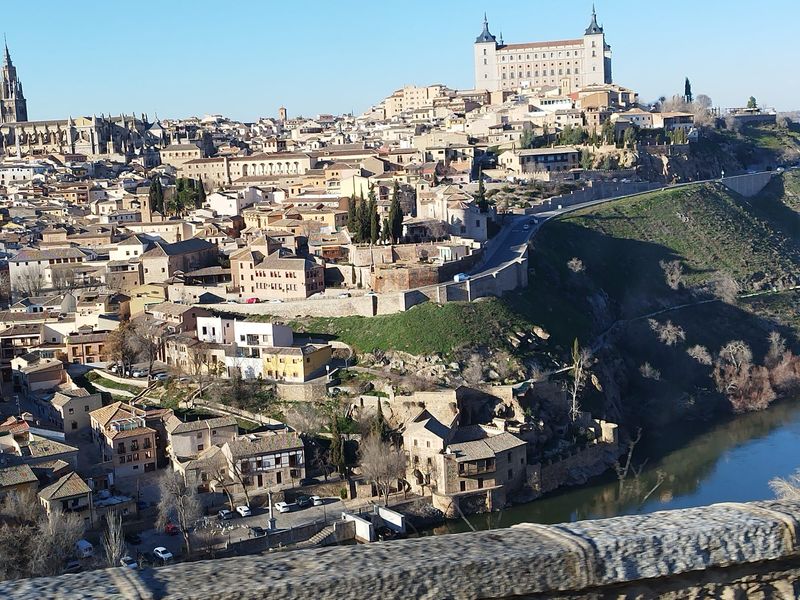
Toledo’s medieval heart thrives above the Tagus River, where Gothic churches, synagogues, and ancient palaces reflect the city’s Christian, Jewish, and Muslim heritage. Narrow cobbled streets lead to panoramic viewpoints and hidden courtyards that whisper of knights and scholars alike.
Known as the City of Three Cultures, Toledo preserves monuments from each religious tradition in remarkable proximity. The cathedral dominates the skyline with soaring Gothic architecture, while the Synagogue of Santa María la Blanca showcases Mudéjar artistry.
Moorish gates and bridges remind visitors of Toledo’s complex medieval past. Its storied past and layered culture make Toledo an unforgettable place for history lovers.
The city was Spain’s capital during the medieval period and remains a treasure trove of art, including works by El Greco who made Toledo his home. Crossing the Alcántara Bridge or exploring the Alcázar fortress provides sweeping views of this magnificent medieval city perched dramatically above the river.
Bruges — Belgium
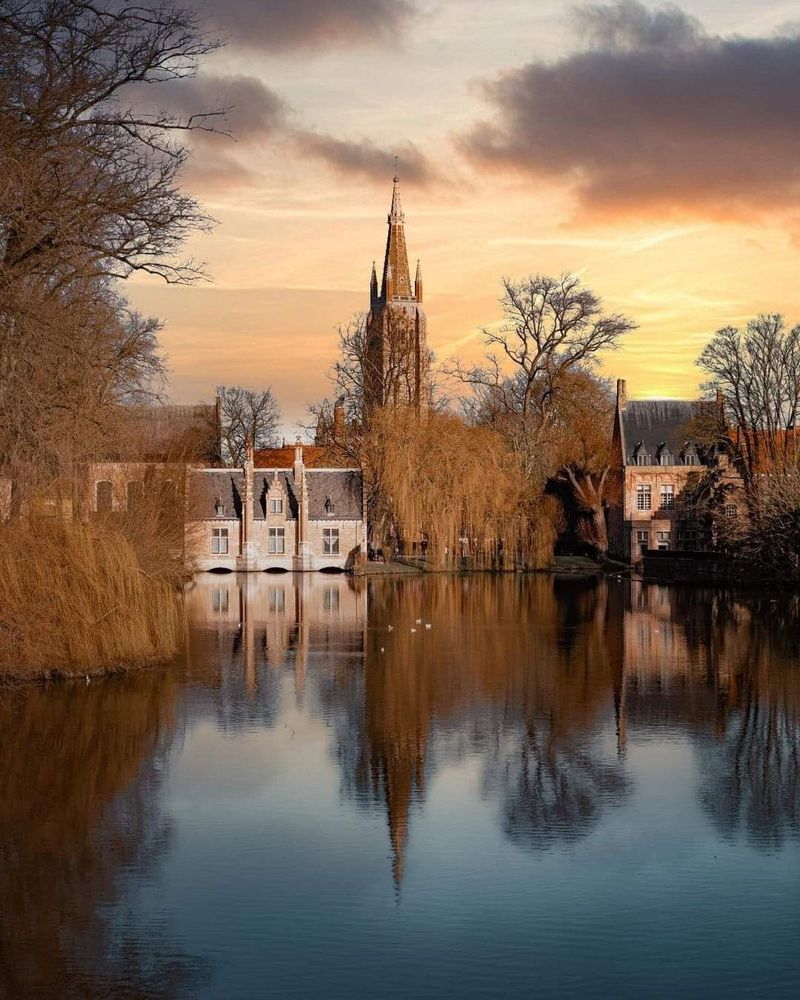
Often called the Venice of the North, Bruges’ medieval canals and brick façades feel like stepping into a storybook. Meandering waterways, timbered façades, and the towering Belfry overlooking Market Square create a romantic medieval ambience that enchants all who visit.
The canal network once made Bruges one of Europe’s wealthiest trading cities during the medieval period. Today, boat tours glide past centuries-old buildings, offering unique perspectives on the town’s architectural treasures.
The Belfry’s 366 steps lead to breathtaking views and a close encounter with the historic carillon bells. Its chocolate cafés and artisanal shops only add to the old-world charm.
Bruges preserves medieval traditions through its lace-making workshops, brewery tours in historic buildings, and annual Procession of the Holy Blood. The Markt square buzzes with life, surrounded by guild halls with stepped gables.
Walking Bruges at night, when lamplight reflects on canal waters, creates unforgettable medieval magic.
Siena — Italy
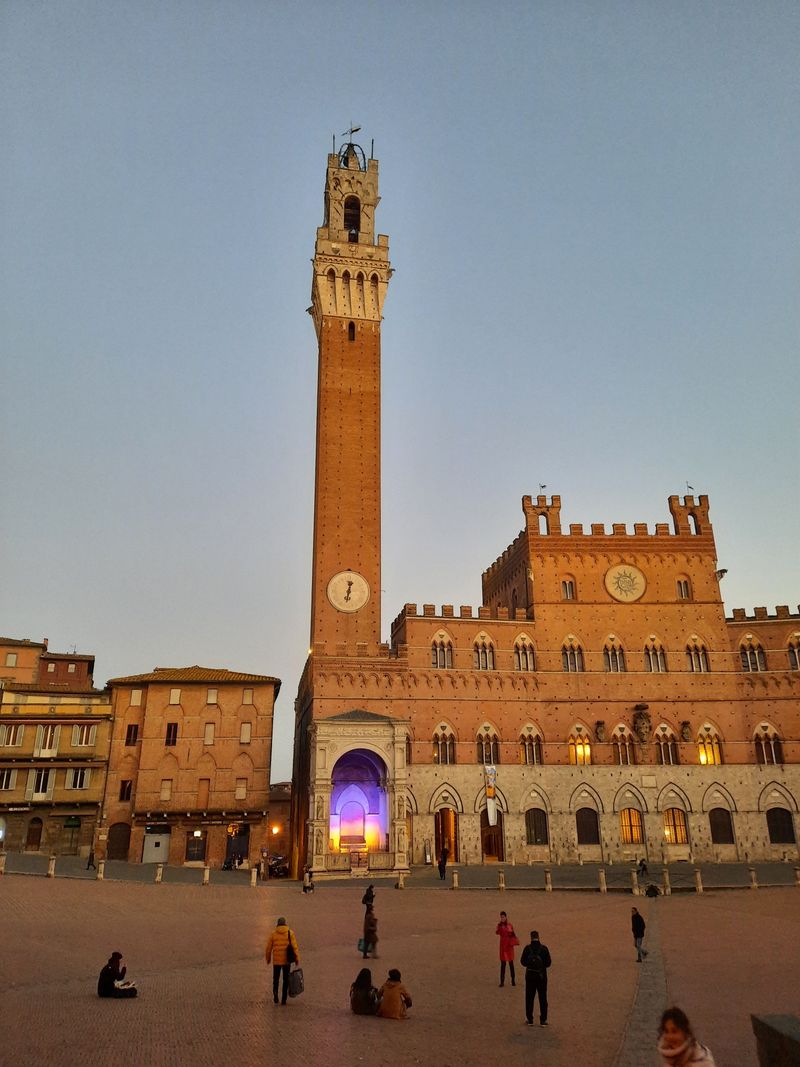
Siena’s central Piazza del Campo is one of Europe’s most striking medieval squares, where history continues to unfold with festivals like the Palio. Gothic cathedrals and narrow walkways reveal layers of Tuscan life, while terracotta rooftops and elegant palazzi embody centuries of civic pride and heritage.
The shell-shaped piazza slopes downward toward the Palazzo Pubblico and its soaring Torre del Mangia, creating a natural amphitheater for public gatherings. Twice each summer, the Palio horse race transforms the square into a medieval spectacle of neighborhood rivalry and tradition.
Climbing the tower rewards visitors with panoramic views across Siena’s red-tiled rooftops. The cathedral, with its striped marble facade and ornate interior, ranks among Italy’s finest Gothic churches.
Medieval alleys branch off from the main square, leading to hidden fountains, artisan workshops, and quiet courtyards. Siena’s medieval character remains vibrant and authentic, making it essential for anyone exploring Tuscany’s historic treasures.
Tallinn — Estonia
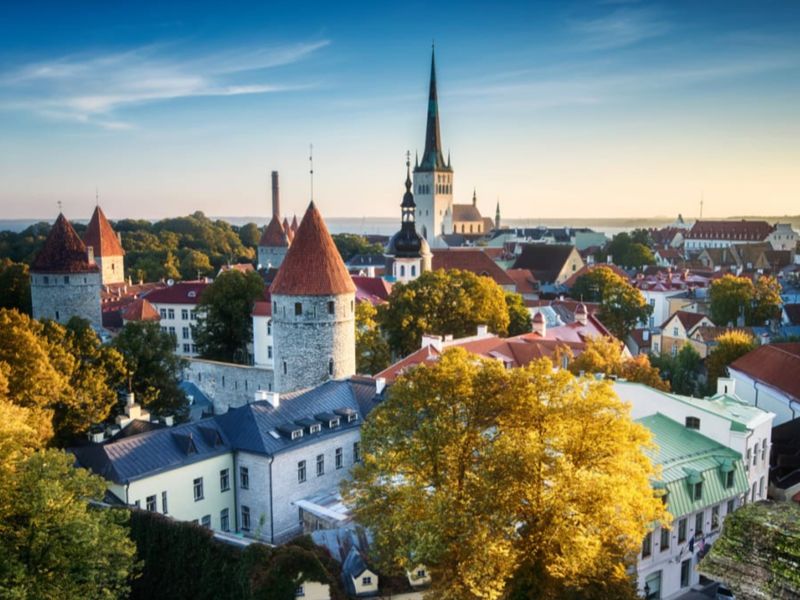
Tallinn’s medieval Old Town — a UNESCO World Heritage site — is one of Europe’s most intact and atmospheric historic centres. Gothic spires punctuate the skyline above cobbled streets and market squares where merchants once traded.
The town walls remain remarkably complete, with towers like Fat Margaret and Tall Hermann still standing guard. Walking through Viru Gate transports you into a world of guild halls, merchant houses, and centuries-old churches.
Raekoja Plats, the Town Hall Square, serves as the heart of medieval Tallinn with its Gothic town hall dating from the 14th century. Its fairytale ambience and Baltic flair make it a top destination for travellers seeking old-world charm.
The medieval pharmacy, still operating since 1422, claims to be one of Europe’s oldest. Tallinn successfully balances its medieval heritage with modern Estonian culture, hosting Christmas markets, medieval festivals, and contemporary art in historic settings.
Exploring the Upper Town offers stunning views over the red rooftops to the Baltic Sea beyond.
Veliko Tarnovo — Bulgaria
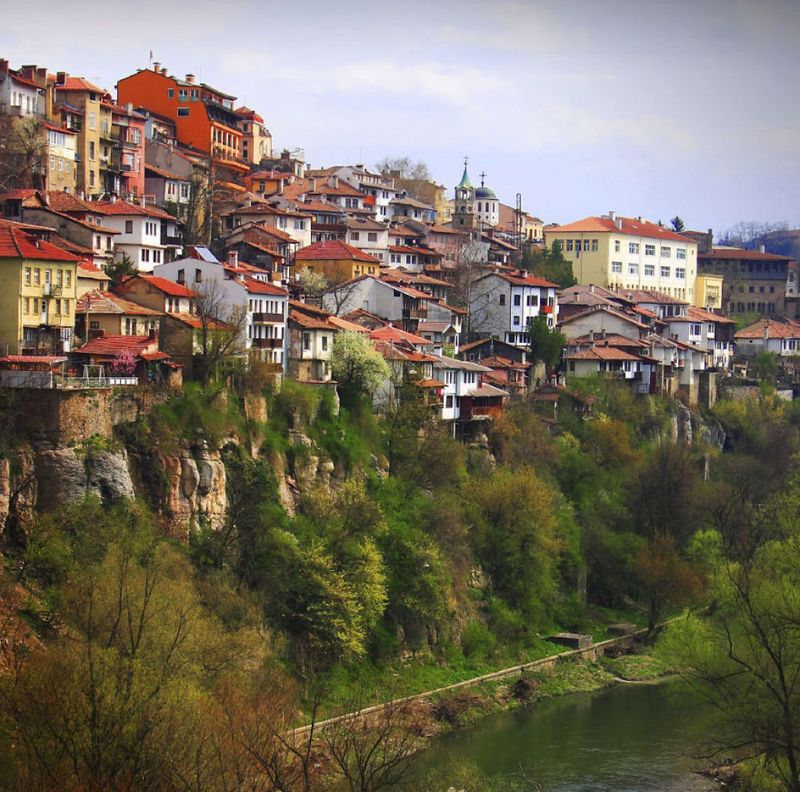
Once the capital of Bulgaria’s Second Empire, Veliko Tarnovo’s medieval fortresses and hillside streets deliver raw historical drama. Tsarevets Fortress dominates the skyline and invites visitors to imagine royal courts and battles long past, while its Old Town’s craft shops and cafés inspire slow exploration.
The fortress sits atop a rocky hill encircled by the meandering Yantra River, creating a naturally defensible position that served Bulgarian tsars for centuries. Walking through the fortress gates and climbing to the Patriarch’s Complex reveals stunning panoramic views.
Evening sound and light shows illuminate the fortress walls, narrating Bulgaria’s medieval glory through music and projections. The Samovodska Charshiya, a restored artisan quarter, preserves traditional crafts like metalworking, pottery, and woodcarving in medieval-style workshops.
Steep cobbled streets connect different levels of the town, with houses seemingly stacked on top of one another. Veliko Tarnovo’s dramatic setting and authentic medieval atmosphere make it one of Eastern Europe’s most underrated historic destinations.
Albarracín — Spain
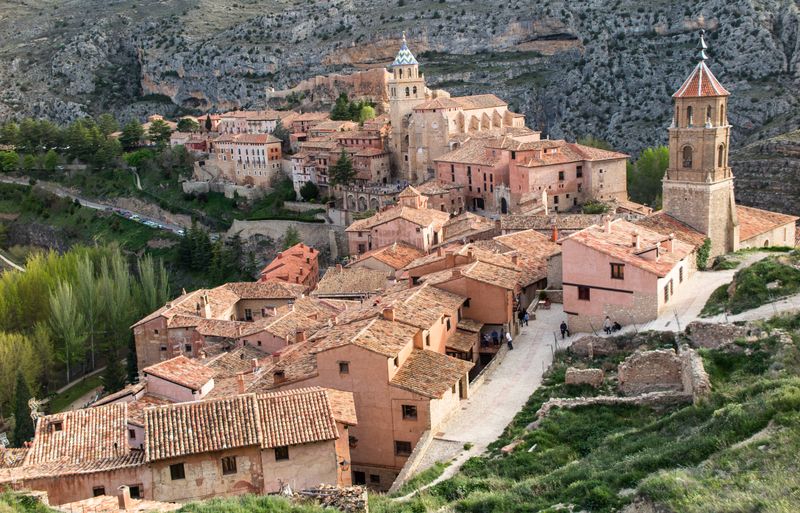
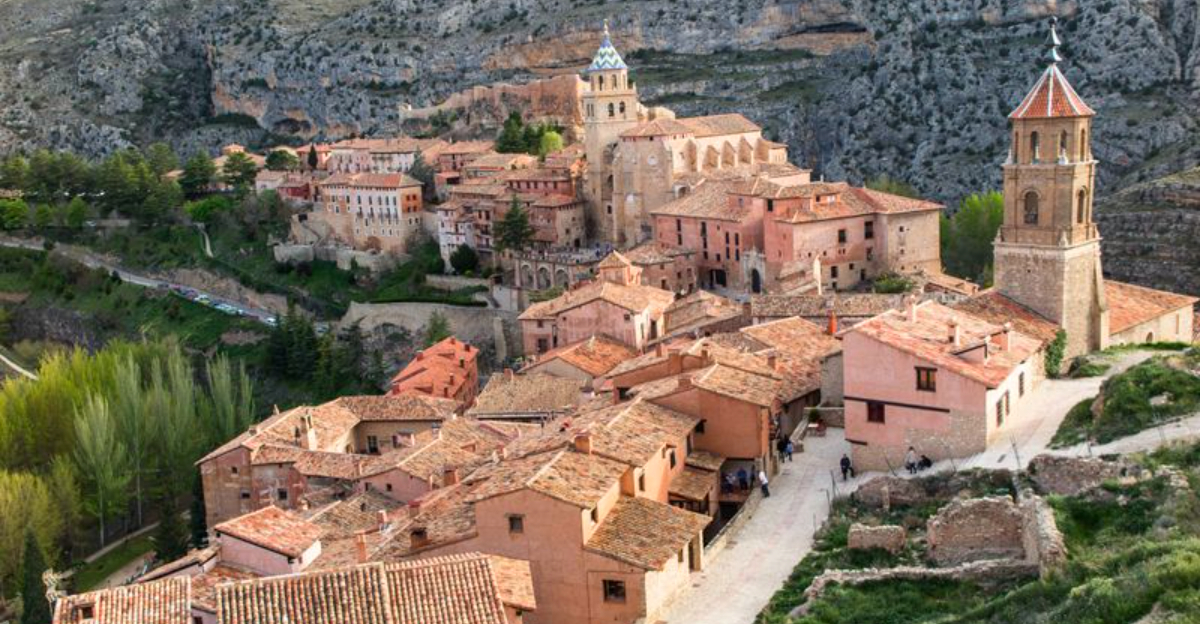
Nestled in the hills of central Spain, Albarracín feels like a tiny medieval city captured in amber. Terracotta-tinted buildings, winding lanes, and the remains of ancient walls create a storybook setting, complete with historic churches and scenic viewpoints over the Guadalaviar River.
The town’s distinctive pink-hued architecture comes from the local stone and plaster, giving Albarracín a warm, glowing appearance especially at sunset. Narrow streets twist upward through the medieval quarter, barely wide enough for two people to pass.
The cathedral and castle ruins crown the hilltop, offering breathtaking views of the surrounding Sierra de Albarracín. Its rich cultural layers and unique hues make this one of Spain’s most unforgettable yet under-the-radar medieval towns.
Moorish influence remains visible in the town’s layout and fortifications, reflecting its Islamic past before Christian reconquest. Walking Albarracín’s ancient streets feels like discovering a secret treasure, far from tourist crowds yet bursting with authentic medieval character and natural beauty.



