 Unearth The Voyage

Success rarely comes gift-wrapped. Some of the biggest names in Hollywood, music, and business clawed their way up from situations most of us would never survive.
Before the red carpets and Grammy Awards, there were shelters, park benches, and cars that doubled as bedrooms. Their stories prove that rock bottom can sometimes be the best foundation for something extraordinary.
Jim Carrey: He Learned to Make People Laugh While Surviving
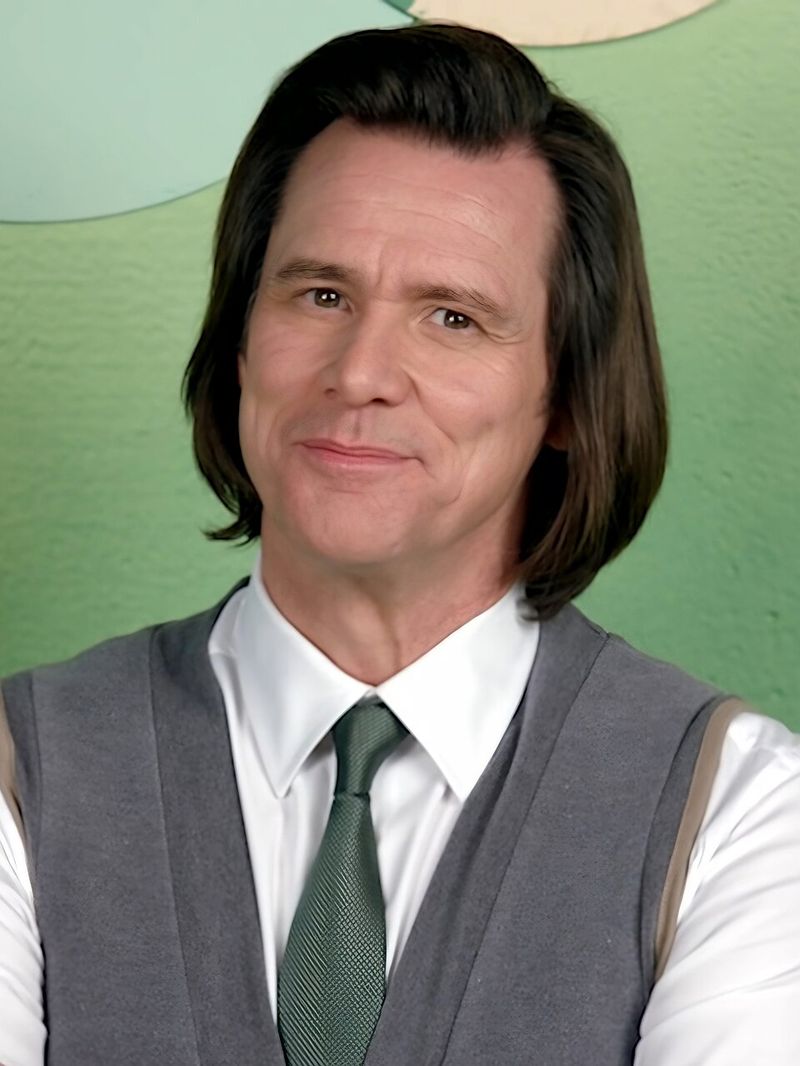
Jim Carrey was cracking jokes while the world was cracking down on his family. When his father lost his job, the Carreys packed up their life and moved into a van, then a tent on a relative’s lawn.
Jim was a teenager doing janitorial work at a factory to help keep the family afloat.
Most kids that age are worried about homework. Carrey was worried about dinner.
But instead of letting the misery win, he leaned hard into humor. He would perform for his coworkers just to lighten the mood.
That survival instinct became his superpower. Comedy was not just a talent for him; it was a coping tool that eventually became a career worth hundreds of millions.
Next time you watch “The Mask” and lose it laughing, just remember: that goofball once lived in a tent and still found reasons to smile.
Halle Berry: Oscar Winner Who Once Slept in a Shelter

Before the Academy Award, the magazine covers, and the Bond girl status, Halle Berry was sleeping in a New York City homeless shelter. She had moved to the city chasing an acting career with barely any money and zero backup plan.
When the cash ran out completely, the shelter became her temporary address. She has said the experience taught her the value of a dollar in a way nothing else could.
Her mother reportedly refused to send money, believing tough love would build tougher character.
Spoiler alert: it worked. Berry went on to become the first Black woman to win the Academy Award for Best Actress, a milestone that still stands today.
Her story is a reminder that where you sleep tonight does not determine where you stand tomorrow. Rock bottom has a way of launching people straight to the top when they refuse to stay there.
Tyler Perry: His Office Was the Backseat of a Geo Metro

Tyler Perry once called the backseat of a Geo Metro his home office. Not metaphorically.
That tiny car was literally his shelter while he was grinding away trying to launch his career in Atlanta.
He poured his savings into staging his first play, “I Know I’ve Been Changed,” and it flopped. Then he tried again.
And again. For years, the audience barely showed up, the money was gone, and the car was the only roof he had.
Most people would have quit after year one. Perry kept going for six.
Today he owns an entire studio lot that was once a military base. Tyler Perry Studios sits on 330 acres in Atlanta, which is kind of poetic when you consider the man once had 0 acres and a Geo Metro.
His journey is proof that stubbornness, when aimed in the right direction, is basically a superpower.
Daniel Craig: James Bond Once Fought to Afford a Place to Sleep

Before Daniel Craig was shaking martinis and saving the world as 007, he was shaking from the cold on a park bench in London. As a young actor trying to break into the industry, money was nowhere to be found and a warm bed was a luxury he simply could not afford.
Park benches became his crash pad during some of his leanest years. The acting world is brutally competitive, and Craig was just another hopeful face in a very long line of hopeful faces.
Rejection was practically his roommate.
Fast forward a few decades and Craig became one of the highest-paid Bonds in the franchise’s history. His portrayal of the spy was grittier and more emotionally raw than any before him, and honestly, that makes total sense.
A man who has actually slept rough knows what desperation looks like. He just happened to wear a tuxedo while channeling it.
Drew Carey: He Sold Plasma to Eat, Then Made Millions Laugh

Drew Carey sold his plasma for $40 a pop just to afford food during his homeless stretch in Las Vegas. When you are selling a part of yourself literally just to eat boxed macaroni, life has officially hit the floor.
And yet, Carey treated it like material.
He scraped together change, couch-surfed, and somehow kept his sense of humor intact through the whole ordeal. That refusal to be crushed by circumstances is exactly the kind of grit that later fueled his career as a stand-up comedian and sitcom star.
“The Drew Carey Show” ran for nine seasons. He hosted “The Price Is Right” for years and became one of America’s most beloved TV personalities.
Not bad for a guy who once measured wealth in plasma donations and macaroni boxes. His story is a masterclass in turning rock bottom into a punchline that eventually pays very, very well.
Eminem: Evicted and Still Writing Anyway
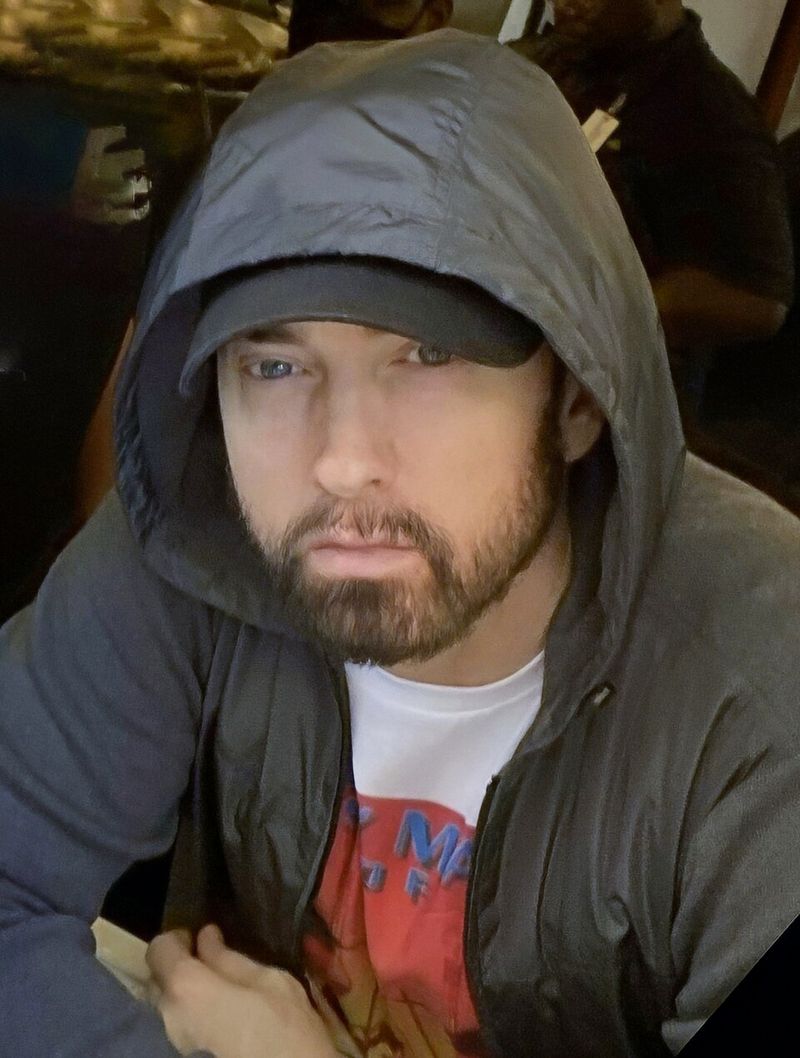
Eminem got evicted from his apartment and kept writing anyway. That single sentence basically summarizes the man’s entire personality.
Detroit in the early 1990s was rough, and Marshall Mathers was right in the thick of it, bouncing between unstable housing and couch-surfing with his daughter Hailie in tow.
Poverty was not an abstract concept for him. It was the neighborhood, the empty fridge, and the eviction notice taped to the door.
He channeled every bit of that anger and frustration straight into his lyrics, which is why his music hit so differently from anything else on the radio.
“8 Mile” is partly autobiographical, and when you know what he actually lived through, those scenes carry a completely different weight. Eminem went from getting his power shut off to winning multiple Grammy Awards and becoming one of the best-selling music artists of all time.
The pen never stopped moving.
Jewel: Living in Her Car and Setting the Record Straight

Jewel was living in her car in San Diego while performing at coffee shops for tips. A kidney infection left her without the ability to work a regular job, and when her landlord refused to let her break her lease, she simply moved into her vehicle instead.
She has always been upfront about this period and has also spent time correcting the details that get misreported. The story gets dramatized sometimes, but the core of it is real: she was genuinely homeless, genuinely sick, and genuinely still singing.
A talent scout heard her perform at a local coffee shop called the Inner Change and the rest, as they say, is folk music history. Her debut album “Pieces of You” became one of the best-selling debut albums ever.
From a car to a record deal, Jewel turned one of the most uncomfortable chapters of her life into the foundation of an incredible career.
Shania Twain: Before the Stadiums, There Was a Shelter

Long before Shania Twain was selling out stadiums in rhinestone outfits, she was a child living in a homeless shelter with her family. Poverty was not something she read about; it was her daily reality growing up in Ontario, Canada.
Her family struggled intensely, and there were periods where basic stability was simply out of reach. She has spoken about these experiences openly in interviews and in her memoir, “From This Moment On.” Food insecurity and housing instability were regular parts of her childhood landscape.
What makes her story remarkable is not just that she survived it but that she transformed it. Twain became one of the best-selling country music artists of all time, with over 100 million records sold worldwide. “Man!
I Feel Like a Woman!” has a whole new layer of meaning when you know the woman singing it grew up without a guaranteed roof over her head. That is one serious glow-up.
James Hetfield: Metallica’s Early Tour Life Included Rehearsal Room Living

Metallica did not start in a mansion. James Hetfield and the band were basically squatting in their own rehearsal space in the early days, using it as a bedroom because they could not afford anything else.
Their early Los Angeles grind involved more survival than rock glory.
Fellow musicians and rock press have documented that the band was told to live in their rehearsal room while trying to record and make connections. It was cramped, loud when anyone practiced, and definitely not glamorous.
But it was free, and free mattered a lot back then.
From that dusty rehearsal room, Metallica built one of the most influential metal careers in history. Albums like “Master of Puppets” and “The Black Album” became genre-defining classics.
Hetfield went from sleeping next to drum kits to headlining Download Festival. The rehearsal room origin story makes the journey feel even more earned, honestly.
Lil Wayne: A Teenage Talent Taken In by His Mentor

Lil Wayne was just a kid when Birdman essentially took him under his wing and gave him a place to belong. Wayne had grown up in a tough neighborhood in New Orleans, and his path could have gone in a very different direction without that intervention.
Birdman has spoken about bringing Wayne and fellow rapper B.G. into his world as teenagers, providing mentorship, stability, and a platform through Cash Money Records. For Wayne, that relationship was not just a music deal; it was a lifeline during some very vulnerable years.
Wayne started rapping professionally at age nine and released his debut album at fifteen. He went on to become one of the most influential rappers of his generation, with mixtapes that literally changed how the genre worked.
The kid from Hollygrove became a legend, and it started with someone choosing to invest in his potential when it mattered most.
J.K. Rowling: As Poor as Possible Without Being Homeless

J.K. Rowling described her lowest point with remarkable precision.
She said she was “as poor as it is possible to be in modern Britain without being homeless.” That is not a metaphor. She was a single mother on welfare, clinically depressed, and writing the first Harry Potter book in Edinburgh cafes while her daughter slept in the pram beside her.
She had gone through a painful divorce, moved back to the UK, and was surviving on government benefits. The manuscript she was working on had already been rejected by multiple publishers.
Most people would have binned the whole project.
Rowling did not. “Harry Potter and the Philosopher’s Stone” eventually found a publisher, sold 500 million copies worldwide, and turned her into one of the wealthiest women in Britain. From welfare to billionaire is a sentence that should not be possible, and yet here we are.
Hogwarts was built on real-life struggle.
Stephen King: Broke, Exhausted, and Nearly Threw Carrie Away

Stephen King was teaching English during the day and writing in a cramped laundry room at night. He and his wife Tabitha were flat broke, the phone had been disconnected, and the manuscript he was working on felt like a lost cause.
He threw the early pages of “Carrie” in the trash.
Tabitha fished them out. She read them, told him the story was worth finishing, and pushed him to keep going.
That single act of faith from his wife may be responsible for one of the most successful horror careers in literary history.
King sold “Carrie” for a $2,500 advance, which felt like a fortune at the time. The paperback rights sold for $400,000.
He has since written over 60 novels and sold more than 350 million copies worldwide. Not bad for a manuscript that almost ended up permanently buried in a laundry room garbage can.
Charlie Chaplin: The World’s Funniest Tramp Was Shaped by Real Hardship
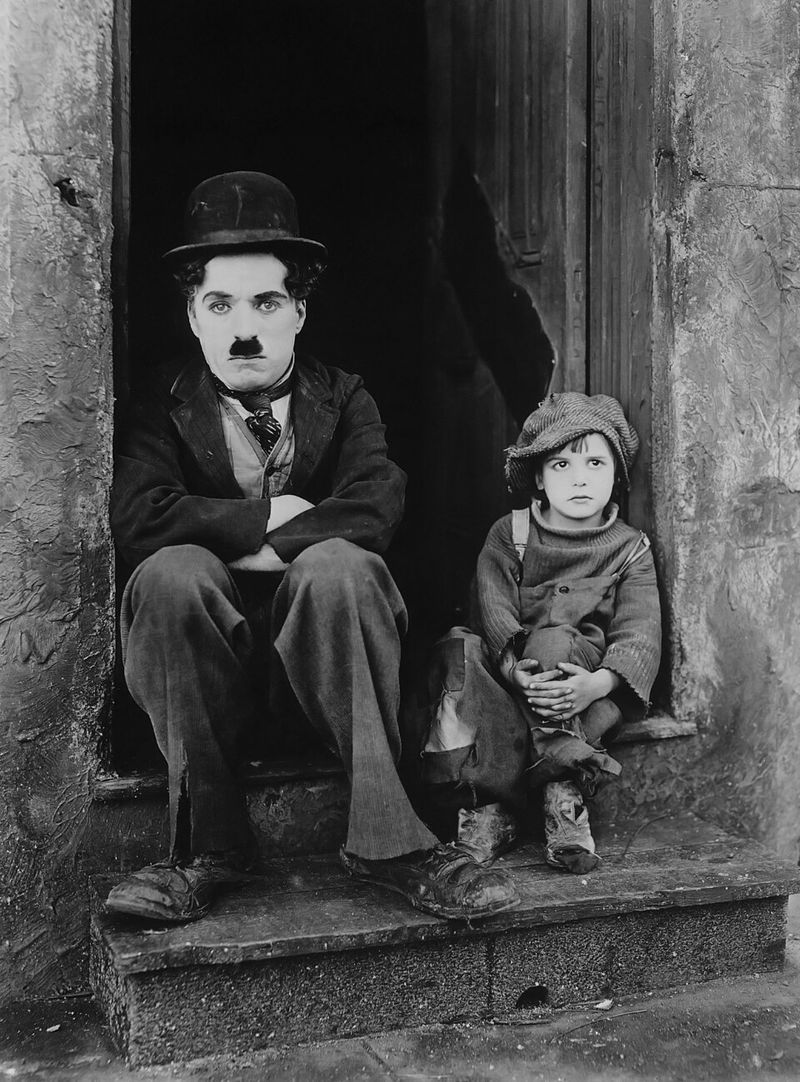
Charlie Chaplin’s most iconic character was a lovable tramp, and that was not purely a creative choice. Chaplin knew poverty from the inside.
As a child in Victorian London, he and his brother Sydney spent time in a workhouse after their mother could no longer care for them.
The workhouse was a brutal institution where the destitute were housed in exchange for hard labor. For a child, it was a traumatic and humiliating experience.
His mother struggled with severe mental illness, and the instability of his early life left deep marks.
Rather than bury those experiences, Chaplin transformed them into art. The Little Tramp became one of cinema’s most beloved figures precisely because audiences felt the genuine humanity behind the comedy.
Chaplin did not just perform poverty for laughs. He remembered it.
That authenticity made him a legend whose work still resonates more than a century later.
Steve Jobs: Sleeping on Floors and Returning Bottles for Food Money

Steve Jobs described his college years with the kind of candor most tech billionaires skip entirely. He dropped out of Reed College because he felt guilty about the tuition costs, then spent 18 months crashing on dorm room floors and returning Coke bottles for the five-cent deposit to scrape together food money.
He walked seven miles every Sunday to get a free meal at a Hare Krishna temple. He slept in other students’ rooms because he had no room of his own.
By most definitions, he was homeless during this stretch of his life.
Jobs shared all of this himself in his famous 2005 Stanford commencement speech, which means the source does not get more reliable than that. The man who would later launch the iPhone was once surviving on recycled bottle deposits and temple dinners.
That gap between where he started and where he ended up is genuinely staggering.
Howard Schultz: Public Housing Shaped His Entire Mission

Howard Schultz grew up in the Canarsie Bayview housing projects in Brooklyn, and he has never tried to hide it. His family lived in federally subsidized housing, and the financial anxiety of that environment stayed with him long after he left.
When his father broke his ankle and lost his job with no health insurance or workers’ compensation to fall back on, young Schultz watched the whole family spiral. That image of his father helpless and unprotected never left him.
It directly shaped how he built Starbucks. Schultz was one of the first major American CEOs to offer health benefits to part-time employees, a decision rooted entirely in what he watched his father go through.
The green aprons and pumpkin spice lattes are fun, but the real Starbucks story starts in a Brooklyn housing project with a kid who decided he would do things differently. And he actually followed through.
Michael Oher: Foster Care, Homelessness, and Then the NFL

Michael Oher’s childhood reads like something a screenwriter invented, except every part of it actually happened. He moved through more than a dozen foster homes as a kid in Memphis, with stretches of genuine homelessness mixed in between placements that did not stick.
He was enrolled in school only sporadically, had almost no consistent adult support, and was falling through every crack the system had to offer. By the time he was a teenager, the odds against him were staggering.
Then a family took him in, and a football coach saw what he was capable of. Oher went on to play in the NFL and win a Super Bowl ring with the Baltimore Ravens in 2013.
His story became the film “The Blind Side,” though he has since contested how that film portrayed his journey. Whatever the Hollywood version got wrong, the real story of survival and resilience is undeniably powerful.
Kurt Warner: From Stocking Shelves to Super Bowl Legend
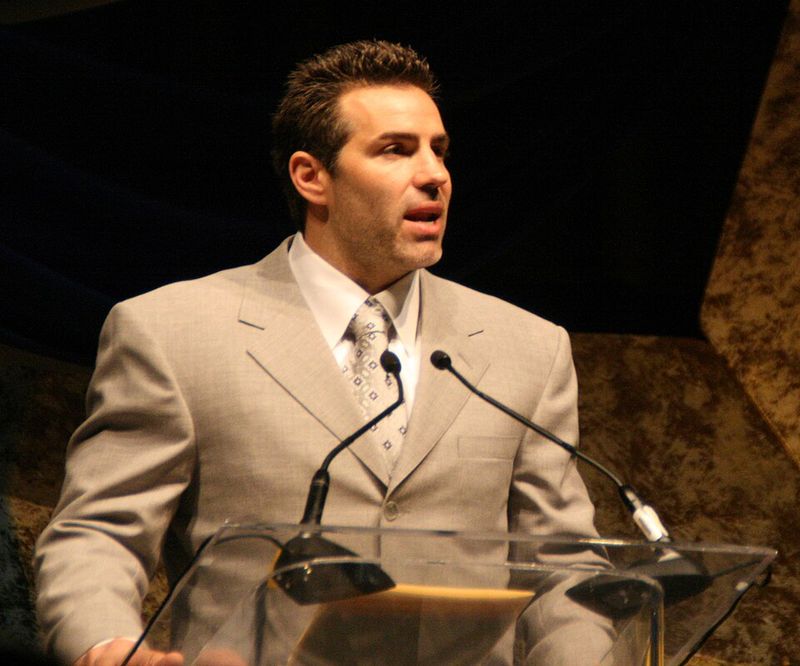
Kurt Warner was stocking shelves at a Hy-Vee grocery store in Iowa for $5.50 an hour while trying to keep his NFL dream alive. He had been cut from the Green Bay Packers practice squad and had basically nowhere to go.
The grocery store was the backup plan nobody wanted.
He was living in his girlfriend’s parents’ basement at the time, which is not exactly the glamorous athlete lifestyle. But Warner kept training, kept believing, and eventually got another shot with the St. Louis Rams through NFL Europe.
In 1999, he went from grocery store employee to Super Bowl MVP in what remains one of the most jaw-dropping Cinderella stories in sports history. The Rams won Super Bowl XXXIV, and Warner threw for 414 yards in the game.
From shelf-stocker to MVP trophy holder is a career arc that no screenwriter would dare pitch because nobody would believe it. Warner lived it anyway.



