Some places in Europe look so perfect that you half-expect a film crew to jump out from behind a flower box. I visited Hallstatt a few years ago and genuinely stopped walking because I thought something that pretty had to be a trick.
These towns are not touched-up travel photos or clever marketing. They are real places, and every single one of them earns its reputation without even trying.
Hallstatt, Austria
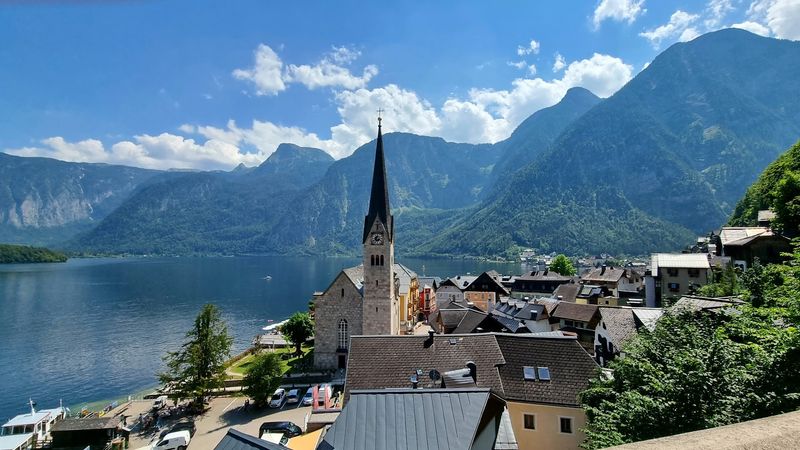
Salt built this town, and beauty kept it famous. Hallstatt sits between a mirror-like lake and cliffs so steep the village barely has room to breathe.
UNESCO recognized the entire surrounding landscape as a World Heritage Site, not just for its looks but for its ancient connection to salt mining. That history runs deep here, literally.
The salt mines above town are among the oldest in the world.
Hallstatt is tiny. Fewer than 800 people live here, yet it draws over a million visitors a year.
The numbers feel impossible when you are standing on its narrow lakeside promenade. There is one main street, and it hugs the water like it has nowhere else to go.
Getting here requires effort, which is part of the charm. You arrive by ferry or by winding mountain road.
Either way, the first view of those pastel houses stacked against the rock face earns every minute of the journey.
Colmar, France
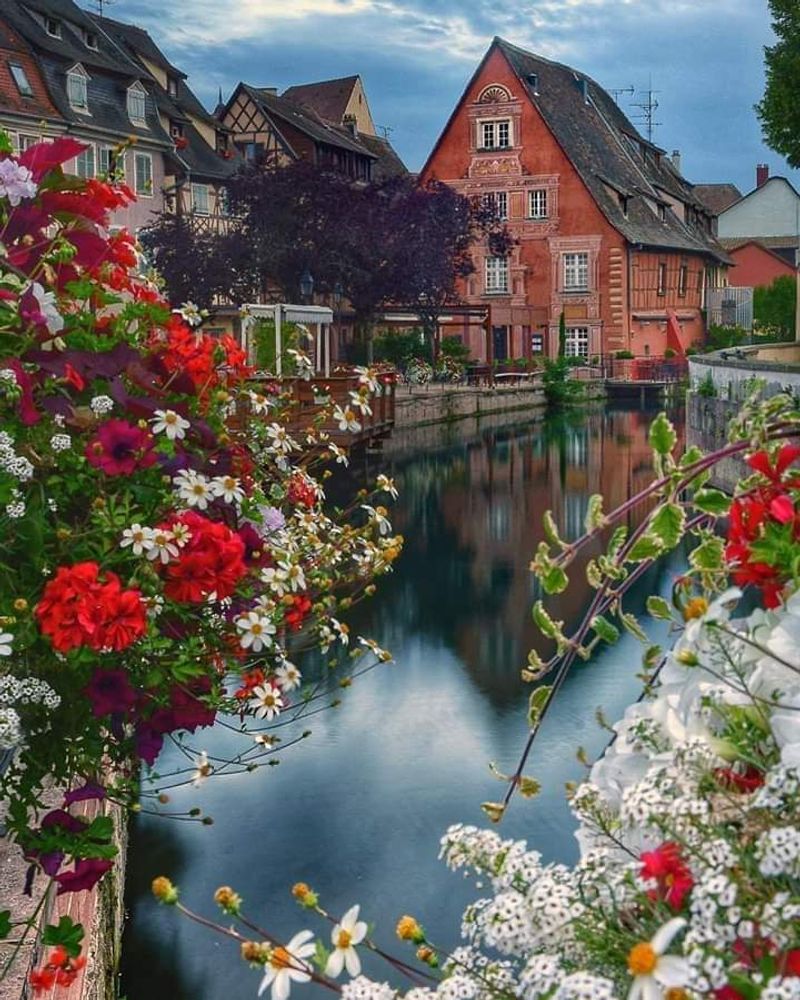
Nobody warned me that an entire French town could look like a painting someone forgot to frame. Colmar’s old center is a jumble of candy-colored half-timbered houses leaning over canals, and every corner turns into another postcard.
The Alsatian architectural style is specific and bold, mixing German structure with French flair in a way that feels genuinely original.
The Little Venice quarter is the obvious highlight, where boats drift past flower-draped facades that have been standing since the 15th century. But Colmar rewards wandering beyond the famous spots.
Side streets, small squares, and hidden courtyards all carry the same careful beauty without the crowds.
Colmar also has serious food credentials. Alsatian cuisine is hearty, warming, and worth every calorie.
Choucroute garnie and tarte flambee are local staples that pair very well with regional wines. Visiting on an empty stomach is, frankly, a strategic error you will only make once.
Rothenburg ob der Tauber, Germany
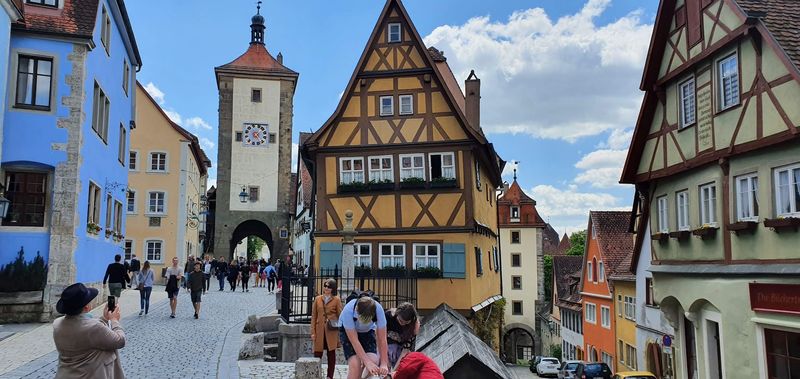
Rothenburg ob der Tauber is so thoroughly medieval that walking its walls feels like a history class nobody asked for but everyone secretly enjoys. The town’s fortifications are almost entirely intact, which is rare for anywhere in Europe.
Most medieval towns lost their walls to expansion or war. Rothenburg somehow kept both its walls and its original street layout.
The Christmas Market here is legendary, running from late November through December. Germans take Christmas markets seriously as a national sport, and Rothenburg competes at the highest level.
The Reiterlesmarkt fills the main square with lights, spiced wine, and enough wooden ornaments to decorate a small country.
One local specialty worth tracking down is Schneeballen, a fried pastry that looks like a snowball dusted with powdered sugar. It is dense, crumbly, and slightly addictive.
Every bakery in town sells a version, which tells you everything you need to know about how seriously Rothenburg takes its traditions.
Český Krumlov, Czechia
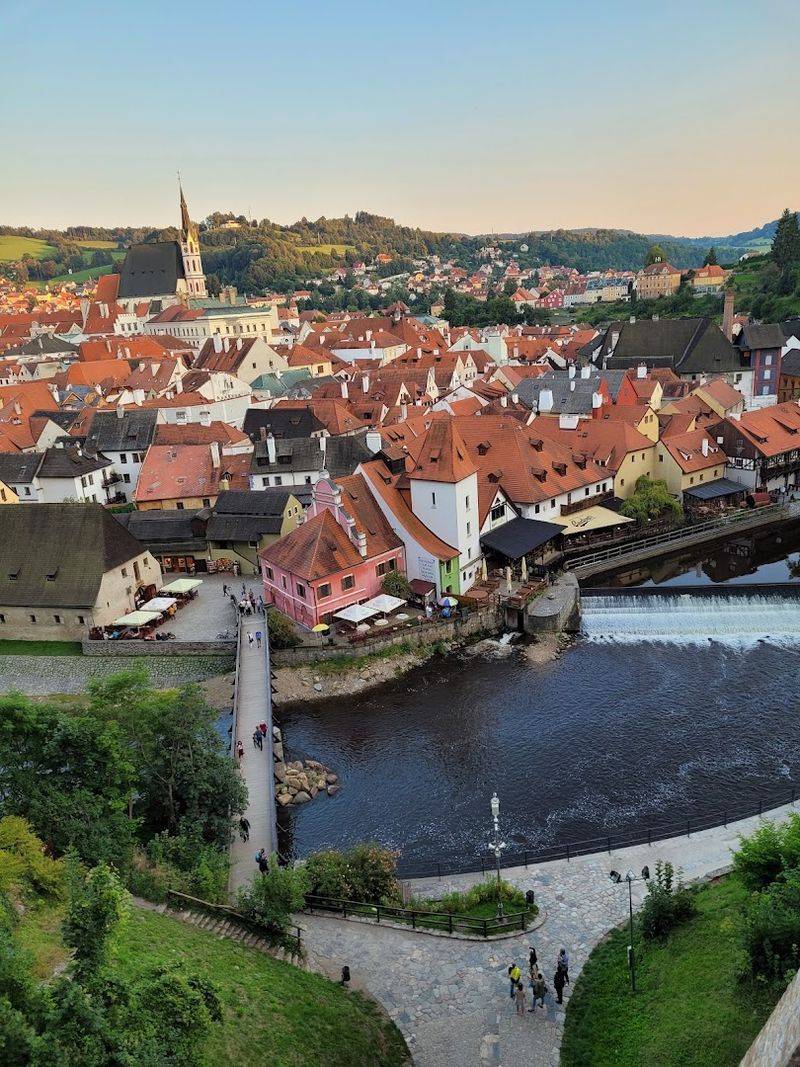
A 13th-century castle, a river that bends around the town like a protective arm, and rooftops that look hand-painted in terracotta. Český Krumlov is the kind of place that makes you question whether the real world has been doing enough. UNESCO called it a unique example of a small medieval Central European town with exceptional heritage preservation, which is the polite academic way of saying it is breathtaking.
The castle complex is enormous for a town this size, with 40 buildings spread across multiple courtyards. The baroque theater inside is one of the best-preserved in all of Europe.
Guided tours fill up fast, so booking ahead is genuinely good advice rather than a travel cliche.
Český Krumlov gets crowded in summer, but even peak-season crowds cannot dull the impact of that skyline. Arriving early morning or staying into the evening, after tour groups leave, gives you the town in a completely different mood.
Quieter. More cinematic.
Worth the alarm clock.
Giethoorn, Netherlands
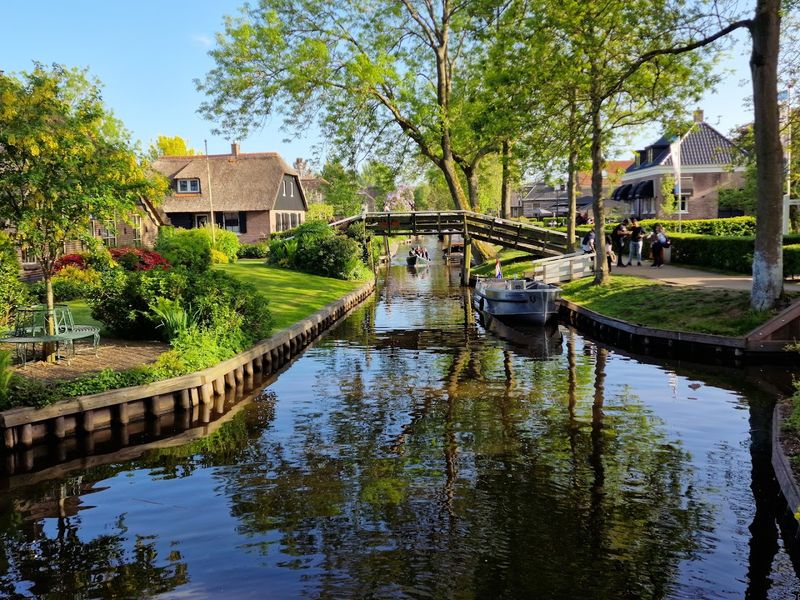
No roads. Let that sink in.
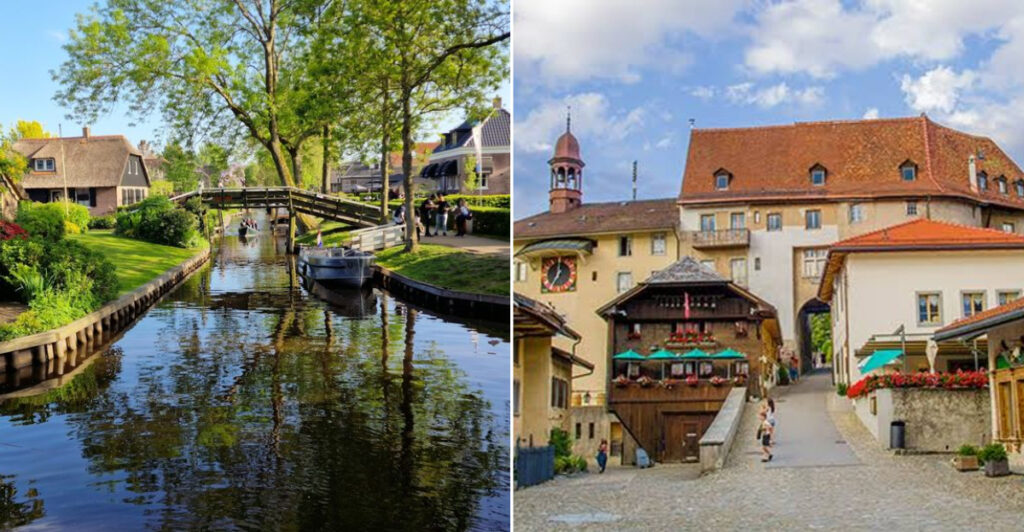
Giethoorn is a Dutch village where the main streets are canals and the traffic is whisper-quiet boats. Official tourism calls it a place best experienced from the water, which is not just marketing.
It is practical geography. Remove roads from any town and suddenly the whole place looks like it was designed by someone who really disliked cars.
Thatched farmhouses line the banks, connected by over 50 wooden footbridges. The bridges are low and charming and slightly inconvenient if you are tall.
Electric boats are available to rent, and navigating the narrow channels is equal parts relaxing and mildly terrifying for first-timers.
Giethoorn sits in the Overijssel province, a region most international tourists skip entirely. That makes it feel like a genuine discovery even though it has been famous in the Netherlands for decades.
Visiting on a weekday in spring or autumn gives you the canals with far fewer boats and far more of the quiet magic this village quietly hoards.
Alberobello, Italy
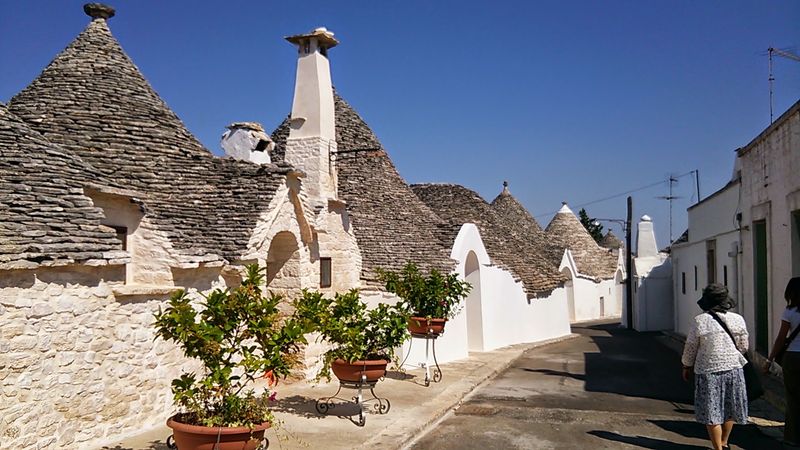
Trulli are the architectural equivalent of a plot twist. These whitewashed, cone-roofed stone houses look invented rather than evolved, and yet they are ancient.
UNESCO protects the trulli of Alberobello specifically because their dry-stone construction technique is a rare survival of an old building method that still functions today. They were not built for Instagram.
They were built for people, which somehow makes them even more impressive.
The Rione Monti district holds over a thousand trulli clustered together on a hillside, creating one of the most distinctive skylines in all of Italy. Walking through the lanes feels genuinely surreal.
The roofs are painted with symbols whose meanings have been debated for centuries, adding a layer of mystery to the visual spectacle.
Alberobello is in Puglia, the heel of Italy’s boot, and the surrounding region is worth exploring. Locorotondo, Cisternino, and Ostuni are all nearby and equally charming, making this corner of southern Italy one of the best-value road trip routes on the continent.
Bled, Slovenia
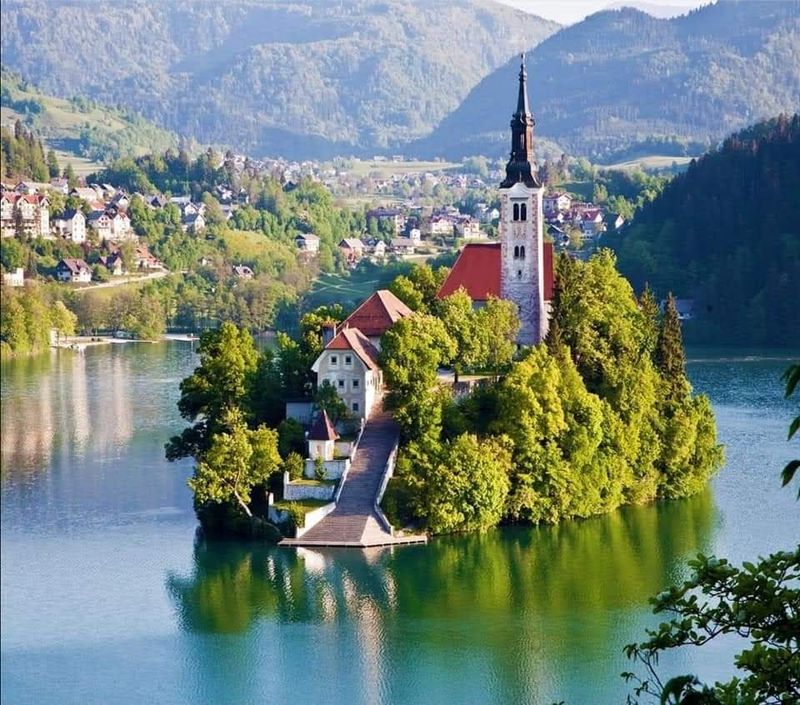
Lake Bled has a church on an island. The island sits in a lake.
The lake has a castle on a cliff above it. Behind the castle, the Julian Alps rise into the clouds.
At some point, Slovenia just started showing off. The combination of these four elements in one frame produces a view so composed it feels almost unfair to everywhere else.
The traditional way to reach the island is by pletna, a flat-bottomed wooden boat rowed by local oarsmen using a specific standing technique passed down through families. It is not just scenic transport.
It is living heritage. Ringing the church bell 99 times is said to grant a wish, which explains the queue at the bell rope.
Bled is small but well set up for visitors. The surrounding Triglav National Park offers hiking, cycling, and kayaking for anyone who needs more than just a beautiful view to keep them occupied.
Slovenia is still underrated overall, which means Bled rewards the traveler who actually shows up.
Sintra, Portugal
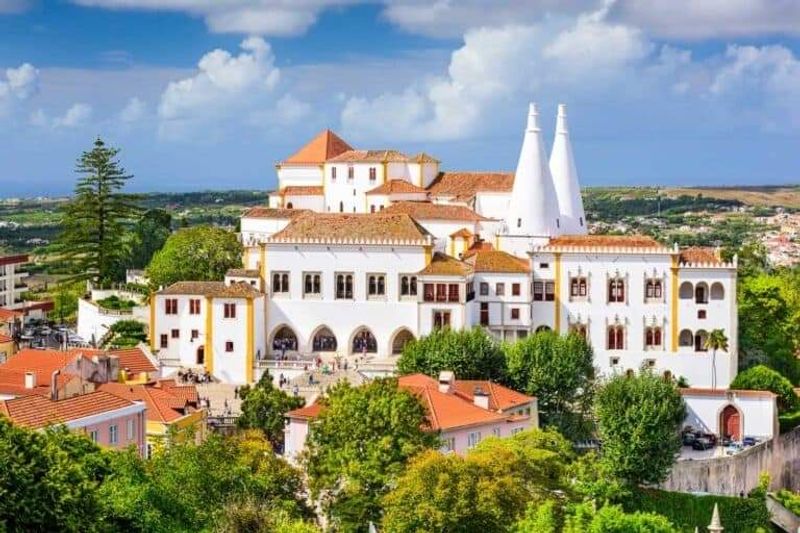
Sintra is what happens when royalty had unlimited budgets, eccentric taste, and a mountain range to decorate. The town sits in the Serra de Sintra, a green, mist-wrapped range that feels genuinely otherworldly on foggy mornings.
UNESCO classified it as a cultural landscape, not just a heritage site, because separating the architecture from the natural setting here is basically impossible.
Pena Palace is the showstopper: a riot of yellow, red, and blue towers that looks like every fairy tale castle merged into one very confident structure. Quinta da Regaleira runs a close second, with its hidden tunnels, Masonic symbolism, and a spiral well that descends into the earth like something from a fantasy novel.
The town center itself is worth lingering in. Pastel de nata from a local bakery, a slow walk through the old streets, and the inevitable moment where you round a corner and see another impossible palace on a hilltop.
Sintra does not do understatement. It never has.
Eguisheim, France
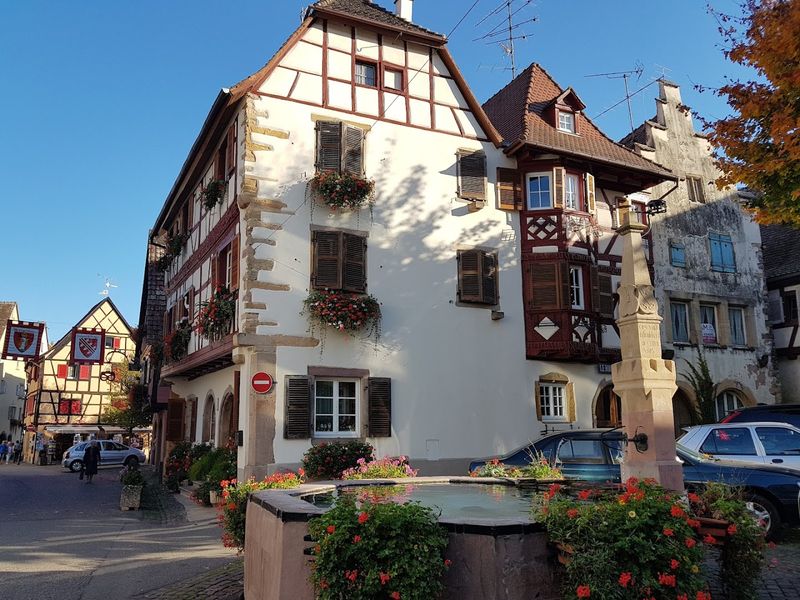
Eguisheim is the kind of village that makes you want to slow down to a shuffle. Its layout is genuinely unusual: the streets follow concentric circles around a central square, so wandering here feels less like navigation and more like a gentle orbit.
Official regional tourism lists it among the Most Beautiful Villages in France, and for once, that designation is not overselling anything.
The architecture spans the 16th and 17th centuries, and the preservation is exceptional. Window boxes overflow with geraniums in summer.
The facades are painted in shades of yellow, pink, and burnt orange that glow in afternoon light. It is compact enough to cover on foot in an hour, but most visitors take considerably longer because stopping to look is involuntary.
Eguisheim is also surrounded by vineyards on the Alsace Wine Route, so combining a village walk with a wine tasting is not just acceptable here. It is practically the recommended itinerary.
The local Gewurztraminer is worth seeking out specifically.
Gruyères, Switzerland
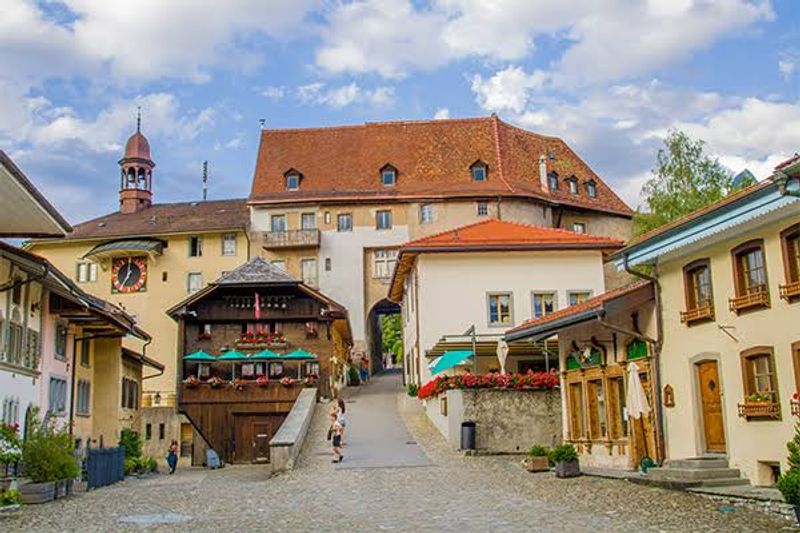
Yes, the cheese is real and yes, it is excellent. But Gruyères the town is doing far more than dairy PR.
Perched on a hill in the Fribourg region, this fully pedestrianized medieval village has a single cobblestone street running its length, lined with stone buildings, fountains, and restaurants that have been feeding travelers for centuries. No cars.
No clutter. Just a very well-organized hill.
The castle at the far end of the street dates back to the 13th century and houses a museum covering local history and art. One wing contains a permanent H.R.
Giger museum, dedicated to the Swiss artist who designed the creature from the Alien films. That juxtaposition of medieval charm and science-fiction horror is, to put it mildly, unexpected.
Gruyères rewards a half-day visit at minimum. The cheese factory and the chocolate factory nearby are both genuinely worth adding to the itinerary, not as tourist traps but as legitimate Swiss cultural experiences.
Arriving hungry is strongly recommended.
Óbidos, Portugal
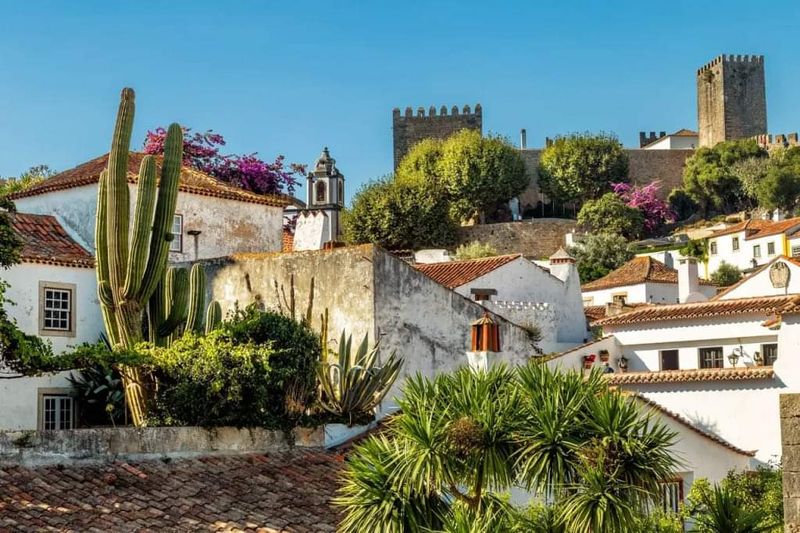
Walking through the gate into Óbidos feels like the rest of Portugal politely stepped aside. The entire village sits inside medieval walls, and that enclosure changes everything about how you experience it.
Streets are narrow, whitewashed walls are trimmed in blue and yellow, and the castle at the far end anchors the whole composition. It is a town that knows exactly what it is and leans into it completely.
Portuguese kings gifted Óbidos to their queens as a wedding present, which is either the most romantic real estate transaction in history or a very effective way to avoid choosing jewelry. The tradition started in 1282 with King Dinis and Queen Isabel and continued for centuries.
The town still carries that sense of being treasured.
Ginjinha, a sour cherry liqueur, is served here in tiny chocolate cups that you eat after drinking. It is one of those local customs that sounds gimmicky until you actually try it.
Then it sounds like a very good reason to have another.
Reine, Norway
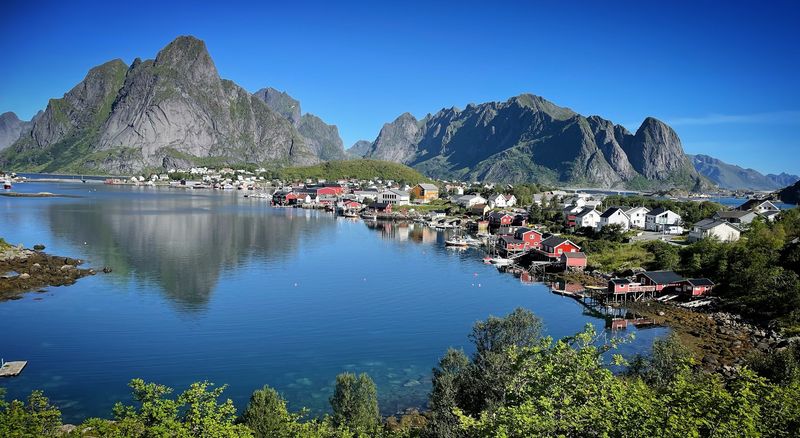
Reine is not trying to be cute. It is a working fishing village in the Lofoten Islands, and its beauty is the rugged, undecorated kind that arrives without warning and stays with you.
Red wooden cabins called rorbuer sit directly on the water, backed by mountains that rise nearly vertically from the fjord. The whole scene looks like a landscape painting that forgot to be subtle.
The light in Lofoten is extraordinary. In summer, the midnight sun turns everything golden at hours when golden light has no business existing.
In winter, the northern lights appear above those same jagged peaks. Reine essentially operates a two-season highlight reel with zero off-season.
Rorbuer cabins are available to rent, and staying in one overnight is the right call. Waking up to the sound of water and the sight of those mountains from a cabin window is an experience that travel photography genuinely cannot prepare you for.
Some things require showing up in person.
Cochem, Germany
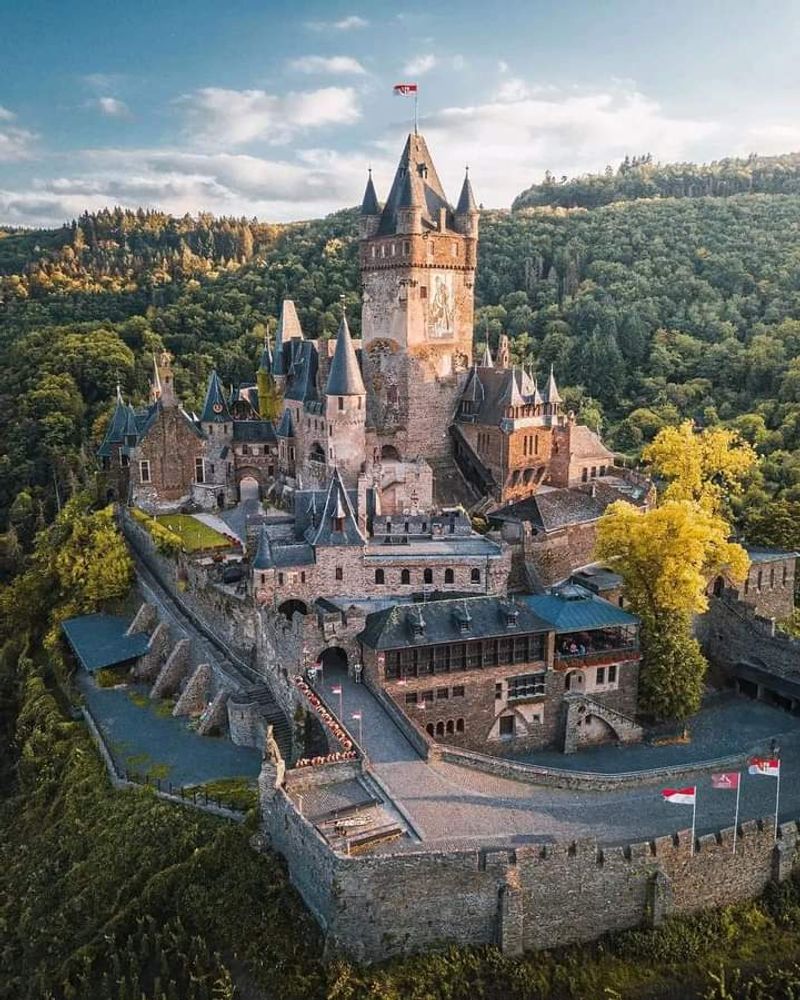
Cochem’s castle does not sit modestly on its hill. It looms.
The Reichsburg, rebuilt in neo-Gothic style in the 1870s after being destroyed in the 17th century, towers over a town of half-timbered houses, riverfront promenades, and vineyard-covered slopes. The Moselle River curves around the base of it all, completing a scene that feels almost aggressively composed.
The town below the castle is genuinely lovely on its own terms. The Marktplatz is lined with colorful buildings, and the streets that climb toward the castle pass through neighborhoods that have been here for centuries.
Wine is central to Cochem’s identity. The Moselle Valley produces some of Germany’s finest Rieslings, and the local wine festivals are taken very seriously indeed.
Boat trips along the Moselle River offer a different perspective on Cochem and the surrounding valley. Seeing the castle from the water, with vineyards terracing the slopes behind it, rearranges your understanding of how dramatic this part of Germany actually is.
The Rhine gets more press, but the Moselle earns it just as honestly.
Kotor, Montenegro
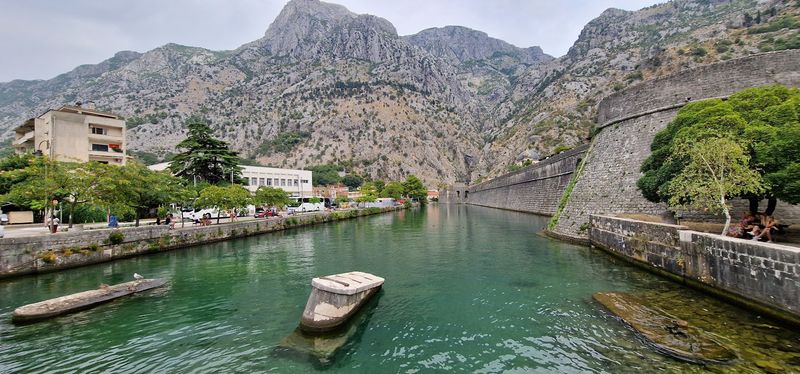
Kotor is dramatic in a way that feels almost theatrical. The old town sits inside medieval walls at the foot of Mount Lovchen, and those walls climb the mountain behind the city in a zigzag line that stretches over four kilometers.
The Bay of Kotor, one of Europe’s most beautiful coastal inlets, spreads out in front. The mountains close in behind.
Kotor is essentially surrounded by spectacle on every side.
UNESCO protects the wider natural and cultural region, and the designation makes sense the moment you arrive by boat. The approach through the bay, with mountains reflected in calm water and the old town walls appearing gradually, is one of the great arrival experiences in European travel.
The cats of Kotor deserve a mention. The city has a centuries-old relationship with cats, who are treated as local celebrities and appear on official merchandise.
There are more cats than tourists on a quiet morning, which is a statistic that should appear in more travel guides than it currently does.
Sighișoara, Romania
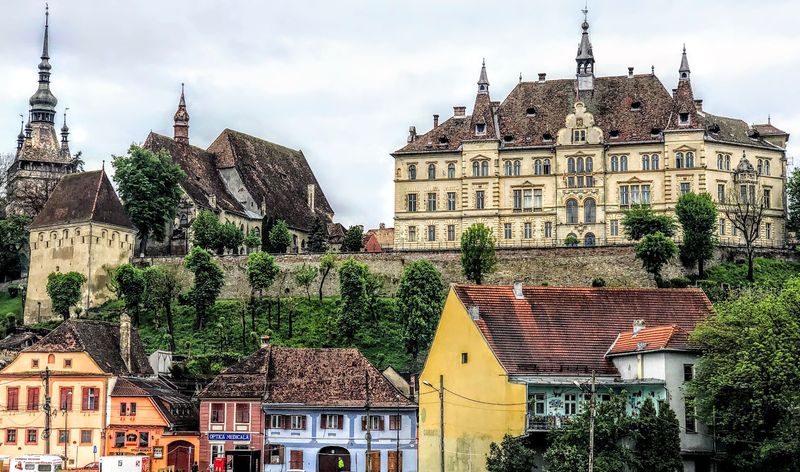
Sighisoara is the only inhabited medieval citadel in Europe, which is either a remarkable preservation achievement or proof that Transylvanians are extremely committed to their neighborhoods. UNESCO recognizes it as a fine example of a small fortified medieval town, and the description is accurate without doing full justice to how alive the place feels.
This is not a museum town. People actually live here.
The Clock Tower, built in the 14th century, anchors the upper citadel and houses a history museum across multiple floors. The views from the top take in the citadel’s colored rooftops and the green Transylvanian hills beyond.
The covered wooden staircase leading up to the hilltop church is 175 steps of medieval engineering that has been in continuous use since 1642.
Vlad the Impaler was born here in 1431, a fact the town acknowledges with a restaurant in his birth house and considerable local pride. Dracula tourism is real and enthusiastically embraced.
Sighisoara handles it with good humor and absolutely no apologies.
Riquewihr, France
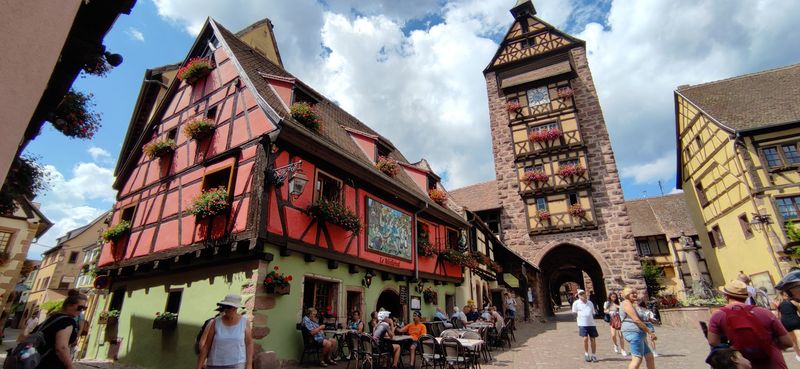
Riquewihr has been described as the pearl of Alsace, which sounds like tourism hyperbole until you actually walk its main street and realize the description is underselling it. The village has barely changed since the 16th century, partly because it escaped major war damage and partly because Alsace takes architectural preservation as seriously as it takes wine.
The result is a street so perfectly preserved it occasionally makes visitors check whether they have accidentally walked into a film set.
The facades here are painted in shades that Alsace seems to have invented specifically for this purpose: deep mustard, dusty rose, sage green, and warm ochre. Window boxes are not optional decoration.
They are a civic obligation taken seriously by every household on every street.
Riquewihr sits directly on the Alsace Wine Route, surrounded by Grand Cru vineyards. The local Riesling and Pinot Gris are exceptional.
Picking up a bottle from a family producer and finding a bench in the village square is a very good way to spend an afternoon without any guilt whatsoever.
Bruges, Belgium
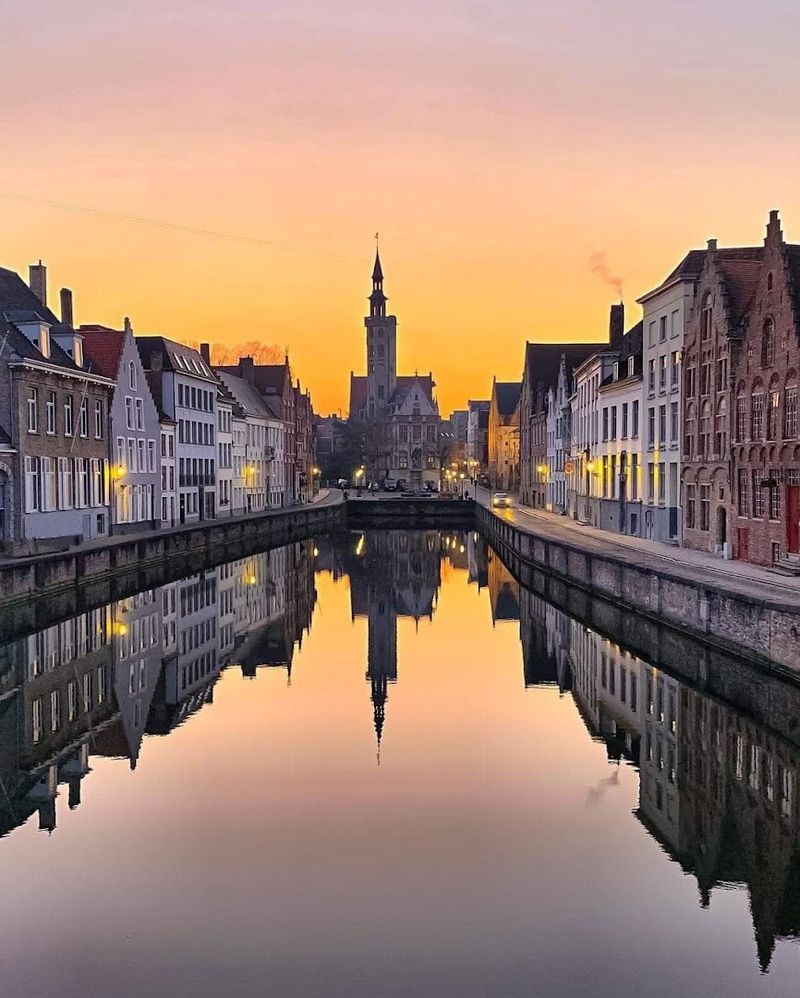
Bruges is famous enough that some travelers dismiss it as overrun, which is a mistake. The city’s medieval center is a UNESCO World Heritage Site, and the scale of preservation here is genuinely extraordinary.
Canals, stepped gables, market squares, and belfry towers all coexist in a historic core that still feels coherent rather than assembled from spare parts. Bruges did not get preserved by accident.
It got preserved because it was economically overlooked for centuries, and the architecture simply survived.
The Markt square is the obvious centerpiece, with its 83-meter belfry that has been keeping time since the 13th century. Climbing the 366 steps to the top earns a panoramic view over the rooftops that makes the leg burn entirely worthwhile.
Belgian chocolate and Belgian beer are both at their finest here. The city has over 50 chocolate shops, and the local brewery scene is serious.
Bruges is one of those rare places where the food culture matches the visual culture in quality. That combination is harder to find than it sounds.
Share this story