 Unearth The Voyage
Back when grocery aisles looked like a rainbow and “convenience” was the ultimate flex, eating felt like a playful experiment. Snacks were louder, brighter, and less interested in ingredient lists than they were in fun.
If you grew up in that era, you probably remember foods that seemed totally normal at the time, even if they sound unreal now.
Today, those same classics hit differently. They’re a mix of nostalgia, curiosity, and a little disbelief.
Some were pure sugar. Some were peak artificial flavor.
All of them were part of a culture that celebrated quick fixes and bold packaging.
So what were the staples everyone ate without thinking twice? Here’s a look at the strangest and most unforgettable foods that helped define a decade of unapologetic processed goodness.
1. Jell-O Salad
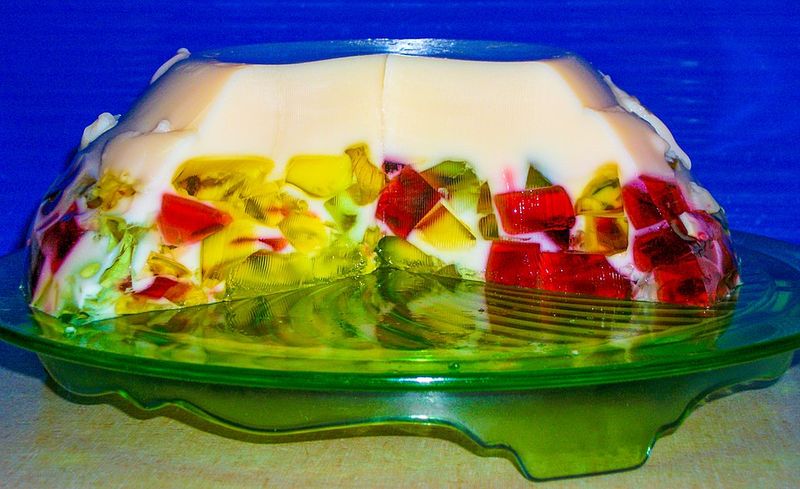
Calling it a salad was the biggest culinary lie ever told. Picture a wobbly, translucent mass of gelatin studded with canned fruit, sometimes shredded carrots, and occasionally mini marshmallows.
It showed up at every potluck, family gathering, and holiday dinner like an uninvited guest who somehow became tradition.
The molds were half the fun. People had special pans shaped like bundt cakes, rings, and even fish.
Grandma would unmold hers with the confidence of a magician, hoping it wouldn’t collapse into a sad puddle on the serving plate.
Sweet and savory versions coexisted in bizarre harmony. You might find lime Jell-O with cottage cheese one day, strawberry with pineapple the next.
Nobody questioned the logic because questioning Jell-O salad was like questioning gravity.
Today, younger generations look at photos of these creations with horror. But back then, they were considered fancy, almost elegant.
The shimmer, the color, the way light passed through them made them feel special, even if the taste was questionable at best.
Some families still make them as a nostalgic nod to simpler times. They’re conversation starters now, relics of an era when gelatin was considered a legitimate vehicle for vegetables and called itself a salad with a straight face.
2. Spam
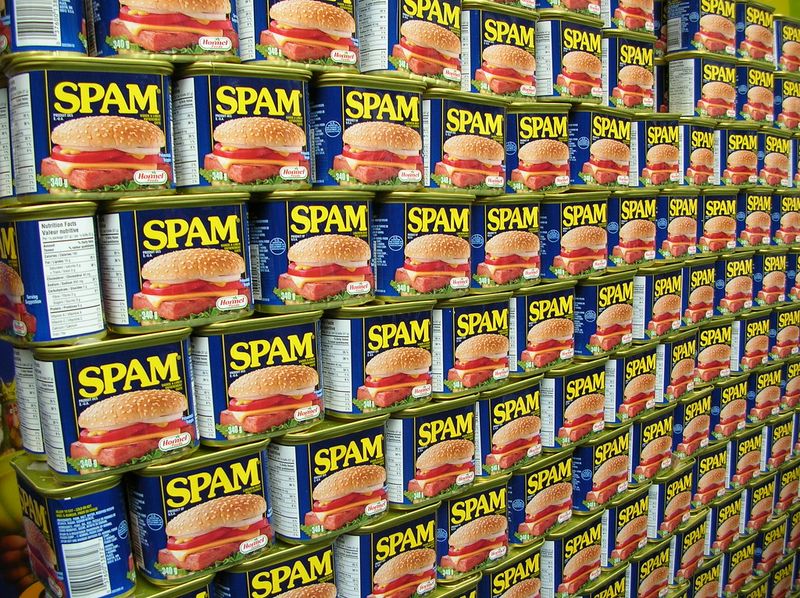
Spam earned its stripes during World War II and never looked back. By the 80s, it had become a kitchen staple for families who valued shelf stability and versatility.
You could fry it, bake it, dice it into fried rice, or just eat it cold straight from the can if you were feeling adventurous.
The name itself sparked endless jokes and debates. Some claimed it stood for “Spiced Ham,” others insisted it was something far less appetizing.
Either way, that distinctive blue and yellow can became instantly recognizable in pantries across America.
Different cultures embraced Spam in wildly different ways. In Hawaii, it became a beloved ingredient in musubi.
On the mainland, it showed up in casseroles, sandwiches, and breakfast scrambles alongside eggs that never asked questions.
Critics called it mystery meat, but fans didn’t care. It was cheap, it lasted forever, and it tasted like childhood to millions of people.
The texture was unique, somewhere between lunch meat and something firmer, with a salty punch that either delighted or disgusted you.
Spam festivals still exist today, celebrating this canned icon. Love it or hate it, you can’t deny its cultural impact.
It survived decades of food trends and came out the other side still sitting proudly on grocery store shelves.
3. Tang
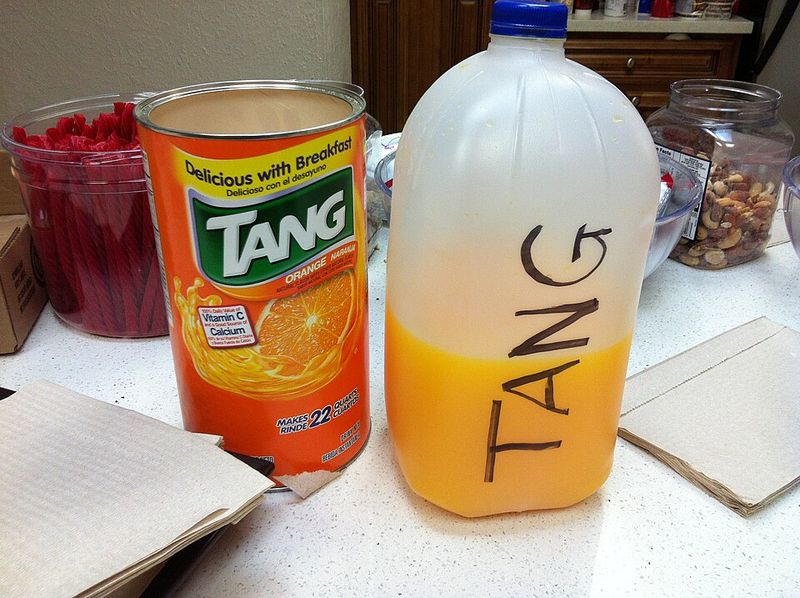
NASA sent astronauts to space with Tang, and suddenly every kid wanted to drink like they were orbiting Earth. The powder came in a jar, you scooped it into water, stirred until it turned neon orange, and pretended you were training for a moon mission while sitting at your kitchen table.
The taste was aggressively artificial in the best possible way. It didn’t taste like real oranges, it tasted like the idea of oranges filtered through a laboratory and a marketing department.
Sweet, tangy, and unapologetically fake, it became a breakfast staple for families who didn’t have time for fresh-squeezed anything.
Parents loved it because it had vitamin C. Kids loved it because it looked like liquid sunshine and came with the coolest space-age backstory ever.
The fact that actual astronauts drank it made every glass feel like an adventure.
Tang commercials were everywhere in the 80s. They featured kids being active, energetic, and ready to conquer the day after one glass of orange powder magic.
The subliminal message was clear: drink Tang, become unstoppable.
These days, Tang still exists but doesn’t carry the same cultural weight. Back then, though, it was the drink that made you feel like the future was orange, fizzy, and full of possibilities that tasted nothing like real fruit.
4. Vienna Sausages
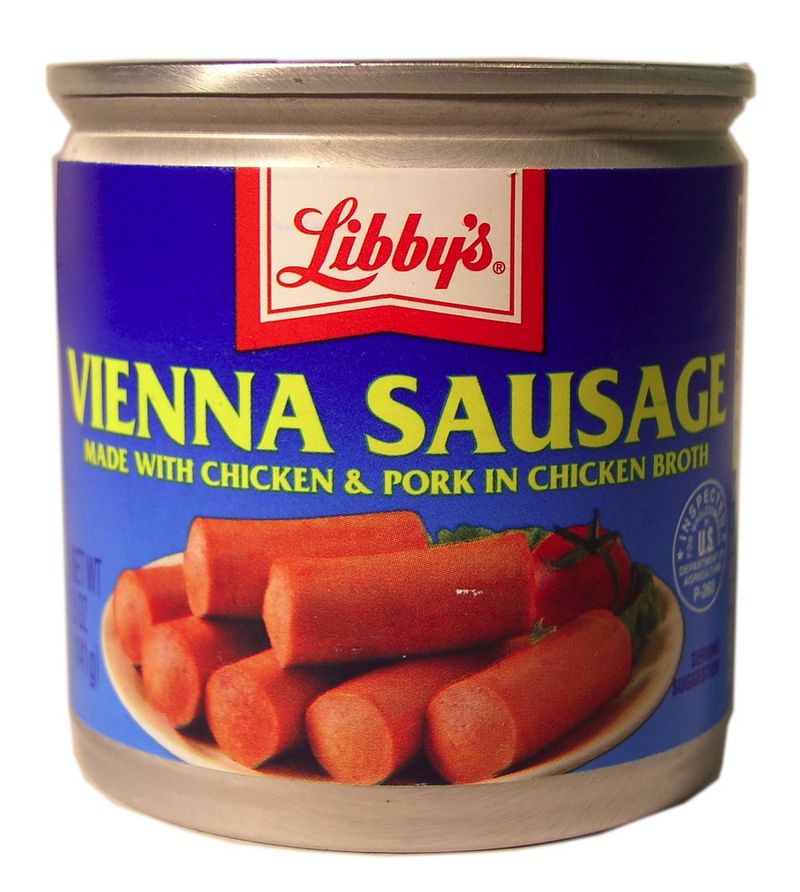
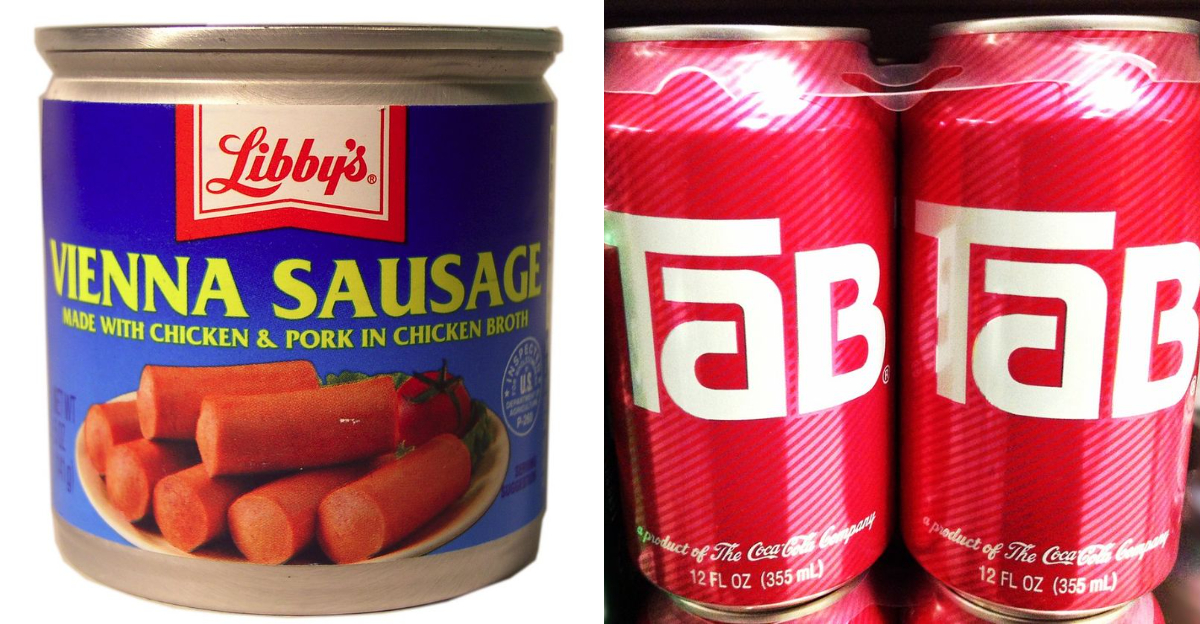
These tiny mystery tubes came packed in cans with a pull-tab lid that sometimes required actual strength to open. Once you wrestled it open, you were greeted by pale little sausages floating in some kind of gelatinous liquid that nobody ever talked about but everyone noticed.
Eating them straight from the can was totally acceptable. No heating required, no plates necessary, just pop the lid and go.
They were the ultimate lazy snack, camping food, or lunch for people who didn’t feel like cooking anything resembling an actual meal.
The flavor was mild, salty, and vaguely meat-adjacent. Texture-wise, they were soft, almost mushy, with a snap that felt more psychological than physical.
Some people loved them, others couldn’t get past the whole experience of eating something that looked like baby hot dogs preserved in mystery juice.
Vienna sausages became a cultural punchline over the years. They represented a certain kind of no-frills eating that didn’t apologize for being exactly what it was: cheap, convenient, and polarizing.
You either grew up eating them and felt nostalgic, or you saw them as a food crime.
They’re still sold today, mostly in the same section of the grocery store where time forgot. For those who remember, they’re a taste of childhood summers and questionable lunch choices that somehow never killed anyone.
5. Cheez Whiz
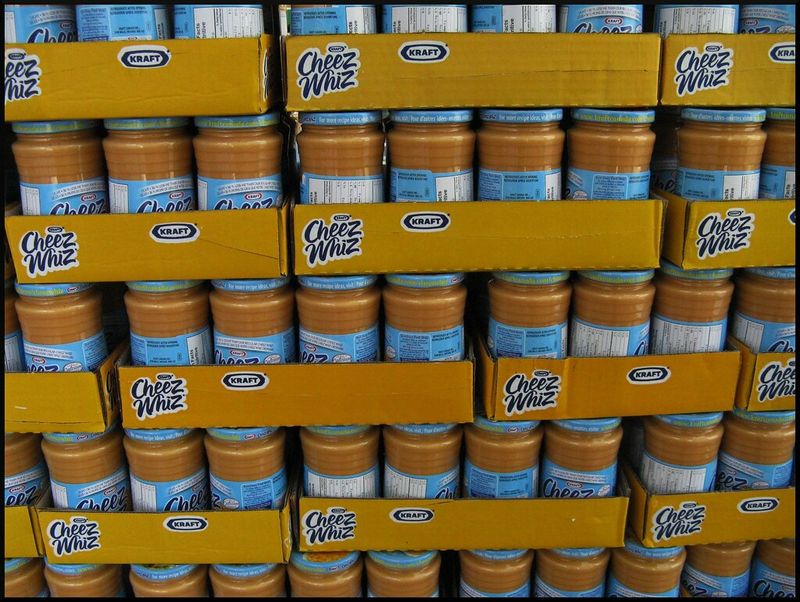
Cheez Whiz arrived in the 1950s but absolutely dominated the 80s snack scene. It came in a jar, had the consistency of thick paint, and was so orange it practically glowed in the dark.
Spreading it on crackers, celery, or directly into your mouth was not only acceptable but encouraged.
The flavor was cheese-like but distinctly its own thing. Salty, creamy, and impossibly smooth, it didn’t pretend to be fancy.
It was a cheese product, not cheese, and that distinction mattered legally but not emotionally to the people who loved it.
Cheesesteaks in Philadelphia made it famous beyond the jar. Pouring Cheez Whiz over thinly sliced steak became a regional tradition that sparked debates about authenticity.
Purists argued, fans devoured, and the bright orange river kept flowing.
Kids loved it because it required zero effort. No slicing, no grating, just dip and enjoy.
Parents loved it because it didn’t require refrigeration until opened, making it the perfect pantry backup when fresh cheese wasn’t an option.
Cheez Whiz still exists today, though its cultural dominance has faded. It lives on in nostalgic hearts and specific regional foods.
Back in the 80s, though, it was the undisputed king of spreadable cheese products that didn’t ask questions and didn’t take prisoners.
6. Fruit Cocktail
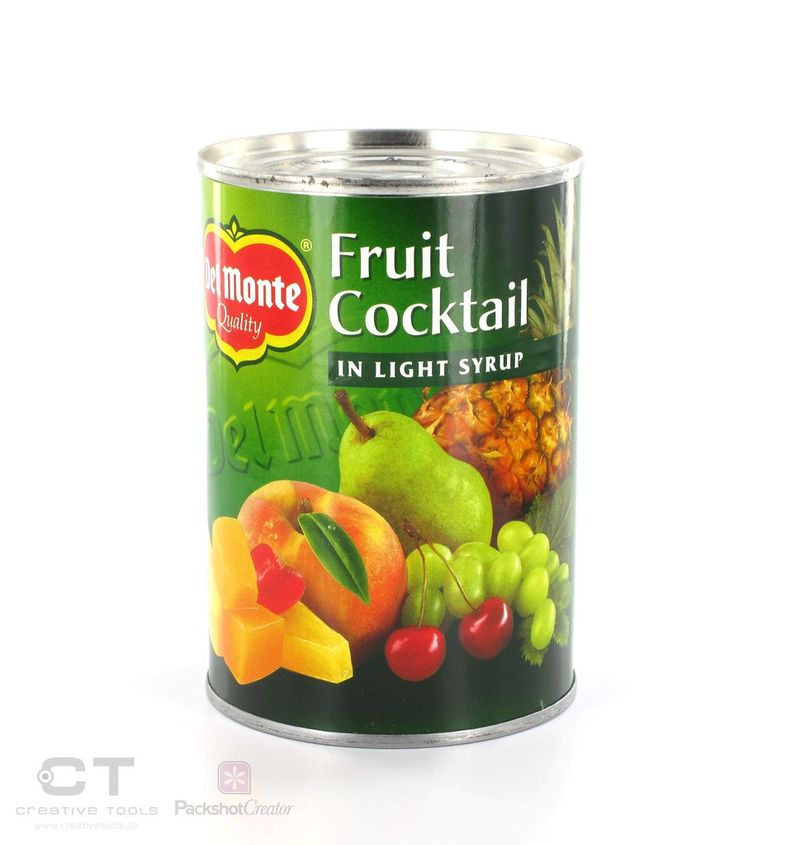
Crack open a can and you’d find the same lineup every time: peaches, pears, grapes, pineapple chunks, and that one mysterious red cherry that tasted like sweet rubber. Everything floated in thick, sugary syrup that made the whole experience feel more like dessert than health food, even though parents insisted it counted as fruit.
It showed up everywhere. School lunches, potluck sides, quick desserts, and random dinners when fresh fruit wasn’t in the budget or the season.
The convenience factor was unbeatable. No washing, no chopping, just pop the lid and dump it in a bowl.
The texture was uniformly soft, almost mushy, because canning does that to fruit. Nothing had any crunch or resistance.
It all surrendered immediately to your teeth, releasing that syrupy sweetness that coated your mouth and made you wonder if you should drink the leftover liquid or feel guilty about it.
Some families drained the syrup and pretended it was healthier. Others embraced the sweet chaos and used the syrup in recipes or just drank it straight.
No judgment, just survival and sugar.
Fruit cocktail still exists today, mostly unchanged. It’s a relic of an era when canned goods ruled and fresh wasn’t always an option.
For Boomers, it’s a taste of childhood dinners and the comforting predictability of knowing exactly what’s inside every single can.
7. TV Dinners
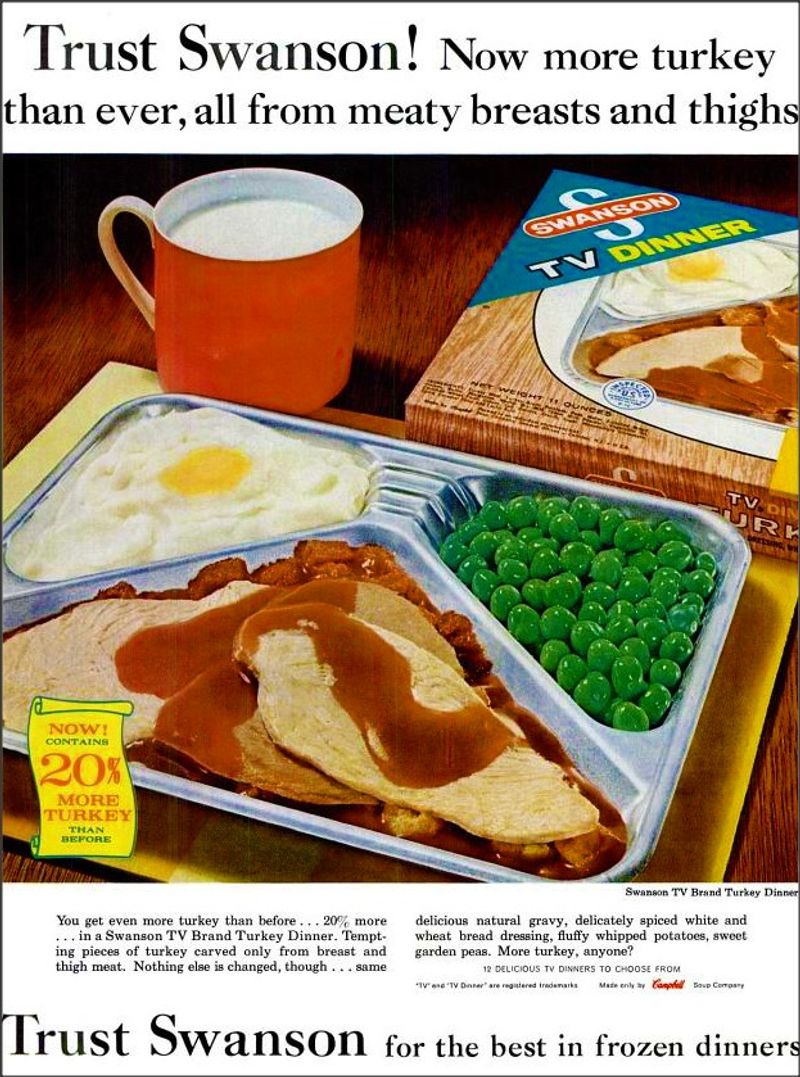
Swanson revolutionized lazy eating with compartmentalized aluminum trays that cooked everything at once. Salisbury steak in one section, mashed potatoes in another, corn over there, and a little brownie in the corner.
Pop it in the oven, wait thirty minutes, and dinner was served without dirtying a single dish.
The name said it all. These were designed to be eaten in front of the TV, on a tray table, while watching your favorite shows.
It was the ultimate convenience meal for busy families or people who just didn’t feel like cooking anything that required actual effort.
Quality varied wildly depending on the brand and meal choice. Sometimes the meat was surprisingly decent.
Other times it tasted like cardboard soaked in gravy. The vegetables were always mushy, the potatoes always gluey, and the dessert always the best part despite being approximately three bites.
Kids loved the novelty and the predictability. Adults loved the lack of cleanup.
Everyone tolerated the taste because it was fast, easy, and required zero culinary skill. The aluminum tray could go straight from freezer to oven to trash.
TV dinners evolved over the decades into plastic trays and microwave versions. But the classic aluminum ones from the 80s hold a special place in memory, representing an era when eating in front of the TV wasn’t just allowed, it was literally the meal’s entire concept.
8. Tab Soda
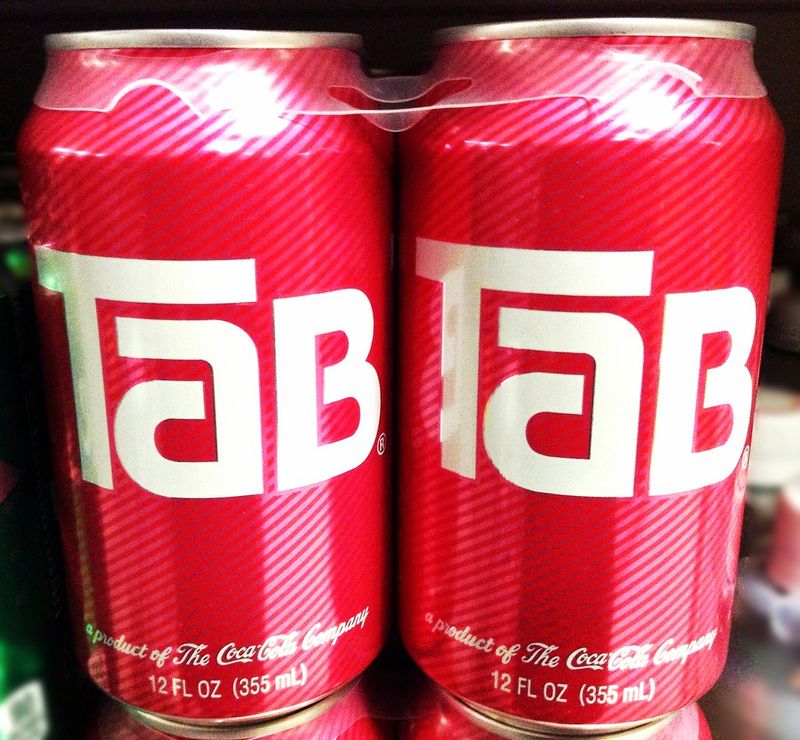
Before Diet Coke dominated, Tab ruled the diet soda universe with its distinctive pink can and slightly medicinal aftertaste. Coca-Cola introduced it in 1963, but it hit peak cultural relevance in the 80s when diet culture exploded and everyone wanted a zero-calorie option.
The flavor was polarizing. Some people loved the unique taste that didn’t quite match regular Coke.
Others found it bitter, chemical-tasting, and hard to finish. But loyal fans were fiercely devoted, defending their pink cans against all challengers.
Tab became associated with a specific aesthetic: busy women, aerobics classes, and the pursuit of thinness that defined 80s culture. The marketing leaned hard into this, positioning Tab as the sophisticated choice for people who cared about their figures and their taste.
Saccharin was the original sweetener, which sparked health debates and warning labels. People drank it anyway, either ignoring the concerns or deciding the trade-off was worth it.
The pink can became a symbol of rebellion against sugar and calories.
Coca-Cola discontinued Tab in 2020, ending a nearly sixty-year run. For Boomers who grew up with it, the news felt like losing a piece of their youth.
That pink can represented a specific moment in time when diet soda was new, exciting, and came with its own cult following that never quite transferred to newer options.
9. Cool Whip
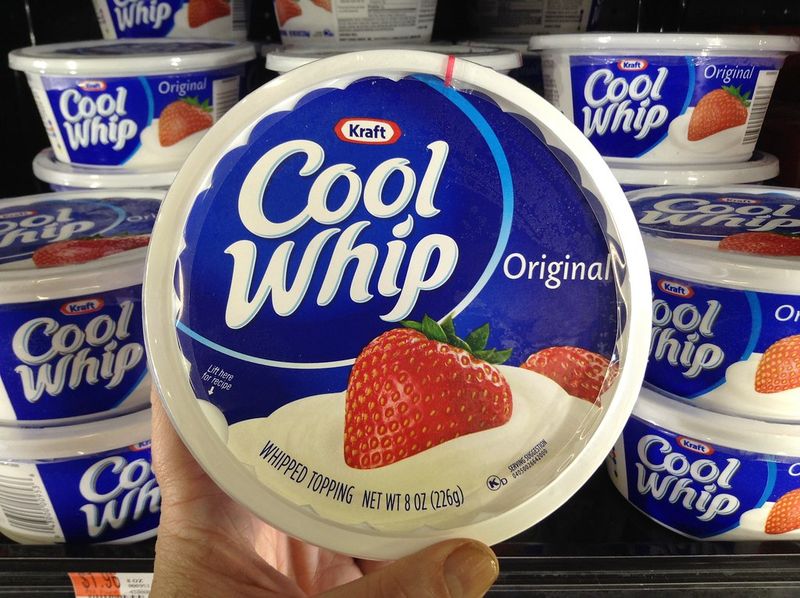
Cool Whip wasn’t whipped cream, and it didn’t pretend to be. It was whipped topping, a frozen product that came in a blue tub and required thawing before use.
Once defrosted, it stayed fluffy and spreadable for days, unlike real whipped cream which deflated faster than birthday balloons.
Pies were its primary destination. Pumpkin, chocolate, banana cream, you name it.
A generous dollop of Cool Whip on top was basically mandatory.
Some people used it in desserts, folding it into Jell-O or pudding to create fluffy concoctions with names like “fluff” or “delight.”
The ingredient list read like a chemistry experiment. Hydrogenated oils, high fructose corn syrup, and things you couldn’t pronounce.
But it tasted sweet, light, and creamy enough that most people didn’t care what was actually in it.
Kids loved eating it straight from the tub with a spoon. Parents pretended not to notice the tub getting lighter between desserts.
It was cheaper than heavy cream and lasted longer, making it the practical choice for families on a budget.
Cool Whip still dominates freezer sections today, competing with newer brands but maintaining its iconic status. For Boomers, it’s tied to every holiday dessert, every potluck pie, and every moment when real whipped cream just seemed like too much work for not enough payoff.
10. Fruit Roll-Ups
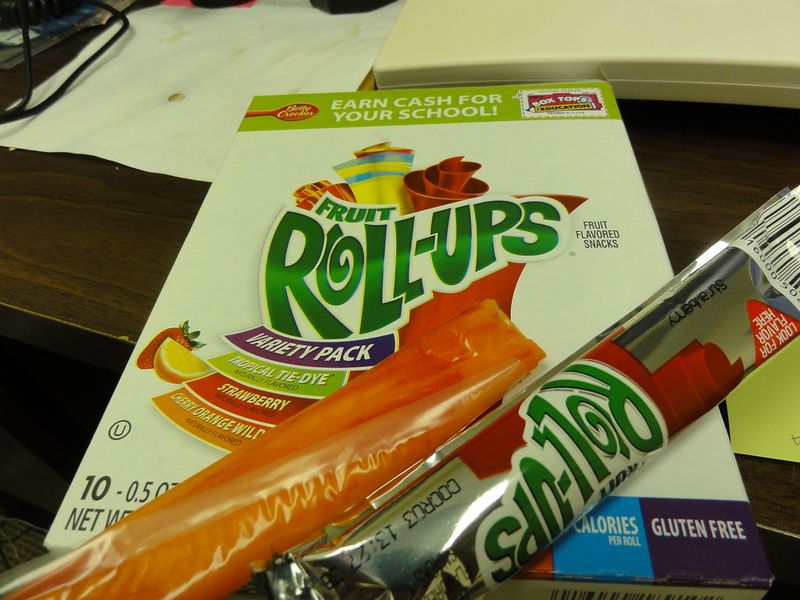
Sticky, stretchy, and barely resembling actual fruit, Fruit Roll-Ups were the craft supply you could eat. They came on a roll of wax paper, and half the fun was peeling them off without tearing the sheet into useless fragments.
Success meant you could shape it, fold it, or just eat it in one long strip.
The flavors were aggressively artificial. Strawberry tasted like red.
Cherry tasted like slightly different red. Tropical punch tasted like a rainbow had a flavor.
Nobody cared because accuracy wasn’t the point; fun was the point.
Kids used them for everything except normal eating. You could make shapes, stick them to your tongue, wrap them around your finger, or create weird fruit leather sculptures that lasted about five seconds before getting eaten.
Lunchboxes everywhere featured at least one Roll-Up as the dessert or snack.
The texture was unique, somewhere between gummy candy and edible plastic. It stuck to your teeth, required some chewing, and left a sweet residue that lingered.
Washing it down with juice or milk was basically mandatory unless you wanted fruity teeth all afternoon.
Fruit Roll-Ups still exist with updated flavors and packaging. But the original 80s versions hold a special place in snack history, representing a time when food could double as a toy and nobody questioned the lack of actual fruit in the fruit snack.
11. Ovaltine
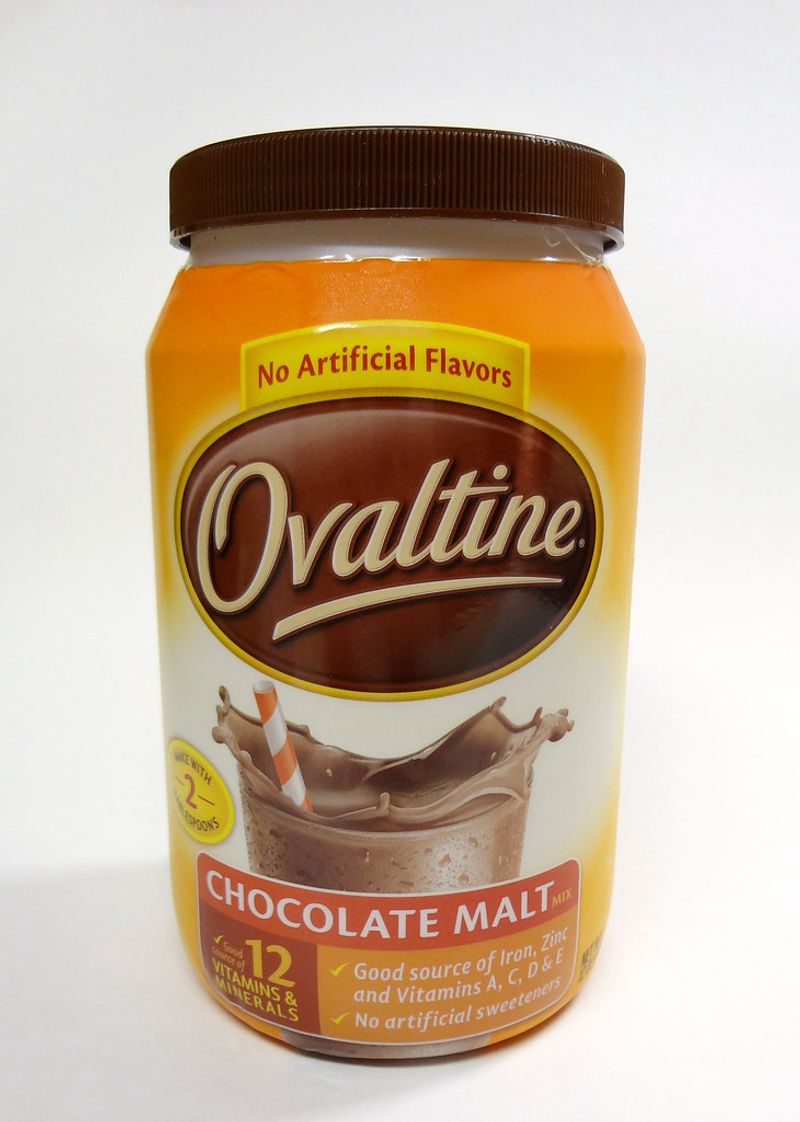
Ovaltine turned milk into a malted chocolate experience that tasted like someone mixed cocoa powder with something slightly nutty and vaguely vitamin-flavored. The powder came in a distinctive orange container, and scooping it into cold or hot milk became a bedtime or breakfast ritual for countless kids.
Parents loved it because it promised vitamins and minerals. The label made it sound almost medicinal, like drinking it would make you stronger, smarter, and healthier.
Kids drank it because it tasted like dessert and made plain milk tolerable.
The flavor was different from regular chocolate milk. The malt added depth and a slight graininess that some people loved and others found off-putting.
Mixing it properly required serious stirring; otherwise, you’d get clumps at the bottom that turned into sludge halfway through the glass.
Ovaltine had been around since the early 1900s, but it maintained its presence in 80s households as a cozy, comforting drink. It felt old-fashioned even then, like something your grandparents drank, but that added to its charm and reliability.
It’s still sold today, mostly in the same orange packaging with minor updates. For those who grew up drinking it, Ovaltine represents nighttime routines, cold winter mornings, and the simple pleasure of turning milk into something special with a few spoonfuls of malted powder and some enthusiastic stirring.
12. Frosted Animal Crackers
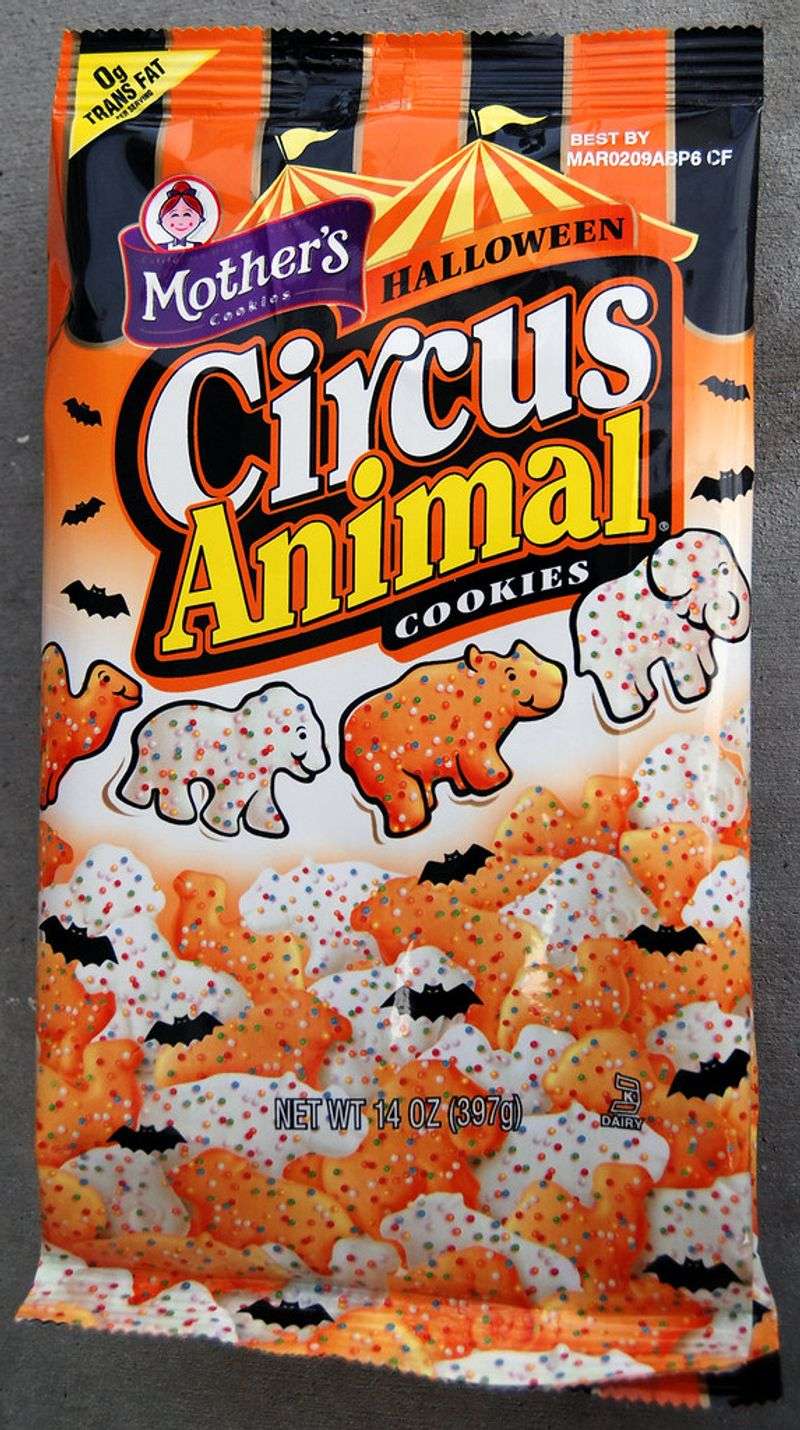
Mother’s Circus Animal Cookies were tiny frosted creatures that barely qualified as crackers but nobody cared. Each cookie was shaped like a zoo animal and covered in pink or white frosting with rainbow sprinkles.
They were sweet, crunchy, and disappeared from the box faster than you could count them.
The circus theme made them feel festive and fun. The box featured bright colors and cheerful animal illustrations, promising a party in every handful.
Kids loved sorting them by animal type before eating, creating zoos on the table that lasted about thirty seconds.
The frosting was pure sugar, hardened into a thin shell that cracked when you bit down. Underneath was a plain vanilla cookie that provided structure but not much flavor.
The real star was the sweet coating and the nostalgia factor.
These cookies showed up at birthday parties, in lunchboxes, and as after-school snacks. They were cheap, cheerful, and required zero effort.
Parents bought them because kids loved them, and kids loved them because they were basically candy disguised as cookies disguised as wholesome animal crackers.
Frosted animal crackers still exist today, mostly unchanged. They’re a grocery store staple that bridges generations.
For Boomers, they represent simple childhood pleasures when a handful of pink-frosted elephants could make an ordinary afternoon feel like a celebration worth remembering decades later.
13. Crystal Pepsi
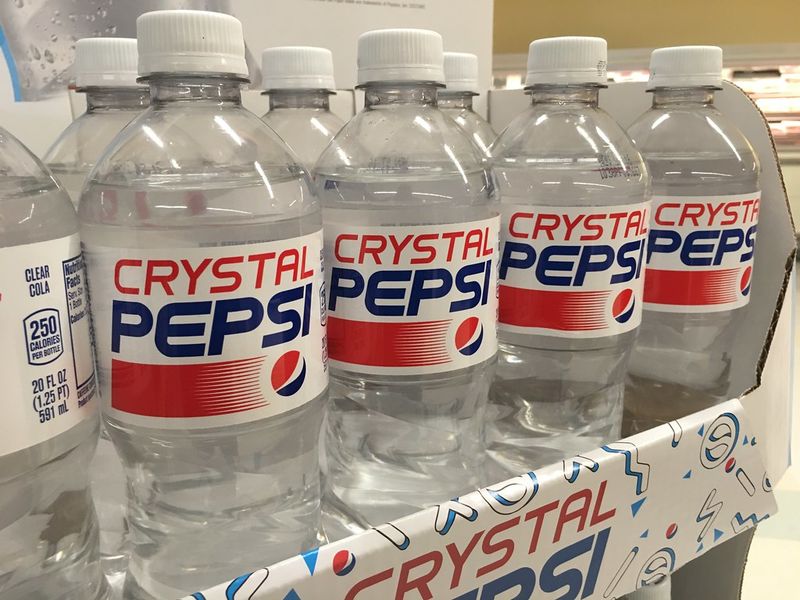
Technically Crystal Pepsi launched in 1992, but it lives in the collective memory as late 80s/early 90s weird soda energy. Pepsi decided to make a clear cola, stripping out the caramel coloring and marketing it as pure, clean, and futuristic.
The concept was wild, the execution was confusing, and the taste was Pepsi but see-through.
The marketing campaign was massive. Commercials featured the tagline “You’ve never seen a taste like this,” which was technically true because you can’t see taste, but the point landed anyway.
People bought it out of sheer curiosity, wondering how something that looked like Sprite could taste like Pepsi.
The flavor was almost identical to regular Pepsi, just slightly different in a way nobody could quite articulate. Some claimed it tasted cleaner or lighter.
Others insisted it was exactly the same. The visual disconnect between clear liquid and cola flavor messed with people’s brains.
Crystal Pepsi flopped hard and disappeared within a year. It became a punchline, a symbol of 90s marketing excess and weird product ideas that sounded better in boardrooms than in reality.
Nostalgia eventually brought it back for limited runs, proving people love remembering weird things more than actually drinking them.
For those who tried it, Crystal Pepsi represents a brief moment when soda companies thought transparency was the future and consumers would embrace clear cola as a lifestyle choice instead of a weird gimmick.
14. Hubba Bubba Bubble Tape
Six feet of bubble gum in a plastic dispenser changed the game. Hubba Bubba Bubble Tape let you pull out as much gum as you wanted, which usually meant way more than you needed.
The tape format made chewing gum feel like an event, a measurement challenge, a dare.
The flavors were bold and lasted longer than traditional stick gum. Grape, watermelon, and original were the classics.
Each piece you pulled off was soft, easy to chew, and perfect for blowing massive bubbles that covered your face when they popped.
Kids measured out ridiculous lengths, competing to see who could chew the most at once. Playground rules were established: one arm’s length was acceptable, two was showing off, three was just wasteful.
Nobody followed these rules.
The container was brilliant marketing. It looked like a miniature tape dispenser, making gum feel like office supplies you could eat.
The bright colors and fun fonts screamed 80s design energy, making it impossible to ignore on store shelves.
Hubba Bubba Bubble Tape still exists today in various flavors and formats. But the original experience of pulling that first piece from a fresh roll, measuring it against your arm, and shoving it in your mouth represents a specific kind of childhood freedom when gum came in feet instead of sticks.
15. Chex Mix
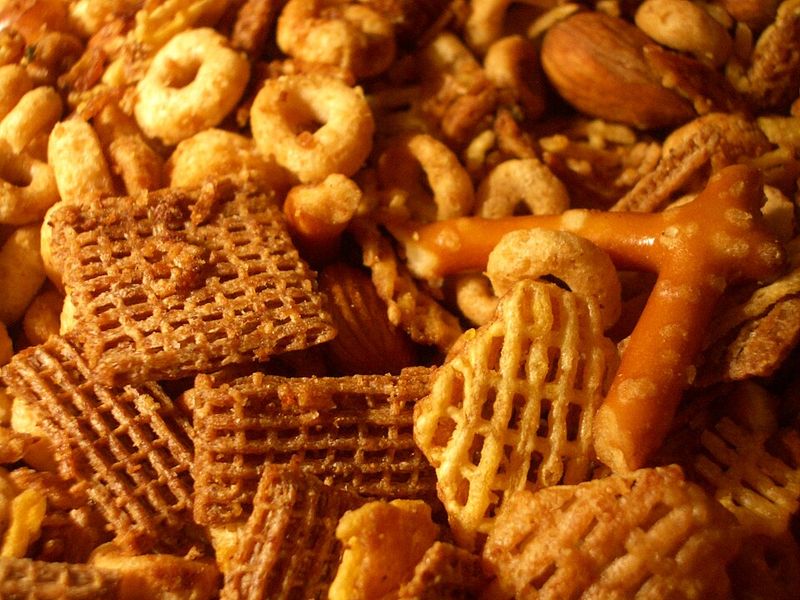
Homemade Chex Mix ruled parties long before the bagged stuff hit stores. The recipe was simple: Chex cereals, pretzels, nuts, butter, and seasoning salt baked until everything turned golden and addictive.
Every family had their own version, their own ratio, their own secret ingredient that made theirs the best.
Making it was a production. You’d spread everything on giant baking sheets, coat it in butter and Worcestershire sauce, then bake it low and slow, stirring occasionally.
The house would smell incredible, savory and buttery, making everyone hungry hours before the party started.
The texture combination was perfect. Crunchy cereal, salty pretzels, nutty pecans or peanuts, all coated in seasoning that stuck to your fingers and made you reach for another handful immediately.
It was impossible to eat just one serving.
Chex Mix became synonymous with gatherings. Bowl games, holidays, office parties, any event where people stood around talking and needed something to mindlessly snack on.
It was the ultimate crowd-pleaser, appealing to almost everyone except people with nut allergies.
Commercial versions eventually appeared, offering convenience over homemade charm. But purists still make it from scratch, following recipes passed down through generations.
For Boomers, Chex Mix represents the ritual of party preparation and the satisfaction of making something delicious that disappeared faster than it took to bake.
16. Planters Cheez Balls
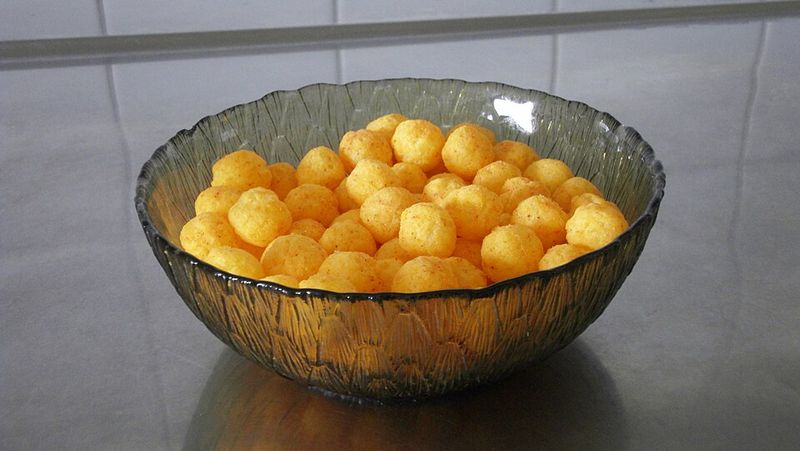
That blue canister was instantly recognizable. Pop the lid and you’d find hundreds of orange cheese puffs that dissolved on your tongue and left neon dust all over your fingers.
Planters Cheez Balls were the party snack that required napkins, commitment, and zero shame about eating something that colored your hands.
The flavor was intensely cheesy, salty, and slightly addictive. Each ball was light and airy, crunching satisfyingly before melting into cheesy powder.
You could eat twenty without feeling full, which was dangerous because you’d look down and realize you’d eaten half the can.
The orange dust was legendary. It stuck to everything: fingers, faces, furniture, clothes.
Kids would lick their fingers clean, creating an even bigger mess. Adults pretended to be annoyed but kept eating them anyway because they were that good.
Planters discontinued them in the early 2000s, causing widespread mourning. Online petitions demanded their return.
People hoarded old canisters like relics. The nostalgia was real and powerful, proving that sometimes the simplest snacks leave the biggest impact.
They eventually came back for limited releases, selling out immediately. For Boomers who grew up with them, Cheez Balls represent parties, football games, and the simple pleasure of eating something so aggressively orange and delicious that you didn’t care about the mess or the artificial ingredients or anything except getting more.
17. Liverwurst Sandwich
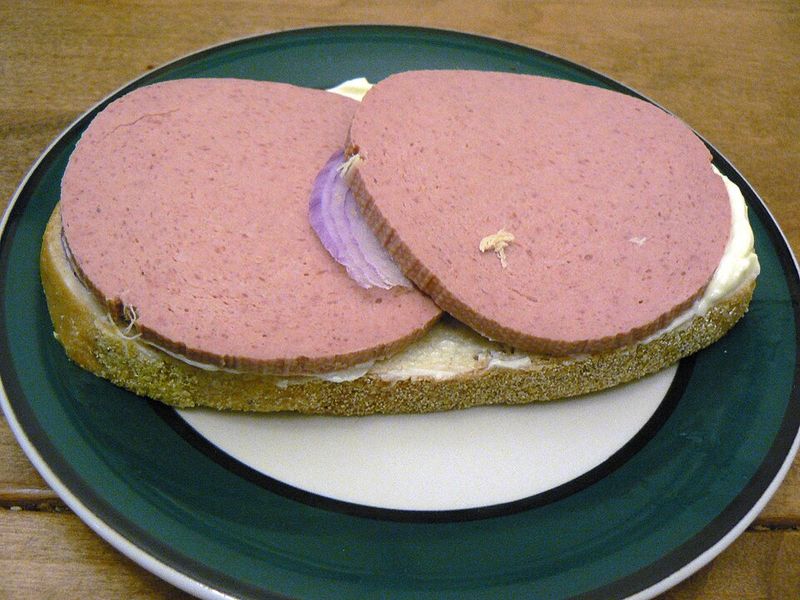
Liverwurst required a certain kind of bravery. This spreadable liver sausage came in tubes or loaves, had a distinct pâté-like texture, and tasted intensely of organ meat and seasonings.
Spreading it on white bread with mustard and maybe some pickles was a lunch choice that separated the adventurous from the squeamish.
The flavor was rich, savory, and unapologetically liver-forward. It wasn’t trying to hide what it was.
Some versions were smoother, others chunkier, but all of them tasted like you were eating something your grandparents considered a delicacy and your friends considered weird.
Kids who grew up eating it developed a taste for it early. Those who didn’t usually recoiled at the smell alone.
Liverwurst sandwiches were polarizing lunchbox items that either made you the cool kid with exotic food or the weird kid eating mystery meat.
It was cheap, protein-rich, and lasted a while in the fridge. For families on budgets, it was a practical lunch meat alternative that didn’t require cooking.
You just spread and ate, no heating necessary, no preparation beyond opening the package.
Liverwurst still exists but has faded from mainstream lunch culture. For Boomers who ate it regularly, it represents a time when organ meats were normal, lunch options were simpler, and eating something that tasted strongly of liver didn’t require an explanation or an apology.



