 Unearth The Voyage
Europe hides some of the most magical villages you could ever imagine, where cobblestone streets wind past centuries-old buildings and every corner looks like it belongs in a storybook. These aren’t just tourist spots — they’re real places where people live, work, and keep ancient traditions alive.
Whether you’re dreaming of alpine lakes, medieval castles, or flower-filled lanes, these enchanting villages offer unforgettable experiences that will make you feel like you’ve stepped into another world.
Hallstatt, Austria — Lakeside Alpine Dreamscape
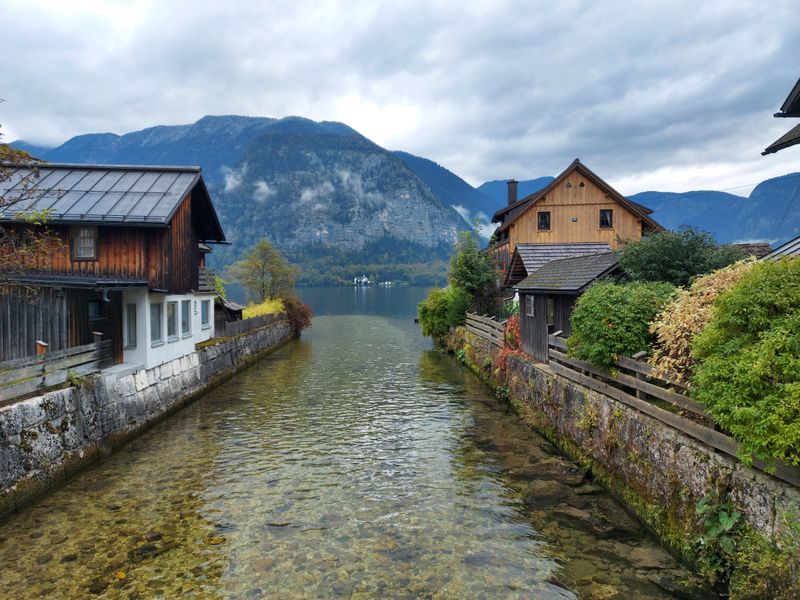
Mirror-perfect reflections dance on Lake Hallstätter See as pastel houses cling to the mountainside in what might be Austria’s most photographed village. Hallstatt has earned UNESCO World Heritage status not just for its jaw-dropping beauty but also for its rich salt mining history that stretches back thousands of years.
Walking through its narrow lanes feels like flipping through a picture book where every page reveals another postcard-worthy view.
The village sits wedged between towering Alps and the glassy lake, creating a setting so perfect it almost seems unreal. Early morning mist rolls off the water, wrapping the church spire in a dreamy haze that photographers travel across continents to capture.
You can explore ancient salt mines that made this town wealthy centuries ago, or simply wander the winding alleys where flowers spill from window boxes.
Crowds flock here year-round, especially since a Chinese company built a replica of Hallstatt back home. Visit during shoulder seasons for a more peaceful experience, when you can actually hear the church bells echo across the water.
Despite the tourist attention, Hallstatt retains its authentic alpine charm and continues to enchant everyone who makes the journey to this lakeside dreamscape.
Colmar, France — Little Venice in Alsace
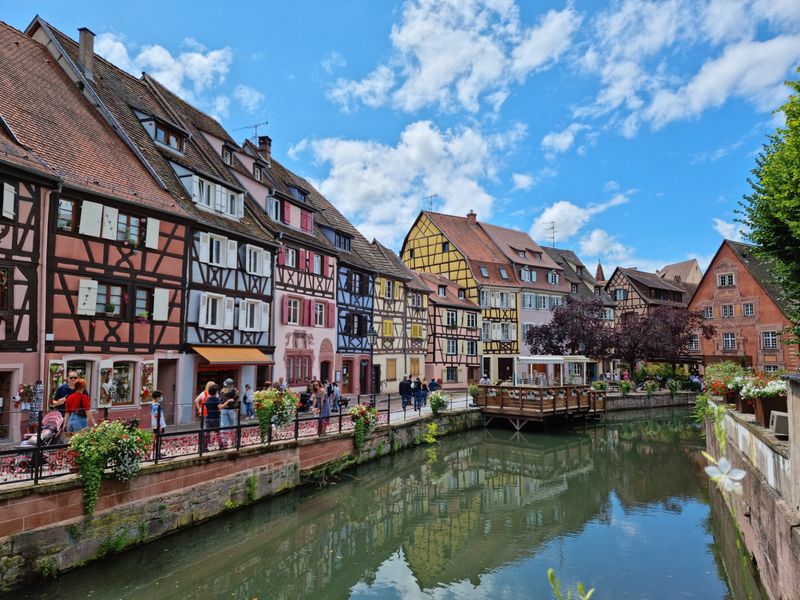
Candy-colored buildings lean over narrow canals in Colmar, where French elegance meets German precision in the most delightful architectural mashup you’ll ever see. This Alsace treasure earned its nickname “Little Venice” from the waterways threading through the old town, where gondola-like boats glide past homes that look hand-painted by artists.
Flower boxes burst with geraniums in summer, adding splashes of red against yellow, pink, and green facades that seem too cheerful to be real.
Walking these cobblestone streets feels like wandering through a living museum where every corner deserves its own Instagram post. The historic center survived both World Wars remarkably intact, preserving half-timbered houses dating back to the Middle Ages.
Local wineries offer tastings of crisp Rieslings and Gewürztraminers that have made this region famous across Europe.
Christmas transforms Colmar into something even more magical, with multiple markets filling squares with twinkling lights and the scent of mulled wine. The town inspired the village in the animated film “Howl’s Moving Castle,” which tells you everything about its fairytale credentials.
Whether you’re exploring museums, sampling regional cuisine, or simply getting lost in the maze of pretty streets, Colmar delivers enchantment at every turn.
Giethoorn, Netherlands — The Venice of the North
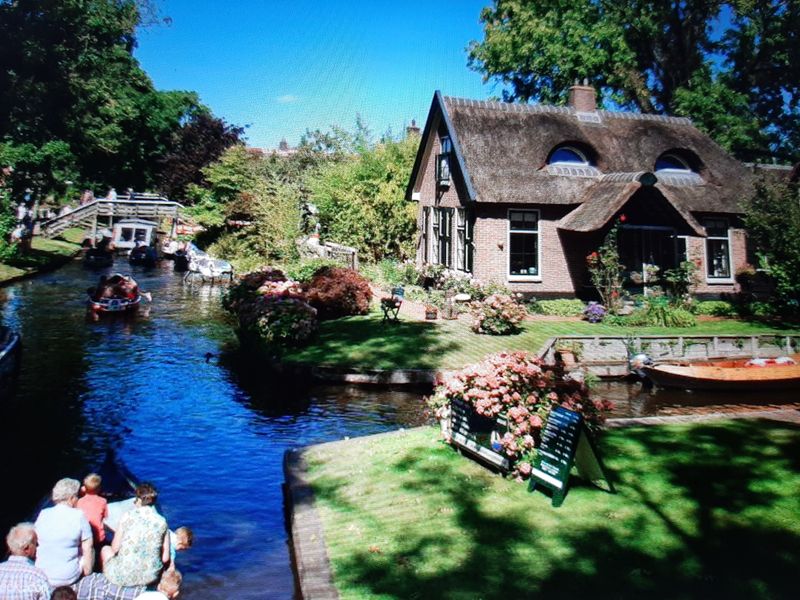
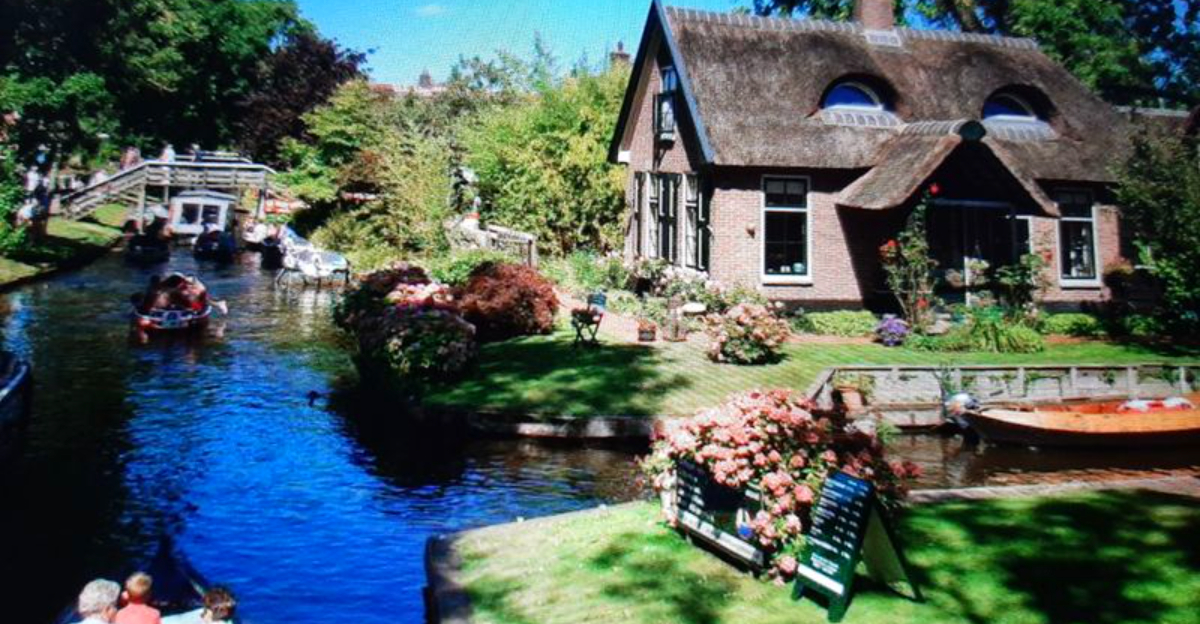
Silence reigns in Giethoorn, where the loudest sounds you’ll hear are ducks quacking and wooden boats bumping gently against bridges. Cars don’t exist in the old village center — instead, residents navigate a network of canals connecting thatched-roof farmhouses that look like they belong in a children’s storybook.
This unique setup earned Giethoorn its reputation as the Venice of the North, though it feels far more peaceful than its Italian counterpart.
Founded in the 13th century by fugitives who discovered the area rich with peat and goat horns (hence the name), the village developed its canal system out of necessity. Today those waterways create an otherworldly atmosphere where time seems to slow down.
Rent an electric whisper boat and glide beneath arched wooden bridges, or explore on foot along paths lined with gardens bursting with color.
Spring and summer showcase Giethoorn at its most vibrant, when flowers bloom everywhere and the weather invites outdoor exploration. Winter brings a different magic when canals freeze over and locals dust off their ice skates for traditional Dutch skating.
The village has embraced tourism without losing its soul, maintaining the tranquil character that makes it feel like escaping into a fairytale where modern stress simply doesn’t exist.
Rothenburg ob der Tauber, Germany — Medieval Time Capsule
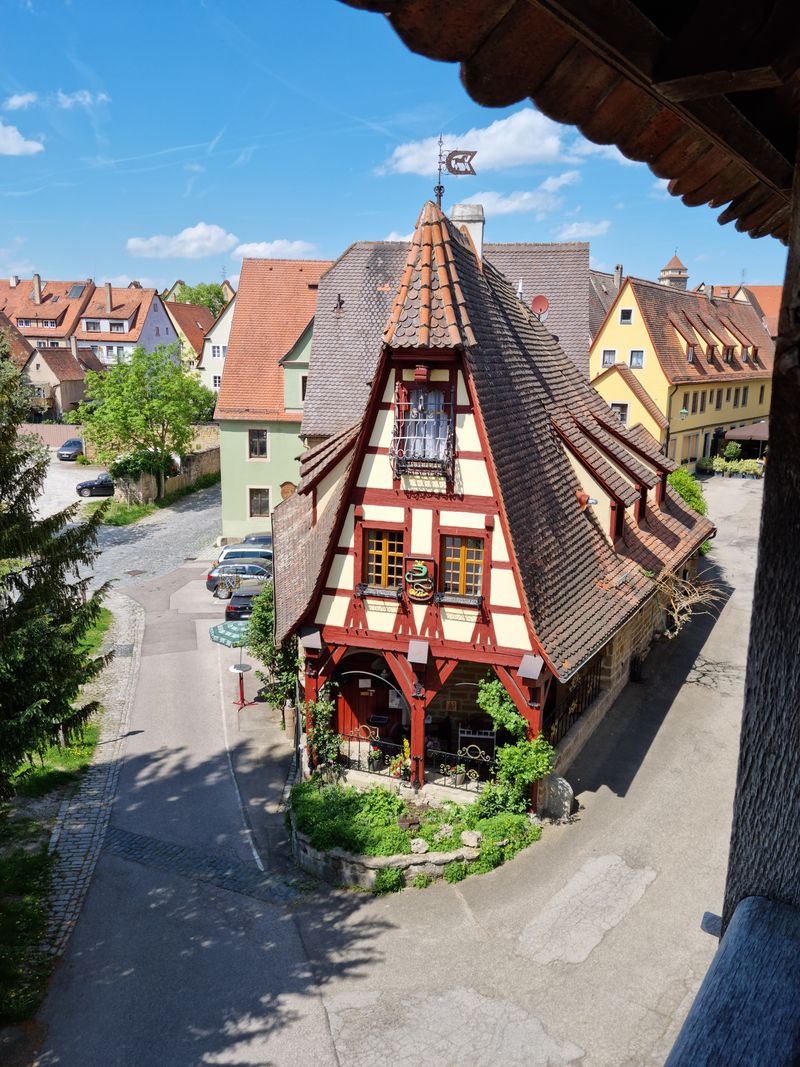
Step through Rothenburg’s gates and suddenly it’s 1500 again, with half-timbered houses leaning over cobbled lanes and fortified walls encircling a town that refused to surrender to modernity. Located along Bavaria’s Romantic Road, this medieval marvel survived centuries remarkably intact, becoming the poster child for German fairytale villages.
Disney animators and filmmakers have used it as inspiration, and one look at the Plönlein corner explains why — it’s impossibly picturesque.
You can walk the entire town wall, peering through arrow slits and imagining yourself as a medieval watchman defending against invaders. The Crime and Punishment Museum offers a darker glimpse into medieval justice with its collection of torture devices and legal history.
Don’t miss the Käthe Wohlfahrt Christmas store, a year-round holiday wonderland that occupies multiple buildings and could convert even the grumpiest Scrooge.
Rothenburg truly shines during December when Christmas markets transform squares into glowing wonderlands of wooden stalls selling handcrafted ornaments and steaming mugs of glühwein. The town suffered bombing damage in World War II but was lovingly restored by residents and international donors who recognized its cultural treasure.
Today it stands as proof that fairytales can survive in the real world if enough people believe in preserving them.
Bibury, England — Cotswolds Cottage Perfection
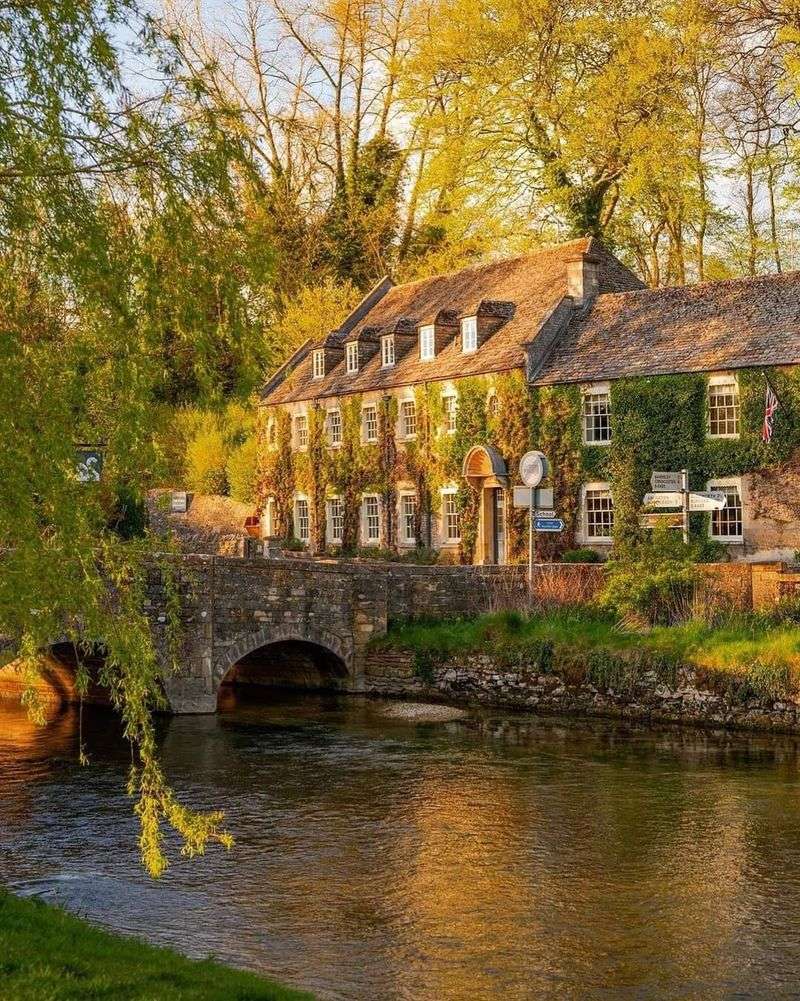
William Morris called Bibury the most beautiful village in England, and after one glimpse of Arlington Row, you’ll understand why he wasn’t exaggerating. These honey-colored stone cottages, built in the 14th century to house weavers, curve along a gentle slope above a water meadow where sheep graze peacefully.
The River Coln flows nearby, adding gentle water sounds to a scene that defines English pastoral perfection.
Photographers camp out early morning to catch the cottages in soft light without tourist crowds cluttering their shots. The structures were originally a monastic wool store before being converted into weaver’s cottages during the Industrial Revolution.
Today they’re private residences, so you can’t peek inside, but their exterior beauty more than compensates for any disappointment.
Beyond Arlington Row, Bibury offers the Swan Hotel (a 17th-century coaching inn), a trout farm where you can catch your own dinner, and St. Mary’s Church with Saxon origins. Spring brings daffodils and lambs, while autumn paints the village in golden hues that complement the limestone buildings beautifully.
The Cotswolds excel at charming villages, but Bibury stands out even in this competitive field, delivering exactly the storybook England experience visitors dream about when planning their trips across the pond.
Sintra, Portugal — Palaces and Mystical Woods
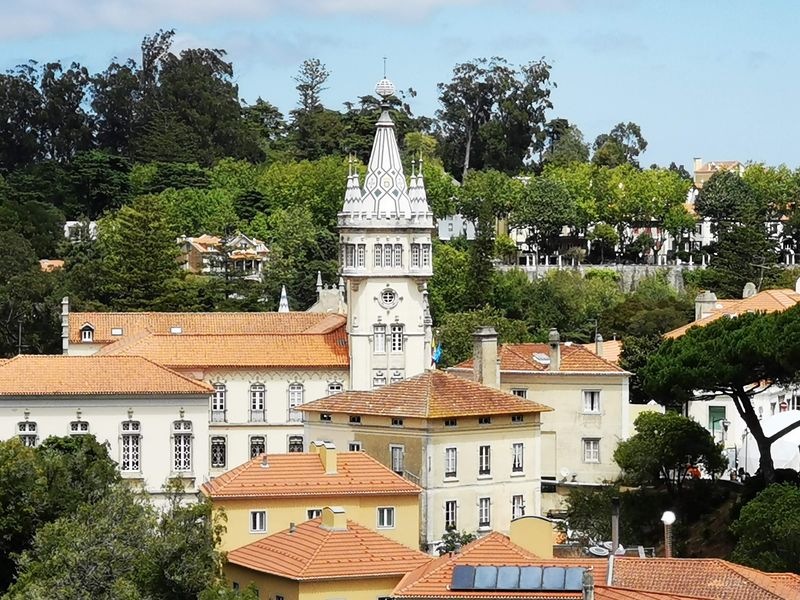
Misty forests hide rainbow-colored palaces in Sintra, where Portuguese royalty once escaped Lisbon’s summer heat by building increasingly fantastical retreats. The bright yellow-and-red Pena Palace crowns the highest peak, looking like someone dropped a birthday cake on a mountain and decided to make it a national monument.
Below, the enigmatic Quinta da Regaleira gardens wind through tunnels and grottos designed by eccentric millionaires obsessed with alchemy and secret societies.
Lord Byron praised Sintra as a “glorious Eden” in his poetry, and UNESCO agreed by designating it a World Heritage cultural landscape. The microclimate creates persistent fog that rolls through the hills, adding atmospheric mystery to already theatrical architecture.
You could spend days exploring different palaces, each with its own personality — from the Moorish Castle ruins to the elegant Monserrate Palace with its exotic gardens.
Getting around requires stamina or bus tickets, as palaces spread across steep hillsides that will test your calf muscles. Start early to beat crowds at Pena Palace, the most popular attraction that draws massive tour groups from Lisbon.
The town center offers pastry shops selling travesseiros and queijadas, local sweets that provide necessary fuel for all that uphill walking. Sintra proves that fairytales don’t always feature castles in northern Europe — sometimes they bloom in Portuguese sunshine.
Cesky Krumlov, Czech Republic — Castle Above the River
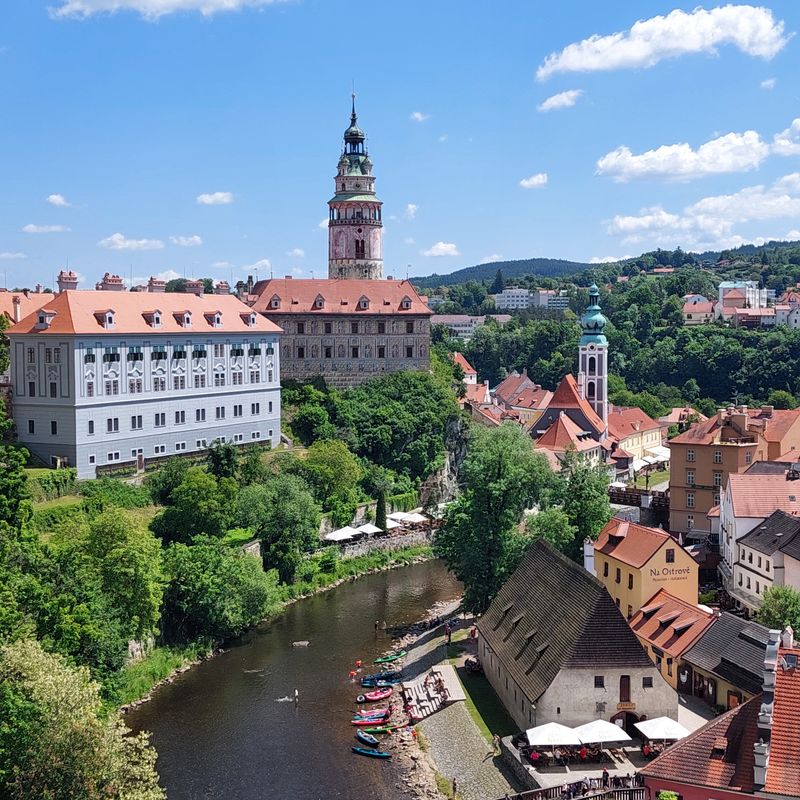
A massive castle watches over Český Krumlov like a protective guardian, while the Vltava River loops around the medieval town center in an almost perfect horseshoe. Pastel-colored buildings with terracotta roofs crowd together along narrow lanes that haven’t changed much since the Renaissance.
This UNESCO-listed gem in southern Bohemia survived centuries of wars and communist rule to emerge as one of Central Europe’s most enchanting destinations.
The castle complex ranks second in size only to Prague Castle, featuring baroque theaters, painted towers, and even resident bears in the moat. Climbing the tower rewards you with panoramic views over the orange rooftops and river bends that explain why this town feels like stepping into a painting.
Summer brings festivals and crowds, while winter dusts everything with snow and empties the streets for more intimate exploration.
Wandering here means discovering hidden courtyards, riverside beer gardens, and quirky museums tucked into historic buildings. The town’s isolation from major highways helped preserve its character when other places were modernizing.
Local guides dress in period costumes for tours that bring medieval history alive with stories of noble families and political intrigue. Český Krumlov proves that fairytale villages aren’t just about pretty buildings — they’re about places where history feels present and magic seems possible around every cobblestoned corner.
Bled, Slovenia — Island Church and Alpine Lake Views
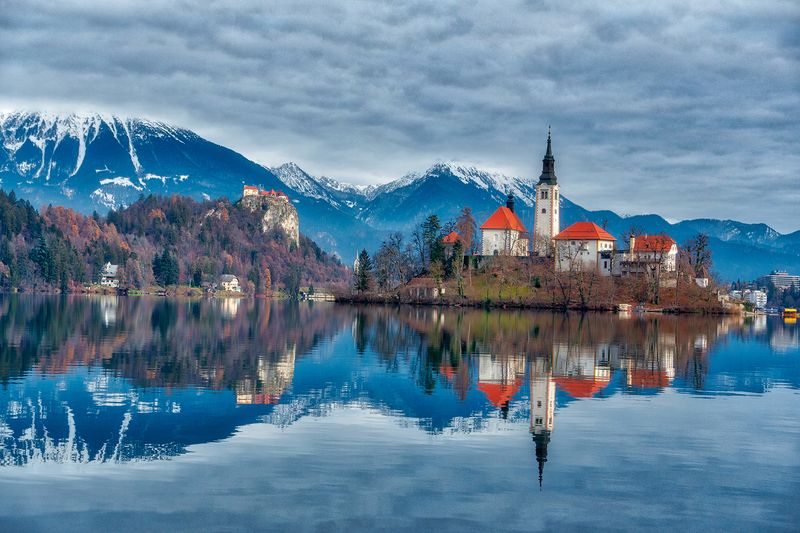
A tiny island rises from turquoise water, crowned by a white church with a red roof that looks like it was placed there by divine interior decorators with impeccable taste. Lake Bled creates one of Europe’s most iconic images, with a medieval castle perched on a cliff above and the Julian Alps providing a dramatic backdrop.
Ring the church bell after climbing 99 stone steps and legend says your wish will come true — though the real magic is just being there.
Traditional wooden boats called pletnas ferry visitors to the island, rowed by oarsmen whose families have held this job for generations. The lake formed when glaciers retreated, leaving behind this gem of impossibly blue-green water that stays swimmable in summer.
Walk or bike the six-kilometer path encircling the shore for constantly changing views of the island and castle.
Don’t leave without trying kremšnita, the local cream cake that inspires passionate devotion among those who’ve tasted it. Bled’s proximity to Triglav National Park makes it perfect for combining fairytale scenery with outdoor adventures like hiking and rafting.
Winter transforms the landscape into a snow globe scene, while summer brings warm weather perfect for swimming and paddleboarding. Slovenia might be Europe’s underrated gem, but Bled has definitely claimed its spot in the fairytale village hall of fame.
Flavigny-sur-Ozerain, France — Medieval Candy Village
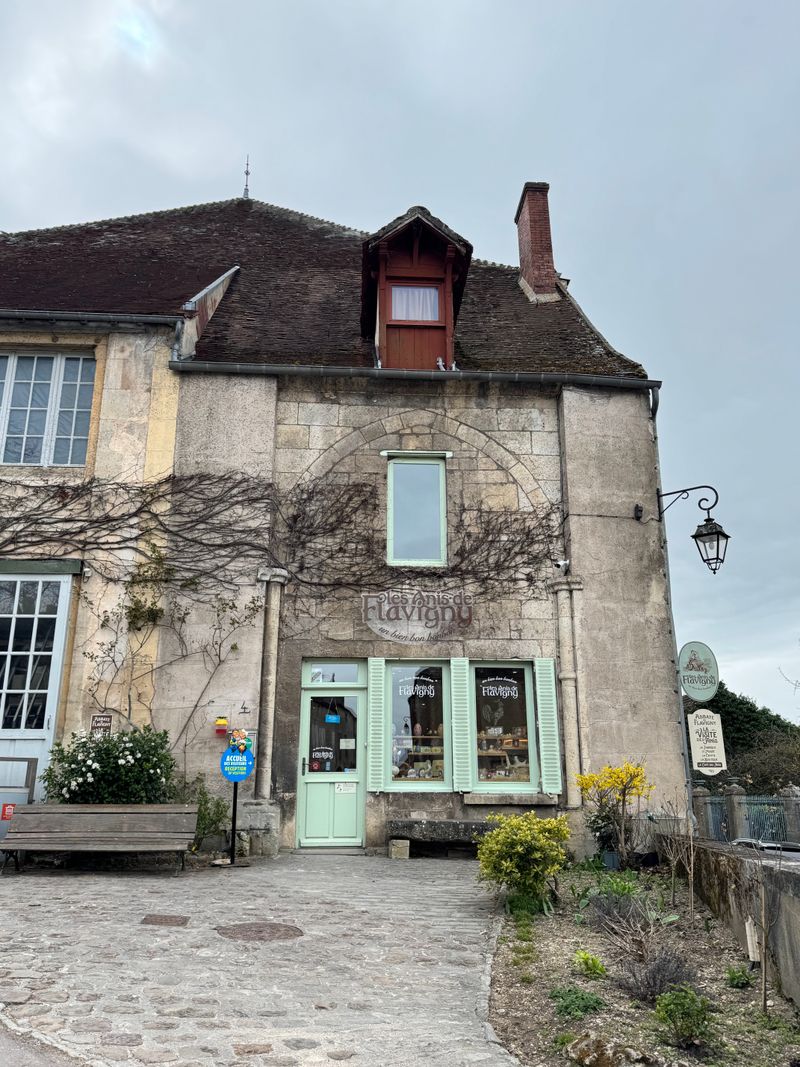
Anise-flavored candies have been made here since 1591, giving Flavigny-sur-Ozerain the sweetest claim to fame of any medieval village in Burgundy. Stone ramparts encircle ancient buildings where time moves slowly and modern life feels like a distant rumor.
The village perches on a rocky hill above the Burgundy countryside, offering views over farmland and forests that have changed little in centuries.
Film fans might recognize Flavigny from the movie “Chocolat,” which used it as a stand-in for a fictional French village. Walking these quiet lanes, you’ll pass the abbey where monks first started making those famous Anis de Flavigny pastilles in ornate tins.
The production continues today in the same historic buildings, and you can tour the workshop to watch candies being made by traditional methods.
Unlike more touristy French villages, Flavigny maintains an authentic sleepy character where locals still outnumber visitors. A handful of artisan shops and cafes serve those who make the journey, but there’s no commercial frenzy here.
Spring and fall showcase the surrounding countryside at its most beautiful, with fields either freshly green or golden with harvest.
The village feels like France before mass tourism, where you can sit in a quiet square and actually hear birds singing. It’s proof that fairytale villages don’t need lakes or mountains — sometimes medieval stones and ancient traditions create enough magic on their own.
Zuheros, Spain — White Town with Castle Views
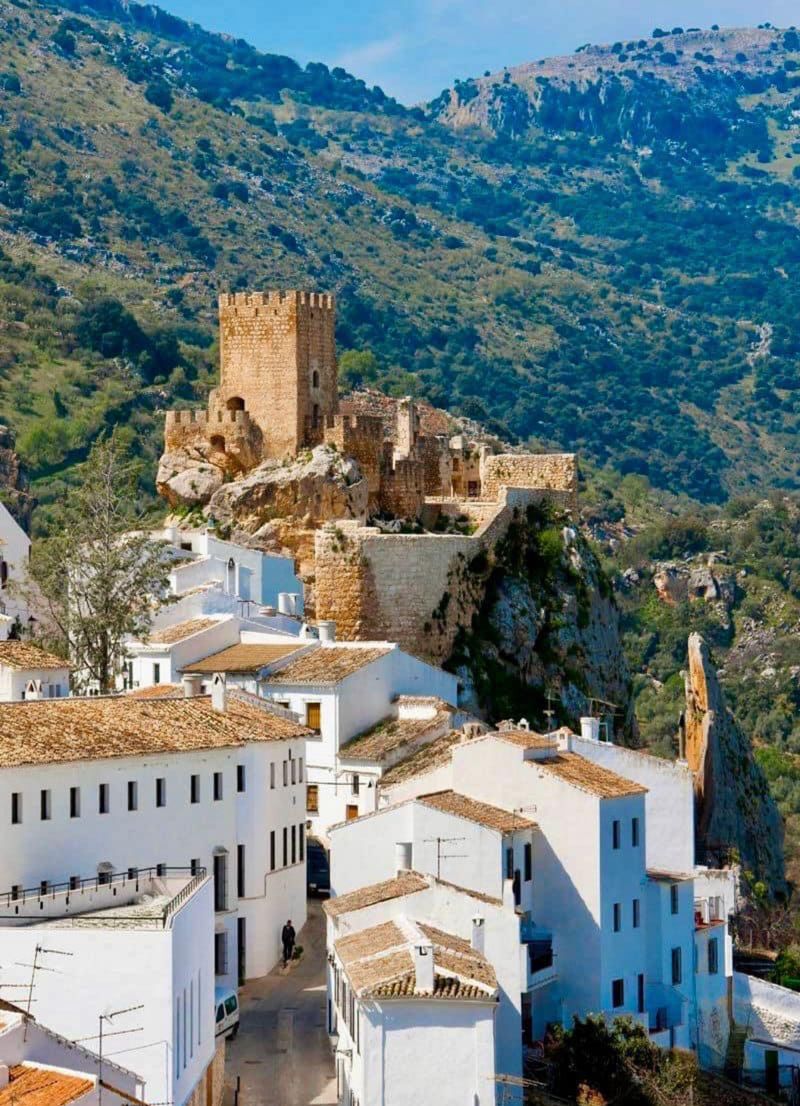
Whitewashed houses cascade down a mountainside in Zuheros, where a medieval castle seems to grow directly from the limestone cliff like something conjured by ancient magic. This Andalusian pueblo blanco showcases the Moorish influence on Spanish architecture, with its maze of narrow streets designed to provide shade during scorching summers.
The village clings to its rocky perch in the Sierra Subbética Natural Park, surrounded by olive groves and dramatic karst formations.
Exploring Zuheros means climbing steep lanes that reveal new perspectives at every turn — a flower-filled courtyard here, a viewpoint over endless valleys there. The castle dates from the 9th century when Moors controlled this region, and its integration with natural rock formations creates an almost organic appearance.
Below the village, the Cueva de los Murciélagos (Cave of the Bats) contains prehistoric paintings and archaeological treasures.
Local restaurants serve hearty Cordoban cuisine featuring salmorejo, flamenquín, and excellent olive oil from surrounding groves. Unlike coastal Andalusian towns overrun with beach tourists, Zuheros remains relatively undiscovered by international visitors.
The village comes alive during local festivals when residents fill the streets for traditional celebrations.
Photographers love the contrast of brilliant white buildings against blue sky and green landscape. Zuheros represents Spain’s hidden interior, where authentic village life continues and fairytale beauty doesn’t require castles in perfect condition — sometimes ruins integrated with nature create even more romantic scenes.
Saint-Véran, France — High-Alpine Village Magic
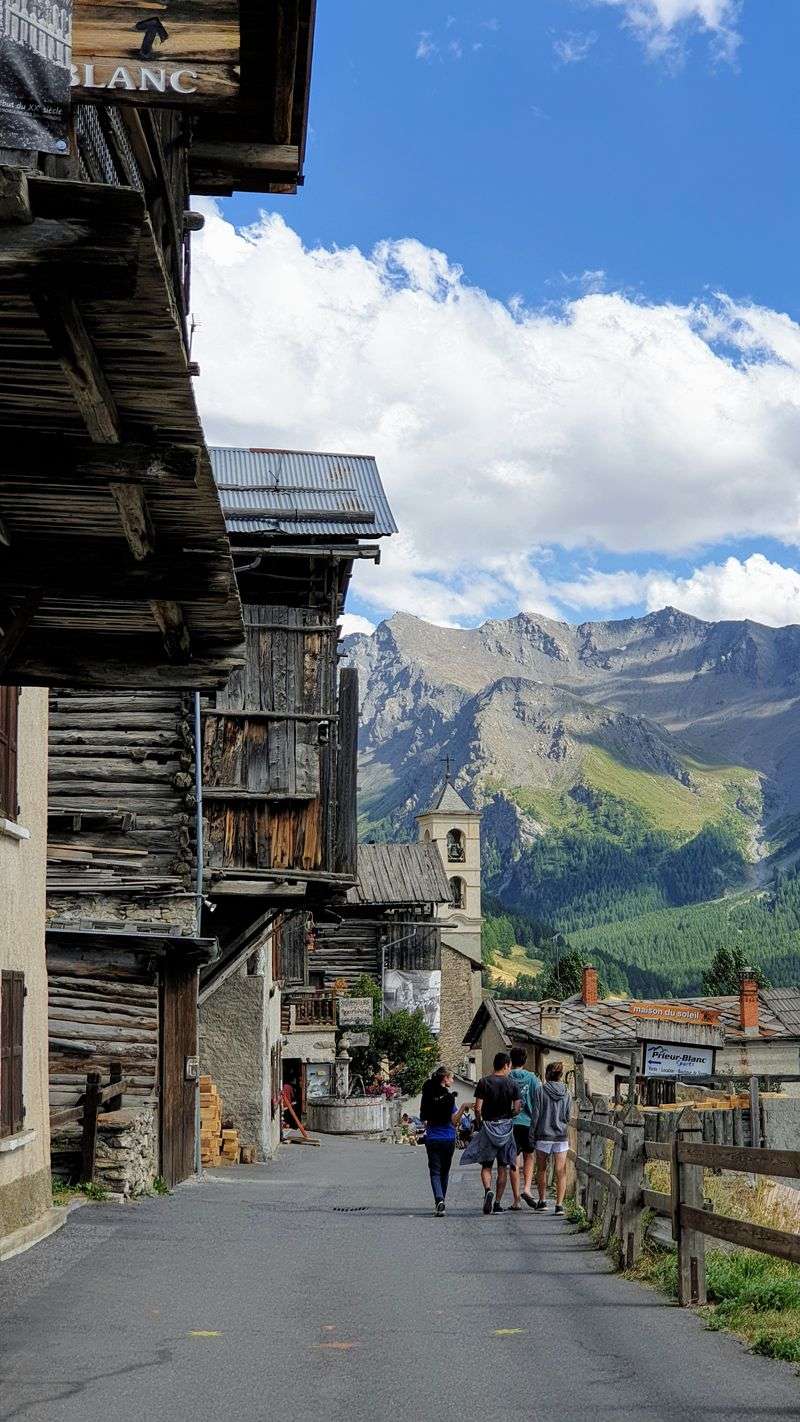
At over 2,000 meters elevation, Saint-Véran claims the title of one of Europe’s highest inhabited villages, where thin air and spectacular mountain views create an otherworldly atmosphere. Traditional timber chalets with stone bases and sun-faded wood crowd together in this Queyras region outpost that feels like the edge of civilization.
Locals joke that “here the roosters peck at stars,” and on clear nights the absence of light pollution makes that claim feel almost true.
The village developed its distinctive architecture to survive brutal alpine winters, with houses featuring south-facing balconies for drying crops and storing firewood. Until the 1930s, Saint-Véran remained isolated and accessible only by foot or mule, preserving traditions that vanished elsewhere.
Today a mountain road connects it to the modern world, but the village retains its authentic character and tight-knit community.
Summer brings wildflower meadows and hiking trails through some of the Alps’ most pristine landscapes. Winter transforms Saint-Véran into a snow-covered wonderland perfect for cross-country skiing and snowshoeing.
The village church contains baroque decorations that seem surprisingly ornate for such a remote location, evidence of the wealth once generated by copper mining.
Visit the Soum copper mine museum to learn about the industry that sustained this high-altitude community for centuries. Saint-Véran isn’t easy to reach, but that’s part of its fairytale appeal — good things await those willing to climb mountains.
Saanen, Switzerland — Alpine Chalet Elegance
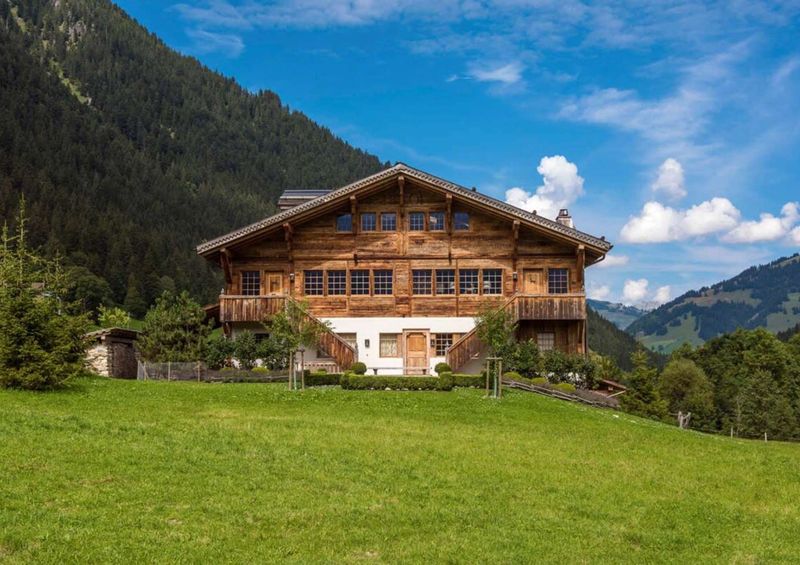
Neighboring the glitzy resort of Gstaad but maintaining its own quiet dignity, Saanen offers classic Swiss alpine charm without the celebrity price tags and paparazzi. Weathered wooden chalets line cobblestone lanes, their balconies overflowing with geraniums in summer and icicles in winter.
The village church with its distinctive onion-shaped steeple has presided over the valley since medieval times, a landmark visible for kilometers around.
Saanen’s location in the Bernese Oberland provides access to spectacular hiking, skiing, and mountain scenery while maintaining a more authentic village atmosphere than nearby tourist magnets. Locals still speak a unique dialect of German called Saanenmöserisch, evidence of the valley’s isolation before modern transportation arrived.
Traditional wooden architecture dominates because building codes strictly preserve the historic character that makes Swiss villages so photogenic.
The village comes alive during the Menuhin Festival, when classical music concerts attract performers and audiences from across Europe. Local cheese makers continue producing Saanen cheese using methods passed down through generations.
Winter sports enthusiasts appreciate the access to extensive ski areas without Gstaad’s crowds and prices.
Wander the compact village center to discover bakeries selling fresh bread, butchers offering local meats, and shops that serve residents rather than tourists. Saanen proves that fairytale Swiss villages still exist beyond postcard images — places where real mountain life continues and visitors are welcomed into authentic alpine culture rather than manufactured tourist experiences.
Kaysersberg, France — Alsace Wine Route Jewel
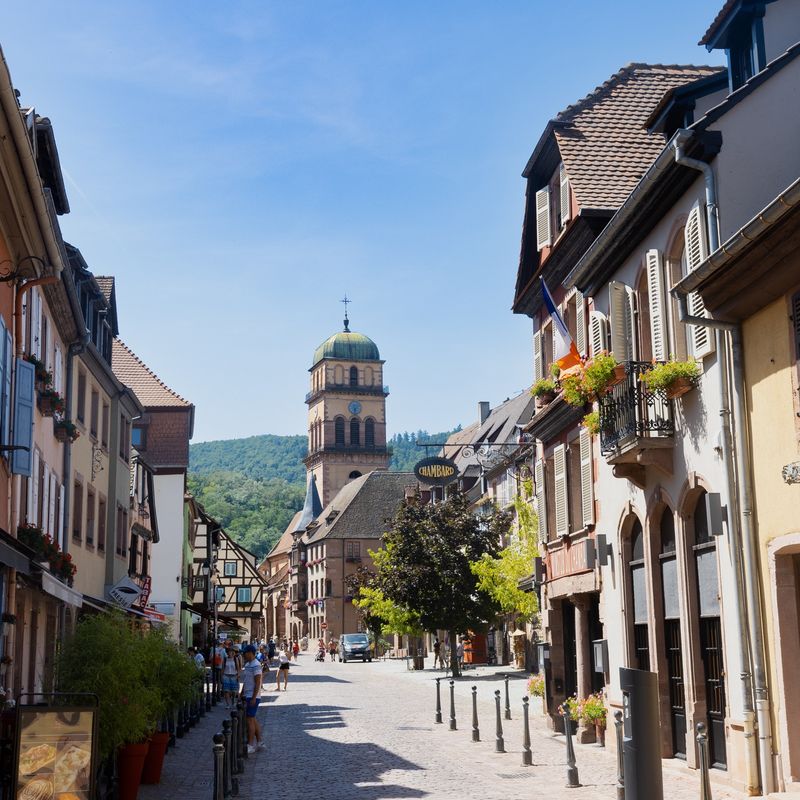
Voted France’s favorite village in 2017, Kaysersberg combines everything that makes Alsace irresistible — half-timbered houses in rainbow colors, cobbled streets, and castle ruins surveying vineyards that produce world-class wines. The village spreads along the Weiss River beneath the Vosges Mountains, its historic center preserved so perfectly you half expect knights to come clattering around corners.
Dr. Albert Schweitzer was born here, and his childhood home now serves as a museum honoring the Nobel Peace Prize winner.
Walking through Kaysersberg means discovering architectural details at every turn — carved wooden beams, wrought-iron signs, fountains trickling in small squares. The fortified bridge spanning the river dates from the 16th century, offering classic photo opportunities with colorful houses reflected in the water.
Climb to the castle ruins for panoramic views over the village and surrounding vineyards that explode with color during autumn harvest.
Christmas markets transform Kaysersberg into a winter wonderland of twinkling lights, handcrafted ornaments, and the intoxicating scent of vin chaud and gingerbread. Local wineries welcome visitors for tastings of Riesling, Gewürztraminer, and Pinot Gris grown on slopes surrounding the village.
Restaurants serve hearty Alsatian specialties like choucroute garnie and tarte flambée that pair perfectly with local wines.
Unlike some tourist-swamped villages, Kaysersberg maintains authentic village life where bakeries, butchers, and markets serve local residents. It’s a fairytale that you can taste, smell, and savor.
Collonges-la-Rouge, France — Red Sandstone Fantasy
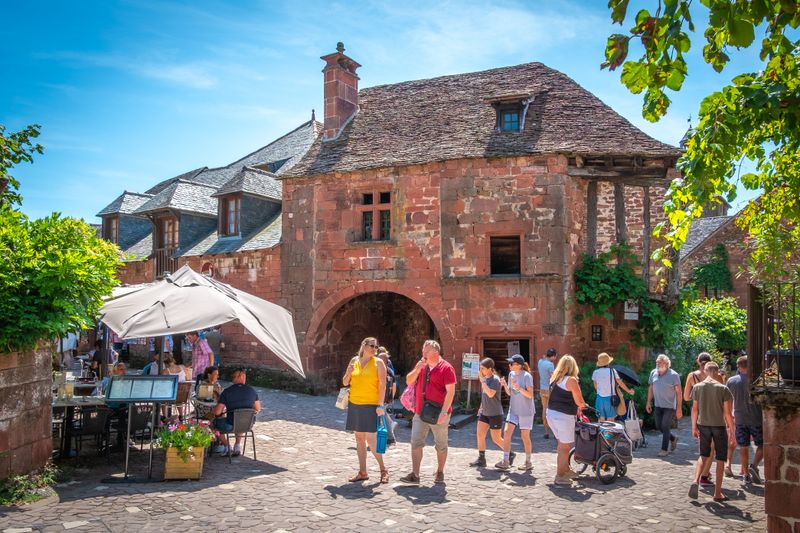
Everything glows red in Collonges-la-Rouge, where buildings constructed entirely from local red sandstone create a village unlike anywhere else in Europe. The warm, rusty color gives the place a surreal quality, especially during golden hour when sunset light makes the stones seem to burn from within.
Turrets, towers, and medieval mansions crowd together along narrow lanes, evidence of the wealth that flowed through here when it served as a refuge for nobility fleeing religious wars.
The village earned “Les Plus Beaux Villages de France” designation, joining an exclusive club of France’s most beautiful communities. Unlike many medieval villages built from gray stone or whitewashed plaster, Collonges stands out with its distinctive red sandstone that comes from quarries in the surrounding Corrèze region.
Flowers planted against red walls create stunning color contrasts that photographers can’t resist.
Walk the village in early morning or late afternoon to avoid tour bus crowds and experience the stones at their most photogenic. The 12th-century church features a white limestone tympanum that provides dramatic contrast against red walls.
Local artisan shops sell regional products including walnut oil, foie gras, and wines from nearby Dordogne.
Collonges feels frozen in time, a place where medieval architecture dominates and modern intrusions remain minimal. The village proves that fairytales come in all colors, and sometimes red sandstone creates more magic than any castle made from gray stone.
It’s architectural fantasy made real through geology and history.
Beaulieu-sur-Dordogne, France — Riverside Charm
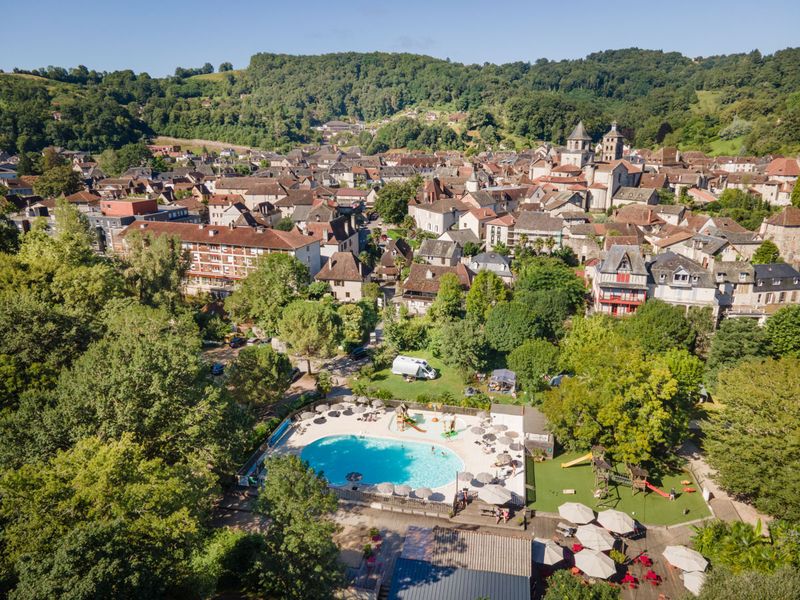
Sunshine seems to linger longer in Beaulieu-sur-Dordogne, where honey-colored stone houses cluster along the river and shaded squares invite lazy afternoons over glasses of local wine. This Corrèze gem blends riverside tranquility with medieval heritage, its 12th-century abbey church featuring a stunning carved tympanum that ranks among France’s finest Romanesque sculptures.
The village name translates to “beautiful place,” and locals argue it’s not bragging if it’s true.
The Dordogne River flows past beaches and swimming spots perfect for cooling off during hot summer months. Ancient stone bridges connect different parts of the village, their arches reflected in slow-moving water.
Narrow lanes wind between buildings where architectural details reveal centuries of history — carved doorways, stone staircases, hidden courtyards with climbing roses.
Market days bring local farmers selling strawberries, cheese, and vegetables to the central square, where cafes set up outdoor tables beneath plane trees. The village maintains an authentic atmosphere despite its beauty attracting steady tourist traffic.
Nearby attractions include the stunning villages of Collonges-la-Rouge and Turenne, making this area a treasure trove for fairytale village enthusiasts.
Beaulieu offers a gentler, sunnier version of the fairytale village experience — less about dramatic castles and more about the pleasure of beautiful stone architecture beside peaceful water. It’s the kind of place where you plan to stay an hour and end up spending the whole afternoon, seduced by the timeless rhythm of village life along the river.
Turenne, France — Hilltop Medieval Haven
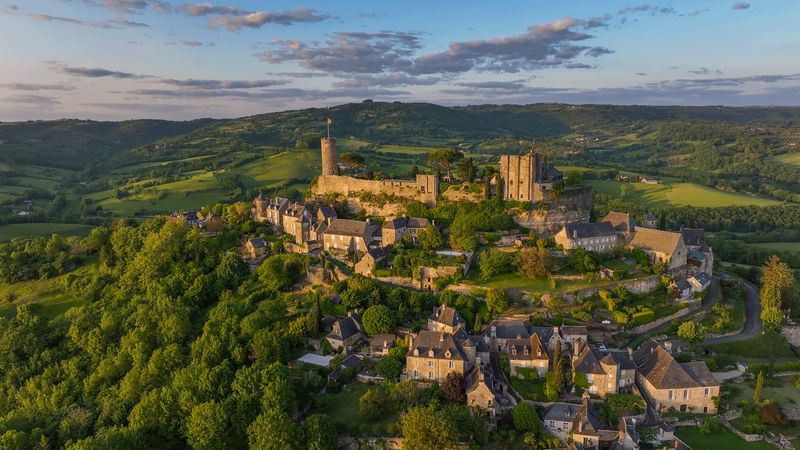
Castle ruins crown the summit of Turenne, watching over a cascade of stone houses that tumble down the hillside in a scene that could illustrate any medieval storybook. This fortified village in Corrèze was once the seat of powerful viscounts who ruled independently until 1738, their legacy visible in the impressive towers and walls that still dominate the skyline.
Climbing the steep paths between ancient homes rewards you with expanding views over the Dordogne countryside.
Two towers remain from the original castle — the Clock Tower and the Caesar Tower, the latter offering panoramic views from its summit after a climb up worn stone steps. The village preserves its medieval street plan, with narrow lanes barely wide enough for two people to pass.
Stone houses feature beautiful architectural details like mullioned windows, carved doorways, and exterior staircases that photographers love.
Turenne maintains a peaceful atmosphere where you can wander without fighting crowds, discovering hidden corners and quiet viewpoints. The village earned “Les Plus Beaux Villages de France” status, though it remains less visited than some of its neighbors.
Spring brings wildflowers to surrounding meadows, while autumn paints the landscape in warm tones that complement the gray stone beautifully.
A handful of artisan shops and a small museum tell the village’s history, but mostly Turenne offers the pleasure of exploring authentic medieval architecture in a stunning hilltop setting. It’s a fairytale village for those who prefer serene exploration over tourist attractions, where history whispers rather than shouts.
Potes, Spain — Mountain Valley Storybook Setting
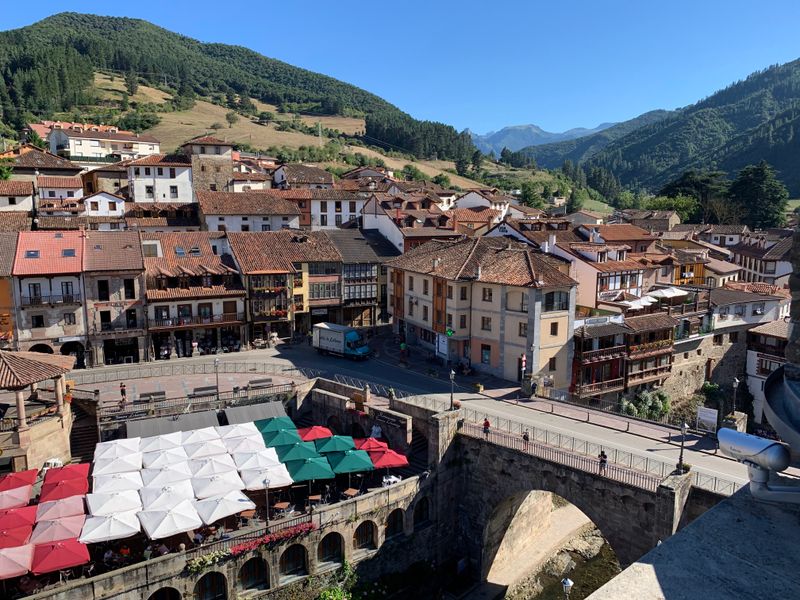
Jagged peaks of the Picos de Europa rise dramatically above Potes, a stone-built mountain village where rivers converge and medieval towers still guard ancient bridges. Located in northern Spain’s Cantabria region, this gateway to some of the country’s most spectacular mountain scenery combines rugged landscape with traditional architecture that has weathered centuries of harsh winters.
The Torre del Infantado stands as a reminder of the noble families who once controlled these strategic mountain passes.
Potes serves as a base for exploring the Picos de Europa National Park, where hiking trails lead to high-altitude lakes, dramatic gorges, and mountain refuges. The village itself rewards wandering, with narrow streets connecting small squares where locals gather in traditional sidrerías (cider houses) and restaurants serving hearty mountain cuisine.
Try cocido lebaniego, a local chickpea stew that provides necessary fuel for mountain adventures.
The village comes alive during the Fiesta del Orujo in November, celebrating the local firewater with tastings, music, and traditional celebrations. Stone bridges arch over the rushing Deva River, their medieval construction testament to the engineering skills of past generations.
Surrounding valleys offer additional villages worth exploring, each with its own character and mountain backdrop.
Potes doesn’t have the polished perfection of some European villages — it’s rougher, more authentic, shaped by mountains and weather rather than tourism. That’s exactly what makes it magical, a place where fairytales involve shepherds and mountain legends rather than princes and princesses, but enchant visitors just the same.
Rochefort-en-Terre, France — Flower-Filled Fairy Village
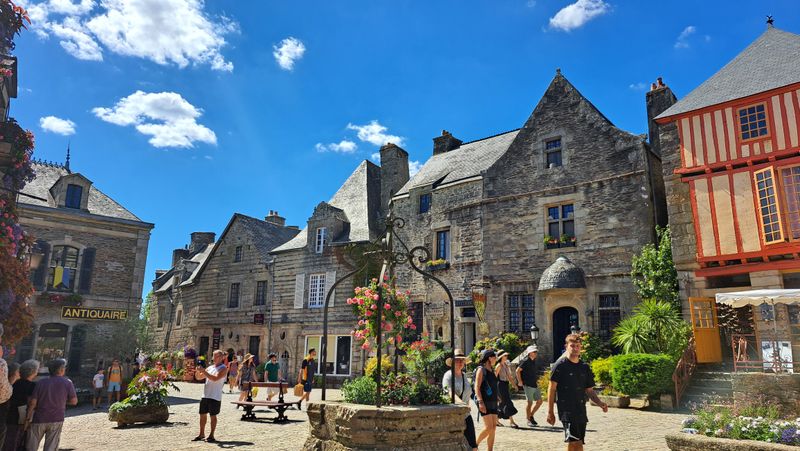
Flowers explode from every surface in Rochefort-en-Terre, where residents compete to create the most spectacular displays of geraniums, petunias, and trailing vines against gray stone facades. This Brittany jewel has won multiple awards for its floral decorations, transforming medieval architecture into living gardens that change with the seasons.
The village perches on a rocky spur above the Arz valley, its strategic position evident in the castle ruins and fortified buildings that remain from more turbulent times.
Walking these sloping streets means discovering artisan galleries, craft shops, and studios tucked into historic buildings where artists have found inspiration in the village’s beauty. The main square features a Calvary cross and fountain surrounded by flower-draped houses that create postcard scenes from every angle.
Local tradition holds that American painter Alfred Klots saved the village from decay in the early 1900s by purchasing and restoring the castle, inspiring residents to preserve their heritage.
Summer brings the village to its floral peak, though spring and autumn offer beautiful displays with fewer crowds. The castle gardens provide elevated views over the village and surrounding countryside.
Brittany’s distinctive character flavors everything here, from the stone architecture to the crêperies serving traditional buckwheat galettes.
Rochefort-en-Terre proves that fairytale villages don’t need mountains or lakes — sometimes medieval stones, dedicated gardeners, and a community’s pride create enough magic to enchant everyone who visits. It’s botanical beauty meets historic preservation in the most delightful combination imaginable.



