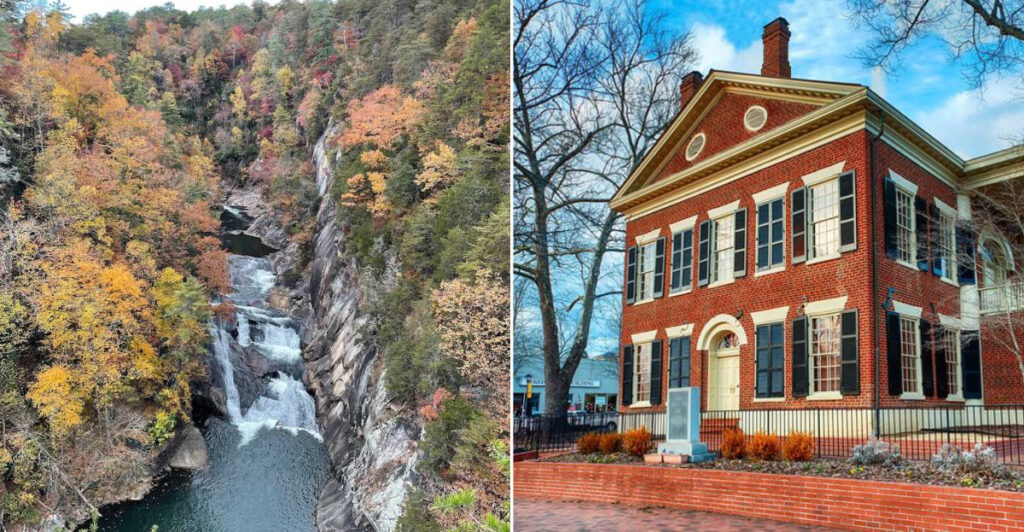
Georgia is full of places that can make a regular weekend feel like a real getaway, and most of them cost very little to enjoy. From dramatic canyon landscapes and ancient Native American mounds to coastal driftwood beaches and free city trails, the state packs an impressive variety into one road trip map.
You do not need to book a flight or blow your budget to feel like you have actually gone somewhere. These 18 spots across Georgia are the kind of places that make you slow down, look around, and wonder why you did not come sooner.
Providence Canyon State Park, Lumpkin
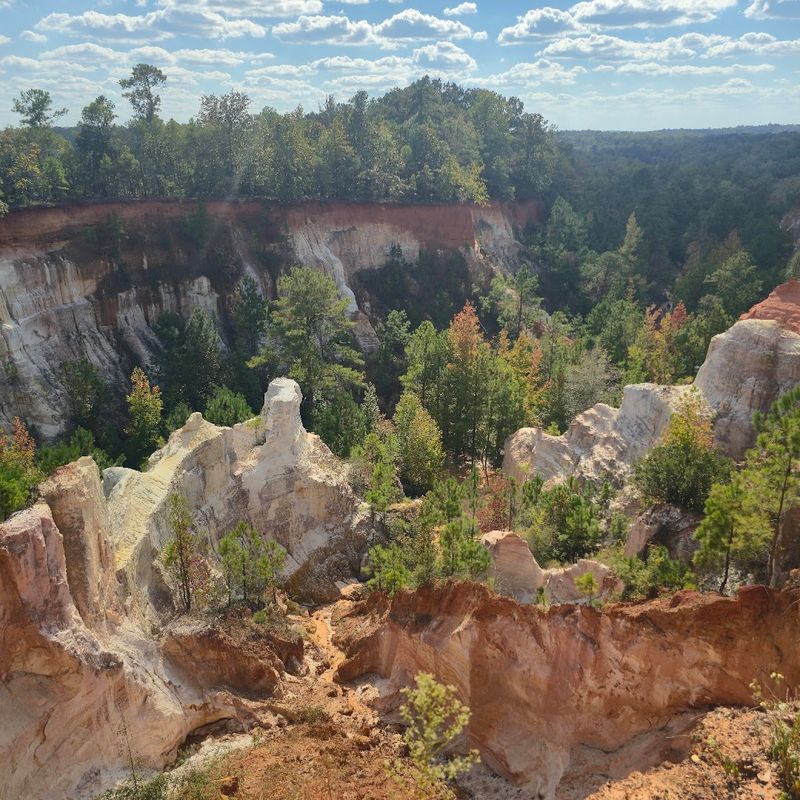
Georgia has its own version of a canyon landscape, and it costs far less than a plane ticket to the Southwest. Providence Canyon, often called Georgia’s Little Grand Canyon, features walls of pink, red, purple, and orange layered soil that look almost too vivid to be real.
The colors come from different mineral compositions exposed by decades of erosion.
What makes this place surprising is that the canyon was not formed by ancient geology alone. Poor farming practices in the 1800s allowed rainwater to carve the land into what visitors see today.
The canyon walls now reach up to 150 feet in some spots.
Hiking trails wind through sandy canyon floors and along the rim, giving visitors two very different perspectives of the same landscape. A parking fee applies, but there is no separate admission charge.
Spring and fall are ideal for comfortable temperatures and the best light for photography.
Cloudland Canyon State Park, Rising Fawn
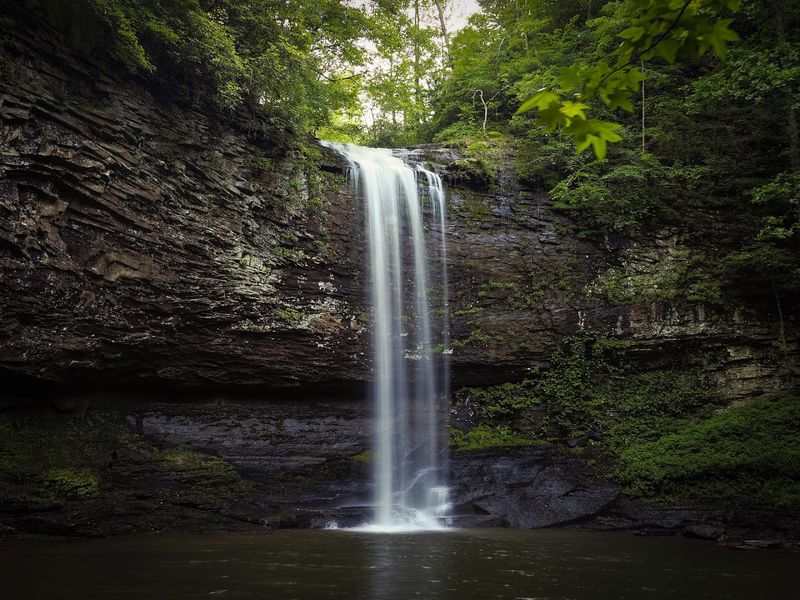
Perched on the western edge of Lookout Mountain in northwest Georgia, Cloudland Canyon is the kind of park that makes people stop mid-trail and just stare. Georgia State Parks describes it as one of the largest and most scenic parks in the entire state system, and the canyon geology alone makes it worth the drive from anywhere in the region.
Two waterfalls are accessible by trail, and the rim overlooks give sweeping views into the canyon below. The main canyon trail involves a steep descent with staircase sections, so comfortable shoes matter more here than at most parks.
Camping, cabins, and cottages are available for those who want to extend the visit overnight. Day visitors pay a parking fee to enter, which keeps the overall cost low.
This park works well for solo hikers, couples, and families who want a genuine mountain atmosphere without crossing state lines.
Amicalola Falls State Park, Dawsonville
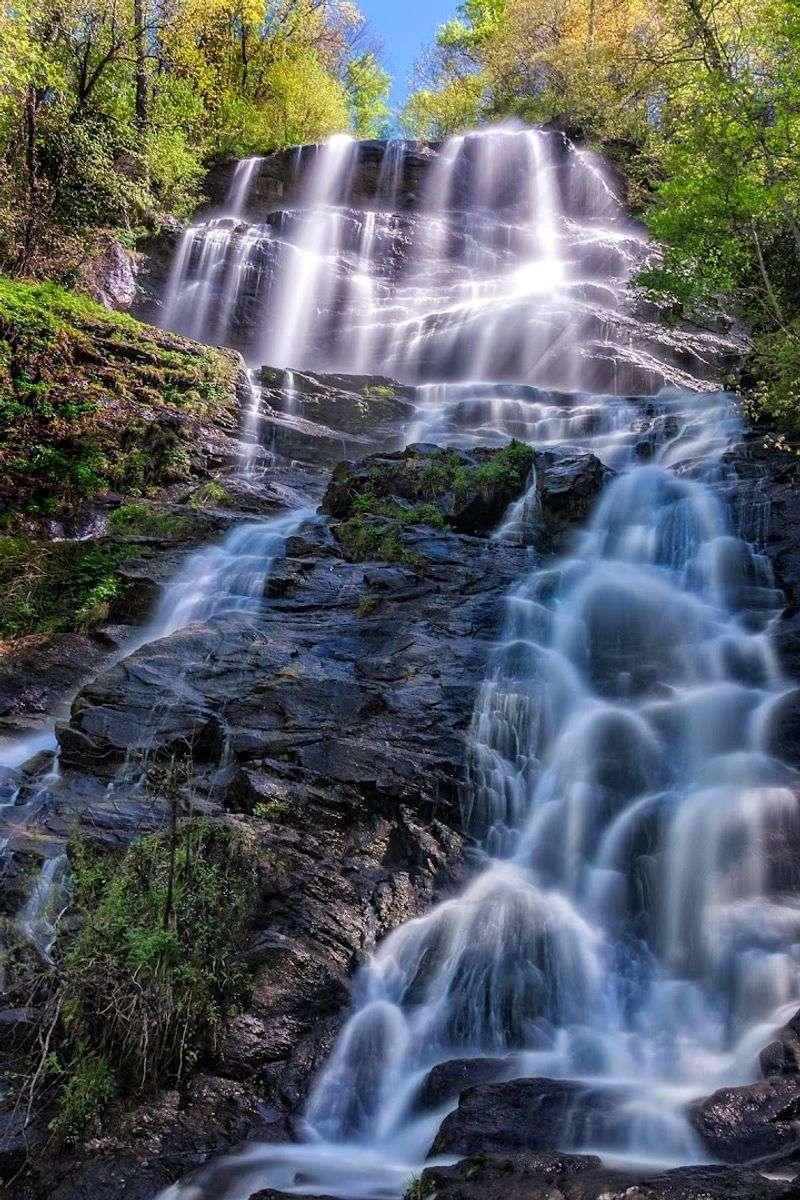
At 729 feet, Amicalola Falls is the tallest cascading waterfall east of the Mississippi River, and it sits inside a state park that welcomes visitors year-round. The falls are the main draw, but the surrounding park offers lodge accommodations, a restaurant, and the starting point of the Appalachian Trail Approach Trail for hikers who want more than a quick look.
The approach trail stretches about 8.5 miles from the park to Springer Mountain, where the Appalachian Trail officially begins. Most day visitors stick to the shorter falls loop, which provides close-up views of the water as it drops in multiple tiers down the mountain face.
The park is currently managed through the North Georgia Mountains Authority and Coral Hospitality, keeping it well-maintained and active as a destination. A parking fee applies for day use.
Fall foliage season brings some of the most popular visitation, so arriving early on weekends helps avoid crowds.
Tallulah Gorge State Park, Tallulah Falls
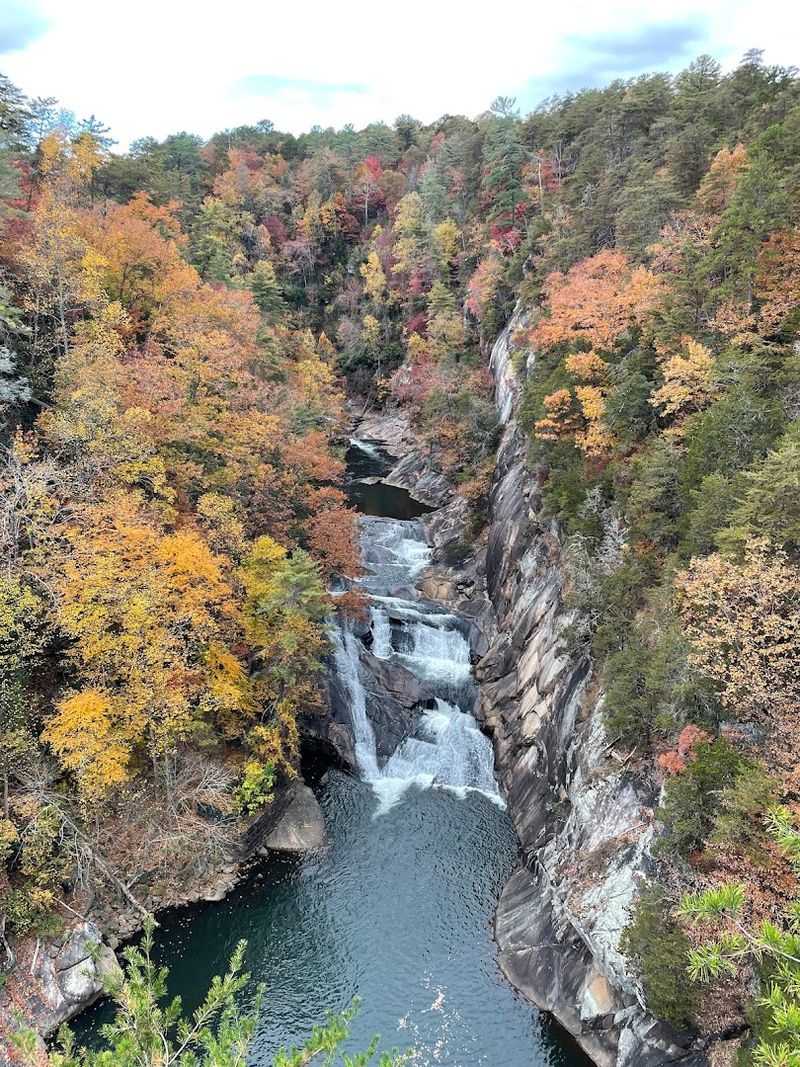
Two miles long and nearly 1,000 feet deep, Tallulah Gorge is one of the most dramatic natural features in the eastern United States. Georgia State Parks confirms the gorge includes rim trails, overlooks, multiple waterfalls, and a suspension bridge that hangs above the rocky river far below.
Standing on that bridge is a moment most visitors remember for a long time.
Access to the gorge floor requires a free permit, and the number of permits issued each day is limited. Planning ahead is necessary if gorge floor access is a priority, especially on busy spring and fall weekends when permits run out quickly.
Rim trails are accessible without a permit and offer excellent views into the canyon. The Jane Hurt Yarn Interpretive Center near the park entrance provides background on the geology and history of the gorge.
Day parking fees are modest, making this one of north Georgia’s strongest affordable outdoor stops.
Sweetwater Creek State Park, Lithia Springs
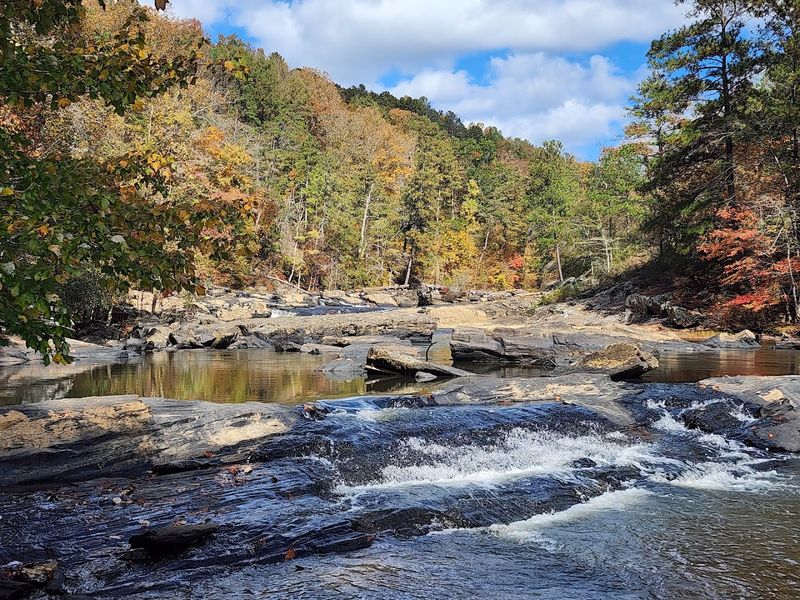
Just 15 miles west of downtown Atlanta, Sweetwater Creek State Park delivers a wilderness experience that feels far removed from city life. The park sits along a creek with rapids, wooded trails, and one of the more unusual historical landmarks in the metro area.
The red trail leads hikers to the ruins of the New Manchester Manufacturing Company, a textile mill that was burned during the Civil War in 1864. The stone walls still stand along the creek bank, and the combination of natural scenery and preserved history makes the hike more interesting than a typical forest walk.
The park is popular with families, dog walkers, trail runners, and anyone who wants a quick escape without much planning. A parking fee is required, but no separate trail admission is charged.
The creek area near the ruins is especially photogenic and gives the outing a sense of discovery that keeps visitors coming back.
Arabia Mountain National Heritage Area, Lithonia
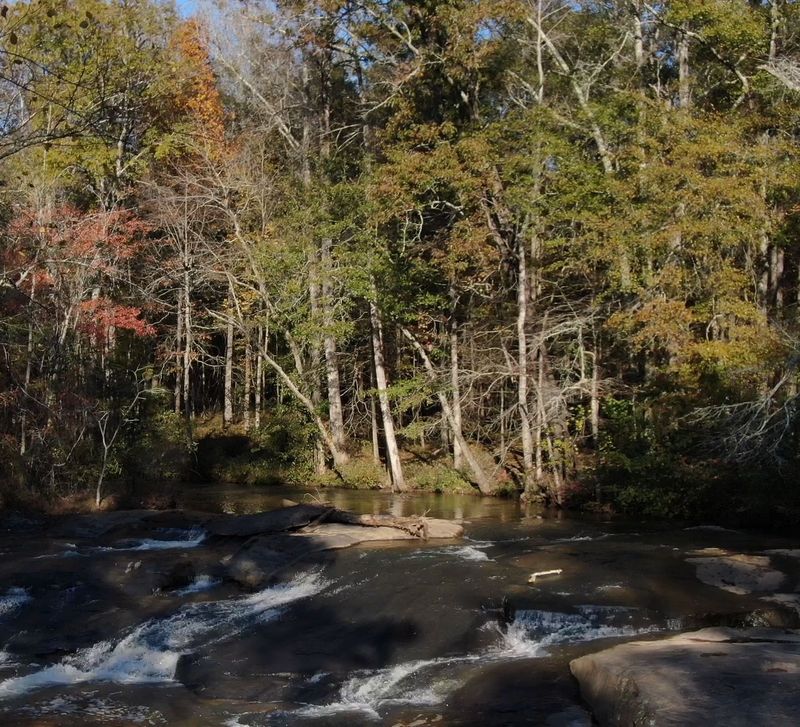
Arabia Mountain sits close to Atlanta but feels like a completely different world once you step onto the open granite flatrock. The Arabia Alliance reports the heritage area covers 40,000 acres and includes opportunities for hiking, biking, fishing, and geocaching across multiple connected properties.
The exposed granite monadnock at the center of the area is the most striking feature. Seasonal wildflowers, including the rare diamorpha plant, bloom in shallow pools on the rock surface in early spring, creating a scene that attracts photographers and nature enthusiasts from across the region.
The National Park Service recognizes Arabia Mountain for its natural and cultural history, which includes historic African American communities and the Davidson-Arabia Mountain Nature Preserve. Trails are free to access, and the area connects to the broader Arabia Mountain PATH trail system.
It is a practical choice for anyone who wants a substantial outdoor outing close to the city without paying admission.
Ocmulgee Mounds National Historical Park, Macon
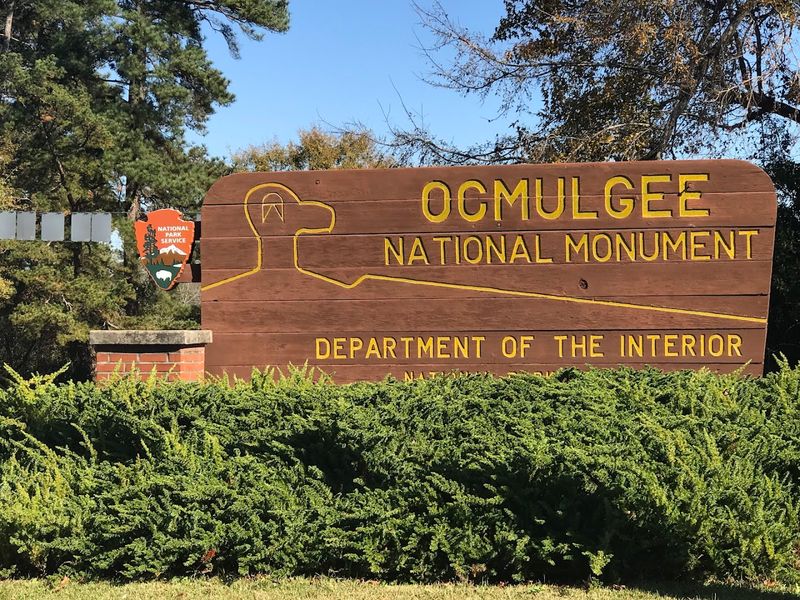
There is no entrance fee at Ocmulgee Mounds, and that alone makes it one of Georgia’s most accessible cultural destinations. The National Park Service confirms the park is free to visit and preserves a site where different American Indian cultures lived continuously for thousands of years.
The most prominent structures are the Mississippian-era mounds built around 900 CE, including the Great Temple Mound, which rises 55 feet above the surrounding landscape. Visitors can climb the mound via a paved path and look out over the Ocmulgee River floodplain from the top.
The park also includes an Earth Lodge, a reconstructed ceremonial structure with an original 1,000-year-old clay floor that visitors can walk into. The visitor center has exhibits, artifacts, and a film that provide context for the site’s long history.
Ocmulgee is a place that rewards slow, curious visitors who take time to read the signs and absorb what the landscape is actually telling them.
Kennesaw Mountain National Battlefield Park, Kennesaw
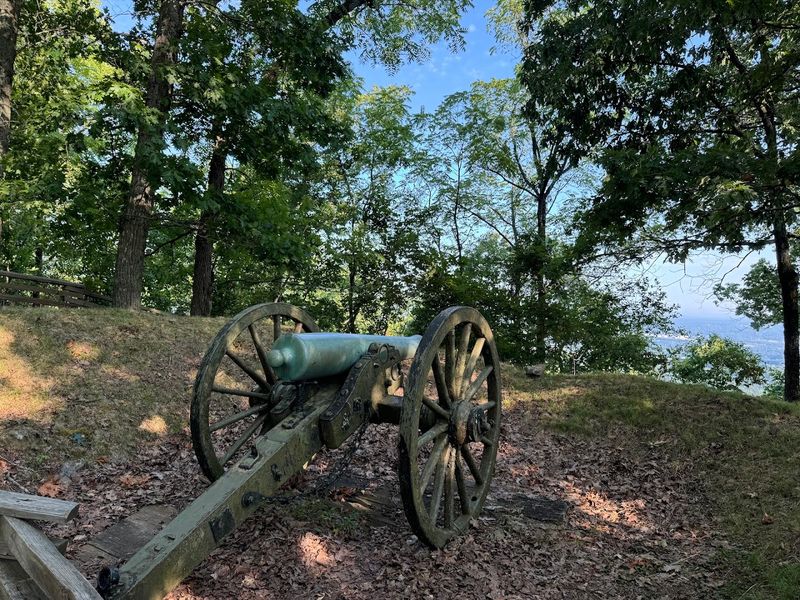
Kennesaw Mountain offers something that most Civil War sites do not: a genuine hiking destination built around a preserved battlefield. The National Park Service describes the park as a 2,965-acre site from the 1864 Atlanta Campaign, with more than 18 miles of interpretive trails crossing ridgelines, earthworks, and open fields where significant fighting took place.
The summit of Kennesaw Mountain stands about 1,808 feet above sea level and provides wide views of the surrounding suburbs and distant skyline on clear days. Historic cannon positions and earthwork fortifications are visible along the trails, giving the hike a historical layer that separates it from a standard nature walk.
The visitor center includes a museum and an orientation film, and self-guided driving tour stops are available for those who prefer not to hike. Admission to the park is free.
Weekend shuttle service to the summit is offered when the road is closed to traffic, which keeps the upper trails more peaceful and accessible.
Martin Luther King, Jr. National Historical Park, Atlanta
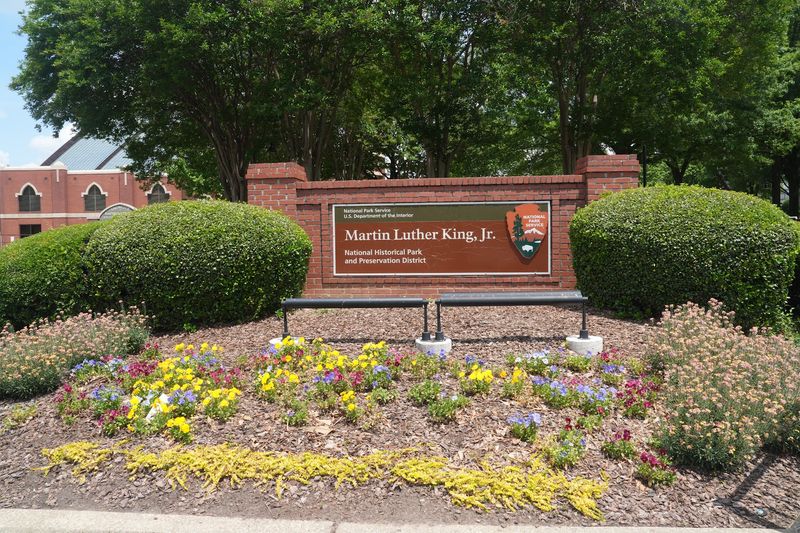
Auburn Avenue in Atlanta holds one of the most historically significant blocks in American history, and visiting it costs nothing. The Martin Luther King, Jr. National Historical Park is fee-free year-round and covers the neighborhood where Dr. King was born, raised, and began his ministry.
The Birth Home is currently closed for renovations, but the National Park Service continues to offer ranger-led presentations about the home daily, along with talks at Historic Ebenezer Baptist Church. The church where Dr. King and his father preached remains a powerful and active part of the site.
The International Civil Rights Walk of Fame, located nearby at the National Center for Civil and Human Rights, adds another dimension to an Auburn Avenue visit. The surrounding Sweet Auburn neighborhood has its own history worth exploring on foot.
For anyone traveling to Atlanta with limited time and budget, this is one stop that consistently leaves a lasting impression regardless of age or background.
Atlanta BeltLine, Atlanta
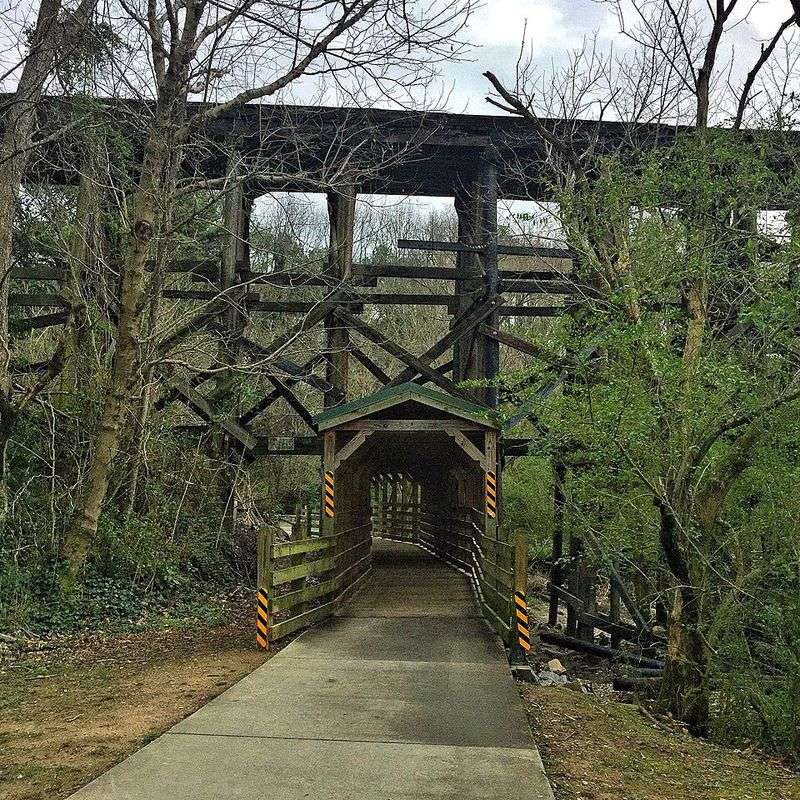
The Atlanta BeltLine is one of the most ambitious urban trail projects in the country, and it is completely free to use. Explore Georgia lists it with free admission and notes that events are held throughout the year along the trail corridor, from outdoor fitness classes to art installations and seasonal markets.
The trail network currently includes the Eastside Trail and Westside Trail as two of the most active completed segments, connecting neighborhoods, parks, restaurants, and public art along a former railroad corridor. The full loop, when complete, will span 22 miles around the city.
Public art is a major draw along the BeltLine, with large murals and sculptures appearing regularly as new sections open. The trail passes through distinct Atlanta neighborhoods, making it a useful way to experience the city at a slower pace.
Parking near trailheads can be limited on weekends, so arriving early or using transit access points makes the outing smoother.
Historic Oakland Cemetery, Atlanta

Oakland Cemetery is Atlanta’s oldest public park, and it operates more like an outdoor museum and garden than a traditional cemetery. The grounds are open from dawn to dusk year-round, and a small admission fee applies for guided tours while self-guided walking is generally accessible.
The cemetery was established in 1850 and contains the graves of notable Georgians including Margaret Mitchell, Bobby Jones, and six Georgia governors. Victorian-era architecture, ornate marble sculptures, and mature oak trees make the grounds visually interesting throughout every season.
The cemetery also serves as a venue for community events, outdoor yoga, and the popular Sunday in the Park festival held each fall. Maps available at the entrance help visitors find significant graves and garden sections.
For Atlanta visitors who want something beyond the typical tourist circuit, Oakland Cemetery offers history, architecture, horticulture, and a quiet pace that feels genuinely different from the rest of the city.
Driftwood Beach, Jekyll Island
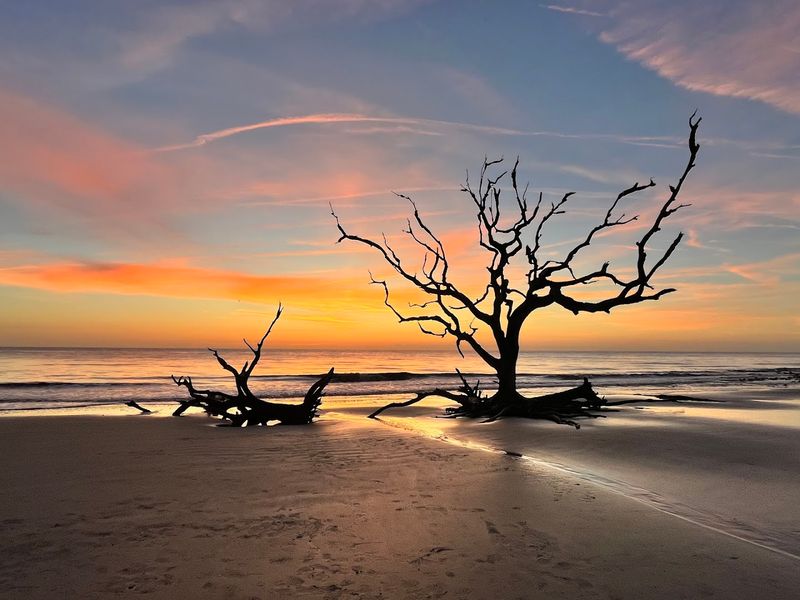
Driftwood Beach on Jekyll Island is one of those places that looks almost unreal in photographs and even more striking in person. The beach is lined with the skeletal remains of ancient trees, their bleached trunks and twisted branches rising from the sand and water in ways that make the shoreline unlike any other on the Georgia coast.
The official Jekyll Island site describes the driftwood formations as a defining feature of the island’s northern end. Vehicles entering Jekyll Island pay a parking fee since the island is a state park, but there is no separate beach admission charge once you are on the island.
Sunrise and low tide are the most popular times to visit Driftwood Beach, when the exposed sand gives the driftwood more visual space and the light creates long shadows across the formations. The beach is also relatively uncrowded compared to other Georgia coastal stops, which adds to its appeal for a relaxed, unhurried visit.
Dahlonega Gold Museum State Historic Site, Dahlonega
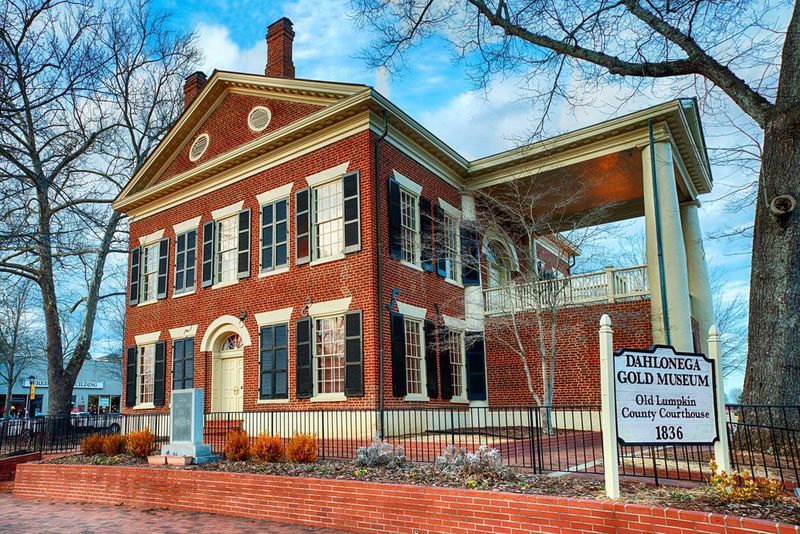
Before California ever saw a gold pan, north Georgia was already in the middle of America’s first major gold rush. Dahlonega was the center of that rush, and the Gold Museum sits inside one of Georgia’s oldest standing courthouse buildings on the town square, connecting visitors directly to that chapter of American history.
Georgia State Parks describes the museum as preserving the story of the 1828 gold rush that brought thousands of prospectors to the north Georgia mountains roughly two decades before the more famous California rush. Exhibits include gold specimens, coins minted at the Dahlonega branch of the U.S.
Mint, and historical artifacts from the era.
The museum is compact and can be toured in about an hour, making it easy to pair with the Dahlonega town square’s restaurants and shops. Admission fees are low, and the surrounding downtown area is walkable and charming.
It is a practical history stop that fits naturally into a north Georgia day trip route.
Etowah Indian Mounds State Historic Site, Cartersville
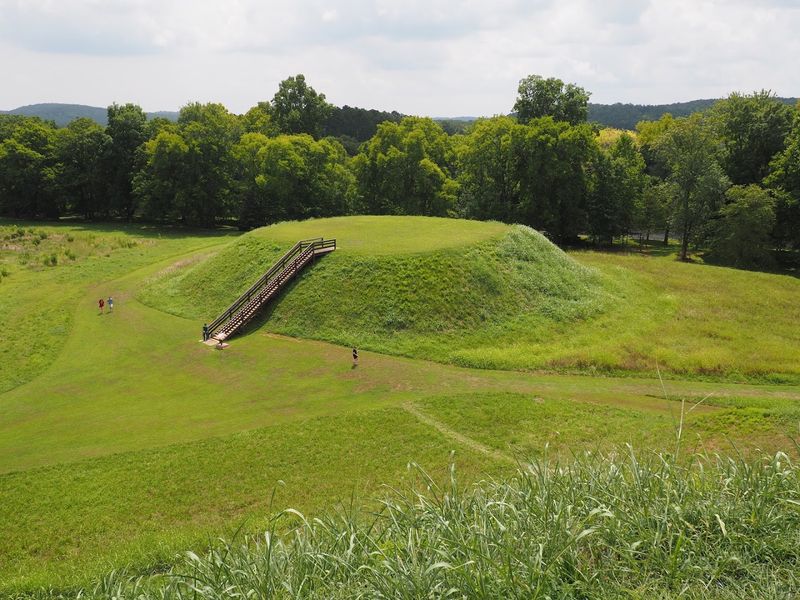
Few places in Georgia carry the weight of history as visibly as Etowah Indian Mounds. Georgia State Parks says the site was home to several thousand Native Americans from around 1000 A.D., and the mounds they built along the Etowah River still stand as some of the best-preserved Mississippian-era earthworks in the Southeast.
The largest mound on the site rises 63 feet and was used as a platform for the chief’s home and temple. Visitors can climb a wooden staircase to the top for a view of the surrounding floodplain and the other mounds below.
The site also includes a moat that once surrounded the village.
A 2024 update from Georgia State Parks confirms that the museum, orientation film, gift shop, mounds, and river trail are all open. Admission is low, and the museum houses carved marble figures and copper ornaments recovered from the site.
Etowah rewards visitors who take time to read the exhibits before walking the grounds.
Wormsloe State Historic Site, Savannah
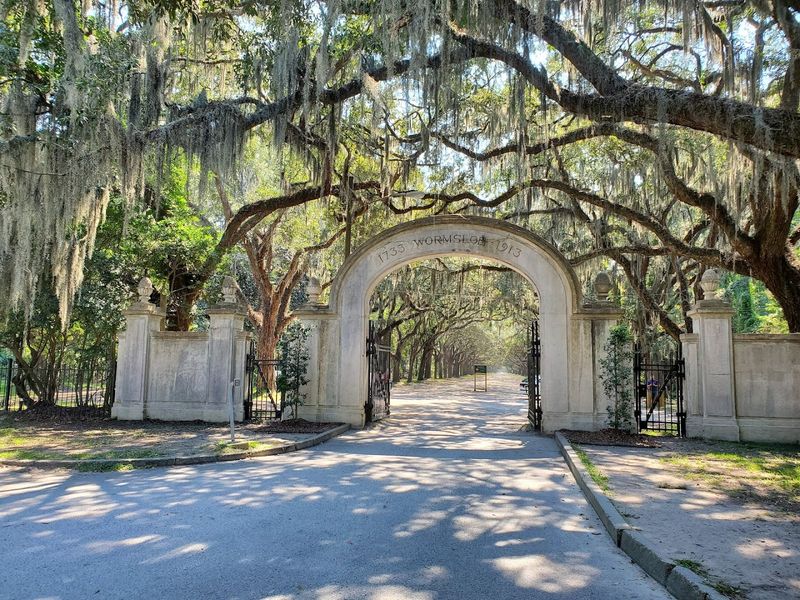
The entrance avenue at Wormsloe is one of the most photographed spots in all of Georgia. A one-and-a-half-mile lane lined with mature live oak trees forms a natural canopy overhead, with Spanish moss hanging down on both sides, creating an approach that sets the tone for the entire visit before you reach the colonial ruins at the end.
Georgia State Parks describes Wormsloe as a site where visitors can interact with historical interpreters during programs and events, view a museum with artifacts recovered from the property, and take shuttle tours from the visitor center. The site preserves the tabby ruins of a colonial estate built in the 1730s by Noble Jones, one of Georgia’s original settlers.
Admission is low, and the combination of natural beauty, colonial history, and interpretive programming makes Wormsloe one of Savannah’s most complete budget-friendly experiences. It works especially well as a morning visit before heading into the historic district for the rest of the day.
F.D. Roosevelt State Park, Pine Mountain
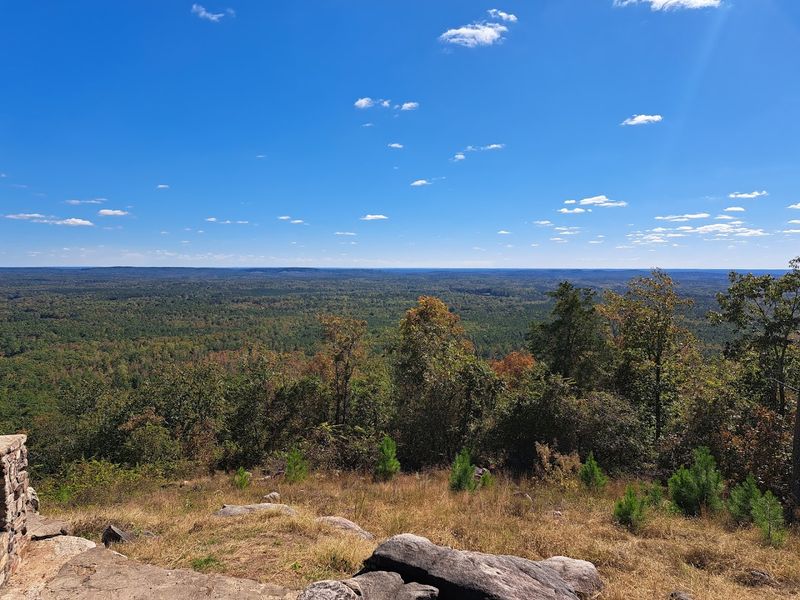
Georgia’s largest state park covers 10,874 acres in west-central Georgia and offers more than 40 miles of trails through hardwoods, pines, creeks, and small waterfalls. F.D.
Roosevelt State Park sits near Pine Mountain and provides a mountain-like experience without requiring a trip to north Georgia.
One of the park’s most historically interesting spots is Dowdell’s Knob, a rocky overlook where Franklin D. Roosevelt sometimes came to picnic and enjoy the view.
The overlook provides a wide view of the Pine Mountain Valley and is accessible by car as well as on foot.
The park has a pool, cottages, a trading post, and multiple trailheads spread across the property. Day parking fees are low, and the trail system is well-marked.
Families looking for a full-day outdoor outing with options for both easy walks and longer hikes will find the park easy to fill with activity from morning to late afternoon.
Roosevelt’s Little White House State Historic Site, Warm Springs
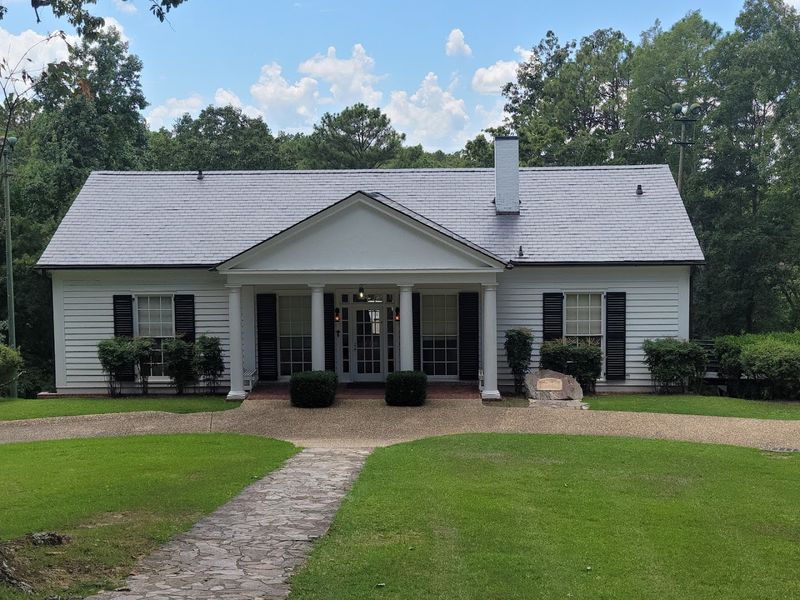
Franklin D. Roosevelt first came to Warm Springs in 1924, drawn by the area’s naturally warm spring waters that he hoped would help with his polio.
He liked the town and the people so much that he eventually built a small cottage there in 1932, years before he became president of the United States.
Georgia State Parks describes the Little White House as the place where Roosevelt came to rest and recover throughout his presidency. The house is preserved largely as it was on the day he passed away there in April 1945, including the unfinished portrait he was sitting for at the time.
The site includes a museum with exhibits on Roosevelt’s connection to Georgia, a film, and a walking path through the grounds. Admission is low for the historical depth the site provides.
Warm Springs itself is a small town worth a short stroll after the museum visit, with a handful of shops and a historic main street.
Hofwyl-Broadfield Plantation State Historic Site, Brunswick
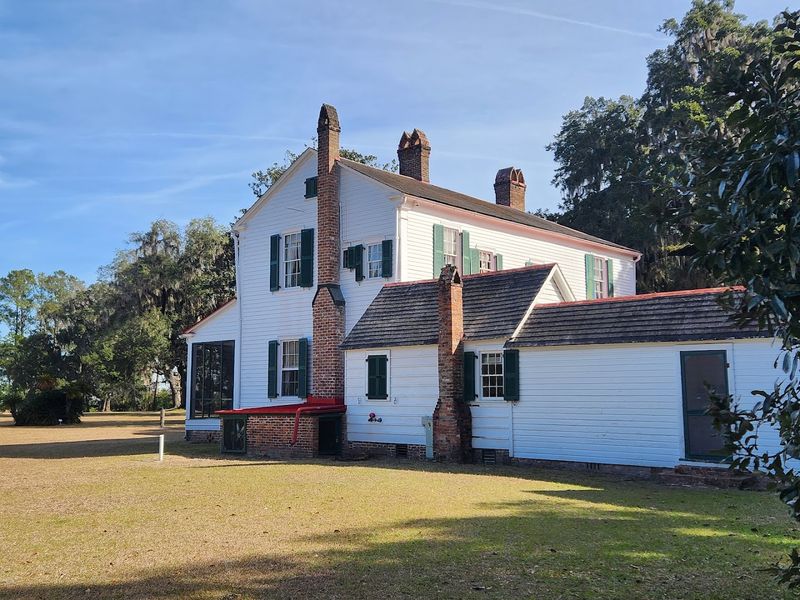
Set along the Altamaha River south of Brunswick, Hofwyl-Broadfield Plantation tells a layered story of coastal Georgia that stretches from the antebellum rice plantation era through the lives of enslaved people, freed communities, and the family that eventually donated the property to the state.
The official state historic site page describes the property as a place where the stories of enslaved and later free people of African ancestry are woven into the broader agricultural and natural history of the Georgia coast. The grounds include historic structures, rice field levees, and a museum with artifacts and exhibits that place the site in its full historical context.
The landscape itself is part of the experience. Moss-draped live oaks frame the approach to the buildings, and the surrounding wetlands and river views give the property a coastal character that feels distinct from Georgia’s inland history sites.
Admission is low, and the site is rarely crowded, making it a calm and reflective stop on a coastal Georgia road trip.
Share this story