New York State has a way of surprising people who think they have already seen everything it has to offer. Beyond the city skyline and the tourist corridors, there are gorges with roaring waterfalls, beaches with wide open shorelines, mountain ridges with sweeping views, and small towns that feel like stepping back in time.
Most of these places cost very little to visit, and many are within a few hours of New York City. Whether you are planning a solo escape, a family outing, or a road trip with friends, this list covers 20 real destinations worth putting on your calendar.
Each one offers something genuinely different, from glacier-carved lakes to Gothic Revival mansions to stone streets that predate the American Revolution. Pack a lunch, fill up the tank, and start planning a day trip that actually feels like an adventure.
Bear Mountain State Park, Bear Mountain, New York
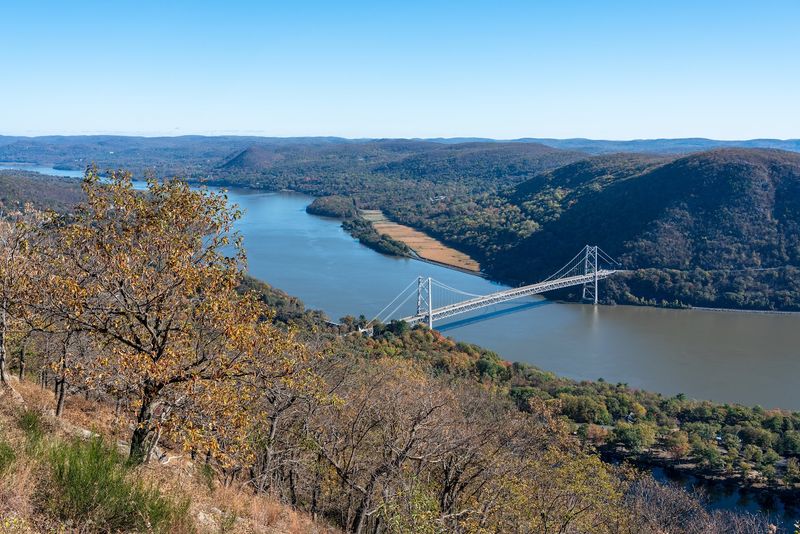
Standing on top of Perkins Memorial Tower at Bear Mountain on a clear day, you can see three states at once. The tower sits at 1,305 feet and is open to visitors during warmer months, making the short drive or hike to the summit genuinely rewarding.
Bear Mountain State Park covers over 5,000 acres in the Hudson Highlands and draws millions of visitors each year, making it one of the most visited state parks in the entire country. The park offers hiking trails ranging from easy loops to more demanding ridge walks, with Perkins Memorial Drive allowing car access to the upper elevations for those who prefer a scenic drive.
Hessian Lake sits near the main entrance and is a popular picnic spot. The Trailside Museums and Zoo, located within the park, is free with park admission and features native wildlife.
Parking fees apply on weekends.
Walkway Over the Hudson, Poughkeepsie and Highland, New York
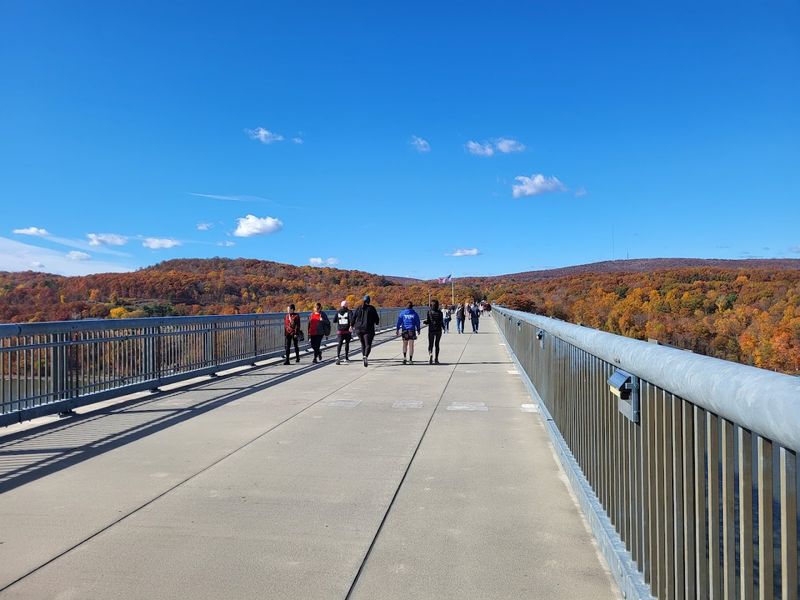
At 1.28 miles long and 212 feet above the Hudson River, the Walkway Over the Hudson holds the title of the world’s longest elevated pedestrian bridge. That fact alone makes it worth the trip, but the views from the middle of the span are what really stick with you.
The bridge connects Poughkeepsie on the east side to Highland on the west, and both ends link into trail networks that extend the walk considerably if you want more mileage. The Walkway is open year-round, free of charge, and accessible from both sides with parking available at each trailhead.
Fall is a peak season when the Hudson Valley foliage turns the surrounding hills bright orange and red, making every photo look effortless. The bridge was originally a railroad structure built in 1889 and was converted into a pedestrian park after a fire in 1974 left it dormant for decades.
Dia Beacon, Beacon, New York
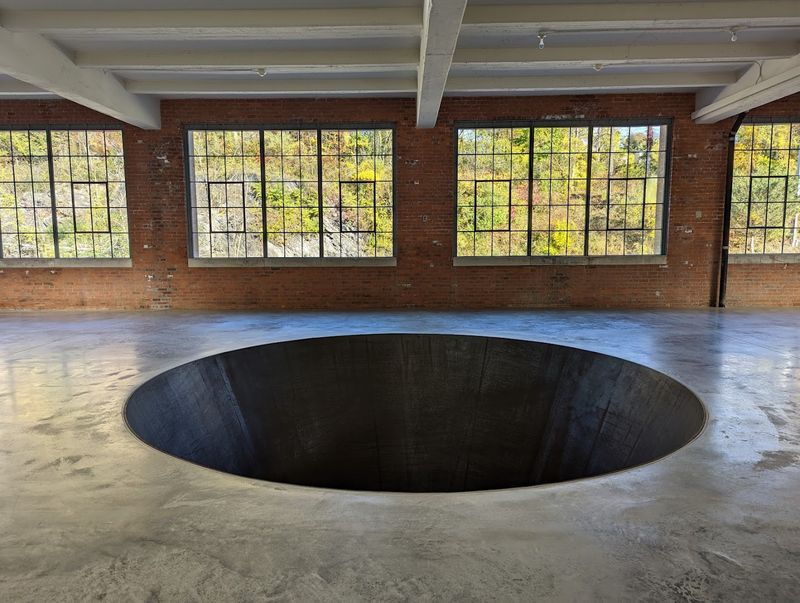
Dia Beacon occupies a former Nabisco box-printing factory along the Hudson River, and the building itself is almost as interesting as what is inside. The 300,000-square-foot space was converted into a world-class contemporary art museum that opened in 2003 and has been drawing serious art fans ever since.
The collection focuses on large-scale works from the 1960s through today, featuring artists like Richard Serra, Dan Flavin, and Donald Judd. Serra’s massive Torqued Ellipses installation alone is worth the admission price, with curving steel walls that shift your sense of balance as you walk through them.
Admission is around $15 for adults, with reduced rates for students and seniors. The museum is closed on Tuesdays and Wednesdays.
Beacon itself has grown into a lively small city with independent restaurants, coffee shops, and galleries along Main Street, making the full day easy to fill without overspending.
Hudson Highlands State Park Preserve, Cold Spring, New York
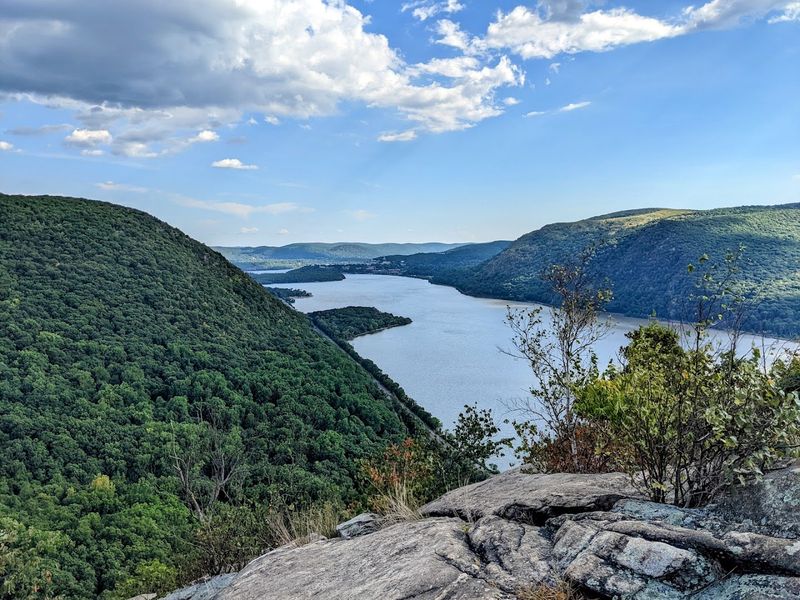
Cold Spring is the kind of river town that feels like it belongs in a different century, and the trails behind it only add to that feeling. Hudson Highlands State Park Preserve wraps around the village and offers some of the most rewarding Hudson Valley hiking accessible from the Metro-North train.
The Bull Hill trail, also known as Mount Taurus, climbs to an open rocky summit with an unobstructed view of the Hudson River below and the surrounding highlands. The round trip is about six miles with significant elevation gain, so it is best suited for hikers comfortable with moderate to strenuous terrain.
One of the best things about this destination is that you can ride the train from Grand Central Terminal directly to Cold Spring, walk to the trailhead, hike all day, and return without a car. The village has a small main street with cafes and shops for a post-hike stop.
Admission to the preserve is free.
Lyndhurst Mansion, Tarrytown, New York
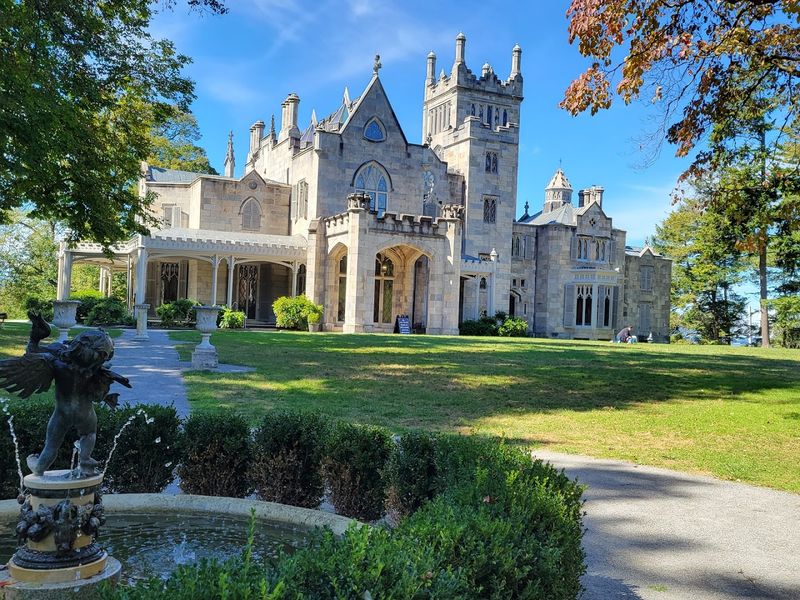
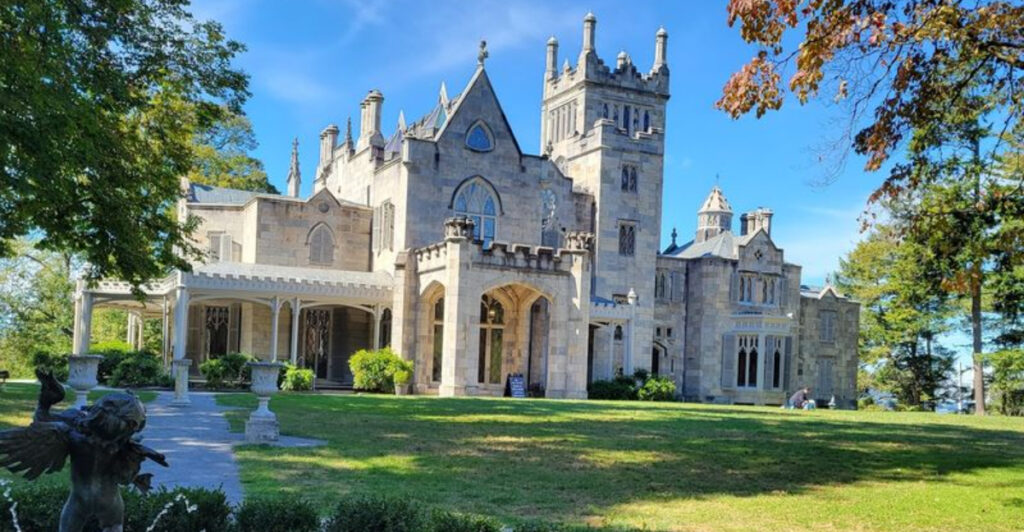
Lyndhurst is one of the finest examples of Gothic Revival architecture in the United States, and it sits right on the Hudson River in Tarrytown with views that have barely changed in 150 years. The mansion was built in 1838 and later expanded, eventually becoming the estate of railroad baron Jay Gould.
The National Trust for Historic Preservation now manages the property, and guided tours of the interior are offered seasonally. Inside, the rooms are preserved with period furnishings and original details that give a clear picture of how wealthy families lived during the Gilded Age.
The grounds are open for walking even when interior tours are not running, and the rose garden and carriage house add to the visit. Admission for house tours is typically around $20 for adults.
Tarrytown itself is a short walk from the Metro-North station, and the nearby waterfront area makes for a pleasant extension of the afternoon.
Storm King Art Center, New Windsor, New York
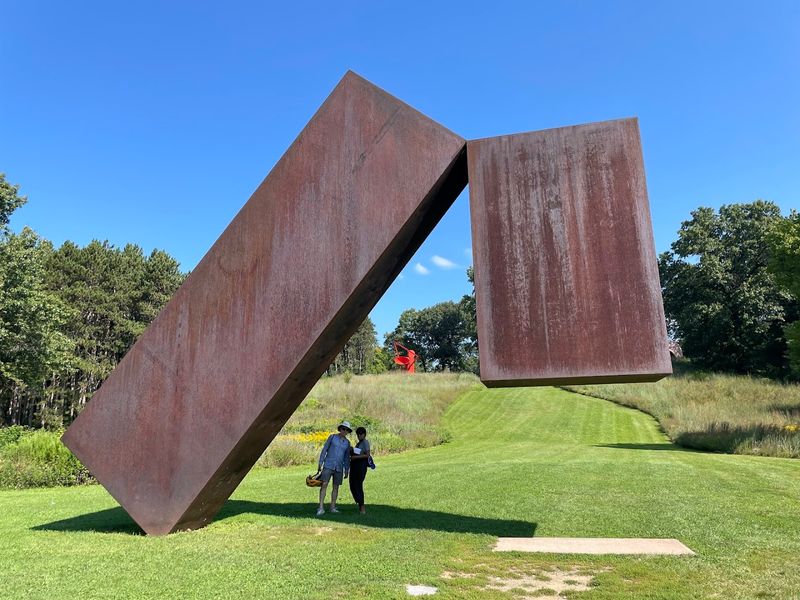
Five hundred acres of rolling Hudson Valley landscape filled with monumental sculptures sounds like something from a dream, but Storm King Art Center in New Windsor is exactly that. The outdoor museum has been operating since 1960 and holds one of the most impressive collections of large-scale outdoor sculpture in the world.
Works by Alexander Calder, Mark di Suvero, Richard Serra, and Maya Lin are spread across meadows, hills, and wooded areas that change with every season. Visitors can walk the grounds, rent a tram for guided access, or bring a bicycle to cover more ground.
Admission is $20 for adults and $10 for children, with free entry for kids under five. Storm King is open from April through November and is closed during winter months.
The site is about an hour from New York City and is best visited on a weekday if you want to avoid the largest weekend crowds. Comfortable shoes are strongly recommended.
Minnewaska State Park Preserve, Kerhonkson, New York
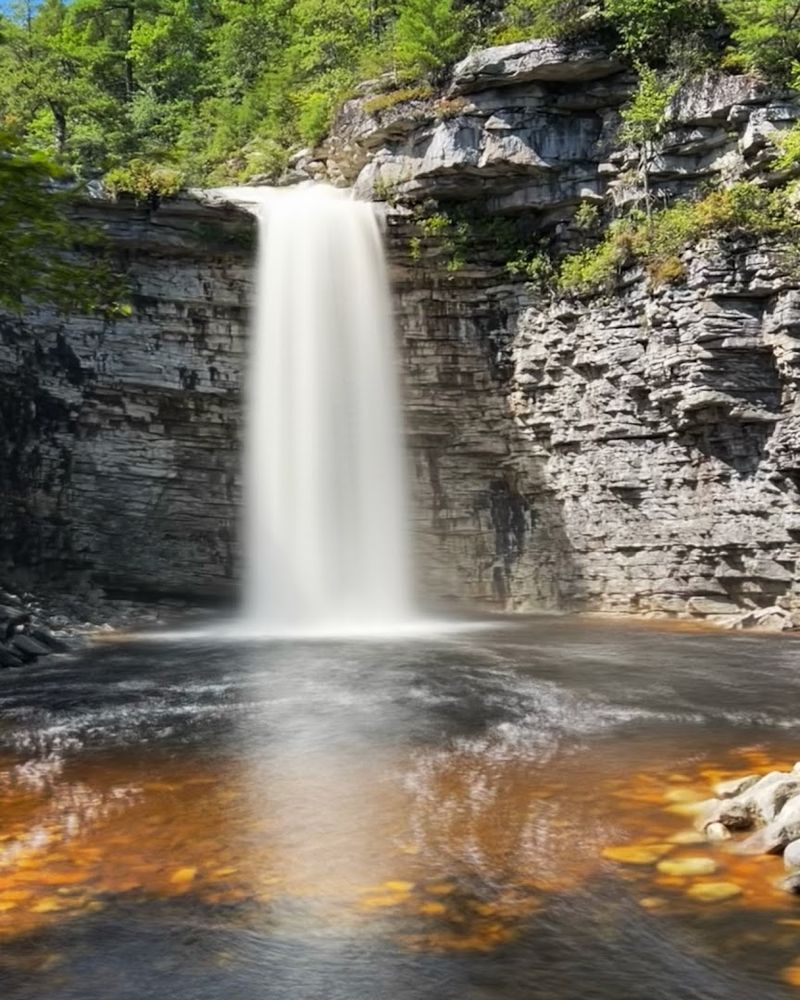
Perched in the Shawangunk Mountains above the Hudson Valley, Minnewaska State Park Preserve offers a combination of crystal-clear sky lakes, white rock ledges, and long ridge trails that feels unlike anywhere else in New York State. The distinctive white quartz conglomerate rock, called the Shawangunk Ridge, gives the landscape a dramatic look that photographers and hikers both appreciate.
Lake Minnewaska and Lake Awosting are the two main sky lakes within the preserve, and swimming is permitted at Lake Minnewaska during summer months. The trails connecting them range from flat carriage roads to more rugged footpaths, giving visitors options based on ability level.
Day-use parking is managed through a reservation system during peak season, so checking the New York State Parks website before visiting is important. Admission is $10 per vehicle.
The preserve covers over 22,000 acres and connects to Mohonk Preserve next door, making it a serious destination for hikers who want a full day on the ridge.
Historic Huguenot Street, New Paltz, New York
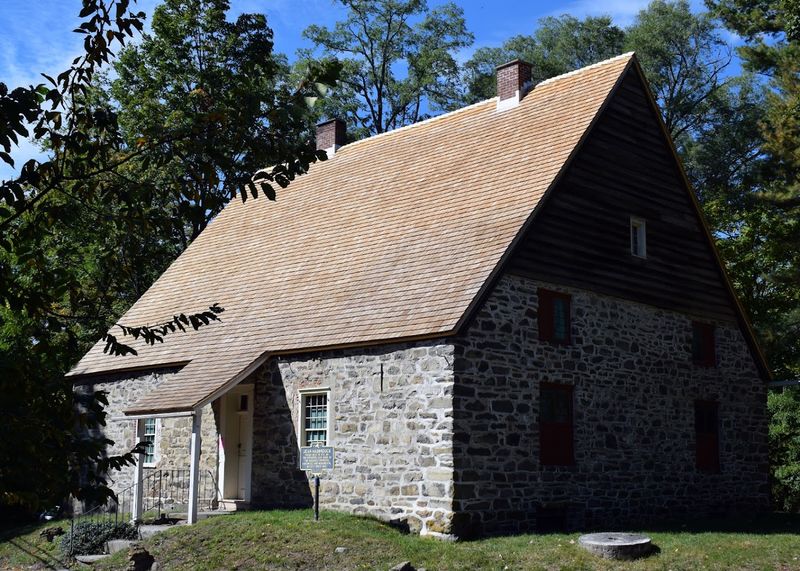
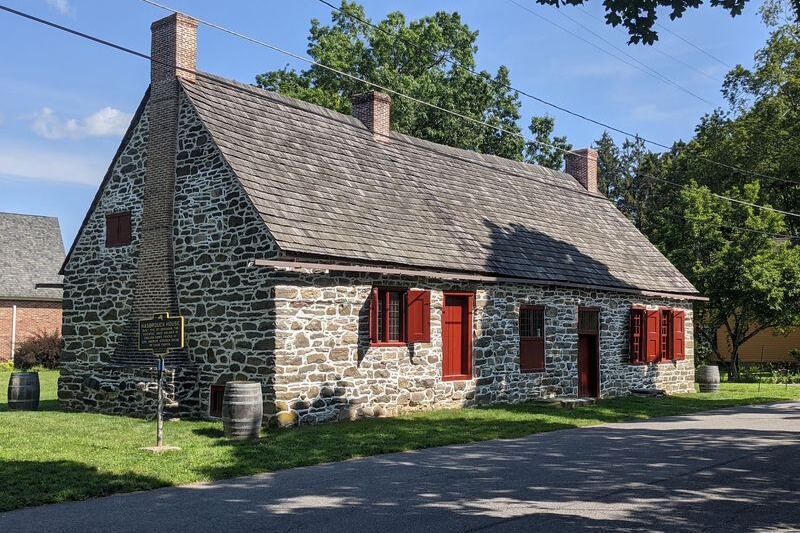
Huguenot Street in New Paltz contains a collection of stone houses built by French Huguenot settlers in the early 1700s, and several of them are among the oldest surviving European structures in North America. The street has been continuously inhabited for over 300 years, which makes walking along it feel genuinely different from a typical historic site.
Guided tours are offered seasonally by the Huguenot Historical Society and cover multiple stone houses, a reconstructed church, and a historic burial ground. The tours provide context about the Huguenot community that settled in the area after fleeing religious persecution in France.
New Paltz itself is a lively college town with a strong independent restaurant and cafe scene, making it easy to spend a full day between the historic sites and the main street. The village is also near the base of the Shawangunk Ridge, so combining a visit to Huguenot Street with a hike at Mohonk or Minnewaska is a natural pairing.
Kingston Historic Districts, Kingston, New York
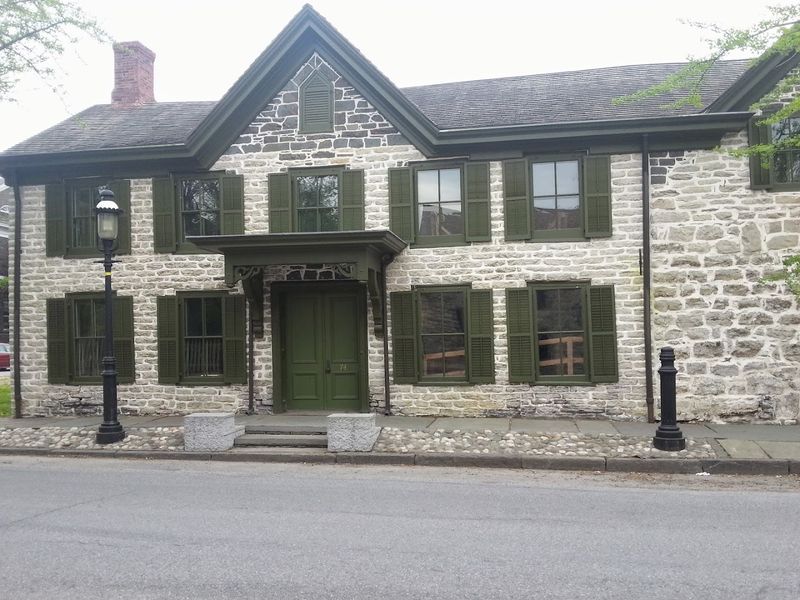
Kingston carries more New York State history per square block than most people realize. It served as the first capital of New York State in 1777 and has two distinct historic districts that reflect different eras of the city’s past: the Stockade District uptown and the Rondout waterfront district below.
The Stockade District features stone buildings dating back to the Dutch colonial period, including the Old Dutch Church and the Senate House State Historic Site where the first New York State Senate met. Walking the grid of streets here takes about an hour and feels like a genuine history lesson without the museum admission.
The Rondout district along the waterfront has a different energy, with galleries, restaurants, and the Hudson River Maritime Museum facing the water. Kingston was also the site of a British raid and burning in 1777.
Combining both districts into one day trip gives you a layered view of a city that shaped New York’s early identity.
Olana State Historic Site, Hudson, New York
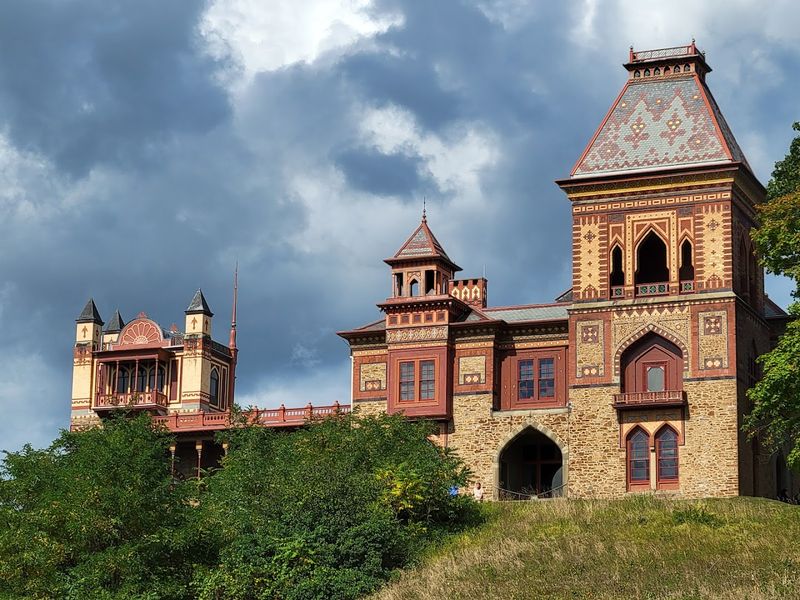
Frederic Edwin Church, one of the most celebrated painters of the Hudson River School, designed Olana as both his home and his greatest work of art. The Persian-inspired mansion sits on a hill above the Hudson River with views that Church himself carefully shaped by planting trees and redirecting a road to frame the landscape exactly as he wanted it.
The house is open for guided tours from April through October, and the grounds are open year-round for walking. From the hilltop, the view across the river toward the Catskill Mountains is one of the most famous scenic vistas in the Hudson Valley, and it looks almost exactly like his paintings.
House tour admission is around $12 for adults, with grounds access free of charge. The site is managed by New York State and sits just south of the city of Hudson, which has its own lively antique and restaurant district worth exploring on the same trip.
Saratoga Spa State Park, Saratoga Springs, New York
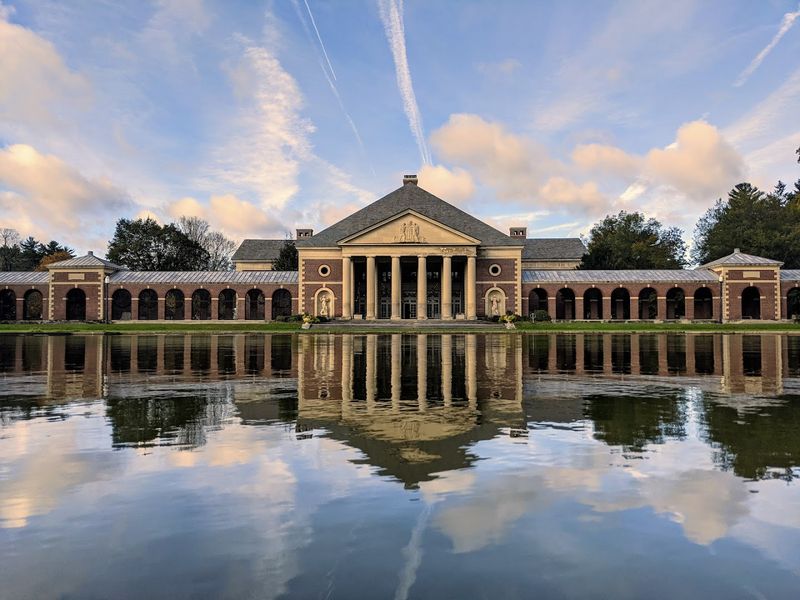
Saratoga Spa State Park is one of the most unusual state parks in New York because it combines natural mineral springs, historic bathhouses, two swimming pools, a golf course, and a performing arts center all in one 2,200-acre property. The park was developed in the early 20th century to preserve the area’s famous carbonated mineral springs, which were once considered to have medicinal properties.
The Roosevelt Baths and Spa still operates within the park, offering mineral bath treatments in a restored historic facility. The Peerless Pool complex is a popular summer destination for families, with multiple pools and a waterslide.
Admission to the park itself is free, though individual attractions charge separate fees.
The city of Saratoga Springs surrounds the park and adds a full layer of options, from Broadway Street’s restaurants and shops to the Saratoga Race Course during thoroughbred racing season in summer. The park’s tree-lined avenues and Georgian Revival architecture make it worth visiting in any season.
Old Westbury Gardens, Old Westbury, New York
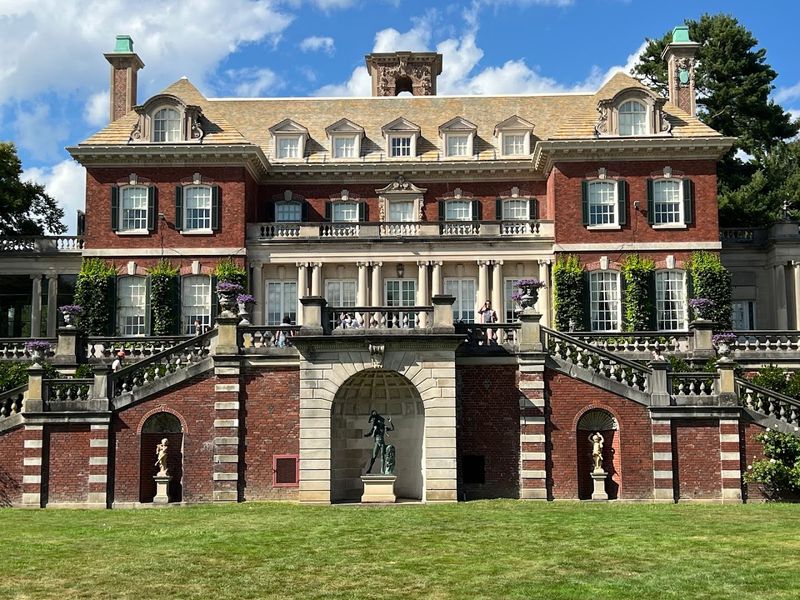
Old Westbury Gardens on Long Island preserves one of the finest examples of an English country estate in the United States. The 160-acre property was the home of financier John S.
Phipps and his family, and it has been open to the public since 1959 after his daughter donated the estate for preservation.
The formal gardens include a walled garden, a rose garden, a reflecting pond, and miles of tree-lined paths through the surrounding woodlands. The 1906 Charles II-style mansion is open for tours and contains original furnishings and family collections that give a clear picture of early 20th-century American wealth and taste.
Admission is around $12 for adults and $6 for children. Old Westbury Gardens is open Wednesday through Monday from late April through October, with special events scheduled throughout the season including an annual Halloween tour.
It is located about 30 miles from Midtown Manhattan, making it a straightforward Long Island day trip.
Jones Beach State Park, Wantagh, New York
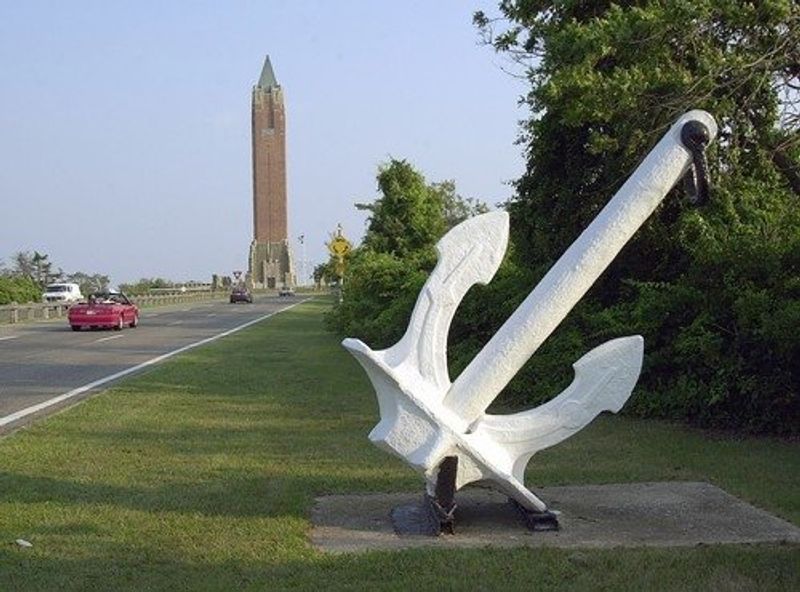
Jones Beach State Park stretches across 6.5 miles of Atlantic Ocean shoreline on the south shore of Long Island and has been one of New York’s most popular beach destinations since Robert Moses developed it in the late 1920s. The park’s Art Deco architecture, including the iconic water tower and bathhouses, gives it a visual character that most beaches simply do not have.
The park includes multiple beach sections, a boardwalk, a boat basin, miniature golf, and the Nikon at Jones Beach Theater, an outdoor concert venue that hosts major acts every summer. Ocean swimming is available with lifeguard coverage during summer months, and the beach is accessible by the Long Island Rail Road’s Jones Beach service from Penn Station.
Parking is the main cost at around $10 to $20 depending on the season. The beach is open year-round, though most amenities operate only from Memorial Day through Labor Day.
The boardwalk is a popular off-season walking destination even in winter.
Fire Island National Seashore, Fire Island, New York
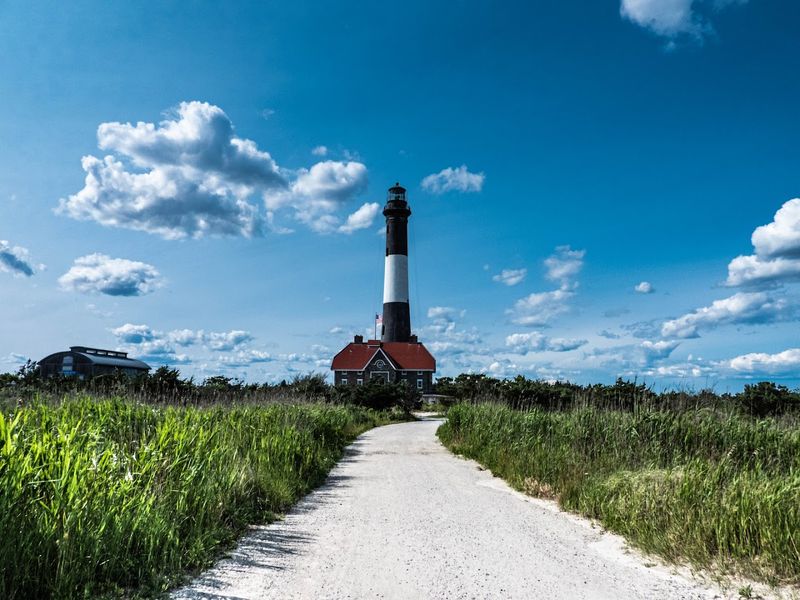
Fire Island is a narrow barrier island off the south shore of Long Island with no cars allowed in most of its communities, which immediately makes it feel different from any other beach destination near New York City. The Fire Island National Seashore protects 26 miles of shoreline along with the Sunken Forest, a rare maritime holly forest that has grown behind the dunes for centuries.
Visitors reach Fire Island by ferry from Bay Shore, Sayville, or Patchogue, with round-trip fares typically running around $10 to $20 depending on the ferry service. The Sailors Haven and Watch Hill areas offer beach access, picnic facilities, and nature trails without requiring a reservation at a private community.
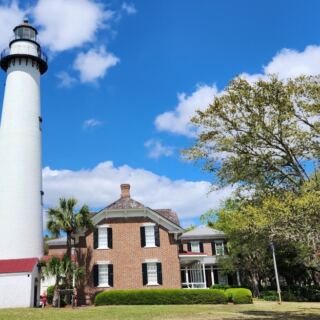
The Fire Island Lighthouse at the western end of the island is a historic landmark open for climbing during summer months. The combination of a car-free environment, wide open beaches, and the unusual Sunken Forest makes Fire Island one of the more distinctive day trips available from the city.
Montauk Point State Park, Montauk, New York
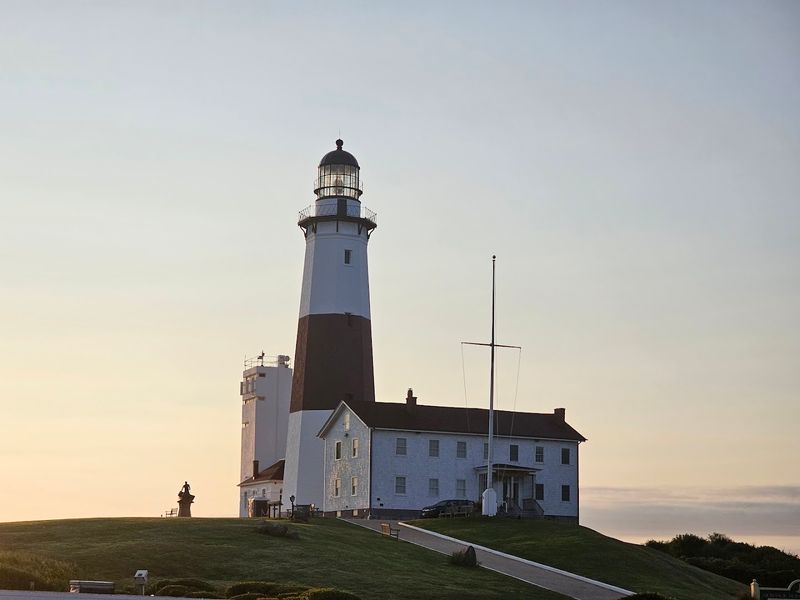
Montauk Point sits at the very eastern tip of Long Island, and the drive out there through the Hamptons and along the South Fork already makes the trip feel worthwhile before you even arrive. The point is anchored by the Montauk Lighthouse, built in 1796 under a commission ordered by George Washington, making it New York State’s oldest lighthouse.
The lighthouse museum is open seasonally and offers tours that include a climb to the top for views of the Atlantic and Block Island Sound. The surrounding Montauk Point State Park has rocky shoreline trails and fishing access, and the area is known for surfing, seal sightings in winter, and dramatic wave action after storms.
Admission to the lighthouse museum is around $13 for adults and $7 for children. Parking at the state park is free.
Montauk village, a few miles west, has a lively year-round restaurant and fishing community that adds a good stopping point before or after the lighthouse visit.
Sands Point Preserve, Sands Point, New York
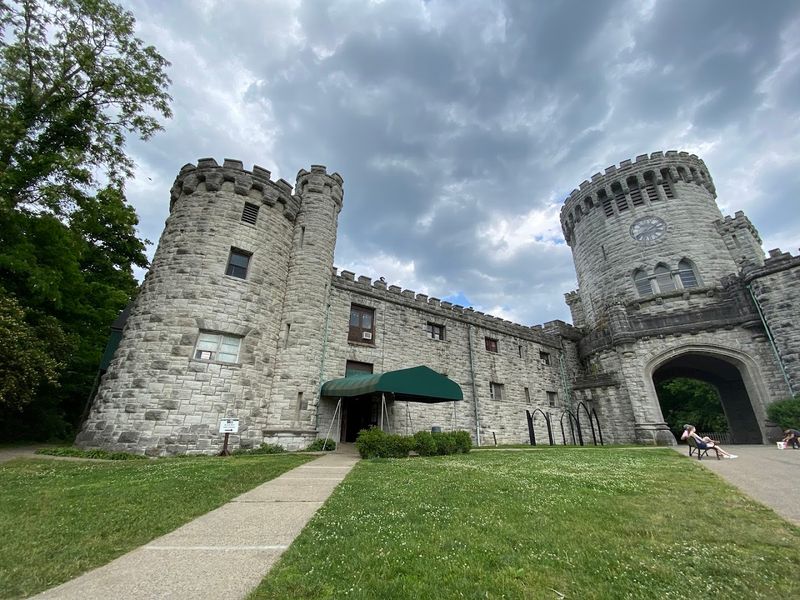
Sands Point Preserve on the North Shore of Long Island sits on a 216-acre peninsula jutting into Long Island Sound and contains two historic mansions built during the Gilded Age that most people outside Nassau County have never heard of. The estate was once owned by Howard Gould, son of Jay Gould, and later by Daniel Guggenheim.
Hempstead House and Castlegould are the two main structures on the property, both built in a dramatic Norman Revival stone style that looks more like a European castle than a Long Island estate. The grounds include woodland trails, a rocky shoreline, and a falconry center that offers demonstrations and educational programs.
Nassau County manages the preserve, and admission is around $10 for adults on weekends during peak season. The mansion interiors host rotating exhibits and events throughout the year.
The combination of the historic architecture, the waterfront setting, and the quiet woodland trails makes Sands Point a genuinely underappreciated North Shore destination.
Green Lakes State Park, Fayetteville, New York
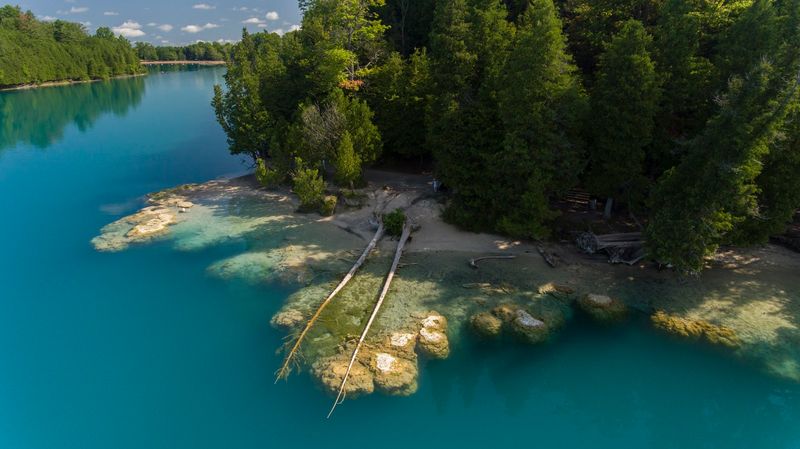
Green Lakes State Park gets its name from two small glacial lakes with a color that stops people mid-step the first time they see it. Round Lake and Green Lake both display a striking blue-green color caused by their meromictic nature, meaning their upper and lower water layers do not mix, which allows certain algae and light conditions to create the unusual tint.
Both lakes are among a rare category of meromictic lakes in the world, which gives the park a genuinely scientific distinction alongside its natural beauty. Swimming is permitted at Green Lake during summer months, and the water clarity is notable even by lake standards.
The park also includes a golf course, picnic areas, and a trail system that loops around both lakes with easy to moderate terrain. Admission is $8 per vehicle.
The park is located just east of Syracuse, making it a straightforward upstate day trip for central New York residents or anyone driving through the region.
Watkins Glen State Park, Watkins Glen, New York
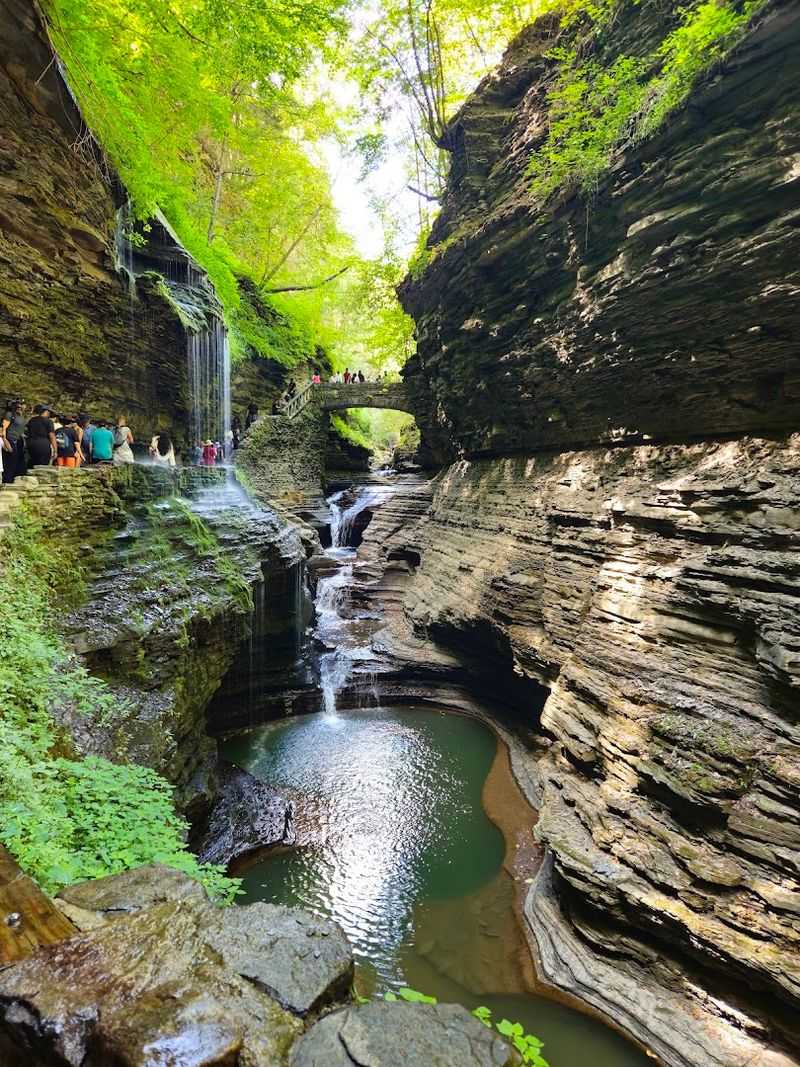
Watkins Glen State Park packs 19 waterfalls into a two-mile gorge trail that winds through passages carved by glacial meltwater over thousands of years. The rock walls rise up to 200 feet on either side of the trail, and the path passes behind and beside multiple falls in a way that feels more like an underground journey than a standard hike.
The Gorge Trail is the main attraction and takes about an hour to complete at a relaxed pace. Stone steps and bridges built by the Civilian Conservation Corps in the 1930s are still in use today and add a historic quality to the experience.
The upper rim trails offer a drier and less crowded alternative with views down into the gorge.
Admission is $10 per vehicle. The park is located at the southern end of Seneca Lake in the Finger Lakes region, and the village of Watkins Glen below has restaurants and shops for a post-hike stop.
The park is open from mid-May through early November.
Letchworth State Park, Castile, New York
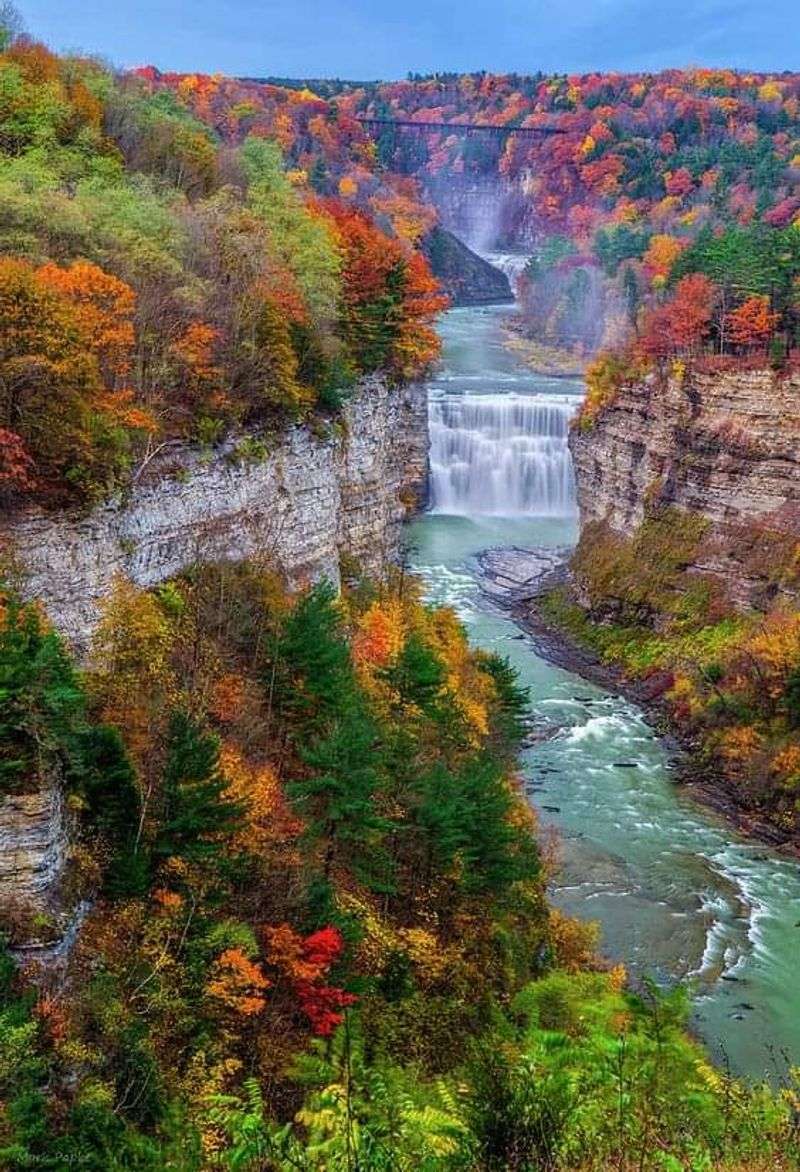
Letchworth State Park is sometimes called the Grand Canyon of the East, and while no canyon comparison fully captures what it is, the scale of the Genesee River gorge here is genuinely impressive. The river drops over three major waterfalls within the park, with the Middle Falls being the most dramatic at 107 feet wide and 107 feet tall.
The park covers nearly 15,000 acres and offers over 66 miles of trails ranging from flat riverside walks to ridge-top routes with views across the canyon. Hot air balloon rides over the gorge are available through a private operator based in the park, making Letchworth one of the few state parks where that kind of experience is accessible.
Admission is $10 per vehicle. The park is open year-round, and fall foliage season turns the canyon walls into a wall of color that draws large crowds from late September through mid-October.
Cabins and camping are available for those who want to extend the trip beyond a single day.
Taughannock Falls State Park, Trumansburg, New York
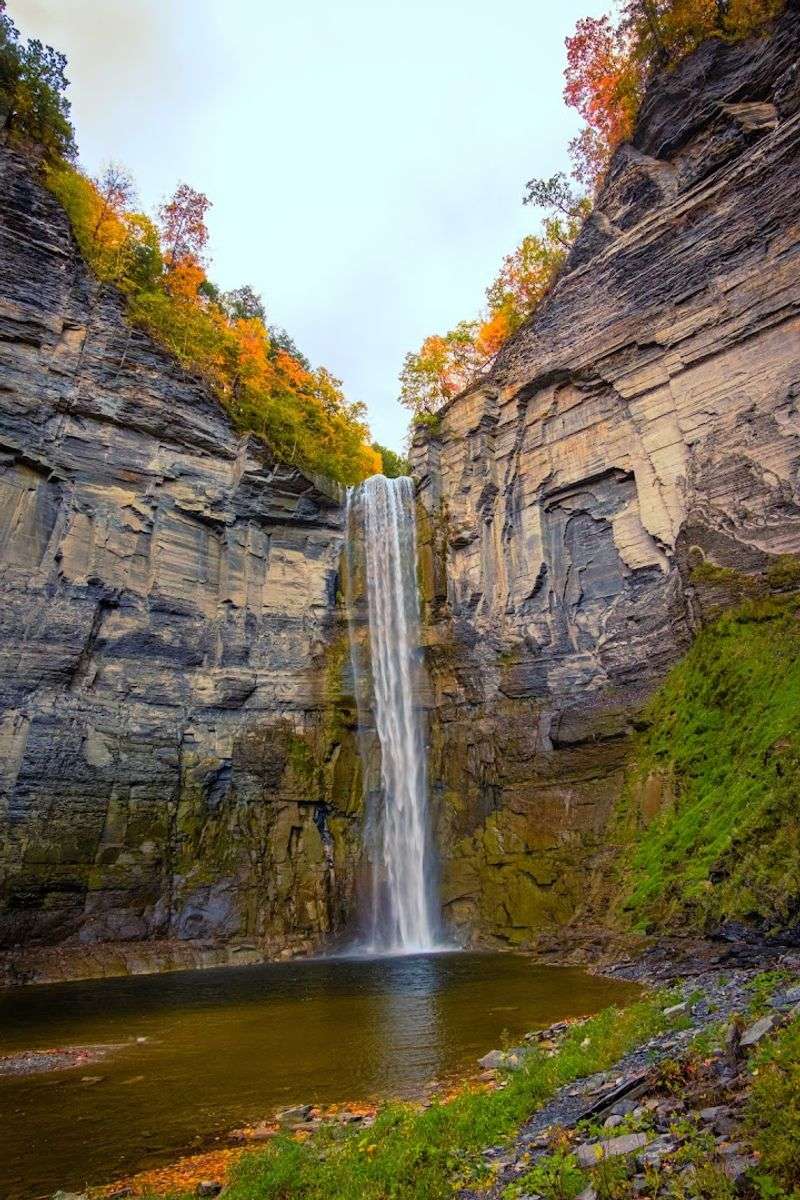
Taughannock Falls drops 215 feet in a single plunge, making it taller than Niagara Falls and one of the highest single-drop waterfalls east of the Rocky Mountains. The falls sit at the end of a flat, easy 0.8-mile trail that follows Taughannock Creek through a widening gorge with shale walls that gradually climb as you get closer.
The approach to the falls is one of the more dramatic trail experiences in New York State because the gorge walls keep rising on both sides until the waterfall comes into full view at the end. The trail is stroller and wheelchair accessible for most of its length, making it one of the more inclusive waterfall hikes in the region.
Admission is $8 per vehicle. The park sits on the west shore of Cayuga Lake in the Finger Lakes region and includes a boat launch, swimming beach, and campground.
The overlook trail above the gorge rim offers a different perspective and connects to a longer loop for those who want additional mileage after seeing the main falls.
Share this story