Some buildings do far more than provide shelter. They inspire, challenge, and completely transform the skylines around them.
Across the world, visionary architects have blended engineering with creativity to produce structures that feel more like giant sculptures than ordinary buildings. Get ready to explore 20 extraordinary buildings that show just how breathtaking architecture can truly be.
Sagrada Familia – Barcelona, Spain
Construction started in 1882, yet Antoni Gaudi’s magnificent basilica still is not finished. That fact alone makes the Sagrada Familia one of the most fascinating buildings on Earth.
Gaudi dedicated over 40 years of his life to this project, and builders today still follow his original vision.
Every single facade tells a different biblical story. The Nativity facade celebrates life and birth with detailed stone carvings of animals, angels, and plants.
Walk around to the Passion facade, and the mood shifts completely to something solemn and dramatic.
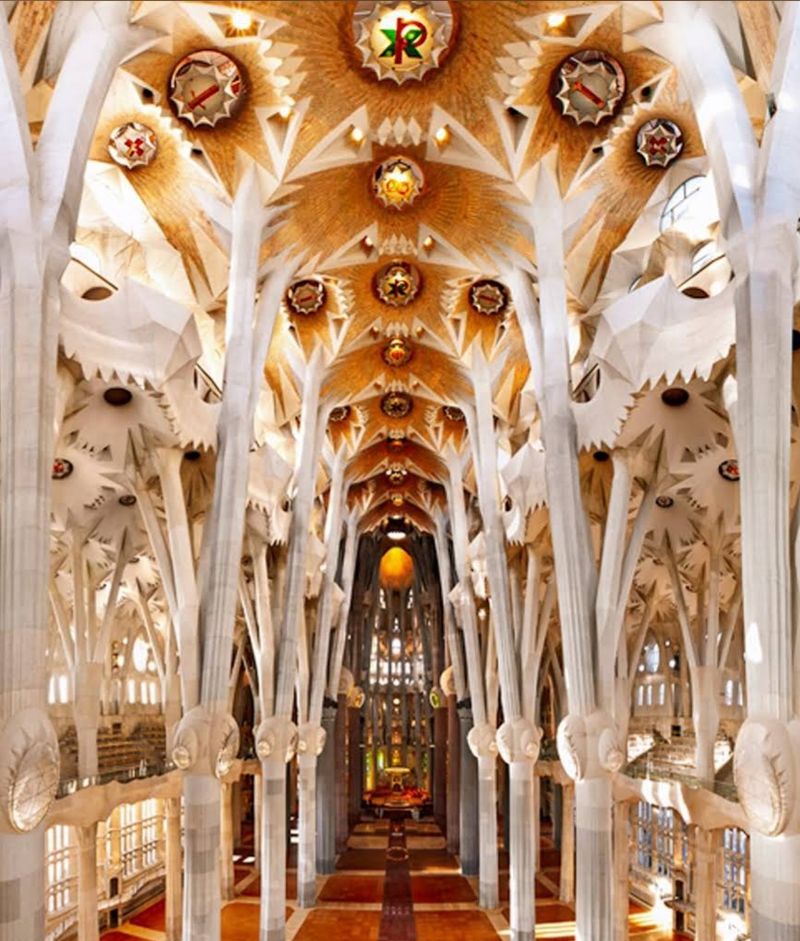
Inside, the columns branch upward like enormous trees, flooding the space with golden and blue light through hundreds of stained glass windows. First-time visitors often stop walking just to stare upward in silence.
Booking tickets in advance is strongly recommended because crowds here are enormous year-round.
The towers are expected to be fully completed sometime in the 2030s, meaning future visitors will see something even grander than what exists today. Watching a building grow across generations is a rare experience that makes Sagrada Familia unlike any other landmark on the planet.
Sydney Opera House – Sydney, Australia
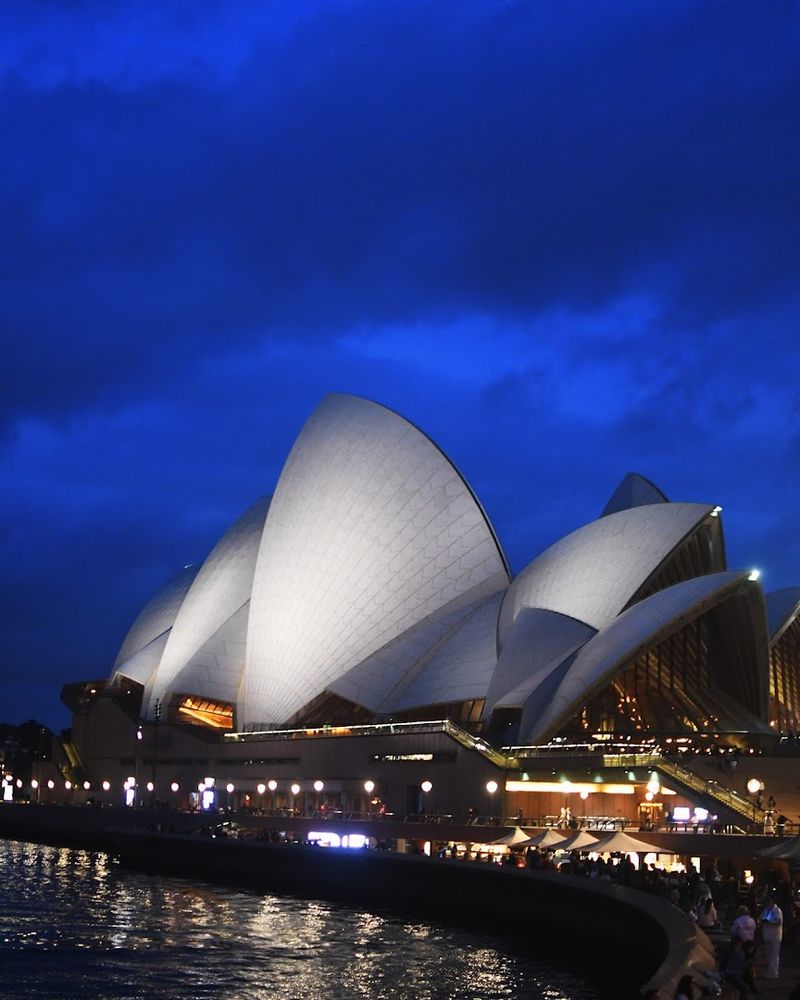
Ask anyone to sketch a famous building, and there is a very good chance they will draw something that looks like the Sydney Opera House. Its curved white shells rising above Sydney Harbour have become one of the most recognized silhouettes in the entire world.
Danish architect Jorn Utzon won the design competition in 1957 with a concept so bold that engineers initially had no idea how to build it.
Completed in 1973 after years of construction challenges, the Opera House hosts over 1,500 performances annually. Everything from classical concerts to comedy shows takes place inside its various performance halls.
The building genuinely works as hard as it looks impressive.
Utzon himself never actually saw the finished building in person after falling out with project managers during construction. That backstory adds a bittersweet layer to an otherwise triumphant structure.
He was later awarded the Pritzker Architecture Prize, often called the Nobel Prize of architecture.
Visitors can tour the interior even without attending a performance. Walking along the waterfront promenade at sunset, with the shells glowing warm orange, is one of those travel moments that genuinely stays with you forever.
Fallingwater – Mill Run, Pennsylvania
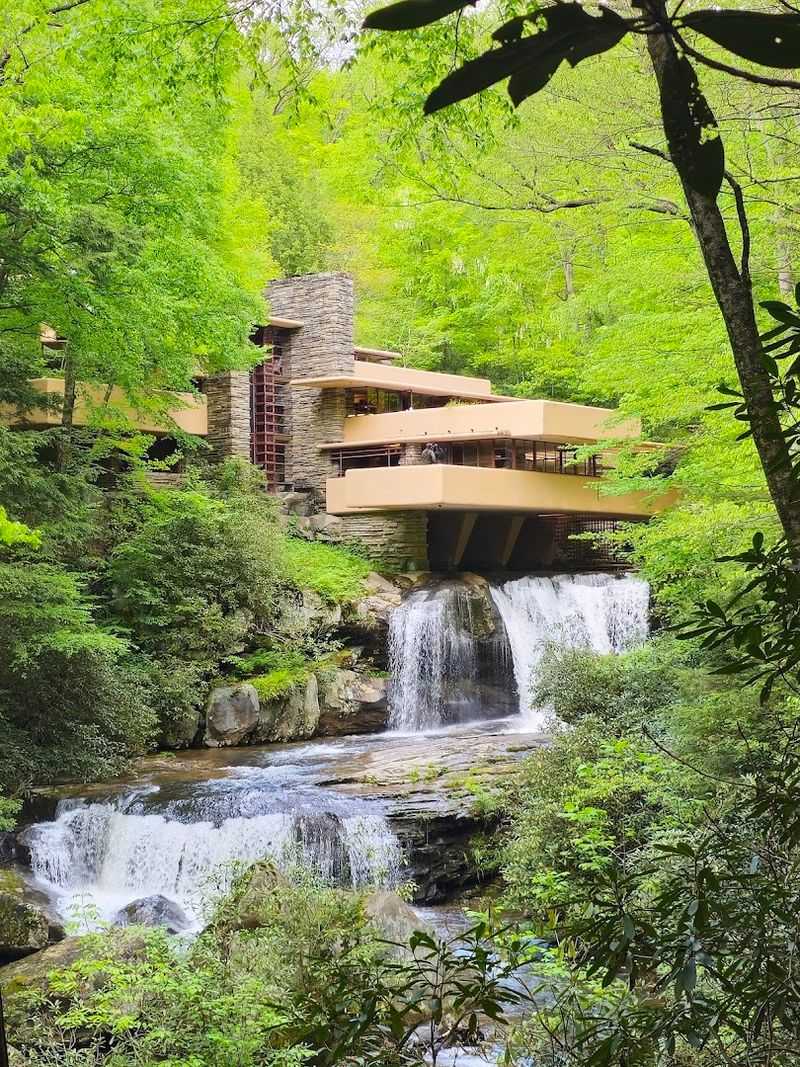
Perched directly over a rushing waterfall in the Pennsylvania woods, Fallingwater is the kind of building that makes you question everything you thought you knew about houses. Frank Lloyd Wright designed it in 1935 for the Kaufmann family, and he reportedly sketched the entire concept in just a few hours.
Whether that story is fully true or not, the result is undeniably genius.
Wide concrete terraces extend outward over the stream like bold horizontal shelves. Natural stone floors blend seamlessly with the rocky landscape outside.
Large windows and glass doors erase the boundary between indoors and outdoors in a way that feels almost magical.
Wright believed buildings should grow from their surroundings rather than sit on top of them. Fallingwater is the clearest proof that his philosophy worked beautifully.
The sound of the waterfall can actually be heard from inside the living room, which was entirely intentional.
Today the house is open for tours and draws thousands of visitors each year. Seeing it in person during autumn, when the surrounding forest blazes with color, is an experience that photographs simply cannot capture.
Architecture fans regularly vote it among the greatest buildings ever created.
Burj Khalifa – Dubai, United Arab Emirates
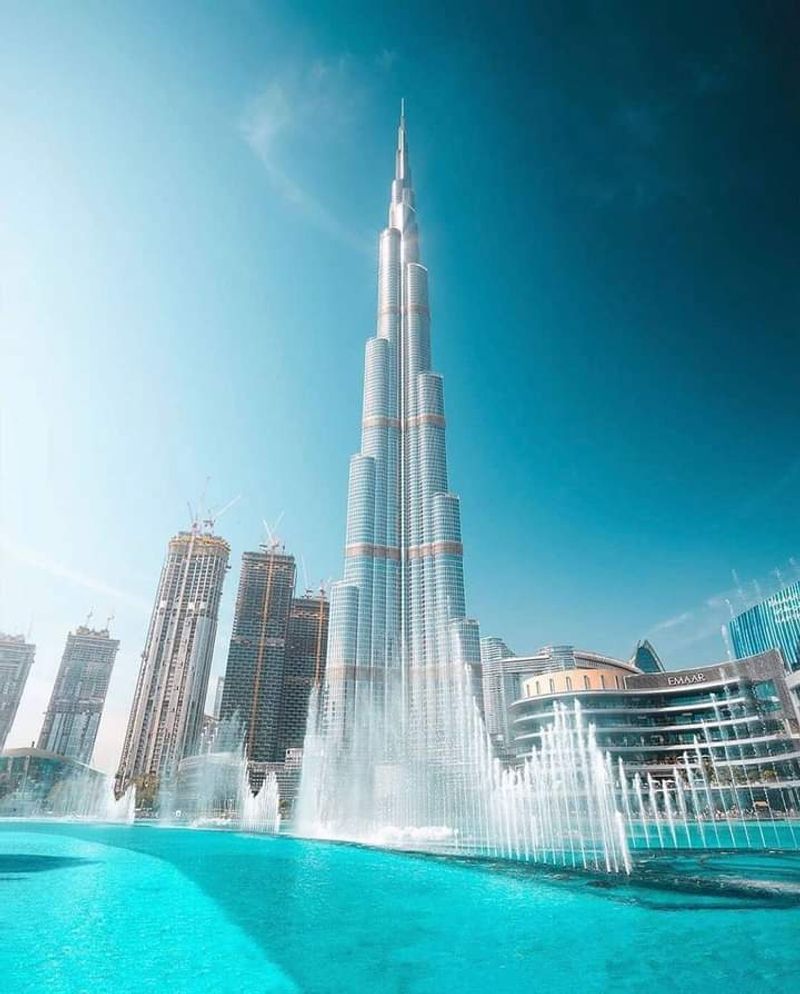
Standing at a staggering 2,717 feet tall, the Burj Khalifa does not just touch the sky. It practically lives there.
Completed in 2010, this Dubai skyscraper claimed the title of world’s tallest building and has held it ever since. Nothing else on Earth currently comes close.
The design was inspired by the Hymenocallis flower, a desert bloom with long elegant petals radiating from a central core. That organic influence gives the tower a graceful tapering shape rather than a boxy silhouette.
Islamic geometric patterns also appear throughout the building’s architecture, connecting it to regional culture.
Two observation decks give visitors jaw-dropping views across Dubai, the Arabian Desert, and on clear days, even the Persian Gulf. The elevator ride to the top floor is one of the fastest in the world.
Your ears will definitely feel it.
The building contains luxury apartments, corporate offices, the world’s highest restaurant, and an Armani hotel. Every New Year’s Eve, the Burj Khalifa hosts one of the planet’s most spectacular fireworks and light shows.
Watching millions of LED lights transform the tower into a glowing canvas is genuinely unforgettable. Engineers from around the world still study its construction methods.
Guggenheim Museum Bilbao – Bilbao, Spain
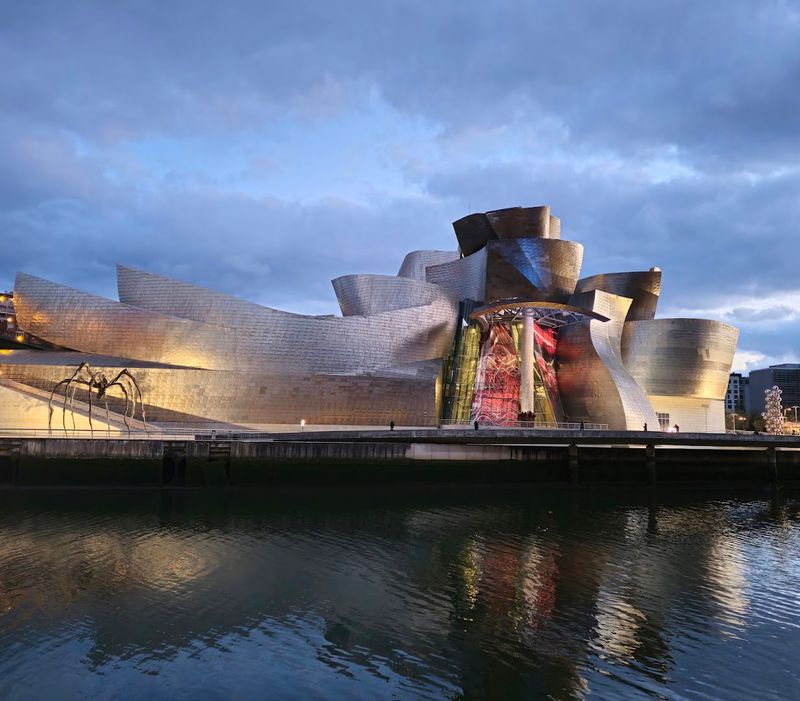
Before 1997, most people outside Spain had never heard of Bilbao. Then Frank Gehry’s titanium-wrapped museum opened along the Nervion River, and the city became a global destination almost overnight.
Urban planners now use the term “Bilbao Effect” to describe how a single bold building can revive an entire city’s economy.
The museum’s exterior is covered in thousands of thin titanium panels that shift color constantly depending on the angle of sunlight. Gehry used computer modeling software originally developed for aerospace engineering just to calculate how the curves would hold together.
The result looks effortless but required extraordinary technical precision.
Inside, enormous gallery spaces accommodate large-scale contemporary artworks that simply would not fit in traditional museums. Jeff Koons’ giant floral puppy sculpture outside the entrance has become almost as famous as the building itself.
Visitors often spend as much time photographing the architecture as they do viewing the exhibitions.
The building sits beautifully beside the river, and walking around its exterior at different times of day reveals completely different visual experiences. Morning mist makes it look mysterious, while midday sun turns it almost blindingly brilliant.
Gehry himself has described the project as one of his greatest achievements, and it is hard to argue otherwise.
Neuschwanstein Castle – Bavaria, Germany
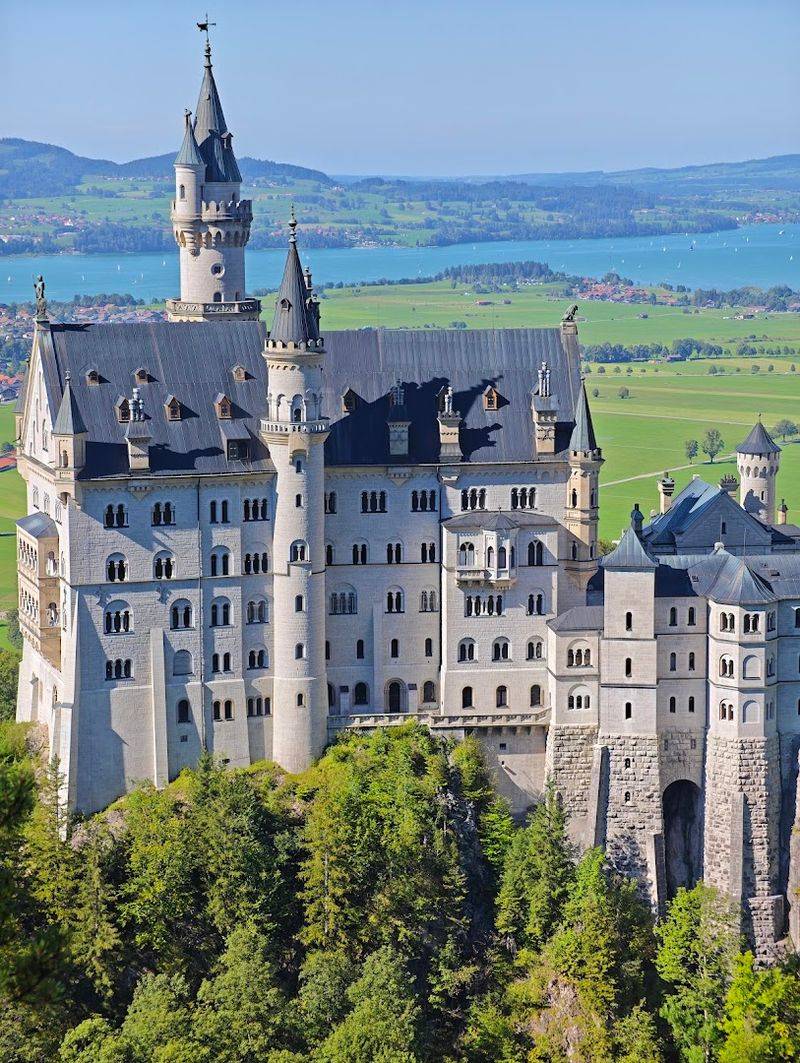
Walt Disney reportedly drew inspiration from Neuschwanstein Castle when designing the iconic Sleeping Beauty Castle for Disneyland. Considering how perfectly the Bavarian original looks like something from a storybook, that creative borrowing makes complete sense.
King Ludwig II commissioned the castle in 1869, envisioning it as a personal retreat inspired by medieval German legends.
Perched high on a rugged hilltop above the village of Hohenschwangau, the castle commands sweeping views of alpine valleys, forests, and lakes. Its white limestone towers rise dramatically against the mountain backdrop.
The approach road winds upward through thick forest, building anticipation with every turn.
Ludwig II was considered eccentric and impractical by his government, but his obsession with romantic architecture produced something genuinely extraordinary. He spent enormous amounts of royal funds on the project, and the government eventually declared him unfit to rule.
Tragically, he died under mysterious circumstances before the castle was ever finished.
Today Neuschwanstein is Germany’s most visited tourist attraction, welcoming over a million visitors annually. The interior rooms are lavishly decorated with murals depicting scenes from Wagnerian operas.
Visiting in winter, when snow blankets the surrounding peaks, makes the whole experience feel almost impossibly beautiful. Cameras simply cannot do it justice.
Marina Bay Sands – Singapore
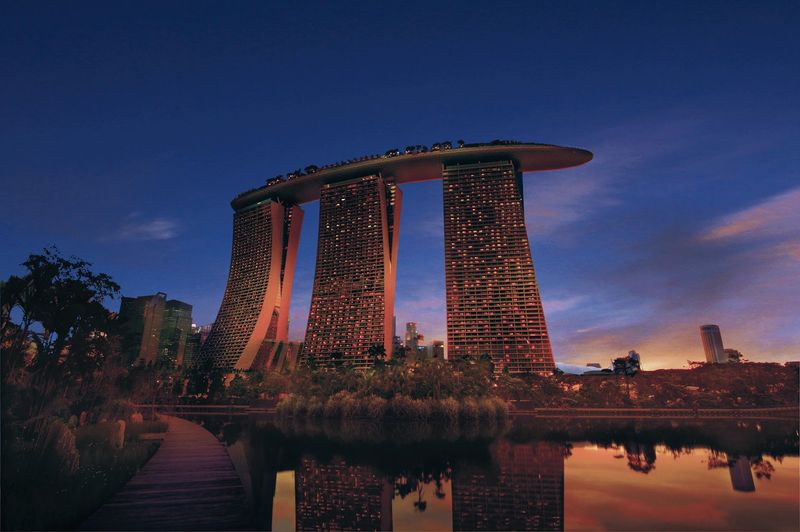
Three massive hotel towers topped by a giant ship-shaped sky park sounds like something from a science fiction movie. Yet Marina Bay Sands stands proudly along Singapore’s waterfront, making that wild concept entirely real.
Architect Moshe Safdie designed the complex, which opened in 2010 and immediately became Asia’s most photographed modern landmark.
The rooftop SkyPark stretches longer than the Eiffel Tower is tall. Its famous infinity pool appears to pour directly into the Singapore skyline, creating one of the most visually dramatic swimming experiences imaginable.
Only hotel guests can access the pool, which has motivated more than a few travel decisions.
Below the towers, the complex contains a luxury shopping mall, celebrity chef restaurants, a casino, an art science museum, and a spectacular theater. It operates almost like a self-contained city.
Thousands of people pass through daily without ever checking into a room.
The light and water show projected across Marina Bay each evening draws enormous crowds along the waterfront promenade. Watching the colored lights dance across the bay with Marina Bay Sands glowing behind you is genuinely spectacular.
Singapore packed an astonishing amount of ambition into a remarkably small piece of land, and the result proves exactly what modern architecture can achieve when creativity meets engineering.
The Louvre Pyramid – Paris, France
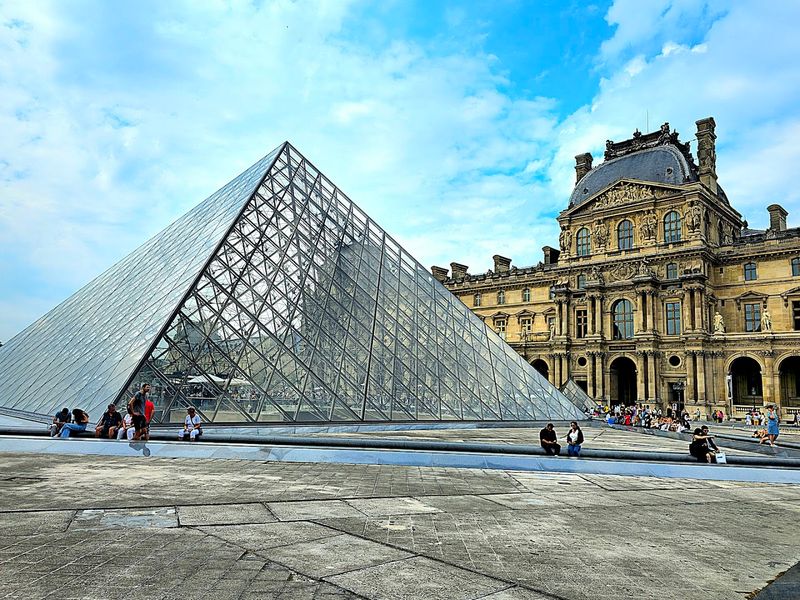
When a glass pyramid appeared in the courtyard of a 16th-century royal palace, Parisians were furious. President Francois Mitterrand commissioned Chinese-American architect I.
M. Pei to redesign the Louvre’s entrance in the 1980s, and the resulting controversy was enormous.
Petitions circulated, newspapers ran outraged headlines, and critics called it an architectural insult to French heritage.
Then the pyramid opened in 1989, and opinions shifted dramatically. The clean geometric form creates a striking visual conversation between ancient grandeur and modern precision.
Sunlight filters through the 673 glass panes, illuminating the underground entrance hall with beautiful natural light.
Pei’s design actually solved a serious practical problem. The Louvre had become one of the world’s most visited museums, but its original entrance could not handle the crowds.
The pyramid’s underground lobby now efficiently connects all three wings of the museum, making navigation far easier for millions of annual visitors.
A fun detail often shared by tour guides: the pyramid contains exactly 666 glass panes, according to an early myth that circulated for years. Official records confirm the actual count is higher, but the rumor stuck around and became part of the building’s mystique.
Today the Louvre Pyramid ranks among Paris’s most photographed landmarks, sitting comfortably alongside the Eiffel Tower in tourist photo collections worldwide.
Casa Batllo – Barcelona, Spain
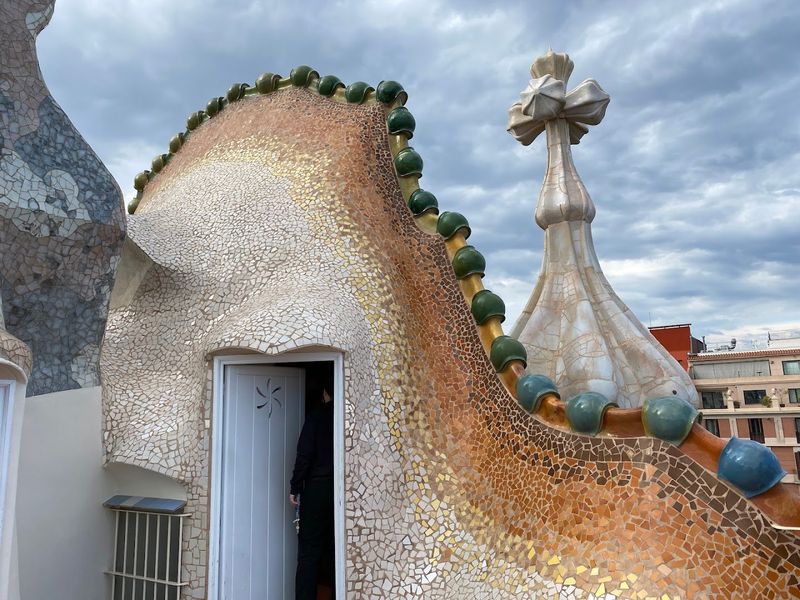
Locals nicknamed it the House of Bones, and once you see the facade up close, that name makes perfect sense. Antoni Gaudi renovated Casa Batllo between 1904 and 1906, transforming an unremarkable apartment building into one of the most visually stunning structures in the world.
The balconies resemble carved skulls, the columns look like bones, and the roof scales shimmer like a dragon’s back.
Gaudi reportedly based the design on the legend of Saint George slaying a dragon, which is the patron saint of Catalonia. The rooftop ridge represents the dragon’s spine, and the colorful ceramic tiles mimic its glittering scales.
Every detail carries symbolic meaning once you know what to look for.
Inside, the building is equally remarkable. Gaudi used a central light well lined with blue ceramic tiles that grow lighter toward the bottom, ensuring even distribution of natural light throughout all floors.
Walls curve softly, and almost no straight lines exist anywhere in the interior. It feels more like being inside a sea creature than a city apartment.
Night visits are particularly popular because the facade is dramatically illuminated after dark. Booking tickets that include an augmented reality experience lets visitors see how Gaudi originally envisioned each detail.
Few buildings anywhere reward close attention as richly as this one does.
The Shard – London, England
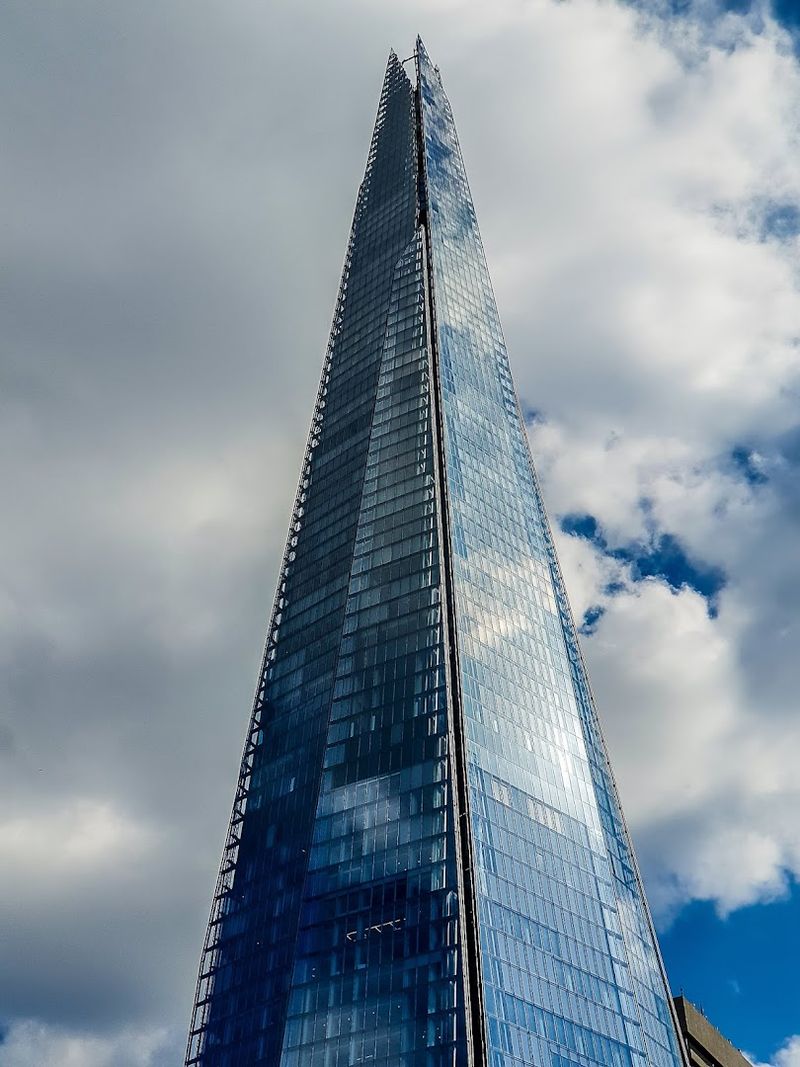
Sharp, glassy, and unapologetically modern, The Shard stabbed into London’s historic skyline in 2012 and immediately sparked fierce debate. Architect Renzo Piano designed the 1,016-foot tower to resemble a shard of glass rising from the earth.
Critics called it jarring. Fans called it brilliant.
Either way, nobody could ignore it.
Piano drew inspiration from church spires and the tall masts of sailing ships depicted in old paintings of the Thames. The tower’s eight asymmetric glass facades are slightly angled, creating different reflections depending on weather and light conditions.
On cloudy days it nearly disappears into the grey sky, while on sunny days it blazes with reflected light.
The building contains offices, restaurants, a five-star hotel, and the highest residential apartments in the United Kingdom. The View from The Shard observation deck on the 72nd floor offers breathtaking panoramas stretching across Greater London.
On exceptionally clear days, visitors can reportedly see up to 40 miles in every direction.
What makes The Shard particularly interesting is how it manages to feel both futuristic and somehow at home beside the medieval Tower of London just across the river. That contrast between ancient stone and modern glass perfectly captures the layered personality of London itself.
Piano described the building as a vertical city, and walking its floors, that description genuinely feels accurate.
Hagia Sophia – Istanbul, Turkey
Built in just five years between 532 and 537 AD, Hagia Sophia was the largest enclosed space in the world for nearly a thousand years. Emperor Justinian I reportedly walked into the completed building and declared that he had surpassed King Solomon himself.
That level of confidence was not entirely unreasonable given what his architects had achieved.
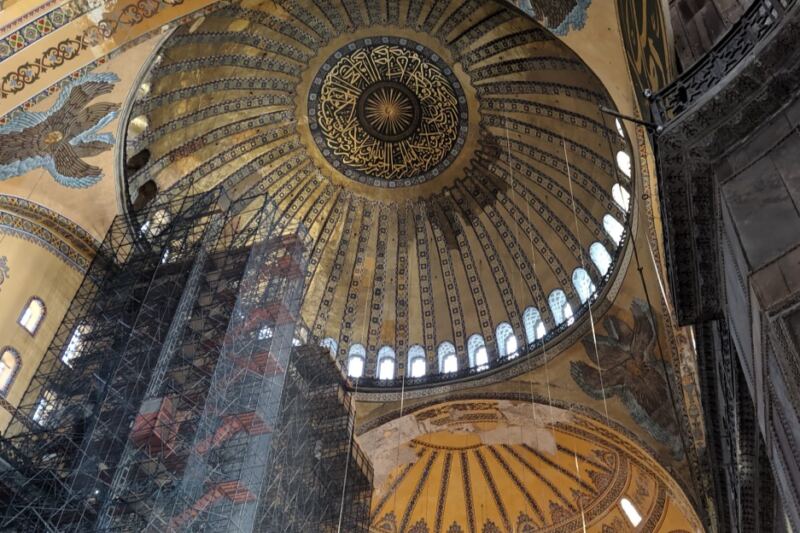
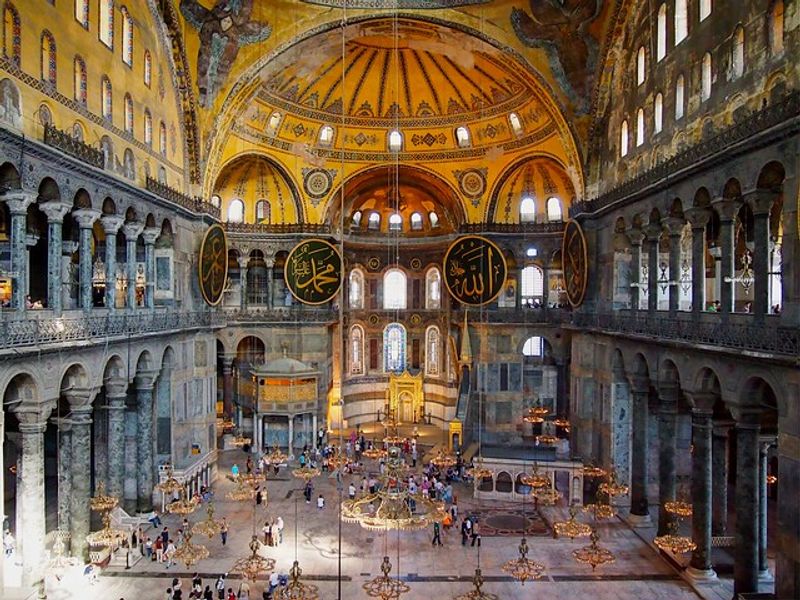
The central dome seems to float impossibly above the main hall, supported by a ring of 40 arched windows that flood the interior with light. Byzantine engineers invented entirely new construction techniques just to make it work.
The dome has been repaired after earthquake damage multiple times over the centuries but still stands firm today.
Hagia Sophia has served as a Christian cathedral, an Ottoman mosque, a secular museum, and since 2020, a functioning mosque once again. Each era left its own marks on the interior.
Golden Byzantine mosaics of Christ and the Virgin Mary share wall space with enormous circular calligraphy medallions bearing Islamic inscriptions.
That layering of history makes Hagia Sophia unlike almost any other building on Earth. Visitors move through centuries of civilization simply by walking from one room to another.
Arriving at opening time before crowds build allows for a few quiet moments beneath that extraordinary dome, which genuinely feels like a spiritual experience regardless of personal beliefs.
Chrysler Building – New York City, New York
For 11 glorious months in 1930, the Chrysler Building was the tallest structure on Earth. Then the Empire State Building stole that title, and the Chrysler Building has spent every decade since proving that height is not everything.
Many architects and historians still consider it the most beautiful skyscraper ever built.
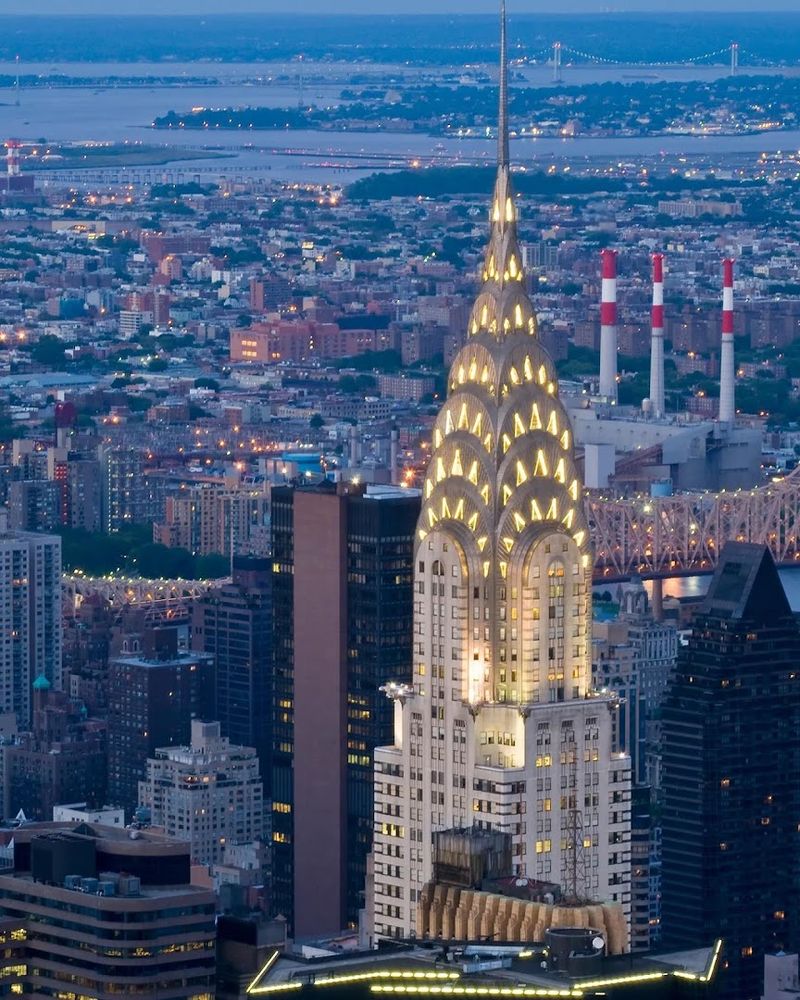
The building was commissioned by automobile tycoon Walter Chrysler, who wanted something that would reflect the glamour and speed of the car industry. The stainless-steel crown features decorative eagle gargoyles modeled after Chrysler car hood ornaments.
The sunburst spire was secretly assembled inside the building and then raised through the roof to surprise competitors who were watching the construction race closely.
Art Deco design reached its peak expression in this tower. Geometric patterns, shining metalwork, and ornate lobby details crafted from rare woods and exotic marble create an atmosphere of pure 1930s luxury.
The lobby ceiling mural depicting transportation and human industry is itself worth visiting.
Walking past the Chrysler Building on Lexington Avenue at night, when the illuminated crown glows against the dark sky, is one of New York City’s most satisfying urban experiences. It somehow manages to feel both extravagant and elegant simultaneously.
The building proves that architectural beauty can outlast any competition for records or rankings.
Lotus Temple – New Delhi, India
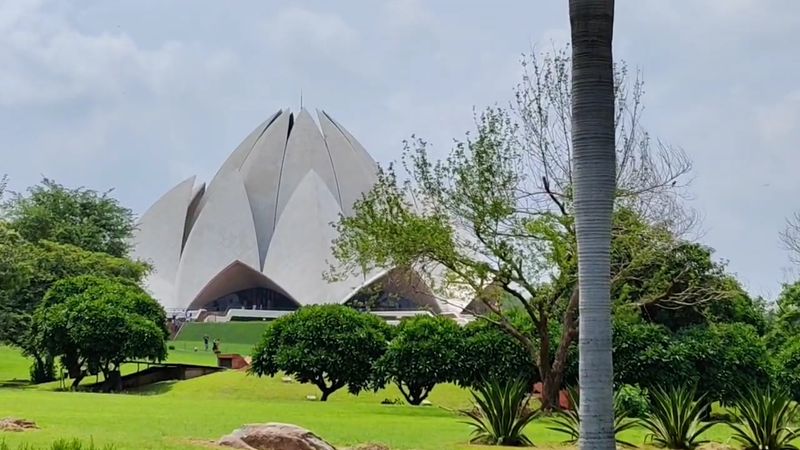
Shaped like a flower just beginning to open, the Lotus Temple in New Delhi welcomes visitors of every religion and background without requiring any particular faith at all. That open-door philosophy is built directly into the Bahai belief system, and architect Fariborz Sahba translated it beautifully into physical form.
Completed in 1986, the structure has since become one of the most visited buildings in the entire world.
Twenty-seven marble-clad petals arranged in groups of three rise gracefully from nine surrounding reflecting pools. The pools are not just decorative.
They help cool the surrounding air naturally and reflect the building’s white form in shimmering water below. From above, the whole complex resembles a flower floating on a lake.
Inside, the central hall seats 2,500 people in complete silence. No sermons are delivered and no rituals are performed.
Visitors simply sit, reflect, or pray according to their own traditions. The absence of religious imagery inside feels deliberate and genuinely peaceful rather than empty.
The Lotus Temple receives around four million visitors per year, surpassing many of the world’s most famous landmarks in attendance. Visiting at sunrise, when soft light catches the white marble petals and mist still hangs over the reflecting pools, creates an atmosphere of extraordinary calm.
It is one of those rare buildings that actually changes how you feel the moment you step inside.
Palace of Parliament – Bucharest, Romania
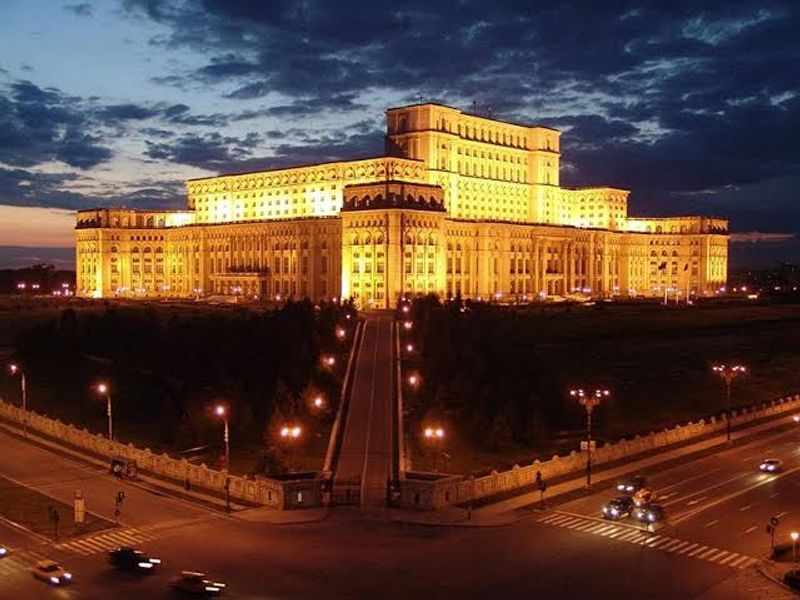
Nicolae Ceausescu wanted a building that would make the entire world understand Romanian power. What he got was the second largest administrative building ever constructed, surpassed only by the Pentagon.
The Palace of Parliament in Bucharest contains 1,100 rooms, 480 chandeliers, and enough carpet to cover several city blocks. Building it required demolishing an enormous section of historic Bucharest, which remains deeply controversial.
Construction began in 1984 and involved roughly 700 architects along with tens of thousands of workers operating around the clock. Ceausescu reportedly reviewed design changes personally and often demanded expensive alterations at the last minute.
The project consumed an extraordinary portion of Romania’s national budget during an economically devastating period for ordinary citizens.
Ceausescu was executed in 1989 before the building was completed, and the new Romanian government debated for years about what to do with the enormous structure. Demolishing it would have been nearly as expensive as finishing it.
Today it houses Romania’s parliament and is open for guided tours.
Wandering through its marble halls and ornate reception rooms gives visitors a complicated mix of awe and unease. The sheer scale is genuinely staggering.
Ceilings soar overhead, staircases seem endless, and every surface is covered in intricate detail. It stands as a powerful reminder that architecture can express both ambition and excess in equal measure.
Dancing House – Prague, Czech Republic
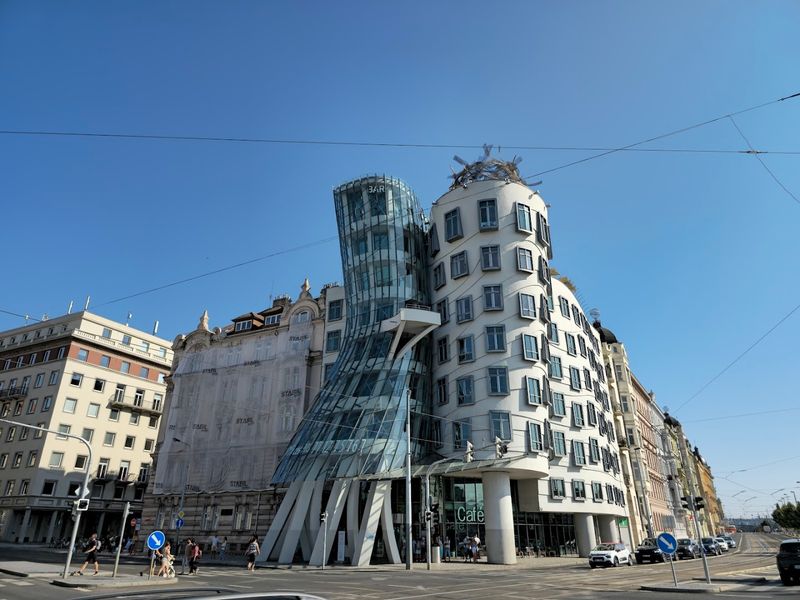
Nicknamed Fred and Ginger after legendary Hollywood dance duo Fred Astaire and Ginger Rogers, Prague’s Dancing House genuinely appears to be mid-movement. One tower twists and curves dramatically while the other stands straight beside it, creating the visual impression of two figures caught mid-dance.
It is one of the most playful pieces of serious architecture anywhere in Europe.
Croatian-Czech architect Vlado Milunic worked with Frank Gehry to design the building, which was completed in 1996. The project was controversial from the start because it sits along a stretch of the Vltava River surrounded by beautiful Baroque and Gothic buildings.
Many Praguers worried the modern design would clash horribly with the city’s historic character.
Instead, the contrast became the point. The Dancing House creates a visual conversation between past and present rather than trying to imitate its neighbors.
Former Czech President Vaclav Havel, who lived next door, was a strong supporter of the project and helped push it through despite opposition.
Today the building contains a hotel, restaurant, and rooftop bar with excellent views across the Vltava and Prague’s famous castle district. Guests staying in the curved glass tower rooms wake up to panoramas that include some of Europe’s most beautiful historic architecture.
The Dancing House proves that bold modern design and historic surroundings can actually make each other look better.
Saint Basil’s Cathedral – Moscow, Russia
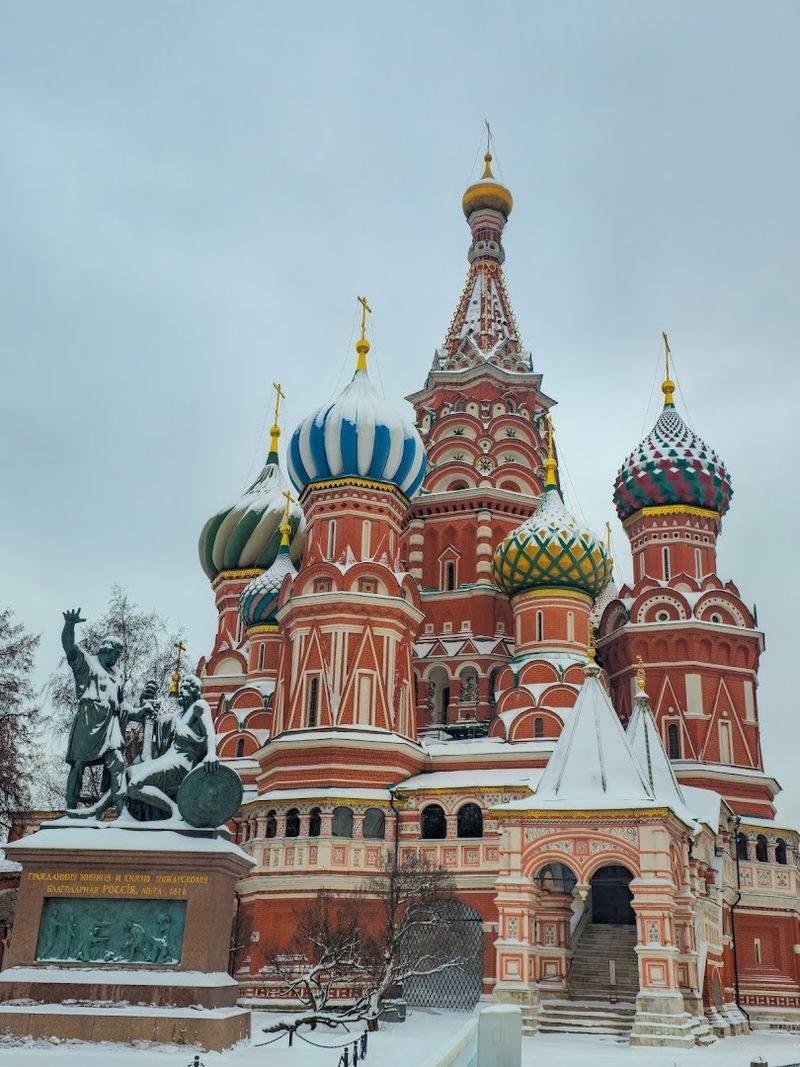
Legend claims that Ivan the Terrible was so amazed by Saint Basil’s Cathedral after its completion in 1561 that he had the architects blinded to prevent them from ever creating something equally magnificent for anyone else. Historians debate whether that story is true, but the cathedral itself is undeniably extraordinary enough to inspire such a dramatic tale.
Eight separate chapels surround a central ninth tower, each crowned with a uniquely shaped and vividly colored onion dome. No two domes are identical in pattern or color scheme.
The result looks less like a single building and more like a cluster of fantastical towers that somehow grew together organically over centuries.
The cathedral was built to commemorate Ivan the Terrible’s military victory over the Mongol Khanate of Kazan. Each chapel corresponds to a significant day of battle during that campaign.
What began as a monument to military conquest became one of the world’s most beloved architectural treasures.
Walking across Red Square toward Saint Basil’s on a winter morning, with snow covering the cobblestones and the Kremlin wall glowing red beside it, produces one of travel’s most genuinely cinematic moments. The interior is surprisingly small and labyrinthine compared to the dramatic exterior.
Narrow staircases and low doorways connect the chapels in ways that feel more like exploring a medieval fortress than touring a cathedral.
Taipei 101 – Taipei, Taiwan
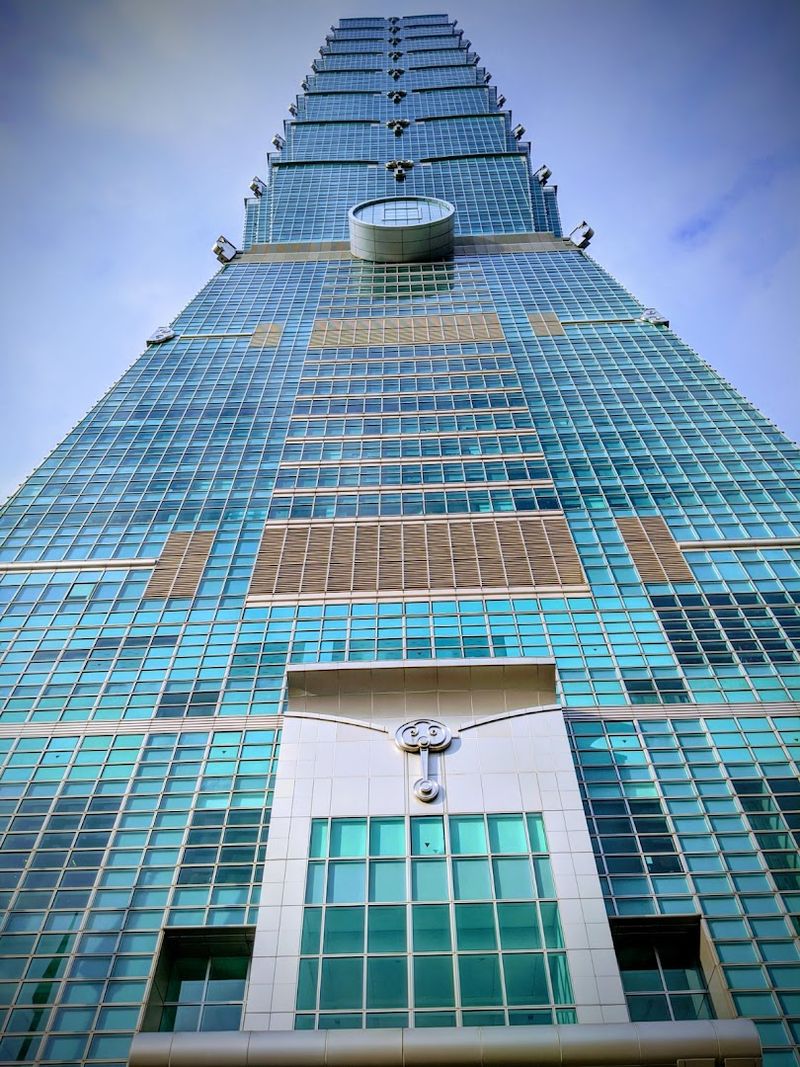
From 2004 to 2010, Taipei 101 held the title of world’s tallest building, but its most interesting achievement has nothing to do with height records. Engineers designed this 1,667-foot tower to survive both typhoons and major earthquakes in one of Asia’s most geologically active regions.
The solution involved hanging an enormous golden pendulum inside the building that swings to counteract movement during storms and tremors.
That pendulum weighs 660 metric tons and is visible to visitors on the observation deck. Watching a ball the size of a small house sway gently inside a skyscraper is a genuinely surreal experience.
It has become one of Taipei’s most popular attractions in its own right.
The tower’s exterior design draws from traditional Asian architecture, specifically the bamboo stalk. Each of the eight stacked sections represents a bamboo segment, with the number eight considered lucky in Chinese culture.
The overall effect blends ancient symbolism with cutting-edge structural engineering in a way that feels both culturally meaningful and visually striking.
The outdoor observation deck on the 91st floor offers views across Taipei’s sprawling urban landscape toward surrounding mountains. On clear days the view is extraordinary.
Every New Year’s Eve, Taipei 101 hosts a massive fireworks display launched from multiple levels of the tower simultaneously, creating one of Asia’s most spectacular annual celebrations and drawing enormous crowds to the streets below.
National Museum of Qatar – Doha, Qatar
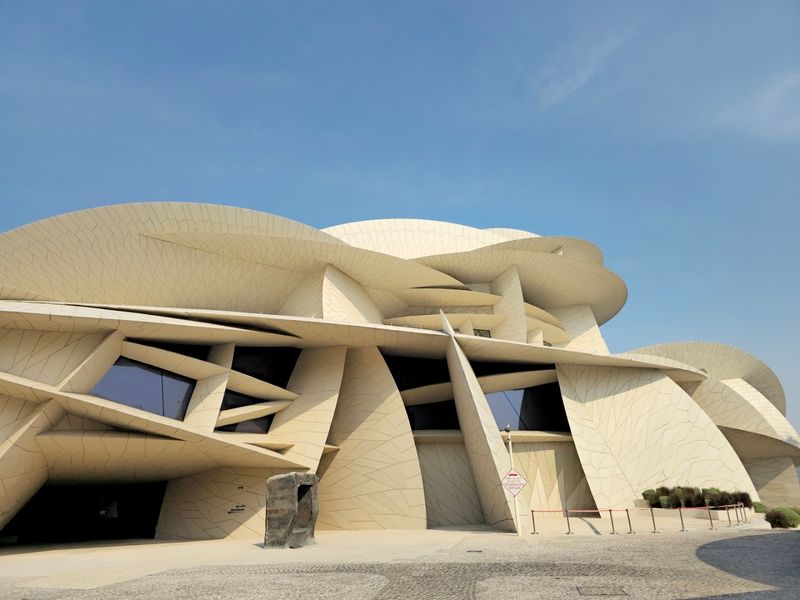
Nature invented the design first. The desert rose crystal, formed when mineral-rich water evaporates in sandy desert environments, creates a stunning natural formation of interlocking disc-shaped petals.
French architect Jean Nouvel borrowed that exact structure to create the National Museum of Qatar, and the result is one of the most visually striking museum buildings constructed anywhere in the 21st century.
Opened in 2019 after years of construction, the museum features 539 interlocking discs of varying sizes that seem to burst outward from a central historic palace at the building’s core. The exterior panels are made from fiberglass reinforced concrete tinted to match the sandy desert landscape.
Depending on the angle and time of day, the building shifts between looking delicate and looking monumentally powerful.
Inside, the museum traces Qatar’s history from ancient desert communities through the pearl diving era and into the extraordinary oil-fueled transformation of the modern nation. The galleries are arranged along a single winding corridor that flows naturally through the building’s unusual geometry.
Visitors never feel lost because the path always moves forward.
The museum sits beside Doha Bay, and the combination of desert-inspired architecture against the blue water creates a genuinely memorable visual contrast. Nouvel described his goal as creating a building that emerged naturally from Qatar’s landscape and culture.
Looking at the finished structure, that ambition was clearly achieved with remarkable success.
Casa Mila – Barcelona, Spain
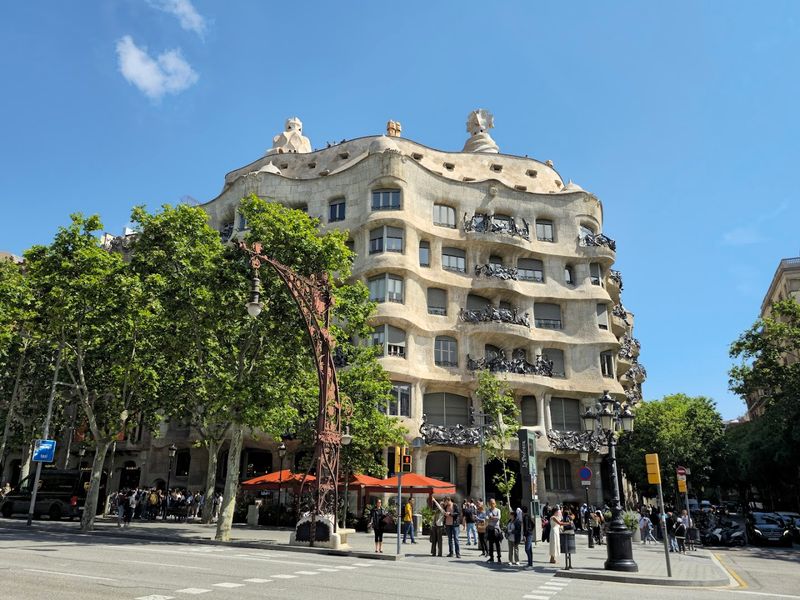
Completed in 1912, Casa Mila was so unconventional that Barcelonans immediately started calling it La Pedrera, meaning The Stone Quarry. The nickname was meant as an insult, mocking the building’s rough, wave-like stone exterior.
Over a century later, the same nickname is used with enormous affection, and the building is recognized as one of Gaudi’s greatest achievements.
The facade ripples and undulates like a slow ocean wave frozen in pale stone. No straight lines exist anywhere on the exterior.
Ornate wrought iron balconies designed by sculptor Josep Maria Jujol cascade across the surface like tangled seaweed. The whole building looks organic rather than constructed, as if it grew from the ground naturally.
The rooftop is the most theatrical element of all. Twisted chimney stacks and ventilation towers covered in ceramic tile fragments stand like abstract warrior figures against the Barcelona sky.
Many visitors claim the rooftop experience alone justifies the entrance fee. At night, the rooftop hosts jazz concerts during summer months, creating a uniquely atmospheric setting.
Gaudi designed the building with an innovative internal structure using iron columns and arches that eliminated the need for load-bearing walls. That meant residents could arrange interior spaces however they chose, an idea considered revolutionary in the early 1900s.
Casa Mila proves that truly original thinking about how people live can produce architecture that remains endlessly fascinating more than a hundred years later.
The Atomium – Brussels, Belgium
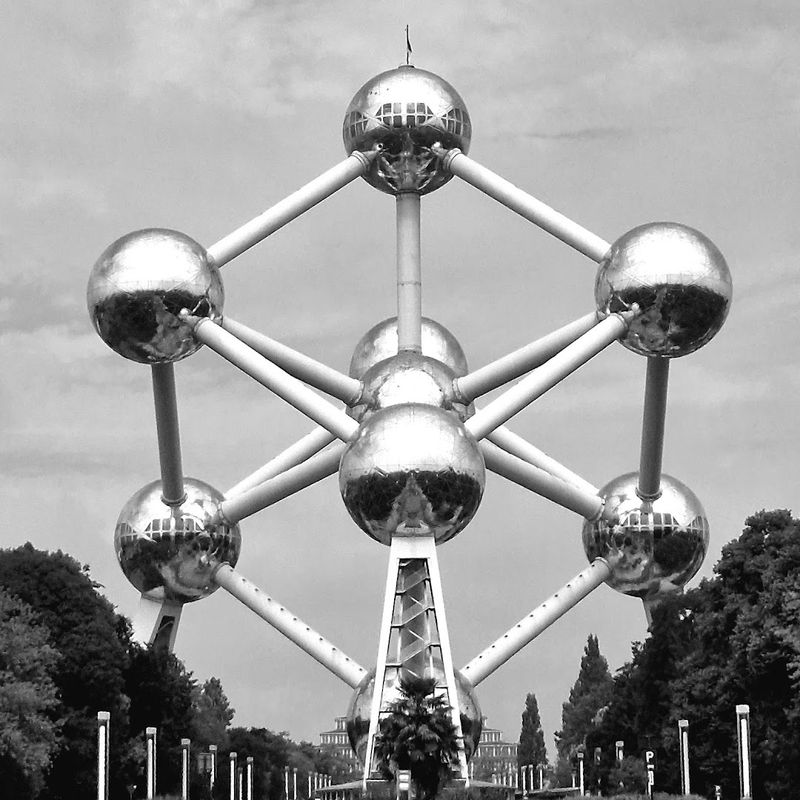
Imagine taking a single iron crystal and blowing it up 165 billion times its actual size. That is exactly what Belgian engineer Andre Waterkeyn designed for the 1958 Brussels World’s Fair, and the result is one of the most wonderfully strange permanent structures in all of Europe.
Nine stainless steel spheres connected by tubes rise 335 feet into the Belgian sky, representing the nine atoms in a unit cell of an iron crystal.
The Atomium was originally supposed to be temporary, like most World’s Fair structures. Thankfully, Belgians loved it too much to tear it down.
After a major renovation completed in 2006, the spheres were re-clad in shiny new stainless steel panels that gleam brilliantly in sunlight. The building looks better today than it did at its 1958 debut.
Visitors travel between spheres via escalators and elevators running through the connecting tubes. The highest sphere contains a panoramic restaurant with sweeping views across Brussels.
Other spheres house permanent exhibitions about the 1958 World’s Fair, the history of science, and the Atomium itself.
Children absolutely love it because the whole experience feels like exploring a giant science fiction toy. Adults tend to appreciate both its quirky charm and the genuine scientific concept behind the design.
The Atomium reminds visitors that architecture does not always need to be solemn or serious to be genuinely extraordinary and completely unforgettable.
Share this story