Spain is a country that seems almost too beautiful to be real. From ancient Roman structures to dazzling Moorish palaces and jaw-dropping modern architecture, every corner of the country tells a different chapter of history.
Whether you love art, culture, nature, or adventure, Spain has a landmark waiting to blow your mind. Pack your bags, grab your camera, and get ready to explore some of the most incredible places on Earth.
La Sagrada Família — Barcelona
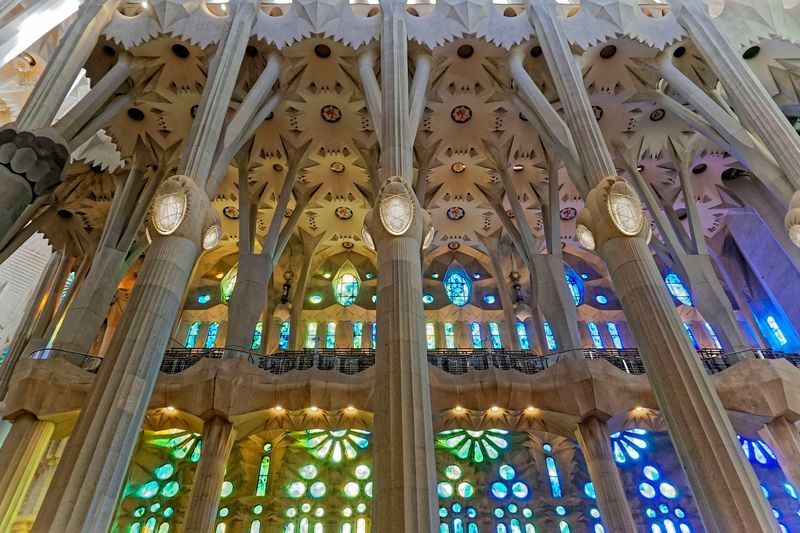
No building on Earth looks quite like La Sagrada Família. Antoni Gaudí began designing this extraordinary basilica in 1882, and over 140 years later, construction is still ongoing.
That alone should tell you something about how wildly ambitious this project really is.
The towering spires stretch toward the sky like something sculpted by nature rather than human hands. Step inside and you will find a forest of columns supporting a ceiling drenched in colored light from hundreds of stained glass windows.
Every surface tells a story from the Bible through Gaudí’s unique artistic language.
Visiting without booking tickets in advance is a rookie mistake. Millions of people come here every year, so reservations are essential.
Guided tours offer deeper insight into the symbolism hidden throughout the building’s incredible details.
The basilica is expected to be fully completed sometime in the 2030s, which means visiting now gives you a rare chance to witness one of history’s greatest construction projects still in progress. Barcelona has countless attractions, but Sagrada Família stands alone as the city’s undisputed crown jewel and one of the most breathtaking religious structures ever attempted.
Alhambra — Granada
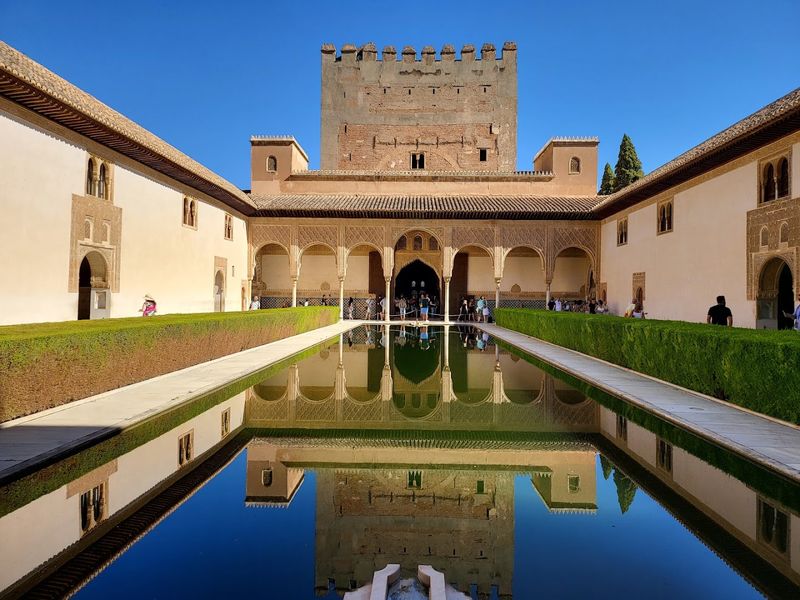
Walking into the Alhambra feels like stepping inside a poem written in stone. This legendary Moorish palace complex sits high above Granada, surrounded by the snow-capped Sierra Nevada mountains, and it has been leaving visitors absolutely speechless for centuries.
Every room inside tells the story of the Nasrid dynasty, the last Moorish rulers of Spain. Delicate geometric carvings cover the walls, while ornate fountains bubble quietly in sunlit courtyards.
The Generalife gardens, full of fragrant flowers and trickling water channels, add another layer of magic to the experience.
Tickets sell out weeks in advance, especially during spring and summer. Booking early is not just recommended, it is absolutely necessary.
Early morning visits are especially rewarding because the light is softer and the crowds are thinner.
Fun fact: Washington Irving, the American author who wrote The Legend of Sleepy Hollow, actually lived inside the Alhambra for a time in the 1820s. He was so enchanted by the palace that he wrote an entire book about it called Tales of the Alhambra.
That kind of inspiration speaks volumes about how profoundly beautiful this place truly is.
Park Güell — Barcelona
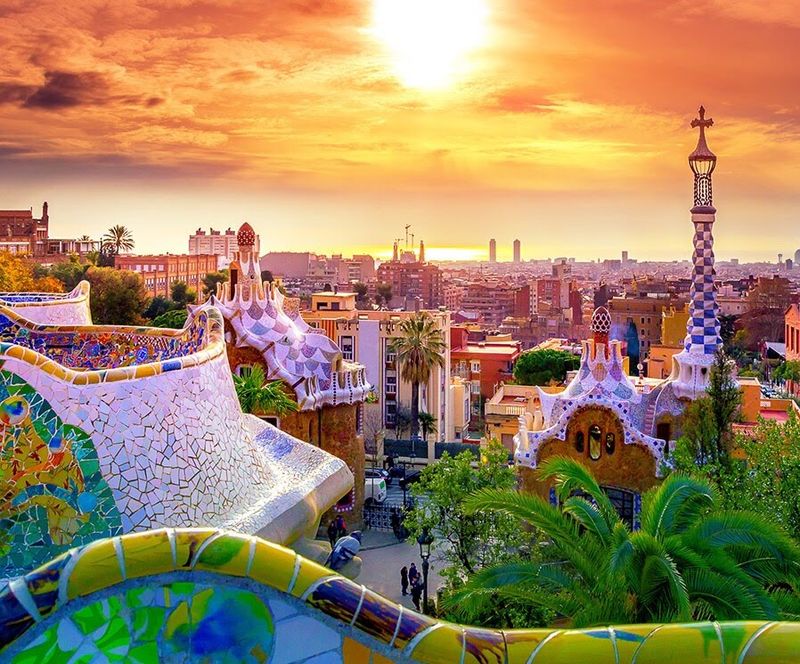
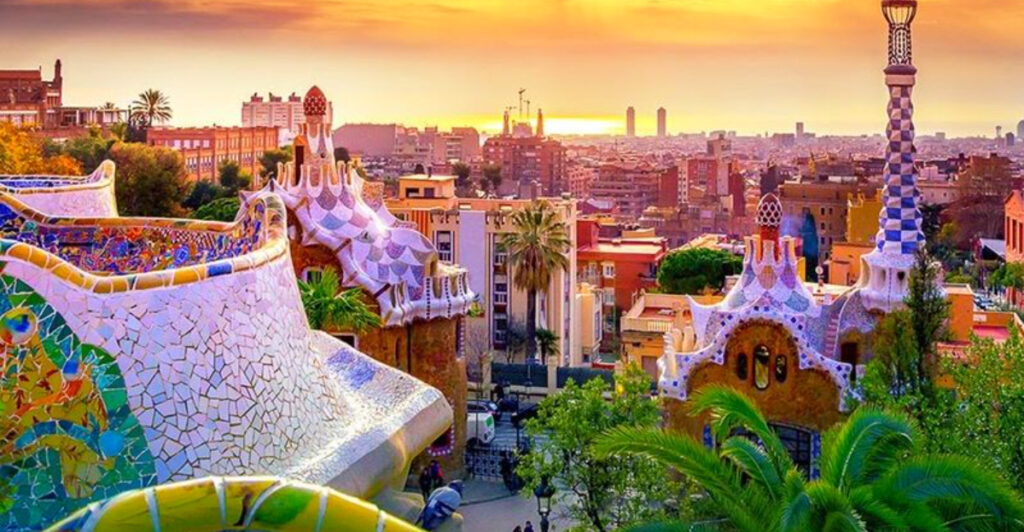
Somebody once described Park Güell as the place where a fairy tale decided to become real estate, and honestly, that description is hard to argue with. Antoni Gaudí designed this hilltop park in the early 1900s as part of an ambitious housing development that never quite took off.
Lucky for us, the park survived and became one of Barcelona’s greatest treasures.
The famous mosaic terrace near the entrance is an explosion of color and creativity. Curved ceramic benches covered in broken tile fragments wrap around the hilltop, offering sweeping views across Barcelona all the way to the Mediterranean Sea.
The dragon staircase at the entrance, decorated in shimmering multicolored tiles, has become one of Spain’s most photographed spots.
The central zone of the park requires a timed entry ticket, so planning ahead is smart. Arriving early in the morning helps avoid the largest crowds and gives you time to explore freely.
The surrounding forested paths are free to walk and equally beautiful.
What makes Park Güell genuinely special is how organic everything feels. Gaudí drew endless inspiration from nature, and it shows in every curve, column, and mosaic.
The park feels alive in a way that most human-made structures simply do not.
Mezquita-Catedral — Córdoba
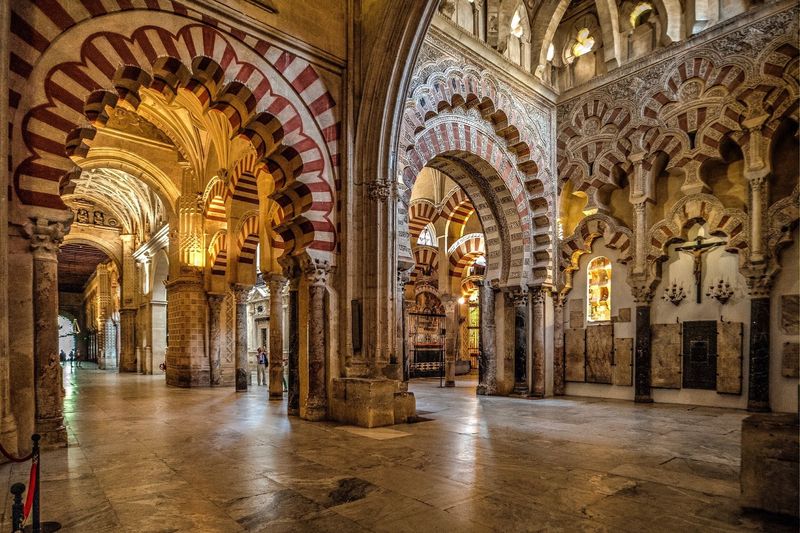
Imagine standing inside a forest of 856 columns, each topped with striking red-and-white striped arches stretching endlessly in every direction. That is exactly what awaits inside Córdoba’s Mezquita-Catedral, one of the most visually overwhelming buildings anywhere on the planet.
Originally built as a grand mosque during the height of Moorish rule in the 8th century, the building was later converted into a Catholic cathedral after the Christian Reconquista. Rather than demolishing the mosque, Christian builders simply constructed a Renaissance cathedral right in the middle of it.
The result is a breathtaking collision of two worlds sharing one roof.
The blending of Islamic and Christian architecture inside one building is genuinely unlike anything else you will encounter in Europe. Golden mosaics shimmer beside Gothic vaulted ceilings.
Arabic calligraphy appears alongside Christian altarpieces. It should feel chaotic, but somehow it works beautifully.
Córdoba itself deserves more attention than it typically receives from tourists rushing between Madrid and Seville. The city’s historic Jewish quarter, known as the Judería, wraps around the Mezquita with narrow whitewashed streets full of flower pots and hidden plazas.
Visiting the Mezquita-Catedral without exploring the surrounding neighborhood would be a genuine missed opportunity.
Royal Palace of Madrid — Madrid
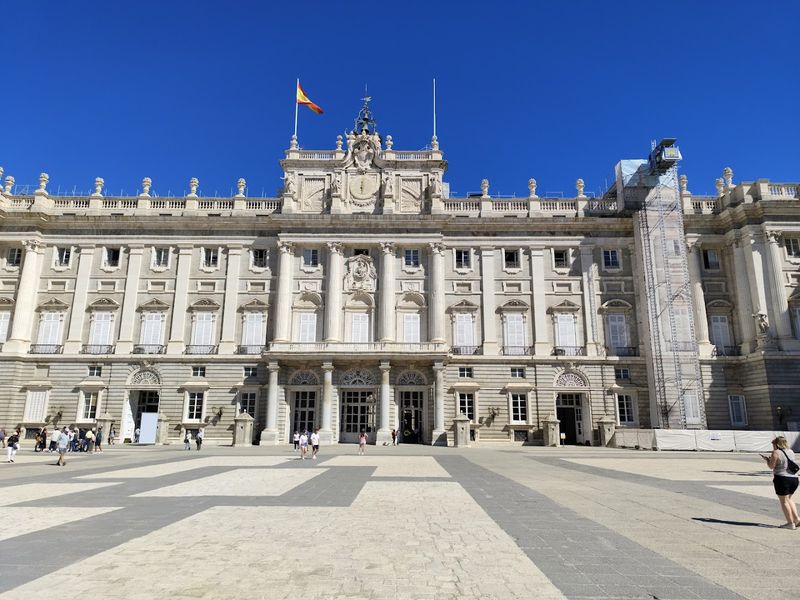
With over 3,000 rooms, the Royal Palace of Madrid is the largest royal palace in Western Europe by floor area, and walking through even a fraction of it feels genuinely overwhelming. Chandeliers dripping with crystal, walls covered in painted silk, and ceilings decorated with elaborate frescoes greet visitors at every turn.
King Philip V commissioned the palace in the early 18th century after a fire destroyed the original medieval fortress that stood on the same site. The result was a grand Baroque masterpiece designed to rival Versailles.
Today, the Spanish royal family uses the palace only for official state ceremonies rather than as a daily residence.
The Armory is one of the palace’s most popular sections, housing an incredible collection of royal weapons and suits of armor dating back centuries. The Royal Pharmacy and the lavish Throne Room are equally impressive stops on any visit.
Audio guides are widely available and help bring the history to life.
The surrounding area is also worth your time. The cathedral of La Almudena sits directly across from the palace entrance, and the nearby Sabatini Gardens offer a peaceful place to rest after hours of exploring.
Madrid’s Royal Palace is a full-day experience that rewards every minute of attention.
Plaza de España — Seville
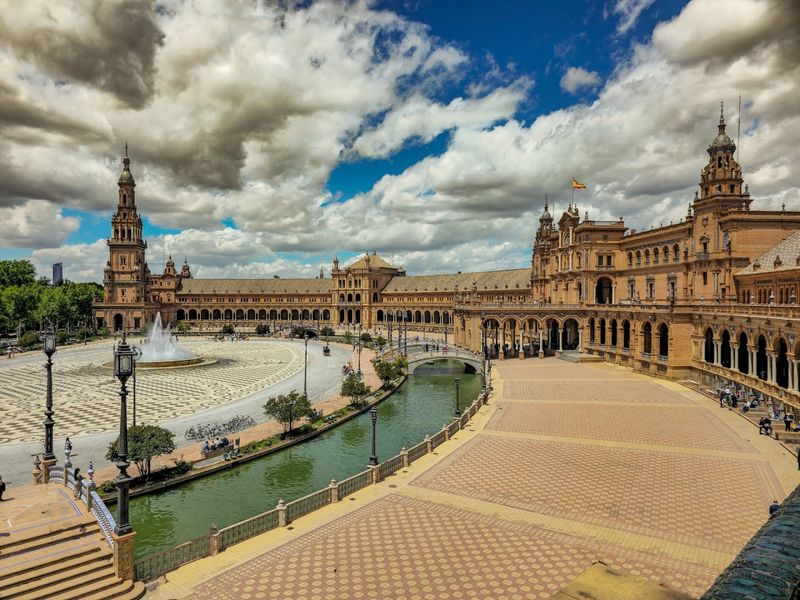
Few public squares in the world manage to feel both grand and welcoming at the same time, but Seville’s Plaza de España pulls it off effortlessly. Built for the 1929 Ibero-American Exposition, this stunning semicircular plaza blends Renaissance and Moorish Revival architecture into something that genuinely stops people in their tracks.
The plaza stretches in a wide arc around a central fountain, flanked by towers at each end and lined with colorful tiled alcoves representing every province of Spain. Small ceramic scenes painted on the tiles depict historical events from each region, making the plaza feel like an open-air history lesson you actually want to take.
A narrow canal runs along the base of the building, and visitors can rent small rowboats to glide under the ornate bridges. The experience feels almost theatrical, which is probably why several major film productions have used the plaza as a backdrop, including scenes from Star Wars Episode II and Lawrence of Arabia.
Visiting at sunset is a genuinely magical experience. The warm Andalusian light turns the building’s terracotta facade a deep amber, and the reflections in the canal create almost perfect mirror images.
Admission is free, which makes Plaza de España one of Spain’s greatest bargains.
Guggenheim Museum — Bilbao
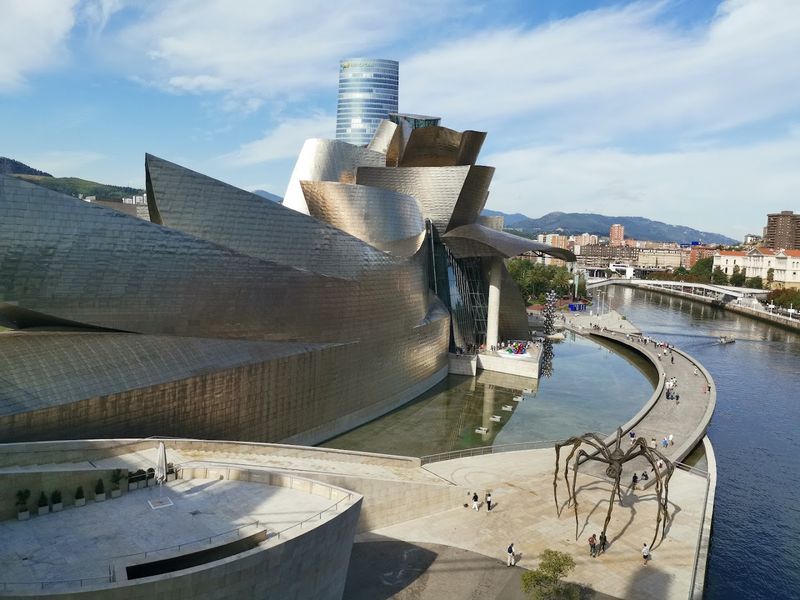
Before the Guggenheim Museum opened in 1997, Bilbao was better known for steel mills and shipyards than for art and architecture. Then Frank Gehry’s titanium-clad masterpiece arrived, and everything changed almost overnight.
The phenomenon became so famous that economists actually coined the term the Bilbao Effect to describe how a single bold building can transform an entire city.
The building itself is the main attraction for many visitors, regardless of what is on display inside. Gehry’s design features enormous sweeping curves of titanium, limestone, and glass that catch light differently at every hour of the day.
From certain angles, the structure resembles a massive metallic flower blooming beside the Nervión River.
Outside the museum, a giant spider sculpture called Maman by artist Louise Bourgeois stands guard near the entrance, and a floral puppy sculpture covered in thousands of living plants adds a playful contrast to the building’s sleek surfaces. Both have become beloved icons of Bilbao in their own right.
The museum’s permanent collection features major works by modern and contemporary artists, while rotating exhibitions bring fresh experiences throughout the year. Bilbao’s old town, just a short walk from the museum, rewards exploration with excellent pintxos bars and a vibrant local atmosphere.
Alcázar of Seville — Seville
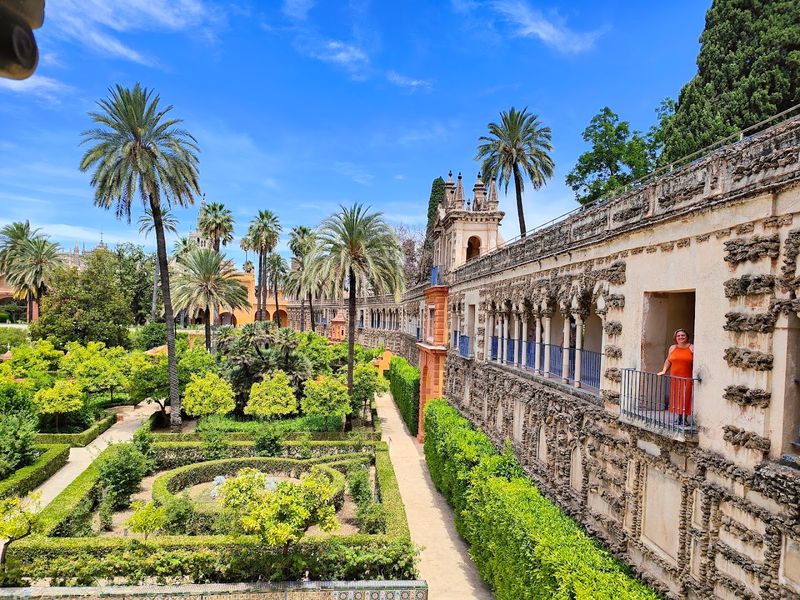
Royalty still sleeps here. The Alcázar of Seville holds the remarkable distinction of being Europe’s oldest royal palace still actively used by a reigning monarchy.
Spain’s royal family maintains official apartments within the palace and uses them during state visits to Seville, which adds a living quality that most historic buildings simply cannot match.
Construction began in the 10th century under Moorish rulers, and the palace grew and evolved through centuries of Christian kings who added their own architectural layers. The result is a layered masterpiece of Mudéjar design, featuring intricate tilework, carved plasterwork, and horseshoe arches that rival even the Alhambra in their detail and beauty.
The gardens are a separate world entirely. Manicured hedgerows, orange trees, and hidden fountains spread across acres of peaceful grounds that feel completely removed from the busy city outside the palace walls.
Peacocks roam freely among the flower beds, adding a theatrical touch.
Game of Thrones fans will recognize several locations here, as the Alcázar served as the Water Gardens of Dorne during the show’s filming. Even visitors who have never seen the series find the palace’s combination of history, architecture, and natural beauty completely irresistible.
Booking tickets in advance is strongly advised.
Roman Aqueduct of Segovia — Segovia
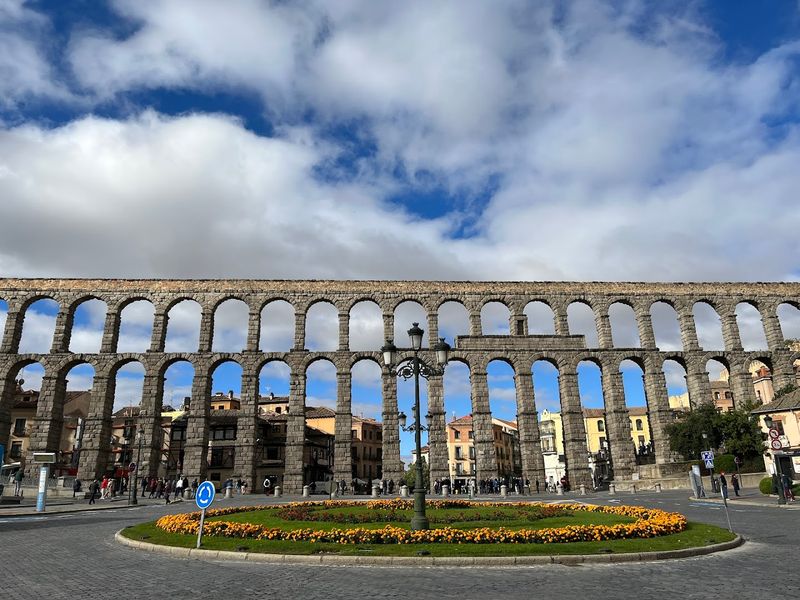
Almost 2,000 years old and still standing without a single drop of mortar holding it together. The Roman Aqueduct of Segovia is one of ancient engineering’s most jaw-dropping achievements, and seeing it rise above the modern city streets for the first time is a genuinely surreal experience.
Roman engineers built the aqueduct sometime in the 1st or 2nd century AD to carry water from the Fuente Fría River into the city. At its tallest point, the structure reaches nearly 29 meters high and consists of over 160 arches made from precisely cut granite blocks.
The stones were fitted together using only gravity and extraordinary precision.
The aqueduct remained in active use delivering water to Segovia all the way into the 20th century, which means this ancient structure was still doing its job less than 100 years ago. That kind of durability is almost hard to process when you are standing next to it.
Segovia itself is a wonderfully compact and walkable city that rewards slow exploration. The old town sits on a ridge between two rivers and is packed with medieval churches, tapas bars, and the famous Alcázar castle.
The aqueduct greets you the moment you arrive, setting the tone for everything that follows beautifully.
Santiago de Compostela Cathedral — Galicia
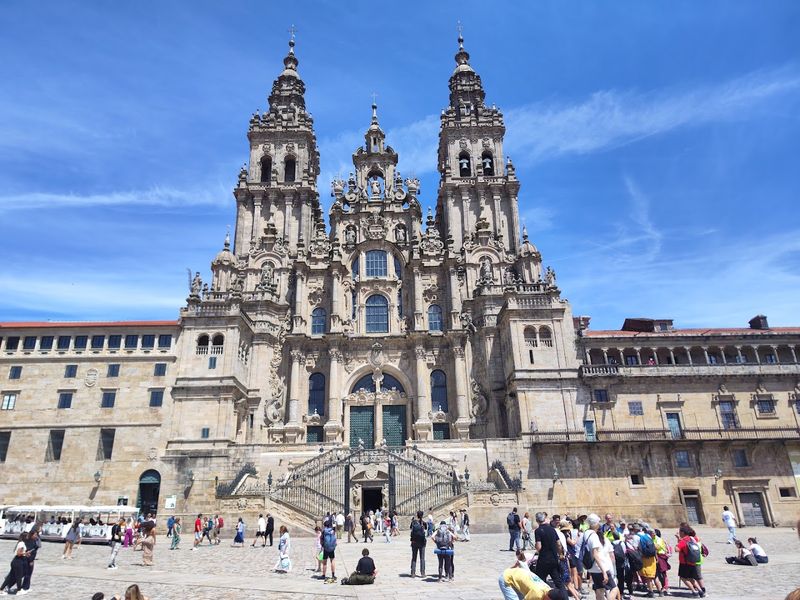
Every year, hundreds of thousands of pilgrims walk, cycle, or ride on horseback across Spain to reach this cathedral, completing one of the world’s most famous spiritual journeys. The Camino de Santiago pilgrimage has existed for over a thousand years, and the moment pilgrims first spot the cathedral’s twin Baroque towers rising above the rooftops of Santiago is reportedly one of the most emotional experiences of their lives.
The cathedral was built over the tomb of Saint James the Apostle, one of Christianity’s most important figures, making it one of the holiest sites in the entire Christian world. The interior is enormous and awe-inspiring, with a famous giant incense burner called the Botafumeiro that swings dramatically across the nave during special services.
Even visitors who are not religious find the atmosphere inside deeply moving. The weight of centuries of faith, devotion, and human effort is palpable in every stone.
The surrounding old town of Santiago, a UNESCO World Heritage Site, adds layers of history and beauty to the experience.
The city receives pilgrims regardless of the season, though summer months bring the largest numbers. Witnessing the arrival of exhausted but joyful walkers completing their journey at the cathedral steps is an unexpectedly touching sight that stays with you long after leaving.
Casa Batlló — Barcelona
Antoni Gaudí looked at an ordinary apartment building on Barcelona’s Passeig de Gràcia and decided it needed to become a dragon. The result is Casa Batlló, a building so wildly imaginative that first-time visitors often stop dead on the sidewalk just trying to process what they are looking at.
The facade shimmers with broken ceramic tiles in blues, greens, and golds that catch sunlight like fish scales. The balconies are shaped like skulls and bones, referencing the legend of Saint George slaying a dragon.
The roof curves upward in ridged ceramic scales meant to represent the dragon’s back. Every detail connects to the same mythical story.
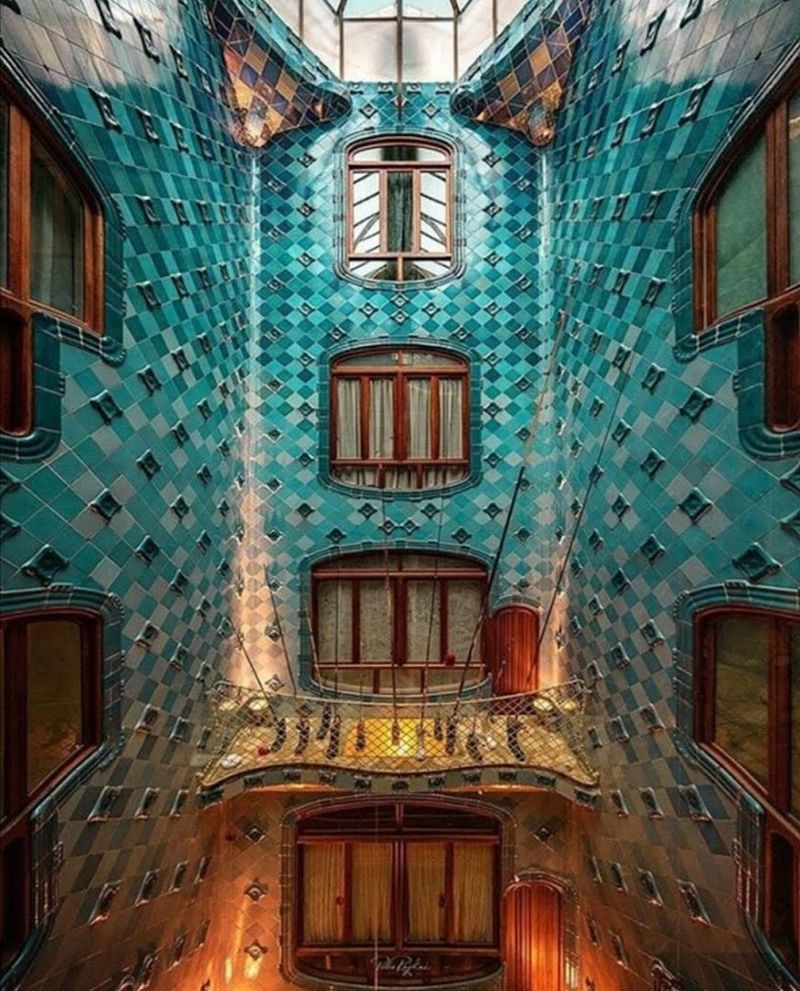
Inside, the building is just as extraordinary. The central light well is lined with blue ceramic tiles that shift from deep navy at the top to pale sky blue at the bottom, creating the illusion of being underwater.
The main salon on the first floor features windows shaped like the gills of a sea creature.
Visiting at night during the Gaudí immersive light show is an experience worth every penny. The facade becomes a canvas for projected animations that bring the dragon legend to life in spectacular fashion.
Casa Batlló proves that architecture can be pure storytelling.
Seville Cathedral and La Giralda — Seville
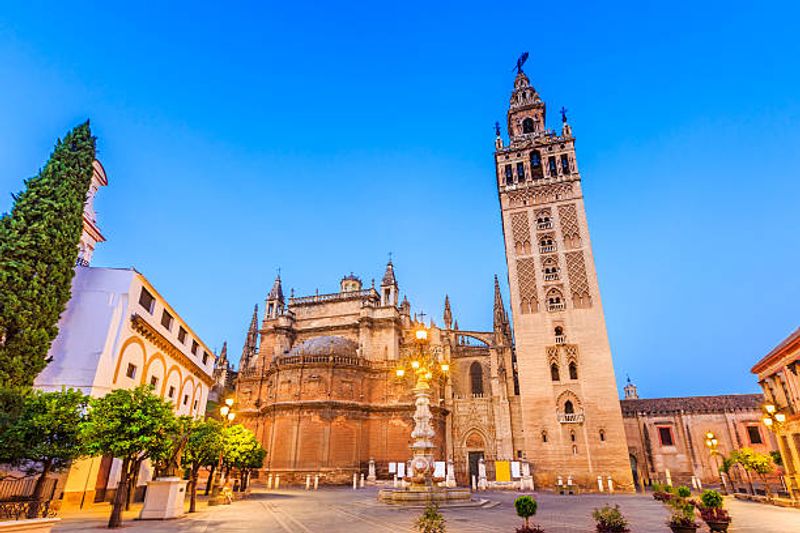
The sheer size of Seville Cathedral is genuinely hard to wrap your head around until you are standing directly in front of it. Completed in 1506, it holds the title of the world’s largest Gothic cathedral and remains one of the biggest churches ever built by human hands.
The interior is so vast that entire chapels tucked along the sides feel like separate churches themselves.
Christopher Columbus is buried here, or at least most historians believe so. His ornate tomb is carried by four royal figures representing the kingdoms of Spain, and it draws crowds of curious visitors who come to pay their respects to the explorer who changed world history forever.
La Giralda, the cathedral’s famous bell tower, was originally built as a minaret for the mosque that stood on this site before the Reconquista. Christian builders later added a Renaissance belfry on top and kept the original Islamic tower below, creating another fascinating architectural hybrid that Seville seems to specialize in.
Climbing La Giralda is a must. Instead of stairs, the tower features a series of ramps that allowed horsemen to ride to the top during the Islamic era.
The views across Seville’s rooftops, cathedral spires, and the winding Guadalquivir River from the top are worth every step of the climb.
Alcázar of Segovia — Segovia
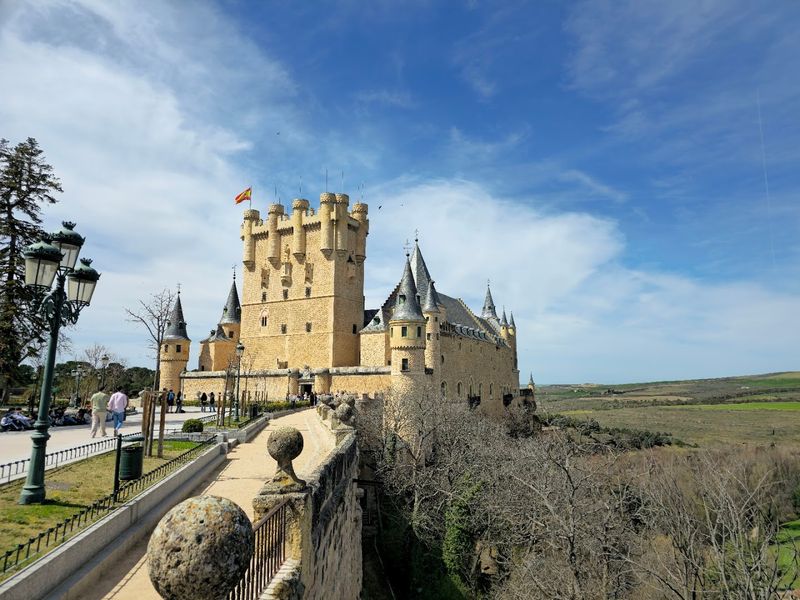
Standing at the edge of Segovia’s rocky promontory, the Alcázar looks less like a real castle and more like a building that escaped from the pages of a children’s storybook. Its needle-thin towers, slate-gray roofs, and dramatic clifftop position make it arguably the most visually striking medieval castle in all of Spain.
The castle’s design reportedly caught the attention of Walt Disney’s team during research for Cinderella’s castle, though the exact connection remains a matter of friendly debate among historians. Real or legendary, the resemblance is striking enough that most visitors bring it up without being prompted.
Inside, the rooms are filled with medieval armor, royal thrones, and elaborately painted ceilings that date back to the time when Spanish monarchs actually lived here. Queen Isabella I, one of Spain’s most powerful rulers, was proclaimed queen in Segovia, cementing the city’s place in the country’s royal history.
The tower climb offers panoramic views across the Castilian plateau that stretch for miles in every direction. On clear days, the view seems to go on forever across golden wheat fields and distant hills.
Combine the Alcázar with the Roman aqueduct and Segovia’s old town, and you have one of Spain’s most rewarding day trips from Madrid.
Montserrat Monastery — Catalonia
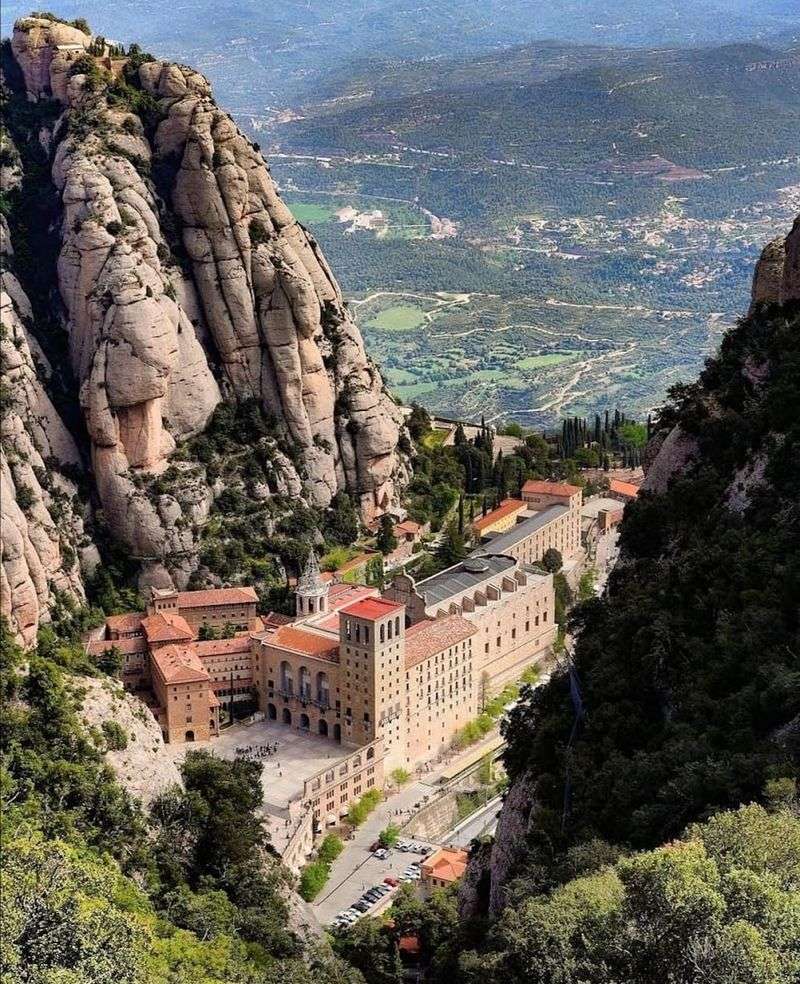
The mountains surrounding Montserrat Monastery look like they were sculpted by someone who had never seen mountains before and decided to invent something completely new. Jagged pillars of rock rise from the hillside in rounded, otherworldly formations that seem almost impossible in their strangeness.
The monastery built directly into these formations looks like it grew there naturally.
Founded in the 11th century, Montserrat has been one of Catalonia’s most sacred religious sites for nearly a thousand years. The monastery’s most treasured possession is the Black Madonna, a wooden statue of the Virgin Mary carved in the 12th century.
Pilgrims travel from across Spain and beyond specifically to see and touch this beloved statue.
The mountain itself offers extraordinary hiking trails that wind through the rocky landscape above the monastery. Cable cars and rack railways connect visitors from the valley below, making the journey part of the adventure.
On clear days, the views extend across the Catalan countryside all the way to the Mediterranean.
The monastery’s famous boys’ choir, known as the Escolania, has been performing sacred music here since the 14th century, making it one of Europe’s oldest children’s choirs. Attending a performance inside the basilica adds a profoundly moving dimension to any visit.
Montserrat is truly unlike anywhere else in Spain.
El Escorial — Madrid Region
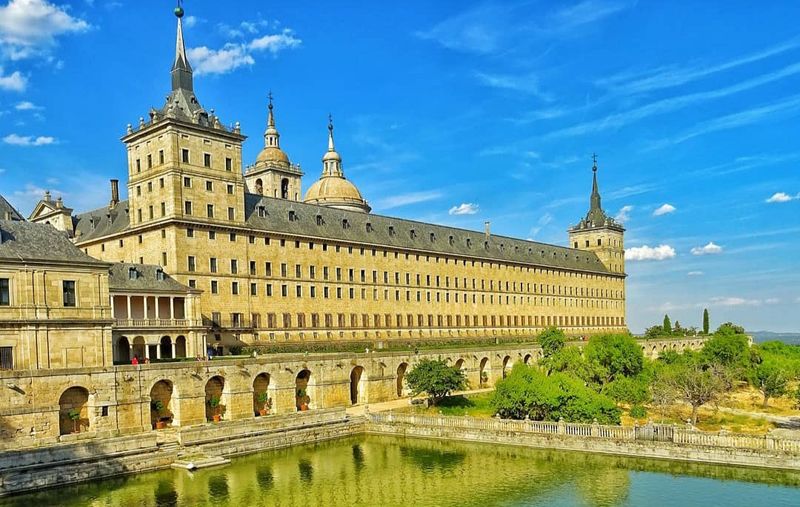
King Philip II wanted a building that reflected the full power and seriousness of the Spanish Empire, and El Escorial delivered that message in granite and stone on a scale that still impresses nearly 500 years later. Built between 1563 and 1584, this enormous complex served simultaneously as a royal palace, a monastery, a library, and a mausoleum for Spanish kings.
It is essentially an entire world contained within one set of walls.
The architecture is deliberately severe and undecorated on the outside, reflecting Philip II’s austere personality and his deep religious convictions. Inside, however, the basilica is richly decorated with frescoes, sculptures, and the famous Pantheon of Kings, where the remains of nearly every Spanish monarch since Charles I rest in matching marble tombs.
The library alone is worth the visit. El Escorial houses one of the most important historical book collections in the world, with ancient manuscripts and beautifully decorated vaulted ceilings painted with allegorical figures representing the seven liberal arts.
El Escorial sits in the foothills of the Sierra de Guadarrama mountains, about an hour from Madrid by train. The surrounding town of San Lorenzo de El Escorial has excellent restaurants and a relaxed atmosphere that contrasts nicely with the monument’s solemn grandeur.
A full visit easily fills an entire day.
Ciudad de las Artes y las Ciencias — Valencia
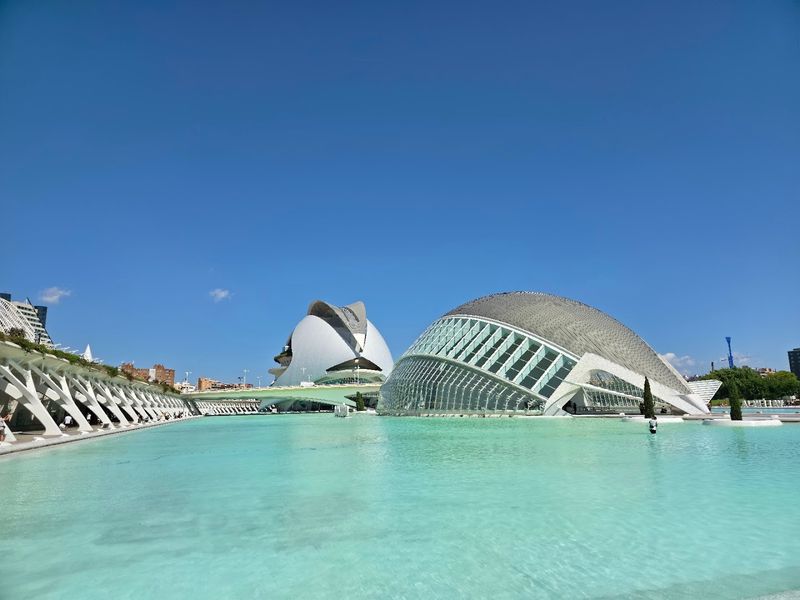
Valencia went all in on the future, and the result is one of the most visually spectacular architectural complexes built anywhere in the world during the past 30 years. The City of Arts and Sciences stretches across a former riverbed in Valencia’s eastern district, featuring a series of futuristic white buildings designed primarily by local architect Santiago Calatrava.
The complex includes the Hemisfèric, an IMAX cinema shaped like a giant human eye complete with a retractable eyelid. Nearby stands the Science Museum, its skeleton-like structure resembling a whale’s ribcage.
The Oceanogràfic, Europe’s largest aquarium, sits at the far end of the complex and houses sharks, beluga whales, and thousands of other marine species.
Everything is reflected in the long shallow pools that surround the buildings, creating mirror images that make the entire complex look twice as dramatic. Photographers absolutely love this place, especially during golden hour when the white structures glow amber against a darkening sky.
Valencia’s old town, with its vibrant markets and medieval cathedral, sits just a short tram ride away, making it easy to combine ancient and modern Spain in a single day. The City of Arts and Sciences proves that Spain’s architectural ambition did not end with Gaudí.
It simply evolved into something equally bold and thrilling.
Teide National Park — Tenerife
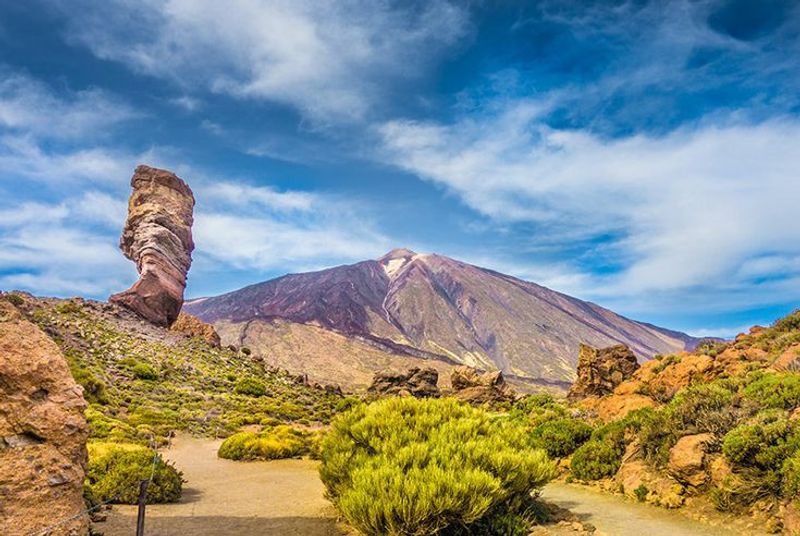
Standing at 3,715 meters above sea level, Mount Teide is not just the highest point in Spain. It is the highest peak in the entire Atlantic Ocean, and the third largest volcano in the world measured from its oceanic base.
Looking at it from the surrounding lava fields, with clouds floating below the summit, feels less like standing in Spain and more like visiting another planet.
The volcanic landscape surrounding Teide is genuinely alien in appearance. Lava flows frozen in twisted shapes, fields of red and black rock, and bizarre geological formations called Los Roques de García create scenery unlike anything else in Europe.
The park was designated a UNESCO World Heritage Site in 2007 for its extraordinary natural and geological value.
A cable car carries visitors most of the way to the summit, with a short hike completing the final stretch. The views from the top on a clear day stretch across multiple Canary Islands, with the ocean glittering in every direction far below.
Permits are required to hike beyond the cable car station to the actual summit crater.
Teide National Park is also famous for stargazing. The high altitude and minimal light pollution create some of the clearest night skies in the world, and organized astronomy tours operate regularly throughout the year.
The park rewards visitors whether they come for geology, hiking, photography, or simply staring at the stars.
Plaza Mayor — Madrid
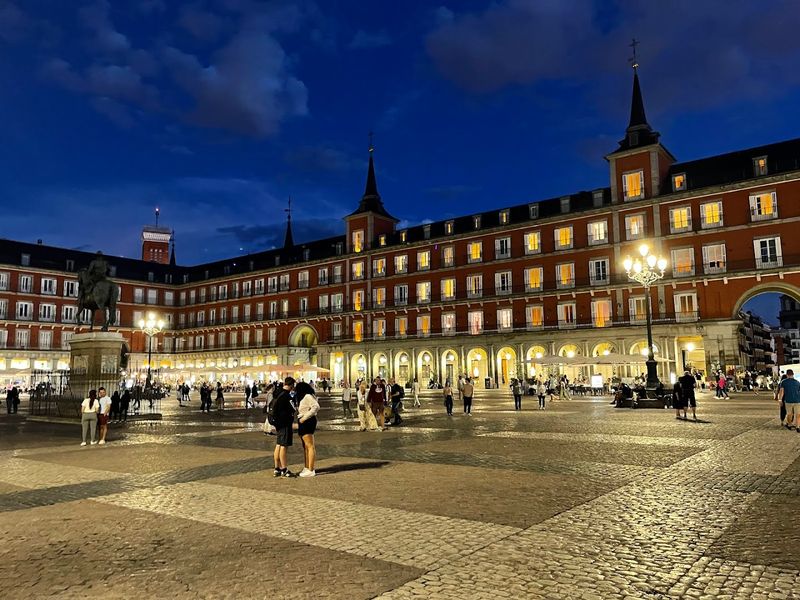
Madrid’s Plaza Mayor has seen it all. Royal coronations, markets, theatrical performances, bullfights, and even executions during the Spanish Inquisition have all taken place within these elegant arcaded walls over the past four centuries.
Today the square hosts outdoor cafes, street artists, and tourists from every corner of the globe, which feels like a far more pleasant use of the space.
The plaza was completed in 1619 under King Philip III, whose bronze equestrian statue now stands at the center of the square. The surrounding buildings feature striking red facades and uniform rows of balconies that give the plaza a satisfying architectural symmetry.
Each building once served a specific function, from a bakery to a butcher shop, all organized by royal decree.
Christmas transforms the plaza into one of Madrid’s most festive spots, with a traditional market selling ornaments, figurines, and seasonal treats filling the cobblestones. During the rest of the year, the square serves as a lively meeting point for locals and visitors alike, especially on weekend mornings.
The surrounding streets of Madrid’s historic Austrias neighborhood are packed with tapas bars, traditional restaurants, and centuries-old shops. Grab a chocolate con churros at one of the nearby cafes and spend an hour watching the city move around one of Europe’s most atmospheric public squares.
Madrid life does not get better than this.
Tower of Hercules — A Coruña
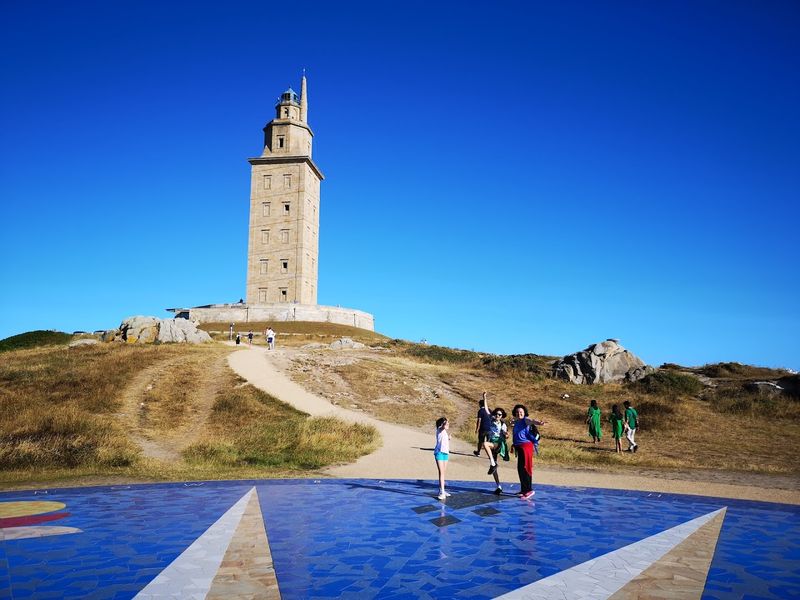
Somewhere on Spain’s wild Atlantic coast, a lighthouse built by the Romans nearly 2,000 years ago is still doing its job. The Tower of Hercules in A Coruña is the world’s oldest functioning Roman lighthouse, and the fact that ships still rely on its beam today makes it one of history’s most quietly remarkable achievements in engineering.
The Romans originally built the tower in the 2nd century AD, possibly using an even older Phoenician structure as a foundation. According to legend, Hercules himself built the tower after slaying a giant named Geryon, burying the giant’s head at the base.
Local mythology gives the city of A Coruña its origins in this same legend, making the tower central to the city’s identity.
UNESCO recognized the Tower of Hercules as a World Heritage Site in 2009, acknowledging its extraordinary historical and cultural significance. The surrounding park features ancient stone carvings, sculptures, and a mosaic rose compass that adds to the site’s atmospheric quality.
Climbing to the top of the tower rewards visitors with dramatic views across the Atlantic Ocean and the rugged Galician coastline. The area around the tower is also a popular local gathering spot, especially at sunset when the ocean light turns golden and the lighthouse beam begins to sweep across the water.
Galicia’s best-kept secret deserves far more international attention.
Caminito del Rey — Málaga
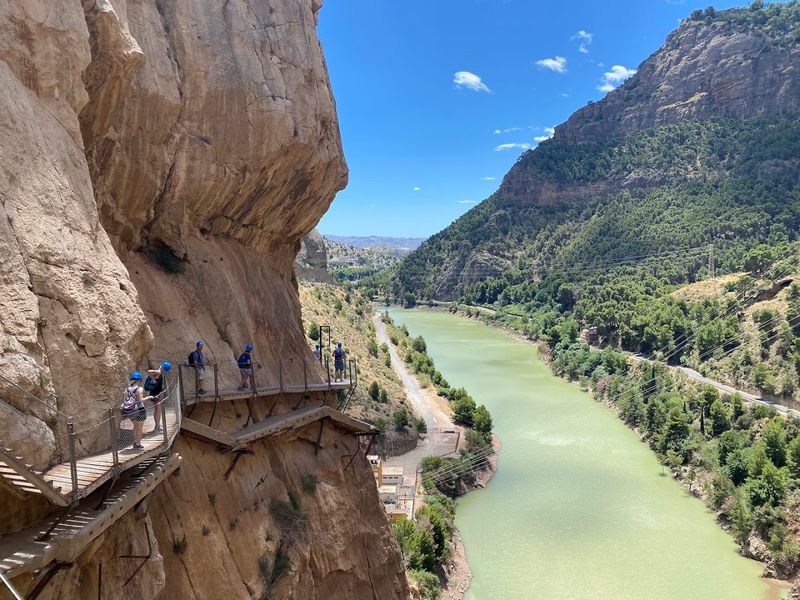
For years, Caminito del Rey had a reputation as the most dangerous walkway in the world. Crumbling concrete paths clinging to vertical cliff faces, missing handrails, and sheer drops hundreds of meters above the Guadalhorce Gorge made it a magnet for thrill-seekers and a nightmare for safety inspectors.
Then Spain fixed it, and it became something even better.
The pathway was originally built between 1901 and 1905 to allow workers to transport materials between two hydroelectric dams. The name Caminito del Rey, meaning the King’s Little Path, came from King Alfonso XIII who walked the route during an official visit in 1921.
After decades of neglect, a major restoration project completed in 2015 transformed it into one of Spain’s most popular outdoor attractions.
Today, the route stretches approximately 7.7 kilometers through the El Chorro gorge, combining tunnels, suspended bridges, and narrow cliff-side paths. The views into the gorge below are consistently spectacular, and the geological formations in the canyon walls are extraordinary up close.
The turquoise river threading through the gorge floor adds a vivid splash of color to the dramatic landscape.
Helmets are provided and mandatory for all visitors. The route is graded as moderate, suitable for most reasonably fit people without specific climbing experience.
Booking a timed entry slot well in advance is essential, particularly during spring and autumn when demand is highest.
Share this story