Germany is a country packed with history, breathtaking scenery, and architectural wonders that span centuries. From fairytale castles perched on mountain cliffs to bustling city squares that once shaped world history, there is something here for every kind of traveler.
Whether you love art, nature, history, or just a good scenic view, Germany delivers on all fronts. Get ready to explore 20 of the most iconic landmarks this incredible country has to offer.
Neuschwanstein Castle, Bavaria
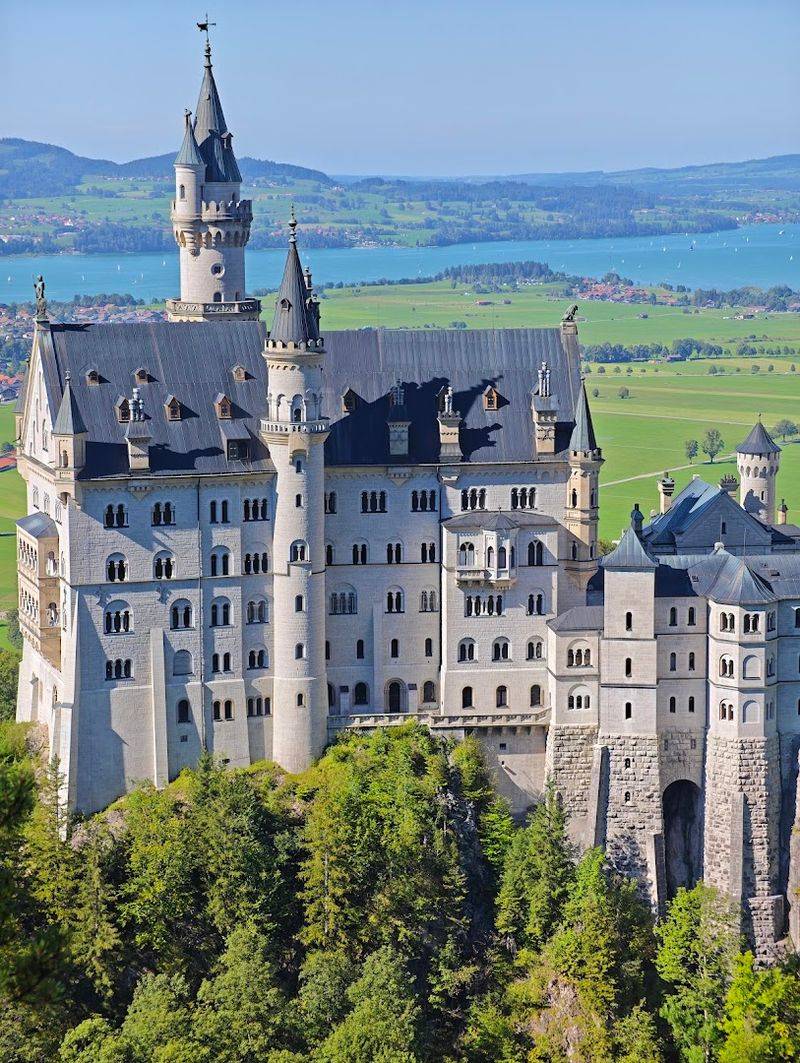
King Ludwig II had one goal when he commissioned this castle in 1869: to build a personal paradise inspired by medieval legends and opera. Neuschwanstein Castle sits high above the village of Hohenschwangau like something ripped straight from a storybook.
It is no surprise that Walt Disney used it as the model for Sleeping Beauty’s castle.
The interior is just as jaw-dropping as the outside. Rooms are decorated with elaborate murals, hand-carved woodwork, and stunning chandeliers.
The Throne Room, designed like a Byzantine church, is especially breathtaking. Ludwig only lived here for about 172 days before he died under mysterious circumstances in 1886.
Visitors can take a guided tour through the royal rooms and then hike up to the Marienbrucke bridge for a panoramic view of the entire castle. Book tickets in advance because lines get extremely long during summer.
The surrounding Bavarian Alps make every photo look like a fantasy postcard. Neuschwanstein is not just a castle; it is a full-on experience that stays with you long after you leave.
Brandenburg Gate, Berlin
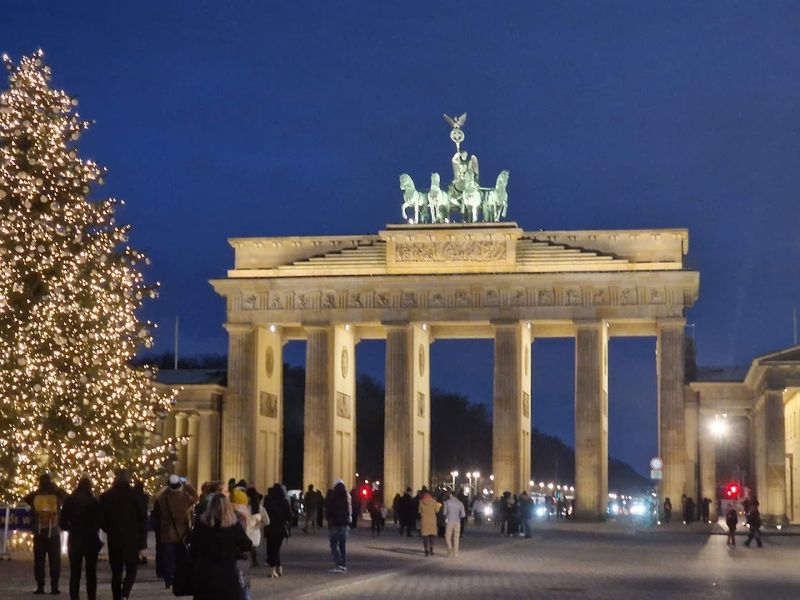
Few structures carry as much emotional weight as the Brandenburg Gate. Built in 1791 as a symbol of peace, this neoclassical monument later became the most powerful image of a divided nation during the Cold War.
When the Berlin Wall fell in 1989, crowds flooded this very spot in celebration.
Standing 26 meters tall, the gate features 12 Doric columns and is topped by the Quadriga, a bronze sculpture of a chariot pulled by four horses. Napoleon once stole the Quadriga and hauled it to Paris.
The Prussians got it back in 1814 after defeating him, which says a lot about how seriously Germans take their landmarks.
Today, the gate sits at the heart of Berlin and is surrounded by some of the city’s most important sites, including the Reichstag and the Holocaust Memorial. It is open to the public at all hours and looks especially magical at night when it is lit up.
Snap your photos, soak in the history, and grab a coffee from one of the nearby cafes. This is Berlin at its most iconic.
Cologne Cathedral, Cologne
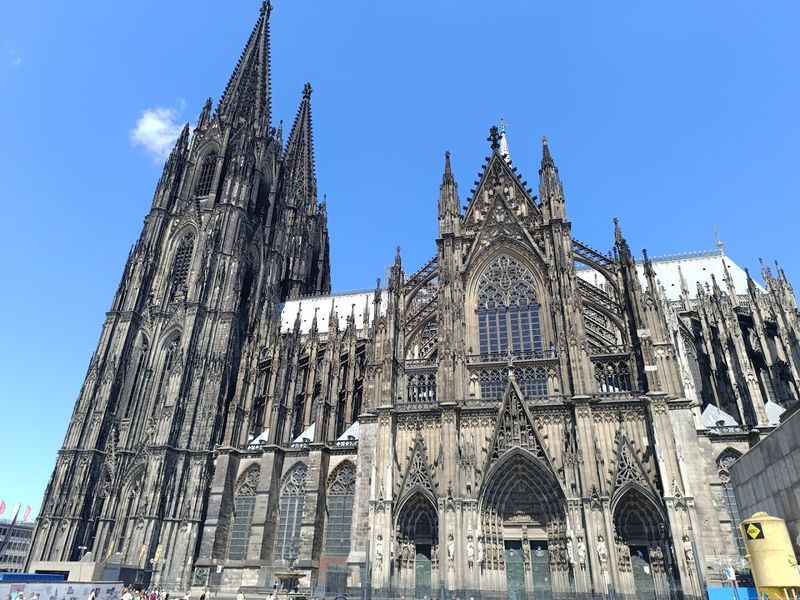
Cologne Cathedral took 632 years to build, which makes it one of the longest construction projects in human history. Work began in 1248 and was not completed until 1880.
The result is a Gothic masterpiece so tall and detailed that it once held the title of the world’s tallest building.
The twin spires soar 157 meters into the sky and can be seen from almost anywhere in the city. Inside, the cathedral houses the Shrine of the Three Kings, a golden reliquary believed to contain the remains of the biblical Magi.
Millions of pilgrims and tourists visit each year, making it Germany’s most visited landmark.
Climbing the 533 steps to the top of the south tower rewards you with sweeping views over Cologne and the Rhine River. The stained glass windows inside are absolutely stunning, especially the modern Gerhard Richter window installed in 2007, which features 11,500 squares of colored glass.
The cathedral also survived World War II bombings largely intact, which many locals see as almost miraculous. A visit to Cologne without seeing the cathedral simply does not count as a real visit.
Berlin Wall East Side Gallery, Berlin

Stretching 1.3 kilometers along the Spree River, the East Side Gallery is the longest surviving section of the Berlin Wall and the largest open-air gallery in the world. Over 100 artists from 21 countries painted murals directly onto the concrete shortly after the wall fell in 1989.
The result is one of the most powerful art installations on the planet.
The most famous mural is Dmitri Vrubel’s “My God, Help Me to Survive This Deadly Love,” which shows Soviet leader Brezhnev and East German leader Honecker sharing a kiss. It is quirky, political, and unforgettable all at once.
Each mural tells a story about freedom, unity, and the human desire to break through barriers, literally and figuratively.
Walking the full length of the gallery takes about 30 to 45 minutes at a relaxed pace. The area around it has transformed into a buzzing neighborhood with cafes, bars, and creative spaces.
Visit early in the morning to avoid crowds and get the best photos. The wall that once divided a nation now serves as a canvas for hope, which is honestly one of history’s greatest plot twists.
Heidelberg Castle, Heidelberg
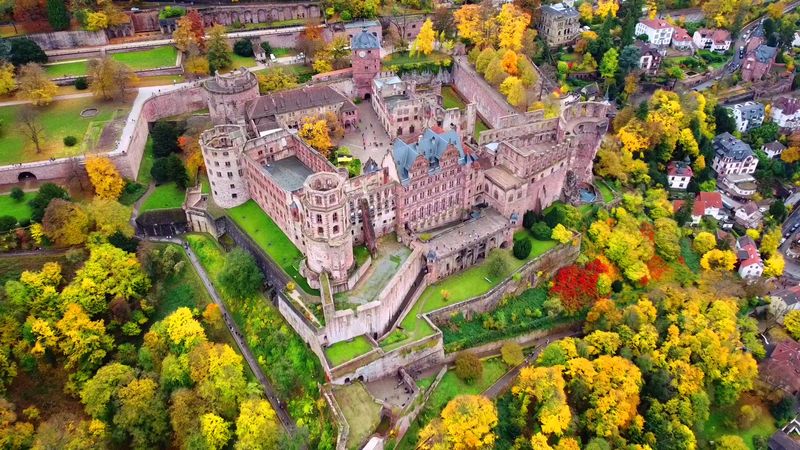
Perched 80 meters above the Neckar River, Heidelberg Castle is one of those ruins that somehow looks more beautiful for being broken. Lightning strikes, wars, and centuries of neglect have chipped away at its walls, but the result is a hauntingly romantic silhouette that photographers and painters have been obsessing over for centuries.
The castle dates back to the 13th century and blends Gothic, Renaissance, and Baroque architectural styles across its many buildings. One of its quirkiest highlights is the Great Tun, a massive wine barrel in the cellar that holds over 220,000 liters.
There is also a statue of the castle’s famous court jester, Perkeo, who was reportedly the barrel’s enthusiastic guardian.
The funicular railway from the old town makes getting up the hill easy and enjoyable. Once at the top, the views over Heidelberg’s red-roofed old town and the winding Neckar River are absolutely worth the trip.
The castle grounds are open year-round, and evening events are sometimes held there in summer. Heidelberg itself is a charming university city full of bookshops, cafes, and cobblestone streets that beg to be explored.
The Black Forest, Baden-Wurttemberg
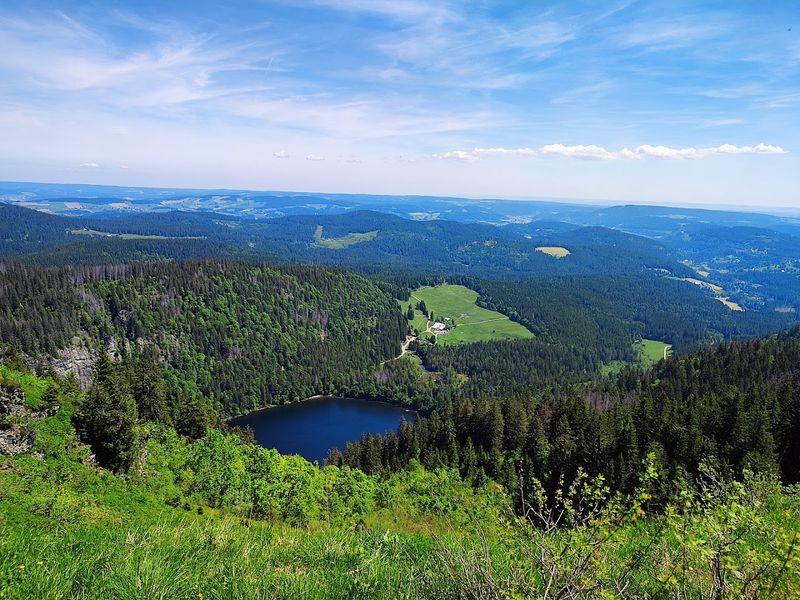
The Black Forest smells like pine needles, fresh rain, and adventure. This legendary stretch of woodland in southwestern Germany covers about 6,000 square kilometers and has inspired countless fairytales, including Hansel and Gretel and Little Red Riding Hood.
The Brothers Grimm clearly did their best work after a hike here.
Beyond the folklore, the Black Forest is a genuine outdoor paradise. It has over 23,000 kilometers of marked hiking trails, dozens of scenic waterfalls, and charming villages where cuckoo clocks are still handcrafted by local artisans.
The Triberg Waterfalls are among the highest in Germany and are absolutely worth a detour. In winter, the snow-covered trails attract cross-country skiers from across Europe.
The region is also famous for its food. Black Forest cake, made with chocolate, cherries, and cream, originated here and is served in nearly every local bakery.
Pair it with a glass of local Pinot Noir and you have the perfect afternoon sorted. Towns like Freiburg and Baden-Baden make excellent base camps for exploring the forest.
Whether you come for the trails, the food, or the fairytale vibes, the Black Forest delivers every single time.
Sanssouci Palace, Potsdam
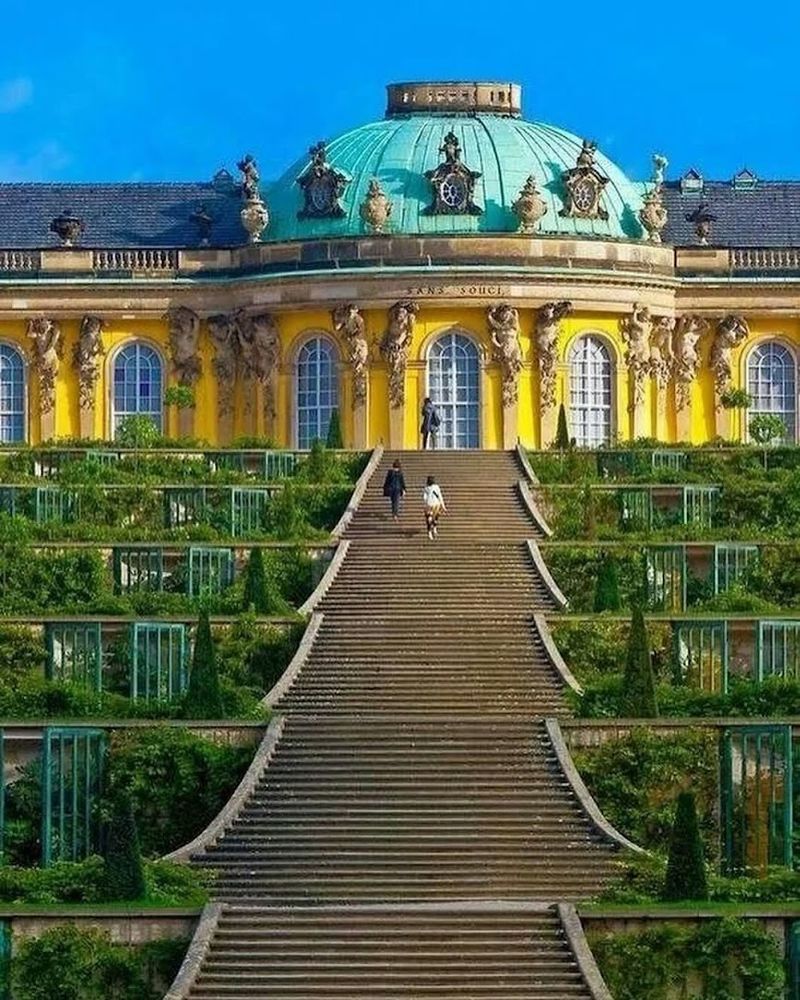
The name Sanssouci translates from French as “without a care,” and one look at this golden Rococo palace surrounded by terraced vineyards explains exactly why Frederick the Great chose that name. Built in 1747 as his personal summer escape, this palace in Potsdam was where the Prussian king came to relax, read, and play the flute.
Yes, he was a serious flute enthusiast.
The palace is smaller and more intimate than you might expect from a royal residence, which is exactly the point. Frederick wanted a retreat, not a showpiece.
The interiors are lavishly decorated with gilded ceilings, silk-covered walls, and a library that would make any book lover weak in the knees. The park surrounding the palace stretches over 290 hectares and contains several other stunning structures, including the Chinese House and the New Palace.
Sanssouci is a UNESCO World Heritage Site and one of the most visited attractions in Germany. Potsdam is just a short train ride from Berlin, making it an easy and very rewarding day trip.
The gardens are at their best in late spring when everything is in bloom. Bring comfortable shoes because the grounds are vast and absolutely worth exploring on foot.
Zugspitze, Bavaria
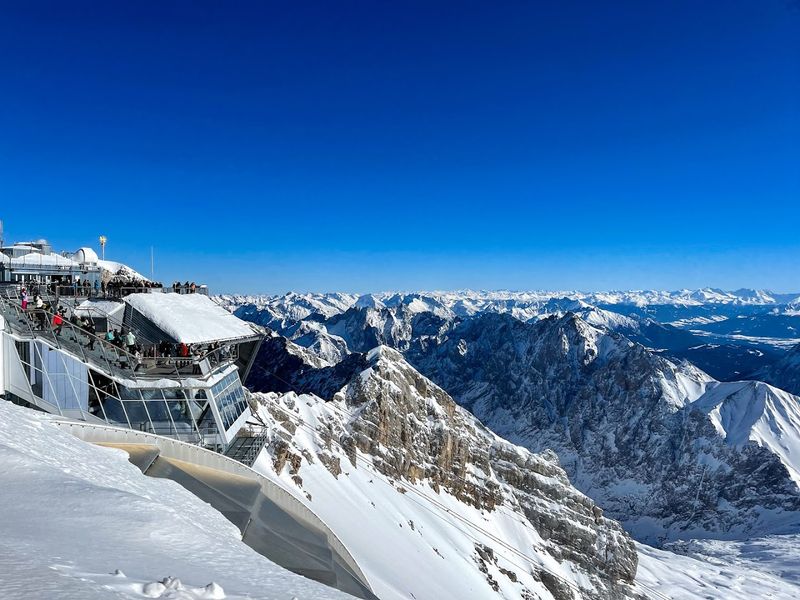
Standing at 2,962 meters above sea level, Zugspitze is Germany’s highest mountain and one of those places where the air feels thinner and the world looks impossibly wide. On a clear day, the summit offers views stretching across four countries: Germany, Austria, Switzerland, and Italy.
That is a lot of scenery for one mountain.
You do not need to be a serious mountaineer to reach the top. A cogwheel train departs from Garmisch-Partenkirchen and travels through a tunnel right into the mountain, while cable cars offer a more dramatic aerial approach.
Both options are comfortable and suitable for visitors of all ages and fitness levels. At the summit, there are two restaurants, a weather station, and a golden cross marking the highest point in Germany.
Winter brings excellent skiing conditions across the Zugspitze glacier, which is one of the highest ski resorts in Germany. Summer visitors can hike the surrounding trails or simply stand at the top and feel the achievement of being at the roof of the country.
The surrounding Bavarian Alps scenery is spectacular in every season. Pack a warm jacket regardless of when you visit because it is always cold up there.
Rhine Valley, Western Germany
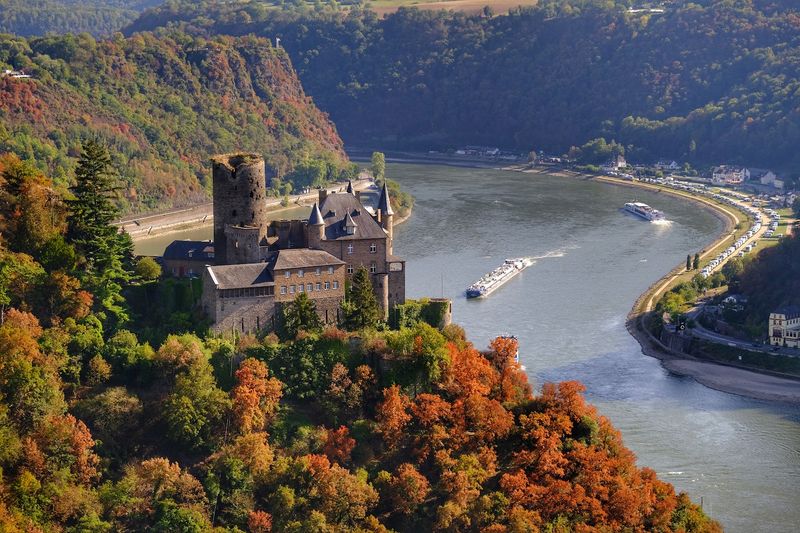
Cruising down the Rhine River through the Middle Rhine Valley feels like flipping through 2,000 years of European history at a leisurely pace. This stretch of the river between Bingen and Koblenz is a UNESCO World Heritage Site, and for good reason.
Hilltop castles, terraced vineyards, and half-timbered villages line both banks in what can only be described as maximum Germany.
The Lorelei Rock is one of the valley’s most famous landmarks, a 132-meter-high slate cliff that inspired a famous German legend about a siren luring sailors to their doom. Nearby, the town of Bacharach is one of the best-preserved medieval towns in Germany, with city walls, towers, and a ruined church that looks like a movie set.
The region produces some excellent Riesling wine, and tastings are available throughout the area.
River cruises are the most popular way to see the valley, but cycling along the riverbank paths is also a fantastic option for the more energetic traveler. The best time to visit is late spring or early autumn when the weather is pleasant and the tourist crowds are slightly thinner.
Towns like Rudesheim and Cochem make charming overnight stops. The Rhine Valley rewards slow travelers who take the time to wander and explore.
Museum Island, Berlin
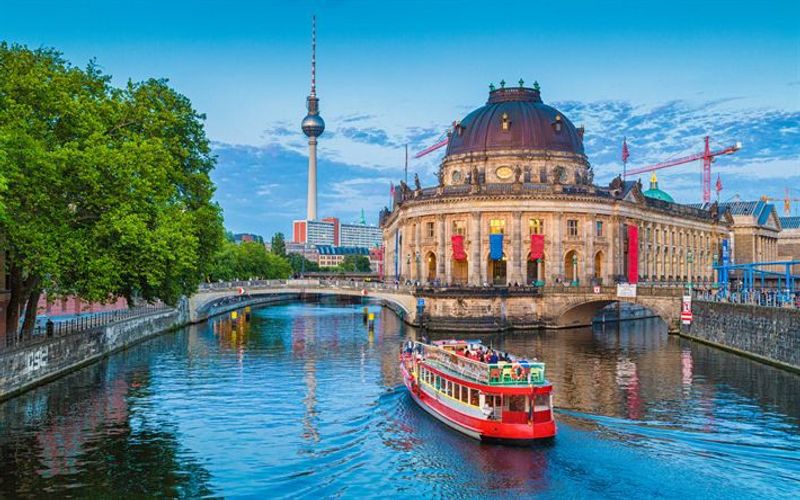
Imagine an entire island in the middle of a city dedicated entirely to world-class museums. That is exactly what Museum Island in Berlin is, and it has been drawing art lovers, history buffs, and curious visitors since the early 19th century.
The complex holds five major museums and is a UNESCO World Heritage Site, which honestly seems like the bare minimum recognition it deserves.
The Pergamon Museum is the crown jewel, housing the reconstructed Pergamon Altar, the Ishtar Gate from ancient Babylon, and the Market Gate of Miletus. The Neues Museum is home to the famous bust of Egyptian Queen Nefertiti, which alone justifies the entrance fee.
The Altes Museum, Alte Nationalgalerie, and Bode Museum round out the collection with Greek antiquities, 19th-century art, and Byzantine treasures respectively.
Plan at least a full day on Museum Island because rushing through even one of these museums feels like a crime against culture. A combined day ticket covers all five museums and offers the best value.
The island sits on the Spree River in the heart of Berlin’s historic center, surrounded by beautiful architecture and easy to reach by public transport. Grab a coffee at the museum cafe and pace yourself because there is a lot to take in.
Elbphilharmonie, Hamburg
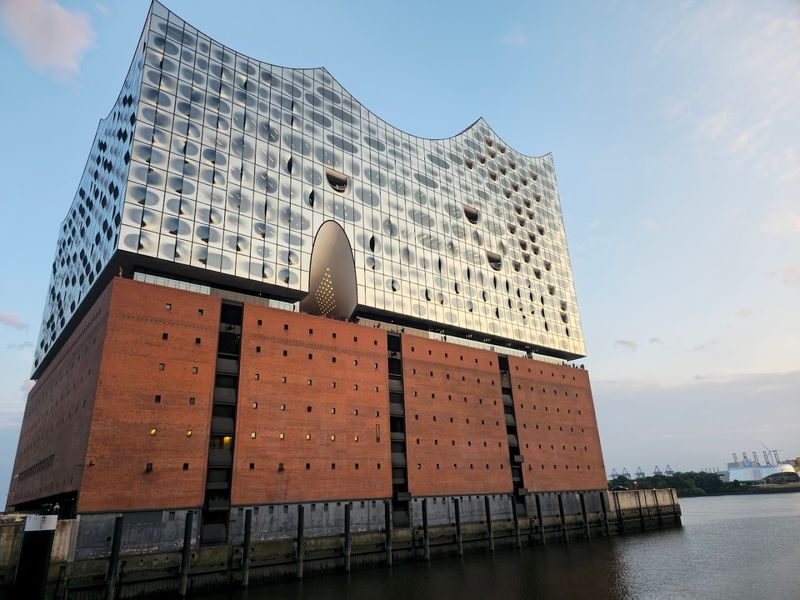
Hamburg’s Elbphilharmonie looks like a giant wave frozen mid-crash above a 19th-century brick warehouse, and that description is not even an exaggeration. Opened in 2017 after a notoriously over-budget and delayed construction, this concert hall quickly became one of the most talked-about buildings in the world.
The wait and the cost, apparently, were worth it.
The building sits in Hamburg’s HafenCity district right on the waterfront, and its undulating glass roof contains 1,096 individually shaped and curved window panels. Inside, the Grand Concert Hall seats 2,100 people and is designed with a unique “White Skin” interior made of 10,000 individually shaped gypsum fiber panels that create near-perfect acoustics.
Even people who do not care about classical music are impressed by the engineering.
A free public plaza called the Plaza wraps around the building at the 37-meter level and offers sweeping views over Hamburg’s harbor and rooftops. You do not need a concert ticket to access the Plaza, just a timed entry reservation.
The surrounding HafenCity neighborhood is full of excellent restaurants and waterfront walks. Whether you come for a concert or just the view, the Elbphilharmonie is a genuinely spectacular addition to Germany’s landmark collection.
Bastei Bridge, Saxon Switzerland National Park
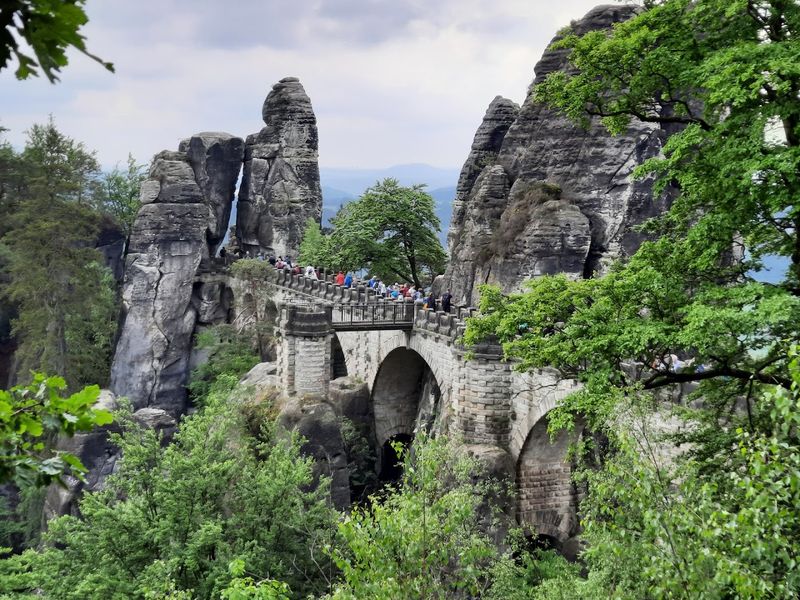
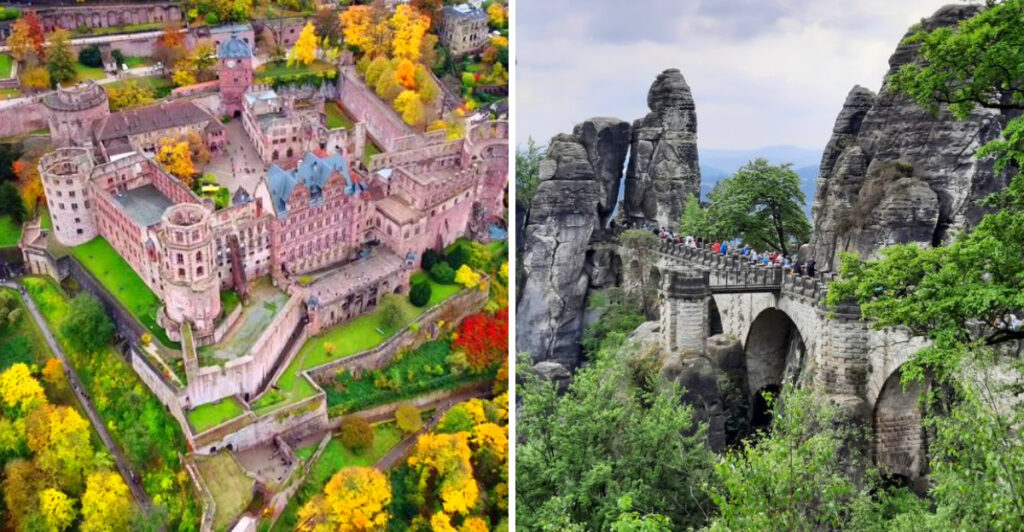
Hovering 194 meters above the Elbe River on a series of dramatic sandstone pillars, the Bastei Bridge looks like something an architect designed specifically to make people gasp. Located in Saxon Switzerland National Park near Dresden, this rock formation has been drawing visitors since the early 19th century, when Romantic-era painters made it famous across Europe.
The current stone bridge was built in 1851 and connects several of the towering rock formations, giving visitors the sensation of walking through the sky. Below the bridge, the Elbe winds through a misty valley while forests stretch out in every direction.
At sunrise, when fog fills the valley and the rocks glow orange, the scene is almost impossibly beautiful. Early risers who make the effort are rewarded with photographs that look professionally staged.
The hike to the Bastei takes about 30 to 45 minutes from the nearest car park and involves some steps, but it is manageable for most visitors. The nearby town of Rathen can also be reached by ferry across the Elbe.
The national park surrounding the Bastei offers hundreds of kilometers of hiking trails through bizarre and beautiful sandstone landscapes. Saxon Switzerland is one of Germany’s best-kept secrets and deserves far more attention than it currently gets.
Nymphenburg Palace, Munich
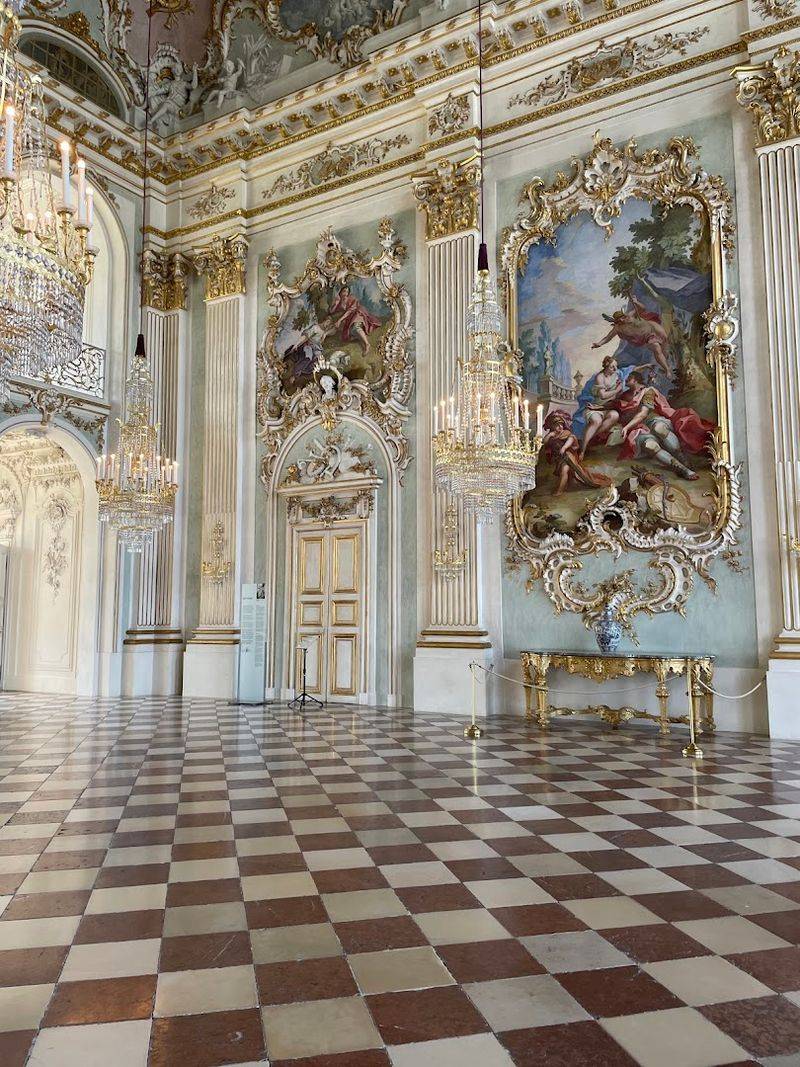
Nymphenburg Palace is so large that its main facade stretches nearly 700 meters from one end to the other. Built as a summer residence for the Bavarian royal family starting in 1664, this Baroque complex in Munich grew over the centuries into one of the grandest palace estates in all of Europe.
It is the kind of place that makes you wonder what it actually felt like to be royalty.
The palace interior houses several impressive museums, including the Gallery of Beauties, a collection of 36 portraits commissioned by King Ludwig I featuring the most beautiful women of his time. The palace also contains an elaborate collection of royal carriages and sleighs in the Marstall Museum, including the fantastically ornate sleigh used by Ludwig II.
Yes, the same Ludwig who built Neuschwanstein had a thing for over-the-top transportation.
The surrounding park is free to enter and is a favorite green space for Munich locals who jog, picnic, and cycle through its 200 hectares of formal gardens, canals, and woodland. The ornamental lake in front of the palace is home to swans and ducks that seem completely unbothered by the tourists.
Nymphenburg is reachable by tram from central Munich and is an excellent half-day trip from the city center.
Ulm Minster, Ulm
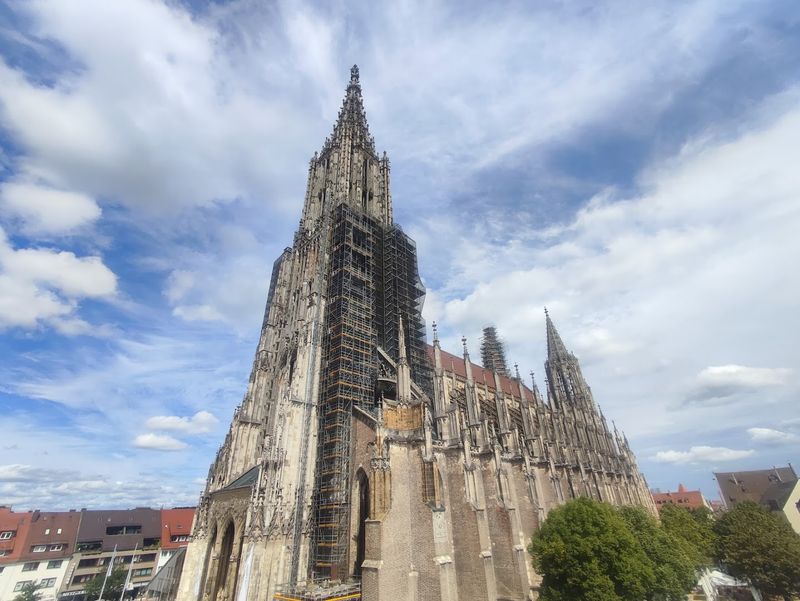
At 161.53 meters tall, Ulm Minster holds the record for the tallest church in the world, edging out Cologne Cathedral by just a few meters. Construction began in 1377 but was not completed until 1890, meaning the people who laid the first stones never saw the finished spire.
That is either deeply inspiring or mildly tragic depending on your perspective.
Climbing the 768 steps to the top of the main spire is one of the most rewarding physical challenges a tourist can undertake in Germany. The views from the top stretch across the Swabian Alps and, on clear days, all the way to the Swiss Alps.
The climb involves increasingly narrow spiral staircases that get a little claustrophobic near the top, but the payoff is extraordinary.
Inside the minster, the choir stalls are carved with extraordinary detail and are considered among the finest examples of late Gothic woodcarving in Germany. The main nave can hold 20,000 people, which is remarkable given that Ulm itself only has about 125,000 residents.
Albert Einstein was born in Ulm in 1879, and the city celebrates this connection with pride. The minster sits in a charming old town full of leaning half-timbered houses that make for a very photogenic afternoon stroll.
Eltz Castle, Rhineland-Palatinate
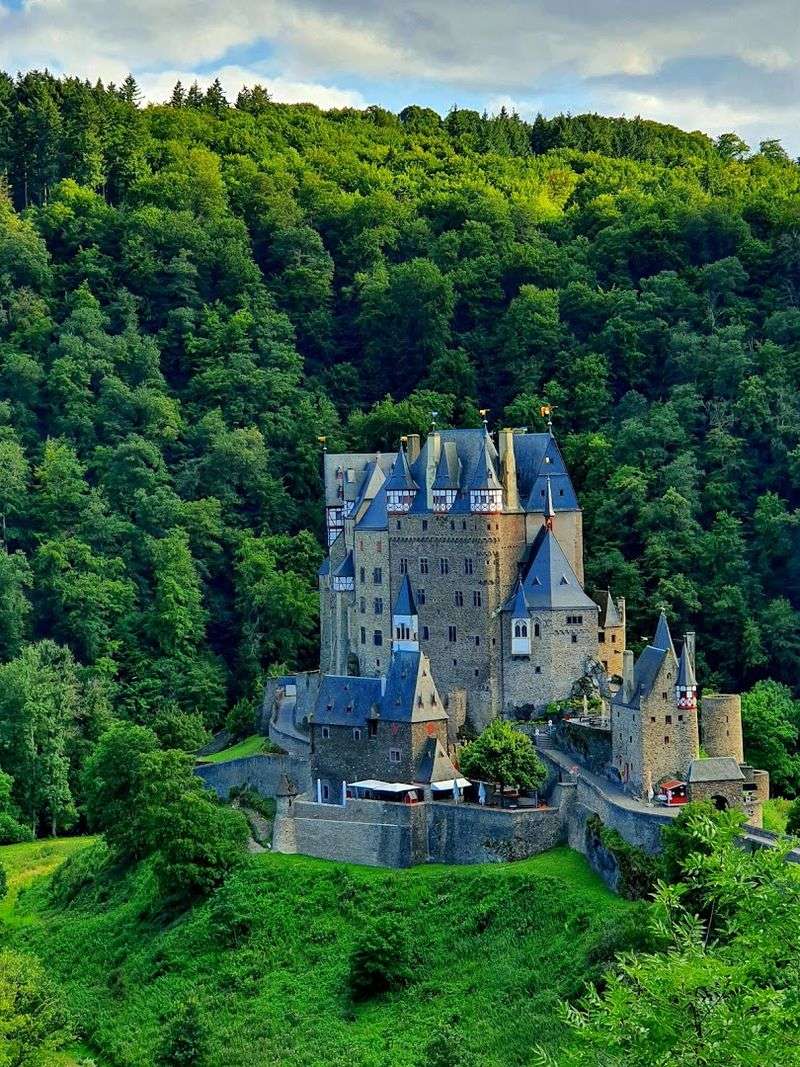
Tucked inside a narrow forested valley in the Moselle region, Eltz Castle has never been destroyed, conquered, or significantly altered in its 850-year history. That kind of track record is almost unheard of among medieval castles in Europe, and it shows.
Walking up through the forest and suddenly seeing this cluster of towers and turrets rising above the treetops is a genuinely spine-tingling moment.
The castle has been owned by the same family, the House of Eltz, since around 1157. Today, members of the family still live in part of the castle, which adds an unusual living-history dimension to any visit.
The interior tours reveal a treasure trove of medieval armor, weapons, tapestries, and furniture that have been carefully preserved over the centuries. The castle treasury holds an impressive collection of gold and silver artifacts.
Getting to Eltz Castle requires either a 45-minute hike through the forest from the nearest car park or a short shuttle bus ride. The hike is highly recommended because the forest approach makes the first view of the castle even more dramatic.
Eltz Castle is at its most atmospheric in autumn when the surrounding trees turn gold and red. It appears on the old 500 Deutsche Mark banknote, which tells you everything about how much Germans treasure this place.
Konigssee, Bavaria
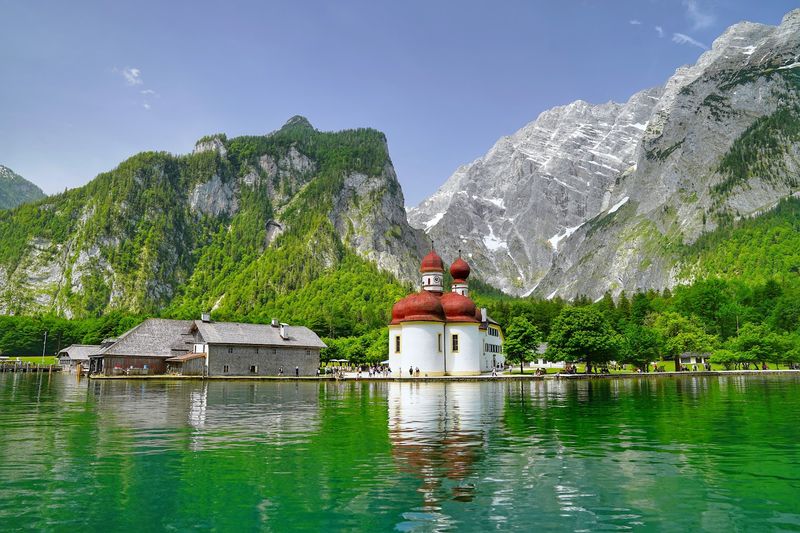
The water in Konigssee is so clear and green that the first photo you take there will look heavily filtered even when it is not. Nestled inside Berchtesgaden National Park in Bavaria, this glacial lake sits surrounded by steep limestone cliffs that plunge almost directly into the water.
It is one of the cleanest and most visually dramatic lakes in all of Germany.
The only motorized boats allowed on the lake are the electric wooden boats operated by the national park service, which keeps the water and air remarkably quiet and pristine. Halfway across the lake, the boat captain traditionally stops and plays a trumpet or flugelhorn toward the cliff face to demonstrate the famous echo.
It sounds like a cheesy tourist gimmick but is actually quite magical in person.
The boat stops at St. Bartholoma, a small peninsula with a striking red-domed chapel that has become one of the most photographed spots in Bavaria. From there, visitors can hike to the Eiskapelle ice chapel or continue deeper into the national park.
The town of Berchtesgaden at the lake’s entrance is worth exploring for its salt mines and mountain scenery. Konigssee is proof that nature in Germany can be every bit as spectacular as any castle or cathedral.
Reichstag Building, Berlin
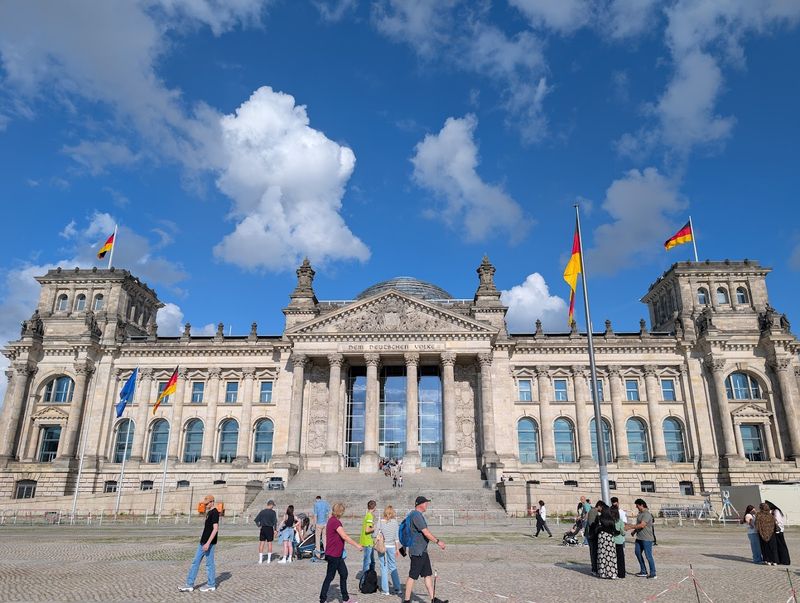
The Reichstag Building has had one of the most dramatic histories of any parliament in the world. Built in 1894, it was set on fire in 1933 in an incident that helped Hitler rise to power, bombed during World War II, and then left derelict for decades during the Cold War.
After German reunification, architect Norman Foster added the now-iconic glass dome to the top, turning a symbol of dark history into a beacon of transparency and democracy.
The glass dome is open to the public and free to visit, though you must register in advance online. A spiraling ramp winds up the inside of the dome, offering views over Berlin’s rooftops and directly down into the parliamentary chamber below.
The symbolism of citizens literally looking down on their elected representatives was very much intentional. Information panels along the ramp explain the building’s turbulent history in clear, engaging detail.
The Reichstag sits in Berlin’s government district alongside the chancellery and several other key federal buildings. The surrounding Tiergarten park is perfect for a walk before or after your visit.
Evening visits to the dome are especially atmospheric when the city lights spread out below you in every direction. Booking a rooftop restaurant table while you are at it is highly recommended for a memorable Berlin evening.
Miniatur Wunderland, Hamburg
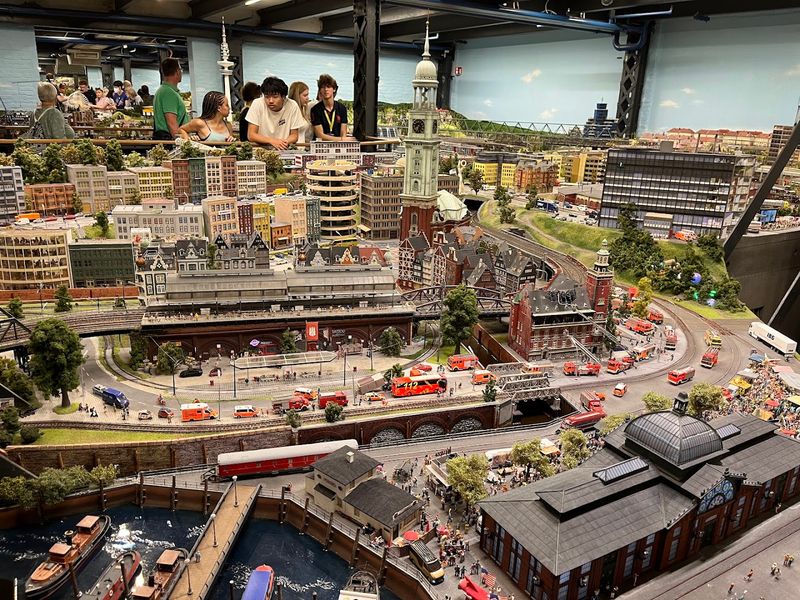
Nobody expects a model railway exhibition to be one of the most visited attractions in Germany, yet here we are. Miniatur Wunderland in Hamburg’s historic Speicherstadt warehouse district has welcomed over 20 million visitors since opening in 2001, and the waiting list for tickets regularly stretches weeks in advance.
It is, without question, the most ambitious miniature world ever built.
The exhibition covers over 1,500 square meters and features more than 1,000 trains running across 15,400 meters of track. Miniature versions of Hamburg, the Swiss Alps, Scandinavia, the American South, and even a fully operational model airport with tiny planes that actually take off and land are all included.
Over 260,000 tiny human figures populate the scenes, and eagle-eyed visitors can spot some hilariously inappropriate situations if they look closely enough.
The level of detail is genuinely staggering. Day and night cycles play out every 15 minutes, complete with street lights switching on and off and tiny concert crowds waving glow sticks.
The exhibition is continuously expanding, with new sections added regularly. It appeals equally to children and adults, which is rare for any attraction.
Miniatur Wunderland is proof that the best ideas are sometimes the simplest ones, just executed with extraordinary dedication and a lot of tiny glue.
Wartburg Castle, Thuringia
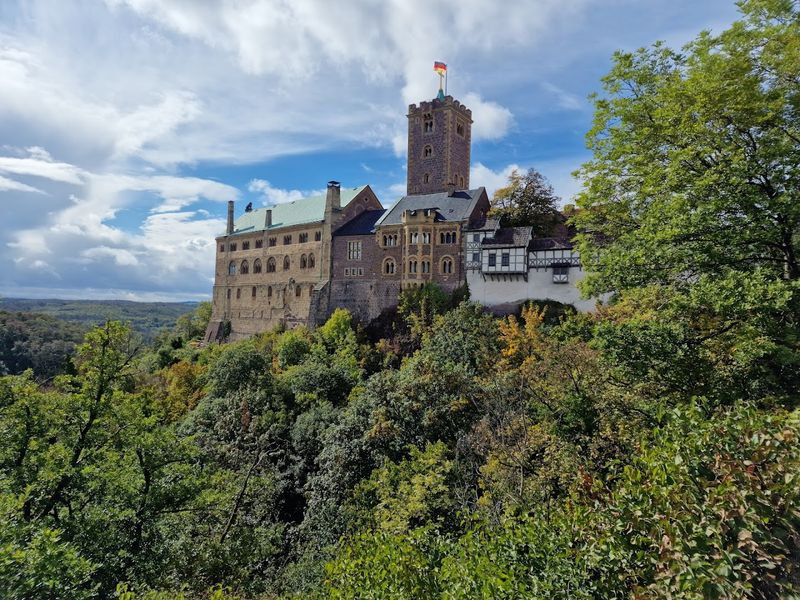
High above the town of Eisenach in the forested hills of Thuringia, Wartburg Castle has been standing since 1067 and has witnessed more history than most countries manage in a lifetime. It is where Martin Luther hid from the Catholic Church in 1521 and translated the entire New Testament into German in just 10 weeks.
That single act transformed the German language and helped shape modern Christianity.
The castle is a UNESCO World Heritage Site and one of Germany’s best-preserved medieval fortresses. The Great Hall, or Palas, is a stunning example of Romanesque architecture and contains elaborate 19th-century murals depicting the castle’s history.
The room where Luther worked is preserved as a simple study, and visitors can see the famous ink stain on the wall, though historians debate whether Luther actually threw an inkwell at the devil as legend claims.
Wartburg is also connected to the legend of the Minnesingers, medieval poets and musicians who are said to have competed in singing contests at the castle. Richard Wagner was inspired by these legends when composing his opera Tannhauser.
The castle is reachable by a 30-minute walk from Eisenach or by shuttle bus. The views over the Thuringian Forest from the castle walls are quiet, green, and deeply peaceful.
Lake Constance, Bodensee
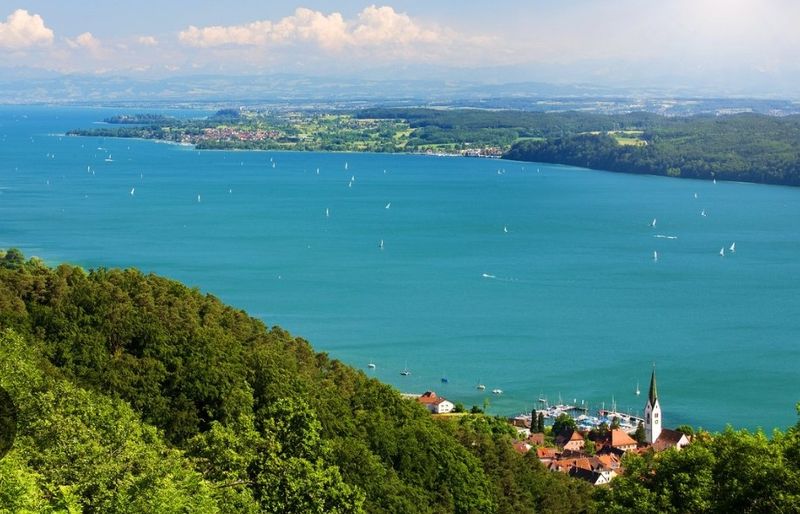
Lake Constance is so large that three countries share it: Germany, Austria, and Switzerland. Known in German as the Bodensee, it stretches 63 kilometers long and up to 14 kilometers wide, making it one of the largest freshwater lakes in Central Europe.
On clear days, the snow-capped Swiss Alps reflected in the lake create a view that belongs on a postcard, or honestly, a much better postcard than the ones they sell at the souvenir shops.
The German shoreline is dotted with charming towns, each worth a visit in its own right. Constance is the largest city on the lake and has a beautifully preserved medieval old town.
Meersburg is a hilltop town with a working medieval castle. Lindau sits on a small island connected to the mainland by a bridge and has a harbor guarded by a stone lion that is almost aggressively photogenic.
The lake is warm enough for swimming in summer, and cycling around its entire perimeter is a popular multi-day challenge for active visitors. Ferries connect the various towns, making island-hopping easy and enjoyable.
The Mainau Island in the German section of the lake is famous for its spectacular flower gardens and is worth a half-day visit on its own. Lake Constance is one of those rare places that feels like a genuine holiday the moment you arrive.
Share this story