 Unearth The Voyage
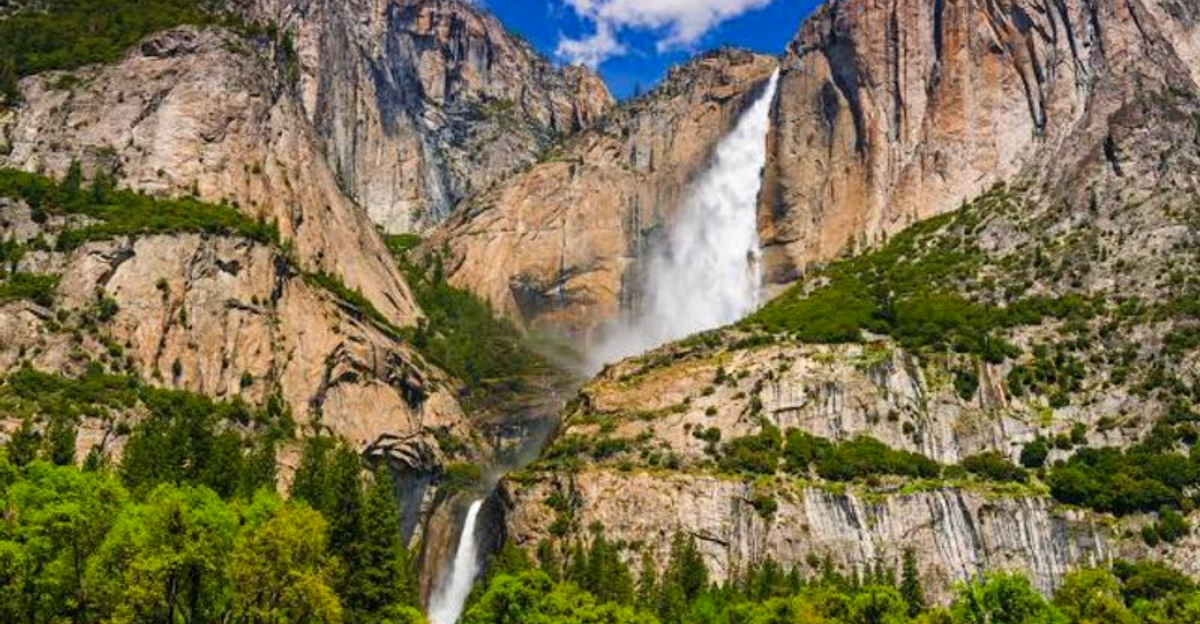
America is home to some of the most jaw-dropping natural landscapes on the planet, from towering granite cliffs to glowing desert canyons and misty ancient forests. Whether you are an avid hiker, a wildlife enthusiast, or someone who just loves a gorgeous view with their morning coffee, this country has a nature getaway with your name on it.
These 20 destinations span coast to coast and cover every kind of scenery imaginable. Pack your bags, charge your camera, and get ready to be amazed.
Yosemite National Park (California)
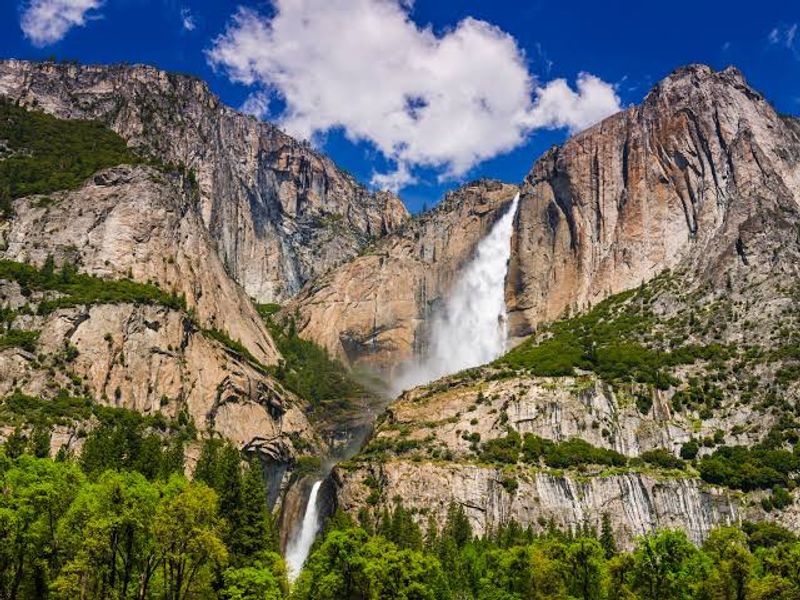
Standing at the base of El Capitan and craning your neck upward is a humbling experience that words can barely capture. Yosemite National Park in California is a place where waterfalls thunder down sheer granite walls, giant sequoias tower over mossy trails, and meadows glow gold in the afternoon light.
Half Dome looms over the valley like a sentinel, daring hikers to take on its legendary cable route.
Photographers flock here for the dramatic lighting at sunrise and sunset, when the cliffs turn shades of orange and pink. The park has over 800 miles of trails, so whether you want a casual stroll to Mirror Lake or a multi-day backcountry adventure, Yosemite delivers.
Spring is especially magical when snowmelt sends waterfalls like Yosemite Falls roaring at full force.
Lodging ranges from cozy tent cabins at Curry Village to the historic Ahwahnee Hotel. Reservations fill up fast, so plan months ahead if you want a peak-season visit.
Even a single day in Yosemite leaves a lasting impression that keeps travelers coming back year after year.
Grand Canyon National Park (Arizona)
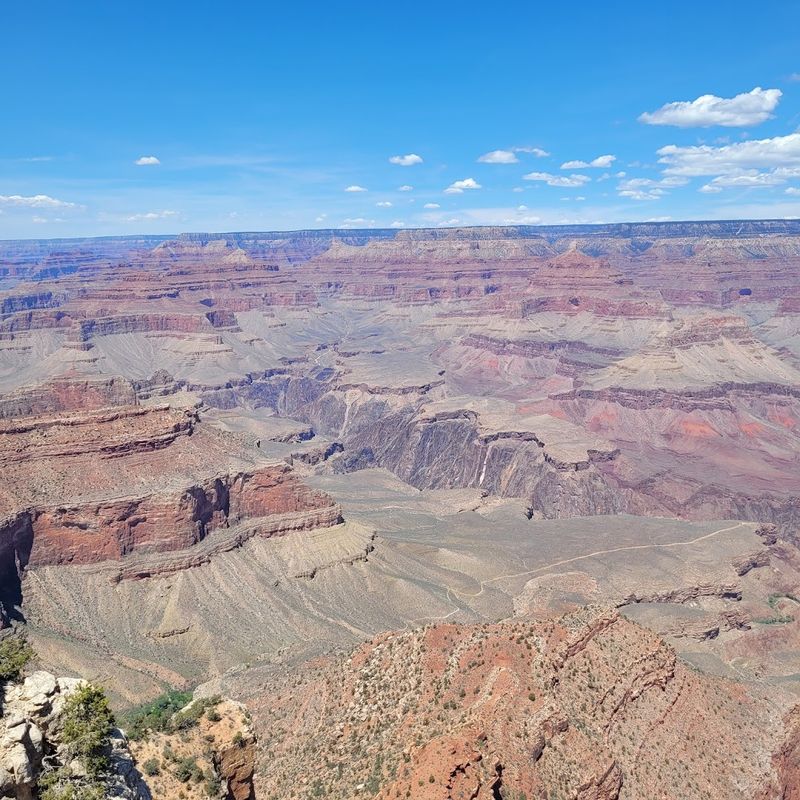
Nothing quite prepares you for your first look over the rim of the Grand Canyon. The sheer scale of it — over a mile deep and 277 miles long — makes even seasoned travelers go silent for a moment.
Carved by the Colorado River over millions of years, the canyon’s layered red, orange, and purple walls read like pages from Earth’s ancient history book.
The South Rim is the most visited and offers iconic overlooks like Mather Point and Desert View Watchtower. Adventurous visitors hike down into the canyon on the Bright Angel Trail, where the temperature climbs and the scenery transforms dramatically.
A mule ride or a Colorado River rafting trip takes the experience to an entirely different level.
Sunrise and sunset are the undisputed stars of any Grand Canyon visit, painting the rock walls in colors that no filter can replicate. Stargazing here is equally spectacular — the park is a certified International Dark Sky Park.
Whether you peer over the edge from the rim or scramble down into its depths, the Grand Canyon never stops delivering wonder.
Arches National Park (Utah)
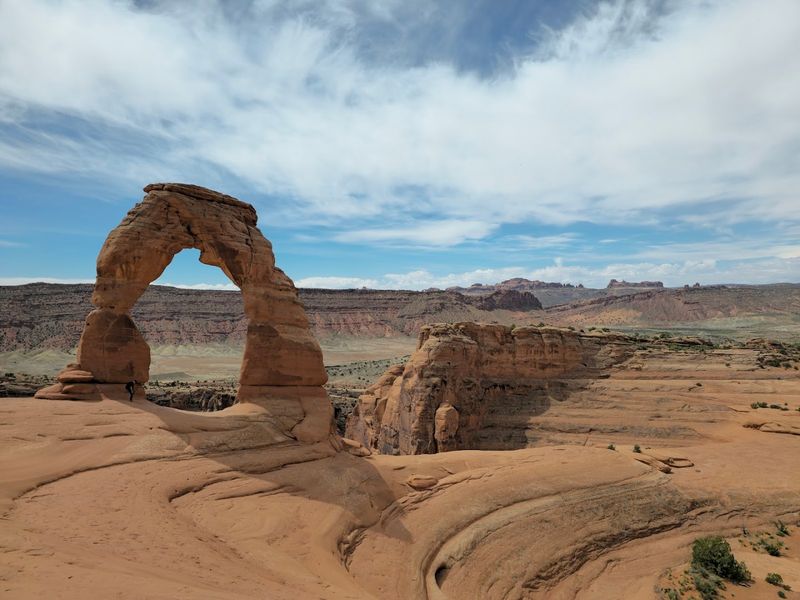
Over 2,000 natural sandstone arches scattered across a single park sounds almost unbelievable, yet Arches National Park in Utah makes it a reality. The most famous of them all, Delicate Arch, stands alone against a backdrop of canyon ridges and distant mountains like a natural sculpture placed there by design.
Watching it glow fiery red at sunset is one of those rare travel moments you never forget.
Beyond Delicate Arch, formations like Landscape Arch — one of the longest natural arches in the world — and the Windows Section offer equally stunning photo opportunities. The park is compact enough to explore in a weekend, but rewarding enough to fill a full week.
Trails vary from paved, accessible walkways to rugged scrambles over slickrock.
Summer temperatures can soar past 100 degrees, so early morning hikes are your best friend. Spring and fall bring cooler weather and softer light that photographers absolutely love.
Camping inside the park at Devils Garden Campground puts you right in the heart of the red rock landscape, where starry skies and canyon silence are the only entertainment you need at night.
Bryce Canyon National Park (Utah)
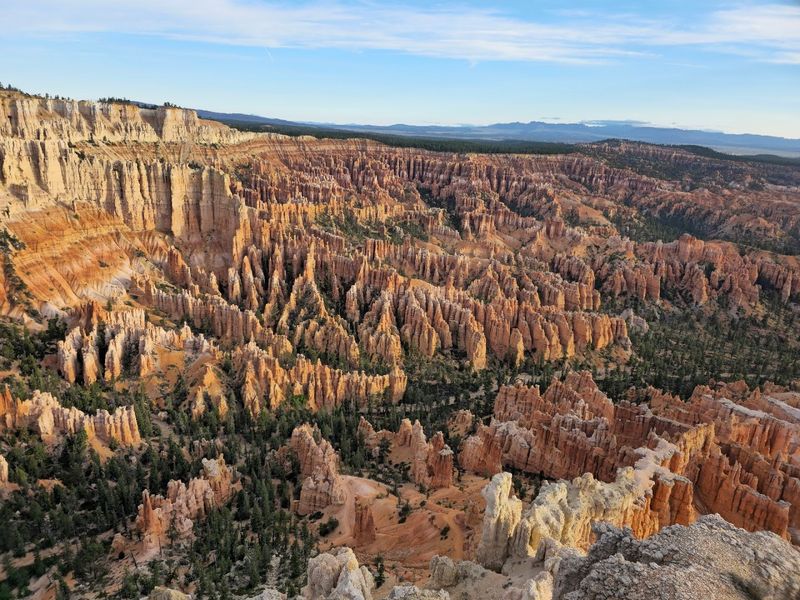
Technically not a canyon at all, Bryce Canyon is actually a series of giant natural amphitheaters carved into the edge of the Colorado Plateau — and the view from the rim will stop you dead in your tracks. The park is famous for its hoodoos, those tall, skinny spires of orange, red, and white rock that look like an army of ancient stone figures frozen mid-march.
Geologists credit frost and erosion for sculpting them, but honestly, they look like magic.
Sunrise Point and Bryce Point are two of the best rim overlooks, especially at dawn when the first light sets the hoodoos ablaze with color. Hiking down into the amphitheater on the Navajo Loop or Queen’s Garden Trail puts you right among the spires for a surreal, close-up experience.
The contrast of the red rock against bright blue sky and occasional snow is visually stunning in every season.
Bryce Canyon is also one of the best stargazing spots in the country, sitting at over 8,000 feet with minimal light pollution. The park hosts an annual Astronomy Festival that draws sky-watchers from across the globe.
It is the kind of place that makes you feel genuinely small — in the best possible way.
Glacier National Park (Montana)
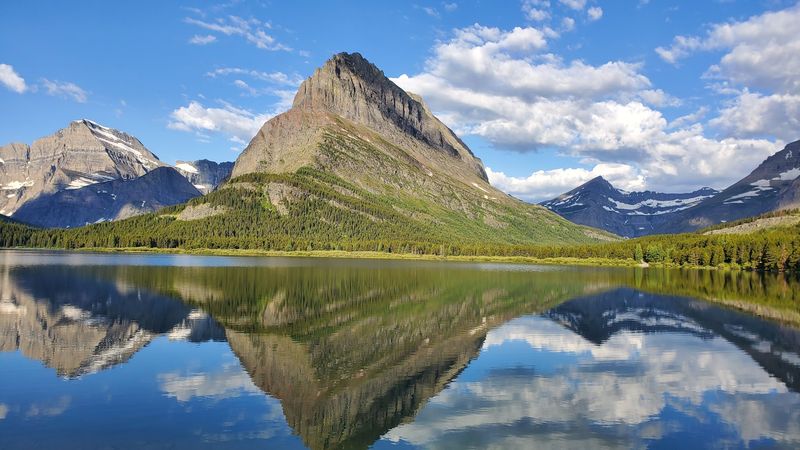
Called the “Crown of the Continent” for good reason, Glacier National Park in Montana is a wilderness so raw and pristine it feels like the rest of the world simply does not exist once you cross its borders. Jagged peaks draped in snow, turquoise glacial lakes, and sweeping alpine meadows bursting with wildflowers greet visitors at nearly every turn.
The scenery here is the kind that makes you question whether you accidentally walked into a painting.
Going-to-the-Sun Road is the park’s crown jewel drive, a 50-mile mountain highway that climbs through valleys, past waterfalls, and over the Continental Divide. The road is only fully open in summer, making it a seasonal pilgrimage for road trippers.
Wildlife sightings along the route — mountain goats, grizzly bears, and moose — are practically part of the itinerary.
Hiking trails range from gentle lakeside walks to challenging summit scrambles with views that stretch into Canada. Backcountry camping allows you to spend nights under a sky packed with stars, far from any crowds.
The glaciers themselves are shrinking due to climate change, making a visit to see them now feel both awe-inspiring and quietly urgent.
Pictured Rocks National Lakeshore (Michigan)
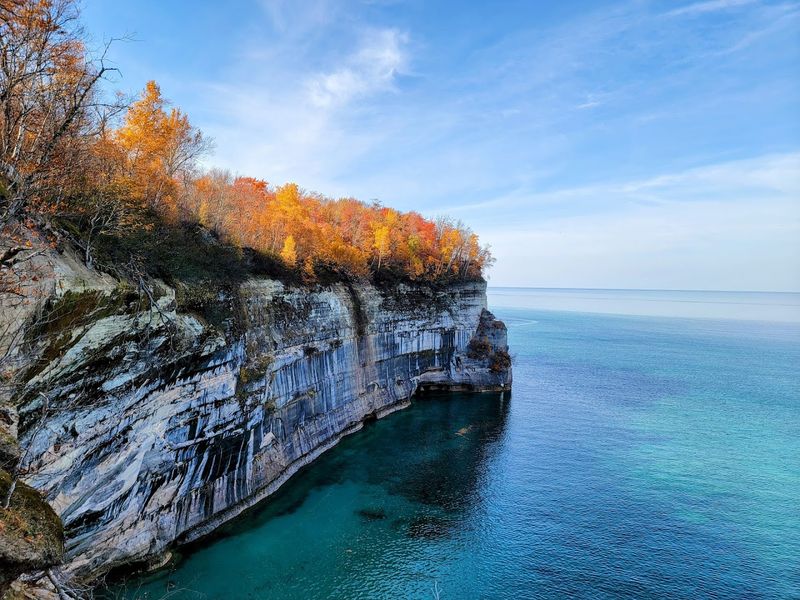
Few people expect to find cliffs this dramatic in the Midwest, but Pictured Rocks National Lakeshore along Lake Superior’s southern shore delivers scenery that rivals any coastal destination in the country. Sandstone bluffs up to 200 feet tall display streaks of red, orange, green, and black — stained by mineral seepage over thousands of years — and they stretch for 15 miles along the shoreline.
Seen from a kayak at water level, they are absolutely jaw-dropping.
Kayaking beneath the cliffs and into sea caves is the most popular way to experience the park, and outfitters in nearby Munising make it easy to get on the water. Hikers can tackle the Lakeshore Trail, which winds through forests, past hidden waterfalls like Miners Falls, and along clifftop edges with sweeping lake views.
Miners Beach and Twelvemile Beach offer sandy stretches that feel surprisingly tropical on a warm summer day.
The park is far less crowded than its national park counterparts, giving it a peaceful, discover-it-yourself feel. Fall transforms the surrounding forest into a fiery display of color that rivals anything in New England.
Winter brings ice formations along the cliffs that are hauntingly beautiful for those brave enough to visit in the cold.
Yellowstone National Park (Wyoming/Montana/Idaho)
Yellowstone was the world’s very first national park, established in 1872, and over 150 years later it still manages to blow people’s minds on a daily basis. The park sits atop one of Earth’s largest active volcanoes, and that geological drama plays out in spectacular fashion through geysers, boiling mud pots, and neon-colored hot springs that look like something from another planet.
Old Faithful, the park’s most famous geyser, erupts roughly every 90 minutes like clockwork.
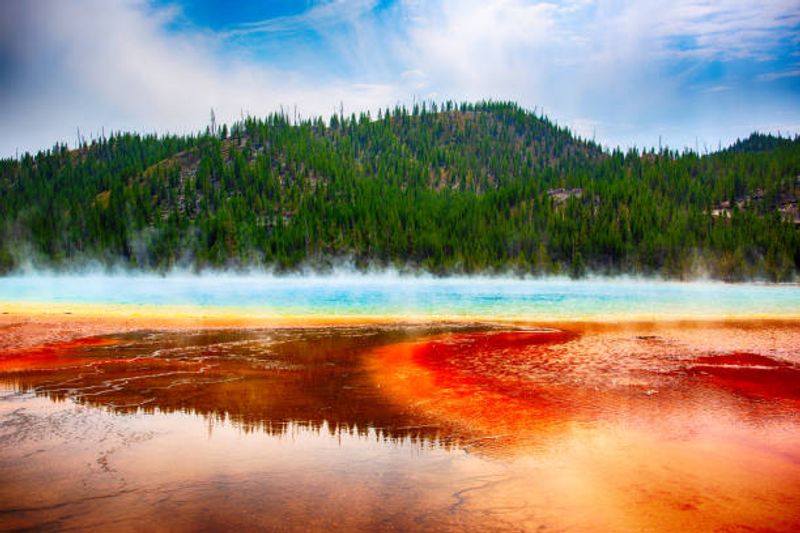
The Grand Prismatic Spring is a must-see — a massive hot spring ringed by vivid bands of orange, yellow, and green created by heat-loving microbes. Beyond the geothermal wonders, Yellowstone is one of the best places in North America to spot wildlife in the wild.
Bison herds roam the Lamar Valley, wolves howl at dawn, and grizzly bears fish for trout in clear mountain streams.
The park covers nearly 2.2 million acres across three states, so a single visit barely scratches the surface. Grand Loop Road connects major attractions and makes driving tours easy and rewarding.
Visit in early morning for the best wildlife activity and the softest, most photogenic light on the landscape.
Everglades National Park (Florida)
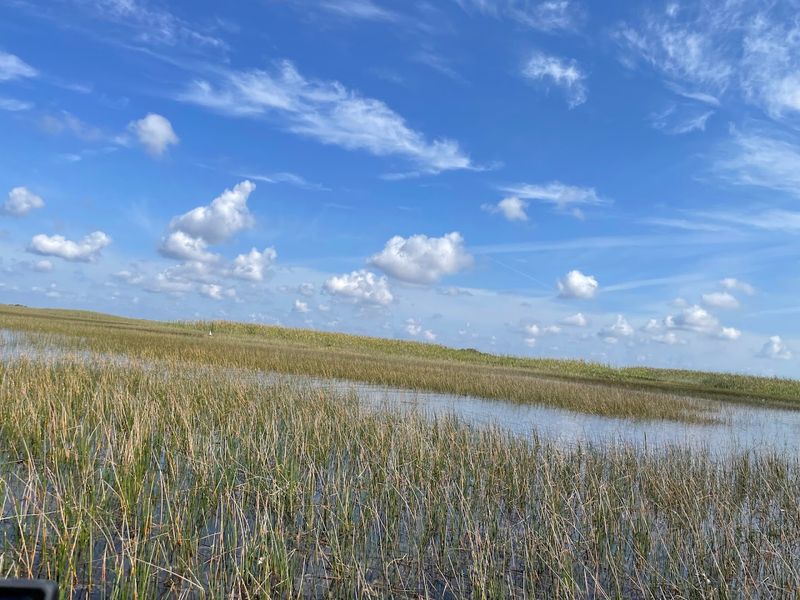
There is nowhere else in the United States quite like the Everglades — a slow-moving river of grass that stretches across southern Florida and teems with life at every turn. Alligators bask on muddy banks, roseate spoonbills wade through shallow water in bursts of pink, and manatees glide silently through coastal mangrove tunnels.
This is a wilderness defined not by towering peaks or dramatic cliffs, but by quiet, living abundance.
An airboat ride is the classic way to skim across the open sawgrass prairies, but canoe and kayak trails offer a more intimate experience through the mangroves and backcountry waterways. The Anhinga Trail near the Royal Palm area is one of the best short wildlife walks in any national park, where birds pose for photos at arm’s reach.
Sunset over the open water here paints the sky in shades of purple and gold that are hard to describe.
The park is also a UNESCO World Heritage Site and an International Biosphere Reserve, reflecting its global ecological importance. Winter is the ideal time to visit, when dry season concentrates wildlife around water sources and mosquitoes are far less aggressive.
Bring binoculars, bug spray, and plenty of patience — the Everglades rewards the observant traveler.
Acadia National Park (Maine)
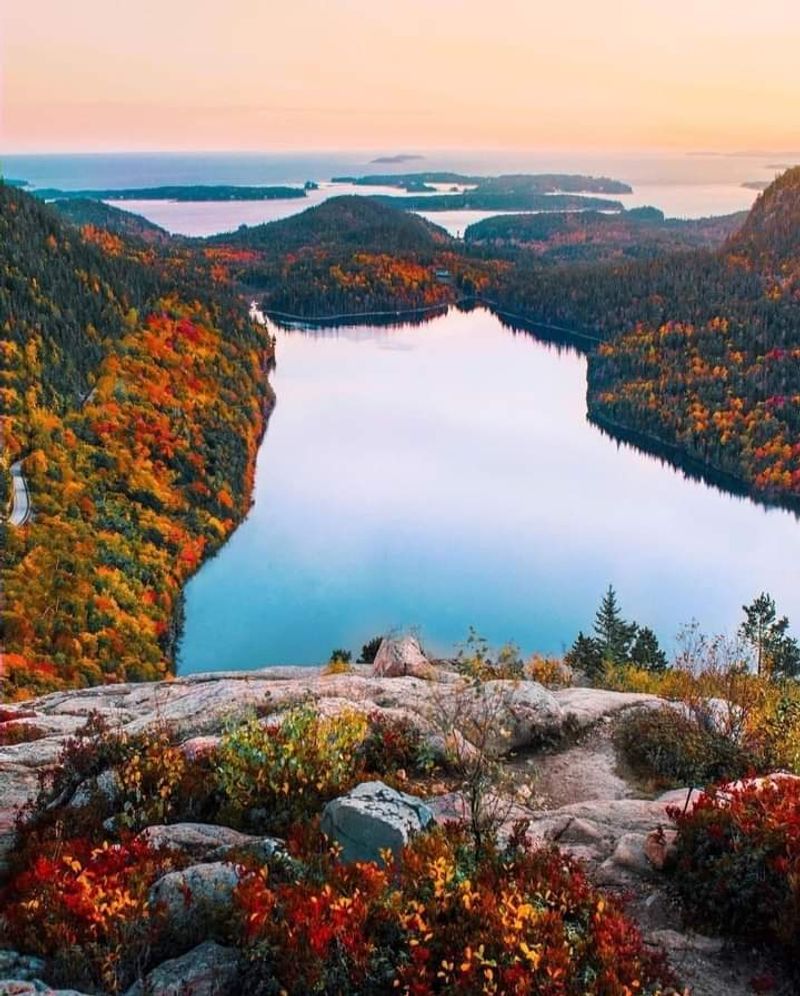
Every morning from early fall through winter, the very first sunrise in the continental United States touches the summit of Cadillac Mountain in Acadia National Park — and the people who drag themselves out of bed to witness it are never disappointed. The view from the top sweeps across Frenchman Bay, forested islands, and the open Atlantic Ocean in a panorama that feels both peaceful and epic at the same time.
It is a genuinely spectacular way to start a day.
Acadia blends rugged ocean scenery with quiet inland beauty in a way few parks manage. The Park Loop Road winds past Thunder Hole — where crashing waves boom through a narrow chasm — along rocky shorelines and through dense forest.
Carriage roads, built by John D. Rockefeller Jr. in the early 20th century, offer miles of smooth, car-free paths perfect for cycling and walking.
Jordan Pond is a favorite stop for its glassy reflections and the charming tradition of afternoon tea and popovers at the nearby Jordan Pond House. The park’s coastal location means wildlife ranges from peregrine falcons to harbor seals and bald eagles.
Fall foliage here is exceptional, layering brilliant reds and golds against the steel-blue ocean backdrop.
Death Valley National Park (California/Nevada)
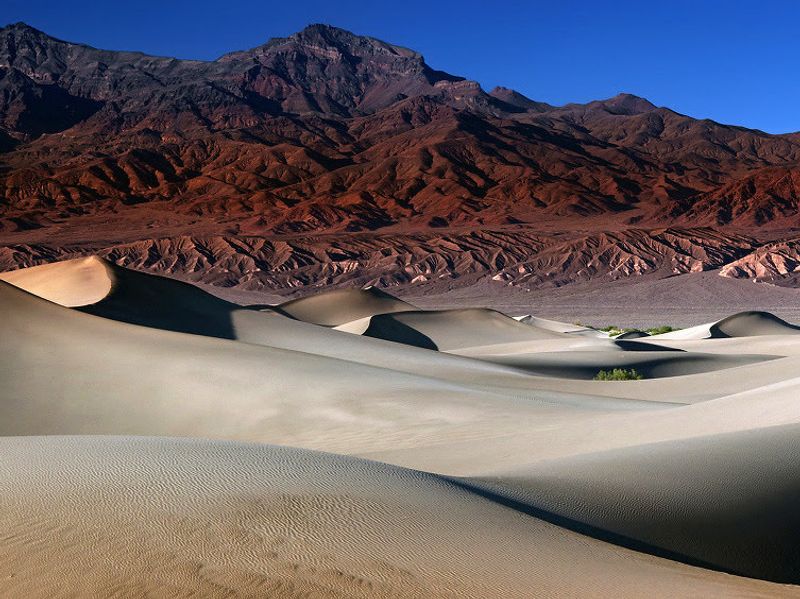
Death Valley sounds like a place you might want to avoid, but its stark, alien beauty is genuinely addictive once you experience it. This is the hottest, driest, and lowest national park in the United States, yet it draws visitors year-round with scenery that swings from golden sand dunes to rainbow-colored badlands to vast mirrored salt flats.
Badwater Basin, sitting 282 feet below sea level, is the lowest point in all of North America.
Mesquite Flat Sand Dunes are a favorite at sunrise, when low-angle light throws dramatic shadows across the rippled sand. Zabriskie Point offers a sweeping view of eroded, golden badlands that glow magnificently at dawn.
The valley’s extreme remoteness and minimal light pollution also make it one of the premier stargazing locations in the entire country — the Milky Way here is breathtaking.
Winter and spring are the best times to visit, when temperatures are manageable and occasional wildflower blooms transform the valley floor into a carpet of color. Artist’s Palette — a hillside striped with green, purple, pink, and orange mineral deposits — is worth every minute of the drive.
Death Valley is proof that beauty and harshness can absolutely coexist.
Great Smoky Mountains National Park (Tennessee/North Carolina)
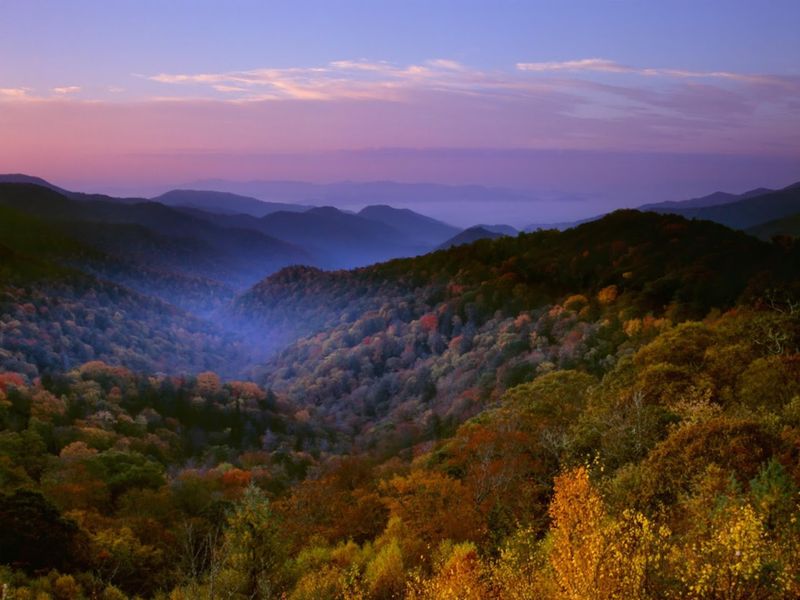
Soft blue mist rolling over endless forested ridges at dawn — that is the image that defines the Great Smoky Mountains and has made this the most visited national park in the entire country for decades running. Straddling the Tennessee and North Carolina border, the Smokies pack extraordinary biodiversity into their ancient, rounded peaks, with more tree species than all of northern Europe combined.
The park earns its name from the hazy fog that naturally rises from the dense vegetation.
Clingmans Dome, at 6,643 feet, is the highest point in the park and offers a futuristic observation tower with 360-degree views above the treeline. Newfound Gap Road bisects the park and provides access to overlooks and trailheads that lead to hidden waterfalls and quiet backcountry hollows.
Elk roam the Cataloochee Valley in the eastern section of the park, particularly active at dawn and dusk.
Autumn is the Smokies at their most spectacular, when the hillsides ignite in waves of red, orange, and amber that draw leaf-peepers from every corner of the country. Spring brings wildflower season, when trillium and wild azalea carpet the forest floor.
Best of all, the park is completely free to enter — a rare gift among America’s great natural treasures.
Letchworth State Park (New York)
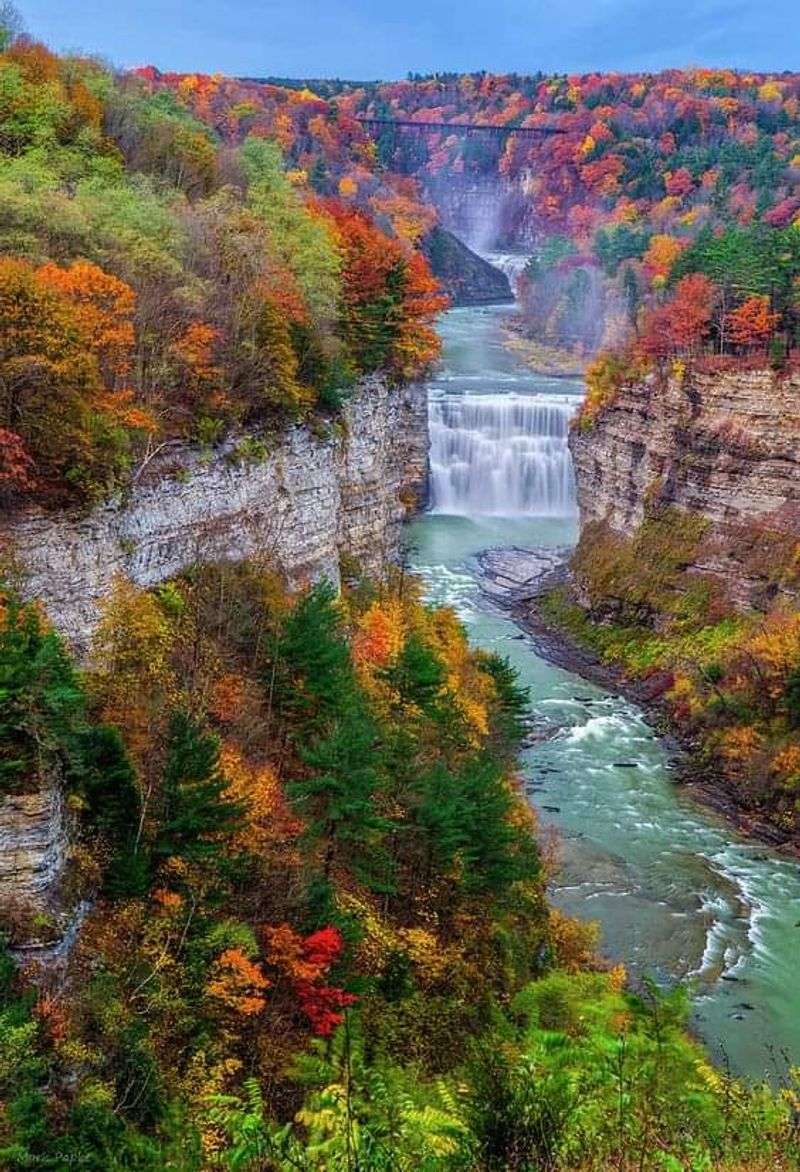
Nicknamed the “Grand Canyon of the East,” Letchworth State Park in western New York is a destination that consistently surprises visitors who did not expect to find scenery this dramatic outside of the American West. The Genesee River has carved a gorge up to 600 feet deep through the park, and three major waterfalls — Middle Falls, Upper Falls, and Lower Falls — thunder into the rocky ravine below with impressive force.
The overlooks above them are some of the most photogenic spots in the entire Northeast.
Over 66 miles of trails wind through the park’s forested ridges, gorge walls, and riverside paths. Hiking to the various waterfall viewpoints is the top activity, but the park also offers horseback riding, kayaking on the Genesee, and hot-air balloon rides that drift over the gorge for a truly unforgettable aerial perspective.
The Glen Iris Inn, a historic hotel perched right above Middle Falls, is one of the most charming places to stay in all of New York State.
Fall is when Letchworth truly shines — the gorge fills with brilliant autumn color that turns every overlook into a masterpiece. Winter visitors discover frozen waterfalls and snow-draped cliffs that create a completely different kind of beauty.
This park deserves far more national attention than it typically receives.
Lake Tahoe (California/Nevada)
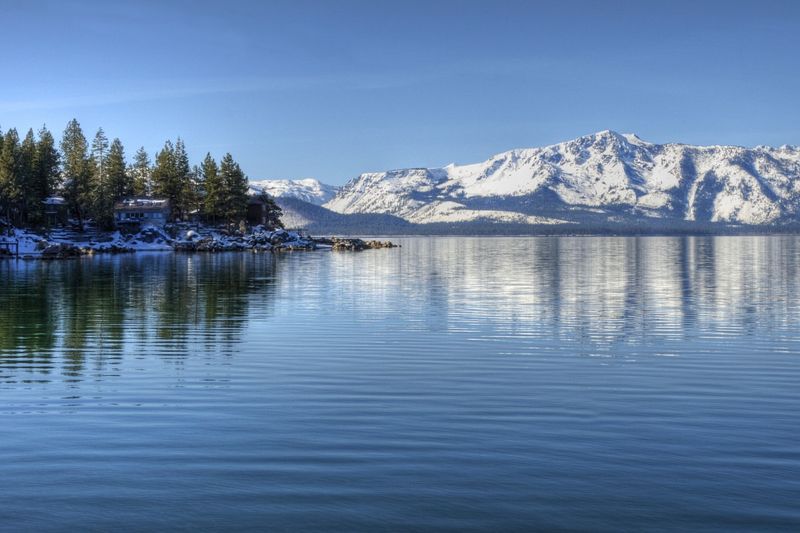
The water at Lake Tahoe is so clear and so impossibly blue that first-time visitors often stop and stare for several minutes before they can do anything else. Straddling the California-Nevada border high in the Sierra Nevada Mountains, Tahoe is the largest alpine lake in North America and one of the most visually stunning bodies of water anywhere on Earth.
At over 1,600 feet deep, it holds enough water to cover the entire state of California 14 inches deep.
Summer at Tahoe means kayaking, paddleboarding, and hiking the famous Tahoe Rim Trail, a 165-mile loop that circles the entire lake with panoramic views at nearly every step. Emerald Bay State Park, with its tiny island and ruined stone castle, is a must-stop on any Tahoe itinerary.
Sand Harbor on the Nevada side offers crystal-clear snorkeling over granite boulders that glow beneath the water.
Winter transforms the basin into a ski resort mecca, with world-class resorts like Palisades Tahoe and Heavenly drawing powder enthusiasts from across the West. The snowcapped peaks reflecting in the lake’s deep blue surface create a postcard image that never gets old.
Year-round, Tahoe sits comfortably in the category of places that look better in person than in any photograph.
Columbia River Gorge (Oregon/Washington)
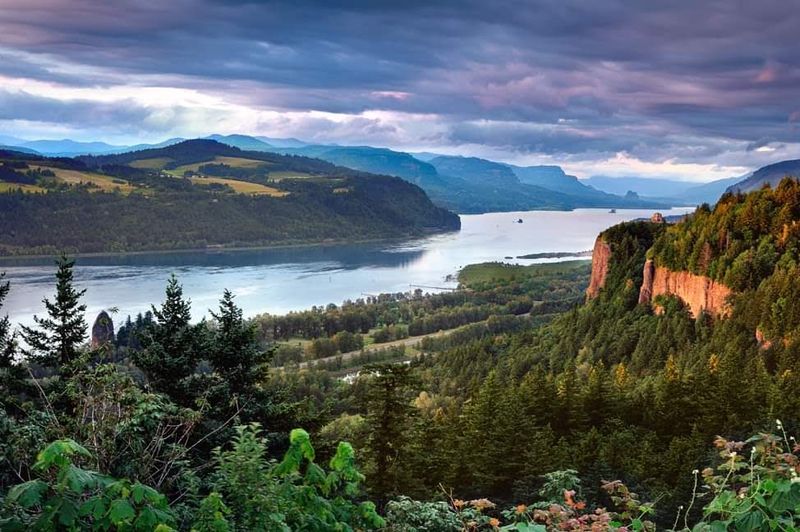
Stretching over 80 miles along the border of Oregon and Washington, the Columbia River Gorge is a scenic powerhouse that packs waterfalls, volcanic cliffs, wildflower meadows, and river panoramas into one spectacular corridor. Multnomah Falls — plunging 620 feet in two tiers down a basalt cliff draped in green moss — is the most visited natural attraction in Oregon and one of the most photographed waterfalls in the entire country.
And it is just one of dozens of waterfalls tucked into the gorge.
The Historic Columbia River Highway, built in the early 1900s, winds through the western gorge with viewpoints like Crown Point and Vista House that offer dramatic sweeping views of the river canyon below. Hikers can explore trails ranging from easy paved paths to strenuous ridge scrambles with views stretching across two states.
The gorge also creates a natural wind tunnel that makes it a world-class destination for windsurfing and kiteboarding near Hood River.
Spring brings an explosion of wildflowers on the eastern, drier side of the gorge, particularly around the Tom McCall Preserve. Fall drapes the hillsides in gold and amber, while winter ice coats the waterfalls in dramatic frozen formations.
The gorge is endlessly photogenic and endlessly rewarding no matter the season you choose to explore it.
Niagara Falls (New York)
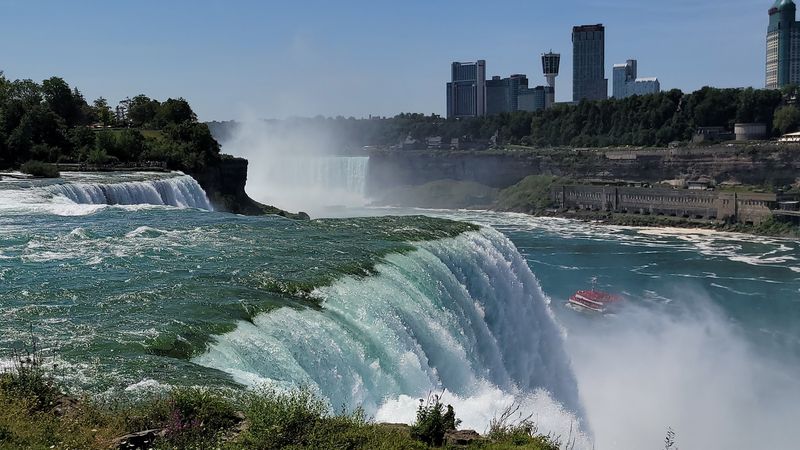
You can hear Niagara Falls before you can see it — a deep, constant roar that grows louder as you approach until suddenly the mist hits your face and the full spectacle opens up in front of you. Horseshoe Falls, the larger of the two main cataracts on the American and Canadian sides, sends approximately 750,000 gallons of water plunging over its curved edge every single second.
Standing near it feels like standing next to something alive.
The Maid of the Mist boat tour brings visitors directly into the spray at the base of the falls, handing out blue ponchos that do only a modest job of keeping you dry — but the experience is absolutely worth it. On the American side, Goat Island separates the Horseshoe Falls from the American Falls and Bridal Veil Falls, and its trails and overlooks offer multiple perspectives of the rushing water.
Cave of the Winds lets you walk to the base of Bridal Veil Falls on wooden decking just feet from the cascade.
The falls are illuminated with colorful lights after dark, creating a completely different but equally spectacular show. Winter is a surprisingly magical time to visit — the surrounding landscape freezes into an icy wonderland, and crowds thin dramatically.
Niagara Falls is one of those rare places that lives up to every expectation.
Redwoods National and State Parks (California)
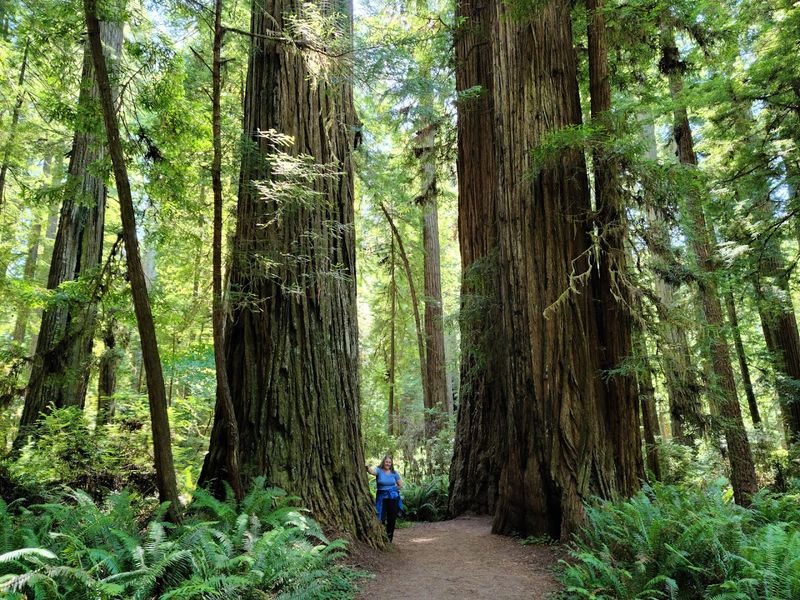
Walking among the coastal redwoods of Northern California is one of the most quietly humbling experiences nature has to offer. These trees — the tallest living things on Earth — can grow over 380 feet high and live for more than 2,000 years, and standing at the base of one makes a full-grown adult feel genuinely miniature.
The forest floor beneath them is a cathedral of green ferns, fallen logs draped in moss, and filtered golden light that shifts like a slow-motion light show.
The Lady Bird Johnson Grove is a beloved and accessible loop trail that winds through old-growth forest with informational stops about the trees and their ecosystem. Fern Canyon, where 50-foot walls of ferns frame a shallow creek, is another iconic spot that feels almost prehistoric — and in fact served as a filming location for Jurassic Park 2.
The coastal sections of the park add another dimension, with wide, driftwood-strewn beaches backed by forested bluffs.
Morning fog rolls in from the Pacific and wraps the redwoods in a soft, mystical haze that is unlike anything else in American nature. Wildlife including Roosevelt elk, black bears, and spotted owls share this ancient forest.
The Redwoods are a place where silence feels appropriate, and leaving feels genuinely hard.
Haleakalā National Park (Hawaii)
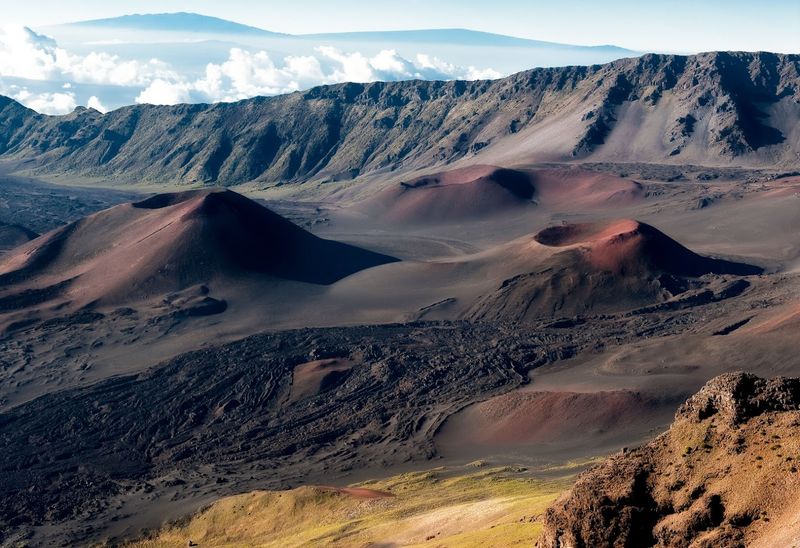
Waking up at 3 a.m. to drive to a volcano summit in the dark might sound like a questionable life decision, but everyone who has watched the sun rise above the clouds at Haleakala’s summit will tell you it is one of the greatest things they have ever done. At 10,023 feet above sea level, the summit of this dormant shield volcano on Maui rises above the cloud layer, and sunrise from that vantage point is genuinely otherworldly.
The volcanic crater below fills with swirling clouds while the sky above transitions from deep purple to blazing orange.
The summit area is stark and almost lunar, with cinder cones, lava fields, and rare silversword plants found nowhere else on Earth. Hiking trails descend into the crater itself, where the landscape feels dramatically different from the tropical beaches just miles below.
The Sliding Sands Trail drops into a vast, silent bowl of volcanic ash and multicolored cinder that feels like another planet entirely.
The lower Kipahulu section of the park offers a completely different experience — lush rainforest, freshwater pools, and the famous Pipiwai Trail leading to a towering bamboo forest. Haleakala is also one of the world’s top sites for astronomical observation, with the summit’s clear, high-altitude air making for extraordinary stargazing.
Maui’s most unforgettable moments often happen at this volcano.
Denali National Park (Alaska)
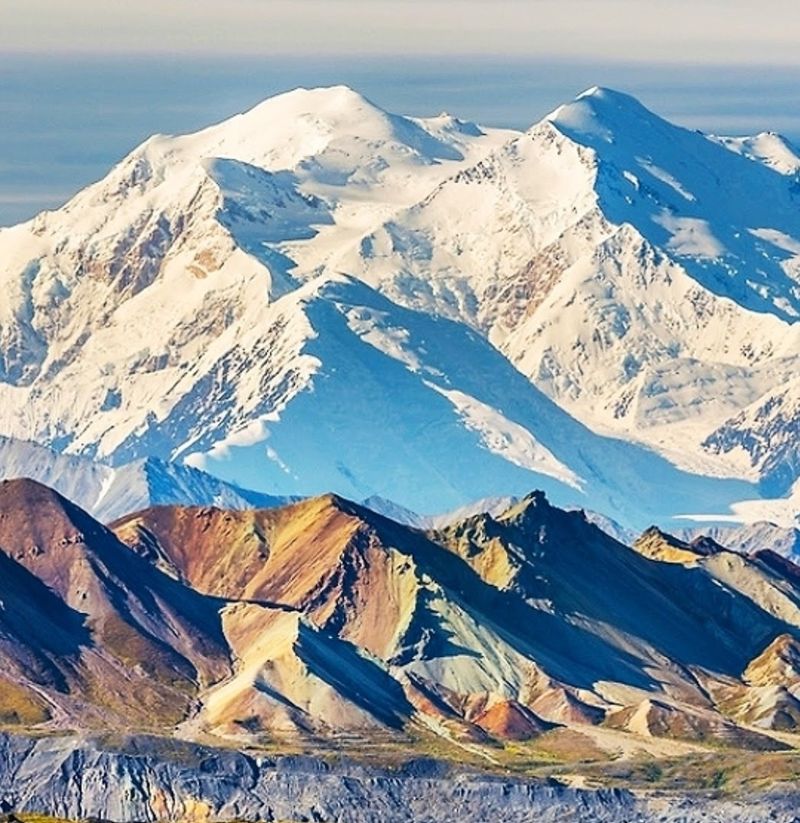
At 20,310 feet, Denali is the tallest mountain in North America, and seeing its massive white summit rise above the tundra on a clear Alaskan day is a sight that produces an almost physical reaction of awe. The peak is so large and so high that it creates its own weather, and it is visible only about 30 percent of the time — which makes catching a clear view feel like winning a small lottery.
Denali National Park surrounds this giant with six million acres of wilderness that is largely roadless and entirely wild.
The park has just one road — the 92-mile Denali Park Road — and private vehicles are only allowed on the first 15 miles. Beyond that, visitors board park buses that wind deep into the backcountry through tundra valleys where grizzly bears dig for roots, caribou migrate in large herds, and Dall sheep cling to rocky ridges.
Wildlife viewing here is some of the most reliable and dramatic in the entire country.
There are no maintained trails in most of the park — backcountry hikers simply choose a direction and go, navigating open tundra and braided glacial rivers. This raw, unscripted wilderness experience is rare in the modern world.
Denali is for those who want nature completely on its own terms, no guardrails required.
Grand Teton National Park (Wyoming)
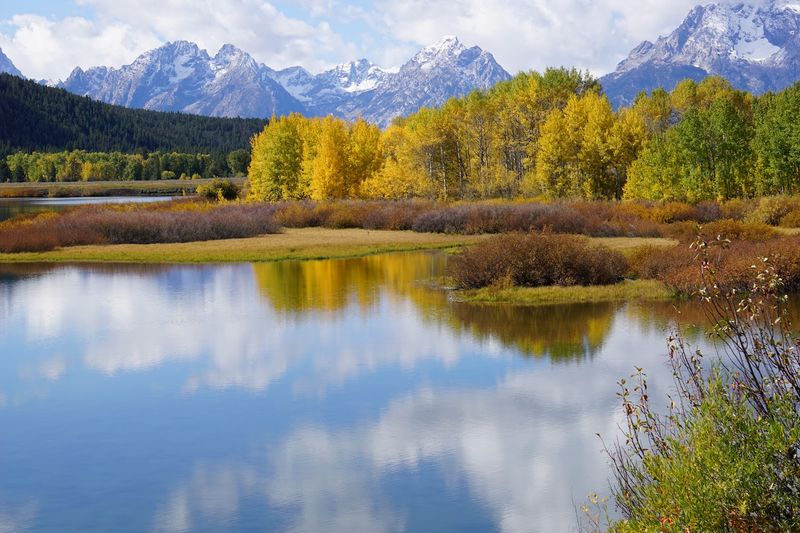
There are mountain ranges across America that are beautiful, and then there is the Teton Range — a wall of jagged, snow-covered peaks that shoots up from the flat valley floor with zero foothills as a warm-up, making it one of the most dramatic mountain profiles anywhere on the continent. The reflection of those peaks in the glassy surface of Jenny Lake or the Snake River at sunrise is a photograph that practically takes itself.
Grand Teton National Park makes scenic beauty look effortless.
Jenny Lake is the heart of the park’s hiking scene, with trails leading to Hidden Falls, Inspiration Point, and the challenging Cascade Canyon route that pushes deep into the backcountry. The park is also exceptional for wildlife — moose wade through marshy meadows, black bears forage along forest edges, and bald eagles soar over the river.
Oxbow Bend on the Snake River is one of the most reliably spectacular wildlife and reflection photography spots in the western United States.
The Teton Park Road and the scenic US-191 corridor offer easy driving access to pullouts with jaw-dropping mountain views at every mile. Mormon Row — a historic homestead area with iconic old barns framed against the Tetons — is a favorite for photographers at sunrise.
Grand Teton sits just south of Yellowstone and is frequently combined with it for an unforgettable Wyoming road trip.
Everglades National Park (Florida)
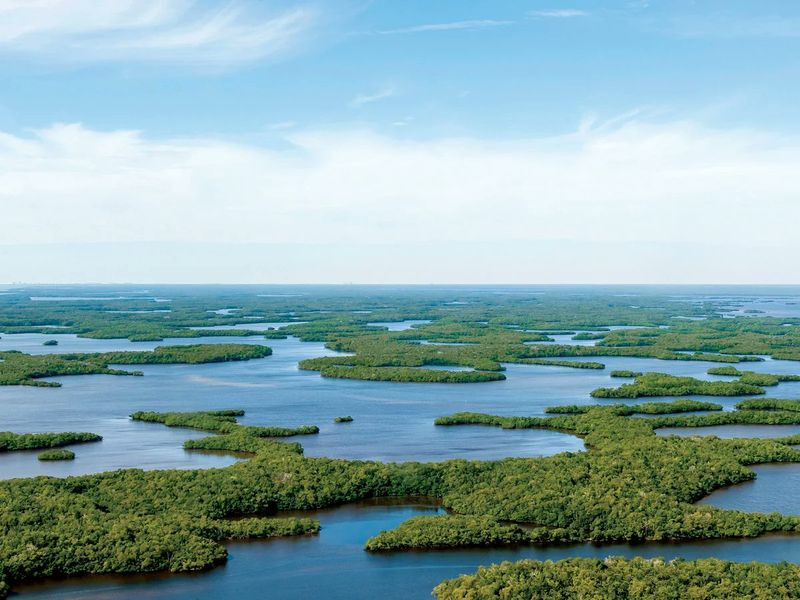
Returning to the Everglades feels necessary because this ecosystem is unlike anything else in the United States — and one visit is rarely enough to fully appreciate its layered, living complexity. Slow down, and the “river of grass” reveals itself: the V-shaped wakes of swimming alligators, the prehistoric silhouette of a wood stork overhead, the pop of a roseate spoonbill’s pink wings against green sawgrass.
This is a place that rewards patience over speed.
The 99-mile Wilderness Waterway is a multi-day canoe and kayak route through backcountry mangrove tunnels, open bays, and narrow creeks that winds through some of the most remote and spectacular scenery in the entire park. Chickee platforms — wooden camping structures built above the water — serve as overnight stops along the route, making it a bucket-list paddling adventure.
Flamingo, at the park’s southern tip, offers boat tours into Florida Bay where dolphins and sea turtles are frequent companions.
The dry season from November through April is the best time to visit, when wildlife concentrates around shrinking water pools and mosquitoes are at a minimum. Ranger-led slough slog walks — yes, you wade through water — offer a completely immersive way to explore the wet prairie.
The Everglades is irreplaceable, and experiencing it firsthand makes that crystal clear.



