Europe hides some of its greatest treasures high up in the mountains, where cobblestone streets curl past flower-draped balconies and ancient church bells echo through misty valleys. From the snowy peaks of the Swiss Alps to the dramatic rock pillars of Greece, mountain towns across the continent offer scenery so stunning it barely looks real.
Whether you are a hiker chasing panoramic views, a history lover wandering medieval lanes, or simply someone who appreciates a great cup of coffee with an unforgettable backdrop, Europe’s mountain towns deliver every time. Get ready to add a very long list of destinations to your travel bucket list.
Zermatt, Switzerland
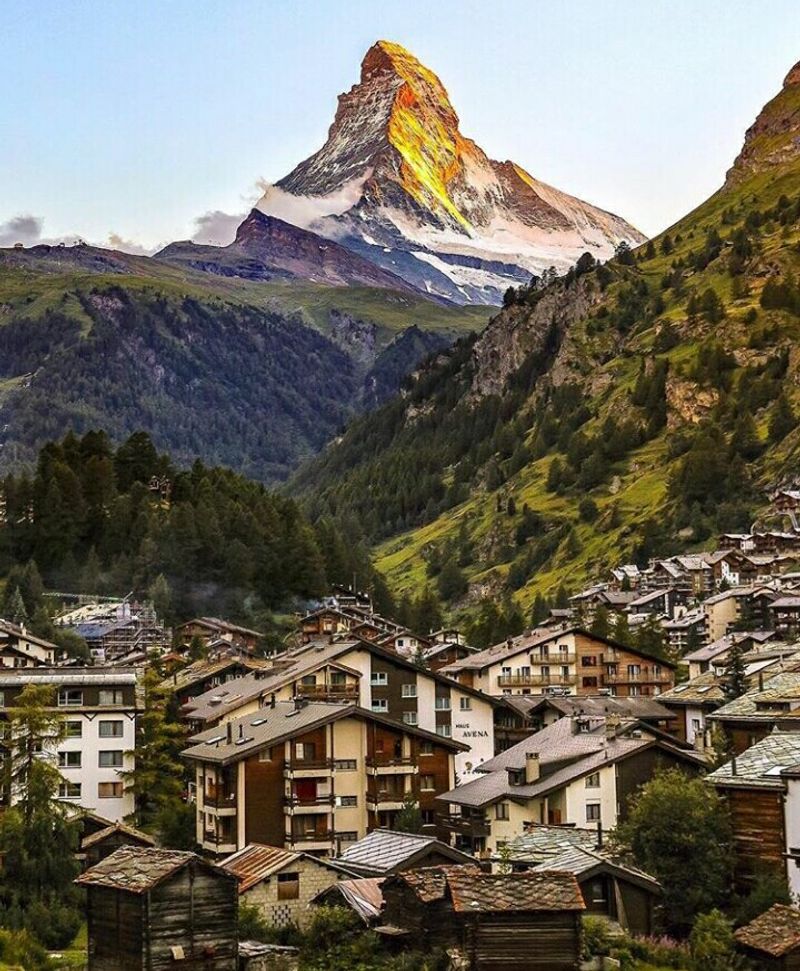
No mountain in Europe is more recognizable than the Matterhorn, and Zermatt sits right at its feet like a proud little village that knows exactly how lucky it is. This car-free Alpine town keeps things refreshingly quiet since no gasoline-powered vehicles are allowed on its streets.
Instead, electric taxis and horse-drawn carriages carry visitors through lanes lined with centuries-old wooden chalets.
Zermatt is a year-round playground. In winter, skiers and snowboarders carve through some of Europe’s best runs, with slopes reaching over 3,800 meters above sea level.
Summer brings hikers armed with trekking poles and cameras, chasing views from trails like the famous Five Lakes Walk.
The town itself is packed with cozy restaurants serving Swiss fondue and raclette, boutique hotels with mountain views, and a surprisingly buzzing nightlife scene for such a remote location. Gornergratt Railway, one of the highest open-air cogwheel railways in the world, takes visitors up to a jaw-dropping panorama of 29 peaks above 4,000 meters.
Zermatt is not just a destination; it is a full sensory experience that stays with you long after you head back down the mountain.
Hallstatt, Austria
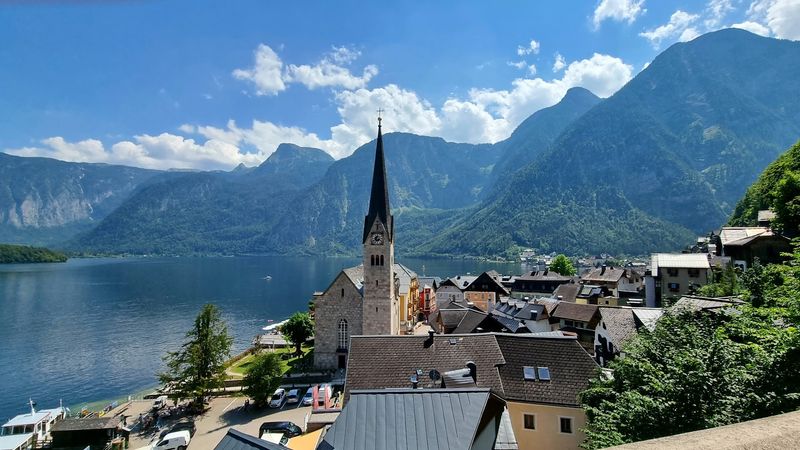
Hallstatt has been called the most beautiful village in the world so many times that the title practically comes with its own postcard. Wedged between the glassy Hallstätter See and the steep Dachstein Alps, this tiny Austrian village has barely enough flat ground to park a bicycle.
Yet somehow, it fits pastel-colored houses, a charming market square, historic churches, and one of the world’s oldest salt mines into its narrow layout.
Salt made Hallstatt rich long before tourism arrived. Archaeologists have found evidence of salt mining here dating back over 7,000 years, making it one of the oldest continuously settled places in Europe.
Visitors can tour the ancient mines and even slide down a wooden miner’s chute underground.
Getting to Hallstatt adds to the adventure. Many visitors arrive by ferry across the lake, watching the village grow more beautiful with every meter of water crossed.
The waterfront promenade is perfect for slow morning walks, and the nearby Echern Valley trails lead to stunning waterfalls. Crowds can be heavy during peak season, so arriving early or staying overnight is the smartest move for anyone wanting to enjoy Hallstatt at its most magical.
Grindelwald, Switzerland
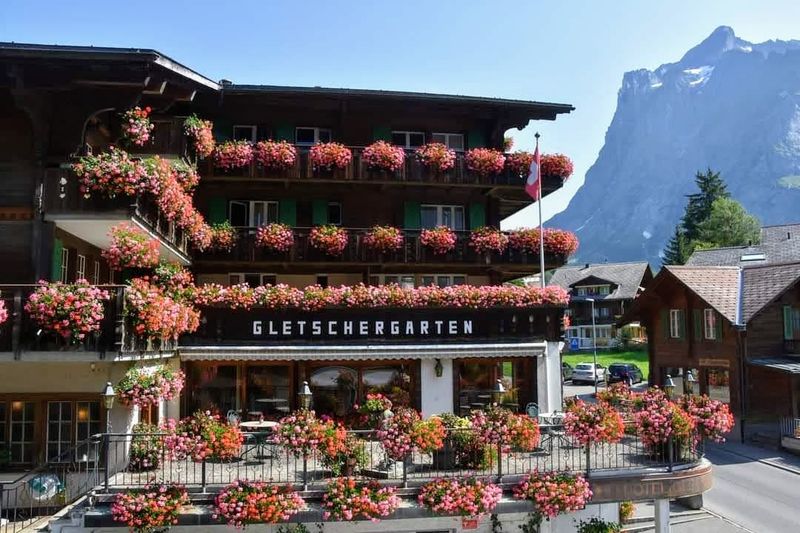
Sitting in the shadow of three of the Alps’ most legendary peaks, Grindelwald wears its mountain credentials with quiet confidence. The Eiger’s famous north face looms directly above the village, a wall of rock that has challenged and humbled mountaineers for generations.
Yet Grindelwald itself is wonderfully welcoming, offering world-class experiences for visitors of every fitness level.
The Jungfraujoch, nicknamed the Top of Europe, is accessible by cogwheel train from nearby Kleine Scheidegg and sits at a breathtaking 3,454 meters. Up there, you can walk on a glacier, visit a research station, and enjoy a surprisingly good bowl of soup while surrounded by eternal snow.
Back in the village, the First Cliff Walk offers a thrilling suspended walkway with glass-floored sections and sweeping Grindelwald views.
Summer hiking trails fan out in every direction, passing wildflower meadows, turquoise glacial lakes, and rocky ridgelines that seem to touch the clouds. Winter transforms Grindelwald into a skier’s paradise, connected to the vast Jungfrau ski region.
The village has an easy, unpretentious charm, with bakeries selling fresh Gipfeli pastries and locals who seem genuinely happy to share their extraordinary corner of Switzerland with curious visitors.
Cortina d’Ampezzo, Italy
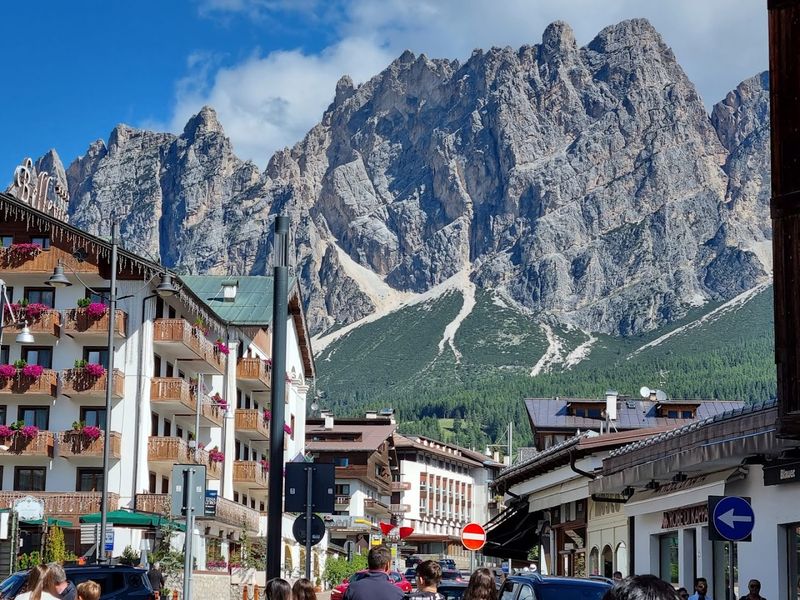
Italy has a remarkable talent for combining style with natural beauty, and Cortina d’Ampezzo is perhaps the finest example of that gift. Known as the Queen of the Dolomites, this northern Italian resort town sits in a wide, sunny valley ringed by some of the most dramatic rock formations on the planet.
The jagged limestone towers glow orange and pink at sunset in a phenomenon locals call Enrosadira.
Cortina hosted the 1956 Winter Olympics and will co-host the 2026 Games, giving it a sporting legacy that shapes the town’s confident, athletic energy. Cable cars whisk visitors up to ridgelines where hiking trails offer views across a landscape that looks like it was designed by a very ambitious painter.
The Alta Via 1 long-distance trail, which passes near Cortina, is considered one of the finest mountain walks in the world.
Between adventures, the town’s Corso Italia pedestrian street draws visitors with its blend of Italian fashion boutiques, gelaterias, and excellent restaurants. Cortina manages to feel glamorous without being stuffy, welcoming everyone from serious mountaineers to families looking for a scenic summer stroll.
Arriving here feels less like visiting a ski resort and more like stepping into a very well-dressed dream.
Lauterbrunnen, Switzerland
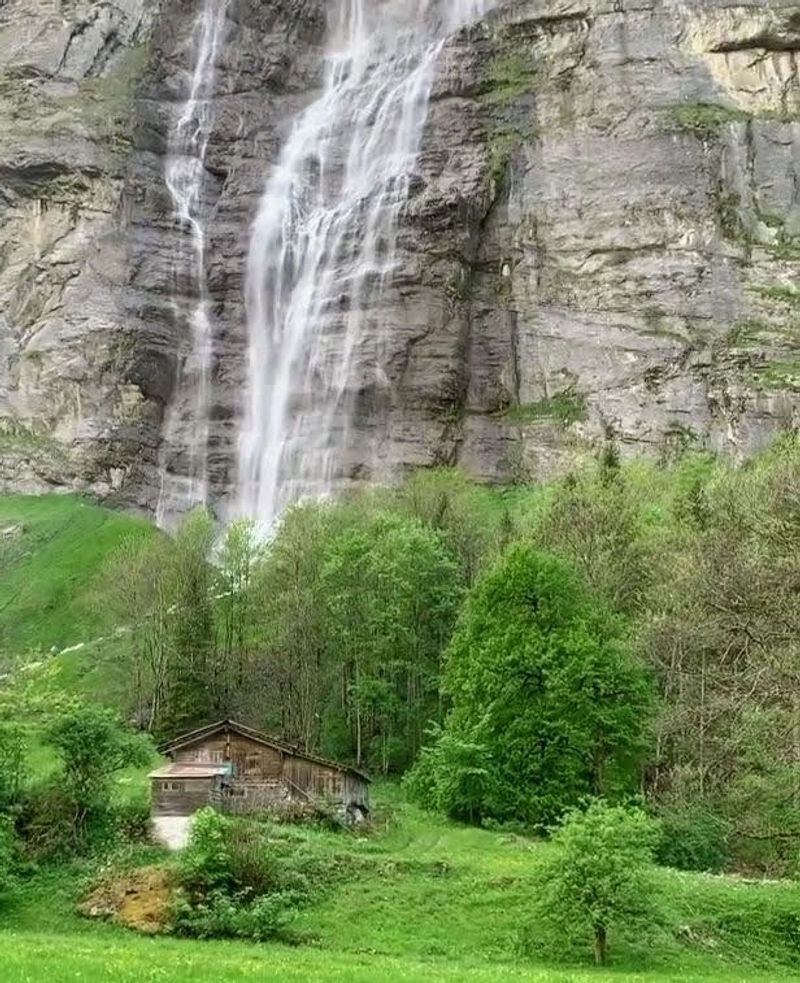
Seventy-two waterfalls. That is the number that tumbles down the sheer cliffs surrounding Lauterbrunnen, creating one of the most dramatic valley landscapes in all of Switzerland.
The most famous, Staubbach Falls, drops nearly 300 meters straight down the rock face and was famously described by the poet Goethe as resembling a veil of mist. Standing in the valley and looking up feels genuinely humbling.
Lauterbrunnen serves as the gateway to the Jungfrau region, making it a busy transit hub for travelers heading to Wengen, Mürren, and the Jungfraujoch. Despite the tourist traffic, the village itself retains a calm, pastoral quality.
Flower boxes brighten wooden farmhouses, and the meadows between the cliffs are still used for traditional Swiss farming.
The valley is also a magnet for base jumpers and paragliders, who launch from the clifftops above and drift gracefully down to the valley floor. For less adrenaline-focused visitors, the Trümmelbach Falls are a must-see attraction where glacial meltwater roars through a series of gorges carved directly inside the mountain.
Lauterbrunnen rewards slow exploration, so resist the urge to rush through and take time to simply sit beside a waterfall and listen to the extraordinary sound of nature at full volume.
Chamonix, France
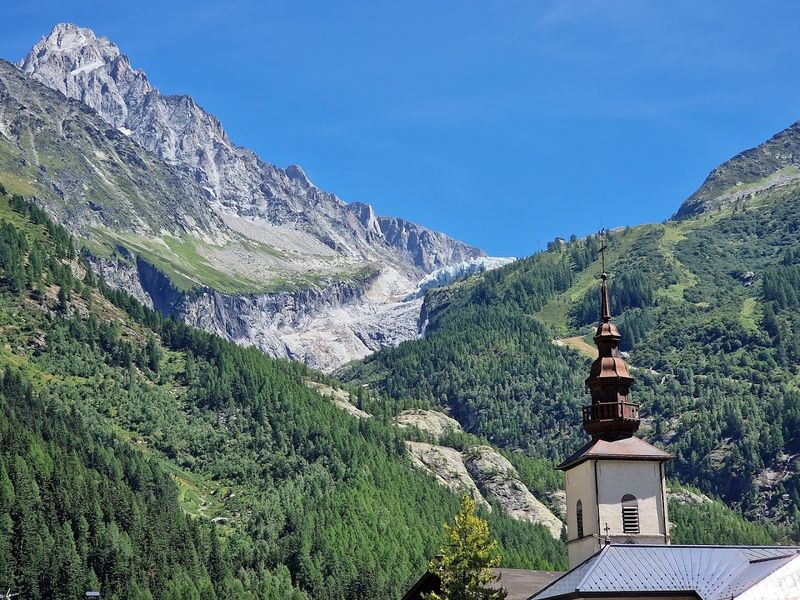
Standing in Chamonix and craning your neck to see the summit of Mont Blanc is one of those travel experiences that makes you feel wonderfully small. At 4,808 meters, Western Europe’s highest peak dominates the skyline above this legendary French Alpine town, and its presence shapes absolutely everything about the place.
Chamonix lives and breathes mountains in a way few towns anywhere on Earth can match.
The town has been a center of mountaineering since the 18th century, when early adventurers first began attempting to reach the summit of Mont Blanc. Today, it attracts everyone from elite alpinists to casual cable car tourists riding the Aiguille du Midi lift to a platform at 3,842 meters.
The views from the top, stretching across France, Italy, and Switzerland simultaneously, are simply outrageous.
Chamonix’s streets are lively and international, filled with outdoor gear shops, fondue restaurants, and climbers comparing notes over strong coffee. The Tour du Mont Blanc, a classic long-distance hiking trail circling the entire Mont Blanc massif, starts and ends here.
Winter skiing is world-class, with the legendary Vallee Blanche off-piste run drawing experienced skiers from across the globe. Chamonix earns its reputation as one of Europe’s greatest mountain towns every single day.
Annecy, France
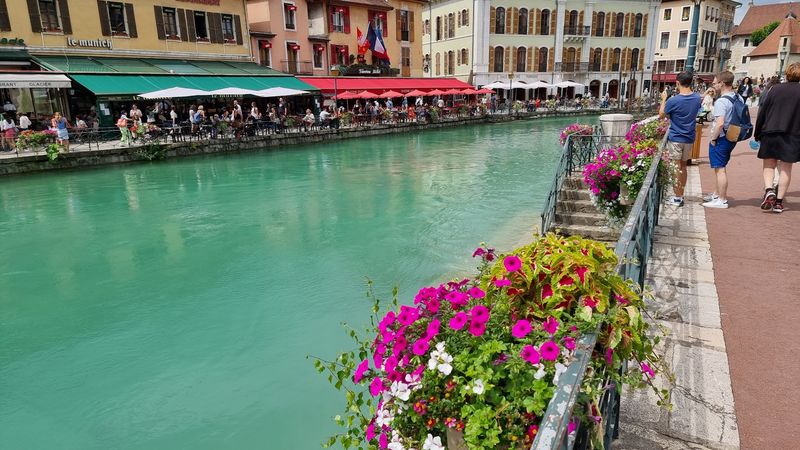
Annecy’s old town has a habit of making visitors stop mid-stride, look around, and quietly wonder if they have accidentally walked onto a film set. The canals running between pastel-painted medieval buildings, the flower-draped Palais de l’Isle prison island, and the backdrop of Europe’s cleanest lake combine to create a scene of almost unreasonable loveliness.
Calling it the Venice of the Alps is not an exaggeration.
Lake Annecy is the star attraction for summer visitors. Its water is so remarkably clear that you can see the bottom in most areas, thanks to strict environmental protections introduced in the 1960s that transformed it from a polluted lake into an ecological showcase.
Swimming, paddleboarding, kayaking, and cycling along the lakeside path are all popular warm-weather activities.
The surrounding mountains provide a dramatic frame for everything and offer serious hiking and mountain biking opportunities for those willing to climb above the lake. The Semnoz plateau above Annecy delivers panoramic views that stretch all the way to Mont Blanc on clear days.
Back in town, the Saturday market in the old quarter is one of the best in France, overflowing with local cheeses, sausages, honey, and flowers. Annecy is genuinely hard to leave.
Innsbruck, Austria
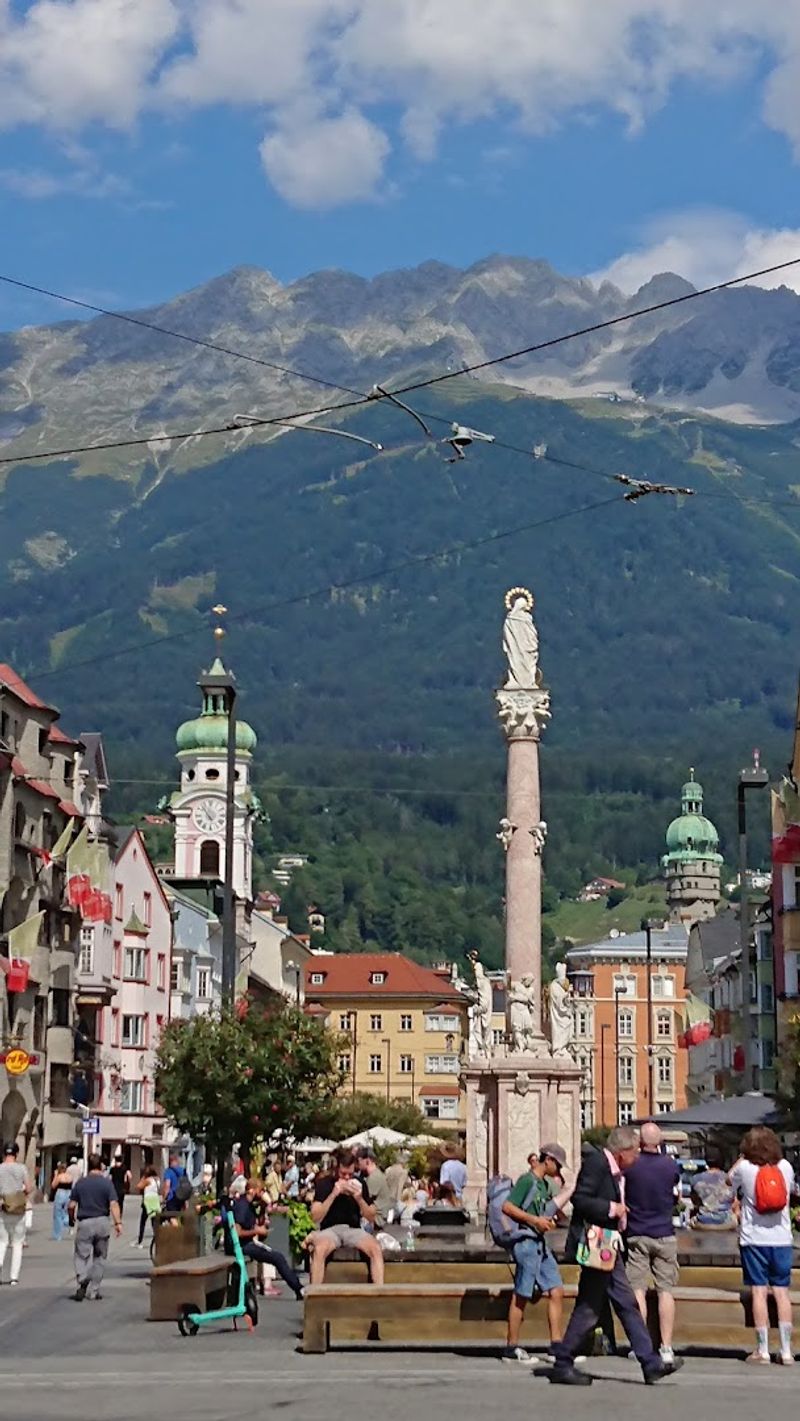
Very few cities on Earth can claim to have a ski slope reachable by public transport from the city center, but Innsbruck is one of them. The Tyrolean capital sits in a deep valley surrounded by the Nordkette mountain range, which rises so steeply above the rooftops that it looks almost theatrical.
Innsbruck has hosted the Winter Olympics twice, in 1964 and 1976, a fact the city wears with understated pride.
The old town is a genuine architectural treasure. The Golden Roof, a late Gothic oriel window covered in 2,657 gilded copper tiles, is the city’s most iconic landmark and was built by Emperor Maximilian I in the early 16th century.
The nearby Hofburg Imperial Palace adds a layer of Habsburg grandeur to streets that are otherwise refreshingly lively with students, cyclists, and outdoor enthusiasts.
The Nordkette cable car, departing from just steps away from the old town, rises in minutes to panoramic viewpoints above 2,000 meters where hiking trails stretch across rocky ridgelines. Innsbruck manages to be simultaneously a vibrant university city and a world-class mountain destination, which makes it one of the most versatile and rewarding stops on any European mountain town itinerary.
The combination of culture and altitude here is genuinely hard to beat.
Bled, Slovenia
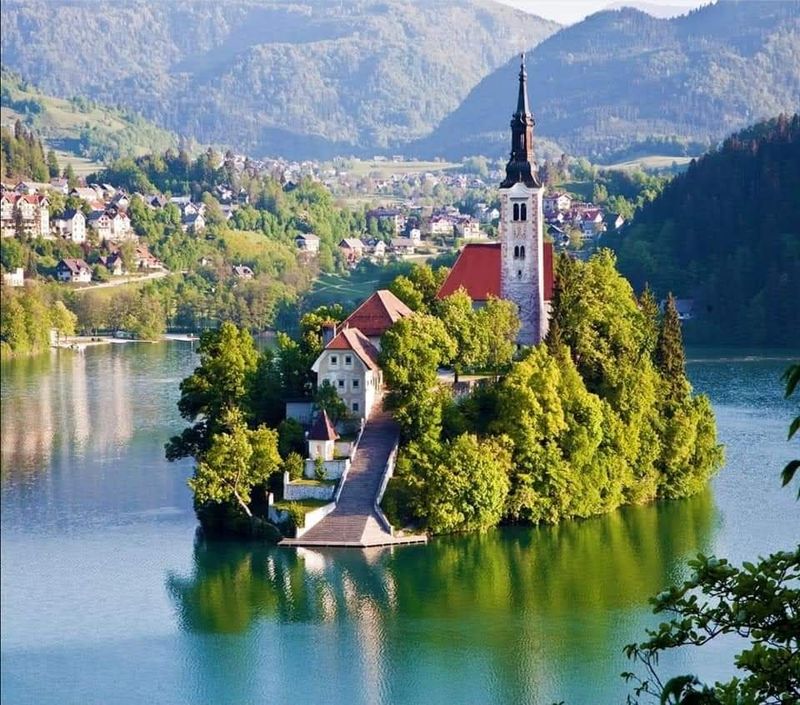
There is a small island in the middle of Lake Bled with a white church on top of it, and reaching it by traditional wooden pletna boat is one of the most quietly magical travel experiences in all of Europe. Slovenia’s most famous landmark manages to be both wildly photogenic and genuinely peaceful, a combination that is harder to find than it sounds.
Bled earns every superlative thrown its way.
The medieval Bled Castle perches on a sheer cliff 130 meters above the lake’s surface, offering a bird’s-eye view of the entire scene that makes the postcard version look understated. Inside the castle, a small museum tells the story of the region’s fascinating history, and the castle restaurant serves local dishes with arguably the best dining view in Slovenia.
Bled’s famous cream cake, the kremna rezina, is a non-negotiable stop at any of the lakeside cafes. Outdoor activities abound, from swimming and rowing on the lake to hiking up Ojstrica hill for the classic panoramic view, or venturing into nearby Triglav National Park for more serious mountain adventures.
Bled rewards visitors who linger beyond a single afternoon, revealing quiet corners and gentle rhythms that make it far more than just a pretty photograph.
Reine, Norway
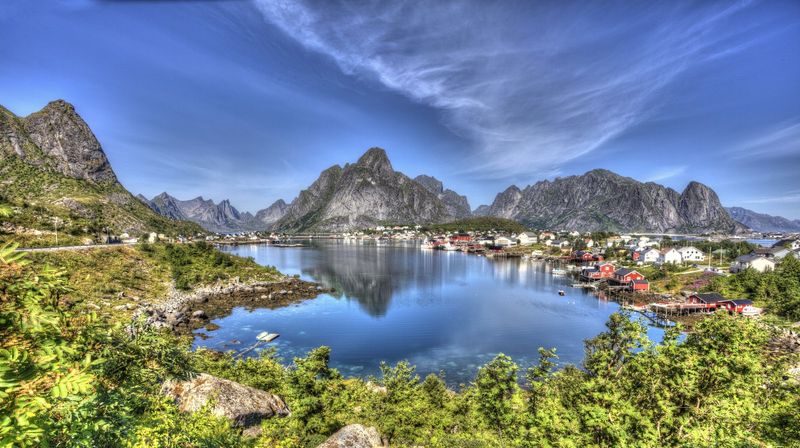
Reine sits at the end of a long, winding road through the Lofoten Islands like a reward for making the journey. Clusters of traditional red and yellow fishing cabins, called rorbuer, huddle at the water’s edge while jagged Arctic peaks rise almost vertically from the fjords on every side.
It is the kind of place that makes even non-photographers reach for a camera with shaking hands.
The Lofoten Islands sit above the Arctic Circle, which means Reine experiences the midnight sun in summer, when daylight lasts around the clock and the light turns golden and dreamlike for hours at a time. In winter, the same skies can explode with the Northern Lights, painting the fjords in curtains of green and purple.
Either season delivers something extraordinary.
Hiking is exceptional around Reine, with the trail up Reinebringen offering one of the most dramatic viewpoints in Norway. Kayaking through the surrounding fjords gives a water-level perspective of the scenery that is completely different from any hilltop view.
Fresh seafood, particularly the local stockfish, is a highlight of eating in the area. Reine has no interest in being flashy or trendy.
It simply exists in breathtaking, quiet perfection at the top of the world.
Kranjska Gora, Slovenia
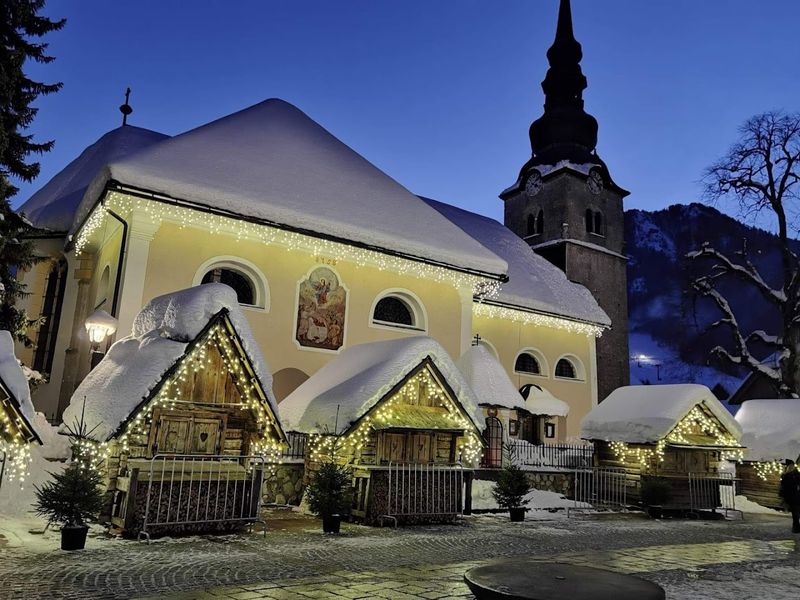
Tucked into Slovenia’s northwestern corner where the country brushes against Austria and Italy, Kranjska Gora is the kind of Alpine village that feels discovered rather than visited. It lacks Bled’s famous postcard fame, which works entirely in its favor, keeping the atmosphere calm, local, and genuinely relaxed.
The surrounding Julian Alps provide a spectacular natural frame for a town that excels at making visitors feel comfortable.
Winter brings serious skiers to the Vitranc slopes, which host the prestigious World Cup slalom and giant slalom races each January. The racing heritage gives Kranjska Gora a sporty confidence that balances nicely with its otherwise quiet village character.
Cross-country skiing, snowshoeing, and ice skating fill out the cold-weather activity calendar.
Summer is equally rewarding. The Zelenci Nature Reserve, just a short cycle from town, contains a strikingly turquoise spring-fed lake surrounded by marshlands that teem with bird life.
The road over the Vrsic Pass, Slovenia’s highest mountain road, begins near Kranjska Gora and winds through 50 hairpin turns to reach stunning Alpine scenery above the tree line. Triglav National Park, Slovenia’s only national park, is easily accessible from here and offers hiking trails ranging from gentle valley walks to demanding high-altitude routes.
Kranjska Gora quietly overdelivers at every turn.
Ortisei, Italy
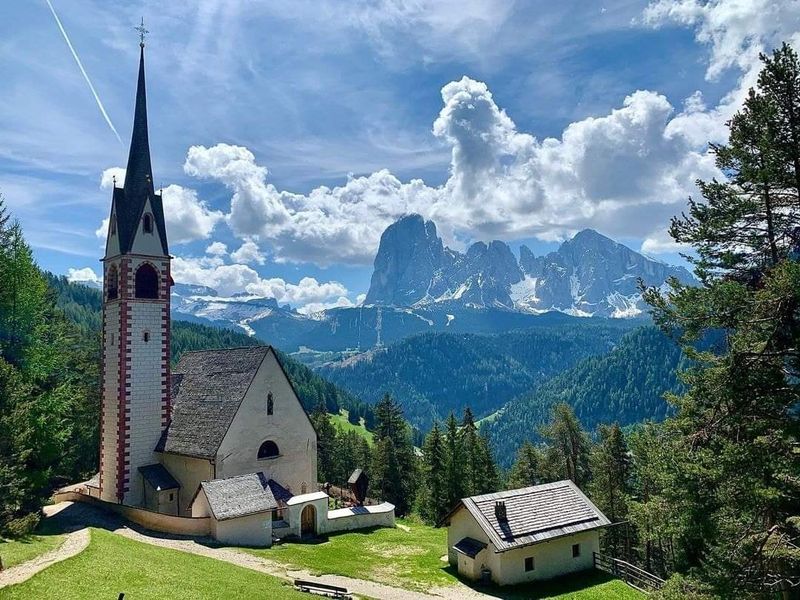
Val Gardena is one of those valleys where you keep stopping to look back over your shoulder because the view behind you is just as stunning as the one ahead. At its heart sits Ortisei, a prosperous and charming South Tyrolean village where Italian warmth blends seamlessly with Tyrolean Alpine tradition.
The local Ladin culture, a Romance language group unique to the Dolomites, gives Ortisei a distinctive identity found nowhere else on Earth.
Woodcarving has been the valley’s artisan tradition for centuries, and Ortisei’s workshops and shops are filled with extraordinary hand-carved figures, nativity scenes, and decorative objects. Watching a skilled carver at work is genuinely mesmerizing.
The craft is so embedded in local culture that it is taught in local schools and passed down through families across generations.
The Saslong gondola lifts visitors into the heart of the Sella Ronda, one of the world’s great ski circuits, which links four valleys and 26 lifts into a spectacular loop through the Dolomites. Summer hiking here is equally spectacular, with trails leading to the Seceda ridgeline, where the jagged Geisler peaks create one of the most photographed mountain silhouettes in all of Italy.
Ortisei is a place where beauty and craftsmanship compete for your attention and both win.
Alpbach, Austria
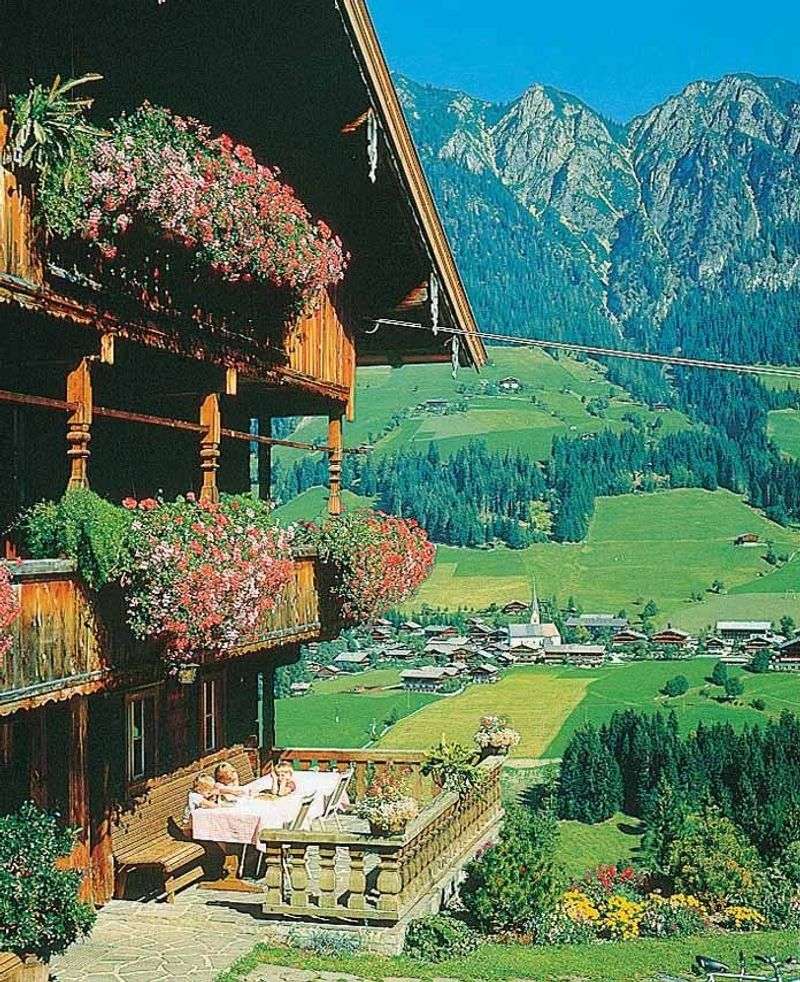
Alpbach won the title of Austria’s most beautiful village, and a single look at its main street makes that verdict feel completely fair. Every building in the historic village center is required by local law to follow traditional Tyrolean architectural standards, resulting in a remarkably harmonious collection of dark-wood chalets dripping with geranium flower boxes in summer.
It looks like someone turned a greeting card into a real place.
The village sits at around 1,000 meters elevation in a wide Alpine valley in the Tyrol region. Its relatively compact size makes it easy to explore on foot, and the surrounding meadows and forest trails offer pleasant walking without requiring serious hiking experience.
The Wiedersbergerhorn peak above the village provides a more ambitious target for those who want to earn their panoramic view.
Alpbach is also home to the European Forum Alpbach, an annual gathering of thinkers, politicians, and scientists that has been meeting here since 1945, giving this tiny village an intellectual reputation that extends well beyond its mountain borders. Winter brings a modest ski area that is particularly well-suited to families and beginner skiers.
The combination of architectural beauty, friendly scale, and genuine Alpine character makes Alpbach one of the most rewarding small-village stops in the Austrian Tyrol.
Cesky Krumlov, Czechia
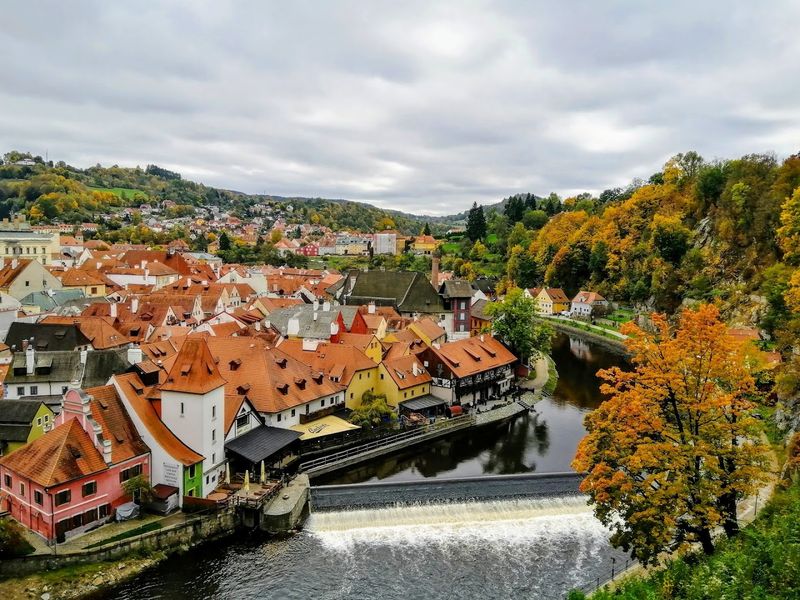
Cesky Krumlov has the rare quality of feeling genuinely medieval rather than just historically themed. The Vltava River bends dramatically around this Bohemian town, creating a natural moat that helped preserve its extraordinary collection of Renaissance and Baroque architecture almost completely intact.
The castle complex looming above the rooftops is the second largest in the Czech Republic, after Prague’s, and its painted tower is one of the most striking in Central Europe.
While Cesky Krumlov is not a high-altitude destination, it sits among the rolling hills and forested landscapes of South Bohemia, and the nearby Sumava mountain range adds genuine highland character to the surrounding region. Hiking and cycling trails connect the town to the broader Sumava landscape, where dense forests, glacial lakes, and peaceful upland meadows reward those willing to venture beyond the old town walls.
The town’s summer arts scene is exceptional, with theater performances held in the castle’s Baroque theater and open-air concerts filling the courtyard with music. Canoe trips down the Vltava River through the surrounding countryside are enormously popular and offer a relaxed way to see the landscape from the water.
Cesky Krumlov rewards slow, unhurried visits, the kind where you wander without a map and keep stumbling onto something beautiful around every corner.
Garmisch-Partenkirchen, Germany
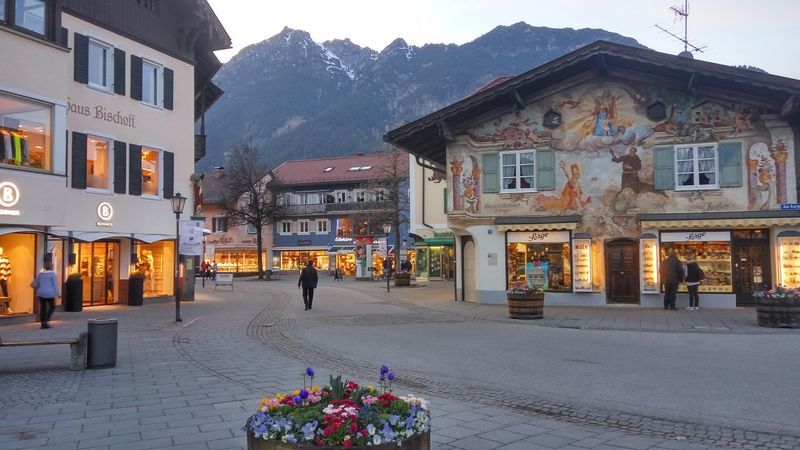
Germany’s highest mountain, the Zugspitze at 2,962 meters, keeps a watchful eye over Garmisch-Partenkirchen from directly above, giving this Bavarian resort town one of the most dramatic natural backdrops of any town in the country. The hyphenated name reflects the 1935 merger of two neighboring communities, forced together to host the 1936 Winter Olympics.
Both halves have retained distinct characters, and wandering between them reveals two slightly different personalities sharing one extraordinary address.
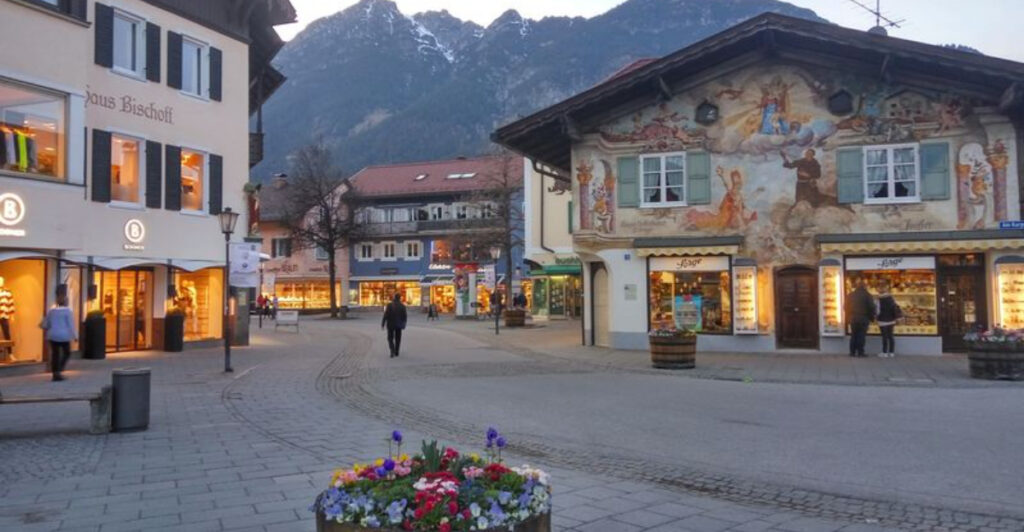
The old town sections of both Garmisch and Partenkirchen are lined with Lüftlmalerei, the traditional Bavarian style of exterior wall painting that depicts religious scenes and decorative patterns in vivid colors. These painted facades are a defining feature of the region and give the streets a cheerful, storybook quality that feels authentically Bavarian rather than touristy.
The Zugspitze is reachable by both cogwheel train and cable car, offering two different perspectives on the spectacular ascent. At the summit, visitors stand on the border between Germany and Austria and look out over four countries on clear days.
The Partnachklamm gorge, a narrow canyon carved by a rushing mountain stream, is one of the region’s most dramatic short hikes and is accessible year-round. Garmisch-Partenkirchen delivers classic Bavarian mountain culture with skill and obvious enthusiasm.
Livigno, Italy
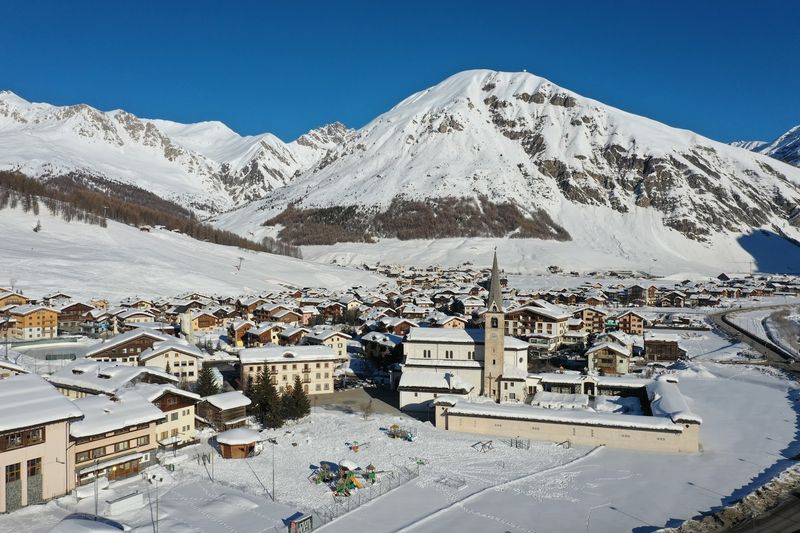
Livigno occupies a long, narrow valley high in the Italian Alps near the Swiss border at an elevation of around 1,816 meters, making it one of the highest permanently inhabited communities in the Alps. Its altitude and geographic isolation earned it a special duty-free status from the European Union, which means visitors can stock up on perfume, chocolate, and ski gear at prices that feel almost suspicious.
Shopping here has become a genuine draw alongside the mountains.
The ski area is extensive and well-organized, with over 115 kilometers of marked runs spread across both sides of the valley. Snow reliability is excellent thanks to the high altitude and a snowmaking system that covers most of the slopes.
Snowkiting, ice driving, and fat biking on snow have all found enthusiastic followings in Livigno in recent years, reflecting the resort’s appetite for fresh winter experiences.
Summer reveals a completely different side of Livigno. Mountain biking has grown into a major attraction, with a bike park and trail network that draws riders from across Europe.
Hiking trails lead to high passes with views into Switzerland and across the surrounding Rhaetian Alps. The Mottolino and Carosello 3000 cable cars operate in summer, giving non-hikers easy access to high-altitude scenery.
Livigno combines practical value with genuine Alpine beauty in a way that keeps visitors coming back season after season.
Kitzbühel, Austria
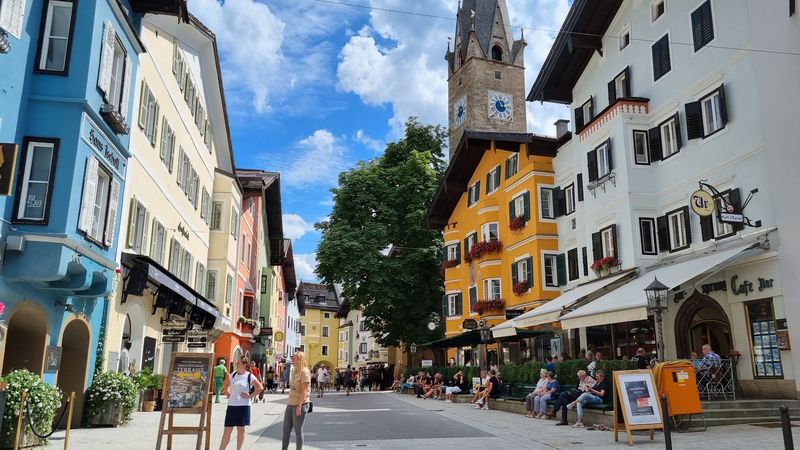
Kitzbühel has been pulling off a neat trick for centuries: looking like a perfectly preserved medieval market town while simultaneously operating as one of Europe’s most glamorous ski resorts. The pastel-colored facades of the old town, the twin Gothic church towers, and the cobbled pedestrian streets create an atmosphere that feels entirely authentic, not manufactured for tourism.
Somehow Kitzbühel remains beautiful and believable at the same time.
The Hahnenkamm downhill race, held every January, is the most famous and arguably most dangerous ski race in the world. The Streif course drops 860 meters with sections reaching speeds of over 140 kilometers per hour, and watching it live from the slopes is an unforgettable experience that attracts tens of thousands of spectators from across Europe.
The race weekend transforms the town into one giant, very well-dressed party.
Beyond skiing, Kitzbühel offers summer hiking and cycling through the surrounding Kitzbühel Alps, a gentler, greener range than the dramatic limestone Dolomites but endlessly charming in their own right. The Kitzbüheler Horn cable car provides easy access to high meadows carpeted with wildflowers in July and August.
Tennis, golf, and a well-developed spa scene round out the resort’s year-round appeal. Kitzbühel manages to be simultaneously sporty, sophisticated, and historically rich without breaking a sweat.
Andermatt, Switzerland
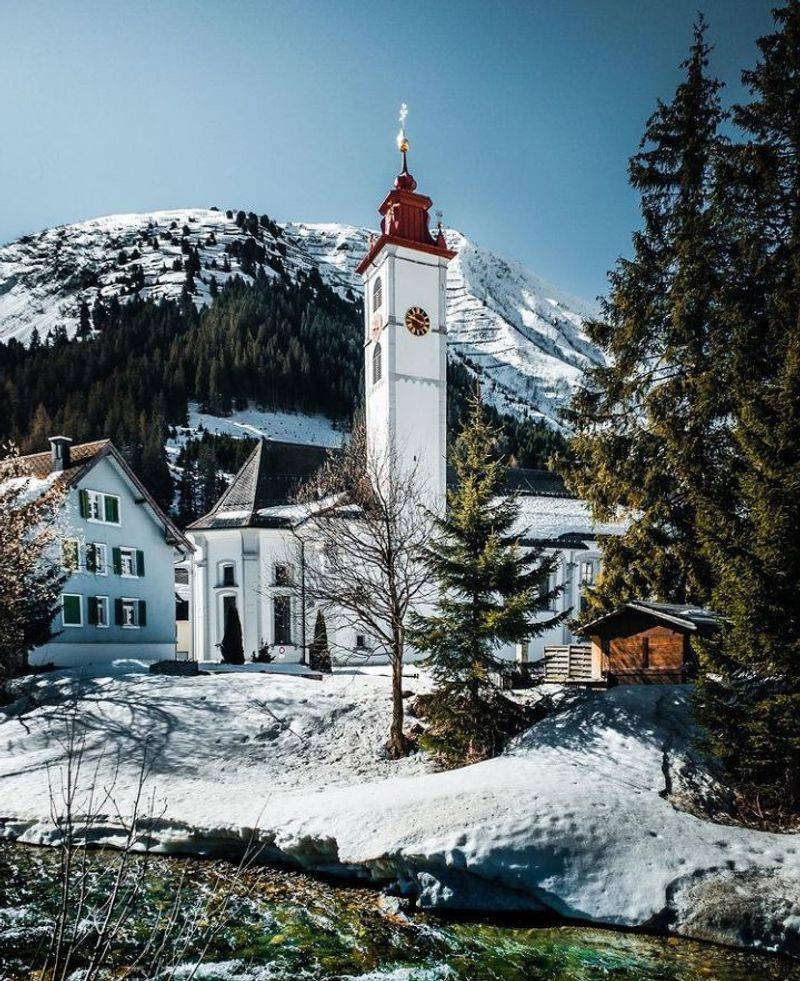
Andermatt sits at a high Alpine crossroads where four mountain passes meet, which explains why this small Swiss village has been strategically important for centuries. Armies, merchants, and pilgrims have all passed through this valley, and the town’s history carries a weight that goes well beyond its modest size.
In recent years, a major investment project has transformed Andermatt into one of Switzerland’s most talked-about mountain destinations without erasing its traditional character.
The SkiArena Andermatt-Sedrun ski area now connects two previously separate resorts across a 120-kilometer network of runs, giving winter visitors an enormous playground. New luxury hotels, including a Chedi hotel that has become something of a design landmark, have raised the standard of accommodation dramatically.
Yet the old village center, with its stone buildings and narrow lanes, still anchors everything in genuine Alpine history.
Summer in Andermatt is spectacular. The Gotthard Pass, one of the most historically significant mountain routes in Europe, is reachable by road just above the village.
Cycling the famous Gotthard route is a rite of passage for serious cyclists, while hikers can explore the surrounding Ursern Valley on trails that feel wonderfully remote despite the village’s growing profile. Andermatt proves that thoughtful development and authentic mountain character are not mutually exclusive when done with care and respect for place.
Cauterets, France
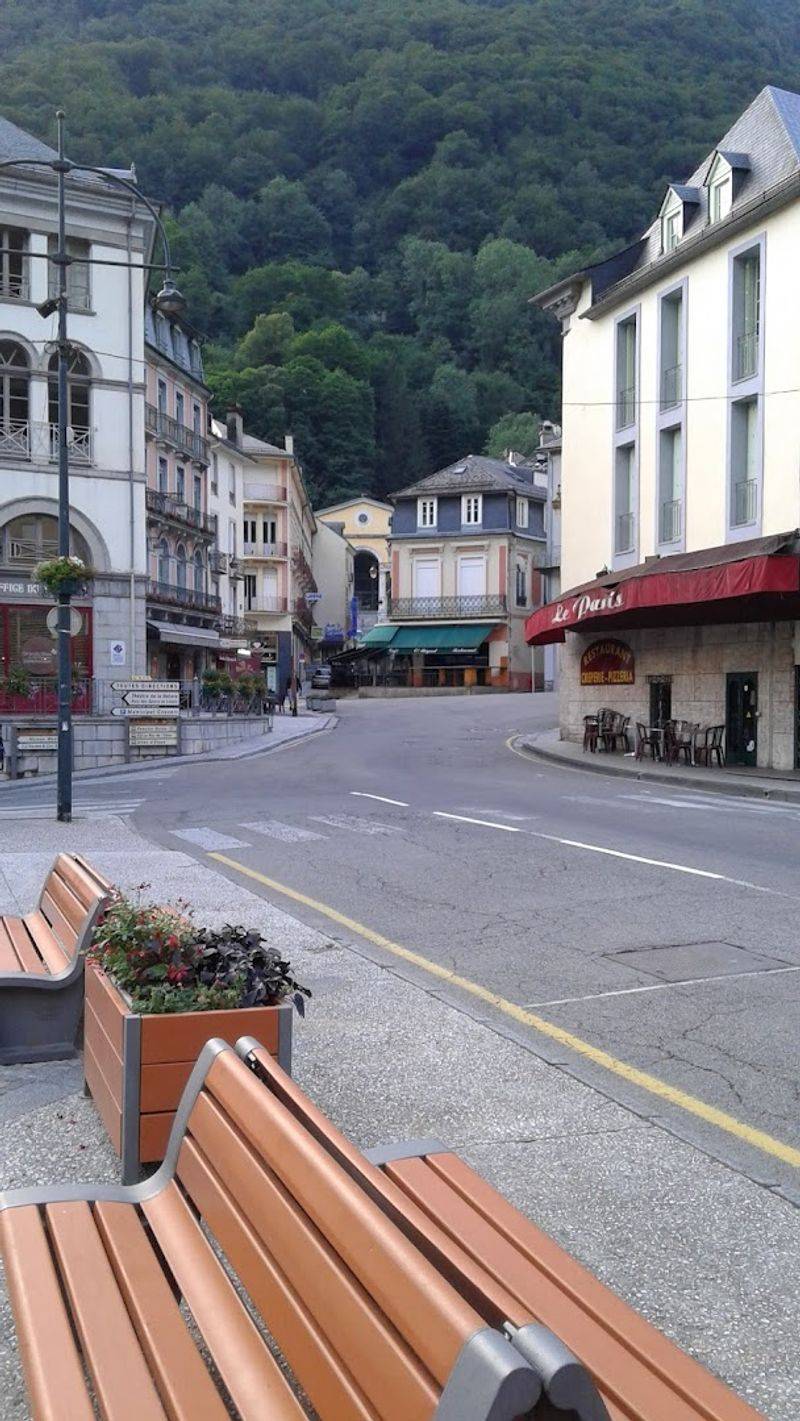
Hidden in the French Pyrenees like a well-kept secret shared only among those who know where to look, Cauterets carries an air of elegant nostalgia that sets it apart from flashier mountain resorts. The town’s Belle Époque architecture, all ornate facades and wrought-iron balconies, reflects a golden age when 19th-century aristocrats and writers came here to take the thermal waters and breathe mountain air.
Victor Hugo visited. So did George Sand.
The place clearly has taste.
Thermal bathing is still central to Cauterets’ identity, and the Les Bains du Rocher spa offers modern treatments in a setting that honors the town’s long hydrotherapy tradition. After a day on the trails, soaking in mineral-rich thermal water feels like an entirely reasonable reward.
The surrounding Pyrenees National Park provides the backdrop for serious outdoor adventures.
The Pont d’Espagne waterfall area, reachable by shuttle or on foot, is one of the most spectacular natural sites in the Pyrenees, where rivers crash through rocky gorges surrounded by forest. Above it, the Lac de Gaube reflects the distant peak of Vignemale, the highest point on the French side of the Pyrenees.
Winter brings skiing on slopes that receive heavy snowfall from Atlantic weather systems. Cauterets is a mountain town with genuine soul, therapeutic waters, and scenery that quietly steals your heart.
Kalambaka, Greece
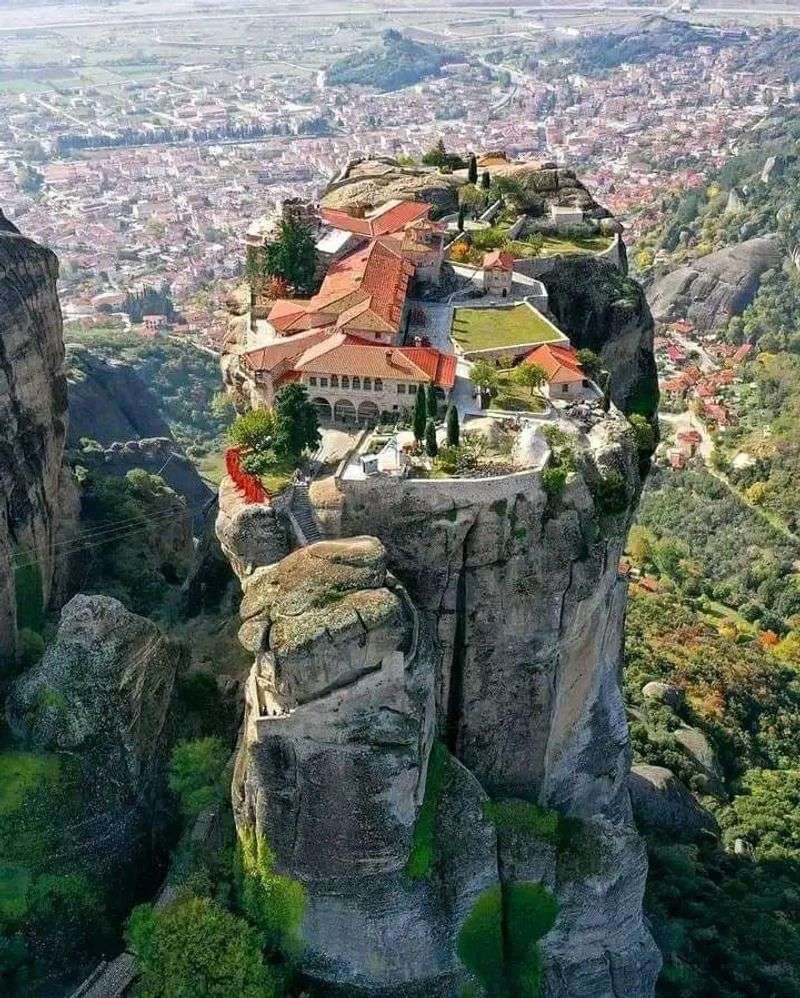
Nowhere in Europe prepares you for the sight of Meteora. The towering sandstone pillars that rise above Kalambaka are so improbable, so staggeringly vertical, that the first glimpse of them from the town below produces a reaction closer to disbelief than admiration.
And perched on top of these geological wonders, accessible only by staircases carved into the rock, sit centuries-old Orthodox monasteries that have been inhabited since the 14th century. It is one of the most extraordinary human and natural landscapes on the planet.
Kalambaka itself is a warm, welcoming Greek town that serves as the base for exploring Meteora. The town’s own Byzantine church, the Mitropolis, dates back to the 11th century and contains remarkable frescoes that most visitors overlook in their rush to reach the monasteries above.
The local tavernas serve honest Thessalian food, with grilled meats, fresh salads, and local wine making for excellent post-hiking meals.
Six monasteries remain active and open to visitors, each with its own character, frescoes, and viewpoints. Sunrise and sunset visits are the most magical, when the rock pillars glow amber and the shadows stretch dramatically across the valley.
Rock climbing on the Meteora formations has also become popular, with guided routes available for experienced climbers. Kalambaka offers a mountain experience unlike anything else in Europe, equal parts geological wonder and living spiritual history.
Share this story