 Unearth The Voyage
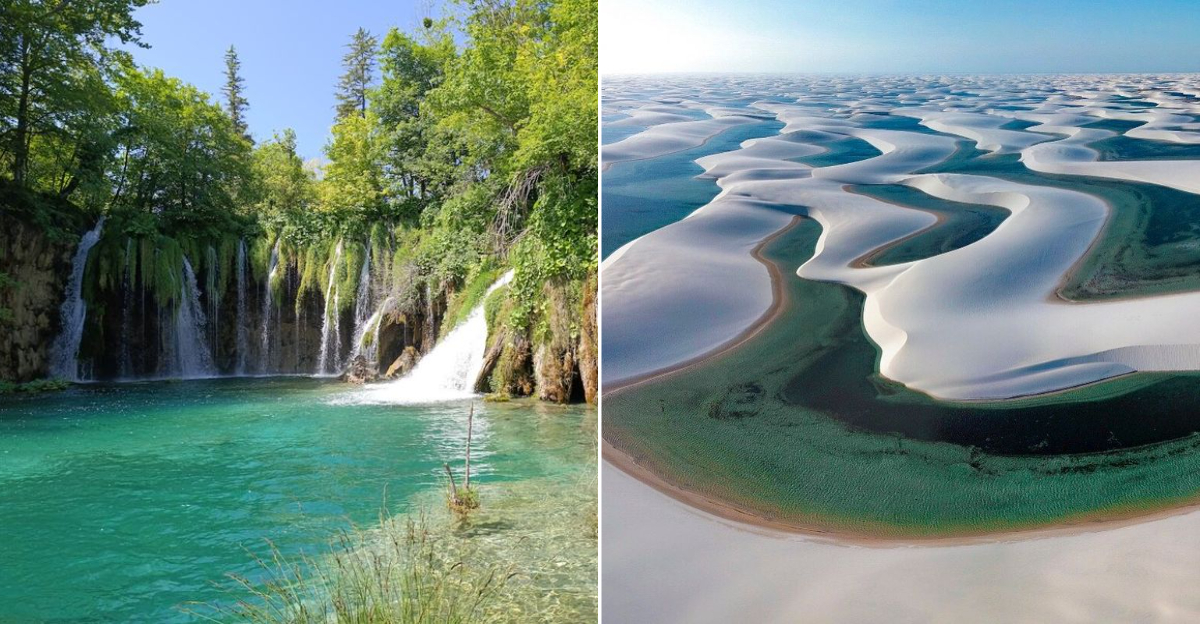
Some places on Earth are so stunning, they make you stop and wonder if you accidentally walked onto a film set. From ancient carved cities to glowing volcanic valleys, the world has destinations that look almost too dramatic to be real.
I traveled to a few of these spots myself, and every single time, my jaw hit the floor before my camera even turned on. These 20 places will make you question reality in the best possible way.
Ha Long Bay, Vietnam
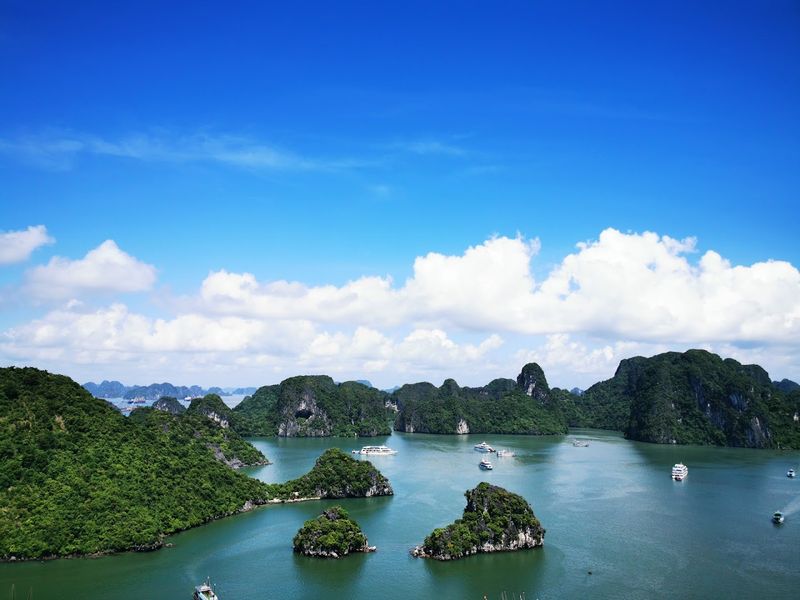
Ha Long Bay has over 1,100 limestone islands rising straight out of the sea, and no, that is not a typo. UNESCO calls it one of the world’s most spectacular seascapes, and honestly, UNESCO is being modest.
The towers of rock draped in mist look like something out of a fantasy epic.
The best time to visit is between March and May, when the weather is clear but not scorching. Cruise tours are the way to go here since you can sleep on the water and wake up surrounded by karst cliffs on all sides.
That experience alone is worth the flight.
Local guides will tell you the name means “Bay of the Descending Dragon” in Vietnamese. Whether you believe the legend or not, standing on the deck of a junk boat watching those towers emerge from the fog, you might start to believe anything.
Cappadocia, Türkiye
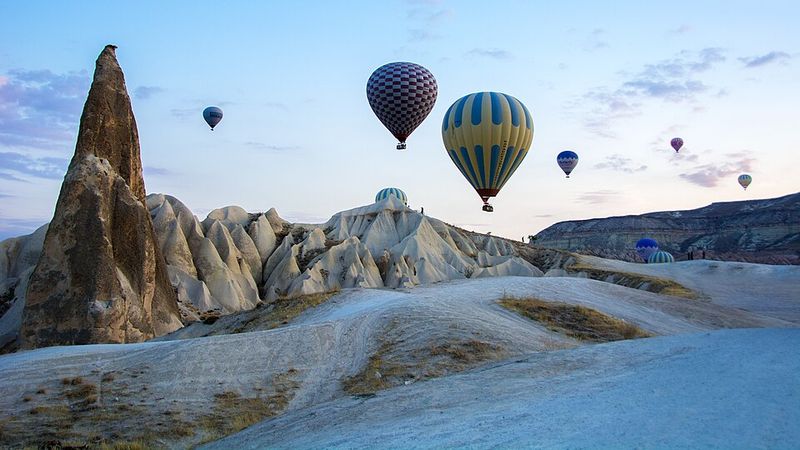
Cappadocia wears its weirdness like a badge of honor. Volcanic eruptions millions of years ago covered the region in thick ash, and then erosion spent ages sculpting it into the rippling valleys and pointy “fairy chimneys” you see today.
Nature basically decided to become an architect.
The underground cities buried beneath Cappadocia add another layer of disbelief. Derinkuyu, the deepest of them, goes down eight levels and once housed thousands of people.
Walking through it feels like exploring a secret base from a spy thriller.
Hot air balloons drift over the landscape at dawn, and that view from above is genuinely hard to process. I kept checking my phone to make sure the photos were real.
Book balloon rides well in advance, especially in spring and autumn, because spots fill up fast. This is one of those places where every direction you look, the scene is already composed.
Meteora, Greece
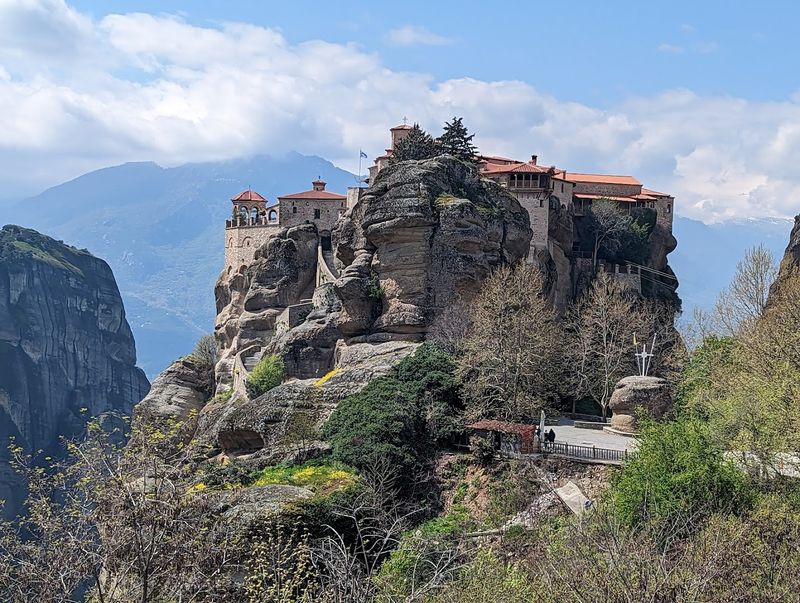
Monks looked at sheer sandstone columns hundreds of meters tall and thought, “Yes, that is where I want to live.” The result is Meteora, a UNESCO World Heritage site where six active monasteries still cling to the tops of impossible rock formations in central Greece.
Construction started in the 14th century, and back then, the only way up was by rope ladder or net. That detail alone should tell you everything about the determination involved.
Today, stairs are carved into the rock, which is still an adventure but slightly less terrifying.
Sunrise here is the stuff of movie trailers. The mist rolls through the valleys below while the monasteries glow on their perches above the clouds.
Visit on a weekday if possible since weekends bring significant crowds. The nearby town of Kalambaka makes a great base, and the local lamb dishes are worth the trip on their own.
Petra, Jordan
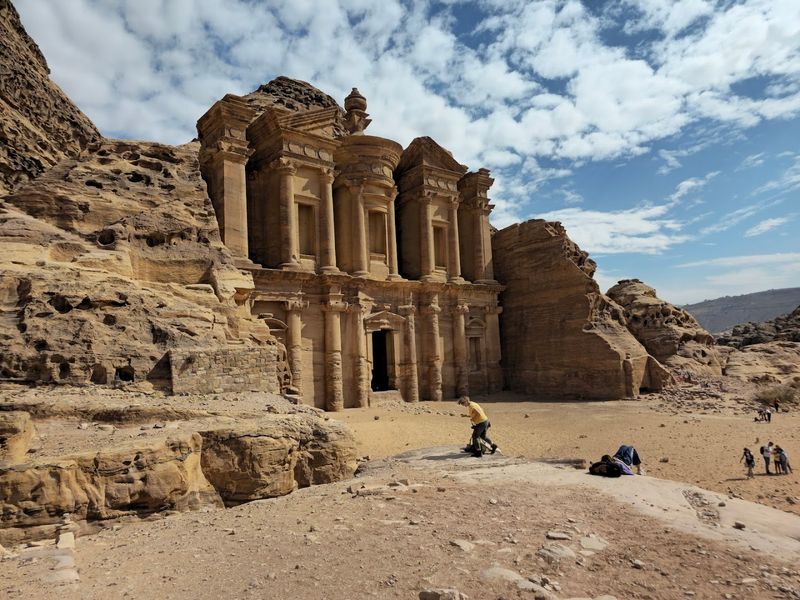
Petra earns its nickname “the Rose City” because the sandstone really does glow pink, red, and orange depending on the time of day. The Nabataeans carved this entire city into the rock cliffs over 2,000 years ago, and the craftsmanship still makes modern architects look a little nervous.
Walking through the Siq, the narrow gorge that leads to the famous Treasury, is one of those experiences where silence feels appropriate. The walls close in around you, then suddenly open up to reveal the carved facade.
Every first-time visitor stops dead in their tracks at that moment.
The site is massive, far bigger than most visitors expect. Beyond the Treasury, there are tombs, temples, a Roman street, and a monastery higher up the mountain.
Wear comfortable shoes, bring water, and plan for a full day. Petra at night, lit by candlelight, is a separate ticketed event and absolutely worth it.
Plitvice Lakes National Park, Croatia
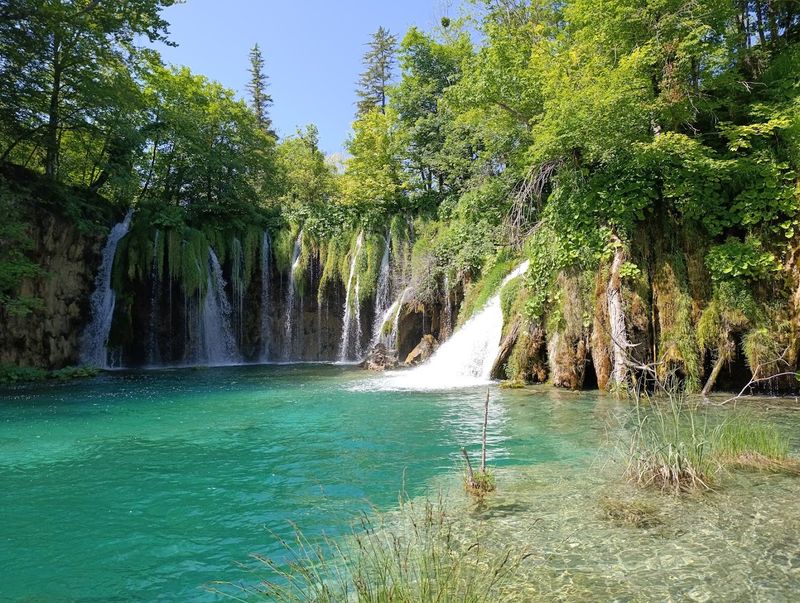
Plitvice Lakes looks like someone turned the color saturation dial all the way up and forgot to turn it back down. The water shifts between shades of blue, green, and turquoise depending on the minerals, organisms, and sunlight at any given moment.
No filter needed, and no, the photos are not edited.
The park has 16 terraced lakes connected by waterfalls, all formed naturally by tufa deposits building up over centuries. Wooden boardwalks run directly over the water, so you are essentially walking on top of a lake.
That sensation never gets old, no matter how many times you loop the trail.
Croatia’s most visited national park gets busy in summer, so an early morning arrival is smart strategy. Spring is arguably the best season because snowmelt pumps the waterfalls to full power.
Entry tickets are timed, so book online ahead of your visit. The park rewards slow walkers who actually stop and look.
Jiuzhaigou Valley, China
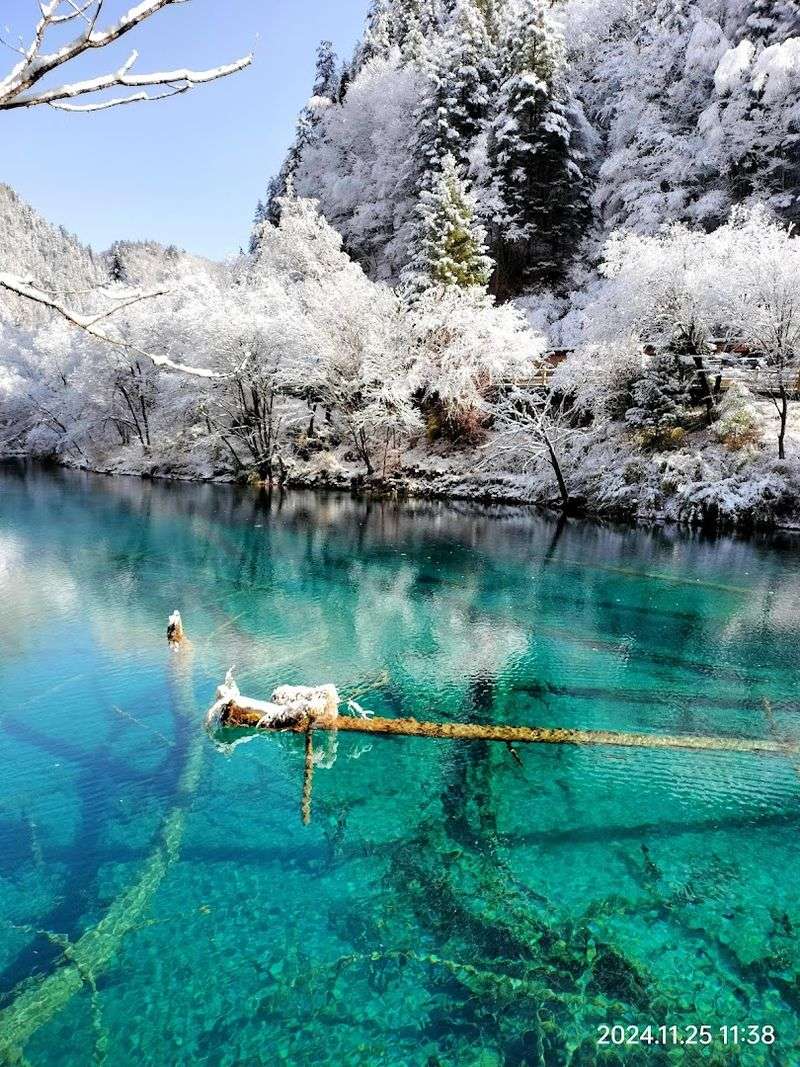
Jiuzhaigou Valley sits in the mountains of Sichuan Province and operates by its own set of rules regarding color. The lakes here are layered, crystal-clear, and stacked in shades of blue, green, and violet that shift with the seasons.
Autumn, when the surrounding forests turn gold and red, takes the whole scene to another level.
UNESCO designated it a World Heritage site in 1992, recognizing its exceptional natural beauty and biodiversity. Giant pandas live in the surrounding area, though the valley itself is protected enough that sightings are rare.
The real stars here are the lakes, with names like “Five Flower Lake” and “Arrow Bamboo Lake” that sound made up but are very real.
A 2017 earthquake caused significant damage to the park, and restoration efforts have been ongoing. Visitor numbers are now capped to protect the ecosystem, so booking in advance is essential.
That limitation actually helps, keeping the trails calmer than you might expect.
Wulingyuan, China
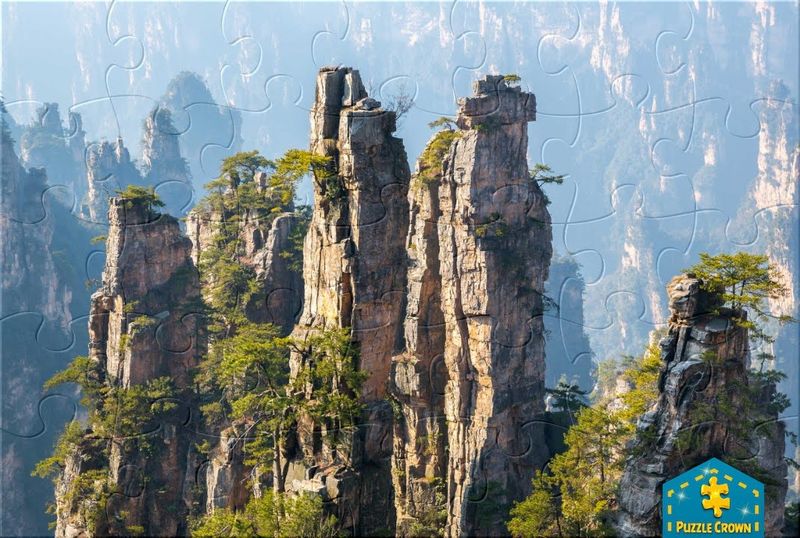
Wulingyuan contains more than 3,000 sandstone pillars, many taller than 200 meters, rising from the valley floor like a geological fever dream. The area in Hunan Province inspired the floating mountains in the film Avatar, which tells you everything you need to know about its visual impact.
Glass walkways and cable cars thread through the landscape, giving visitors views that would have been completely inaccessible a generation ago. The Zhangjiajie Glass Bridge, one of the longest glass-bottomed bridges in the world, stretches across a canyon here.
Looking down through your feet at the forest hundreds of meters below is a special kind of terrifying.
Fog is common in the mornings, and rather than ruining the view, it makes the pillars look like they are floating. Plan for at least two full days since the park is genuinely enormous.
Avoid Chinese national holidays if crowds are not your thing, because this place gets very popular very fast.
Pamukkale, Türkiye
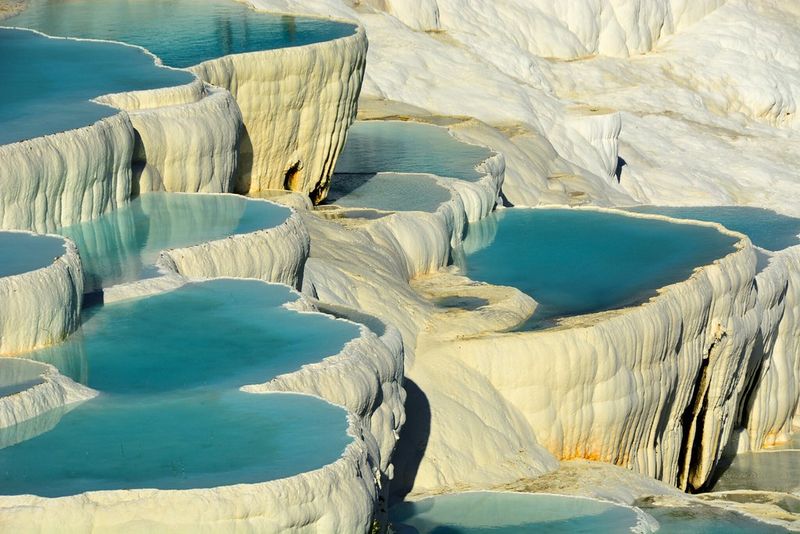
Pamukkale translates to “cotton castle” in Turkish, and standing in front of those gleaming white travertine terraces, the name makes perfect sense. Thermal water rich in calcium carbonate flows down the hillside and leaves behind mineral deposits that have built up into brilliant white shelves over thousands of years.
The terraces contain shallow pools of warm water, and visitors are allowed to walk on certain sections barefoot. Yes, you can actually wade in them.
The water temperature hovers around a very pleasant 35 degrees Celsius, which makes the whole thing feel like a natural spa built by geology.
At the top of the hill sit the ruins of the ancient Roman city of Hierapolis, which adds a historical layer to the visual spectacle below. The combination of sparkling white terraces, turquoise pools, and crumbling Roman columns in one frame is almost unfair.
Arrive early to get photos before the crowds fill the terraces with colorful swimwear.
Antelope Canyon, Arizona, USA
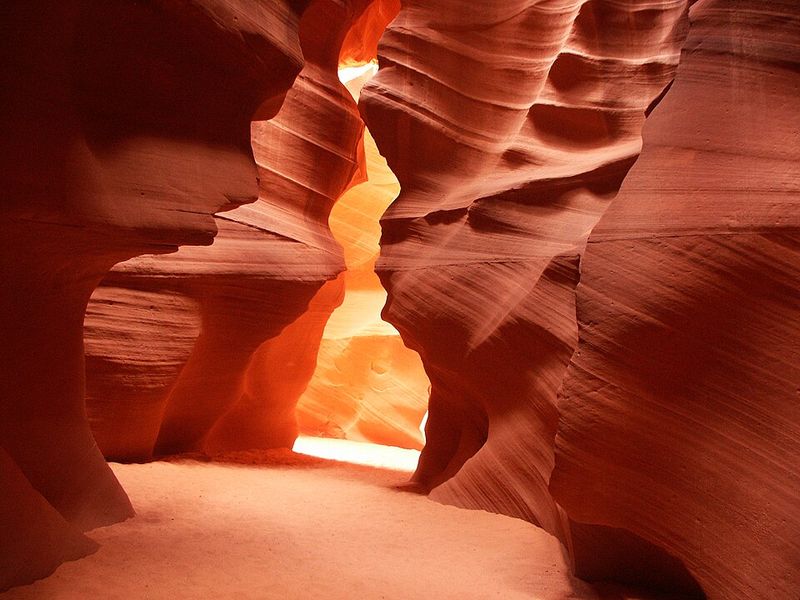
Antelope Canyon is located on Navajo Nation land near Page, Arizona, and it plays tricks on your eyes in the best possible way. The sandstone walls curve and flow like frozen waves, carved by flash floods over millions of years into shapes that look more like sculpture than geology.
Light beams shoot down through the narrow openings above during midday, especially from March through October. Photographers plan entire trips around catching those beams at exactly the right moment.
The canyon is split into two sections, Upper and Lower Antelope Canyon, each with its own character and access points.
All visits are guided tours run by authorized Navajo operators, which is both a legal requirement and genuinely useful. The guides know exactly where to stand and when to look up.
The canyon is narrow, so it gets warm and crowded quickly. Book your tour slot weeks ahead, especially if you want the midday light show.
Worth every bit of the planning.
Bryce Canyon National Park, Utah, USA
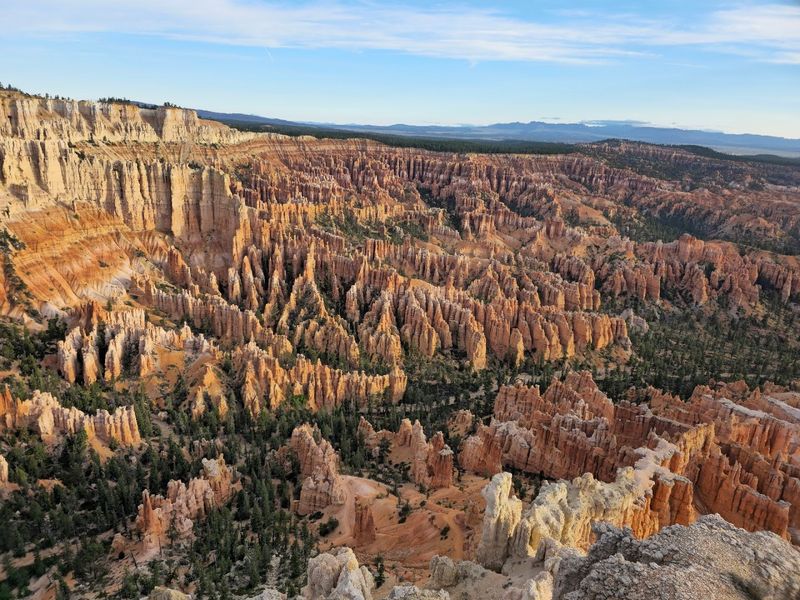
Bryce Canyon holds the world’s largest collection of hoodoos, those tall, thin spires of rock that look like a giant left their chess pieces behind and never came back. The amphitheater is packed with thousands of them in shades of pink, orange, and deep red, and no two look exactly alike.
Technically Bryce is not a canyon at all. It is a series of natural amphitheaters carved into the edge of a plateau by frost, rain, and time.
Water seeps into cracks in the rock, freezes, expands, and breaks pieces off. That process, repeated over millions of cycles, is what built this bizarre skyline.
The Rim Trail runs along the top of the amphitheater and offers continuous views without a steep descent. For a more dramatic perspective, hike down into the hoodoos on the Navajo Loop.
Stargazing at Bryce is world-class because the park sits at high elevation with minimal light pollution. The night sky here competes with the daytime views.
Cinque Terre, Italy
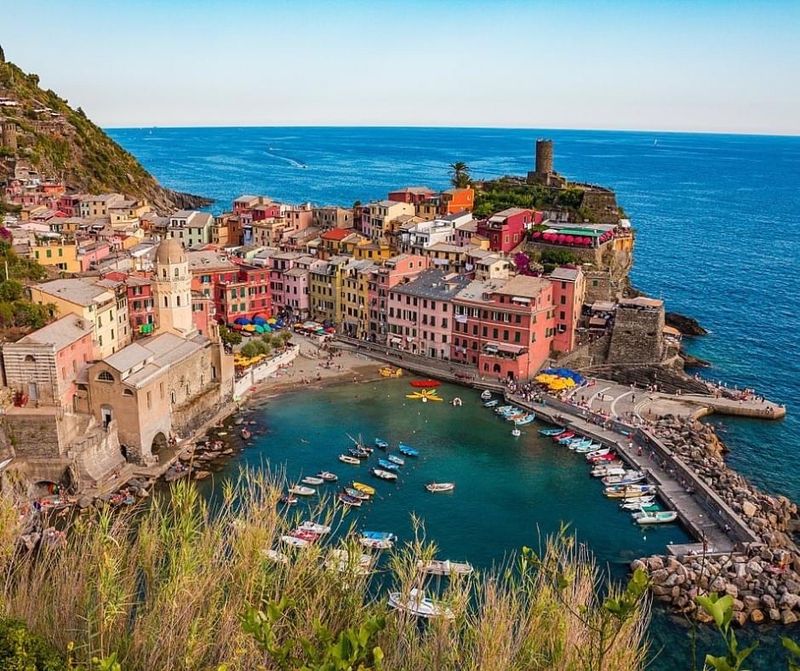
Five tiny villages stacked against Italian cliffs with no room to spare, connected by hiking trails, trains, and an enormous amount of stubbornness. That is Cinque Terre in a sentence.
UNESCO recognized it as a cultural landscape shaped by centuries of human effort to carve terraces into nearly vertical coastal terrain.
Each village has its own personality. Riomaggiore is dramatic and steep.
Manarola is the one everyone photographs at sunset. Vernazza has the best harbor.
Monterosso has the only real beach. Corniglia sits highest and requires the most stairs.
You do not have to pick a favorite, but you will.
The Sentiero Azzurro, the coastal hiking trail connecting the villages, offers views that stop you mid-step repeatedly. Sections open and close depending on weather and maintenance, so check current trail conditions before lashing on your boots.
Avoid visiting in August if you prefer not to share the cliffside with half of Europe. Spring and early autumn are far more enjoyable.
Iguazu Falls, Argentina and Brazil
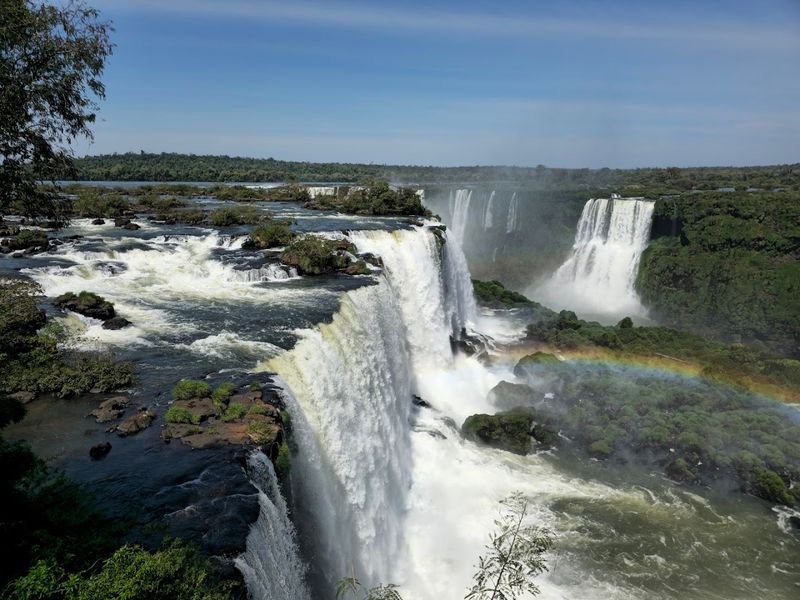
Eleanor Roosevelt reportedly visited Iguazu Falls and said, “Poor Niagara.” Whether that story is fully accurate or not, the sentiment is understandable. Iguazu is a system of nearly 275 individual waterfalls spread across a two-kilometer arc on the border between Argentina and Brazil, and the scale is genuinely difficult to process.
The Devil’s Throat section, where the most powerful cascades converge, produces a roar and mist column visible from kilometers away. Walkways on both the Argentine and Brazilian sides put you within meters of the falling water.
The Argentine side gets you closer; the Brazilian side gives you the panoramic view. Visiting both countries is the move.
Toucans and coatis wander the park paths with the confidence of animals who know they are in a protected zone. The surrounding Atlantic Forest is one of the most biodiverse ecosystems on Earth.
Pack a rain jacket regardless of the forecast, because the mist from the falls will soak you completely and enthusiastically.
Milford Sound / Piopiotahi, New Zealand
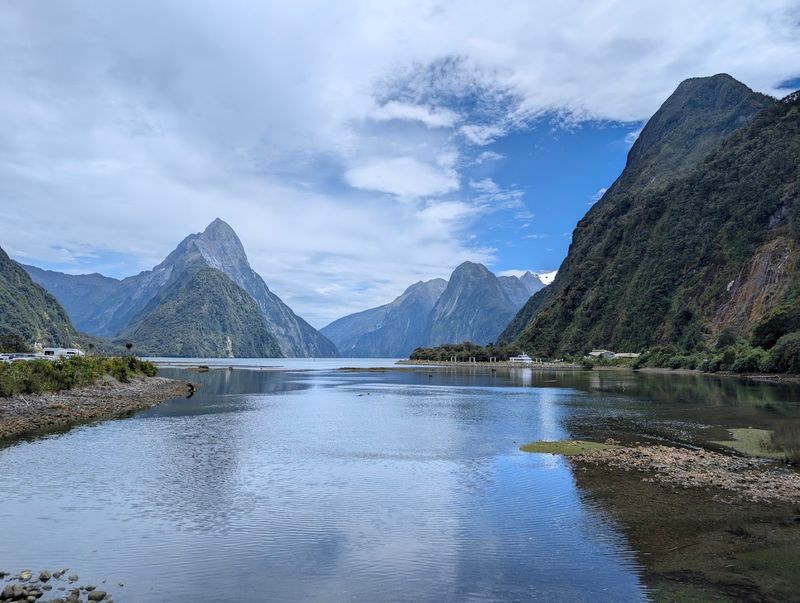
Rudyard Kipling called Milford Sound the eighth wonder of the world, and he had seen a few things. The fiord was carved by glaciers and sits inside Te Wahipounamu, a World Heritage area in the South Island of New Zealand.
The cliffs rise nearly 1,200 meters straight out of the water with zero warmup.
Rain is common here, and the locals will tell you that rain makes it better. Waterfalls that are just trickles in dry weather become roaring curtains after rain, pouring off every cliff face simultaneously.
The whole fiord turns into something from a fantasy novel. Bring a waterproof jacket and adjust your attitude about precipitation.
Boat cruises run year-round and are the best way to get the full scale of the place. Kayaking is also popular and puts you right at the base of the cliffs.
The drive to Milford Sound along State Highway 94 through Fiordland National Park is itself one of the most scenic roads on Earth.
Aoraki / Mount Cook National Park, New Zealand
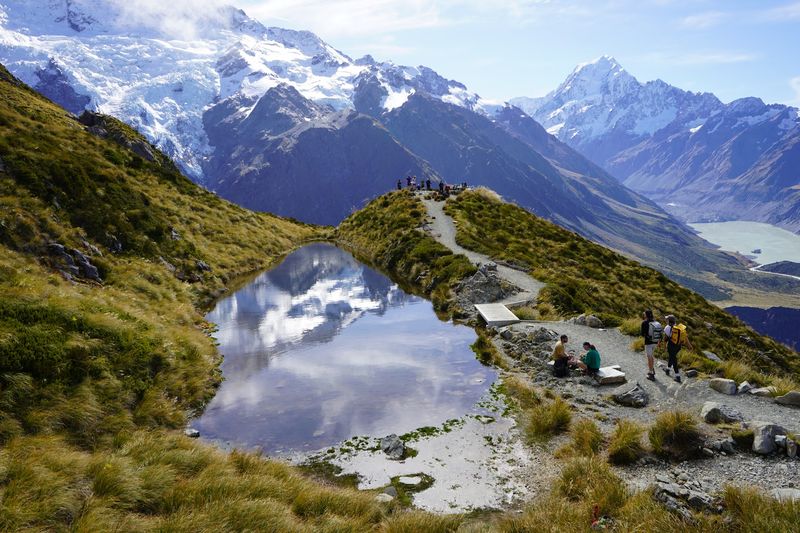
New Zealand’s highest mountain stands at 3,724 meters and is named Aoraki in Maori, meaning “cloud piercer.” The name is not just poetic. The mountain genuinely spends most of its time above the cloud line, occasionally revealing its full height to visitors who wait patiently enough.
The park contains 19 peaks over 3,000 meters and the Tasman Glacier, New Zealand’s longest at around 23 kilometers. Glacial lakes at the foot of the mountains hold water in shades of milky turquoise from the rock flour ground down by glacial movement.
The Hooker Valley Track leads to a lake filled with icebergs that calve off the glacier, which is as dramatic as it sounds.
This park is a serious stargazing destination. The dark sky reserve here is among the best in the Southern Hemisphere.
Sir Edmund Hillary trained on these slopes before climbing Everest in 1953. That historical detail adds a certain weight to every step you take on the trails here.
Bagan, Myanmar
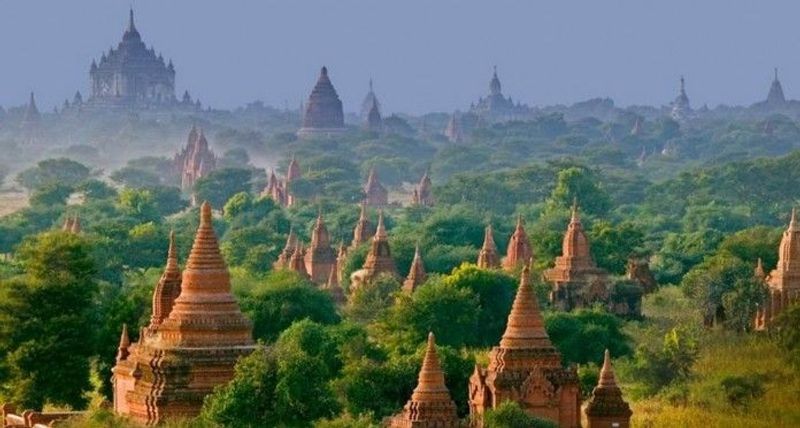
Over 3,500 temples and pagodas spread across a flat plain on a bend of the Ayeyarwady River. That number sounds big until you actually stand there and realize the horizon in every direction is punctuated by brick spires.
Bagan was the capital of the Pagan Kingdom from the 9th to 13th centuries, and construction was apparently very enthusiastic.
Hot air balloons drift above the temples at sunrise, and that image has become one of the most recognized in all of Southeast Asian travel photography. The light hits the brick in warm gold tones while mist clings to the lower ground.
It is the kind of scene that makes photographers set multiple alarms.
Cycling between the temples on a rented e-bike is one of the great low-key travel experiences. Many temples are open to enter, and some still contain original frescoes on the interior walls.
The Archaeological Zone has restricted climbing on most structures to protect them, but the views from ground level are still extraordinary.
Sossusvlei, Namibia
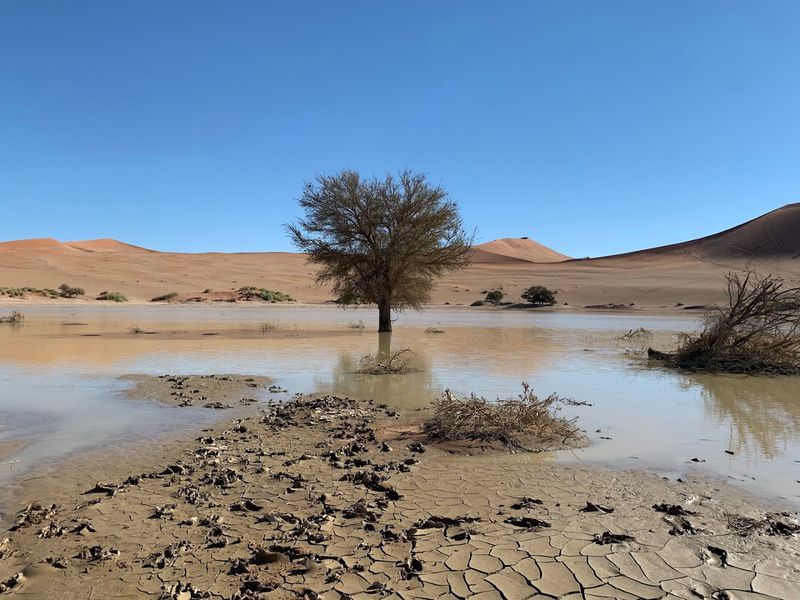
The dunes at Sossusvlei are among the tallest in the world, with some reaching over 300 meters. They are also among the reddest, their color coming from iron oxide in the sand that has been oxidizing for millions of years.
The older the dune, the deeper the red. Geology doing its best work.
Dead Vlei is the most photographed spot in the area, a white clay pan surrounded by towering orange dunes where ancient dead camel thorn trees still stand. The trees died around 900 years ago when the water source dried up, but the dry desert air preserved them.
They look like charcoal sketches against an orange and blue canvas.
The best time to visit is just after sunrise, when the light rakes across the dune ridges and the shadows are dramatic. Climbing Big Daddy dune, one of the tallest, is a serious workout in soft sand.
Bring more water than you think you need. The desert does not negotiate on hydration.
Canaima National Park, Venezuela
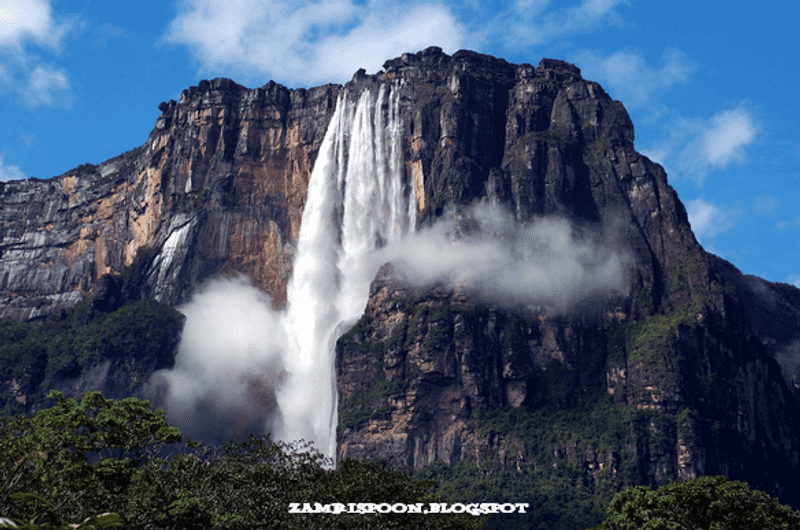
Angel Falls drops 979 meters from the top of a tepui called Auyantepui, making it the world’s highest uninterrupted waterfall by a very comfortable margin. The water falls so far that it partially turns to mist before reaching the bottom.
It was named after Jimmy Angel, an American pilot who crash-landed his plane on top of the tepui in 1937.
Tepuis are the flat-topped sandstone mountains that define Canaima’s landscape, and they are genuinely ancient. The rock surfaces are estimated to be around 1.7 billion years old.
Each tepui is essentially an island ecosystem, with species found nowhere else on Earth living on their isolated summits. Sir Arthur Conan Doyle based his novel “The Lost World” on the concept of these formations.
Getting to Angel Falls requires a flight to Canaima village followed by a river journey. There are no roads.
That remoteness is part of the appeal for travelers willing to make the effort. The rainy season from June to November offers the most dramatic waterfall flow.
Lencois Maranhenses National Park, Brazil
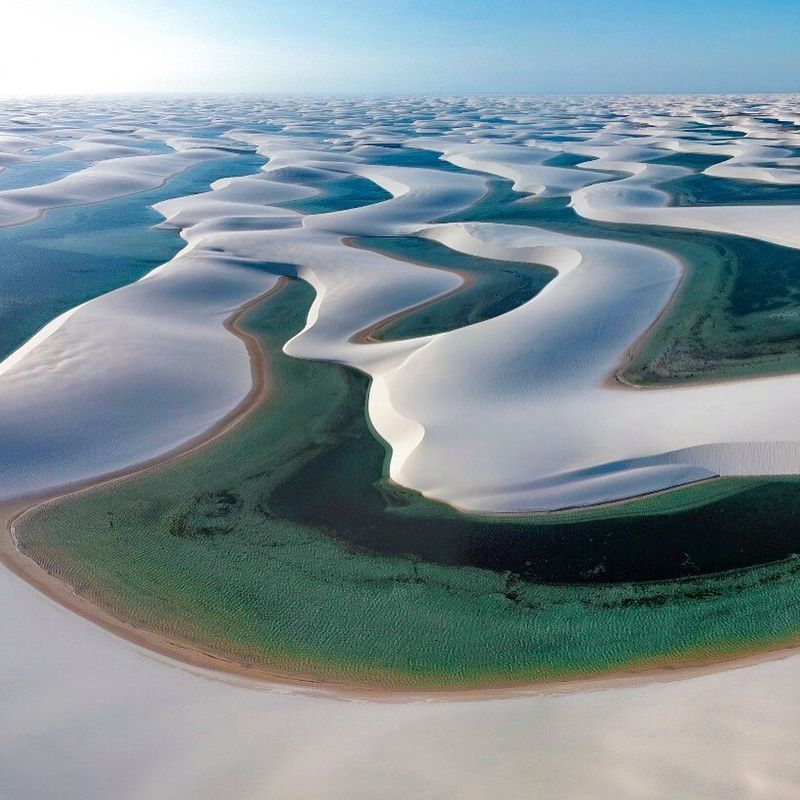
White sand dunes stretch for about 1,500 square kilometers along the Brazilian coast, and between them, thousands of freshwater lagoons fill up every rainy season. The result looks like a desert that lost a bet with the ocean.
It is technically classified as a semi-arid zone, not a true desert, because enough rain falls to create this bizarre seasonal water feature.
The lagoons appear between January and June, fed by rainfall that collects in the low points between dunes. By September, many have dried up completely.
Visiting between July and September hits the sweet spot when the lagoons are still full and the sky is clearer. Swimming in a freshwater pool surrounded by white dunes is one of those experiences that takes a moment to feel real.
UNESCO added the park to the World Heritage list in 2024, recognizing its unique coastal dune and lagoon ecosystem. The nearest town is Barreirinhas, which serves as the main base for tours.
Small aircraft flights over the park offer the most dramatic perspective of the dune-and-lagoon patchwork below.
Mulafossur and Gasadalur, Faroe Islands
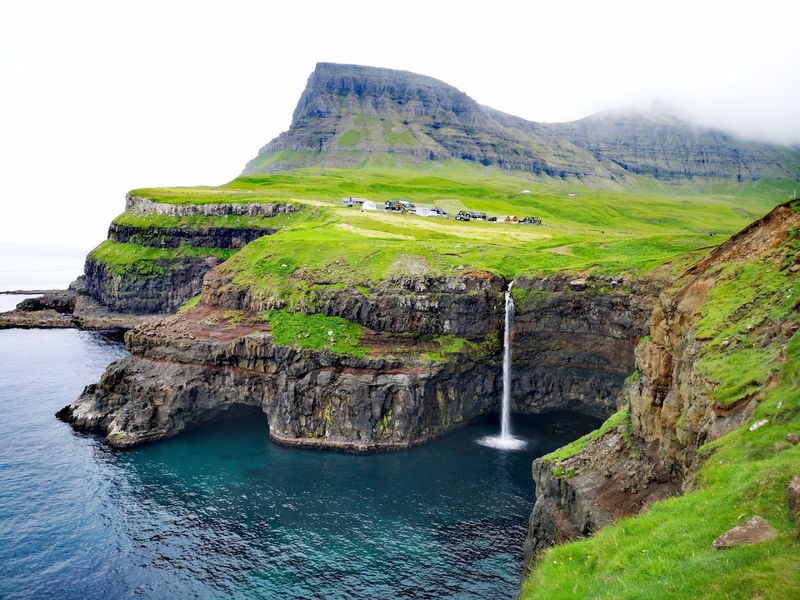
The Faroe Islands sit in the North Atlantic between Norway and Iceland, and they operate with a kind of dramatic confidence that the weather fully supports. Mulafossur waterfall tumbles off a cliff beside the village of Gasadalur, appearing to fall directly into the ocean below.
The effect is so theatrical it looks digitally composited.
Gasadalur was one of the most isolated villages in the Faroe Islands until a tunnel was blasted through the mountain in 2004. Before that, residents reached the outside world by hiking over the mountain on foot.
The village now has easier access, but it still only has a handful of residents and an atmosphere of quiet defiance against geography.
The best light hits the waterfall in the late afternoon when the sun is lower in the sky. Faroese weather is unpredictable, so pack layers and waterproofs regardless of the forecast.
The islands are small enough to drive across in a day, but rewarding enough to spend a week exploring. Bring your patience and your best rain gear.
Skellig Michael, Ireland
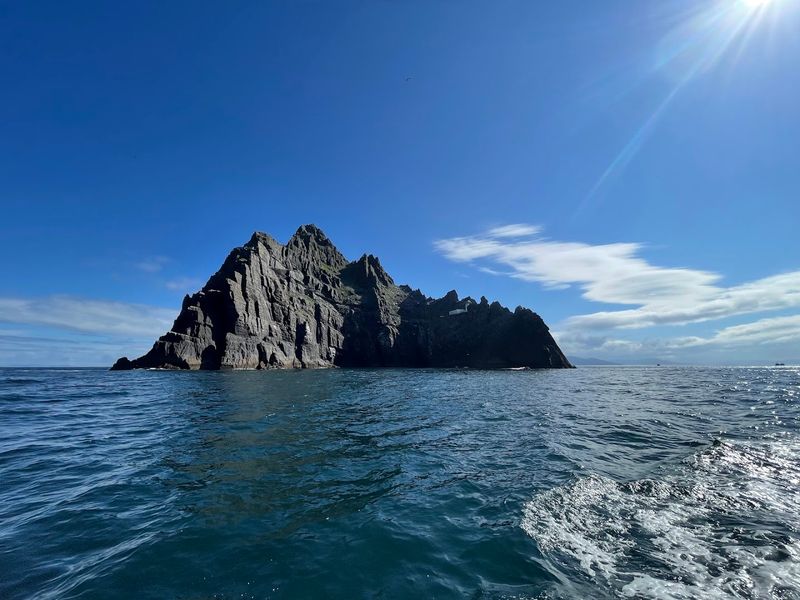
Skellig Michael is a jagged pyramid of rock rising from the Atlantic Ocean about 12 kilometers off the coast of County Kerry. Early Christian monks climbed to near its summit in the 6th century and built a monastery out of dry stone that has survived over 1,400 years of Atlantic storms.
No mortar. Just stone stacked with extraordinary precision.
Star Wars fans will recognize the island immediately. Skellig Michael was used as the location of Luke Skywalker’s hiding place in “The Force Awakens” and “The Last Jedi.” The monks who built those beehive huts were not thinking about intergalactic franchises, but the landscape suits the role perfectly.
Boat trips to the island run from late May to early October, weather permitting. The crossing can be rough, and sea sickness tablets are strongly recommended by almost everyone who has made the trip.
Once on the island, 618 steep stone steps lead to the monastery. The isolation, the ocean, and the ancient stonework combine into something genuinely unforgettable.



