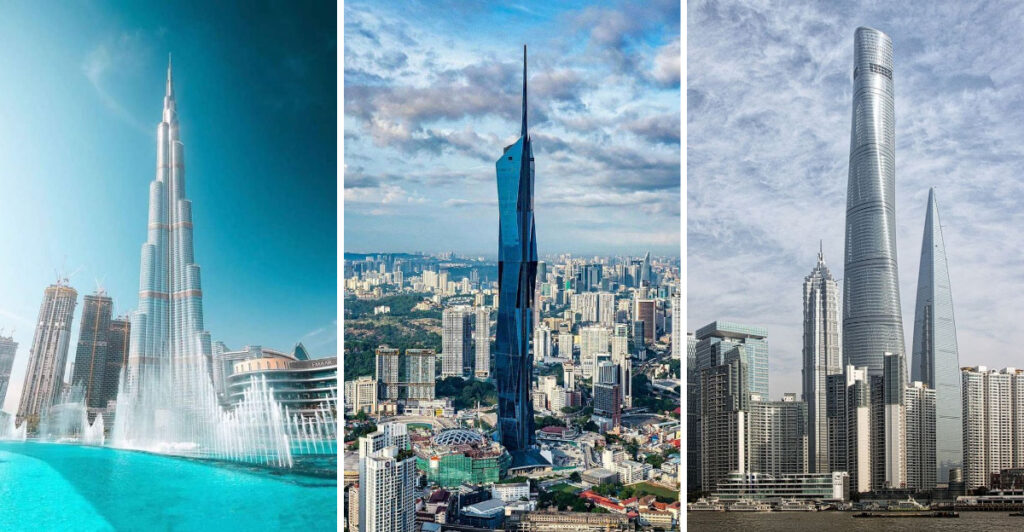
Some buildings don’t just touch the sky, they completely redefine it. The world’s tallest skyscrapers are jaw-dropping feats of engineering, creativity, and sheer ambition, rising hundreds of stories above bustling cities across the globe.
From twisting glass towers in Shanghai to glittering giants in Dubai, these structures tell the story of human ingenuity at its most daring. Heights are based on official architectural measurements recognized by the Council on Tall Buildings and Urban Habitat (CTBUH).
Burj Khalifa — Dubai, United Arab Emirates
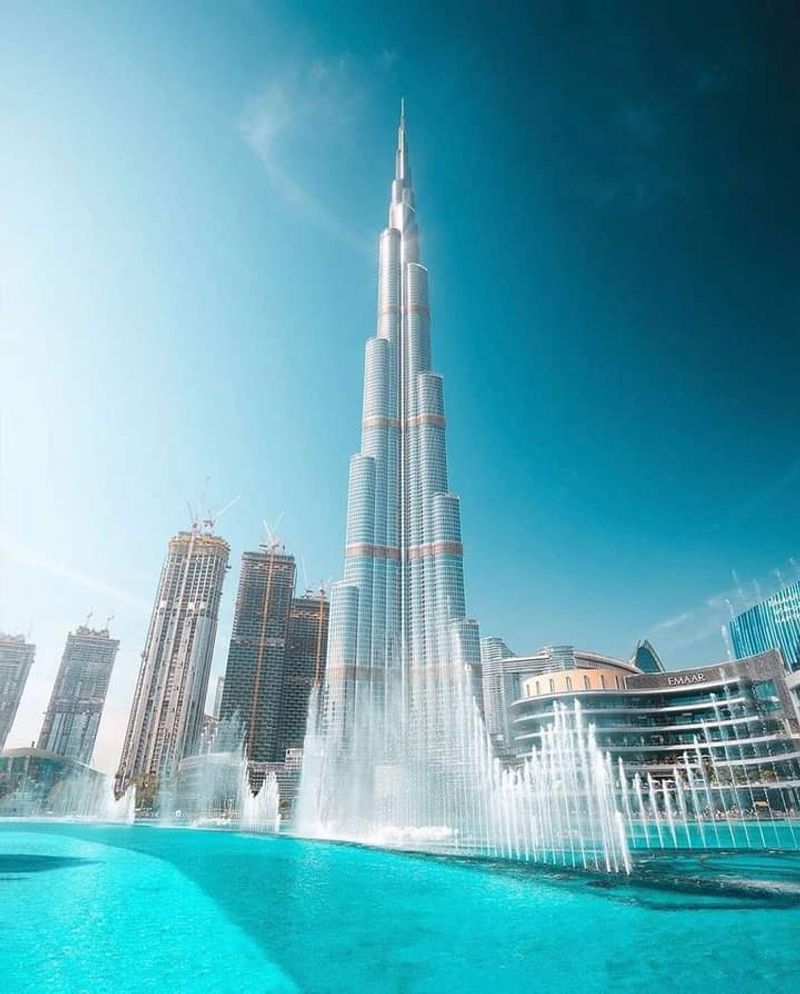
Standing at a staggering 828 meters (2,717 feet), the Burj Khalifa isn’t just the tallest building on Earth — it’s basically a city stacked on top of itself. Opened in January 2010, this Dubai icon holds over a dozen world records and has been spotted from more than 95 kilometers away on a clear day.
That’s not a building. That’s a landmark visible from practically outer space.
The tower was designed by architect Adrian Smith and takes visual inspiration from the Hymenocallis desert flower. Its spiraling, tapering silhouette helps reduce wind pressure, which is a pretty important detail when you’re basically poking through the clouds.
The exterior is covered in more than 26,000 glass panels, each one installed by hand.
Visitors can ride to the observation deck on the 148th floor, called “At the Top SKY,” for some of the most breathtaking views on the planet. On the ground floor, a massive fountain show dazzles crowds every evening.
The Burj Khalifa is proof that sometimes the most outrageous ideas become the most unforgettable realities.
Merdeka 118 — Kuala Lumpur, Malaysia
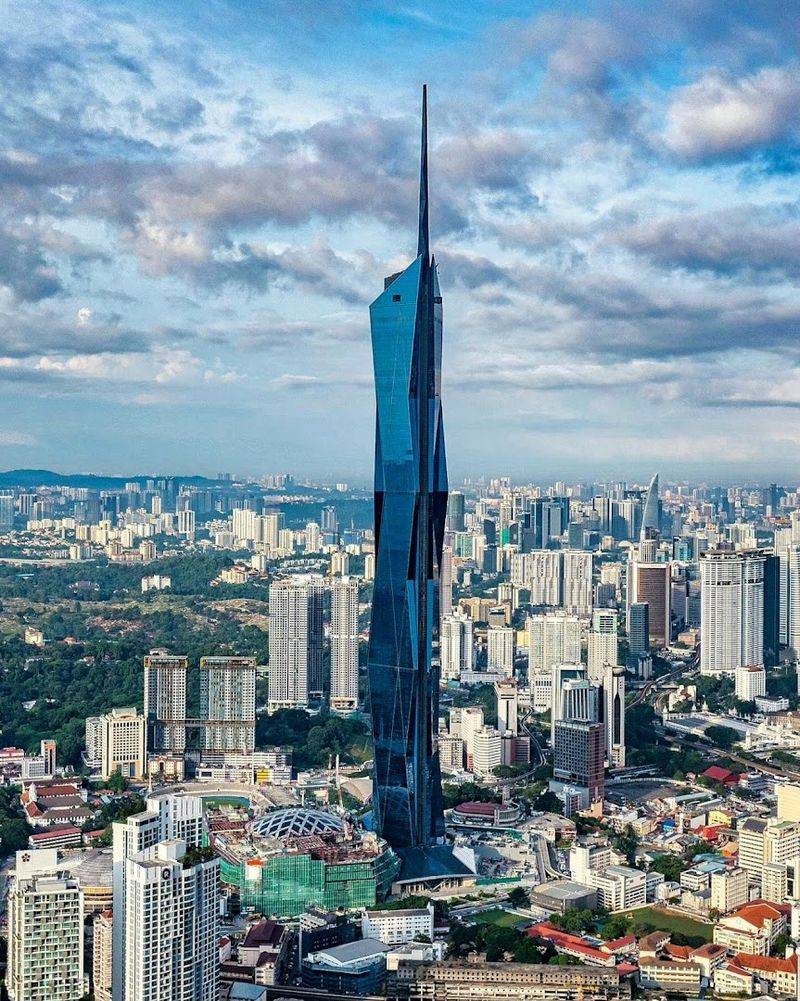
Completed in 2023, Merdeka 118 shot straight to second place on the global height charts, soaring 679 meters (2,227 feet) above Kuala Lumpur. The name “Merdeka” means independence in Malay, and the tower sits near the very field where Malaysia declared its freedom from British rule in 1957.
That’s some serious symbolic weight for one building to carry.
The tower’s faceted diamond-like exterior was directly inspired by traditional Malaysian crafts and cultural motifs. Each angular panel catches sunlight differently throughout the day, giving the building a shimmering, almost living appearance.
Inside, the tower houses offices, a luxury hotel, and a sky observation deck that offers views stretching for miles in every direction.
Construction took over a decade, and the engineering challenges were enormous. The building sits in a region prone to seismic activity, so engineers had to design a foundation system capable of handling extraordinary forces from below.
The observation deck on the 118th floor is one of the highest publicly accessible viewpoints in the world. Merdeka 118 is Malaysia’s proudest architectural statement, and honestly, it earns every meter of that title.
Shanghai Tower — Shanghai, China
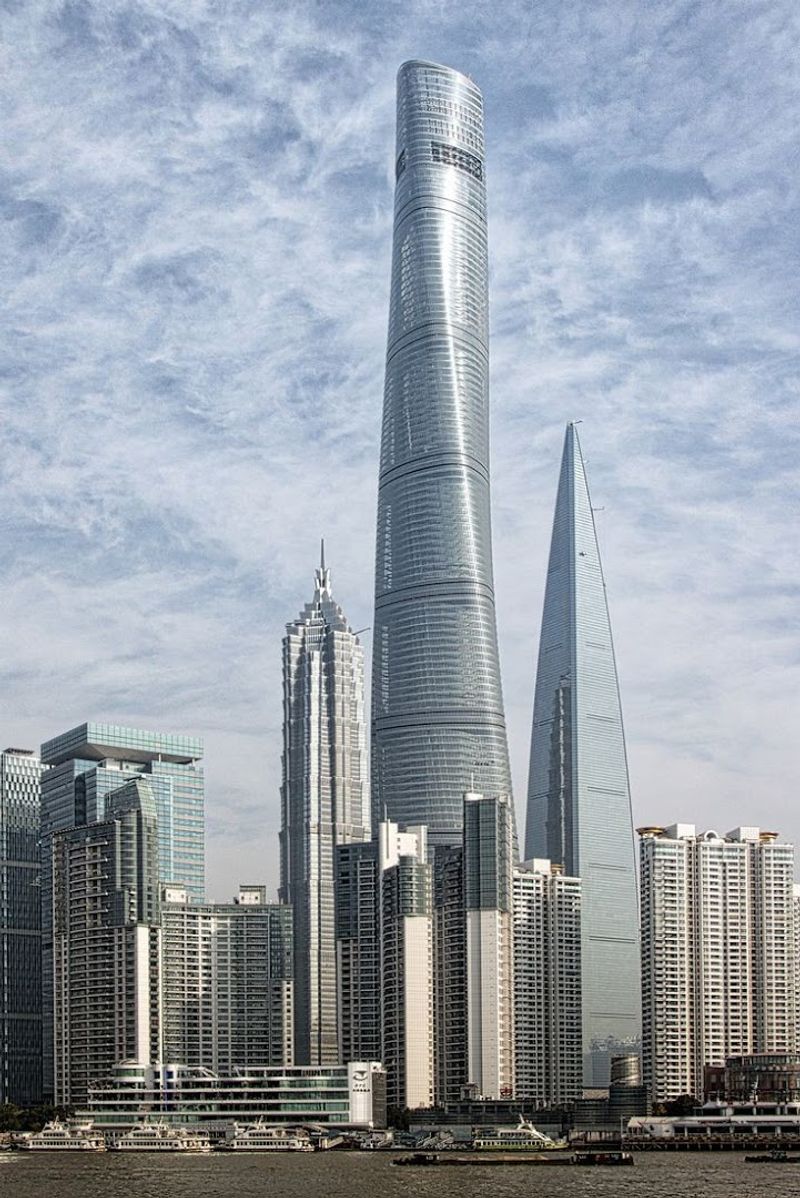
Whoever designed the Shanghai Tower clearly decided that straight lines were overrated. This remarkable 632-meter (2,073-foot) giant twists 120 degrees from base to top, a design choice that does far more than look incredible.
The spiral shape actually reduces wind loads on the building by 24 percent, saving millions in construction materials and making the whole structure more stable.
Completed in 2015, Shanghai Tower is the tallest building in China and the third tallest on Earth. It functions like a vertical neighborhood, divided into nine cylindrical zones stacked on top of each other.
Each zone has its own sky lobby, gardens, restaurants, and public spaces, meaning residents and visitors rarely need to travel far for anything.
The building’s double-skin glass facade traps air between two layers, acting as natural insulation and dramatically cutting energy costs. Wind turbines installed near the top generate electricity for common areas.
Shanghai Tower also holds the record for the world’s fastest elevators, which travel at a dizzying 20.5 meters per second. Riding to the top observation deck takes under a minute.
For a building this tall, that feels almost too easy.
Makkah Royal Clock Tower — Mecca, Saudi Arabia
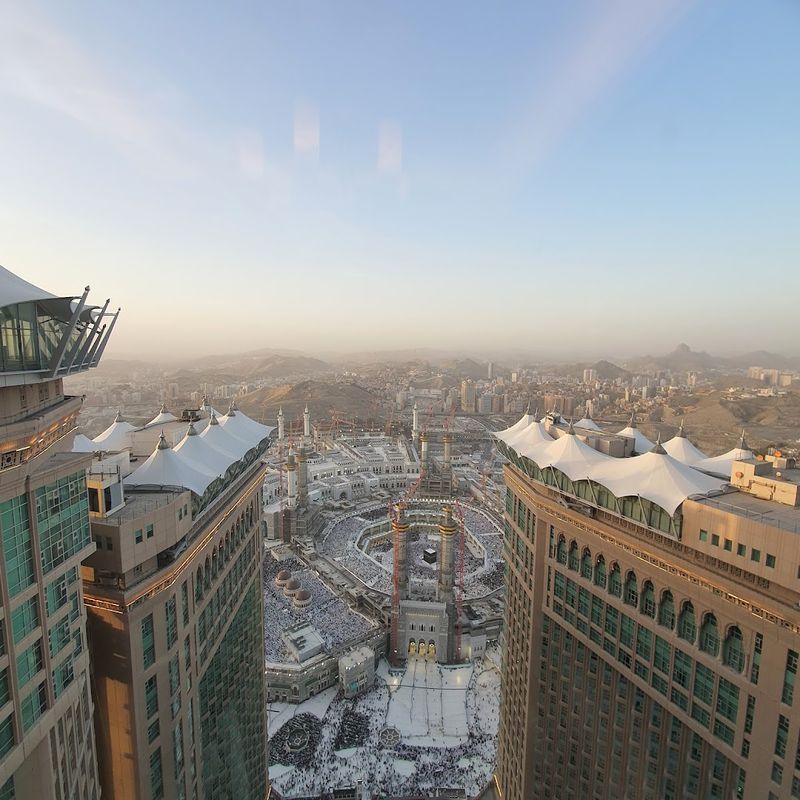
Few buildings on Earth carry as much religious and cultural weight as the Makkah Royal Clock Tower. Rising 601 meters (1,972 feet) above the holiest city in Islam, this tower’s four enormous clock faces are each larger than the famous Big Ben clock in London.
The clocks are visible from over 25 kilometers away, helping millions of Muslim pilgrims keep track of daily prayer times.
The tower is the centerpiece of the Abraj Al Bait complex, a collection of seven massive hotel towers built directly beside the Grand Mosque. Every year, more than two million pilgrims arrive in Mecca for the Hajj pilgrimage, and the complex was built specifically to accommodate this extraordinary flow of visitors.
The tower alone contains a hotel with over 800 rooms.
At the very top of the tower sits a massive crescent moon symbol, illuminated at night and visible across the entire city. The clock faces themselves are decorated with Islamic calligraphy and ornamental geometric patterns.
Construction required moving a historic Ottoman fortress that once stood on the same hill, a decision that sparked considerable controversy. Love it or question it, the Makkah Royal Clock Tower is absolutely unlike anything else on Earth.
Ping An Finance Centre — Shenzhen, China
Shenzhen was a small fishing village just 40 years ago. Today it’s home to one of the world’s tallest skyscrapers, and that transformation says everything about China’s breathtaking economic rise.
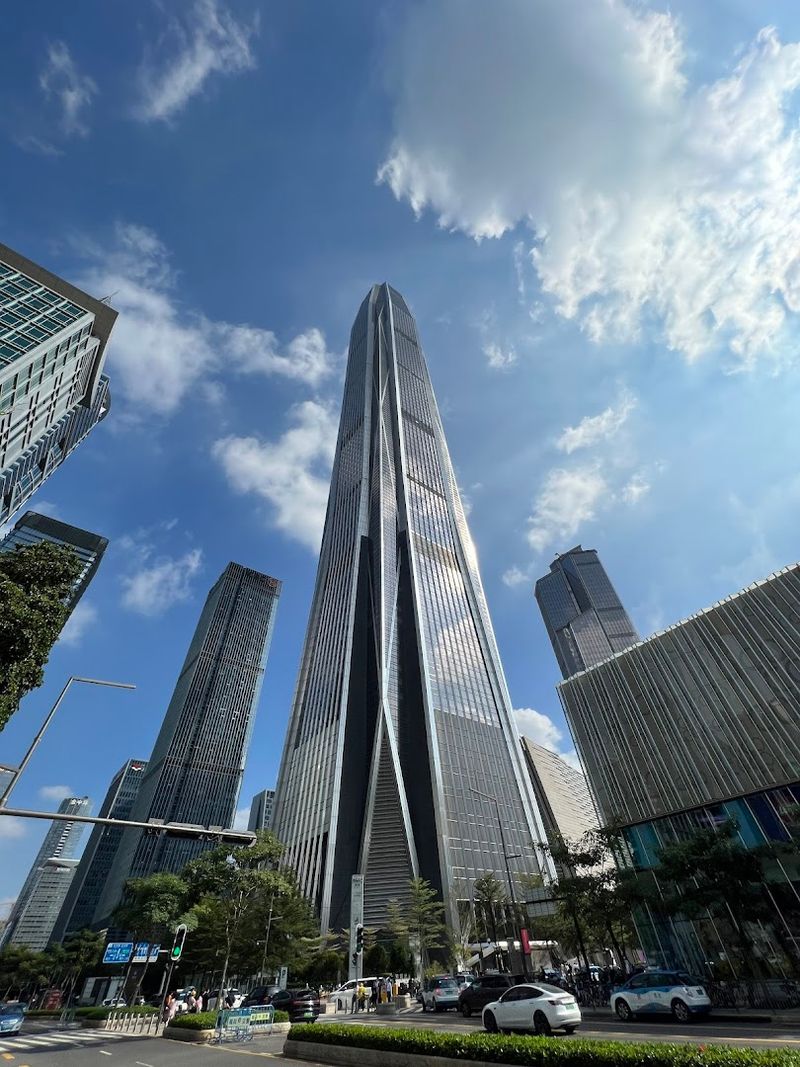
The Ping An Finance Centre stands 599 meters (1,965 feet) tall, making it the fourth tallest building on Earth, and its gleaming, sharp-edged silhouette dominates the city’s already impressive skyline.
Completed in 2017, the tower was originally planned to include a spire that would have pushed its height even higher. Strong coastal winds in the region made the spire impractical, so engineers redesigned the crown into its current elegant tapered form.
The observation deck on the 116th floor offers visitors a sweeping panoramic view of Shenzhen, Hong Kong, and the Pearl River Delta.
The building is home to the headquarters of Ping An Insurance, one of the world’s largest financial companies. It also contains offices, a luxury hotel, and high-end retail spaces.
Engineers used a special high-strength concrete mix to support the enormous weight of the upper floors. Shenzhen’s skyline is already one of the most dramatic in Asia, and the Ping An Finance Centre is its undisputed star performer.
Lotte World Tower — Seoul, South Korea
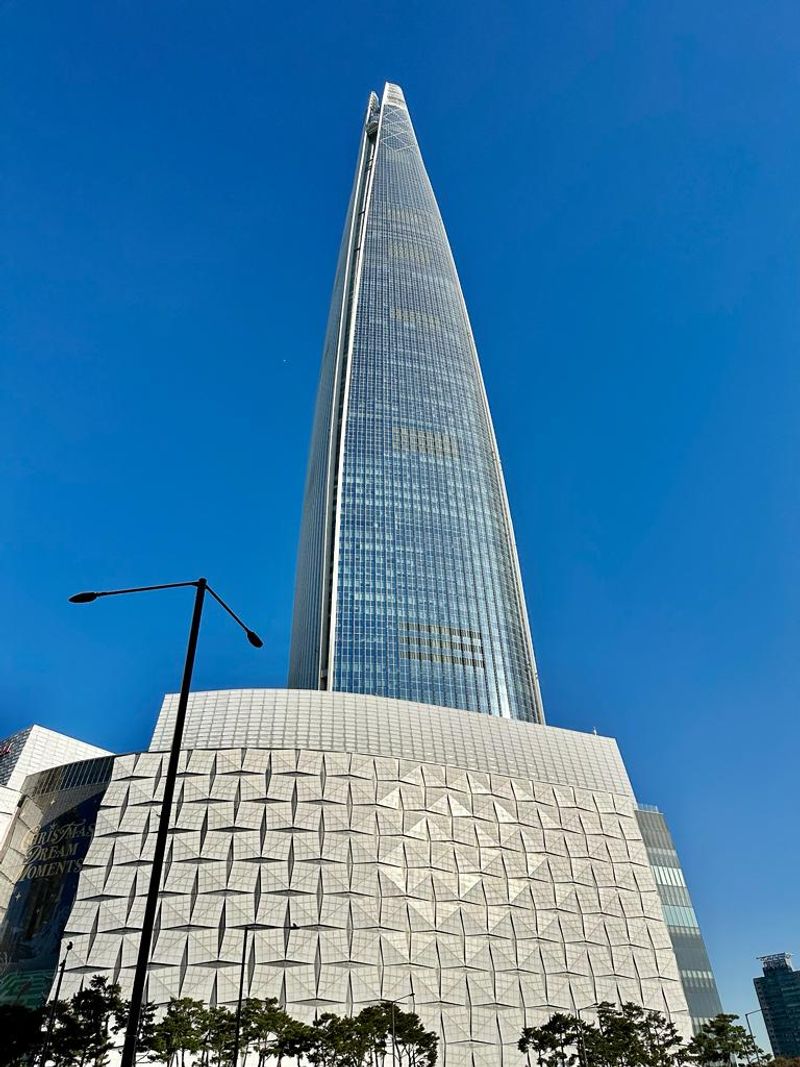
South Korea’s tallest building doesn’t just scrape the sky, it does so with undeniable elegance. The Lotte World Tower in Seoul reaches 555 meters (1,819 feet) into the air, and its graceful, tapering silhouette was directly inspired by the brushstroke shapes found in traditional Korean calligraphy and porcelain pottery.
It’s a skyscraper with genuine cultural soul.
Completed in 2017 after years of construction and planning debates, the tower sits in the lively Jamsil neighborhood alongside a massive shopping mall, theme park, and aquarium. The observation deck, called Seoul Sky, occupies floors 117 through 123 and includes a glass-floored section that gives brave visitors a stomach-dropping look straight down to the street below.
Over four million people visited in the first year alone.
The building is engineered to withstand earthquakes up to magnitude 9.0 and wind speeds strong enough to topple lesser structures. A massive 3,600-ton concrete core runs through the center, acting as the tower’s backbone.
The tower’s mixed-use design means it functions as a small city, with residences, offices, a hotel, and entertainment all sharing space. Seoul’s skyline gained something truly special the day Lotte World Tower opened its doors.
One World Trade Center — New York, New York
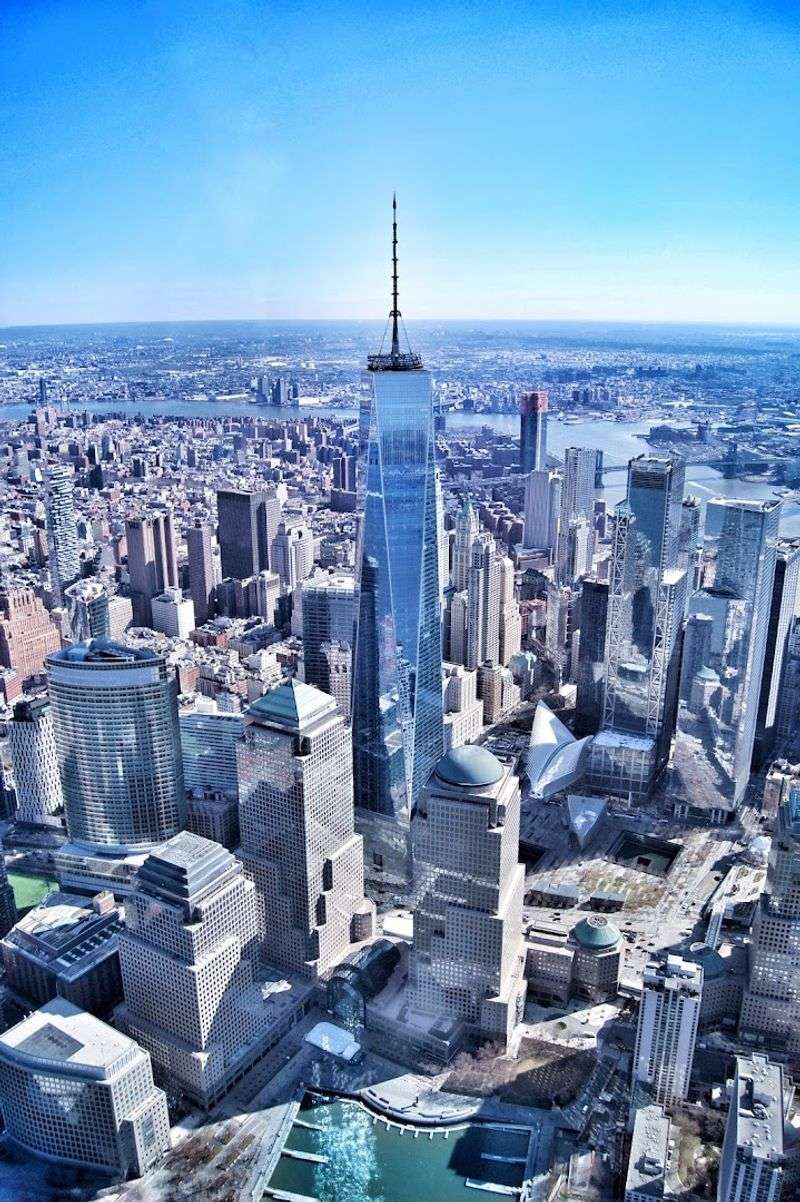
At exactly 1,776 feet (541 meters) tall, One World Trade Center carries its height like a badge of honor. That number is no accident.
It matches the year the United States declared independence, making this skyscraper one of the most symbolically loaded structures ever built. Rising from the footprint of the original Twin Towers, it represents resilience, memory, and an absolute refusal to be knocked down.
Construction officially began in 2006 and the building opened in 2014, taking eight years to complete. The design features a square base that transitions into eight isosceles triangles forming a perfect octagon at mid-height, then tapers back to a square at the top.
The result is a tower that looks different from every angle, constantly shifting as you move around it.
The observation deck, called One World Observatory, sits on floors 100 through 102 and offers panoramic views of the Hudson River, Brooklyn, and the sprawling Manhattan grid below. The lobby features walls lined with actual soil from all 50 U.S. states.
Security measures here are among the most advanced of any building anywhere on the planet. One World Trade Center isn’t just the tallest building in the Western Hemisphere.
It’s a monument with a pulse.
Guangzhou CTF Finance Centre — Guangzhou, China
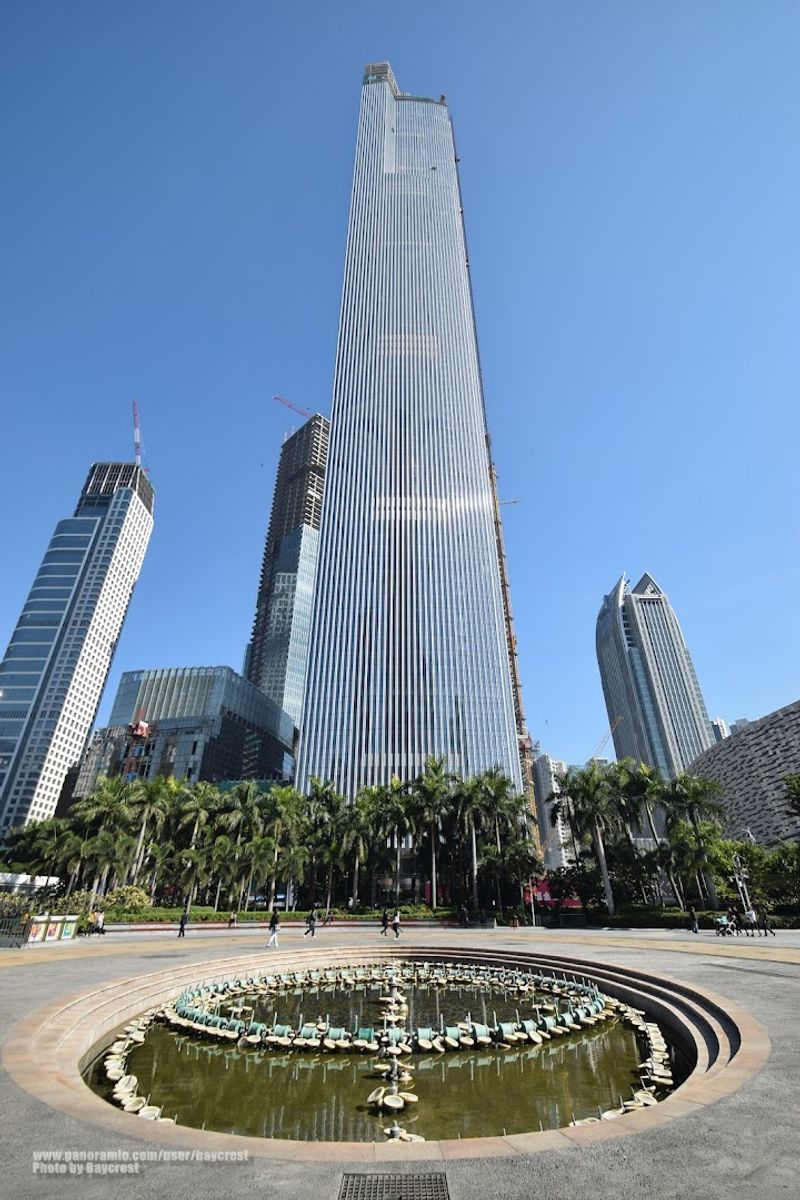
Guangzhou’s skyline has no shortage of impressive towers, but the CTF Finance Centre manages to stand out from the crowd at a commanding 530 meters (1,739 feet). Completed in 2016, this mixed-use giant packs offices, luxury residences, and a five-star hotel into one sleek vertical package.
The building’s developers named it after Chow Tai Fook, one of Hong Kong’s most iconic jewelry brands, which gives it a fittingly glamorous identity.
The tower features some of the fastest elevators on the planet, capable of traveling at 20 meters per second. That means the journey from ground level to the upper floors takes just about 43 seconds.
Passengers reportedly feel a slight pressure change in their ears, similar to taking off in an airplane, which is a wild thing to experience inside a building.
Structurally, the tower uses a high-performance steel frame combined with reinforced concrete cores to handle both gravity loads and the powerful typhoon winds that regularly sweep through southern China. The building’s glass curtain wall was engineered to flex slightly under wind pressure rather than resist it rigidly.
Guangzhou CTF Finance Centre proves that China’s appetite for extraordinary vertical architecture shows absolutely no signs of slowing down.
Tianjin CTF Finance Centre — Tianjin, China
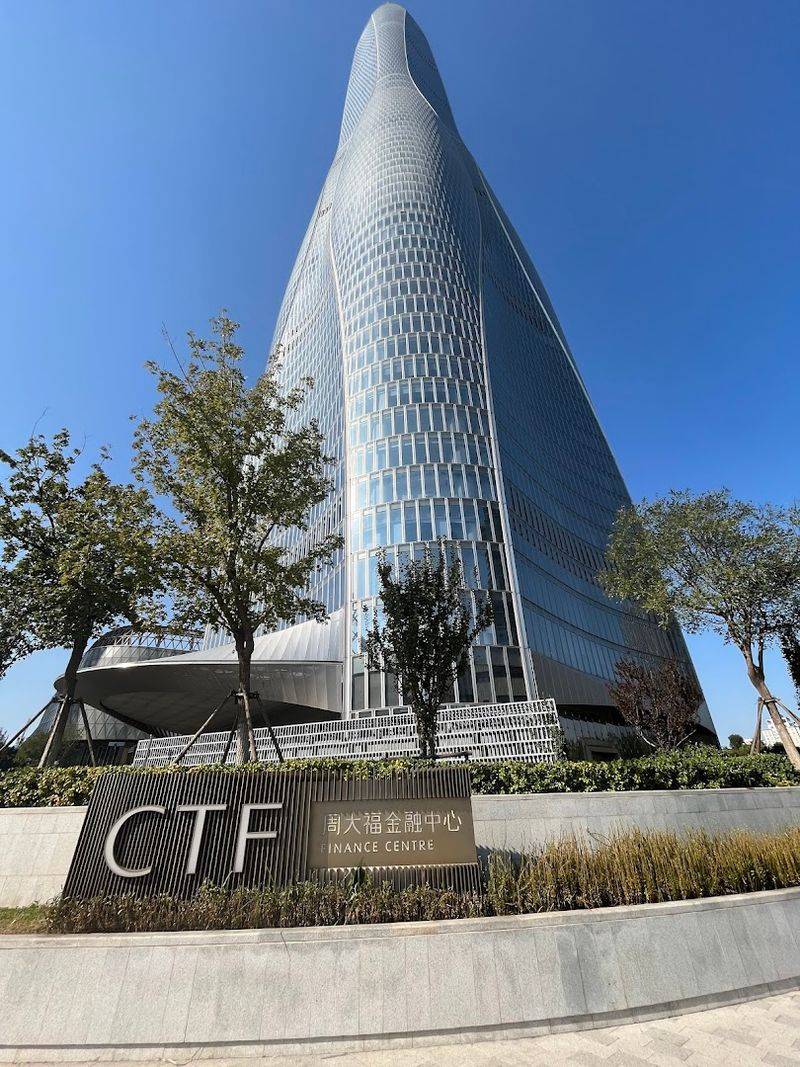
Same height, different city, and a personality all its own. The Tianjin CTF Finance Centre matches its Guangzhou sibling at 530 meters (1,739 feet), but its aerodynamic design and northern Chinese setting give it a completely distinct character.
Completed in 2019, the building rises above the Binhai New Area, one of China’s most ambitious urban development zones, sitting right alongside the Haihe River.
The tower’s rounded, streamlined shape wasn’t chosen purely for looks. Tianjin experiences strong seasonal winds, and the building’s curved profile helps redirect airflow around the structure rather than fighting against it head-on.
This reduces the swaying movement that tall buildings naturally experience during high winds, making life inside considerably more comfortable for the thousands of people who work and live there.
Inside, the building houses a Chow Tai Fook-branded luxury hotel, high-end apartments, premium office floors, and retail spaces at the base. The construction involved pouring one of the largest single concrete foundations in Chinese building history, requiring a non-stop 60-hour pour to avoid structural weak points.
Tianjin’s skyline has transformed dramatically over the past two decades, and the CTF Finance Centre stands as the most dramatic proof of that transformation. Not bad for a city many outsiders have never heard of.
CITIC Tower (China Zun) — Beijing, China
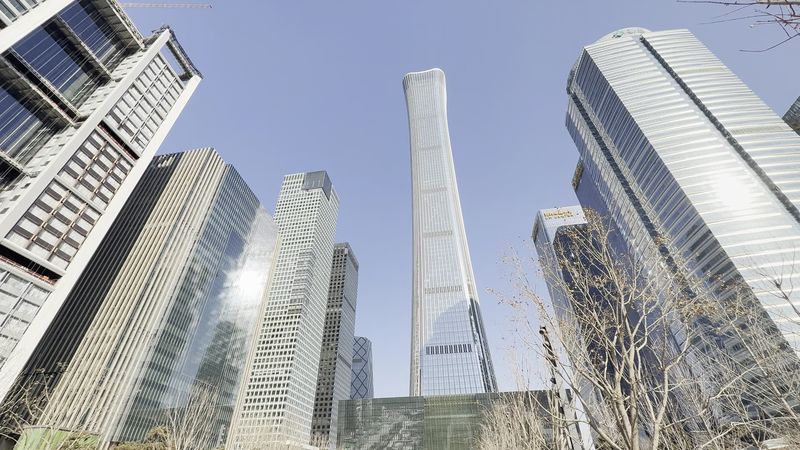
Beijing’s tallest building takes its nickname from a 3,000-year-old drinking vessel. The “Zun” was an ancient Chinese bronze ceremonial cup, and the tower’s gently curved, widening base and narrowing mid-section mirror that shape almost exactly.
It’s a rare case of a modern supertall skyscraper drawing genuine inspiration from ancient art history, and the result is a silhouette unlike anything else in the world.
Standing 528 meters (1,731 feet) tall, CITIC Tower was completed in 2018 and quickly became the defining feature of Beijing’s Central Business District. The building houses the headquarters of CITIC Group, one of China’s largest state-owned investment companies.
Office floors occupy most of the tower’s interior, with sky lobbies and public amenities distributed throughout the upper sections.
Beijing sits in an earthquake-prone zone, so engineers designed an extraordinarily robust structural system featuring a reinforced concrete core combined with a massive steel mega-frame. The building is rated to survive major seismic events.
Construction crews worked around the clock for years to complete it on schedule. CITIC Tower also had to navigate strict height restrictions near Beijing’s historic center, making its location in the CBD a carefully negotiated compromise between modern ambition and respect for the city’s ancient heritage.
Taipei 101 — Taipei, Taiwan
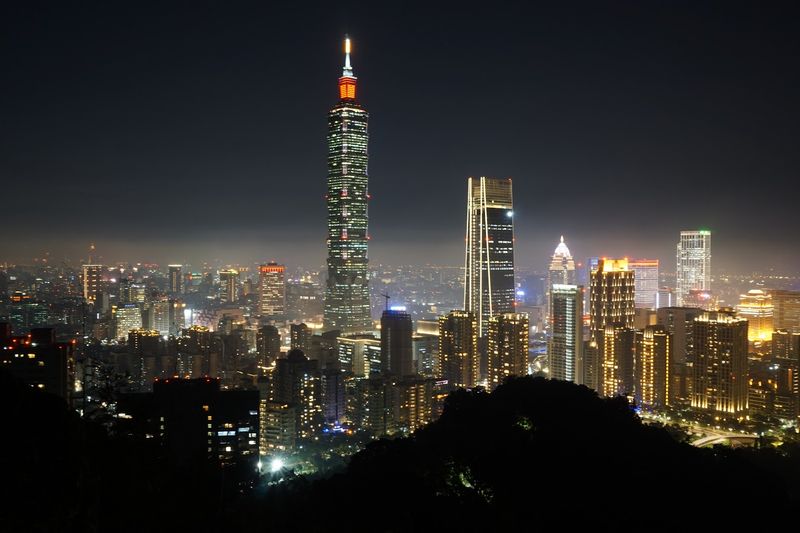
For a brief but glorious stretch between 2004 and 2010, Taipei 101 was the tallest building on the planet. It has since been overtaken, but no other skyscraper on this list has quite the same architectural warmth.
Its pagoda-inspired stacked segments, each one slightly smaller than the last, give the building a rhythm and personality that pure glass-and-steel towers rarely achieve. Standing 508 meters (1,667 feet) tall, it remains one of the most admired skyscrapers ever built.
Taiwan sits in one of the world’s most geologically active zones, threatened by both powerful typhoons and frequent earthquakes. Taipei 101’s engineers responded with a remarkable solution: a 660-ton steel pendulum called a tuned mass damper, suspended inside the building between floors 88 and 92.
When wind or seismic activity causes the tower to sway, the pendulum swings in the opposite direction, counteracting the movement. Visitors can actually see it through glass panels.
Every New Year’s Eve, Taipei 101 hosts one of Asia’s most spectacular fireworks displays, launching pyrotechnics directly from the building’s exterior. The observation deck on the 89th floor offers sweeping views of Taipei’s mountain-ringed basin.
Taipei 101 is more than a skyscraper. It’s a national celebration in architectural form.
Shanghai World Financial Center — Shanghai, China
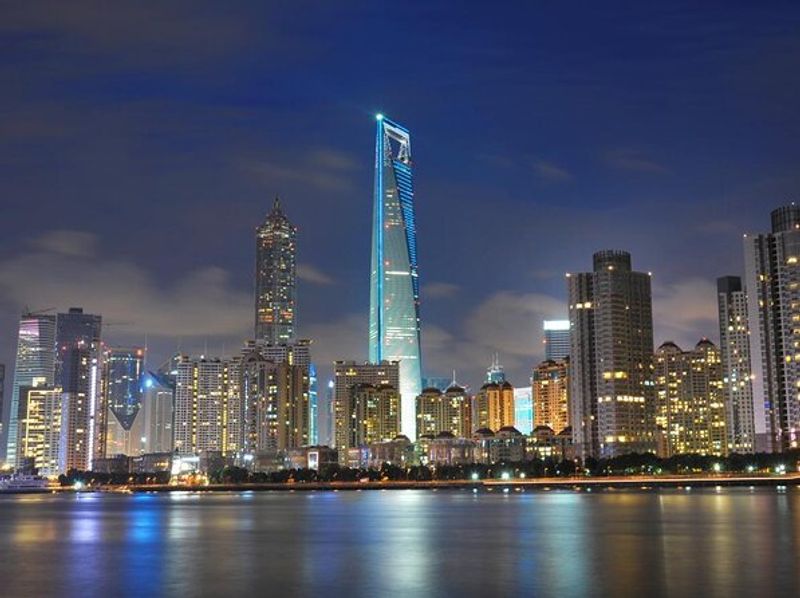
Locals call it the Bottle Opener, and once you see it, there’s really no better description. The Shanghai World Financial Center features a massive trapezoidal opening cut near its very top, a design choice that was both practical and controversial.
The original plan called for a circular hole, but that design was scrapped after critics felt it too closely resembled the rising sun symbol on the Japanese flag. A trapezoid it became.
Standing 492 meters (1,614 feet) tall, the tower was completed in 2008 after more than a decade of planning and construction delays, including a pause caused by the 1997 Asian financial crisis. It contains offices, luxury hotel rooms operated by the Park Hyatt brand, and an observation deck on the 100th floor that features a glass floor section.
On a clear day, visitors can see the curve of the Earth from up there.
The building sits in Shanghai’s Pudong financial district, directly alongside Shanghai Tower and Jin Mao Tower, creating one of the most dramatic clusters of supertall skyscrapers anywhere in the world. Together, the three towers have become known as the “Shanghai Three,” a skyline trio that draws photographers from every corner of the globe.
The Bottle Opener earned its nickname honestly.
International Commerce Centre — Hong Kong
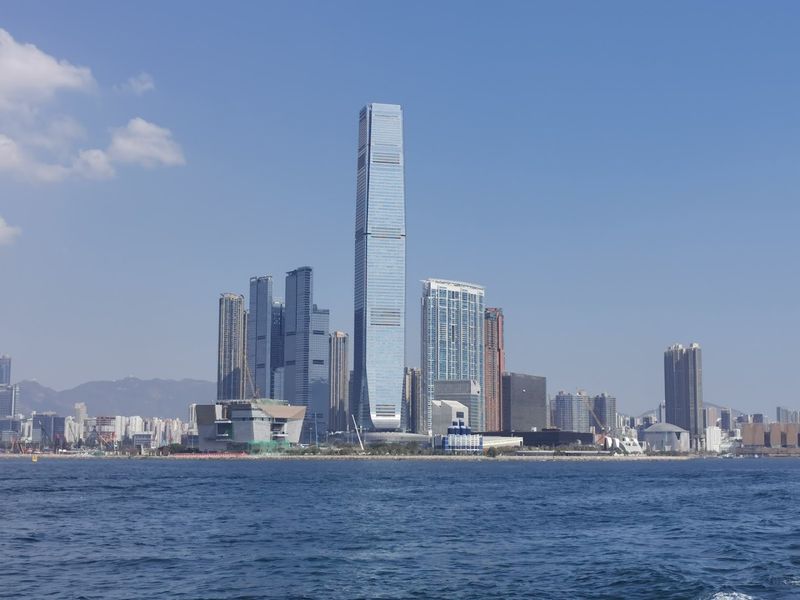
Victoria Harbour has one of the most photographed skylines on Earth, and the International Commerce Centre is its tallest exclamation point. Rising 484 meters (1,588 feet) above the Kowloon waterfront, this tower anchors Hong Kong’s West Kowloon district and gives the harbor’s northern shoreline a dramatic counterpoint to the famous skyline across the water.
The view from the harbor at night, with the ICC lit up against the sky, is genuinely unforgettable.
Completed in 2010, the tower contains a mix of premium office floors and the sky-high Ritz-Carlton hotel, which begins on the 102nd floor. That makes it one of the highest hotels in the world by starting floor, an impressive boast for any property.
The observation deck, called Sky100, sits on the 100th floor and offers 360-degree views of the city, the harbor, and the surrounding islands.
The building’s design uses a distinctive pattern of horizontal bands across its glass facade, giving it a layered, almost woven appearance from a distance. A high-speed MTR subway station sits directly beneath the building, connecting it instantly to the rest of Hong Kong’s transport network.
Few skyscrapers anywhere in the world are as deeply embedded in their city’s daily life as the International Commerce Centre.
Wuhan Greenland Center — Wuhan, China
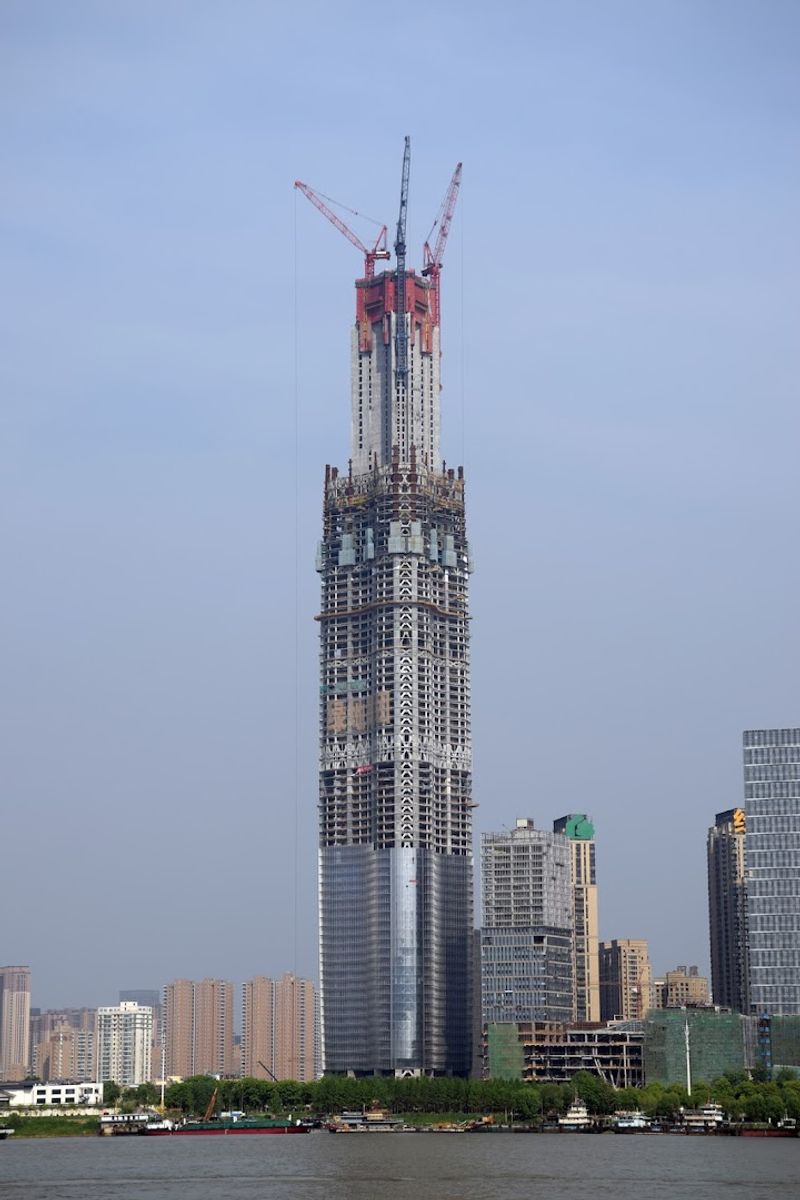
Here’s a skyscraper with a story that includes a dramatic plot twist. Wuhan Greenland Center was originally designed to reach 636 meters, which would have made it taller than the Shanghai Tower.
Authorities later imposed height restrictions, and the building was completed at 476 meters (1,562 feet) instead. It still ranks among the tallest buildings in China, just not quite the record-breaker it was meant to be.
The tower’s aerodynamic design features three curved faces that taper to a sharp point at the crown, giving it a blade-like appearance against the Wuhan skyline. That shape wasn’t chosen by accident.
Wuhan sits in central China and experiences significant seasonal wind events, so the building’s form was carefully engineered to slice through wind loads rather than absorb them. The result is both visually striking and structurally smart.
The building contains offices, luxury hotel rooms, serviced apartments, and retail spaces, making it a self-contained vertical community. Wuhan itself is a massive city of over 11 million people, sitting at the confluence of the Han and Yangtze rivers.
The Greenland Center gives this often-overlooked metropolis a skyline moment worthy of international attention. Despite losing its height record ambitions, it remains a genuinely impressive piece of modern architecture.
Central Park Tower — New York, New York
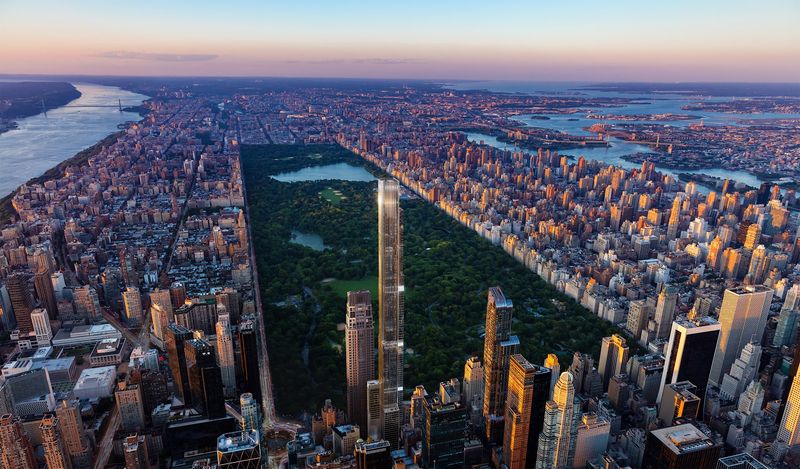
Billionaires’ Row just got a new address, and it comes with a view. Central Park Tower rises 472 meters (1,550 feet) above Midtown Manhattan, making it the tallest primarily residential building on the planet.
Every apartment in this supertall skyscraper faces Central Park, and units on the upper floors offer views stretching from the Atlantic Ocean to the Catskill Mountains on a clear day. The price tags match the altitude.
Completed in 2021, the tower was developed by Extell Development Company and designed by architecture firm Adrian Smith and Gordon Gill. Its slim, elegant profile is the result of extreme engineering.
The building is roughly 17 times taller than it is wide, which creates enormous structural challenges. Engineers solved the problem using a concrete core combined with a belt truss system that ties the outer frame to the core at multiple levels.
A Nordstrom flagship department store occupies the lower floors, while the upper levels contain some of the most expensive apartments ever listed in New York City history. One penthouse was listed at over 250 million dollars.
The building also features a private amenity floor called Central Park Club, with a pool, gym, and entertainment spaces reserved exclusively for residents. Central Park Tower is less a building and more a vertical neighborhood for the ultra-wealthy.
Lakhta Center — Saint Petersburg, Russia
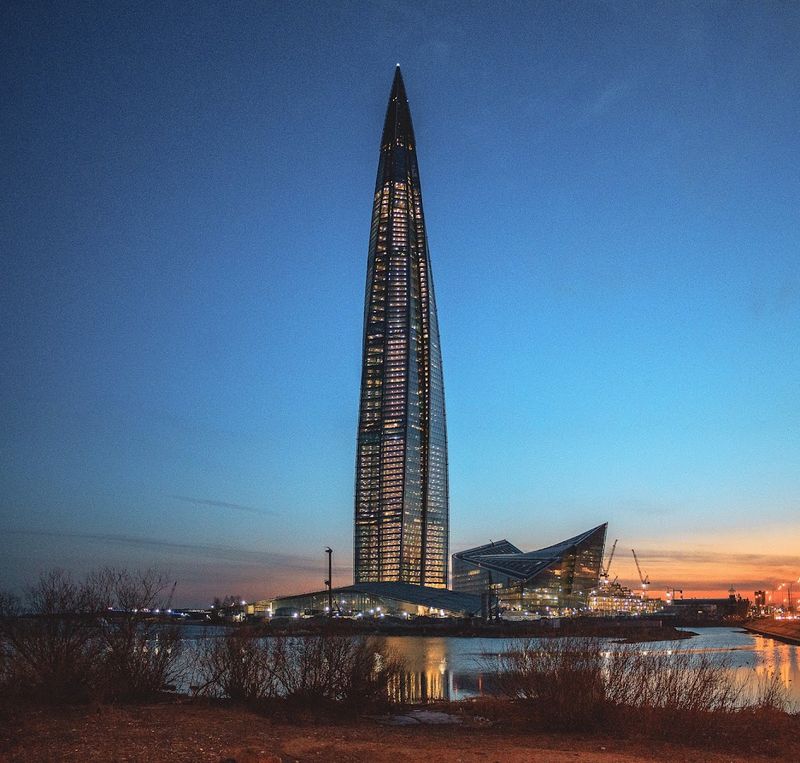
Saint Petersburg is famous for its Baroque palaces, grand canals, and imperial history. So naturally, someone decided to build Europe’s tallest skyscraper right next to the Gulf of Finland, and it works beautifully.
Lakhta Center rises 462 meters (1,516 feet) with a spiraling glass facade that twists 90 degrees from base to tip, catching and reflecting the northern light in ways that change dramatically with the seasons.
Completed in 2019, the tower serves as the global headquarters of Gazprom, Russia’s state-owned energy giant. Despite its corporate origins, the building was designed with significant public amenities in mind.
A cantilevered public observatory and a panoramic restaurant occupy the upper floors, offering views across the Gulf of Finland that stretch for dozens of kilometers on a clear day.
The building’s location on the shores of the Gulf presented serious engineering challenges. The ground beneath Saint Petersburg is notoriously soft and waterlogged, so engineers had to drive enormous concrete piles deep into the earth to create a stable foundation.
The entire structure rests on a foundation that took years to prepare properly. Lakhta Center divides opinion among architecture fans, but nobody disputes that it has completely transformed the visual identity of one of Europe’s most historically rich cities.
Landmark 81 — Ho Chi Minh City, Vietnam
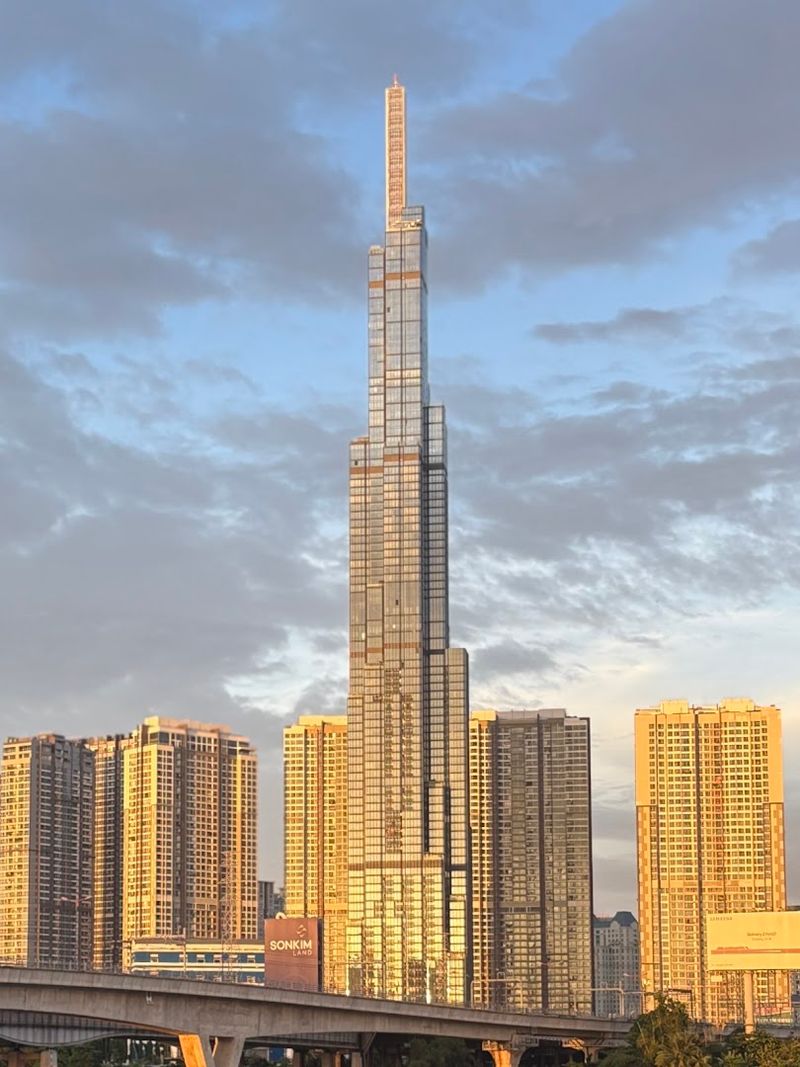
Vietnam’s economic rise has been one of the great stories of the past three decades, and no single structure captures that transformation better than Landmark 81. Towering 461 meters (1,513 feet) above Ho Chi Minh City, it became Vietnam’s tallest building when it opened in 2018, and it immediately announced the country’s arrival as a serious player in the global architecture conversation.
For a nation rebuilding from decades of conflict, this tower is a powerful statement.
The building’s design was inspired by bundles of bamboo stalks, a material deeply rooted in Vietnamese culture and daily life. The stacked, clustered facade gives the tower an organic, textured appearance that sets it apart from the smooth glass boxes that dominate many Asian skylines.
Architect Atkins designed the tower to narrow as it rises, creating a tapered silhouette that looks elegant from every angle.
The lower floors house a massive shopping mall called Vincom Center Landmark 81, while a luxury hotel operated by Marriott’s Sheraton brand occupies much of the upper section. An observation deck on the 79th, 80th, and 81st floors gives visitors panoramic views of the Saigon River snaking through the city below.
Landmark 81 draws visitors from across Southeast Asia, and its position on the riverfront makes it one of the most photogenic buildings in the entire region.
Changsha IFS Tower T1 — Changsha, China
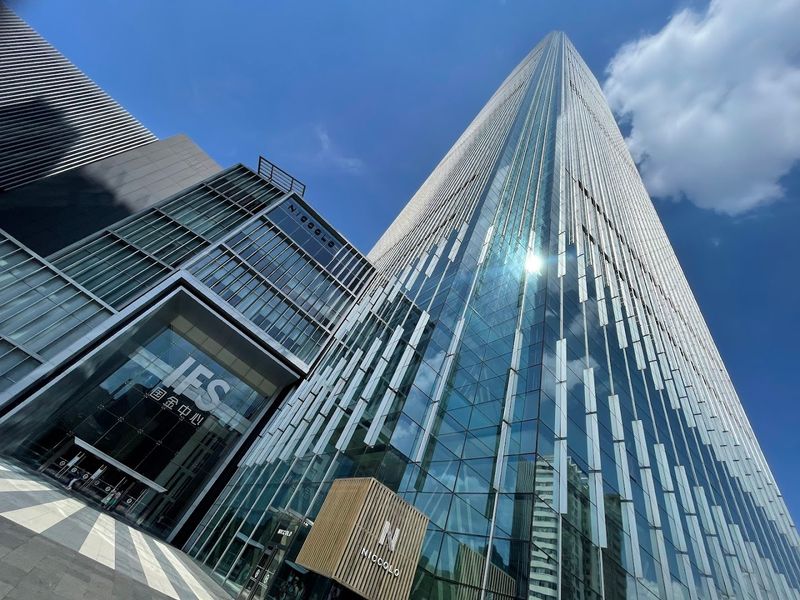
Not every city on this list is a household name in the West, but Changsha is very much a city on the move. The capital of Hunan Province in central China, it is home to the Changsha IFS Tower T1, a sleek 452-meter (1,483-foot) skyscraper that anchors one of the city’s most ambitious urban development projects.
Completed in 2017, the tower immediately became the focal point of Changsha’s rapidly evolving modern skyline.
The IFS complex, which stands for International Finance Square, combines the tower with a sprawling shopping mall, a second office tower, and a luxury hotel. The overall development was designed to create a self-contained urban hub where people can work, shop, eat, and stay without ever needing to step outside.
In a city with hot, humid summers and chilly winters, that kind of connectivity is genuinely appreciated.
One of the building’s most memorable features is the giant sculpture of a climbing figure installed on the exterior near the upper floors, visible from across the city. The figure appears to be scaling the glass facade, creating a striking visual conversation between human scale and architectural scale.
Changsha IFS Tower T1 might not get the international press coverage of its Shanghai or Beijing counterparts, but it absolutely deserves a spot on any serious list of the world’s most impressive skyscrapers.
Petronas Twin Towers — Kuala Lumpur, Malaysia
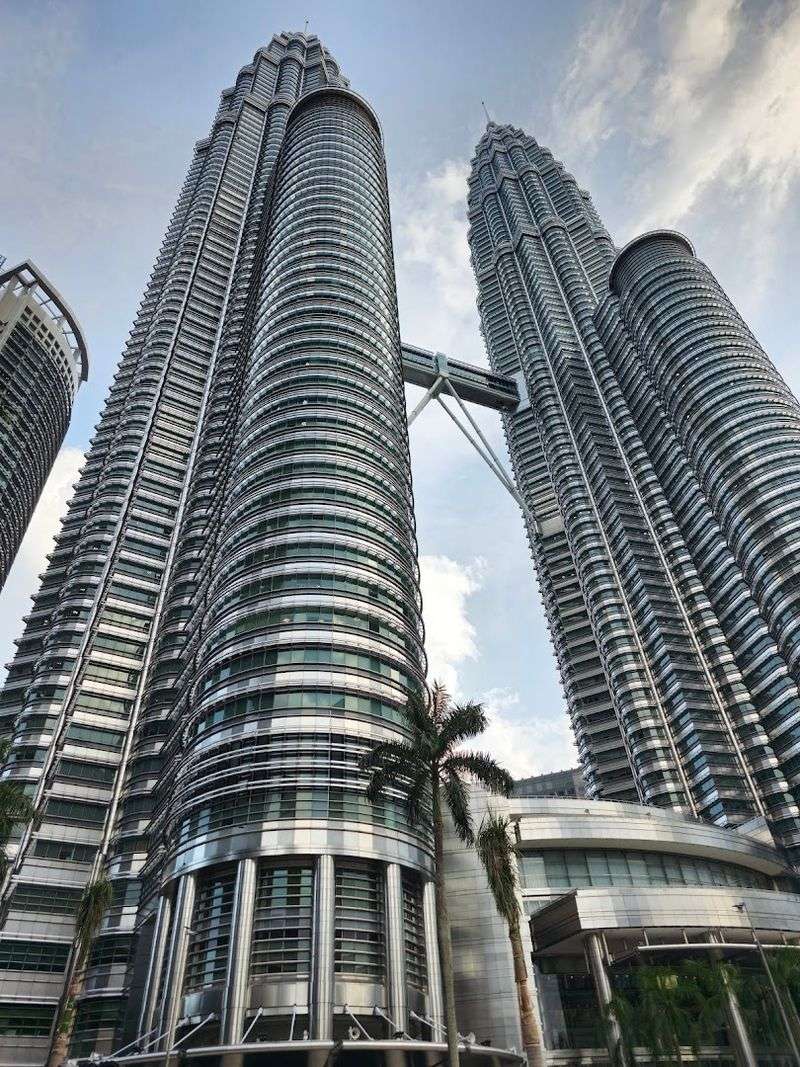
No skyline reveal in movie history hits quite like the moment the Petronas Twin Towers appear in the 1999 film Entrapment, and that cinematic fame barely scratches the surface of what these towers mean to Malaysia. Completed in 1998, the Petronas Towers held the title of world’s tallest buildings for six years and remain two of the most recognizable structures ever constructed.
Each tower stands 452 meters (1,483 feet) tall, connected by a famous skybridge at the 41st and 42nd floors.
Architect Cesar Pelli designed the towers with a floor plan based on an eight-pointed Islamic star, honoring Malaysia’s predominantly Muslim culture. The exterior features stainless steel and glass cladding that gleams brilliantly in the tropical sun.
The skybridge connecting the two towers isn’t actually attached to the main cores but instead rests on hinged joints that allow it to flex slightly as the buildings sway independently in the wind.
The towers house the headquarters of Petronas, Malaysia’s national oil company, along with offices for major international corporations, a concert hall, an art gallery, and a luxury shopping mall at the base. The observation deck on the skybridge draws hundreds of thousands of visitors each year.
The Petronas Twin Towers transformed Kuala Lumpur into a globally recognized city almost overnight, and decades later, their impact has not faded one bit.
Willis Tower — Chicago, Illinois
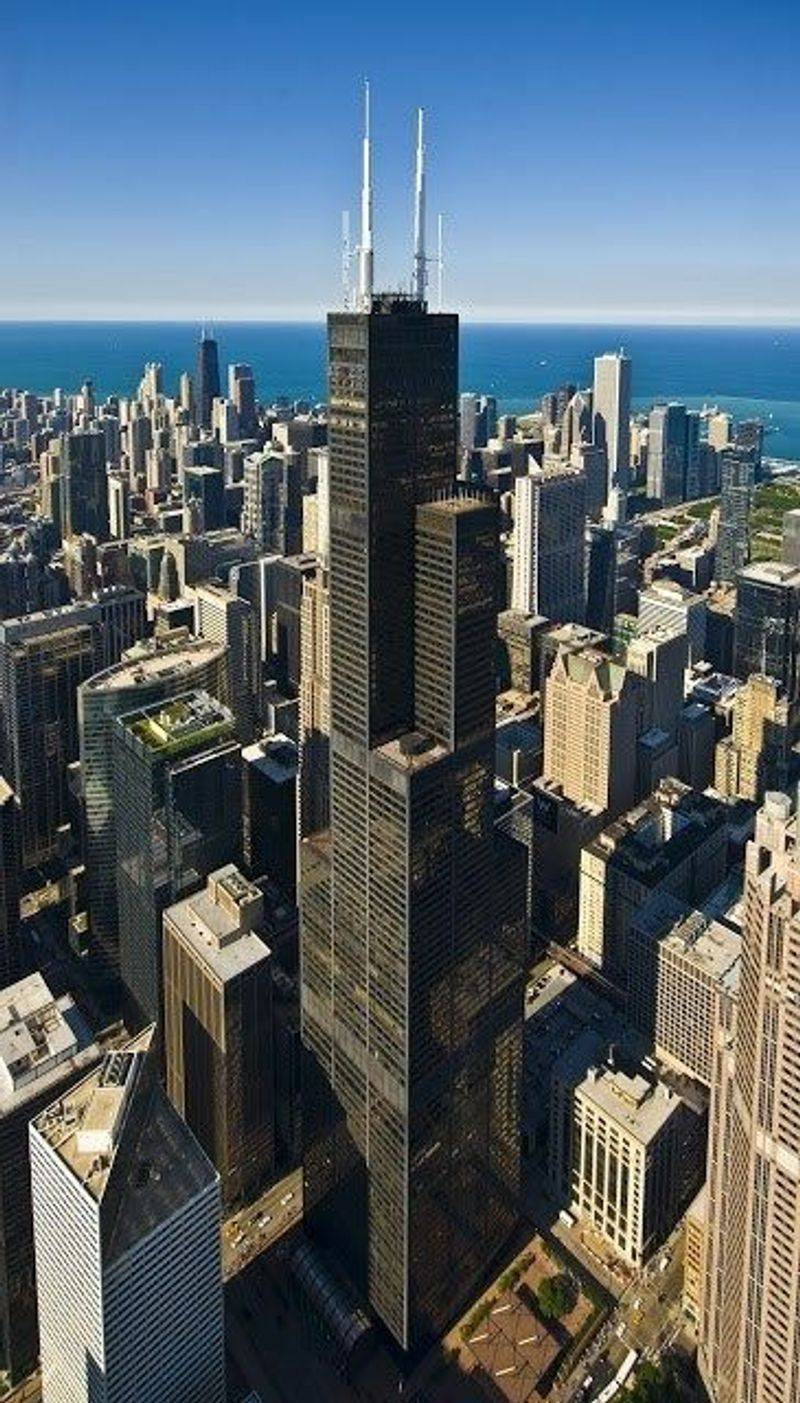
For 25 years, from 1973 to 1998, the Willis Tower was the tallest building on Earth, and Chicago has never quite let the world forget it. Known for most of its life as the Sears Tower, this 442-meter (1,451-foot) black aluminum giant defined an entire era of American skyscraper design.
Its bundled tube structural system, invented by engineer Fazlur Rahman Khan, was genuinely revolutionary and influenced nearly every supertall building that came after it.
The bundled tube design consists of nine square tubes of varying heights, bound together like a cluster of straws. As the building rises, tubes end at different levels, giving the tower its distinctive stepped silhouette.
This system allowed engineers to build far taller than ever before while using significantly less steel than traditional designs would have required. Khan’s innovation essentially made the modern supertall skyscraper possible.
Today, the building’s most famous feature is the Skydeck on the 103rd floor, where visitors can step into glass-enclosed ledges called The Ledge that extend four feet beyond the building’s edge. Standing on transparent glass with nothing but 1,353 feet of air below your feet is an experience that reduces even the most composed adults to nervous laughter.
Willis Tower is older than most buildings on this list, but it still delivers one of the most thrilling architectural experiences in North America.
Share this story