Some destinations are so strange, colorful, or surreal that they seem more like movie sets than real places. Yet scattered across the globe are natural wonders, unusual landmarks, and astonishing landscapes that travelers can visit firsthand.
From glowing caves to fiery craters and pink lakes, the world is full of surprises that no travel brochure could fully prepare you for. Pack your curiosity and get ready to explore 20 of the most bizarre and breathtaking places on Earth.
Salar de Uyuni, Bolivia
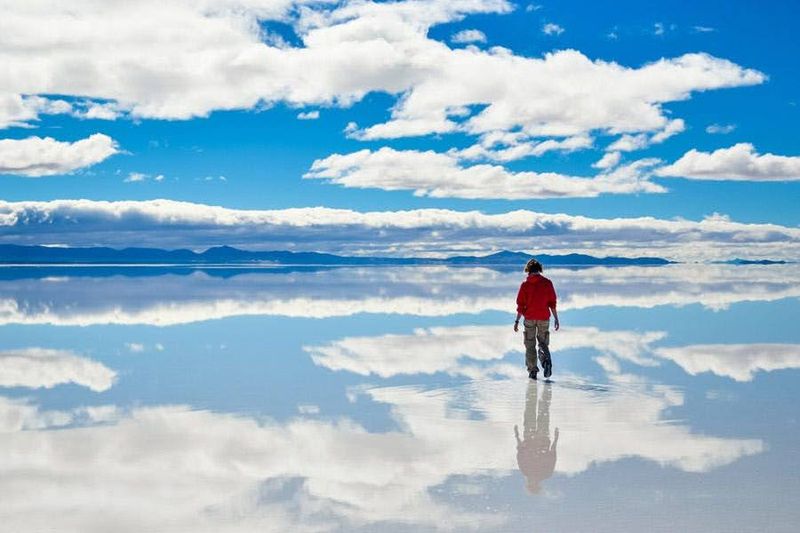
Step onto Salar de Uyuni and suddenly the sky is everywhere, above you, below you, and all around you. During the rainy season, a thin layer of water transforms the world’s largest salt flat into a giant mirror stretching over 4,000 square miles.
The effect is so convincing that visitors often feel like they are floating between two skies.
Located in southwestern Bolivia at over 11,000 feet above sea level, this place is as remote as it is jaw-dropping. Getting there requires some effort, but guided jeep tours depart regularly from the nearby town of Uyuni.
The dry season offers a completely different experience, with cracked white salt patterns extending in every direction like a natural tiled floor.
Photographers absolutely love this destination. The flat surface makes forced-perspective photos easy and endlessly creative.
Flamingos also gather near the edges of the flat during certain times of year, adding a splash of pink to the white and blue landscape. Visiting at sunrise or sunset takes the experience to another level entirely, with warm golden light washing across the endless expanse.
The Wave, Arizona and Utah, United States
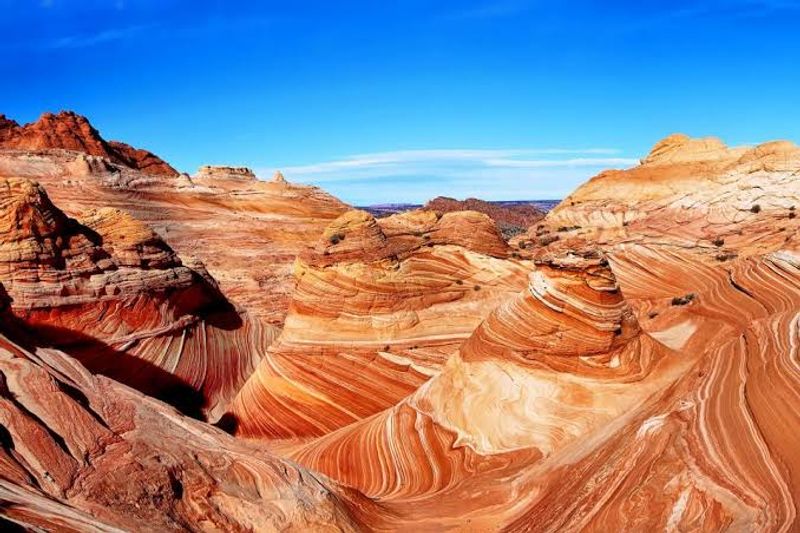
Swirling red and orange lines ripple across sandstone like a frozen ocean caught mid-wave. The Wave, located along the Arizona-Utah border near the town of Kanab, looks less like geology and more like abstract art painted by a very patient giant.
Millions of years of wind and water erosion shaped these flowing formations into something that genuinely stops people in their tracks.
Here is the catch: you cannot simply show up and walk in. Access requires a permit obtained through a strict lottery system managed by the Bureau of Land Management.
Only 64 people per day are allowed on the site, which keeps the fragile terrain protected and the experience feeling exclusive. Apply early, because demand far exceeds availability.
The hike to reach The Wave covers about six miles round trip across open desert with no marked trail. Visitors need good navigation skills, plenty of water, and sun protection.
Morning light tends to bring out the richest colors in the rock. The surrounding Coyote Buttes area also offers additional bizarre formations worth exploring if you are lucky enough to secure a permit.
This is one of those rare places that looks even better in real life than in photos.
Cano Cristales, Colombia
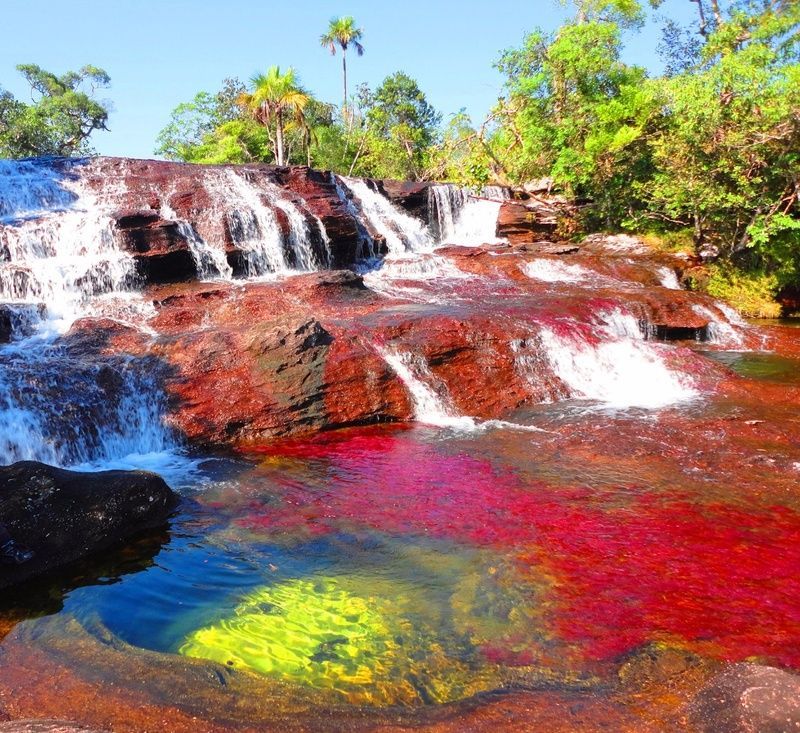
Locals nicknamed it the River of Five Colors, and once you see it, you will understand why no other name fits. Flowing through the Serranía de la Macarena national park in central Colombia, Cano Cristales bursts with shades of red, yellow, green, blue, and black during the months between roughly June and November.
The vivid colors come from a unique aquatic plant called Macarenia clavigera that blooms under specific water conditions.
The combination of water depth, sunlight, and temperature must align perfectly for the colors to appear at their most vibrant. Outside that seasonal window, the river looks beautiful but far more ordinary.
Travelers fly into the small town of La Macarena and then join guided tours into the park, since independent access is not permitted. This rule helps protect one of the most biologically diverse regions in the world.
Swimming in certain sections of the river is allowed, making it a genuinely interactive experience rather than just a sightseeing stop. The surrounding jungle adds howler monkeys, exotic birds, and stunning waterfalls to the adventure.
Plan your trip carefully around the season, book guides in advance, and bring waterproof camera gear. Cano Cristales rewards every bit of effort it takes to reach it.
Fingal’s Cave, Scotland
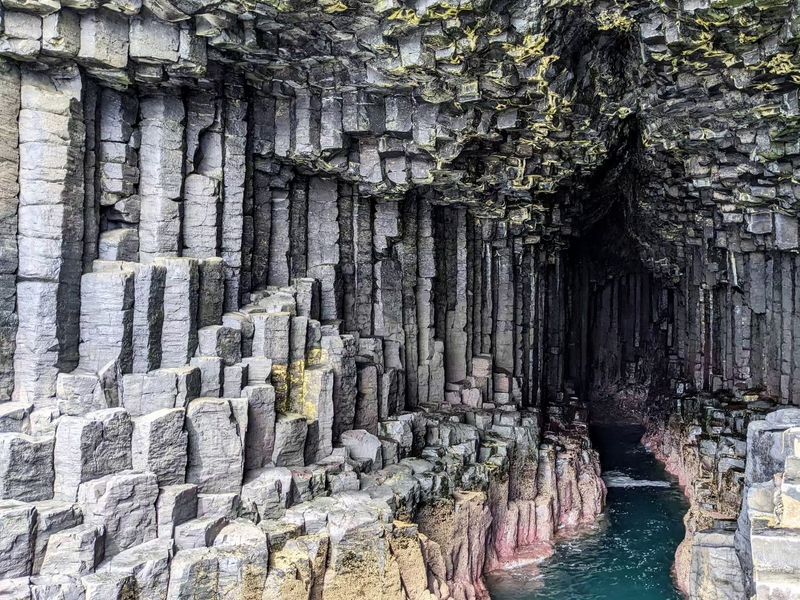
Waves boom and echo inside Fingal’s Cave like nature’s own concert hall, and that sound alone is worth the boat ride. Located on the tiny uninhabited island of Staffa off the western coast of Scotland, this sea cave is built entirely from hexagonal basalt columns formed by ancient volcanic cooling millions of years ago.
The geometric precision of the rock looks almost engineered, which is exactly why it inspired composer Felix Mendelssohn to write his famous Hebrides Overture after visiting in 1829.
Getting there requires a boat trip from the Isle of Mull or the mainland, and visits depend heavily on weather and sea conditions. When the water is calm enough, some tours allow visitors to step off the boat and walk along a narrow ledge into the cave itself.
Standing inside while waves surge around the dark columns is genuinely unforgettable.
Puffins nest on Staffa during spring and early summer, making the island popular with wildlife lovers as well as geology enthusiasts. The cave entrance stretches about 70 feet high, giving the whole space a cathedral-like feeling.
Bring a waterproof jacket, sturdy footwear, and a camera with a wide-angle lens. Fingal’s Cave is the kind of place that makes you question how something so perfectly strange can be entirely natural.
Lake Hillier, Western Australia
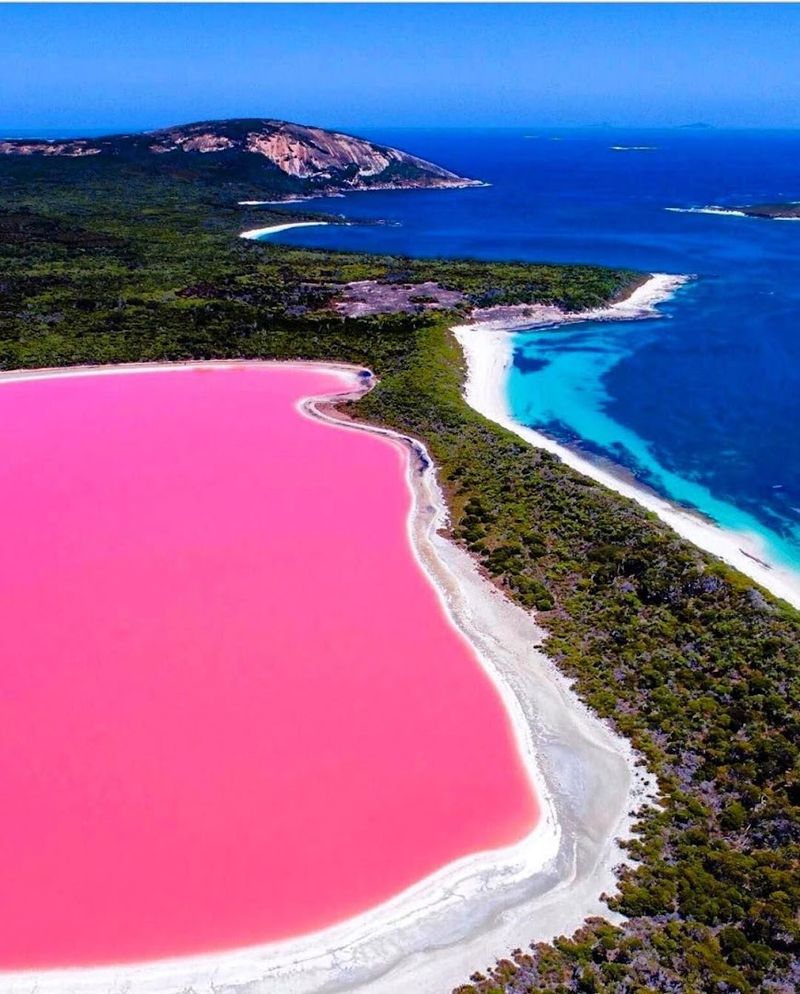
Seeing a hot-pink lake sitting right next to the deep blue ocean is the kind of image your brain refuses to accept as real. Lake Hillier, located on Middle Island off the southern coast of Western Australia, maintains its bubblegum color year-round regardless of weather or temperature.
Scientists believe a combination of salt-loving algae, bacteria, and mineral content creates the unusual hue, though research is still ongoing.
Unlike some other pink lakes around the world, Lake Hillier keeps its color even when water is removed and placed in a container. The lake is small, roughly 600 meters long, and surrounded by a fringe of white salt crust and dense eucalyptus forest.
Most visitors experience it from above on scenic flights departing from the town of Esperance, since landing on Middle Island is restricted.
A small number of boat tours operate in the area and occasionally offer closer access, but the aerial view remains the most popular option. The contrast between the pink lake, white salt edge, green trees, and blue ocean creates a color combination so bold it looks digitally enhanced in photos.
Australia is full of wild natural surprises, but Lake Hillier might be its most photogenic secret. Budget travelers should note that scenic flights are not cheap but are absolutely worth it.
Mont-Saint-Michel, France
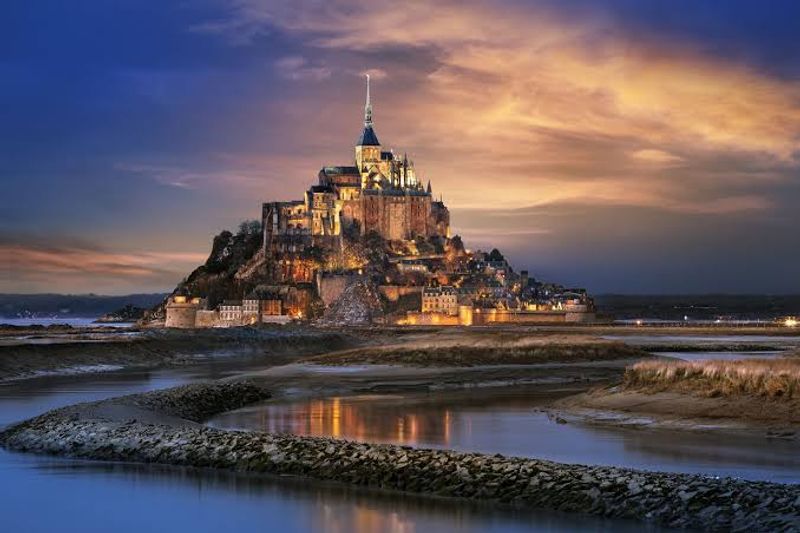
At high tide, Mont-Saint-Michel appears to rise straight out of the ocean like something from a fairy tale. This medieval island commune sits off the Normandy coast of France and has been drawing visitors for over a thousand years.
A Gothic abbey crowns the rocky summit, and a tangle of narrow cobblestone streets, old stone buildings, and tiny shops fills the space between the abbey and the sea walls below.
The tides around Mont-Saint-Michel are among the fastest and most dramatic in Europe. At low tide, visitors can walk across the sandy flats to the island, but the water returns with remarkable speed, which has historically made the area dangerous for the unprepared.
A modern causeway now provides safe year-round access, and guided tide walks across the flats are available for the adventurous.
More than three million people visit each year, so arriving early in the morning or staying overnight helps avoid the worst of the crowds. The island has a small permanent population and a handful of hotels for those who want to experience the magical atmosphere after the day-trippers leave.
Evening light on the abbey walls, with mist rolling across the flats, creates one of the most atmospheric scenes in all of Europe. Mont-Saint-Michel is genuinely unlike anywhere else.
Spotted Lake, British Columbia, Canada
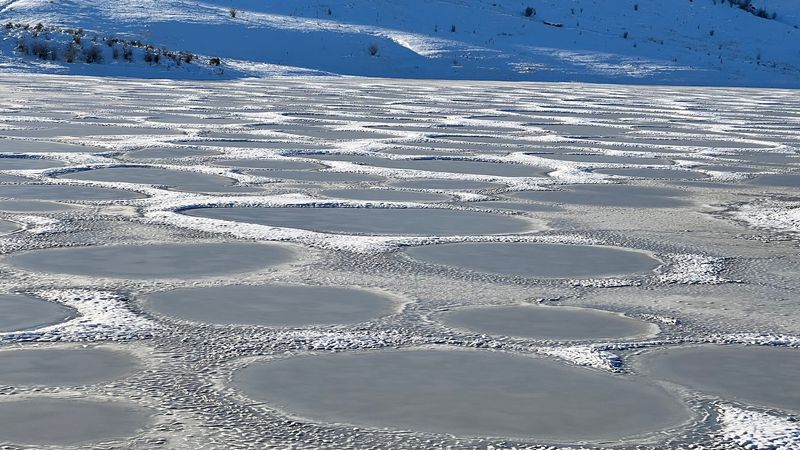
By midsummer, Spotted Lake transforms into something that looks like a giant polka-dot painting dropped into the dry hills of southern British Columbia. As the heat causes water to evaporate, concentrated mineral deposits are left behind, forming dozens of circular pools in shades of yellow, green, blue, and white.
Each pool has a slightly different mineral composition, which is why the colors vary so dramatically from one circle to the next.
The lake, known as Kliluk in the Syilx language, holds deep cultural and spiritual significance for the Indigenous Syilx people of the Okanagan region. For generations, the minerals from the lake were used for medicinal purposes, and during World War One the minerals were reportedly harvested to help manufacture ammunition.
The lake was purchased by the Okanagan Indian Band in 2001 to protect it and honor its cultural importance.
Visitors can view the lake from a roadside pullout along Highway 3 near the town of Osoyoos, since the surrounding land is private and entry onto the lakeshore itself is not permitted. The best viewing happens in July and August when evaporation is at its peak.
Binoculars help for a closer look at the individual pools. Even from the road, the sight is genuinely surreal and completely unlike anything else in Canada.
Hobbiton, North Island, New Zealand
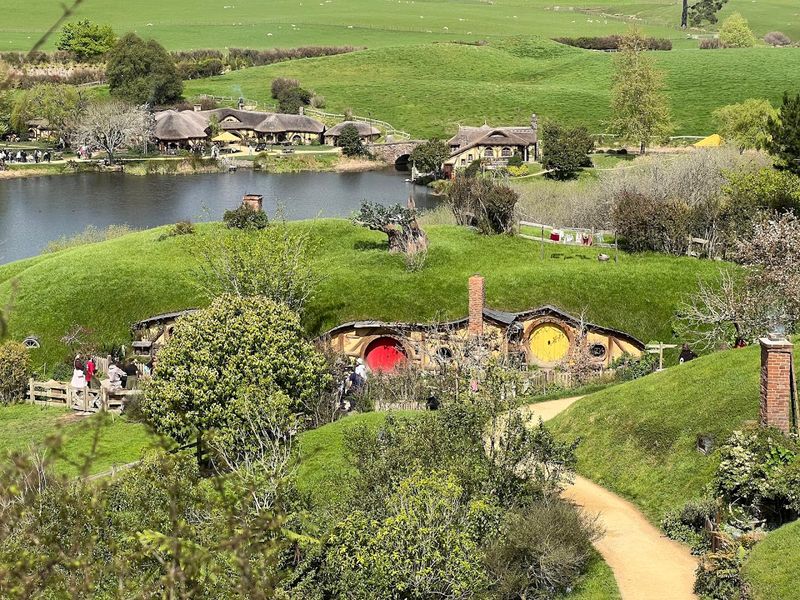
Walking through Hobbiton feels like accidentally wandering into someone else’s very cozy dream. Built in the rolling green hills near Matamata on New Zealand’s North Island, this movie set was originally constructed for Peter Jackson’s Lord of the Rings films and later expanded for The Hobbit trilogy.
After filming wrapped, the owners of the farm decided to keep the set permanently open, and it has since become one of New Zealand’s most visited attractions.
Guided tours take visitors past 44 hobbit holes with beautifully maintained gardens, vegetable patches, and tiny round doors painted in cheerful colors. Each hole was built to slightly different scales to create on-screen illusions of size during filming.
The famous Green Dragon Inn at the end of the tour serves real food and beverages, including a specially brewed Hobbiton Ale and Southfarthing Cider.
Evening banquet tours offer a more immersive experience with a sit-down meal and atmospheric lighting across the whole set. The surrounding farmland is genuinely gorgeous, with sheep grazing on hillsides and the kind of pastoral scenery that makes New Zealand so visually striking.
Fans of Tolkien’s books will spot countless details that match descriptions from the stories. Even visitors who have never read the books tend to leave utterly charmed by the whole experience.
Zhangye Danxia Rainbow Mountains, China
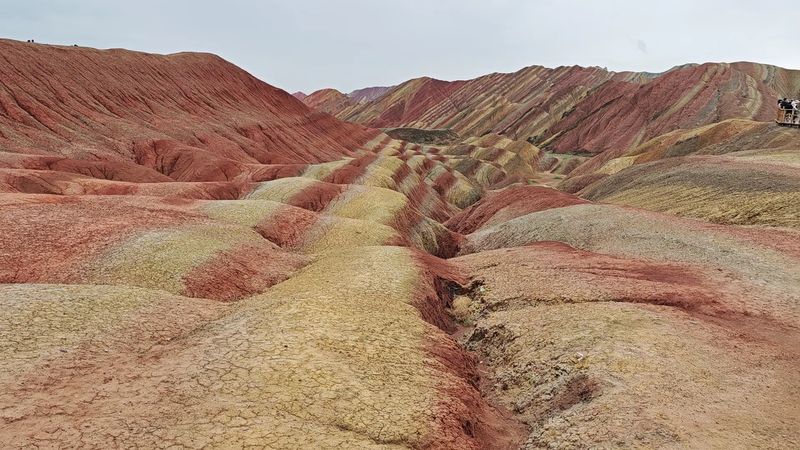
Standing at the viewing platforms above Zhangye Danxia, it is almost impossible not to wonder if someone secretly painted these hills overnight. Located in Gansu Province in northwestern China, the Rainbow Mountains display dramatic bands of red, orange, yellow, green, and blue across their rounded ridges and steep slopes.
The colors come from layers of sandstone and minerals deposited over 24 million years, then slowly exposed through tectonic shifts and erosion.
The landscape looks different at almost every hour of the day as sunlight shifts across the striped surfaces. Early morning and late afternoon, when the sun is lower, produce the richest and most saturated colors.
The site became a UNESCO World Heritage area in 2009, which helped bring international attention to a landscape that many outside China had never heard of before.
Multiple viewing platforms are spread across the park, connected by wooden boardwalks that make navigation straightforward even for visitors with limited mobility. The nearest major city is Zhangye, which has good transport links and accommodation options.
Summer tends to attract the largest crowds, so visiting in spring or autumn offers a quieter experience with equally vivid colors. Bring a camera with plenty of storage, because the Rainbow Mountains deliver an almost endless supply of extraordinary shots from every angle.
Giant Crystal Cave, Chihuahua, Mexico
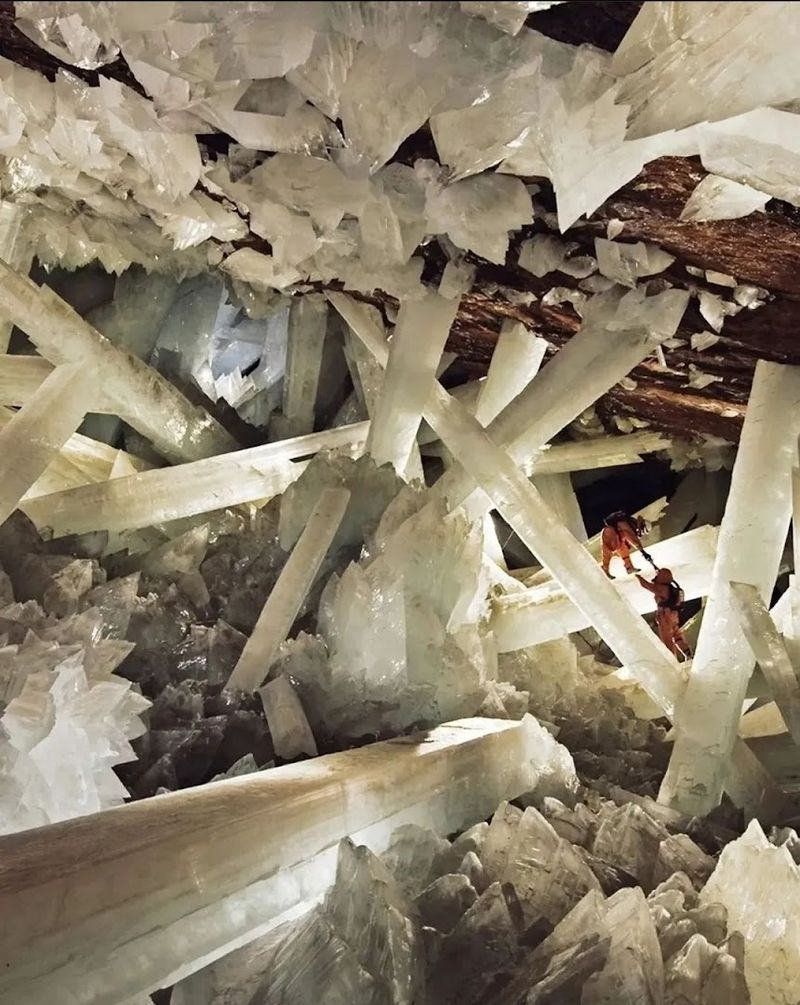
Hidden roughly 300 meters below a working silver mine in the Chihuahuan Desert, the Cave of Crystals in Naica looks like a scene ripped straight from a science fiction film. The chamber contains some of the largest natural crystals ever discovered, with selenite formations reaching lengths of up to 36 feet and weights of around 55 tons.
These crystals grew over an estimated 500,000 years in mineral-rich water heated by magma far below.
The environment inside is brutally hostile. Temperatures reach around 136 degrees Fahrenheit with nearly 100 percent humidity, making unprotected exposure dangerous within minutes.
The few scientific expeditions that entered the cave required specially cooled suits just to survive long enough to collect data. Mining operations have kept the cave mostly drained since its discovery in 2000, but public access has never been permitted due to the extreme conditions.
While you cannot walk through the cave yourself, it has been extensively documented through photography, documentary films, and scientific publications. Some nearby areas of the Naica Mine are occasionally open to guided tours, offering a glimpse into the geological wonderland beneath the desert surface.
The Cave of Crystals remains one of Earth’s most extraordinary geological discoveries, a reminder that the planet still holds secrets stranger than most people can imagine.
Tunnel of Love, Klevan, Ukraine
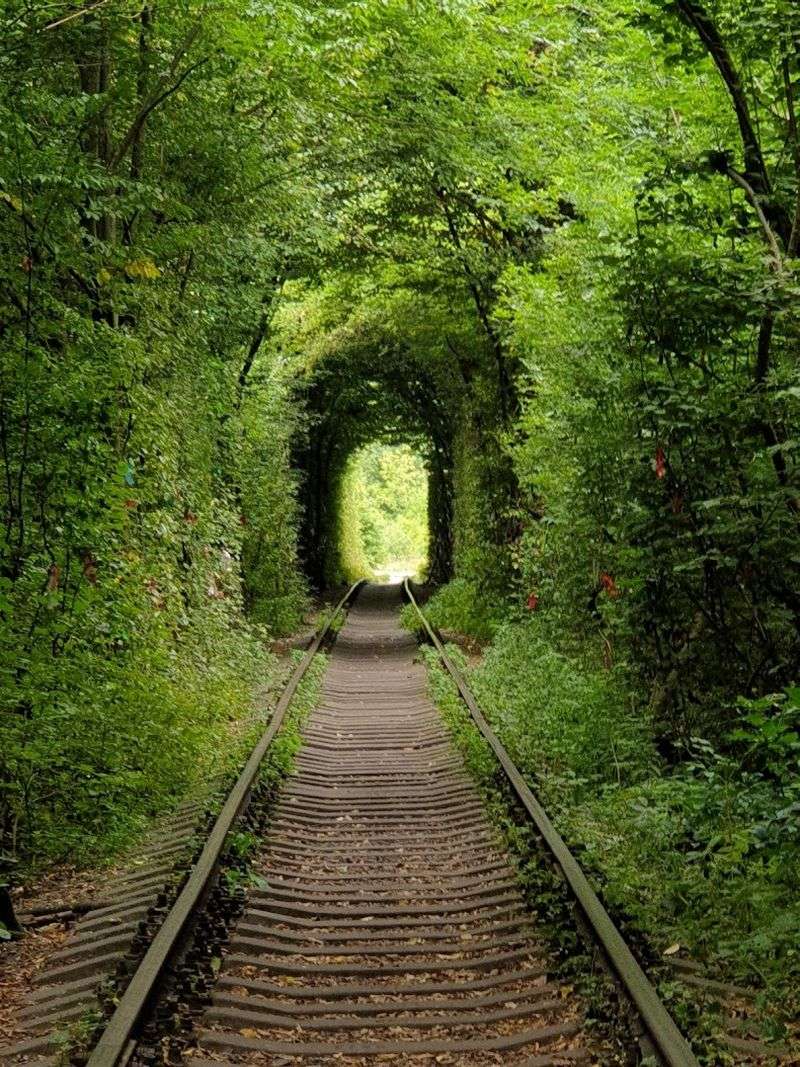
Green arches of interlocked tree branches stretch overhead for nearly three kilometers, turning a simple railway track into one of the most romantic natural corridors in Europe. The Tunnel of Love near the small town of Klevan in northwestern Ukraine formed gradually as trees on either side of the tracks grew toward each other over many years, eventually meeting overhead to create a living green canopy.
Trains still use the track, so visitors need to stay alert while walking through.
Spring and summer bring the tunnel to its most lush and photogenic state, with thick foliage filtering sunlight into soft, dreamy patterns across the path. Autumn adds golden and orange tones that create an entirely different but equally beautiful atmosphere.
Winter strips the leaves away, revealing an interesting skeletal structure of bare branches that has its own quiet appeal.
The tunnel has become a popular destination for couples, photographers, and travelers looking for something unusual in a region not traditionally known for tourism. The nearest town of Rivne serves as a practical base, with accommodation and transport connections.
Local legend suggests that if two people in love walk through the tunnel and make a wish, it will come true. Whether or not that holds up, the Tunnel of Love is genuinely one of those places that feels magical simply by existing.
Dead Vlei, Namibia
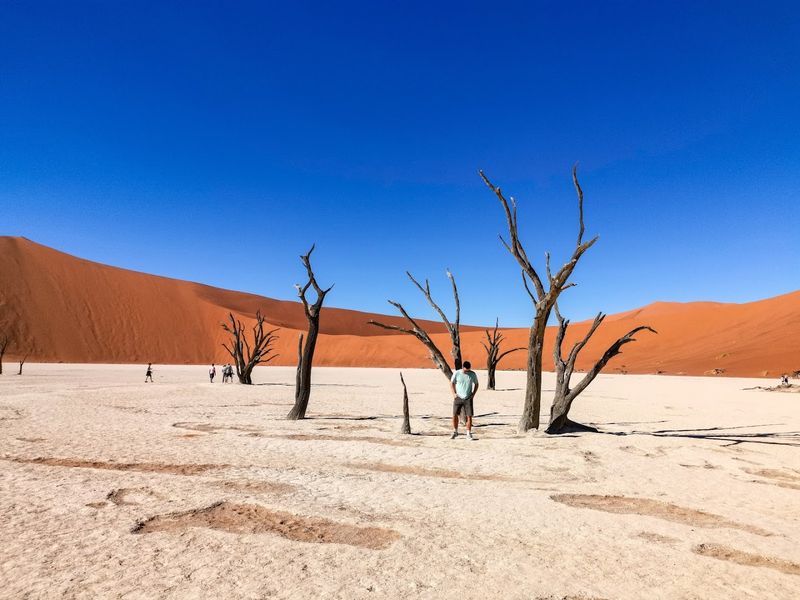
Nothing quite prepares you for the sight of black, skeletal trees standing perfectly still in a blinding white pan, surrounded by some of the tallest sand dunes on Earth. Dead Vlei, located inside the Namib-Naukluft National Park in Namibia, is a clay depression where camel thorn trees died roughly 700 years ago when shifting dunes cut off their water supply.
The extreme dryness of the desert has preserved the trees ever since, preventing them from decomposing.
The surrounding dunes glow in shades of deep red and orange, especially at sunrise and sunset, creating a color contrast against the pale white floor that looks almost artificially dramatic. The tallest nearby dune, known as Big Daddy, rises about 325 meters and is a popular if exhausting climb for those wanting an aerial view of the scene below.
Getting to Dead Vlei requires entering the park through the Sesriem gate and driving or hiking across the sand. The walk from the nearest parking area takes roughly 45 minutes each way across open desert, so starting before sunrise is strongly recommended to avoid the brutal midday heat.
Dead Vlei is one of those rare places where photographs barely capture the real atmosphere. The silence, the scale, and the strange beauty of those ancient trees make it one of Africa’s most unforgettable destinations.
Waitomo Glowworm Caves, New Zealand
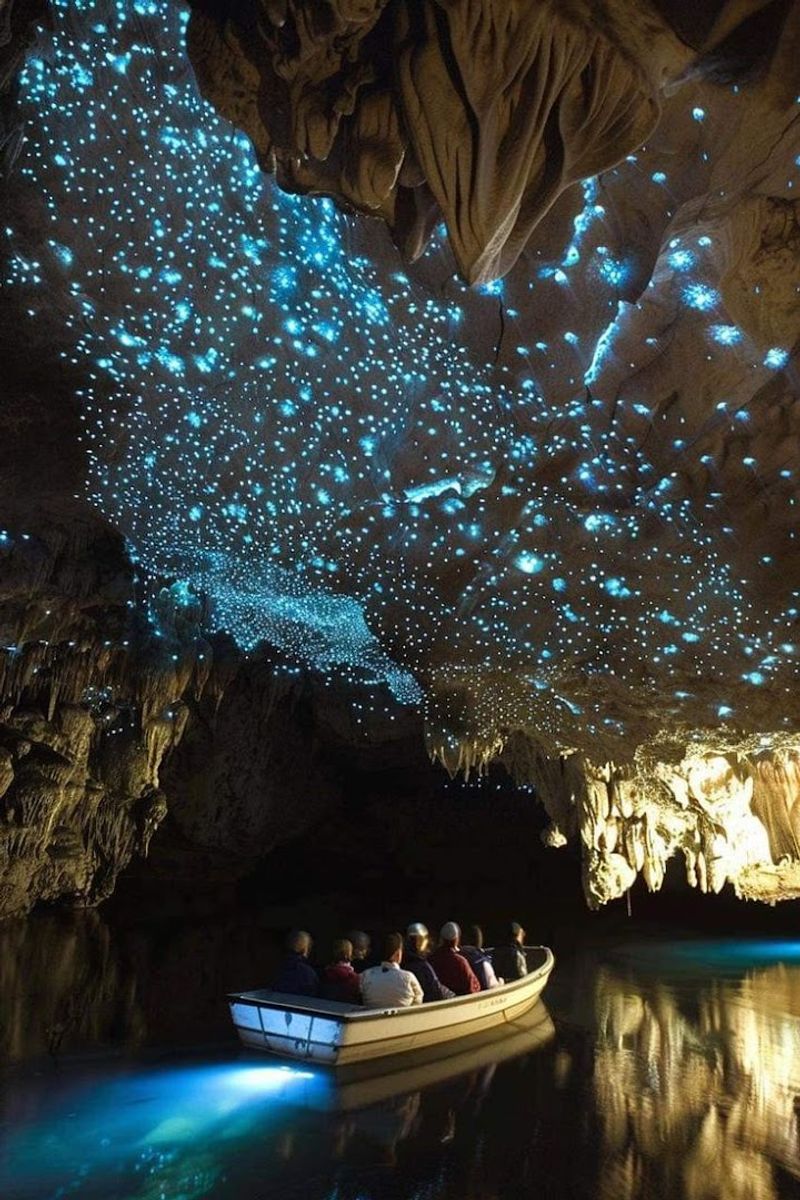
Glancing up inside the Waitomo Caves feels like staring at a star-filled sky, except every point of light is a living creature. Thousands of Arachnocampa luminosa, a species of glowworm found only in New Zealand, cling to the cave ceilings and emit a soft blue bioluminescent glow to attract prey.
The effect, reflected in the still dark water of the underground river below, is genuinely breathtaking and unlike anything you will find above ground.
Located in the Waikato region of New Zealand’s North Island, the Waitomo cave system has been welcoming visitors since the late 1800s. Guided boat tours glide silently through the Glowworm Grotto, the most famous chamber, where silence is requested so the glowworms are not disturbed.
The stillness combined with the overhead glow creates an atmosphere that feels almost sacred.
Beyond the classic boat tour, the caves offer more adventurous options including black water rafting, abseiling into underground chambers, and guided walking tours through other sections of the cave network. The surrounding area is rural and genuinely pretty, with rolling green hills and small farming communities.
Waitomo is about two and a half hours south of Auckland, making it a manageable day trip or an easy overnight stop on a road trip through the North Island. Book tours in advance during peak season.
Richat Structure, Mauritania
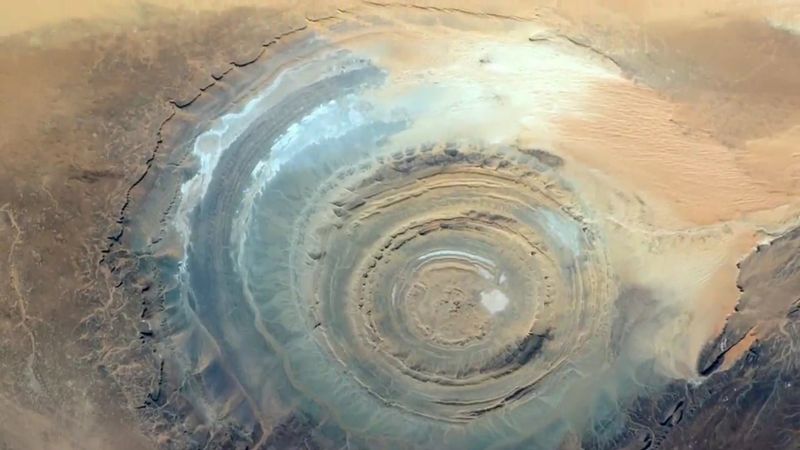
From space, a perfectly circular bullseye pattern stares back at you from the middle of the Sahara Desert, and scientists spent years trying to figure out what on Earth caused it. The Richat Structure in northwestern Mauritania, nicknamed the Eye of the Sahara, measures roughly 50 kilometers across and was initially thought to be a meteor impact crater.
Research eventually concluded it formed through a combination of volcanic activity and erosion over hundreds of millions of years, but its almost perfect circular shape still raises eyebrows.
Reaching the Richat Structure on the ground is a genuine expedition. The nearest town of Ouadane is a historic UNESCO-listed settlement in the remote Adrar region, accessible primarily by four-wheel drive across desert terrain.
The structure is large enough that standing inside it, the rings are not immediately obvious to the naked eye. The full scale only becomes clear from altitude.
Small aircraft tours and drone footage have become popular ways to appreciate the formation’s geometry from above. For overland travelers, the surrounding desert landscape is spectacular in its own right, with ancient rock art and dramatic stone formations scattered throughout the region.
Mauritania is not a mainstream tourist destination, which means those who make the effort to visit the Eye of the Sahara encounter it with very few other travelers around. That remoteness is part of the appeal.
Jellyfish Lake, Palau
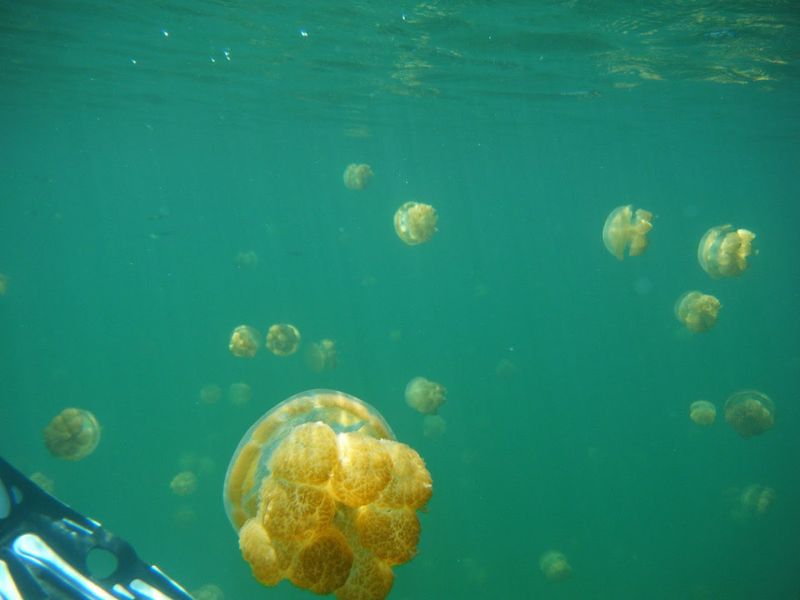
Imagine floating in warm water completely surrounded by thousands of golden jellyfish drifting peacefully in every direction. Jellyfish Lake on Eil Malk Island in Palau is one of the few places in the world where this experience is possible.
The lake’s population of golden jellyfish evolved in isolation over thousands of years and lost most of their stinging ability because they had so few predators to defend against. Swimming among them became one of the most unique wildlife encounters on the planet.
The jellyfish migrate across the lake each day following the sun, moving from one side to the other in a slow, predictable rhythm. Scientists have studied this behavior extensively because it helps the jellyfish’s symbiotic algae access the sunlight they need to survive.
The lake is connected to the ocean through underwater tunnels in the limestone, which keeps the water marine but isolated enough to create its own ecosystem.
Access to Jellyfish Lake requires a permit purchased through the Palau government, and the site has occasionally been closed to allow jellyfish populations to recover after significant drops in numbers. Snorkeling is permitted but scuba diving is not, since the deeper layers of the lake contain toxic hydrogen sulfide.
The surrounding waters of Palau are also among the best for coral reef diving anywhere in the Pacific, making the whole island group an exceptional destination for ocean lovers.
Champagne Pool, Rotorua, New Zealand
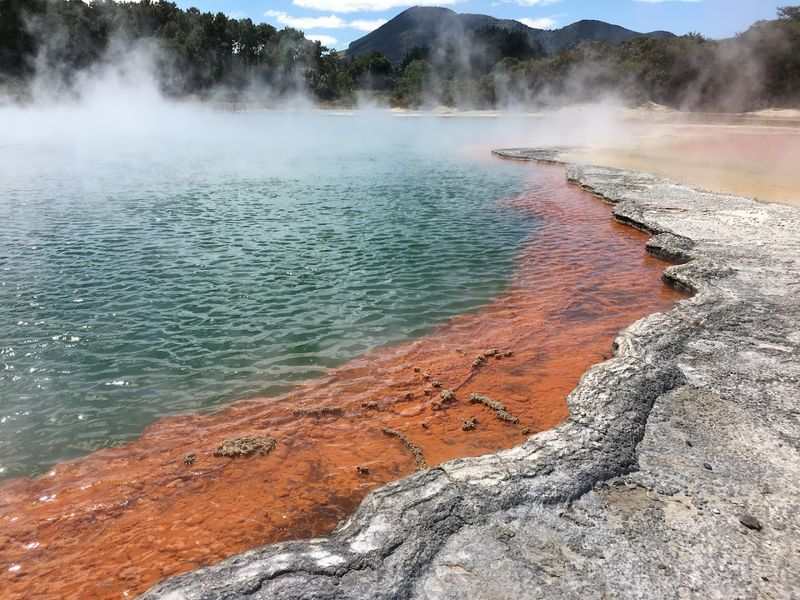
Steam rises constantly from the Champagne Pool, and the vivid orange ring around its edges looks like something a special effects team designed for a big-budget movie. Located in the Waiotapu Geothermal Wonderland near Rotorua on New Zealand’s North Island, this hot spring formed roughly 900 years ago when a hydrothermal eruption created a crater now filled with mineral-rich water.
Carbon dioxide bubbles rise continuously through the water, just like bubbles in a glass of sparkling water, which is exactly how the pool got its name.
The water temperature sits around 74 degrees Celsius, far too hot for swimming, but the visual experience more than compensates. The striking orange and yellow edges of the pool are formed by deposits of arsenic, gold, silver, and mercury carried up from deep underground.
The surrounding Waiotapu area contains several other remarkable geothermal features, including the Lady Knox Geyser, which erupts reliably each morning thanks to a little help from a soap powder demonstration.
Waiotapu is about 30 kilometers south of Rotorua, a city already famous for its geothermal activity and Maori cultural experiences. The park opens daily and is well set up for visitors with paved walkways connecting the various features.
Morning visits are generally recommended for the best light and the fewest crowds. Champagne Pool is the undisputed highlight of the park and one of the most visually striking natural features in all of New Zealand.
The Door to Hell, Karakum Desert, Turkmenistan
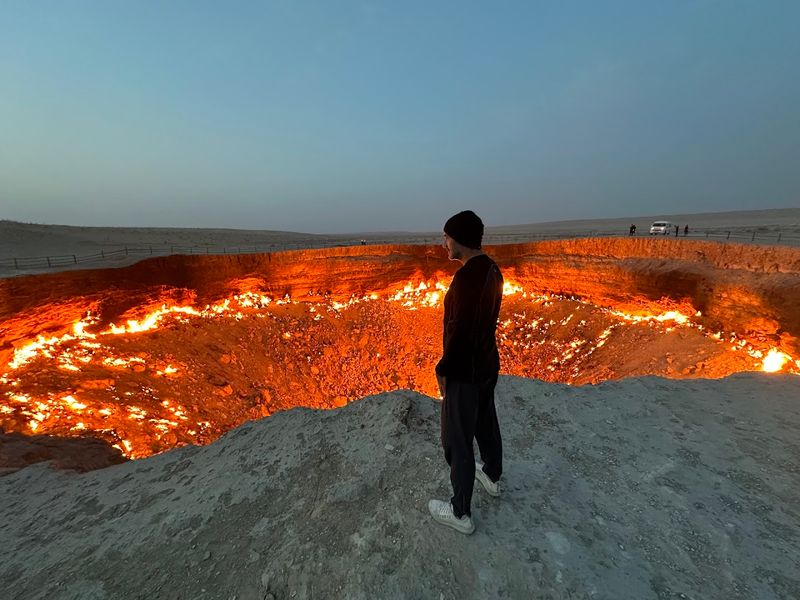
A hole in the desert floor has been on fire for decades, and nobody can agree on exactly when it started burning. The Darvaza Gas Crater in the Karakum Desert of Turkmenistan, widely known as the Door to Hell, measures roughly 70 meters wide and 30 meters deep.
Soviet engineers drilling for natural gas caused the ground to collapse into an underground cavern in the 1970s, and the fire was reportedly lit to prevent the spread of methane gas. The flames never went out.
Visiting the crater is a surprisingly accessible adventure given how remote Turkmenistan feels on a map. Tour operators in the capital Ashgabat organize overnight desert trips that include camping near the crater’s edge.
At night, the glowing pit lights up the surrounding sand dunes with a fiery orange glow that is genuinely eerie and spectacular at the same time.
Turkmenistan requires visitors to obtain a visa in advance, which adds some logistical effort to the planning process. The country sees relatively few international tourists, which means the crater rarely feels overcrowded.
Standing at the rim and peering down into the flames is one of those travel experiences that is difficult to describe accurately to anyone who has not seen it. The heat, the smell of gas, and the roaring sound of the fire combine into something completely unlike any other destination on Earth.
Socotra Island, Yemen
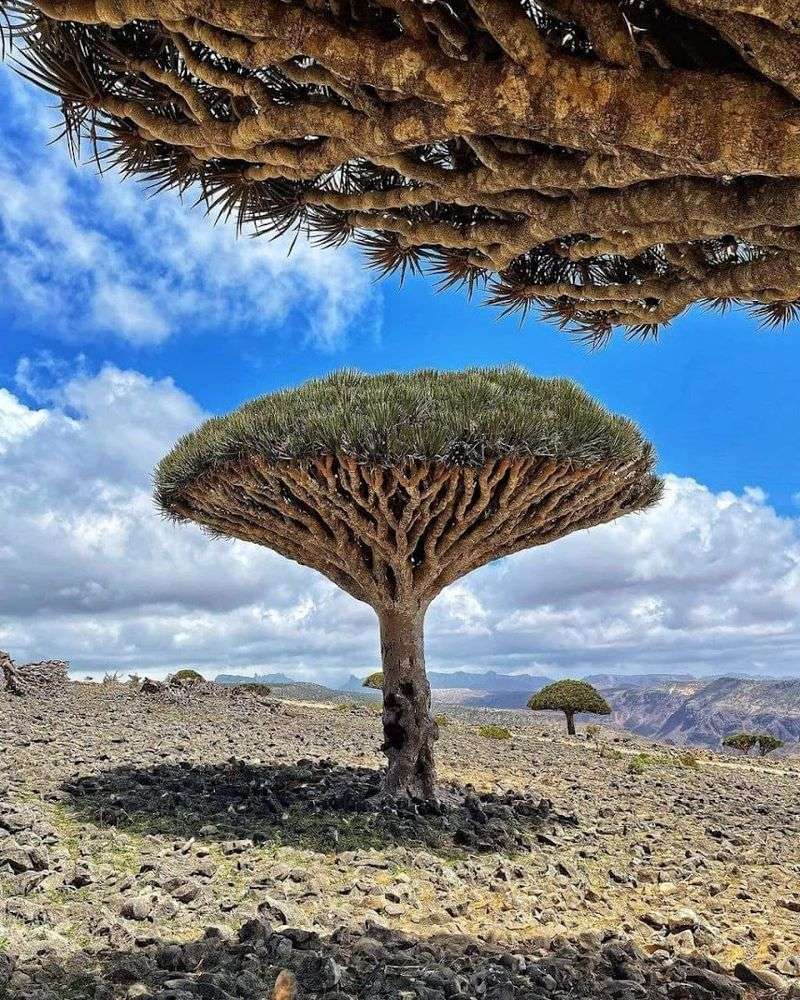
Dragon blood trees look like something an imaginative child drew after being told to invent a new kind of plant. With their flat, dense canopies spreading wide on narrow trunks, these remarkable trees grow naturally only on Socotra Island, a remote Yemeni archipelago in the Arabian Sea.
The island’s long isolation from the mainland allowed extraordinary levels of unique biodiversity to develop, with roughly one third of its plant species found nowhere else on Earth.
The dragon blood tree gets its dramatic name from the dark red resin produced when its bark is cut. This resin has been traded and used medicinally for thousands of years across the ancient world.
Beyond the trees, Socotra is home to unique birds, reptiles, plants, and insects that give the island an atmosphere closer to a lost world than a typical travel destination.
Getting to Socotra requires flights from Abu Dhabi or Cairo, and the ongoing conflict in Yemen has made access complicated and inconsistent in recent years. When travel is possible, the island rewards adventurous visitors with dramatic landscapes including white sand beaches, turquoise waters, limestone plateaus, and desert dunes.
UNESCO designated Socotra a World Heritage Site in 2008, recognizing its extraordinary ecological value. Travelers who manage to visit often describe it as one of the most genuinely alien-feeling places they have ever stood on, and that is saying something.
Museo Atlantico, Lanzarote, Spain
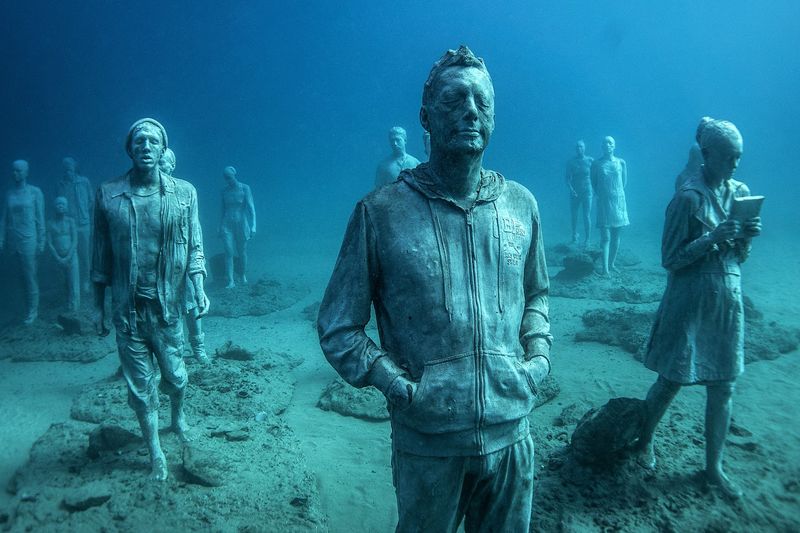
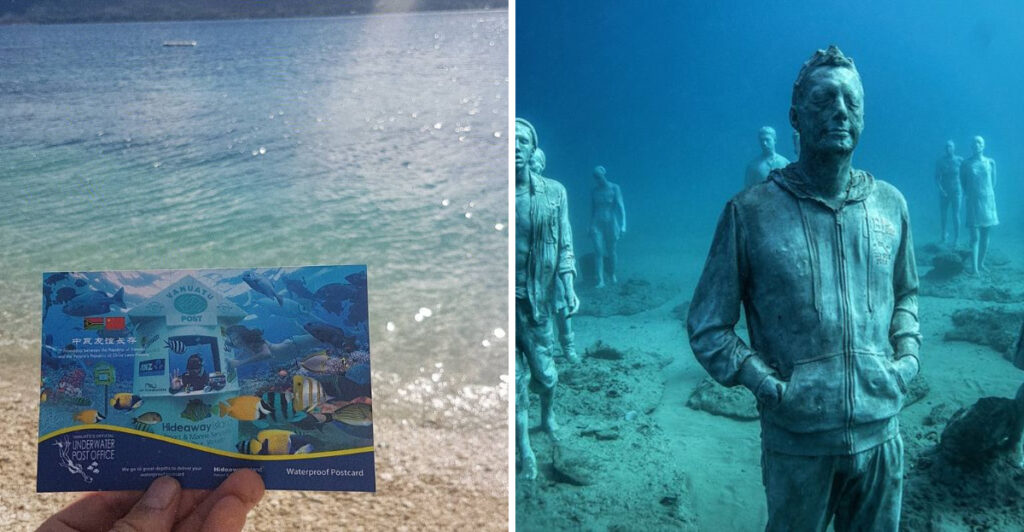
Europe’s first underwater sculpture museum sits quietly on the sandy floor of the Atlantic Ocean, about 14 meters below the surface off the coast of Lanzarote in Spain’s Canary Islands. Created by British sculptor Jason deCaires Taylor, Museo Atlantico features more than 300 life-size human figures arranged in thought-provoking scenes across the seabed.
The installation opened in 2016 and was designed not just as art but as an artificial reef to encourage marine life to colonize the structures.
Divers with basic open water certification can explore the museum on guided dives departing from nearby resorts. Snorkelers can also see some of the shallower installations from the surface.
Over time, the sculptures have become encrusted with coral, sponges, and algae, while fish, octopuses, and other sea creatures have made their homes among the figures. The artwork is literally growing and changing as nature takes over.
The themes of the sculptures explore human relationships with the environment, migration, and the natural world, giving the whole experience an emotional depth that goes beyond typical tourism. Lanzarote itself is a fascinating island with dramatic volcanic landscapes and a strong tradition of innovative design influenced by local artist Cesar Manrique.
Combining a visit to the underwater museum with exploration of the island above water makes for an exceptionally rich travel experience. Booking dive sessions in advance is recommended during busy holiday periods.
Vanuatu Underwater Post Office, Vanuatu
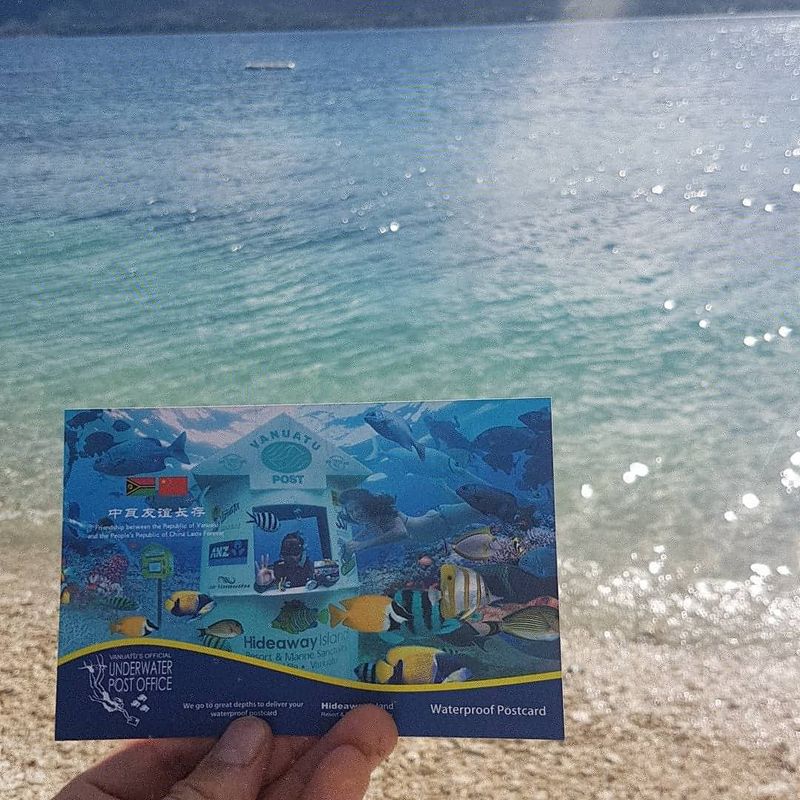
Mailing a postcard is usually a pretty ordinary activity, unless you happen to be doing it from the bottom of the ocean. The Vanuatu Underwater Post Office, located in the waters off the island of Hideaway near Port Vila, opened in 2003 and has been delivering soggy surprises to recipients worldwide ever since.
Divers and snorkelers can purchase waterproof postcards, fill them out with a special pencil, and drop them in the submerged mailbox for collection and delivery.
The post office sits in relatively shallow water, making it accessible to snorkelers as well as scuba divers. A postal worker in diving gear collects the mail regularly and stamps each card with a special underwater postmark before it is sent on its way through the regular mail system.
The whole setup is as delightfully absurd as it sounds, and that is precisely why people love it.
Vanuatu itself is a stunning South Pacific archipelago with 83 islands, active volcanoes, vibrant coral reefs, and some of the friendliest locals you will encounter anywhere in the Pacific. The underwater post office visit pairs perfectly with snorkeling or diving in the surrounding reef.
Port Vila has a well-developed tourism infrastructure with plenty of accommodation and tour operators. Very few travel experiences let you claim you have literally mailed something from underwater, which makes this one genuinely worth adding to the bucket list.
Share this story