Just outside Omaha, this 2,100-acre preserve combines old-growth forest, tallgrass prairie, wetlands, and Missouri River views in a setting that feels far removed from the city.
Beyond its trails, visitors can explore a forest canopy boardwalk, visit a raptor sanctuary, tackle aerial adventure courses, and enjoy educational programs. That mix of nature, wildlife, and outdoor recreation makes it one of Nebraska’s most rewarding day-trip destinations.
Where the Forest Begins: Address, Location, and First Impressions
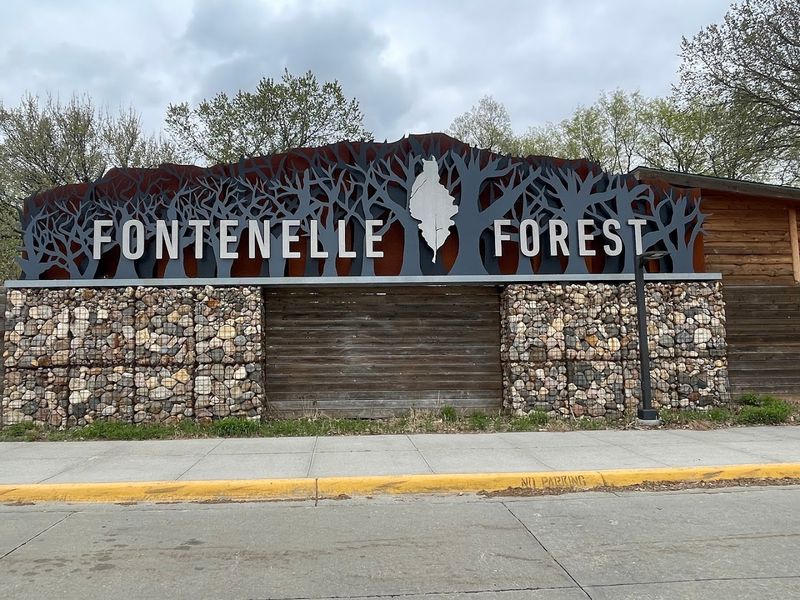
The address is 1111 Bellevue Blvd N, Bellevue, NE 68005, and the moment you pull into the parking lot, the sheer wall of trees ahead of you makes it clear this is not your average city park.
Fontenelle Forest sits just south of Omaha in Bellevue, Nebraska, and it carries a rating of 4.8 stars from over 1,400 visitors, which is the kind of number that actually means something. The preserve is open most days from 8 AM, closing at 7 PM on weekdays and Sundays, and at 5 PM on Saturdays.
Admission is reasonably priced at around $15, and the staff at the front desk are genuinely welcoming, happy to point you toward the best trails for your fitness level or interests. The Katherine and Fred Buffett Forest Learning Center serves as the main hub, housing exhibits, a gift shop, and restrooms.
First impressions here are hard to shake, and that is entirely a good thing.
A Forest With Deep Roots: The History Behind the Preserve
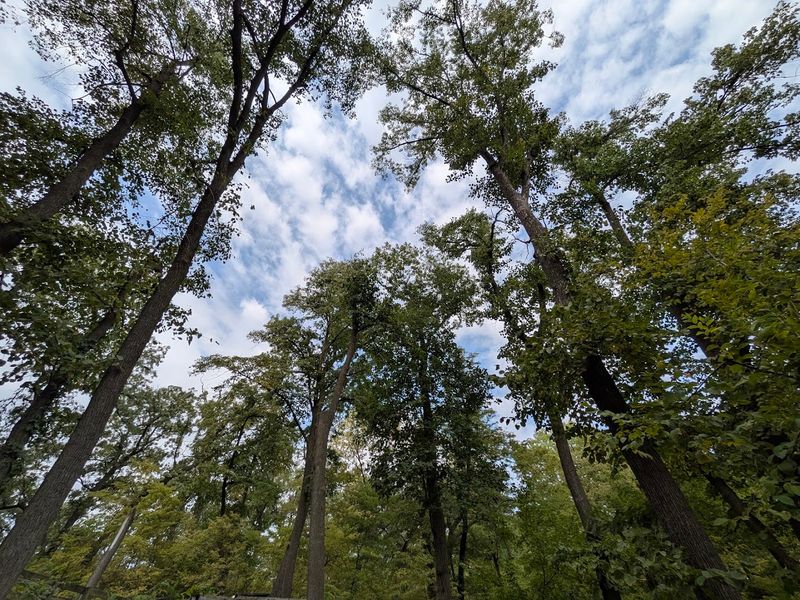
Not many nature preserves in the American Midwest can claim a spot on both the National Registry of Historic Places and the list of National Natural Landmarks, but Fontenelle Forest holds both distinctions with quiet confidence.
The preserve is a privately owned non-profit organization, which means every admission fee and membership purchase goes directly back into conservation, education, and land management. The organization maintains a comprehensive approach to stewardship, including oak savanna restoration, prairie rehabilitation, erosion control, wildlife management, and aggressive invasive species removal.
The forest itself is one of the largest remaining natural deciduous forests in Nebraska, and its old-growth sections feel genuinely ancient, with massive hardwood trees that have been standing for generations. Knowing that this land is actively protected and carefully managed adds a layer of meaning to every walk through it.
The history here is not just on a plaque; it is alive in the canopy above your head and the roots beneath your feet.
The Boardwalk That Changes How You See a Forest
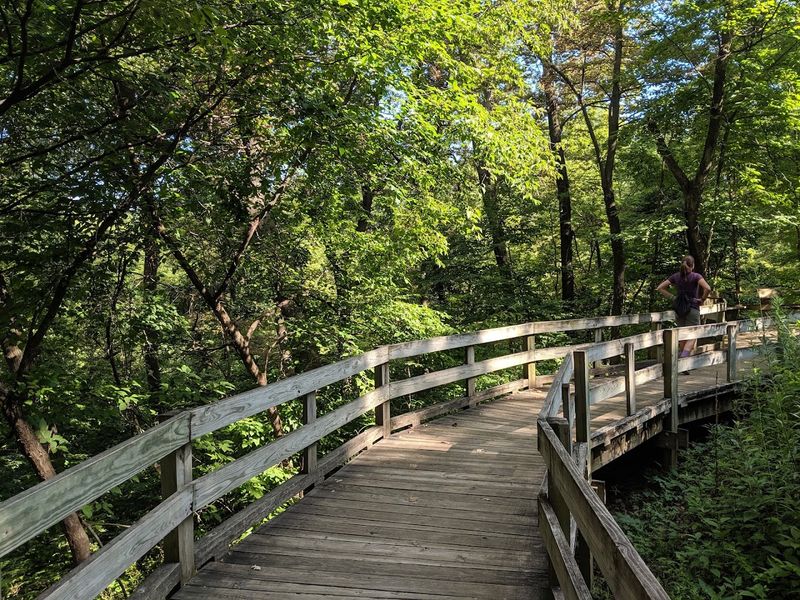
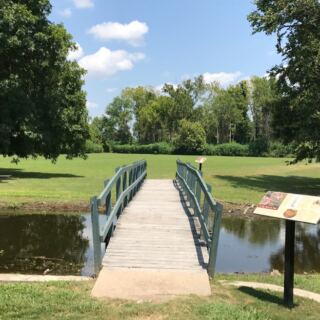
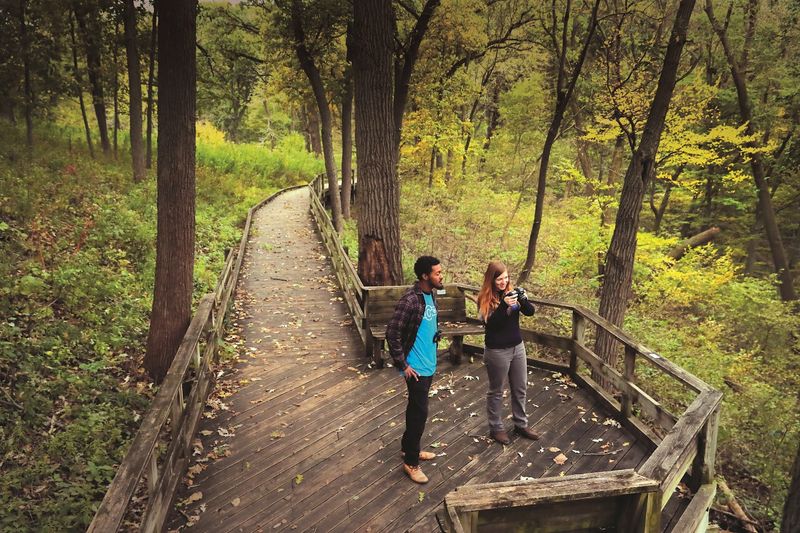
The one-mile ADA-accessible boardwalk is the kind of trail feature that sounds simple on paper but absolutely delivers in person. Wide, well-maintained, and shaded by a canopy of mature trees, it winds through the forest and wetlands and opens up to views of the Missouri River that genuinely catch you off guard.
Benches are placed at thoughtful intervals, so you can sit and listen to the forest without any pressure to keep moving. The boardwalk is stroller-friendly and accessible for visitors of all fitness levels, making it the most inclusive trail option on the property.
Even experienced hikers tend to start here before heading into the more rugged trail network, because the boardwalk offers a calming orientation to the landscape. You will hear woodpeckers working overhead and spot birds moving through the understory if you slow your pace.
It is the kind of walk that resets your mood within the first ten minutes, and that is not an overstatement.
17 to 26 Miles of Trails and the Stories Each One Tells
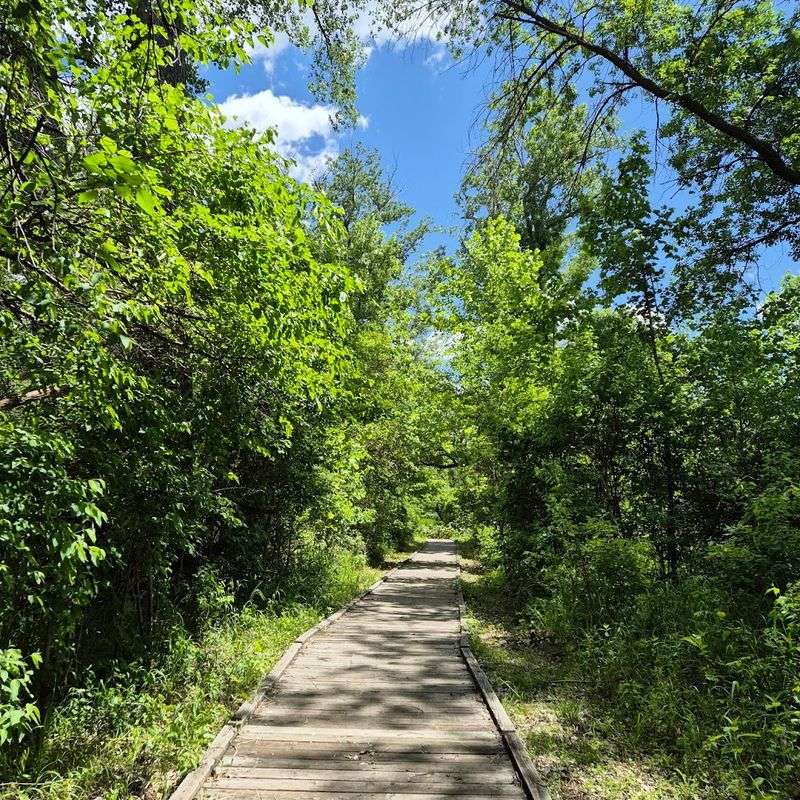
Beyond the boardwalk, the trail network at Fontenelle Forest stretches anywhere from 17 to 26 miles depending on which routes you combine, covering hardwood forest, loess hills, floodplain, and marshland terrain. Named trails like Hackberry, Hawthorn, Missouri, Cottonwood, Hidden Lake, Mormon, Grey Squirrel, Signal Ridge, Oak, and Chickadee each offer a distinct personality.
Signal Ridge earns its reputation quickly, with a climb that rewards you with elevated views before sending you back down into the quiet of the forest floor. One visitor covered 6.5 hours of trails in a single day and still felt like there was more to explore, which tells you everything about the scale of what is here.
Trail maps are available at the entrance and clearly indicate difficulty levels, so you can plan a route that matches your energy. The trails are well-marked and easy to navigate, which matters when you are deep in a forest this size.
There is always another turn worth taking.
A Birder’s Best Day in the Midwest
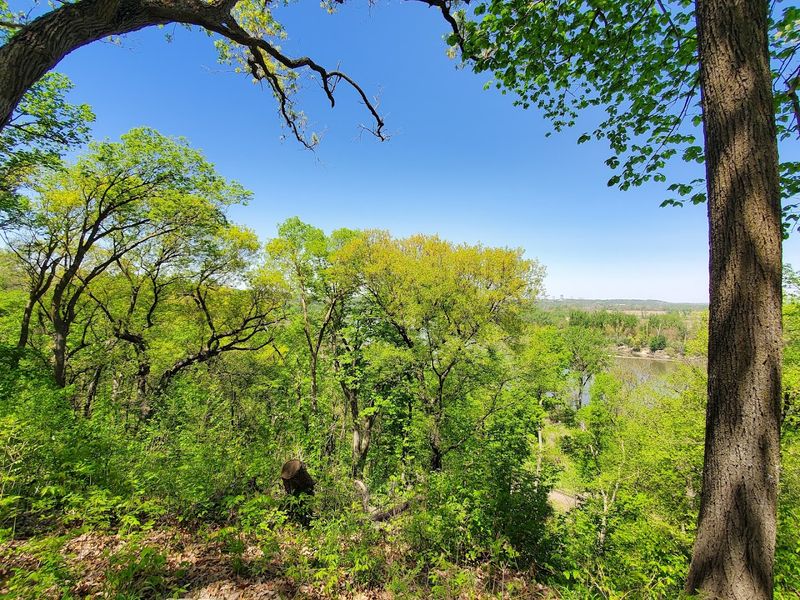
With 246 recorded bird species and 35 species of warblers alone, Fontenelle Forest sits at the top of any serious birder’s Nebraska list. The preserve occupies a prime position along the Missouri River Valley flyway, which turns it into a migration hotspot during spring and fall when the sheer variety of species passing through is almost overwhelming.
Red-shouldered hawks nest here, pileated woodpeckers drum away at the older trees, and wild turkeys wander the forest floor with a confidence that borders on theatrical. The preserve hosts organized birdwatching events throughout the year, and the staff are genuinely knowledgeable about what species are active on any given day.
Even casual visitors who have never held a pair of binoculars tend to leave with a new appreciation for what is living in the canopy above them. Backpack kits with binoculars and scavenger hunt guides are available for rent at the visitor center, making birding accessible for families and first-timers.
The forest rewards patience here.
The Raptor Woodland Refuge and Its Remarkable Residents
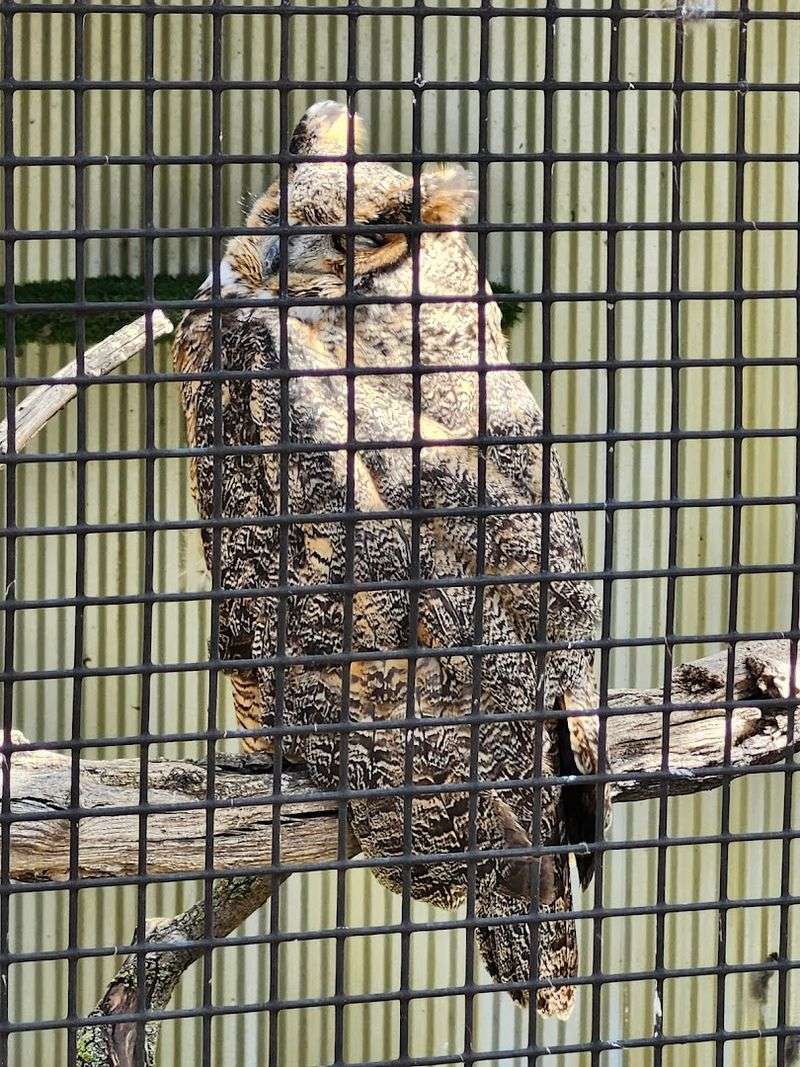
The Raptor Woodland Refuge is one of those features that surprises you even when you already know it is there. The refuge houses non-releasable birds of prey, meaning these are raptors that were rescued after injuries or other circumstances that prevent them from surviving in the wild on their own.
Each bird comes with a story, and the staff share those stories with a warmth and patience that makes the experience feel personal rather than performative. Owls, hawks, and other raptors are housed in thoughtfully designed enclosures that allow close observation without causing stress to the animals.
Children and adults alike tend to go quiet in front of these birds, which is its own kind of compliment to how the refuge is managed. The education component is strong here, and conversations with the naturalists on duty can go in fascinating directions if you ask the right questions.
Plan to spend more time here than you think you will need.
TreeRush Adventures: Where the Forest Goes Vertical
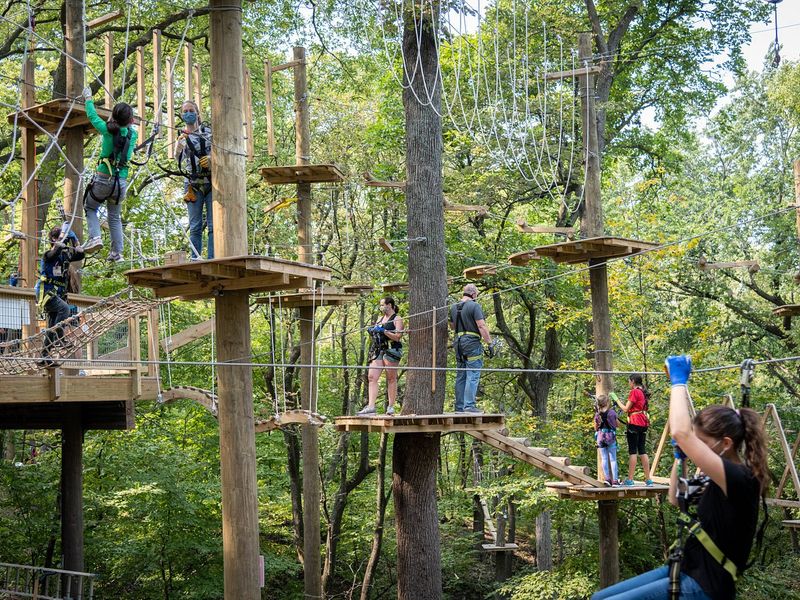
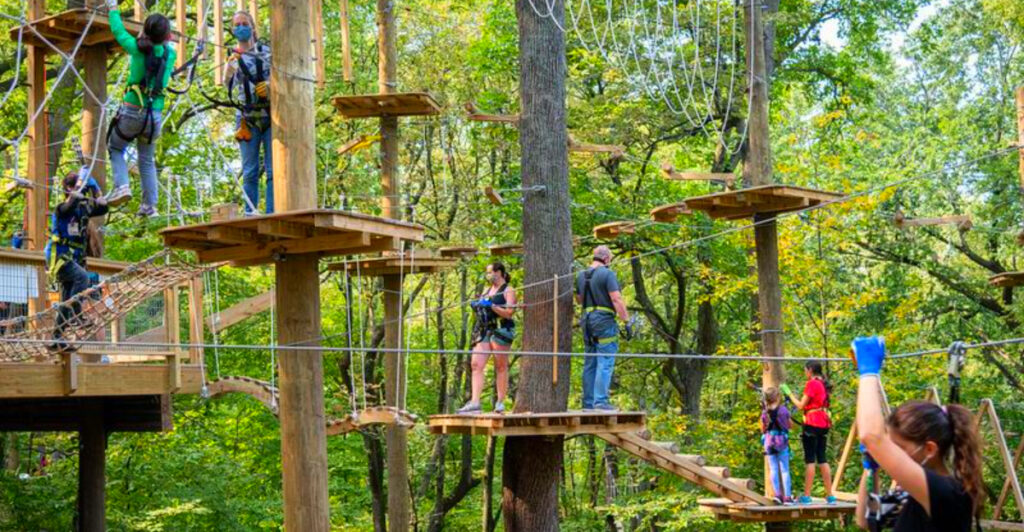
TreeRush Adventures operates a five-acre aerial park within the forest, and it is the kind of add-on attraction that turns a nature walk into a full-day adrenaline event. The course features climbing elements, balance challenges, and ziplines strung between mature trees, with safety equipment and trained staff managing every section.
TreeRush is designed for ages 7 and up, while a separate KidRush course handles the 4 to 6 age group, meaning the whole family can participate at an appropriate challenge level. The setup is genuinely impressive in scale, and the safety protocols are thorough enough that even nervous participants tend to find their confidence after the first few elements.
The course is priced separately from general forest admission, and some visitors feel the cost is on the higher end, but the quality of the experience justifies it for most. Watching someone work through a high-wire challenge with nothing but forest canopy around them is its own kind of entertainment, whether you are on the course or watching from below.
Acorn Acres and the Learning Center: Where Kids Connect With Nature
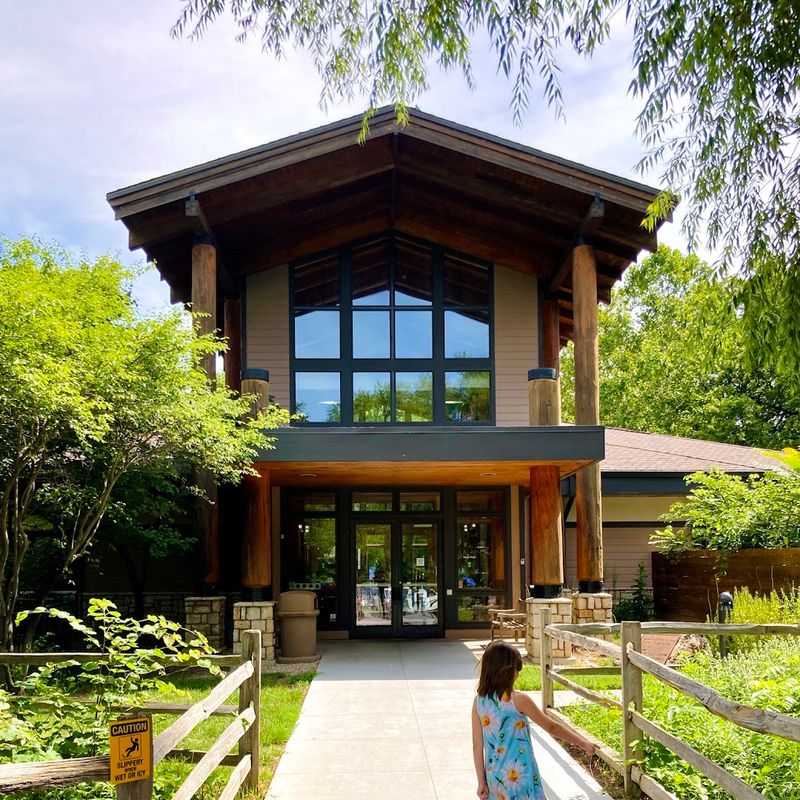
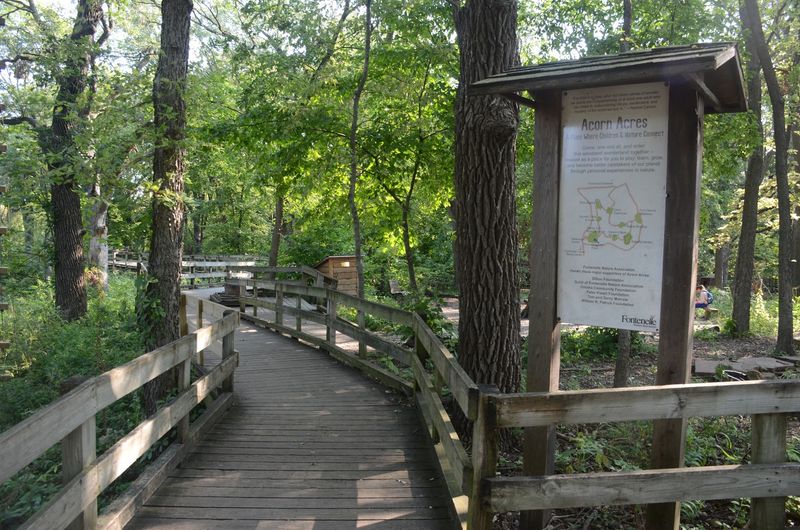
Acorn Acres is a nature-based playscape just off the boardwalk, and it is the kind of outdoor play area that actually makes sense in a forest setting. Natural materials, open-ended structures, and a design philosophy that encourages exploration rather than prescribed play give it a character that feels refreshingly different from a standard playground.
Inside the Katherine and Fred Buffett Forest Learning Center, interactive exhibits cover local ecology, conservation history, and the natural systems that make this forest function. The Baright Gallery adds an unexpected cultural layer, showcasing local and national artists whose work connects to the natural world.
Acorn Academy runs regular classes for homeschool families and children’s groups, with instructors who bring genuine enthusiasm and educational depth to every session. The curriculum balances structured learning with hands-on exploration, and the forest itself becomes the classroom in the best possible way.
Families who visit once tend to purchase memberships quickly, because the programming here gives every return visit a new reason to show up.
Wildlife Encounters You Cannot Schedule in Advance
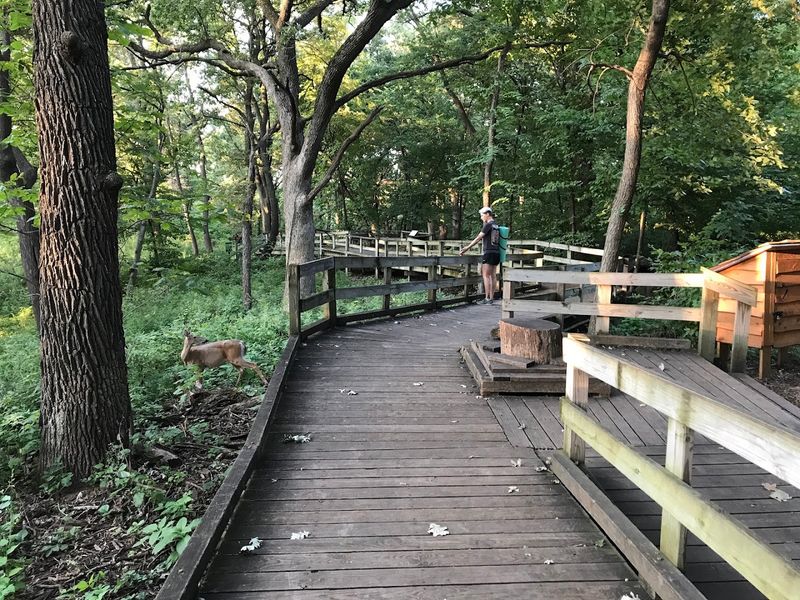
Deer move through the forest with a casualness that makes you feel like the visitor you actually are, and wild turkeys patrol the trail edges with a confidence that seems almost performative. The wildlife at Fontenelle Forest is not curated or fenced; it is simply present because the habitat supports it.
The Missouri River floodplain and wetland areas attract a rotating cast of species depending on the season, and the loess hills sections of the trail tend to produce different sightings than the lowland forest paths. Spotting a pileated woodpecker in the upper canopy is one of those moments that stops you mid-step and keeps you frozen until the bird moves on.
The key to wildlife encounters here is pace. Slow down, stay quiet, and let the forest settle around you before expecting anything to appear.
Visitors who rush through the trails miss most of what is actually happening, while those who take their time tend to leave with stories worth telling. The forest rewards attentiveness generously.
Membership, Pricing, and Why It Makes Financial Sense
General admission runs around $15 per person, which already feels like a reasonable exchange for access to over 2,100 acres of protected forest and all of its amenities. The math on membership gets even more compelling when you realize that two visits essentially covers the cost of an annual pass.
Fontenelle Forest is also part of the Blue Star Museum program, which means active duty military families of up to six people can enter free with valid military identification. That kind of community-minded policy reflects the non-profit character of the organization well.
The gift shop inside the learning center is genuinely worth browsing, with a well-curated selection of nature-themed items at prices that do not require a second mortgage. Picnic areas are scattered throughout the grounds, restrooms are clean and well-maintained, and parking is free and plentiful.
For a family looking for a full day of outdoor activity without a steep budget, this preserve delivers more value per dollar than most destinations in the region.
Best Times to Visit and What Each Season Offers
Spring migration turns the forest into a birding spectacle from late April through May, when warblers, thrushes, and other neotropical migrants pass through in numbers that can genuinely overwhelm a checklist. The wildflower display in spring is also notable, with rare species appearing in the forest understory before the full canopy closes in.
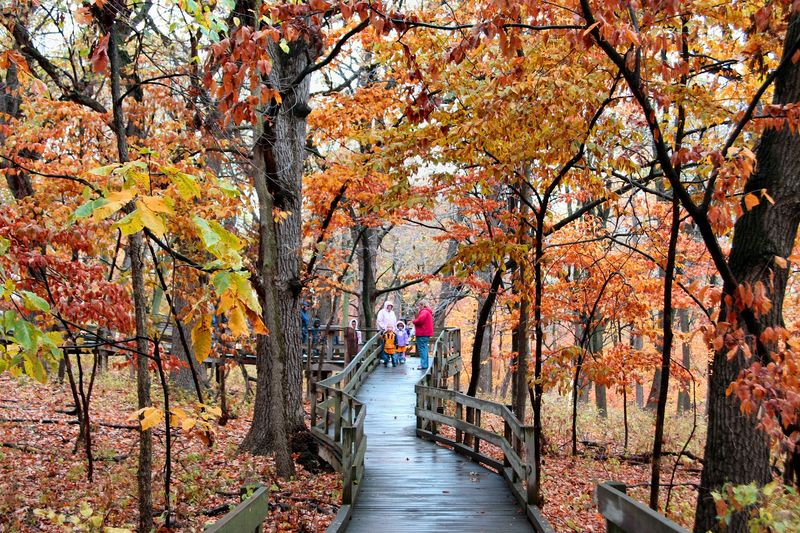
Summer brings dense green shade and active wildlife, making it ideal for families and hikers who prefer lush, immersive trail conditions. Fall transforms the hardwood canopy into a rotating palette of amber, gold, and rust, and the trails feel quieter and more contemplative as the season progresses.
Winter offers a completely different kind of experience, with the forest structure visible through bare branches and a stillness that feels almost meditative. Raptors are easier to spot in winter when the canopy is thin, and the trails remain accessible on most days.
Each season presents the forest in a genuinely different light, which is exactly why so many visitors end up returning multiple times throughout the year.
Practical Tips for Getting the Most Out of Your Visit
Wear sturdy, comfortable shoes regardless of which trails you plan to take, because even the easier paths include uneven terrain and occasional muddy stretches after rain. Bringing water is non-negotiable on warmer days, especially if you are planning to cover more than a few miles of the trail network.
A camera or a phone with a decent lens is worth having, because the light filtering through the forest canopy creates photographic opportunities at almost every turn. The preserve opens at 8 AM, and arriving early on weekends gives you a quieter experience before the crowds build through mid-morning.
Check the event calendar on the preserve’s website before your visit, because birdwatching events, children’s classes, and seasonal programming add significant value to any trip. The phone number for the visitor center is 402-731-3140 if you need to confirm hours or ask about trail conditions in advance.
One last thing: bring more time than you think you need, because Fontenelle Forest has a reliable habit of holding people longer than they planned.
Share this story