 Unearth The Voyage

Canada is widely considered a safe country, but crime levels can vary significantly between cities. One of the most reliable ways to measure this is the Crime Severity Index (CSI), developed by Statistics Canada.
Unlike simple crime rates, the CSI accounts for both the volume and seriousness of crimes, giving a more accurate picture of public safety. Recent data shows that several cities, particularly in Western Canada, consistently rank higher due to a mix of violent crime, property crime, and socioeconomic challenges.
Winnipeg, Manitoba

Winnipeg holds the dubious crown as the Canadian city with the highest Crime Severity Index, sitting at a striking score of around 130.9. That is not just a number — it reflects years of struggle with violent crime that has made national headlines more than once.
Some years, Winnipeg has earned the uncomfortable title of Canada’s violent crime capital.
Robbery and assault are among the most frequently reported offenses, and certain neighborhoods bear a disproportionate share of that burden. Poverty, housing instability, and limited social services in specific areas have fueled these ongoing challenges.
The city has invested in community programs and policing strategies to push those numbers down.
What is easy to miss in the statistics is that Winnipeg is also a city of remarkable culture, vibrant arts, and deeply loyal residents. Crime tends to cluster in particular pockets, meaning many neighborhoods are perfectly safe and genuinely welcoming.
Knowing which areas to navigate carefully makes a real difference for anyone living in or visiting the city. Winnipeg is working hard to rewrite its story, and progress, while slow, is real.
Kelowna, British Columbia

Postcard-perfect views of Okanagan Lake and sun-drenched vineyards make Kelowna look like the last place you would expect to find a high Crime Severity Index score. Yet this tourist favorite sits at approximately 123.5, ranking second among Canadian cities.
Beneath the scenic surface, the city has wrestled with serious challenges for years.
Property crime is a persistent headache here, alongside drug-related activity that spikes during warmer months when the population swells with visitors and seasonal workers. Rapid growth has outpaced the city’s ability to address social services and affordable housing, creating pressure points that feed into higher crime rates.
Tourists rarely encounter these issues directly, but residents feel them acutely, especially in certain downtown corridors. Local authorities have ramped up patrols and partnered with community organizations to tackle the root causes rather than just the symptoms.
The city is genuinely beautiful and worth visiting — just go in with realistic expectations. Kelowna is not dangerous in a dramatic sense, but its CSI score is a reminder that prosperity and crime can absolutely coexist in the same zip code.
Awareness goes a long way when exploring any growing city.
Richmond, British Columbia
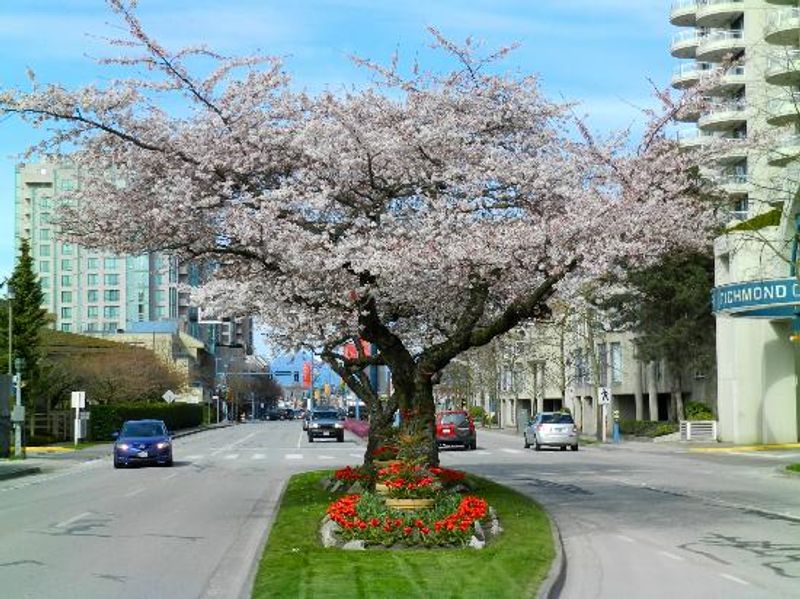
Here is a curveball: Richmond’s high Crime Severity Index score of roughly 119.1 is not primarily driven by violence. Unlike most cities on this list, Richmond earns its ranking through non-violent offenses — fraud, property crimes, and theft dominate the statistics.
It is a fascinating reminder that the CSI measures severity across all crime types, not just the dramatic stuff.
Fraud in particular has been a growing concern, with sophisticated schemes targeting businesses and individuals alike. Property crime rates remain elevated, linked partly to the city’s dense commercial activity and its position as a major transit hub near Vancouver International Airport.
These factors create opportunities that criminals are quick to exploit.
Richmond is a thriving, multicultural city with outstanding food, strong community ties, and a high quality of life for most residents. The crime picture here looks very different from cities battling gang violence or assault spikes.
That said, residents and business owners are right to stay alert, especially when it comes to protecting personal information and securing property. Understanding what kind of crime actually dominates locally helps people take smarter, more targeted precautions.
Knowledge is genuinely the best defense Richmond residents can carry.
Red Deer, Alberta
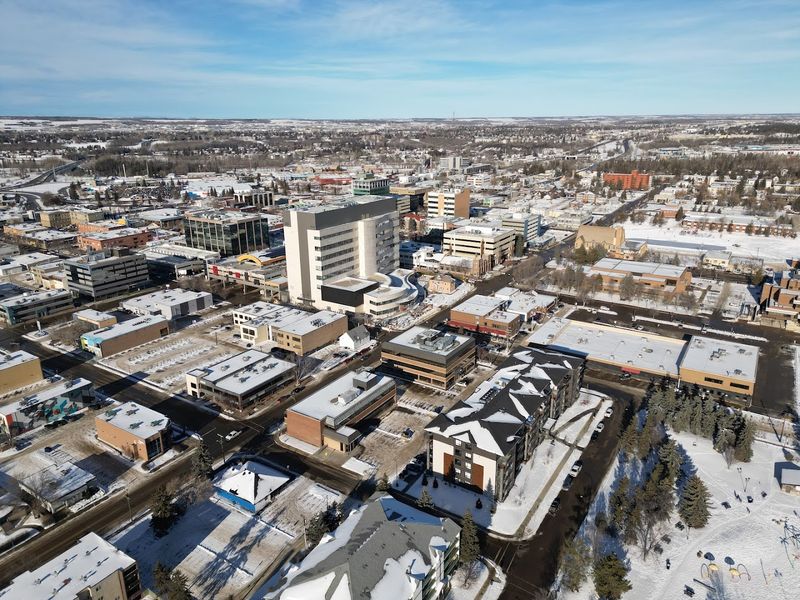
Sandwiched between Calgary and Edmonton, Red Deer often gets overlooked in conversations about major Canadian cities — but its Crime Severity Index score of approximately 118.6 demands attention. For a city of its size, that number is particularly striking and has remained stubbornly high for several years running.
Drug-related crime sits at the heart of the problem. Methamphetamine use and trafficking have fueled theft, break-and-enters, and other property offenses that wear down residents and businesses alike.
Smaller cities like Red Deer often lack the resources of larger urban centers to respond comprehensively to these layered social challenges.
The per-capita impact of crime feels sharper in a city this size because everyone seems to know someone who has been affected. Community fatigue is real, and local advocates have pushed hard for more mental health resources, addiction treatment beds, and social housing as long-term solutions.
Short-term policing alone has not been enough to move the needle significantly. Red Deer is a city with genuine warmth and a strong sense of prairie community spirit — its residents deserve better support from all levels of government.
The city’s story is still being written, and locals are determined to make the next chapter a better one.
Saskatoon, Saskatchewan
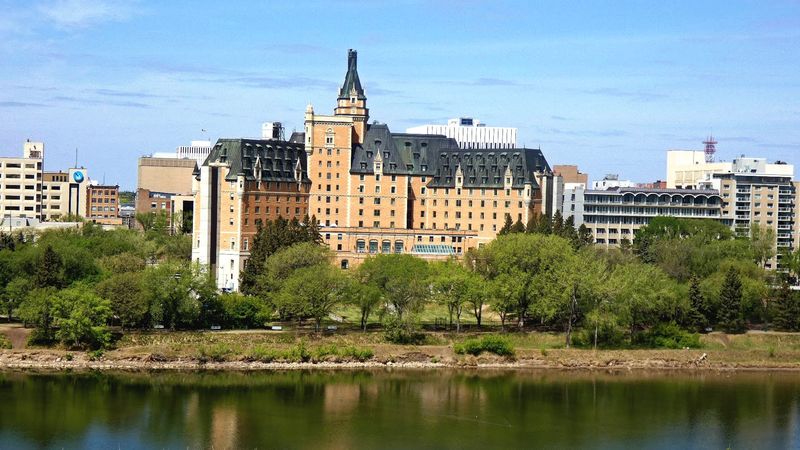
Saskatoon carries a Crime Severity Index score of around 117.5, and violent crime is a bigger part of that story than in some other cities on this list. Assaults and robberies occur at rates noticeably higher than the national average, which has kept the city in the spotlight for public safety discussions.
That is a tough reality for a city that genuinely has so much to offer.
Break-ins and vehicle theft add to the overall picture, frustrating homeowners and business operators who feel caught in a cycle that is hard to break. Socioeconomic inequality plays a significant role, with certain neighborhoods bearing the heaviest burden of both crime and poverty simultaneously.
Community organizations in Saskatoon have been especially active, launching youth programs, Indigenous-led initiatives, and neighborhood watch networks to build trust and reduce incidents at the ground level. Policing strategies have also evolved, with a greater emphasis on relationship-building rather than purely enforcement-based approaches.
Progress is slow but measurable. For anyone moving to or visiting Saskatoon, the city offers stunning river views, a lively arts scene, and genuinely friendly people.
Being informed about neighborhood differences helps set realistic expectations without painting the entire city with an unfair brush.
Thunder Bay, Ontario

Perched on the northwestern shore of Lake Superior, Thunder Bay feels like a city at the edge of the world — and its crime statistics feel just as extreme. With a CSI of approximately 113.8, it carries one of the highest violent crime severity scores in all of Canada, a distinction that has followed the city for well over a decade.
Economic disparity and deep-rooted social inequality are central to understanding why Thunder Bay struggles so persistently. The city has a significant Indigenous population that faces systemic barriers, and the relationship between that community and local institutions has historically been strained.
Those tensions have real, documented consequences for public safety outcomes.
Despite its challenges, Thunder Bay is an important regional hub — a gateway to Northwestern Ontario’s wilderness, mining industry, and Indigenous culture. Community leaders, including many Indigenous-led organizations, have pushed for meaningful reform and culturally appropriate support services.
Some progress has been made, but advocates argue that systemic change must go deeper and move faster. Visitors drawn by the dramatic Lake Superior scenery and outdoor adventure opportunities often find a city far more complex and layered than expected.
Thunder Bay’s struggles are real, but so is the resilience of the people working every day to change it.
Edmonton, Alberta

Edmonton is a big city with big ambitions — and, unfortunately, a Crime Severity Index score to match, sitting at roughly 109.3. As Alberta’s capital and one of Canada’s largest urban centers, Edmonton deals with the full spectrum of challenges that come with rapid growth, economic inequality, and a large transient population.
Property crime is widespread across the city, and certain neighborhoods experience elevated rates of assault and drug-related incidents. The downtown core and several inner-city areas have seen persistent issues tied to homelessness and substance use, problems that policing alone has struggled to resolve without broader social investment.
What makes Edmonton’s situation particularly interesting is how dramatically safety can shift from one neighborhood to the next. Affluent suburbs feel worlds apart from struggling inner-city blocks, yet both share the same CSI score.
The city has launched several promising initiatives, including enhanced mental health response teams and community safety audits, to address crime more holistically. Edmonton also boasts a thriving food scene, world-class festivals, and the spectacular river valley park system.
For residents, staying informed about local neighborhood dynamics is genuinely useful. Edmonton is absolutely livable — it just requires the same street-smart awareness that any major North American city demands.



