 Unearth The Voyage
Some islands look like paradise from the outside, but getting too close could cost you your freedom — or even your life. Around the world, certain islands are completely off-limits to visitors, and the reasons range from deadly wildlife to ancient tribes to toxic volcanic gas.
These aren’t just remote spots nobody bothered to visit — they’re actively protected, restricted, or just plain dangerous. If your travel bucket list needs a little mystery, these forbidden islands will definitely scratch that itch.
Ilha da Queimada Grande (Snake Island) — Brazil
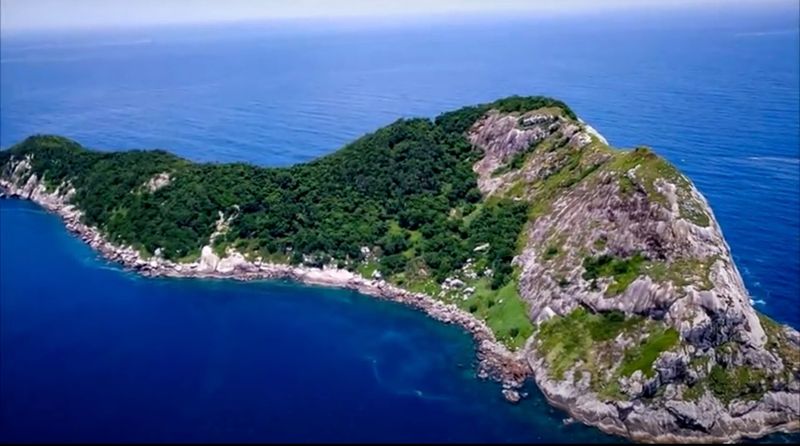
Picture a tropical island with lush green forests, crashing waves, and stunning ocean views — then picture every inch of it crawling with deadly snakes. That’s Snake Island in a nutshell.
Officially called Ilha da Queimada Grande, this Brazilian island off the coast of São Paulo is home to an estimated 2,000 to 4,000 golden lancehead vipers, one of the most venomous snakes on the planet.
These snakes evolved in isolation after rising sea levels cut the island off from the mainland thousands of years ago. With no ground prey to hunt, they adapted to catching birds — and developed a venom so fast-acting it can melt human flesh.
Scientists estimate there’s roughly one snake for every square meter in some parts of the island. That’s not a hiking trail you want to stumble down.
The Brazilian Navy strictly controls access, and only a handful of researchers with special permits are allowed to visit. Even they go equipped with protective gear and medical supplies.
The last lighthouse keeper stationed there reportedly fled after snakes invaded his home. Snake Island isn’t just dangerous — it’s the stuff of actual nightmares, wrapped in a surprisingly beautiful package.
Niʻihau — Hawaii, USA
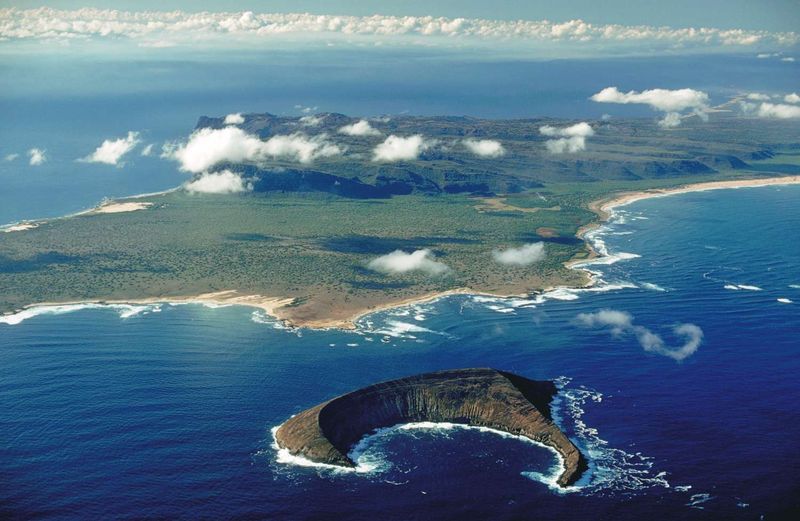
Just 17 miles southwest of Kauai sits an island most Hawaiians have never set foot on. Niʻihau, nicknamed “The Forbidden Island,” is privately owned by the Robinson family, who purchased it from the Hawaiian Kingdom back in 1864 for $10,000.
That’s a bargain price for one of the most culturally significant places in the entire Pacific.
Access is tightly restricted by the owners to protect the island’s small Hawaiian community — roughly 70 to 130 residents — who still speak Hawaiian as their first language and live without most modern conveniences. No internet, no paved roads, no hotels, and almost no tourists.
It’s one of the last places on Earth where traditional Native Hawaiian culture is genuinely preserved rather than performed for visitors.
The Robinson family does allow a handful of very limited helicopter tours and hunting excursions, but even those are carefully controlled. You can’t just show up and wander around.
The community itself has the final say over who enters and why. What makes Niʻihau truly remarkable isn’t what’s been built there — it’s what’s been deliberately left out.
In a world obsessed with development, this island chose to protect its soul instead.
Poveglia Island — Italy
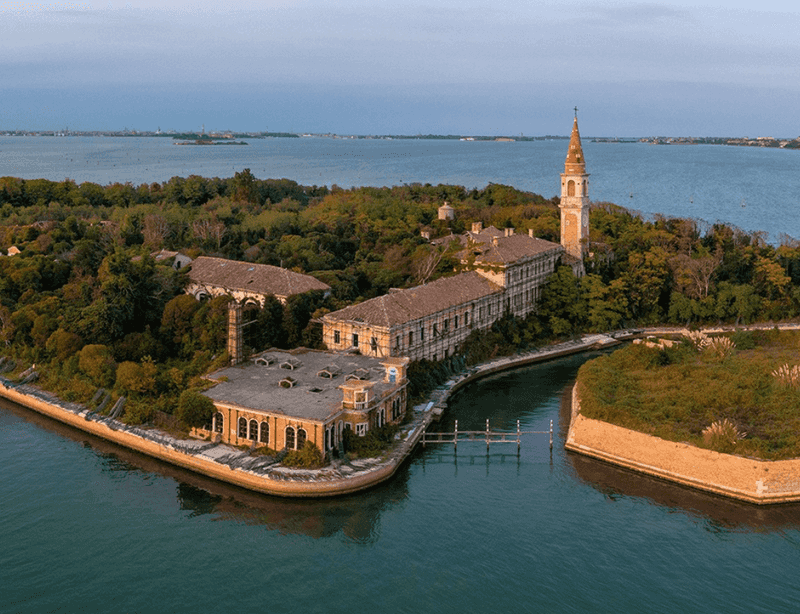
If islands could have reputations, Poveglia’s would be absolutely terrifying. Tucked into the Venice Lagoon, this small island has one of the darkest histories in all of Europe.
During the Black Death in the 14th century, Venetian authorities used Poveglia as a dumping ground for plague victims — both the dead and the still-living. Estimates suggest over 100,000 bodies were buried or burned there.
As if that weren’t grim enough, the island later became a psychiatric hospital in the early 1900s. Stories swirled about cruel experiments performed on patients, though some details have grown into legend over time.
The hospital closed in 1968, and Poveglia has sat abandoned ever since, its crumbling buildings slowly being swallowed by nature.
The Italian government officially bans public access due to structural dangers — the buildings could collapse at any moment — and the island remains in a state of eerie disrepair. A private buyer briefly purchased it in 2014 for a restoration project, but plans fell through.
Ghost hunters and urban explorers have tried sneaking in over the years, and honestly, who could blame their curiosity? But between the rotting floors and the deeply unsettling history, Poveglia is one island best admired from a safe, dry distance.
Surtsey — Iceland
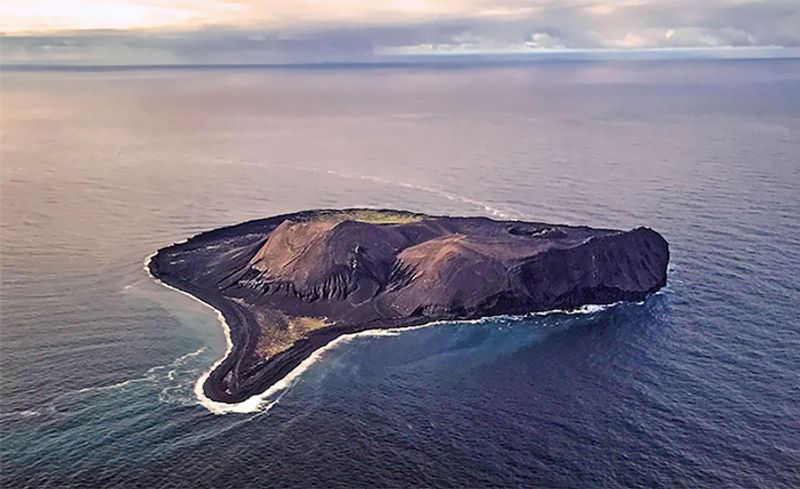
Most islands take millions of years to form. Surtsey didn’t get that memo.
This remarkable island off the southern coast of Iceland literally rose out of the ocean between 1963 and 1967, born from a series of underwater volcanic eruptions. Scientists watched in real time as a brand-new piece of land appeared from the sea — and immediately recognized it as a once-in-a-lifetime scientific opportunity.
Access has been restricted since the very beginning, limited to a small group of approved researchers who visit only occasionally. The goal is to observe, without interference, how life naturally colonizes a brand-new piece of land.
What plants arrive first? Which birds decide to nest?
How do bacteria and fungi establish themselves on bare volcanic rock? Surtsey is essentially a living science experiment, and every human footprint could corrupt the data.
Today, the island is a UNESCO World Heritage Site and one of the most carefully monitored ecosystems on Earth. Mosses, grasses, seabirds, and even seals have made it their home — all without any human help.
Researchers have documented over 300 species establishing themselves naturally. Surtsey isn’t forbidden because it’s dangerous — it’s protected because it’s genuinely irreplaceable.
Sometimes the best thing humans can do for nature is simply stay out of the way.
North Brother Island — New York, USA
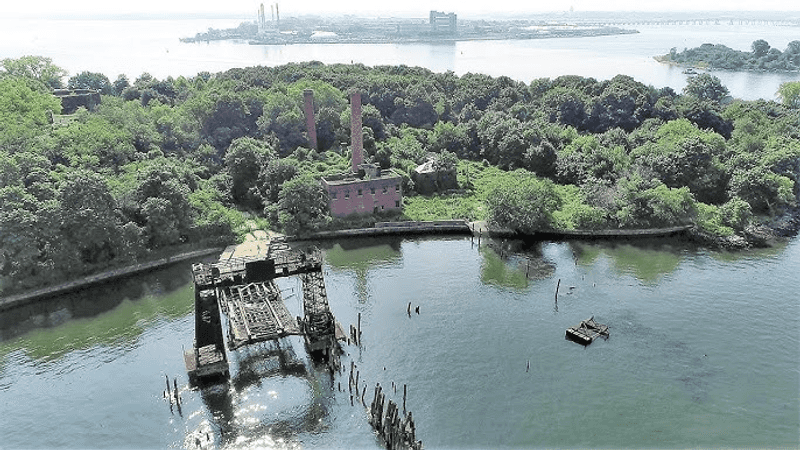
New York City has five boroughs, thousands of streets, and millions of people — and somehow, a completely abandoned island hiding in plain sight. North Brother Island sits in the East River between the Bronx and Rikers Island, visible from the city, yet completely off-limits to the public.
It’s one of urban America’s most fascinating forgotten places.
The island’s history is genuinely dramatic. In 1904, the steamboat General Slocum caught fire nearby, killing over 1,000 people in one of New York’s deadliest disasters.
The island’s Riverside Hospital treated survivors. It later became infamous as the home of “Typhoid Mary” — Mary Mallon, the first person in the US identified as an asymptomatic carrier of typhoid fever, who was quarantined there against her will for decades.
After the hospital closed in 1963, nature took over fast. Today, the buildings are collapsing under the weight of vines and decades of neglect, and the island serves as a protected nesting ground for black-crowned night herons.
The city officially prohibits visitors to preserve the wildlife habitat and prevent injuries from the crumbling structures. Researchers and birders occasionally get special permits, but for everyone else, North Brother Island remains a ghost of New York’s past — close enough to see, impossible to reach.
Inaccessible Island — South Atlantic (UK Territory)
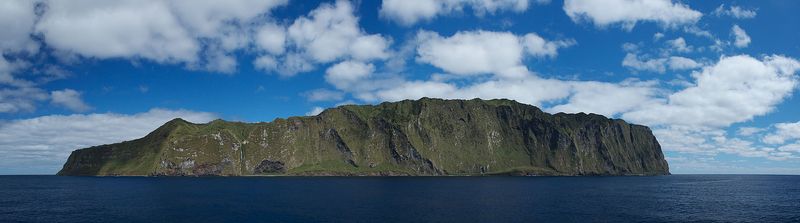
The name alone should tell you everything you need to know. Inaccessible Island, part of the Tristan da Cunha archipelago in the South Atlantic, earns its title honestly.
The island is ringed by sheer cliffs that plunge straight into the ocean, making landing almost physically impossible without serious equipment and ideal weather conditions — which almost never exist there.
It’s a UNESCO World Heritage Site and one of the most carefully protected wildlife sanctuaries in the world. The island is home to the Inaccessible Island rail, the world’s smallest flightless bird, which exists nowhere else on Earth.
It also hosts enormous colonies of seabirds, including rockhopper penguins and several species of albatross. The ecosystem here is remarkably intact precisely because so few humans have ever disturbed it.
Visits require permits from the Tristan da Cunha government, and even approved expeditions are rare due to the extreme logistical challenges. The nearest inhabited land is the main Tristan da Cunha island, itself one of the most remote human settlements on the planet.
Inaccessible Island isn’t restricted to make it seem mysterious — it’s protected because what lives there is genuinely irreplaceable. Some places are worth more untouched than explored.
Gruinard Island — Scotland
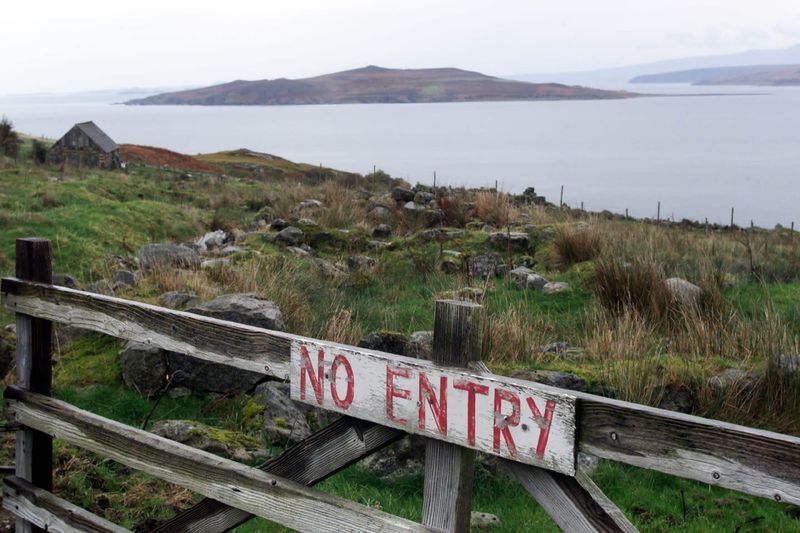
During World War II, British scientists needed a place to test something truly terrifying — anthrax as a biological weapon. They chose Gruinard Island, a small uninhabited island off the northwest coast of Scotland, figuring its remote location would contain any fallout.
What followed was one of the most chilling chapters in modern military history.
In 1942, researchers detonated bombs laced with anthrax spores over groups of sheep on the island. The results confirmed anthrax’s devastating effectiveness as a weapon.
They also confirmed something nobody had fully anticipated: anthrax spores are extraordinarily persistent. The island remained so heavily contaminated that it was declared off-limits for nearly five decades, with warning signs posted around its perimeter.
A massive decontamination effort in the 1980s involved spraying the island with formaldehyde and seawater, and Gruinard was officially declared safe in 1990. Technically, it’s no longer restricted — but access is still heavily discouraged, and very few people actually visit.
The island is now owned by the descendants of the original landowners who sold it to the government. It sits there quietly today, green and seemingly peaceful, carrying the weight of what was once tested on its soil.
Some legacies don’t wash away easily.
Miyake-jima (Restricted Zones) — Japan
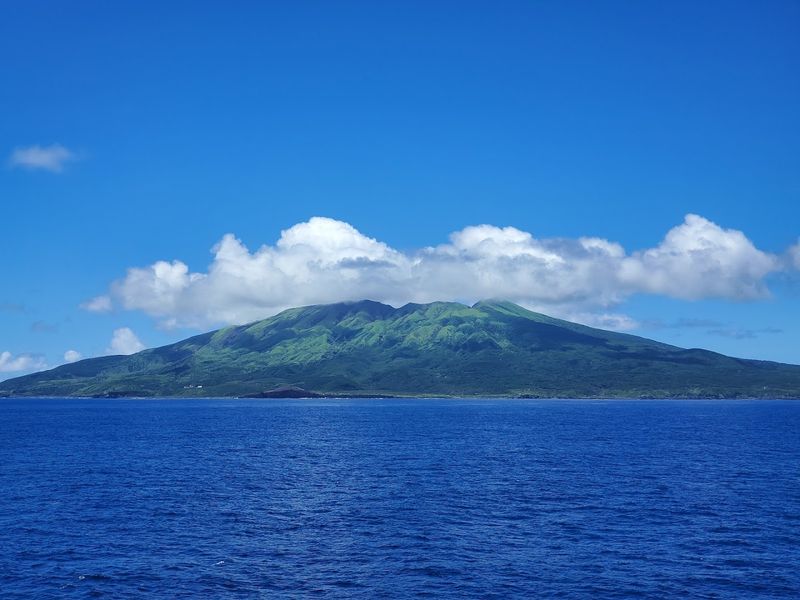
Imagine living somewhere that requires you to carry a gas mask at all times — not as a precaution, but as a legal requirement. That’s everyday life on Miyake-jima, a volcanic island about 180 kilometers south of Tokyo.
Mount Oyama, the island’s active volcano, has erupted multiple times in recorded history, with the 2000 eruption being particularly catastrophic.
The 2000 eruption forced the entire population of roughly 3,800 people to evacuate for over four years. When residents were finally allowed to return in 2005, they came back to an island still releasing dangerous levels of sulfur dioxide gas from the volcano.
Even today, sirens alert residents when gas levels spike, and evacuation drills are a regular part of island life. Certain zones near the crater remain permanently off-limits.
Despite all of this, Miyake-jima has a thriving community of people who chose to return and rebuild. Tourists do visit — the island is actually known for excellent diving and birdwatching — but the restricted volcanic zones are strictly enforced for obvious reasons.
Standing too close to an actively gassing volcano is the kind of mistake you only get to make once. Miyake-jima is a fascinating reminder that humans and volcanoes have always had a complicated relationship.



