 Unearth The Voyage
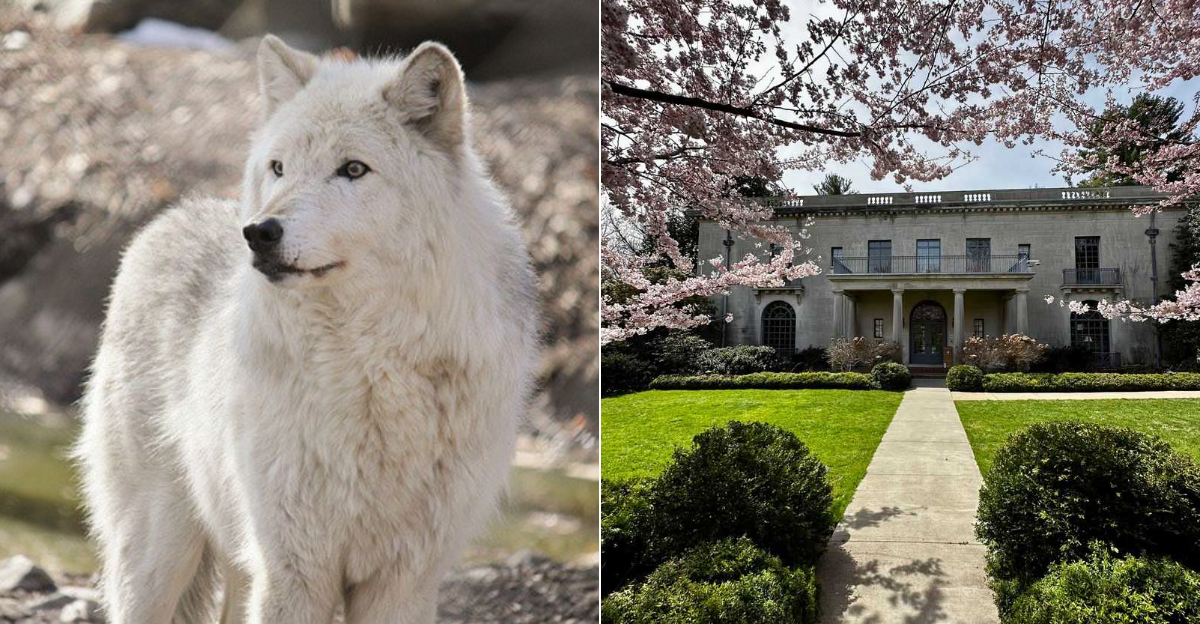
New Jersey has a way of surprising you when you least expect it. One minute you’re running errands, and the next you’re standing somewhere that feels like it belongs in a different world.
Skip the crowded boardwalk routines and the overpriced, forgettable stops. This is the kind of day out that gives you a real story to tell afterward.
You might end up underground with walls that seem to glow, face-to-face with animals you’ve only seen in documentaries, or walking through gardens that instantly slow your brain down. The best part is how close these places are to normal life, yet how far they feel from it.
If you’re craving something different without turning it into a whole vacation, these under-the-radar stops are worth building a weekend around.
1. Duke Farms, Hillsborough – Orchids, Owls, and Endless Paths
Free admission to a thousand acres of pure exploration sounds too good to be true. Yet Duke Farms delivers exactly that, sprawling across Hillsborough with trails that beg you to grab a bike or lace up your walking shoes.
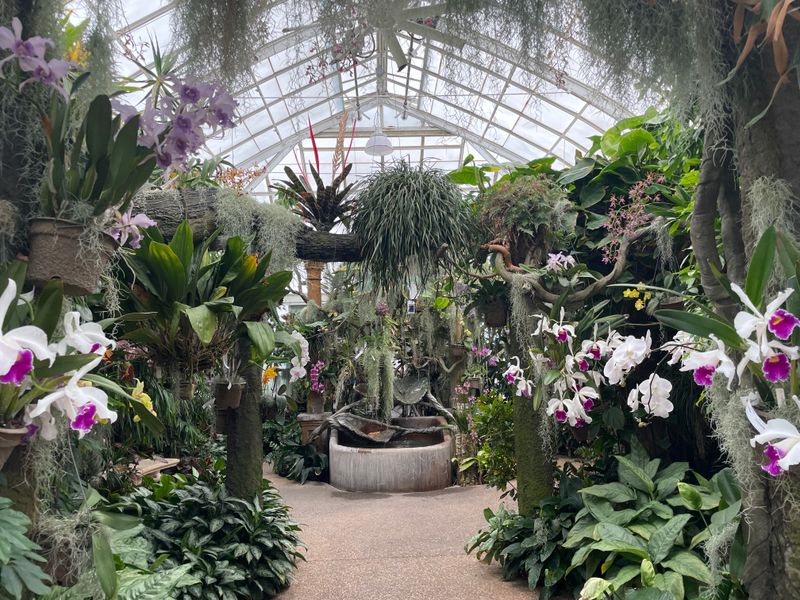
The real showstopper? The Orchid Range, a glass-roofed wonderland housing roughly two thousand orchids representing over thirteen hundred varieties.
I wandered through last spring and lost track of time completely. The blooms ranged from tiny button-sized flowers to dramatic cascading displays that looked like they belonged in a tropical rainforest.
Each section felt like stepping into a different climate zone without leaving New Jersey.
The trails outside wind through meadows, past ponds, and into wooded areas where you might spot owls if you’re patient. Bring your camera because the scenery changes with every season.
Pro tip: check the seasonal hours for the Orchid Range before you make the drive, since they vary throughout the year.
Families love the wide, accessible paths, and cyclists appreciate the smooth surfaces. Whether you spend an hour or an entire afternoon, Duke Farms proves that the best things in life really can be free.
2. Sterling Hill Mining Museum, Ogdensburg – Where the Rocks Glow
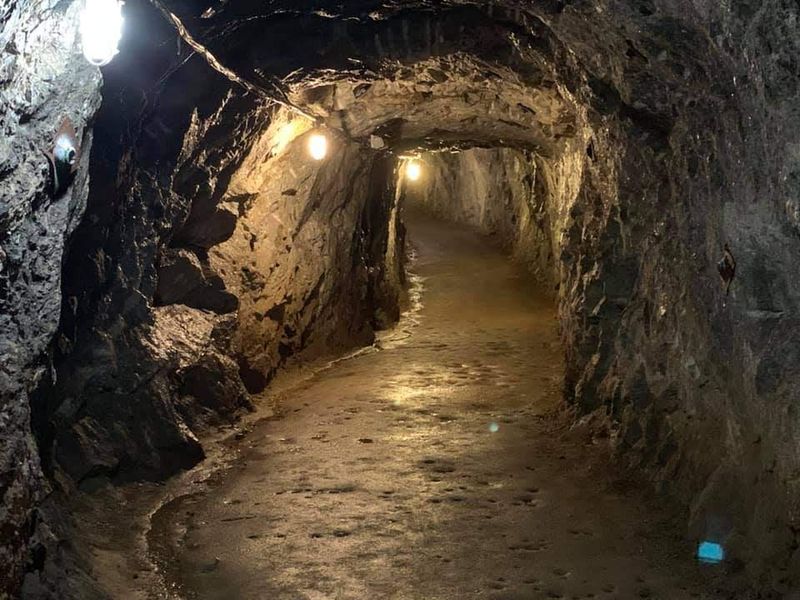
Most museums keep their coolest stuff behind glass. Sterling Hill hands you a hard hat and sends you underground instead.
This former zinc mine in Ogdensburg became famous worldwide for its fluorescent minerals, and one tour through the UV-lit rainbow tunnel explains why instantly.
The rocks literally glow under ultraviolet light, transforming boring gray stone into electric pinks, greens, and oranges. It’s like someone painted the walls with neon highlighters, except nature did all the work over millions of years.
Kids go absolutely wild for it, and honestly, so do adults.
Tours guide you through the mining history while showing off the geological treasures. On certain days, you can even try your hand at collecting specimens yourself.
The museum sits at 30 Plant Street, tucked away in a corner of New Jersey most people speed past on their way somewhere else.
Wear sturdy shoes because mine floors aren’t exactly polished marble. The temperature underground stays cool year-round, so bring a light jacket even in summer.
After seeing rocks glow like magic, you’ll understand why people make this a regular pilgrimage.
3. Lakota Wolf Preserve, Columbia/Knowlton Township – Face-to-Face with a Howl
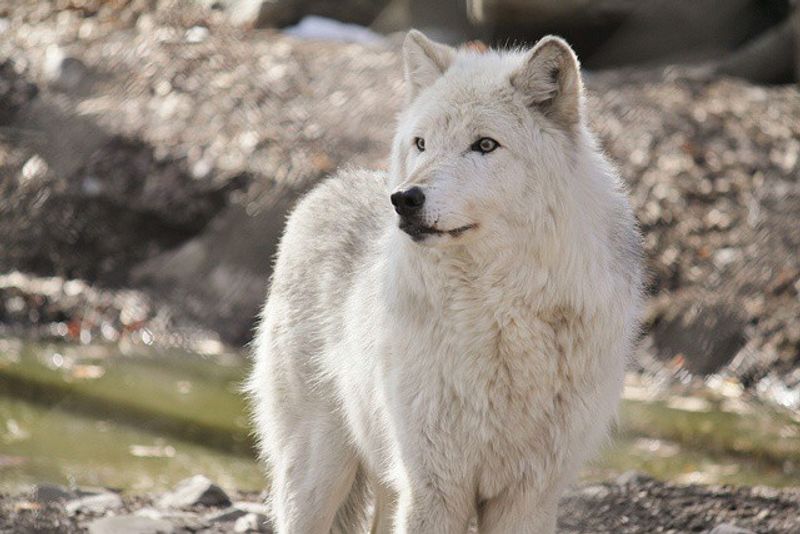
Getting within camera range of actual wolf packs requires either extreme luck or a trip to Lakota Wolf Preserve. The preserve chooses the second option, offering guided wolf watch talks that bring you surprisingly close to these magnificent animals in their wooded enclosures.
The guides know each wolf by name and personality. They’ll tell you which one’s the troublemaker, which one loves showing off, and how the pack dynamics shift throughout the seasons.
Watching them interact feels like peeking into a secret world most people only see on nature documentaries.
Beyond wolves, you’ll meet foxes, a bobcat, and a lynx, each with their own story. The preserve limits visitor numbers to keep stress low for the animals, which means you need advance reservations.
Tours open only a few months ahead, so mark your calendar and set a reminder.
Photography enthusiasts should bring a decent zoom lens, though even phone cameras capture impressive shots. The preserve sits in Columbia/Knowlton Township, far enough from city noise that the wolves’ howls echo through the trees undisturbed.
That sound alone makes the trip worth repeating.
4. Whitesbog Village, Browns Mills – Birthplace of the Blueberry
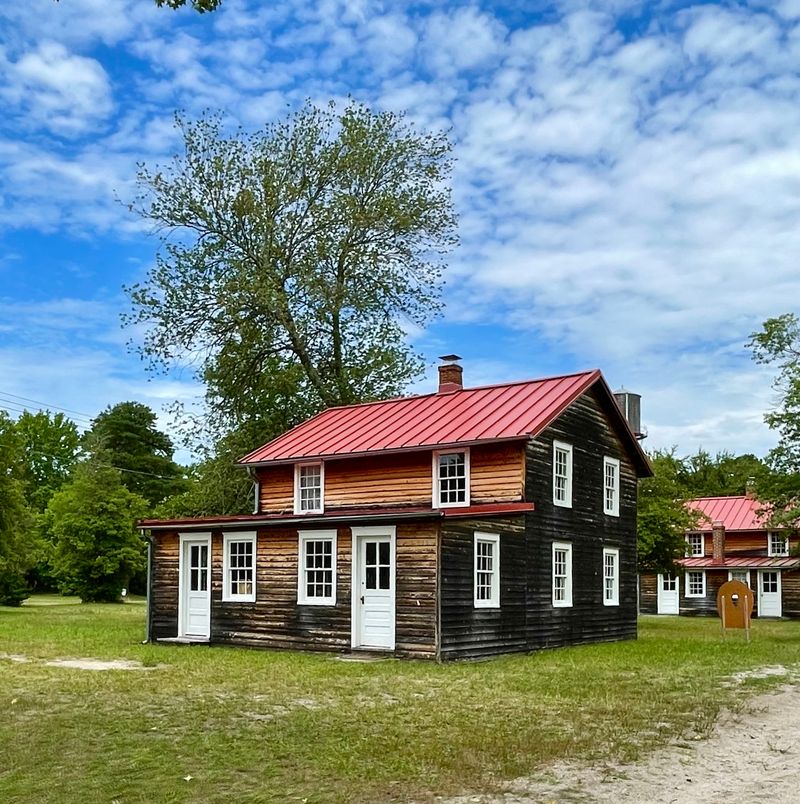
Elizabeth White changed breakfast forever, and most people have never heard her name. At Whitesbog Village in Browns Mills, this agricultural pioneer helped develop the modern cultivated highbush blueberry, transforming a wild swamp berry into the plump fruit we pile onto pancakes today.
The preserved company town sits inside the Pine Barrens, looking much like it did during its working days. Sandy roads wind between old buildings and abandoned bogs, while the farm history trail explains how workers lived and labored here.
It’s equal parts history lesson and nature walk.
Cranberry and blueberry cultivation dominated this area for generations. Walking the grounds, you can still see the irrigation systems and sorting houses that made Whitesbog an agricultural powerhouse.
The buildings wear their age proudly, weathered but standing strong.
Spring and fall offer the best visiting weather, though summer brings wild blueberries you can sample along the trails. No admission fee means you can wander freely, taking as long as you want to explore.
Pack water and snacks since amenities are minimal, keeping the site authentically rustic rather than tourist-polished.
5. Greenwood Gardens, Short Hills – Terraces, Tiles, and Tranquil Turns
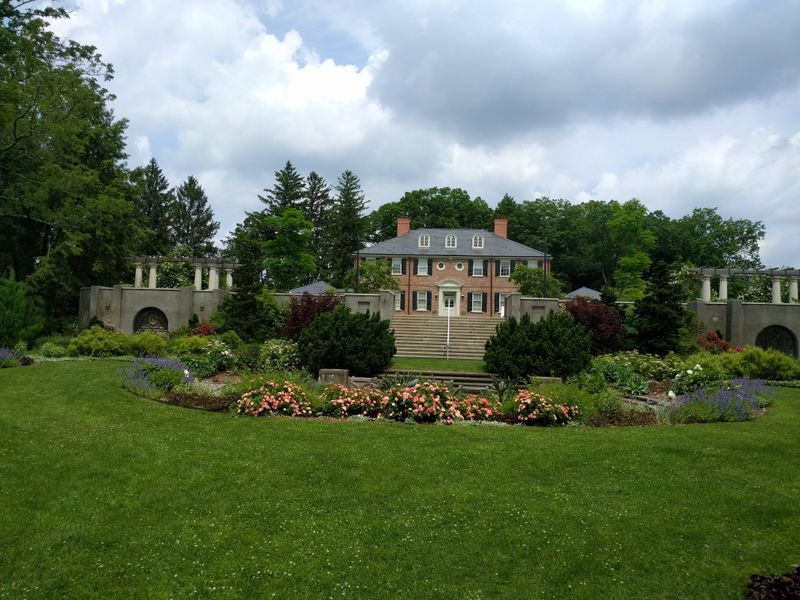
Twenty-eight acres of early twentieth-century garden design hide just minutes from suburban sprawl in Short Hills. Greenwood Gardens mixes grottoes, follies, fountains, meadows, and woodland paths into a serene escape that feels impossibly far from strip malls and traffic lights.
The estate gardens showcase the kind of careful planning that modern landscapes rarely attempt. Every turn reveals another carefully composed view, from formal terraces to wild-looking meadows that required meticulous design to appear effortless.
The tiles and architectural details add unexpected pops of color and texture.
I brought my sketchbook last summer and filled pages with fountain details and leaf patterns. Other visitors wandered past with cameras, everyone moving slowly, soaking up the tranquility.
The gardens encourage that kind of unhurried exploration.
Admission fees support ongoing preservation work, keeping these grounds accessible for future generations. The property hosts occasional events and educational programs, but most days stay blissfully quiet.
Parking is limited, so arriving early on weekends beats the small crowds. Once you’ve experienced the peaceful beauty here, you’ll find excuses to return throughout the seasons.
6. Van Vleck House & Gardens, Montclair – Wisteria That Stops You in Your Tracks
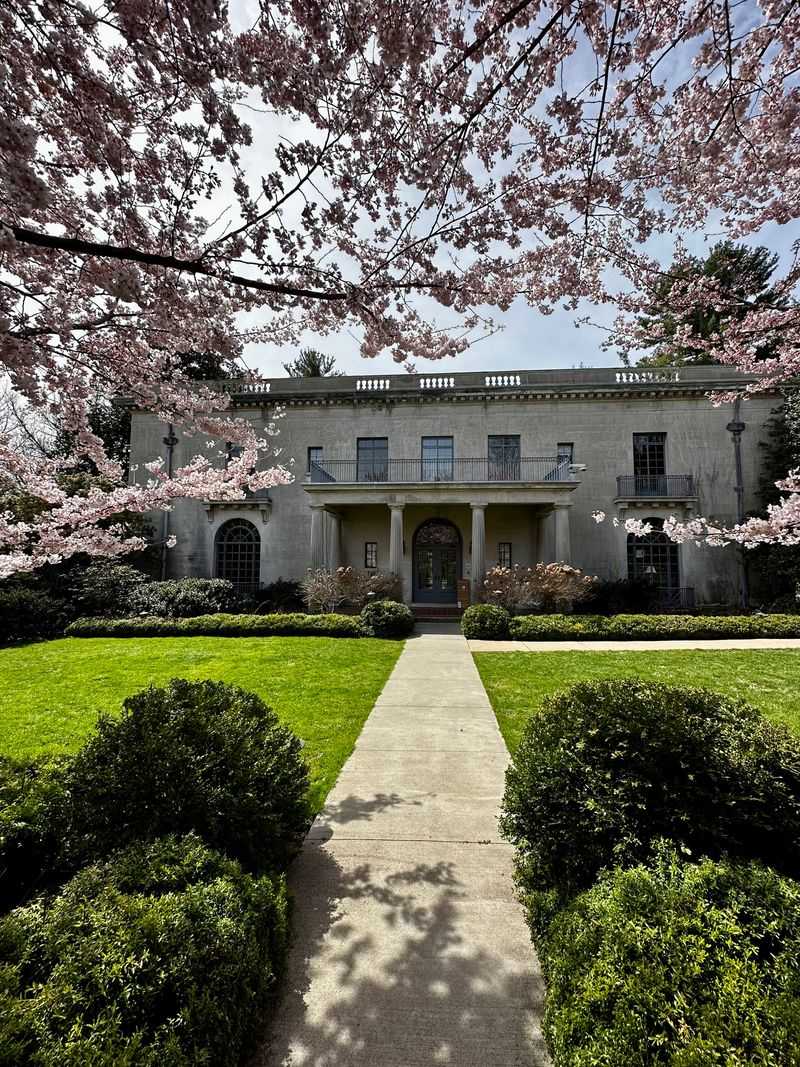
Some of North America’s oldest and grandest wisteria vines grow in Montclair, draping Van Vleck House & Gardens in cascades of purple blooms each spring. The sight literally stops people mid-stride, phones coming out instantly to capture the floral explosion.
This admission-free garden and arboretum welcomes visitors from dawn to dusk. The Italianate mansion anchors the property, though house tours aren’t available.
Honestly, the gardens steal the show anyway, especially when those ancient wisteria vines hit peak bloom.
Beyond wisteria season, the grounds offer year-round interest with mature trees, thoughtful plantings, and peaceful walking paths. The garden’s free access makes it a neighborhood treasure, though visitors from across the state make special trips during bloom time.
Smart planning there.
Photographers should visit in late April or early May for prime wisteria conditions, though exact timing shifts with weather patterns. The rest of the year brings its own charms, from fall foliage to winter’s stark beauty.
Benches scattered throughout invite lingering, and the quiet atmosphere encourages contemplation. You’ll leave planning your next visit before reaching your car.
7. Great Swamp National Wildlife Refuge (Wildlife Observation Center), Morris County – Boardwalks Where Herons Hunt
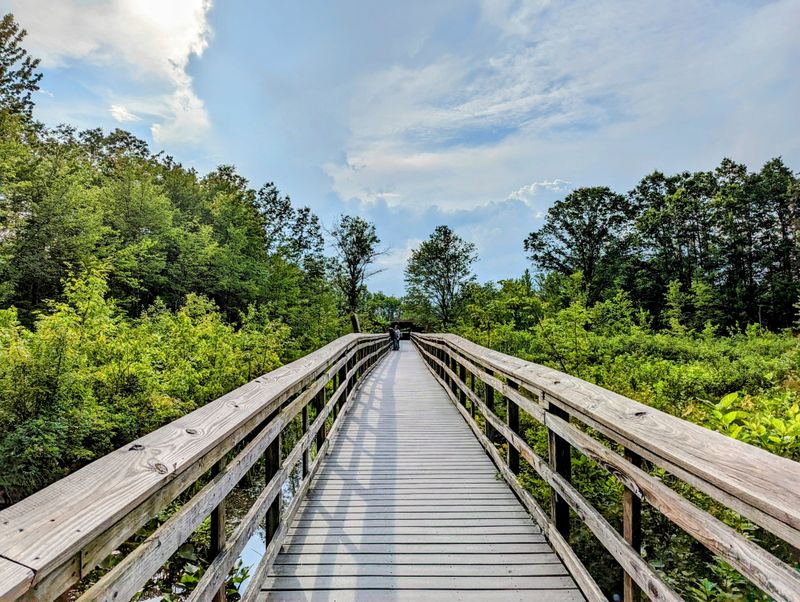
Just twenty-six miles from Times Square, seventy-seven hundred acres of protected wetland provide sanctuary for turtles, frogs, and migratory birds. Great Swamp National Wildlife Refuge proves that remarkable nature doesn’t require a cross-country road trip.
The Wildlife Observation Center features easy, family-friendly boardwalk loops with blinds positioned perfectly for wildlife watching. You’ll find yourself eye-level with hunting herons, sunbathing turtles, and frogs calling from the reeds.
Binoculars help, but even without them, the animals come close enough for solid viewing.
Spring migration brings incredible bird diversity, while summer buzzes with insect life and amphibian choruses. Fall colors reflect beautifully in the still water, and winter reveals animal tracks in the snow.
Each season offers different rewards for repeat visitors.
The boardwalks make the refuge accessible for strollers and wheelchairs, removing barriers that keep many people from experiencing wetland ecosystems. Parking is free, and the trails stay open during daylight hours.
Mosquito repellent earns its place in your bag during warmer months. After experiencing the peaceful beauty here, you’ll wonder why you ever thought nature required wilderness expeditions.
8. Island Beach State Park, Ocean County – Ten Miles of Wild Shore
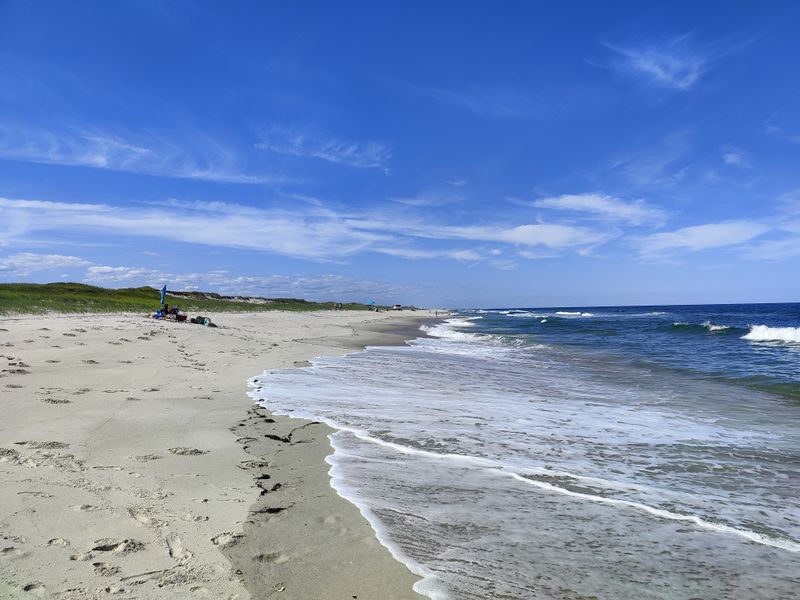
One of the last undeveloped barrier beaches on the North Atlantic coast stretches for ten miles along Ocean County. Island Beach State Park protects dunes, osprey nests, and quiet surf fishing spots that look remarkably like they did centuries ago.
No beach badge required here, though you’ll pay a state park vehicle fee. The park caps daily entries to preserve the wilderness feel, which means summer weekends sometimes hit capacity.
Arriving early solves that problem and gives you first pick of parking spots near your preferred beach access.
The undeveloped shoreline attracts people seeking escape from boardwalk crowds and commercial beach towns. You won’t find snack bars or arcade games, just sand, surf, and seabirds.
Bring everything you need because services are intentionally minimal.
Surf fishing enthusiasts love the park’s relaxed atmosphere and productive waters. Families appreciate the natural environment and the chance to show kids what beaches looked like before development took over.
The dunes host protected plant species and nesting birds, so staying on marked paths protects these fragile ecosystems. Once you’ve experienced this wild shore, typical beach towns feel overcrowded and artificial.
9. The Historic Village at Allaire, Wall Township – Step into 1836
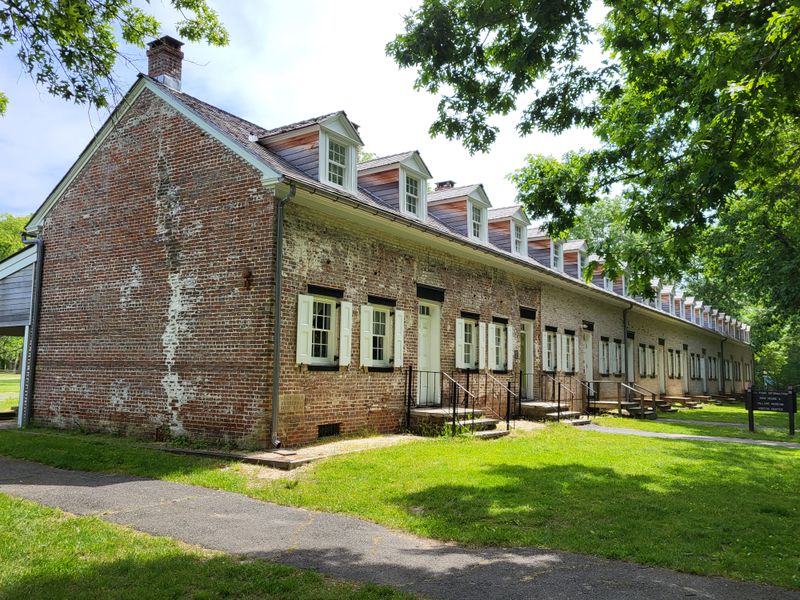
Wall Township hides a complete nineteenth-century ironmaking town inside Allaire State Park. The Historic Village at Allaire transports visitors to 1836, complete with period interpreters, over thirteen historic buildings, and rides on the narrow-gauge Pine Creek Railroad on select days.
The village operated as a real community, producing iron products that fueled early American industry. Walking between the buildings, you can almost hear the forge hammering and workers calling to each other.
The preservation work here deserves serious credit for maintaining authenticity.
Interpreters in period clothing demonstrate crafts and explain daily life in the ironmaking era. Kids especially love the hands-on demonstrations and the chance to see how people lived without electricity or modern conveniences.
The railroad rides add extra excitement when they’re running, so check the schedule before visiting.
Special events throughout the year bring additional activities, from craft fairs to historical reenactments. Regular admission stays affordable, making this an excellent value for families.
The village sits within the larger state park, so you can combine your visit with hiking or picnicking. After experiencing this living history, textbook lessons suddenly make a lot more sense.



