These breathtaking places look like they belong in fairy tales, yet they’re real destinations you can visit. From sun-baked Mediterranean villages to dramatic medieval cities carved into stone, clifftop towns offer some of the most stunning views on Earth.
1. Ronda, Spain
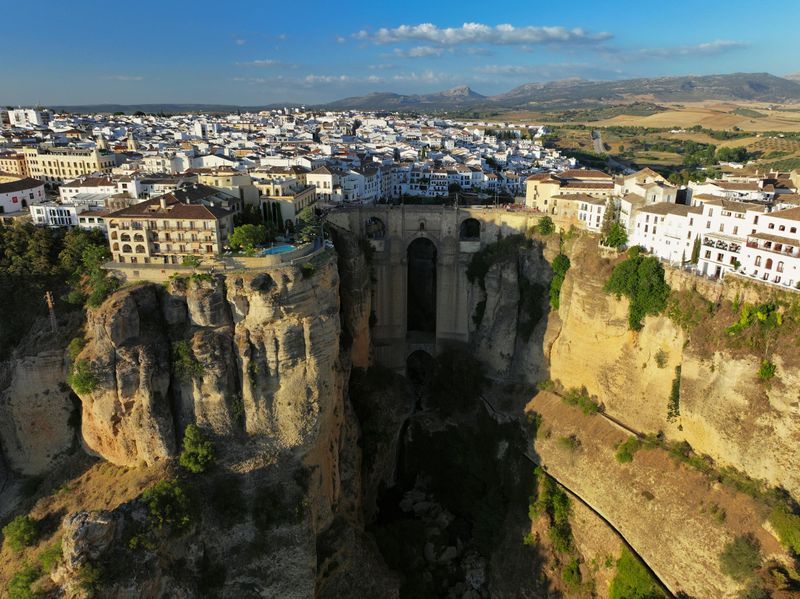
Standing 100 meters above the El Tajo gorge, Ronda offers one of Spain’s most jaw-dropping sights. The famous Puente Nuevo bridge connects the old and new parts of the city, creating a scene that photographers dream about. Built in the 18th century, this stone marvel took 42 years to complete.
Walking across the bridge, you’ll feel the wind rushing up from the canyon below. The old town features winding streets, historic bullfighting rings, and balconies that hang over the abyss. Local legends say bandits once hid in the gorge’s caves.
Sunset transforms Ronda into something magical when golden light paints the stone buildings. Cafes along the cliff edge serve traditional tapas while you soak in panoramic views of the Andalusian countryside.
2. Bonifacio, Corsica (France)
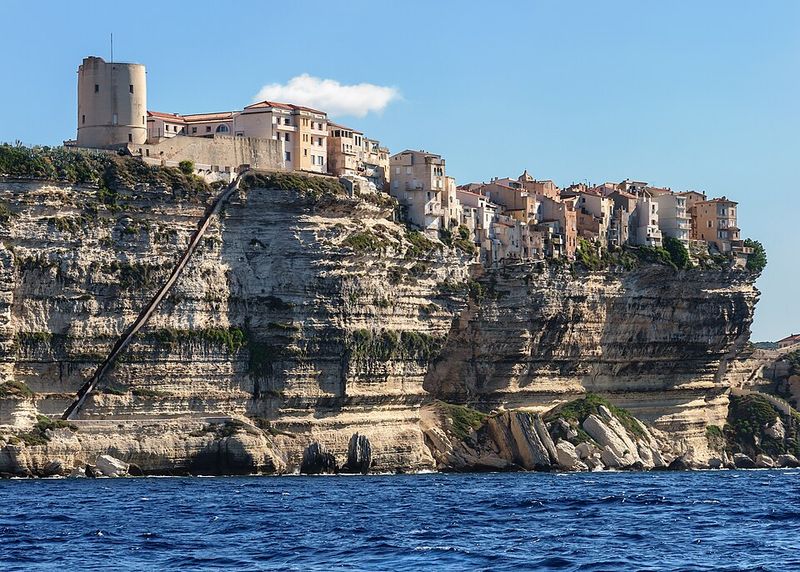
Perched on brilliant white limestone cliffs that drop straight into turquoise waters, Bonifacio truly earns its nickname as the city of cliffs. Medieval fortifications wrap around the old town like a protective embrace. From the sea, the entire citadel appears to be floating in mid-air.
Narrow cobblestone streets wind through the upper town, leading to hidden squares and ancient churches. The citadel dates back to the 9th century and has withstood countless sieges. You can explore the famous Stairway of the King of Aragon, carved directly into the cliff face.
Harbor views from the ramparts will take your breath away. Boat tours reveal sea caves and grottos beneath the town, including the famous Grain of Sand rock formation that seems impossibly balanced.
3. Oia, Santorini (Greece)

Cascading down the rim of a volcanic caldera, Oia is the postcard-perfect Greek village everyone recognizes. Blue-domed churches dot the landscape like sapphires against white sugar-cube houses. The entire town wraps around the cliff edge, offering 180-degree views of the Aegean Sea.
Sunset here is legendary, drawing crowds who gather to watch the sun sink into the sea. The town was rebuilt after a devastating 1956 earthquake, preserving traditional Cycladic architecture. Winding paths connect different levels of the village, revealing new vistas at every turn.
Cave houses carved into volcanic rock now serve as boutique hotels and art galleries. The famous three blue domes of Agios Spyridonas church create the most photographed scene in Greece.
4. Manarola, Cinque Terre (Italy)
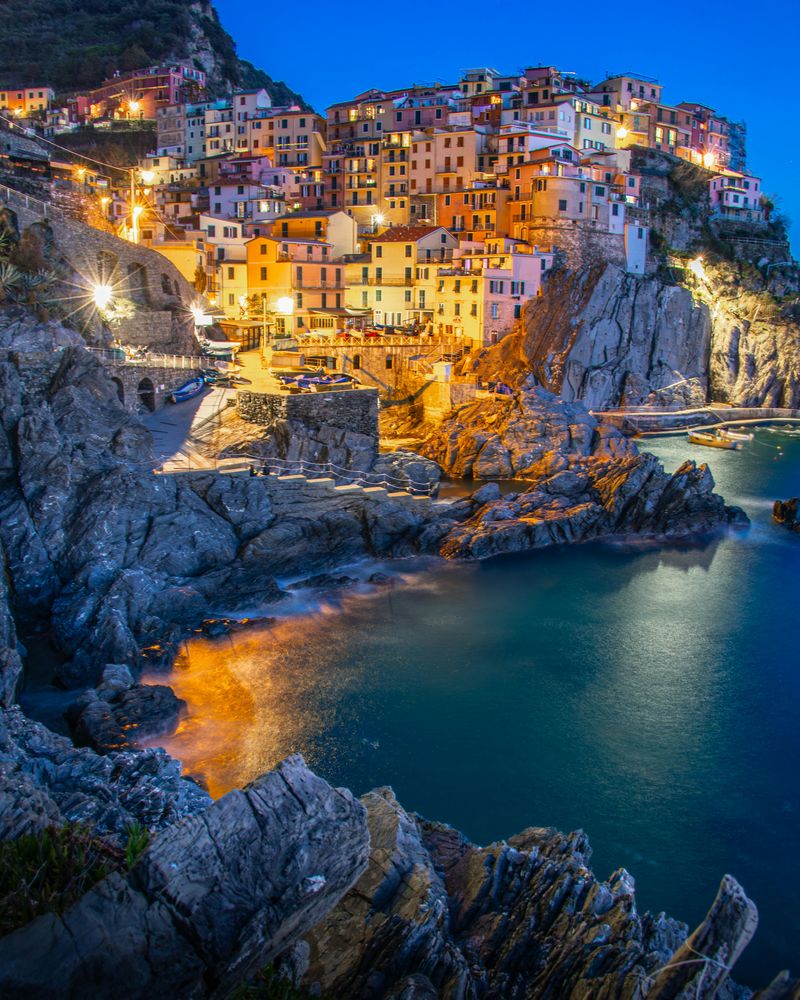
Rainbow-colored houses stack up like building blocks on this rocky headland, creating one of Italy’s most iconic coastal scenes. Manarola is the oldest of the five Cinque Terre villages, with roots stretching back to Roman times. Steep terraced vineyards climb the hillside behind town, producing the famous Sciacchetra dessert wine.
A dramatic boat ramp cuts through the center of the village, where fishermen once hauled their catches ashore. Now it’s a favorite spot for swimmers and sunbathers. The main street winds upward, lined with seafood restaurants and gelato shops.
At night, lights from the houses create a glowing reflection on the dark water. The harbor area offers perfect sunset views, especially from the rocks where locals gather to watch the day end.
5. Vernazza & Riomaggiore, Cinque Terre (Italy)
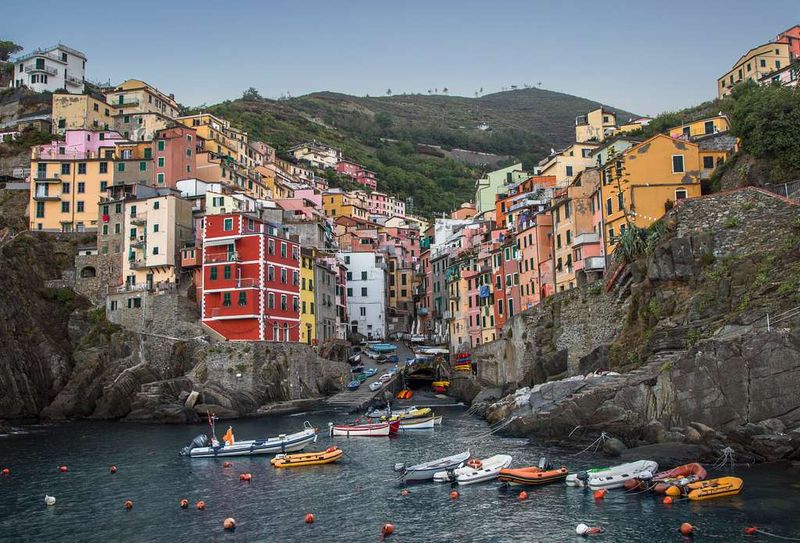
These two sister villages showcase different flavors of clifftop beauty along the Ligurian coast. Vernazza boasts the only natural harbor in Cinque Terre, with a small beach tucked between rocky outcrops. Its medieval Doria Castle watches over the village from above, while the Santa Margherita church sits right on the waterfront.
Riomaggiore tumbles down a steep ravine to the sea, its tall narrow houses painted in vibrant reds, yellows, and oranges. The famous Via dell’Amore coastal path connecting it to Manarola has reopened with timed entry tickets. Both villages feature steep staircases instead of streets in many areas.
UNESCO protection ensures these communities maintain their authentic character despite tourist popularity. Fresh pesto and anchovies are local specialties you’ll find in every trattoria.
6. Rocamadour, France

Built vertically into a cliff face, Rocamadour looks like a miracle of medieval engineering. Seven sanctuaries and chapels are literally carved into and built onto the limestone rock, creating layers of sacred buildings. For centuries, pilgrims climbed 216 steps on their knees to reach the Black Madonna statue.
The village is divided into three levels connected by steep staircases and a modern elevator. Houses cling to the lowest tier, sanctuaries occupy the middle, and a castle crowns the top. At night, dramatic lighting makes the entire cliff glow like a beacon.
Legend says the site was founded by the hermit Saint Amadour, whose perfectly preserved body was discovered here in 1166. Today, visitors can explore ancient crypts, chapels, and breathtaking viewpoints overlooking the Alzou canyon.
7. Cuenca, Spain

The Casas Colgadas, or Hanging Houses, seem to defy all laws of physics as they jut out over the Huecar gorge. These gravity-defying structures date back to the 15th century, with wooden balconies suspended hundreds of feet above the river. One now houses Spain’s Museum of Abstract Art, making it possibly the world’s most dramatically situated gallery.
Cuenca’s old town earned UNESCO World Heritage status for its remarkable medieval architecture. The San Pablo Bridge offers the best views of the hanging houses, stretching across the gorge in a dramatic iron span. Winding cobblestone streets connect Gothic and Renaissance buildings perched on the cliff edge.
Morning mist often fills the gorge, making the houses appear to float in clouds. The town’s position between two river gorges created natural defenses that protected it for centuries.
8. Castellfollit de la Roca, Catalonia (Spain)
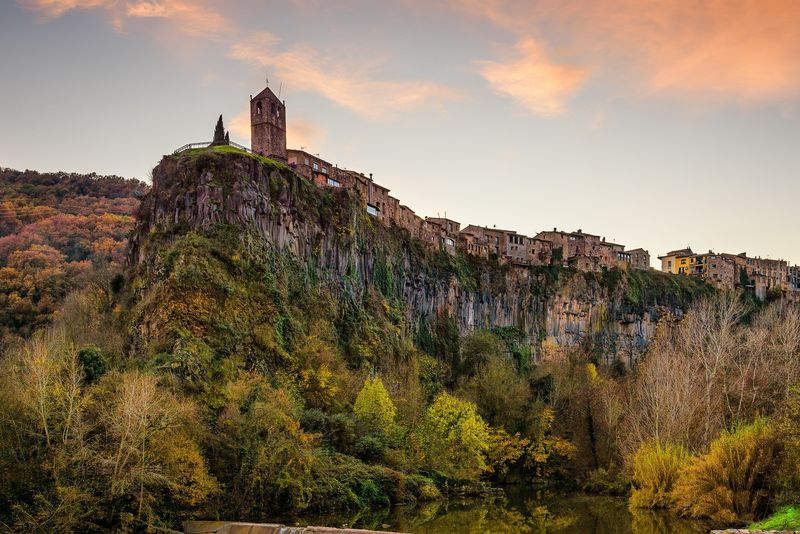
Balancing on a razor-thin basalt cliff formed by two ancient lava flows, this tiny Catalan town stretches barely 300 meters long. The volcanic rock formation rises 50 meters straight up from the confluence of two rivers. Houses line the cliff edge in a precarious row, their walls forming a continuous facade along the precipice.
With fewer than 1,000 residents, Castellfollit is one of Spain’s smallest municipalities. The old town features medieval streets so narrow you can touch both walls at once. The 13th-century church of Sant Salvador anchors one end of the clifftop.
The best views come from the valley below, where the layered basalt columns create a natural geological wonder. This unique rock formation took thousands of years to create through successive volcanic eruptions.
9. Pitigliano, Tuscany (Italy)
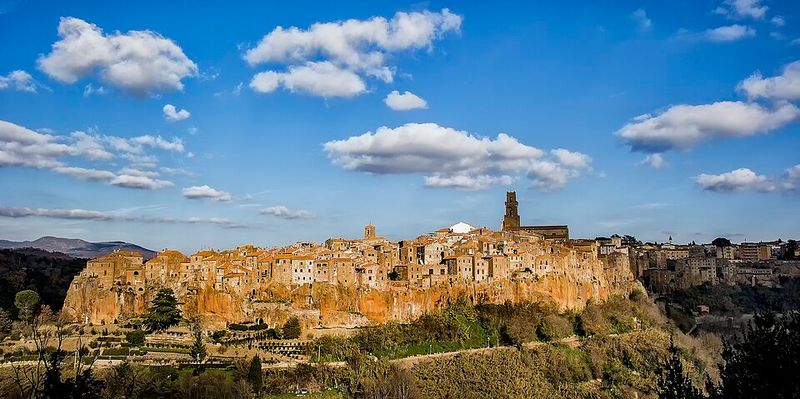
Rising from golden tufa rock like a natural extension of the cliff itself, Pitigliano earned the nickname Little Jerusalem for its historic Jewish community. The town’s buildings seem to grow organically from the volcanic stone, with foundations carved directly into the rock. Underground, a labyrinth of Etruscan caves and tunnels honeycomb the cliff.
Approaching from the valley, you’ll see why this town looks otherworldly. The entire settlement appears to float on its tufa pedestal, especially at sunset when the stone glows amber. Ancient aqueducts still carry water through channels cut into the rock centuries ago.
The Jewish ghetto preserves a fascinating history, including a synagogue, kosher bakery, and ritual bath carved into the tufa. Wine cellars tunneled into the cliff maintain perfect temperatures year-round for aging local vintages.
10. Azenhas do Mar, Sintra (Portugal)

Whitewashed houses tumble down a cliff face like a frozen waterfall, ending at the edge of the crashing Atlantic. This tiny Portuguese village looks impossibly picturesque, especially from the clifftop viewpoint across the ravine. A natural ocean pool carved from the rocks sits at the base, filled by waves at high tide.
Narrow lanes and staircases connect different levels of the village, with flower boxes adding splashes of color to white walls. The clifftop restaurant offers some of Portugal’s most spectacular dining views. On stormy days, massive waves crash against the rocks, sending spray high into the air.
Once a quiet fishing village, Azenhas do Mar now draws visitors seeking that perfect Instagram shot. The sunset here paints the white buildings in shades of pink and gold as the sun sinks into the ocean.
11. Polignano a Mare, Puglia (Italy)
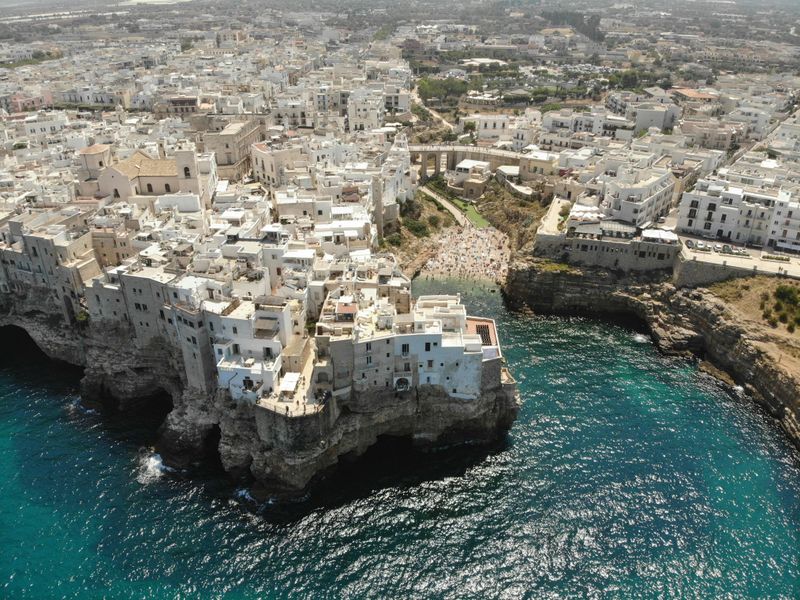
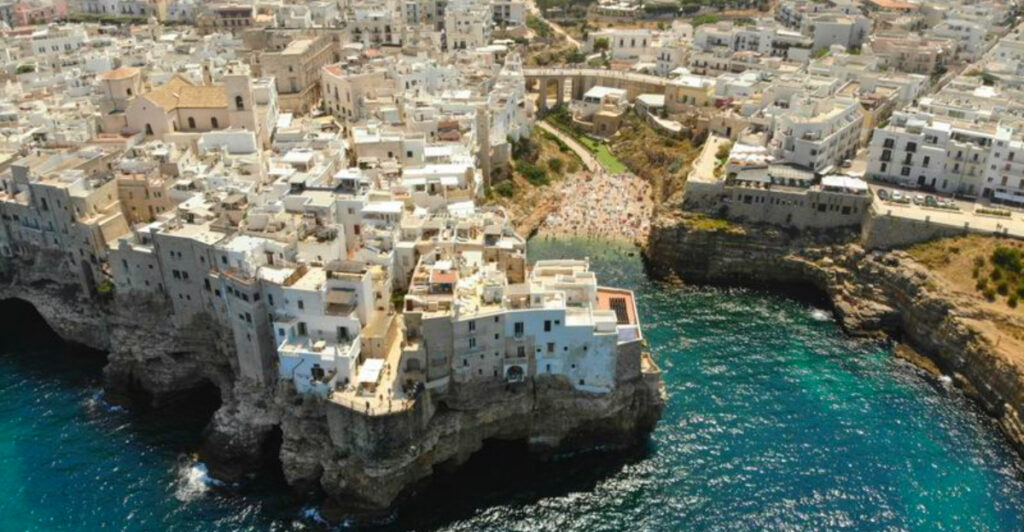
Lanes in this Puglian town literally end at the edge of white limestone cliffs dropping into the turquoise Adriatic. The historic center sits on a rocky promontory riddled with sea caves and grottos carved by centuries of waves. Restaurants built into cliff-face caves offer dining tables with windows overlooking the sea.
The famous Lama Monachile beach nestles between towering cliffs, accessible by a stone bridge that frames perfect photos. Ancient Roman ruins dot the area, including a bridge still in use after 2,000 years. Domenico Modugno, who sang the famous song Volare, was born here, and his statue overlooks the sea.
Summer brings cliff divers who launch themselves from the rocks in spectacular displays of courage. The town’s maze of whitewashed alleys opens onto unexpected balconies and viewpoints at every turn.
12. Taormina, Sicily (Italy)
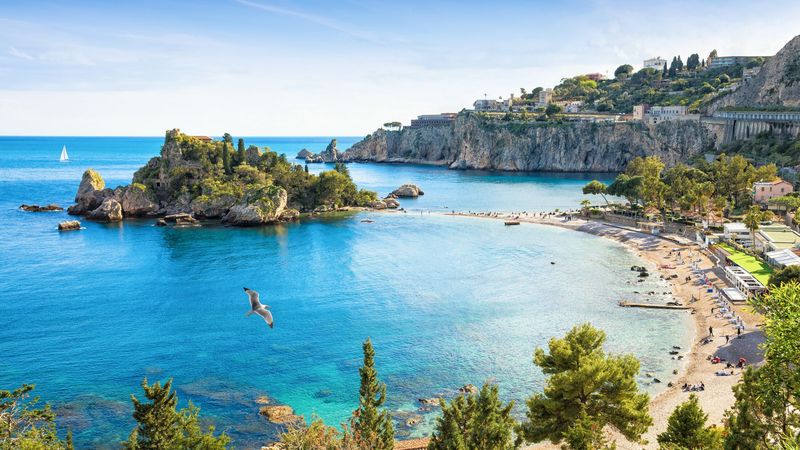
Perched 200 meters above the Ionian Sea, Taormina offers the rare combination of ancient ruins, clifftop drama, and active volcano views. The Greek Theater, carved from rock in the 3rd century BC, frames Mount Etna perfectly in its backdrop. On clear days, you can watch smoke rising from Europe’s most active volcano while standing among 2,000-year-old columns.
Corso Umberto, the main pedestrian street, connects medieval gates and opens onto panoramic terraces at every turn. Elegant gardens cascade down the hillside in terraces of subtropical plants and flowers. The town has attracted artists and writers for centuries, from Goethe to D.H. Lawrence.
Cable car rides connect the clifftop town to beaches far below, offering thrilling views during the descent. Luxury hotels occupy former palaces, their terraces providing sunset cocktail spots with unmatched vistas.
13. Etretat, Normandy (France)

Framed by France’s most famous chalk cliffs, Etretat sits in a natural amphitheater of white stone arches and towers. The Aiguille, a 70-meter needle of rock, rises from the sea like a natural monument. These geological wonders inspired countless Impressionist paintings, especially by Claude Monet who captured their changing moods.
Two natural arches, Porte d’Aval and Porte d’Amont, bookend the pebble beach like massive gates to the sea. Clifftop paths offer breathtaking walks with views stretching along the Alabaster Coast. The Jardins d’Etretat, perched on the cliff edge, feature contemporary sculptures among swirling topiary gardens.
At low tide, you can walk beneath the arches and explore tide pools filled with sea life. The town itself maintains its Belle Epoque charm with wooden market halls and seafood restaurants serving fresh catches daily.
14. Gjogv, Eysturoy (Faroe Islands)

Named for its sea gorge, Gjogv occupies one of the most dramatic settings in the North Atlantic. A natural cleft in the coastal cliffs creates a protected harbor where fishing boats shelter from wild ocean storms. Turf-roofed cottages dot the hillside, their grass roofs blending into the landscape like natural extensions of the earth.
Only about 50 people call this remote village home, maintaining traditions that go back centuries. The gorge itself cuts 200 meters inland, with steep walls rising on both sides. Hiking trails lead to clifftop viewpoints where you can spot seabirds nesting on rocky ledges.
Weather changes by the minute here, with fog rolling in from the sea to shroud the cliffs in mystery. The midnight sun in summer makes the village glow at all hours, while winter brings cozy darkness perfect for northern lights viewing.
15. Matera, Basilicata (Italy)

Thousands of cave dwellings cascade down a limestone ravine, creating one of the world’s oldest continuously inhabited settlements. The Sassi districts date back 9,000 years, with homes, churches, and entire neighborhoods carved directly into the soft rock. Walking through Matera feels like stepping into a biblical landscape frozen in time.
Once considered a national embarrassment for its poverty, Matera transformed into a UNESCO World Heritage site and 2019 European Capital of Culture. Cave churches hide remarkable Byzantine frescoes painted onto rock walls centuries ago. The ancient water management system of cisterns and channels carved into stone still amazes engineers today.
Modern renovations transformed many caves into boutique hotels where you can sleep in rooms that are thousands of years old. Film directors love Matera, using it as a stand-in for ancient Jerusalem in numerous movies.
16. Setenil de las Bodegas, Andalusia (Spain)

Instead of building on cliffs, residents here built under them, tucking white houses beneath massive overhanging rock ledges. Streets literally pass under tons of rock, with the cliff face serving as the ceiling for homes and bars. This unique approach creates shaded passages where the stone stays cool even in summer heat.
The town name comes from the Latin for seven times nothing, referring to the seven sieges it took Christian forces to capture it from Moorish defenders. Two main streets, Cuevas del Sol and Cuevas de la Sombra, run under the largest overhangs. Bars and restaurants make the most of their rock-roof terraces, serving cold drinks in permanent shade.
Unlike typical cave dwellings carved into rock, these houses simply use the natural overhang as protection. The Rio Trejo carved the gorge over millions of years, creating these perfect natural shelters.
17. Ravello, Amalfi Coast (Italy)
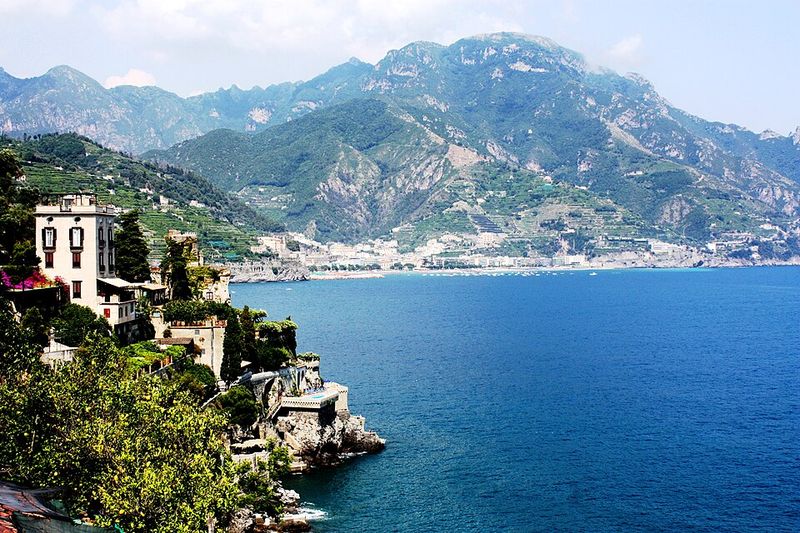
Perched 365 meters above the Amalfi Coast, Ravello offers a quieter, more refined clifftop experience than its bustling coastal neighbors. The Terrace of Infinity at Villa Cimbrone ranks among Italy’s most breathtaking viewpoints, where classical statues line a balustrade seemingly suspended in the sky. On clear days, the panorama stretches 60 kilometers along the coastline.
Villa Rufolo’s clifftop gardens inspired Richard Wagner, who composed part of Parsifal here after visiting in 1880. Annual summer concerts in these gardens combine classical music with sunset views over the Mediterranean. The town’s cathedral dates to 1086, featuring bronze doors and a pulpit supported by lion sculptures.
Narrow lanes connect hidden piazzas and elegant villas built by nobles seeking escape from summer heat. The peaceful atmosphere makes Ravello perfect for those wanting coastal beauty without beach crowds.
Share this story