Think volcanoes and you probably picture Hawaii or Mount St. Helens, but Northern California hides a powerhouse that feels like a living laboratory. The Lassen Volcanic Region delivers steamy vents, lava domes, and crystal lakes without the overwhelming crowds. You get Yellowstone vibes with a California twist, plus trails and roadside viewpoints that make science feel easy to explore. If geology thrills you, this place will move to the top of your must see list fast.
1. All Four Volcano Types In One Park
Lassen Volcanic National Park is one of the rare places on Earth where you can see all four major volcano types in a compact area. Cinder cones, shield volcanoes, composite cones, and lava domes sit within one sweeping landscape. You can stand at a viewpoint and literally read geologic variety in every direction.
This makes field learning effortless and fun for anyone curious about Earth processes. Trails and pullouts connect the dots between textbook terms and real rock. With fewer crowds than bigger name parks, you can take your time and really notice the differences.
2. Lassen Peak Plug Dome Giant
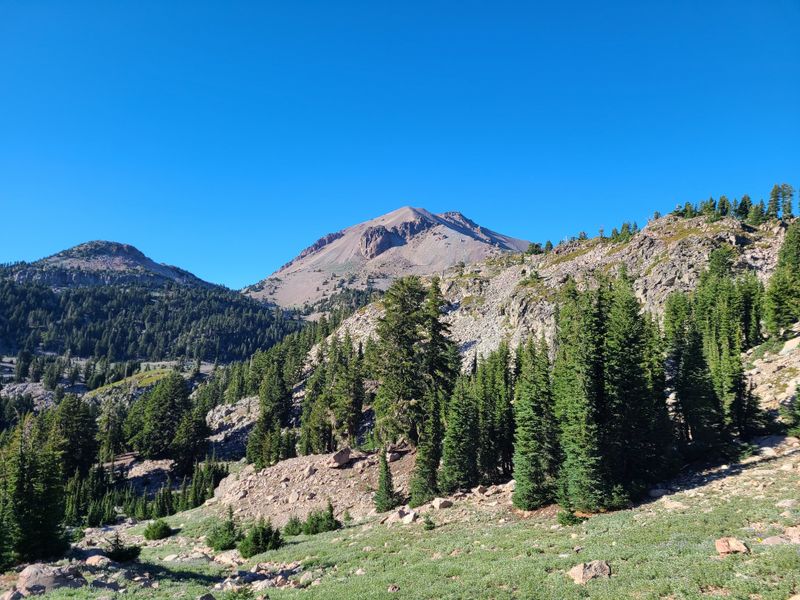
Lassen Peak rises like a giant plug jammed into the crust, one of the largest lava dome volcanoes on the planet. Its 1914 to 1921 eruptive period left scars, boulders, and a story you can hike through. The summit trail rewards you with sweeping views across the Cascades.
Along the way, read the rock textures and blocky talus that reveal its sticky silica rich magma. You are walking on a dome built by viscous lava squeezing upward. On a clear day, the panorama explains why this mountain is a geologic legend.
3. Bumpass Hell and Hydrothermal Drama
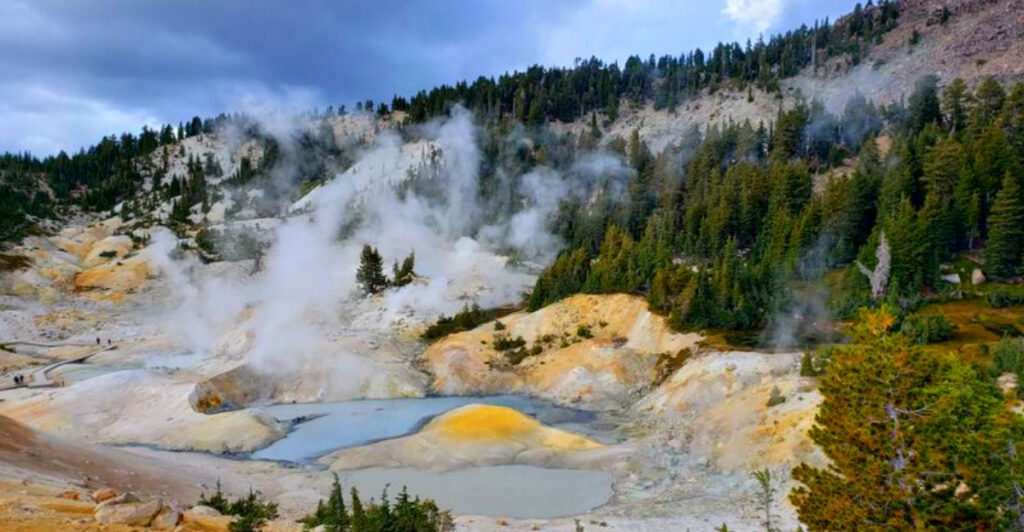
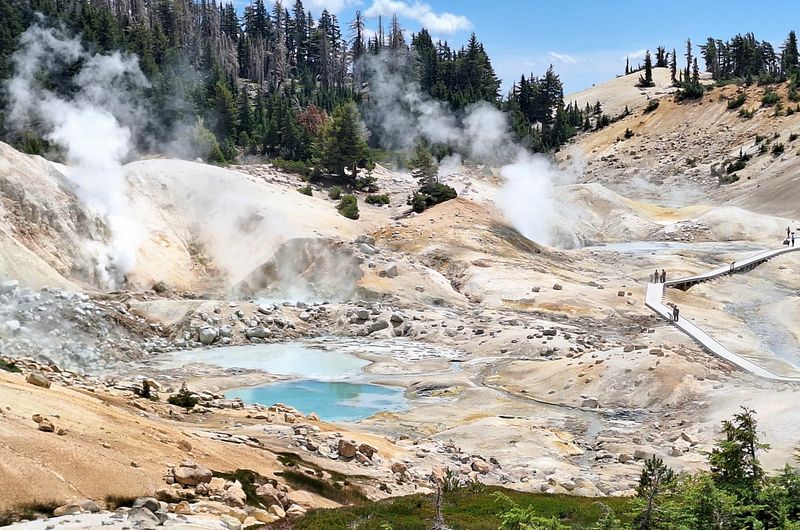
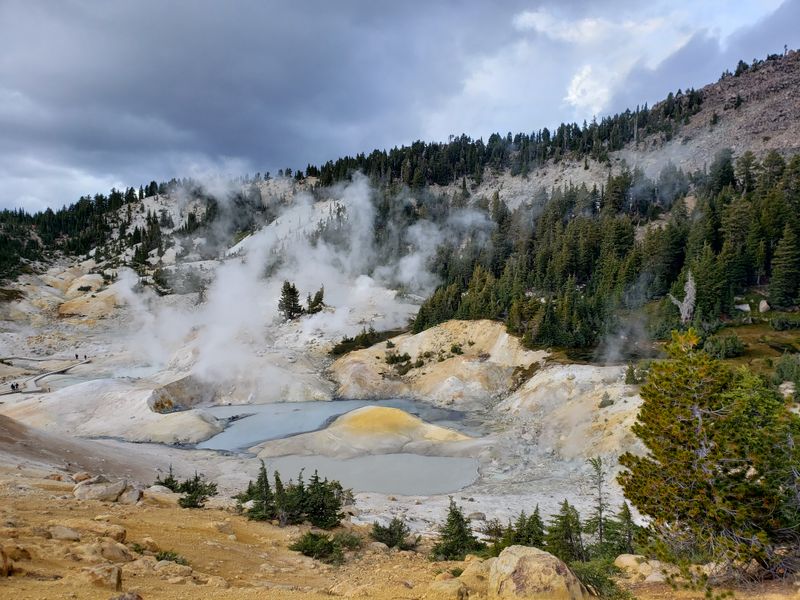
Bumpass Hell hits your senses with a roar of steam, the tang of sulfur, and bright mineral colors. Fumaroles hiss, mud pots plop, and acidic springs bubble like a mini Yellowstone. Boardwalks let you safely get close to raw geothermal power.
Nearby, Sulphur Works and Devil’s Kitchen continue the show with vents, boiling runoff, and pastel mineral crusts. These features prove that heat lingers just below the surface. Bring water and respect closures, because the ground can be thin and temperatures are unforgiving.
4. Walking the 1915 Devastation Zone
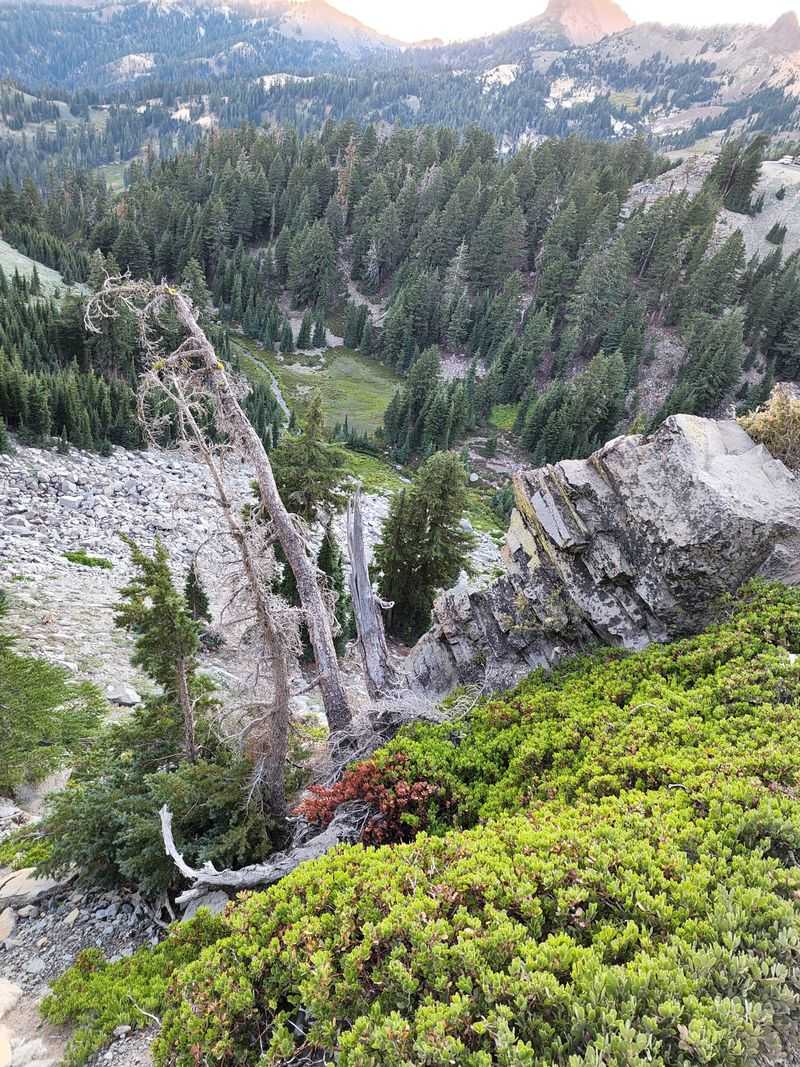
The Devastated Area and Chaos Jumbles show what minutes of eruptive force can do to a forested mountainside. In 1915, hot avalanches and rockfalls thundered down from Lassen Peak, shredding slopes and piling house sized blocks. Today, interpretive signs help you decode the chaos.
As you stroll, look for young trees reclaiming ground and deposits that still feel fresh. It is a rare chance to see recovery layered atop catastrophe. The landscape tells a precise story of sequence, temperature, and gravity at work.
5. Cinder Cone and Painted Dunes

The park’s Cinder Cone rises like a symmetrical black pyramid above surreal Painted Dunes. A steep cinder path spirals to the rim, where a perfect crater opens at your feet. The view sweeps across oxidized ash bands and frozen lava waves.
Geologists date the eruptions to roughly the 1650s, a moment young enough to feel immediate. Sand like scoria shifts under your boots with each step. Pause at the top and trace how wind, fire fountains, and ash created these vivid patterns.
6. Fantastic Lava Beds Underfoot
At the Fantastic Lava Beds, molten rock froze mid motion, preserving ripples, ropes, and pressure ridges. Trails near Butte Lake let you step across glossy basalt and feel textures molded by cooling surfaces. Every wrinkle records how lava skinned over as it advanced.
Look for tree molds, squeeze ups, and fractures that show gas escape and contraction. The stark colors make striking photos, especially after rain. It is an open book on basaltic flow mechanics that you can wander at your own pace.
7. A Tectonic Triple Junction Influence
Lassen sits where big forces meet: Cascadia subduction offshore, the Walker Lane to the south, and the Basin and Range pulling the crust apart. That geologic crossroads helps focus heat and magma beneath Northern California. You feel it in frequent small quakes and steaming vents.
This setting also explains the variety of volcano types squeezed into one region. Different magma sources and stress fields shape different landforms. A roadside stop becomes a master class in plate tectonics made visible.
8. Easy Access Without Big Crowds
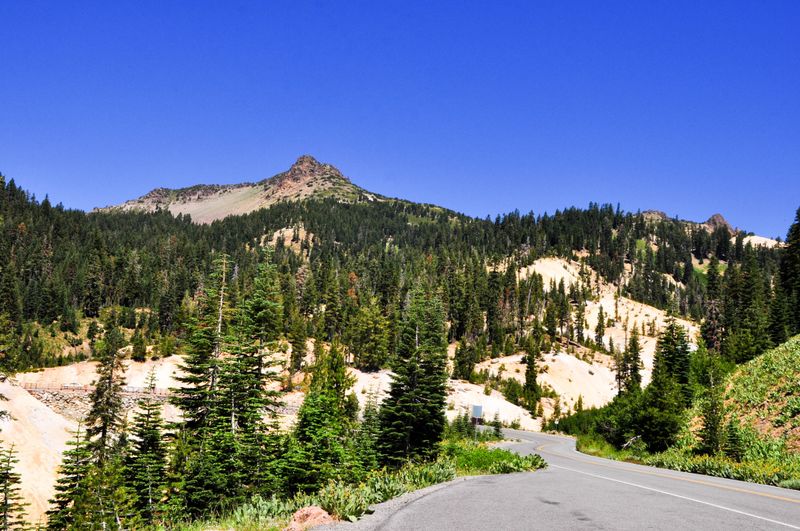
Lassen is one of the most accessible volcanic landscapes in the country, with a paved scenic road and well signed pullouts. You can link short hikes to big views in a single day, then return for sunrise or alpenglow. It feels approachable even if science is new to you.
Compared with Yellowstone or Rainier, the pace is calmer and parking often simpler. Visitor centers and roadside exhibits make complex geology feel friendly. You leave with photos and real understanding, not just a checklist.
9. Lakes In Ancient Basins

Manzanita Lake, Lake Helen, and Butte Lake settle into basins shaped by eruptions and lava flows. On still mornings, Manzanita mirrors Lassen Peak so perfectly it looks like a painting. Lake Helen often holds snow late, turning the water an unreal blue.
Bring a kayak or camera and follow light across the surface as peaks glow. These waters tell stories of lava dams, glacial carving, and ash fall. You get scenery and geology in one calm package.
10. Fumarolic Minerals Paint the Earth

Steam vents at places like Bumpass Hell leave mineral fingerprints in wild colors. Sulfur yellows, iron oranges, and greenish clays crust the ground like an artist’s palette. These deposits form when hot gases meet cool air and groundwater.
Look closely from the boardwalk and you will see delicate crystals forming along runoff channels. The hues shift with temperature and chemistry day to day. It is Earth’s chemistry lab, no degree required, just curiosity and care.
11. Science In Action, Monitored Daily
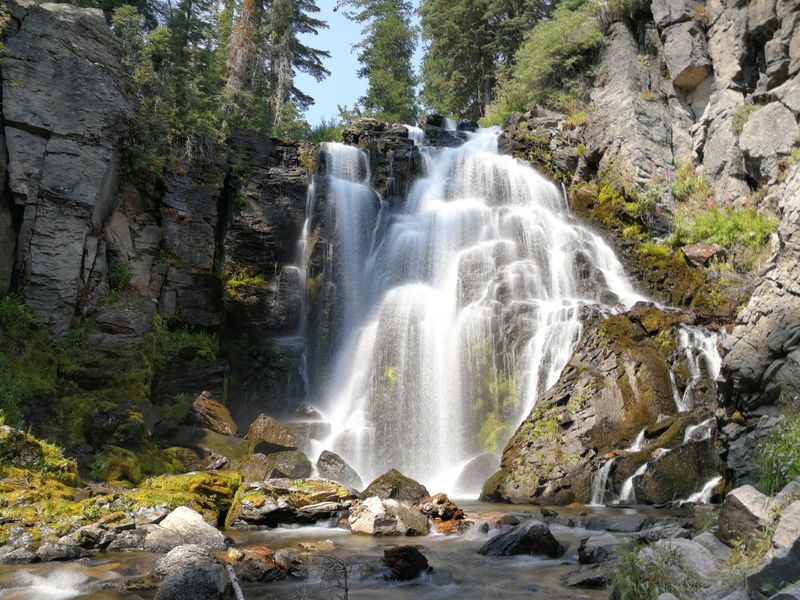
USGS scientists keep close watch on Lassen using seismometers, GPS, satellite data, and gas sampling. Their readings track earthquake swarms, ground inflation, and changes in fumarole chemistry. The takeaway is simple: this system is active, not extinct.
Public dashboards and interpretive displays translate the data for visitors. You can follow along and appreciate how hazards are assessed in real time. Science helps keep the park safe while deepening every trail stop you make.
12. A Paradise For Geotourism
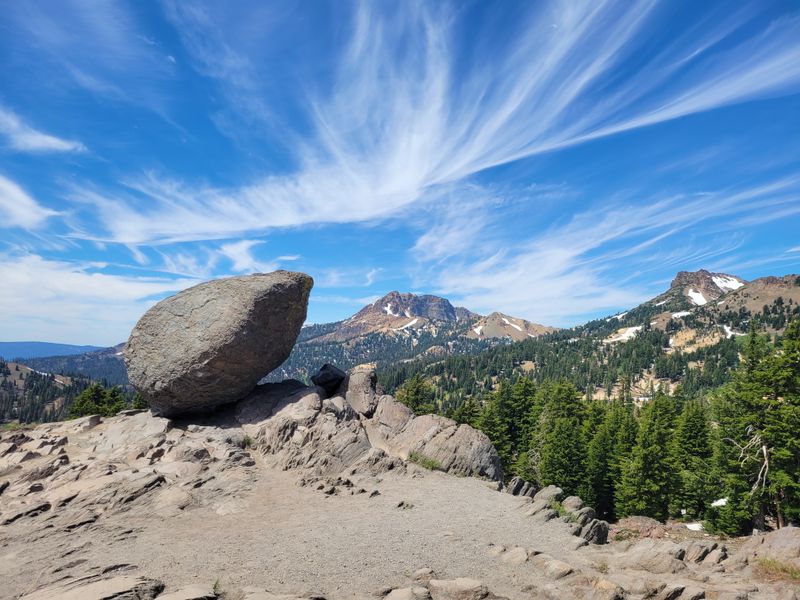
Whether you crave roadside stops or backcountry loops, Lassen delivers geotourism on your terms. Ranger programs unpack volcanic history in plain language, then point you to trails that make it tangible. Even quick visits reach big science highlights.
Come in summer or early fall for open roads and clear skies, but check conditions because snow and rockfall can close sections. Pack layers, water, and sunscreen for high elevation. You will leave with a deeper love for Earth’s restless crust.
Share this story