Yellowstone is buzzing with new energy and curiosity. In 2025, scientists revealed a massive magma system beneath the park, sharpening our understanding of the famous supervolcano. Rather than scaring people away, the discovery is drawing visitors eager to stand safely above Earth’s hidden furnace and see the signs for themselves. If you love awe with a side of science, this is your moment.
1. Scientists Found a Magma Cap Beneath the Surface
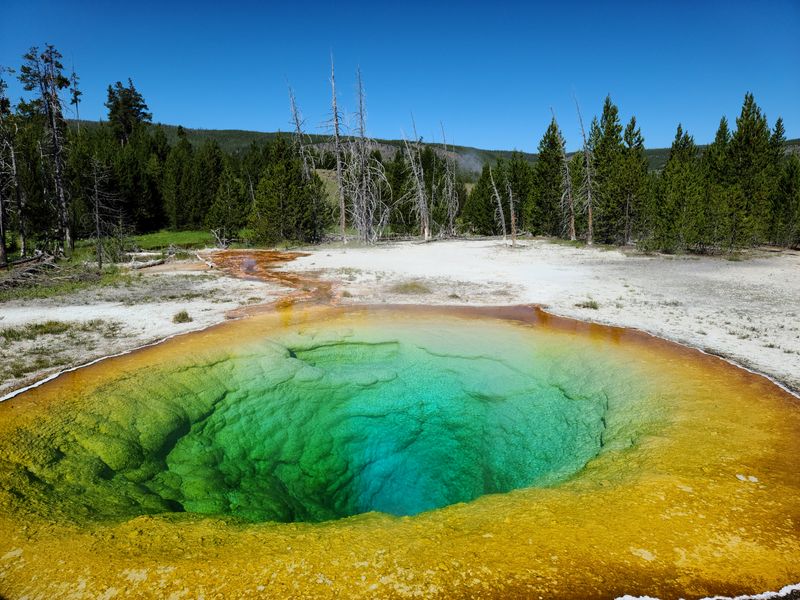
Scientists mapped a volatile rich magma cap about 2.4 miles beneath Yellowstone, and it changes the story you have heard. Think of it like a hot lid, trapping heat while letting gases leak out through vents and geysers. Standing near a boardwalk, you feel steam kiss your face and realize the pressure has pathways.
This cap does not scream danger right now. It stabilizes the system by bleeding heat, even as it supercharges colors and eruptions you can watch. You walk away amazed, comforted by data and humbled by the ground’s quiet breath.
2. It’s Bigger Than We Thought
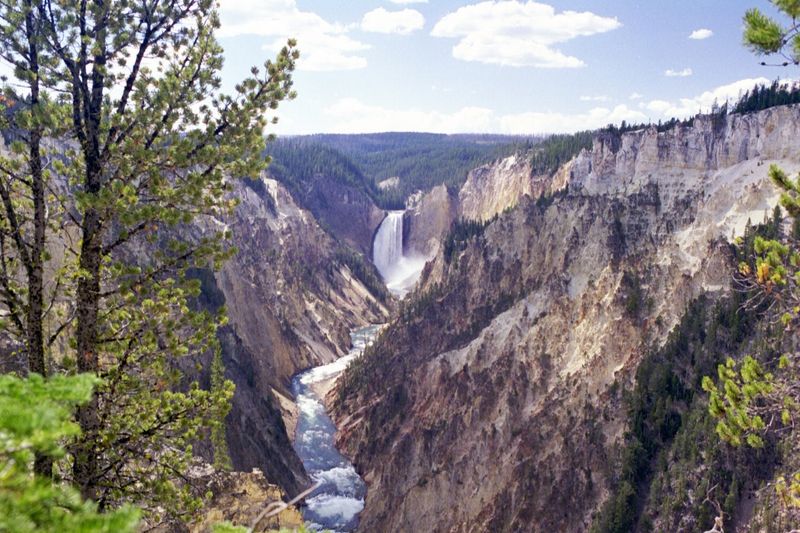
New imaging shows Yellowstone’s magma system is vast, sprawling deeper and wider than many imagined. Picture volumes that could fill the Grand Canyon several times over, stacked in complex, sponge like rock. You stand at an overlook and realize the view barely hints at the scale beneath.
That enormity does not mean immediate danger. It means more pathways for heat, more chemistry, and more reasons to watch geysers with respect. The bigger story is complexity and resilience, which somehow makes each bubbling pool feel both friendlier and more profound as you trace ribbons of steam across the basin.
3. It’s Still a Supervolcano
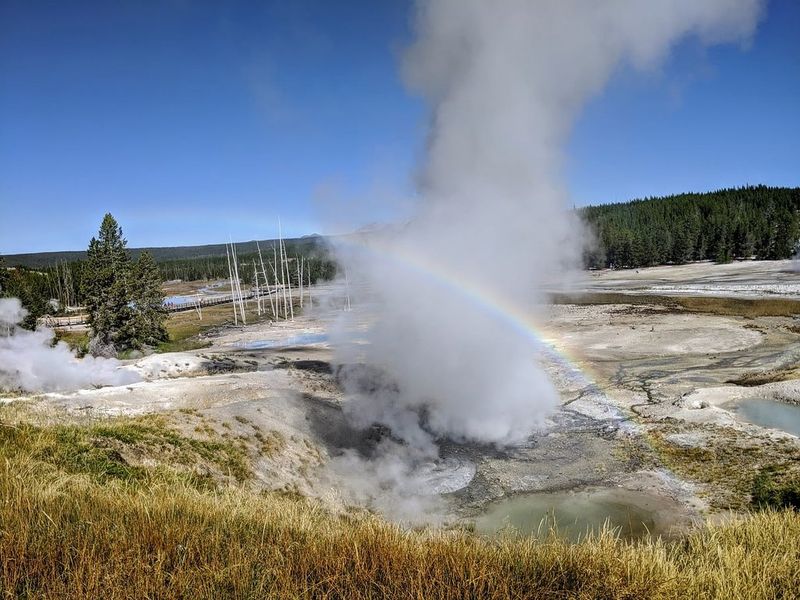
Yellowstone remains a supervolcano, one of Earth’s rare giants. That word sounds scary, but context matters. Scientists emphasize no signs point to an imminent eruption, and the monitoring network runs 24 7, taking the park’s pulse better than ever.
When you watch Old Faithful erupt, it is not a countdown. It is the pressure valve doing its job, proof that heat and gas find controlled exit routes. You can enjoy the spectacle while trusting careful instruments, daily analysis, and decades of research. Awe does not require alarm. It invites questions, and here those questions get honest answers.
4. Visitor Curiosity Is Surging
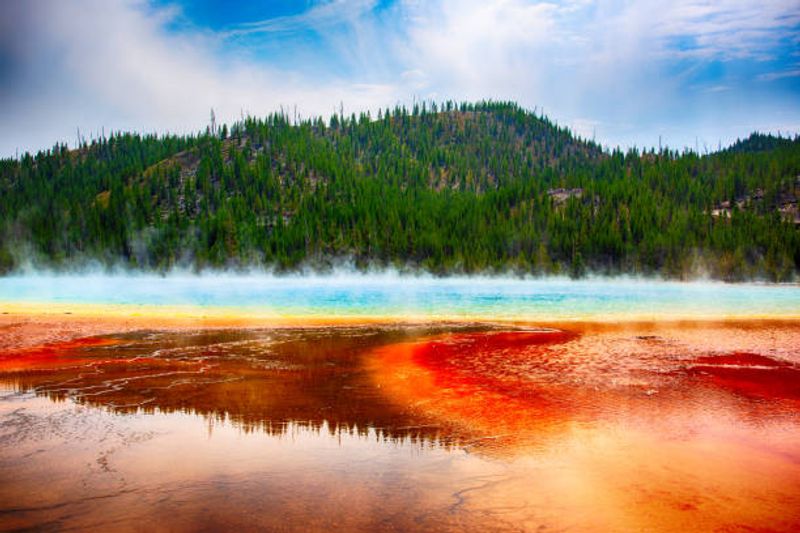
News of the magma system is drawing curious travelers, not scaring them. People want to feel the ground’s warmth and hear a ranger explain the science in plain language. You join a boardwalk talk, eyes watering in sulfur mist, and realize learning is part of the adventure.
Hotels fill, camera shutters flutter, and questions flow. What you see above ground maps to stories below ground, and that connection is irresistible. The park leans into education and safety, so you explore without worry. Curiosity becomes the souvenir you carry home, along with photos that look unreal but are absolutely real.
5. Earthquakes Helped Map It Out
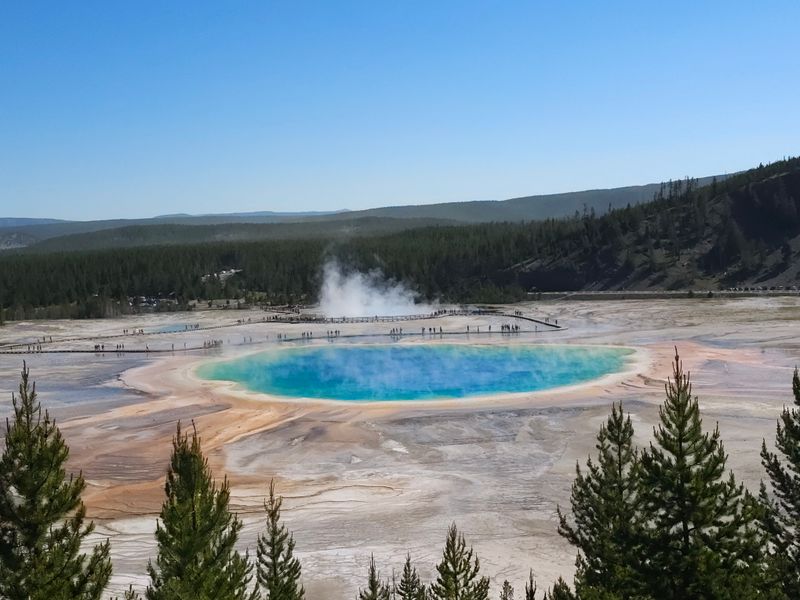
Researchers used tiny earthquakes and sensitive instruments to map layers of hot rock beneath Yellowstone. Imagine tapping a drum and listening for echoes, except the drum is Earth and the microphones are scattered across valleys and forests. You hear the word tomography and suddenly geysers feel like clues, not just spectacles.
Rangers explain how these measurements reveal melt percentages and pathways for heat. The data do not predict exact eruptions, but they sharpen the picture. You leave respecting seismology’s quiet power, where whispers in the crust become maps you can trust and understand while you wander the boardwalks above.
6. Gas Vents Are Key to Safety
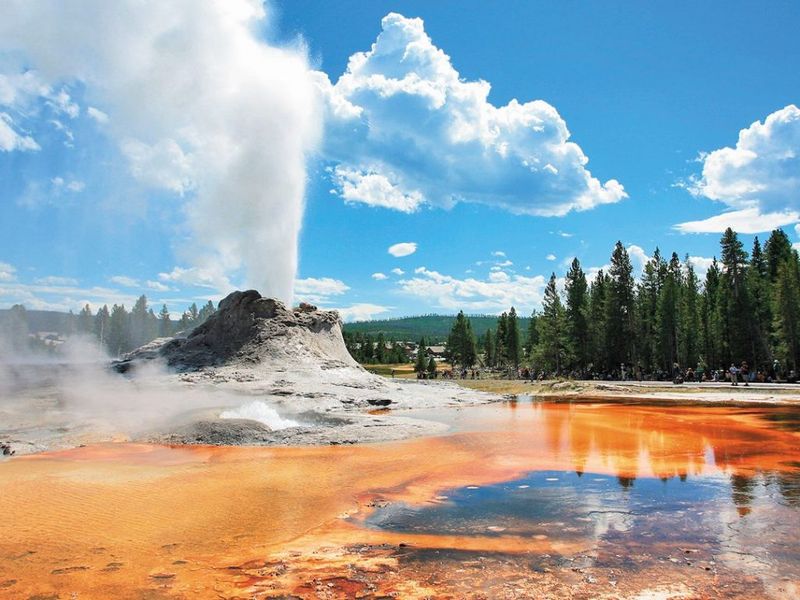
Those hissing vents and turquoise pools are not just pretty. They are safety valves that release heat and gases like CO2 and sulfur compounds, easing pressure beneath your feet. When steam curls past your camera lens, it is geology taking a breath.
Rangers remind you to stay on boardwalks because the crust is thin. The same venting that stabilizes the system also makes the ground unpredictable. Respecting rails and signs keeps your curiosity safe. You walk away grateful that beauty and safety align here, where every plume tells you the system is working as designed.
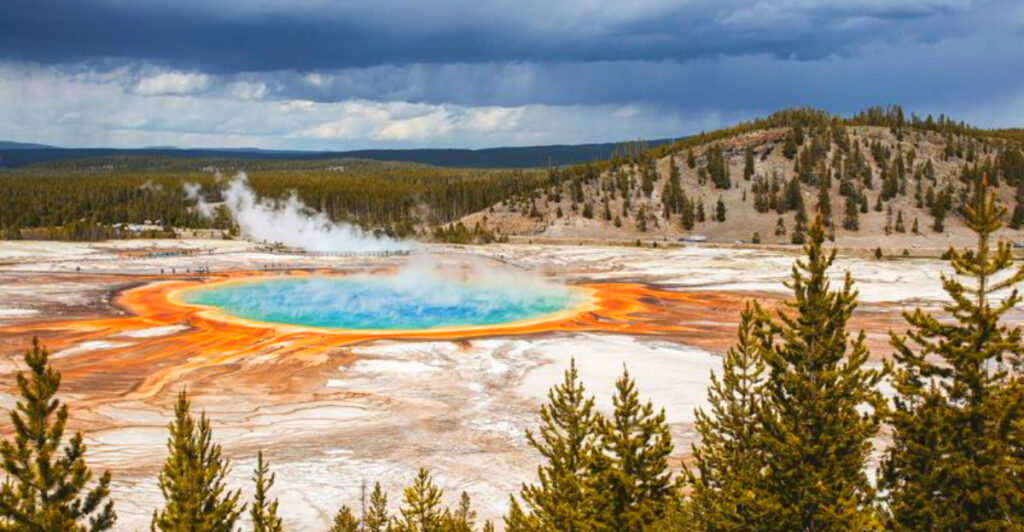
7. Grand Prismatic Spring Sits Right Above It
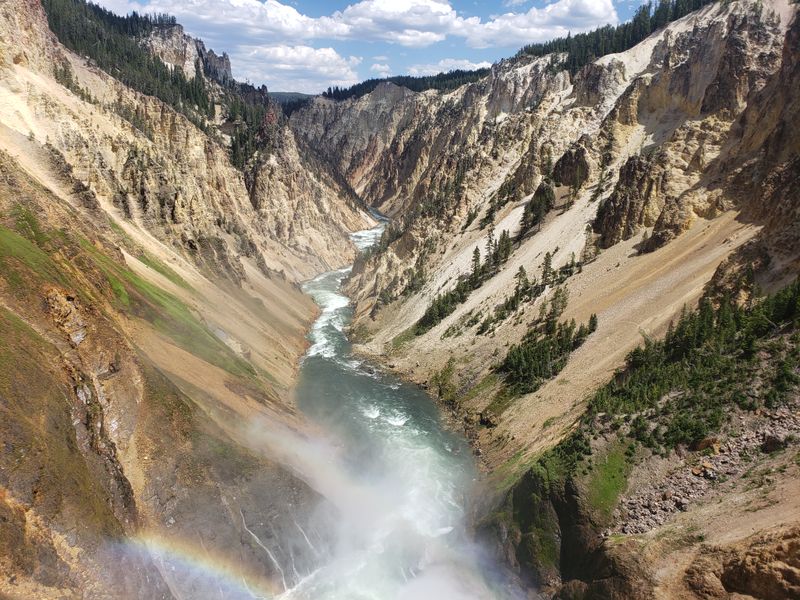
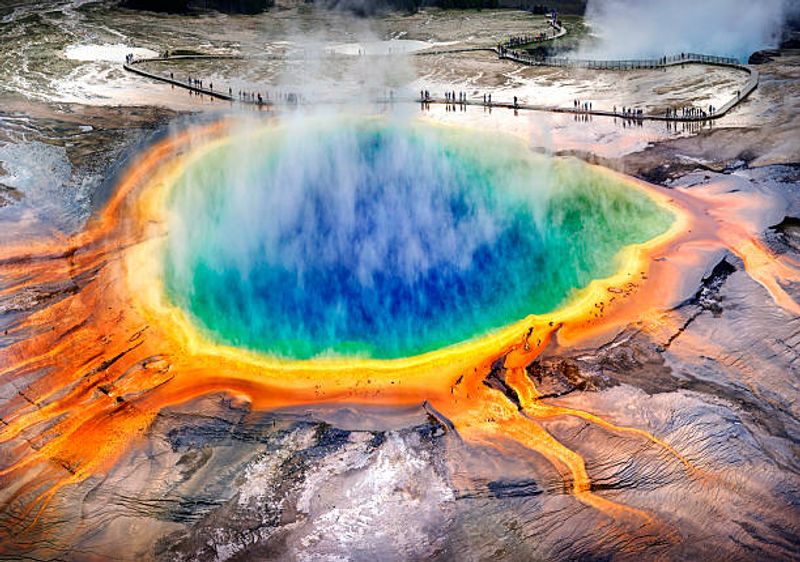
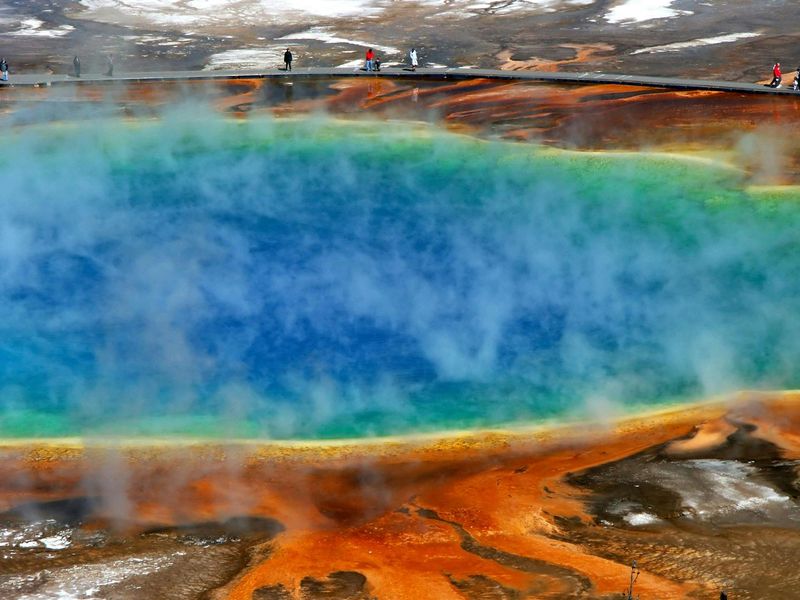
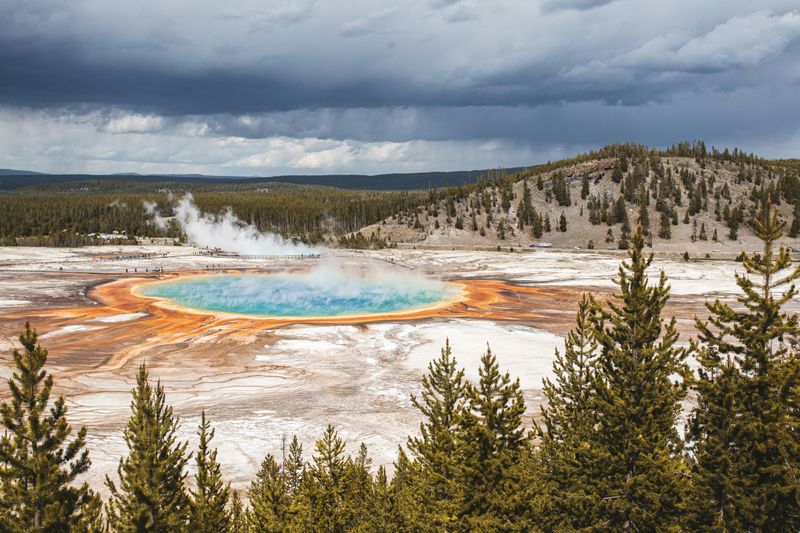
Grand Prismatic Spring looks like a rainbow spilled onto stone. Its vivid rings of microbes thrive on heat rising from the magma cap below. When you stand on the overlook, colors drift in steam like living paint, and the scale makes you whisper without knowing why.
This is the most photogenic hint of the engine underneath. You witness chemistry, biology, and geology braided together in one perfect circle. The newfound shallow structure explains the intensity here. Come for the colors, stay for the science, and leave understanding that beauty is a signpost pointing straight down.
8. Tourists Love the Danger Factor
There is a thrill in standing over a supervolcano, and Yellowstone lets you feel it safely. The ground vibrates with stories, not alarms. With monitoring robust and alerts transparent, you can lean into the goosebumps without crossing into fear.
People bring kids, cameras, and questions. The sense of controlled risk turns every eruption into a heartbeat you can watch. You are not chasing danger. You are witnessing power that plays by rules explained by rangers and scientists. That balance makes memories stick, the kind you retell long after the steam fades from your jacket.
9. The Last Eruption Was Over 600,000 Years Ago
The last major Yellowstone eruption happened roughly 640,000 years ago. That number reshapes worry into perspective. In the meantime, countless smaller events, hydrothermal bursts, and steady gas release have written a calmer story.
When you read the timeline at a visitor center, the clock slows your pulse. Scientists see no signs of an imminent large eruption, and instruments would flag changes early. You step outside and watch a geyser breathe on schedule. History here is deep, but your day is peaceful, filled with steam, wildlife, and the comfort of careful monitoring.
10. You Can See the Signs of Ancient Activity
Yellowstone wears its past on the surface. Caldera rims, lava flows, and ash layers peek from canyon walls like pages in an open book. You trace textures with your eyes while a sign explains how magma once rose, cooled, and fractured into the landscape you hike today.
Take your time in Hayden Valley, Norris, and the canyon overlooks. The clues are subtle until you know where to look. Then they are everywhere. Each outcrop whispers about pressure, heat, and time, inviting you to read the rocks and connect them to the steam drifting across nearby basins.
11. A Global Research Hotspot
Yellowstone is a magnet for geologists, seismologists, and microbiologists from around the world. The new magma findings sharpen research questions and pull more teams to the park’s boardwalks and labs. You might overhear accents swapping notes as drones map basins and GPS arrays watch the ground breathe.
That global attention benefits visitors too. Better maps, clearer signage, and smarter safety practices grow from fresh data. You learn alongside the experts, often in real time. Curiosity travels far, and Yellowstone meets it with open data, ranger talks, and vistas where science and wonder comfortably share the same view.
12. Learning, Not Fear, Is Driving the Buzz
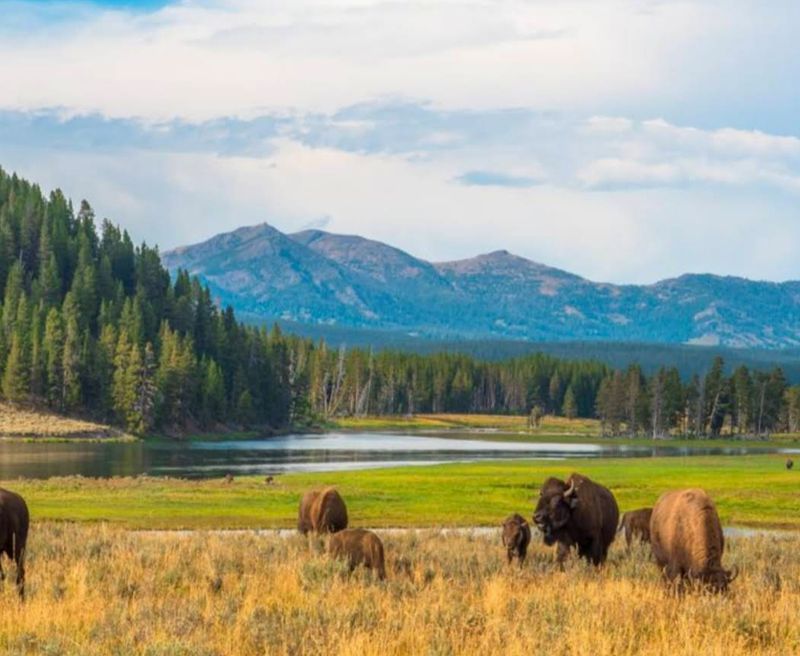
The big takeaway is not panic. It is participation. Visitors come to learn how a massive magma system can sit quietly beneath forests, rivers, and bison herds. You tap through interactive displays, then step outside to watch Old Faithful exhale exactly as predicted.
Education fuels the buzz. Talks, exhibits, and clear safety rules turn abstract hazard into understandable power. You leave feeling smarter and strangely calmer, with a new respect for Earth’s rhythms. Yellowstone proves that knowledge is the best guide, whether you are chasing photos, serenity, or the thrill of standing over hidden fire.
Share this story