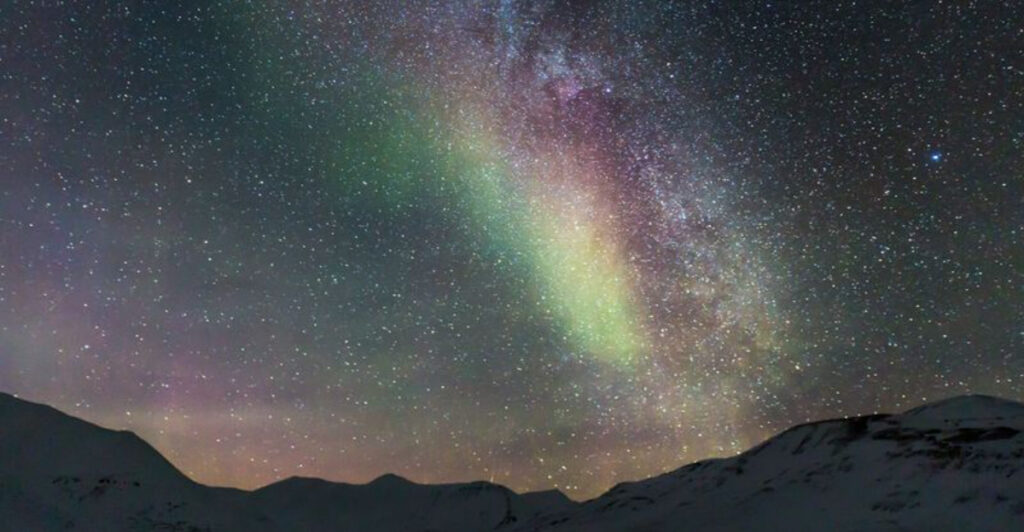
Get ready to look up. A burst of solar wind is racing toward Earth, and it could nudge the Northern Lights into view across parts of the United States this weekend. If skies turn clear and the timing lines up, you might catch luminous greens and pinks flickering on the northern horizon. Keep reading for where to watch, why it is happening, and how to make your viewing count.
Northern Lights May Be Visible in Many U.S. States This Weekend
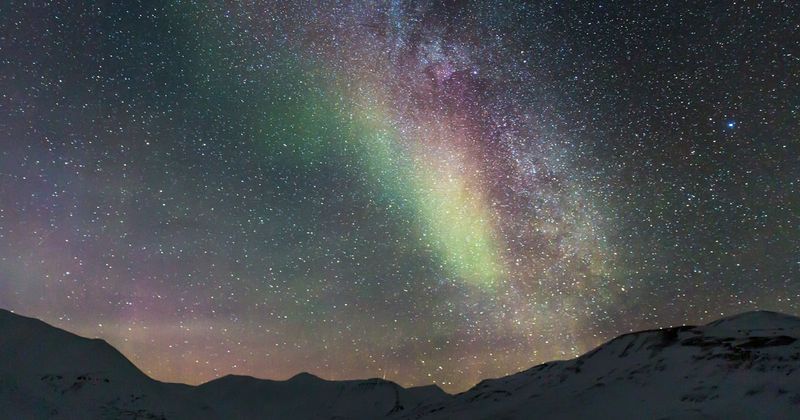
This weekend brings a real chance to glimpse the Northern Lights from parts of the northern United States. Forecasts from NOAA and multiple outlets point to solar winds sweeping in from a coronal hole, potentially sparking minor geomagnetic storms late Sunday into early Monday. If the Kp index nudges upward, the auroral oval can drift farther south than usual, making displays possible for more of you.
Think of the Kp index like a brightness meter for space weather, running from 0 to 9. Around Kp 5, auroras can pop at mid latitudes, especially under clear, dry, and dark skies. Even a modest bump can brighten arcs, bands, and subtle pillars low on the northern horizon.
With Solar Cycle 25 ramping up toward a peak between late 2024 and early 2026, windows like this are becoming more common. That means more nights when patience pays off if clouds cooperate. Check updated Kp readings, find a dark site, and give your eyes 20 minutes to adjust so faint color has a chance to bloom.
Where the Northern Lights Could Be Seen This Weekend
Where should you head if the aurora wakes up Sunday night into Monday morning? Start near the Canadian border, where the view line often hugs the northern horizon. Places like Washington, the Idaho Panhandle, Montana, northeastern Wyoming, North Dakota, and South Dakota can snag the best shot if the Kp index lifts.
In the Upper Midwest, Minnesota, Wisconsin, and Michigan frequently play host when conditions peak. Farther east, northern New York, Vermont, New Hampshire, and Maine can land excellent views if skies turn crisp and cloud free. Alaska, as always, sits in prime territory and may enjoy stronger structure and color.
Remember, you do not need to stand directly under the oval. Many times you can see faint glows hundreds of miles away, especially from darker sites. If the index jumps higher than forecast, the line can slide south, giving you a surprise even outside the shaded zone.
What’s Driving the Aurora Forecast This Week
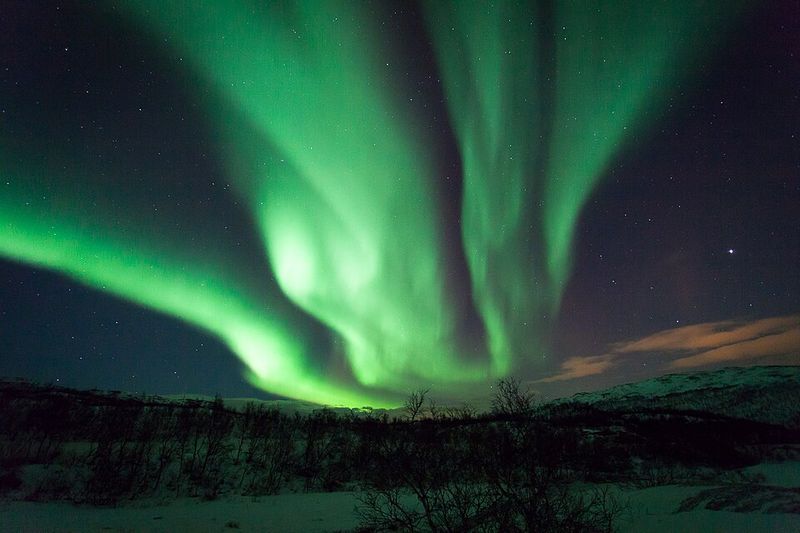
The Northern Lights light up when charged particles from the Sun ride solar wind streams and interact with Earth’s magnetic field. Those particles funnel along field lines, collide with atoms high in the atmosphere, and release photons that paint the sky green, red, and occasionally purple. The stronger the wind and magnetic coupling, the more energy pours into auroral zones.
This week, a coronal hole on the Sun likely launched high speed streams toward Earth. As those streams arrive, they can compress the magnetosphere and raise geomagnetic activity, reflected in an elevated Kp index. Even G1 level storms can be enough to push visibility into states that do not usually see the glow.
Forecasters lean on satellite data measuring solar wind speed, density, and the interplanetary magnetic field, especially the southward Bz component. Models like NOAA’s OVATION translate those inputs into probability maps and view lines. Keep an eye on real time dashboards because sudden shifts can turn a quiet sky into a five minute show.
Best Practices for Viewing the Northern Lights
To boost your odds, chase dark skies with minimal light pollution and a wide open northern horizon. Aim for the classic window from about 10 p.m. to 2 a.m. local time, though bursts can happen earlier or later. Let your eyes adapt for at least 20 minutes and avoid bright screens that wreck night vision.
Traveling a bit north helps if you live near the edge of the forecast zone. Pick elevated or unobstructed spots away from city glare, and watch clouds like a hawk. Bring warm layers, a headlamp with a red mode, patience, and a thermos so you can linger comfortably.
Photographers should pack a tripod, use manual focus to infinity, shoot wide and fast, and start around ISO 1600 with several second exposures. Phones with night modes can work if stabilized on a rock or tripod. Keep checking live Kp, Bz, and aurora dashboards so you can pounce when conditions spike.
Share this story