Yellowstone in winter feels like stepping onto another planet, where billowing steam meets sparkling snow and silence amplifies every distant howl. You trade crowded boardwalks for hushed trails, crisp air, and skies that glow with frost. Wildlife stands out against pure white, while geysers paint the horizon with drifting plumes. If you think national parks shut down in the cold, this season might become your favorite way to experience Yellowstone.
1. Snow‑covered geothermal features make surreal landscapes
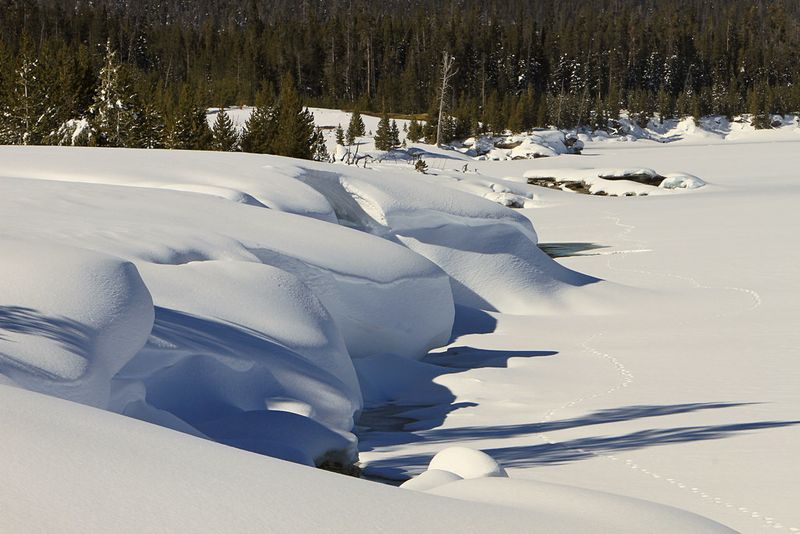
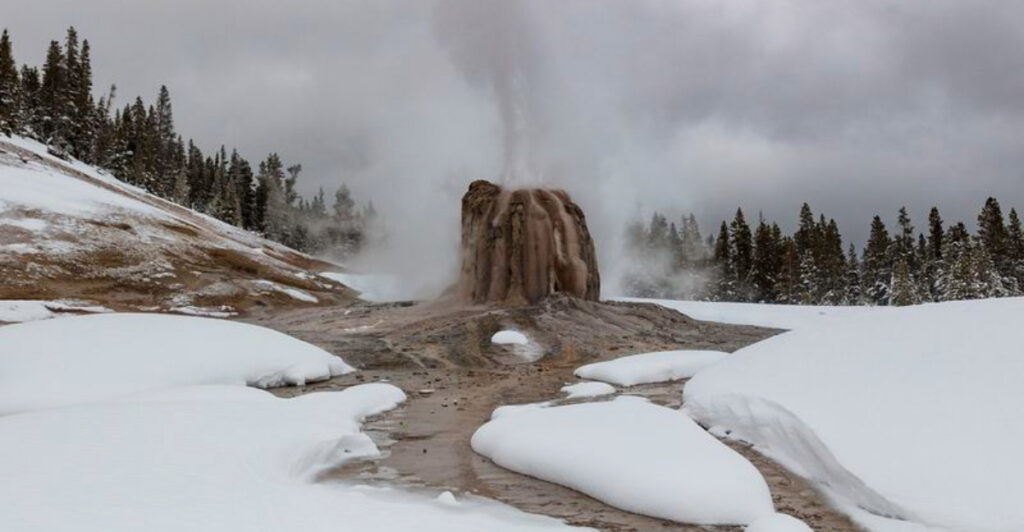
Picture jewel toned pools rimmed with snow as steam curls into the cold sky. The colors seem brighter when everything else is white, so your eyes jump from turquoise to saffron to deep rust. Each boardwalk bends through quiet, giving you time to watch bubbles rise and crackle.
Snow muffles sound, so the hiss of a vent suddenly feels dramatic. Frost gathers on railings, and the sulfur scent hangs faintly while ravens circle above. Pause long enough and ice crystals drift from the steam like glitter, settling on your gloves.
Photographers love the contrast, but you do not need a fancy camera to feel amazed. Sunrise throws pink light across mammoth terraces and hot creek edges. Even on cloudy days, the basins glow from within, a reminder that Yellowstone’s heart stays warm all winter.
2. Ghost trees – nature’s ice sculptures
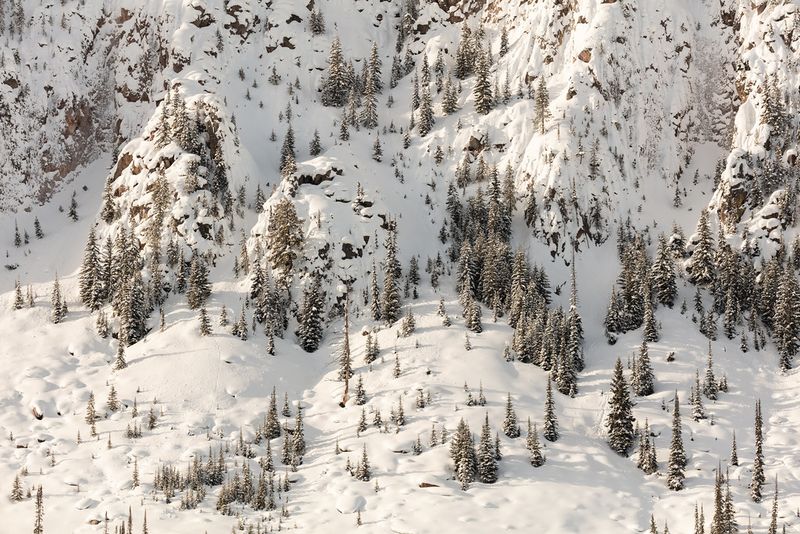
Rime ice turns ordinary lodgepole pines into pale, otherworldly figures. When steam drifts from thermal areas and meets frigid air, it freezes into delicate feathery crystals along every branch. Walk a few steps and the angle changes, revealing new textures like lace layered over bark.
Photographers chase these ghost trees at dawn when low light softens the scene. You will see tiny needles transformed into frosted combs that crunch softly when wind shifts. The silence around them feels sacred, as if the forest is holding its breath.
Sometimes a gust releases shimmering flakes that tumble like confetti. With steam rolling behind, the trees seem to float. Step back for a wider view and entire groves become a gallery of natural sculptures, fleeting and unforgettable.
3. Yellowstone Lake becomes a snowy white void
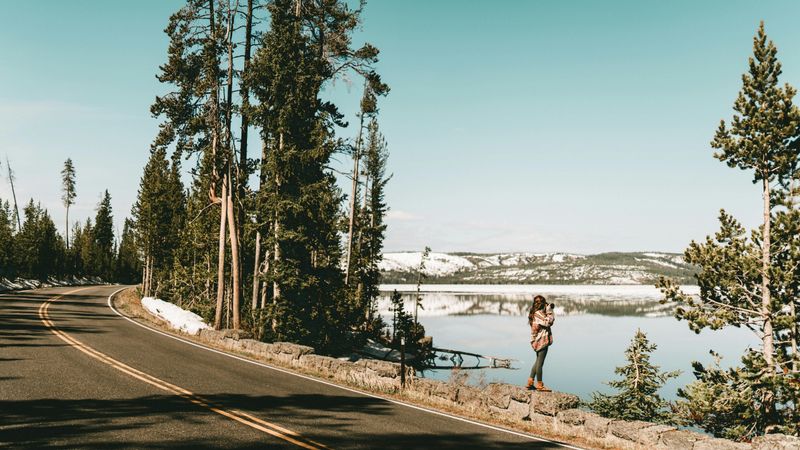
Yellowstone Lake in winter stretches out like a blank canvas without horizon lines. Snow fills every ripple and hardens into a flat expanse that dazzles under pale sun. From shore, you see nothing but white and the faint hint of distant peaks.
The lake’s size surprises you, even when wind carves gentle waves into the snow crust. Crowds disappear, replaced by ravens and the occasional fox trotting along pressure ridges. On clear days the void seems to glow, and at dusk it becomes pastel.
Stand quietly and you may hear subtle cracks traveling underfoot, echoing through the frozen sheet. The emptiness sharpens your senses, framing mountains and forest with stark simplicity. That feeling of scale stays with you long after leaving the shore.
4. Rivers that never freeze
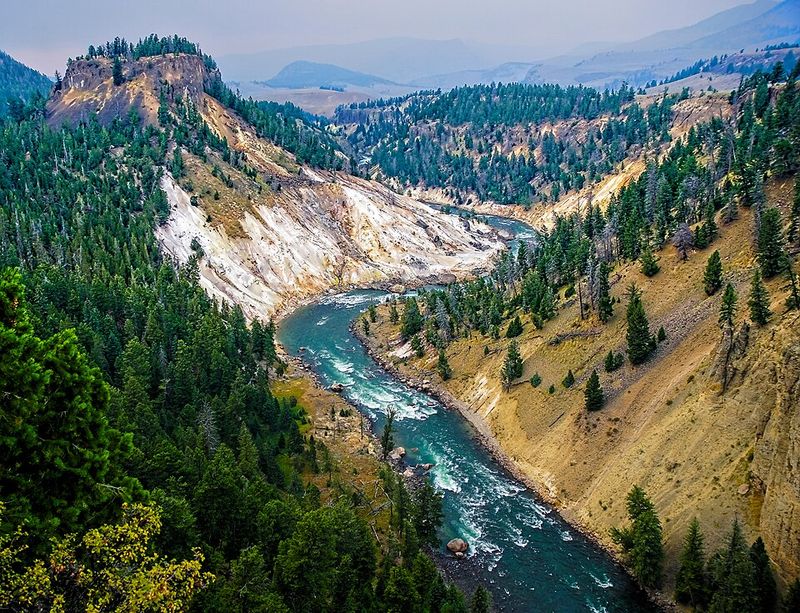
Follow the Firehole or Madison and you will find water moving through ice edged banks. Geothermal inputs keep channels open, releasing steam that drifts over riffles like breath. The warmth creates pockets where ducks and trumpeter swans gather in gliding groups.
Snow piles high right to the waterline, sculpted into soft cornices. You can watch mist lift and freeze on nearby branches, forming delicate crystal sleeves. The river’s dark ribbon adds contrast that helps spot wildlife, even in low light.
Listen for the gurgle beneath the fog and the soft wingbeats of swans. These rivers become living corridors when the rest of the landscape rests. With patience, you might catch a coyote testing the edge for a careful drink.
5. Bison sporting “snowball beards”
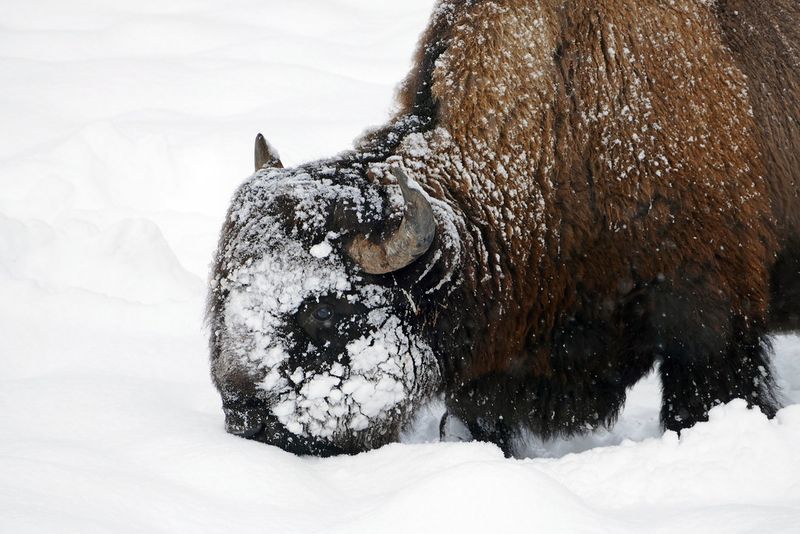
Bison push through drifts with calm determination, sweeping their massive heads to uncover grass. Snow builds on their faces until it forms comical beards that swing as they plow. Steam rises from their coats, and each exhale blooms white in the air.
Stand at a safe distance and you can hear the crunch of hooves under the crust. Frost crystals cling to chin fur, framing dark eyes that watch quietly. Calves from summer have grown shaggy, staying close to mothers for warmth and guidance.
These moments feel iconic, like living postcards. The contrast of black wool, white frost, and pale sky is hard to forget. Patience rewards you with small scenes, like a shake that sends glittering ice flying.
6. Predictable geysers are even more dramatic in cold air
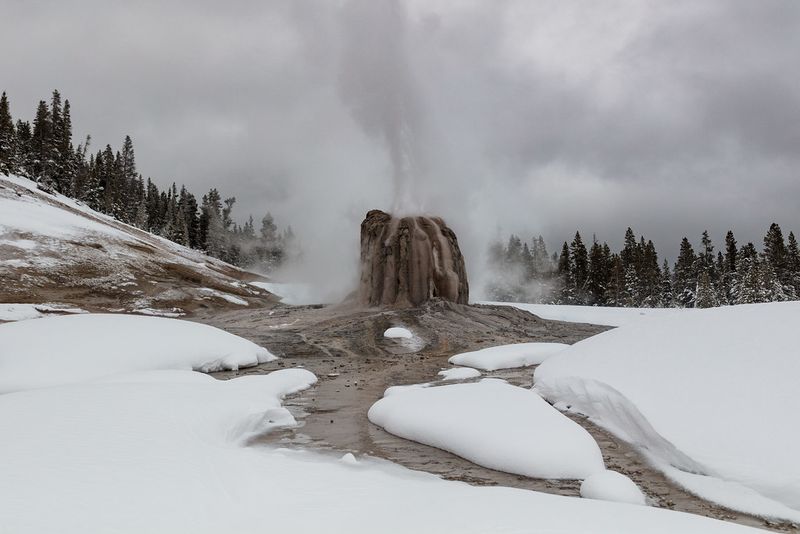
Old Faithful keeps its rhythm even when temperatures dive. In winter, eruptions launch water into air so cold that steam condenses instantly into glimmering ice crystals. You might feel gentle geyser rain settling like dust on your jacket.
Other predictable geysers such as Riverside or Castle gain drama with clear visibility. The plumes look taller because the white cloud contrasts with the blue sky and snow. Listen for the crowd’s hush just before the surge, then the collective gasp afterward.
Stay for multiple cycles and notice subtle differences in wind and light. On calm days the column rises straight up like a chimney, then drifts in slow veils. Even seasoned visitors find themselves lingering for one more eruption.
7. Cross‑country skiing & snowshoeing adventures
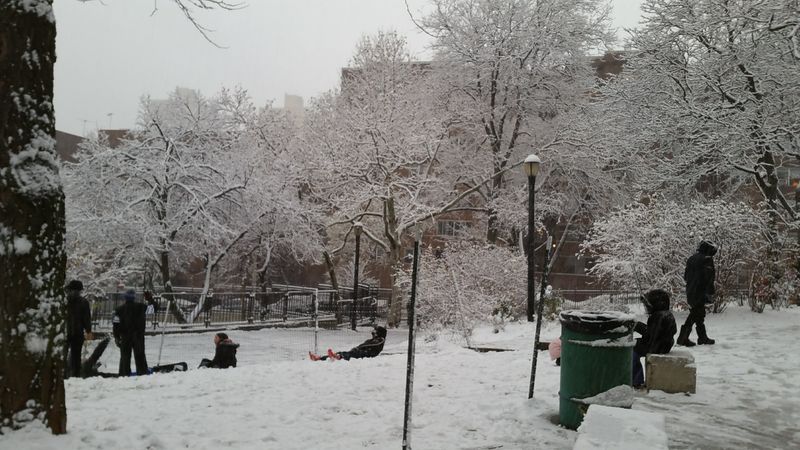
Clip into skis or strap on snowshoes and the park suddenly becomes personal. Groomed routes near Old Faithful connect to quiet loops where animal tracks outnumber people. Fresh snow absorbs sound so well that you can hear your heartbeat.
Expect rolling terrain, gentle climbs, and views of steaming vents in open meadows. Stop often, not just for photos, but to feel warmth rise from hidden springs. You set the pace and discover how quickly miles disappear in crisp air.
Short days encourage early starts and cozy finishes back at the lodge. Layer smartly and bring hot drinks for trail breaks. By sunset, rosy light turns every snowflake into a prism.
8. Ice skating at historic park lodges
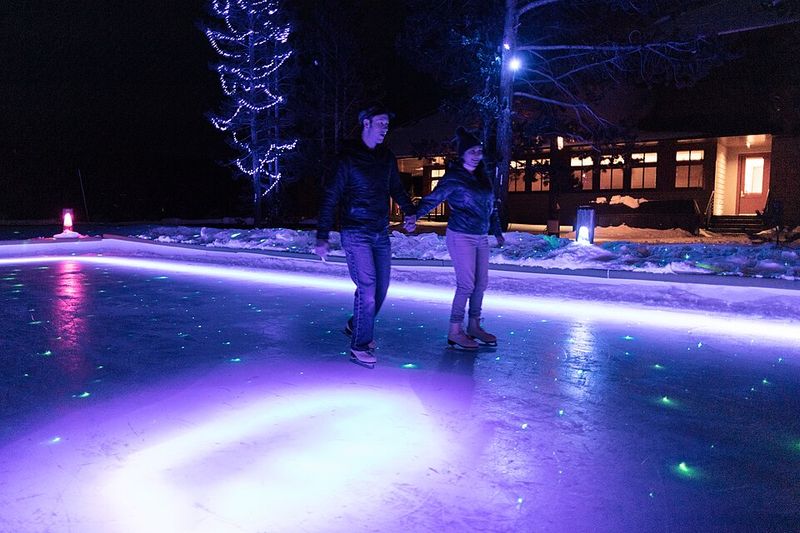
After a day on the trails, an outdoor rink under lodge lights feels perfect. Music drifts softly while skates trace crescents across the ice. You warm your hands on a cup of cocoa and watch flakes spiral down.
The rink at Old Faithful Snow Lodge often buzzes with families and friends. Beginners hug the rail, laughing as confidence builds with each loop. When the lights glow, the scene turns into a postcard with silhouettes and steam plumes beyond.
Skate rentals make it easy to join, even on a spur of the moment. Take breaks to admire snow stacked on roofs and pines. It is a simple joy that fits Yellowstone’s slower winter rhythm.
9. Winter wildlife comes into view
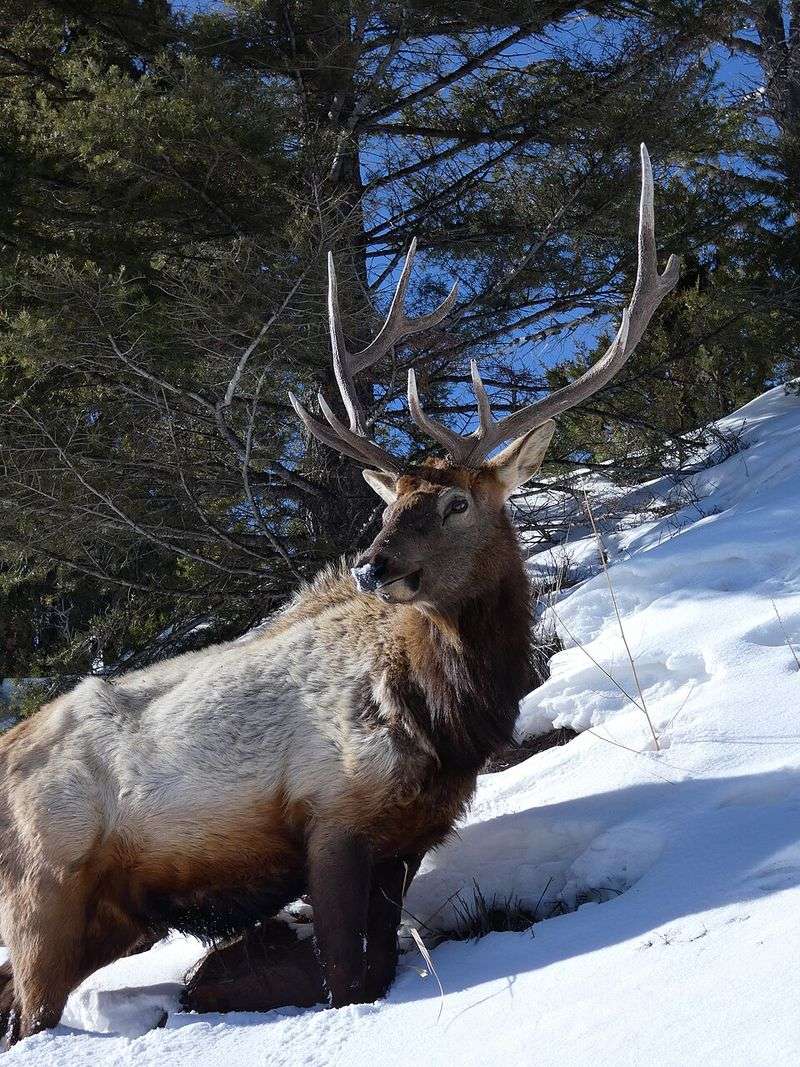
Winter strips the landscape to essentials, and animals stand out against snow like moving sculptures. Elk drift through sage flats while bison dig for grass with sweeping head motions. Coyotes mouse across meadows, leaping and listening under powdery crusts.
Patience matters. You scan distant hills for movement, use pullouts, and keep safe distances so animals can conserve energy. Binoculars bring details close without disturbing the scene, from steaming nostrils to twitching ears.
The fewer vehicles and quieter roads make sightings feel intimate. Tracks tell stories as clearly as the animals themselves. By the end of the day, you will read the snow like a newspaper.
10. Wolf watching at its peak
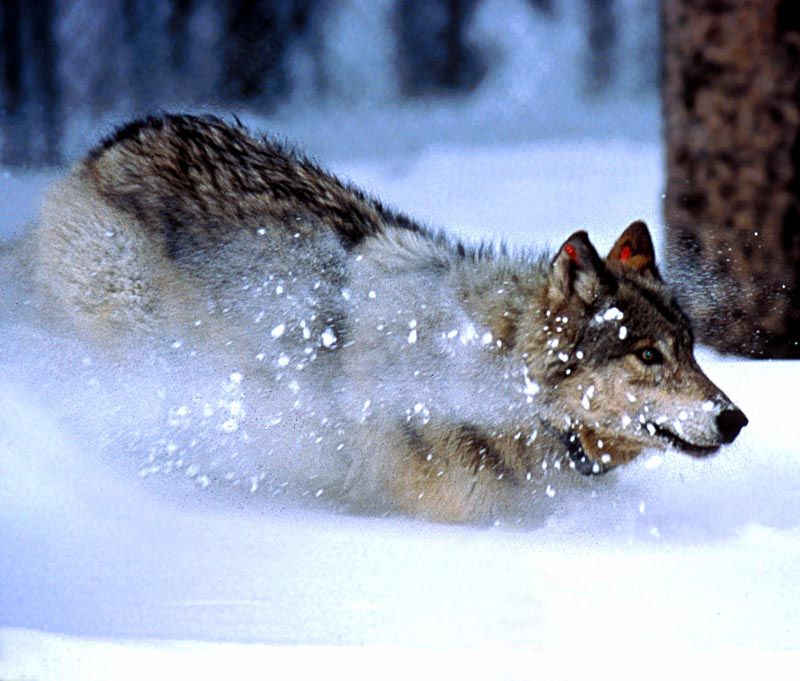
Lamar Valley becomes a classroom for patient observers. Wolf packs travel ridgelines and creek corridors, leaving dark silhouettes against bright snow. Early mornings deliver the best chances, when howls carry and fresh tracks point the way.
Spotting scopes transform specks into expressive faces and curled tails. You might witness pack dynamics, from playful bounding to strategic group hunts. Guides and dedicated watchers often share updates, turning turnouts into friendly mini communities.
Dress for hours in the cold and bring a thermos. Even brief sightings leave a lasting thrum of excitement. When a howl threads through the valley, you feel it in your chest.
11. Quiet trails and fewer crowds
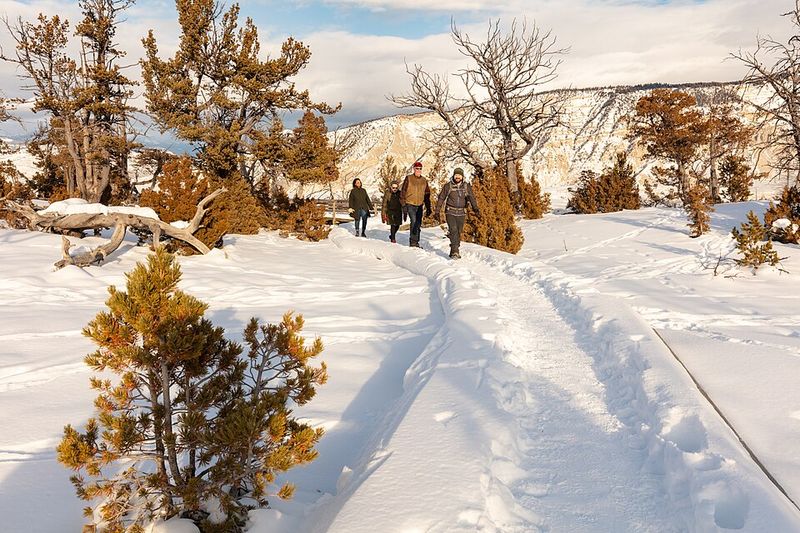
With most roads closed to private cars, Yellowstone slows to a whisper. Boardwalks feel like private walkways where you hear the soft tap of your boots. Even popular basins open wide with space to linger and watch.
Quiet changes everything. You notice patterns in frost, the rhythm of bubbling vents, and the faint rustle of wings. Without summer chatter, the park reveals textures usually overlooked by hurried visitors.
Solitude invites reflection and careful steps. You find yourself reading signs and sky, savoring the present moment. That peaceful focus becomes the highlight of the trip.
12. Infrared steam effects and frost fog
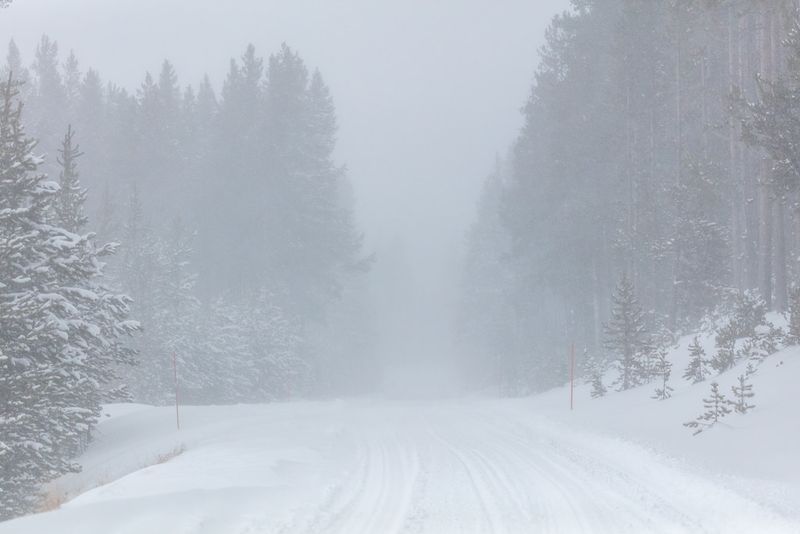
When brutal cold meets hot water, the atmosphere starts performing. Dense fog rolls along creek beds, weaving frost onto grasses and railings. Step through a patch and your eyelashes collect tiny crystals within seconds.
Low sun can create halos, pillars, and shimmering arcs around steam plumes. Cameras see even more than eyes, especially if you experiment with angles. The world looks filtered without any editing, and colors mute to silver and blue.
Move slowly, since visibility drops and surfaces turn slick. That veil of fog makes familiar spots feel new and slightly mysterious. It is a reminder that Yellowstone is as much sky as ground in winter.
13. Snowy drives between iconic entrances
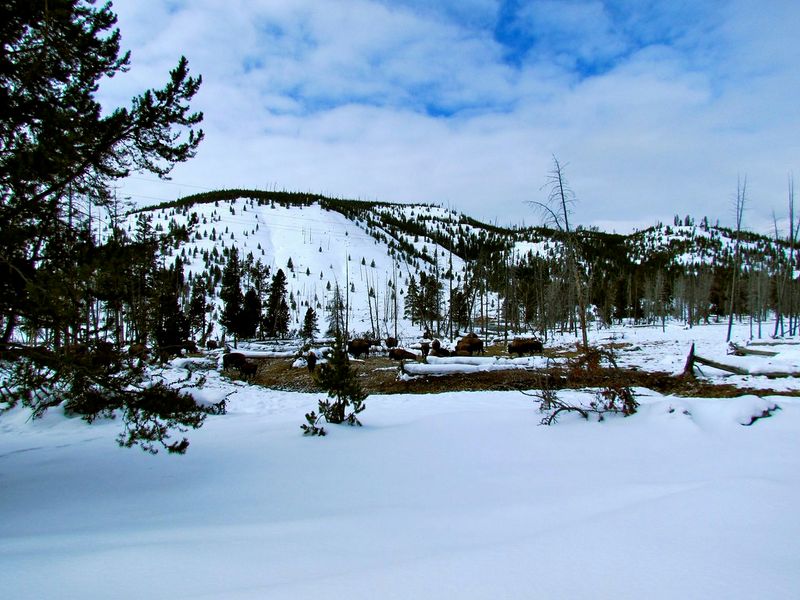
The road between the North and Northeast entrances remains a lifeline all winter. It threads along river bottoms and open valleys where wildlife often grazes. Clear days deliver mountain views that sparkle above shadowed forests.
Driving here requires patience and awareness. You may slow for bison, drifting snow, or icy curves without guardrails. Pullouts become scenic stages where you can safely admire the landscape.
As miles pass, the rhythm of snow and sky becomes meditative. Small towns bookend the route, adding warmth after big scenery. It is one of Yellowstone’s simplest winter pleasures.
14. Winter changes how you experience Yellowstone
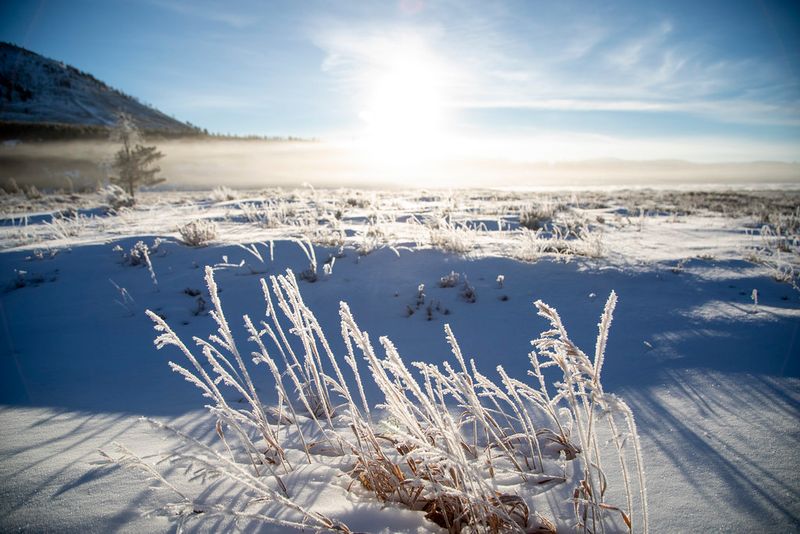
Yellowstone in winter is not just colder. It is quieter, slower, and somehow bigger, with steam curling from the earth like visible breath. You notice details your summer self would miss, from diamond dust to fox tracks scribbled across meadows.
Comfort becomes part of the adventure. Good layers, warm drinks, and flexible plans turn the season from obstacle to ally. Each day feels purposeful, even if you only watch light shift over a basin.
By the time you leave, the park has rearranged your definition of wild. The memories are minimalist and bright, like brushstrokes on snow. You carry the stillness home with you.
Share this story