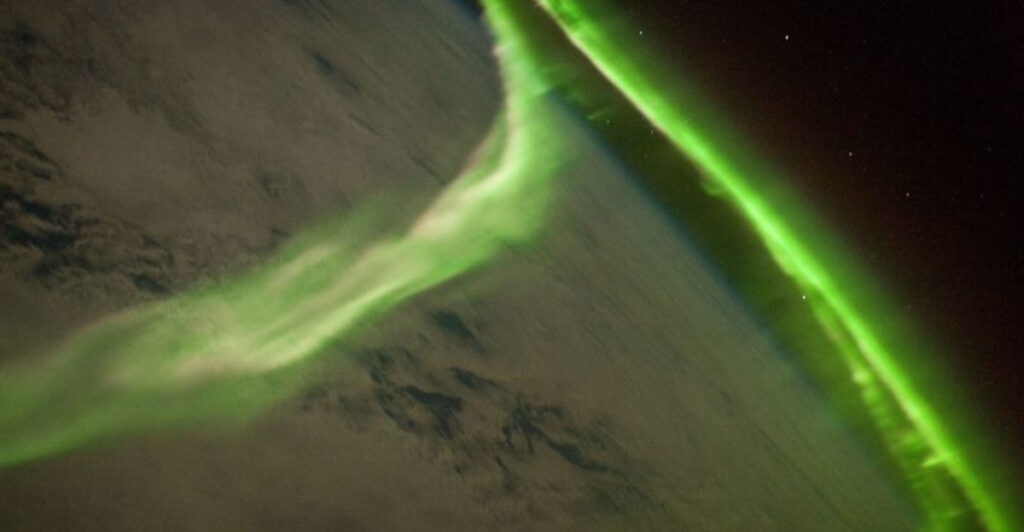
Imagine ringing in the new year under shimmering green and purple skies. Space weather forecasters say the aurora could creep unusually far south, setting up a rare holiday light show across the northern United States. If skies clear and geomagnetic conditions hold, you might catch the glow right from your backyard. Here is how to know where to look, why it is happening, and how to boost your chances.
Skywatchers across the northern United States could see the aurora on New Year’s Eve, thanks to elevated geomagnetic activity pushing the oval south. Forecasts hint at conditions strong enough to extend visibility into multiple regions that rarely get a show. If you have not witnessed auroras before, this timing adds festive magic to midnight countdowns.
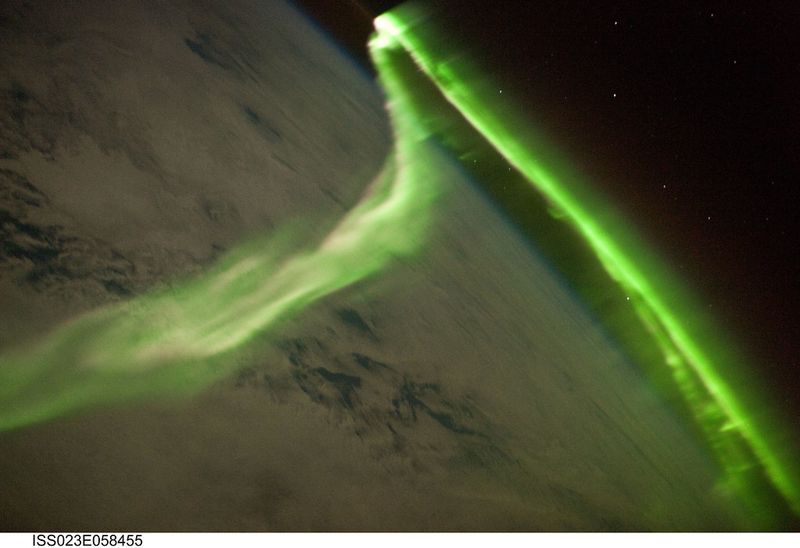
The setup involves solar wind streams interacting with Earth’s magnetic field, energizing particles that light the upper atmosphere. When these ingredients align, color and motion can intensify quickly, sometimes shifting from a faint arc to sweeping curtains. You might notice green first, with occasional reds or purples during stronger bursts.
Viewing depends on local clouds, light pollution, and real-time magnetic indices that can change hour to hour. Rural vantage points and unobstructed northern horizons dramatically improve your odds. Keep alerts on, because brief spikes can deliver brilliant minutes you would not want to miss.
Even if the display stays subtle, photographs can reveal more than your eyes. A quick night-mode shot can pull out structure hidden in the glow. With patience and warm layers, you could welcome the year under nature’s most electric sky.
Current outlooks favor states along or near the U.S.-Canada border, where the auroral oval often dips during stronger storms. Washington, Montana, North Dakota, South Dakota, Minnesota, Wisconsin, Michigan, and Maine lead the list. If the geomagnetic push grows, activity may spill farther south than usual.
Fringe possibilities include Idaho, Wyoming, Iowa, New York, Vermont, and New Hampshire, with a chance for northern Illinois and Pennsylvania. In these lower latitudes, look low toward the northern horizon and avoid obstructions like trees and buildings. Rural locations reduce glare, letting faint arcs or pillars emerge from the background glow.
Expect variability across short distances. One town may report vibrant movement while another sees only a pale smear. That is why checking updated Kp indices, aurora oval maps, and cloud forecasts becomes crucial on the day.
Head for dark-sky parks, lake shores, and higher terrain if safe winter access is available. Arrive early to scout sightlines and let your eyes adapt. With preparation and a bit of luck, you could snag a bucket-list view without crossing the border.
This holiday window links to high-speed solar wind streams, commonly flowing from coronal holes on the Sun. When these streams arrive, they buffet Earth’s magnetosphere and can trigger geomagnetic storms. Even moderate disturbances expand the auroral oval, letting light spill over lower latitudes.
The Sun is climbing through an active phase of its roughly 11-year cycle, so aurora-friendly conditions pop up more often. Charged particles excite atmospheric oxygen and nitrogen, producing familiar greens and occasional reds and purples. The color mix depends on altitude, energy, and how long collisions persist.
Space-weather satellites watch key variables like solar wind speed and magnetic orientation, especially the southward Bz component. When fields align for efficient coupling, energy funnels into auroral zones and intensifies displays. Because these parameters pulse and flip quickly, forecasts sharpen only hours before peak viewing.
Think of the prediction like a storm nowcast rather than a long-range promise. Stay flexible, monitor short-term updates, and be ready to move if cloud cover shifts. The right moment can turn a quiet sky into rippling curtains within minutes.
Start by escaping city glare to the darkest sky you can reach safely. Face north with an open horizon, since lower-latitude auroras often hug the skyline before intensifying. Arrive early to let eyes adapt and to scout angles free of trees, buildings, or lake-effect clouds.
Prime hours usually run 10 p.m. to 2 a.m., but activity can pop earlier or later. Layer up, pack hand warmers, and bring a thermos so you can wait comfortably. Keep an eye on real-time dashboards for Kp, Bz, and solar wind speed, plus local cloud forecasts.
Photography can reveal more than you see. Use night mode or manual settings, wide aperture, high ISO, and a few seconds of exposure on a tripod. Aim slightly above the northern horizon and check your histogram to avoid blown highlights.
Turn off car lights, dim screens, and protect night vision with a red lamp. If a burst hits, look for pillars, arcs, and subtle color shifts. With patience and quick adjustments, you can turn a promising forecast into a memorable New Year sighting.
Share this story