Europe holds more UNESCO World Heritage Sites than any other continent, and for good reason. From ancient ruins that whisper tales of empires long gone to fairy-tale castles perched on misty mountains, these protected treasures offer travelers unforgettable glimpses into humanity’s greatest achievements.
Travel experts and visitors consistently rave about these 15 European UNESCO sites, calling them absolutely worth the hype and essential stops on any European adventure.
Historic Centre of Rome — Italy
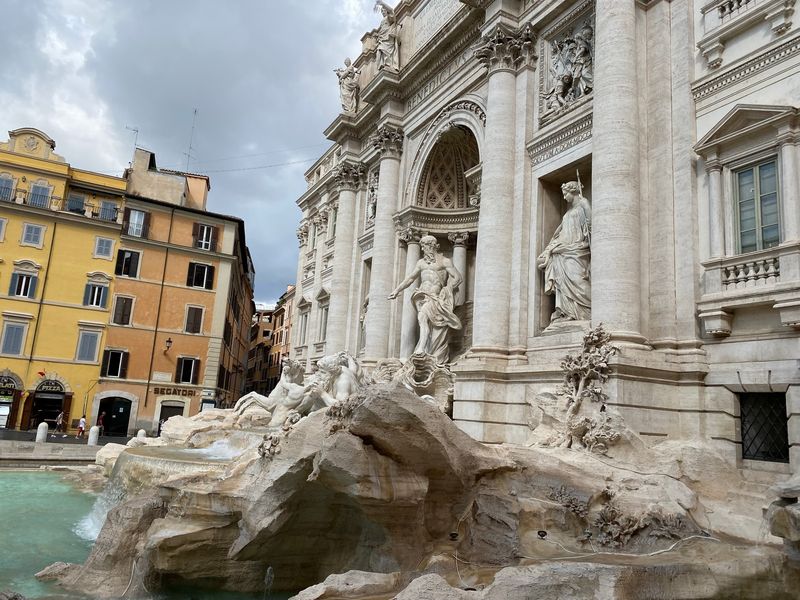
Walking through Rome feels like stepping into a time machine that spans three millennia. The city’s historic center is essentially an open-air museum where ancient gladiator arenas sit beside Renaissance masterpieces and baroque fountains bubble in sun-drenched piazzas.
The Colosseum dominates the landscape as a testament to Roman engineering genius, while the nearby Forum reveals the political heart of an empire that shaped Western civilization. The Pantheon’s perfect dome still inspires architects today, nearly 2,000 years after its construction.
Between these monumental sites, narrow cobblestone streets wind past artisan workshops and neighborhood trattorias where locals have gathered for generations.
What makes Rome truly exceptional is how seamlessly history layers upon itself. A morning espresso might be sipped beside a 2,000-year-old column, and evening strolls pass illuminated fountains designed by Bernini.
Travelers consistently describe Rome as overwhelming in the best possible way—there’s simply too much beauty, too much history, and too many stories to absorb in one visit.
This living connection between past and present, where ancient monuments remain part of daily life rather than mere tourist attractions, keeps visitors returning again and again.
Historic Centre of Florence — Italy
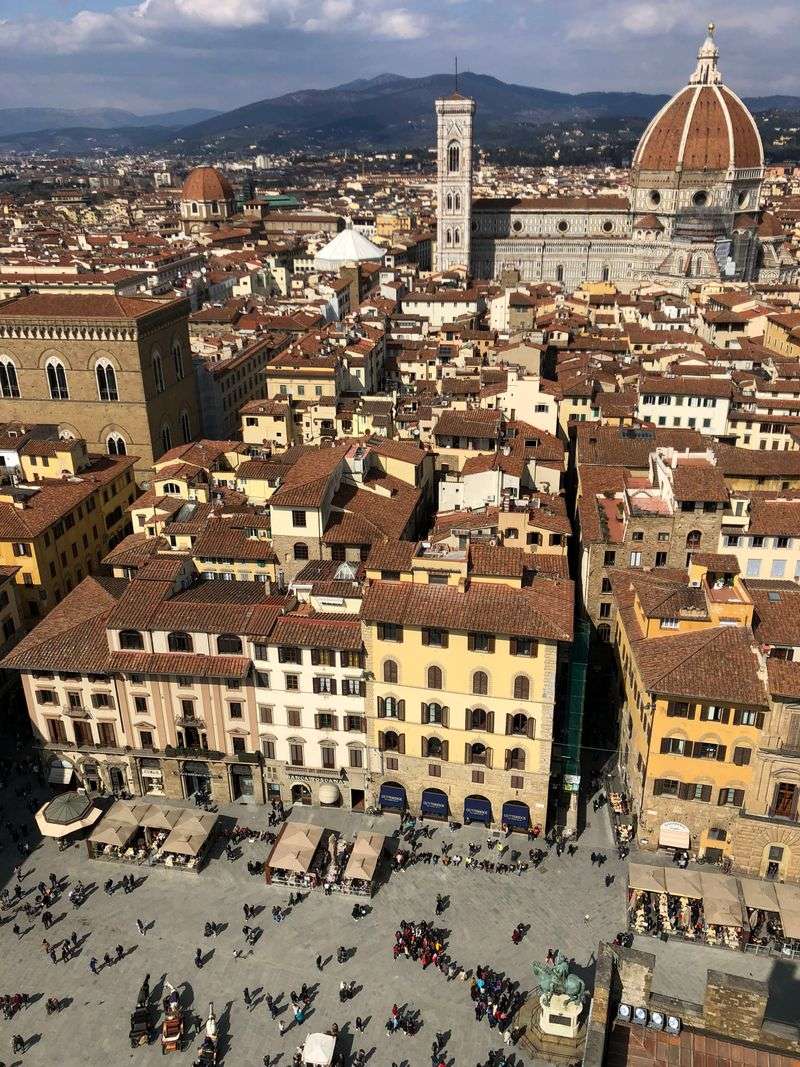
Florence earned its nickname as the cradle of the Renaissance through sheer creative brilliance. Within a remarkably compact historic center, masterpieces of art, architecture, and humanistic thought crowd together in dizzying concentration.
Brunelleschi’s engineering marvel—the Duomo’s terracotta dome—dominates the skyline and remains the largest masonry dome ever constructed.
Museums like the Uffizi house works by Botticelli, Leonardo da Vinci, and Michelangelo that fundamentally changed how humanity viewed itself and the world. The Baptistery’s bronze doors, called the Gates of Paradise by Michelangelo himself, showcase goldsmithing and storytelling at their finest.
Palazzo Vecchio still serves as city hall, connecting modern governance with medieval civic pride.
Art lovers find themselves spoiled for choice—every church, plaza, and palace seems to contain something extraordinary. The Ponte Vecchio bridge, lined with jewelry shops since the 1500s, spans the Arno River as it has for centuries.
Even casual strolls reveal hidden frescoes, sculptural details, and architectural innovations.
Travelers describe Florence as intensely rewarding for anyone passionate about cultural history. The city’s relatively small size means major sites sit within walking distance, yet the depth of artistic achievement requires days or weeks to truly appreciate.
Alhambra, Granada — Spain
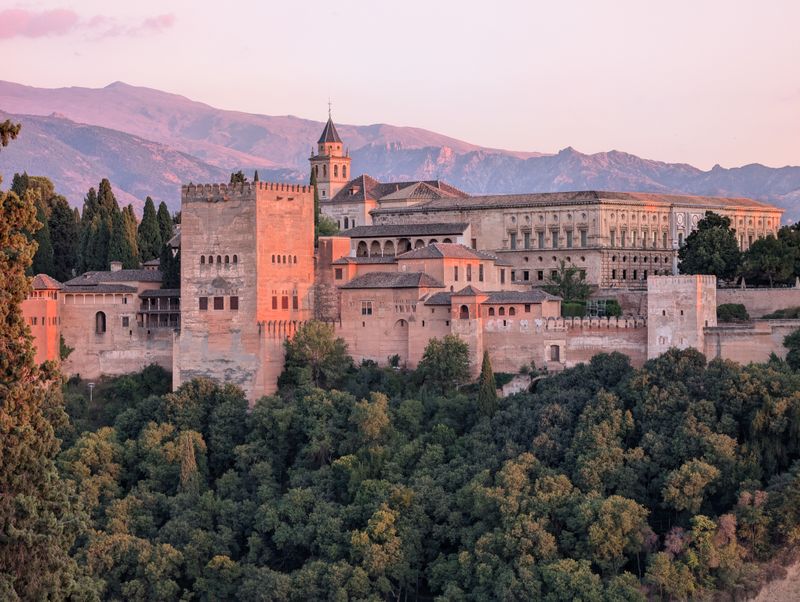
Perched above Granada like a crown, the Alhambra represents the pinnacle of Islamic art and architecture in medieval Europe. This palatial city combines military fortress, royal residence, and lush gardens into a complex that took centuries to perfect.
Intricate geometric tilework covers walls and ceilings, creating patterns that seem to shift and breathe in changing light.
The Nasrid Palaces showcase water features, carved stucco, and courtyard designs that manipulate light, sound, and temperature with remarkable sophistication. The Court of Lions, with its fountain supported by marble lion sculptures, exemplifies the mathematical precision and aesthetic beauty that defined Moorish Granada.
The Generalife summer palace offers terraced gardens where royalty once escaped the heat, with views stretching toward snow-capped Sierra Nevada peaks.
What captivates visitors is how the Alhambra tells stories of cultural exchange, religious tolerance, and artistic ambition during Al-Andalus’s golden age. The Alcazaba fortress section reveals military might, while palace chambers whisper of poetry, astronomy, and diplomatic intrigue.
Sunset visits become particularly magical when warm light illuminates red fortress walls against darkening skies.
Travelers consistently rate the Alhambra among Europe’s most beautiful heritage sites, praising its combination of architectural genius, historical significance, and breathtaking natural setting.
Works of Antoni Gaudí — Barcelona, Spain
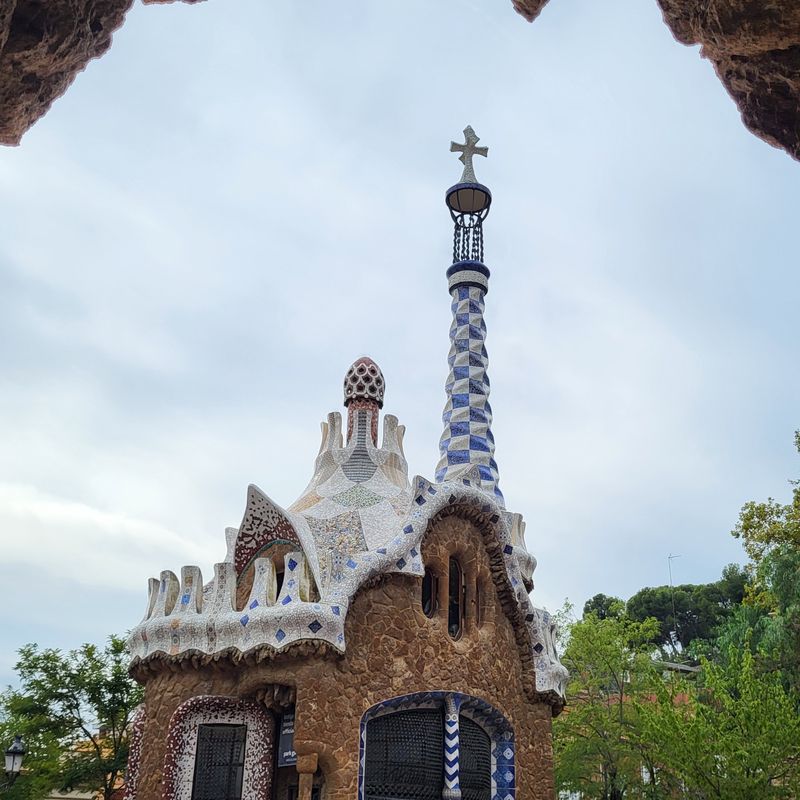
Antoni Gaudí transformed Barcelona into an architectural wonderland unlike anywhere else in Europe. His UNESCO-recognized masterpieces—including the still-unfinished Sagrada Família, the whimsical Park Güell, and the undulating Casa Batlló—challenge conventional ideas about what buildings should look like.
Gaudí drew inspiration from nature, creating structures with organic curves, vibrant colors, and symbolic details that reward careful observation.
The Sagrada Família cathedral stands as his most ambitious project, begun in 1882 and expected to complete around 2026. Inside, tree-like columns branch toward the ceiling, filtering light through stained glass that bathes the space in rainbow hues.
The facades tell biblical stories through sculptural narratives that blend gothic tradition with modernist innovation.
Park Güell demonstrates Gaudí’s genius for public spaces, with mosaic-covered benches, gingerbread-house gatehouses, and a serpentine terrace overlooking Barcelona. Casa Milà’s wavy stone facade and rooftop chimney sculptures look more like natural formations than human construction.
Casa Batlló’s iridescent tile work and bone-like balconies suggest an underwater fantasy.
Visitors describe Gaudí’s works as architecture that feels alive—spaces that engage imagination and emotion rather than simply providing shelter. His fusion of craftsmanship, symbolism, and innovation created a visual language that remains fresh and surprising more than a century later.
Cinque Terre — Italy
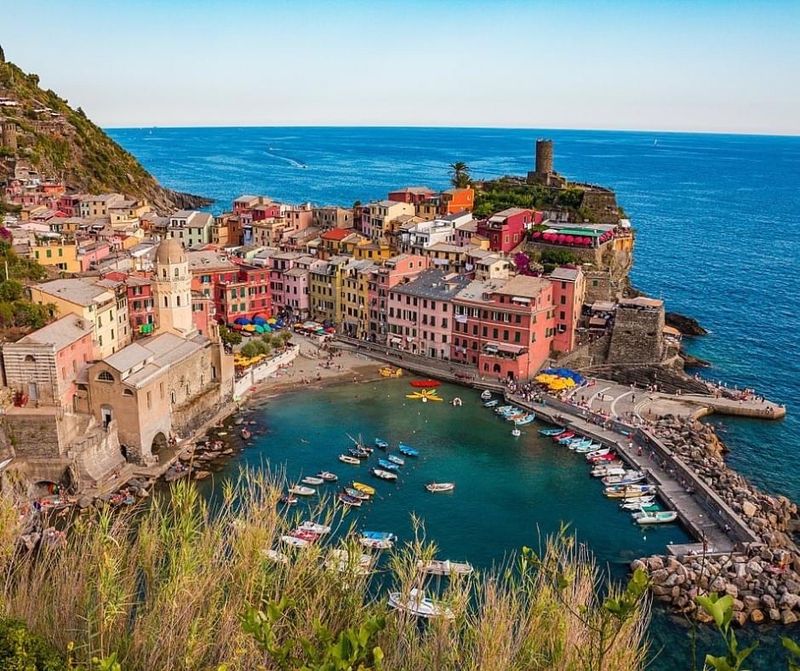
Five pastel-painted villages cling to impossibly steep cliffs along Italy’s Ligurian coast, connected by hiking trails that rank among Europe’s most scenic. Monterosso, Vernazza, Corniglia, Manarola, and Riomaggiore developed over centuries as fishing communities, their inhabitants carving terraced vineyards into mountainsides and building homes that seem to defy gravity.
Hiking between villages reveals breathtaking coastal panoramas, with the Mediterranean sparkling below and vineyards climbing above. The trails vary in difficulty—some offer leisurely walks while others demand more effort—but all reward hikers with views that explain why photographers flock here.
Village life maintains an authentic rhythm despite tourism, with fishermen still mending nets and locals gathering in small piazzas.
The colorful houses weren’t painted for aesthetics alone; bright hues helped fishermen identify their homes from the sea. Today, that practical tradition creates postcard-perfect scenes at every turn.
Vernazza’s harbor, framed by pastel buildings and a medieval watchtower, frequently appears on lists of Italy’s most beautiful spots. Corniglia perches highest, requiring a climb up hundreds of steps but offering relative tranquility.
Travelers praise Cinque Terre for balancing natural beauty with cultural authenticity. Unlike many heavily touristed destinations, these villages maintain genuine community character while welcoming visitors to experience their unique coastal heritage.
Cathedral of Santiago de Compostela — Spain
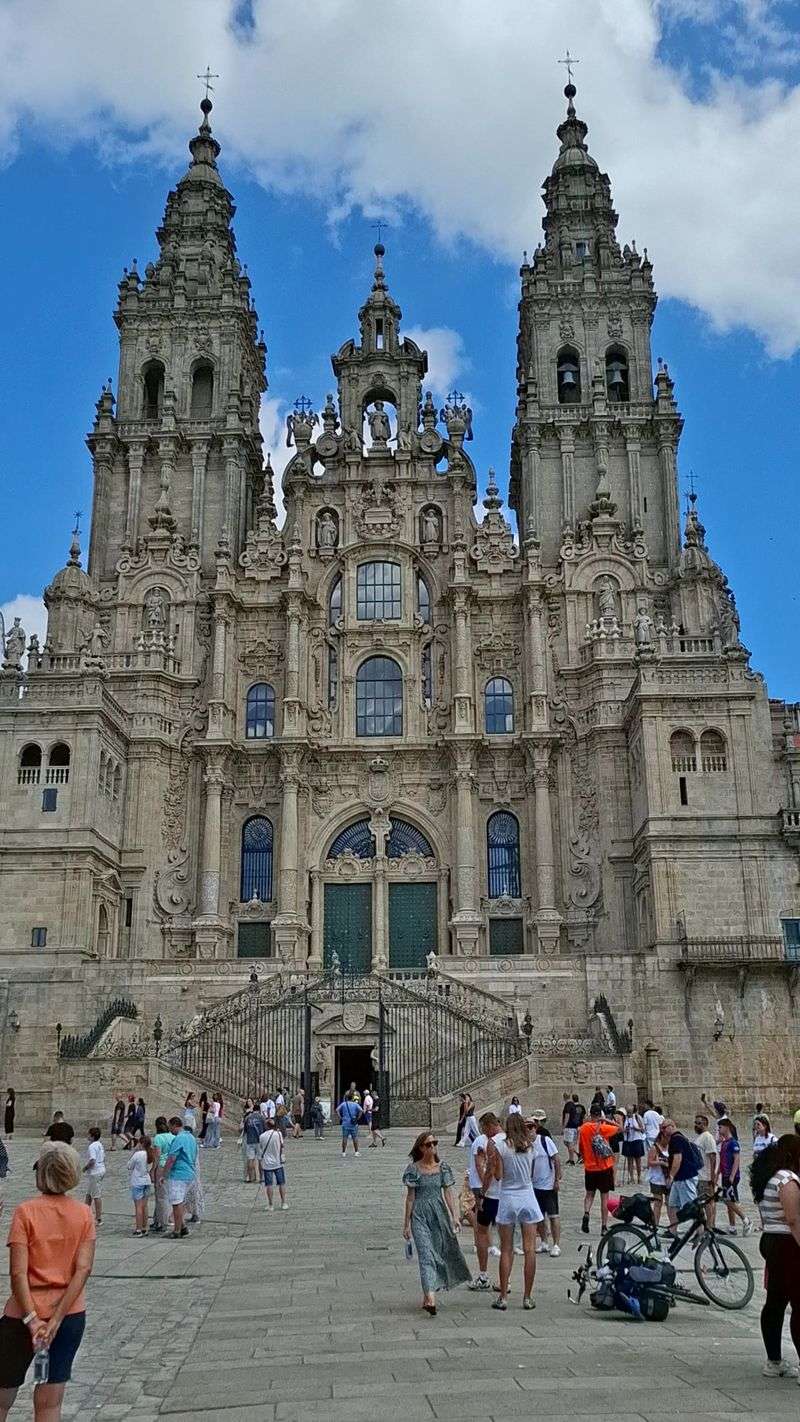
For over a thousand years, pilgrims have walked the Camino de Santiago, with this cathedral as their ultimate destination. The building marks the legendary burial site of Saint James the Apostle, making it one of Christianity’s most important pilgrimage sites alongside Jerusalem and Rome.
Its architectural evolution spans Romanesque foundations through Gothic additions to the elaborate Baroque facade that now greets arriving pilgrims.
The Portico of Glory, a Romanesque sculptural masterpiece inside the entrance, depicts biblical scenes with such artistry that visitors spend hours decoding its details. The cathedral’s interior combines soaring spaces with intimate chapels, each telling stories of faith and cultural exchange across medieval Europe.
During certain masses, priests swing the Botafumeiro—a massive incense burner—in dramatic arcs through the transept, a tradition dating back centuries.
Pilgrims arriving after weeks of walking often experience profound emotions upon reaching the plaza. The cathedral staff has developed rituals to honor their journey, including special masses and certificates of completion.
Even non-religious visitors describe feeling moved by the building’s spiritual significance and the dedication it represents.
Travelers consistently mention the cathedral’s power to connect past and present. Modern pilgrims follow routes walked by countless generations, arriving at a building that has welcomed the faithful, the curious, and the weary for more than a millennium.
Białowieża Forest — Poland/Belarus
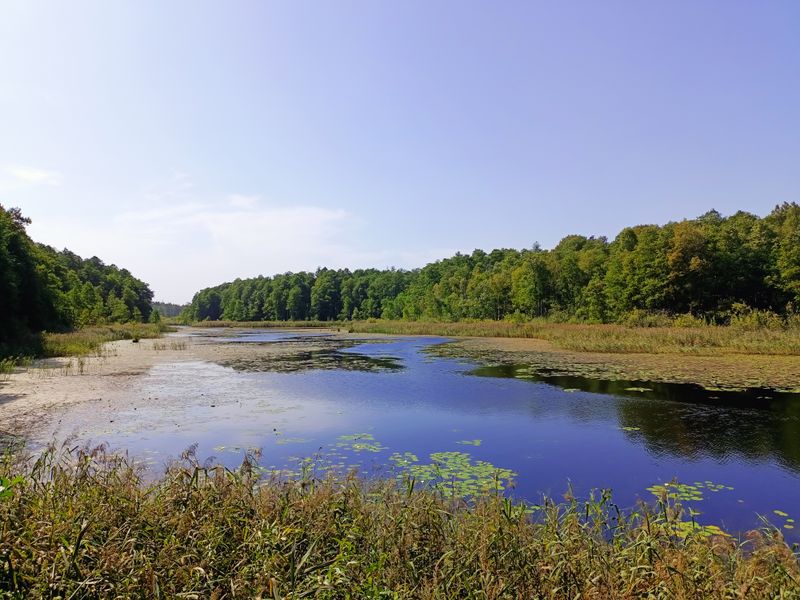
Step into Białowieża and experience what European forests looked like before human civilization reshaped the continent. This primeval woodland, straddling the Poland-Belarus border, preserves ecosystems that have remained largely undisturbed for thousands of years.
Towering oaks hundreds of years old rise from forest floors carpeted in moss and ferns, while fallen giants slowly decompose, feeding new growth in an eternal cycle.
The forest’s most famous residents are European bison, the continent’s largest land mammals, which were brought back from near-extinction through conservation efforts centered here. Spotting these massive, shaggy creatures in their natural habitat ranks among Europe’s most thrilling wildlife encounters.
The forest also shelters wolves, lynx, wild boar, and over 250 bird species, creating a biodiversity hotspot unlike anywhere else in Europe.
Guided tours lead visitors into the strictly protected core zone, where human intervention remains minimal. Walking among trees that predate nations and empires provides perspective on how recently humans have dominated the landscape.
The forest’s scale and wildness feel almost mythical—a living connection to Europe’s ancient past.
Nature enthusiasts describe Białowieża as essential for understanding what has been lost elsewhere and what still deserves protection. This UNESCO site represents natural rather than cultural heritage, reminding visitors that preservation encompasses wild spaces as much as human achievements.
Schönbrunn Palace — Austria
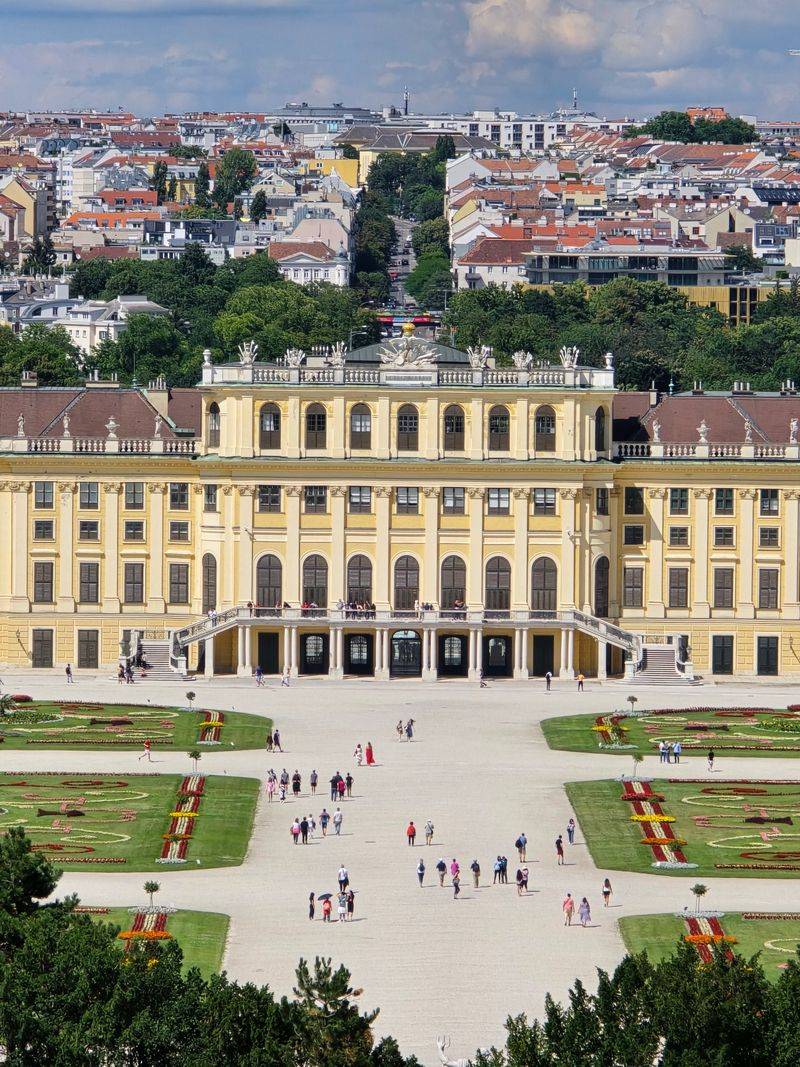
Vienna’s Schönbrunn Palace embodies imperial European grandeur at its most extravagant. This sprawling baroque complex served as the Habsburg dynasty’s summer residence, where emperors and empresses orchestrated politics, culture, and court life for centuries.
The palace’s 1,441 rooms include state apartments decorated with gilded rococo detailing, crystal chandeliers, and priceless artworks that showcase aristocratic taste at its peak.
The formal gardens rival the palace itself for magnificence. Geometric flower beds, precisely trimmed hedges, and fountain sculptures create outdoor rooms that stretch toward the Gloriette—a neoclassical colonnade crowning the hill behind the palace.
The gardens were designed not just for beauty but to demonstrate humanity’s ability to impose order on nature, a key baroque principle. Hidden within the grounds, visitors find a maze, a palm house, and even a zoo founded in 1752, making it the world’s oldest continuously operating zoo.
Maria Theresa, one of Europe’s most powerful rulers, left her mark throughout Schönbrunn, from the yellow exterior paint to the Chinese-inspired cabinets. Her youngest daughter, Marie Antoinette, spent her childhood here before becoming France’s ill-fated queen.
Mozart performed in the Mirror Room as a six-year-old prodigy.
Travelers consistently praise Schönbrunn for bringing imperial history to vivid life, offering insights into how European royalty lived, governed, and entertained during the continent’s most opulent era.
Historic Centre of Prague — Czech Republic
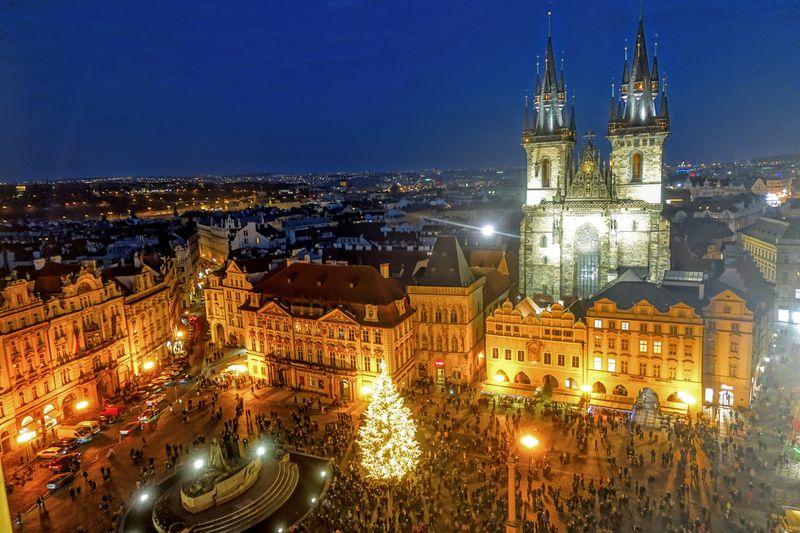
Prague’s historic center reads like a fairy tale written in stone and spires. The city escaped major destruction during World War II, leaving its architectural heritage remarkably intact—a thousand years of building styles coexist in harmonious beauty.
Charles Bridge, lined with baroque saint statues, connects the Old Town with the castle district across the Vltava River, offering postcard views in every direction.
Prague Castle complex crowns the western hill, containing palaces, churches, and gardens within walls that have housed Bohemian rulers since the ninth century. St. Vitus Cathedral’s gothic spires dominate the skyline, while the castle’s Golden Lane features tiny colorful houses where alchemists and artisans once worked.
Down in Old Town Square, the Astronomical Clock performs its hourly show, a medieval mechanical marvel that has measured time since 1410.
The historic center’s magic intensifies in certain lights and seasons—early morning mist rising from the river, afternoon sun illuminating baroque facades, or winter snow dusting gothic spires. Narrow lanes wind past beer halls, puppet theaters, and courtyards where musicians perform classical concerts in spaces where Mozart once conducted.
Art Nouveau buildings add elegant curves to the architectural mix.
Visitors describe Prague as impossibly romantic, a place where simply wandering without a map yields constant discoveries. The city’s preservation allows travelers to experience medieval and baroque Europe without straining imagination.
Palace of Versailles — France
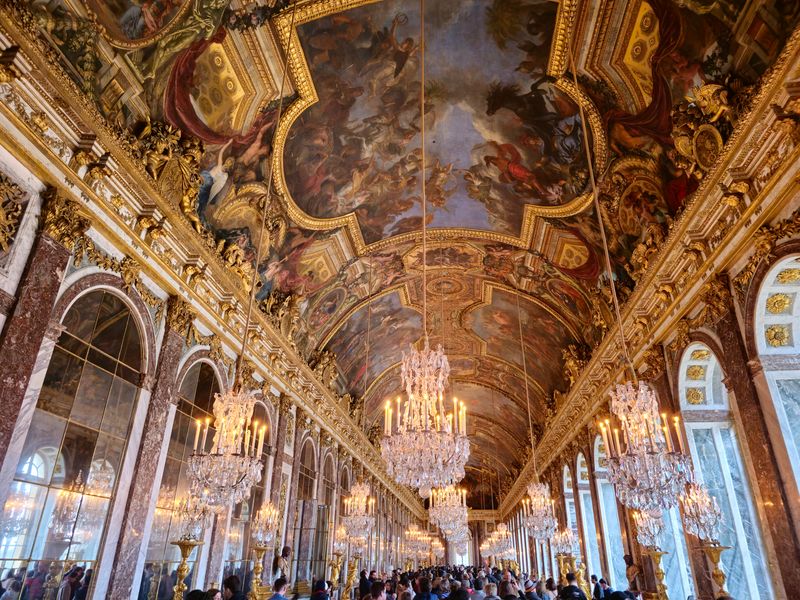
No European palace screams royal excess quite like Versailles. Louis XIV transformed his father’s hunting lodge into a symbol of absolute monarchy that would influence palace design across the continent.
The Hall of Mirrors, stretching 240 feet long, features 357 mirrors reflecting light from seventeen arched windows—a dazzling display of wealth when mirrors were luxury items. This is where the Treaty of Versailles was signed in 1919, ending World War I.
The King’s and Queen’s State Apartments showcase baroque decoration at its most elaborate: frescoed ceilings, marble columns, silk wall coverings, and furniture crafted by master artisans. Every detail was designed to communicate power and taste.
Marie Antoinette’s private estate within the grounds includes a rustic hamlet where she played at peasant life, demonstrating the disconnect between royalty and reality that contributed to the French Revolution.
The gardens extend over 2,000 acres, featuring geometric patterns, grand canals, fountains, and groves designed by André Le Nôtre. During summer fountain shows, classical music accompanies water displays that recreate the spectacles Louis XIV hosted for his court.
The scale alone overwhelms—walking the full gardens takes hours.
Travelers often spend entire days here yet barely scratch the surface. Versailles represents not just French history but the apex of European royal ambition, where art, architecture, and landscape design merged to create political theater.
Mont-Saint-Michel — France
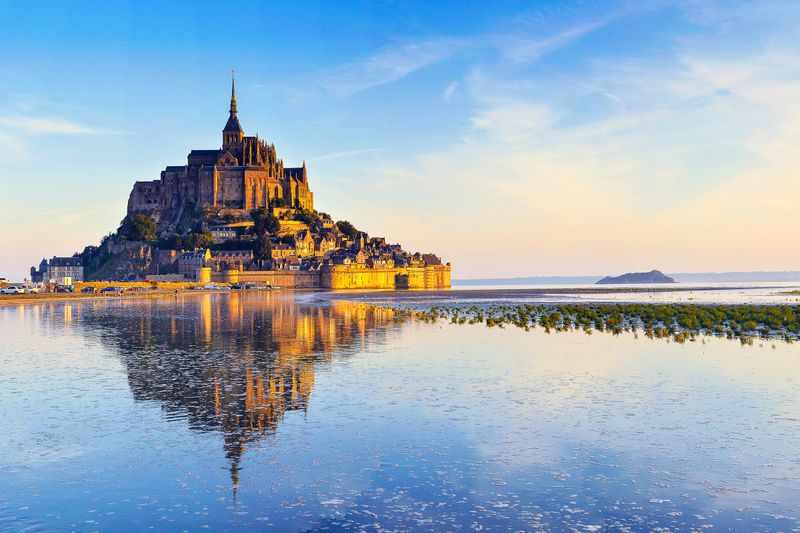
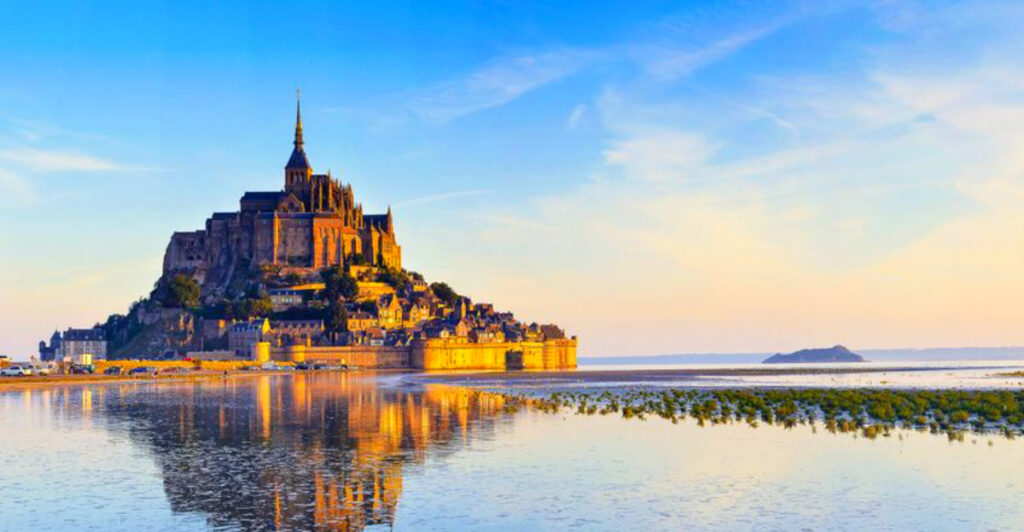
Rising from tidal flats in Normandy, Mont-Saint-Michel appears to float between sea and sky at high tide. This medieval marvel combines religious devotion, military engineering, and natural drama into one of Europe’s most photographed sites.
The abbey crowning the rocky island has attracted pilgrims since the eighth century, when the Archangel Michael supposedly appeared to a local bishop in a vision.
Reaching the abbey requires climbing through a medieval village that clings to the mount’s steep slopes. Narrow streets wind past centuries-old houses, now containing restaurants and shops, leading upward toward the abbey church perched at the summit.
The Gothic abbey church seems to grow directly from the granite beneath it, its spire reaching 500 feet above the sea. Romanesque crypts and halls in the lower levels reveal the complex’s evolution over a thousand years.
Tidal patterns create constantly changing scenery—the mount becomes a true island only during the highest tides, while at low tide visitors can walk across exposed sand flats. The causeway connecting it to the mainland was recently replaced with a bridge, allowing tides to flow more naturally.
Sunset and sunrise visits offer particularly magical experiences, with changing light transforming the mount’s appearance.
Travelers describe Mont-Saint-Michel as ethereal, a place where human achievement and natural forces create something that transcends either alone.
Vatican City — Italy (independent state)
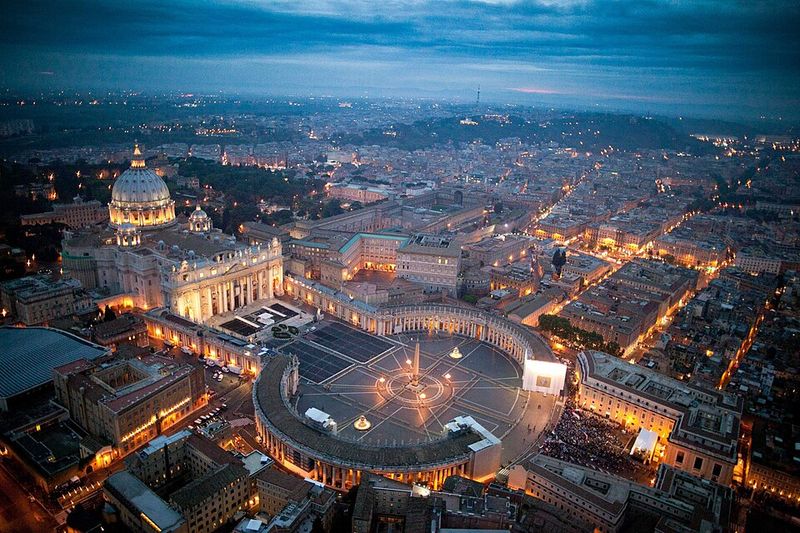
Though technically an independent city-state, Vatican City functions as the spiritual and administrative heart of Catholic Christianity while housing some of Western art’s greatest masterpieces. St. Peter’s Basilica, with Michelangelo’s soaring dome, represents Renaissance architecture at its most ambitious.
The building took 120 years to complete, with contributions from history’s greatest architects including Bramante, Raphael, and Bernini. Michelangelo’s Pietà, protected behind glass near the entrance, moves viewers with its depiction of Mary cradling Christ’s body.
The Sistine Chapel draws millions annually to see Michelangelo’s ceiling frescoes and Last Judgment. Painted while lying on scaffolding, the ceiling depicts biblical creation with such power and beauty that visitors often stand transfixed, necks craned upward.
The Vatican Museums contain eleven museums and galleries housing millennia of art, from ancient Egyptian artifacts to Renaissance paintings to contemporary religious art.
St. Peter’s Square, designed by Bernini with its sweeping colonnades, can hold hundreds of thousands during papal audiences. The square’s design creates an embracing gesture, symbolically welcoming believers into the Church’s protection.
Climbing the dome offers panoramic views across Rome, though the final narrow stairway tests claustrophobic visitors.
Travelers describe Vatican City as overwhelming in its artistic and spiritual significance. Even non-religious visitors recognize the extraordinary concentration of human creativity and faith expressed through architecture, sculpture, and painting.
Wieliczka and Bochnia Royal Salt Mines — Poland
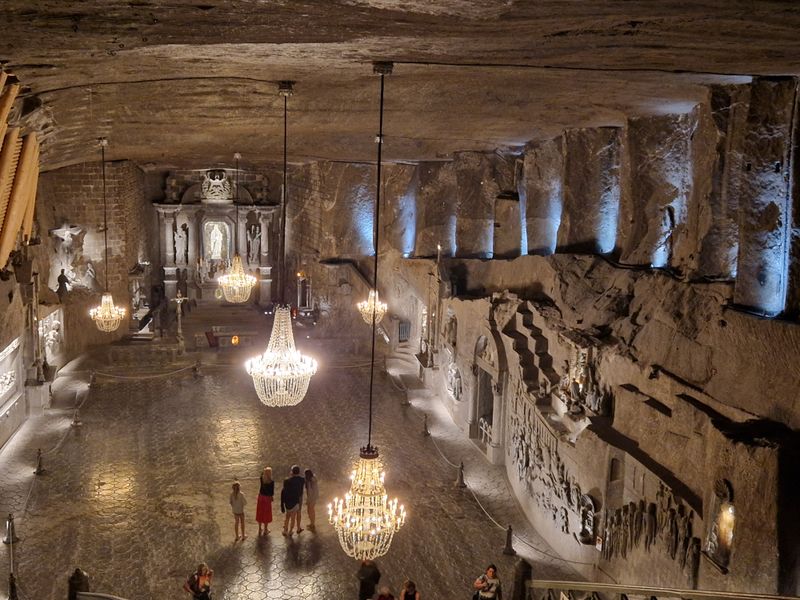
Descending into the Wieliczka Salt Mine near Kraków means entering a subterranean world created over seven centuries of continuous mining. This isn’t just an industrial site—it’s an underground cathedral of human creativity and endurance.
Miners carved chambers, chapels, and sculptures entirely from salt rock, transforming functional spaces into artistic expressions. The Chapel of St. Kinga, located 330 feet below ground, features chandeliers, altarpieces, and bas-reliefs all carved from salt, creating a glittering sacred space unlike anywhere else.
The mine’s history stretches back to medieval times when salt was so valuable it was called white gold. Royal ownership brought wealth to Polish monarchs and helped fund the nation’s cultural development.
Today’s tour routes cover only a tiny fraction of the mine’s 180 miles of tunnels spread across nine levels, reaching depths of over 1,000 feet. Underground lakes reflect cathedral ceilings, while chambers contain salt sculptures depicting historical scenes and legends.
Temperature remains constant year-round at about 57°F, and the salty air allegedly benefits respiratory health. Some chambers now host concerts, taking advantage of remarkable acoustics.
The adjacent Bochnia mine, though less famous, adds even more underground marvels to the UNESCO designation.
Visitors consistently describe the mines as unexpectedly beautiful and surprisingly vast. What began as industrial necessity became an artistic achievement that demonstrates human ingenuity in the most unlikely setting.
Rila Monastery — Bulgaria
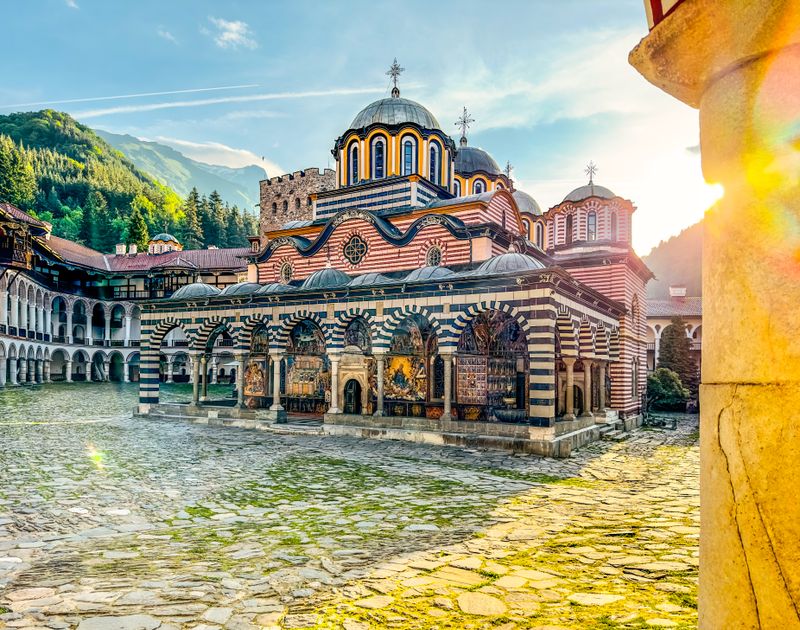
Nestled in a valley within Bulgaria’s Rila Mountains, this monastery complex serves as the country’s most important cultural and spiritual landmark. Founded in the tenth century by the hermit St. Ivan of Rila, the monastery became a fortress of Bulgarian Orthodox identity during centuries of Ottoman rule.
Its current appearance dates largely from a nineteenth-century reconstruction following a devastating fire, but the site has maintained continuous religious life for over a millennium.
The monastery’s exterior immediately captivates with its distinctive black-and-white striped arches and vibrant frescoes covering every available surface. Over 1,200 murals depict biblical scenes, saints, and allegorical images in colors that remain surprisingly vivid.
The Church of the Nativity sits at the complex’s heart, its interior dense with icons, frescoes, and gilded woodwork that create an atmosphere of intense spirituality. A museum houses the monastery’s historic library, containing rare manuscripts and early printed books that preserved Bulgarian language and culture during foreign occupation.
The mountain setting adds to the monastery’s serene atmosphere. Pine forests surround the valley, and nearby trails lead to alpine lakes and peaks.
Monks still live and worship here, maintaining traditions passed down through generations. Visitors can attend services, though photography inside the church is restricted out of respect for worship.
Travelers describe Rila Monastery as both visually stunning and spiritually powerful, a place where art, faith, and natural beauty converge in remarkable harmony.
Neuschwanstein Castle and Bavarian Palaces — Germany
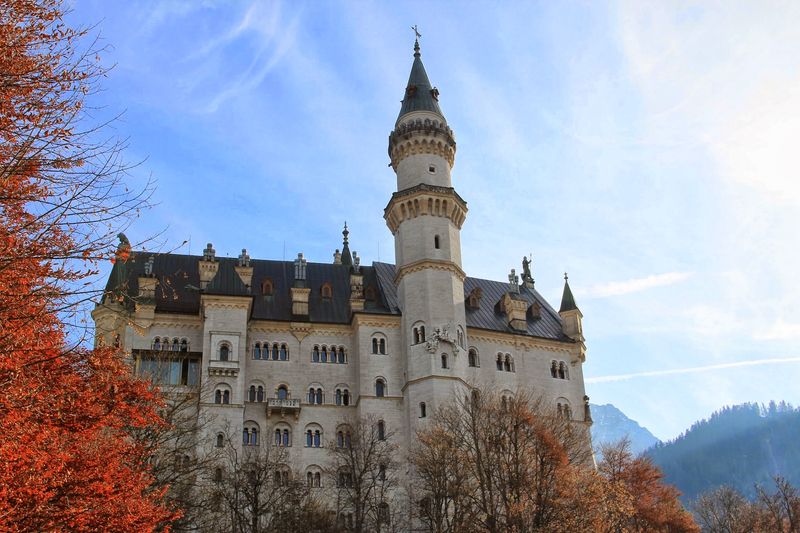
Perched on a rugged hill above the Bavarian village of Hohenschwangau, Neuschwanstein Castle looks like something from a storybook—because it essentially is. King Ludwig II of Bavaria commissioned this romantic palace in the 1860s as a retreat and homage to composer Richard Wagner.
Rather than serving military or governmental purposes, Neuschwanstein was built purely for aesthetic pleasure, embodying nineteenth-century romanticism’s idealization of medieval chivalry and legend.
The castle’s exterior features white limestone towers, turrets, and ornate balconies set against a backdrop of Alpine peaks and forests. Interior rooms continue the fantasy with murals depicting Wagner’s operas, elaborate woodcarvings, and a throne room that was never completed because Ludwig died mysteriously in 1886 before construction finished.
Ironically, Ludwig barely lived in his dream castle—he spent fewer than 200 days there before his death.
Neuschwanstein’s fairy-tale appearance inspired Walt Disney’s Sleeping Beauty Castle, cementing its place in global imagination. The nearby Linderhof and Herrenchiemsee palaces, also built by Ludwig, complete the UNESCO designation.
Linderhof’s intimate rococo interiors and Herrenchiemsee’s Versailles-inspired Hall of Mirrors showcase Ludwig’s obsession with royal grandeur and artistic beauty.
Visitors describe these palaces as breathtakingly beautiful yet tinged with melancholy—monuments to one man’s extravagant dreams and tragic end. The dramatic Alpine setting makes them among Europe’s most photographed heritage sites.
Share this story