America’s wild places are some of the most beautiful spots on Earth, and you don’t need a passport to visit them. From towering mountains and deep canyons to volcanic islands and endless coastlines, the United States offers natural wonders that can take your breath away.
Whether you’re planning your next family road trip or just daydreaming about adventure, these fifteen destinations showcase the incredible variety and beauty of the American landscape.
1. Alaska – Denali National Park & Preserve
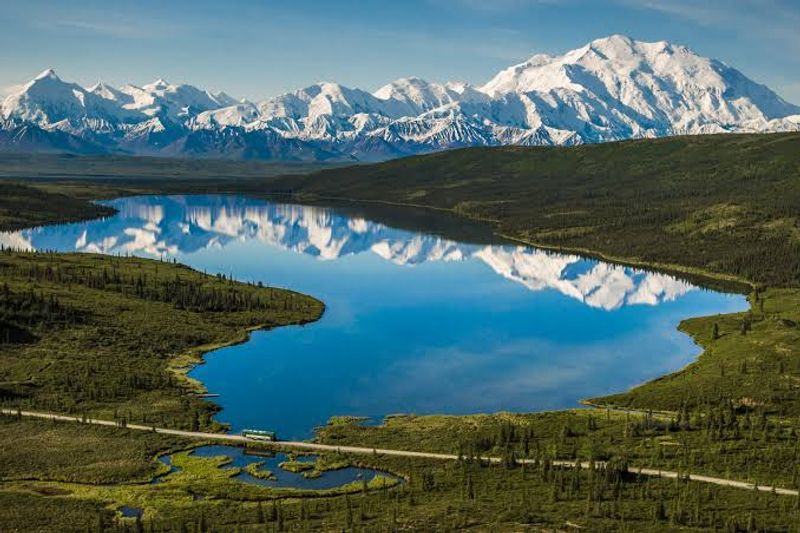
Stretching across six million acres of untamed wilderness, Denali National Park represents Alaska at its most raw and powerful. At the heart of this massive preserve stands Denali itself, soaring to 20,310 feet as North America’s tallest mountain.
The peak dominates the horizon on clear days, creating views that photographers and adventurers travel from around the world to witness.
Wildlife watching along the park road is legendary for good reason. Grizzly bears, caribou, Dall sheep, and wolves roam the tundra landscapes, often visible from shuttle buses that carry visitors deep into roadless territory.
The single park road winds 92 miles through valleys and mountain passes, offering access to scenery that changes with every mile.
Visiting during summer means nearly 24 hours of daylight, giving you plenty of time to explore. The tundra bursts with wildflowers in June and July, while autumn brings fiery reds and golds across the landscape.
Weather can shift quickly at this latitude, so layers are essential.
Plan ahead because permits and shuttle reservations fill up months in advance. Even if clouds hide the mountain during your visit, the sweeping tundra vistas and wildlife encounters make Denali unforgettable.
2. Arizona – Grand Canyon National Park
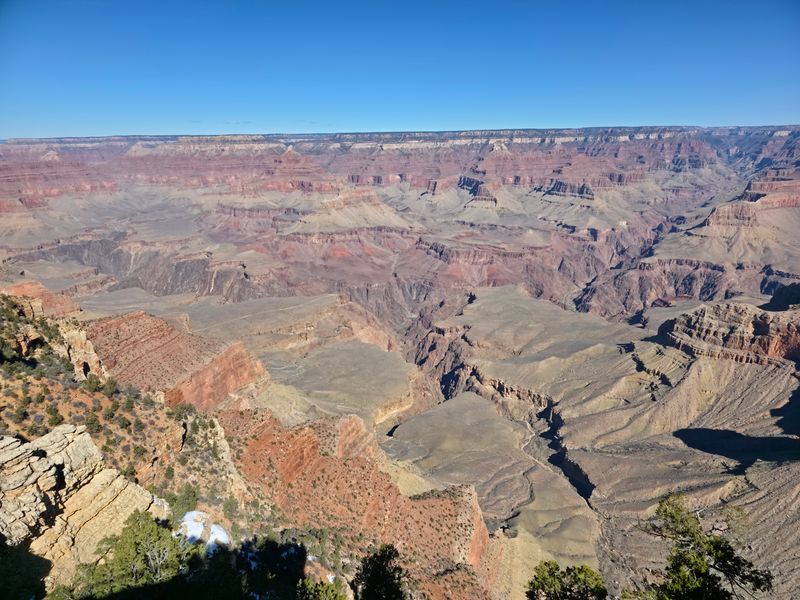
Standing at the rim of the Grand Canyon for the first time is an experience that words struggle to capture. This mile-deep chasm carved by the Colorado River stretches 277 miles long and up to 18 miles wide, revealing nearly two billion years of Earth’s geological history in its layered rock walls.
The sheer scale challenges your brain to process what your eyes are seeing.
Both the South Rim and North Rim offer spectacular viewpoints, though they provide very different experiences. The South Rim stays open year-round and offers easier access, while the North Rim sits 1,000 feet higher and provides a quieter, more remote atmosphere during its shorter season.
Sunrise and sunset transform the canyon into a constantly shifting canvas of colors. Reds, oranges, purples, and shadows play across the rock layers as light angles change throughout the day.
Even starlight reveals the canyon’s depth under dark desert skies.
The Rim Trail makes canyon views accessible to almost everyone, with paved sections and gentle grades. Short walks to viewpoints like Mather Point or Yavapai Point deliver incredible panoramas without requiring serious hiking.
Bring water, sunscreen, and a camera with plenty of memory.
3. California – Yosemite National Park
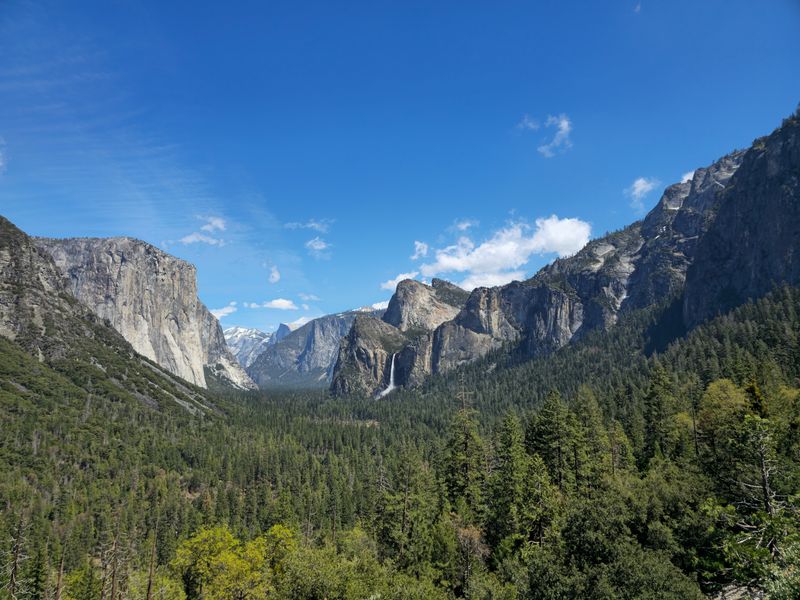
Yosemite Valley hits you with iconic scenery from the moment you arrive. Massive granite cliffs like El Capitan and Half Dome rise thousands of feet straight up from the valley floor, creating some of the most photographed landscapes in America.
Waterfalls tumble down sheer rock faces, and ancient giant sequoias tower overhead in groves scattered throughout the park.
Spring brings Yosemite’s waterfalls to peak flow as snowmelt cascades down the valley walls. Yosemite Falls, North America’s tallest waterfall, roars with power during May and June.
By late summer, some falls slow to trickles or disappear entirely, so timing matters if waterfalls top your must-see list.
Beyond the famous valley, Yosemite contains vast wilderness areas with alpine lakes, meadows, and high-country trails. The park covers 1,200 square miles, giving you endless options for exploration.
Glacier Point offers sweeping views of the valley, Half Dome, and the High Sierra from 7,200 feet elevation.
Crowds concentrate in Yosemite Valley during peak season, making early mornings or weekday visits more peaceful. Shuttle buses help reduce traffic congestion and connect major viewpoints and trailheads.
Whether you hike to Vernal Fall or simply stroll through meadows, Yosemite delivers scenery that exceeds expectations.
4. Florida – Everglades National Park
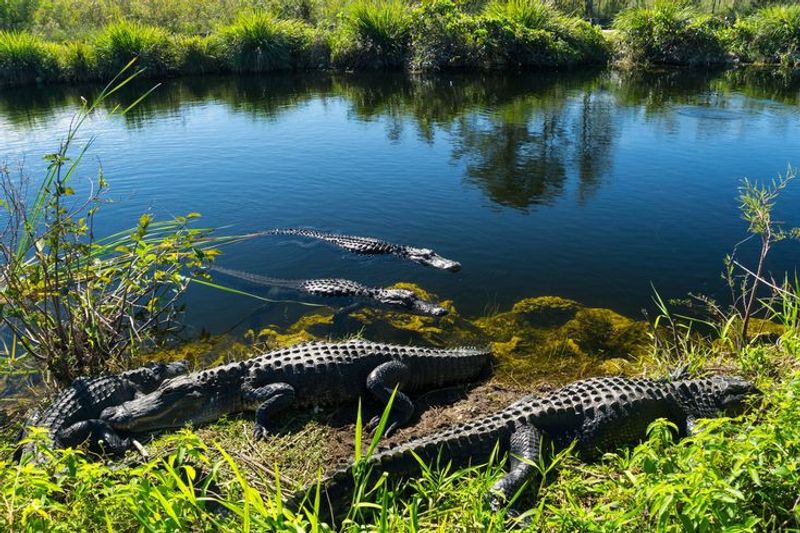
The Everglades isn’t like other national parks because it protects a living river of grass rather than mountains or canyons. This 1.5-million-acre subtropical wilderness flows slowly southward, creating a mosaic of sawgrass marshes, mangrove forests, and hardwood hammocks.
It’s the largest subtropical wilderness in the United States and home to species found nowhere else in the country.
Alligators sunbathe along roadside canals, wading birds stalk through shallow waters, and if you’re lucky, you might spot a manatee or Florida panther. Dawn and dusk offer the best wildlife viewing opportunities when animals are most active.
Bring binoculars because many creatures keep their distance from the boardwalks and trails.
Several scenic drives and elevated boardwalks make the Everglades accessible without getting your feet wet. The Anhinga Trail and Shark Valley loop are particularly good for spotting wildlife.
Ranger programs help explain this unique ecosystem and the ongoing efforts to restore and protect it.
Visit during Florida’s dry season from December through April for more comfortable temperatures and concentrated wildlife around water sources. Summer brings heat, humidity, and mosquitoes that can make outdoor time challenging.
This park rewards patient observation more than rushed sightseeing.
5. Hawaii – Hawaiʻi Volcanoes National Park
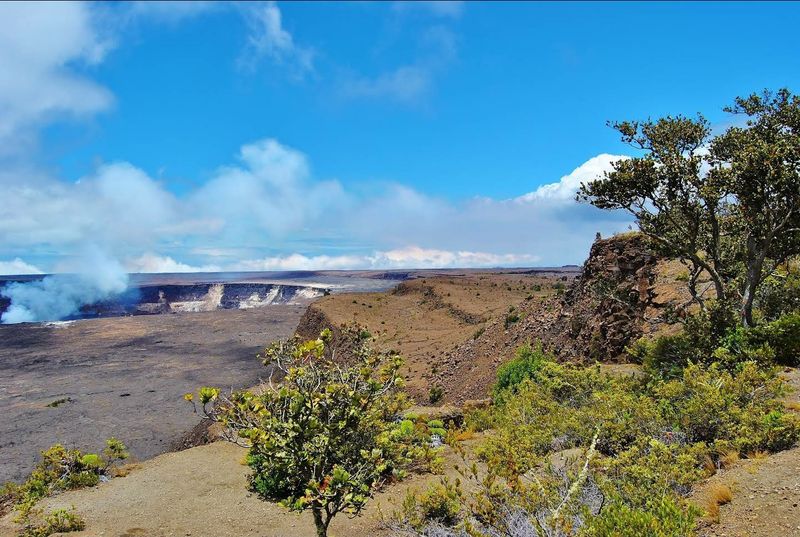
Few places on Earth let you witness the planet’s creative forces as directly as Hawaiʻi Volcanoes National Park. Two of the world’s most active volcanoes, Kīlauea and Mauna Loa, have shaped landscapes that range from steaming craters to hardened lava fields and lush rainforests.
The park stretches from sea level to over 13,000 feet, creating dramatic climate and vegetation changes within a single visit.
Volcanic activity here is ongoing but unpredictable, meaning conditions and access can change quickly. Steam vents hiss along crater rims, sulfur smells drift on the breeze, and hardened lava flows create otherworldly black landscapes.
Rangers provide current information about viewing areas and safety considerations.
Crater Rim Drive and Chain of Craters Road offer car-accessible views of volcanic features, while hiking trails lead to lava tubes, steam vents, and coastal areas where lava once met the ocean. The Thurston Lava Tube walk takes you through a tunnel created by flowing lava centuries ago.
Visiting at different times of day reveals different moods in the landscape. Early mornings often bring clearer skies at higher elevations, while twilight can make glowing vents more visible.
Respect all closures and warnings because volcanic landscapes present real hazards despite their beauty.
6. Maine – Acadia National Park
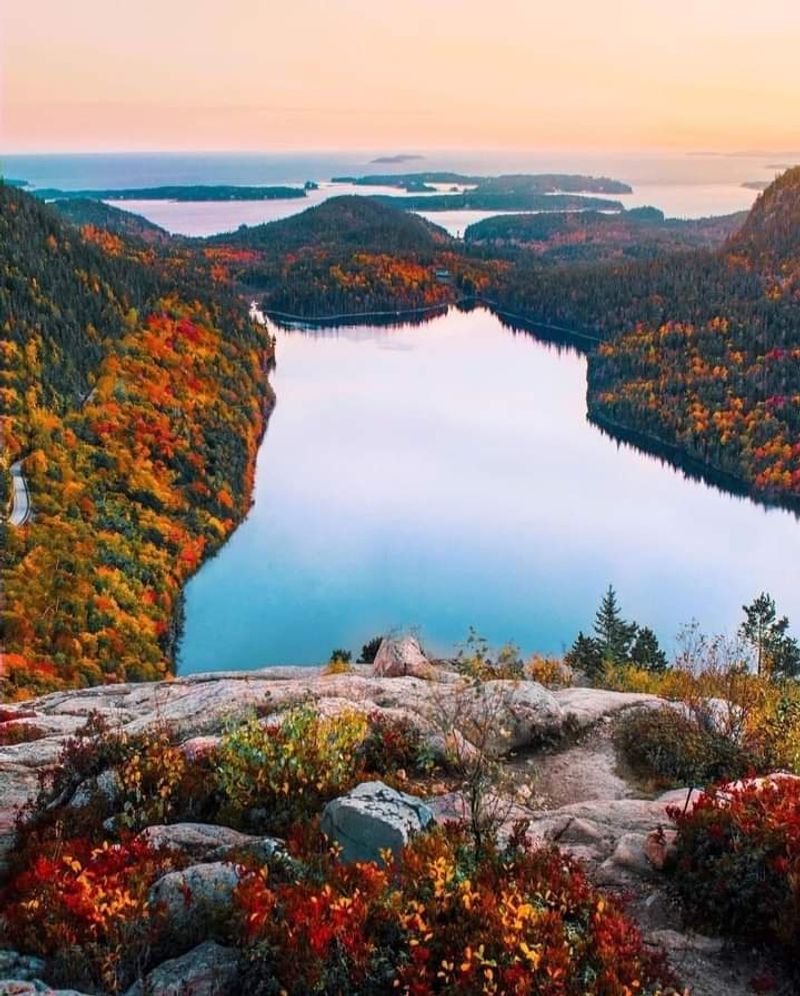
Where mountains meet the Atlantic Ocean, Acadia National Park protects some of the most dramatic coastal scenery on the eastern seaboard. Rocky headlands rise straight from the sea, waves crash against granite cliffs, and forested trails wind through landscapes shaped by ancient glaciers.
Despite being relatively compact at around 49,000 acres, Acadia packs incredible variety into every square mile.
Cadillac Mountain offers sunrise views that attract early risers from around the world. At 1,530 feet, it’s among the first places in the United States to see dawn’s light during much of the year.
The summit road makes the view accessible to everyone, though the hike up delivers a more rewarding experience.
The Park Loop Road connects major highlights including Thunder Hole, where waves compress into a narrow chasm and create booming sounds. Jordan Pond offers mirror-like reflections of the surrounding peaks on calm days.
Carriage roads built by John D. Rockefeller Jr. provide car-free routes for walking, biking, and horseback riding through the interior.
Fall foliage transforms Acadia into a riot of reds, oranges, and yellows against evergreen forests and blue ocean. Summer brings warm weather and larger crowds, while spring and late fall offer solitude with fewer services.
Layer your clothing because coastal weather changes quickly.
7. Montana – Glacier National Park
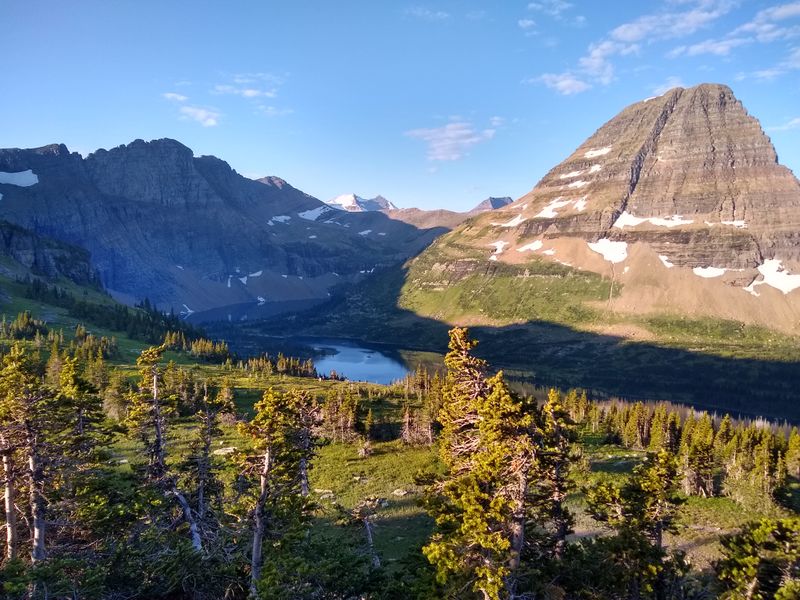
Glacier National Park earns its reputation as the Crown of the Continent with jagged peaks, turquoise lakes, and valleys carved by ancient ice. Over 700 miles of trails wind through landscapes that shift from alpine meadows to dense forests to stark mountain passes.
The park straddles the Continental Divide, where water flows either toward the Pacific Ocean or the Gulf of Mexico.
Going-to-the-Sun Road ranks among America’s most spectacular mountain drives. This engineering marvel climbs through different ecosystems, crosses the divide at Logan Pass, and offers pullouts with views that stop traffic.
The road typically opens fully only from late June through September due to heavy snow at higher elevations.
Alpine lakes like Lake McDonald and Many Glacier reflect surrounding peaks in colors ranging from deep blue to bright turquoise. Short hikes from roadside parking areas lead to waterfalls, overlooks, and lake shores.
Longer trails venture into backcountry where grizzly bears, mountain goats, and bighorn sheep roam.
July and August bring the warmest weather and fullest trail access, but also the biggest crowds. Wildflowers peak in different areas from June through August depending on elevation.
Check current conditions because seasonal access varies significantly, and some areas require timed entry reservations during peak season.
8. New York – Niagara Falls State Park
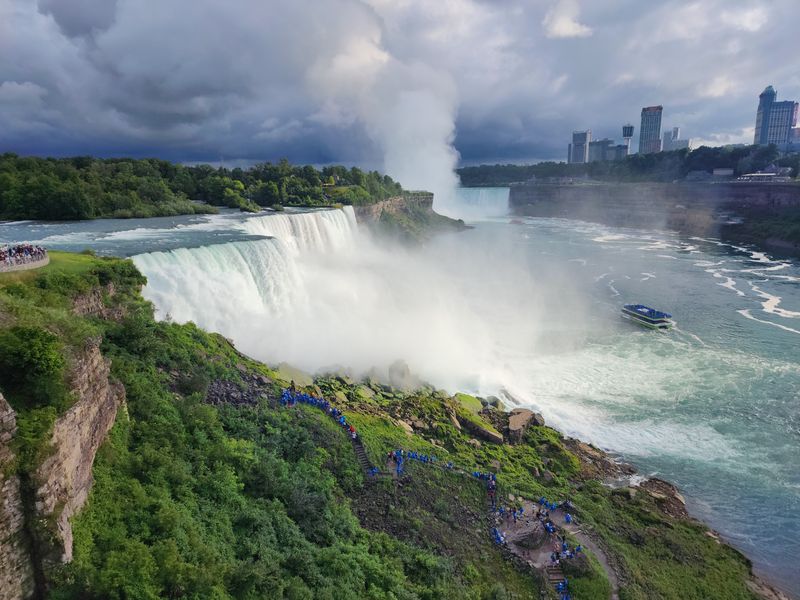
The thundering power of Niagara Falls has drawn visitors for centuries, and America’s oldest state park ensures you can experience this natural wonder up close. Three waterfalls together form Niagara Falls: the American Falls, Bridal Veil Falls, and the larger Horseshoe Falls on the Canadian side.
More than 750,000 gallons of water pour over the falls every second during peak flow.
Multiple viewpoints throughout the park offer different perspectives on the cascading water. Terrapin Point brings you right to the edge where water begins its 167-foot plunge.
The Maid of the Mist boat tour ventures into the mist zone below the falls, providing a soaking wet but unforgettable experience from May through October.
Evening illumination transforms the falls into a colorful spectacle, with lights playing across the water in changing patterns. Winter creates a completely different scene as ice formations build along the edges and mist freezes into fantastic shapes.
The park stays open 365 days a year, making it accessible in every season.
Riverside trails along the Niagara River Gorge offer quieter nature experiences away from the main falls area. The park is free to enter, though some attractions charge fees.
Arrive early or late to avoid peak crowds, especially during summer weekends and holidays.
9. North Carolina – Cape Hatteras National Seashore
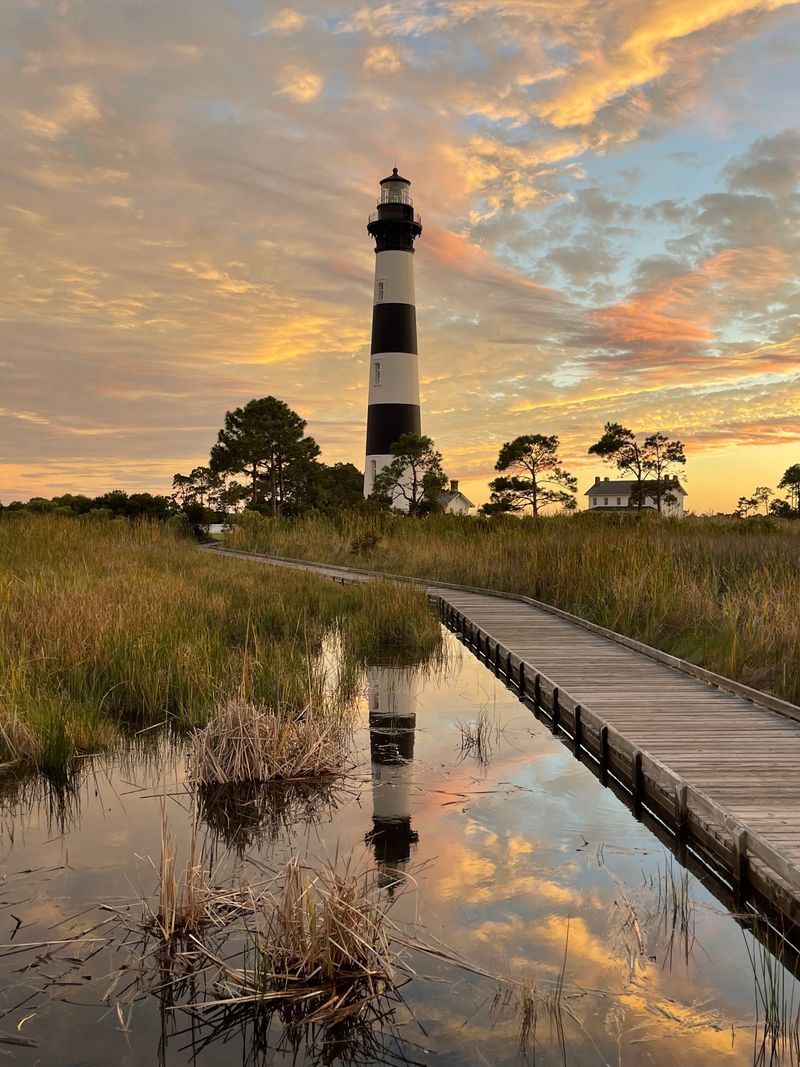
Barrier islands along North Carolina’s Outer Banks create a landscape in constant conversation with the Atlantic Ocean. Cape Hatteras National Seashore protects 70 miles of beaches, dunes, marshes, and maritime forests shaped by wind, waves, and occasional hurricanes.
The famous black-and-white striped lighthouse stands as a beacon along one of the most dangerous stretches of coastline in America.
Wide, uncrowded beaches stretch for miles in both directions, offering space for beachcombing, shell collecting, and watching shorebirds. The ocean here meets several major currents, creating rich fishing grounds and dramatic weather patterns.
Storm systems moving up the coast can produce spectacular wave action and cloud formations.
Sunrise over the Atlantic paints the sky in pastels before the sun breaks the horizon. Sunset happens over the sound side, creating different but equally beautiful color displays.
Dark skies away from towns reveal countless stars on clear nights, with the Milky Way visible during summer months.
The seashore stays accessible year-round, though facilities and services vary by season. Summer brings warm water and peak crowds, while spring and fall offer milder temperatures and better bird migration viewing.
Winter can be windy and cold but provides solitude and dramatic seascapes. Respect beach closures protecting nesting sea turtles and shorebirds.
10. Oregon – Silver Falls State Park
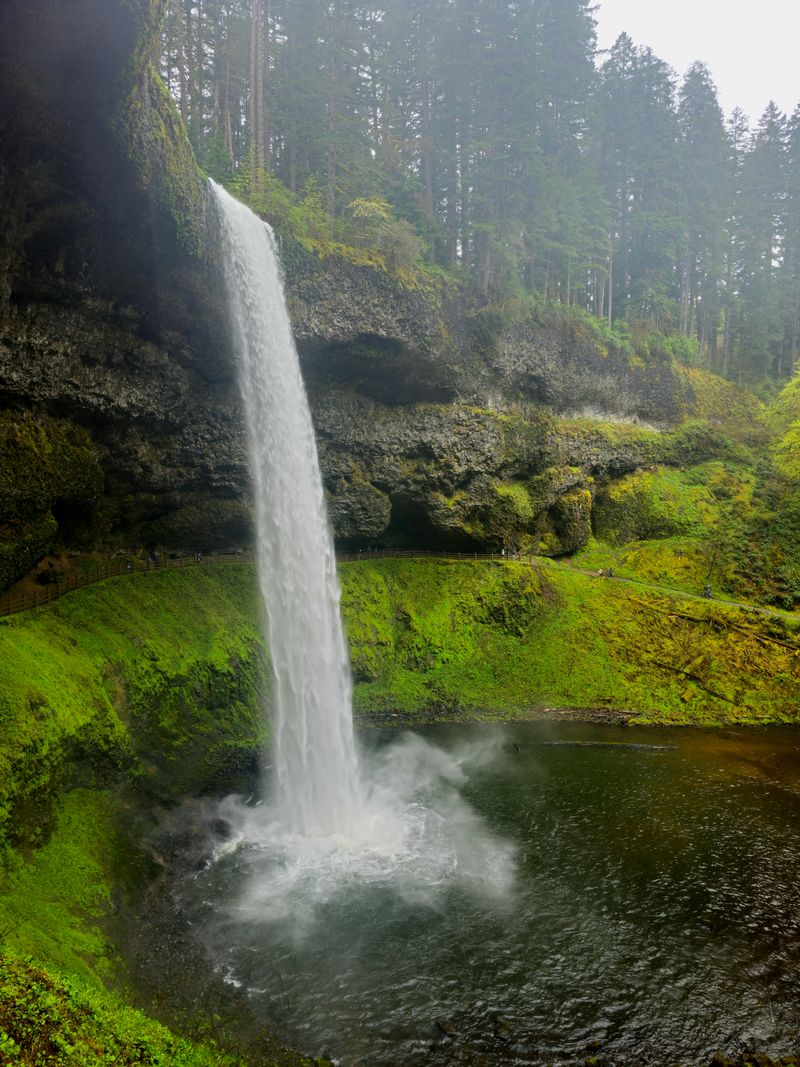
Oregon State Parks calls Silver Falls a crown jewel of the system, and one hike through this waterfall wonderland explains why. The Trail of Ten Falls loops 7.2 miles through temperate rainforest, passing ten waterfalls ranging from 27 to 177 feet tall.
Several of the trails actually go behind the falls, letting you walk through the spray zone and see water cascading from the inside out.
South Falls, the tallest in the park, plunges 177 feet into a deep pool surrounded by ferns and moss-covered rocks. The trail descends beside the falls and continues behind the curtain of water through a natural amphitheater carved into the basalt cliff.
The sound of rushing water echoes off the rock walls.
Winter and spring bring the highest water flow after Pacific storms dump rain across western Oregon. The falls roar with power during these months, creating impressive displays and plenty of mist.
Summer flow decreases but still provides beautiful scenery with easier hiking conditions.
The full loop takes most hikers three to five hours at a moderate pace with stops for photos and waterfall viewing. Shorter options let you see highlights like South Falls without committing to the entire trail.
The park offers camping, picnic areas, and a historic lodge built in the 1940s.
11. South Dakota – Badlands National Park
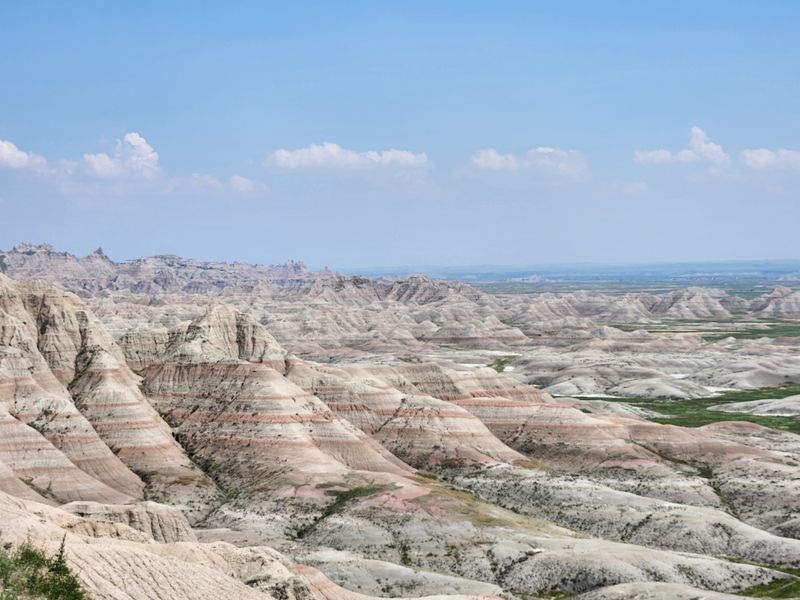
Badlands National Park looks like another planet dropped into the Great Plains. Sharply eroded buttes, pinnacles, and spires rise in layers of tan, pink, and red stone, creating a maze of ridges and canyons that seem to shift with changing light.
The landscape earned its name from early travelers who found the terrain difficult to cross, but modern visitors discover surreal beauty in the harsh geology.
This area contains one of the world’s richest fossil beds, preserving ancient mammals that roamed here 25 to 35 million years ago. The rock layers tell stories of tropical forests, shallow seas, and volcanic ash falls that created the colorful bands visible today.
Scientists continue making discoveries in these formations.
The Badlands Loop Road provides easy access to overlooks where you can pull off and absorb the otherworldly scenery. Short trails lead from parking areas to viewpoints and into the formations themselves.
Golden hour transforms the landscape as low-angle sunlight intensifies colors and creates dramatic shadows across the ridges.
Wildlife including bison, bighorn sheep, and prairie dogs inhabit the mixed-grass prairie surrounding the formations. Summer brings heat that can exceed 100 degrees, while winter temperatures plunge well below freezing.
Spring and fall offer moderate weather perfect for hiking and photography without extreme temperatures.
12. Texas – Guadalupe Mountains National Park
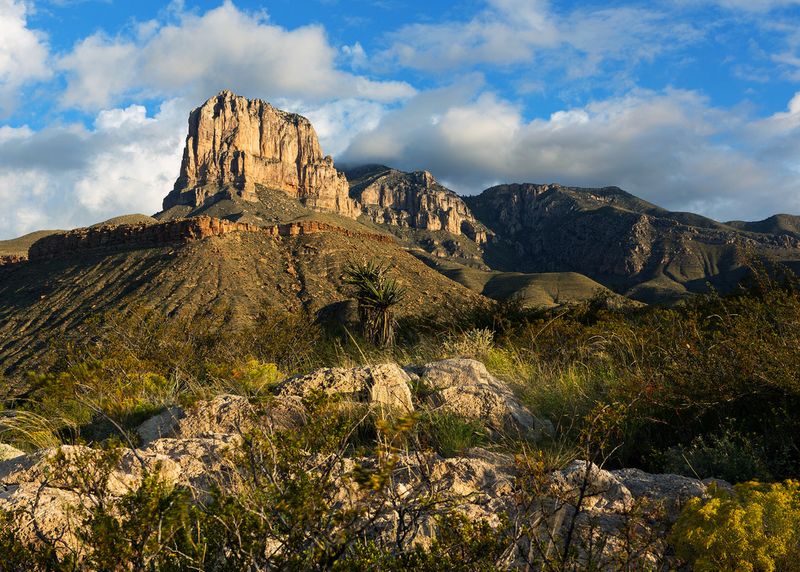
Rising from the Chihuahuan Desert, the Guadalupe Mountains contain the four highest peaks in Texas and some of the most rugged terrain in the state. The park protects an ancient fossil reef from the Permian period, when this area lay beneath a tropical ocean.
Today those fossilized remains form dramatic cliffs and canyons in one of the least-visited national parks in the lower 48 states.
Guadalupe Peak, at 8,749 feet, offers summit views across seemingly endless desert landscapes. The trail climbs steeply but rewards determined hikers with panoramas stretching into New Mexico.
McKittrick Canyon provides a completely different experience with a spring-fed creek, relict ice-age plants, and spectacular fall color from bigtooth maples.
Desert environments here support surprising biodiversity, from cacti and agave to black bears and mountain lions. Over 300 bird species have been recorded in the park.
Night skies remain exceptionally dark, making stargazing a highlight for many visitors.
Spring and fall offer the most comfortable hiking temperatures, while summer heat can be dangerous at lower elevations. Winter brings snow to higher peaks and cold winds across exposed areas.
The park has no food, lodging, or gas stations, so come prepared with everything you need. Shoulder seasons provide solitude and moderate weather perfect for exploring this hidden gem.
13. Utah – Zion National Park
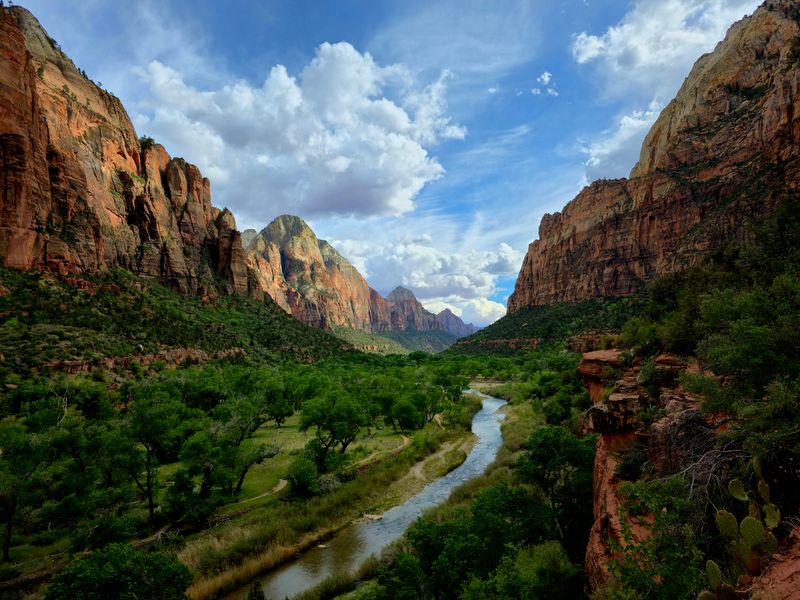
Massive sandstone cliffs in shades of cream, pink, and red tower above Zion Canyon, creating one of the most photographed landscapes in the American Southwest. The Virgin River carved this narrow gorge through Navajo sandstone over millions of years, leaving walls that rise 2,000 feet straight up from the canyon floor.
Slot canyons, hanging gardens, and unique rock formations add to scenery that seems almost too dramatic to be real.
Angels Landing trail climbs to a knife-edge ridge with dizzying drop-offs on both sides, while The Narrows hike wades up the Virgin River through a canyon so narrow you can touch both walls. These iconic adventures require permits during peak season due to their popularity.
Easier trails like the Riverside Walk and Emerald Pools offer stunning scenery without the extreme exposure or difficulty.
Zion remains open 24/7 year-round, though access rules change with seasons. Spring brings waterfalls and wildflowers, summer packs in crowds and heat, fall delivers comfortable temperatures and changing cottonwoods, and winter offers solitude with occasional snow dusting the red rocks.
A free shuttle system operates during busy months, reducing traffic in the canyon and connecting trailheads. Early morning and late afternoon light create the best conditions for photography as sun angles emphasize the textures and colors of the sandstone cliffs.
14. Washington – Olympic National Park
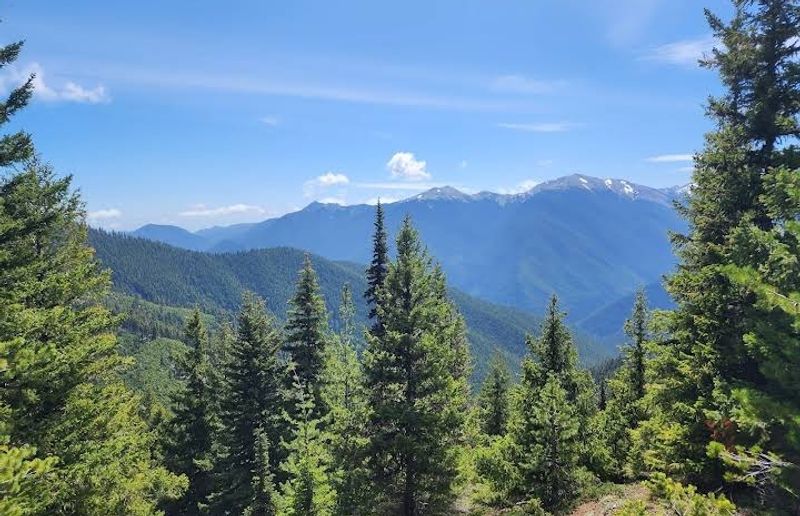
Olympic National Park contains three distinctly different ecosystems within its boundaries: glacier-capped mountains, temperate rainforests, and wild Pacific coastline. Few parks offer such dramatic variety in a single visit.
You can hike through ancient forests draped in moss in the morning, then watch waves crash against sea stacks before sunset, all without leaving park boundaries.
The Hoh Rain Forest receives over 140 inches of rain annually, creating a green wonderland of towering Sitka spruce, western hemlock, and bigleaf maple trees covered in club moss and ferns. Trails wind through this primordial landscape where everything seems supersized.
The quiet is almost overwhelming compared to the roar of the nearby coast.
Olympic’s coastline features tide pools, driftwood-strewn beaches, and offshore rock formations that create dramatic seascapes. Ruby Beach and Rialto Beach offer easy access to wild Pacific scenery.
The mountainous interior contains alpine lakes, wildflower meadows, and glaciers clinging to peaks that can see heavy snow even in summer.
Planning a visit that includes both coast and rainforest requires significant driving on winding roads, but the payoff is experiencing radically different landscapes in one day. Summer brings the driest weather and fullest access, though coastal fog can linger.
Fall and spring offer fewer crowds with more rain.
15. Wyoming – Yellowstone National Park
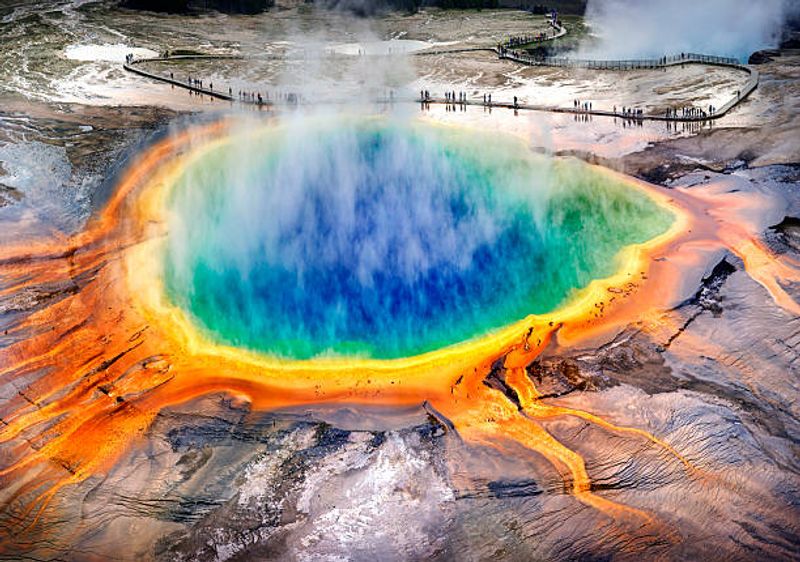
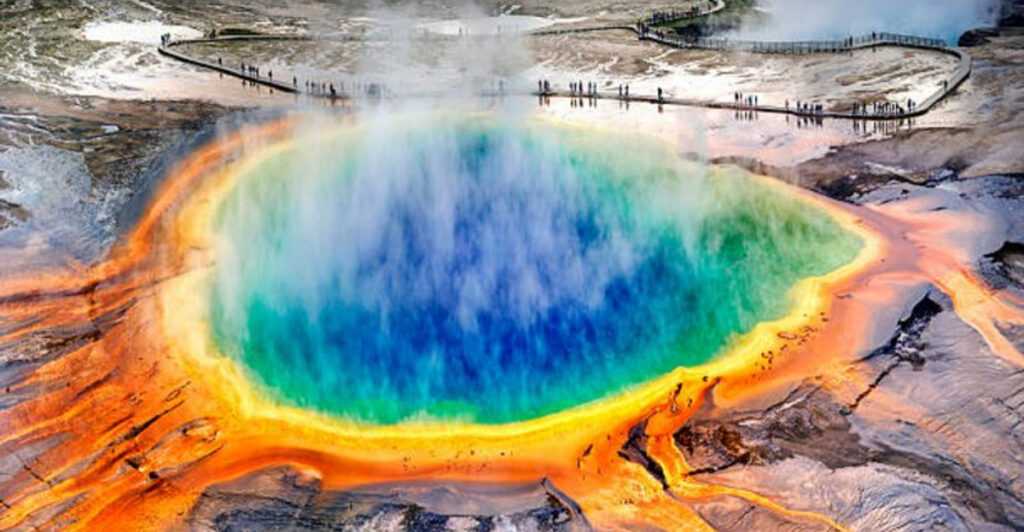
Yellowstone holds a special place in conservation history as the world’s first national park, established in 1872. Beyond that historic significance, it protects an active volcanic system that powers roughly half of the world’s geysers, including the famous Old Faithful.
Steam rises from colorful hot springs, mud pots bubble and plop, and geysers erupt on schedules ranging from minutes to years, creating a landscape unlike anywhere else on Earth.
Wildlife viewing rivals the geothermal features as a park highlight. Bison herds graze in valleys, elk bugle during fall rut, and wolves hunt in Lamar Valley.
Grizzly bears and black bears roam throughout the park. Maintaining safe distances from all wildlife is crucial because these are wild animals in their natural habitat, not attractions in a zoo.
The Grand Canyon of the Yellowstone showcases the park’s volcanic past with yellow-stained rock walls and powerful waterfalls. Yellowstone Lake spreads across 136 square miles at 7,733 feet elevation, making it North America’s largest high-elevation lake.
The park road system creates a figure-eight loop connecting major attractions.
Summer brings peak crowds and full facility operation, while winter transforms Yellowstone into a snowy wonderland accessible mainly by snowcoach or snowmobile. Spring and fall offer wildlife viewing opportunities with fewer visitors but variable weather and limited services.
Plan ahead because lodging and campsites book months in advance.
Share this story