Uzbekistan, a jewel of Central Asia, has just opened its doors wider to American travelers. Starting in 2026, U.S. passport holders can explore this ancient Silk Road wonderland without the hassle of visa paperwork.
From breathtaking blue-tiled mosques to bustling bazaars and high-speed trains connecting legendary cities, Uzbekistan offers adventures that feel both timeless and surprisingly accessible.
1. Visa-free entry (and a smoother “yes” to the trip)

Planning an international trip usually means dealing with visa applications, forms, and waiting periods that can drain your excitement before you even pack. Starting January 1, 2026, Americans can leave all that behind when visiting Uzbekistan.
The country now welcomes U.S. passport holders for up to 30 days without requiring any visa at all.
This change transforms Uzbekistan from a destination requiring advance planning into one you could visit on shorter notice. No embassy visits, no application fees, no anxious checking of your mailbox.
You simply book your flight, pack your bags, and go.
For travelers who love spontaneous adventures or have limited vacation time, this matters enormously. The biggest barrier to visiting Central Asia has traditionally been bureaucratic hurdles, not distance or cost.
Removing that friction point makes Uzbekistan competitive with other visa-free destinations Americans regularly choose.
Whether you are planning months ahead or deciding last minute to use those accumulated vacation days, the visa-free policy gives you flexibility. It signals that Uzbekistan genuinely wants American visitors and is willing to make the welcome mat as wide as possible.
That kind of hospitality starts before you even board the plane.
2. Silk Road cities that are UNESCO-level iconic
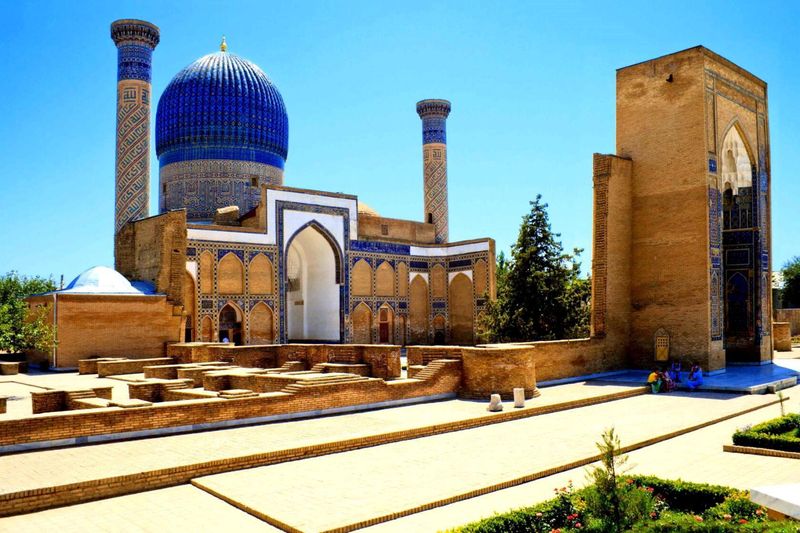
Uzbekistan hosts some of the most famous stops along the ancient Silk Road, and several of these historic centers have earned UNESCO World Heritage status for their exceptional cultural value.
Samarkand, Bukhara, and Khiva form the classic triangle that most travelers follow. Each city offers distinct architecture, history, and atmosphere, yet all share that unmistakable Silk Road character.
These are not reconstructed theme parks but living cities where people still worship in centuries-old mosques and walk streets that Marco Polo might recognize.
The UNESCO designation is not just a label. It reflects genuine efforts to preserve these places for future generations while allowing visitors to experience them today.
You will see intricate tilework, towering minarets, and courtyards that have witnessed empires rise and fall.
Visiting these cities feels like stepping into a history book, except everything is three-dimensional and real. The colors are more vivid than any photograph suggests, and the scale is often larger than you expect.
These are not hidden gems but headline attractions, and they deliver on every bit of hype.
3. Samarkand’s “wow factor” is not subtle
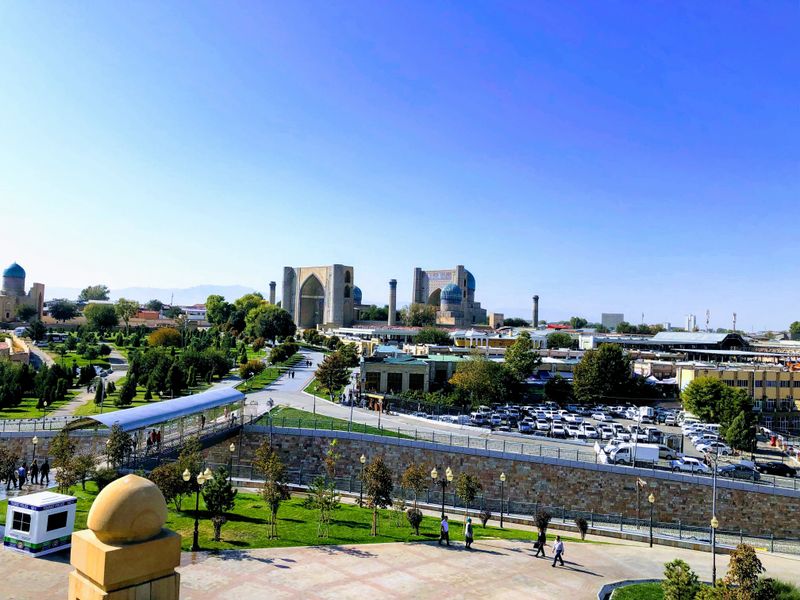
Some destinations sneak up on you with quiet charm. Samarkand is not one of them.
This city announces itself with monumental architecture that dominates your field of vision and refuses to be ignored. The Timurid-era buildings here are massive, ornate, and designed to impress, which they still do more than 600 years later.
Registan Square is the centerpiece, surrounded by three madrasas whose facades shimmer with turquoise and gold mosaics. Standing in the middle of the square, you might feel like you have wandered onto a movie set.
Except this is real, and you can walk right up to touch the ancient tiles.
Samarkand was a major crossroads during the Silk Road’s golden age, a place where cultures, religions, and ideas mixed freely. That cosmopolitan energy is still palpable today, even as the city balances its historic identity with modern life.
Markets, mosques, and mausoleums fill the old quarters, each with stories stretching back centuries.
Many travelers choose Samarkand as their first or only stop in Uzbekistan, and it is easy to see why. The visual impact is immediate and unforgettable.
If you are looking for a city that delivers dramatic, Instagram-ready moments alongside deep historical significance, Samarkand checks every box.
4. Bukhara: the medieval city that still feels inhabited
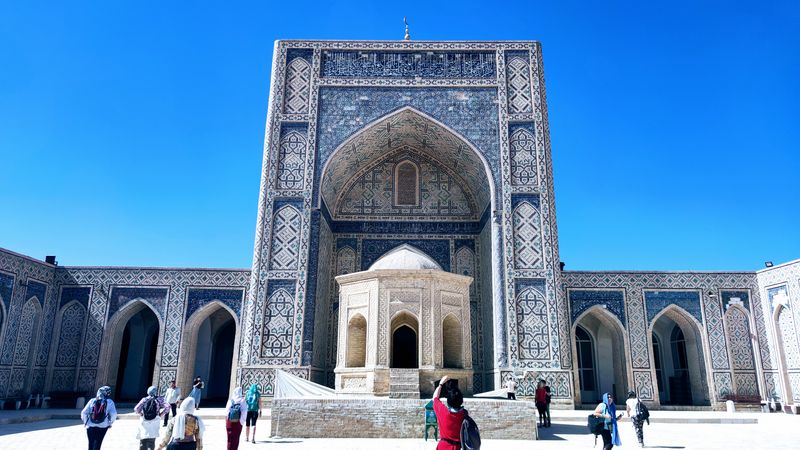
Walking through Bukhara feels different from visiting most historic sites. Instead of roped-off ruins or empty monuments, you encounter a living medieval city where families still live in traditional houses and shopkeepers sell goods from centuries-old market stalls.
The old center is a dense maze of narrow lanes, hidden courtyards, and towering minarets that seem to appear around every corner.
UNESCO recognizes Bukhara as one of the most complete examples of a medieval Central Asian city. That means the layout, the buildings, and even the social fabric remain remarkably intact.
You can trace the same routes that merchants walked hundreds of years ago, stopping at the same wells and resting in the same caravanserais.
The architecture here is less about grand spectacle and more about intricate detail. Carved wooden doors, delicate tile mosaics, and peaceful courtyards invite you to slow down and look closely.
Bukhara rewards wanderers who get lost on purpose and stumble into unexpected discoveries.
Unlike some destinations where history feels frozen in time, Bukhara blends the old and the new seamlessly. You might see a woman in traditional dress buying vegetables next to a teenager checking his smartphone.
That blend makes the city feel authentic rather than staged, a place where the past is not just remembered but actively lived.
5. Khiva’s walled inner city: step into a living museum
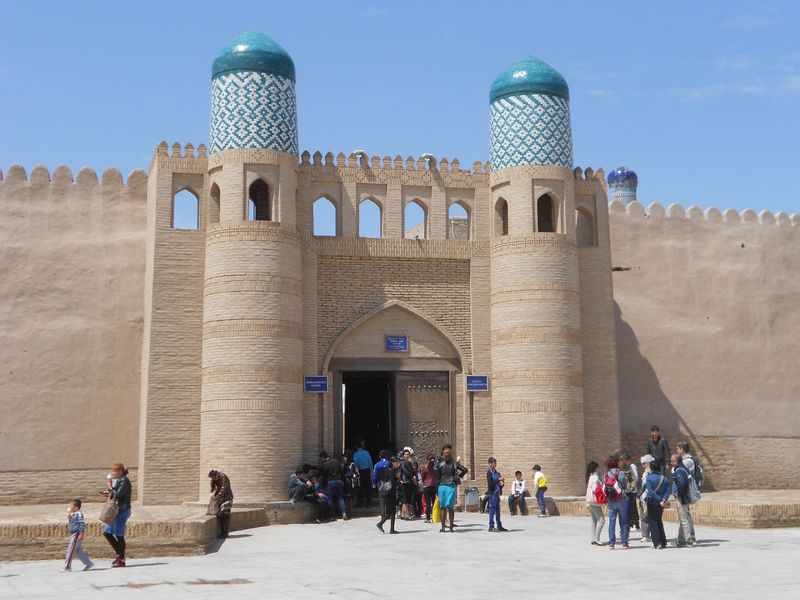
Khiva offers something rare: a completely walled inner city that you can explore on foot in a single day. Itchan Kala, the historic core, is surrounded by towering brick walls that once protected the city from desert raiders.
Today, those walls create a boundary between the modern outer town and a preserved medieval world inside.
Passing through the gates feels like crossing a threshold in time. Inside, narrow streets wind between madrasas, mosques, and minarets, all built from the same sun-baked clay that gives Khiva its distinctive warm color.
The scale is human and walkable, making it easy to navigate without a map or guide.
Climbing one of the minarets or city walls gives you sweeping views over the rooftops and out toward the desert beyond. That perspective helps you understand Khiva’s historical role as a caravan stop on the edge of the Kyzylkum Desert, a last outpost before long, dangerous crossings.
Unlike larger cities where historic sites are scattered, Khiva concentrates everything within its walls. You can visit a dozen significant buildings in a few hours, yet the atmosphere never feels rushed or crowded.
Many visitors describe Itchan Kala as their favorite stop in Uzbekistan because it feels both complete and intimate, a place where history is contained and accessible.
6. Shakhrisabz: Timurid legacy beyond the “big three”
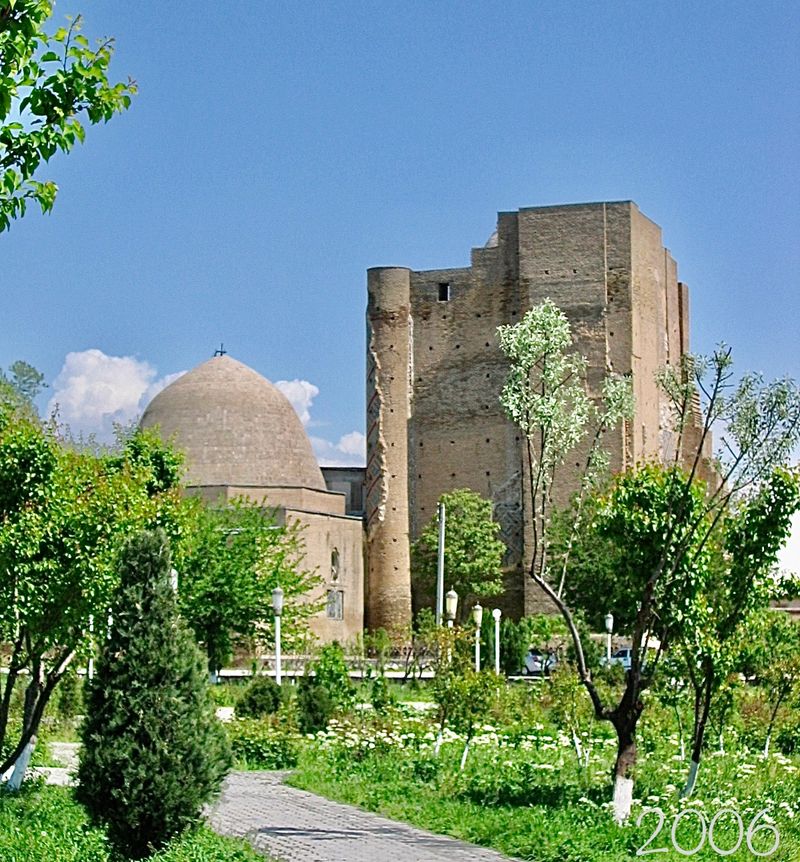
Most travelers stick to Samarkand, Bukhara, and Khiva, which means Shakhrisabz remains relatively quiet despite its impressive credentials. This UNESCO-listed city was the birthplace of Timur (also known as Tamerlane), the 14th-century conqueror who built an empire stretching from Turkey to India.
The ruins of his summer palace still dominate the town center, offering a glimpse of the grandeur he once commanded.
Shakhrisabz sits in a green valley south of Samarkand, making it an easy day trip or overnight stop. The journey itself is scenic, crossing mountain passes and agricultural land that contrasts sharply with the desert landscapes elsewhere.
Arriving in Shakhrisabz feels like discovering a secret that guidebooks mention but few visitors actually see.
The main attraction is the Ak-Saray Palace ruins, where massive stone pillars hint at a structure that must have been breathtaking in its complete form. Nearby, you will find mausoleums, mosques, and smaller monuments that round out the historic picture.
The town itself is small and walkable, with local markets and quiet streets that feel refreshingly unhurried.
Visiting Shakhrisabz gives you major historical significance without the crowds that sometimes overwhelm the bigger cities. If you enjoy feeling like you have a place mostly to yourself, this is where that happens while still seeing world-class heritage sites.
7. Tashkent is a surprise: modern capital, layered identity
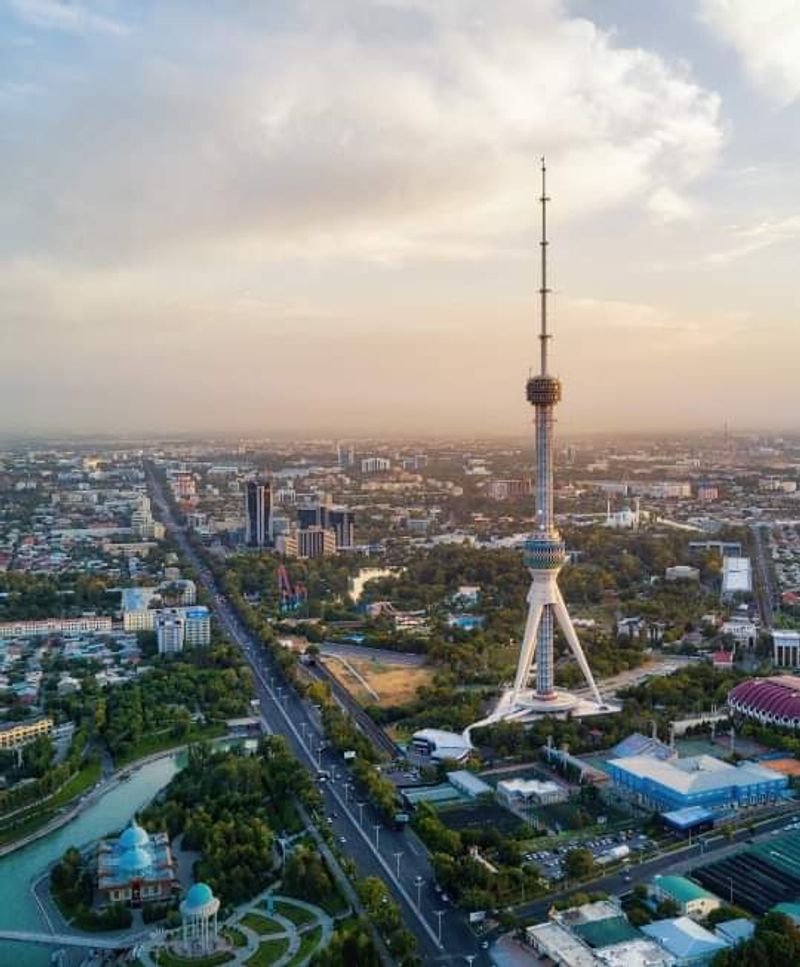
Many travelers view Tashkent as merely an arrival point, a place to pass through on the way to the historic cities. That is a mistake.
Uzbekistan’s capital is a fascinating city in its own right, offering a completely different perspective on the country than what you will find in Samarkand or Bukhara.
Tashkent is modern, green, and spacious, with wide boulevards, parks, and contemporary architecture mixed among Soviet-era monuments. A major earthquake in 1966 destroyed much of the old city, leading to a massive rebuilding effort that shaped the capital you see today.
That history gives Tashkent a unique character, neither purely traditional nor entirely modern but something in between.
The city has layers worth exploring. Grand public squares showcase monumental architecture and fountains.
Residential neighborhoods reveal daily life away from tourist circuits. Museums, theaters, and cultural institutions offer context that helps you understand Uzbekistan beyond its Silk Road past.
Street life here is vibrant, especially in the evenings when locals fill cafes, parks, and promenades. You will find international restaurants alongside traditional teahouses, shopping malls next to historic markets.
Tashkent is where you see Uzbekistan looking forward while still honoring its roots, and many visitors find themselves unexpectedly charmed by a city they initially planned to skip.
8. The Tashkent Metro is basically an underground art gallery
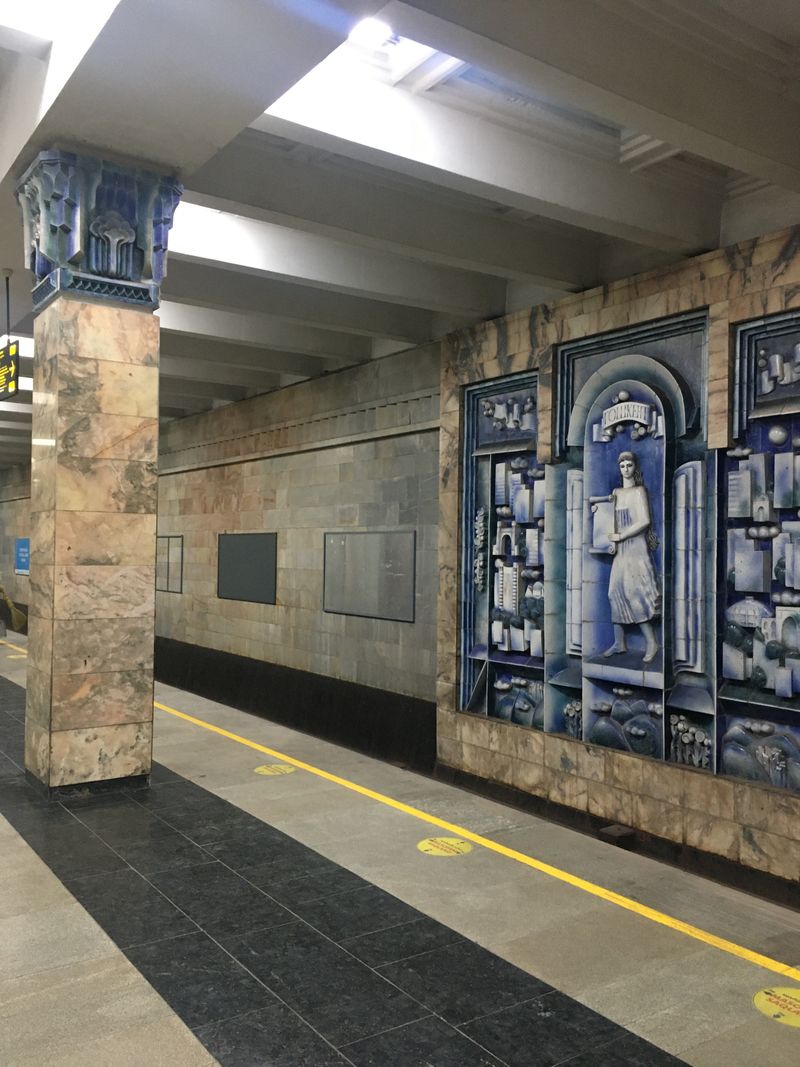
Built during the Soviet era and opened in 1977, the Tashkent Metro is famous not for its efficiency (though it works well) but for its stunning station designs. Each stop features unique decorative themes, from elaborate chandeliers and marble columns to colorful mosaics and carved ceilings.
Riding the metro becomes an artistic experience rather than just transportation.
Different stations celebrate different themes. Some honor Uzbek cultural heroes with portraits and traditional motifs.
Others showcase Soviet-era achievements with murals depicting space exploration or industrial progress. The variety means you could spend hours station-hopping just to see the different designs.
Photography was historically restricted on the Tashkent Metro due to security concerns, though rules have relaxed somewhat in recent years. Still, it is worth checking current regulations before pulling out your camera.
Even without photos, the visual experience is memorable.
For budget-conscious travelers, the metro offers practical value too. It is inexpensive, safe, and connects major parts of the city efficiently.
You can reach museums, markets, and neighborhoods quickly while enjoying an unexpected dose of underground art. Many visitors rank the metro among their favorite Tashkent experiences, proof that sometimes the journey really is as interesting as the destination.
A single ride costs just a few cents and delivers far more than simple transportation.
9. The Afrosiyob high-speed train makes the classic route easy

One of the best infrastructure investments Uzbekistan has made for travelers is the Afrosiyob high-speed train service. This modern train connects the country’s major cities, including the crucial Tashkent to Samarkand to Bukhara route that forms the backbone of most itineraries.
Instead of spending hours on bumpy roads or dealing with complicated bus schedules, you can glide between cities in comfort.
The train itself is clean, air-conditioned, and equipped with comfortable seating. Travel times are reasonable: Tashkent to Samarkand takes about two hours, and continuing to Bukhara adds another two and a half hours.
That means you can have breakfast in the capital and lunch in a Silk Road city without breaking a sweat.
Booking tickets is straightforward, either online or at train stations. Prices are affordable by international standards, making this an accessible option for budget and mid-range travelers alike.
The service runs daily, giving you flexibility in planning your route.
Beyond convenience, the train journey offers scenic views of Uzbekistan’s countryside: farmland, mountains, and desert landscapes that you would miss if you flew between cities. The Afrosiyob service represents Uzbekistan’s commitment to making travel within the country as smooth as possible, removing one more barrier between you and those legendary Silk Road destinations.
10. Chorsu Bazaar energy: the real heartbeat of the capital
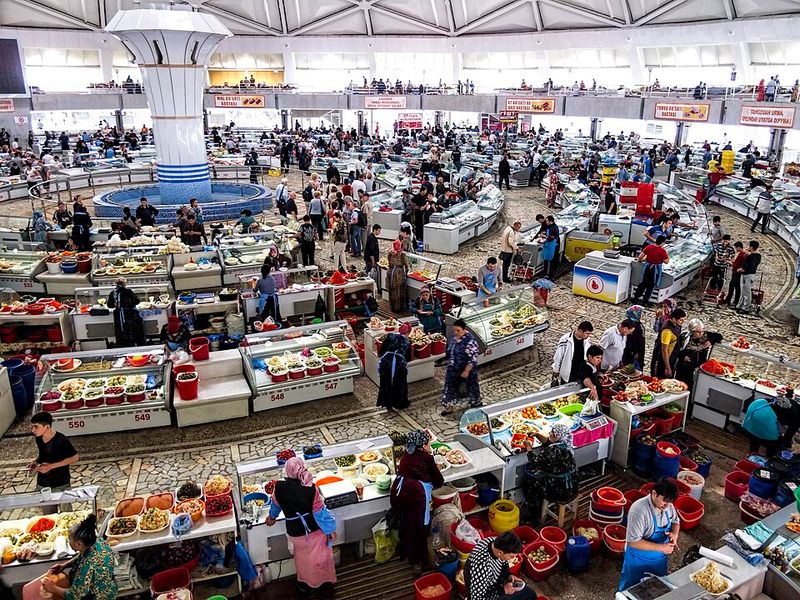
Want to understand how a city really works? Visit its main market.
In Tashkent, that means Chorsu Bazaar, a sprawling marketplace housed under a distinctive turquoise dome that has become one of the city’s landmarks. This is where locals come to buy everything from fresh produce to spices, fabrics, and household goods.
The energy at Chorsu is electric. Vendors call out prices, shoppers negotiate deals, and the air fills with the scents of fresh herbs, dried fruits, and baking bread.
Mountains of colorful spices form perfect pyramids. Fruit stands overflow with melons, pomegranates, and grapes depending on the season.
Navigating the bazaar can feel overwhelming at first, with its maze of stalls and constant activity. But that chaos is part of the charm.
You will see families shopping together, elderly women selecting ingredients for traditional dishes, and merchants who have occupied the same stall for decades. This is daily Uzbekistan in motion, unfiltered and authentic.
Even if you do not plan to buy much, Chorsu is worth visiting for the atmosphere alone. Bring small bills for easier transactions, and do not be afraid to try bargaining politely.
Many vendors are happy to chat with foreign visitors, especially if you show genuine interest in their products. The bazaar closes earlier than you might expect, so plan to visit in the morning or early afternoon for the best selection.
11. Rishtan ceramics: where “souvenir” turns into craftsmanship
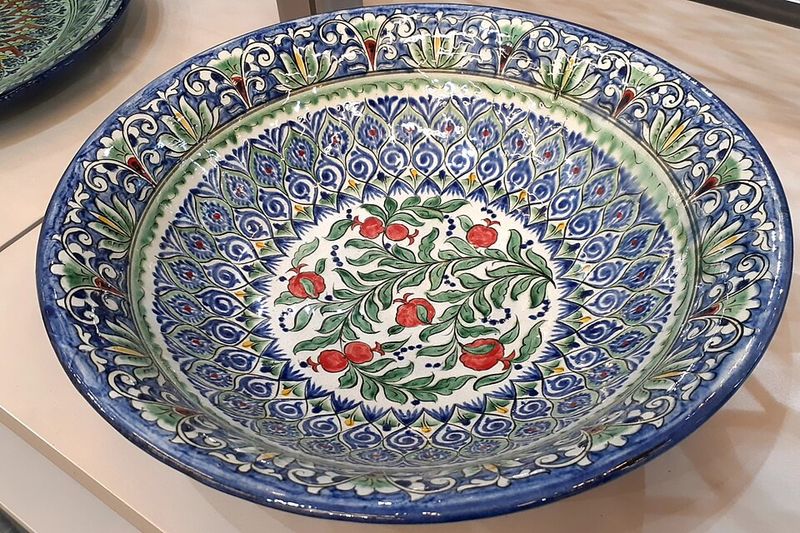
The Fergana Valley town of Rishtan has been producing distinctive ceramics for centuries, and the tradition continues strong today. This is not mass-produced tourist kitsch but genuine craftsmanship, where artisans still mix their own glazes and hand-paint intricate patterns using techniques passed down through generations.
Rishtan ceramics are recognizable by their vibrant colors, especially a distinctive turquoise-blue glaze that comes from local minerals. Plates, bowls, and decorative pieces feature geometric patterns and floral motifs that reflect both Islamic artistic traditions and local Uzbek style.
Each piece is unique, with slight variations that prove human hands created them.
Many workshops in Rishtan welcome visitors who want to see the process firsthand. You can watch potters shape clay on wheels, observe glazing techniques, and see pieces emerge from traditional kilns.
Some workshops offer brief demonstrations or allow you to try your hand at decorating a simple piece.
Buying ceramics directly from Rishtan workshops means you are getting authentic work at fair prices while supporting local artisans. These pieces are functional as well as beautiful, suitable for actual use rather than just display.
If you are looking for a souvenir that has genuine cultural meaning and craftsmanship behind it, Rishtan ceramics deliver. Just remember that ceramic pieces are fragile, so plan for careful packing if you are bringing them home in your luggage.
12. Margilan silk: watch the Silk Road tradition in motion
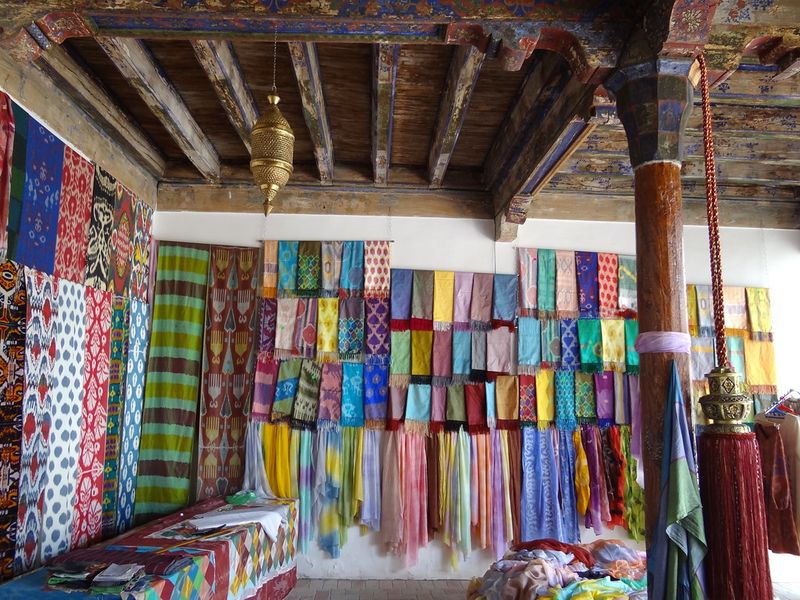
If you want to connect with the actual Silk Road trade that gave the route its name, head to Margilan in the Fergana Valley. This city has been a center of silk production for over a thousand years, and you can still visit workshops and small factories where traditional silk weaving continues today.
The most famous stop is the Yodgorlik Silk Factory, where guided tours show you the entire process from silkworm cocoons to finished fabric. You will see workers sorting cocoons, spinning thread, dyeing silk in vibrant colors, and operating traditional looms.
The techniques are largely the same as they were centuries ago, though some modern equipment has been integrated.
Watching skilled weavers work the looms is mesmerizing. Their hands move with practiced precision, creating intricate patterns called ikat that are characteristic of Central Asian textiles.
These patterns are created through a complex dyeing process before weaving even begins, requiring careful planning and mathematical precision.
The factory shop sells finished silk fabrics, scarves, and clothing at reasonable prices. Quality varies, so examine pieces carefully before buying.
Even if you do not purchase anything, the tour itself is worthwhile for understanding how silk production works and why this fabric was valuable enough to inspire trade routes spanning continents. Margilan offers one of the most tangible connections to Silk Road commerce you can experience.
13. Palov (plov) is more than a dish: it’s a social ritual
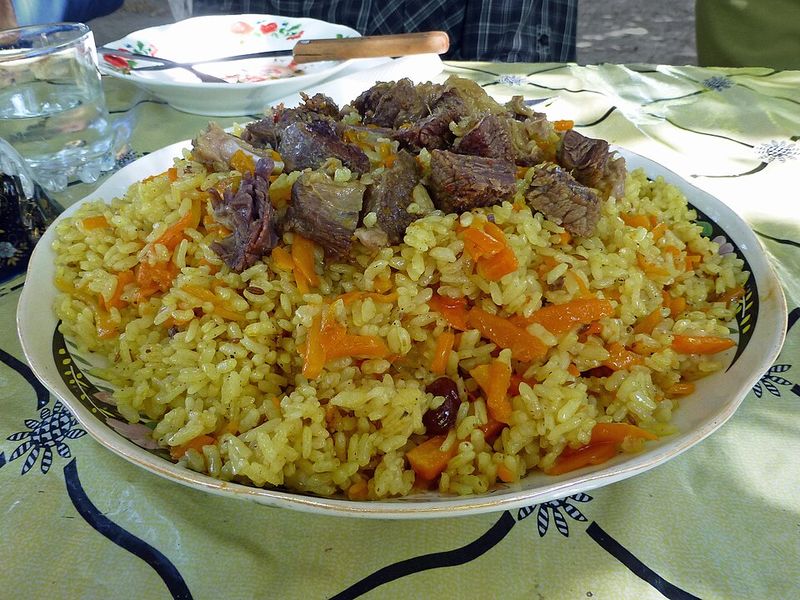
Every country has signature dishes, but palov (also spelled plov or pilaf) occupies a special place in Uzbek culture. This rice dish, cooked with meat, carrots, onions, and spices in a large cast-iron pot called a kazan, is not just food but a symbol of hospitality and community.
UNESCO recognized palov as intangible cultural heritage in 2016, acknowledging its deep cultural significance.
Palov is traditionally prepared by men for large gatherings: weddings, holidays, and community celebrations. The cooking process itself is ritualistic, with specific steps followed in a particular order.
Watching an experienced cook prepare palov in a massive kazan over an open fire is a performance worth seeing.
Regional variations exist throughout Uzbekistan, with different cities and even neighborhoods claiming their version is superior. Tashkent palov differs from Samarkand palov in spice blends and cooking techniques.
Fergana Valley palov has its own distinct character. Trying palov in different places becomes a delicious way to explore regional identity.
Most restaurants serve palov, but the best versions come from local oshxonas (traditional cafeterias) or outdoor markets where large batches are cooked in the morning and served until they run out. Palov is typically eaten by hand from a communal plate, though restaurants will provide utensils for tourists.
Do not skip this dish, and do not try it only once. Each version offers new flavors and insights into Uzbek culinary traditions.
14. Desert + lake: the Aydarkul and Kyzylkum contrast
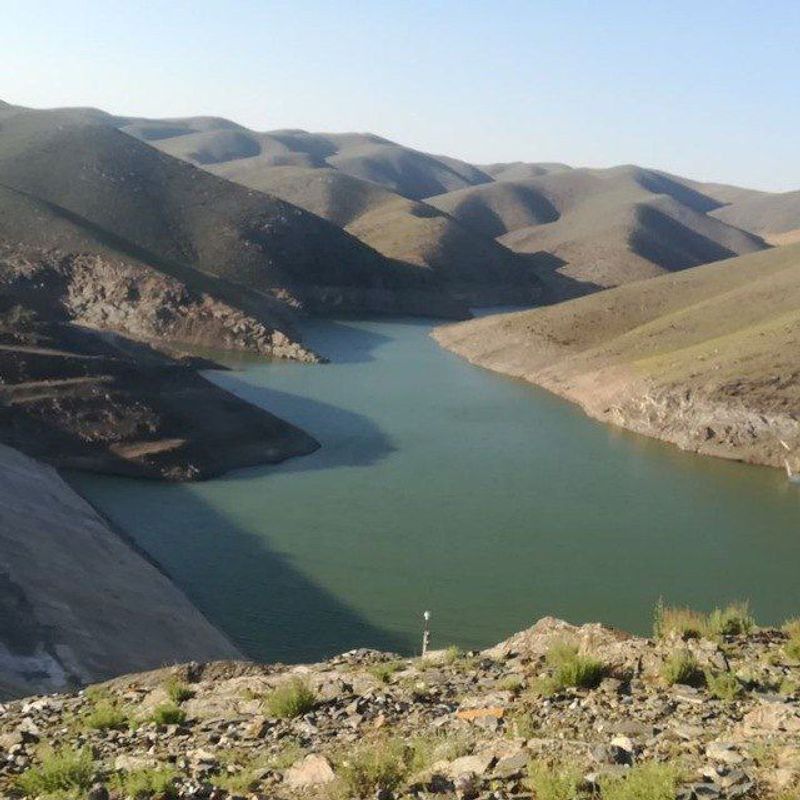
After days of exploring cities and monuments, you might crave open space and natural landscapes. Uzbekistan offers that contrast in the Aydarkul Lake region, where desert and water meet in unexpected ways.
The Kyzylkum Desert stretches across much of the country, and Aydarkul provides a rare oasis within that arid expanse.
Aydarkul is actually a man-made lake, formed in the 1960s when a dam overflow created an unplanned reservoir. Despite its accidental origins, the lake has become an important ecosystem and a popular destination for travelers seeking a break from urban sightseeing.
The water attracts birds, including seasonal migrants, making it interesting for wildlife watchers.
Many visitors stay in traditional yurts near the lake, getting a taste of nomadic lifestyle adapted for tourism. Nights under the desert sky are spectacular, with stars visible in numbers city dwellers rarely see.
The silence and space provide a meditative counterpoint to the sensory overload of Silk Road cities.
Activities include camel rides, short desert hikes, and simply relaxing by the water. The landscape has a stark beauty that photographs well, especially at sunrise and sunset when the light transforms the sand dunes.
Getting to Aydarkul requires some planning since it is not on the main tourist circuit, but travelers who make the effort often describe it as a highlight that balanced their trip perfectly.
15. It’s considered a Level 1 destination by the U.S. State Department
Safety concerns can make or break travel decisions, especially when considering destinations that feel unfamiliar. For many Americans, Central Asia registers as an unknown quantity, a region they cannot easily place on a mental map of safe versus risky travel.
Official guidance helps clarify that uncertainty.
The U.S. State Department assigns travel advisory levels ranging from 1 to 4, with Level 1 being the lowest risk category.
As of January 22, 2026, Uzbekistan holds a Level 1 advisory, which means the State Department recommends exercising normal precautions, the same advice given for traveling to most Western European countries, Canada, or Japan.
This designation reflects Uzbekistan’s political stability, low crime rates affecting tourists, and well-developed tourism infrastructure. Violent crime against foreigners is rare.
Petty theft happens but at rates comparable to or lower than many popular European destinations. Police presence is visible in cities, and authorities generally treat foreign tourists well.
Common-sense precautions still apply. Keep valuables secure, be aware of your surroundings, and follow local laws and customs.
But you do not need to worry about the kinds of security concerns that affect higher-level advisory destinations. For travelers who want adventure without excessive risk, Uzbekistan offers an excellent balance.
The Level 1 designation should reassure cautious travelers that this Silk Road destination is both exotic and safe.
Share this story