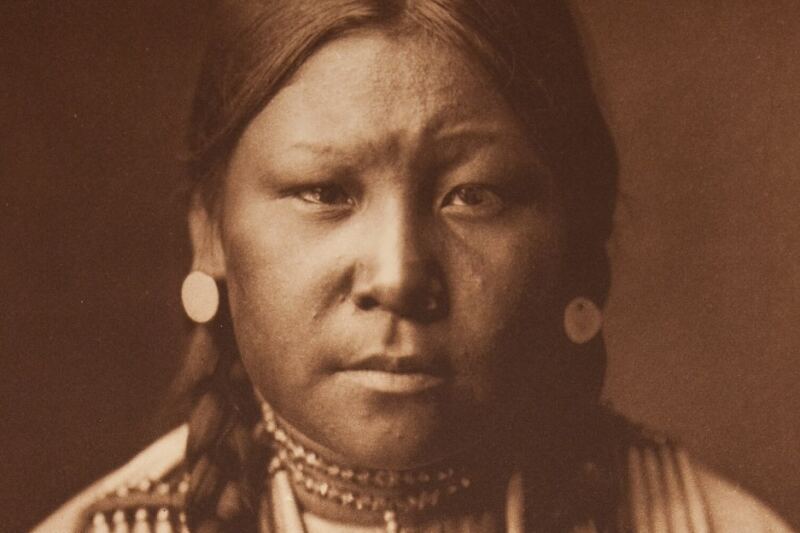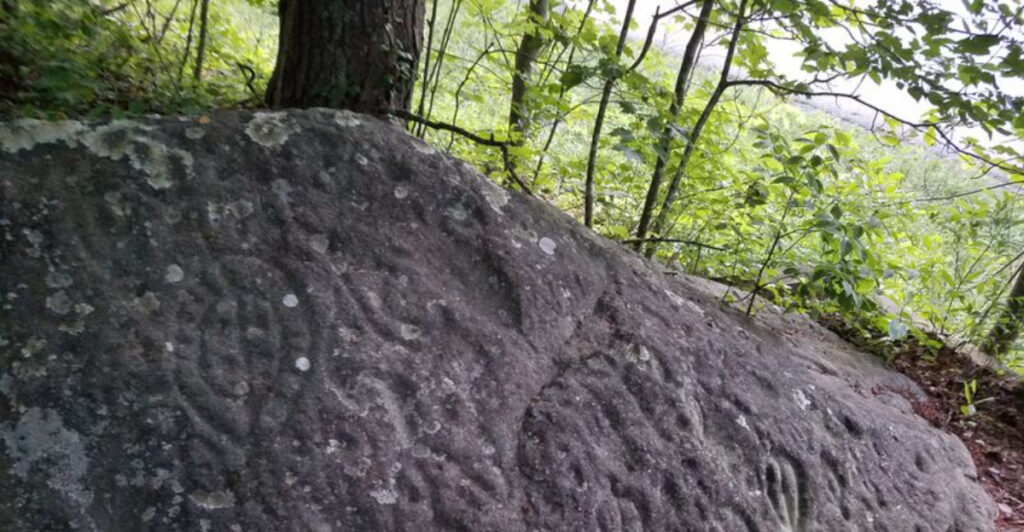
Deep in the Appalachian Mountains, Cherokee legends speak of a mysterious group called the Moon-Eyed People who lived in the region long before Native American tribes arrived. These pale, nocturnal beings were said to avoid sunlight and see only by moonlight, leaving behind stone structures and puzzling stories.
While modern historians find no proof of their existence as a distinct race, the legend continues to captivate those who love unsolved mysteries and Southern folklore.
Cherokee Oral Tradition Holds the Earliest Stories
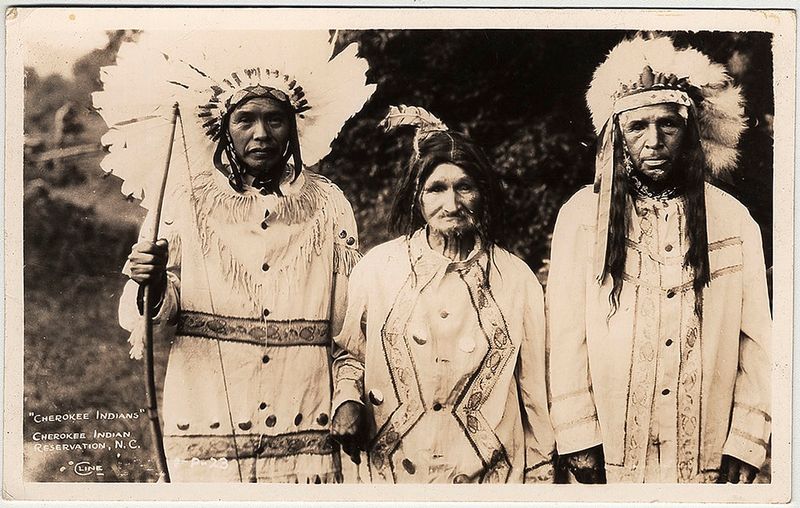
Long before European settlers arrived in the Appalachian region, Cherokee storytellers passed down tales of a strange group who lived in the mountains. These stories described pale-skinned people who occupied the land before the Cherokee themselves arrived.
Oral tradition served as the primary historical record for many Indigenous cultures, preserving memories across generations.
The Cherokee accounts were specific about these mysterious inhabitants. They portrayed them as a small, distinct population with unusual physical traits and habits.
Elders would share these stories during gatherings, ensuring younger generations remembered the history of the land.
When European colonists began documenting Native American legends in the 1700s, they found the Moon-Eyed People stories particularly intriguing. These accounts became some of the earliest written records of the legend.
The Cherokee maintained consistency in their descriptions across different communities, which added credibility to the tales.
Today, historians recognize that many cultures create origin stories about previous inhabitants. Whether the Moon-Eyed People were real or symbolic remains debated.
The Cherokee tradition, however, kept the legend alive for centuries, making it an important part of Appalachian cultural heritage.
Nighttime Vision But Daylight Blindness Defined Them
According to legend, the most striking characteristic of the Moon-Eyed People was their unusual vision. Stories consistently described them as having excellent eyesight during nighttime hours but becoming nearly blind when the sun rose.
This peculiar trait gave the group their memorable name and shaped how they supposedly lived.
The legends suggest these people conducted all their activities after sunset. They hunted, gathered food, and built structures under moonlight and starlight.
During daylight hours, they reportedly retreated into caves or sheltered areas to avoid the painful brightness.
This detail has fascinated researchers for generations. Some historians wonder if the stories describe people with a real medical condition.
Others believe the nocturnal habits might have been exaggerated over time to make the tale more mysterious and memorable.
The night-vision element also served a narrative purpose in Cherokee storytelling. It explained why these people were vulnerable to attack and eventually displaced.
Cherokee warriors could fight during the day when their enemies were weakest, giving them a strategic advantage that led to victory.
European Settlers Preserved the Legend in Writing
When European colonists pushed into the Appalachian region during the 1700s, they encountered Cherokee communities with rich oral histories. Curious about the land and its previous inhabitants, settlers began recording the stories they heard.
The Moon-Eyed People legend appeared in several early colonial documents, journals, and letters.
These written records proved crucial for preserving the legend beyond Cherokee oral tradition. As Native American populations faced displacement and cultural disruption, many stories risked being lost forever.
European documentation, despite its colonial context, helped maintain the Moon-Eyed People narrative for future generations.
The settlers found the legend particularly fascinating because it suggested European-like people had lived in America before their own arrival. This idea appealed to colonial imaginations and fueled speculation about ancient transatlantic voyages.
Some writers embellished the stories to support theories about pre-Columbian European exploration.
Modern historians approach these early written accounts carefully. They recognize that European settlers sometimes misunderstood or altered Native American stories to fit their own worldviews.
Still, these documents remain our primary written sources for understanding how the legend existed in the 18th century.
John Sevier Mentioned Them in Historical Correspondence
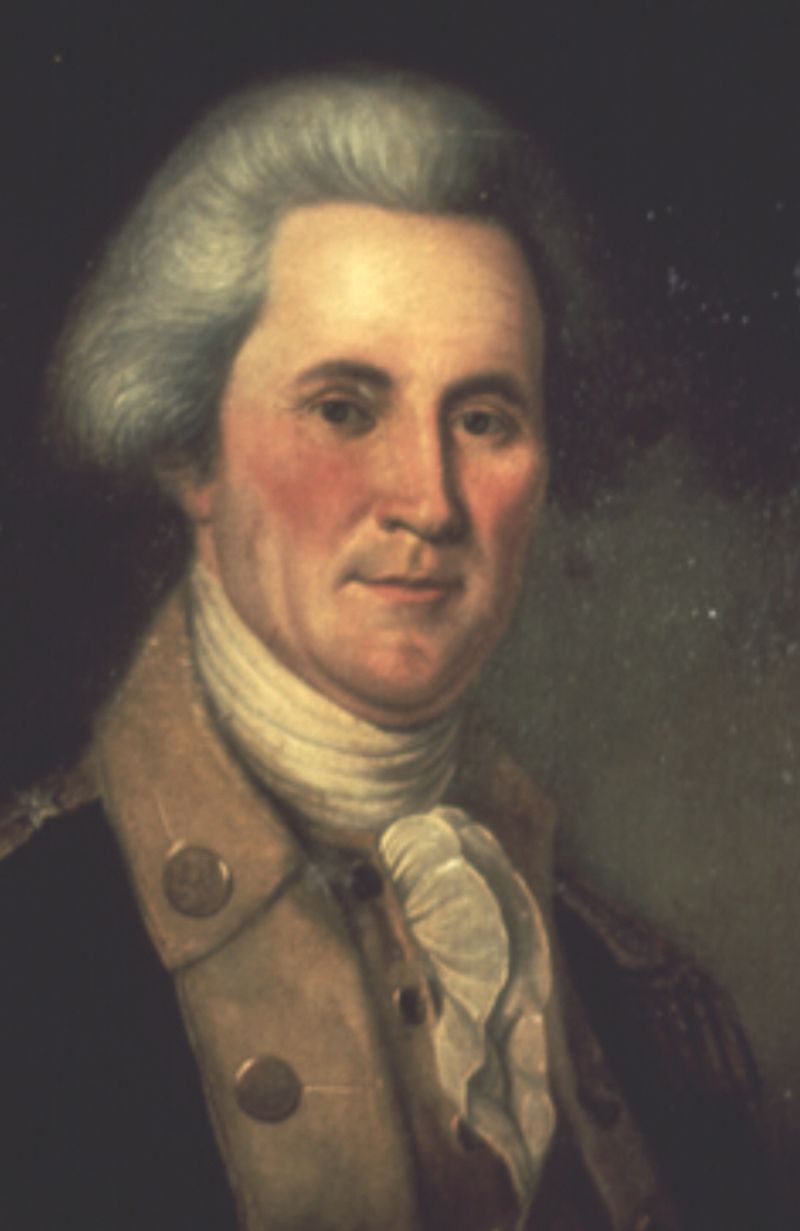
One of the most credible early references comes from John Sevier, a prominent frontier leader who became Tennessee’s first governor. In the late 1790s, Sevier wrote letters mentioning the Moon-Eyed People, citing Cherokee sources for his information.
His status as a respected historical figure gave significant weight to the legend.
Sevier had extensive contact with Cherokee communities throughout his military and political career. He learned about regional history directly from tribal leaders and elders.
When he referenced the Moon-Eyed People, he presented the information as Cherokee tradition rather than established fact, showing appropriate historical caution.
His correspondence described these mysterious inhabitants as a pre-Cherokee population that once occupied fortified positions in the mountains. Sevier noted that physical remains of stone structures still existed in his time.
He connected these ruins to the legendary people, though he offered no definitive proof of the link.
Historians value Sevier’s accounts because they represent early documentation by a literate, influential observer. However, they also recognize he was reporting secondhand information filtered through cultural and linguistic barriers.
His writings keep the legend in historical discussion but do not confirm the Moon-Eyed People’s existence as a distinct race.
Physical Descriptions Emphasized Short Stature and Pale Skin
Stories about the Moon-Eyed People consistently described them as physically different from the Cherokee and other regional tribes. Accounts emphasized their shorter height, with some descriptions suggesting they stood significantly smaller than average Native Americans.
Their most notable feature, however, was their unusually pale or light-colored skin.
These physical characteristics sparked centuries of speculation about the group’s origins. The pale skin description particularly intrigued European settlers, who wondered if these people might have European ancestry.
Some theorists suggested they could be descendants of lost explorers or ancient transatlantic voyagers.
Cherokee storytellers also mentioned other distinctive features in some versions of the legend. Certain accounts described light-colored hair and unusual eye colors.
These details varied between different storytellers, suggesting either diverse physical traits within the group or embellishment over time.
Modern anthropologists note that physical descriptions in oral legends often become exaggerated or simplified. The emphasis on paleness might reflect a real difference in skin tone, or it might be a narrative device to emphasize otherness.
Without archaeological evidence, we cannot verify whether the described physical traits accurately represented a historical population.
Stone Structures Set Them Apart from Other Tribes
Unlike many Native American groups in the region who built primarily with wood and natural materials, the Moon-Eyed People allegedly constructed buildings from stone. This architectural detail appears repeatedly in various versions of the legend.
Cherokee accounts described finding stone forts, walls, and dwellings that differed from their own building traditions.
The stone construction detail has fueled archaeological interest for generations. Researchers have searched Appalachian sites for evidence of unusual stone structures that might connect to the legend.
Several mysterious ruins exist throughout the region, though their origins remain debated.
Some historians suggest the stone building emphasis might explain why the legend persisted. Physical ruins provided tangible evidence that someone built structures before the Cherokee arrived.
When Cherokee people encountered these mysterious stone works, they may have attributed them to the legendary Moon-Eyed People.
Building with stone required different skills and resources than wooden construction. If the Moon-Eyed People truly used stone architecture, it would indicate a distinct cultural tradition.
However, archaeologists have found that various Indigenous cultures throughout North America built stone structures, so this feature alone does not prove a separate race existed in Appalachia.
Cherokee Warriors Claimed Victory and Displacement
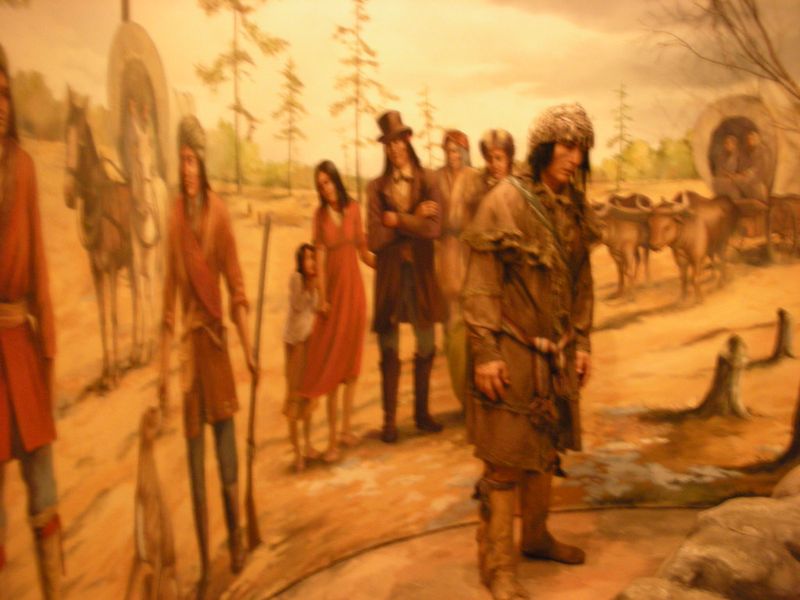
Cherokee oral tradition does not merely mention the Moon-Eyed People’s existence but also explains their disappearance. According to the legends, Cherokee warriors eventually defeated this mysterious group in battle and drove them from the Appalachian region.
This conquest narrative forms an important part of Cherokee historical identity.
The stories describe strategic warfare that exploited the Moon-Eyed People’s daylight blindness. Cherokee fighters allegedly attacked during bright daytime hours when their enemies could not see effectively.
This tactical advantage led to decisive victories that ended the Moon-Eyed People’s presence in the mountains.
Some versions of the legend suggest the defeated people fled westward or into deeper wilderness areas. Others imply they were completely eliminated or absorbed into other populations.
The ultimate fate of the Moon-Eyed People remains unclear across different storytelling traditions.
Anthropologists recognize that conquest narratives serve important cultural functions. They establish territorial claims and explain how current inhabitants came to control specific lands.
The Cherokee displacement story might preserve memories of actual conflicts with earlier groups, or it might be a mythological explanation for ancient ruins and unfamiliar artifacts found in the region.
Archaeological Evidence Remains Frustratingly Absent
Despite centuries of interest in the Moon-Eyed People legend, archaeologists have never found conclusive physical evidence of their existence as a distinct population. No skeletal remains, tools, pottery, or settlements have been definitively linked to this mysterious group.
This absence of evidence presents a significant challenge to those who believe the legend describes real historical people.
Archaeological surveys throughout the Appalachian region have uncovered numerous Native American sites spanning thousands of years. These discoveries document various Indigenous cultures that inhabited the mountains long before European contact.
However, none of these findings suggest a unique pale-skinned, nocturnal population matching the Moon-Eyed People descriptions.
Some enthusiasts point to unexplained artifacts or unusual sites as possible evidence. Professional archaeologists, however, can typically attribute these findings to known Indigenous cultures or natural formations.
The scientific standards for establishing a distinct archaeological culture require consistent, repeatable evidence across multiple sites.
The lack of physical proof does not necessarily mean the legend holds no historical truth. Oral traditions sometimes preserve accurate memories of past events, even when material evidence has disappeared.
Still, without archaeological confirmation, historians cannot verify the Moon-Eyed People as a documented historical population separate from other regional groups.
Track Rock Gap and Other Ruins Sparked Speculation
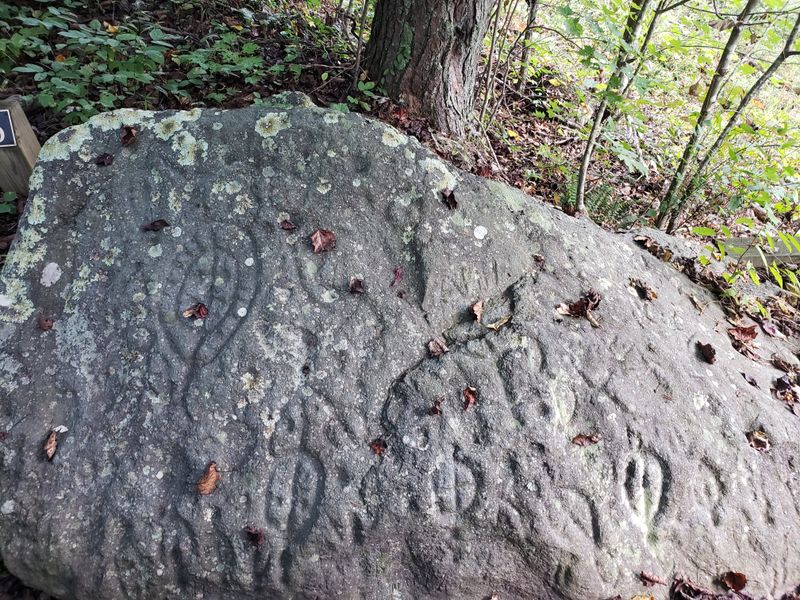
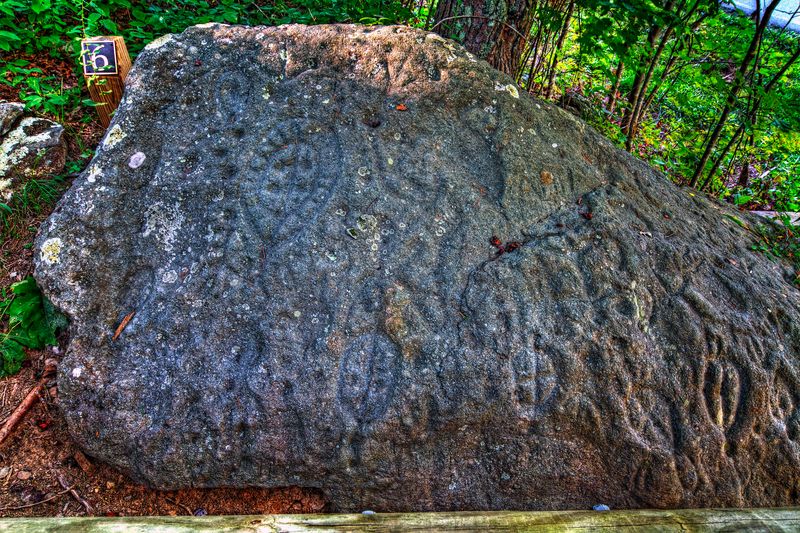
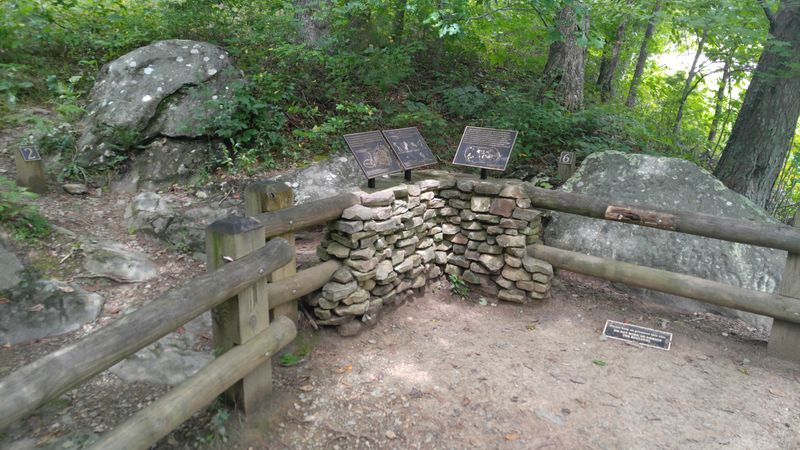
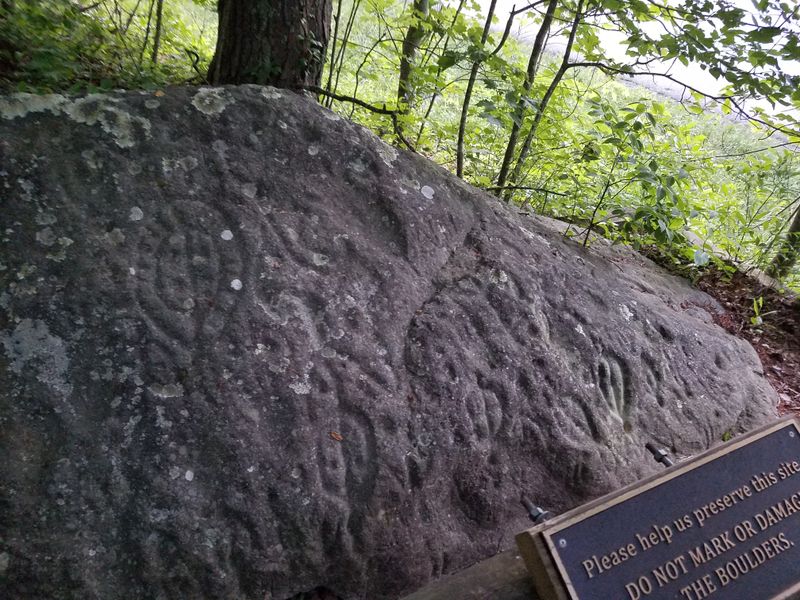
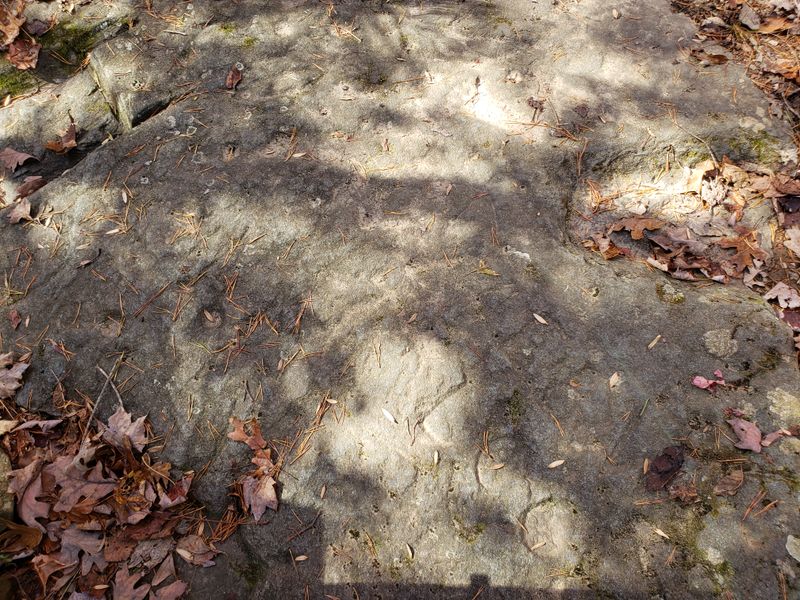
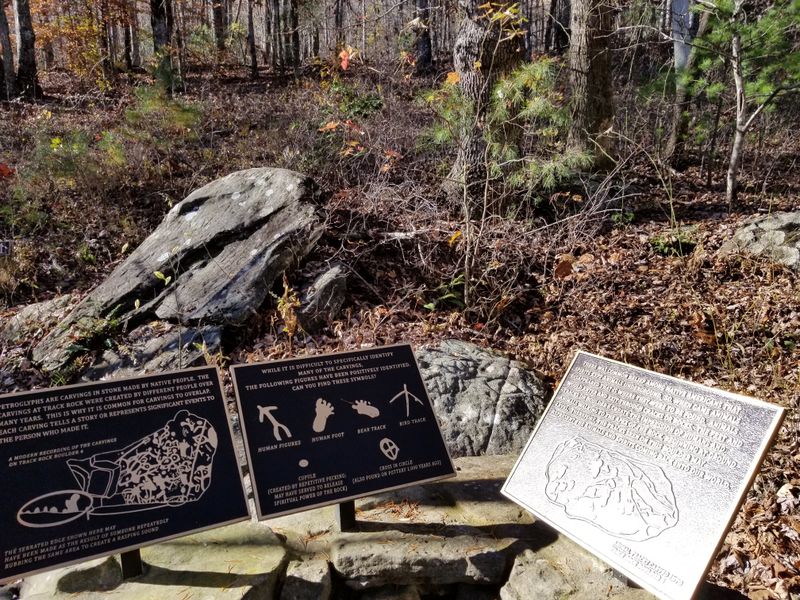
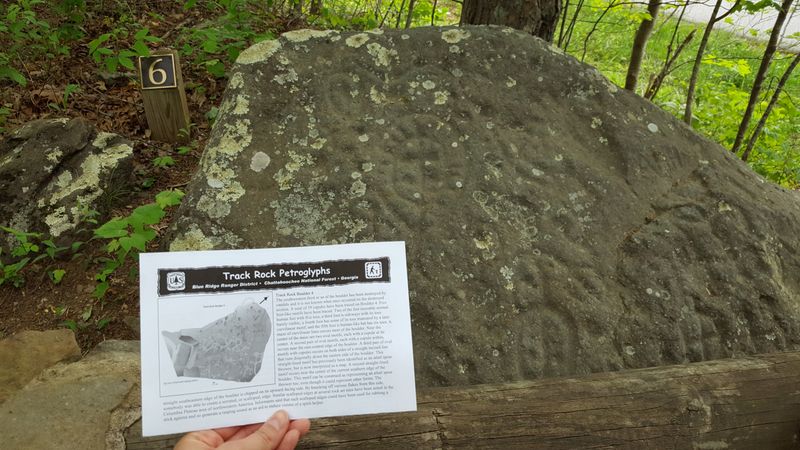
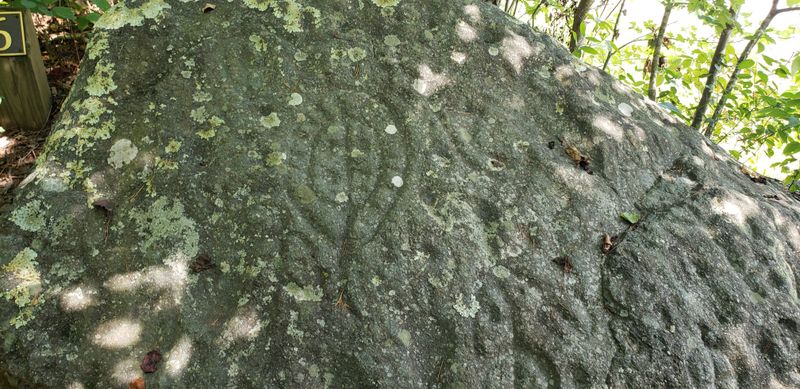
Track Rock Gap in Georgia features mysterious stone walls and carvings that have long intrigued archaeologists and legend enthusiasts. Some people have suggested these structures might be remnants of Moon-Eyed People settlements.
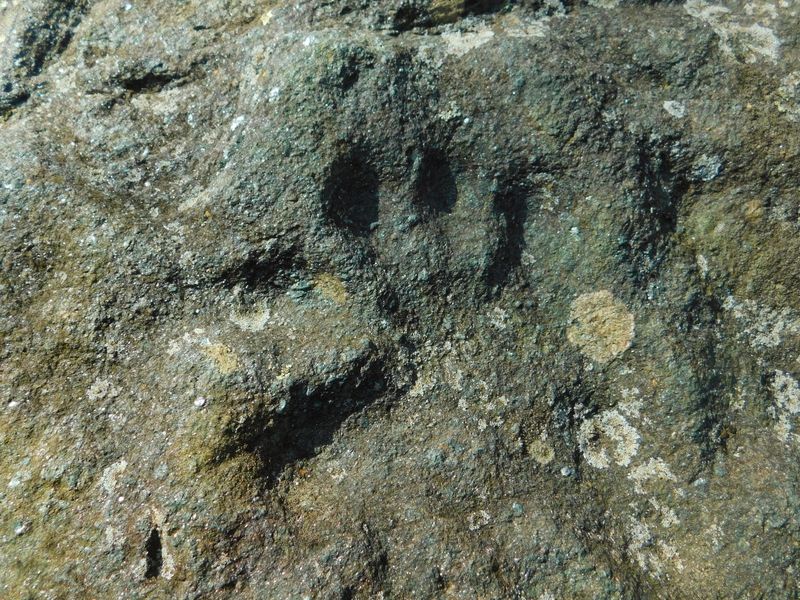
The site includes petroglyphs and stone arrangements that differ from typical Cherokee constructions, fueling speculation about their builders.
Other locations throughout the Appalachian region feature similar puzzling stone structures. Fort Mountain in Georgia has ancient walls that have sparked debates about their origins for generations.
Enthusiasts of the Moon-Eyed People legend often cite these ruins as physical proof supporting the Cherokee stories.
Professional archaeologists, however, have studied these sites extensively and reached different conclusions. Most experts attribute the structures to various known Indigenous cultures that inhabited the region over thousands of years.
The petroglyphs and stone arrangements fit patterns found in other documented Native American sites.
The temptation to connect mysterious ruins with legendary people remains strong. When we encounter ancient structures without clear origins, our imaginations fill in the gaps with exciting possibilities.
While these Appalachian sites certainly deserve continued study, current evidence suggests they were built by ancestors of known Indigenous groups rather than a lost race.
Wild Theories Connected Them to Ancient Europeans

Over the centuries, imaginative writers have proposed numerous exotic origins for the Moon-Eyed People. Some theories suggest they were Welsh explorers who arrived in America centuries before Columbus.
Others have claimed they might be descendants of Phoenician sailors, Roman expeditions, or even Viking voyagers who traveled far inland.
These European origin theories gained popularity particularly during the 19th and early 20th centuries. Writers eager to prove pre-Columbian European presence in America seized upon the Moon-Eyed People legend as potential evidence.
The descriptions of pale skin and stone building seemed to support connections to European or Mediterranean cultures.
The Welsh theory proved especially persistent. It connected to other legends about Prince Madoc, a Welsh explorer who supposedly reached America in the 12th century.
Some enthusiasts claimed the Moon-Eyed People were descendants of Madoc’s expedition who eventually mixed with or were conquered by Native Americans.
Modern historians and archaeologists firmly reject these European origin theories. No credible evidence supports pre-Columbian European settlements in the Appalachian region.
Genetic studies of Native American populations show no indication of ancient European admixture in the timeframes suggested. These theories reflect outdated, often problematic assumptions rather than scientific facts.
Albinism Offers a Plausible Medical Explanation
Some historians and medical experts have suggested that the Moon-Eyed People legend might describe individuals or a family group affected by albinism. This genetic condition results in reduced melanin production, causing very pale skin, light hair, and extreme sensitivity to sunlight.
People with albinism often experience significant vision problems, particularly in bright light.
The symptoms of albinism match several key details in the Moon-Eyed People descriptions. The pale skin, light coloring, and daylight vision problems all align with this medical condition.
A small population with albinism living in the mountains could have seemed mysterious and different enough to inspire lasting legends.
Albinism occurs across all human populations, including Native American communities. A group with higher rates of this condition due to isolated genetics might have formed a distinct community.
Their unusual appearance and nocturnal habits would make them memorable to neighboring tribes.
This explanation remains speculative but offers a rational interpretation of the legend. It suggests the Moon-Eyed People were not a separate race but rather Indigenous people with a distinctive genetic condition.
Over generations of storytelling, their medical differences could have been mythologized into tales of a mysterious lost civilization.
Cave-Dwelling Cultures Present Another Possibility
Another hypothesis suggests the Moon-Eyed People might have been a reclusive Indigenous group that primarily lived in caves and emerged mainly at night. The Appalachian Mountains contain numerous cave systems that could have supported such a lifestyle.
A population adapted to underground living would naturally avoid bright daylight and develop pale skin from limited sun exposure.
Archaeological evidence shows that various Native American groups used caves for shelter, ceremonies, and storage throughout history. Some cultures spent significant time in these underground spaces.
A group particularly dependent on cave dwelling might have developed cultural practices and physical adaptations that set them apart.
Living primarily in caves would explain several legend elements. The stone structure associations might refer to cave modifications or nearby surface buildings.
The nocturnal habits would make sense for people whose eyes adapted to darkness. Neighboring tribes might have viewed these cave dwellers as strange and mysterious.
This theory treats the Moon-Eyed People as a cultural group rather than a separate race. Their distinctive lifestyle and appearance could have been exaggerated through generations of storytelling.
When the Cherokee arrived and displaced or absorbed this population, their unusual characteristics became legendary rather than being understood as simple cultural differences.
Origin Legends Help Cultures Explain the Unknown
Anthropologists who study folklore recognize that many cultures create stories about mysterious previous inhabitants. These legends serve important psychological and social functions.
They help explain ancient ruins, unfamiliar artifacts, or landscape features that current residents cannot otherwise account for. The Moon-Eyed People legend fits this common pattern.
When people encounter evidence of past civilizations, they naturally wonder who built those structures and what happened to them. Creating narratives about lost races or vanished peoples satisfies this curiosity.
These stories often emphasize how the previous inhabitants differed from current residents, making them seem exotic and otherworldly.
The Moon-Eyed People legend also establishes Cherokee territorial claims and historical legitimacy. By describing how their ancestors conquered previous occupants, the story validates Cherokee presence in the region.
This type of conquest narrative appears in many cultures’ origin traditions worldwide.
Modern folklorists value these legends not as historical facts but as cultural artifacts that reveal how communities understand their past. The persistence of the Moon-Eyed People story shows how powerful and meaningful such narratives become.
Whether or not the legend describes real people, it serves real cultural purposes that keep it alive across generations.
Modern Scholars Reject the Lost Race Concept
Contemporary historians, archaeologists, and anthropologists overwhelmingly agree that no evidence supports the existence of a non-Native American race living in pre-Columbian Appalachia. Decades of scientific research, including genetic studies, archaeological surveys, and historical analysis, have found no credible proof of such a population.
The academic consensus treats the Moon-Eyed People as folklore rather than documented history.
The concept of lost races or mysterious pre-Indigenous civilizations in America has a problematic history. These ideas often emerged from racist assumptions that Native Americans could not have built sophisticated structures or complex societies.
By attributing ancient achievements to vanished European or other non-Indigenous peoples, these theories diminished Native American accomplishments.
Modern archaeology has thoroughly documented the rich, diverse Indigenous cultures that inhabited the Appalachian region for thousands of years. These peoples built impressive structures, developed sophisticated societies, and left extensive archaeological records.
There is no need to invoke mysterious lost races to explain the region’s ancient sites.
Scholars continue studying the Moon-Eyed People legend for its cultural significance rather than historical accuracy. The story reveals important aspects of Cherokee oral tradition and how folklore develops over time.
Respecting these legends as meaningful cultural narratives does not require accepting them as literal historical accounts.
The Legend Endures as Appalachian Cultural Heritage
Despite scholarly skepticism, the Moon-Eyed People remain a beloved part of Appalachian folklore and regional identity. Tourist attractions, local festivals, and cultural centers throughout the mountains reference the legend.
Books, articles, and documentaries continue exploring the mystery, ensuring new generations discover the story. The legend has become inseparable from the region’s cultural landscape.
The story’s persistence demonstrates folklore’s power to captivate imaginations regardless of historical verification. People enjoy mysteries and unexplained phenomena, especially those connected to their local landscape.
The Moon-Eyed People legend gives the Appalachian Mountains an aura of ancient mystery that enriches the region’s character.
For many residents and visitors, the legend represents something deeper than historical fact. It symbolizes the mountains’ long human history and the layers of stories embedded in the landscape.
Cherokee communities continue sharing the tale as part of their cultural heritage, while others appreciate it as regional folklore worth preserving.
The Moon-Eyed People story reminds us that folklore and history serve different purposes. Not every legend needs scientific proof to have value and meaning.
As long as people feel connected to the Appalachian Mountains and their mysterious past, the tale of these nocturnal, pale-skinned inhabitants will continue echoing through the hills and hollows.
Share this story