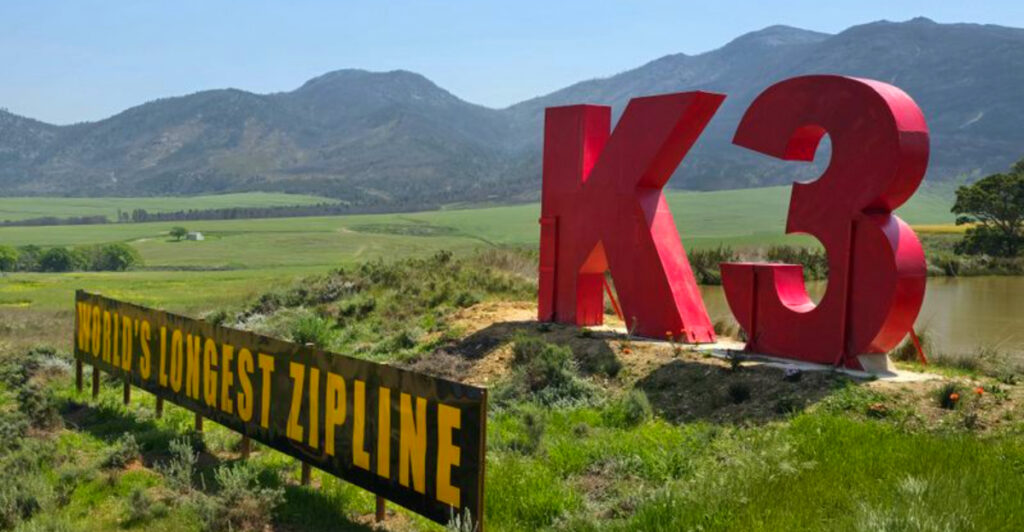
Flying through the air at 120 kilometres per hour, soaring over mountains and valleys for more than three kilometres, is exactly what riders experience on K3, South Africa’s newest mega zipline that’s being called the world’s longest. Just an hour from Cape Town, this extreme adventure packs insane speed, jaw dropping scenery, and pure adrenaline into one ride and it’s already rewriting what a zipline can be.
1. The ride everyone’s talking about is called K3
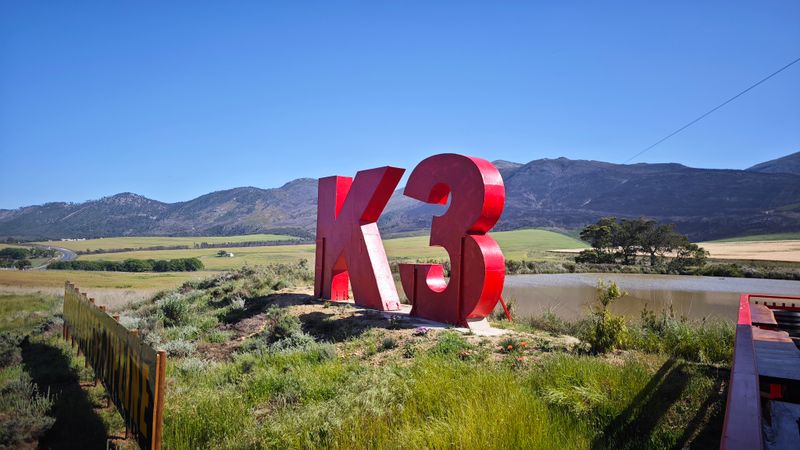
K3 isn’t just another zipline. Built by SA Forest Adventures, this attraction has grabbed headlines worldwide as the newest contender for the title of world’s longest zipline.
The name itself is simple but powerful, representing the company behind it and the incredible three-kilometre journey riders take.
What makes K3 stand out is how it’s being promoted and talked about in adventure circles. News outlets, travel bloggers, and thrill-seekers have all jumped on the story since its opening.
The buzz isn’t just hype either, riders who’ve experienced it describe feelings of pure freedom mixed with controlled terror.
Unlike traditional zipline parks that offer multiple short runs, K3 focuses on delivering one massive, unforgettable experience. The operators have poured serious resources into making sure every aspect meets international safety standards while maximizing the adrenaline factor.
From the moment you hear about K3, you know you’re dealing with something different.
The attraction represents a new era in extreme tourism for South Africa. It’s not just about the length or speed, it’s about creating a world-class adventure that puts the country on the map for adrenaline junkies everywhere.
K3 has quickly become a must-do for anyone visiting the Western Cape region.
2. It’s located near Caledon, in South Africa’s Western Cape
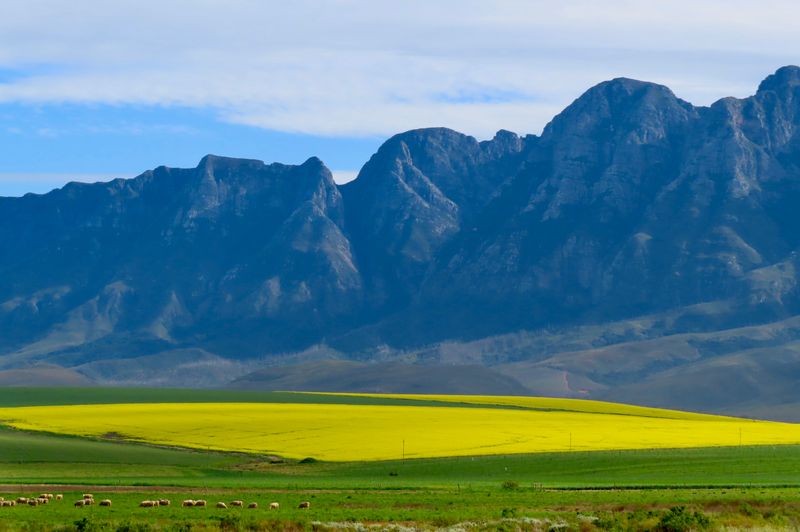
Finding K3 means heading to the Overberg region, a beautiful area in South Africa’s Western Cape province. Most visitors start from Cape Town, making the roughly hour-long drive to the area near Caledon.
The journey itself offers gorgeous views of the diverse landscape that makes this part of the country so special.
Caledon sits inland from the coast, surrounded by mountains and farmland. The region is known for its natural hot springs, apple orchards, and now, extreme zipline adventures.
It’s far enough from the city to feel like a true escape but close enough for a day trip.
The Western Cape location gives K3 some serious advantages. The terrain provides the perfect combination of elevation changes and distance needed for such a long zipline.
Weather conditions in this area are generally favourable for outdoor adventures, though wind and storms can occasionally interrupt operations.
Getting to the site is straightforward with proper directions. The operators provide clear instructions, and the drive through the Overberg countryside builds anticipation.
You’ll pass through small towns and farming communities before reaching the base camp area where your adventure begins. The remote feeling adds to the overall experience.
3. Its headline length is 3.2 kilometres
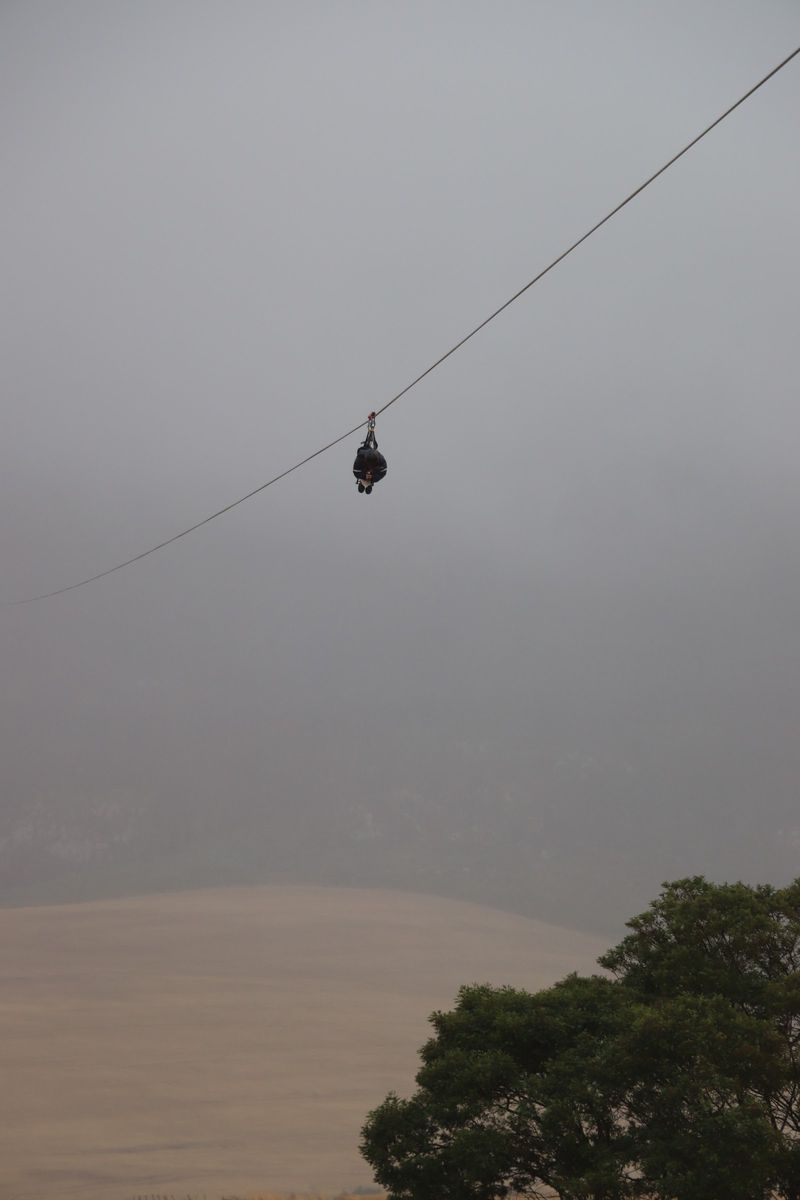
Three point two kilometres. That number alone makes most people’s jaws drop.
To put it in perspective, that’s longer than 32 football fields laid end to end, or about 40 city blocks. When you’re actually riding K3, that distance translates into several minutes of continuous flight through the air.
The 3.2-kilometre measurement comes straight from the operator’s official materials and has been reported consistently across multiple sources. This isn’t an estimate or a rounded number, it’s the actual length of the cable you’ll be traveling along.
The distance is what sets K3 apart from almost every other zipline on the planet.
Experiencing that length firsthand is completely different from just hearing about it. Riders report that the sheer duration of the ride creates a unique sensation.
You’re not just zipping across a valley and done in 30 seconds, you’re flying for minutes, giving you time to actually process what’s happening and take in the incredible views.
The engineering required to build a zipline this long is seriously impressive. The cable must maintain proper tension and angle across the entire distance while supporting riders safely.
Every metre matters when you’re dealing with this scale of construction and operation.
4. It’s marketed as a single, long flight (not a multi-line park)
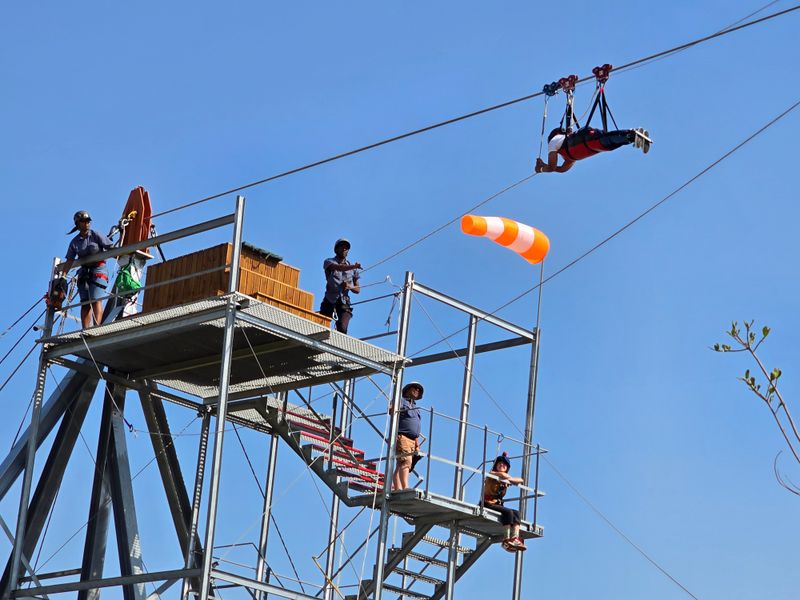
Here’s where K3 really separates itself from the competition. Many zipline attractions around the world claim impressive total distances, but they achieve those numbers by adding up multiple separate lines.
You zip across one section, stop, walk or ride to the next platform, then zip again. That’s not how K3 works.
K3 delivers its 3.2 kilometres as one continuous, uninterrupted run. You launch once, and you don’t stop until you reach the end.
There are no platforms in between, no breaks to catch your breath or chicken out. This single-flight design is crucial to understanding why K3’s claim to being the world’s longest matters so much.
The difference between a multi-line park and a single flight is huge for riders. With K3, once you commit and push off, you’re in it for the full experience.
The psychological impact of knowing there’s no turning back adds to the intensity. Your heart keeps pounding for the entire ride, not just in short bursts.
From a technical standpoint, building a single long line is far more challenging than creating multiple shorter ones. The cable engineering, tension systems, and safety mechanisms all become more complex when you can’t break the distance into manageable segments.
5. Speed: expect up to about 120 km/h
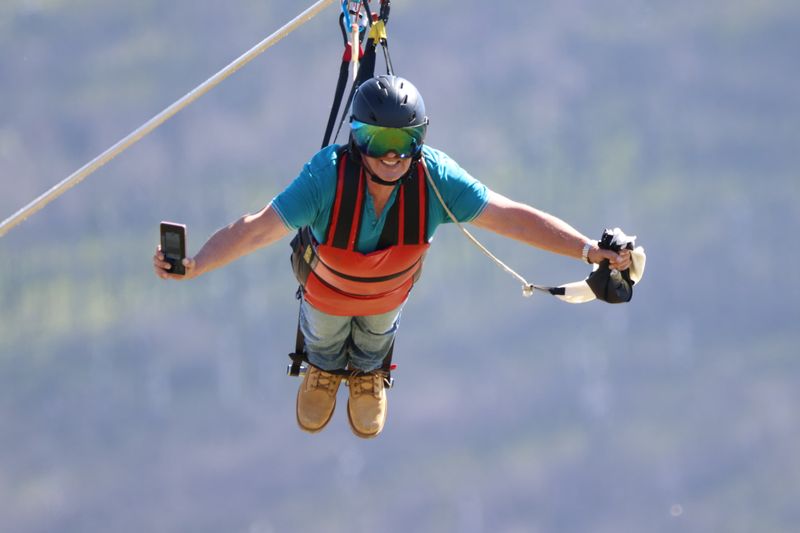
Hold onto your helmet because K3 riders can hit speeds around 120 kilometres per hour. For context, that’s roughly the speed limit on a highway, except you’re dangling from a cable hundreds of metres above the ground.
The wind rushing past your face at that velocity creates an intense sensory experience you won’t forget.
South African media coverage and the operator’s own descriptions consistently highlight this 120 km/h figure. The speed isn’t constant throughout the entire ride, though.
You’ll accelerate after launch, reach peak velocity somewhere in the middle sections, then gradually slow as you approach the landing zone. Physics and the cable’s angle determine your speed at any given moment.
Reaching 120 km/h on a zipline feels wildly different from going that fast in a car. There’s no protective shell around you, just open air and the harness keeping you attached to the cable.
Your body is fully exposed to the elements, making the speed feel even more extreme. The sensation is closer to skydiving than driving.
Safety systems are designed specifically to handle these high speeds. The harness, pulley system, and braking mechanisms all work together to keep riders secure even when they’re flying at highway speeds through the air.
6. The drop/vertical descent is described around 500 metres
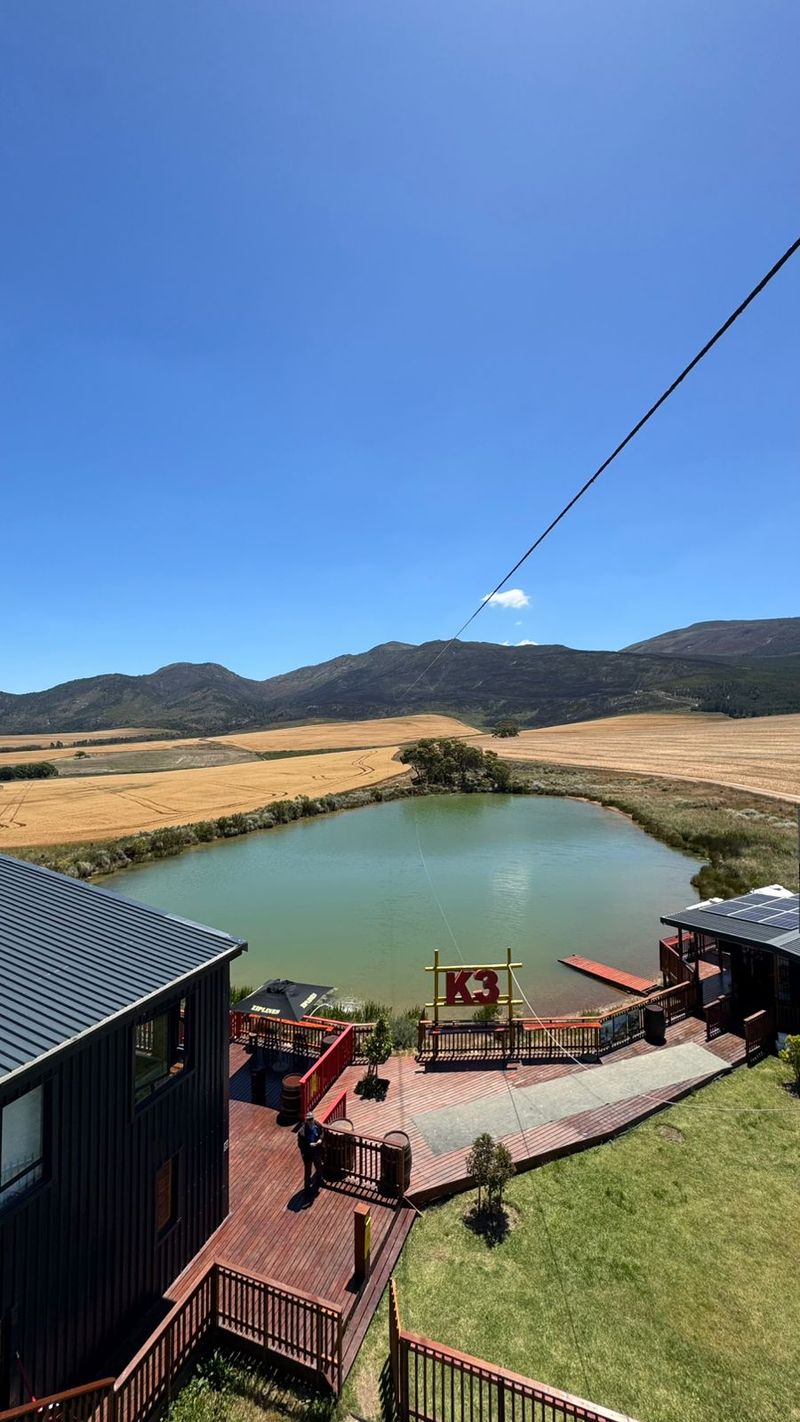
Starting roughly 500 metres above your landing point adds a serious vertical dimension to the K3 experience. That’s about the height of a 150-storey building, or taller than most of the world’s skyscrapers.
When you’re standing at the launch platform looking down, that drop becomes very real very quickly.
Reports describe the descent in different ways, some say you’re 500 metres above the ground, others phrase it as a 500-metre descent. Either way, you’re starting high up on a mountain and ending far below.
The elevation change contributes directly to the speeds riders achieve, gravity does its thing as you descend.
The vertical drop also affects the views you’ll see during your flight. Starting at that height gives you panoramic perspectives of the Western Cape landscape.
As you descend, the scenery changes, details become clearer, and your relationship to the ground shifts dramatically. It’s like watching the world rush up to meet you in slow motion.
For anyone with a fear of heights, that 500-metre starting elevation is no joke. Even thrill-seekers who’ve done plenty of extreme activities report feeling butterflies when they first see how high up they’ll be launching from.
The drop is part of what makes K3 so intense.
7. Getting there is part of the adventure (and the operator leans into that)
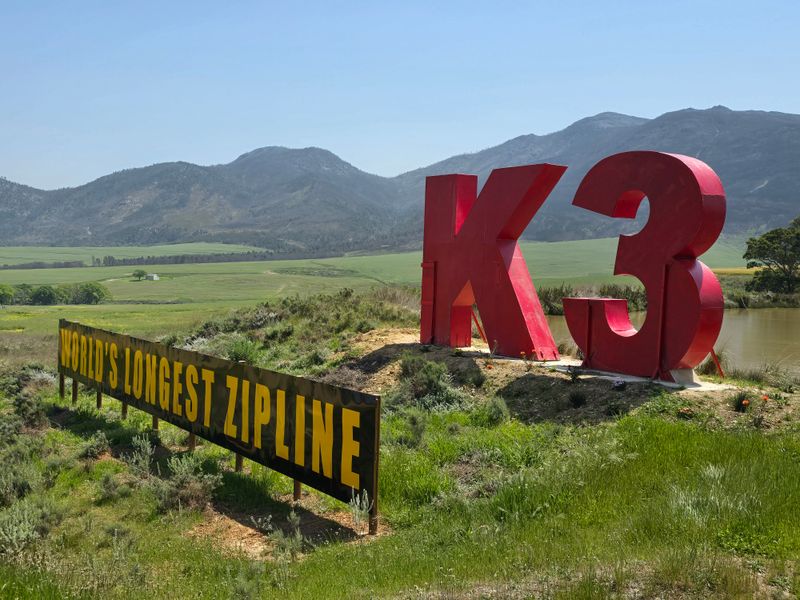
K3’s operators understand that the experience should start long before you clip into the zipline. Instead of treating the journey to the launch point as just logistics, they’ve built it into the overall adventure.
You’re not simply walking up some stairs to a platform like at a regular attraction, you’re embarking on a mini expedition.
The approach begins at base camp where you check in and receive your safety briefing. From there, the journey upward becomes part of the story you’ll tell later.
The operators have deliberately structured things so you feel like you’re heading into the wilderness, building anticipation with every metre you travel toward the start.
This expedition-style approach sets the right mindset for riders. By the time you reach the launch platform, you’ve invested time and effort into getting there.
You’ve left civilization behind and committed to the experience. That mental preparation matters when you’re about to fly 3.2 kilometres through the air.
The journey also serves practical purposes. It gives guides time to assess weather conditions, ensures riders are mentally prepared, and spreads groups out so everyone gets individual attention.
The operators have turned what could be boring transportation into an integral part of the K3 adventure.
8. You’ll likely ride up by tractor/trailer or 4×4
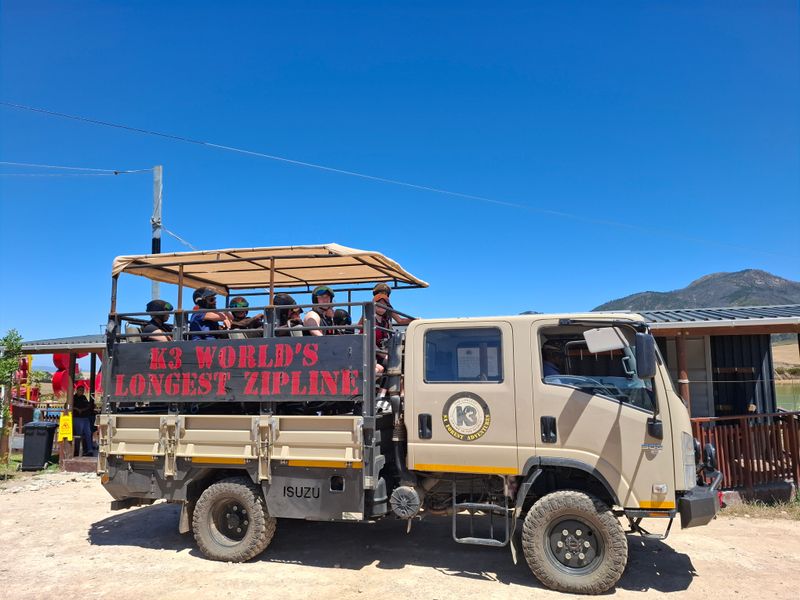
Forget fancy cable cars or gondolas. Getting to K3’s launch point involves riding in large trailers pulled by tractors or bouncing along in rugged 4×4 vehicles.
This isn’t a polished theme park experience, it’s a genuine backcountry adventure, and the transportation reflects that perfectly.
The original reporting describes these large trailers as the primary method for moving groups up the mountain. Picture a flatbed trailer with bench seating, open to the air, bumping along mountain tracks.
Smaller 4×4 vehicles handle different terrain or smaller groups when needed. The ride itself can be quite an experience, especially if the roads are rough.
This transportation choice is practical given the terrain and remote location. Regular vehicles couldn’t handle the steep, unpaved mountain roads leading to the launch area.
The tractors and 4×4s are built for exactly this kind of work. They’re reliable, can carry multiple people with gear, and handle whatever the mountain throws at them.
Many riders report that the trailer ride up builds excitement and camaraderie. You’re sitting with other adventurers, all heading toward the same intense experience.
The bumpy journey, the views along the way, and the gradual ascent all contribute to the overall memory. It’s authentic and memorable in its own right.
9. The launch platform is branded as The Nest
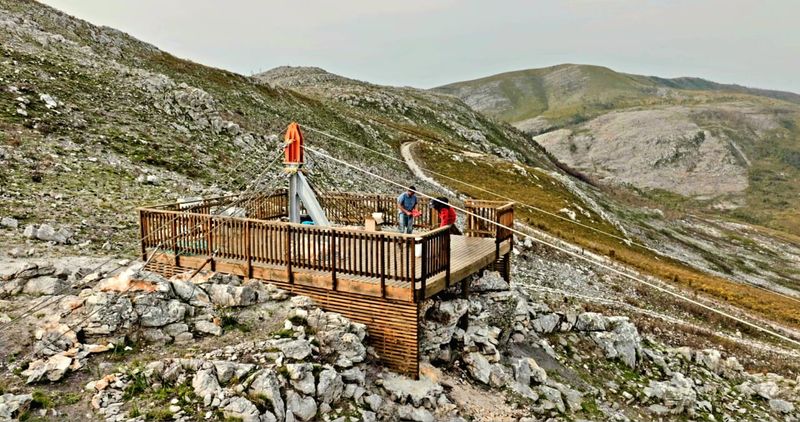
The starting point for your 3.2-kilometre flight has a name that perfectly captures its character: The Nest. This isn’t just a random platform bolted onto the mountain.
The operators have designed it as a purpose-built structure that blends into the surrounding environment while serving as the dramatic departure point for your journey.
Describing it as a nest creates interesting imagery. Birds launch from nests to take flight, and that’s exactly what you’ll be doing from this platform.
The name suggests something natural, protected, and perched high up, all of which apply. It’s a clever bit of branding that helps riders connect with what they’re about to experience.
The Nest is designed to handle the technical requirements of launching riders safely while also providing a memorable location. You’ll spend time here getting final safety checks, having your harness adjusted, and mentally preparing for the flight ahead.
The platform gives you a clear view of where you’re heading, which can be both exciting and terrifying.
Building a launch platform at this elevation and in this remote location required serious engineering and construction effort. Everything had to be brought up the mountain and assembled on-site.
The result is a structure that’s become an iconic part of the K3 experience, the last solid ground you’ll stand on before flight.
10. Expect a short hike (often described as ~50 minutes)
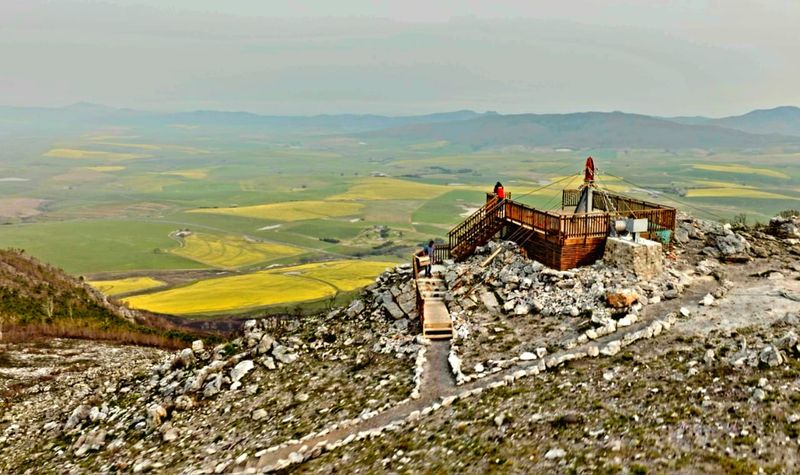
After your tractor or 4×4 ride, there’s still one more step before you reach The Nest: a hike that typically takes about 50 minutes. This isn’t a casual stroll on a paved path.
You’re climbing a mountain trail, likely carrying some gear, at elevation. It’s a real physical effort that adds another layer to the whole experience.
The 50-minute timeframe mentioned in original reporting can vary depending on several factors. Your group’s fitness level, the day’s weather conditions, and the specific route taken all affect how long it takes.
Some groups might move faster, others slower. Guides pace the hike appropriately to ensure everyone arrives safely without being completely exhausted.
This hike serves multiple purposes beyond just getting you to the launch point. It’s a final fitness and commitment check, if you can’t handle the hike, you probably shouldn’t be on the zipline.
It also gives your body time to adjust to the altitude and gets your blood pumping before the main event. The physical exertion helps burn off nervous energy too.
Many riders appreciate having this hike as part of the experience. It creates a clear separation between the everyday world and the extreme adventure you’re about to have.
By the time you’ve hiked for nearly an hour to reach The Nest, you’ve truly earned your flight.
11. There are common-sense rider restrictions (weight is a big one)
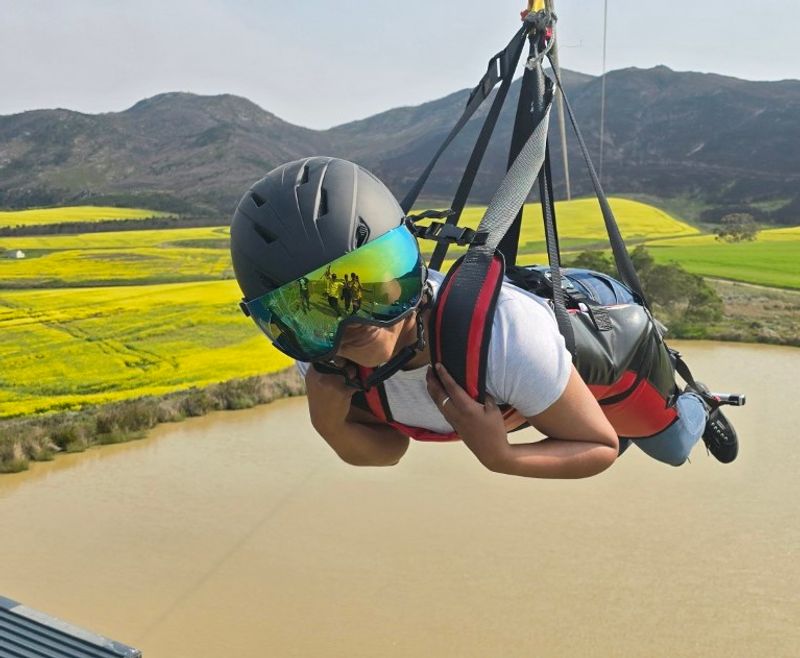
K3 isn’t for everyone, and the operators are upfront about that. Safety restrictions exist for good reasons, and weight is the most critical factor.
The typical operating window is 60 to 120 kilograms, roughly 132 to 265 pounds. Fall outside that range, and you won’t be able to ride, no exceptions.
Why such strict weight limits? The zipline’s engineering is based on specific load calculations.
Too light, and you might not have enough momentum to complete the full 3.2-kilometre journey, potentially getting stuck partway. Too heavy, and you could overstress the cable and safety systems or reach dangerous speeds.
These aren’t arbitrary rules, they’re physics-based requirements.
Beyond weight, other restrictions apply. Pregnancy is an automatic disqualification due to the physical forces involved.
Certain heart conditions and other medical issues also prevent participation. The operators need to know about any health concerns before you’re cleared to ride.
Lying about medical conditions puts everyone at risk and could have serious consequences.
These restrictions might seem disappointing if you don’t qualify, but they’re essential for everyone’s safety. The operators would rather turn someone away than risk an accident.
If you’re planning to ride K3, check the requirements before making the trip to avoid disappointment when you arrive.
12. The experience is designed like a base camp setup
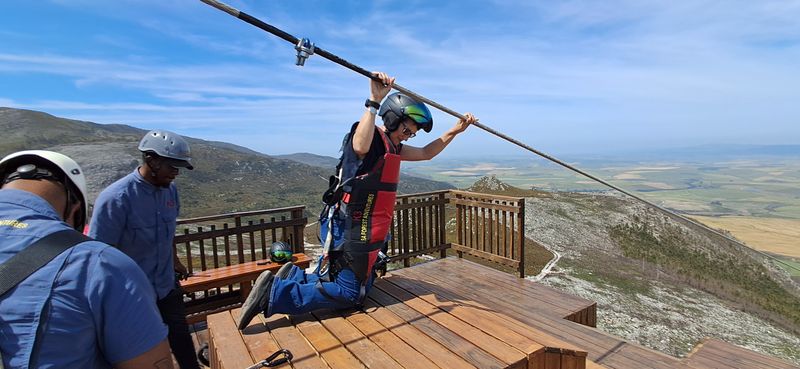
When you arrive at K3, you’re not walking into a typical ticket booth at an amusement park. The whole operation is structured like a mountain base camp, the kind you’d find at the start of a serious expedition.
This design choice reinforces that you’re embarking on a genuine adventure, not just buying a quick thrill.
The base camp serves as mission control for the entire operation. Guides handle check-in here, verifying reservations and ensuring everyone’s paperwork is complete.
Safety briefings happen at base camp, where you’ll learn about the equipment, the ride itself, and what to expect. It’s where the professional side of the operation becomes clear.
Many base camp setups include refreshments on-site. After your ride, or while waiting for your group’s scheduled time, you can grab water, snacks, or other provisions.
This practical touch matters when you’re in a remote mountain location without easy access to regular facilities. The base camp becomes a hub where riders gather before and after their flights.
The expedition atmosphere created by this base camp design helps set K3 apart from more commercial attractions. You feel like you’re part of something special, an adventure that requires preparation and respect for the environment.
It’s thoughtful design that enhances the overall experience beyond just the zipline itself.
13. About that world record claim: K3 vs Guinness is not the same thing
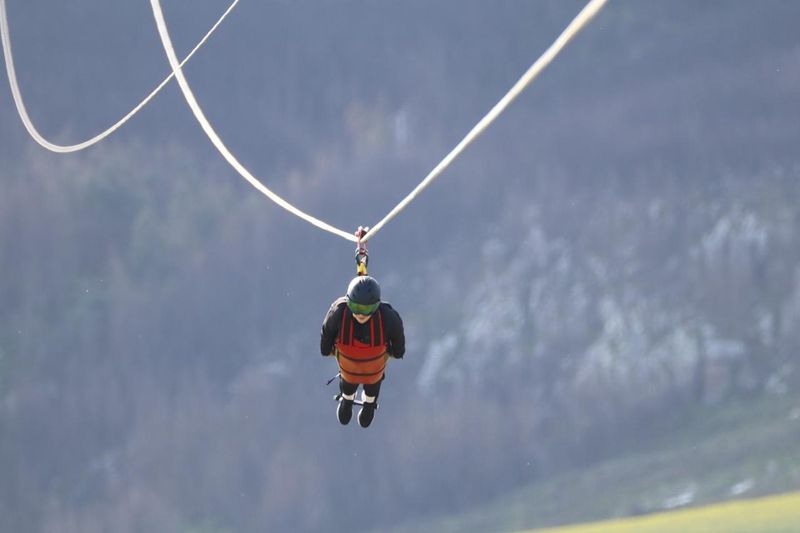
Here’s where things get interesting and a bit complicated. K3 is widely reported as 3.2 kilometres long and promoted across media as the world’s longest zipline.
That measurement appears consistent and legitimate. However, if you check Guinness World Records’ official public listing, you’ll still find Jebel Jais Flight in the UAE listed as the longest zip wire at 2,831.88 metres.
So what’s going on? K3 can genuinely be longer than the previous record holder while Guinness’ published records haven’t officially updated yet.
Record verification is a process that takes time. Guinness has specific requirements for documentation, measurement, and validation.
Just because something is built and operating doesn’t mean it’s immediately reflected in their official database.
This creates an odd situation where K3 is functionally the longest zipline currently operating and being promoted as such in countless articles and reports, while the official Guinness record page still shows the previous champion. Both statements can be true simultaneously depending on how you define “world record.”
For riders, this distinction might not matter much. Whether K3 holds the official Guinness title or is simply the longest zipline actually built and running, you’re still getting an extreme 3.2-kilometre ride.
The experience doesn’t change based on which organization has verified the measurement.
14. The previous (Guinness-listed) benchmark is still a monster: Jebel Jais Flight
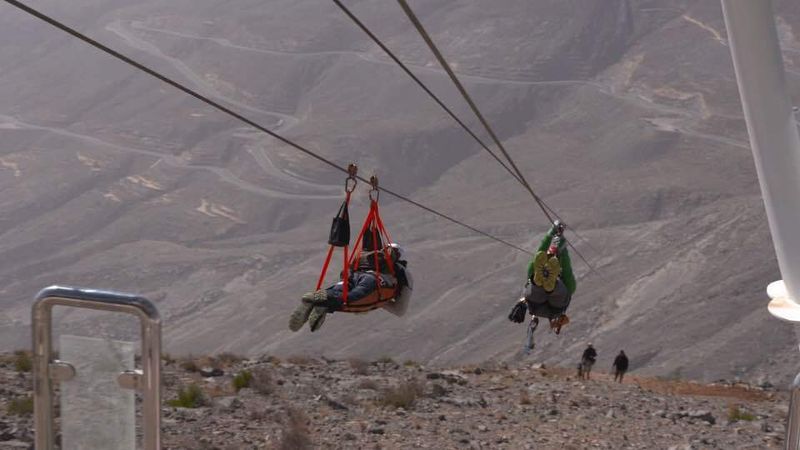
Even if we’re focused on K3, it’s worth understanding what came before. Jebel Jais Flight, still listed by Guinness as the official record holder, is no joke.
Located in the United Arab Emirates, it spans 2,831.88 metres of unbroken cable. That’s nearly three kilometres of continuous flight, which was absolutely mind-blowing when it opened.
Jebel Jais Flight operates at serious altitude, 1,680 metres above sea level in the UAE’s Hajar Mountains. Riders on that zipline reach speeds between 120 and 150 km/h, potentially even faster than K3.
The experience involves flying over dramatic desert mountain terrain that looks completely different from South Africa’s landscape but is equally stunning.
Comparing these two rides shows just how extreme both are. K3 is longer, but Jebel Jais operates at higher altitude and potentially faster speeds.
Both require serious engineering and commitment to safety. Both attract thrill-seekers from around the world.
The “who’s number one” debate almost misses the point, if you’re choosing between them, you’re guaranteed an incredible experience either way.
The existence of these monster ziplines represents how far the adventure tourism industry has evolved. What seemed impossible a decade ago is now operating reality, and the competition to build longer, faster, more extreme attractions continues pushing boundaries worldwide.
Share this story