You’re in the Arabian Desert, surrounded by sand and brutal heat. And then you step through a gate and it hits you: a full-on explosion of color.
More than 150 million flowers shaped into heart arches, oversized butterflies, and even a life-size airplane wrapped in blooms. This is Dubai Miracle Garden, and yes, it’s real. Since opening in 2013, this 72,000-square-metre floral wonder has turned into one of the most photographed places in the UAE.
It’s the kind of spot that makes you stop and think how is any of this growing out here. The answer is a mix of creativity, clever engineering, and serious water management, which proves one thing: with the right plan, you can build a garden anywhere.
1. It really is massive: 72,000 m² of flower-filled pathways
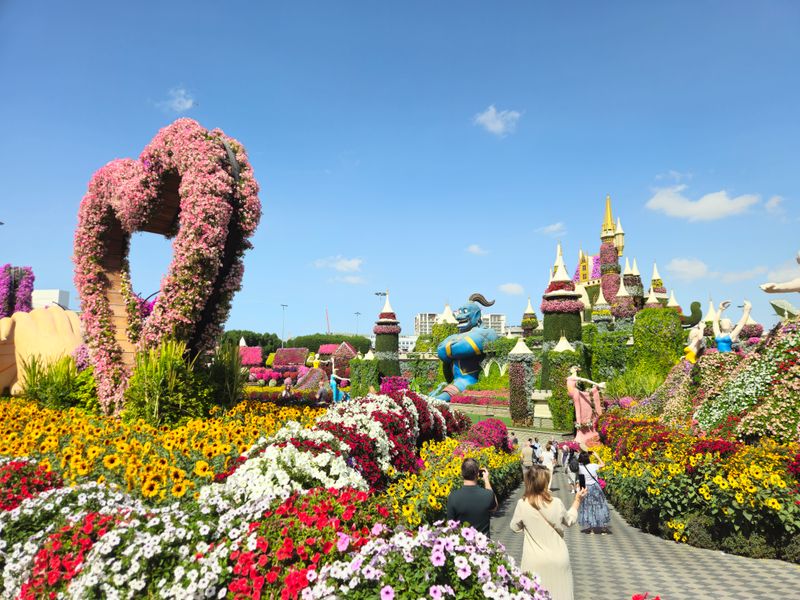
When someone says “garden,” you might picture a backyard with a few rose bushes or a neighborhood park with some tulips. Dubai Miracle Garden throws that image out the window.
We’re talking about 72,000 square metres of pure floral spectacle—that’s roughly the size of ten football fields.
Walking through this place isn’t a quick stroll. You’ll find yourself wandering down pathways lined with petunias, marigolds, and geraniums arranged into tunnels, archways, and elaborate designs.
Each turn reveals something new: a heart-shaped display here, a peacock sculpture there, all built from thousands of living flowers.
The scale alone makes it worth the trip. You can spend two or three hours exploring without covering everything.
Families bring strollers, couples take their time photographing every corner, and solo visitors find quiet benches tucked between blooms.
Because it’s so large, the garden never feels overcrowded, even during peak visiting hours. There’s room to breathe, sit, and take in the colors without bumping into a dozen other tourists.
That space transforms a simple garden visit into a real experience—one where you can slow down, relax, and appreciate the sheer ambition of building something this beautiful in the middle of nowhere.
2. It’s in Dubailand – surrounded by desert landscapes
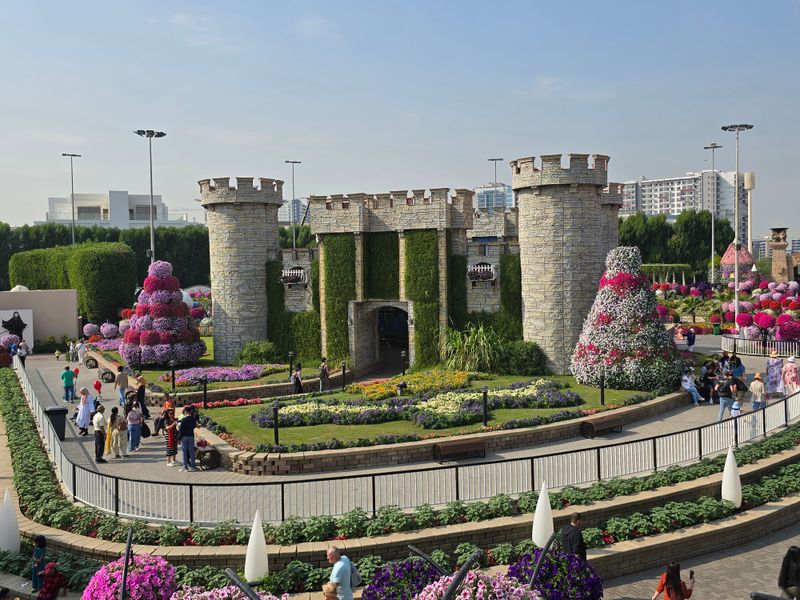
Location matters, especially when you’re trying to understand why this garden feels so surreal. Dubai Miracle Garden sits in Dubailand, a district known more for construction projects and open desert than lush greenery.
Step outside the garden gates, and you’re back in the dry, sandy landscape typical of the Arabian Peninsula.
That contrast is what makes your first visit so memorable. You drive through roads flanked by sand, park your car in a lot surrounded by nothing but beige earth, and then walk through an entrance into a riot of pinks, purples, yellows, and reds.
It’s like stepping through a portal into another climate entirely.
The desert backdrop isn’t just a fun detail—it’s a reminder of the engineering and effort required to keep millions of flowers alive in a place where temperatures regularly hit 40°C in summer. Every bloom you see represents careful planning, irrigation systems working overtime, and a team committed to defying nature’s expectations.
For visitors, the location adds drama. You’re not visiting a garden in a naturally green area where flowers would grow anyway.
You’re witnessing human determination to create beauty where it shouldn’t exist, and that makes every petal feel a little more impressive.
3. ’50 million flowers’ is the famous figure but recent seasons highlight 150 million blooms
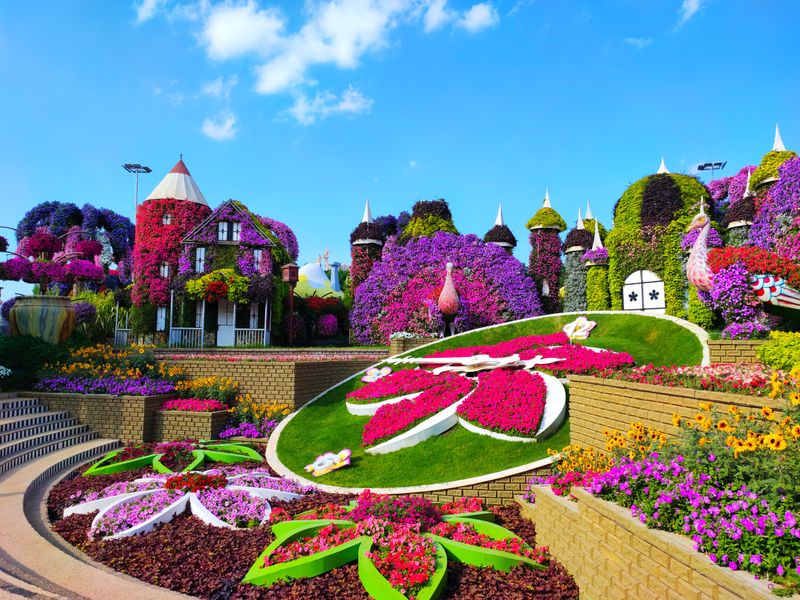
If you’ve read older articles or travel guides about Dubai Miracle Garden, you’ll see the number 50 million flowers repeated everywhere. That figure became the garden’s calling card when it first opened, and it’s still accurate for describing the original scale.
But here’s the thing: the garden has grown, evolved, and expanded since then.
Recent seasons—especially Season 14, which runs from late September 2025 to May 31, 2026—promote over 150 million blooms across the entire site. That’s triple the original number, reflecting years of development, new installations, and bigger displays.
The garden isn’t resting on its early success; it’s constantly adding more.
Why does this matter? Because when you visit, you’re not seeing a static attraction frozen in time.
You’re experiencing the current version, which is far more ambitious than what opened over a decade ago. The sheer volume of flowers means more variety, more colors, and more “how did they do this?” moments as you walk around.
So if someone asks you how many flowers are in Miracle Garden, the safest answer is: tens of millions, with recent seasons featuring over 150 million. That keeps your facts current and reflects the garden’s ongoing expansion into something even more impressive than its already-legendary reputation suggests.
4. It’s seasonal (and that’s part of the magic)
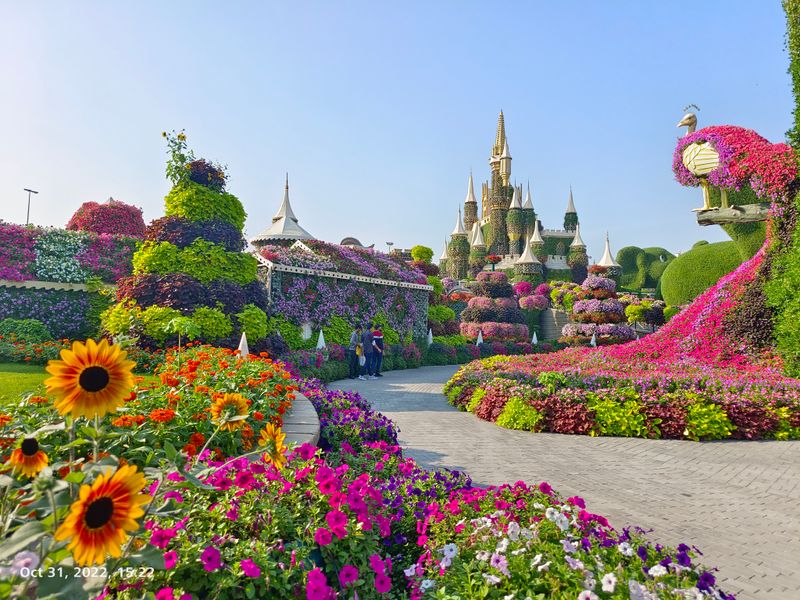
Here’s something that surprises first-time visitors: Dubai Miracle Garden doesn’t stay open year-round. It operates seasonally, typically from late September or early October through the end of May.
Then it closes for the brutal summer months, when temperatures make outdoor flower gardens impossible to maintain—and pretty miserable to visit.
Season 14, for example, runs from late September 2025 to May 31, 2026. During these months, the weather in Dubai is cooler (relatively speaking), making it comfortable to walk around for hours without melting.
The flowers thrive in these conditions, and so do the visitors.
The seasonal schedule isn’t a limitation—it’s part of the garden’s charm. Knowing it’s only open for a limited time each year makes visiting feel more special, like catching a traveling exhibit or a seasonal festival.
You can’t just show up any random day in July and expect the gates to be open.
This approach also gives the garden time to refresh between seasons. The team uses the summer closure to redesign displays, plant new flowers, repair pathways, and plan the next season’s installations.
When the garden reopens, it’s not the same old setup—it’s been reimagined, which keeps repeat visitors coming back to see what’s new.
5. Every season gets refreshed so repeat visits don’t feel repetitive
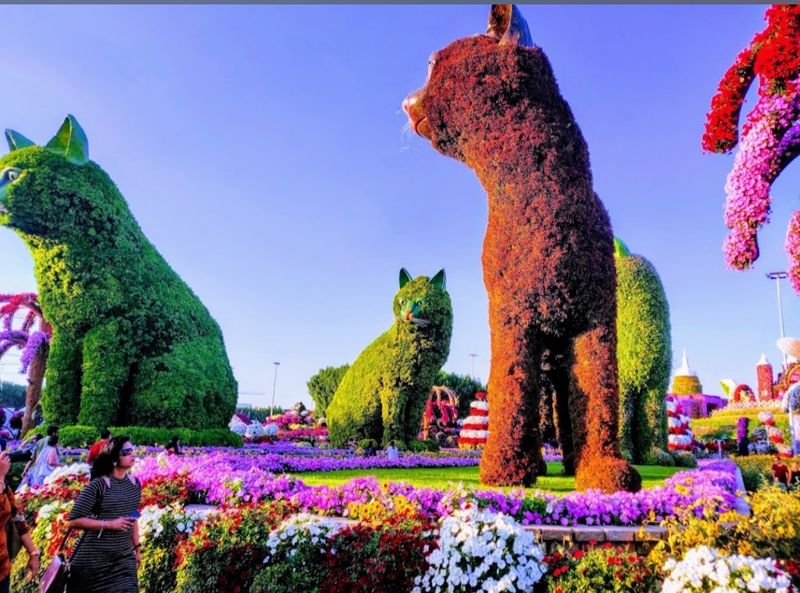
One of the smartest decisions the garden’s creators made was to treat each season as a fresh start. Yes, some iconic installations return year after year—people expect to see certain displays, and it would be disappointing if they vanished.
But the layout, themes, and specific designs change regularly, so your visit in 2024 won’t look identical to someone else’s visit in 2019.
This constant reinvention keeps the garden from becoming stale. If you visit during one season and come back two years later, you’ll recognize the place but also discover new corners, updated sculptures, and different color schemes.
It’s like watching a favorite show that keeps introducing new storylines while maintaining the core characters you love.
For photographers and social media enthusiasts, this is huge. You’re not just replicating someone else’s Instagram post from five years ago.
You’re capturing something current, something that might not exist next season. That uniqueness adds value to your photos and your experience.
The refresh also shows respect for repeat visitors. Families living in Dubai or frequent travelers to the city can make Miracle Garden a regular stop without feeling like they’re seeing the same thing over and over.
Each season offers a reason to return, explore, and rediscover the garden with fresh eyes.
6. The floral sculptures are the real ‘wow’ – not just the flowers
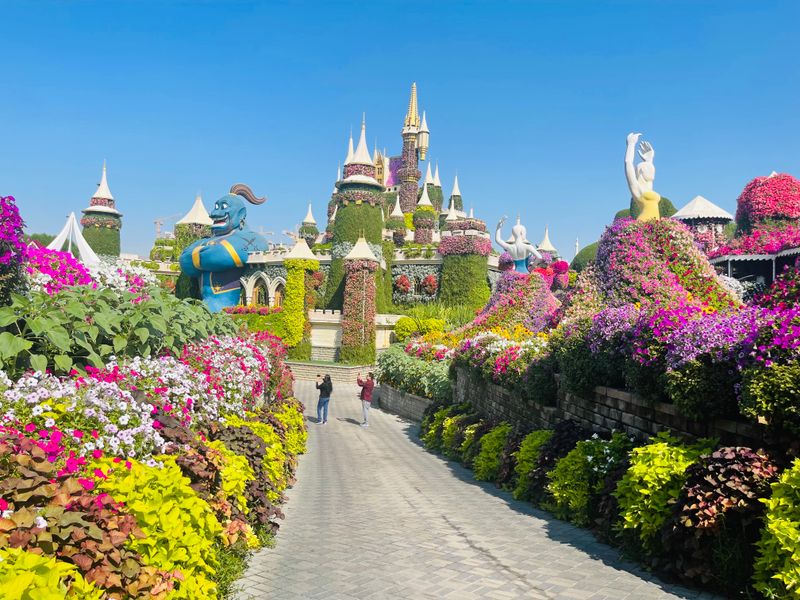
Dubai Miracle Garden isn’t trying to be a quiet botanical collection where you study plant species and read educational plaques. It’s built for spectacle, and that means the real stars aren’t individual flowers—they’re the massive, gravity-defying sculptures created from flowers.
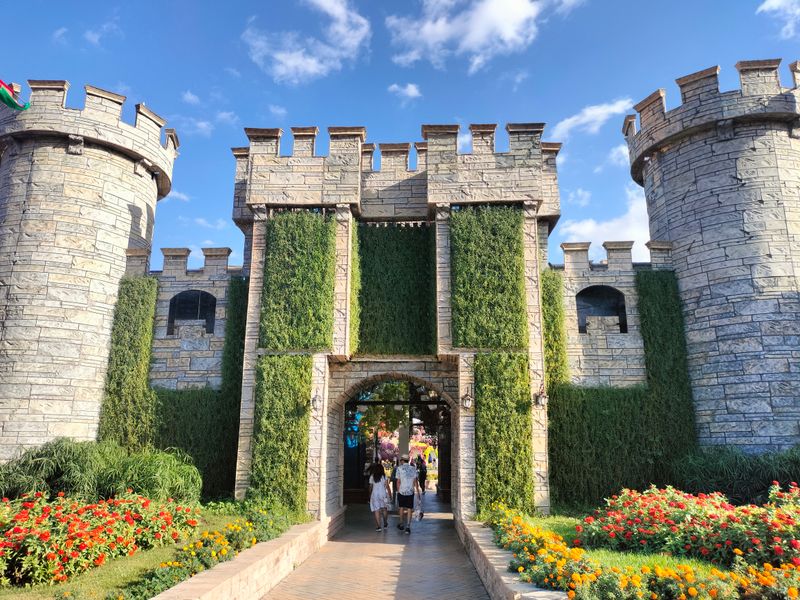
Think life-size castles, towering hearts, whimsical cartoon characters, and elaborate tunnels, all covered in living blooms.
These structures turn a simple garden walk into something closer to a theme park experience. You’re not just admiring pretty petals; you’re standing under a 20-foot archway made entirely of marigolds or posing next to a giant floral clock that actually tells time.
The scale and creativity make you stop and wonder how anyone engineered these displays without the flowers wilting or the structures collapsing.
Each sculpture is designed with Instagram in mind—bright, photogenic, and impossible to ignore. But they’re also genuinely impressive from an artistic and engineering standpoint.
The garden’s team has to consider weight distribution, irrigation access, sunlight exposure, and visual impact, all while working with living materials that grow, change, and eventually need replacing.
For kids, these sculptures are pure magic. For adults, they’re a reminder that gardens don’t have to be serious or subdued.
Sometimes, the best way to celebrate nature is to go big, bold, and unapologetically over-the-top.
7. The Emirates A380 floral display is a record-maker
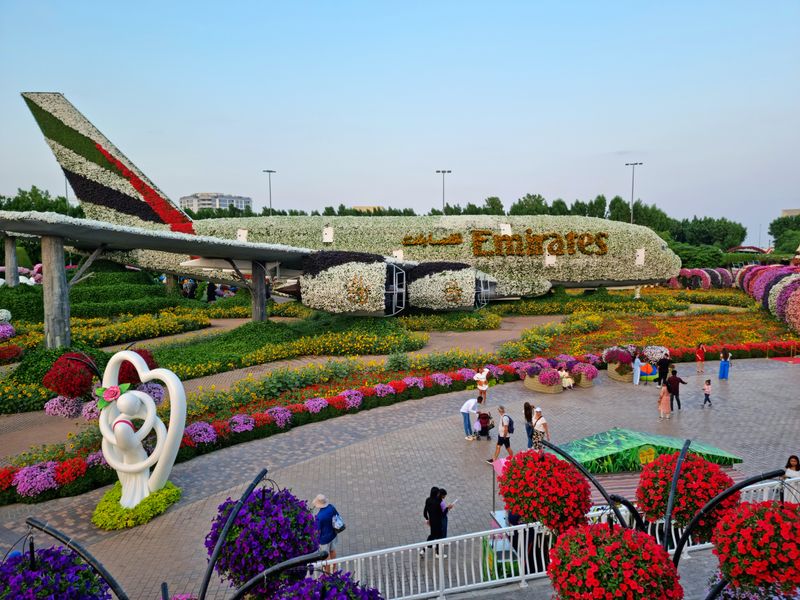
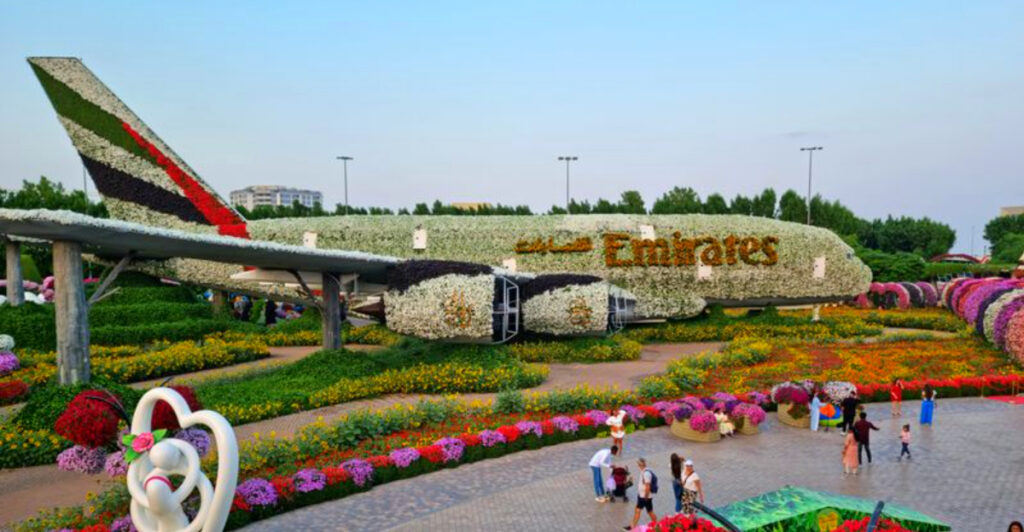
If there’s one installation that makes people stop mid-sentence and pull out their phones, it’s the Emirates A380 covered entirely in flowers. This isn’t a small model or a symbolic representation—it’s a life-size replica of the world’s largest passenger aircraft, and every inch is blanketed in blooms.
The display holds a Guinness World Records title, recognized as the largest floral installation of its kind. Standing next to it, you get a real sense of the ambition behind Miracle Garden.
Creating a flower-covered airplane isn’t just about planting petunias; it requires structural engineering, precise irrigation systems, and a team capable of maintaining thousands of flowers on a curved, elevated surface.
The A380 installation is also a perfect example of Dubai’s love for breaking records and doing things bigger than anywhere else. It’s not enough to have a nice garden—they built a garden with a record-breaking airplane made of flowers.
That’s the Dubai way, and visitors eat it up.
Photographers love this spot because it offers so many angles: wide shots showing the entire plane, close-ups of the floral details, and selfies with the aircraft looming in the background. It’s become one of the garden’s most iconic images, appearing in travel blogs, Instagram feeds, and tourism campaigns worldwide.
If you visit Miracle Garden and skip the A380, you’re missing the headline act.
8. It’s not just two records – there are multiple Guinness titles tied to the garden
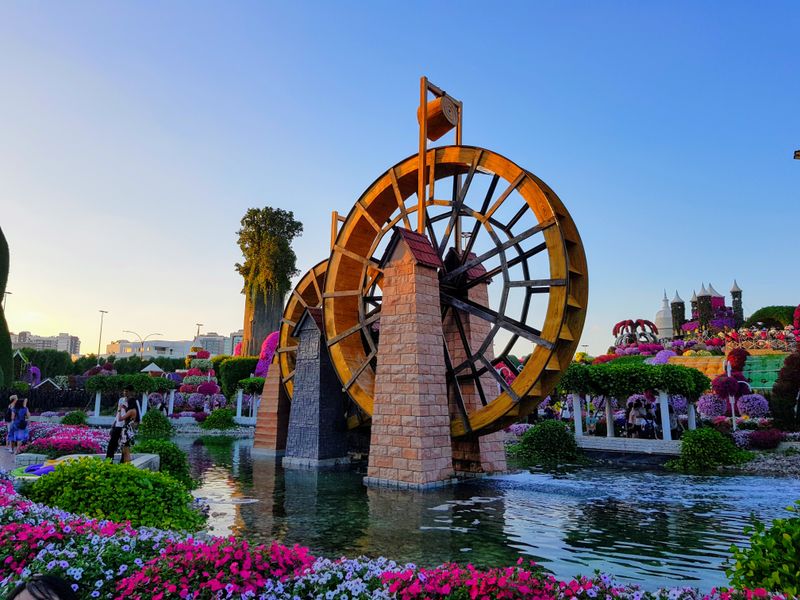
Travel articles often mention that Dubai Miracle Garden holds “two Guinness World Records,” referring to the A380 and Mickey Mouse installations. But that’s underselling the garden’s achievements.
The site is associated with more than two Guinness recognitions, reflecting multiple record-breaking displays and ongoing efforts to create the biggest, tallest, or most elaborate floral structures on the planet.
Why does this matter? Because it shows the garden isn’t resting on past success.
The team actively pursues new records, designs installations with record-breaking potential, and maintains the standards required to keep existing titles. That ambition keeps the garden relevant and ensures it remains a must-visit destination rather than a one-time novelty.
For visitors, the multiple records add layers of interest. You’re not just walking through a pretty garden—you’re experiencing a collection of world-class achievements.
Each record-holding installation comes with a story about how it was conceived, built, and maintained, adding educational value to the visual spectacle.
The Guinness titles also serve as marketing gold. They give the garden credibility, attract media attention, and provide concrete bragging rights.
When you tell friends you visited a garden with multiple world records, it sounds a lot more impressive than saying you saw some nice flowers. Those records transform Miracle Garden from a regional attraction into a global landmark worth traveling for.
9. The place is built for photos without feeling like you’re stuck in one photo spot
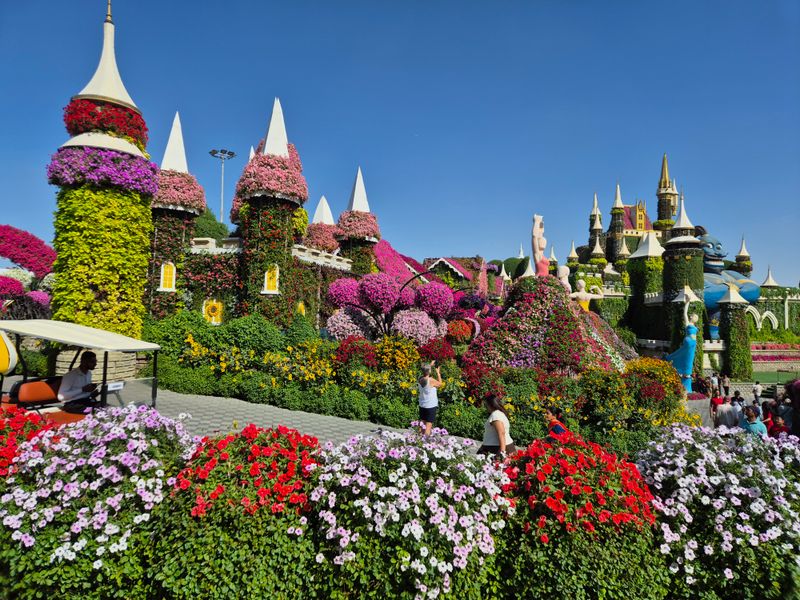
Yes, Dubai Miracle Garden is incredibly Instagrammable—that’s not an accident. The designers knew people would want to photograph every corner, so they built in variety, ensuring you’re not competing with fifty other visitors for the same shot.
Instead of one or two designated photo spots, the entire garden offers endless angles, perspectives, and backdrops.
You’ll find flower tunnels where you can shoot down the length for a vanishing-point effect, wide pathways perfect for capturing the scale, elevated viewing points for overhead shots, and intimate corners where you can focus on details. Themed areas provide different color palettes and moods, so your photo collection will show range rather than repetition.
This variety matters because it keeps the experience fun rather than frustrating. You’re not waiting in line for your turn at a single Instagram wall.
You’re exploring, discovering new spots organically, and choosing which displays speak to you personally. That freedom makes the garden feel less like a staged attraction and more like a real adventure.
For content creators, this is paradise. You can spend hours shooting and come away with dozens of unique images, each showcasing a different aspect of the garden.
For casual visitors, it means your vacation photos will actually look different from everyone else’s, capturing your personal journey through the garden rather than replicating generic tourist shots.
10. You’re allowed to wander for hours but it’s comfortable to do so
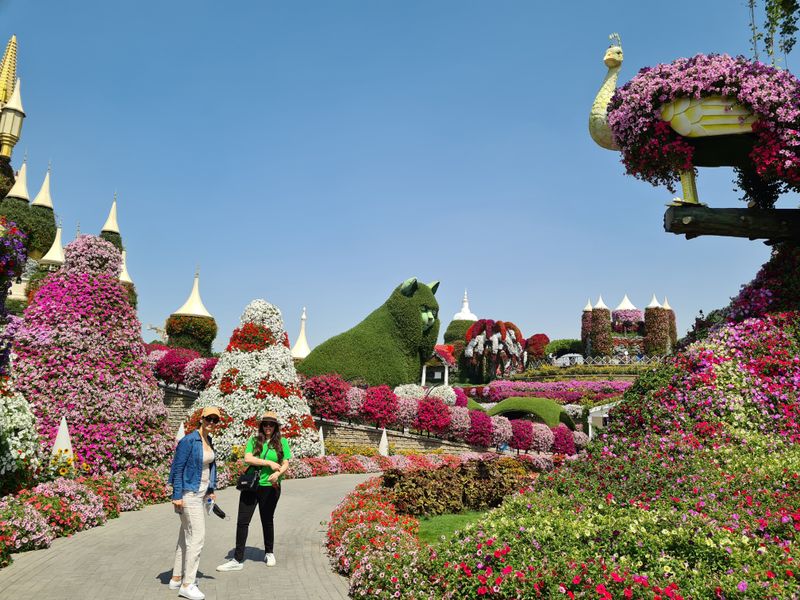
A garden this size could easily become exhausting if it weren’t designed with visitor comfort in mind. Fortunately, the creators thought about the practical side of hosting thousands of people daily.
You’ll find sitting areas scattered throughout the garden, giving you places to rest, regroup, and take breaks without having to leave the attraction entirely.
These rest spots aren’t afterthoughts—they’re integrated into the design, often positioned near particularly beautiful displays so you can sit and enjoy the view. Benches appear along pathways, shaded areas offer relief from the sun, and facilities are strategically placed so you’re never too far from restrooms or water fountains.
This attention to comfort matters, especially when you’re visiting during the warmer parts of the season. Even in Dubai’s cooler months, walking for two or three hours straight can be tiring.
Having places to sit, cool down, and recharge means you can actually enjoy the full garden experience without rushing through or leaving early because your feet hurt.
Families with young children particularly appreciate this setup. Kids can run around, explore, and then collapse on a bench when they need a break.
Parents can take their time without worrying that their toddler will have a meltdown because there’s nowhere to rest. It’s these small details that transform a potentially stressful outing into a genuinely pleasant day.
11. There are around 30 food and beverage vendors inside

Spending hours walking through a massive garden works up an appetite, and the last thing you want is to realize you need to leave the attraction entirely just to grab a snack. Dubai Miracle Garden solves this problem with around 30 food and beverage vendors spread throughout the site, offering everything from quick bites to cold drinks.
These aren’t elaborate sit-down restaurants—they’re kiosks and stalls designed for convenience. You can grab ice cream to cool down, pick up a sandwich or shawarma, or just buy a bottle of water and keep moving.
The variety means you’re not stuck with one option; you can choose based on your mood, dietary preferences, or budget.
The placement of these vendors is smart, too. They’re distributed across the garden so you don’t have to backtrack to a single food court.
When you feel hungry or thirsty, there’s usually a vendor nearby, making it easy to refuel and continue exploring without losing momentum.
For families, this setup is especially helpful. Kids get cranky when they’re hungry, and having accessible food options means you can address snack emergencies immediately rather than dealing with a meltdown while searching for the exit.
It’s another example of how Miracle Garden prioritizes visitor experience, ensuring that practical needs don’t interfere with enjoying the flowers.
12. It uses efficient irrigation practices (yes – because it’s the desert)
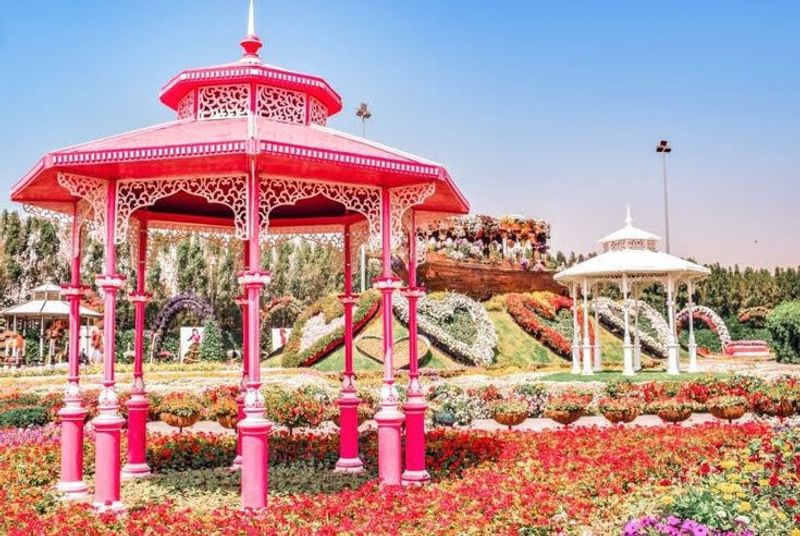
The question everyone asks when they hear about Miracle Garden is: “How do you keep millions of flowers alive in the desert?” The answer lies in smart water management, specifically drip irrigation systems and the reuse of treated wastewater. This isn’t a garden that wastes precious resources—it’s designed to be as efficient as possible given the challenging environment.
Drip irrigation delivers water directly to the roots of plants, minimizing evaporation and ensuring every drop counts. This method is far more efficient than traditional sprinklers, especially in a climate where water can evaporate within minutes of hitting the ground.
The system is automated and runs primarily after the garden closes to visitors, reducing water loss during the hottest parts of the day.
The garden also reportedly uses treated wastewater, which is common practice in Dubai’s landscaping industry. This approach reduces the demand on freshwater supplies while still providing plants with the hydration they need.
It’s a practical solution that allows the garden to exist without creating an environmental disaster.
For visitors, understanding these practices adds depth to the experience. You’re not just looking at pretty flowers—you’re witnessing an example of how technology and creativity can overcome natural limitations.
The garden becomes a symbol of innovation, showing that with the right systems in place, even the most ambitious projects can be sustainable.
13. You can pair it with the Dubai Butterfly Garden next door
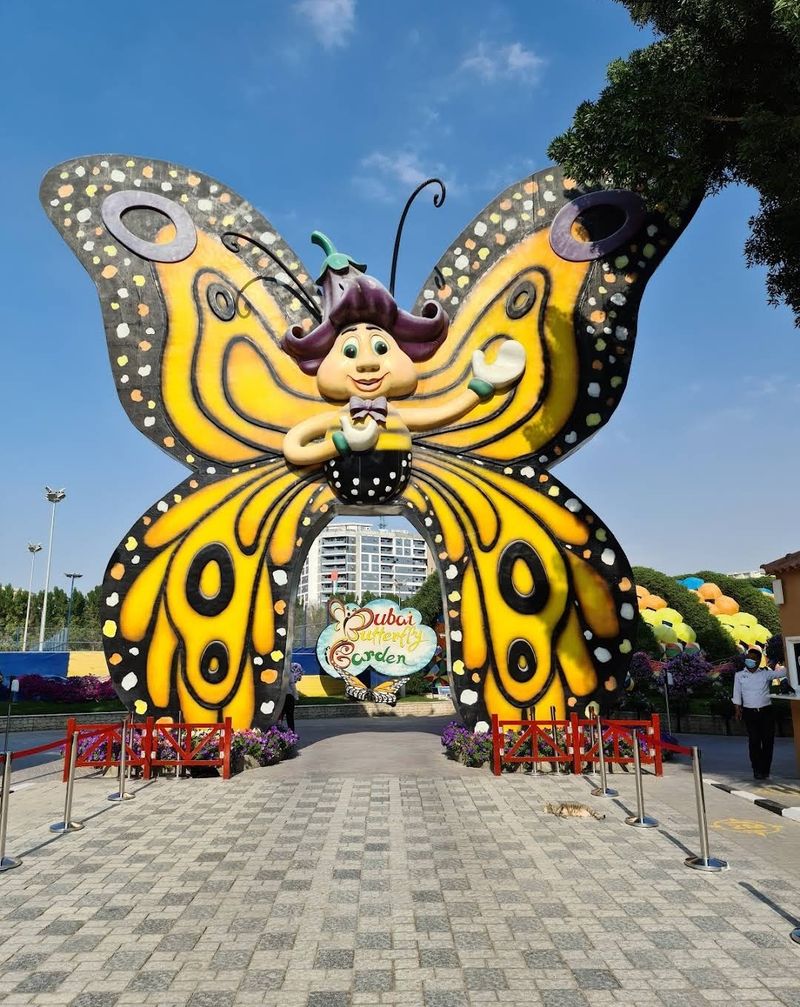
If you’re planning a visit to Miracle Garden and want to maximize your trip, consider adding the Dubai Butterfly Garden to your itinerary. Located right next door, it’s described as the region’s first indoor butterfly garden, housing over 15,000 butterflies representing multiple species from around the world.
The Butterfly Garden operates as a separate attraction, but its proximity makes it an easy add-on. You can spend a few hours exploring the flowers at Miracle Garden, then step next door into a climate-controlled environment filled with butterflies fluttering around tropical plants.
It’s a completely different experience—more intimate, quieter, and focused on a single type of creature rather than massive floral displays.
For families, this combination works perfectly. Kids who might get bored after seeing “just flowers” will be thrilled to interact with butterflies, watching them land on leaves or even, with luck, on their hands.
The indoor setting also provides a break from the heat, which is a relief even during Dubai’s cooler months.
Together, Miracle Garden and Butterfly Garden create a half-day or full-day outing that covers multiple interests. Flower lovers get their fix, nature enthusiasts enjoy the butterflies, and photographers find new subjects to capture.
It’s a smart pairing that turns a single attraction visit into a more comprehensive experience worth the travel time and ticket cost.
14. The only rule everyone remembers: don’t pick the flowers
It sounds obvious, but when you’re surrounded by millions of flowers that look like they belong in a movie set, the temptation to reach out and pick one is real. That’s why the most important rule at Miracle Garden is simple: don’t pick the flowers.
Stay on the pathways, admire from a respectful distance, and resist the urge to take a souvenir home.
This rule exists for good reason. Every flower you see is part of a carefully designed display that took weeks or months to plan and install.
Picking even one bloom disrupts the visual effect and damages the work of the garden’s maintenance team. Multiply that by thousands of daily visitors, and you’d quickly have a garden full of gaps and ruined installations.
The garden staff takes this rule seriously, and there are reminders posted throughout the site. It’s not about being strict or unfriendly—it’s about preserving the experience for everyone.
When visitors respect the displays, future guests get to enjoy the same beauty, and the garden can continue operating as a living exhibition rather than a picked-over field.
For most people, following this rule is easy once they understand the reasoning. The flowers are there to be enjoyed visually, photographed, and appreciated as part of a larger artistic vision.
Respecting that vision means everyone wins—you get your perfect photos, the garden stays intact, and the flowers live to bloom another day.
Share this story