When most hikers pack away their boots for the season, Oregon’s trails are just hitting their stride. Winter transforms the state’s landscapes into something almost otherworldly: waterfalls swell to thunderous crescendos, coastal headlands turn wild and windswept, and forests glow with that deep emerald green that only comes after weeks of rain.
From the Columbia Gorge to the rugged southern coast, these fourteen trails prove that Oregon might actually be at its most stunning, also when the temperatures drop and the crowds disappear.
1. Trail of Ten Falls (Open Winter Route) – Silver Falls State Park
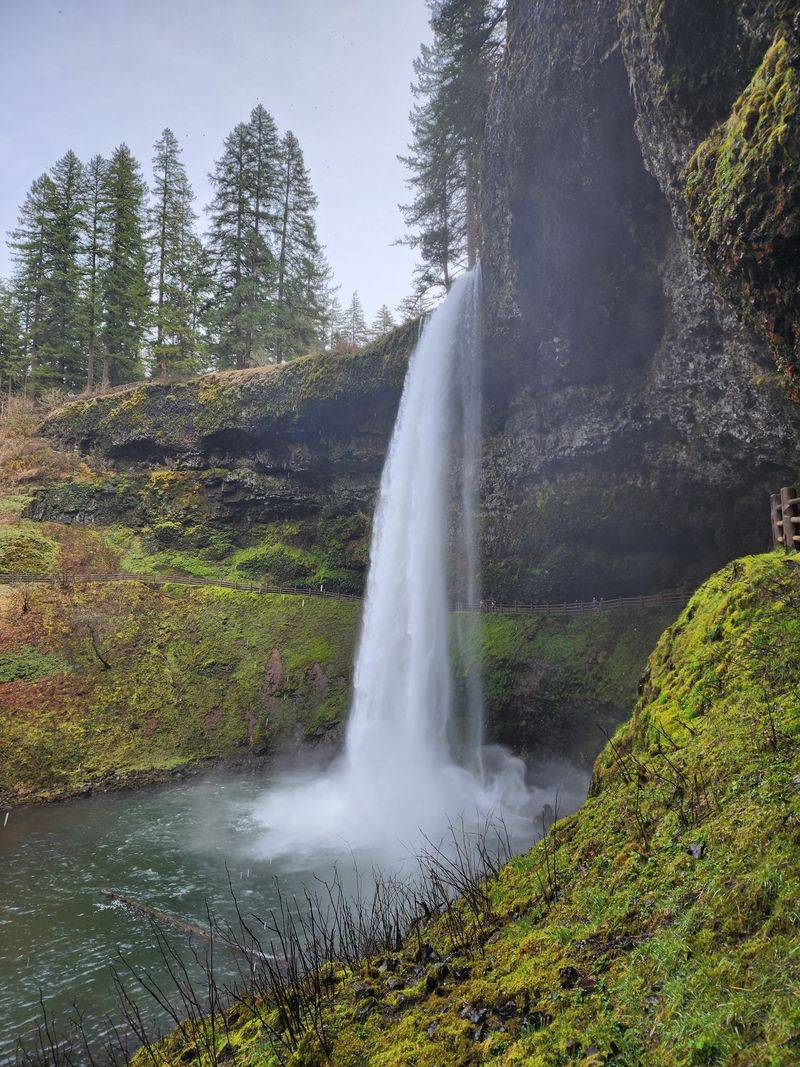
Silver Falls delivers one of the Pacific Northwest’s most iconic waterfall experiences, and winter cranks everything up to eleven. The park currently offers a 5-mile loop that takes you past multiple cascading falls, including the famous walk-behind-the-water moments that make this place legendary.
When winter rains arrive, these waterfalls transform from pretty trickles into roaring curtains of whitewater.
The misty canyon atmosphere during colder months creates an almost mystical feeling as you wind through old-growth forest. Fewer visitors mean you might have entire stretches to yourself, something nearly impossible during summer peak season.
The basalt cliffs glisten with moisture, and every fern seems to glow with an impossible shade of green.
Some trail sections remain closed due to storm damage, but the accessible 5-mile route still packs in plenty of waterfall magic. Wear waterproof layers because you’ll definitely get sprayed near the bigger falls.
The combination of solitude, thundering water, and that signature Oregon dampness makes this winter hike feel like stepping into a nature documentary.
Pack traction devices if temperatures have been below freezing, as boardwalks and stone steps can get slippery.
2. Misery Ridge Loop – Smith Rock State Park
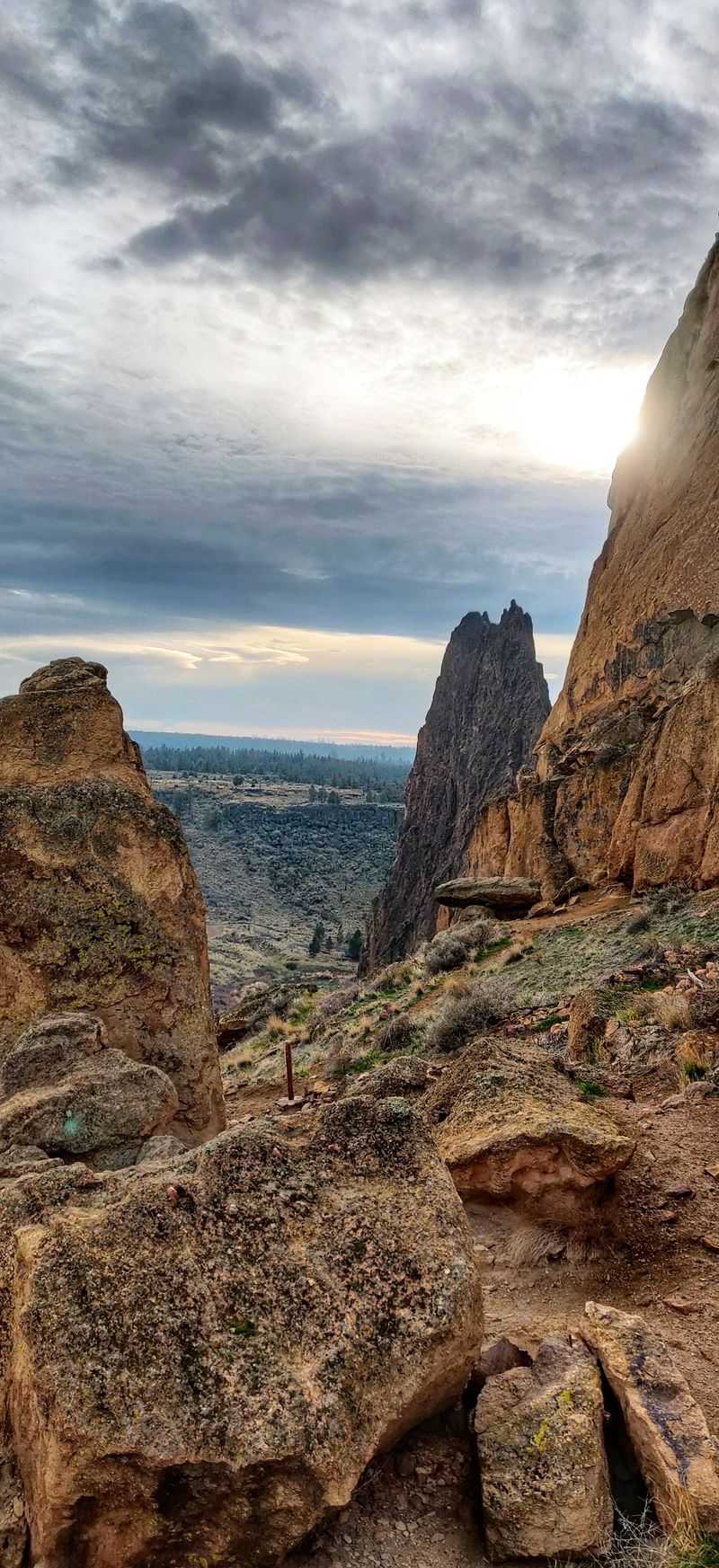
Central Oregon’s high desert scenery couldn’t be more different from the state’s rainy westside forests. Smith Rock juts skyward in dramatic volcanic spires that glow golden-orange against impossibly blue winter skies.
The Misery Ridge Loop earns its name on the initial climb, but the payoff views make every huffing step worthwhile.
Winter brings crystalline air that sharpens visibility for miles. On clear days, you’ll spot snow-dusted Cascade peaks lining the western horizon while standing atop the ridge.
The Crooked River winds through the canyon below, its curves creating natural artwork when viewed from above.
This 3.7-mile loop attracts rock climbers year-round, so you’ll likely watch athletes scaling the famous formations while you hike. The elevation gain hits around 800 feet, mostly concentrated in that initial push up the ridge.
Once you’re on top, the trail mellows out and the panoramas just keep coming.
Central Oregon winters tend toward cold but often dry conditions, making this an excellent option when westside trails are drowning in mud. Bring layers because exposed ridgeline sections can get windy.
The combination of geological drama and big-sky views creates hiking that feels more Southwest than Pacific Northwest.
3. Latourell Falls Loop – Columbia River Gorge
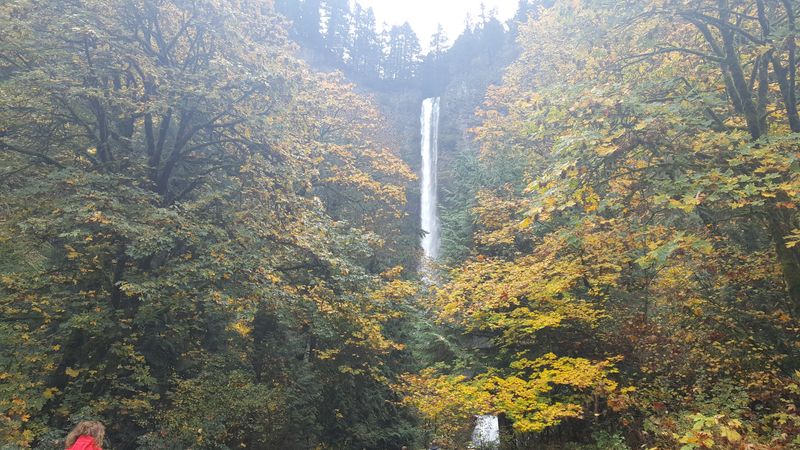
Just thirty minutes from Portland, Latourell Falls crashes 224 feet down a textbook example of columnar basalt. The hexagonal rock columns look almost too geometrically perfect to be natural, like some ancient architect carved them deliberately.
Winter rains turn the falls from impressive to absolutely thunderous, sending spray that can reach the viewing areas.
The loop trail option adds forest hiking to the waterfall viewing, taking you up and around for different perspectives. Moss covers every available surface during wet months, glowing in shades of chartreuse and emerald that seem almost fluorescent.
The entire canyon takes on a primordial atmosphere when fog rolls through.
This shorter hike works perfectly for a quick nature fix or as part of a larger Gorge waterfall tour. The proximity to Portland means it can still see visitors even in winter, but nothing like the summer crowds.
Expect muddy conditions on the upper loop section, and watch for ice on stone steps during cold snaps.
The roar of high-flow water echoing off basalt walls creates a soundtrack you’ll feel in your chest. Photographers love the combination of geometric rock formations and flowing water, especially when winter light filters through the canyon.
4. Cape Lookout Trail – Cape Lookout State Park
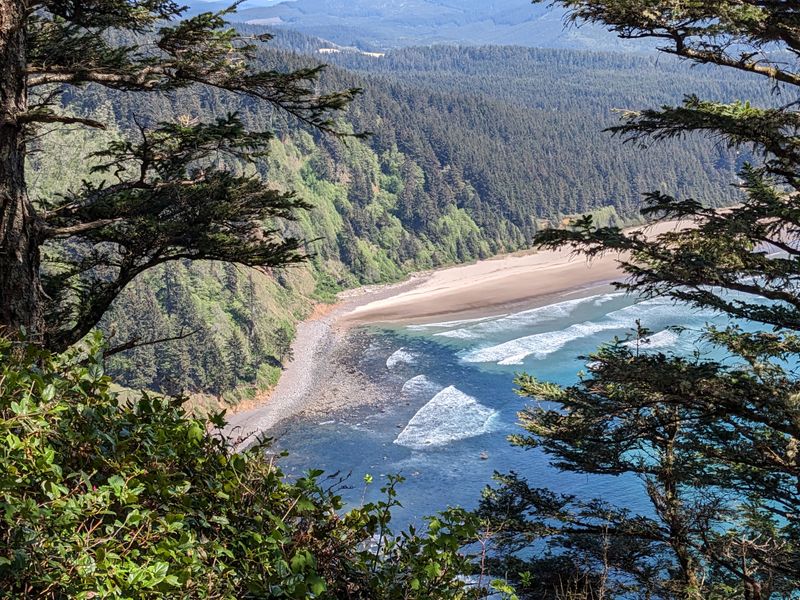
Jutting nearly a mile into the Pacific, Cape Lookout delivers ocean drama without requiring mountain climbing skills. The 5-mile round-trip cape trail cuts through old-growth Sitka spruce and hemlock before emerging onto the windswept headland.
Winter storms turn the Pacific into a churning showcase of nature’s raw power visible from the forested promontory.
The trail stays mostly level as it follows the cape’s spine, making it accessible for hikers who want big scenery without brutal elevation gain. On clear winter days, visibility can extend for miles up and down the Oregon coast.
You might spot gray whales migrating offshore during their winter journey south.
Weather can change rapidly out here, so pack rain gear even if skies look promising at the trailhead. The forest sections provide some wind protection, but the cape’s tip can get absolutely blasted during storms.
That’s actually part of the appeal for storm-watching enthusiasts who time their visits with approaching weather systems.
The combination of towering trees and crashing surf creates quintessential Oregon coast atmosphere. Winter’s moody skies and dramatic light make every view feel like a landscape painting.
Just keep a respectful distance from cliff edges, especially when conditions are wet and windy.
5. Cape Falcon Trail – Oswald West State Park
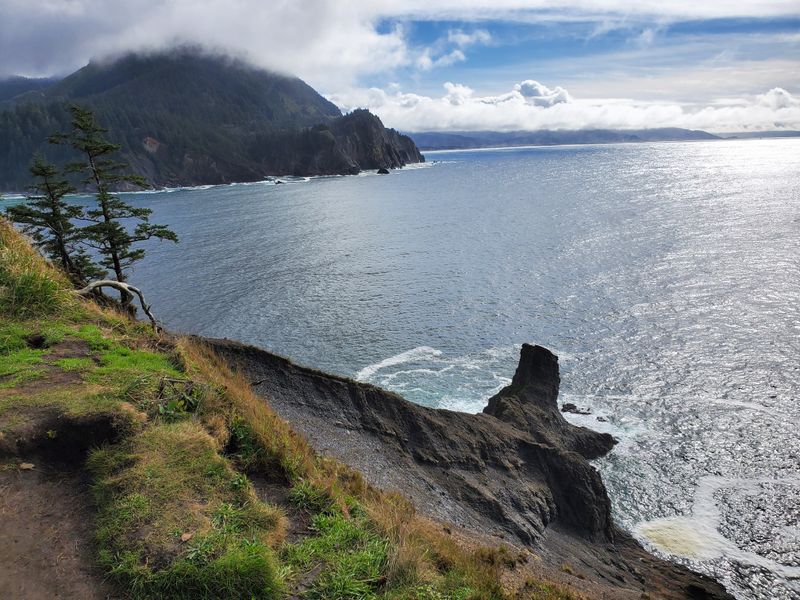
Oswald West packs incredible coastal diversity into a relatively compact area, and the Cape Falcon trail showcases the park’s signature blend of temperate rainforest and rugged shoreline. Ancient Sitka spruce tower overhead as you wind toward the cape, their massive trunks disappearing into winter fog.
The trail delivers that classic north coast feeling where forest and ocean exist in constant conversation.
Winter amplifies everything atmospheric about this hike. Fog drifts through the canopy like something alive, and the distant roar of surf provides constant background ambiance.
The trail undulates gently through the forest before emerging at viewpoints where the Pacific stretches to the horizon.
Muddy sections are guaranteed during wet months, so waterproof boots make the experience much more pleasant. The approximately 5-mile round-trip gives you enough time to properly soak in the moody coastal atmosphere.
Watch for Roosevelt elk that sometimes browse near the trail, especially in quieter winter months.
The combination of massive trees and ocean views creates scenery that feels uniquely Oregon. Winter’s subdued light makes the greens appear even more saturated and the coastal rocks more dramatic.
This trail rewards hikers who appreciate atmosphere as much as destination, where the journey through misty forest matters as much as the cape viewpoints.
6. Clatsop Loop Trail – Ecola State Park
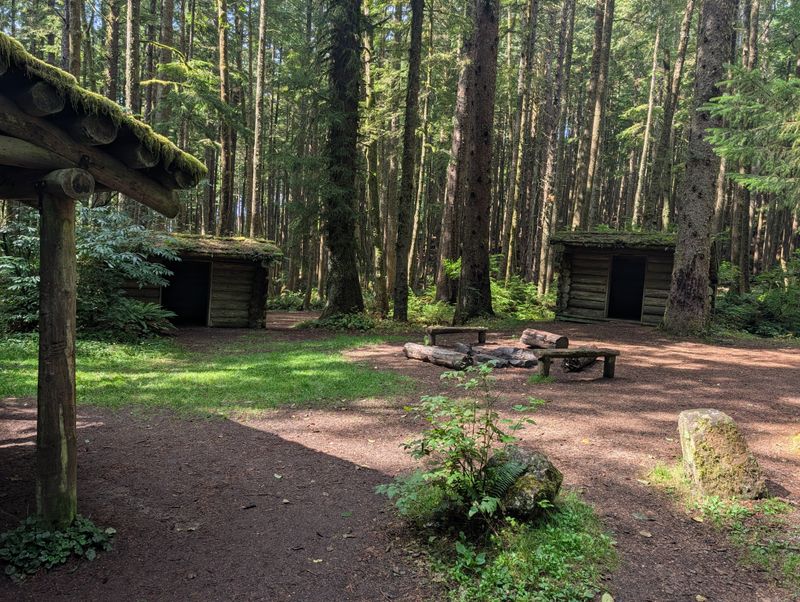
Ecola State Park sits at the northern edge of Oregon’s coast, where forested headlands plunge toward the Pacific in spectacular fashion. The Clatsop Loop combines forest hiking with ocean overlooks, wrapping through giant spruce while delivering viewpoints that can stop you mid-stride.
Winter transforms this already-dramatic landscape into something that belongs on a postcard about the wild Northwest coast.
Year-round access means you can experience Ecola’s magic even when other parks close seasonal facilities. The loop trail winds through cathedral-like groves of old-growth spruce, their trunks wider than most people are tall.
When you emerge at viewpoints, the Pacific spreads out below in shades of gray-green that shift with changing light.
Winter surf here can be absolutely massive, sending spray that climbs dozens of feet up rocky outcrops. The park’s location makes it prime territory for storm watching when systems roll in off the ocean.
Fewer summer crowds mean you might share the trail with just a handful of other hikers seeking that moody coastal atmosphere.
Tillamook Rock Lighthouse sits offshore like a sentinel, adding historical interest to the natural scenery. The combination of crashing waves, towering trees, and misty headlands creates hiking that feels primordial and powerful, especially when winter weather adds its dramatic touch.
7. Natural Bridges Area – Samuel H. Boardman State Scenic Corridor
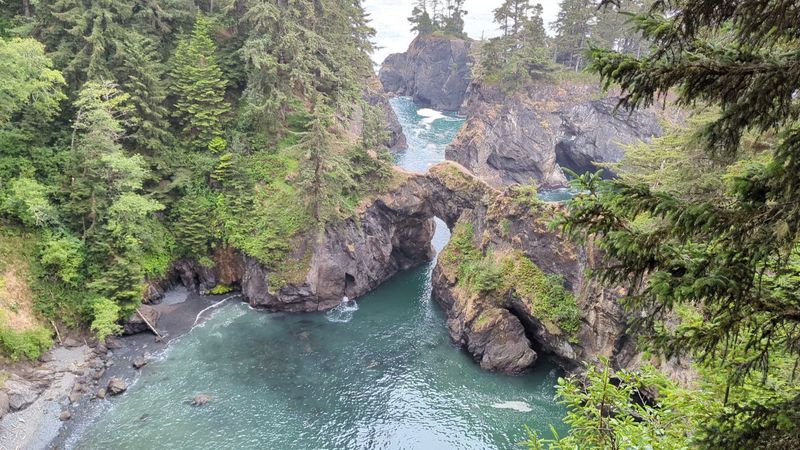
The Samuel H. Boardman Corridor packs twelve miles of the most photogenic coastline in Oregon, and the Natural Bridges area ranks among its greatest hits.
Rock arches carved by millennia of wave action create windows to the churning Pacific beyond. Winter storms send waves that explode against these formations with enough force to shake the viewing platforms.
Short trails from Highway 101 lead to overlooks where the geological drama unfolds below. The rugged bluffs and sea stacks here look like they were designed by an artist obsessed with dramatic compositions.
Winter light, often filtered through clouds or mist, adds a moody quality that makes every view feel cinematic.
This stretch of coast sees fewer visitors than more famous northern destinations, giving winter hikers even more solitude. The trails themselves are relatively easy, making the spectacular scenery accessible without requiring advanced hiking skills.
Watch for spouting blowholes when big swells arrive, sending spray skyward through cracks in the rock.
The wild, untamed character of this coastline feels especially pronounced during winter months. Bring binoculars for wildlife watching, as seabirds and marine mammals frequent these waters.
The combination of crashing surf, sculptural rock formations, and that sense of being at the edge of the continent creates unforgettable coastal hiking.
8. Secret Beach Trailhead Area – Samuel H. Boardman Corridor
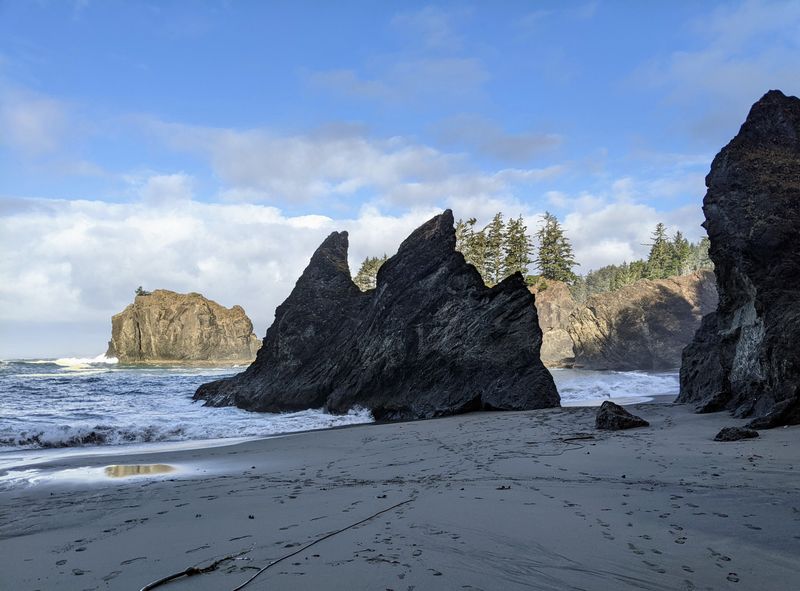
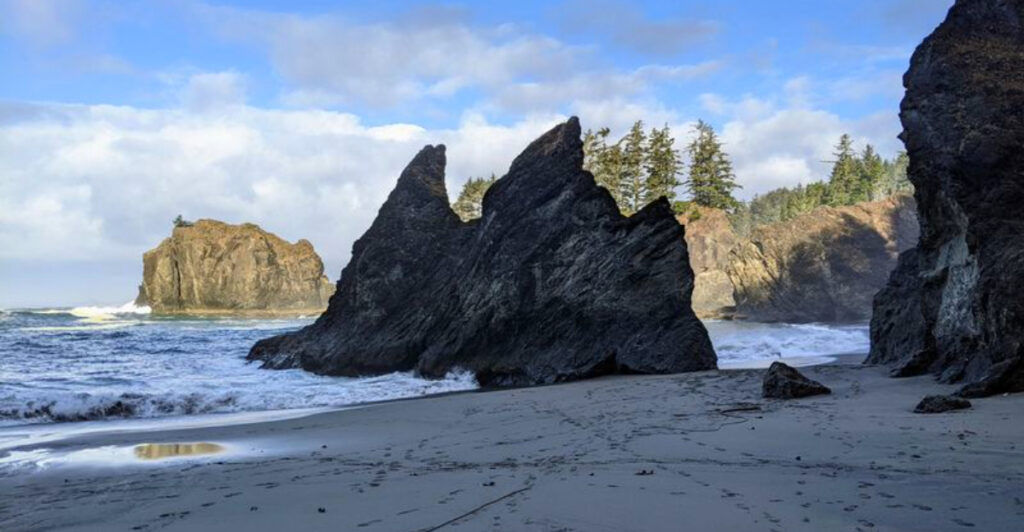
Some places earn their names honestly, and Secret Beach delivers on the promise of hidden coastal magic. A short trail drops down to a cove flanked by towering rock formations and sea stacks that create an almost enclosed feeling.
Winter transforms this already-photogenic spot into something that looks plucked from a fantasy novel, with mist swirling around the rocks and waves rolling in with hypnotic rhythm.
The relatively easy access makes this a favorite stop along the Boardman Corridor, but winter’s smaller crowds mean you might have the entire cove to yourself. Driftwood scattered across the sand creates natural sculptures, and tidepools in the rocky areas teem with life if you visit during low tide.
The surrounding cliffs provide some wind protection, making the beach feel like a sanctuary.
Winter storms rearrange the beach constantly, so each visit can reveal different configurations of sand and stone. The light during winter months tends toward soft and diffused, perfect for photography.
Massive waves during storm conditions make this a watch-from-a-distance spot, not a wading destination.
The combination of accessibility and dramatic scenery makes Secret Beach a perfect quick stop or a destination for longer beach exploration. Just remember that sneaker waves can appear without warning along the Oregon coast, so maintain awareness even when conditions seem calm.
9. Captain Cook Trail to Cook’s Chasm (Spouting Horn viewpoints) – Cape Perpetua Scenic Area
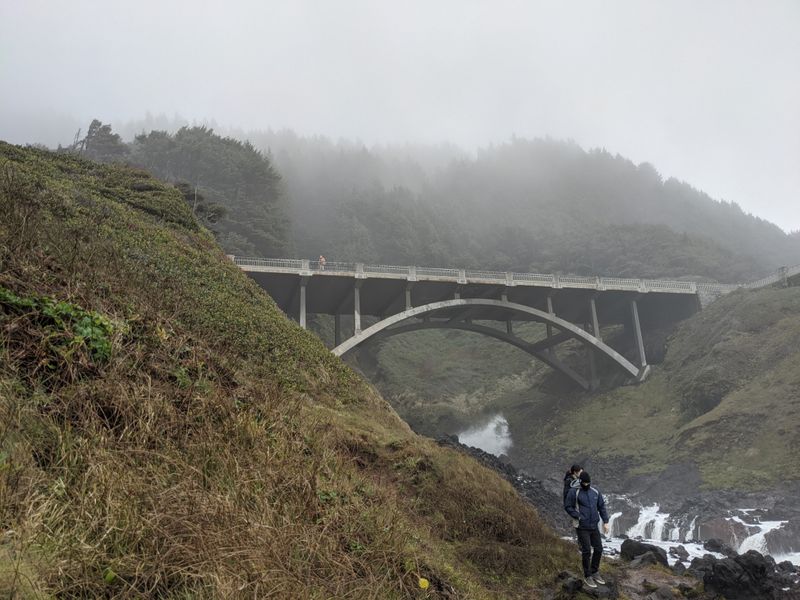
Cape Perpetua rises 800 feet directly from the Pacific, creating some of the most dramatic coastal scenery in Oregon. The Captain Cook Trail descends to the shoreline where tidal forces have carved features like Cook’s Chasm and the Spouting Horn.
During winter high tides, waves compress into narrow channels and explode skyward in spectacular fashion, sending spray that can reach startling heights.
The Forest Service maintains this area year-round, though the visitor center is currently closed for remodeling. Parking and restroom facilities remain available, and the trails stay open for those seeking tidepool exploration and wave watching.
Winter brings the biggest swells, making the Spouting Horn’s performance especially impressive when timing and tide align.
Timing matters significantly here—visit during high tide for maximum drama, and always maintain a safe distance from the water’s edge. Sneaker waves along this coast have caught countless people off guard, so treat the Pacific with healthy respect.
The basalt shoreline creates excellent tidepool habitat visible during lower tides, offering a different kind of natural wonder.
The combination of forest trails and rocky coastline gives you options for exploration. Winter’s powerful swells showcase the ocean’s raw strength in ways that calmer seasons can’t match.
Just remember that the most spectacular wave action also represents the most dangerous conditions for getting too close.
10. Spencer Butte Summit – Eugene (Ridgeline system)
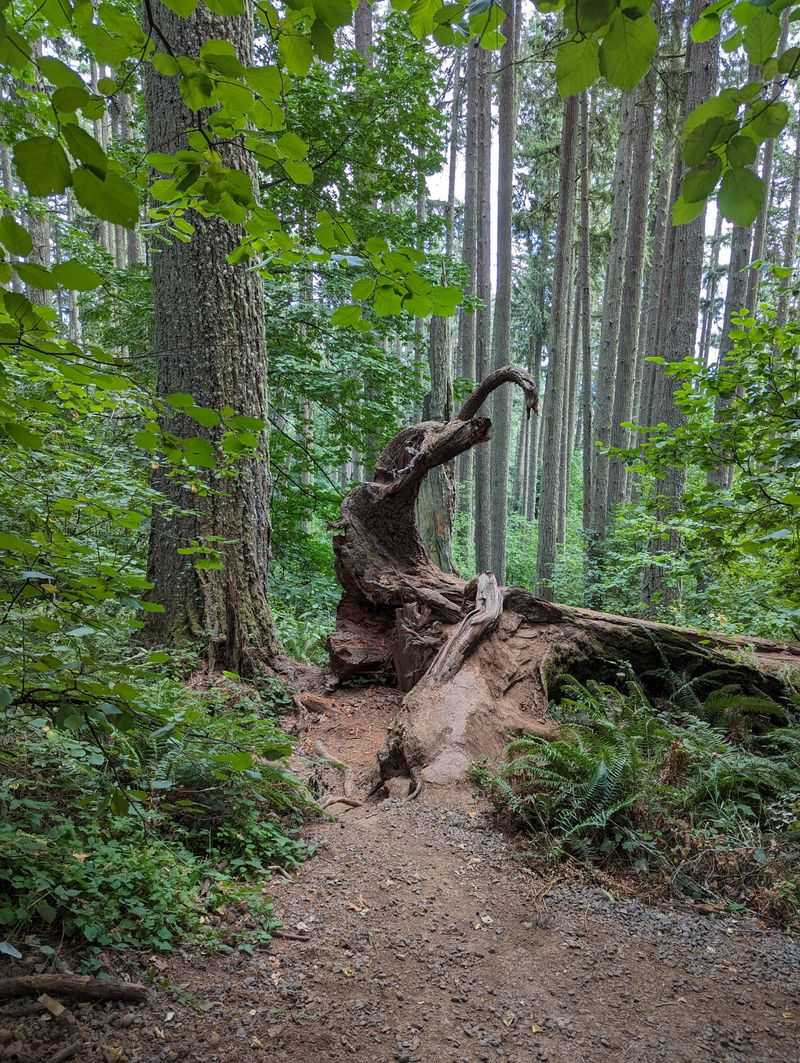
Rising directly from Eugene’s southern edge, Spencer Butte serves as the city’s most recognizable natural landmark. The summit trail climbs through Douglas fir forest before emerging onto rocky outcrops with 360-degree views.
Winter’s clear days deliver the kind of visibility that makes you understand why locals treat this hike like a neighborhood ritual.
Multiple routes lead to the summit, with the most direct path gaining about 800 feet in roughly a mile. It’s steep enough to get your heart pumping but short enough to squeeze into a lunch break.
The rocky summit provides space for everyone to spread out and soak in views that stretch from the Coast Range to the Cascades.
Eugene sprawls below like a map come to life, with the Willamette Valley extending north and agricultural patterns visible in the lowlands. On the clearest winter days, multiple Cascade peaks appear on the eastern horizon, their snowy summits gleaming.
This hike delivers maximum scenic payoff for relatively modest effort.
The trail can get muddy during wet periods, and occasional ice requires caution during cold snaps. Local hikers know to bring traction devices when temperatures drop.
The combination of accessibility and rewarding views makes Spencer Butte a perfect winter conditioning hike or a quick escape when you need nature without driving far from town.
11. Sahalie + Koosah Falls (Waterfalls Loop connection) – Willamette National Forest
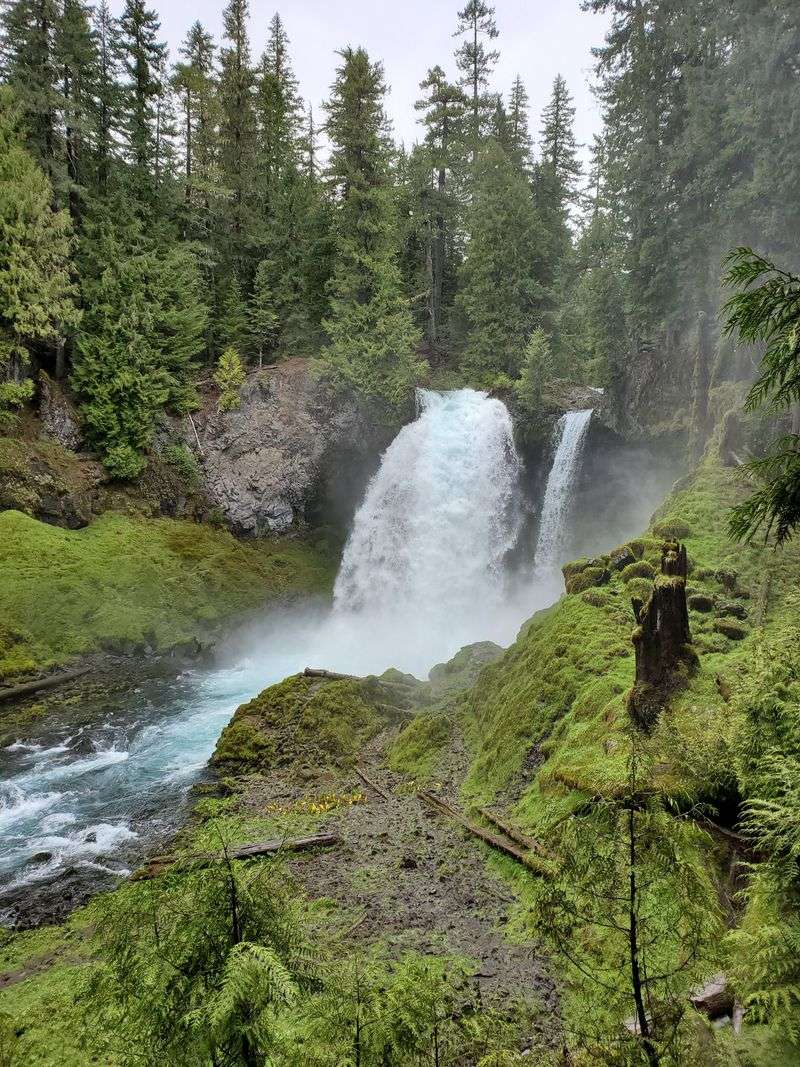
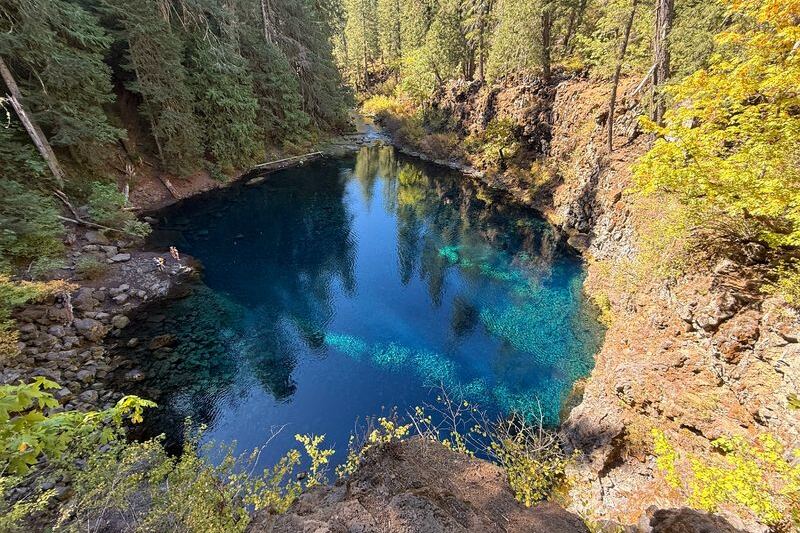
The McKenzie River’s impossible turquoise color looks like someone cranked up the saturation slider, but it’s completely natural—volcanic minerals create that distinctive hue. Sahalie and Koosah Falls represent two of the river’s most dramatic drops, connected by a loop trail that showcases both waterfalls plus the stretches between them.
Winter flow transforms these falls from impressive to absolutely thunderous.
Sahalie drops about 100 feet in a powerful plunge that sends spray billowing upward. Koosah, just downstream, spreads wider as it tumbles over layered basalt.
The connecting trail winds through old-growth forest where moss covers everything in shades of green that seem too vivid to be real.
Winter access can be complicated by snow, especially during and after major storms. Highway 126 generally stays open, but always check conditions before heading up.
The relatively short loop makes this an achievable winter mission when roads are clear and you’ve got traction devices if needed.
The combination of that signature McKenzie blue-green water, crashing whitewater, and lush forest creates scenery that feels quintessentially Oregon. Photographers love the contrast between white water and colored pools.
The roar of high-flow waterfalls echoes through the canyon, making this a full sensory experience that showcases why winter waterfall hunting can be so rewarding.
12. Salt Creek Falls Observation Trail (and spur options) – Willamette National Forest (Hwy 58)
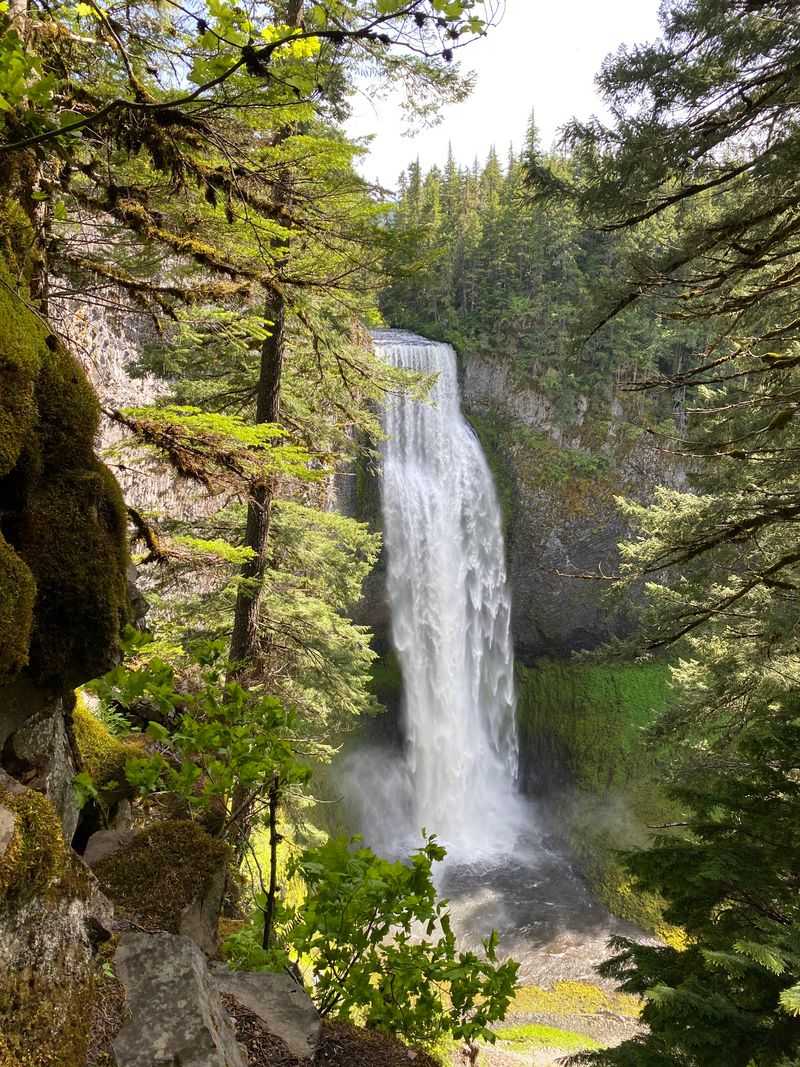
At 286 feet, Salt Creek Falls ranks as Oregon’s second-tallest single-drop waterfall. The observation platform sits just a short walk from the parking area, making this spectacular waterfall accessible to almost anyone.
Winter conditions add drama as increased flow sends massive volumes of water plunging into the canyon below, creating mist that rises like smoke.
The main viewpoint requires minimal effort, but spur trails offer additional perspectives for those wanting more exploration. The falls drop into a bowl-shaped amphitheater carved by millennia of erosion, with basalt walls rising on multiple sides.
Winter often brings snow to this elevation along Highway 58, transforming the scene into something from a winter wonderland postcard.
Traction devices become essential when ice coats the short paved path to the viewing platform. The Forest Service maintains parking and restrooms year-round, though facilities may be limited during deep winter.
The payoff-to-effort ratio here is off the charts—a world-class waterfall for a few minutes of walking.
The canyon acoustics amplify the waterfall’s roar into something you feel as much as hear. Winter’s combination of high flow and potential snow creates photographic opportunities that summer visits can’t match.
This makes an excellent stop during winter road trips across the Cascades, offering natural spectacle without requiring serious hiking commitment.
13. Tamanawas Falls Trail – Mt. Hood National Forest
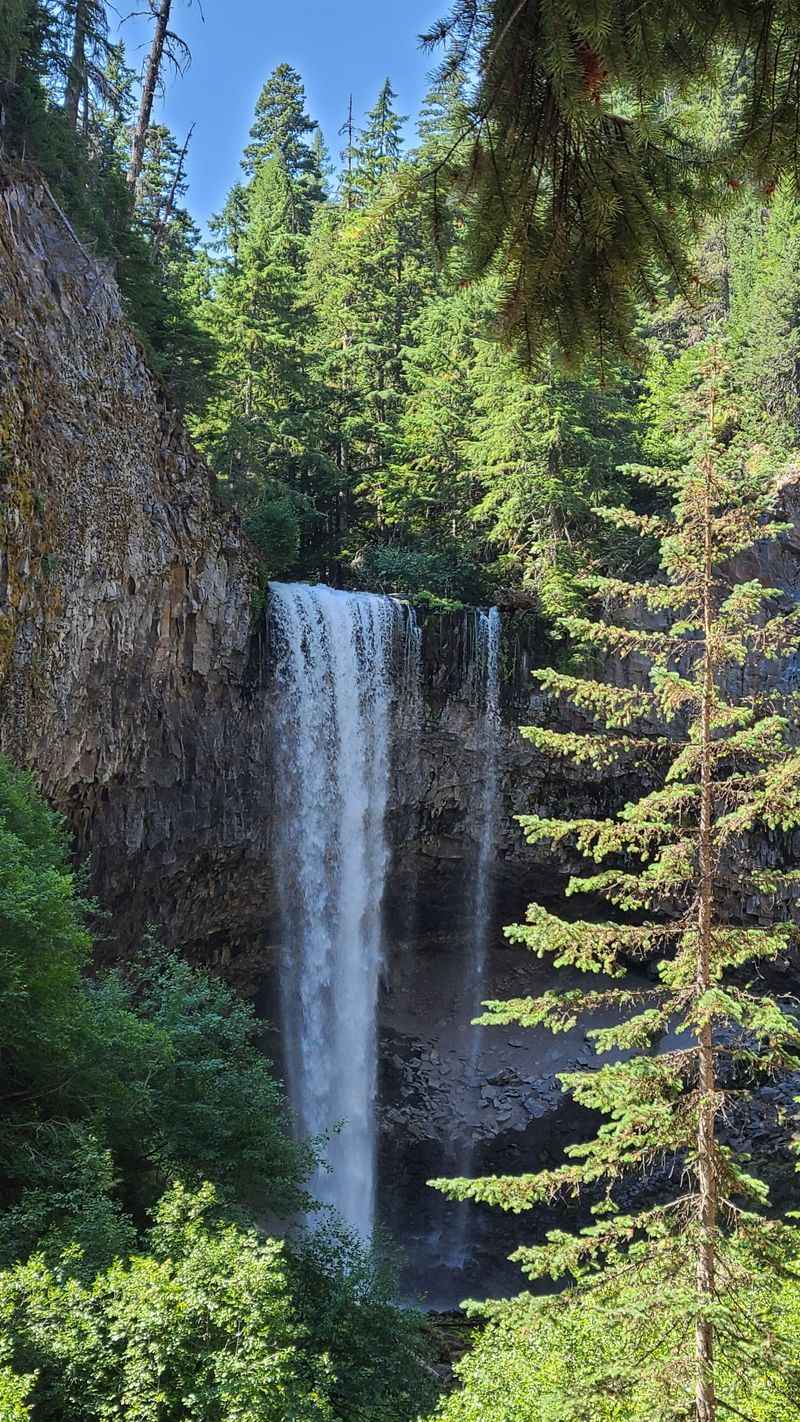
East of Mt. Hood, the Tamanawas Falls trail follows Cold Spring Creek through forest that transforms into a winter wonderland when temperatures drop.
The approximately 3.5-mile round-trip leads to a waterfall that becomes increasingly dramatic as winter progresses. By deep winter, ice formations cling to the basalt cliff, creating a frozen sculpture that changes constantly with temperature fluctuations.
The trail crosses the creek multiple times via bridges, winding through stands of Douglas fir and hemlock. Snow typically covers the route during winter months, turning this into a snowshoe or microspike adventure.
The falls themselves drop about 100 feet, and winter’s freezing temperatures can create ice curtains that partially cover the flowing water.
Year-round restroom facilities at the trailhead make this a well-equipped winter destination. The Forest Service notes these amenities remain available even during snow season.
Parking can fill up on nice winter weekends when Portlanders seek snowy hiking relatively close to the city.
The combination of snow-laden forest and icy waterfall creates that snow-globe feeling where everything seems pristine and magical. Winter light filtering through trees and reflecting off snow adds to the atmosphere.
This trail rewards winter hikers willing to deal with snowy conditions, delivering scenery that summer visitors never experience. Just remember that winter hiking requires proper gear and awareness of changing conditions.
14. Mirror Lake Trail – Mt. Hood National Forest (Winter Sno-Park access)
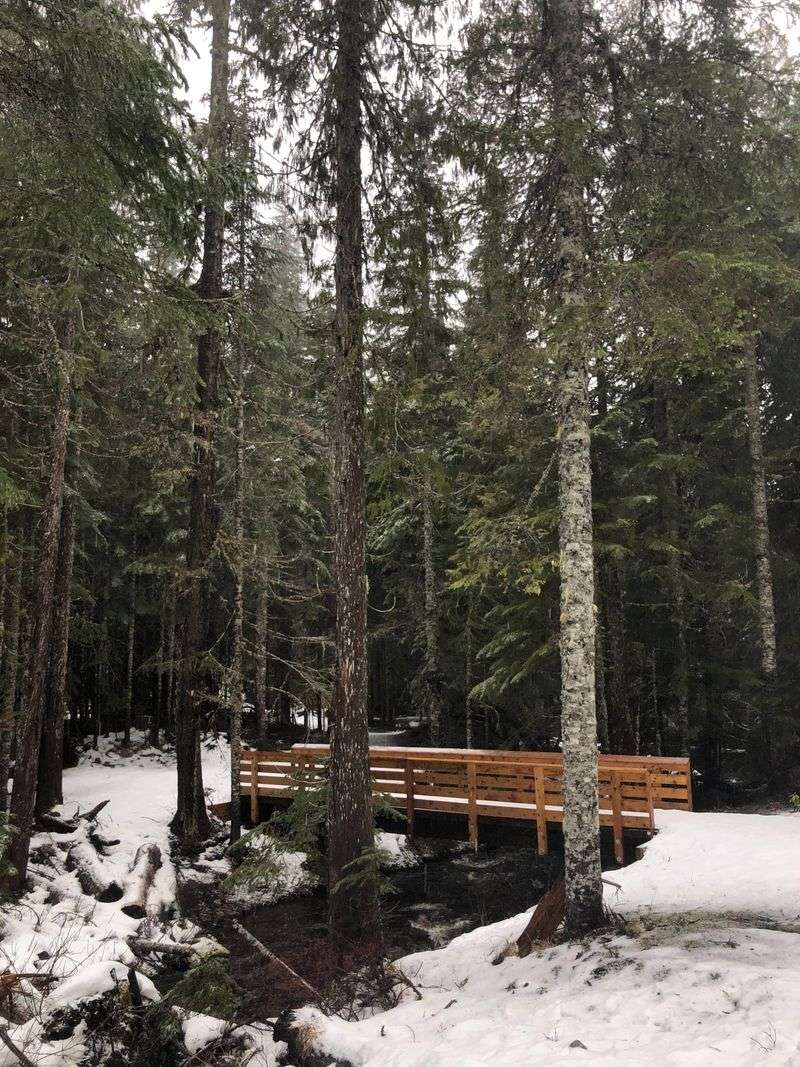
When snow buries the Mt. Hood area, Mirror Lake becomes a winter destination requiring Sno-Park permits and proper snow travel gear.
The Forest Service specifically notes permit requirements from November 1 through April 30, so factor that into your planning. The approximately 5-mile round-trip gains about 700 feet as it climbs to an alpine lake that serves as a reflecting pool for Mt.
Hood when visibility cooperates.
Winter transforms this popular summer hike into a quieter snow-travel experience. Snowshoes or skis become necessary as snow depth increases through the season.
The trail winds through forest that becomes increasingly beautiful under a blanket of white, with snow-laden branches creating natural archways overhead.
Mirror Lake itself often freezes partially or completely during winter, creating opportunities for snowy lakeside picnics with mountain views. On clear days, Mt.
Hood’s south face dominates the skyline, its snowy slopes gleaming against blue winter skies. Weather can change rapidly at this elevation, so pack extra layers and emergency supplies.
The peaceful atmosphere of winter snow travel offers a completely different experience than summer’s crowded trail. Breaking trail through fresh snow or following existing tracks creates a meditative rhythm.
The combination of forest travel and alpine lake destination with that iconic Mt. Hood backdrop makes this a quintessential Oregon winter adventure for those properly equipped and prepared for winter mountain conditions.
Share this story