Seattle’s famous for coffee, sure. But the real flex right now is what’s happening behind the pastry case.
In a growing number of cafés, nobody’s arguing about beans or brew time. They’re locked in on flaky layers, glossy fruit fillings, and croissants that shatter the second you bite in.
The coffee is still there, but it’s basically the sidekick. If you’ve ever picked your “coffee spot” based on the pastry lineup, you’re about to have a very good morning.
1. Temple Pastries (Central District): laminated-dough devotion
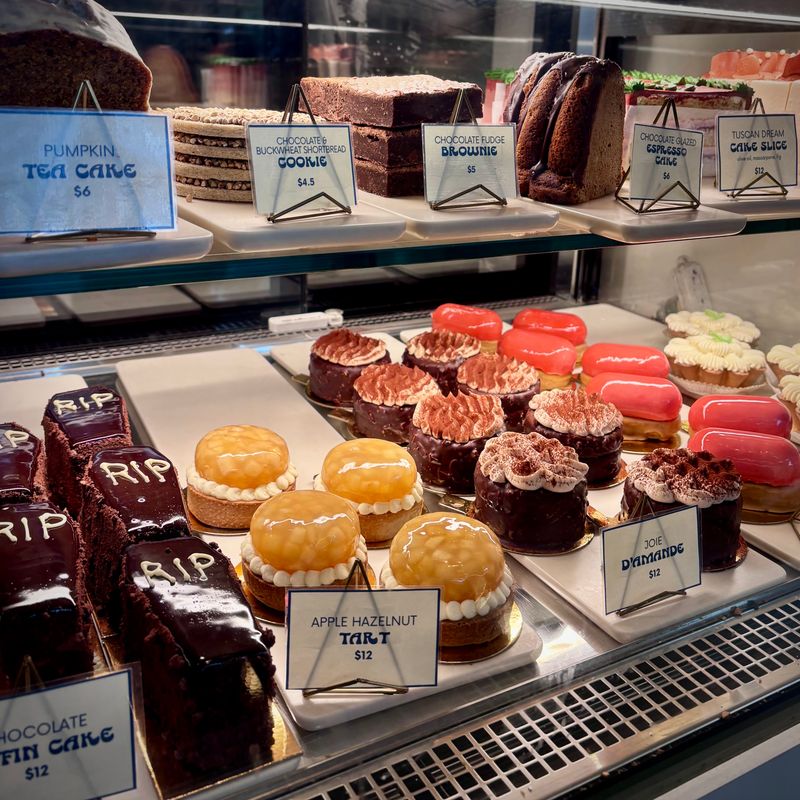
Walking past Temple Pastries requires genuine willpower if you have any weakness for butter and layers. This Central District bakery has earned a devoted following for its rotating lineup of laminated-dough creations that change with the seasons and the baker’s inspiration.
Croissants here aren’t just croissants—they’re engineering marvels with shatter-crisp exteriors and impossibly tender insides.
The daily rotation keeps things exciting and slightly unpredictable. You might find a cardamom-spiced cruffin one week and a chocolate-hazelnut brioche doughnut the next.
Temple’s technical skill shows in every fold and turn of their dough, and regulars know to arrive early because popular items vanish quickly.
Open daily from 7am to 3pm, Temple gives you plenty of opportunity to plan your pastry pilgrimage. The coffee program exists and functions well, but let’s be honest about why people line up here.
It’s about those layers, that butter, and the seasonal creativity that keeps the pastry case interesting visit after visit.
Pro move: don’t commit to just one pastry before you’ve seen the full lineup. Whatever’s marked as the seasonal special deserves serious consideration, and asking the counter staff what just came out of the oven rarely leads you astray.
2. Sea Wolf Bakers (Fremont/Wallingford-ish): the “I’ll just get one thing” trap
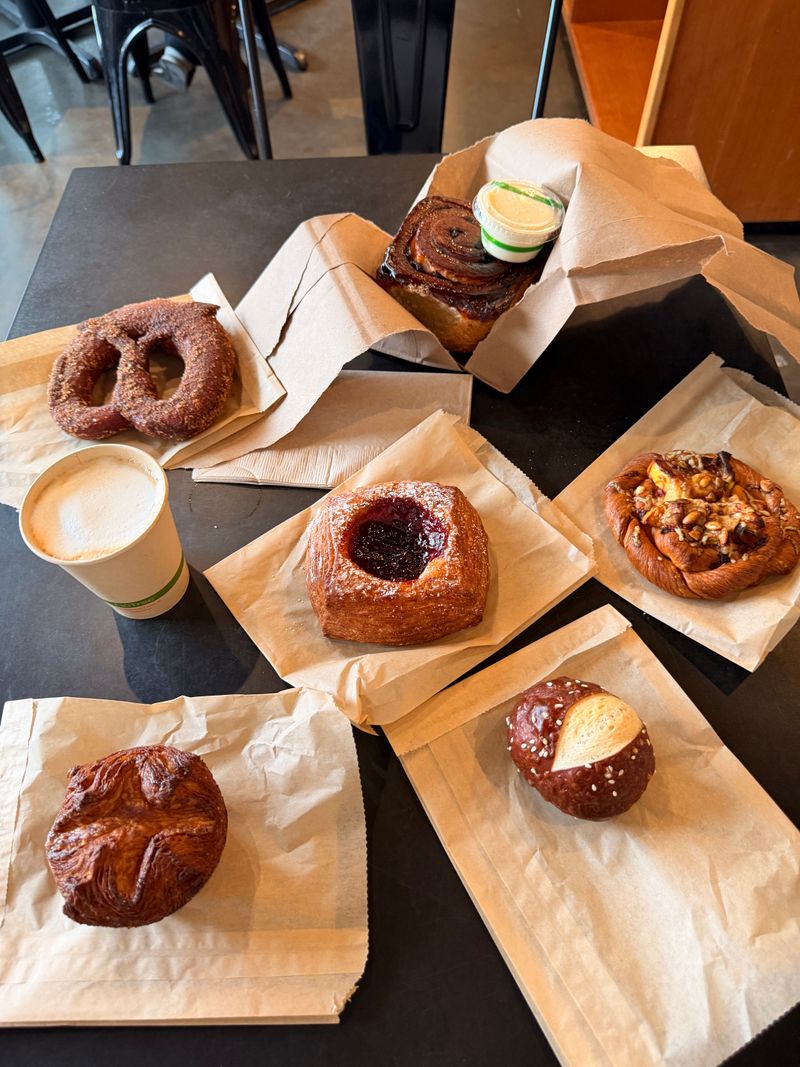
Sea Wolf Bakers operates on the Fremont-Wallingford border as a full-scale craft bakery where bread and pastries dominate the identity. The 7am to 6pm daily schedule creates a dangerous window of opportunity—long enough that you can absolutely justify stopping by twice in one day.
Many people do exactly that.
The pastry and bread lineup changes based on what’s seasonal and what the bakers feel inspired to create, but the quality stays consistently high. Croissants here have the kind of honeycomb interior structure that pastry nerds photograph before eating.
The sweet items in the case balance richness with restraint, never crossing into cloying territory.
Coffee exists here as a worthy companion rather than the main attraction. You’ll find solid espresso drinks and drip coffee, but the real decision-making happens in front of the pastry case.
Regulars develop strategies: grab a croissant for now, choose something sweet and crispy for later, maybe take home a loaf of bread while you’re at it.
The space itself encourages lingering, with seating that invites you to settle in with your haul. Staff members know their products thoroughly and can guide you toward whatever matches your current craving, whether that’s buttery and flaky or sweet and tender.
3. Bakery Nouveau (Capitol Hill / West Seattle / Burien): the double-baked almond croissant pilgrimage
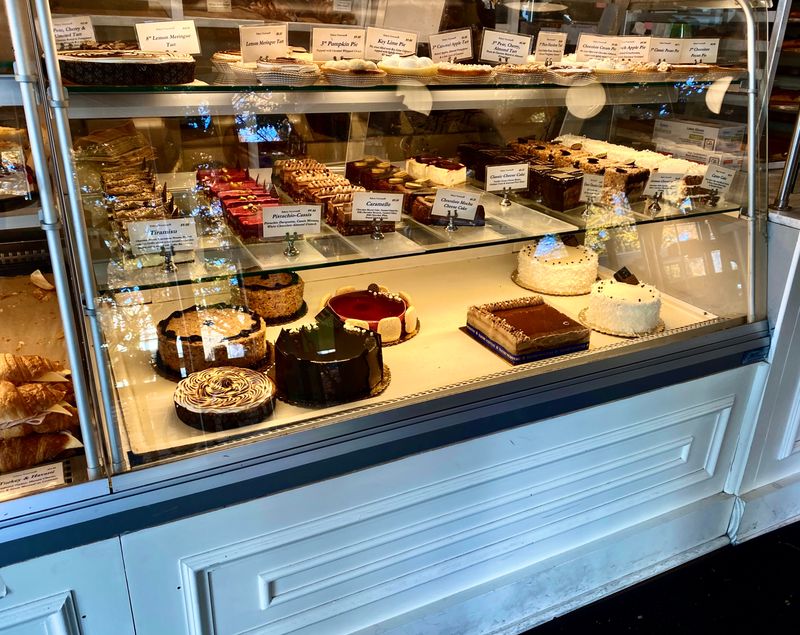
Some bakeries earn local fame. Bakery Nouveau has achieved something closer to regional legend status, with multiple locations across Seattle that function as pilgrimage sites for pastry enthusiasts.
People don’t stumble here by accident—they make special trips with specific intentions.
The double-baked almond croissant stands as the shop’s signature achievement and Seattle’s answer to the question “what’s worth a detour?” This isn’t your standard almond croissant. Day-old croissants get split, filled with almond cream, topped with sliced almonds, then baked again until the exterior caramelizes and the filling sets into something between custard and marzipan.
The result justifies the hype and the lines.
Beyond the famous almond croissant, Bakery Nouveau’s cases overflow with French-inspired pastries that show serious technical skill. Fruit tarts gleam under bakery lights, éclairs stand in perfect rows, and seasonal specials rotate through with the kind of creativity that keeps regulars coming back to see what’s new.
The coffee program runs competently across all locations, offering the espresso drinks and drip coffee you’d expect. But watching the flow of customers makes it clear: people order coffee to accompany their pastry selections, not the other way around.
The bakery’s reputation was built on butter, flour, and technique.
4. Le Panier (Pike Place Market): French bakery energy, Seattle setting
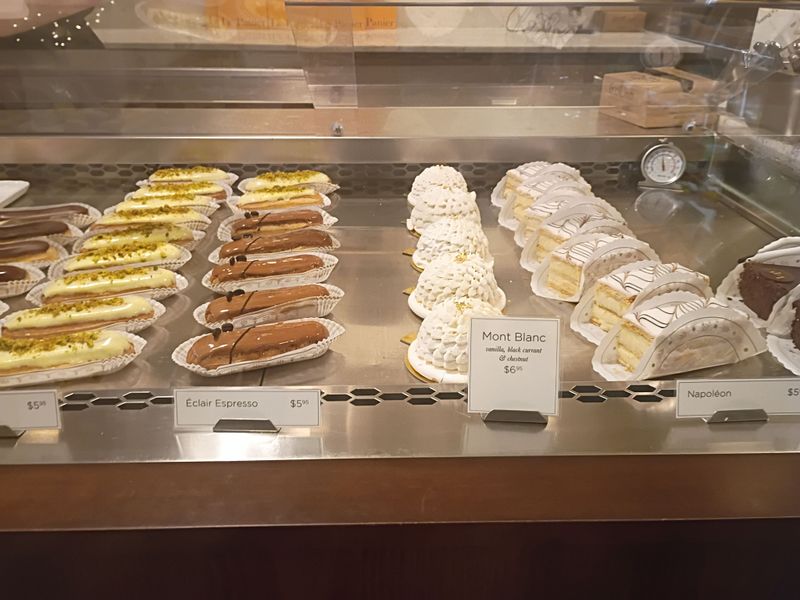
Pike Place Market houses countless food vendors, but Le Panier claims its spot as the go-to French bakery within the market’s chaotic charm. This is explicitly a bread and pastry operation that happens to serve coffee, not a coffee shop that dabbles in baking.
The distinction matters.
Step inside and the sensory experience leans heavily French: the smell of butter and yeast, the sight of golden croissants piled high, the colorful rows of macarons in the display case. The energy feels transplanted from a Parisian boulangerie, even as tourists and locals crowd the small space with their market haul.
Croissants here deliver on the classic French bakery promise—crispy exterior, tender layers, proper butter flavor without greasiness. The macaron selection offers a rainbow of flavors in those delicate, finicky cookies that separate skilled bakeries from pretenders.
Grab your selections and head outside to claim a spot for prime people-watching as the Pike Place crowd flows past.
The location makes Le Panier both convenient and strategic. You can combine your pastry run with market shopping, grabbing flowers and produce alongside your morning croissant.
Coffee serves its purpose here—a drinkable accompaniment to your baked goods—but nobody comes to Le Panier for groundbreaking espresso innovation.
5. Fuji Bakery (International District + other locations): Japanese-French pastries that vanish fast
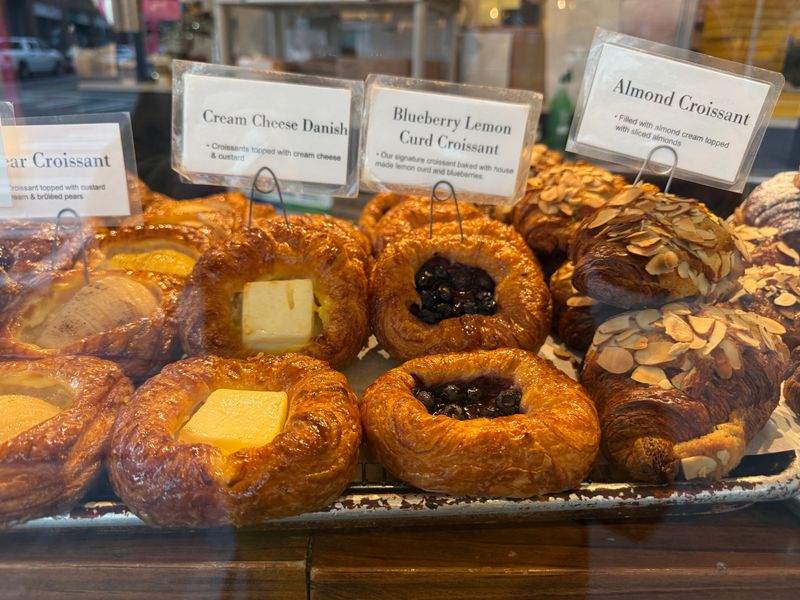
Fuji Bakery operates at the intersection of Japanese precision and French pastry technique, creating a hybrid style that’s become distinctly Seattle. Their stated identity revolves around “pure butter croissants and French pastries with Asian fusion flavors,” which sounds like marketing speak until you taste the results and realize they’re delivering exactly that.
The fusion approach means familiar French forms filled with unexpected flavors—think croissants with matcha cream, or pastries incorporating black sesame and yuzu. But Fuji’s real specialty lies in their malasada-style items, Portuguese-inspired doughnuts that have become a signature draw.
These disappear quickly, especially on weekends when word gets out about what flavors are available.
Coffee and espresso drinks run alongside the pastry program, sourced from quality roasters and prepared competently. But the flow of customers tells the real story: people arrive with pastry-specific intentions, often buying multiple items to take home or share.
The bakery cases empty noticeably as the day progresses.
Multiple locations across Seattle make Fuji accessible, though the International District flagship maintains special status among regulars. Timing matters here—arrive too late and your first-choice pastries might be sold out, a frustrating but backhanded compliment to the bakery’s popularity and the fact that they make limited quantities of their more labor-intensive items.
6. Macrina Bakery & Cafe (multiple Seattle cafes): pastry case first, espresso second
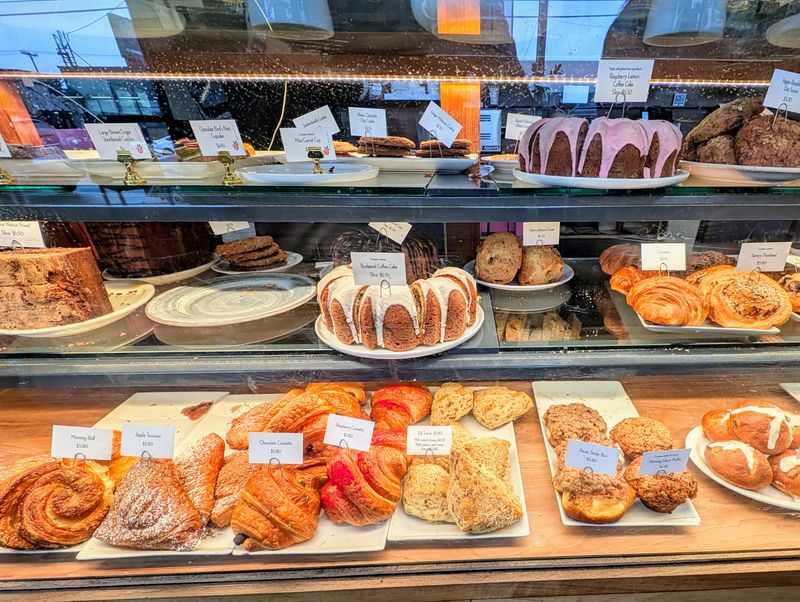
Macrina built its reputation as a serious bakery long before expanding into the café business, and that origin story shows in every location. The pastry and bread program drives the operation, with the espresso bar functioning as a natural complement rather than the main event.
Multiple cafés across Seattle mean you’re never too far from a Macrina fix.
The pastry case presents the kind of abundance that makes decision-making genuinely difficult. Almond croissants compete with seasonal fruit galettes, morning buns glisten with cinnamon-sugar coating, and rustic tarts showcase whatever fruit is at peak season.
Behind the pastries, shelves of artisan bread loaves remind you that Macrina’s expertise extends beyond the sweet side.
Coffee, espresso, lattes, and cold brew all appear on the menu with the quality you’d expect from a well-run Seattle café. The beverage program takes itself seriously without overshadowing the baked goods.
Smart customers let their pastry selection guide their drink choice—a buttery croissant pairs beautifully with a simple espresso, while a fruit tart might call for a lighter pour-over.
The multiple locations maintain consistency in quality while developing individual neighborhood character. Whether you’re in Capitol Hill or Queen Anne, the Macrina experience centers on choosing from an overwhelming array of excellent baked goods, then finding the perfect drink to go with it.
7. General Porpoise Doughnuts (multiple locations): the “coffee shop” where doughnuts run the show
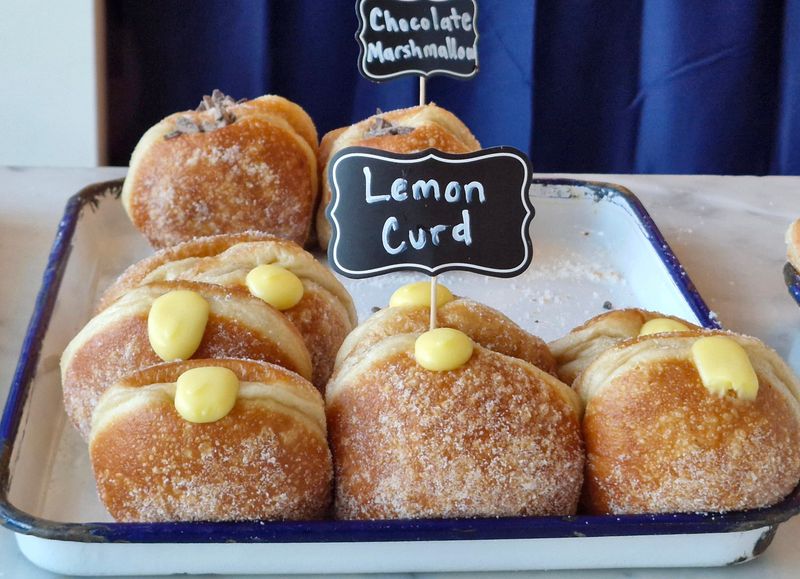
General Porpoise doesn’t pretend to be anything other than what it is: a doughnut shop that serves coffee to support the primary mission. The honesty is refreshing.
Filled doughnuts reign here, stuffed with seasonal jams, fruit curds, pastry creams, and custards that change with what’s available and what the kitchen feels inspired to create.
These aren’t your standard cake or raised doughnuts. General Porpoise specializes in a lighter, almost brioche-like doughnut that provides structure without heaviness, creating the perfect vehicle for generous fillings.
Bite into one and you’ll understand the engineering—the ratio of dough to filling hits that sweet spot where neither element overwhelms the other.
The seasonal rotation keeps regulars coming back to see what’s new. Summer might bring berry-forward fillings, while fall ushers in apple cider and spiced options.
Limited runs of experimental flavors sell out quickly, creating a mild sense of urgency around trying new releases before they disappear.
Coffee exists here as a functional companion—drip coffee and espresso drinks prepared well enough to complement your doughnut without competing for attention. The menu acknowledges this dynamic openly, and customers seem to appreciate the clarity.
You’re here for filled doughnuts. The coffee helps wash them down and provides caffeine.
Sometimes that’s exactly what you need.
8. Saint Bread (Portage Bay): waterfront bakery-café with serious baked goods
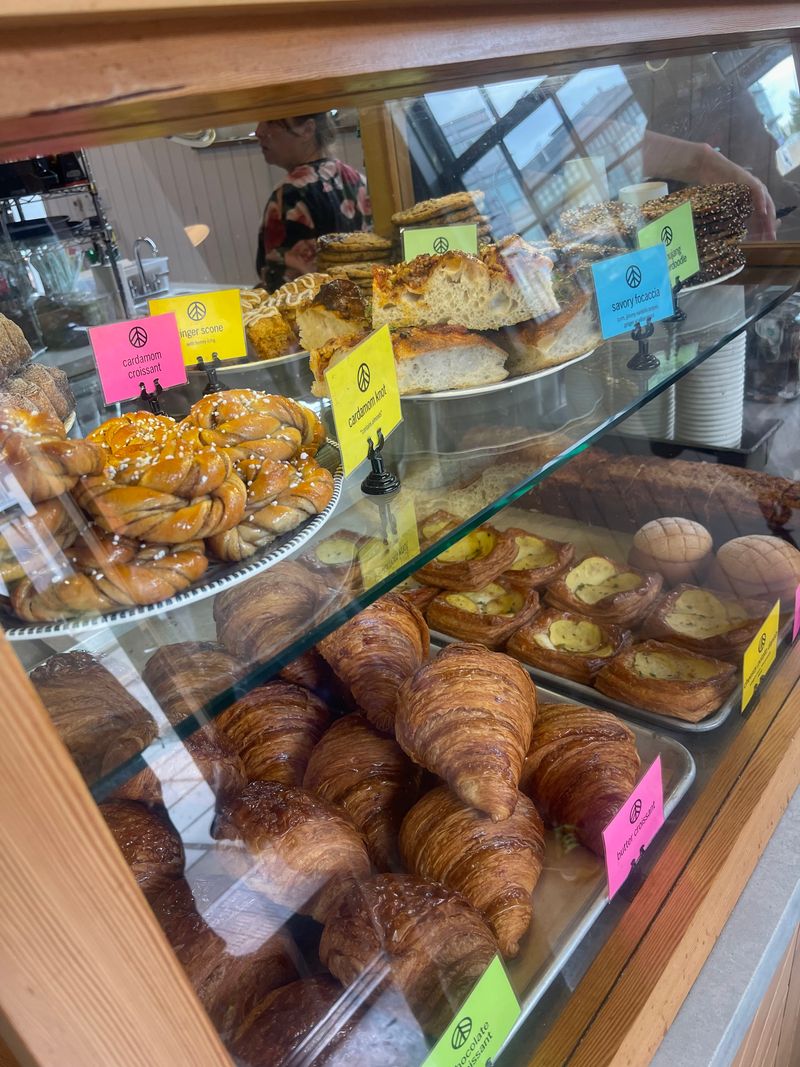
Saint Bread positions itself as a bakery and community space near UW, with the significant advantage of waterfront location along Portage Bay. The setting adds appeal, but the in-house baked goods provide the real draw.
This is a legitimate bakery that happens to have excellent views, not a scenic café that buys pastries from suppliers.
The morning pastry lineup rewards early arrivals with items still warm from the oven. That timing makes a difference—there’s something special about a croissant that hasn’t fully cooled yet, when the butter is still slightly liquid and the exterior maintains maximum crispness.
Saint Bread’s bakers understand this and time their production accordingly.
Beyond pastries, the bread program produces the kind of loaves that make you reconsider whether you really need another carb source at home (you do, apparently, because people leave with multiple loaves). Sandwiches built on house-made bread appear on the lunch menu, extending the bakery’s reach beyond morning hours.
The waterfront location near the university creates a mixed crowd of students, locals, and people who’ve made the trip specifically for the baked goods. Coffee and espresso drinks serve their purpose competently, but the bakery’s reputation rests on what comes out of the ovens.
Grab whatever looks freshest that morning, find a seat with a water view, and enjoy the fact that Seattle has bakeries that take their craft this seriously.
9. Fresh Flours Bakery (multiple locations): “espresso + delicious pastries” in one sentence
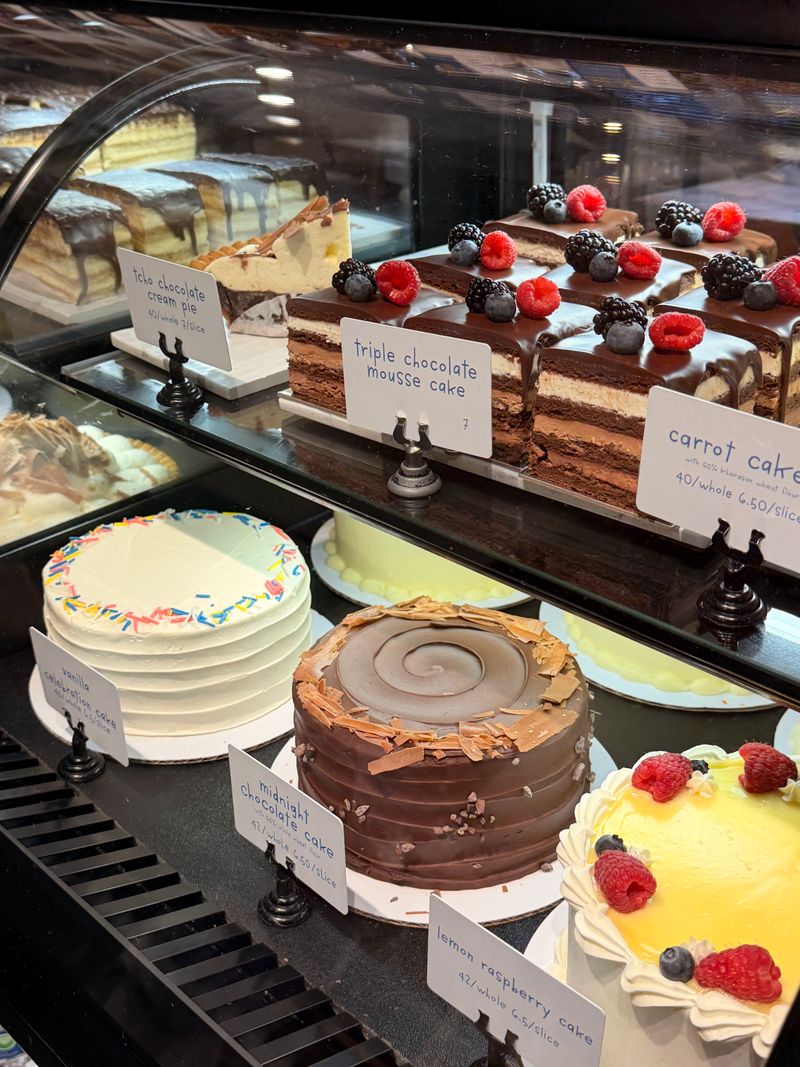
Fresh Flours operates with admirable transparency about its identity: this is a pastries-and-coffee operation spread across multiple Seattle locations. No pretense, no confusion about what drives the business.
The bakery cases filled with croissants, galettes, and seasonal pastries make the priorities clear from the moment you walk in.
The croissant quality here competes with Seattle’s better-known pastry specialists, offering proper lamination and butter flavor without the premium prices or long waits of more hyped spots. Galette-style pastries—those rustic, free-form tarts with fruit or savory fillings—showcase seasonal ingredients and the kind of restrained sweetness that lets the main flavors shine through.
Multiple locations mean Fresh Flours functions as a reliable neighborhood option rather than a destination bakery, though the quality certainly justifies making a special trip. The consistency across locations suggests solid training and quality control, which matters when you’re building a small local chain on the strength of your baked goods.
Espresso and coffee drinks appear on every menu with the attention you’d expect from a Seattle bakery-café. The roaster sourcing changes occasionally, but the preparation stays solid.
Still, watching the customer flow makes it obvious: people choose Fresh Flours for the pastries first, then order coffee to complete the experience. The model works precisely because both elements deliver without one overshadowing the other.
10. Coyle’s Bakeshop (Greenwood): pastry craftsmanship with a real espresso program
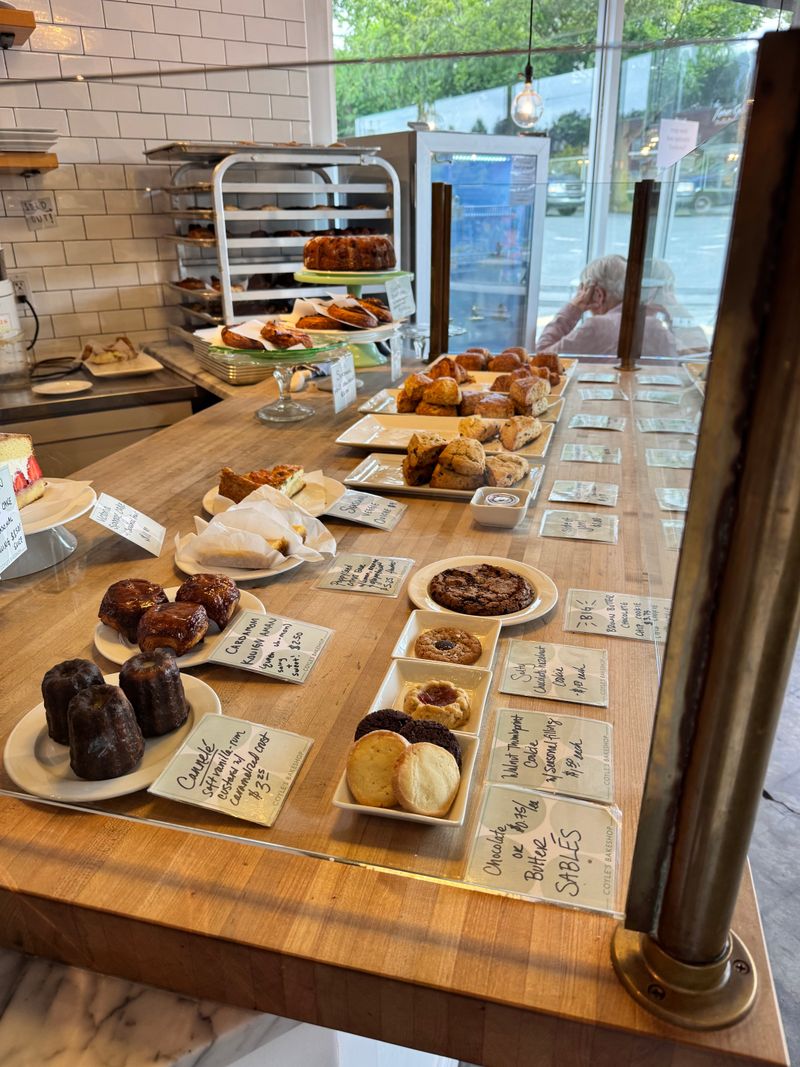
Coyle’s Bakeshop in Greenwood has carved out a reputation for handmade pastries backed by genuine technical skill. This isn’t a side hustle or a café that dabbles in baking—it’s a dedicated bakeshop that takes both its pastry craft and its coffee program seriously enough to publish details about their espresso and drip offerings, including which roaster they’re currently featuring.
The seasonal approach to pastries means the case looks different throughout the year, following what’s fresh and what inspires the bakers. Spring might bring rhubarb and strawberry combinations, while fall leans into stone fruits and warming spices.
This rotation keeps regular customers engaged and coming back to see what’s new.
What sets Coyle’s apart is the balance between pastry excellence and coffee competence. Many bakeries treat coffee as an afterthought; Coyle’s actually cares about both sides of the equation.
The espresso program uses quality beans and trained baristas, creating drinks that stand on their own merit rather than just serving as pastry accompaniments.
The Greenwood location gives Coyle’s a neighborhood feel while drawing pastry enthusiasts from across the city. Seating is limited, which encourages a steady flow of customers grabbing their selections to go.
The smart play: order a seasonal pastry and an espresso, taste them together, and appreciate a bakeshop that refuses to compromise on either element.
11. Hood Famous Cafe + Bar (Chinatown–International District): Filipino-inspired sweets (hello, ube cheesecake)
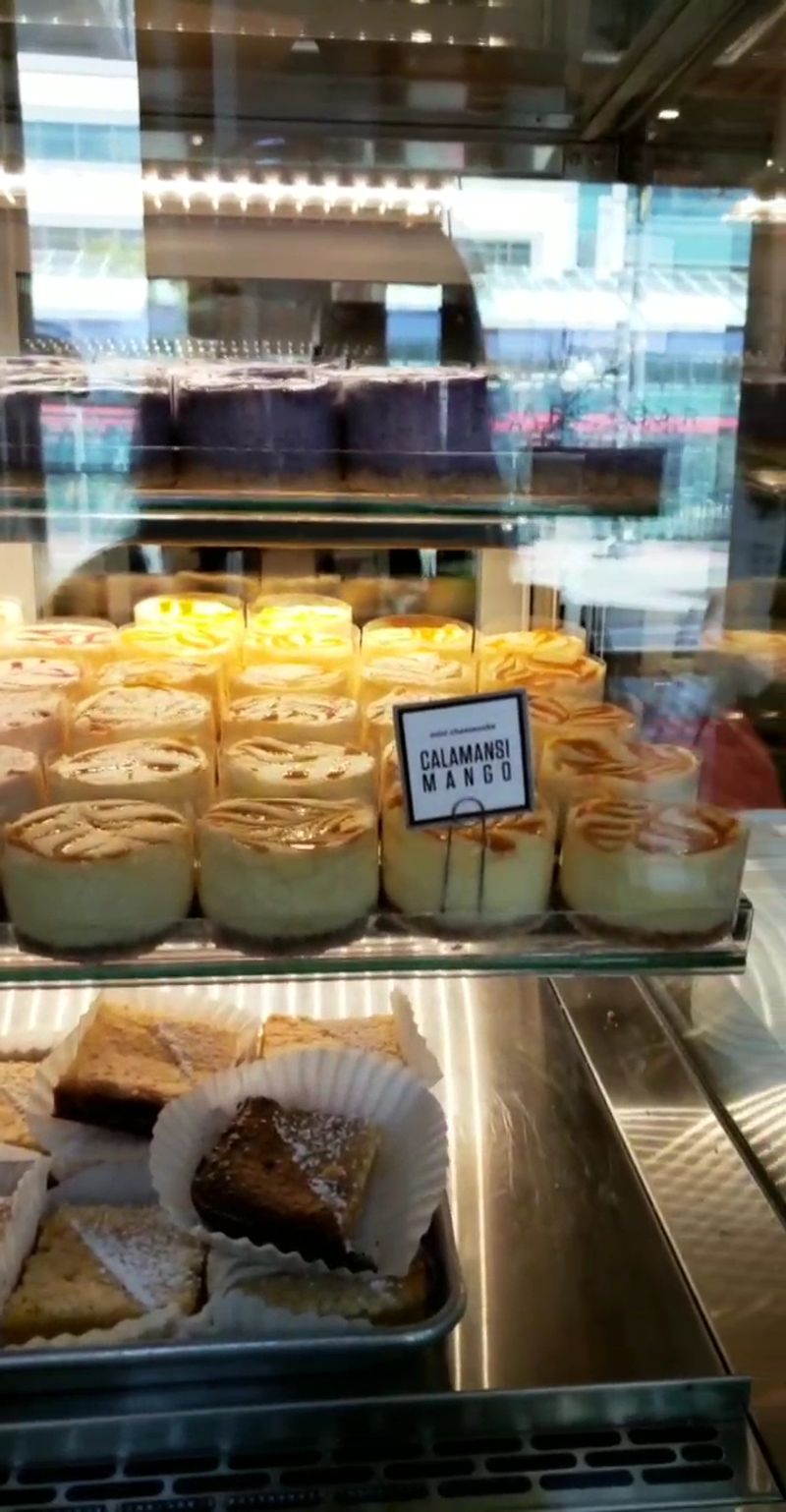
Hood Famous brings Filipino bakery traditions and flavors to Seattle’s Chinatown-International District, operating as a bakery, café, and bar that’s earned particular fame for its desserts and pastries. The menu proudly features Filipino-inspired sweets that you won’t find at traditional French-style bakeries, creating a unique position in Seattle’s competitive pastry landscape.
Ube—that vibrant purple yam beloved in Filipino desserts—shows up frequently in Hood Famous creations, most notably in their ube cheesecake that’s become something of a signature item. The color alone makes it Instagram-worthy, but the flavor delivers beyond the visual appeal with earthy sweetness and creamy texture that converts ube skeptics into believers.
Beyond ube, Hood Famous rotates through Filipino pastry classics and modern interpretations that honor traditional flavors while appealing to contemporary tastes. The bakery case offers discovery for customers unfamiliar with Filipino sweets and comfort for those who grew up with these flavors.
Coffee and espresso drinks run alongside the pastry program, with both elements clearly outlined on the ordering menu.
The café-bar hybrid format means Hood Famous serves multiple purposes throughout the day, but the dessert and pastry reputation drives much of the traffic. If you spot anything ube-forward on the menu, that’s your move.
Pair it with coffee and settle in to experience how Filipino flavors are reshaping Seattle’s pastry scene beyond the French and Japanese influences that dominate elsewhere.
12. Columbia City Bakery (Columbia City): pastries + coffee, with seating hours posted
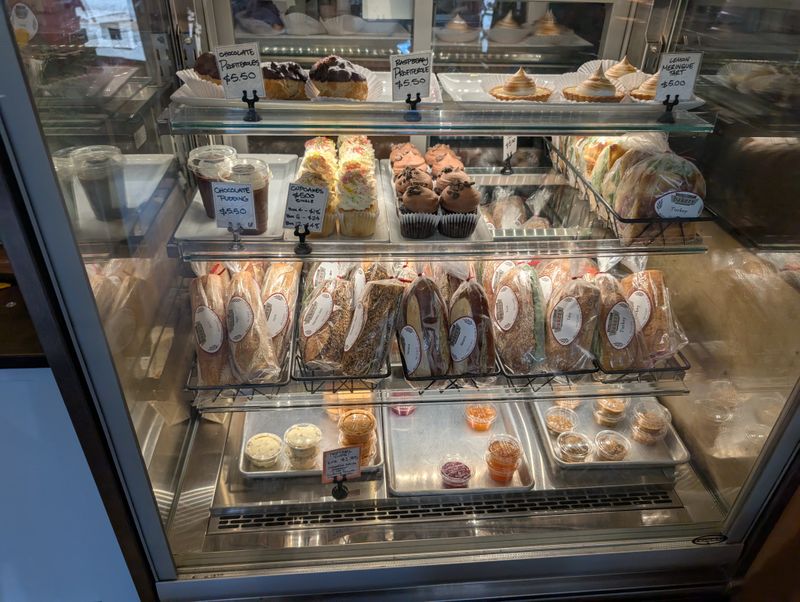
Columbia City Bakery operates with straightforward honesty about what it offers: bread, pastries, and coffee for purchase during posted hours, with café seating available on specific days. This no-nonsense approach matches the neighborhood vibe of Columbia City, where community gathering spaces prioritize substance over style.
The bakery produces both sweet and savory pastries daily, giving customers the option to build a complete meal or stick with dessert-for-breakfast territory. Savory options might include cheese-and-herb scones or quiche-style items, while the sweet side delivers classic pastries with seasonal variations.
The bread program runs seriously enough that you’ll inevitably leave with a loaf even if you came only for pastries.
Coffee serves its role competently here without pretending to revolutionize Seattle’s espresso scene. The focus stays on the baked goods, with beverages supporting rather than competing.
Seating availability varies by day, so checking the posted hours helps if you’re planning to linger rather than grab-and-go.
Columbia City Bakery functions as a neighborhood anchor, the kind of place locals visit multiple times per week without it feeling like a special occasion. The one-sweet-one-savory strategy works perfectly here—you get variety, you get to try more of what the bakery does well, and you’ll definitely end up taking bread home too.
That’s not a bug, it’s a feature. Accept it and move on.
Share this story