Standing before monuments that have survived centuries can make you feel incredibly small. Ancient civilizations built structures so massive and magnificent that even today, with all our modern technology, we struggle to understand how they accomplished such feats.
From towering pyramids in the desert to mysterious stone circles on grassy plains, these historic sites remind us of humanity’s incredible ambition and creativity throughout the ages.
Great Pyramids of Giza — Egypt
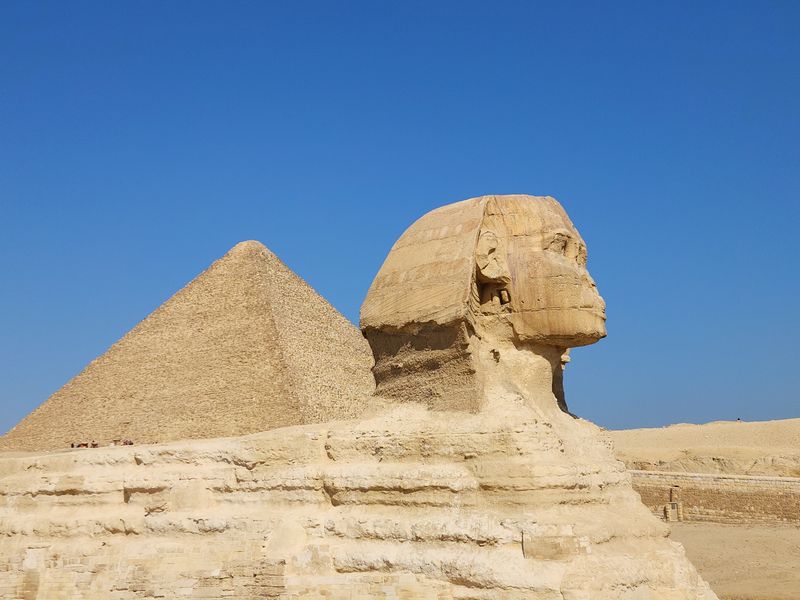
Nothing compares to the Great Pyramids of Giza, the only surviving of the Seven Wonders of the Ancient World. These colossal tombs were built over 4,500 years ago and dominate the desert plateau outside Cairo with immense presence.
Standing beside the Great Pyramid of Khufu — originally rising about 146 meters — visitors are struck not only by its size but by the mystery of how ancient architects moved and placed massive limestone blocks with such precision. Each stone weighs tons, yet they fit together so tightly you cannot slide a knife blade between them.
Gazing at these structures evokes a deep connection to the ingenuity and ambition of early civilization — a scale and legacy that still dwarfs most modern feats. Pharaohs commissioned these monuments as eternal resting places, investing decades of labor and resources.
Walking around the base takes considerable time, and climbing partway up reveals how enormous each individual block truly is. The Sphinx nearby adds another layer of mystery and grandeur to the complex, guarding these ancient tombs with an enigmatic gaze that has watched over the desert for millennia.
Machu Picchu — Peru
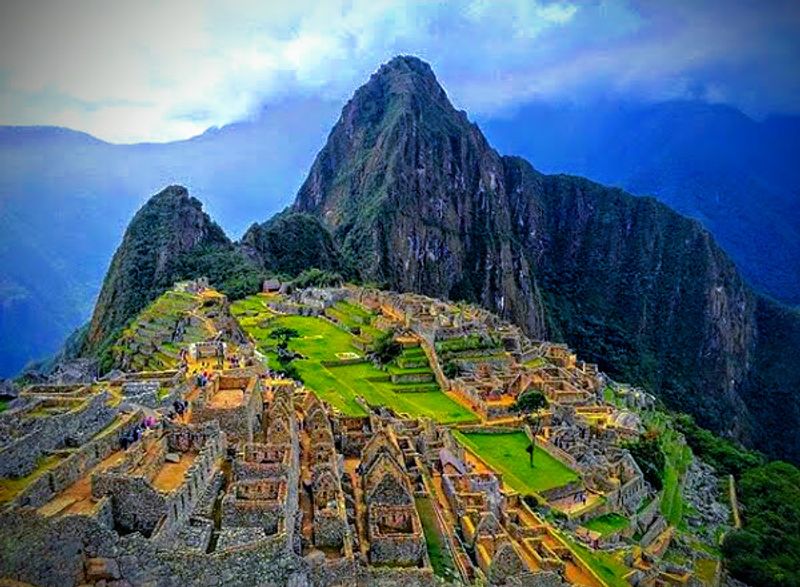
Perched high in the Andes, Machu Picchu feels like a city resurrected from myth. Built in the 15th century for the Inca elite, this stone citadel rises on a ridge 2,430 meters above sea level, surrounded by lush mountain peaks and deep valleys.
Its monumental terraces, plazas, and temples seem to defy gravity — and time. The stones were cut so precisely that no mortar was needed, yet they have withstood centuries of earthquakes and weather.
Agricultural terraces cascade down steep slopes, demonstrating sophisticated engineering that allowed farming at extreme altitudes.
The setting itself is breathtaking, and reaching the site through cloud forests or the famous Inca Trail adds to the sense of scale. Hikers spend days trekking ancient pathways, building anticipation for that first glimpse of the ruins emerging from morning mist.
This is not just a ruin — it’s a lost city that dominates both landscape and imagination. Abandoned mysteriously before Spanish conquistadors arrived, Machu Picchu remained hidden until 1911, preserving its secrets and majesty for modern explorers to discover and marvel at today.
Angkor Wat — Cambodia
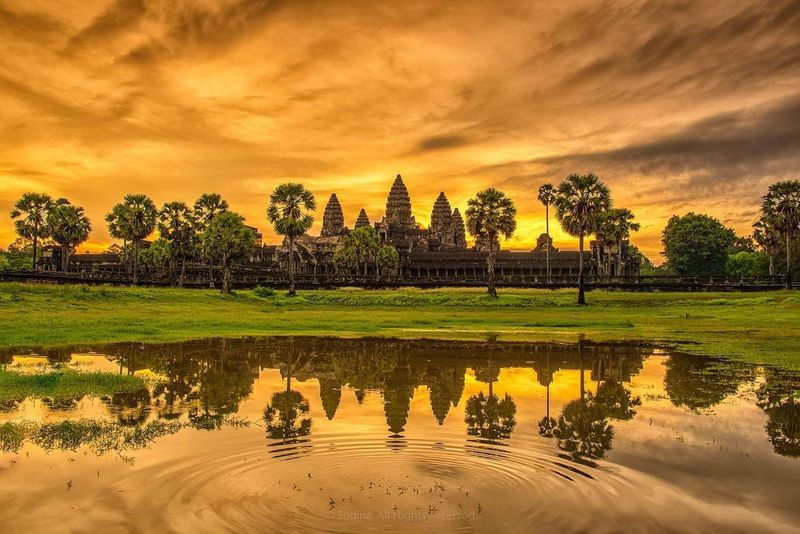
Angkor Wat is one of the largest religious monuments on Earth, reflecting centuries of Khmer Empire power and devotion. Its towering central spires and enormous outer wall enclose a temple complex of unparalleled size and detail, originally dedicated to the Hindu god Vishnu before becoming a Buddhist site.
As the sun rises over the reflecting pools before dawn, the silhouette and moat create a staggering visual drama — a feeling of ancient civilization rising from the jungle itself. Photographers and pilgrims gather in darkness, waiting for that magical moment when golden light illuminates the stone towers.
The scale of Angkor’s galleries, carvings, and stone corridors makes visitors feel small amidst humankind’s architectural ambition. Intricate bas-reliefs cover walls for hundreds of meters, depicting epic Hindu stories and historical battles with incredible detail.
Exploring the entire complex requires days, as hundreds of structures spread across the surrounding area. Tree roots now embrace many temples, creating haunting scenes where nature and human achievement merge.
The engineering required to construct such massive stone structures without modern machinery remains astounding to contemporary architects and historians alike.
The Colosseum — Italy
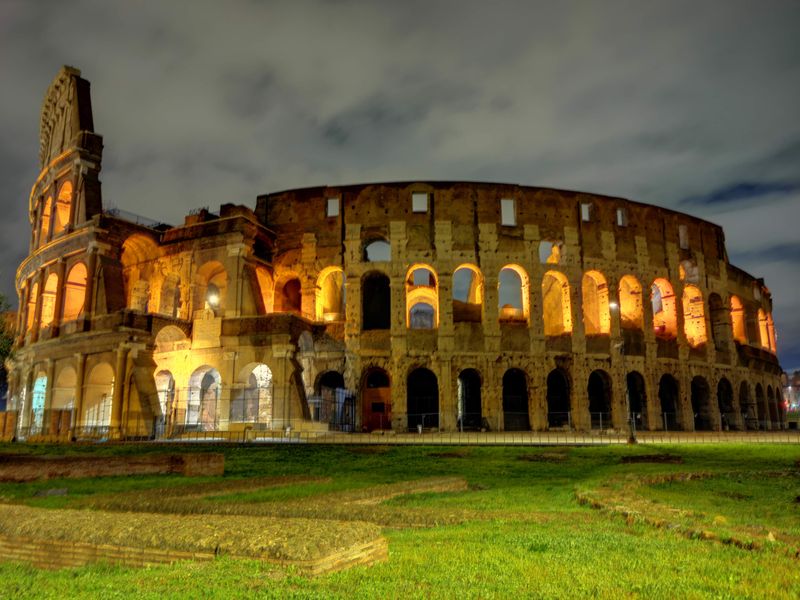
Rome’s Colosseum is arguably the most iconic amphitheater ever built — once able to hold tens of thousands of spectators. Its huge stone arches and elliptical form were engineered to create spectacle and crowd movement, with cleverly designed corridors that allowed massive audiences to enter and exit efficiently.
Walking inside feels like stepping into ancient Rome’s heartbeat, where gladiators, emperors, and people from all walks of life once gathered. The underground chambers where fighters and wild animals waited before emerging into the arena are now exposed, revealing the complex machinery that made spectacles possible.
Its scale, historical weight, and preservation make it one of the most impactful relics of the Roman Empire. Despite earthquakes, stone robbers, and two millennia of weathering, the Colosseum still dominates Rome’s skyline and imagination.
Completed in 80 AD, this engineering marvel featured retractable awnings to shade spectators and could even be flooded for mock naval battles. Standing in the center of the arena floor, looking up at the towering walls where 50,000 Romans once cheered, you cannot help but feel the power and brutality of ancient entertainment culture.
The Great Wall of China — China
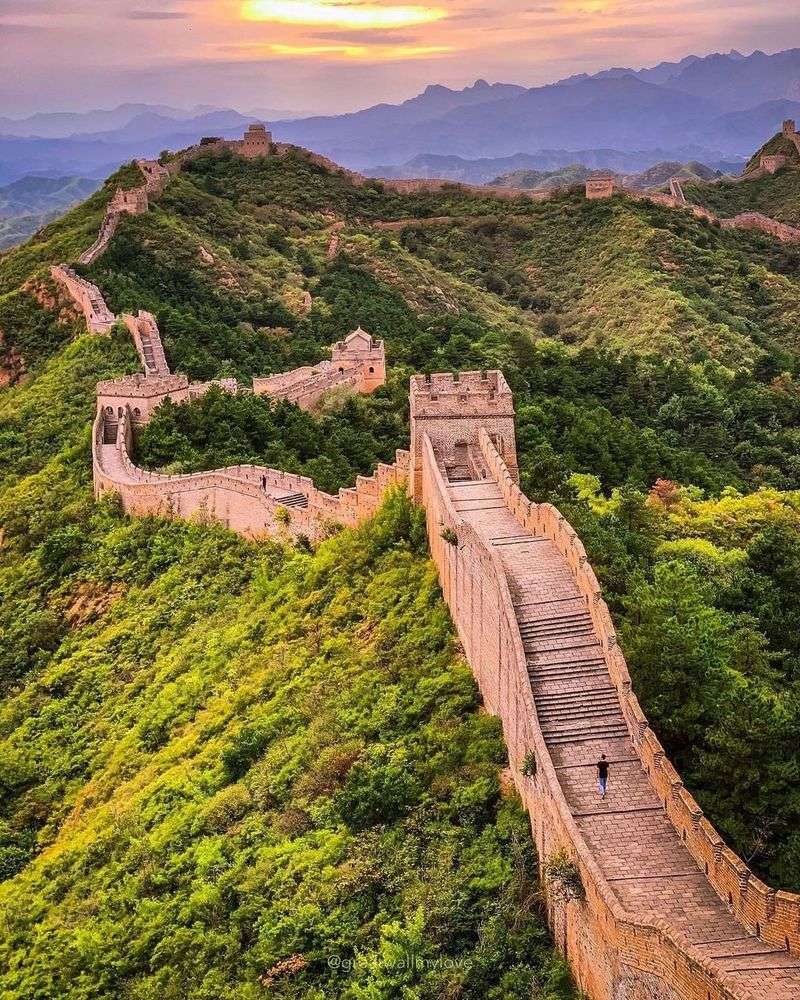
Sprawling over mountains, valleys, and deserts, the Great Wall of China stretches more than 20,000 kilometers in its various sections, built to defend successive Chinese empires. Construction began over two thousand years ago, with different dynasties adding and reinforcing segments across centuries.
Certain restored segments near Beijing allow visitors to walk across battlements perched atop steep ridges, offering sweeping views that make the Wall seem as infinite as history itself. Climbing the steep stone steps tests your endurance while rewarding you with breathtaking panoramas.
Its immense scale and strategic alignment across rugged terrain make it one of the most breathtaking human constructions ever devised. Watchtowers positioned at regular intervals allowed soldiers to signal warnings using smoke or fire, creating an ancient communication network.
The Wall snakes dramatically over mountain peaks and through valleys, following natural contours while maintaining defensive advantages. Millions of workers labored for generations to build this barrier, and countless lives were lost during construction.
Standing on the Wall, gazing at it disappearing into distant mountains, you grasp the extraordinary determination and sacrifice required to protect an empire across such vast distances and challenging landscapes.
Petra — Jordan
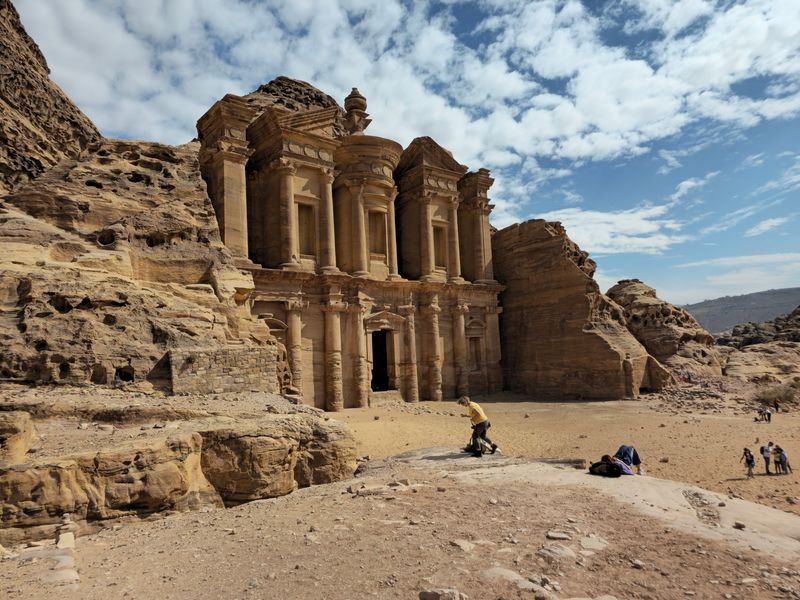
Carved directly into the red sandstone cliffs of southern Jordan, Petra was the Nabataean capital and a thriving trade city over 2,000 years ago. The approach through the Siq — a narrow, winding gorge — suddenly opens onto the astonishing Treasury façade carved into the rock, towering above you in a way that feels cinematic.
Walking through the Siq builds anticipation as the towering rock walls close in overhead, filtering sunlight into dramatic beams. Then the Treasury appears through a narrow opening, its elaborate Hellenistic façade glowing rose-pink in the desert sun, defying belief that humans carved such beauty from solid stone.
The city’s scale, its intricate rock architecture, and the surrounding desert landscape make it less a historic site than a monumental chapter of ancient civilization itself. Beyond the Treasury, hundreds of tombs, temples, and structures fill the valley, including a massive monastery requiring a steep climb.
Petra’s sophisticated water management system allowed it to flourish in the desert, collecting and channeling rare rainfall. Abandoned after earthquakes and trade route changes, it was lost to Western knowledge until 1812, preserving its magnificent sandstone architecture for future generations to rediscover and appreciate.
Chichén Itzá — Mexico
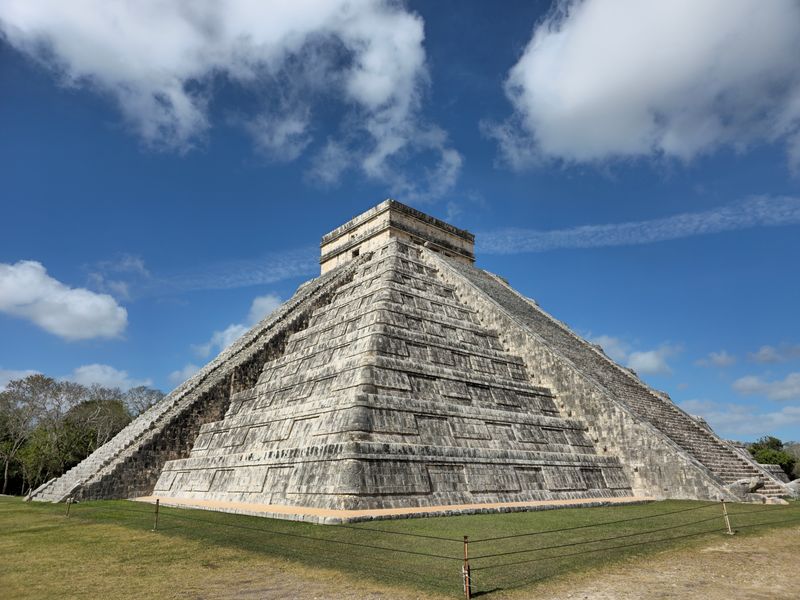
On Mexico’s Yucatán Peninsula, Chichén Itzá’s towering pyramid known as El Castillo is one of the New Seven Wonders of the World. Its geometric precision and astronomical alignment — particularly during equinox shadows — demonstrate the Maya’s advanced understanding of science and mathematics.
The sheer size of the pyramid and the expansive ceremonial plazas around it convey a powerful sense of cultural achievement and ritual space that anchored ancient Maya life. Four stairways with 91 steps each, plus the top platform, total 365 — matching the solar calendar year.
During spring and autumn equinoxes, sunlight creates the illusion of a serpent descending the pyramid’s northern staircase, an intentional design celebrating the feathered serpent god Kukulkan. Thousands gather to witness this ancient astronomical event that still functions perfectly after centuries.
The site includes other impressive structures like the Great Ball Court, where teams competed in ritualistic games with life-or-death stakes, and the Sacred Cenote, a natural sinkhole used for ceremonies. Exploring Chichén Itzá reveals layer upon layer of Maya sophistication, from acoustics that amplify handclaps into bird-like echoes to carvings depicting their complex mythology and history across stone surfaces.
Taj Mahal — India
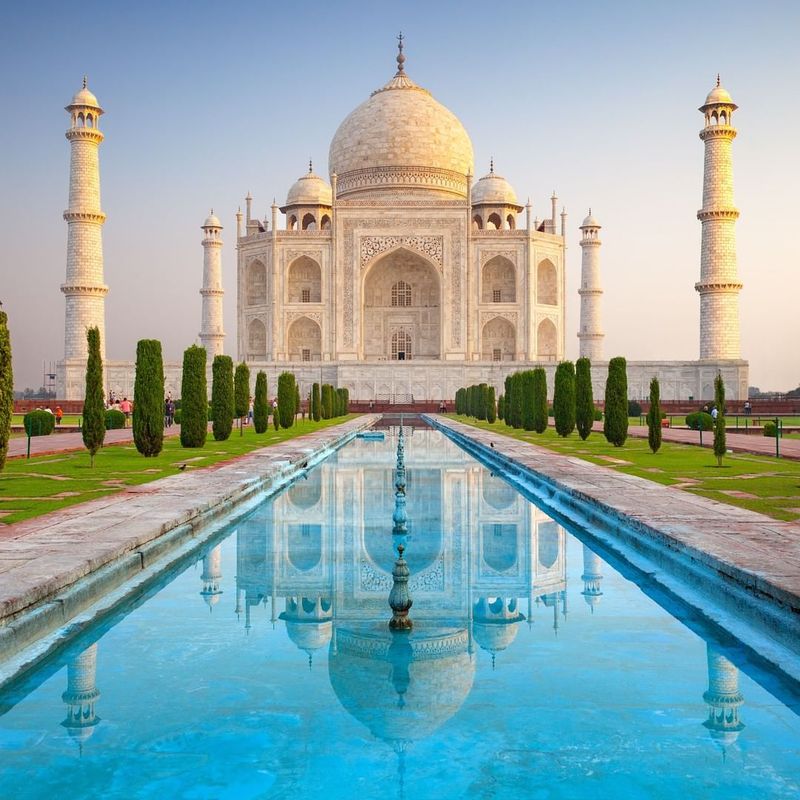
The Taj Mahal, a mausoleum of shimmering white marble, stands as one of the most graceful and monumental tombs ever built. Commissioned by Emperor Shah Jahan in memory of his wife Mumtaz Mahal, its perfect symmetry and towering central dome (flanked by minarets) create an architectural presence that feels both intimate and majestic.
Beyond beauty, the Taj’s emotional story infuses every step across its gardens and reflecting pools with significance. Mumtaz died during childbirth in 1631, and the grief-stricken emperor dedicated over 20 years and thousands of artisans to creating this eternal tribute to their love.
The marble changes color throughout the day, glowing pink at sunrise, brilliant white at noon, and golden at sunset, creating ever-changing moods. Intricate inlay work using semi-precious stones forms floral patterns and calligraphy across the surfaces, demonstrating extraordinary craftsmanship.
Approaching through the formal Mughal gardens, with their geometric pathways and water channels, the Taj grows increasingly impressive until you stand before its massive scale. The interior chamber, though relatively small and dark, holds the cenotaphs in hushed reverence, while the actual tombs rest in a crypt below, preserving the couple’s eternal rest beneath this monument to love.
Stonehenge — England
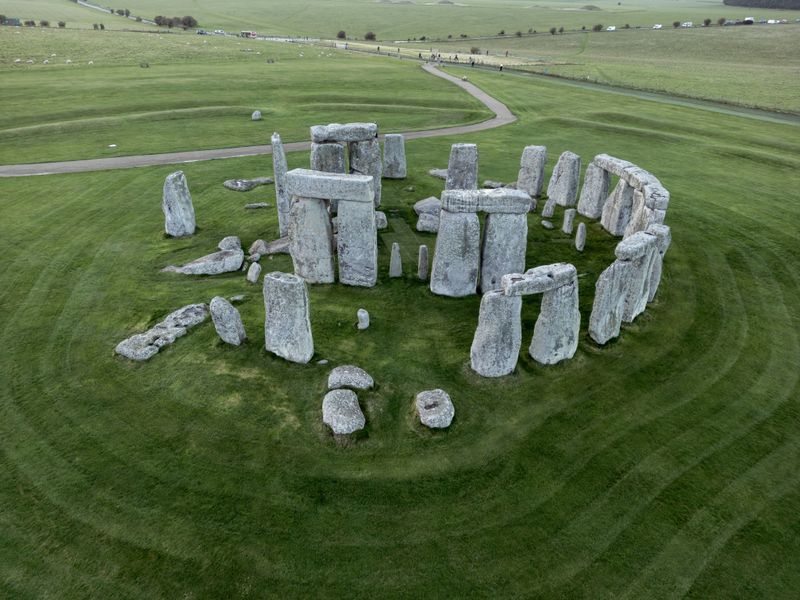
On the rolling plains of Wiltshire, Stonehenge’s massive standing stones have puzzled scientists and inspired visitors for millennia. Although its precise purpose remains partly mysterious, the monumental scale of the stone circle — with stones weighing up to 25 tons — and its alignment with astronomical cycles create a palpable sense of awe and ancient ritual.
Standing inside the circle, you feel connected to the distant human past in a very physical way. The largest sarsen stones tower over five meters high, topped with horizontal lintels fitted using mortise-and-tenon joints, demonstrating sophisticated construction techniques from around 2500 BC.
The bluestones forming the inner circle were transported from Wales, over 200 kilometers away, raising questions about how Neolithic people moved such massive weights without wheels or draft animals. Their determination suggests Stonehenge held profound spiritual or ceremonial importance.
During summer solstice, the sun rises directly over the Heel Stone, aligning with the monument’s axis and drawing modern crowds who gather to witness this ancient astronomical connection. Archaeological evidence reveals the site was used for ceremonies, possibly including cremation burials, for over a thousand years, making it a sacred landscape that bridged generations of prehistoric communities.
Easter Island Moai — Chile
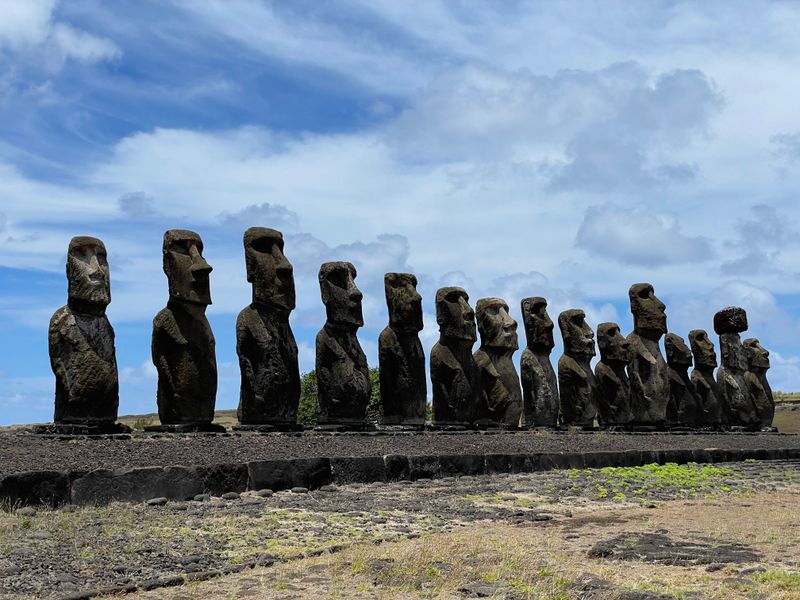
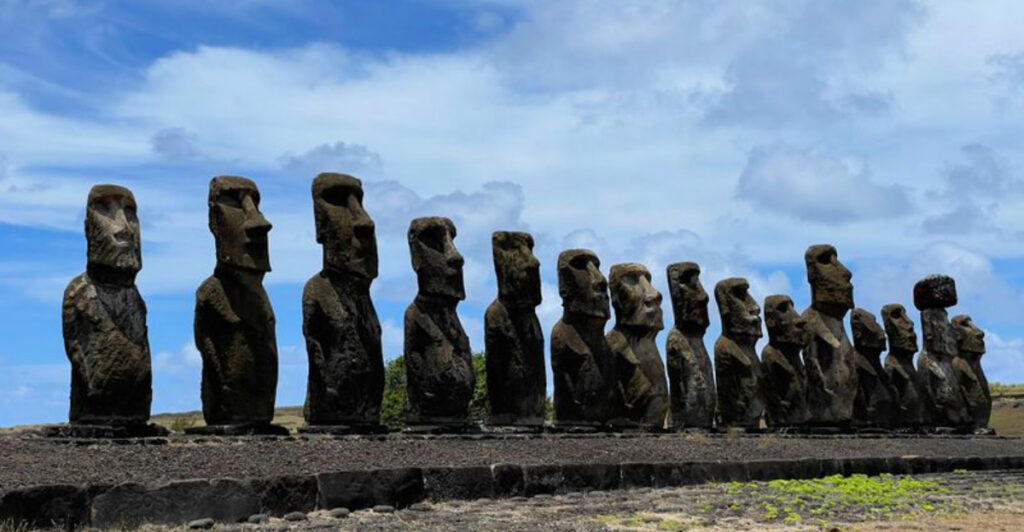
Far from continental shores, Easter Island’s Moai statues stand like silent sentinels carved by the Rapa Nui people. These monumental heads and torsos, often perched on stone platforms called ahu, range up to 10 meters tall and were positioned to watch over ancient communities with their backs to the sea.
Their scale, remote landscape, and enigmatic origin make them among the most extraordinary remnants of human creativity, evoking wonder at the ways early societies shaped their world. Nearly 900 Moai exist across the island, carved from volcanic tuff using stone hand tools — a staggering investment of labor and resources.
Many Moai originally wore massive stone topknots called pukao, weighing several tons and carved from red scoria. Theories about how islanders transported and erected these giants have evolved, with recent evidence suggesting they were walked upright using ropes in a rocking motion.
The island’s isolation — over 3,500 kilometers from Chile — makes the Moai even more remarkable, representing a culture that developed unique traditions far from outside influence. Environmental collapse eventually ended Moai construction, but these haunting figures remain, their empty eye sockets gazing inland, protecting the memory of ancestors and reminding us of both human ambition and ecological fragility.
Share this story