Our planet has been mapped, photographed from space, and explored by countless adventurers, yet some corners of Earth continue to baffle scientists and thrill mystery lovers. From ancient monuments whose purposes remain unclear to natural wonders that defy easy explanation, these enigmatic sites remind us that human knowledge has limits.
Whether hidden beneath ice, carved into deserts, or lurking in dense forests, these places challenge our understanding and spark our curiosity about what else might be waiting to be discovered.
The Bermuda Triangle — Mysterious Disappearances in the Atlantic

Somewhere between Miami, Bermuda, and Puerto Rico lies a patch of ocean that has swallowed ships, aircraft, and countless lives without leaving much trace. The Bermuda Triangle earned its sinister reputation through decades of unexplained vanishings that continue to puzzle investigators today.
Despite modern navigation systems and weather tracking, no single theory has cracked the code on why this particular stretch of water seems so dangerous. Scientists have proposed everything from rogue waves and sudden storms to magnetic anomalies that mess with compasses.
Some skeptics argue that the number of incidents is exaggerated or no different from other busy shipping lanes. Yet the mystery persists, fueled by dramatic stories and the occasional new disappearance that reignites public fascination.
What makes the Triangle especially eerie is how thoroughly some vessels have vanished—no wreckage, no distress signals, nothing. Modern technology has helped solve some cases, attributing losses to human error or bad weather.
But enough incidents remain unexplained to keep the legend alive, proving that even in our satellite-mapped world, nature can still outsmart us and hide its secrets beneath the waves.
Nazca Lines — Peru’s Giant Desert Geoglyphs
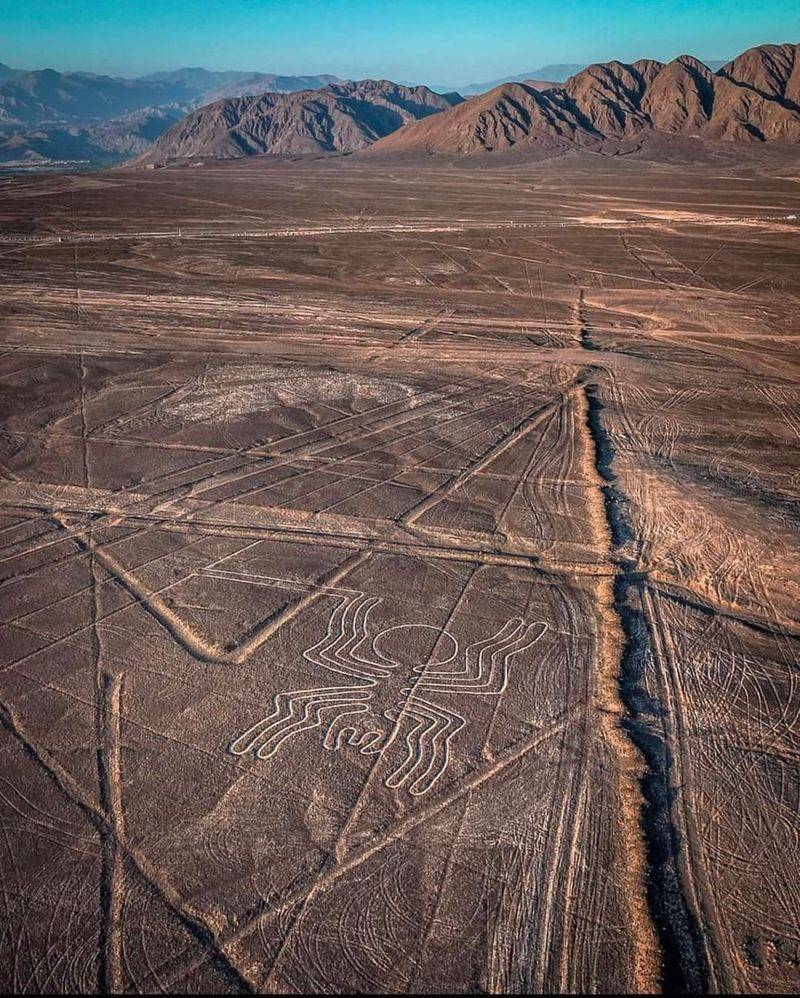
Carved into Peru’s desert floor are massive drawings that can only truly be appreciated from hundreds of feet in the air—a fact that baffles researchers since they were created long before flight existed. The Nazca Lines sprawl across miles of arid plains, depicting everything from hummingbirds and spiders to abstract spirals and perfectly straight lines stretching for miles.
Created between 500 BC and 500 AD, these geoglyphs represent an engineering feat that ancient peoples accomplished without aerial perspective. Theories about their purpose range widely.
Some archaeologists believe they served astronomical functions, marking solstices or tracking celestial bodies. Others suggest they were ceremonial pathways for religious processions or offerings to sky gods who could see them from above.
What adds to the mystery is the precision involved—lines remain remarkably straight over enormous distances, and animal figures maintain accurate proportions despite their gigantic scale. The dry climate preserved them for centuries, but their full meaning remains elusive.
Were they maps, calendars, or sacred art? Each new study reveals more details yet fails to provide definitive answers, keeping the Nazca Lines among archaeology’s most captivating puzzles.
Chauvet Cave — Prehistoric Art Shrouded by Time
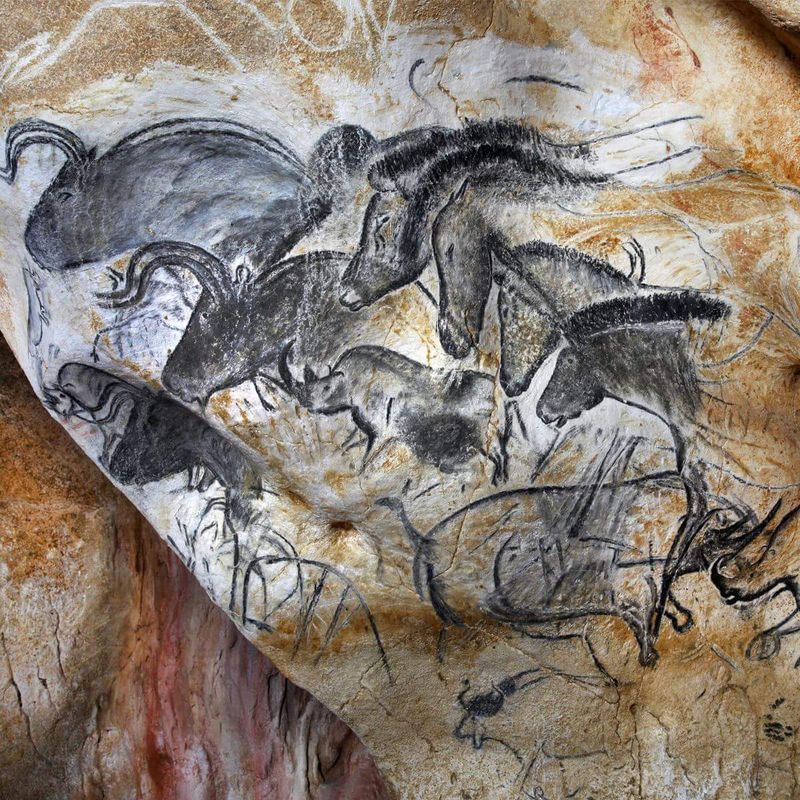
Hidden in southern France until 1994, Chauvet Cave contains artwork so sophisticated it forced historians to rethink what early humans were capable of creating. The paintings date back roughly 36,000 years, making them among the oldest figurative art ever discovered.
Lions, horses, rhinoceroses, and other creatures cover the walls in stunning detail, rendered with shading techniques and perspective that suggest advanced artistic understanding. What shocks experts most is the skill level displayed.
These aren’t crude stick figures but carefully observed depictions showing movement, depth, and anatomical accuracy. The artists used the cave wall’s natural contours to give their subjects three-dimensional form, a technique modern painters would recognize.
Access to the actual cave is severely restricted to prevent damage from humidity and microbes that human breath introduces. Scientists can only study the site in brief, controlled visits, leaving many questions unanswered about the culture that produced such masterworks.
Who were these artists? What rituals or beliefs inspired them?
Why this particular cave? The answers remain locked in time, making Chauvet a humbling reminder that human creativity flourished long before recorded history began.
Cueva de los Tayos — Ecuador’s Hidden Cave of Legends
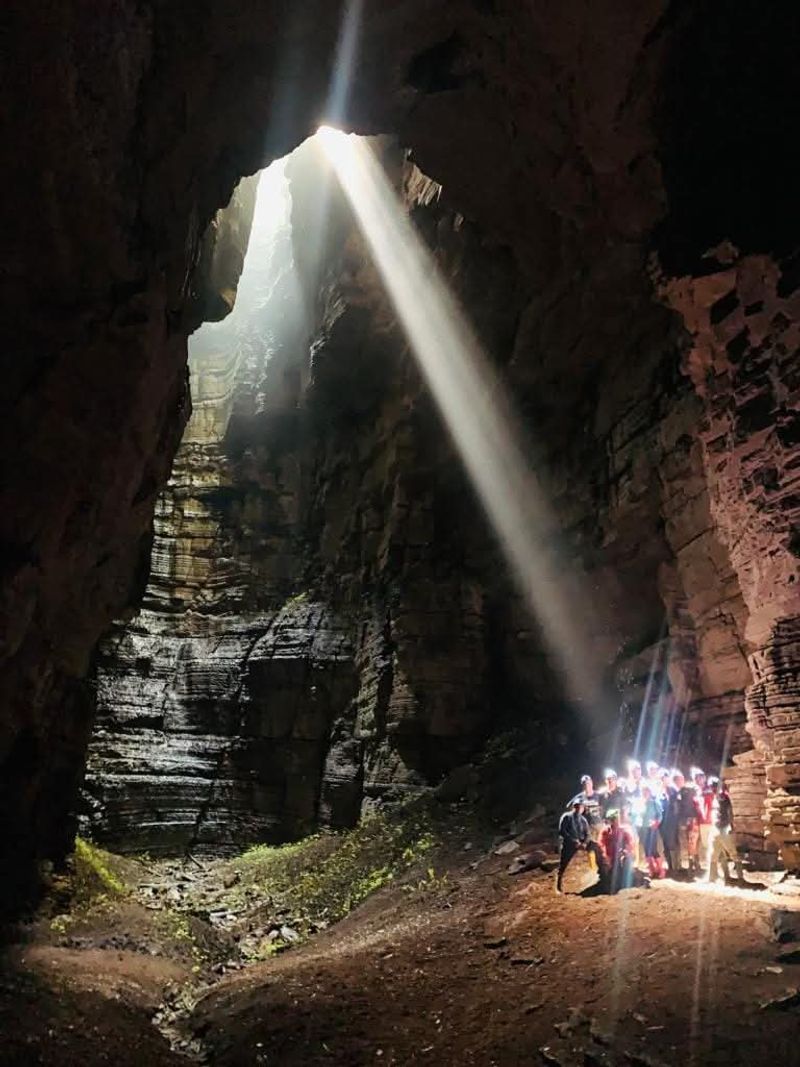
Buried beneath Ecuador’s thick rainforest canopy, Cueva de los Tayos has sparked wild speculation ever since explorers first descended into its depths decades ago. The cave system earned fame through sensational claims about a hidden library containing golden plates inscribed with ancient knowledge—stories that mainstream archaeology dismisses but that continue to attract treasure hunters and conspiracy theorists.
Named after the oilbirds (tayos) that nest inside, the cave’s true extent remains largely unknown. Expeditions have mapped only portions of this vast underground network, which features enormous chambers and winding passages carved by water over millennia.
While no golden library has ever materialized, the cave does hold genuine archaeological interest. Pottery fragments and other artifacts suggest ancient peoples used these spaces, though for what purposes remains unclear.
The remote location makes exploration difficult and dangerous, requiring technical climbing skills and jungle survival knowledge. This inaccessibility has preserved both the cave’s mysteries and its mystique.
Whether the legendary treasures exist or not, Cueva de los Tayos represents how much of our planet—especially in dense tropical regions—remains inadequately explored, leaving room for both scientific discovery and enduring folklore.
Island of the Dolls — Mexico’s Creepy Canalside Secrets
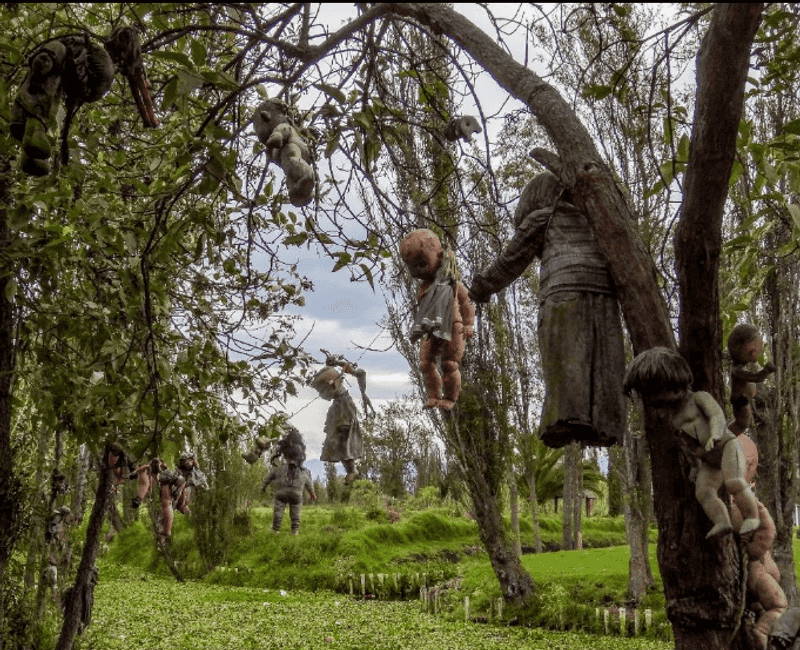
Hundreds of decaying dolls dangle from tree branches on a small island in Mexico’s Xochimilco canals, their blank eyes staring at visitors who brave the unsettling scene. Isla de las Muñecas became one of the world’s creepiest destinations through the obsessive work of Don Julián Santana Barrera, who reportedly began hanging dolls to appease the spirit of a drowned girl.
Over decades, he collected thousands of dolls—many missing limbs or eyes—and displayed them throughout the island. Visitors claim the dolls move their heads, whisper when wind rustles through the trees, or watch people with their remaining eyes.
Whether these experiences stem from overactive imaginations or something genuinely paranormal remains debatable. What’s undeniable is the profoundly eerie atmosphere the dolls create, especially as weather and time have degraded their plastic faces into grotesque masks.
Don Julián died in 2004, reportedly drowning in the same canal where he claimed the girl had perished years earlier. His death added another layer to the island’s mythology.
Today, the site attracts both curious tourists and paranormal investigators, standing as a bizarre testament to how human grief, obsession, and folklore can transform an ordinary place into something deeply mysterious and unsettling.
Crooked Forest — Poland’s Mysterious Arboreal Anomaly
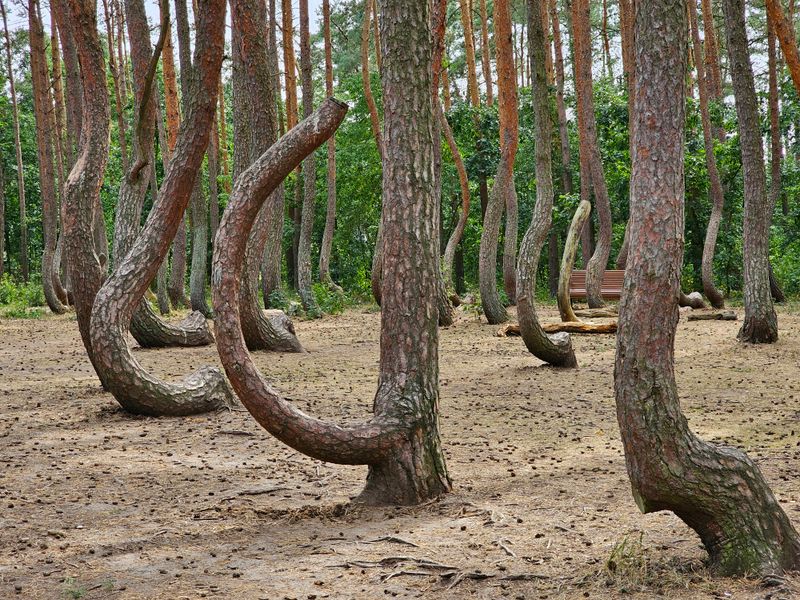
About 400 pine trees grow in a small grove near Nowe Czarnowo, Poland, each bent at a sharp 90-degree angle near its base before shooting straight upward. Planted around 1930, these trees exhibit identical curves facing north, creating a surreal landscape that looks like something from a fairy tale.
No definitive explanation exists for why they grew this way, making the Crooked Forest one of Europe’s strangest natural mysteries. The most popular theory suggests human intervention—that farmers deliberately shaped the young trees for future use in furniture or boat construction.
This technique would create naturally curved timber, but World War II supposedly interrupted the harvest, leaving the trees to grow into their current bizarre forms. However, no documentation confirms this practice, and the technique’s specifics remain unclear.
Alternative explanations include environmental factors like heavy snowfall during the trees’ youth or unusual gravitational anomalies, though these lack strong evidence. Some locals prefer to embrace the mystery rather than seek answers.
The forest has become a minor tourist attraction, drawing photographers and curious visitors who appreciate the enigma. In an age where most agricultural landscapes have been thoroughly documented and explained, these curved trees remind us that even recent history can leave puzzling gaps.
Blood Falls — Antarctica’s Bloody Glacier Mystery
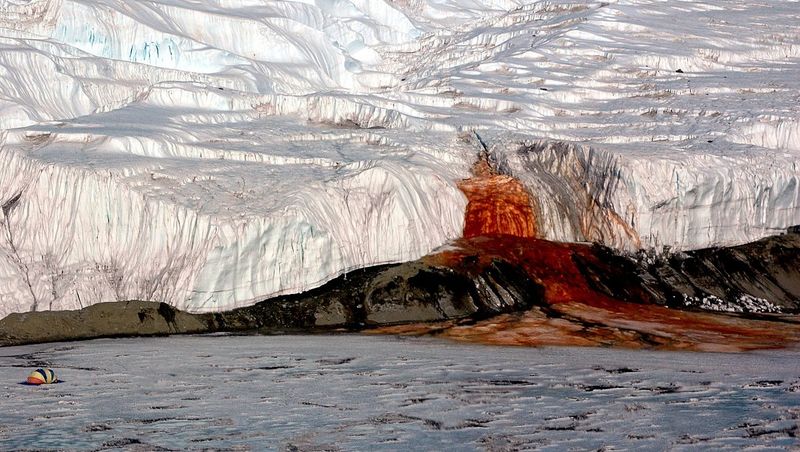
A crimson stream pours from Antarctica’s Taylor Glacier, staining the pristine ice with what looks disturbingly like blood. When explorers first discovered Blood Falls in 1911, they had no explanation for the vivid red color cascading down the glacier’s face.
Early theories suggested algae caused the coloration, but the truth turned out to be far more interesting and scientifically significant. The red color comes from iron-rich saltwater that has been trapped beneath the glacier for millions of years.
When this ancient brine reaches the surface and contacts oxygen, the iron oxidizes—essentially rusting—and creates the dramatic bloody appearance. This subglacial lake exists in complete darkness at temperatures below freezing, yet harbors microbial life that survives without sunlight or oxygen.
Scientists study Blood Falls because it provides clues about how life might exist in extreme environments elsewhere in the universe, particularly on icy moons like Europa or Enceladus. The ecosystem beneath Taylor Glacier has been isolated for potentially two million years, evolving independently in conditions once thought incompatible with life.
While researchers have solved the mystery of the falls’ color, the extremophile organisms living in that hidden lake continue to reveal secrets about life’s adaptability and resilience.
Stonehenge — Ancient Arrangement Still Debated
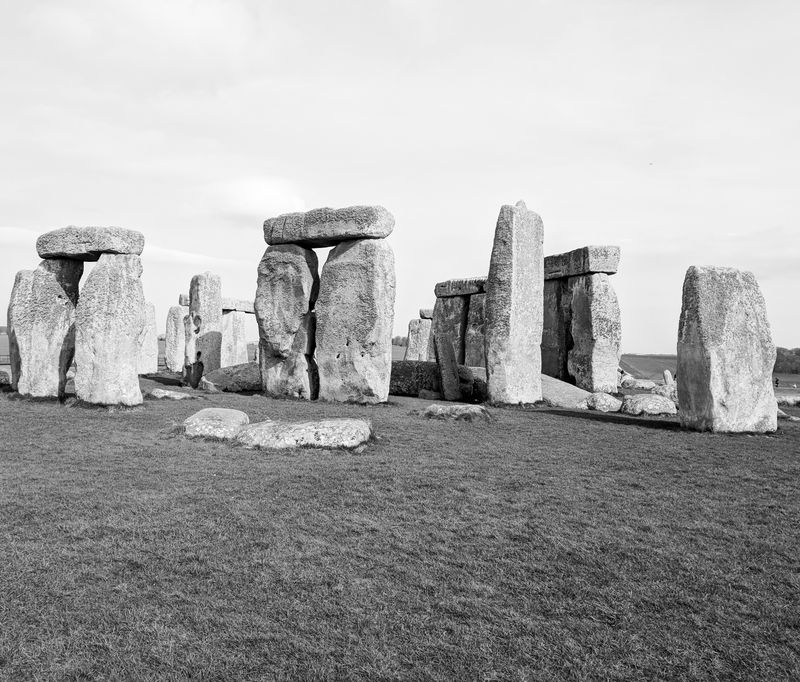
Massive stones stand arranged in circles on England’s Salisbury Plain, placed there by Neolithic people who somehow transported multi-ton boulders across vast distances without wheels or metal tools. Stonehenge has puzzled observers for centuries, generating countless theories about its construction methods and original purpose.
Built in stages between roughly 3000 and 2000 BC, the monument’s astronomical alignments suggest sophisticated understanding of celestial movements. The engineering challenges alone boggle modern minds.
The largest sarsen stones weigh up to 25 tons and were transported from quarries 20 miles away. The smaller bluestones came from Wales, nearly 200 miles distant.
How prehistoric communities organized the labor, moved such massive weights, and lifted them into position remains hotly debated among archaeologists. Purpose theories range from astronomical observatory to healing temple to ceremonial burial ground.
The structure aligns with summer and winter solstices, suggesting calendar or religious functions tied to seasonal cycles. Nearby burial mounds and artifacts indicate the site held spiritual significance for generations.
Recent excavations continue uncovering new details about the communities who built and used Stonehenge, yet no single explanation satisfies all the evidence. This iconic monument endures as perhaps archaeology’s most famous unsolved puzzle.
Chankillo — Peru’s Ancient Astronomical Enigma
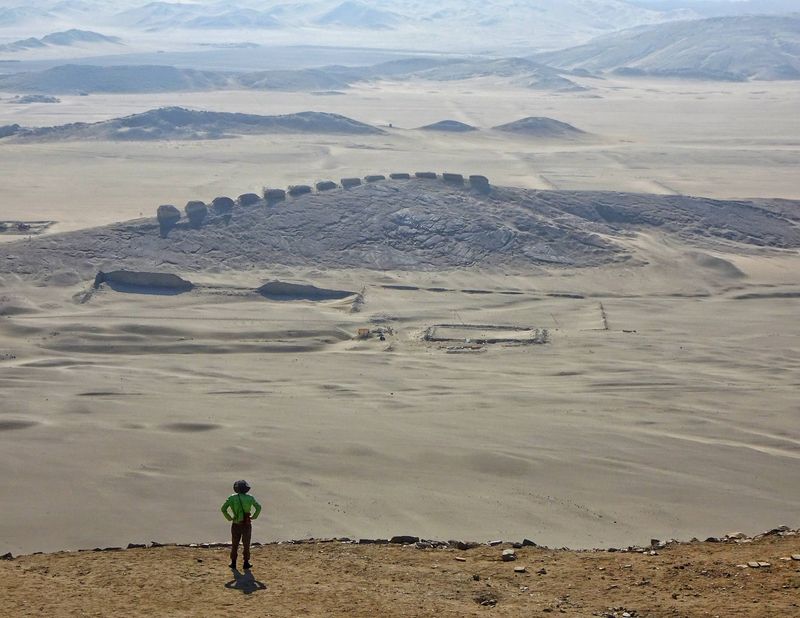
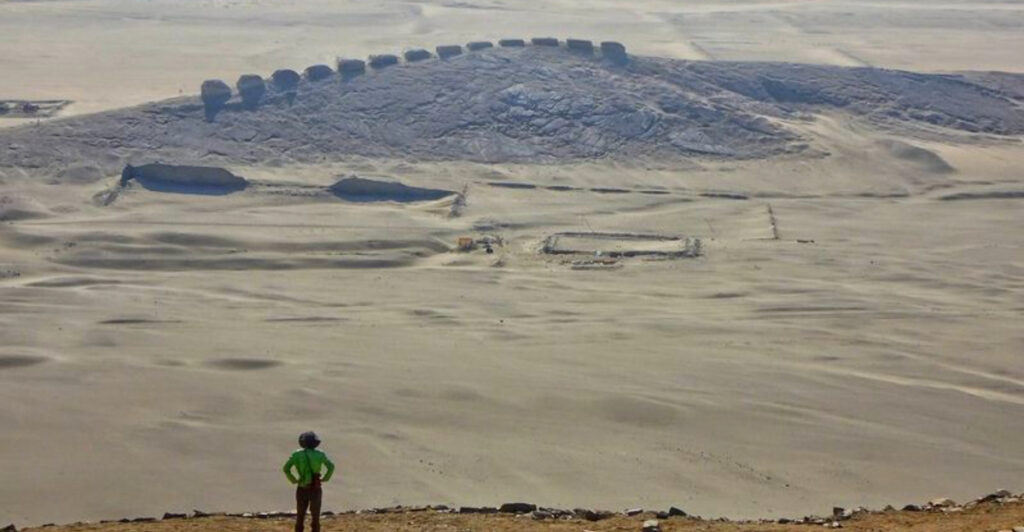
Thirteen towers march across a Peruvian hilltop in precise alignment, built around 250 BC as what researchers believe is the oldest known solar observatory in the Americas. The Chankillo complex demonstrates that ancient Peruvian cultures possessed sophisticated astronomical knowledge centuries before European contact.
The towers mark the sun’s position throughout the year with remarkable accuracy, functioning as a massive calendar visible across the surrounding valley. From specific observation points, viewers could track the sun rising or setting behind different towers depending on the season, pinpointing dates within a few days.
This precision suggests the observatory served important agricultural or ceremonial functions, helping communities time planting seasons or religious festivals. However, the exact rituals or daily uses remain speculative since the culture left no written records.
What makes Chankillo especially intriguing is its integration with a larger fortified complex including plazas and walls, suggesting astronomy played a central role in social and political life. Recent recognition as a UNESCO World Heritage site has increased research attention, but many questions persist about who built it, how they developed such precise astronomical knowledge, and why this particular site was chosen.
Chankillo stands as proof that ancient scientific achievement often exceeded what modern people assume possible without modern technology.
Matiate — Underground City Vast and Hidden
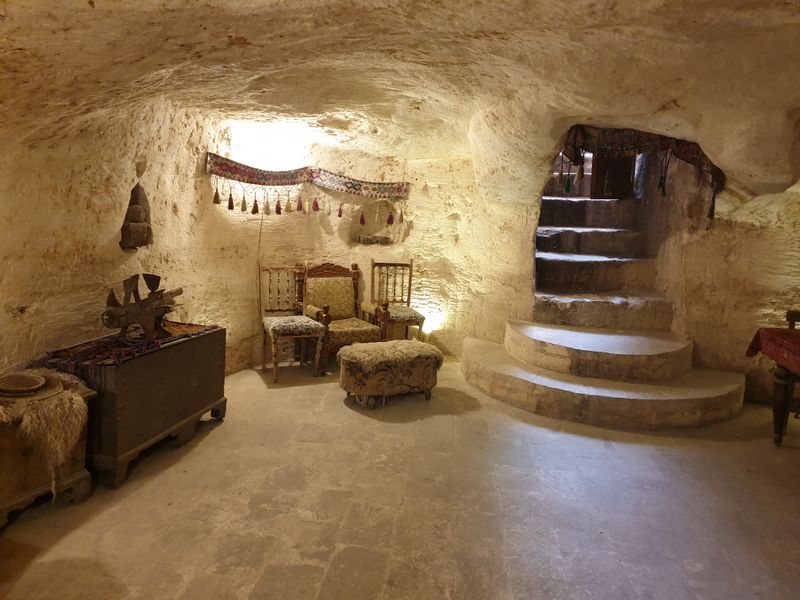
Beneath the streets of Midyat in southeastern Turkey lies a sprawling underground city discovered only in 2020, potentially capable of sheltering up to 70,000 people at its peak. Matiate represents one of the most significant recent archaeological discoveries, yet only about three percent has been excavated so far.
The full extent of this subterranean complex remains unknown, with new chambers and passages constantly emerging as work continues. The city features carved rooms, ventilation shafts, wells, and storage areas that suggest long-term habitation rather than temporary refuge.
Early Christians likely expanded and used these spaces to escape persecution, though the original construction may date back much further. Similar underground cities exist elsewhere in Turkey, but Matiate’s size and recent discovery make it particularly exciting for researchers.
What mysteries lie in the unexplored 97 percent? Archaeologists expect to find religious spaces, living quarters, and artifacts that will illuminate how people survived underground for extended periods.
The discovery also raises questions about how many other hidden structures might exist beneath modern cities, waiting to be found. Matiate proves that even in well-populated areas with centuries of recorded history, massive secrets can remain buried literally beneath our feet until chance or careful investigation brings them to light.
Share this story