Zermatt has a way of making you slow down without even trying. The air feels cleaner, the streets feel calmer, and the scenery keeps pulling your attention upward.
It’s the kind of place where simple moments feel elevated, whether you’re walking past cozy chalets or pausing just to take in yet another unreal view.
What makes it stand out is how effortlessly it blends charm with drama. There’s a quiet, old-world rhythm here, but the backdrop is pure spectacle.
And while plenty of destinations claim to be romantic, this one delivers in the small details as much as the big ones.
So what exactly turns this alpine town into a favorite for couples year after year?
1. Marvel at the Matterhorn’s Majestic Views
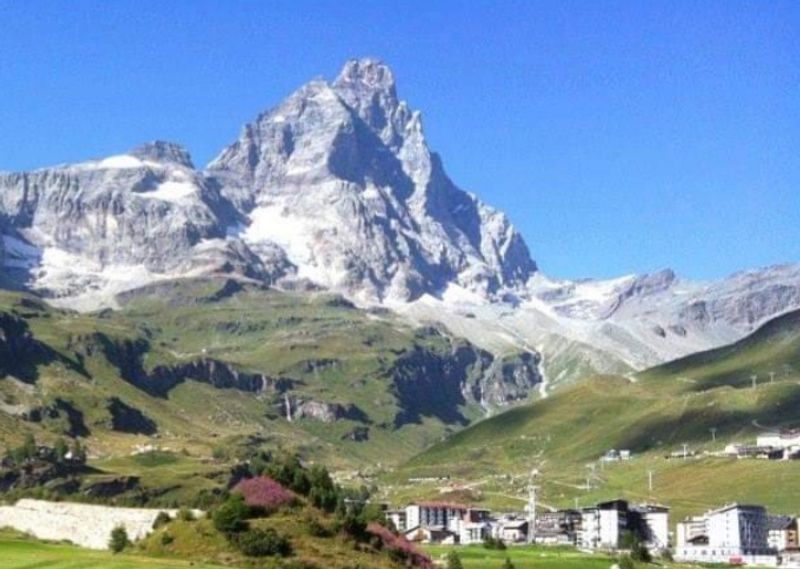
Nothing quite prepares you for that first glimpse of the Matterhorn. It rises like a jagged tooth against the sky, so perfectly symmetrical it almost looks fake.
But it’s real, and it’s breathtaking.
This 4,478-meter giant has been stopping travelers in their tracks for centuries. The mountain’s four faces align with the compass points, making it look different from every angle.
Photographers lose their minds trying to capture it all.
Early morning delivers the best show. The peak catches the sunrise before anything else, glowing pink and orange while the valley stays dark.
Locals call it alpenglow, and couples gather at viewpoints just to witness it together.
You don’t need fancy equipment or hiking skills to enjoy the Matterhorn. Just step outside your hotel and there it is, dominating the skyline.
Some visitors admit they spent entire afternoons on their balconies, unable to look away.
The mountain changes personality with the weather. Clear days show off its sharp edges and rock faces.
Cloudy moments add mystery as the peak plays hide-and-seek behind passing storms. Either way, it never gets old.
2. Explore the Fairytale Glacier Palace
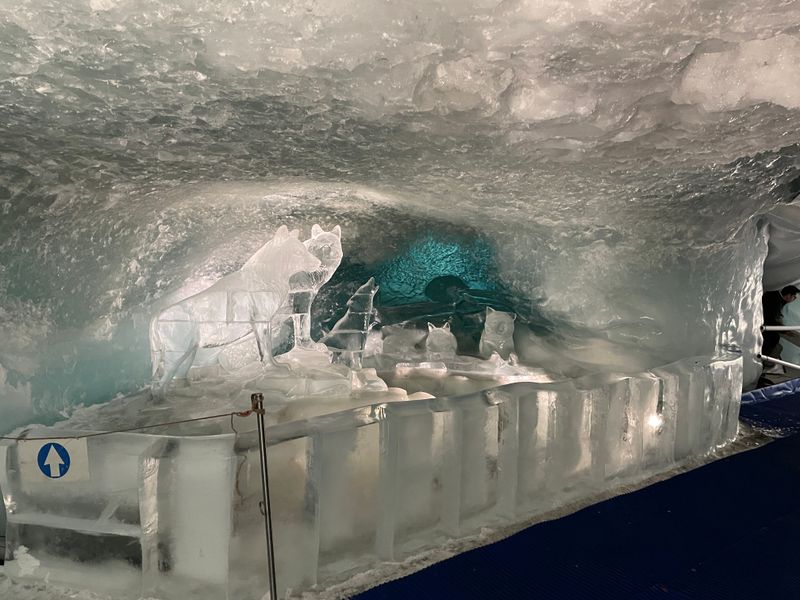
Walking into a glacier feels like stepping inside a frozen dream. The Glacier Palace sits 15 meters below the surface of the Theodul Glacier, where temperatures never rise above freezing.
Blue light filters through the ice walls, creating an otherworldly glow.
Artists have carved entire rooms from solid ice. You’ll find ice furniture, frozen animals, and even an ice slide that kids (and adults) can’t resist.
The sculptures catch the light differently throughout the day, shifting from pale blue to deep sapphire.
I remember touching the walls and feeling the weight of centuries-old ice beneath my gloved fingers. The tunnels wind deeper into the glacier, each turn revealing another sparkling chamber.
It’s quiet down there, almost reverent.
The palace stays at a constant minus four degrees Celsius, so bundle up before descending. Some visitors underestimate the cold and end up cutting their visit short.
Dress warmly and take your time exploring every nook.
This attraction sits at the Matterhorn Glacier Paradise station, making it easy to combine with other alpine adventures. The contrast between the bright snow outside and the blue ice caves creates unforgettable photos.
3. Ride the Matterhorn Glacier Paradise Cable Car
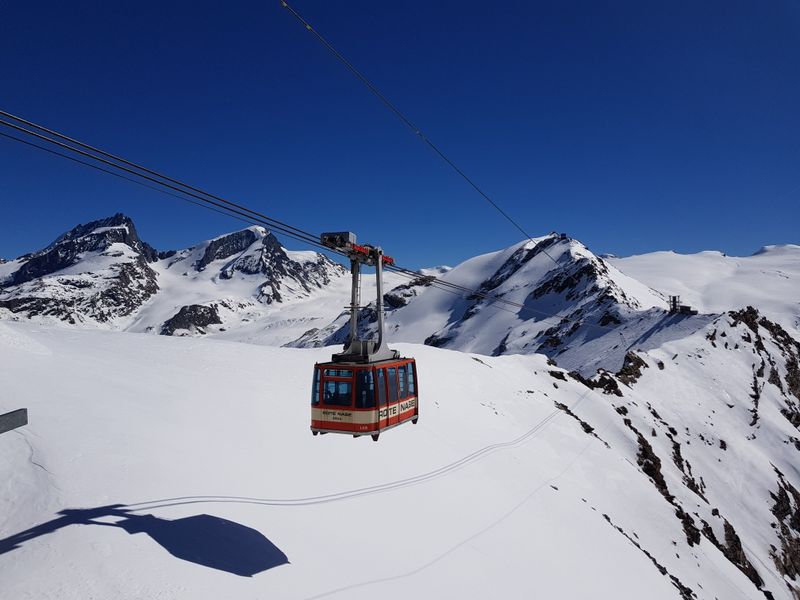
Europe’s highest cable car climbs to 3,883 meters, and your stomach drops with every meter gained. The journey takes you from green valleys through the tree line and into permanent snow territory.
Windows wrap around the cabin, ensuring nobody misses the show.
As you rise, the Matterhorn grows larger and more imposing. Other peaks join the party: Monte Rosa, Weisshorn, Dent Blanche.
By the top, you’re surrounded by 38 four-thousanders, a parade of giants stretching as far as eyes can see.
The ride takes about 40 minutes with two changes. Each segment offers different perspectives, and fellow passengers gasp at every turn.
Some people clutch the handrails during the steepest sections, but the engineering is rock-solid.
At the summit station, you can see into Italy and France on clear days. The observation platform lets you stand higher than most commercial airplanes fly.
The air feels thin up there, and breathing takes conscious effort.
Morning rides beat afternoon crowds by hours. Plus, early light paints the glaciers in softer colors.
Book ahead during peak season because this cable car fills up fast, and nobody wants to wait.
4. Gornergrat Railway – A Scenic Alpine Train Journey
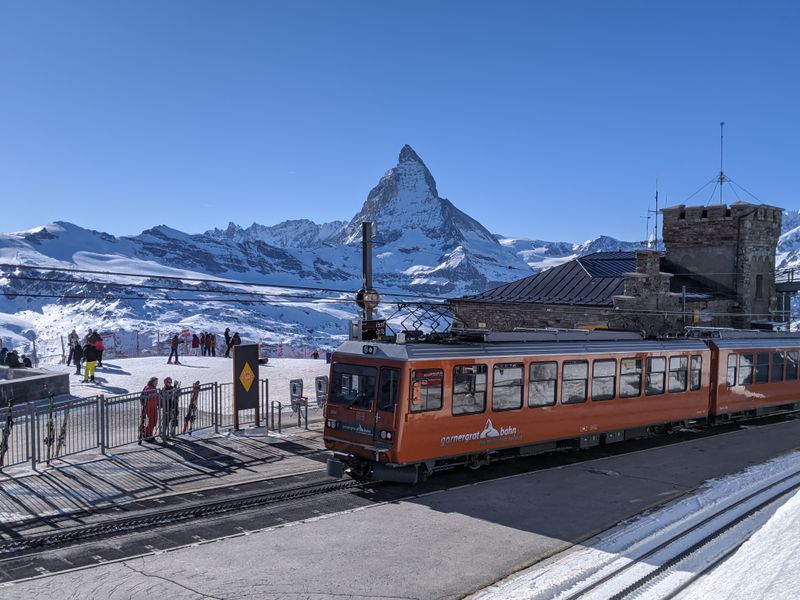
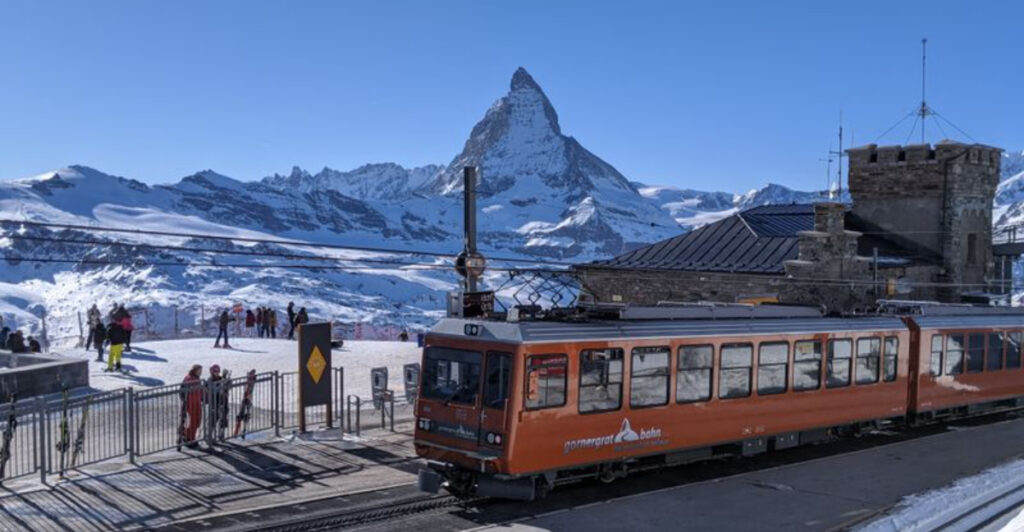
Cogwheel trains grip the steep tracks with mechanical determination, clicking rhythmically as they climb. The Gornergrat Railway has been hauling passengers up this mountain since 1898, making it one of Switzerland’s oldest electric railways.
It’s also one of the prettiest rides on Earth.
The journey starts in Zermatt and climbs 1,469 meters over 9 kilometers. That’s seriously steep, but the train handles it like a champ.
Large windows frame the changing landscape as you pass through forests, over bridges, and past alpine meadows dotted with wildflowers.
About halfway up, the Matterhorn comes into full view. Passengers rush to the right side of the train, cameras ready.
The mountain seems to follow you the rest of the way, growing more dramatic with elevation.
At the top station, you’re standing at 3,089 meters with a 360-degree panorama. The Monte Rosa massif dominates one direction, while the Matterhorn commands the other.
Some people spend hours up there, watching clouds paint shadows across the glaciers.
Sunset trains offer special magic. The light turns golden, then pink, then purple across the peaks.
Couples snuggle close in the open observation car, making memories that last forever.
5. Sunnegga Paradise – Matterhorn Reflections at Lake Leisee
Lake Leisee holds a secret that photographers guard jealously. On windless days, its surface becomes a perfect mirror, doubling the Matterhorn in a reflection so clear it’s hard to tell which mountain is real.
It’s pure Instagram gold, but also genuinely romantic.
Getting here takes just minutes via the Sunnegga funicular. The underground train shoots you up the mountain in record time, delivering you to sunny slopes and that famous turquoise lake.
Families spread blankets on the grass while couples claim private spots along the shore.
The water stays cold year-round, but brave souls still take quick dips on hot summer days. Watching someone shriek as they hit that glacial water never gets old.
Most visitors prefer dangling their feet while soaking up the view.
Early morning visits guarantee the best reflections before afternoon winds ruffle the surface. The light hits differently too, softer and more golden.
Pack a breakfast and claim your spot before the funicular gets busy.
Sunnegga also serves as a hiking hub with trails spreading in every direction. But honestly, many people never leave the lake area.
Why wander when paradise sits right in front of you?
6. Wander the Charming Car-Free Village Streets
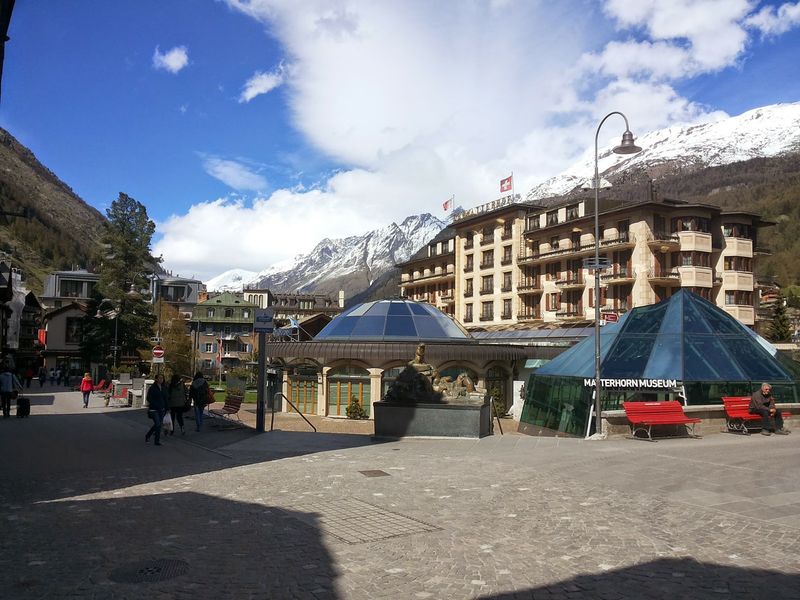
Zermatt banned cars in 1947, and it remains one of the best decisions any town ever made. The only sounds you hear are footsteps, laughter, and the occasional clip-clop of horse hooves.
No honking, no exhaust fumes, just pure alpine air.
Electric taxis zip around when needed, but mostly people walk. The village stays compact enough to explore on foot within an hour.
Yet somehow you’ll spend days discovering new corners, hidden courtyards, and shops you somehow missed before.
Wooden chalets lean into narrow lanes, their balconies overflowing with red geraniums. Some buildings date back 500 years, their dark timber weathered by centuries of mountain storms.
Modern boutiques nestle between ancient structures without clashing.
Bahnhofstrasse forms the main drag, lined with chocolate shops, watch stores, and outdoor gear outlets. But the real magic hides in the side streets.
Wander without a map and you’ll stumble upon tiny bakeries, artisan workshops, and cafés where locals actually hang out.
Evening strolls feel especially romantic when the village lights twinkle and the Matterhorn glows under moonlight. The lack of traffic makes conversations easy, and you can hear the river rushing somewhere nearby.
It’s the kind of place that slows you down in the best way.
7. Visit the Matterhorn Museum (Zermatlantis)
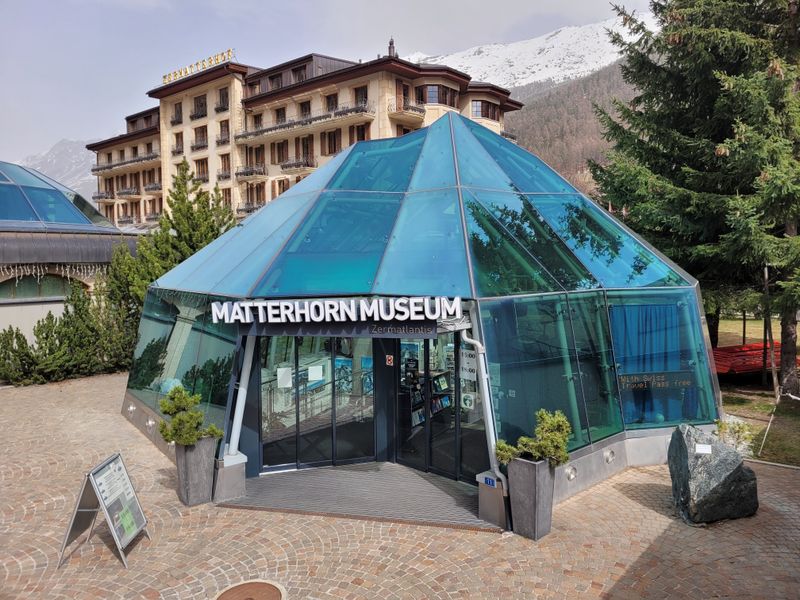
Built underground beneath Zermatt’s main square, this museum recreates an entire alpine village from the 1800s. You descend into history, walking past old chalets, workshops, and even a chapel.
It’s like time travel without the DeLorean.
The museum tells the dramatic story of the Matterhorn’s first ascent in 1865. Edward Whymper’s team reached the summit, but four climbers died on the descent when their rope snapped.
The actual broken rope hangs here, frayed and haunting.
Displays show how Zermatt transformed from a poor farming village into a world-famous resort. Old photographs reveal dirt streets where luxury hotels now stand.
The contrast is staggering, and it happened in just a few generations.
Interactive exhibits let you experience what early climbers faced. Try on period clothing, handle antique ice axes, and read diary entries from those pioneering adventurers.
Their courage (or madness) becomes palpable when you see their primitive equipment.
The museum stays cool year-round thanks to its underground location. Budget about 90 minutes to see everything properly.
English descriptions accompany all exhibits, making the history accessible to international visitors. It’s a rainy-day winner, but honestly worth visiting anytime.
8. Horse-Drawn Carriage Rides Through Town
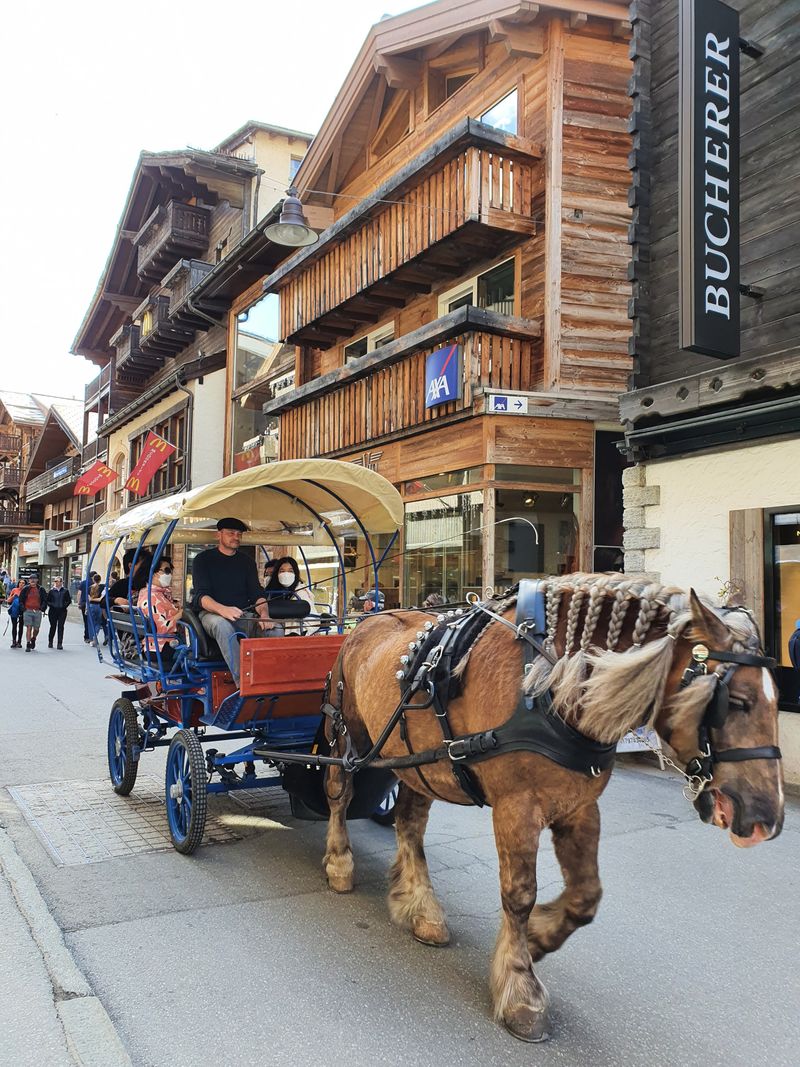
Horses replaced cars when Zermatt went traffic-free, and these carriages became the town’s most romantic transportation. Drivers bundle passengers under wool blankets before clicking their tongues to start the clip-clopping journey.
It’s ridiculously charming and totally worth the splurge.
The carriages follow routes through the oldest neighborhoods where modern vehicles never go. You’ll pass under wooden archways, around tight corners, and alongside the Mattervispa River.
Drivers share local stories and point out buildings tourists usually miss.
Winter rides feel especially magical when snow blankets everything and sleigh bells replace the carriage wheels. Bundled under thick blankets with hot chocolate in hand, you’ll swear you’ve landed in a Christmas movie.
Some couples book rides just for proposal photos.
Most rides last 20 to 30 minutes, though longer tours can be arranged. The horses know the routes by heart, stopping automatically at photo spots where the Matterhorn frames perfectly behind you.
Smart animals, these mountain horses.
Book through your hotel or approach drivers near the train station. Prices vary by season and route length.
Yes, it’s touristy. Yes, you should do it anyway.
Some experiences earn their clichés through pure joy.
9. Hiking the Matterhorn Glacier Trail
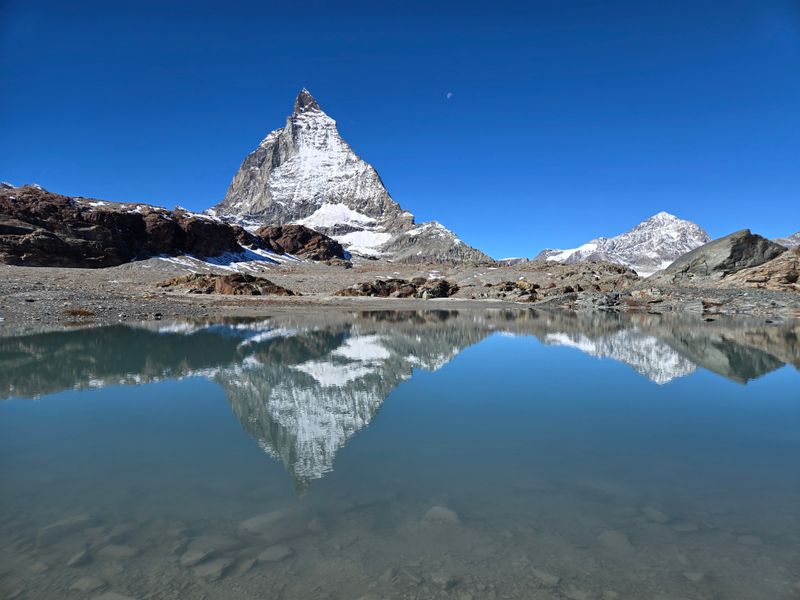
This trail brings you face-to-face with a living glacier without requiring mountaineering skills. The path winds from Trockener Steg down to Schwarzsee, passing ice formations, moraines, and viewpoints that make you stop every few minutes.
It’s spectacular and accessible, a rare combination.
The route covers about 6 kilometers with mostly downhill walking. Information panels explain glacial movement, climate change, and how these ice rivers shaped the valleys.
Educational stuff, but presented in ways that don’t feel like homework.
Wildflowers explode across the meadows in July and August. Purple gentians, yellow buttercups, and pink alpine roses create carpets of color against the white glaciers.
The air smells crisp and clean, flavored with mountain herbs crushed underfoot.
You’ll hear the glacier groaning and cracking as it moves. It’s an eerie sound, ancient and powerful.
Streams of meltwater rush past in channels carved through the ice, their water so cold it hurts your teeth if you’re brave enough to drink.
The trail takes about two hours at a leisurely pace. Wear good hiking boots because loose rocks and snow patches can surprise you.
Pack layers since weather changes fast at this altitude. And bring extra camera batteries because you’ll shoot everything.
10. Findeln Alpine Chalets & Dining with Views
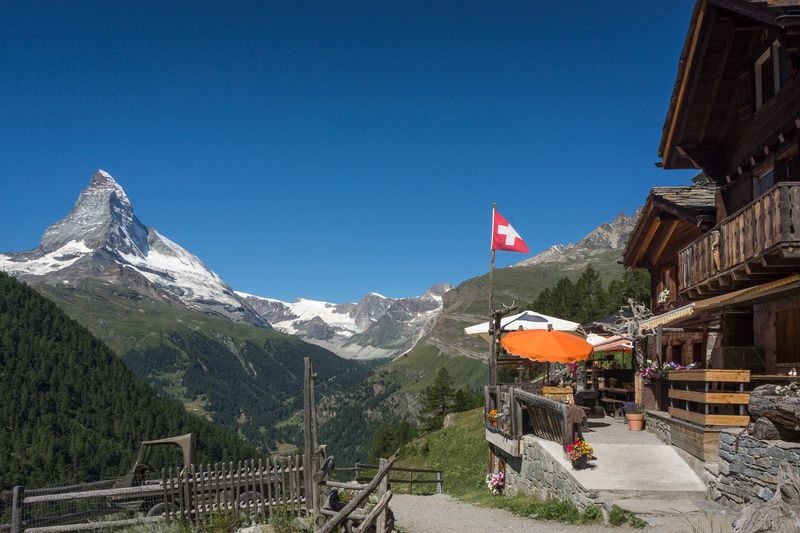
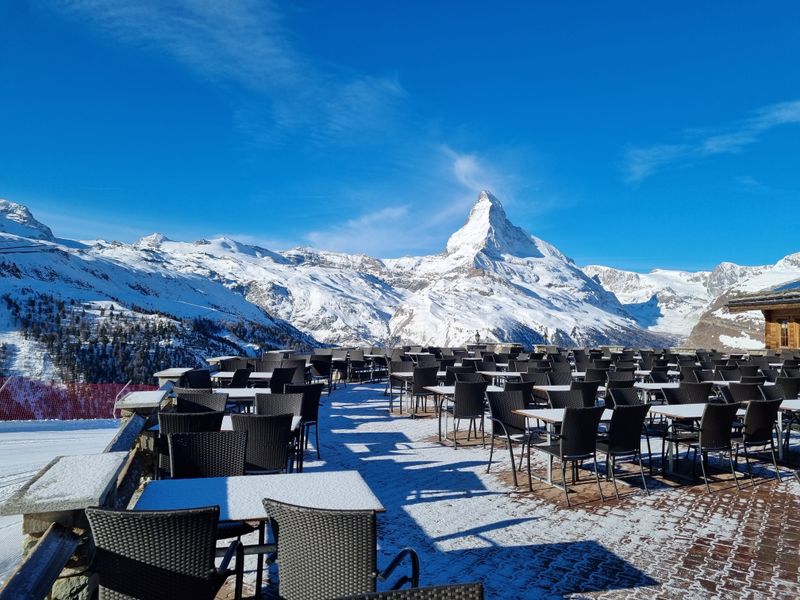
Findeln sits on a sunny slope above Zermatt, accessible only by foot or electric taxi. This tiny hamlet consists of ancient chalets, some dating back 400 years, and several restaurants with views that ruin you for regular dining.
Once you’ve eaten fondue while staring at the Matterhorn, everything else feels ordinary.
The hike up takes about 45 minutes through forests and meadows. Alternatively, ride the Sunnegga funicular and walk down in 20 minutes.
Either way, you’ll arrive hungry and ready for mountain hospitality.
Restaurant terraces face the Matterhorn directly. You can watch the peak change colors through your entire meal, from golden afternoon light to pink alpenglow to purple twilight.
Waiters know the show, timing courses to match the mountain’s moods.
Traditional Valais cuisine dominates the menus. Think hearty portions of raclette, rösti, and dried meat platters.
The food matches the setting: simple, honest, and deeply satisfying. Wine lists feature local Swiss selections that somehow taste better at altitude.
Reserve ahead during summer and ski season because tables fill fast. Sunset slots get claimed weeks in advance.
But even lunch delivers that same stunning backdrop, and you’ll beat the romantic dinner crowds.
11. Hinterdorf Historic Quarter
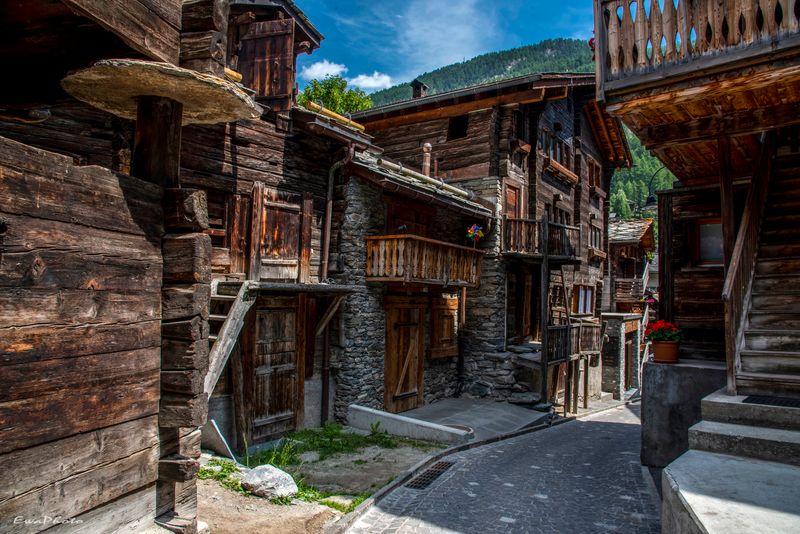
Zermatt’s oldest neighborhood hides behind the main shopping streets, a cluster of dark wooden buildings that most tourists miss. Hinterdorf means back village, and it lives up to the name.
This is where Zermatt keeps its authentic soul.
The chalets here date from the 1500s and 1600s, built by farmers and shepherds who never imagined their village would become famous. Blackened timber walls lean slightly after centuries of heavy snow.
Tiny windows kept heat inside during brutal winters.
Grain storage buildings called mazots stand on stone discs that kept mice from climbing up. These mushroom-shaped foundations dot the neighborhood, practical solutions from practical people.
Nowadays they hold firewood or garden tools instead of grain.
Walking these narrow lanes feels like intruding on private history. Locals still live in some buildings, hanging laundry and tending window boxes.
Others have become vacation rentals, offering visitors a taste of traditional mountain life.
The quarter stays quiet even when central Zermatt buzzes with tourists. Come early morning or late afternoon when the light slants through the buildings just right.
Bring a camera but also just sit and absorb the atmosphere. This is Zermatt before it became Zermatt.
12. Panoramic Sunset at Rothorn
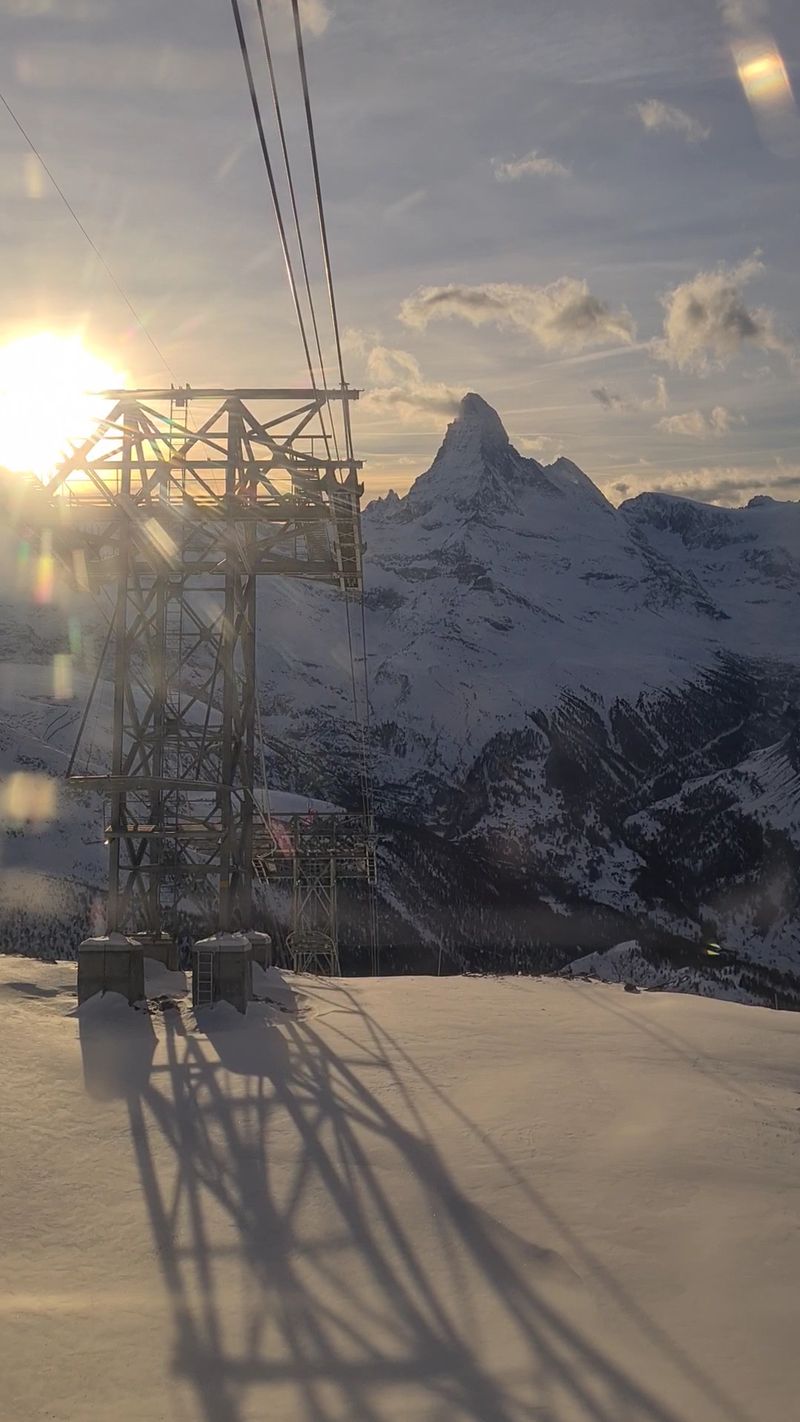
Rothorn reaches 3,103 meters, high enough to watch the sun set over an ocean of peaks. The summit station sits at the top of a cable car journey that starts in Zermatt and climbs through three stages.
By the time you arrive, you’re standing above most of Switzerland.
Golden hour transforms the mountains into something unreal. Shadows stretch across valleys while peaks glow orange, then pink, then deep purple.
The Matterhorn steals the show as always, but 20 other four-thousanders compete for attention.
The observation platform wraps around the summit building, offering 360-degree views. One side shows the Italian Alps, another faces the Bernese Oberland.
You can literally turn in circles and never see the same thing twice.
Couples claim spots along the railing hours before sunset, unwilling to risk losing prime position. Smart ones bring blankets and thermoses of hot chocolate.
The temperature drops fast once the sun dips, and mountain wind cuts through regular jackets.
Special sunset rides run during summer, timed to get you up and down safely. The descent happens in twilight, villages twinkling below like scattered stars.
Some people call it the most romantic evening possible in the Alps. Hard to argue with that assessment.
13. Enjoy a Picnic by an Alpine Lake
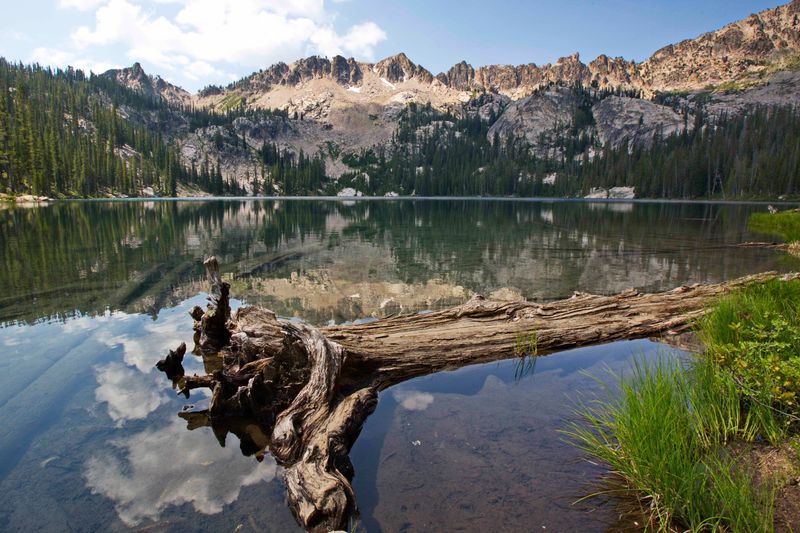
Zermatt’s hiking trails pass dozens of alpine lakes, each one more photogenic than the last. These glacial pools range from tiny tarns to proper swimming lakes, their waters colored impossible shades of turquoise and emerald.
Pick one, spread a blanket, and suddenly you’re living a Swiss tourism poster.
Grünsee lives up to its name with green water so clear you can count rocks on the bottom. It sits just 20 minutes from Zermatt center, making it perfect for casual picnickers.
Families claim the grassy shore while couples find private coves around the edges.
Stellisee offers the famous Matterhorn reflection when conditions align. Getting there requires more hiking, but the reward justifies every step.
Pack good bread, local cheese, and some chocolate from a Zermatt shop. Mountain air makes everything taste better anyway.
Most lakes allow swimming, though the water temperature rarely exceeds refreshing. Brave souls take quick dips while others stick to dangling their feet.
Either way, the setting beats any beach resort.
Arrive before noon to claim the best spots. Afternoon brings crowds and wind that can ruffle those perfect reflections.
Also pack out everything you pack in because these lakes deserve protection. Leave nothing but footprints, take nothing but photos and memories.
14. Winter Magic on the Snow-Dust Trails
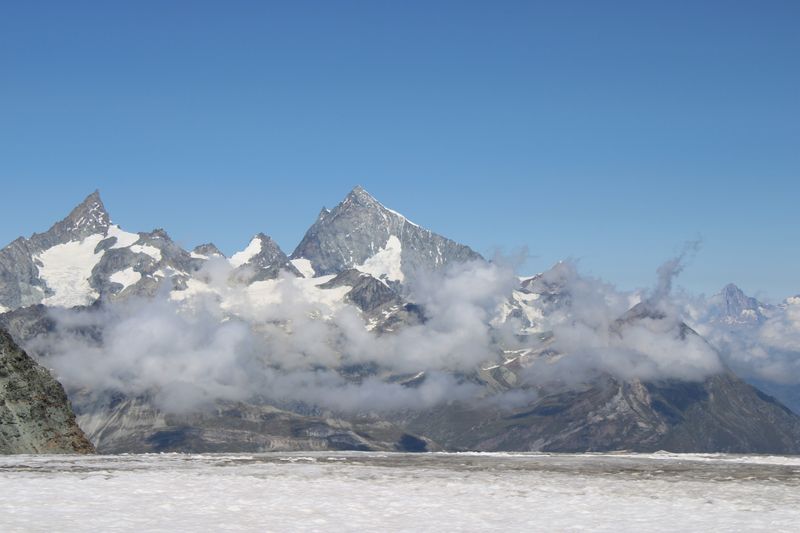
Winter transforms Zermatt into something from a snow globe. The village glows with thousands of lights while snow blankets everything in silence.
Snowshoe trails wind through forests where only your breathing and the crunch of snow break the quiet.
Romantic snowshoe walks lead to viewpoints, frozen waterfalls, and moonlit meadows. No special skills required, just warm clothes and a sense of adventure.
Guides can lead you, or rent equipment and explore marked trails independently. Either way, the magic hits hard.
The village decorates for Christmas like it’s competing in the Olympics of festive cheer. Lights drape between buildings, ice sculptures appear in squares, and the smell of glühwein drifts from every corner.
Evening strolls become events when everything sparkles.
Torchlit descents happen weekly on certain slopes. Skiers carry flaming torches down the mountain in synchronized patterns, creating rivers of fire against the snow.
Watching from the valley, it looks like something ancient and mystical. Participating feels even better.
February brings the Zermatt Unplugged music festival, filling venues with acoustic performances. The combination of live music, mountain views, and winter atmosphere creates unforgettable evenings.
Book accommodations early because the whole town fills up fast during festival weeks.
15. Local Fondue & Alpine Cuisine Experiences
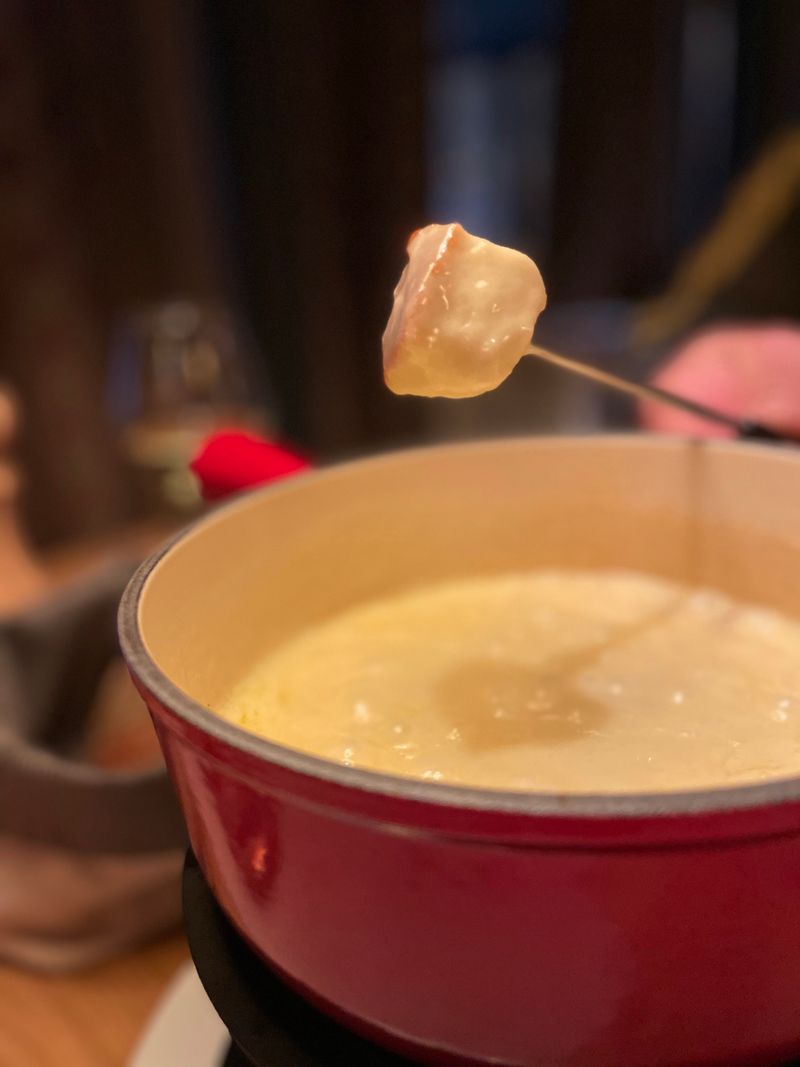
Fondue isn’t just food in Zermatt, it’s a ritual. You gather around a bubbling pot of melted cheese, spear bread cubes, and swirl them through the molten goodness.
The cheese stretches as you lift your fork, creating those Instagram-worthy cheese pulls. But forget the photos and just eat.
Traditional recipes blend Gruyère and Vacherin with white wine, garlic, and a shot of kirsch. The alcohol cooks off but leaves flavor behind.
Restaurants guard their exact ratios like state secrets, each claiming theirs tastes best. Honestly, they’re all delicious.
Raclette offers another cheese-centric experience. Half a wheel gets heated until the surface melts, then scraped onto your plate over potatoes, pickles, and onions.
The word raclette comes from the French verb to scrape. Simple name, sublime result.
Mountain restaurants serve hearty fare designed for cold weather and big appetites. Rösti (crispy potato pancakes), dried meat platters, and barley soup appear on most menus.
Portions could feed small armies, so come hungry or plan to share.
Fine dining exists too, with several Michelin-starred restaurants calling Zermatt home. These places elevate Swiss ingredients into art, pairing local lamb with foraged herbs and glacial water sorbet.
Expensive but unforgettable, especially for special occasions that deserve proper celebration.
Share this story