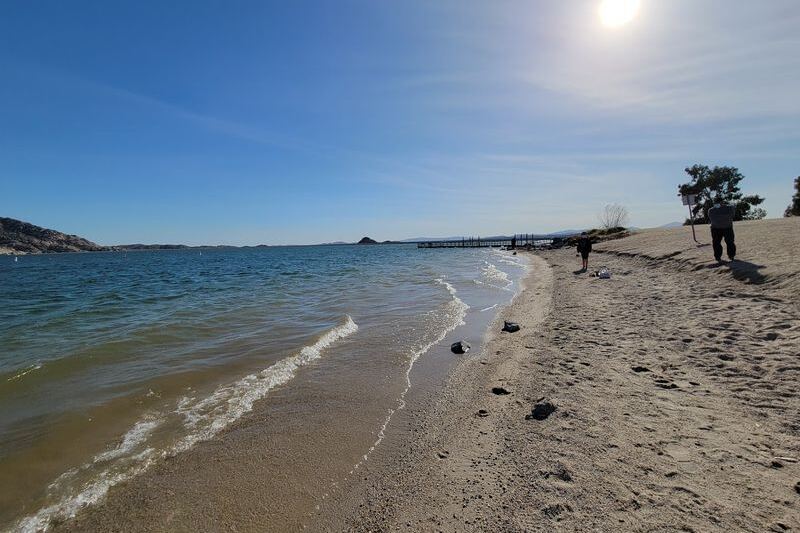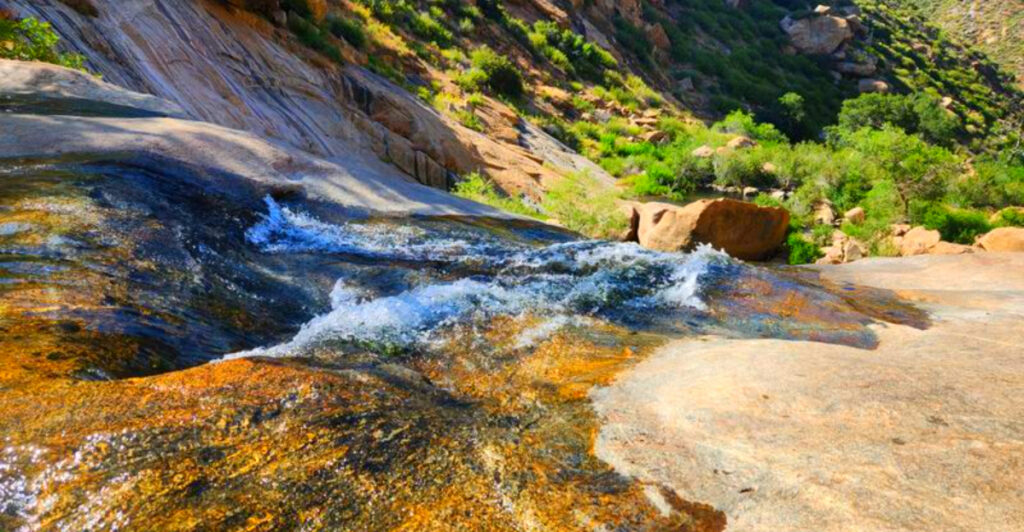
Tucked into a sunbaked fold of the Cleveland National Forest, Three Sisters Falls feels like a secret you earn with your calves. The trail drops toward a granite amphitheater where water ribbons over rock and, in good flow, turns slick slabs into natural slides.
You hear the falls before you see them, a hush that grows into a steady rush as the canyon narrows. Come curious, leave salty with sweat and mist, and carry a story only hikers tell well.
Trailhead Approach and First Look
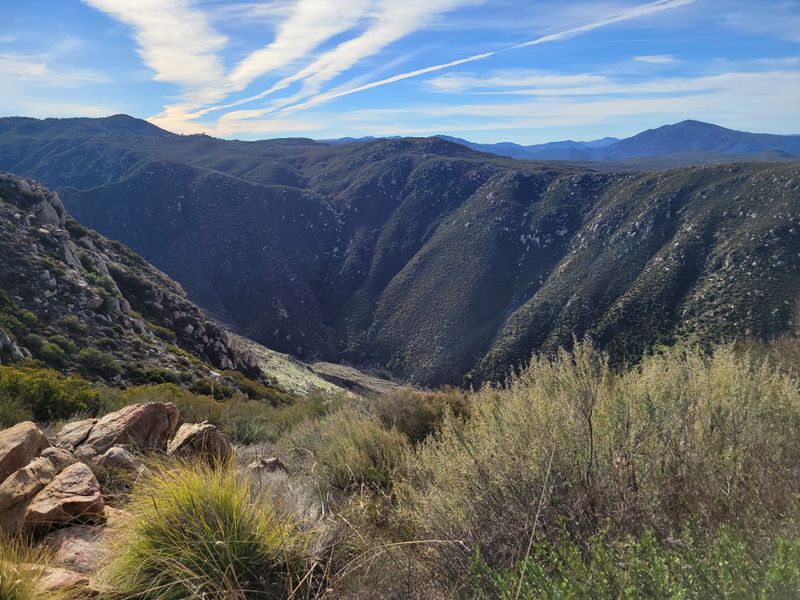
The drive in ends on a 5 to 6 mile dirt road that rattles bottles and rewards patience. Dust hangs behind each car like a flag, and the chaparral smells peppery and sun warmed.
At the trailhead, the wind is dry on your neck, and the first view lines up a pale canyon funneling toward a granite seam.
The descent begins easy, a sandy path shouldering through buckwheat, chamise, and the occasional coast live oak. Lizards skitter ahead, tails scribbling hieroglyphs in dust.
Cell service fades, replaced by cicada buzz and the distant hush of water if the season is right.
It is downhill out, uphill back, which rearranges your sense of effort. That fact shapes decisions: how much water, when to start, what shoes to trust.
Before committing, look across the bowl and trace the return climb so it is no surprise later.
Seasonality and Water Flow Reality Check
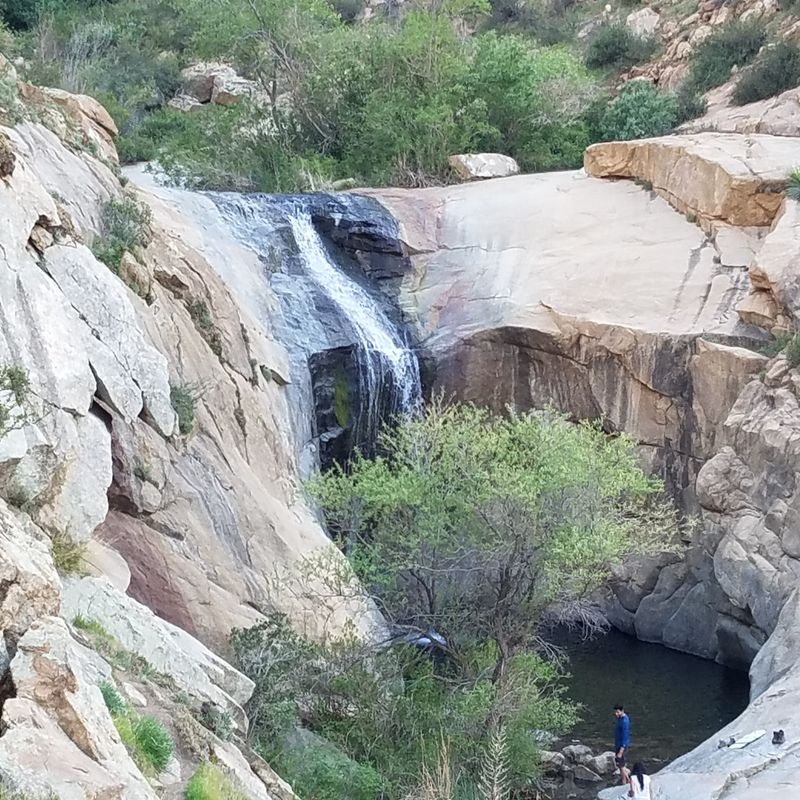
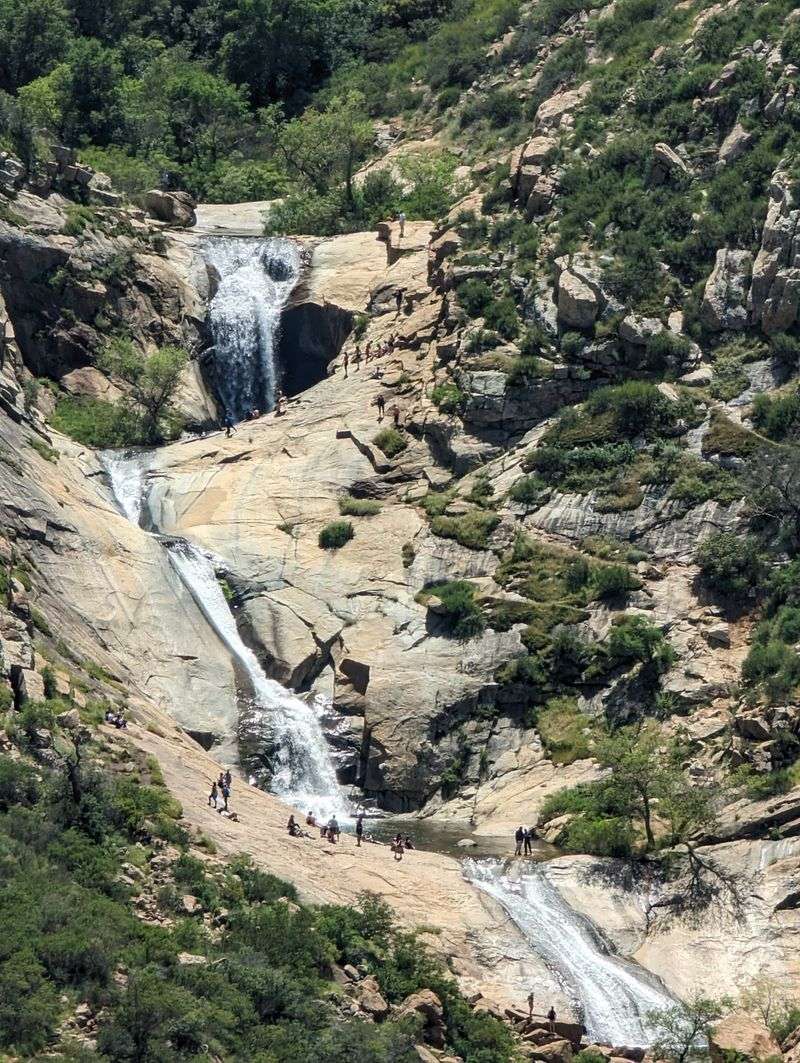
Three Sisters is mercurial. After winter and spring rains, the trio of cascades steps down polished granite, throwing mist that beads on forearms.
Late summer can mute the flow to a whisper or silence, leaving glassy pools in shaded pockets.
Recent seasons have swung hard. State precipitation totals spiked during strong winter storms, and San Diego County saw above average rainfall two winters running, reviving the falls into early summer.
Still, a December hiker recently found dry rock despite forecasts, proof that timing beats assumptions.
Before you lace up, check recent trip reports on AllTrails or the Forest Service alert page. Photos from last week are worth more than guesses.
If you arrive to low flow, the canyon still offers honeycomb granite, quiet pools, and a sky that occupies the whole horizon.
The Descent: Dirt, Switchbacks, and Heat
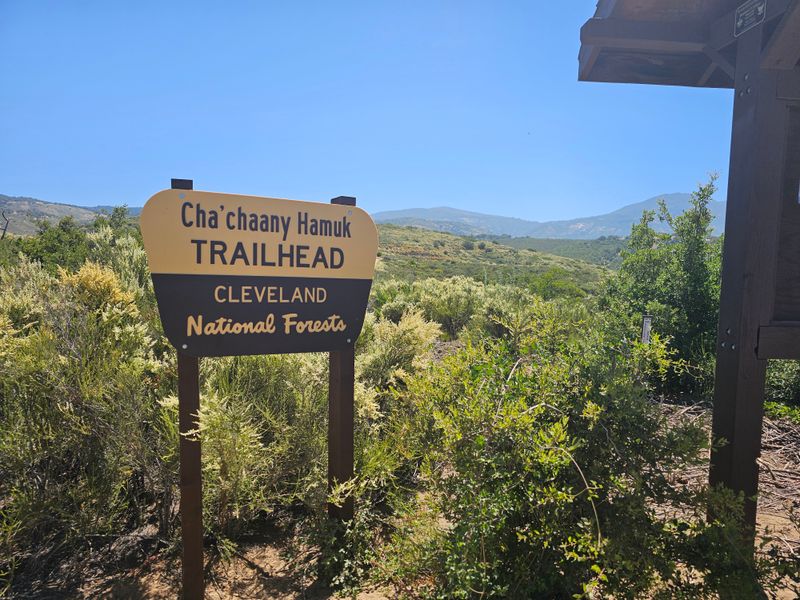
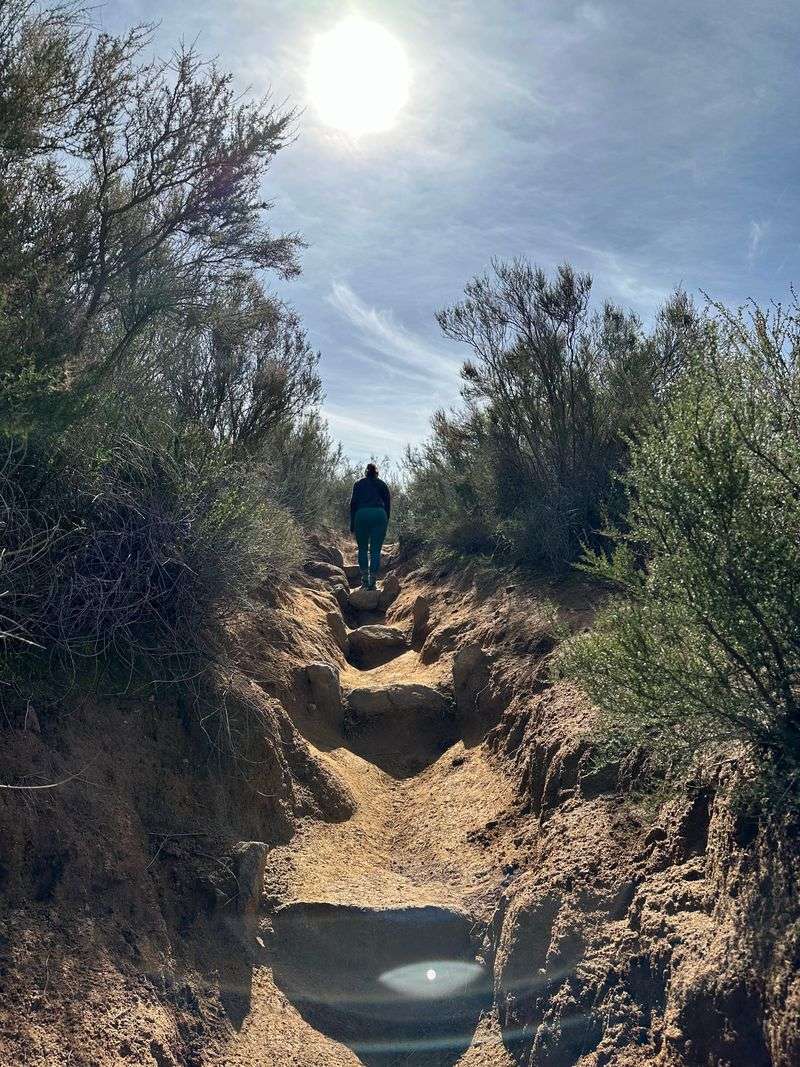
The trail tilts down immediately, sandy over hardpack, with switchbacks cut into a sun facing slope. Your shoes sink a half inch with each step, sliding microscopically.
Hands brush dry buckwheat, releasing a toasted, nutty scent that feels like summer even in March.
Shade is scarce. Temperatures here routinely run hotter than coastal forecasts, and radiating granite adds a few degrees.
Start early, stash a frozen bottle to thaw on the return, and expect the canyon to turn into a heat trap by late morning.
The grade eases near the bottom, where the creek corridor cools the air. Oak leaves flash silver in the breeze, and the sound of water becomes directional.
Turn left upstream on braided use paths, testing each sandy step so you are not skiing downhill on the way back.
First Cascade: The Lower Sister
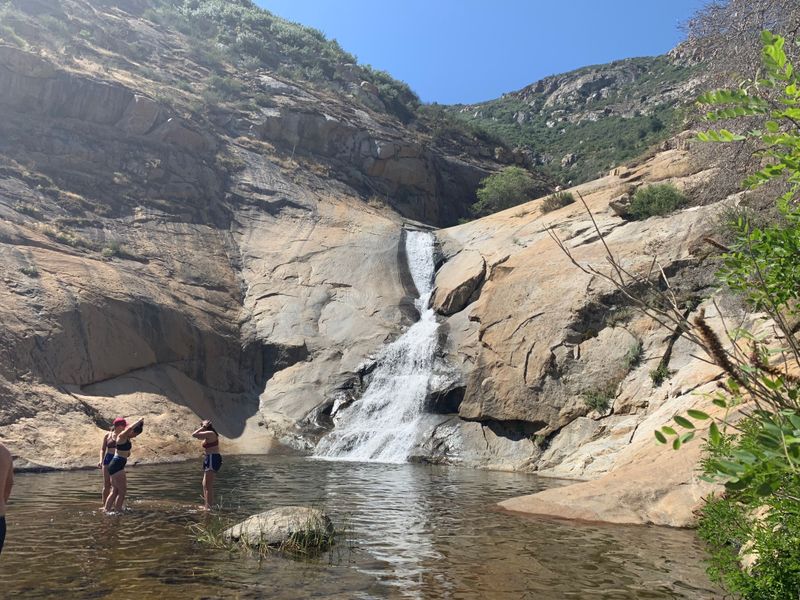
The lower fall is the greeter, a short spill into a cool green basin ringed by granite that has been touched by a thousand careful shoes. Dragonflies patrol the surface like tiny helicopters.
Sit on sun warmed rock, boots off, and soak ankles until the ache leaves your calves.
From here, you feel the canyon breathe. Voices echo softly, then disappear under the rush of water.
If the flow is tame, kids and cautious adults wade the shallows, palming the current while staying well away from slick edges.
This tier sets expectations. You can stop and be fully satisfied, or scout higher with patience and grip.
The rock tilts just enough to punish casual steps, so move with low hips and a test first mentality.
Natural Waterslide: Middle Sister Granite Ramp
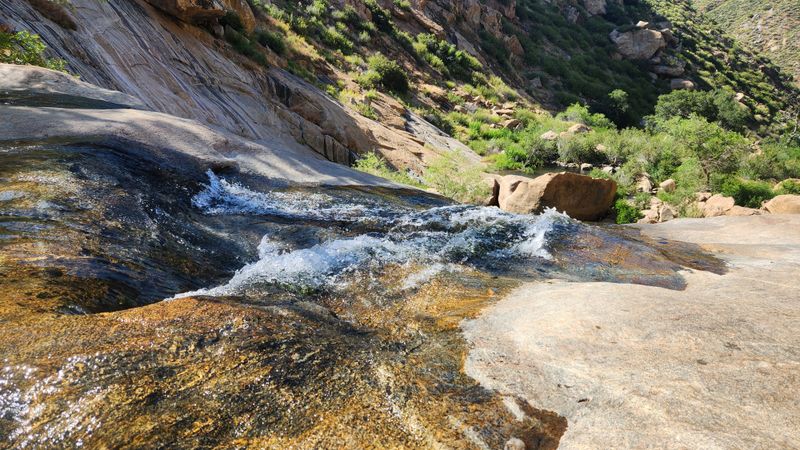
When water runs, the middle cascade shapes into a slick granite ramp that behaves like a playground built by geology. The surface is satin smooth from centuries of flow.
Light flashes on the sheet of water, and your palms feel the chill even before your legs commit.
Here is the rule: assess first. Check depth at the runout, look for hidden rock, and watch someone descend before you try.
Flow varies wildly by week, so a safe slide in May can be dangerous in July.
Grip counts more than bravery. Sticky tread, three points of contact, and patience define a good day.
If conditions are wrong, sit close enough to feel spray and pocket the thought that restraint is its own story.
Upper Sister: Scramble, Exposure, Reward
The approach to the upper fall narrows into a slabby scramble with moves that feel easy until a foot skates. Granite offers smears and scallops the size of a palm, and you learn to trust friction.
A slip here means bruises or worse, so the calculus must be honest.
People often pause, watch others, and choose the line that fits their comfort. The reward is a quiet amphitheater, spray drifting like thread in the sun, and a view down canyon that stacks blue ridges to the horizon.
On windy days, the mist comes and goes like breathing.
Do not chase the exact path someone else took. Read the rock, move deliberately, and leave a margin.
Turning back is sometimes the better summit and always a valid decision.
Safety Essentials That Matter Here
This canyon rewards preparation more than bravado. Pack at least 2 to 3 liters of water per person, electrolytes, and sun armor: wide brim hat, sunscreen, sunglasses.
Grippy shoes beat sandals, and a compact first aid kit answers the most common mishaps.
Fatigue stacks fast on the return climb. Local rescuers respond to heat illness and slips here more often than you think, and multiple first responder vehicles have been spotted on busy weekends.
Start at dawn, know your turnaround time, and treat shade as a resource to ration.
On the rock, move like a climber: test holds, keep three points, and never step where you have not looked. Leashed dogs need booties and extra water or a rest day when temperatures spike.
Your life outranks a photo by every measure.
Flora, Fauna, and The Scent of Chaparral
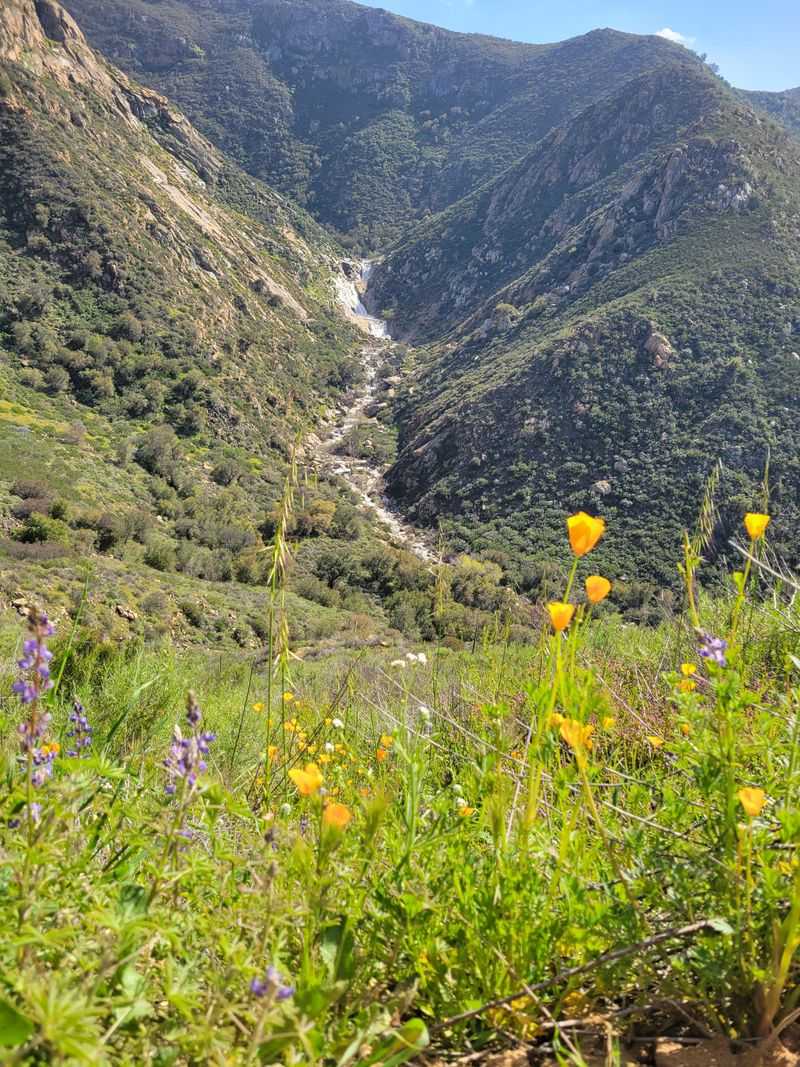
The trail threads classic Southern California chaparral, a living tinderbox that smells like resin and spice. Chamise spikes crowd the path, buckwheat domes blush rust, and California sage releases a soft, medicinal breath when your pack brushes it.
In spring, wildflowers scatter color between granite steps.
Lizards own the sun patches and rattle off when your shadow crosses. Red tailed hawks draw circles overhead, sizing up thermals.
Near the creek, willows and alders brighten the banks and cool the air by a few forgiving degrees.
Poison oak is common in narrow sections, shiny leaves posing as innocent green. Learn the look, keep sleeves down, and mind dogs that wander into thickets.
The canyon teaches botany quickly, and a clean exit is the prize.
Logistics: Parking, Road, and Trail Stats
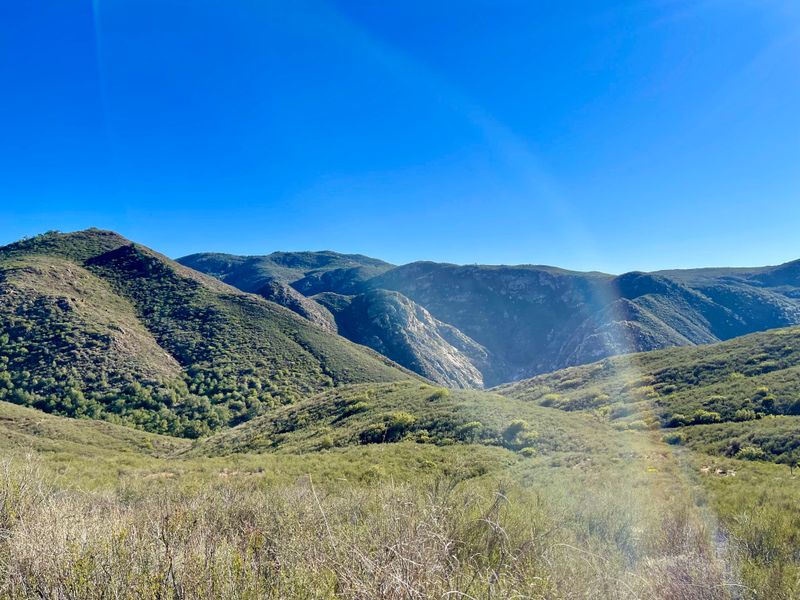
Access runs through Boulder Creek Road, then a long dirt segment that any car can handle in dry conditions if driven slowly. Expect washboards, ruts after storms, and dust that coats everything you forgot to zip.
Parking is limited, unpaved, and can overflow down the road by mid morning.
The hike clocks roughly 4 miles round trip depending on the line you take to the falls. It is deceptively easy outbound and effort heavy inbound, a profile that tricks newcomers.
Budget two to three hours excluding swim time, and longer on hot days.
Trail signs are minimal, but use paths are obvious near the creek. Download an offline map and drop a pin at the trailhead.
Open hours are effectively dawn to dusk in practice, though the area is posted as open 24 hours.
Leave No Trace and Respect for the Canyon
Granite remembers careless feet and careless trash. Pack out everything, including orange peels that linger longer than expected.
Keep music in your headphones so the canyon keeps its own soundtrack.
Stay on durable surfaces where possible, step on rock not fragile soils, and skip stacking cairns that confuse route finding. Human waste belongs buried well away from the creek or packed out if you carry a kit.
Glass never belongs here, full stop.
When water runs strong, the falls are charismatic and loud. Resist cliff jumping, which changes in safety daily with flow and depth.
Leave the place cleaner than you found it, and it will remain a secret shared responsibly.
Share this story