Across every continent, certain places hold stories that connect us all to humanity’s shared past. UNESCO World Heritage Sites stand as guardians of these irreplaceable treasures, protecting everything from ancient temples to medieval cities that reveal how our ancestors lived, believed, and built.
Each site offers a window into civilizations that shaped our world, reminding us that history isn’t just dates in textbooks—it’s real places you can visit and experience. Let’s explore remarkable locations where human creativity, resilience, and ingenuity have been preserved for generations to come.
Great Wall of China — Ancient Border Landscape (China)
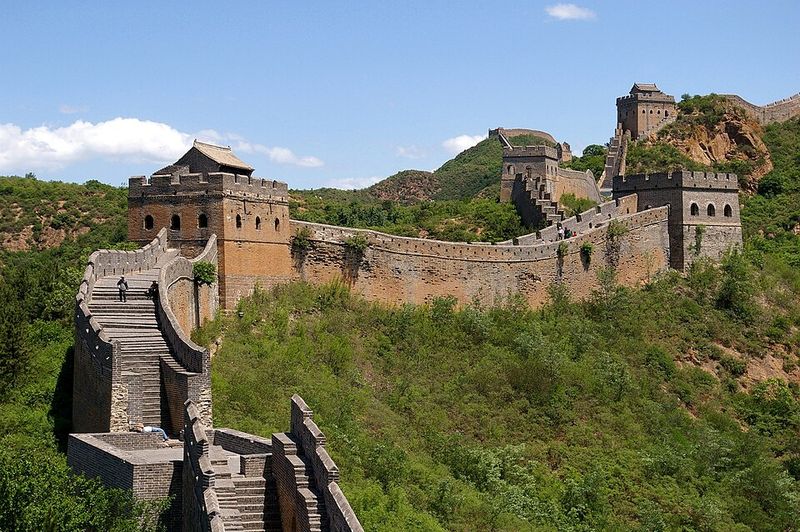
Stretching over 20,000 kilometers across rugged mountains and sweeping plains, the Great Wall of China remains one of humanity’s most jaw-dropping achievements. This isn’t just a wall—it’s a massive network of fortifications built over centuries by different dynasties, each adding their own defensive strategies and architectural styles.
Workers hauled stones, tamped earth, and constructed watchtowers in conditions that would challenge modern engineers. Originally designed to keep invading armies at bay, the Wall became much more than a military barrier.
It represented the determination of entire empires to protect their people and culture. Today, UNESCO recognizes it as a symbol of Chinese identity and perseverance that transcends its original purpose.
Walking along restored sections, you can still see beacon towers where soldiers once lit signal fires to warn of approaching enemies. The engineering genius required to build across such diverse terrain—from deserts to steep mountain ridges—reveals sophisticated planning and collaboration.
Preservation efforts continue protecting this monument so future generations can understand the scope of ancient ambition and the human cost of building something meant to last forever.
Pyramids of Giza — Monumental Tombs of the Pharaohs (Egypt)
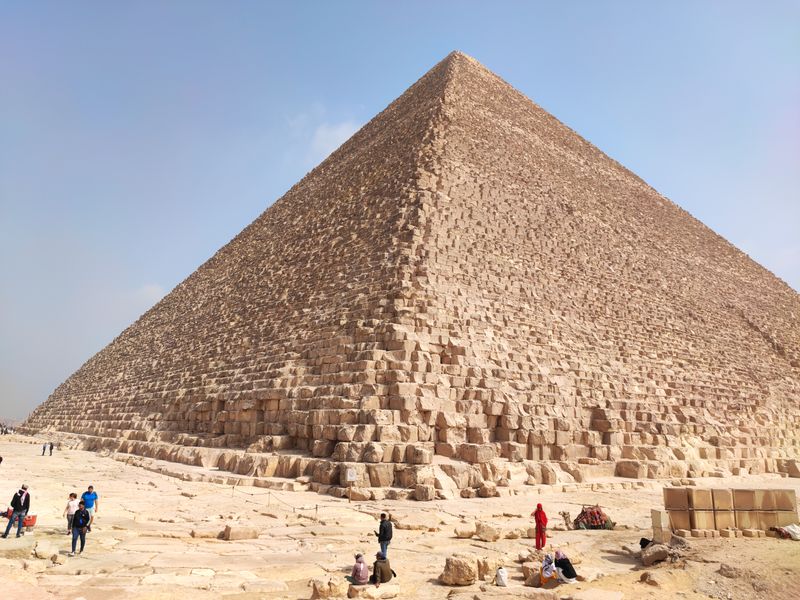
Standing tall for over 4,500 years, the Pyramids of Giza represent the only surviving Wonder of the Ancient World. These massive stone structures were built as eternal resting places for pharaohs who believed they would journey to the afterlife as gods.
The precision of their construction continues baffling researchers—massive limestone blocks weighing several tons fit together with remarkable accuracy, all without modern machinery. The Great Pyramid of Khufu originally stood 146 meters high, making it the tallest human-made structure for nearly four millennia.
Workers quarried, transported, and positioned approximately 2.3 million blocks using ramps, levers, and sheer determination. Inside, narrow passages lead to burial chambers designed to protect royal mummies and treasures from tomb robbers.
UNESCO protection helps archaeologists study ancient Egyptian religious beliefs, social organization, and technological capabilities. The site reveals how a civilization mobilized thousands of workers, organized complex logistics, and created monuments intended to last forever.
Conservation efforts battle erosion, pollution, and tourism impact while ensuring these incredible structures continue teaching us about human ambition and ancient engineering brilliance.
Machu Picchu — Lost Inca Citadel (Peru)
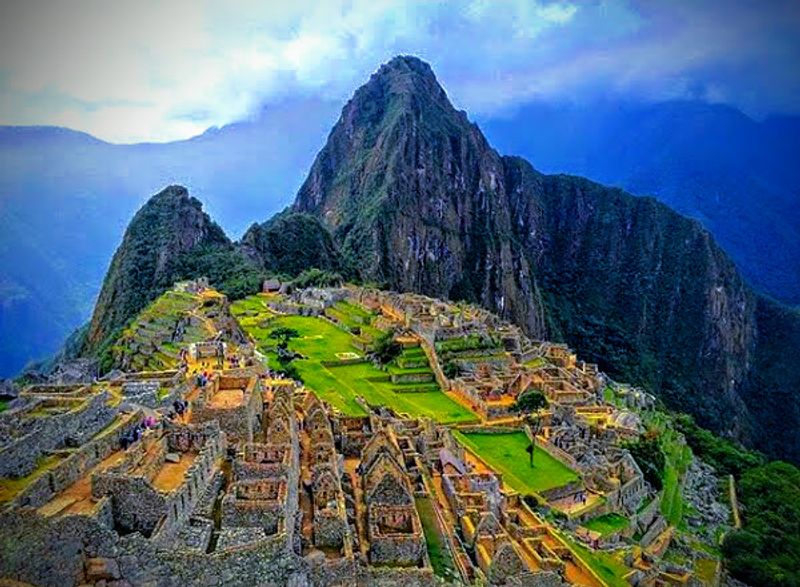
Hidden high in the Andes Mountains at 2,430 meters elevation, Machu Picchu remained unknown to the outside world until 1911. American explorer Hiram Bingham stumbled upon stone terraces and buildings covered in jungle vegetation, revealing a perfectly preserved Inca city.
Built in the 15th century and mysteriously abandoned, this citadel showcases extraordinary architectural planning adapted to extreme mountain conditions. The Incas constructed over 200 structures without using wheels, iron tools, or mortar—yet their stonework fits so tightly that you can’t slide a knife blade between blocks.
Agricultural terraces cascade down steep slopes, demonstrating sophisticated irrigation and soil management techniques. Temples aligned with astronomical events reveal deep spiritual connections to sun, moon, and stars.
Preservation challenges include landslides, earthquakes, and the impact of thousands of daily visitors trekking to this remote location. UNESCO recognition helps balance tourism with conservation, ensuring fragile structures and surrounding ecosystems survive.
Archaeologists continue uncovering secrets about Inca religious practices, agricultural innovation, and urban planning that thrived in one of Earth’s most challenging environments.
Acropolis of Athens — Cradle of Western Civilization (Greece)
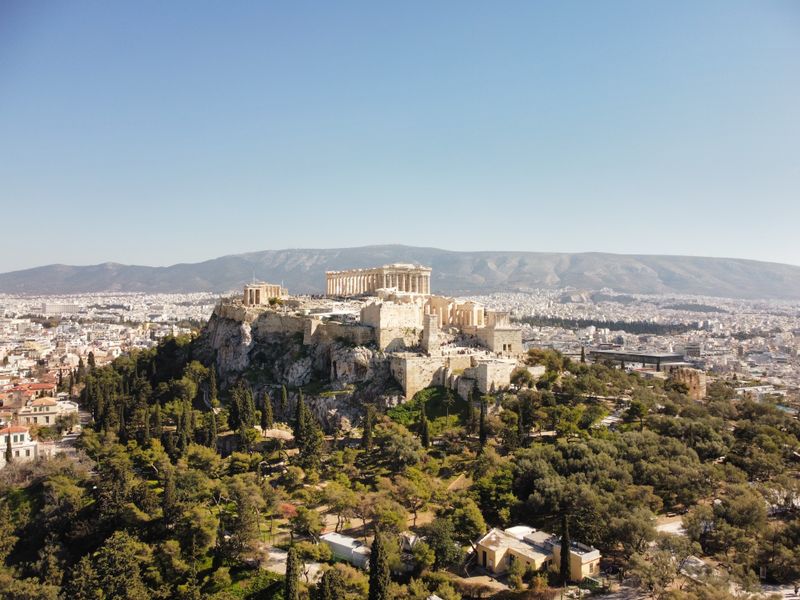
Crowning Athens on a limestone hill, the Acropolis represents the birthplace of democracy, philosophy, and Western architectural ideals. The Parthenon, its most famous structure, was completed in 432 BC as a temple honoring Athena, the city’s patron goddess.
Marble columns, intricate sculptures, and precise proportions demonstrate Greek mastery of mathematics, art, and engineering that influenced architecture for millennia. This sacred site witnessed philosophical debates that shaped human thought—Socrates, Plato, and Aristotle walked these streets developing ideas about ethics, government, and knowledge.
The structures survived wars, earthquakes, and even explosions, though not without damage. Ottoman forces once used the Parthenon as a gunpowder magazine, and a Venetian bombardment in 1687 destroyed much of the building.
Modern conservation efforts carefully restore and stabilize ancient marble using reversible techniques that respect original materials. UNESCO protection recognizes the Acropolis as fundamental to understanding Western civilization’s artistic, political, and intellectual foundations.
Visitors today stand where ancient Athenians gathered for religious festivals and civic ceremonies, connecting directly with ideas that continue shaping democracies worldwide.
Angkor — Khmer Empire Masterpiece (Cambodia)
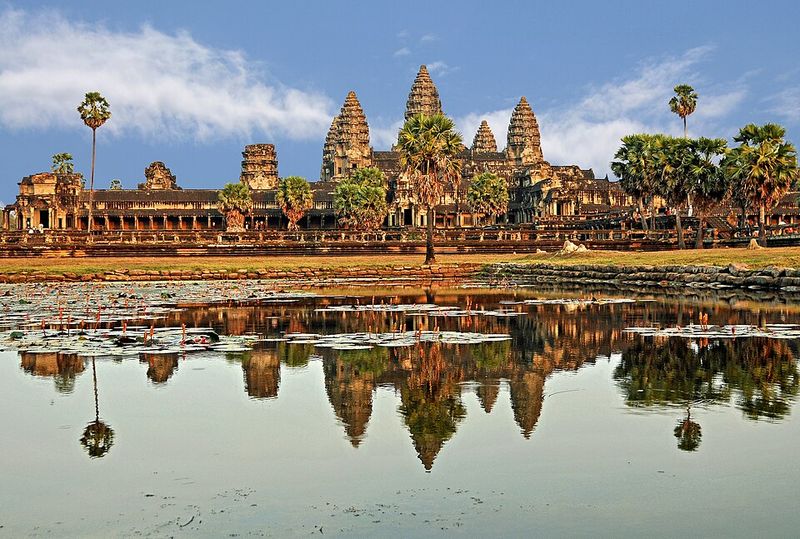
Sprawling across 400 square kilometers of Cambodian jungle, Angkor preserves the spiritual and political heart of the Khmer Empire that dominated Southeast Asia from the 9th to 15th centuries. Angkor Wat, the largest religious monument on Earth, features five lotus-shaped towers representing Mount Meru, the sacred mountain in Hindu and Buddhist cosmology.
Intricate bas-reliefs covering walls depict epic battles, celestial dancers, and mythological stories carved with extraordinary detail. The Khmer civilization engineered sophisticated water management systems including massive reservoirs, canals, and moats that supported agriculture and urban populations.
These hydraulic networks allowed the empire to thrive during both monsoons and dry seasons. When the empire declined, jungle slowly reclaimed temples, with tree roots embracing stone structures in haunting displays of nature’s power.
Conservation teams from multiple countries work to stabilize structures threatened by vegetation, groundwater, and tourism. UNESCO recognition brought international attention and funding to protect not just Angkor Wat but hundreds of surrounding temples and urban ruins.
The site reveals religious transformation from Hinduism to Buddhism and showcases artistic achievements unmatched in Southeast Asian history.
Historic Centre of Rome — Layers of Empire (Italy)
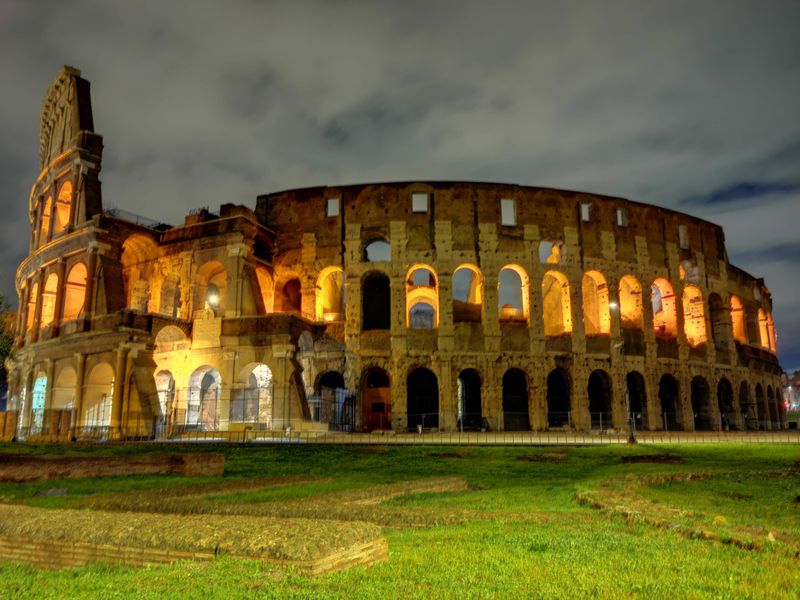
Few cities layer history as dramatically as Rome, where you can walk from a 2,000-year-old arena to a Renaissance church in minutes. The Colosseum once hosted gladiatorial contests watched by 50,000 spectators, while the nearby Forum served as the empire’s political and commercial center.
Temples, basilicas, and triumphal arches tell stories of emperors, senators, and ordinary citizens who built an empire stretching from Britain to North Africa. Roman engineering innovations—concrete construction, arched architecture, and sophisticated aqueducts—revolutionized building techniques still used today.
The Pantheon’s massive dome, completed in 126 AD, remains the world’s largest unreinforced concrete dome, inspiring architects for nearly two millennia. Underground, catacombs preserve early Christian burial sites and artwork from a time when the religion faced persecution.
UNESCO protection encompasses not just individual monuments but entire neighborhoods where medieval towers rise beside Baroque fountains and ancient columns support modern buildings. Preservation challenges include pollution, structural stress, and balancing a living city with archaeological treasures.
Rome’s historic center proves that protecting human history means preserving the continuous thread connecting ancient civilizations to contemporary life.
Taj Mahal — Mughal Love Story in Stone (India)
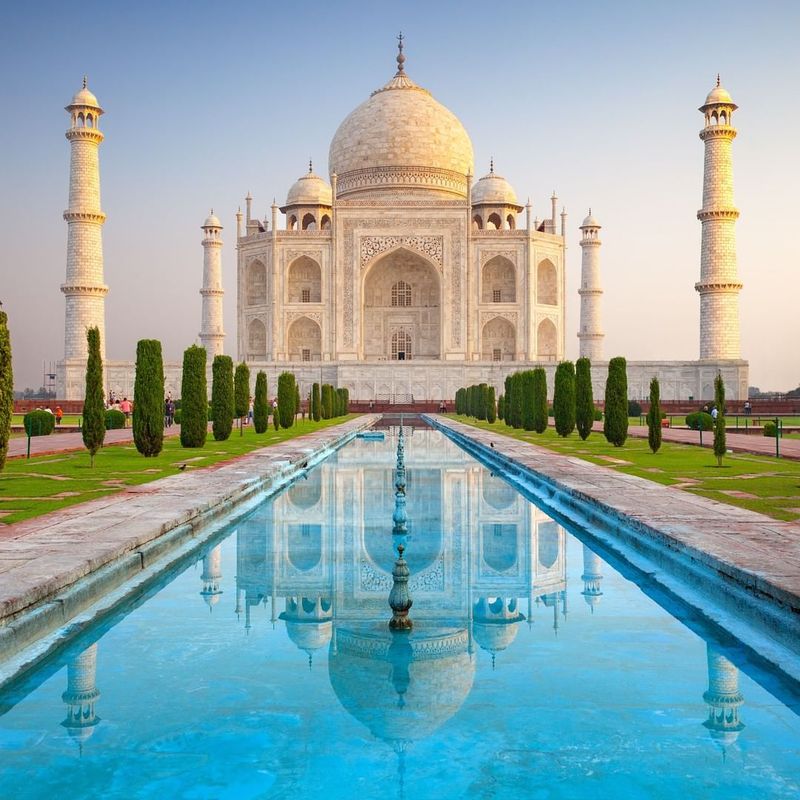
Emperor Shah Jahan commissioned this breathtaking mausoleum in 1632 to honor his beloved wife Mumtaz Mahal, who died during childbirth. What emerged was a masterpiece of Mughal architecture blending Persian, Islamic, and Indian design elements into perfect symmetry.
White marble walls inlaid with semi-precious stones—lapis lazuli, jade, turquoise, and carnelian—form intricate floral patterns that shimmer as sunlight shifts throughout the day. Over 20,000 artisans spent 22 years constructing the complex, which includes gardens, reflecting pools, and a mosque alongside the main tomb.
The central dome rises 73 meters high, appearing to float above delicate minarets positioned at each corner. Inside, cenotaphs mark the burial site where the emperor eventually joined his wife, reunited in death as he had promised.
Pollution from nearby factories and vehicles threatens the marble’s pristine appearance, causing yellowing that conservation teams constantly battle. UNESCO protection supports efforts to control air quality and preserve decorative elements for future generations.
Beyond its aesthetic beauty, the Taj Mahal represents cultural fusion, imperial power, and enduring love—themes that resonate across centuries and cultures worldwide.
Old City of Jerusalem and its Walls — Holy Crossroads (Israel/Palestine)
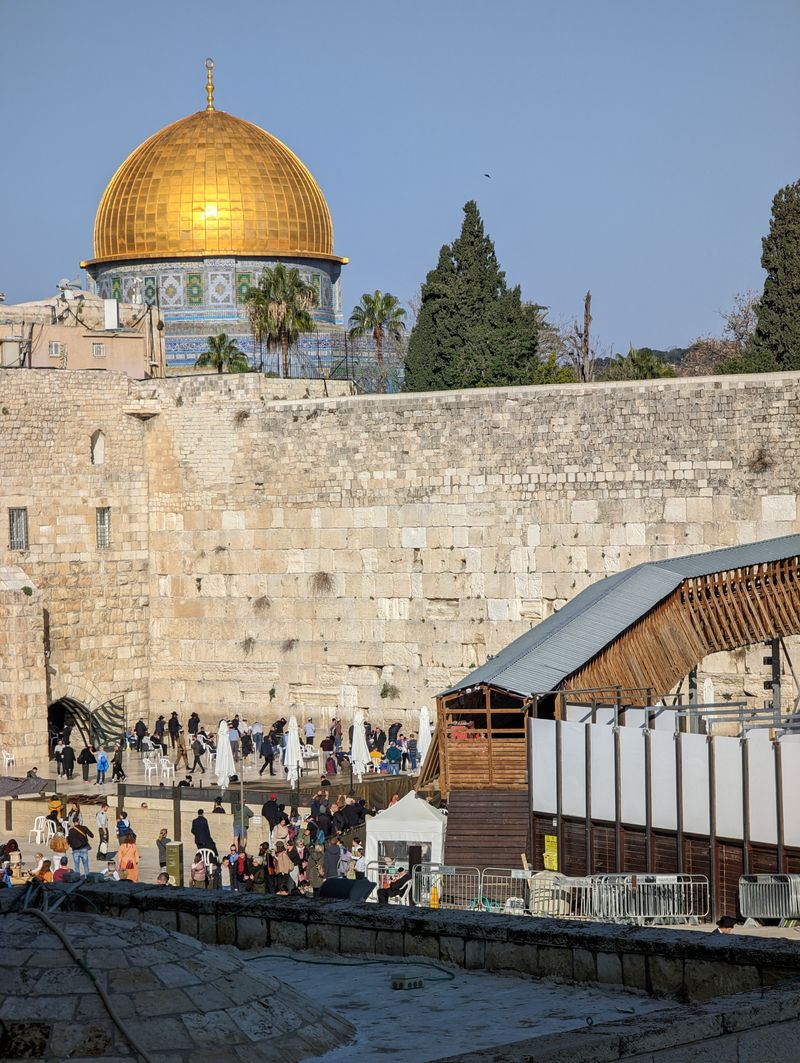
No place on Earth holds deeper spiritual significance for more people than Jerusalem’s Old City. Enclosed within 16th-century Ottoman walls, this one square kilometer contains Judaism’s Western Wall, Christianity’s Church of the Holy Sepulchre, and Islam’s Dome of the Rock.
Narrow stone streets wind between ancient buildings where prophets preached, empires clashed, and millions of pilgrims have journeyed seeking divine connection. Archaeological layers beneath modern streets reveal 3,000 years of continuous habitation—Canaanite foundations support Roman columns topped by Crusader churches beside Ottoman houses.
Each civilization left architectural fingerprints, creating a complex historical puzzle. Markets overflow with spices, textiles, and religious artifacts while calls to prayer echo across rooftops where different faiths coexist in uneasy proximity.
UNESCO designation as an endangered site reflects ongoing political tensions and conservation challenges. Preserving structures sacred to multiple religions requires delicate negotiation and careful archaeological work.
The Old City protects not just buildings but living traditions—daily prayers, religious festivals, and spiritual practices maintained for millennia. Understanding Jerusalem’s layered history helps explain conflicts and connections that continue shaping our world today.
Historic Centre of Florence — Renaissance Birthplace (Italy)
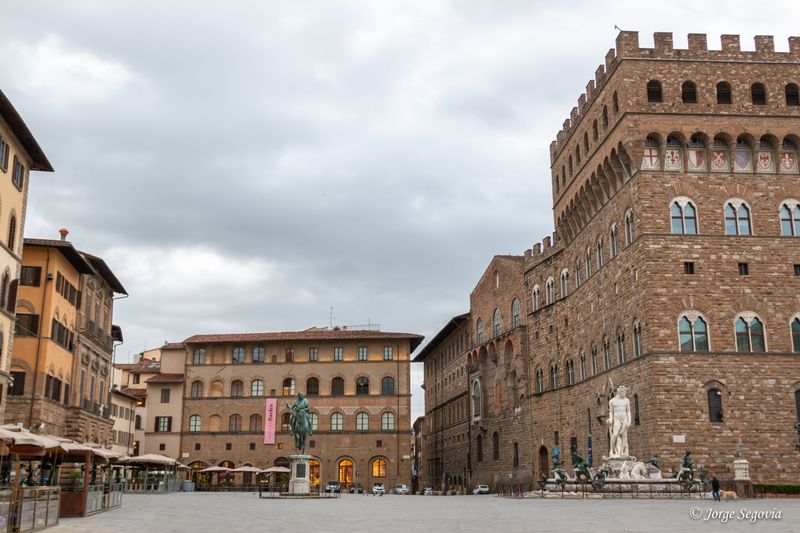
Florence exploded with artistic and intellectual brilliance during the 14th-16th centuries, fundamentally reshaping European culture. The Medici family bankrolled geniuses like Leonardo da Vinci, Michelangelo, and Botticelli, whose works still fill the Uffizi Gallery and Accademia Museum.
Brunelleschi’s massive dome crowning the cathedral demonstrated engineering innovation that seemed impossible—an architectural marvel completed without traditional scaffolding in 1436. Renaissance thinkers in Florence pioneered perspective in painting, humanist philosophy, and scientific observation that broke from medieval traditions.
Walking these streets, you pass buildings where Dante wrote his Divine Comedy and Galileo challenged astronomical orthodoxy. The Ponte Vecchio bridge, lined with jewelry shops, has spanned the Arno River since 1345, surviving floods and World War II bombings.
UNESCO protection preserves not just individual masterpieces but the urban fabric that fostered unprecedented creativity. Conservation efforts maintain frescoes damaged by the devastating 1966 flood and protect sculptures from pollution and weathering.
Florence demonstrates how concentrated artistic patronage, intellectual freedom, and civic pride can transform human culture. The Renaissance ideals born here—individual achievement, scientific inquiry, and classical inspiration—continue influencing art, architecture, and thought worldwide.
Stonehenge — Prehistoric Monument (United Kingdom)
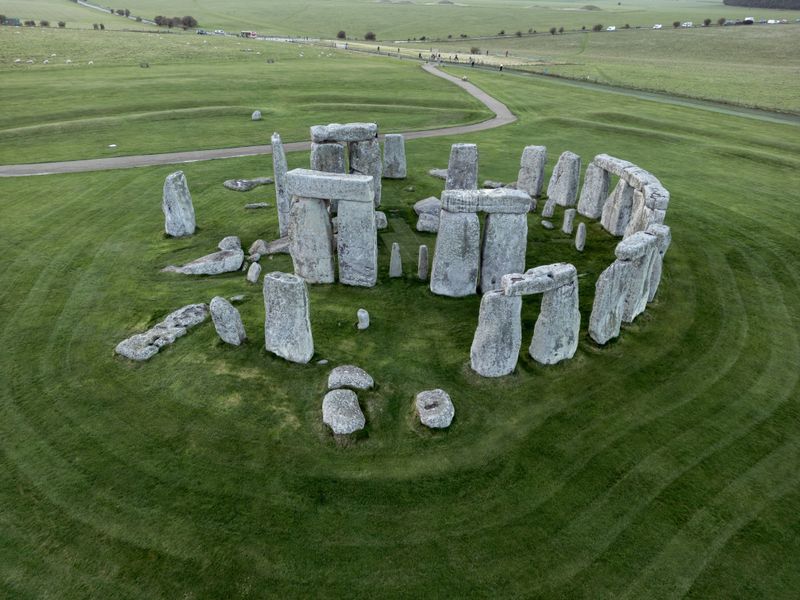
Massive stones arranged in mysterious circles have puzzled visitors for centuries. Constructed between 3000-2000 BC, Stonehenge predates written history in Britain, leaving archaeologists to interpret its purpose through careful excavation and astronomical observation.
The largest sarsen stones weigh 25 tons and were transported from quarries 25 kilometers away using techniques that remain debated—rolling logs, sledges, and enormous human effort seem most likely. Smaller bluestones came from Wales, over 200 kilometers distant, suggesting extraordinary determination to use specific stone types.
The monument’s layout aligns precisely with summer solstice sunrise and winter solstice sunset, indicating sophisticated astronomical knowledge. Ancient builders created a calendar or ceremonial center where communities gathered for rituals we can only imagine.
Recent discoveries reveal Stonehenge was part of a larger ceremonial landscape including burial mounds, timber circles, and processional avenues. UNESCO protection extends beyond the stone circle to surrounding archaeological features that contextualize this enigmatic monument.
Conservation challenges include managing millions of visitors while preserving fragile stones and underground archaeology. Stonehenge represents humanity’s earliest monumental architecture in Britain, protecting clues about Neolithic society, religious beliefs, and engineering capabilities that flourished before pyramids rose in Egypt.
Historic Centre of Prague — Gothic to Baroque (Czech Republic)
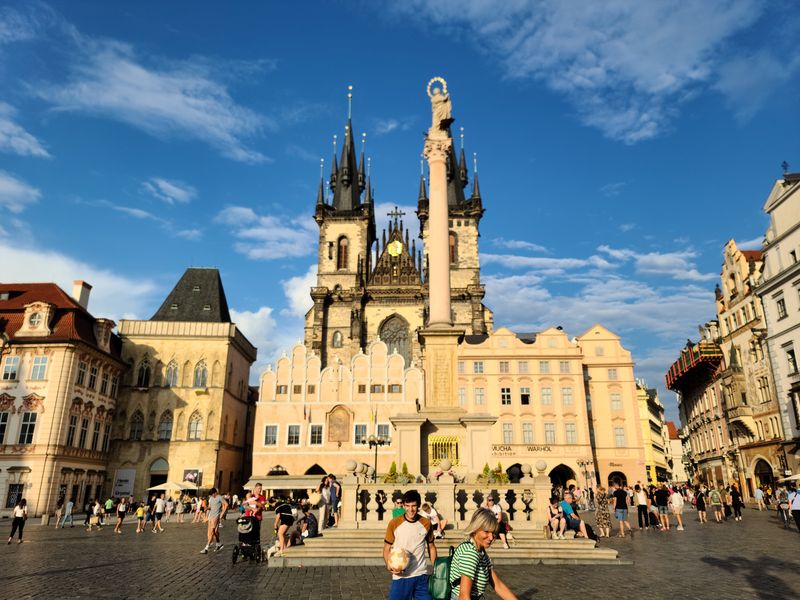
Prague’s fairy-tale skyline survived centuries of European turmoil remarkably intact. Gothic spires pierce the sky beside Baroque palaces and Art Nouveau buildings, creating an architectural timeline spanning 1,000 years.
Charles Bridge, completed in 1402, connects the Old Town with Prague Castle, Europe’s largest ancient castle complex where Bohemian kings and Holy Roman Emperors once ruled. The Old Town Square’s astronomical clock, installed in 1410, still performs hourly shows that draw crowds watching medieval engineering in action.
Jewish Quarter synagogues preserve centuries of Central European Jewish culture, including the haunting Old Jewish Cemetery where gravestones layer atop one another from 600 years of burials. Prague became a center for alchemy, astronomy, and religious reformation that shaped European intellectual history.
Unlike many European cities, Prague escaped major World War II destruction, preserving medieval street patterns and historic buildings. UNESCO recognition protects this rare example of intact Central European urbanism spanning Gothic, Renaissance, Baroque, and Art Nouveau periods.
Conservation efforts maintain painted facades, sculptural details, and underground spaces while accommodating modern city life. Prague demonstrates how architectural heritage can survive political upheaval—from Habsburg rule through Nazi occupation to communist control—emerging as testimony to European cultural continuity.
Bamiyan Valley — Buddhist Cultural Landscape (Afghanistan)
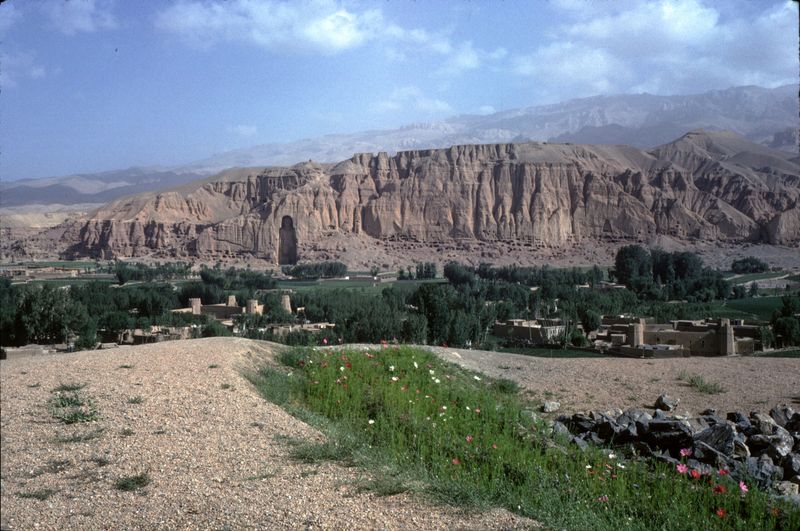
Carved directly into sandstone cliffs, two colossal Buddha statues once towered 53 and 35 meters high, welcoming Silk Road travelers for 1,500 years. Monks created a vast monastic complex including hundreds of caves decorated with murals blending Greek, Persian, Indian, and Chinese artistic traditions.
This valley became a crucial crossroads where Buddhist pilgrims, merchants, and ideas flowed between Central Asia and the Indian subcontinent. Tragically, the Taliban destroyed both statues in 2001, erasing iconic cultural monuments despite international protests.
Empty niches now scar the cliff face, yet surrounding caves preserve fragments of ancient paintings and the valley’s archaeological significance remains immense. The destruction highlighted how cultural heritage becomes targeted during conflict, spurring global efforts to protect endangered sites.
UNESCO designation came after the statues’ loss, focusing attention on preserving remaining caves, paintings, and the cultural landscape itself. International teams document what survived and debate whether reconstruction should occur.
The Bamiyan Valley protects evidence of early Buddhist art, religious exchange along trade routes, and the consequences when heritage becomes a casualty of ideology. Its story reminds us that protecting human history requires vigilance, international cooperation, and recognition that some losses can never be recovered.
Mesa Verde National Park — Cliff Dwellings (USA)
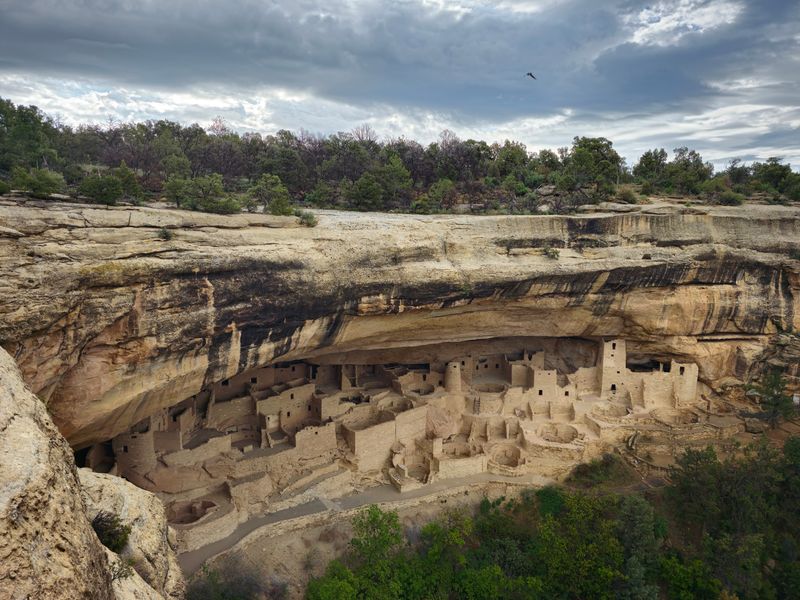
Ancestral Puebloan people constructed remarkable stone villages tucked beneath canyon overhangs across Colorado’s Mesa Verde plateau. Between 600-1300 AD, they built sophisticated multi-story structures using sandstone blocks, wooden beams, and mortar—all without metal tools or wheeled vehicles.
Cliff Palace, the largest dwelling, contains 150 rooms and 23 kivas (ceremonial chambers) that once housed approximately 100 people. These communities thrived through ingenious water management, farming mesa tops while living in cliff alcoves that provided shelter and defense.
They created black-on-white pottery, wove intricate baskets, and developed agricultural techniques suited to the high desert climate. Then, mysteriously, they abandoned their cliff homes around 1300 AD, likely due to drought, resource depletion, or social conflict.
Mesa Verde became America’s first national park protecting cultural rather than natural features, recognizing Indigenous heritage as nationally significant. UNESCO designation extends protection to over 5,000 archaeological sites including pit houses, towers, and rock art panels.
Conservation challenges include stabilizing ancient mortar, preventing erosion, and managing visitor impact on fragile structures. The site preserves evidence of complex Indigenous societies that flourished centuries before European contact, challenging outdated narratives about pre-Columbian North America and honoring ancestral Puebloan ingenuity.
Historic Centre of Salzburg — Musical Heritage (Austria)
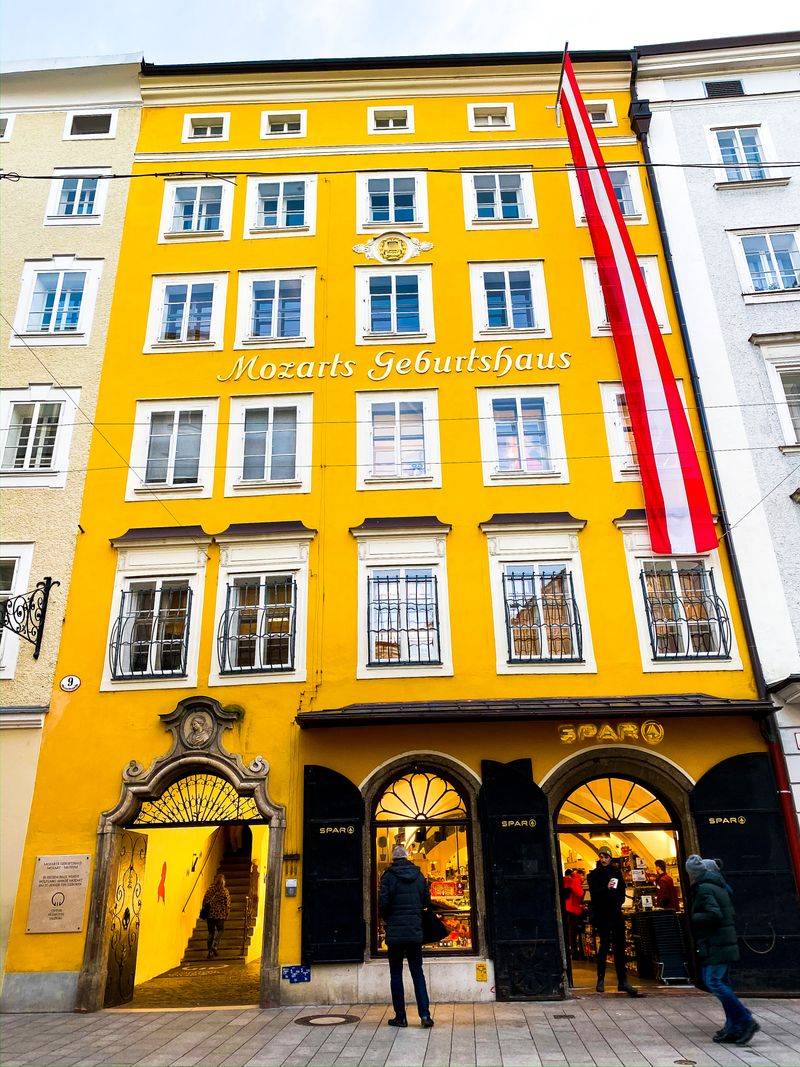
Baroque spires and medieval fortresses create Salzburg’s distinctive skyline, where music seems to echo from every cobblestone street. Wolfgang Amadeus Mozart was born here in 1756, and his childhood home remains a pilgrimage site for classical music lovers.
Archbishop-princes ruled this independent city-state for centuries, commissioning churches, palaces, and fountains that showcase Baroque architectural exuberance at its finest. Hohensalzburg Fortress dominates the city from its hilltop perch, one of Europe’s largest and best-preserved medieval castles.
Below, the Salzach River flows past the Mirabell Gardens where scenes from The Sound of Music were filmed, blending historical significance with popular culture. The city hosted religious conferences, artistic patronage, and musical innovations that influenced European culture for centuries.
UNESCO recognition protects both architectural heritage and intangible cultural traditions including musical education and performance practices maintained since Mozart’s time. Conservation efforts preserve painted church interiors, sculptural fountains, and historic concert halls where symphonies premiered.
Salzburg demonstrates how a relatively small city can achieve outsized cultural influence through artistic patronage and education. The historic center continues hosting world-class music festivals, proving that protected heritage sites aren’t frozen museums but living communities where historical traditions thrive alongside contemporary creativity.
Historic Areas of Istanbul — East Meets West (Turkey)
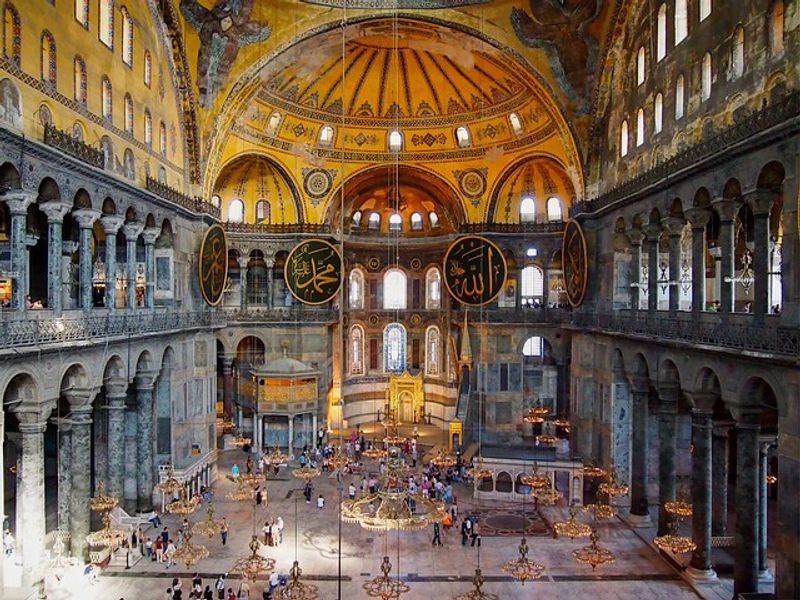
Straddling two continents, Istanbul served as capital for Roman, Byzantine, and Ottoman empires across 1,600 years. The Hagia Sophia exemplifies this layered history—built as a Christian cathedral in 537 AD, converted to a mosque in 1453, then a museum, and recently a mosque again.
Its massive dome seemed to float impossibly above the nave, inspiring architects for centuries and demonstrating Byzantine engineering mastery. The Blue Mosque’s six minarets and cascading domes represent Ottoman architectural achievement, while Topkapi Palace preserves imperial treasures and harem quarters where sultans ruled a vast empire.
Underground cisterns built by Roman engineers still hold water beneath city streets, their columns reflected in mysterious depths. Historic markets like the Grand Bazaar have sold spices, carpets, and jewelry since the 15th century.
UNESCO protection covers four zones preserving archaeological parks, Ottoman monuments, and Byzantine city walls stretching 6.5 kilometers. Conservation challenges include earthquake vulnerability, urban development pressure, and balancing religious use with heritage preservation.
Istanbul’s historic areas reveal how empires rise and fall while cities endure, adapting architecture and identity to new rulers. This cultural crossroads demonstrates that protecting human history means preserving places where civilizations met, clashed, and created something entirely unique.
Historic Centre of Kyoto — Japan’s Cultural Heart
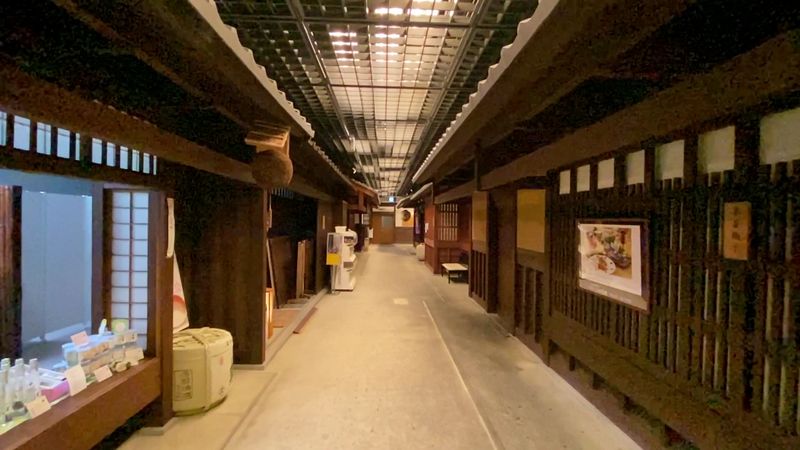
Serving as Japan’s capital for over 1,000 years, Kyoto preserved temples, shrines, gardens, and traditional neighborhoods that embody Japanese aesthetic principles. Kinkaku-ji temple’s golden pavilion reflects perfectly in its surrounding pond, demonstrating harmony between architecture and nature central to Japanese design.
Zen rock gardens invite meditation through carefully arranged stones and raked gravel representing mountains and water. The city escaped World War II bombing, allowing 2,000 religious buildings and historic machiya townhouses to survive largely intact.
Geisha districts maintain traditions of artistic performance, refined hospitality, and kimono craftsmanship passed through generations. Tea ceremony practices, ikebana flower arranging, and kaiseki cuisine all developed sophisticated forms in Kyoto’s cultural environment.
UNESCO designation recognizes 17 specific temples, shrines, and castles representing various periods and architectural styles from the 8th century onward. Conservation efforts protect not just buildings but intangible cultural practices including traditional crafts, seasonal festivals, and spiritual rituals.
Kyoto demonstrates that heritage protection extends beyond physical structures to living traditions that give meaning to historic places. The city proves that modernity and tradition can coexist when communities value cultural continuity, maintaining practices that connect contemporary life to centuries of accumulated wisdom and artistic refinement.
Mesa Arch and Fossil Sites — Namibia
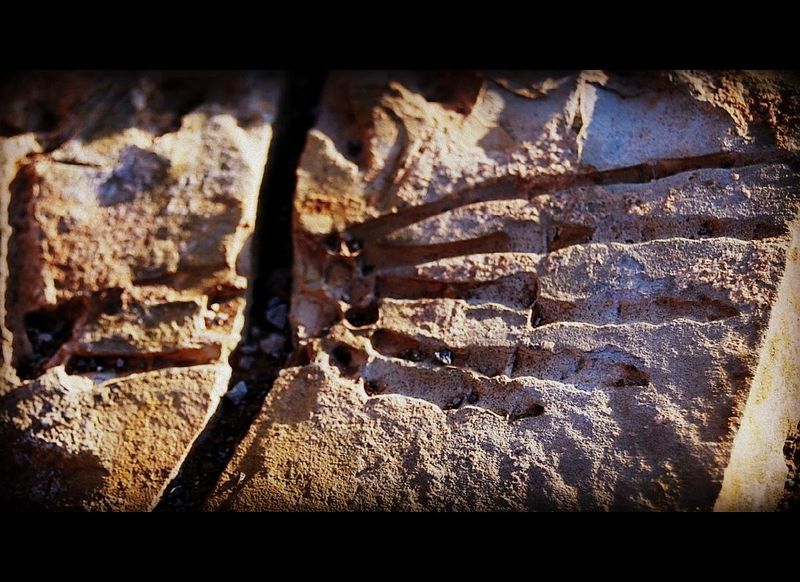
Certain World Heritage Sites protect evidence of humanity’s earliest chapters, preserving fossil remains and stone tools from our hominin ancestors. Namibia’s fossil sites contain traces of early human evolution and prehistoric life dating back millions of years.
These locations help scientists understand how our species emerged, adapted to changing environments, and developed characteristics that distinguish modern humans. Rock shelters preserve ancient paintings created by San peoples and earlier inhabitants, depicting animals, hunting scenes, and spiritual imagery.
These artworks connect us to communities who observed the same stars and landscapes we see today, though their world looked dramatically different. Geological formations provide context for understanding climate changes that shaped human migration and development.
UNESCO protection extends to natural landscapes that contextualize human prehistory, recognizing that our story cannot be separated from Earth’s geological and biological history. Conservation challenges include protecting fragile fossils from erosion, preventing looting, and supporting research that continuously revises our understanding of human origins.
These sites remind us that protecting human history means preserving evidence of our deepest past—millions of years of evolution, adaptation, and survival that made modern civilization possible. They humble us with perspective about how recently recorded history emerged from vast stretches of prehistoric time.
Historic Centre of Oaxaca and Archaeological Site of Monte Albán (Mexico)
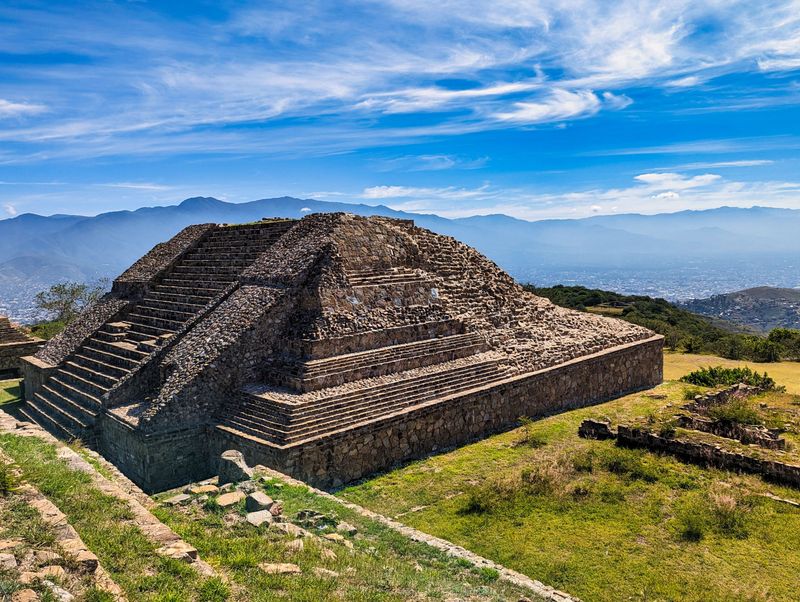
Perched on an artificially flattened mountaintop, Monte Albán served as the Zapotec civilization’s ceremonial and political center for over 1,000 years. The site’s grand plaza, surrounded by pyramids, temples, and ball courts, demonstrates sophisticated urban planning dating from 500 BC.
Stone carvings called danzantes depict human figures in contorted poses—possibly captives or sacrificial victims—revealing aspects of Zapotec ritual and warfare. Below the ancient city, colonial Oaxaca preserves Spanish baroque architecture built atop Indigenous foundations.
The contrast illustrates Mexico’s complex history of conquest, cultural blending, and resistance. Churches incorporate pre-Columbian stones while markets sell traditional textiles using techniques and designs maintained since before European contact.
UNESCO designation recognizes both the archaeological site and historic city center as inseparable parts of Oaxaca’s cultural narrative. Conservation teams stabilize ancient structures threatened by earthquakes while protecting colonial buildings and supporting Indigenous craft traditions.
The site reveals how complex societies emerged in Mesoamerica, developing writing systems, astronomical calendars, and monumental architecture independently from Old World civilizations. Monte Albán and Oaxaca together demonstrate that protecting human history means honoring both ancient and colonial pasts, acknowledging painful histories while celebrating cultural resilience and continuity.
Bam Cultural Landscape — Iran
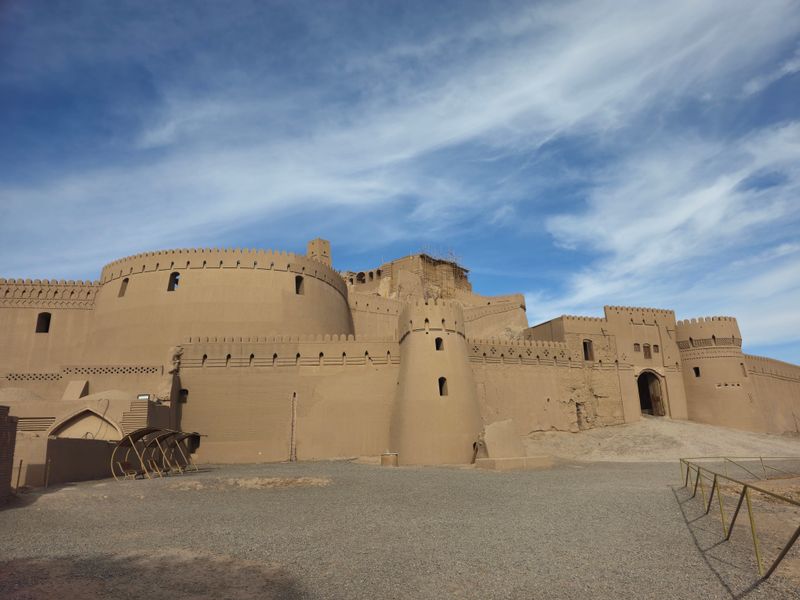
Rising from Iran’s desert landscape, the ancient citadel of Bam represented one of the world’s largest mudbrick structures before a devastating 2003 earthquake reduced much of it to rubble. For 2,000 years, this fortified city thrived as a trading post along Silk Road routes, its massive walls protecting residents, markets, and caravanserais where merchants rested.
Mud-brick construction suited the desert climate—thick walls provided insulation while materials came from surrounding earth. The earthquake killed over 26,000 people and destroyed 80% of the historic citadel, creating urgent conservation challenges.
International teams have worked to stabilize ruins and reconstruct sections using traditional techniques and materials. The disaster highlighted vulnerabilities of earthen architecture and sparked debates about reconstruction authenticity versus preserving ruins as earthquake memorials.
UNESCO designation helps fund ongoing restoration while recognizing Bam’s significance as an example of desert urbanism and Persian architectural traditions. The site preserves evidence of irrigation systems, social organization, and trade networks that sustained cities in harsh environments.
Bam’s story illustrates that protecting human history involves difficult decisions—when disaster strikes, should we rebuild what was lost or preserve ruins as testimony to both human achievement and nature’s power? The answer shapes how we understand heritage as either fixed monuments or living traditions.
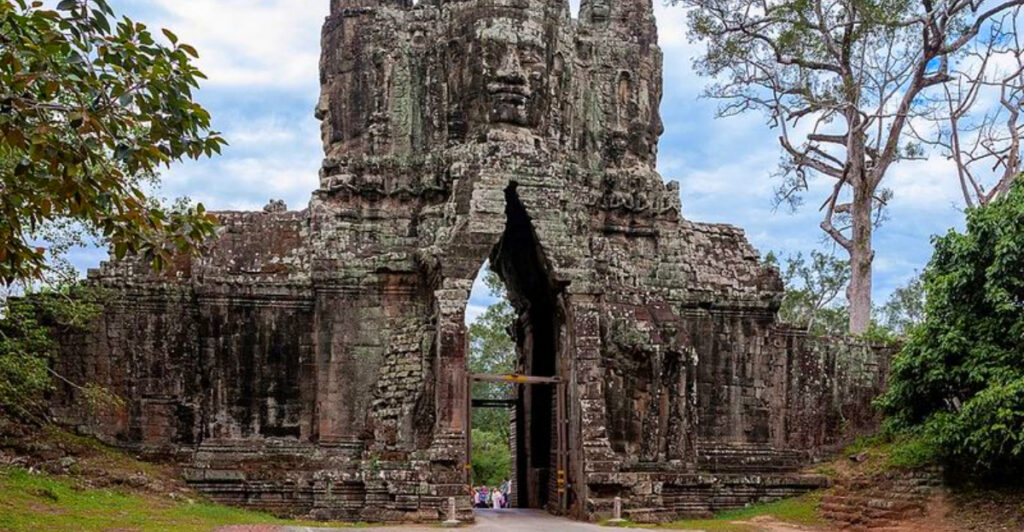
Angkor Thom (Cambodia)
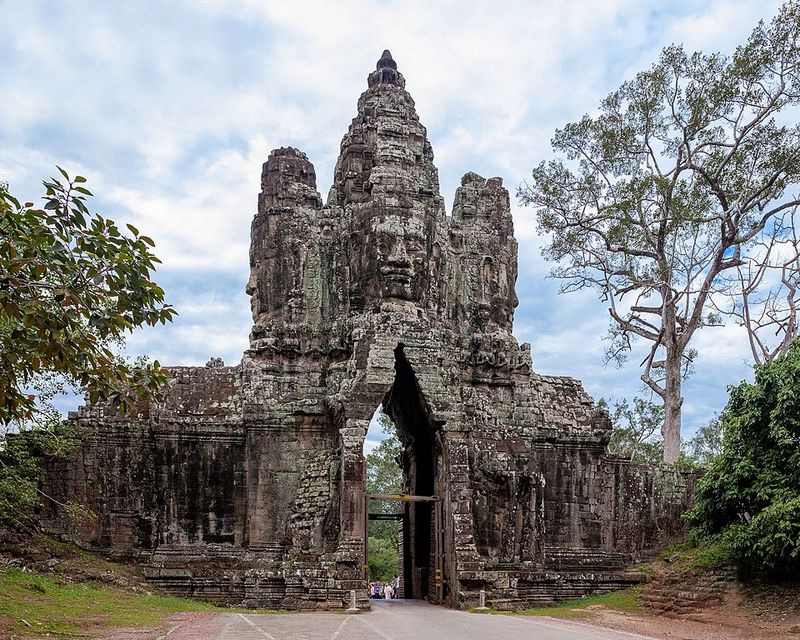
Within the vast Angkor complex, Angkor Thom functioned as the Khmer Empire’s final great capital city. King Jayavarman VII built this fortified city in the late 12th century, surrounding it with eight-meter-high walls and a moat forming a perfect square.
Five monumental gates feature towers carved with serene faces gazing in four directions—possibly representing the bodhisattva Avalokiteshvara or the king himself, watching over his realm. The Bayon temple at Angkor Thom’s center contains 54 towers, each bearing multiple giant stone faces that create one of Southeast Asia’s most haunting architectural experiences.
Bas-reliefs covering walls depict both grand historical events and everyday life—market scenes, cooking, childbirth, and entertainment that reveal how ordinary Khmer people lived. These carvings provide invaluable historical records of a civilization at its peak.
Hydraulic engineering throughout Angkor Thom included reservoirs, canals, and drainage systems that managed monsoon rains and provided year-round water. When this sophisticated infrastructure failed, possibly due to over-exploitation or climate change, the empire declined and jungle reclaimed the city.
UNESCO protection supports ongoing research into why complex civilizations collapse, offering lessons about environmental management and sustainability. Angkor Thom demonstrates that even powerful empires depend on maintaining balance with natural systems—a message increasingly relevant as modern societies face environmental challenges.
Share this story