Step into a morning when the stove crackled before sunrise and the table held more grit than garnish. Breakfast a hundred years ago was not a trend but a tool, built to power fields, mills, and classrooms without complaint.
You can almost hear the skillet hiss and smell the coffee as thick cream swirls in, promising a long, steady burn. Let’s revisit the plates that carried American families through real work and real weather, one satisfying bite at a time.
1. Bacon and Eggs
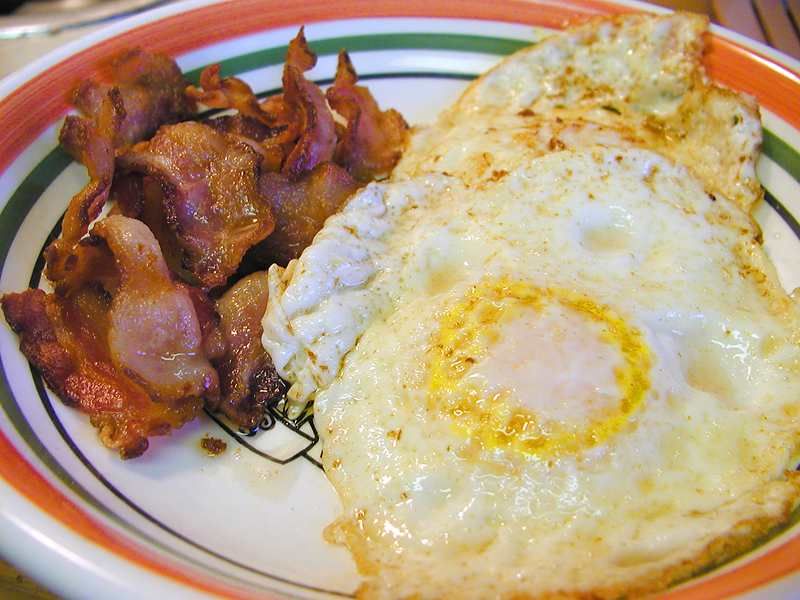
Bacon and eggs earned their spot on early tables because they worked. Bacon stored well in a cool pantry or icebox, and eggs arrived daily from the backyard coop.
You can picture the rhythm: bacon first, fat saved, eggs slipped into the shimmering skillet, then plates warmed on the stove door. By the 1920s, ad campaigns from pork producers and physicians nudged families toward this hearty pairing, promising energy that lasted beyond chores and school.
Protein and fat meant slow, dependable fuel. A plate like this kept farmers in the field and machinists on the line without a midmorning crash.
Coffee stood by as a loyal partner, and sometimes a heel of bread mopped up the drippings. The smell alone pulled kids from quilts.
It was simple to cook, forgiving of timing, and undeniably satisfying on cold mornings when breath met kitchen air.
2. Cornbread and Milk
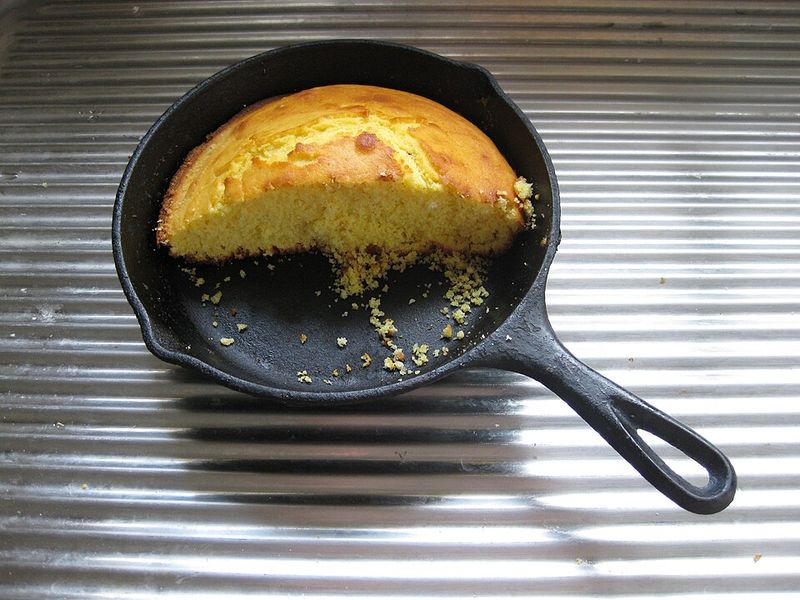
Cornbread and milk was supper borrowed for sunrise. A thick wedge, still warm from the skillet, crumbled into a bowl while cold milk slipped between the golden edges.
In many Southern and Appalachian kitchens, cornmeal outlasted wheat flour and kept its promise through lean months. It tasted like a field you could hold, sunny and sturdy, with a touch of salt and smoke from last night’s bacon fat seasoning.
Some mornings, the milk was buttermilk, tangy and bracing. Others, a spoon of sorghum or honey drifted across the top.
You ate it with a soup spoon, unhurried, hearing the clock’s soft tick and the road’s first wagon. Nutrition talk was not the point, though corn added calories that mattered.
What mattered was a bowl that did not argue with the day. It met you where you were and sent you out, steady and satisfied.
3. Biscuits and Gravy
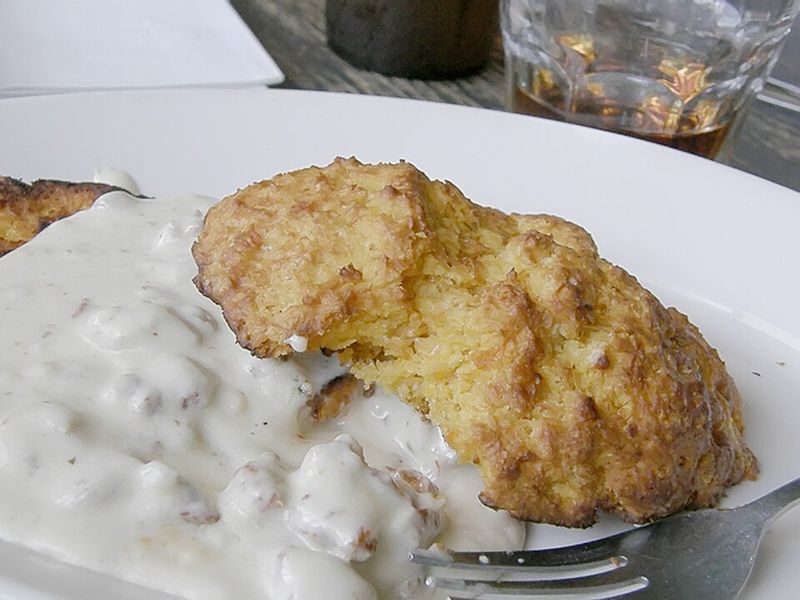
Biscuits and gravy arrived heavy and honest, fit for fence mending and mill whistles. Dough came together with cold lard, buttermilk, and practiced hands that never measured.
While biscuits rose, a gravy bloomed from pan drippings, flour, and milk, speckled with sausage or cracked pepper. The first bite felt like a handshake: you are not going hungry today.
In the South, cooks stretched small amounts of meat into something generous. That thrift lined up with labor, which demanded fuel over flourish.
Today, food historians trace the dish to the postbellum timber camps and farm kitchens that prized economy. You could feed a crew with one skillet and a hot oven.
The gravy never apologized for its thickness, and the biscuits offered soft landing after soft landing. By the second biscuit, you were warm from the inside, ready for weather, work, and whatever the day asked.
4. Fried Potatoes
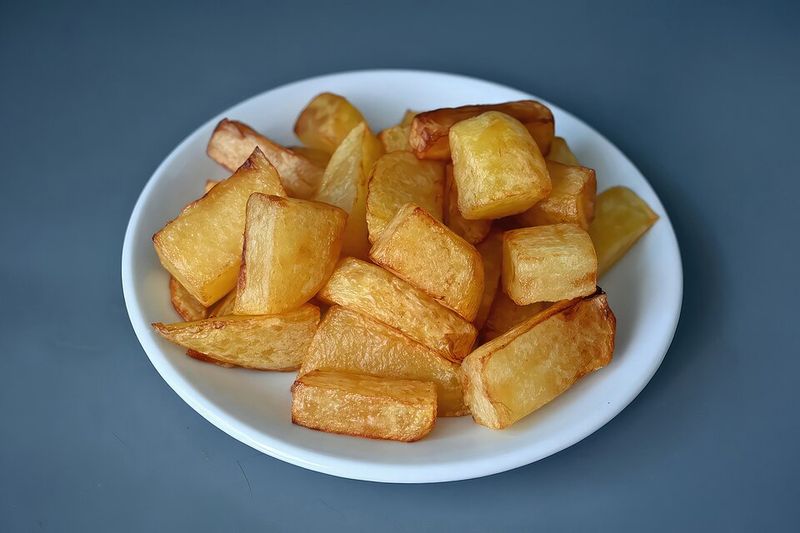
Yesterday’s boiled potatoes rarely saw the trash. They met the skillet at first light, sliced and tossed into hot fat until edges crisped and middles stayed tender.
Sometimes onions joined, sometimes a splash of cider vinegar, always salt from the fingers. The scent drifted down hallways and woke the shyest sleeper.
You could pile them beside eggs or fold in scraps of ham, stretching flavor without spending more.
Frugality powered this breakfast, but so did texture. That golden crunch answered the cold floorboards with something cheerful.
In mining towns and farmhouses alike, potatoes stood in for bread when flour ran thin. Today the USDA says the average American eats about 120 pounds of potatoes per year, a habit with roots like these.
Pan to plate, they carried a promise: nothing wasted, everything earned, and a warm forkful before the wind pressed the door.
5. Pancakes with Syrup
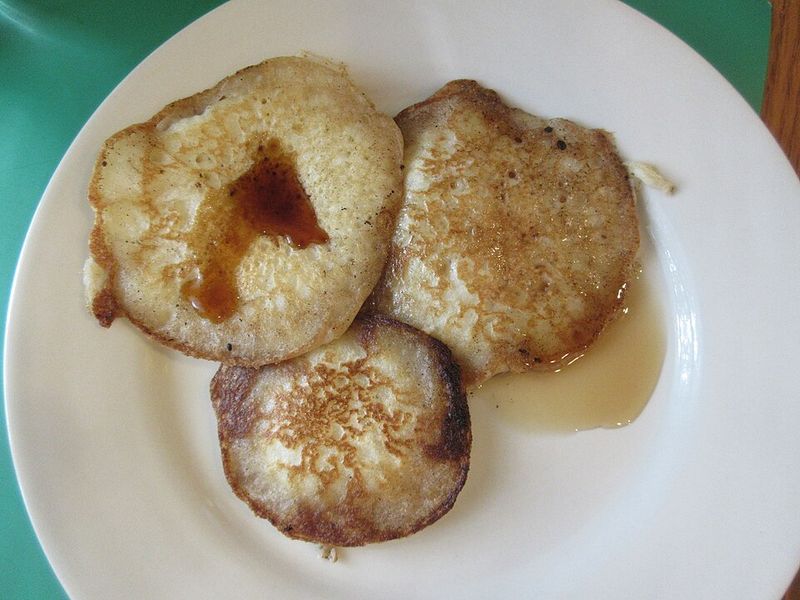
Pancakes were the weekend crowd-pleaser, though plenty of weekday mornings saw them, too. Batter whisked from flour, eggs, and milk could be stretched with cornmeal or buckwheat when cupboards thinned.
The griddle told you when to flip, bubbles winking like gossip. Butter slid down the stack while maple syrup or sorghum wove a shiny ribbon.
A plate like that steadied nerves before muddy chores and long walks to school.
Maple camps across the Northeast had already made sugaring a late-winter ritual. Sorghum sweetened the South with its clean, grassy note.
Today, USDA figures show maple syrup production has climbed in recent decades, but back then, a Mason jar was treasure enough. Kids counted pancakes the way others counted marbles.
The last bite stuck to the ribcage in a way cereal never could, leaving a sweet trace on the tongue and an optimistic stride.
6. Salt Pork and Bread
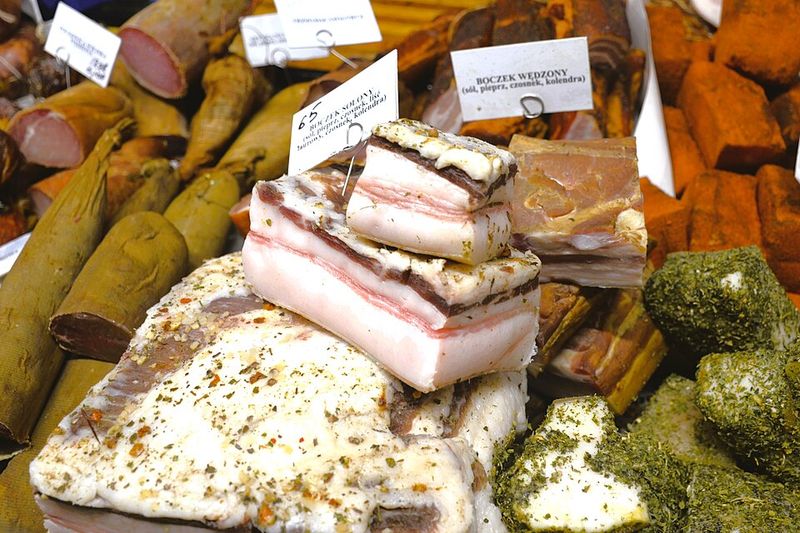
Salt pork was the insurance policy of meat, packed away in barrels or crocks and ready when hens were stingy. Morning meant shaving off a few slices, rendering them until the kitchen smelled like resolve.
Bread stood by to catch the shine, and sometimes mustard brightened the edge. This was travel-ready food, too, wrapped in waxed paper for the noon whistle if breakfast had to work overtime.
Refrigeration was not a given in 1920, so cures and salts guarded protein. Sailors and settlers had known that math for generations.
On farms, the pork fat served double duty, searing potatoes later or whisking into gravy. You ate carefully, savoring the salty chew with sips of hot coffee.
It was not fancy, but it was certain. When the sky threatened rain and the fence sagged, salt pork and bread said you could handle both.
7. Scrapple
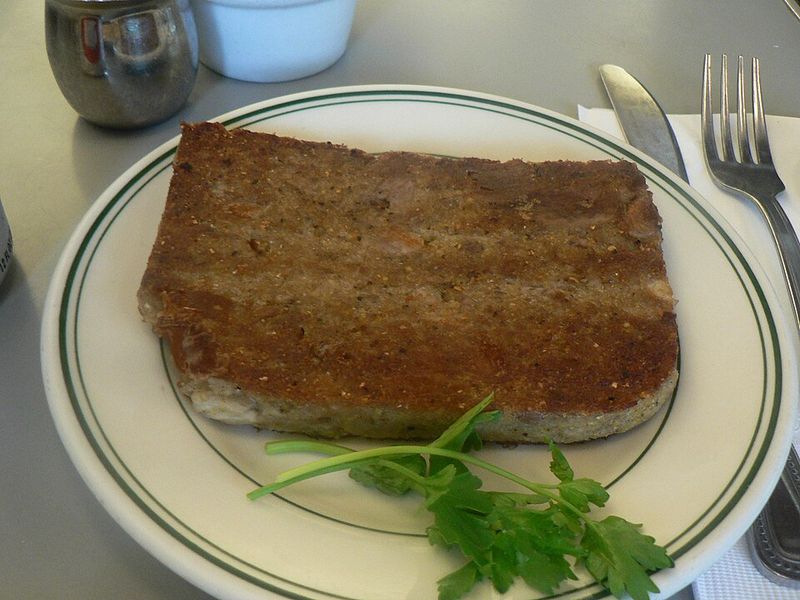
Scrapple turned thrift into pleasure. Pork scraps, broth, and cornmeal were simmered, spiced, poured into a loaf, and cooled overnight.
Morning meant slicing and frying until the edges went mahogany and the center stayed custardy. It crackled gently in the pan, then met apple butter or maple on the plate.
Pennsylvania Dutch cooks made ingenuity taste like comfort, and the habit spread with rail lines and migration.
Food writers sometimes call it nose-to-tail breakfast. Nothing precious, everything useful.
The crisp crust met soft crumb like a promise kept. You could eat it with eggs, tuck it into bread, or steal a piece with your fingers while steam fogged the window.
Even today, regional butchers keep the tradition alive. That first sizzling scent yanked you into the day with cheer and a small rebellion against waste, the kind of wisdom families carried like heirlooms.
8. Ham and Cornmeal Mush
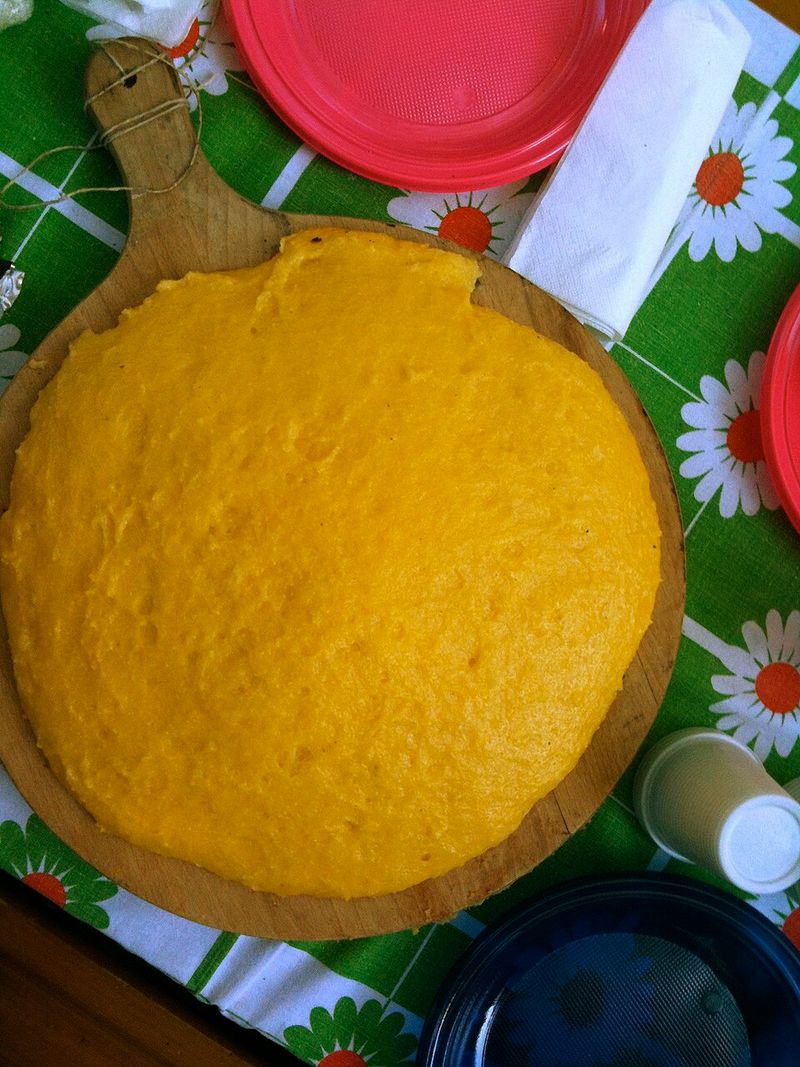
Cornmeal mush started humble, a slow-stirred pot thick enough to hold a spoon upright. Once chilled, it became tomorrow’s breakfast, sliced and fried until the corners turned crisp.
A thin slice of country ham joined the skillet, perfuming the room with salt and smoke. On the plate, the textures flirted: crunchy edge, soft middle, ham’s assertive chew.
A little cane syrup or coffee gravy tied it together.
Families leaned on corn because it grew where wheat balked. Ham, cured and hung, arrived like a holiday on any weekday morning.
Economists today still point to corn as a backbone crop, and a century ago you could taste that truth on a Tuesday. This breakfast asked for patience and paid in momentum, the kind that made fence posts line up straight and ledger lines add clean.
You left the table feeling properly equipped.
9. Eggs and Toast
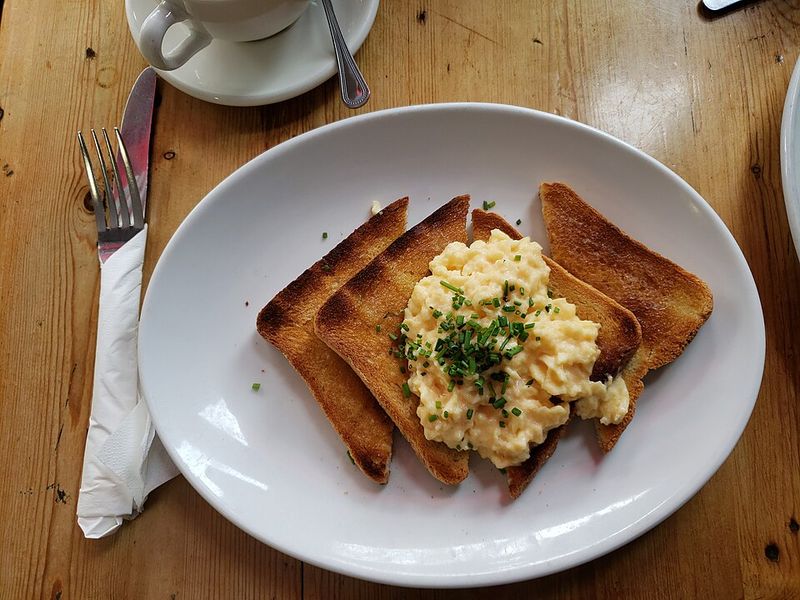
Eggs and toast sound modest until the bread is homemade and the eggs are hours old. The pan barely needed butter when yesterday’s bacon had spoken already.
A soft yolk slid across the toast like sunrise, and you managed it carefully so none was lost. Families rotated this lighter plate on days when chores were shorter or money thinner, but it still delivered dignity and calm.
Nutrition advice would later spotlight egg protein and choline, but back then the proof was how long you stayed satisfied. Toast carried jam if luck allowed, or simply caught the yolk in buttery squares.
Kids learned to flip eggs without breaking them, a small rite of passage. You finished with a clean plate, warm fingers, and less hurry in your chest.
Not fancy, not fussy, just right for a school bell and a steady walk.
10. Oatmeal with Cream
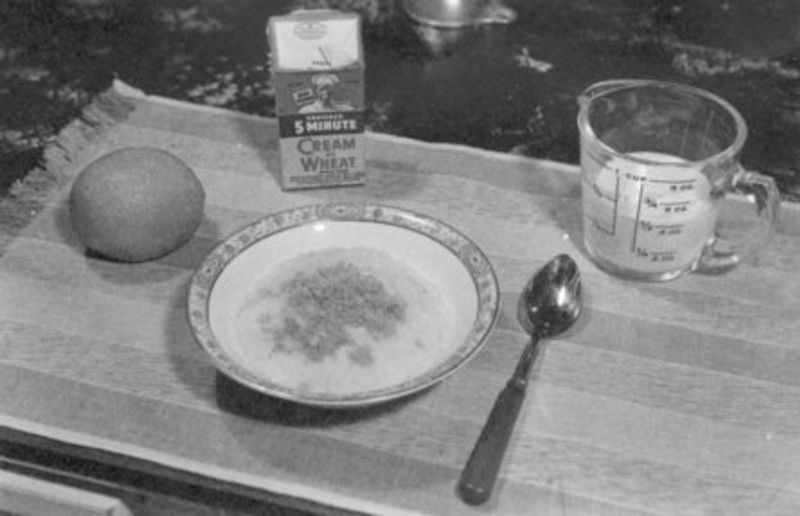
A century ago, oatmeal spoke the language of thrift and warmth. Oats stretched easily to feed a crowd, and the pot could wait patiently at the back of the stove.
A spoon of molasses added minerals and sweetness, while cream from the morning skimming softened each bite. You could stir in windfall apples or a pinch of salt, judging the day’s mood by how slowly the spoon stood upright.
Nutritionists later praised oats for soluble fiber, and today the USDA still notes that whole grains reduce heart disease risk. Back then, the pitch was simpler: it kept you full.
Bowls lined up like little steam engines, powering schoolhouse walks and barn chores. Leftovers firmed into a sliceable slab for frying tomorrow.
If bacon and eggs shouted, oatmeal with cream hummed steadily, a quiet anchor for long winters, especially when the coal bin sounded hollow and the rooster stretched the dark.
11. Apple Pie for Breakfast
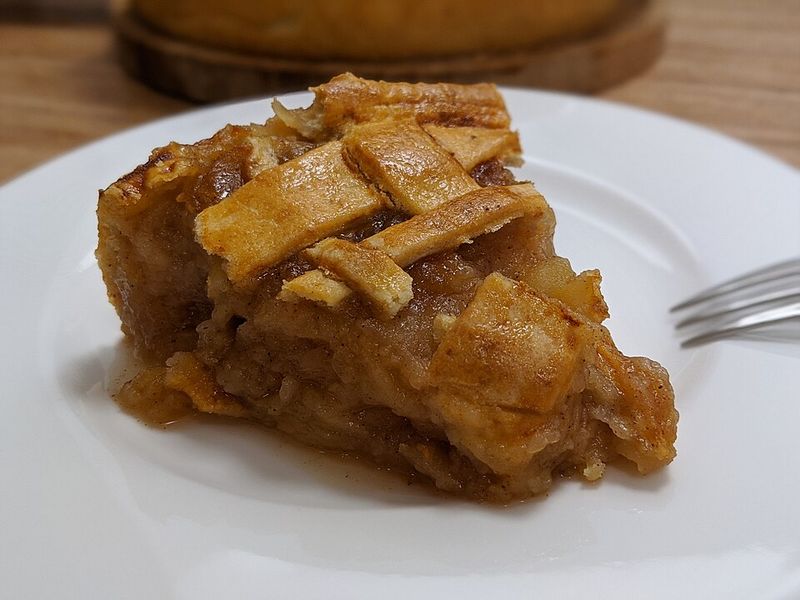
Pie for breakfast felt like a secret shared with the sun. The apples had been peeled last fall and tucked into jars or barrels, and now they met cinnamon and a lard crust that shattered softly.
Leftovers never stayed leftovers long. A warm wedge beside coffee fueled chores as well as any porridge, and even a cold slice worked when time pinched.
Household guides from the period did not scoff at pie in the morning. It was efficient calories wrapped in something cheerful.
Sugar made the day start friendlier, and the butter in the crust pulled its weight. You might add a thin slice of cheddar, New England style, because salt makes sweet sit up straighter.
It was not dessert at dawn. It was practicality with a wink, born of full pantries after harvest and the honest need to get moving.
12. Beans and Bread
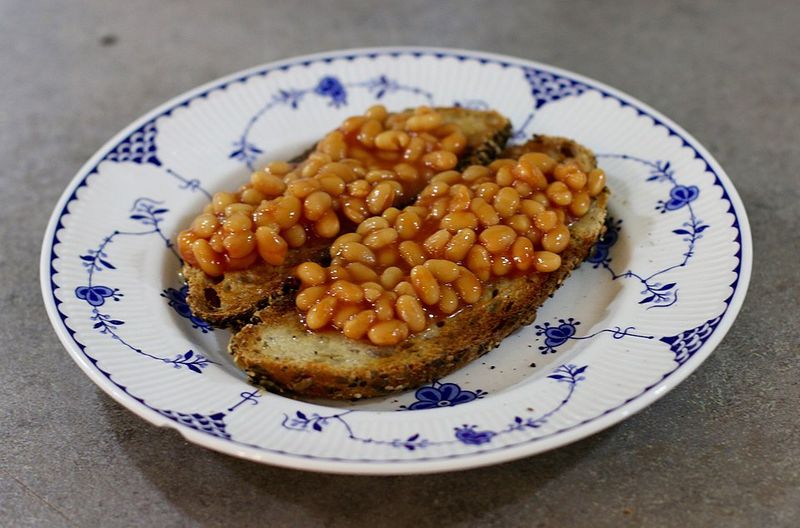
Baked beans and bread built a quiet, enduring morning. Beans simmered low with molasses, salt pork, and mustard, sometimes overnight in a brick oven or a heavy pot.
Morning meant ladling thick spoonfuls into bowls while the crusty loaf waited to mop the glossy sauce. The sweetness nudged you awake, and the beans’ heft settled the question of hunger for hours.
New Englanders counted on Saturday night beans, and leftovers met the Sunday or Monday table at dawn. Protein, fiber, and thrift lined up neatly in one bowl.
Today, nutrition data still praise legumes for heart health and satiety, but back then the measure was simple: you could stack wood or stand at a loom without a hollow ache. A pat of butter on the bread made the world feel more negotiable, even when snow pressed its face against the window.
13. Milk Toast
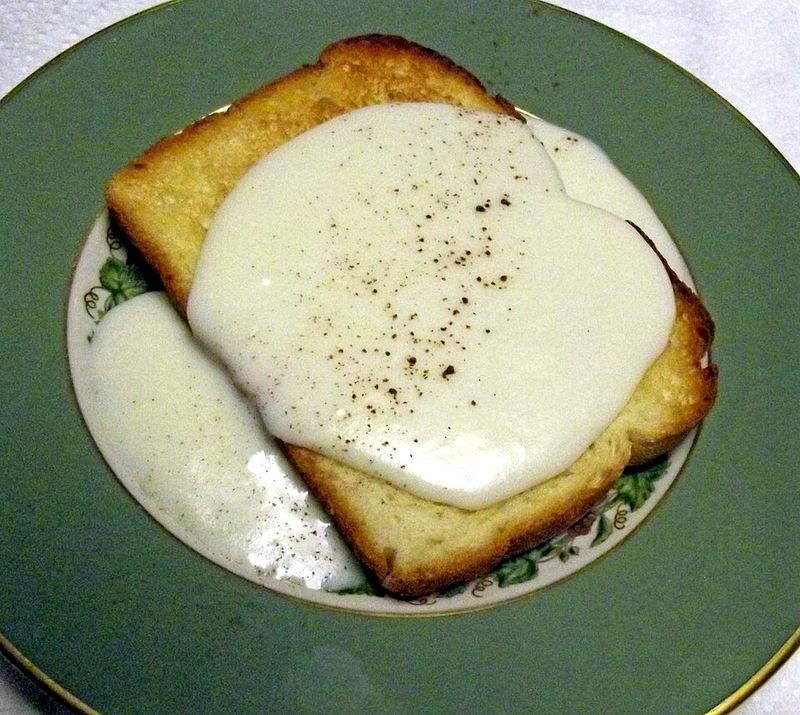
Milk toast was the kind voice of breakfast. Bread, often a day old, met a pan of warm milk thickened slightly with flour or sweetened with a wink of sugar.
Nutmeg or cinnamon floated on top like a calm thought. Children, the elderly, and anyone nursing a stubborn cold found solace in each soft spoonful.
It was the comfort food before we learned the term.
Cookbooks from the period treated it as medicine as much as meal. No crunch, no sharp edges, just warmth.
You could fortify it with an egg beaten into the milk, turning the bowl into gentle strength. When budgets thinned or teeth ached, milk toast kept dignity at the table.
It taught a small lesson about generosity, too: making something tender out of the ordinary. A steady bowl, a slower morning, and enough kindness to carry you past noon.
14. Sausage and Potatoes
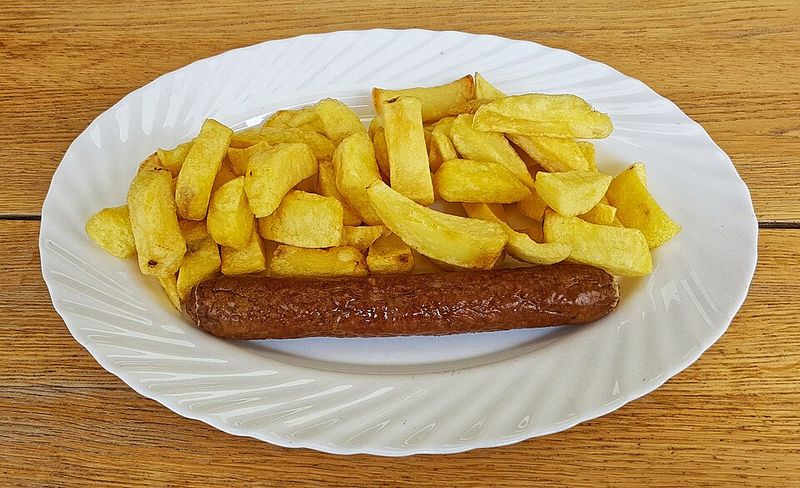
Sausage and potatoes did not waste a moment. Trimmings from a winter butchering became links flavored with sage and pepper, stacked in the cellar or canned in jars.
Potatoes, diced and willing, soaked up the drippings until every bite tasted seasoned from the inside. The skillet worked like a small factory, turning out steady portions you could eat in boots with your coat half on.
The pairing promised staying power on frosty mornings. It also showed off a cook’s balance: enough browning without burning, onions added at just the right sizzle.
Rural households often kept a sausage stash, expecting guests or sudden hunger. Today, we would call it meal prep.
Back then, it was simply living sensibly. A plate like this drew a straight line between the pig in November and the fence post in March, a practical story told in pepper and starch.
15. Buckwheat Cakes
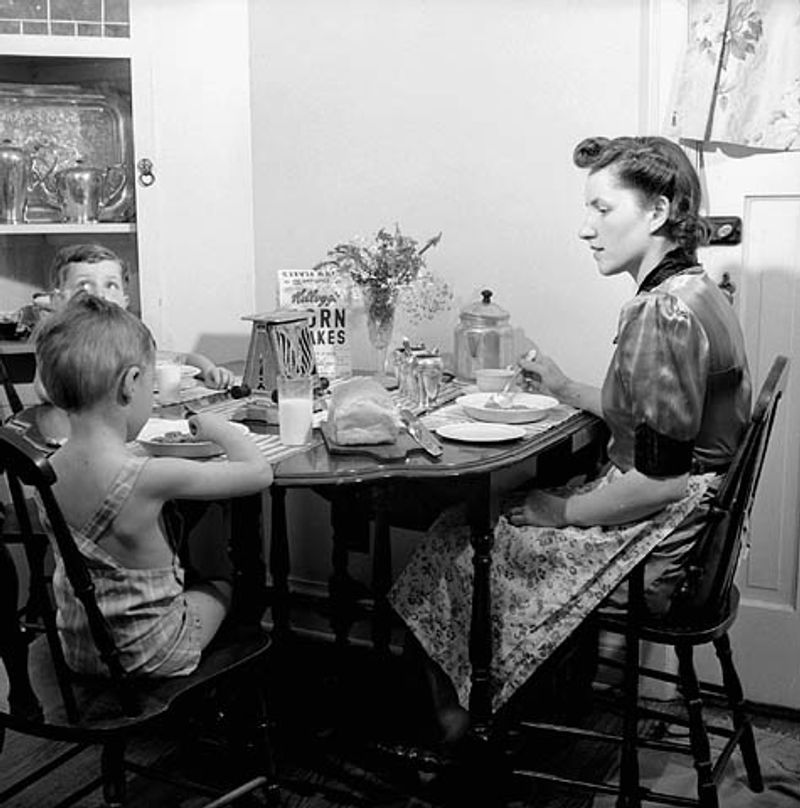
Buckwheat thrived where the soil gave little, which made its cakes taste like triumph. The batter bubbled with a slight tang from overnight fermentation, a farmhouse sour that woke the tongue.
On the griddle, they browned darker than wheat, smelling faintly of earth and honey. Butter melted into the nooks, and molasses or maple finished the sentence.
Each bite carried a quiet boast: we made do, and it is good.
Families prized buckwheat in Appalachia and the Northeast, and winter breakfasts leaned on its sturdy charm. For those tracking minerals, buckwheat brings magnesium and rutin, though the old-timers just said it stuck to the ribs.
Stacks rose quickly, plates rotated, and by the second cake you could feel your shoulders drop. If the day promised wood splitting or laundry by hand, buckwheat set the pace, steady and confident, without asking for praise.
16. Bread and Jam
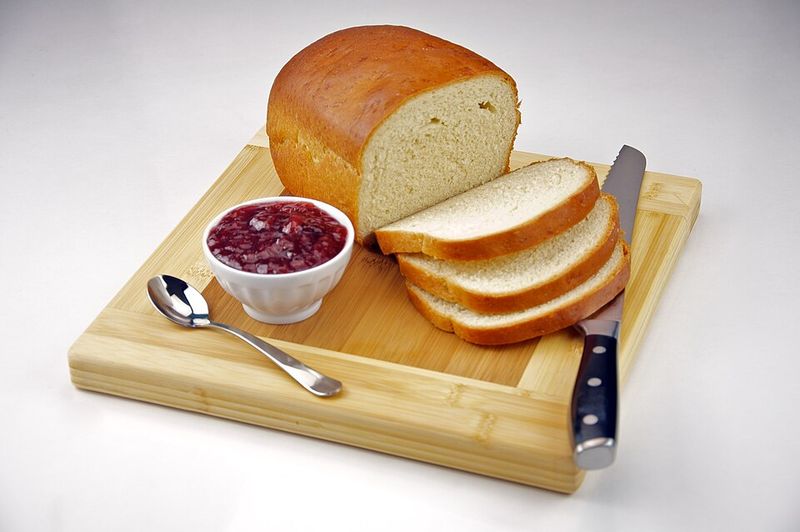
Bread and jam stepped in when the larder looked thin but the cellar shone with jars. Summer’s strawberries, peaches, or blackberries returned to the table in January, bright and unapologetic.
A thick slice of yesterday’s loaf took the spread like a friendly handshake. Sometimes butter went down first to keep the jam from soaking through, a small trick learned by watching careful hands.
Preserving fruit meant a year felt less sharp around the edges. Paraffin seals and careful labels lined the shelves, proof of work under a hot August sky.
On mornings when cash was scarce, this breakfast still felt generous. It paired beautifully with hot tea or a splash of coffee lightened with cream.
The sweetness set a lighter tone for chores, and the memory of sun on berry fields traveled with you into sleet and arithmetic.
17. Coffee with Heavy Cream
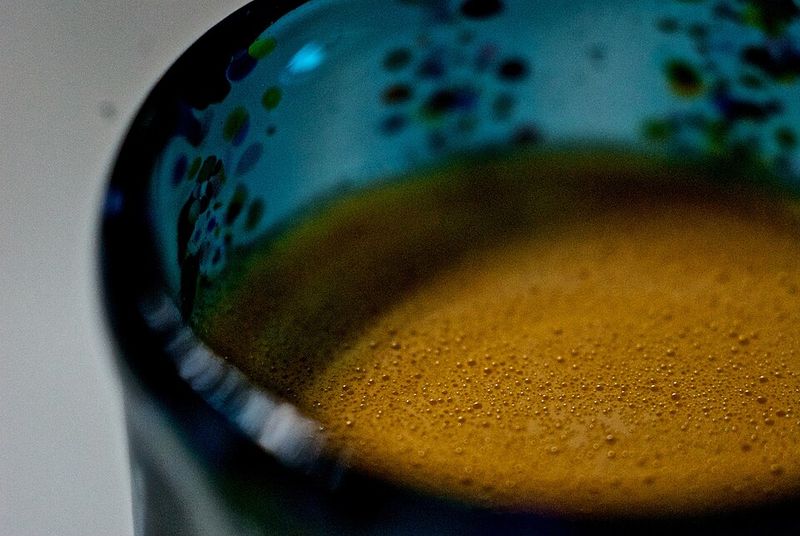
For many households, coffee was breakfast’s backbone. Grounds simmered on the stove until the room smelled decisive.
A pour of heavy cream softened the edges and added calories that mattered when fields waited. Sugar was precious but present when possible.
The first sip steadied the hand that tied boots and buttoned coats. Even children sometimes got a milky splash, a tiny rite of passage.
America’s coffee habit has only grown; the National Coffee Association reports over 60 percent of adults drink coffee daily now. A century ago, it was already a ritual dense with purpose.
Cups warmed cold fingers, and conversation warmed the rest. You learned to read the morning in those swirls: storm coming, chores stacking, a visitor likely.
With cream, the cup became more than caffeine. It was nourishment disguised as comfort, a small luxury that paid out in stamina.
18. Creamed Chipped Beef on Toast
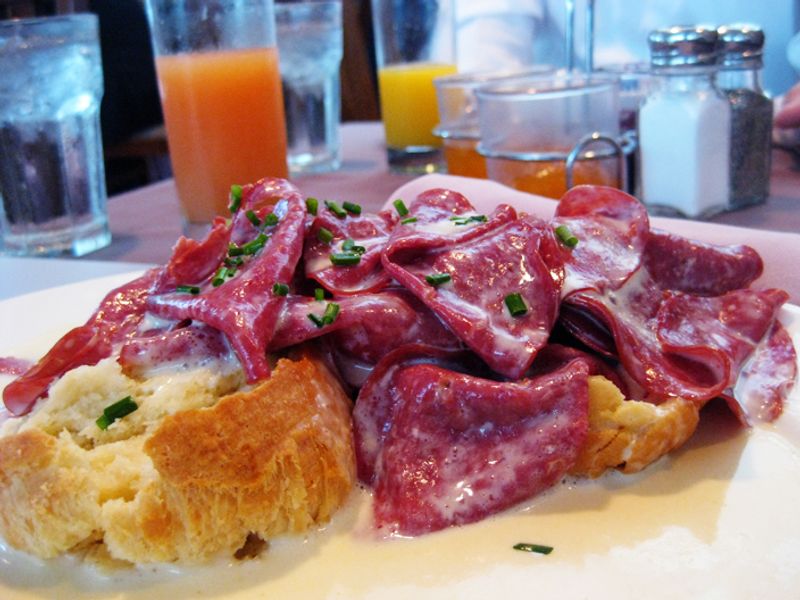
Creamed chipped beef on toast showed up where efficiency met appetite. Thin slices of dried beef simmered in a white sauce built from butter, flour, and milk, then sprawled over toast.
The salty, creamy balance felt like certainty on a plate. Military kitchens popularized it during rationed years, and households appreciated how quickly dinner leftovers could become breakfast.
Known jokingly as S.O.S., it stuck around because it solved hunger fast.
We3Travel notes its wartime familiarity, but the appeal never needed a uniform. Pantry-stable beef, shelf-stable flour, and morning milk meant you could serve something hot in minutes.
Pepper made it jaunty, parsley if the garden allowed. It arrived at the table like a foreman: let us get moving.
Forkful by forkful, it squared your shoulders and shortened the to-do list in your head.
19. Oatmeal with Molasses and Apples
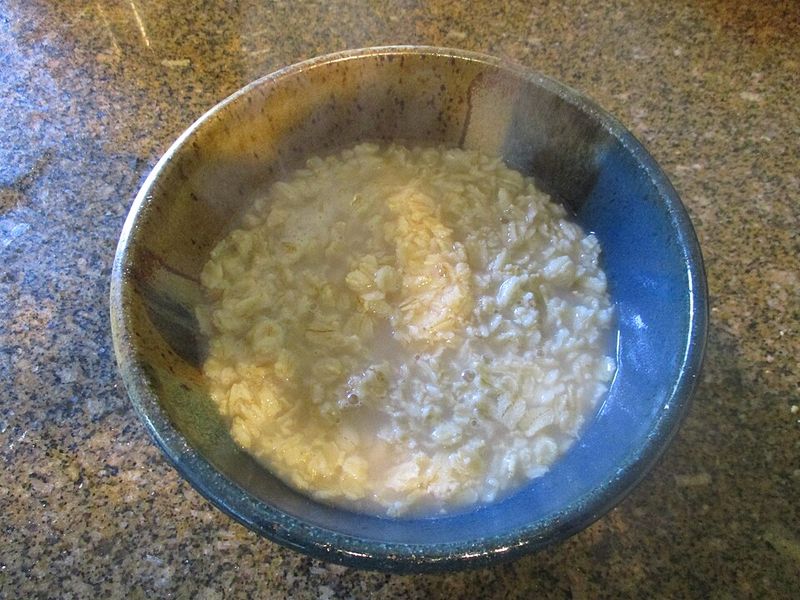
Some mornings asked for oats with a little theater. A ladle of stewed apples slid on top, and a dark thread of molasses drew a path across the steam.
The bowl looked celebratory without costing much. Apples brought gentle tartness and fiber, molasses contributed iron and a bakery-like aroma.
You stirred just enough to marble the flavors, then ate slowly, mindful of the comfort.
Oatmeal has modern advocates for heart health thanks to beta-glucan, and families a century ago measured success in empty bowls and quiet children. Leftover applesauce worked just as well, proving flexibility is its own cook’s badge.
This was the breakfast that made a cold kitchen feel friendly. You stepped into the day less brittle, pockets full of warmth you could not see but certainly could feel.
20. Buttermilk Biscuits with Jam
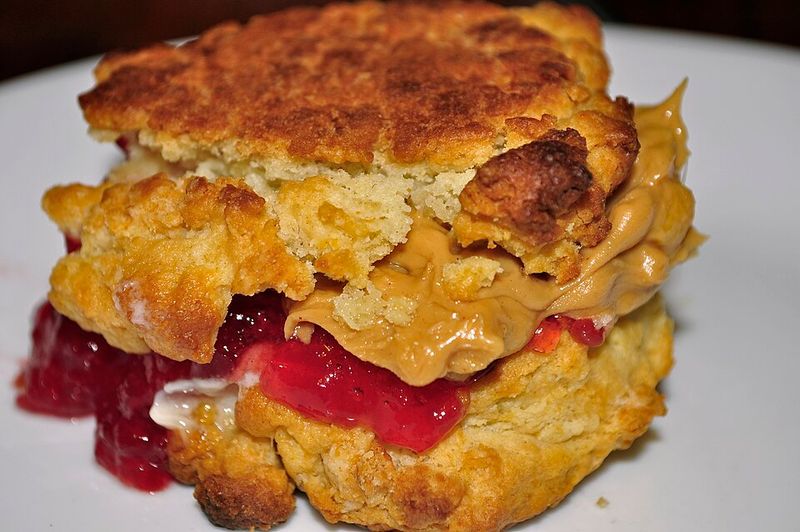
Buttermilk biscuits with jam felt celebratory even on a Wednesday. The dough came together with cold fat and quick hands, then rose into tender layers that sighed when split.
A spoon of raspberry or peach jam, put up last summer, turned each bite into proof that planning pays. The tang of buttermilk kept sweetness honest, and butter, when available, nudged everything toward indulgence.
This plate traveled well from porch to field, wrapped in cloth for a second breakfast. It showed how a small pantry could still feed spirits.
If company knocked, biscuits stretched hospitality without stretching budgets. The first warm biscuit rarely reached a plate.
It went straight from pan to palm, steam fogging the window while someone laughed about it and passed the jar. Work waited.
You finished one more biscuit first.
21. Fried Eggs and Leftovers
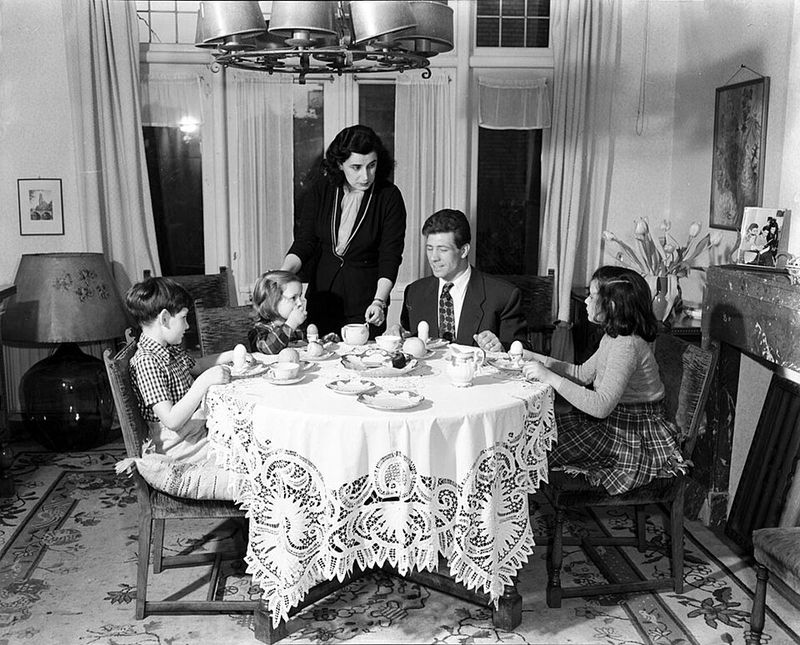
Breakfast did not stand on ceremony. If supper left behind roast, greens, or potatoes, the morning folded them into a hash and crowned it with eggs.
The skillet welcomed everything, binding scraps with a fried edge and a sunny yolk. You could taste last night’s story in a new arrangement, thrifty and cheerful.
The rule was simple: nothing good leaves this house without one more turn.
Factory shifts and farm dawns did not wait for elaborate menus. This fast, hot plate respected both time and appetite.
Salt, pepper, maybe a splash of vinegar put a period on the sentence. Families learned to measure by sound, not spoons, and the crackle said breakfast was ready.
It was the everyday magic of transformation, turning fragments into momentum. You left the table cleaner in mind, satisfied that order had been restored for another round.
Share this story