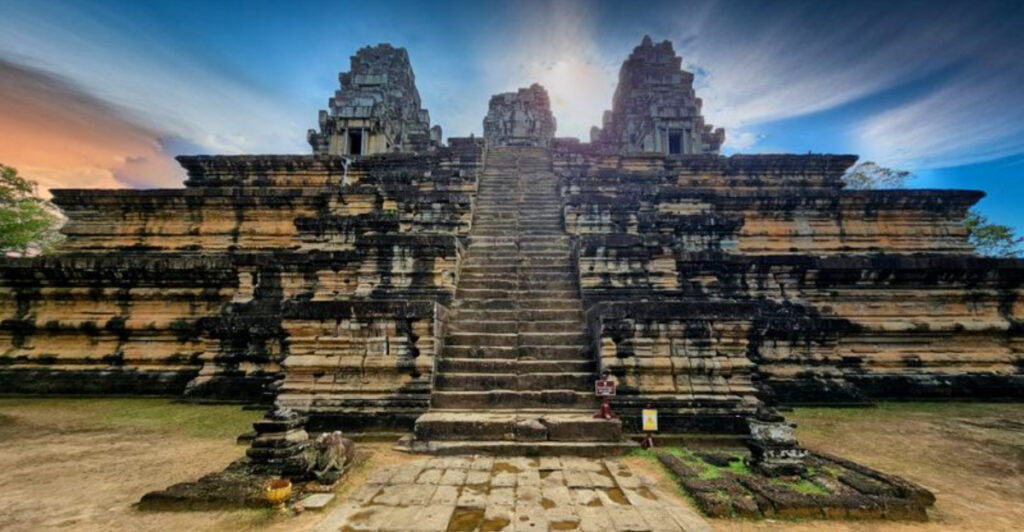
Angkor Wat might be Cambodia’s most famous temple, but it’s just the beginning of an incredible journey through ancient Khmer history. Beyond the iconic towers and sunrise photos, dozens of other temples wait to be explored, each with its own story, style, and sense of wonder.
From jungle ruins tangled in tree roots to cliff-top sanctuaries with sweeping views, these 15 temples will take your Cambodian adventure to the next level.
Ta Prohm — Jungle Temple of Tangled Roots (Siem Reap)
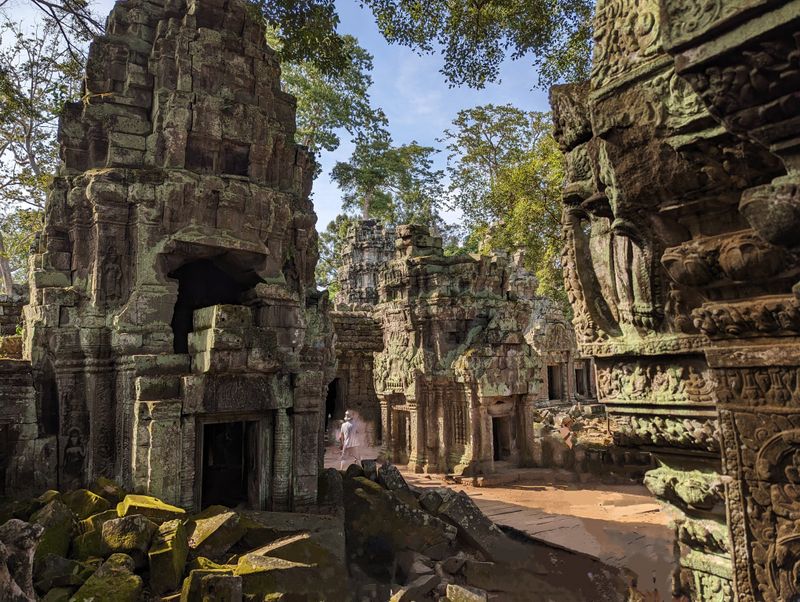
Massive silk-cotton trees grip the sandstone walls like nature reclaiming what once belonged to her. Ta Prohm stands frozen in time, a stunning blend of human architecture and wild forest that feels pulled straight from an adventure movie.
Built in the late 12th century by King Jayavarman VII, this monastery and university dedicated to Mahayana Buddhism housed thousands of monks and dancers in its heyday.
Hollywood made it world-famous when Angelina Jolie filmed scenes for Lara Croft: Tomb Raider here in 2001. Now visitors flock to snap selfies with the iconic tree roots that snake through doorways and wrap around towers.
The atmosphere is hauntingly beautiful, with dappled sunlight filtering through the canopy above.
Unlike many temples that have been heavily restored, Ta Prohm retains much of its wild, overgrown charm. Archaeologists left many sections untouched to preserve the dramatic interplay between stone and vegetation.
Walking through its crumbling corridors, you can almost hear the whispers of ancient scholars and feel the pulse of a civilization lost to time.
Plan to visit early morning or late afternoon when the crowds thin and the light turns golden. Bring your camera—every corner offers a new angle worth capturing.
Banteay Srei — The Jewel of Khmer Art (Near Siem Reap)
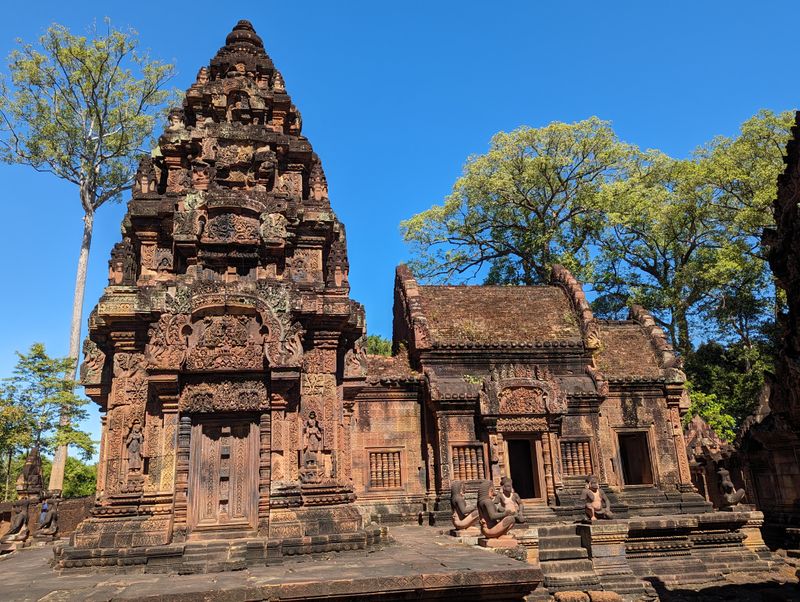
Pink sandstone glows like sunset even at midday, carved so delicately you’d swear the artisans used jeweler’s tools instead of chisels. Banteay Srei, built in the 10th century, translates to “Citadel of Women,” though scholars debate whether the name refers to the fine craftsmanship or the temple’s dedication to goddesses.
Either way, the artistry here rivals anything you’ll see in Cambodia.
Dedicated primarily to the Hindu god Shiva and his consort Parvati, the temple walls burst with mythological scenes. You’ll spot stories from the RamayanaMahabharata and carved in stunning detail—demons battling gods, celestial dancers frozen mid-twirl, and lotus blossoms so lifelike you might expect them to sway.
The small scale of the temple adds to its charm, making it feel almost intimate compared to Angkor’s grand complexes.
Located about 25 kilometers northeast of Siem Reap, Banteay Srei sits away from the main Angkor circuit. That distance keeps crowds manageable, especially if you arrive right when it opens.
The journey through rice paddies and rural villages is half the fun.
Bring a hat and water—there’s limited shade. The intricate carvings deserve close inspection, so budget at least an hour to fully appreciate the craftsmanship that earned this temple its reputation as a masterpiece.
Beng Mealea — Jungle Ruins Adventure (East of Siem Reap)
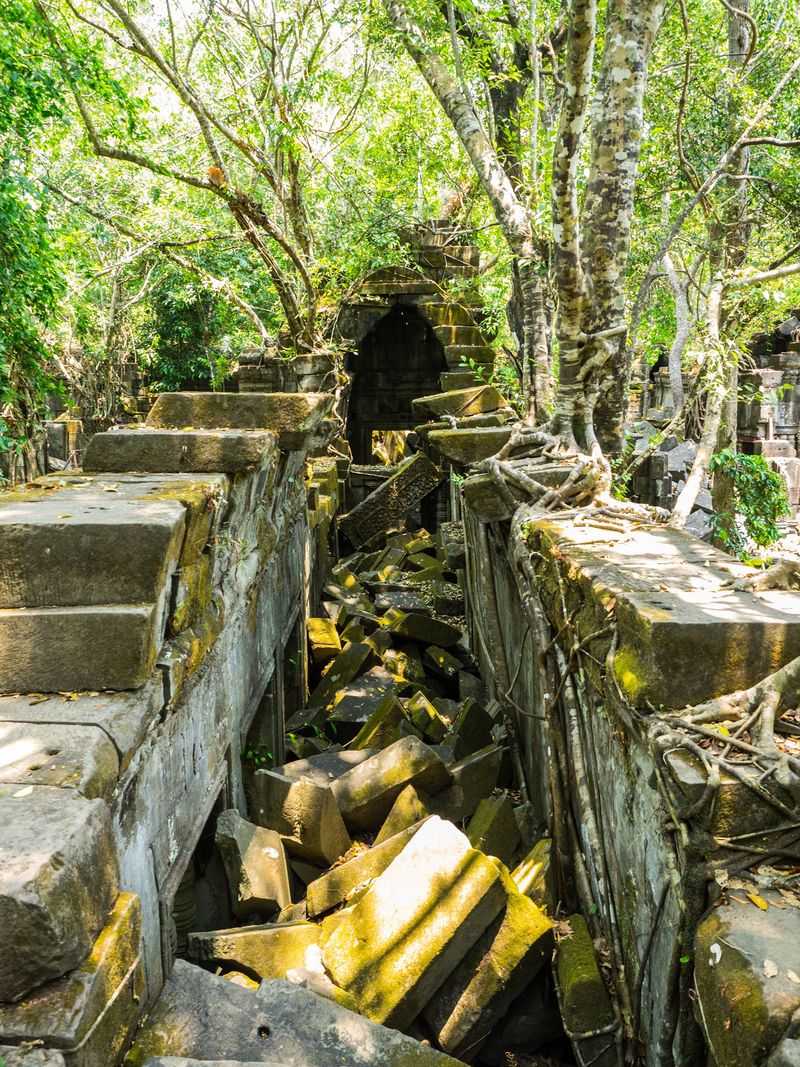
Vines twist through collapsed archways while moss-covered stones lie scattered like puzzle pieces waiting to be reassembled. Beng Mealea sits about 40 kilometers east of Siem Reap’s main temple circuit, and its remoteness has preserved an authentic explorer’s experience.
Built in the 12th century during the reign of Suryavarman II, the same king who commissioned Angkor Wat, this sprawling complex once rivaled its famous cousin in size and grandeur.
Today, restoration efforts remain minimal, leaving nature firmly in control. Wooden walkways guide visitors over and through the ruins, but much of the temple remains wonderfully chaotic.
Galleries have caved in, creating natural tunnels you can crawl through. Trees burst from rooftops, and every turn reveals another Instagram-worthy scene of decay and beauty intertwined.
The lack of crowds makes Beng Mealea feel like a personal discovery. You might spend an hour climbing over stones, peeking into dark chambers, and imagining what treasures archaeologists might still uncover.
Kids love the adventure-playground vibe, though parents should watch for uneven surfaces.
Hire a tuk-tuk or rent a bicycle for the journey—the countryside scenery alone makes the trip worthwhile. Pack snacks and plenty of water since facilities are limited.
Wear sturdy shoes with good grip for navigating the rubble.
Koh Ker — Lost Capital with a Pyramid (North-East Cambodia)
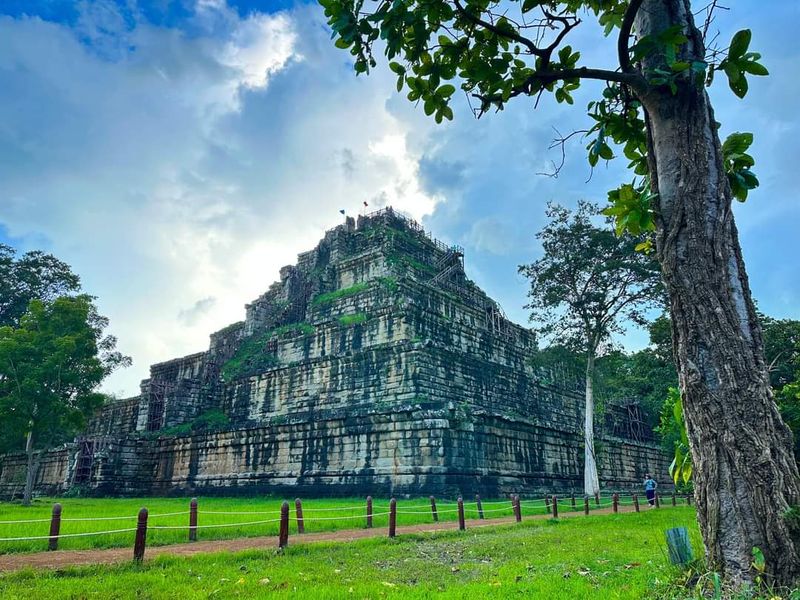
Cambodia’s tallest ancient pyramid rises seven tiers above the jungle canopy, a dramatic reminder that Angkor wasn’t always the empire’s heart. For a brief period in the 10th century, King Jayavarman IV moved the capital here to Koh Ker, constructing over 180 temples and structures in just two decades.
Prasat Thom, the central pyramid, towers 36 meters high and offers breathtaking views for those brave enough to climb its steep stairs.
The complex spreads across miles of forest, with temples hidden among the trees like secrets waiting to be told. Giant stone lingams, crumbling libraries, and animal sculptures dot the landscape.
Many structures remain unexcavated, giving the site an air of mystery that mainstream Angkor temples lack.
Getting here requires commitment—Koh Ker sits roughly 120 kilometers northeast of Siem Reap, about a two-and-a-half-hour drive. But that distance keeps tourist crowds thin, and you might find yourself alone with ancient history.
The roads have improved in recent years, making the journey more comfortable.
Bring a packed lunch since dining options are scarce. Wear layers because the jungle can be humid, but the pyramid’s summit catches cool breezes.
Budget at least three hours to explore the main temples, though true enthusiasts could easily spend a full day wandering the complex.
Preah Vihear — Cliff-Top Sanctuary (Northern Cambodia)
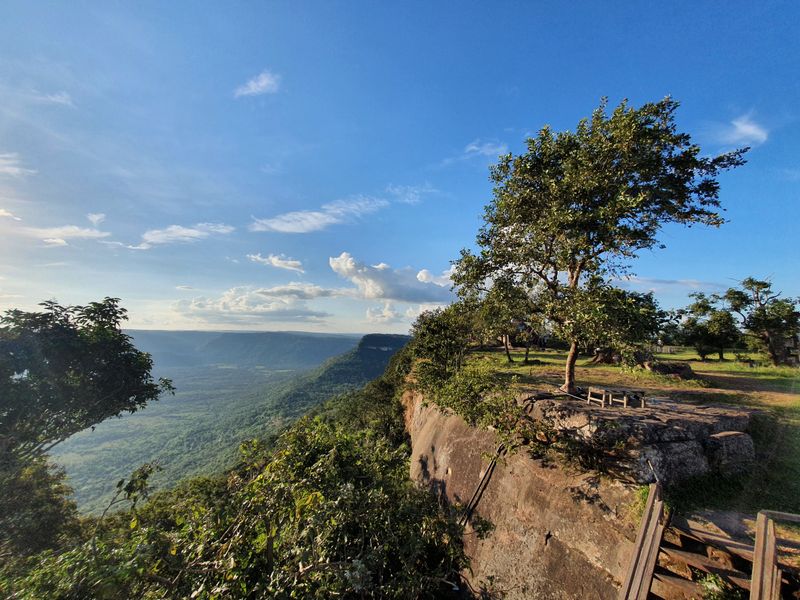
Perched 525 meters above the Cambodian plains, Preah Vihear commands views so spectacular they’ve sparked international disputes. The temple clings to the edge of the Dângrêk Mountains along the Thai border, a location that’s caused territorial tensions for decades.
Built primarily during the 9th to 12th centuries and dedicated to Shiva, the complex stretches nearly 800 meters along the mountain ridge.
Four ceremonial courtyards connected by staircases lead visitors upward toward the main sanctuary. Each level reveals new carvings, gopuras (entrance pavilions), and increasingly stunning vistas.
The final courtyard sits right at the cliff’s edge, offering panoramic views across Cambodia’s lowlands that seem to stretch forever on clear days.
UNESCO designated it a World Heritage Site in 2008, recognizing both its architectural significance and dramatic natural setting. The journey up the mountain is an adventure itself—visitors can hire shared trucks or motorbikes from the base, winding up steep switchbacks through jungle.
Visit during dry season (November to March) when roads are passable and visibility is best. Bring binoculars for spotting wildlife and villages far below.
The site sees fewer tourists than Angkor, but arrive early to beat the heat. Wear comfortable shoes for the uphill walking between courtyards.
Sambor Prei Kuk — Pre-Angkorian Brick Towers (Kampong Thom)
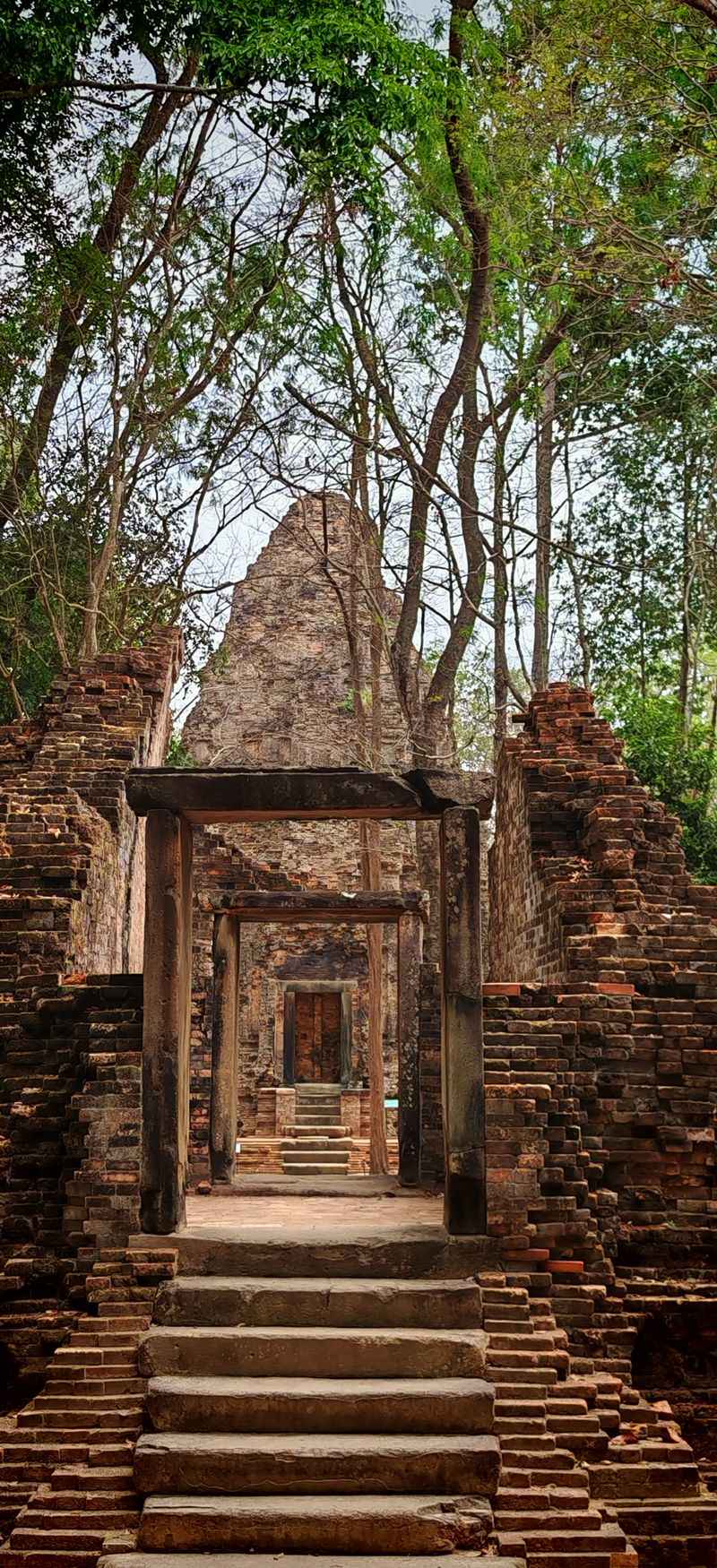
Brick towers emerge from forest clearings like elderly monks in meditation, their surfaces weathered by 1,400 years of monsoons and sunshine. Sambor Prei Kuk predates the Angkor period by several centuries, built during the Chenla Kingdom in the early 7th century when the capital, Ishanapura, thrived here.
More than 180 temples scatter across the site, making it one of Southeast Asia’s most important pre-Angkorian archaeological treasures.
Unlike the sandstone giants of Angkor, these temples were constructed primarily from brick with sandstone decorative elements. The octagonal towers—unique to this site—showcase architectural innovation that influenced later Khmer building styles.
Intricate carvings of flying palaces and Hindu deities still grace some walls, though time and nature have softened many details.
UNESCO added Sambor Prei Kuk to its World Heritage list in 2017, calling it an exceptional example of early Khmer architecture. The peaceful forest setting, complete with butterflies and bird songs, makes exploring feel like a treasure hunt.
Wooden walkways connect the three main temple groups, each named after a Sanskrit letter.
Located in Kampong Thom province, about 176 kilometers from Phnom Penh, the site makes a great stopover between the capital and Siem Reap. Hire a local guide to understand the symbolism and history—their stories bring the ancient bricks to life.
Banteay Kdei — Citadel of Monks’ Cells (Angkor Park)
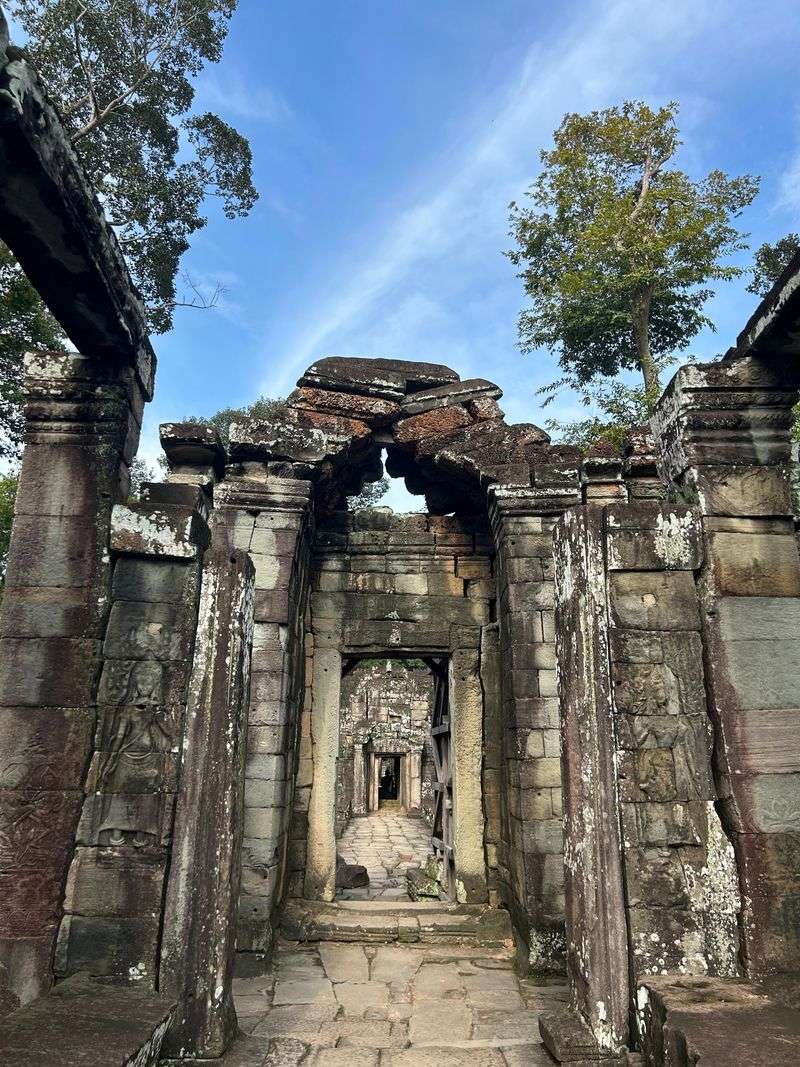
Quiet galleries and shaded courtyards make this Buddhist monastery feel like a refuge from Angkor’s busier temples. Banteay Kdei, meaning “Citadel of Chambers,” was built in the mid-12th to early 13th centuries during the reign of Jayavarman VII.
The king commissioned it as a Buddhist monastery, and its layout reflects that monastic purpose with numerous small rooms where monks once studied and meditated.
The architecture shows characteristics of the Bayon period, with face towers (though many have collapsed) and intricate carvings depicting Buddhist scenes. Four concentric walls surround the central sanctuary, connected by cruciform galleries that create a labyrinth of stone corridors.
Tree roots have begun claiming some sections, adding to the atmospheric appeal.
Unlike Ta Prohm, its more famous jungle-temple neighbor, Banteay Kdei receives fewer visitors despite sitting just across from Srah Srang reservoir. This means you can often explore its halls in peaceful solitude, especially during midday when tour groups focus elsewhere.
The temple’s eastern entrance aligns perfectly with Srah Srang, making for beautiful sunrise photos.
Combine your visit with a stop at the reservoir, where locals sometimes gather in the late afternoon. The temple’s shaded galleries offer welcome relief from Cambodia’s heat.
Bring a flashlight to peer into darker chambers where sunlight barely penetrates.
Neak Pean — Temple on a Lake (Angkor Area)
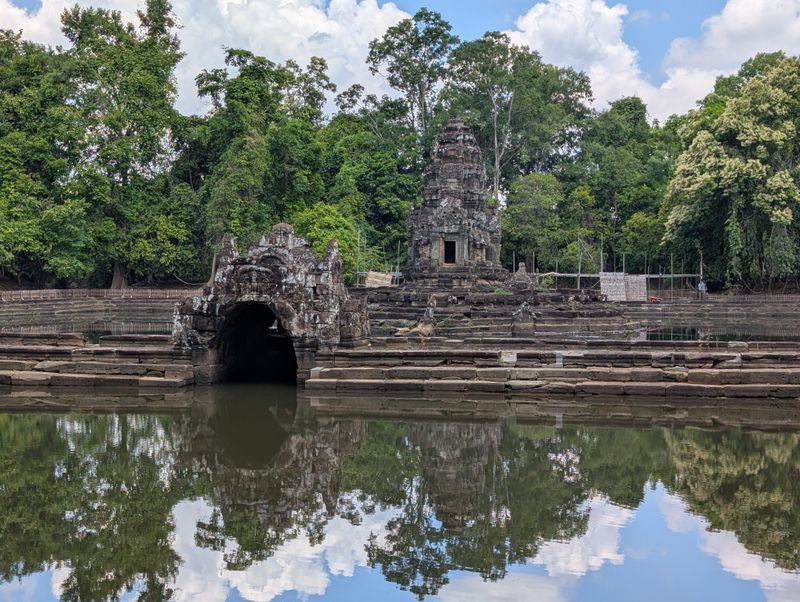
A small temple rises from the center of a square pool like a lotus floating on still water. Neak Pean, meaning “Intertwined Serpents,” takes its name from the stone nagas (serpents) coiled around the temple’s base.
Built in the late 12th century by Jayavarman VII, this unique structure sat at the center of a massive reservoir called Jayatataka, now partially restored to recreate its original aquatic setting.
Ancient Khmers believed Neak Pean possessed healing powers. Four smaller pools surround the central sanctuary, each connected by channels shaped like different animal heads—elephant, lion, horse, and human.
Pilgrims would bathe in these pools, believing the water held medicinal properties that could cure various ailments. The temple represents the mythical Himalayan lake Anavatapta, where waters were said to cure all suffering.
Today, a wooden walkway crosses the reservoir, leading visitors to the temple. The reflections in the water create stunning photo opportunities, especially during the rainy season when the pools fill completely.
The horse statue emerging from the water adds to the site’s mystical atmosphere.
Visit during wet season (June to November) when water levels are highest for the full effect. The walk across the reservoir takes about 10 minutes each way.
Bring mosquito repellent since standing water attracts bugs, especially near sunset.
Preah Khan — Sacred Sword Temple (Angkor Thom)
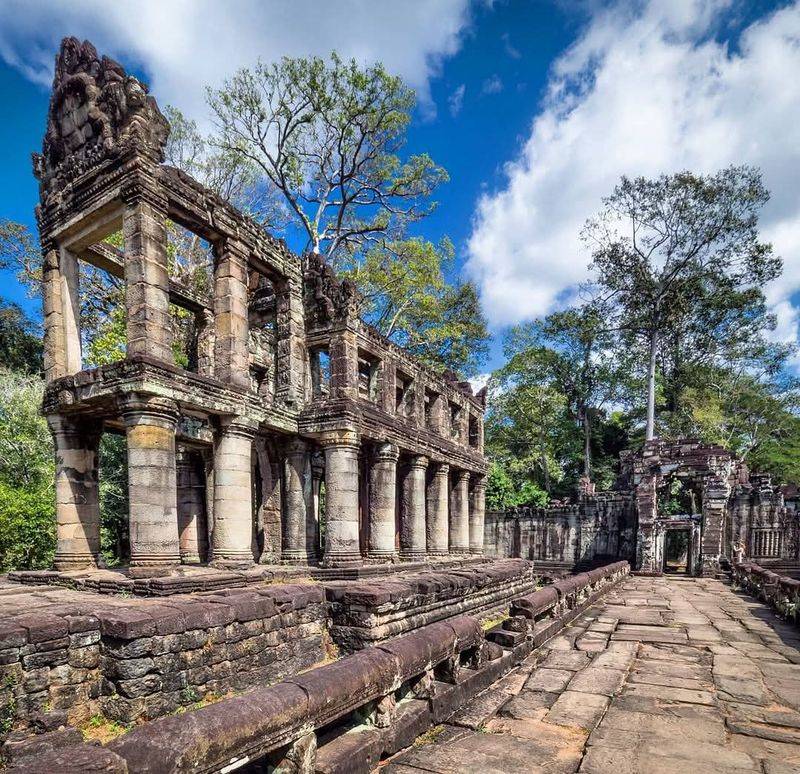
Corridors stretch in all directions like a stone maze designed to lose wanderers in history. Preah Khan, or “Sacred Sword,” covers over 140 acres and once functioned as a small city housing thousands of people.
King Jayavarman VII built it in 1191 to honor his father, creating a complex that served as Buddhist monastery, university, and royal residence all at once.
The temple’s layout confuses first-time visitors with its multiple entrances and interconnected galleries. Hindu and Buddhist imagery mix throughout—evidence of the religious transitions that swept the Khmer Empire.
Tree roots cascade over walls in some sections, while other areas remain remarkably preserved. A two-story structure near the center, rare in Angkorian architecture, once may have stored sacred texts or treasures.
Preah Khan rewards slow exploration. Hidden courtyards reveal surprising carvings, and quiet corners offer moments of reflection away from the crowds that concentrate in Angkor’s main temples.
The eastern entrance features a particularly photogenic avenue lined with boundary stones.
Allocate at least 90 minutes to properly explore the sprawling complex. Early morning visits offer the best light filtering through the trees.
Download a map beforehand since the layout can be disorienting. The temple sits along the Grand Circuit route, making it easy to combine with other sites.
Ta Keo — Unfinished Pyramid Temple (Angkor Thom)
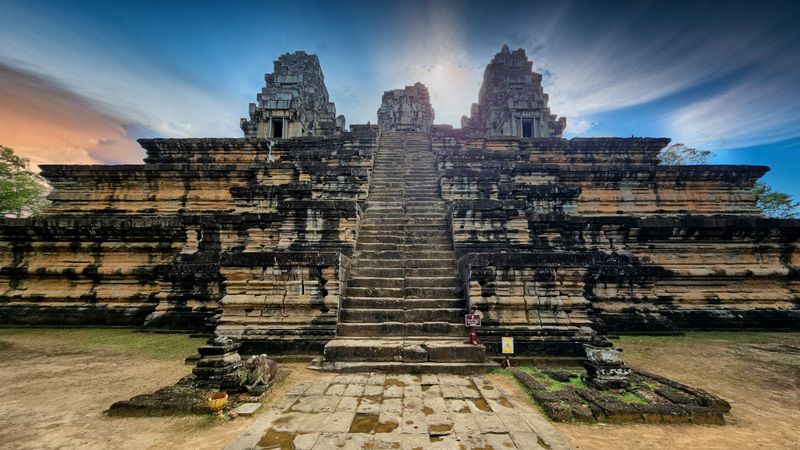
Raw sandstone blocks stack skyward in stark, undecorated tiers—a monument frozen mid-creation. Ta Keo stands as one of Angkor’s great mysteries, a temple mountain begun in the late 10th century but never finished.
Legend says lightning struck the temple during construction, which workers interpreted as a bad omen, causing them to abandon the project. Historians suggest political upheaval or the king’s death more likely halted work.
The lack of decoration gives Ta Keo a brutalist, almost modern appearance that contrasts sharply with Angkor’s ornate temples. What it lacks in carved details, it makes up for in architectural ambition.
The temple rises five levels, with the central sanctuary perched 22 meters above ground. Climbing the steep stairways—some approaching 70-degree angles—tests your nerve but rewards with excellent views across the Angkor Archaeological Park.
Because it’s unfinished and relatively plain, Ta Keo attracts fewer tourists than its neighbors. This makes it perfect for visitors who want to experience Angkor’s scale without battling crowds.
The climb itself becomes the main attraction, offering a physical connection to the builders’ ambitions.
Wear shoes with good traction—the steps are steep and narrow. Use the rope railings for safety, especially when descending.
Visit in cooler morning hours since there’s minimal shade. The summit offers great views but limited space, so be courteous to other climbers.
Ta Som — Overgrown Hidden Temple (Angkor Park)
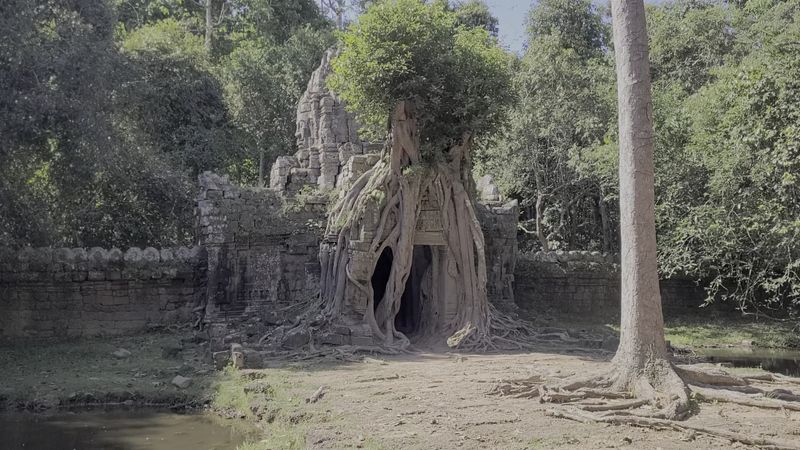
A giant fig tree has swallowed the eastern gate entirely, its roots cascading over the carved face tower like a natural curtain. Ta Som remains one of Angkor’s most photogenic yet least crowded temples, a late 12th-century Buddhist shrine built during Jayavarman VII’s prolific reign.
Its modest size and location at the far end of the Grand Circuit keep visitor numbers manageable, creating an intimate atmosphere that larger temples can’t match.
The temple follows a simple layout—a single sanctuary surrounded by three enclosure walls and four gopuras (entrance pavilions). Despite its small scale, Ta Som features beautiful carvings including devatas (female divinities) with elaborate hairstyles and jewelry.
The jungle has begun reclaiming sections, with trees growing through walls and roots prying apart stonework, though not as dramatically as Ta Prohm.
That famous tree-covered eastern gate has become an iconic image, representing the eternal struggle between human creation and nature’s persistence. The gate’s face tower peers through the roots, creating an almost mythical scene.
Many visitors say Ta Som captures the romantic jungle-temple aesthetic without the crowds that swarm more famous sites.
Combine Ta Som with nearby Neak Pean and Preah Khan for an efficient Grand Circuit tour. The temple takes only 30-45 minutes to explore thoroughly.
Late afternoon light enhances the tree-covered gate, making it prime photography time.
Thommanon — Elegant Bayon-Era Temple (Angkor Complex)
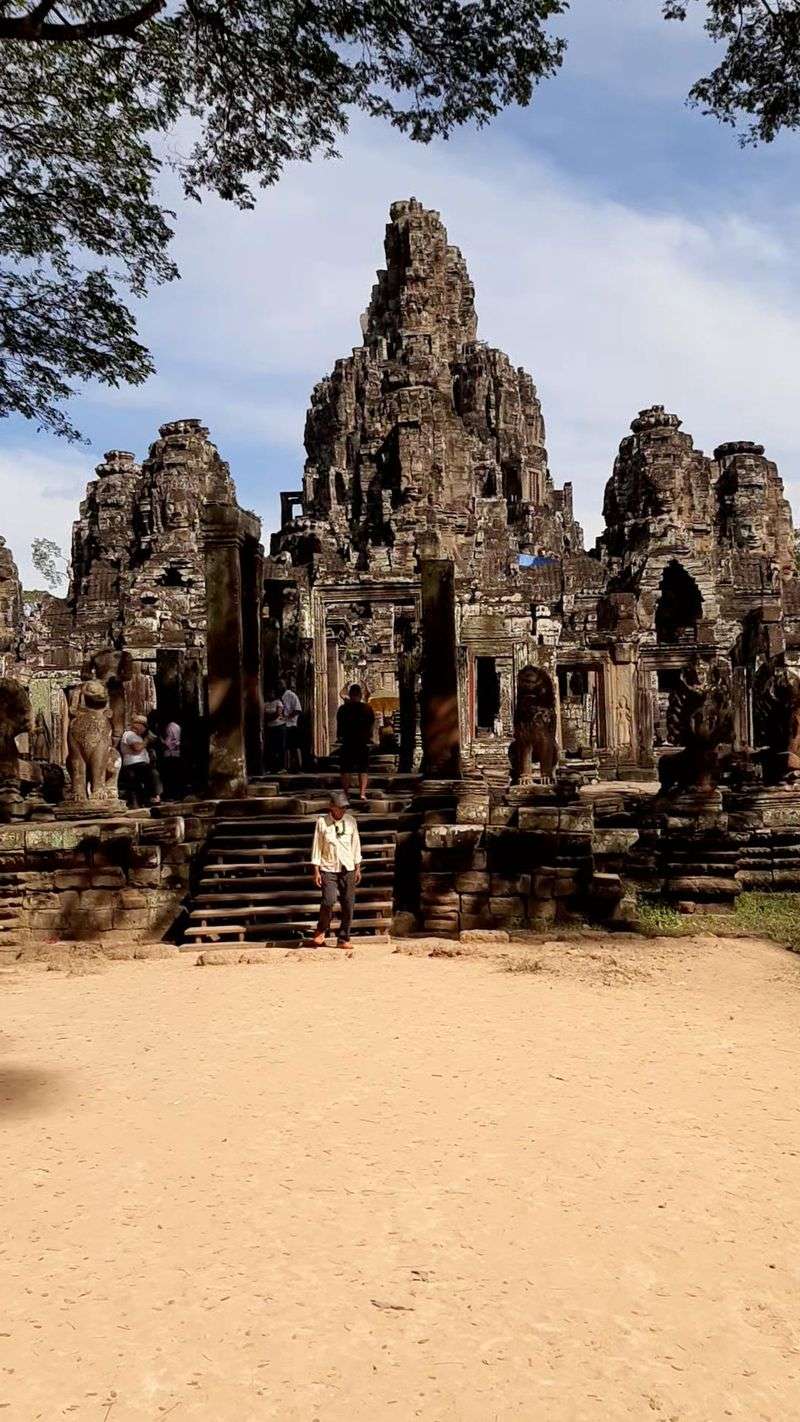
Graceful proportions and refined carvings showcase Khmer artistry at its most elegant. Thommanon, built in the early 12th century, represents the classical Angkorian style that reached its peak during this period.
Dedicated to Shiva and Vishnu, this small Hindu temple sits just north of Angkor Wat along the road to Angkor Thom, making it an easy addition to any temple tour.
What Thommanon lacks in size, it compensates for with exquisite details. The sanctuary tower rises above a cruciform base, surrounded by libraries and galleries in harmonious balance.
Devata carvings—celestial female figures—decorate the walls with serene expressions and elaborate costumes. The pediments above doorways depict Hindu mythological scenes, including Krishna lifting Mount Govardhan and Vishnu reclining on the serpent Ananta.
French restoration teams worked extensively on Thommanon in the 1960s, and their efforts show in the temple’s excellent condition. Unlike many Angkor temples left partially ruined for atmospheric effect, Thommanon has been carefully reconstructed to demonstrate how these structures originally appeared.
The compact layout and good preservation make it ideal for understanding Khmer temple architecture without getting overwhelmed.
Plan for a quick 20-30 minute visit—Thommanon is small but worth the stop. It pairs well with Chau Say Tevoda, its twin temple across the road.
Morning light illuminates the eastern entrance beautifully.
Banteay Samré — Citadel of the Samré (Angkor Region)
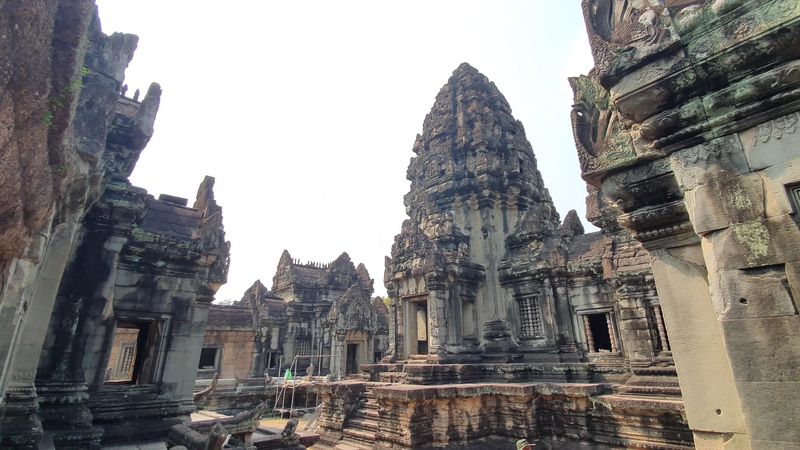
Carefully restored towers rise in perfect symmetry, demonstrating what Angkor’s temples looked like in their prime. Banteay Samré, built in the early 12th century during Suryavarman II’s reign, mirrors the architectural style of Angkor Wat with its concentric galleries, elaborate carvings, and balanced proportions.
The temple’s name references the Samré people, an ethnic group that once inhabited the region around Phnom Kulen.
Unlike temples left romantically overgrown, Banteay Samré underwent extensive restoration that returned it to near-original condition. The central sanctuary tower dominates the complex, surrounded by galleries and libraries arranged in classic Angkorian fashion.
Sandstone bas-reliefs depict scenes from Hindu epics, particularly the Ramayana and Mahabharata, though many have weathered over the centuries.
The temple’s remote location—about 400 meters east of the East Baray—means tour groups often skip it in favor of closer sites. This oversight works in visitors’ favor, offering peaceful exploration without jostling for photos.
The surrounding moat and causeway add to the temple’s aesthetic appeal, especially when water levels are high.
Rent a bicycle or hire a tuk-tuk since Banteay Samré sits outside the main temple circuits. The journey through rural villages provides cultural context often missed when rushing between major monuments.
Allow 45 minutes to an hour for exploration. The site has minimal shade, so visit early or late to avoid peak heat.
Baphuon — Massive Temple Mountain (Angkor Thom)
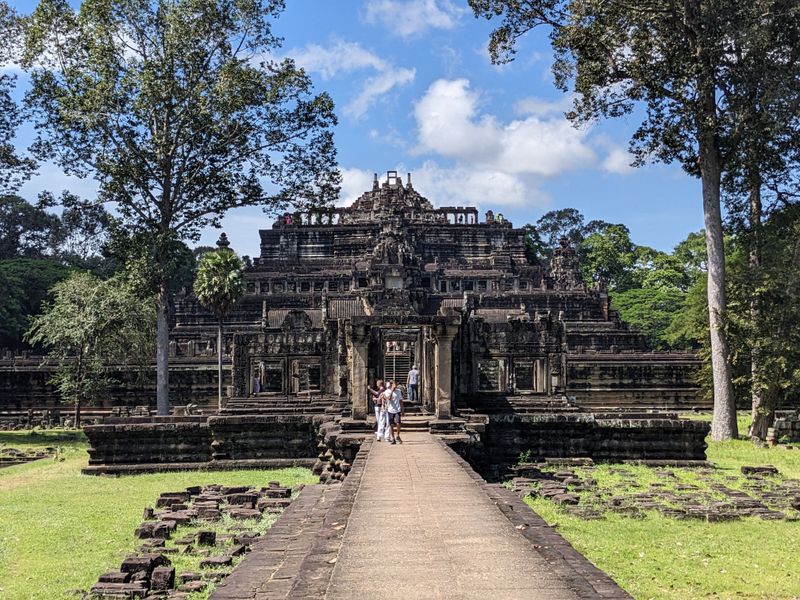
A 200-meter elevated causeway leads your eyes toward a massive three-tiered temple mountain that dominates the Angkor Thom skyline. Baphuon, completed in the mid-11th century under King Udayadityavarman II, served as the state temple representing Mount Meru, the sacred mountain at the center of Hindu and Buddhist cosmology.
At its peak, the temple stood over 50 meters tall, making it one of the largest structures in Angkor.
The temple’s history includes one of archaeology’s most challenging restoration projects. French teams began work in the 1960s, carefully documenting each stone’s position before civil war forced them to flee in 1972.
When work resumed decades later, the records had been lost, leaving hundreds of thousands of numbered stones scattered like a massive 3D puzzle. The painstaking restoration finally finished in 2011.
Visitors today can climb the steep central stairway to the upper terraces, where views extend across Angkor Thom. The western side features a massive reclining Buddha added in the 16th century, created by rearranging stones from the collapsed upper levels.
This Buddhist addition to the Hindu temple illustrates Cambodia’s religious evolution.
Factor in at least an hour for climbing and exploring. The central stairway is steep—use handrails and take your time.
The temple sits within walking distance of the Bayon and Royal Palace, making it part of an efficient Angkor Thom tour.
Bakong — Roluos Group Pioneer (Roluos)
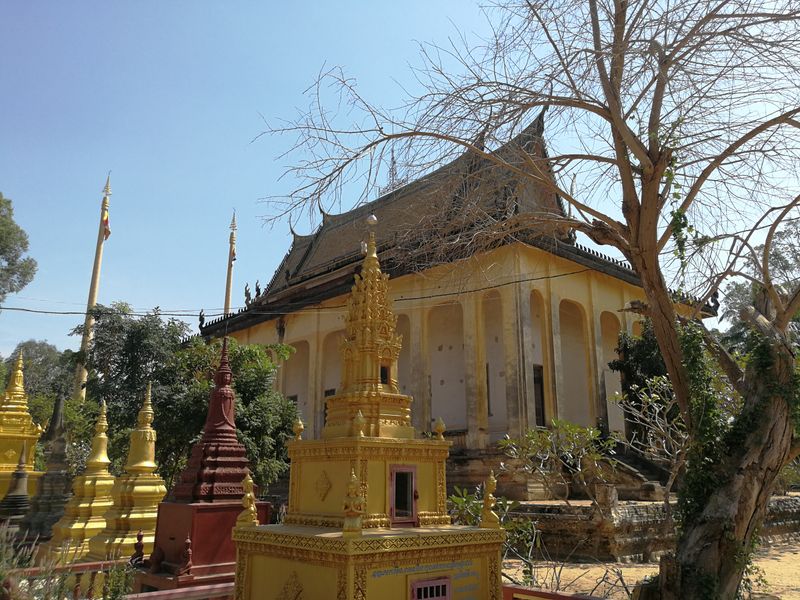
This five-tiered pyramid launched a thousand temples, establishing the architectural blueprint that would define Angkor for centuries. Bakong, consecrated in 881 CE during King Indravarman I’s reign, stands as the first major sandstone temple mountain in Khmer history.
Before Bakong, temples were built primarily from brick. Its innovative design and construction techniques paved the way for later masterpieces like Pre Rup, Ta Keo, and eventually Angkor Wat itself.
The temple rises from a square base through five levels, each smaller than the one below, creating a stepped pyramid that represents Mount Meru. Eight brick towers—prasats—surround the base, dedicated to Shiva and housing lingams.
A central sanctuary tower crowns the summit, added later and showing different architectural styling. The symmetry and proportion demonstrate sophisticated mathematical and engineering knowledge.
Part of the Roluos Group about 13 kilometers east of Siem Reap, Bakong sees fewer tourists than central Angkor sites despite its historical importance. The peaceful setting allows for contemplative exploration and appreciation of early Khmer innovation.
An active Buddhist monastery operates adjacent to the temple, adding colorful prayer flags and contemporary spiritual life to the ancient stones.
Combine Bakong with the other Roluos temples—Preah Ko and Lolei—for a half-day trip exploring Angkorian origins. The climb to the top is manageable with proper stairs.
Visit in the morning when monks might be chanting, adding atmosphere to your experience.
Share this story