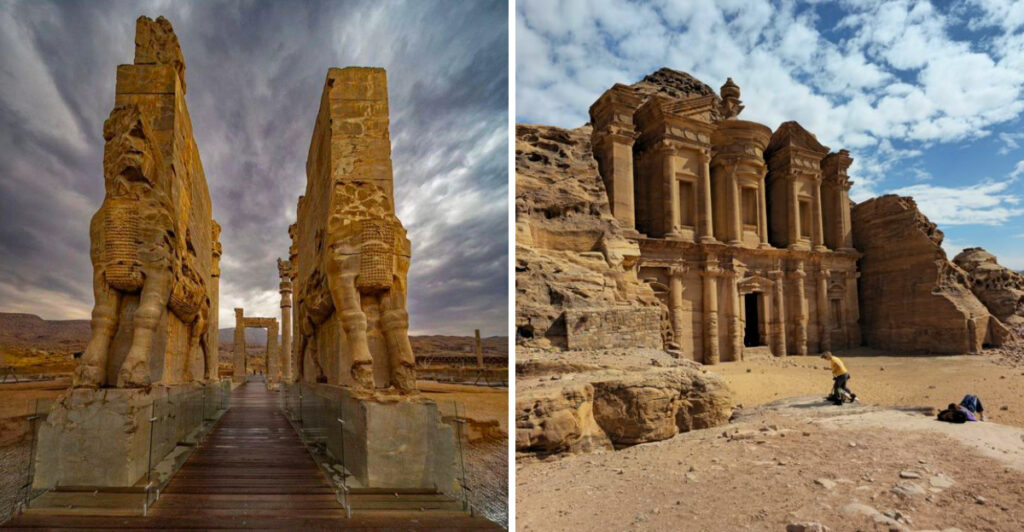
Ancient empires built monuments so massive and impressive that even thousands of years later, their ruins still leave us speechless. From towering pyramids in Egypt to hidden cities carved into cliffs, these incredible structures tell stories of kings, warriors, and civilizations that once ruled vast territories.
Each crumbling wall and weathered stone offers clues about how these empires organized their societies, expressed their beliefs, and demonstrated their strength to the world.
Persepolis — Ceremonial Capital of the Persian Empire (Iran)
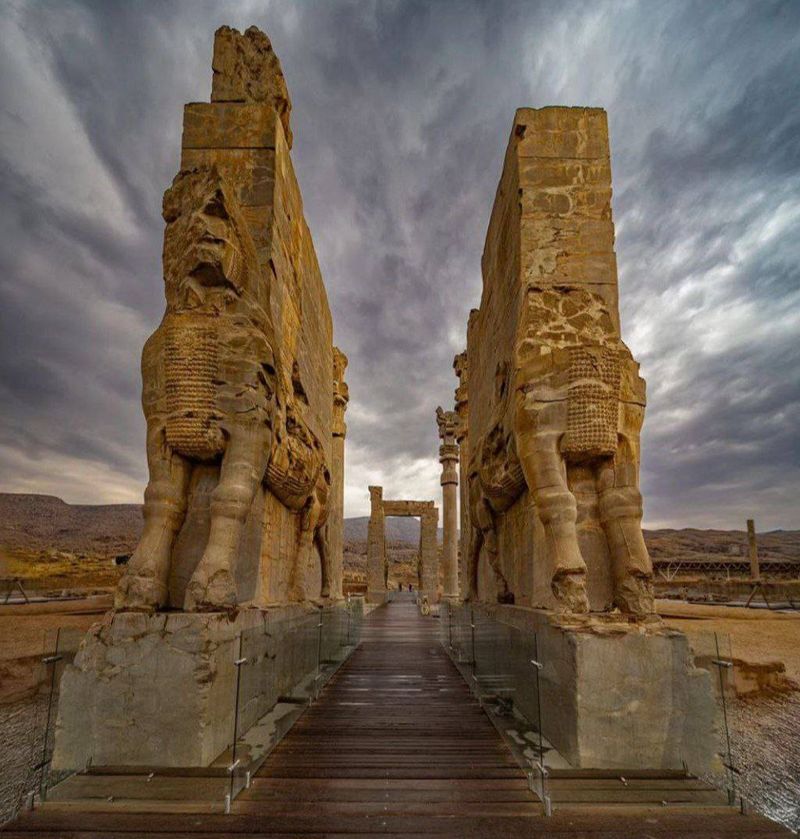
Walking through Persepolis feels like stepping into a royal celebration frozen in time. Founded by Darius I in the 6th century BCE, this ceremonial capital wasn’t just another city—it was where the Persian Empire showed off its incredible wealth and power to visiting dignitaries from across the ancient world.
The massive stone terraces, towering columns, and detailed carvings of soldiers and gift-bearing delegates tell us that Persia wanted everyone to know just how mighty it was.
What makes Persepolis truly special is how it combined art with architecture to create pure propaganda. Every relief carving, every stairway, and every gateway was designed to impress visitors and remind them of the empire’s vast reach.
Kings from dozens of nations would climb those stairs, pass through those gates, and feel small compared to Persian grandeur.
Alexander the Great burned much of Persepolis in 330 BCE, but what remains still captures our imagination. The ruins showcase Persian engineering skills, artistic talent, and political genius.
Standing among these ancient stones today, you can almost hear the echoes of imperial ceremonies that once made this the most spectacular city in the world.
The Pyramids of Giza — Pharaohs’ Eternal Legacy (Egypt)
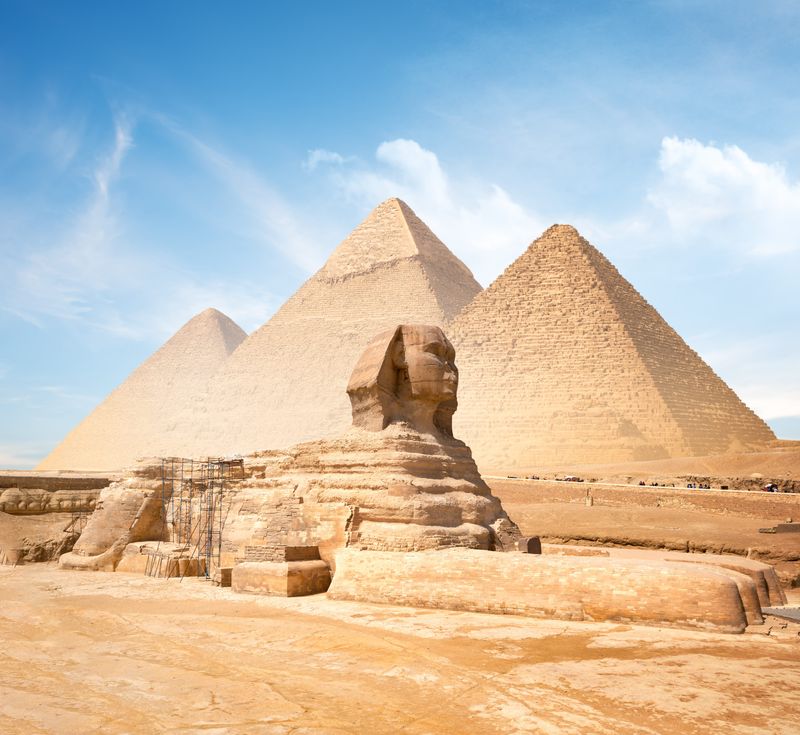
No other structures on Earth scream “imperial power” quite like the Pyramids of Giza. Built around 4,500 years ago as eternal resting places for pharaohs Khufu, Khafre, and Menkaure, these geometric giants required organizing tens of thousands of workers, moving millions of stone blocks, and perfecting mathematics that still impresses engineers today.
Only a government with absolute authority could pull off something this ambitious.
The Great Pyramid of Khufu originally stood 481 feet tall and remained the world’s tallest human-made structure for nearly 4,000 years. Think about that—for millennia, nothing humans built came close to matching it.
The precision is mind-blowing too; the base is level to within just a few centimeters, and the sides align almost perfectly with the cardinal directions.
As the sole survivors of the Seven Wonders of the Ancient World, the pyramids prove that Egyptian pharaohs didn’t just rule—they commanded resources and loyalty on an unimaginable scale. Every stone block represents hours of labor, tons of food to feed workers, and a belief system that convinced an entire civilization to dedicate decades to building a single tomb.
That’s the ultimate display of imperial control.
Machu Picchu — Inca Citadel in the Andes (Peru)
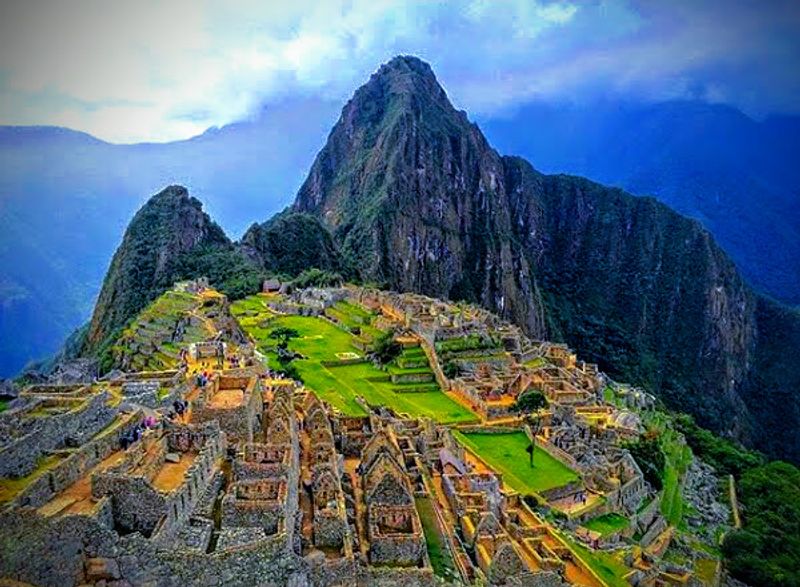
Imagine building an entire city on a mountain ridge so remote that the outside world forgot it existed for centuries. That’s exactly what the Incas accomplished with Machu Picchu in the 15th century.
Perched nearly 8,000 feet above sea level, this citadel demonstrates engineering brilliance that still puzzles modern architects—perfectly fitted stones without mortar, agricultural terraces carved into steep slopes, and water systems that function to this day.
The Incas didn’t have wheels, iron tools, or written language as we know it, yet they created one of the world’s most stunning architectural achievements. Every stone had to be shaped by hand using bronze tools and river stones, then hauled up mountainsides using ropes and manpower.
The precision is remarkable; many stones fit together so tightly you can’t slide a knife blade between them.
Often called the Lost City of the Incas, Machu Picchu reveals how this empire controlled vast territories across challenging terrain. The site includes temples, palaces, residential areas, and farming zones—everything needed for a self-sufficient community.
It wasn’t just beautiful; it was strategic, demonstrating Inca mastery over their environment and their ability to project power even in the most difficult locations imaginable.
Petra — Rock-Carved Capital of the Nabataeans (Jordan)
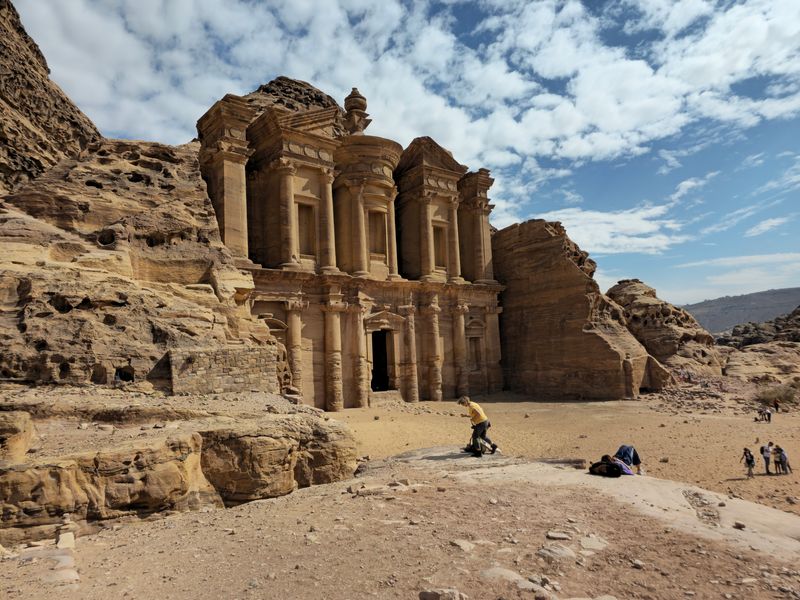
Carving an entire city out of solid rock sounds like something from a fantasy novel, but the Nabataeans made it reality at Petra. This rose-red city, hidden in Jordan’s desert canyons, served as the capital of a trading empire that grew wealthy by controlling caravan routes connecting Arabia, Egypt, and the Mediterranean around the 1st century CE.
The famous Treasury facade—carved directly into a cliff face—greets visitors with towering columns and intricate details that seem impossible to create without modern tools.
The Nabataeans weren’t just skilled sculptors; they were water management geniuses. In one of Earth’s driest regions, they engineered sophisticated systems of dams, cisterns, and channels that collected and stored every precious drop of rain.
This allowed Petra to support thousands of residents and countless travelers, making it a crucial rest stop for merchants crossing harsh deserts.
Beyond the Treasury, Petra contains hundreds of tombs, temples, and dwellings carved into colorful sandstone. The city’s location—accessible only through a narrow gorge called the Siq—provided natural defense while maintaining access to trade routes.
This combination of strategic location, artistic achievement, and hydraulic engineering shows how the Nabataeans built commercial power into lasting imperial influence.
Ephesus — Roman Metropolis on the Aegean (Turkey)
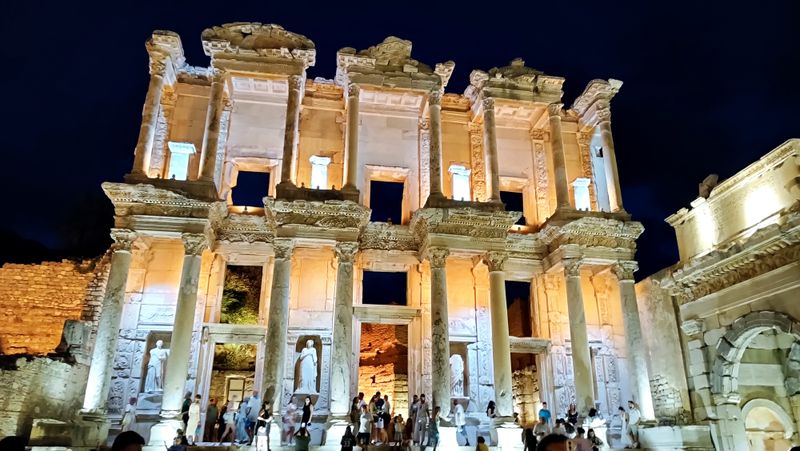
Strolling down Ephesus’s marble streets, you can practically hear the bustle of ancient Roman life. This wasn’t some dusty outpost—it was one of the empire’s most important cities, boasting a population of around 250,000 at its peak.
The stunning Library of Celsus, with its two-story facade, once held nearly 12,000 scrolls and served as both a learning center and an elaborate tomb for a Roman senator.
The grand theater could seat 25,000 spectators who gathered for plays, political meetings, and gladiatorial contests. Walking through the ruins, you’ll find public latrines (yes, communal toilets were a thing), elaborate bath complexes, wealthy homes with mosaic floors, and a main street lined with columns that once sheltered shoppers from the Mediterranean sun.
Every detail speaks to Roman urban planning genius and their obsession with public amenities.
As a major port city, Ephesus connected Rome to Asia, making it a melting pot of cultures, religions, and ideas. The ruins reveal how Romans exported their civilization—complete with temples, aqueducts, and forums—wherever they conquered.
The city’s scale and sophistication demonstrate why the Roman Empire dominated for centuries; they didn’t just conquer territories, they transformed them into miniature versions of Rome itself.
Tikal — Maya Superpower in the Petén (Guatemala)
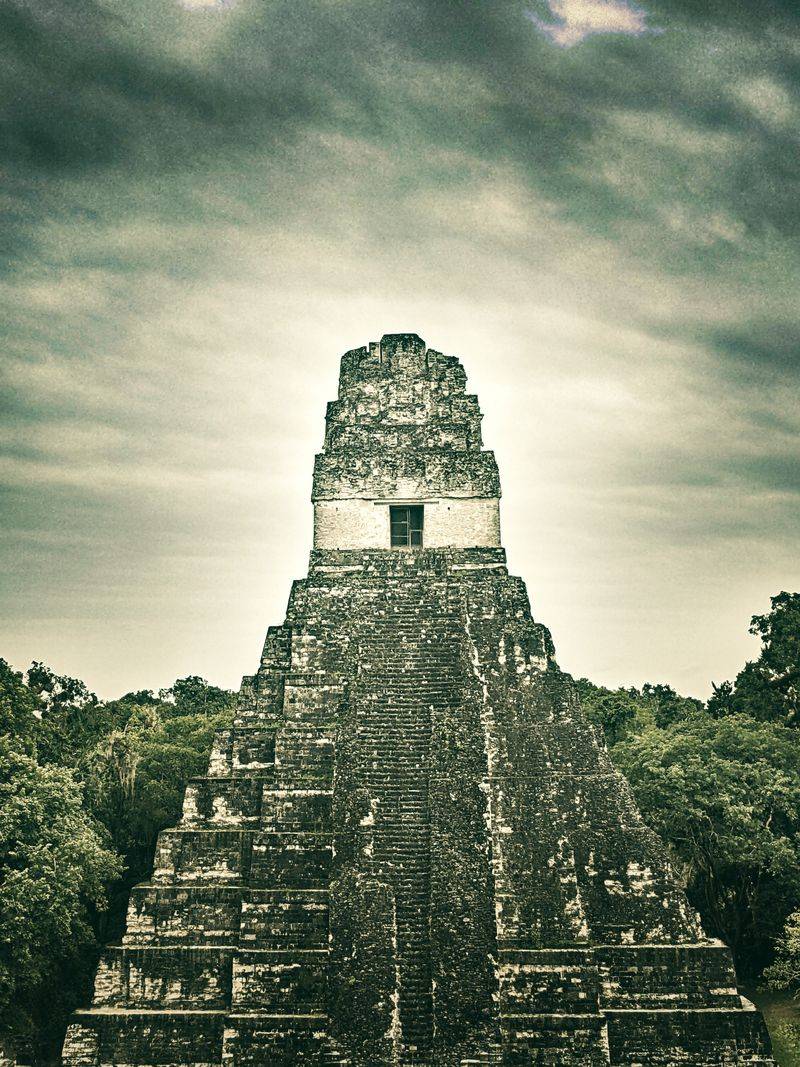
Hidden beneath Guatemala’s thick rainforest canopy, Tikal’s massive pyramids punch through the green like ancient skyscrapers. Between roughly 200 and 900 CE, this Maya city-state dominated the region through military might, sophisticated astronomy, and architectural achievements that still amaze archaeologists.
Temple IV, standing over 200 feet tall, was the tallest structure in the Americas until modern times—imagine constructing that without metal tools or pack animals.
Tikal wasn’t just impressive in size; it was the political heart of a powerful kingdom that controlled trade routes and tribute from surrounding territories. The city’s central plaza, surrounded by pyramids and palaces, hosted royal ceremonies and rituals that reinforced the divine authority of Maya kings.
Hieroglyphic inscriptions on stone monuments record dynastic histories, military victories, and astronomical observations that demonstrate remarkable mathematical precision.
What makes Tikal especially fascinating is how the Maya integrated their buildings with celestial events. Certain temples align with sunrise on solstices, while others mark Venus’s movements across the sky.
This connection between architecture, astronomy, and religion shows how Maya rulers used knowledge and monumental construction to legitimize their power. Walking among these towering structures, you understand why Tikal was called the “Place of Voices”—it practically shouts about Maya imperial ambition.
Great Zimbabwe — Stone City of the Shona Kingdom (Zimbabwe)
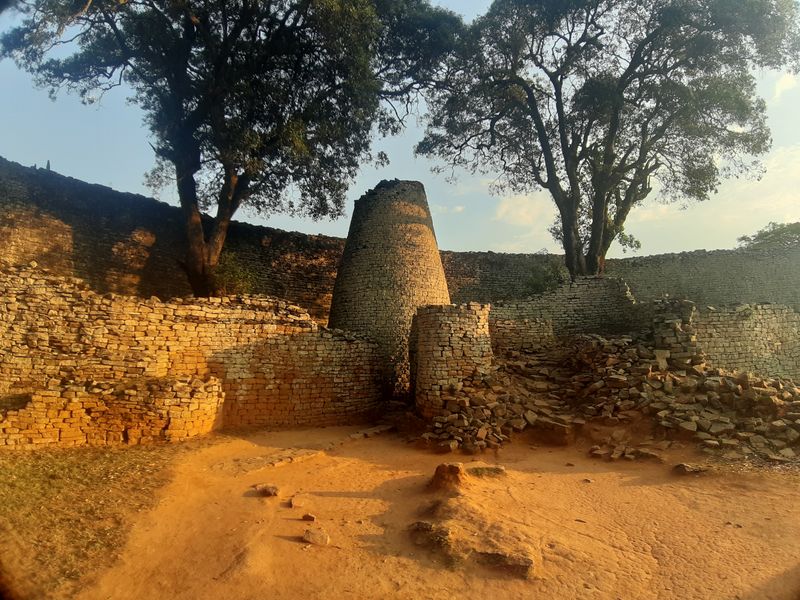
Most people don’t realize that medieval Africa had sophisticated stone cities, but Great Zimbabwe changes that misconception instantly. From the 11th to 15th centuries, this site served as the capital of a powerful kingdom that controlled gold and ivory trade routes connecting Africa’s interior to Indian Ocean ports.
The massive walls—some reaching 36 feet high and built entirely without mortar—represent Africa’s largest stone structure from that era and showcase engineering skills that rival anything built in medieval Europe.
The Great Enclosure, with its curved walls and mysterious conical tower, likely served as a royal residence or ritual space. The precision of the stonework is remarkable; builders selected and shaped granite blocks to fit together perfectly, creating walls that have stood for centuries.
This wasn’t accidental—it required planning, skilled labor, and centralized authority to organize such construction.
European colonizers once refused to believe Africans could have built Great Zimbabwe, inventing ridiculous theories about Phoenicians or other outsiders being responsible. Modern archaeology has thoroughly debunked these racist myths, proving the site was entirely the work of the indigenous Shona people.
The ruins stand as powerful evidence of African ingenuity, wealth, and political organization long before European contact, challenging outdated assumptions about the continent’s history.
The Colosseum & Roman Forum — Heart of Imperial Rome (Italy)
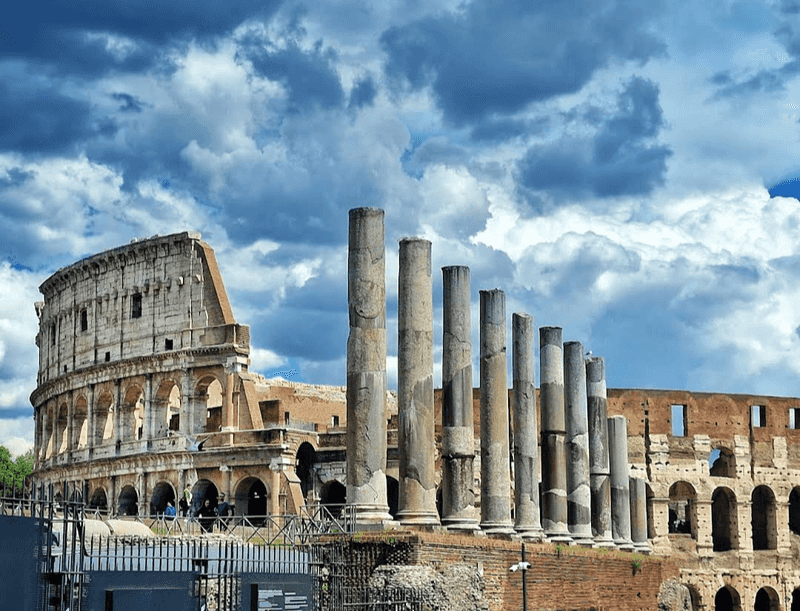
Nothing captures Roman imperial swagger quite like the Colosseum. This massive amphitheater could pack in 50,000 screaming spectators who came to watch gladiators fight, wild animals tear each other apart, and elaborate staged naval battles (yes, they actually flooded the arena).
Emperors used these brutal spectacles to keep the population entertained and distracted—”bread and circuses” was the Roman formula for maintaining power.
Right next door, the Roman Forum served as the empire’s political, religious, and commercial center. Senators debated laws, priests performed sacrifices, merchants hawked goods, and ordinary citizens gathered to hear news and gossip.
The ruins of temples, basilicas, and triumphal arches tell stories of military victories, political intrigue, and religious devotion that shaped Western civilization.
Together, the Colosseum and Forum represent different aspects of Roman power—one through entertainment and spectacle, the other through governance and civic life. The engineering alone is impressive; the Colosseum’s complex system of underground tunnels, elevators, and trapdoors allowed for dramatic surprise entrances of gladiators and beasts.
These structures weren’t just buildings; they were propaganda in stone, reminding everyone who saw them that Rome was eternal, powerful, and utterly dominant across three continents.
Chichen Itzá — Maya City of Power (Mexico)
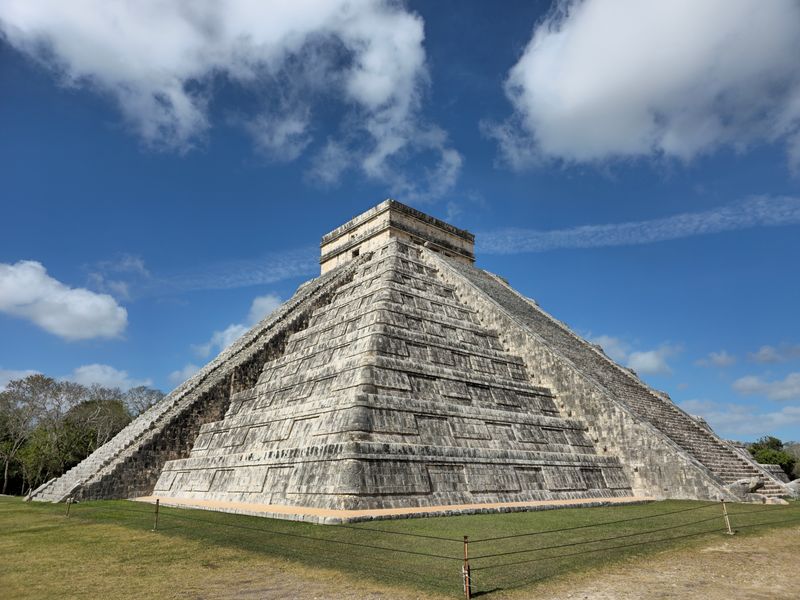
El Castillo, the iconic step pyramid at Chichen Itzá, is basically a giant stone calendar. Built around 600 CE and later, this Maya marvel has 91 steps on each of its four sides, which (adding the top platform) totals 365—one for each day of the year.
During spring and fall equinoxes, sunlight creates the illusion of a serpent slithering down the pyramid’s staircase, demonstrating the Maya’s incredible astronomical knowledge and architectural precision.
Chichen Itzá wasn’t just about pretty pyramids; it was a major political and economic power that dominated the Yucatan Peninsula. The Great Ball Court—the largest in Mesoamerica—hosted ritual games that were part sport, part religious ceremony, and possibly part human sacrifice.
Winners (or losers, depending on which theory you believe) might have been offered to the gods, showing how religion and politics intertwined in Maya culture.
The city’s influence extended across Mesoamerica through trade networks, military alliances, and cultural exchange. Sacred cenotes (natural sinkholes) served as both water sources and sites for offerings to rain gods, with archaeologists recovering gold, jade, and human remains from their depths.
The ruins reveal a civilization that combined scientific knowledge, artistic expression, and political authority to create one of pre-Columbian America’s most influential cities.
Amman Citadel — Layers of Empires (Jordan)
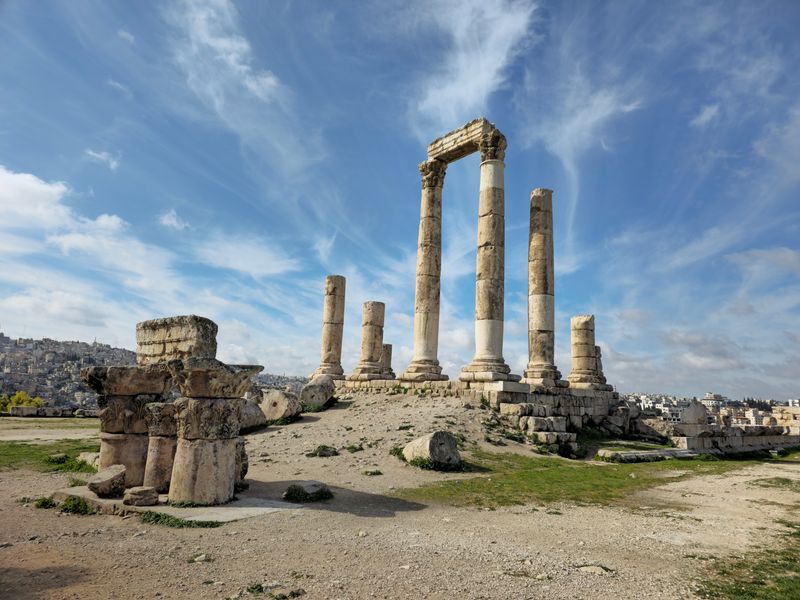
Few places pack as much history into one spot as the Amman Citadel. Sitting atop a hill overlooking Jordan’s modern capital, this site has been continuously occupied for roughly 7,000 years, hosting Ammonite, Assyrian, Babylonian, Roman, Byzantine, and Islamic rulers.
Each civilization left its mark—sometimes building on top of previous structures, sometimes repurposing stones from earlier monuments. It’s like a layered cake of imperial power.
The massive columns of the Roman Temple of Hercules dominate the site, reminding visitors that Rome once controlled this strategic crossroads. Nearby, the Umayyad Palace complex shows how Islamic empires later claimed the hilltop for their own administrative center.
Byzantine churches, Iron Age fortifications, and Bronze Age pottery all coexist in the archaeological layers, creating a physical timeline of conquest and cultural change.
What makes the Citadel fascinating isn’t just who built what, but how each empire adapted and reused what came before. Roman builders incorporated Ammonite stones into their temples; Byzantine Christians converted pagan buildings into churches; Islamic rulers built palaces using Byzantine columns.
This pattern of continuity and change illustrates how empires rise and fall, but strategic locations maintain importance across millennia. Standing here, you’re literally surrounded by thousands of years of human ambition, conflict, and civilization.
Share this story