Step through the doors of the Henry Ford Museum of American Innovation in Dearborn, Michigan, and the air shifts like you’ve crossed a seam in time. One of the largest indoor history museums in the country, it’s home to everything from towering locomotives to the bus where Rosa Parks made history and the limousine that carried President Kennedy.
Engines hum somewhere ahead, a brass bell rings in the distance, and a polished floor reflects an airplane wing close enough to touch. This isn’t just a walk through history – it’s a face-to-face encounter with the moments that shaped America.
Entering the Time Machine: First Steps Under the Skylights
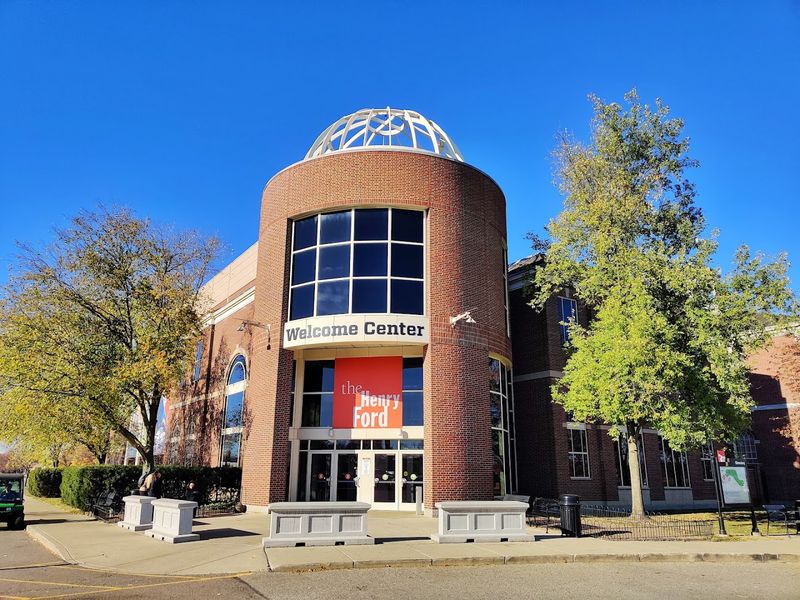
You feel it immediately at the threshold, that low thrumming of possibility. Light pours through the skylights and washes the terrazzo floors, bright enough to cast the silhouettes of a suspended aircraft across your shoes.
A docent smiles without rushing you, the sound of a distant school group echoing like a faint drumline through steel and glass.
The first gallery opens wide, and your eyes do not know where to land. A locomotive shoulder looms to the left, gunmetal and riveted, while a streamlined car gleams to the right like a chrome comet.
The air carries a whisper of oil and new paper, part library, part factory floor, all invitation.
Lean in and the details multiply. Brass plaques are etched with dates that compress centuries; handrails are cool and smooth, practically begging your palm to test their weight.
You catch a fragment of conversation about Dearborn field trips, then a parent’s hush, then a burst of laughter, and the museum’s rhythm settles in.
This is where you decide how to time travel today, because there is no single path. The map folds easily into your pocket, but your eyes keep jumping ahead, pulled by red paint and polished mahogany.
Somewhere a bell rings for a scheduled talk, and you realize the day will be too short in the best possible way.
The Rosa Parks Bus: A Quiet Seat With a Loud Echo
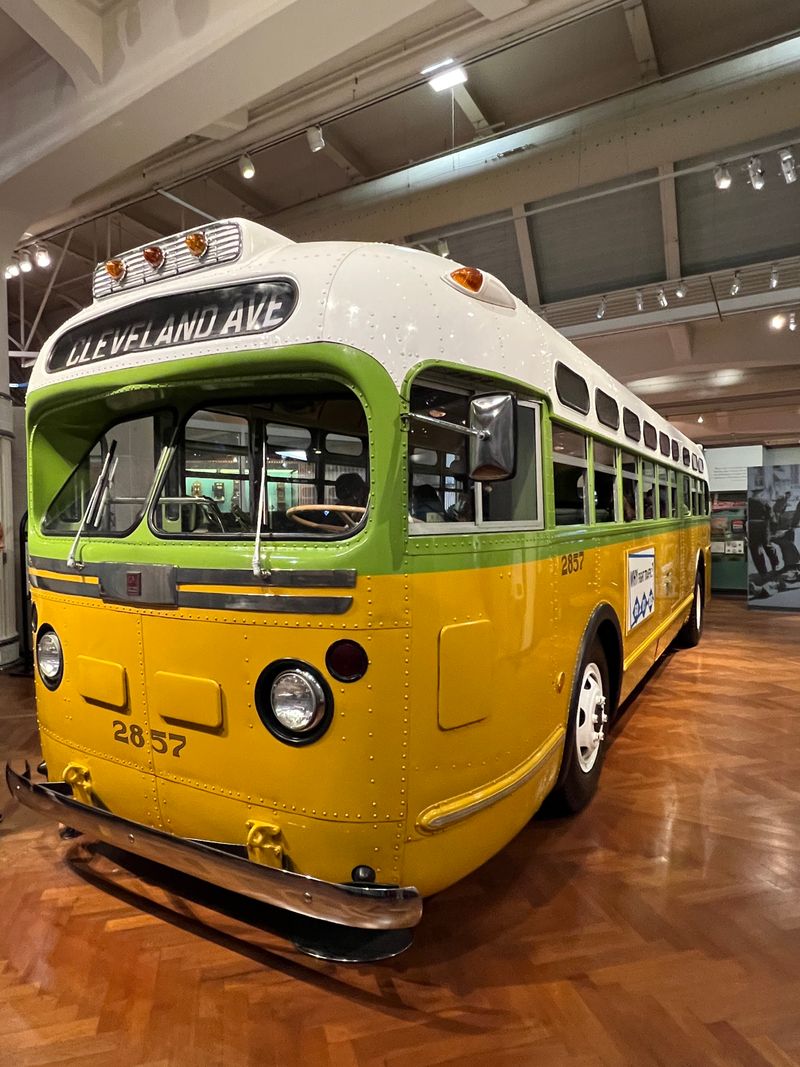
The bus sits in soft light, its green seats worn to a gentle sheen. You step onto the first riser and the sound of the museum drops away, like someone turned down the world.
The vinyl smells faintly of soap and time, and the aisle line pulls your gaze to the place everyone comes to see.
A museum educator speaks barely above a whisper, and people lean closer instead of louder. The story is specific here, mapped to inches of aisle and the angle of a driver’s mirror.
When you place a hand on the seatback, you do not pose so much as steady yourself against the gravity in the room.
Outside the bus, history can read like headlines. Inside it, the dimensions shrink to something that fits in your chest: twelve paces, one request, one refusal.
There is no soundtrack, only shoes on rubber treads and breath held at the turn of a sentence.
Visitors leave slower than they arrive. Someone wipes an eye without drama.
The docent reminds you that the bus was painstakingly restored, right down to paint layers, and that what happened here changed federal law, daily life, and the way courage looks when seated. You step back into brighter light, and every other exhibit feels different for a minute.
JFK’s 1961 Lincoln Continental: Glass, Steel, and Questions
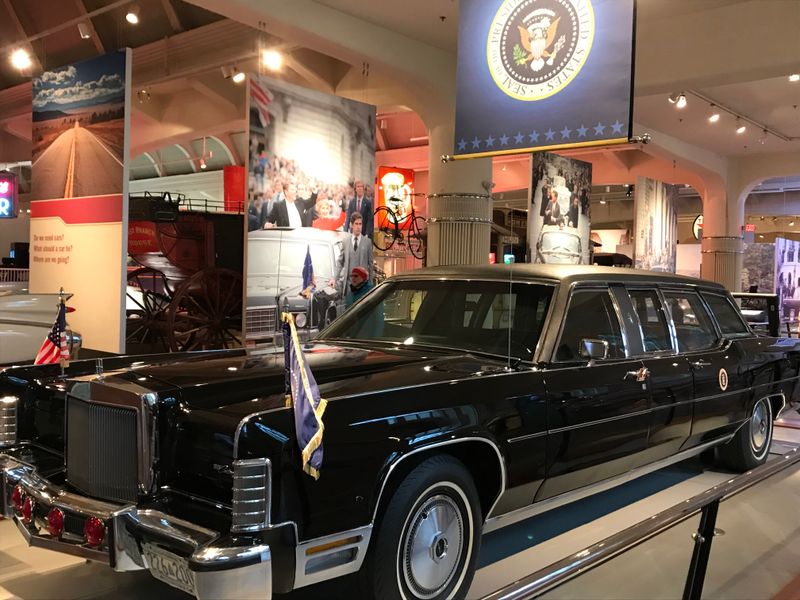
The car is longer than your memory of it. Polished panels reflect the ceiling grid and your own outline, folding you into the artifact whether you want that or not.
You circle slowly, tracking the seams where elegance meets armor, beauty in tension with hindsight.
A placard names the model and date, but your eyes are on the jump seats and the chrome handles that look absurdly ordinary. A child asks if it still runs, and a parent hesitates before answering.
The answers in this gallery are complicated, and the car does not argue back.
Stand close and small details push forward: the grain of the steering wheel, the gloss of rebuilt trim, the way the top mechanism rests like a question half folded. Security and spectacle lived side by side here, and the photos on the nearby wall catch smiles, waves, unguarded moments that now feel heavy.
The museum resists the easy caption, offering context instead of verdict. You leave with facts, yes, but mostly with the texture of a day that rewired a country.
The limousine holds the echo like a tuning fork, and when you step away, glass and steel still hum in the ribs.
The Allegheny Locomotive: Heat, Weight, and the Smell of Iron
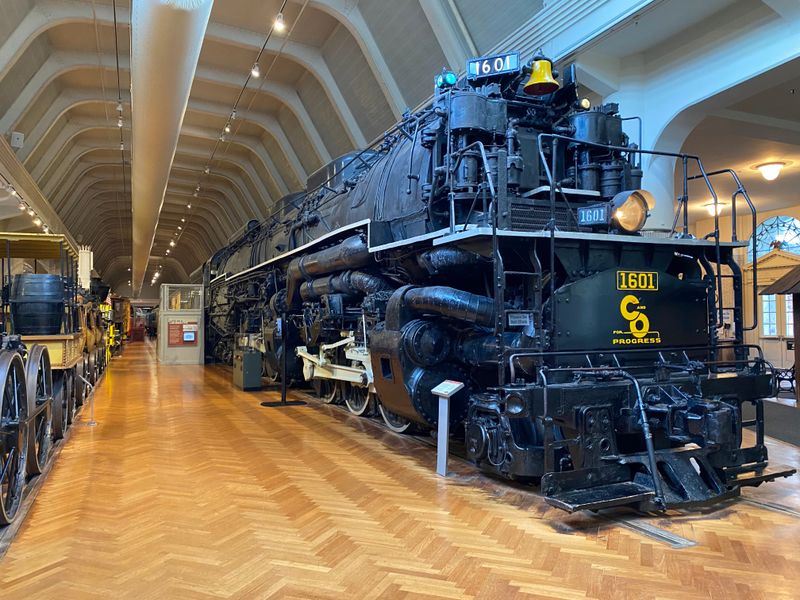
The Allegheny does not sit so much as occupy. Black steel swallows light, and the floor vibrates with your own heartbeat when you step near the drive wheels.
It is quiet, yes, but your body reads it as thunder paused mid roll.
Rivets dot the flank like constellations. A ladder climbs to a cab where levers look ready to bite a palm, and the polished brass gauge bezels catch thin bands of light.
You peer at the coupling rods and feel the urge to count beats you cannot hear.
A sign explains gradients and tonnage, numbers that move mountains in the language of physics. Your shoes collect a dusting of the floor’s fine grit, and for a second you smell a ghost of hot oil that may be memory or suggestion.
A rail enthusiast nearby explains tractive effort to a patient teenager, and it somehow lands.
Standing back, you fit people into the machine’s outline and the math snaps into a human scale. Freight, distance, coal, fatigue.
The locomotive turns those words into mass, and your own steps feel lighter afterward, less consequential than steel that once muscled whole counties forward.
Wright Brothers and the Thin Line Between Bicycle and Flight
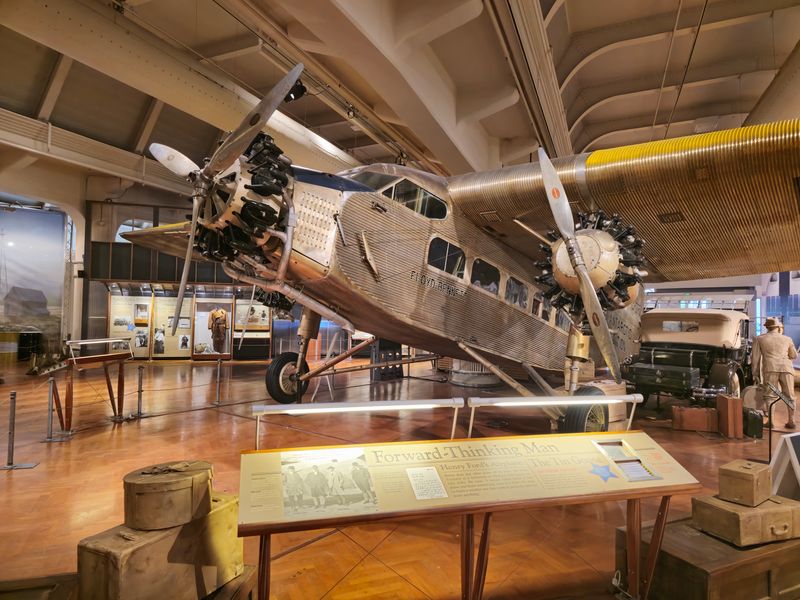
Wood and fabric sit close enough to touch, and the leap from bicycle to sky feels weirdly small. Spokes, chains, and a propeller blade share a visual language, more workshop than runway.
The workbench holds tools with handles polished by repeat use, and you read the wear like a diary.
There is no roar here, just diagrams that fit the mind the way a gear meshes with a tooth. The replica elements look light enough to lift until a docent mentions tension and failure loads.
You catch yourself imagining the first run, the sand gritting between teeth, the cold air burning lungs awake.
Nearby, kids try wing-warping on a hands on demo and squeal when the airflow visualization clicks. Parents nod, relieved, because learning looks like play for a minute.
In the corner, a glass case guards letters and tiny measurements that prove this was not magic.
Walking out, the hall noise returns and you notice how many things around you are shaped by air. Trains streamline into teardrops, cars lose edges, and even light fixtures hint at lift.
The museum threads the line so neatly you barely feel the hand guiding it.
Driving America: Chrome, Diners, and the Road That Rewired Daily Life
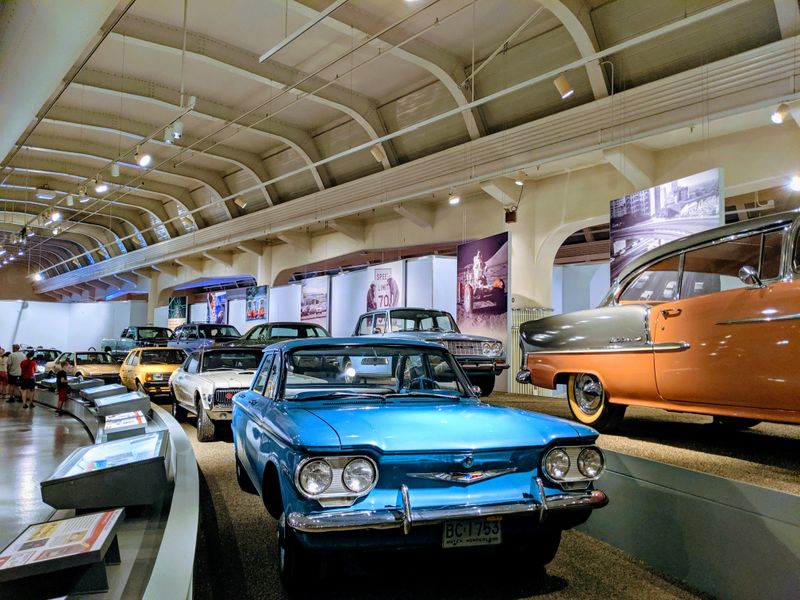
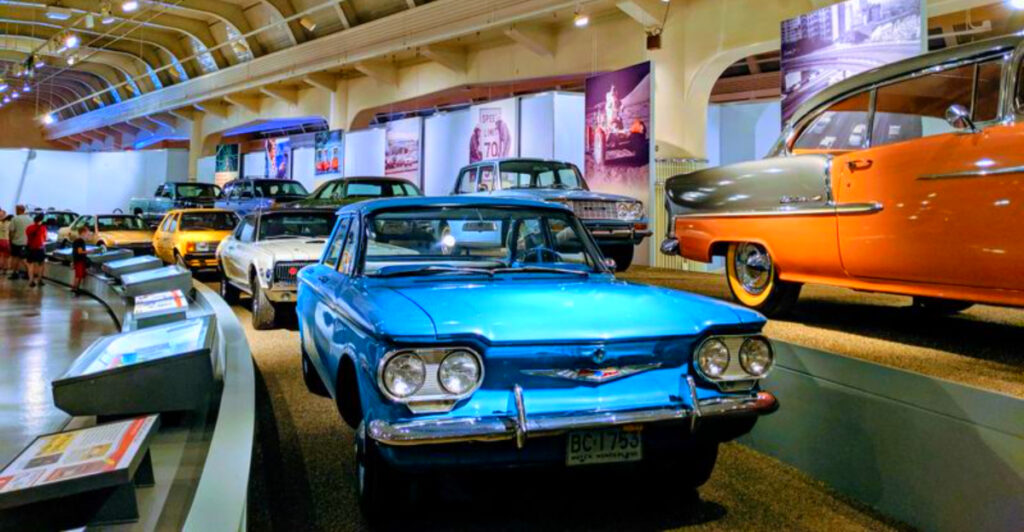
The Driving America gallery opens like a highway on ramp. Tailfins, whitewalls, neon script, and a diner facade pulling you forward with the promise of coffee and stories.
The tile underfoot clicks like a turn signal as you drift from hood to hood.
Each car is a capsule with upholstery that tells you how people wanted to feel: safe, fast, noticed. You lean over a fender and catch your own face in the paint, distorted into a 1950s daydream.
The neon flickers steady above glass cases of maps, motel soaps, and keys that once warmed in coat pockets.
Someone asks about gas prices then and now, and a staffer points to a timeline that pairs economics with design. The connection lands: technology follows behavior as much as breakthroughs.
You listen to an engine note sample and feel it in your chest the way music resides.
The diner serves something simple and good, and the counter chatter makes the exhibit feel lived in. When you step back, the cars read less like objects and more like choices families once made with paychecks and hope.
The road out of the gallery seems longer in the best way.
Made in America: Machines That Shrink a Nation to a Factory Floor
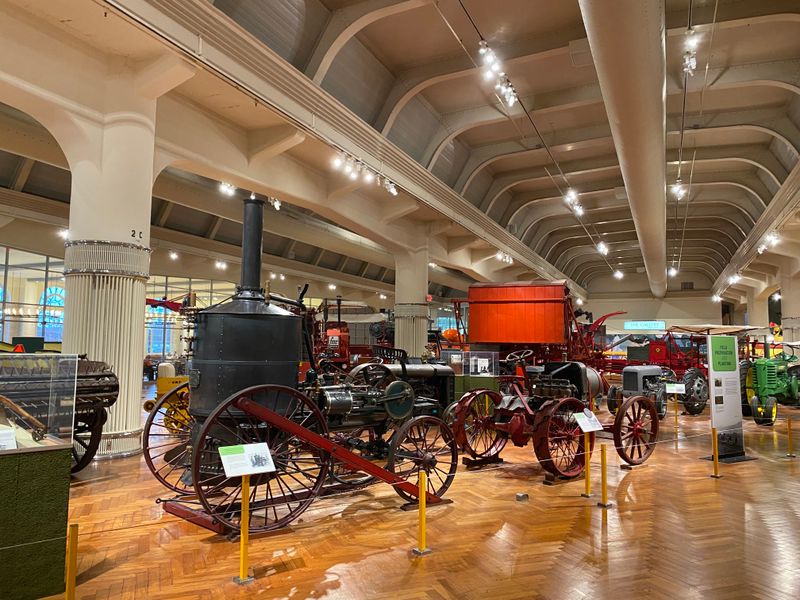
Here the air carries a metallic edge, clean but undeniably mechanical. Line shafts and belts trace power like veins, and cast iron feet anchor machines that look bred for endurance.
You lean close and read maker’s marks that outlived the hands that struck them.
The interpretive boards avoid romance and stick to output, tolerances, and the shift from water to steam to electricity. A cutaway motor rotates slowly under glass, copper windings gleaming like a coiled sun.
Kids press faces to the case as if the heat could pass through.
You try the lever on a demonstration press and feel the travel in your shoulder, that muscular arithmetic of work. The museum translates scale gently, placing a wrench next to a turbine blade to remind you of size, then pointing to a home appliance that borrowed the principle.
Some galleries stun; this one steadies. It turns noise into process and shows how the hum under modern life got assembled piece by patient piece.
Walking out, the soft click of your own steps feels suddenly engineered, like part of a larger system you can almost name.
Design Variation: Everyday Objects With Unruly Beauty
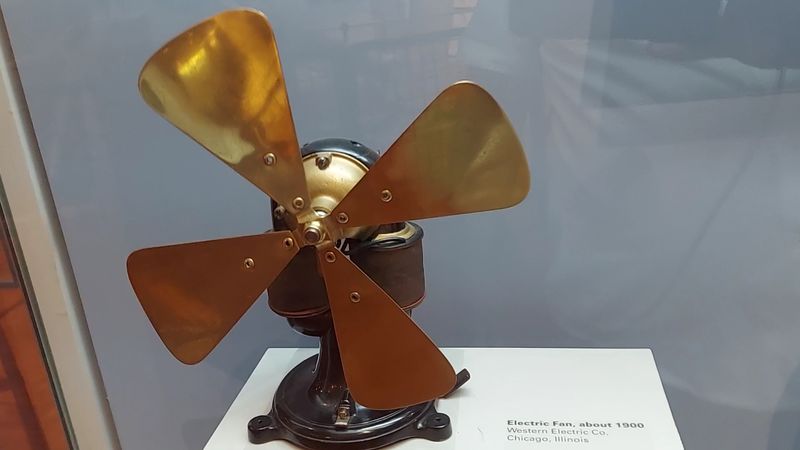
This gallery whispers rather than shouts. Radiused edges, candy colored plastics, chairs that seem to float on hairpin legs.
You scan shelves where radios grin with grillework and toasters look fast even when off.
Labels talk about patents and materials, but your hands remember the weight of a rotary phone and the click of a Bakelite knob. A visitor points out a coffee maker their grandmother used, and suddenly the case becomes a kitchen, the timeline a breakfast.
Memory turns out to be a very durable design language.
What lands hardest is how small changes reshape daily ritual. A handle moves and a task gets easier; a color brightens and mornings feel survivable.
Innovation here is not a trophy but a tool, and it hides in plain sight on a countertop.
You leave itching to rearrange your own desk, to make the mundane hum. That is the quiet flex of this collection: it sneaks ambition into ordinary hours.
Out in the main hall, even the trash cans read as choices, and you catch yourself appreciating the curve on a hinge.
Numbers, Context, and Why It Matters Now
Near a crossroads of galleries, a panel folds numbers into narrative with uncommon restraint. The Henry Ford complex draws well over a million visitors yearly, and the museum’s 4.8 rating on Google hints at why.
None of that feels abstract when you watch a Tuesday morning crowd stretch from strollers to retired engineers.
Context is the museum’s best trick. It pairs an object with an effect, a date with a feeling you recognize.
A short note reminds you that Dearborn’s story feeds Detroit’s, which in turn radiates across highways you have probably driven without thinking.
Statistics settle best when you can test them with your eyes. Here the claim about multigenerational appeal checks out in a single glance: a teen filming a locomotive, a grandfather explaining carburetors, a toddler mesmerized by lights.
The place earns its numbers one conversation at a time.
Walking on, you realize the exhibits are sequenced for attention spans trained by phones. Clear chunks, clean sightlines, almost no dead space.
It is ruthlessly considerate design, and it keeps you moving without feeling pushed.
Insider Rhythm: Timing, Shoes, Food, and Saving Your Energy
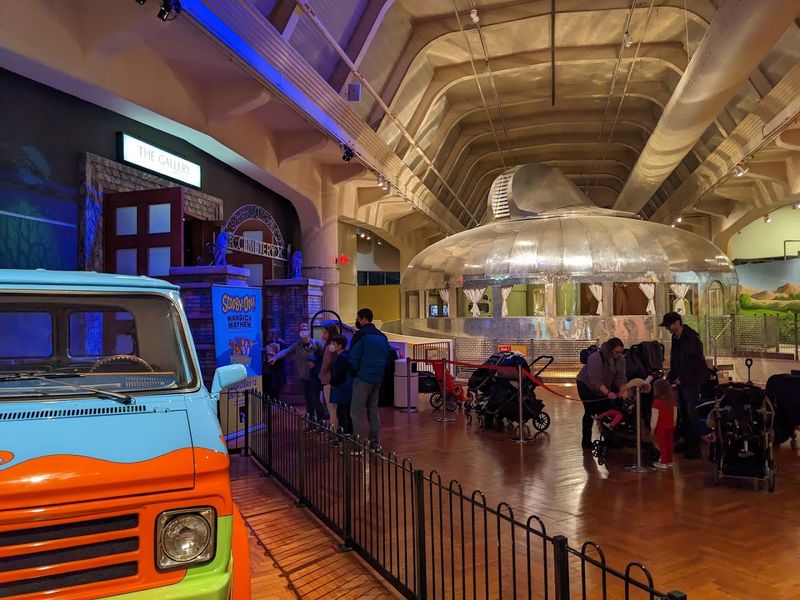
Plan the day like you would a long layover with too many good options. Arrive near opening, when the light is clean and the halls breathe, and hit the anchors early: Rosa Parks bus, Allegheny, Dymaxion.
Wear shoes that forgive you, because this is a miles not steps situation.
Grab the 1 pm guided talk if you see the sign, even if you think you know the headlines. A smart docent will save you twenty minutes of wandering and trade it for three details you will remember on the drive home.
Break mid gallery, not at the exit, and your attention will reset without losing momentum.
Food is functional but fine; Plum Market’s prices bite, so budget or pack accordingly if you can. Benches arrive just when you need them, and that is not an accident.
If you are split across interests, use the museum’s clean sightlines to set meet points you can actually find.
Membership pencils out fast if you plan two days or a return with out of town family. Parking prepay feels optional on slow weekdays.
Most of all, leave a sliver of time unplanned for the object you did not expect to love. That is usually the one that follows you home.
Share this story