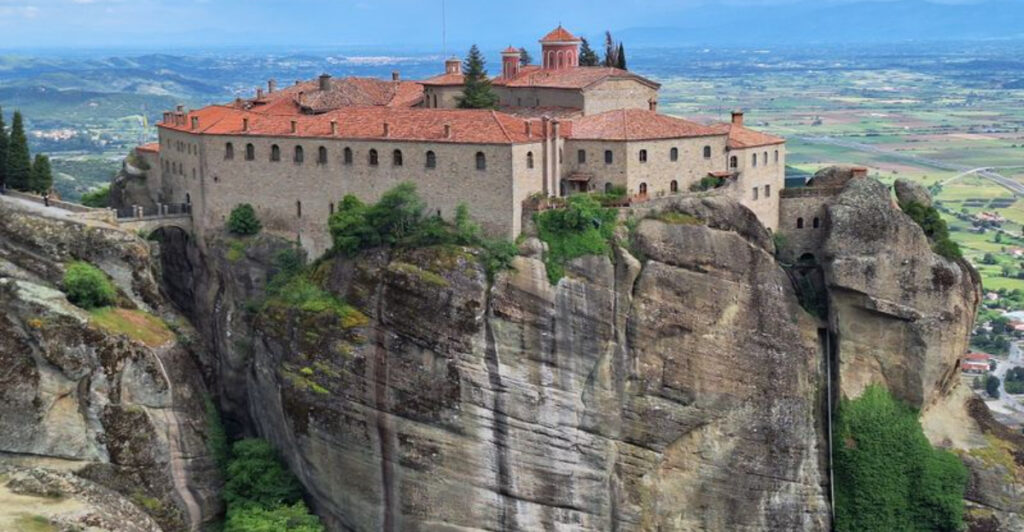
Some of the most remarkable spiritual places on Earth aren’t found in bustling cities or easy-to-reach tourist spots. Instead, they’re tucked away on cliff edges, hidden in remote valleys, or perched atop towering rock pillars where only the most dedicated travelers can reach them.
These monasteries offer not just breathtaking views and incredible architecture, but also a glimpse into centuries-old traditions preserved by isolation and devotion.
Tiger’s Nest Monastery (Paro Taktsang) — Bhutan
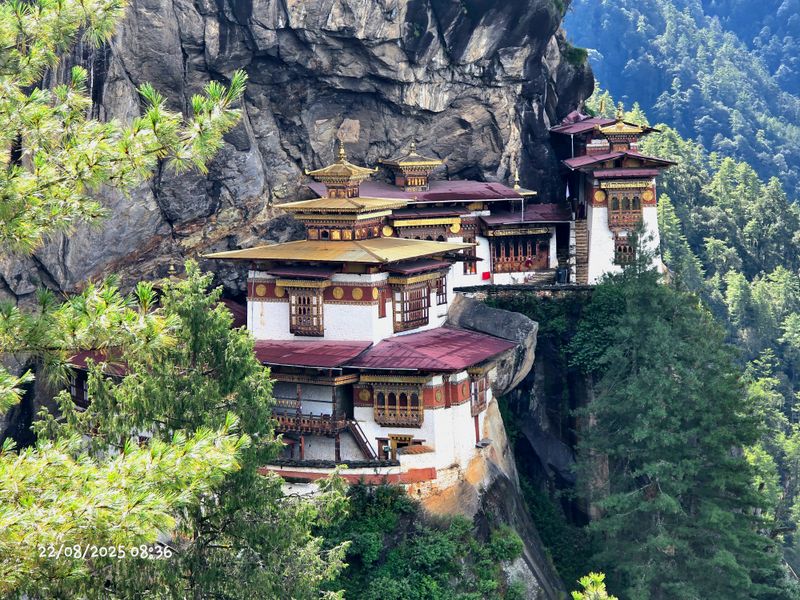
Bhutan’s most famous monastery looks like it’s defying gravity itself. Tiger’s Nest clings to a sheer cliff nearly 3,000 feet above the valley floor, and getting there means hiking a steep mountain trail that tests your determination.
Legend says Guru Rinpoche flew to this spot on a tigress’s back in the 8th century to meditate in a cave. Monks built the monastery around that sacred cave in 1692, creating whitewashed buildings that seem to grow right out of the rock.
The trek takes about two to three hours up switchback trails, but every breathless step rewards you with increasingly spectacular Himalayan views. Prayer flags flutter in the mountain breeze while pilgrims and tourists alike pause to catch their breath and snap photos.
Once you arrive, the monastery’s golden roofs and painted walls reveal intricate Buddhist artwork and meditation halls where monks continue centuries-old practices. The combination of natural beauty, architectural wonder, and spiritual significance makes this one of Asia’s most unforgettable destinations.
Phugtal Monastery — Zanskar, India
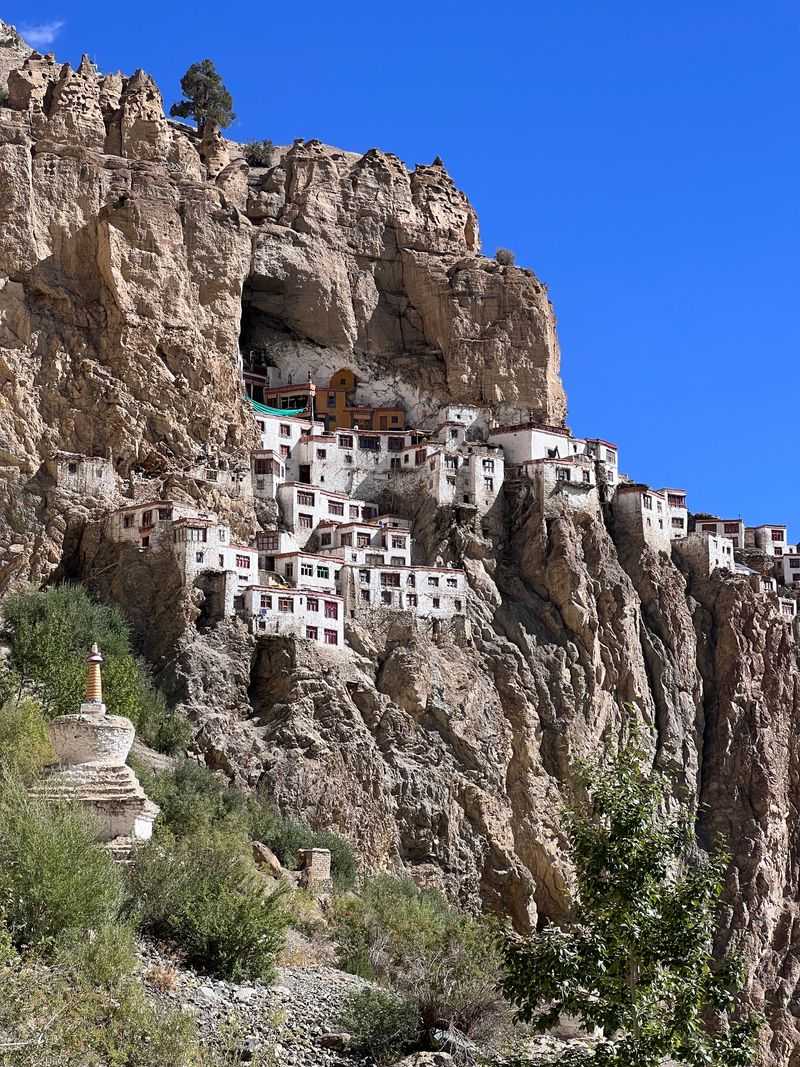
Built around a gigantic natural cave in one of the Himalayas’ most isolated valleys, Phugtal Monastery seems to emerge organically from the mountainside. The honeycomb of whitewashed buildings spills down the cliff face, connected by narrow staircases and wooden balconies that look impossibly fragile.
For centuries, this remote sanctuary was completely cut off from the outside world during harsh winters. Supplies arrived only by pack animals trudging along treacherous paths carved into gorge walls, and monks lived in near-total isolation.
The monastery’s location inside the cave provides natural protection from extreme weather while creating an atmosphere of profound tranquility. Ancient meditation halls, libraries filled with Buddhist texts, and simple living quarters occupy different levels of the complex.
Today, reaching Phugtal still requires a challenging trek through the Zanskar wilderness, crossing rivers and navigating rocky trails. But adventurous visitors who make the journey discover a living monastery where monks maintain traditions unchanged for generations, practicing meditation and study in one of Earth’s most dramatically isolated spiritual communities.
Dhankar Gompa — Spiti Valley, India
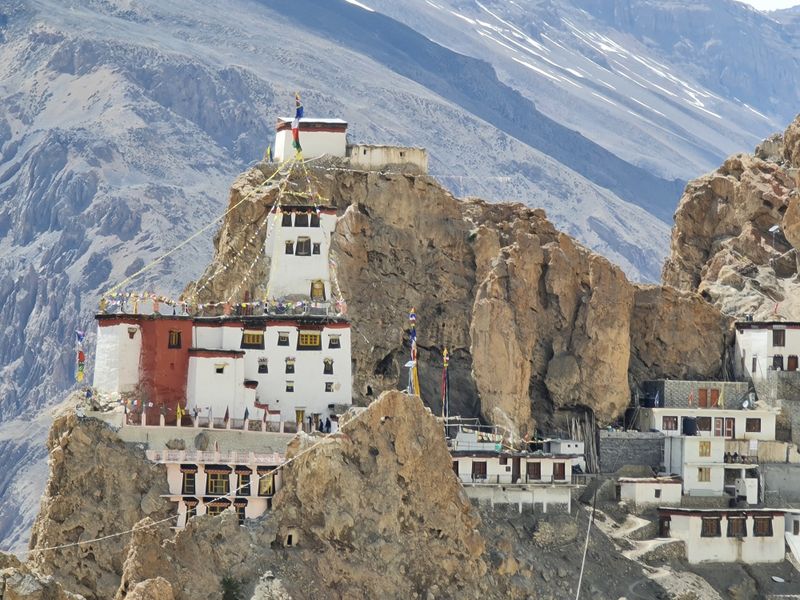
Balanced on a knife-edge ridge between sky and earth, Dhankar Gompa has watched over the Spiti Valley for more than a thousand years. The ancient monastery’s whitewashed walls stand stark against brown mountains, looking like they might tumble into the valley below at any moment.
Two rivers meet far beneath the monastery, their waters carving through one of the highest inhabited valleys on the planet. The landscape here feels almost lunar—barren, windswept, and breathtakingly beautiful in its emptiness.
Monks have maintained their traditional way of life here despite the challenging conditions and isolation. Prayer halls contain ancient murals and statues, while resident monks continue daily rituals of chanting and meditation that echo through stone corridors.
The monastery’s precarious position isn’t just for dramatic effect—it served as a strategic fort defending the valley in centuries past. Today, visitors climb steep paths to reach this architectural marvel, where panoramic views stretch across the entire Spiti region and the thin mountain air makes every breath feel significant.
Debre Damo — Tigray, Ethiopia
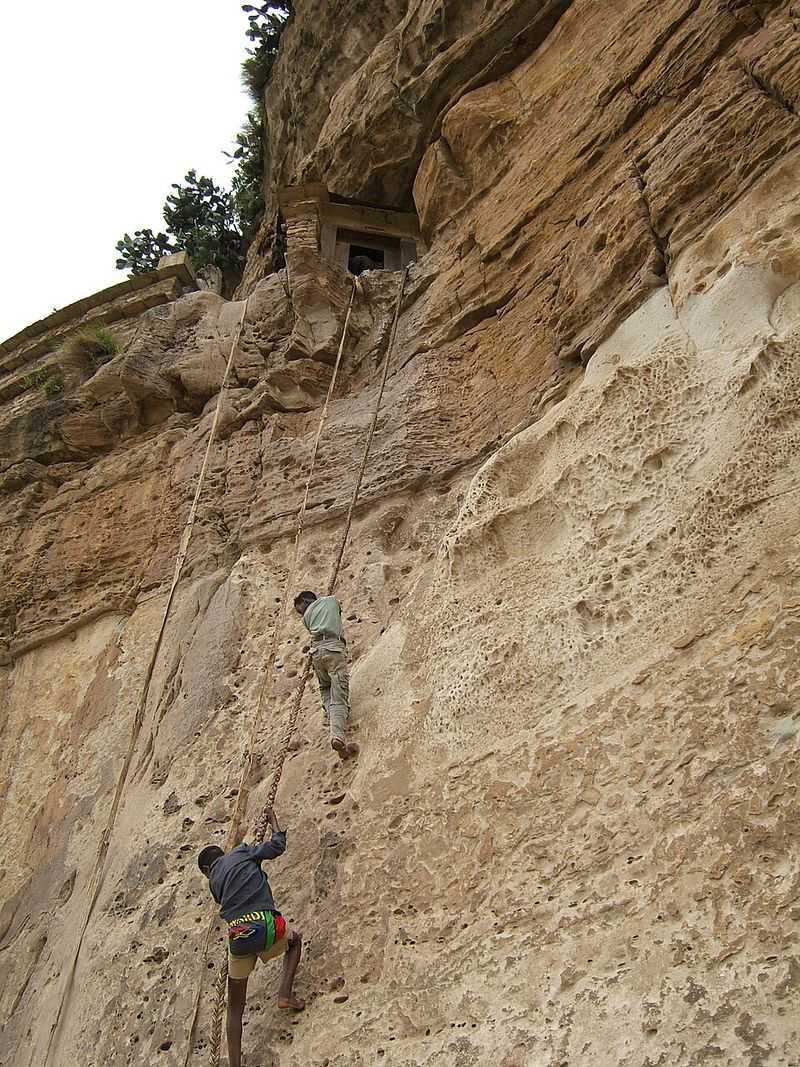
Want to visit this Ethiopian monastery? You’ll need to scale a 50-foot vertical cliff using only a leather rope.
No ladders, no stairs, no safety equipment—just you, a rope, and your determination.
Founded in the 6th century, Debre Damo sits atop a completely flat mountain plateau that rises dramatically from the surrounding landscape. The isolation wasn’t accidental—monks chose this location specifically because the difficult access would keep them undisturbed in their spiritual pursuits.
Once you’ve hauled yourself up (with monks pulling from above), you’ll discover remarkably preserved Aksumite architecture unlike anything else in Africa. The church features ancient wooden ceilings, religious manuscripts centuries old, and stone walls that have witnessed nearly 1,500 years of continuous monastic life.
The monastery follows strict Orthodox traditions, and women are not permitted to enter—a rule enforced by the cliff itself. For those who can make the climb, the experience offers an unforgettable glimpse into one of Christianity’s oldest surviving monastic communities, perched in splendid isolation above the Ethiopian highlands.
Meteora Monasteries — Greece
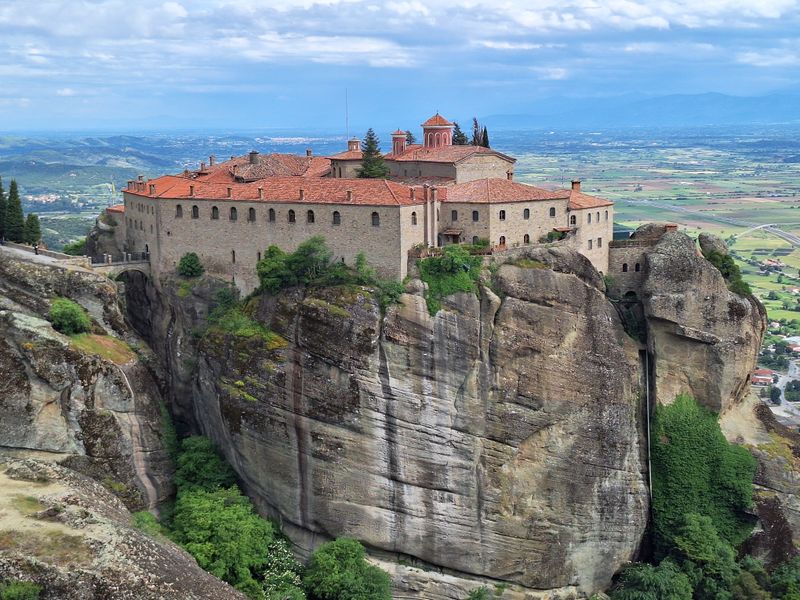
Giant fingers of rock thrust hundreds of feet into the Greek sky, and somehow, centuries ago, monks managed to build entire monasteries on top of them. The Meteora complex features six functioning monasteries balanced on these natural stone towers, creating one of the world’s most jaw-dropping architectural achievements.
Originally, reaching these monasteries meant climbing removable ladders or being hauled up in nets. Monks would say their prayers while being winched skyward, trusting God to keep the ropes from breaking.
Fortunately, modern visitors can use staircases carved into the rock, though the climb still gets your heart racing.
The monasteries date back to the 14th and 15th centuries, when monks sought refuge from political turmoil. They found it by creating these impossible communities suspended between heaven and earth, where Eastern Orthodox traditions have continued unbroken for over 600 years.
Each monastery offers stunning views across the Thessalian Plain, with prayer halls decorated in Byzantine frescoes and relics that survived because of their isolated locations. The combination of natural wonder and human determination makes Meteora genuinely unforgettable.
Mount Athos — Greece
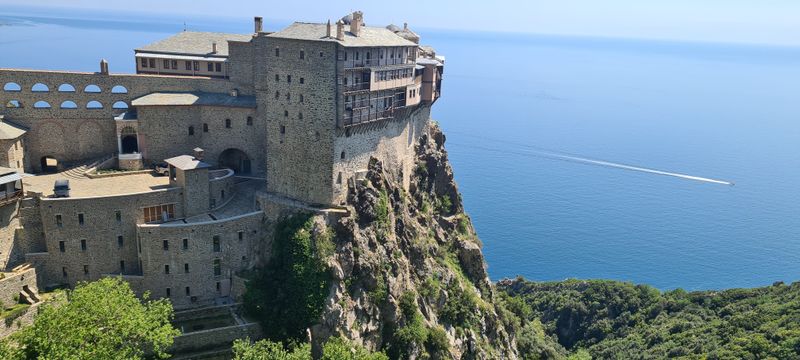
An entire peninsula where time stopped somewhere around the 10th century, Mount Athos operates as an autonomous monastic state within Greece. Twenty monasteries dot this rugged finger of land jutting into the Aegean Sea, accessible only by boat and governed by Byzantine traditions that have barely changed in a millennium.
No roads connect Mount Athos to the mainland, and strict rules limit who can visit. Women aren’t permitted at all, and men need special permits obtained months in advance.
Even female animals are banned, making this perhaps the world’s most exclusive spiritual community.
The monasteries themselves are architectural treasures, with stone walls, frescoed chapels, and libraries containing priceless medieval manuscripts. Monks follow ancient daily rhythms of prayer, work, and study, rising before dawn for services and maintaining self-sufficient communities through farming and crafts.
Forests blanket much of the peninsula, creating a wilderness refuge where monks can pursue contemplative lives far from modern distractions. For the few visitors granted access, Mount Athos offers a rare window into medieval monasticism preserved in its original form.
Sümela Monastery — Turkey
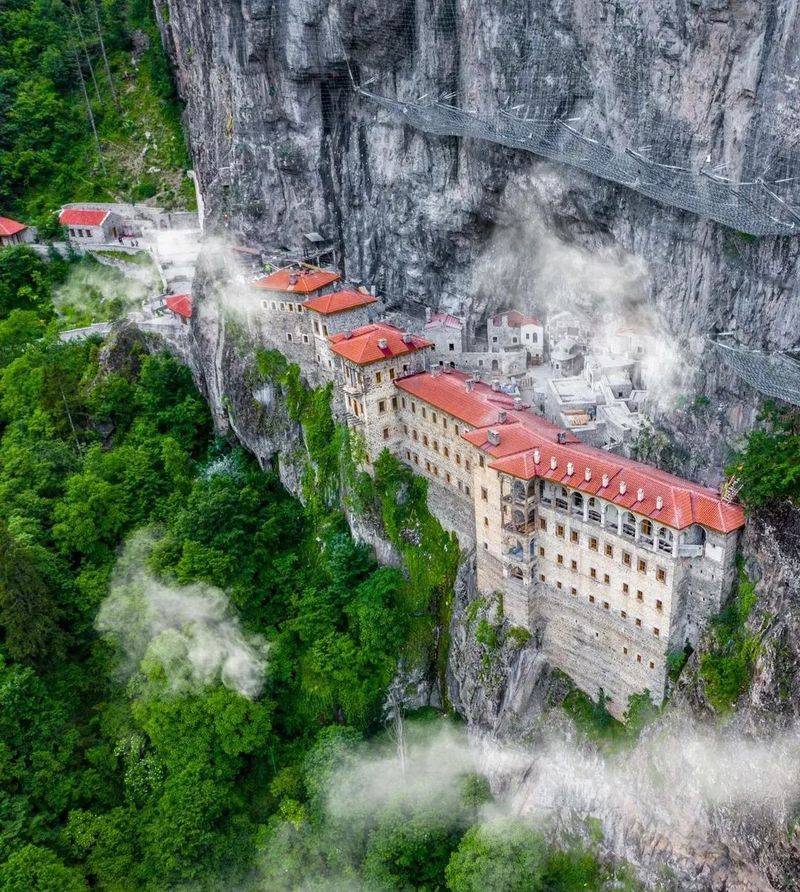
Carved directly into a sheer cliff face 4,000 feet above sea level, Sümela Monastery looks like nature and architecture had a serious conversation and decided to collaborate. The complex clings to the rock in Turkey’s Pontic Mountains, surrounded by forests so thick and green they seem almost tropical.
Legend claims two Athenian monks founded Sümela in 386 AD after the Virgin Mary appeared in their dreams, directing them to this specific cliff. They discovered an icon of Mary painted by Saint Luke himself hidden in a cave, and built the monastery around that sacred spot.
Long stone staircases zigzag up the cliff face, leading to chapels decorated with vibrant frescoes that somehow survived centuries of weather and neglect. The paintings depict biblical scenes in rich reds, blues, and golds that still catch the light filtering through the forest canopy.
Though abandoned in 1923 and suffering from vandalism and erosion, recent restoration efforts have stabilized the structures. Visitors now climb the historic steps to explore this remarkable fusion of natural wonder and human devotion, where mountain springs once provided water for monks living suspended above the valley floor.
St. Nilus Skete — Alaska, USA
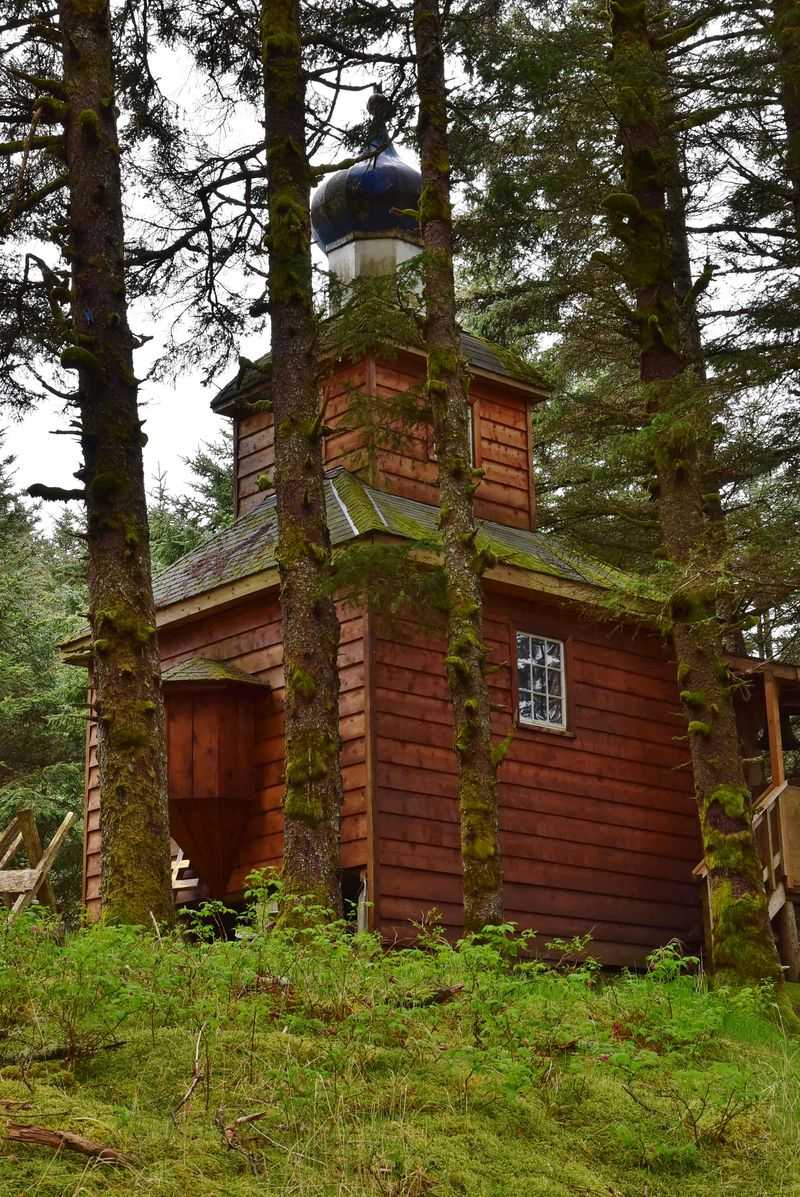
On a windswept island off Alaska’s coast, where winter storms can cut off contact with the outside world for months, a handful of Orthodox monks maintain one of North America’s most isolated spiritual communities. St. Nilus Skete sits on Nelson Island, accessible only by boat or small plane when weather permits.
Founded in the 1990s, this monastery embraces the harsh conditions as part of its spiritual practice. Monks endure temperatures well below zero, fierce winds howling across the tundra, and periods of near-total darkness during Arctic winters.
Simple wooden buildings house the chapel, living quarters, and workshops where monks support themselves through icon painting and other traditional crafts. The community follows Russian Orthodox traditions, with services conducted in Church Slavonic and daily life structured around ancient monastic rules.
Supply deliveries depend entirely on weather and sea conditions, meaning monks must plan months ahead and maintain self-sufficiency. The isolation attracts those seeking the most challenging form of monastic life, where spiritual devotion gets tested by nature’s raw power.
For these monks, the wilderness itself becomes a teacher, stripping away distractions and focusing the mind on prayer and contemplation.
Kozheozersky Monastery — Russia
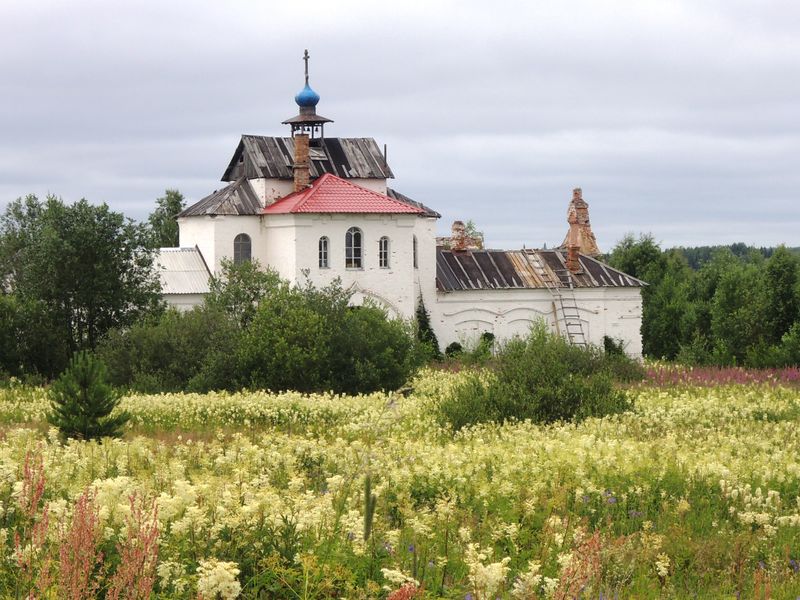
Deep in northwestern Russia’s forests, where roads fear to go and modern infrastructure is just a rumor, Kozheozersky Monastery sits beside Lake Kozhozero in almost complete isolation. Getting there requires either a long trek through dense woods or traveling by boat across the lake—no casual day trips to this spiritual outpost.
The monastery dates back to 1550, though it suffered abandonment during the Soviet era when authorities viewed religion as a threat. For decades, the wooden buildings slowly decayed, reclaimed by the forest that surrounded them.
In the 1990s, monks returned and began the painstaking work of restoration. Today, a small community maintains the monastery, following Orthodox traditions in this remote sanctuary where silence is broken only by church bells and wind through the pines.
Visitors willing to make the difficult journey discover a place where time moves differently. The monks live simply, growing vegetables, fishing the lake, and maintaining the hand-built wooden structures that constitute their home.
The isolation that once protected the monastery from persecution now shields it from the hectic pace of modern life, creating a refuge for those seeking authentic spiritual retreat.
Ki Monastery — Spiti, India
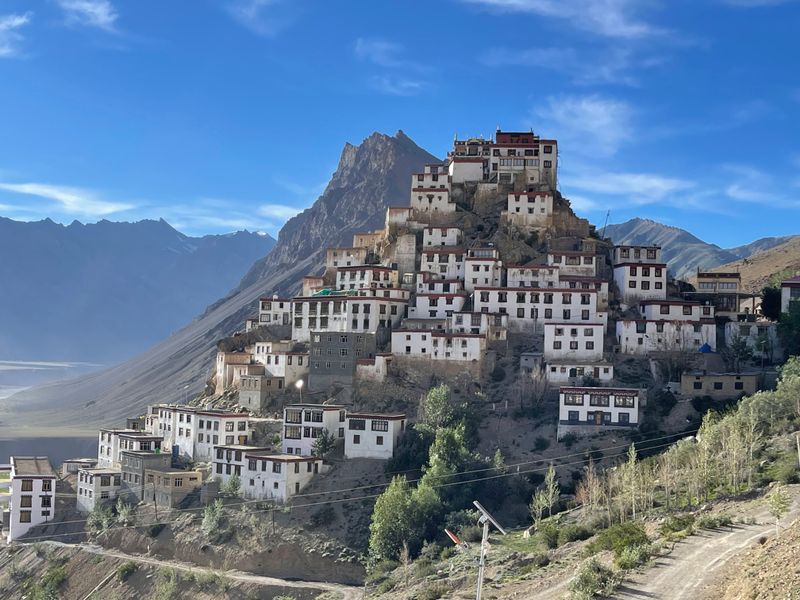
Also called Kye Gompa, this thousand-year-old monastery rises from a hilltop in the Spiti Valley like a white fortress guarding the barren Himalayan landscape. The surroundings look more like Mars than Earth—brown mountains, minimal vegetation, and an endless sky that feels close enough to touch.
Spiti Valley sits in one of India’s coldest inhabited regions, where winter temperatures plunge to minus 30 degrees Fahrenheit and snow blocks the few roads for six months each year. Ki Monastery’s monks have adapted to these extremes, maintaining their community at over 13,000 feet elevation.
The monastery complex houses around 300 monks who study Tibetan Buddhism, create intricate sand mandalas, and perform ritual dances during annual festivals. White buildings stacked on the hillside contain prayer halls filled with ancient thangka paintings, butter lamps, and the low hum of chanted mantras.
Reaching Ki requires either a summer drive on treacherous mountain roads or a winter trek across frozen rivers. The journey itself becomes a meditation on impermanence and determination, preparing visitors for the stark beauty and spiritual intensity they’ll encounter at this remote Himalayan sanctuary.
Rangdum Monastery — Ladakh, India
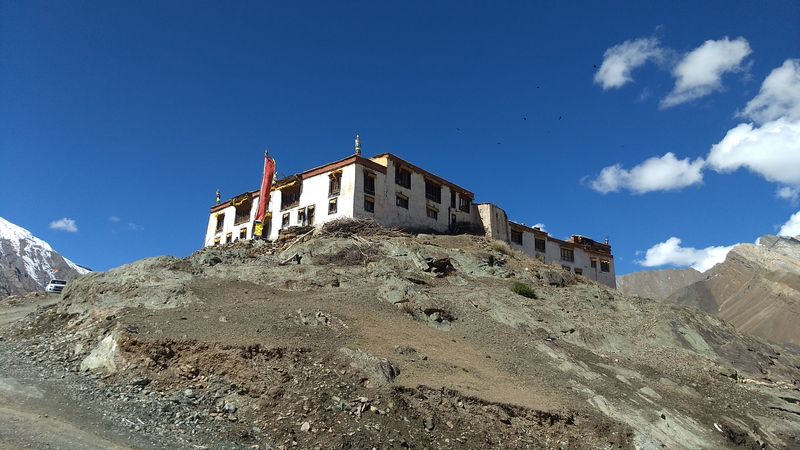
At 13,000 feet above sea level, where the air is so thin that climbing stairs feels like running a marathon, Rangdum Monastery stands as a beacon of spirituality in one of Earth’s harshest environments. The Tibetan Buddhist complex overlooks the Suru Valley, surrounded by peaks that scrape the sky and valleys where almost nothing grows.
Founded in the 18th century, the monastery serves scattered villages throughout this remote corner of Ladakh. For locals, Rangdum isn’t just a spiritual center—it’s a crucial community hub in a region where neighbors might live hours apart by foot.
The monastery’s whitewashed buildings contrast dramatically with the brown and gray mountains, creating a stark beauty that photographs can barely capture. Inside, monks maintain daily rituals of prayer and study, their chants echoing through halls decorated with colorful Buddhist artwork and statues.
Winter here is brutal, with temperatures dropping far below zero and snow isolating the monastery for months. Yet monks remain, keeping butter lamps lit and prayers flowing, their dedication a testament to faith’s power to sustain human communities even in the most inhospitable places on the planet.
Tholung Monastery — Sikkim, India
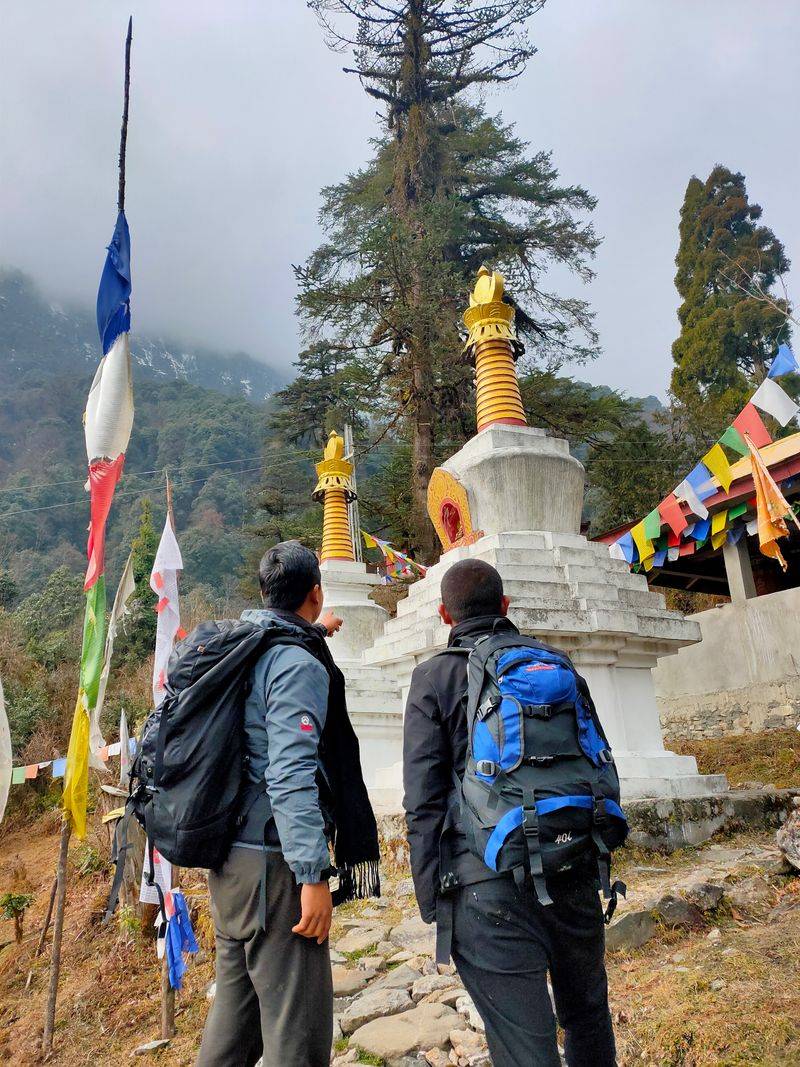
Hidden so deep in Sikkim’s Khangchendzonga National Park that even locals sometimes forget it exists, Tholung Monastery requires a multi-day trek through dense forests and across mountain streams just to reach its gates. The journey weeds out casual tourists, ensuring only truly committed visitors arrive at this sacred Buddhist site.
The monastery sits in the remote Dzongu region, home to the Lepcha people who consider these mountains sacred. Thick forests create a green tunnel around the trail, with orchids clinging to trees and rare birds calling from the canopy overhead.
Tholung holds special significance in local Buddhist tradition, housing ancient relics and artwork that survived centuries of political upheaval because of the monastery’s isolated location. The few monks who live here maintain a quiet routine of meditation and ritual, their lives intimately connected to the surrounding wilderness.
Visitors who complete the challenging trek discover a place where nature and spirituality blend seamlessly. Morning mist drifts through the trees while prayer flags flutter in the breeze, and the silence feels almost physical—a presence that wraps around you like the forest itself, inviting contemplation and inner peace.
Katskhi Pillar — Georgia
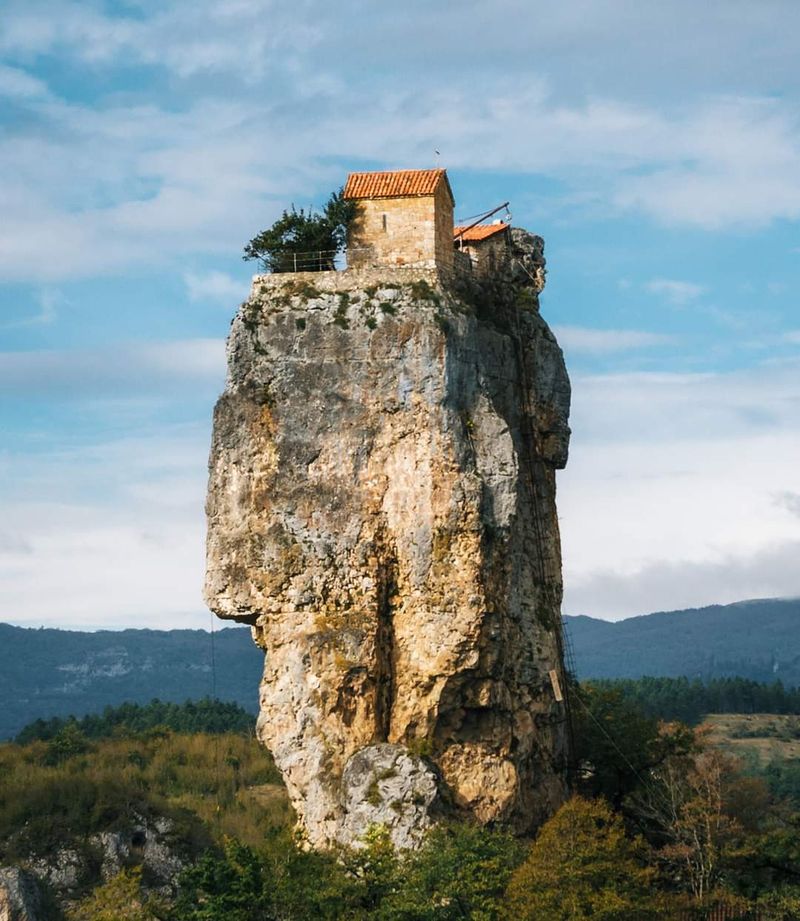
A 130-foot limestone column shoots straight up from the Georgian valley floor, and perched on its tiny summit sits a church barely bigger than a garden shed. Katskhi Pillar isn’t a traditional monastery, but rather an extreme hermitage where solitary monks sought God by literally removing themselves from the world below.
Historians believe Christian ascetics first climbed this natural tower in the 9th or 10th century, building a small church and living quarters on the flat top. For centuries, hermits lived up there in complete isolation, hauled up by rope and basket, spending their days in prayer with eagles as their only neighbors.
The site was abandoned for hundreds of years until a monk named Maxime Qavtaradze climbed up in 1993 and decided to revive the hermitage tradition. He lived atop the pillar for years, though he’s since moved to a monastery at the base while occasionally ascending for prayer.
Today, a rickety metal ladder provides access for maintenance, but the pillar remains closed to tourists. Visitors can only gaze up from below, marveling at the dedication required to choose such an impossibly isolated spot for spiritual practice.
Ostrog Monastery — Montenegro
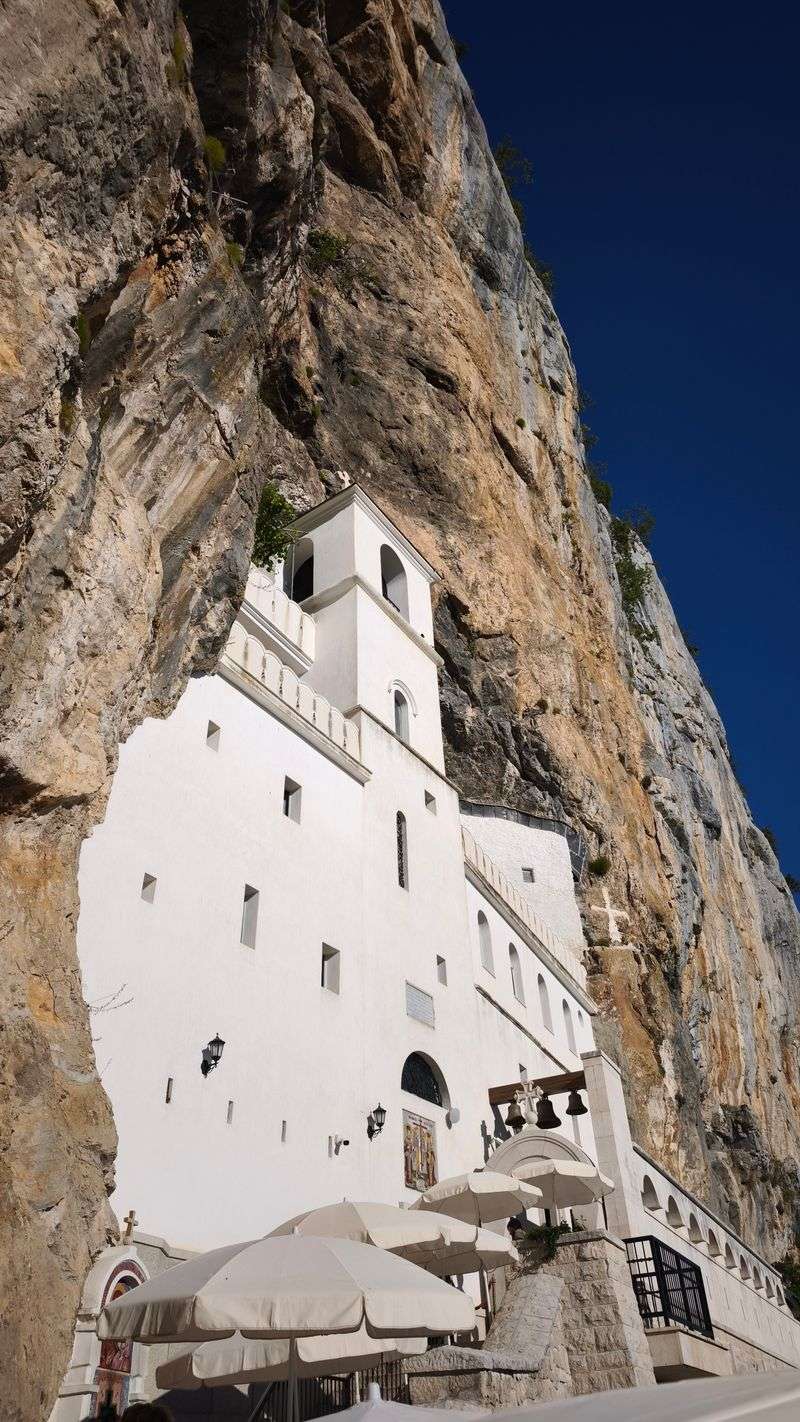
Carved directly into a nearly vertical cliff face 3,000 feet above Montenegro’s Bjelopavlići Plain, Ostrog Monastery looks like someone photoshopped a building onto an impossible location. But this Serbian Orthodox marvel is very real, and very dramatic—white chapels literally embedded in the gray rock wall.
Founded in the 17th century by Saint Basil of Ostrog, the monastery became one of the Balkans’ most important pilgrimage sites. Saint Basil’s relics remain here, and believers credit them with miraculous healings that draw thousands of pilgrims annually.
The monastery consists of two sections: the lower monastery in the foothills and the upper monastery carved into the cliff. The upper section’s chapels feature walls that are simply the natural rock face, with frescoes painted directly onto the stone.
Candlelight flickers across these ancient images while pilgrims pray in hushed voices.
Reaching the upper monastery requires either climbing a steep path that zigzags up the cliff or driving a narrow road with hairpin turns that test your nerves. But the reward is extraordinary—stunning views across the Montenegrin landscape and a profound sense of spiritual history concentrated in these cavernous rock-hewn chapels.
Monastery on Skellig Michael — Ireland
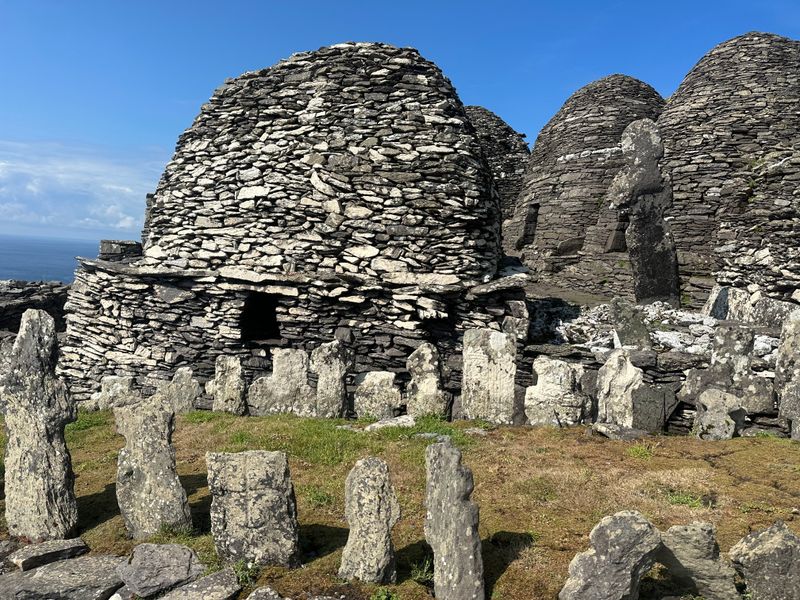
Eight miles off Ireland’s southwest coast, a jagged pyramid of rock juts 700 feet out of the Atlantic Ocean, its slopes so steep that even seabirds struggle to find footing. On Skellig Michael’s terrifying heights, 6th-century monks built a monastery that makes you question their sanity—or admire their faith beyond measure.
These early Christian monks climbed hundreds of stone steps they’d carved themselves, hauling building materials up the cliff to create beehive-shaped stone huts and a tiny church. They lived here year-round, growing vegetables in pocket gardens and surviving Atlantic storms that must have felt apocalyptic.
The monastery was abandoned around the 12th century when monks moved to more hospitable locations, but the stone structures survived virtually intact. UNESCO recognized Skellig Michael as a World Heritage site, and recent Star Wars films introduced its otherworldly landscape to millions.
Visiting requires a boat trip when seas permit (often they don’t), then climbing over 600 ancient steps with no railings and steep drops on all sides. But reaching the summit reveals not just breathtaking ocean views, but a glimpse into the extraordinary dedication of monks who chose this wild, impossible place to pursue their spiritual calling.
Share this story