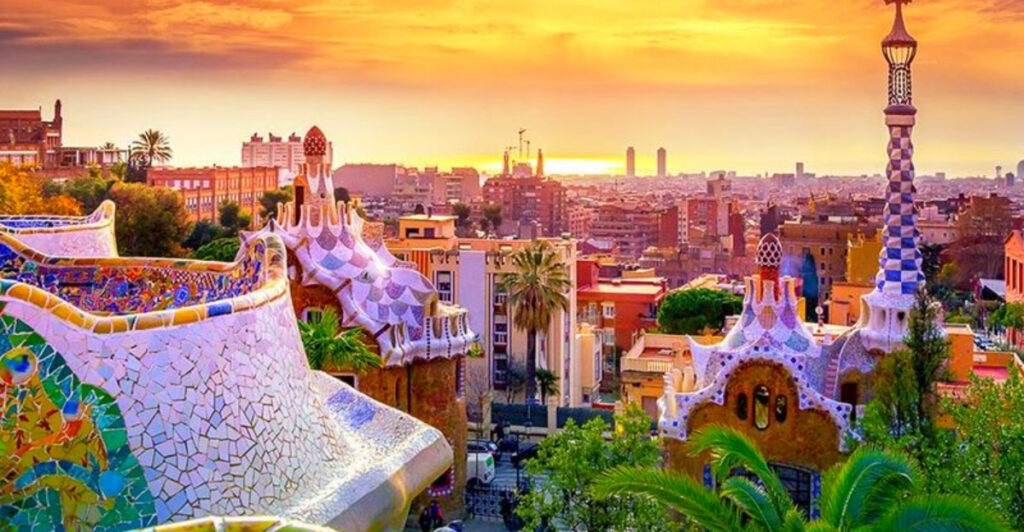
Barcelona is a city that wears its history on its walls — literally. From towering Gothic spires to colorful mosaic rooftops, every street corner seems to hide a new architectural surprise.
The buildings here are not just places to enter; they are stories carved in stone, tile, and iron. Whether you are a first-time visitor or a seasoned traveler, Barcelona’s architectural wonders are guaranteed to leave you speechless.
La Sagrada Família — Gaudí’s Ever-Evolving Basilica
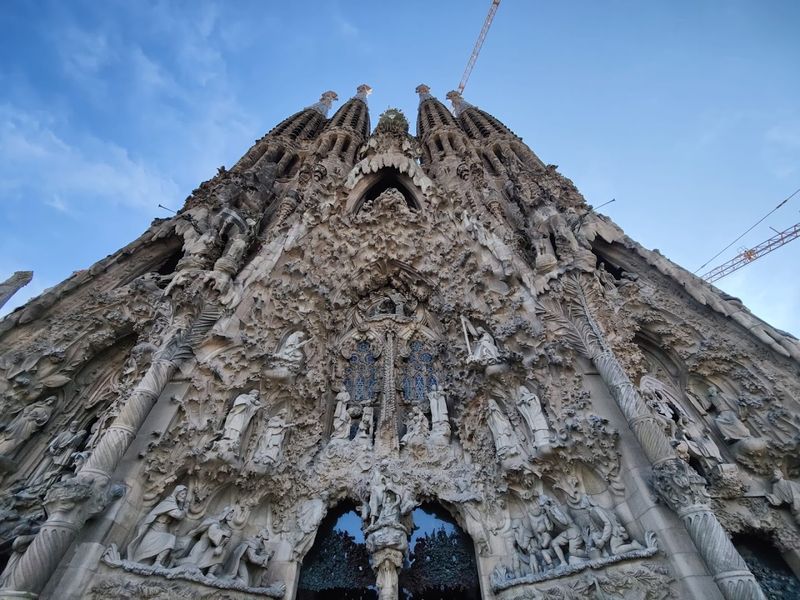
No building on Earth has been under construction longer and still managed to get more stunning with every passing decade. La Sagrada Família began in 1882 and recently became the tallest church in the world, with its central tower soaring above Barcelona’s skyline.
That is over 140 years of continuous building — and it still is not fully finished.
Antoni Gaudí poured his entire life into this basilica, eventually devoting himself to it full-time. His design fuses Gothic architecture with organic, nature-inspired shapes that feel almost alive.
The facades are packed with biblical symbolism, from the Nativity scenes on one side to the stark, angular Passion facade on the other.
Inside, the forest-like columns branch upward toward a ceiling bathed in colored light from hundreds of stained glass windows. Visiting at different times of day gives you completely different color experiences.
Booking tickets in advance is strongly recommended — the queues without one can stretch for hours, and the interior is worth every minute of planning.
Casa Batlló — Gaudí’s Whimsical Modernist Gem
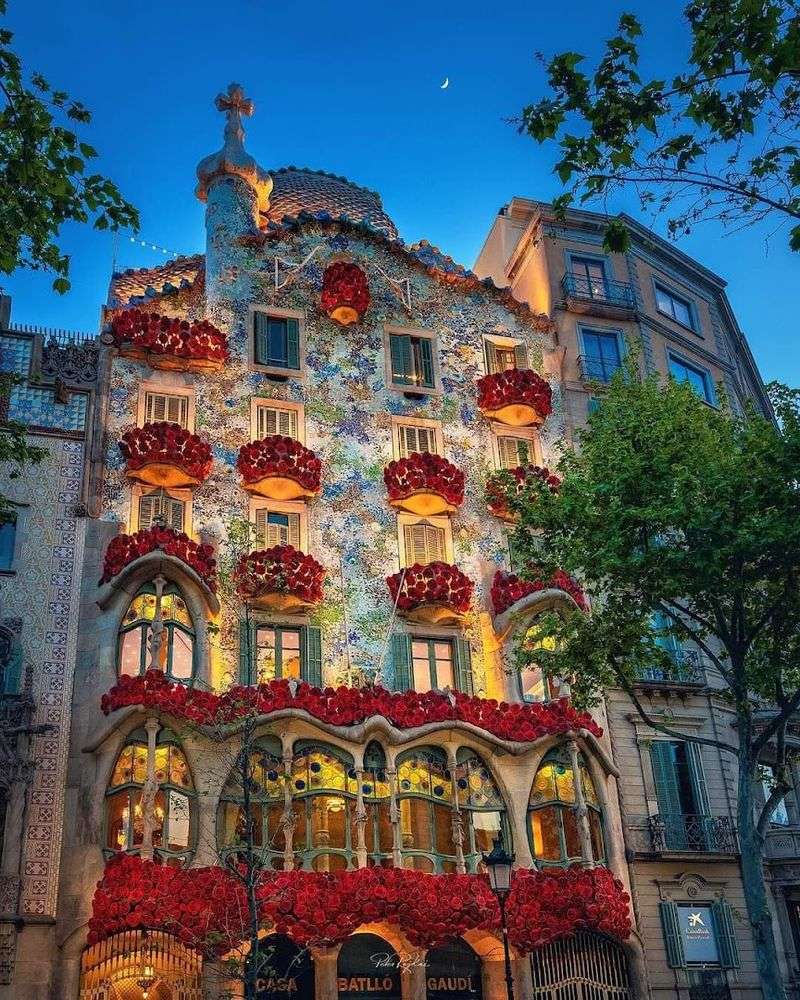
Rumor has it that when Gaudí redesigned this building in 1904, the neighbors on Passeig de Gràcia were stunned into silence — then completely jealous. Casa Batlló’s facade is a shimmering wave of blue and green ceramic tiles that changes color depending on where you stand.
The balconies look like the jawbones of some mythical creature, and the rooftop curves like a dragon’s back.
Every detail carries meaning. The cross-shaped tower represents Saint George, the patron saint of Catalonia, and the entire building is believed to tell the story of the dragon slain by the saint.
Even the interior staircase feels like swimming through the ocean, with walls that ripple and shift in a deep, watery blue.
A nighttime visit during the “Magic Nights” experience adds a contemporary digital art layer to the building, making it feel futuristic and fantastical at the same time. Casa Batlló is not just a building — it is a full sensory performance.
If you only visit one Gaudí work in Barcelona, make a strong case for this one topping your list.
Casa Milà (La Pedrera) — Nature-Inspired Modernism
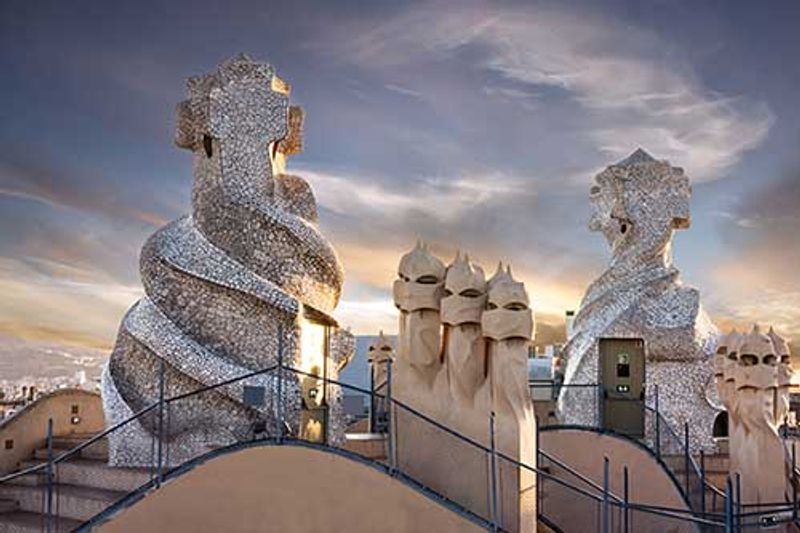
The rooftop of Casa Milà looks like a battlefield from another planet, populated by helmet-wearing soldiers who never move. These iconic chimney stacks — twisted, tiled, and slightly menacing — have inspired artists, filmmakers, and architects for over a century.
Gaudí designed them not just for function, but as sculpture in their own right.
Built between 1906 and 1912, Casa Milà was the last civil building Gaudí ever designed. The undulating stone facade gives the whole structure the appearance of a cliff face carved by wind and water.
At the time, locals nicknamed it “La Pedrera,” meaning “the stone quarry,” and not always as a compliment.
Inside, the building is just as innovative. Catenary arches in the attic create a spine-like structure that supports the building without traditional load-bearing walls, which was revolutionary at the time.
Today, the attic houses a museum dedicated to Gaudí’s work and methods. The rooftop terrace is open to visitors and offers sweeping views of Barcelona, making it one of the best sunset spots in the entire city.
Park Güell — A Garden City of Fantastical Architecture
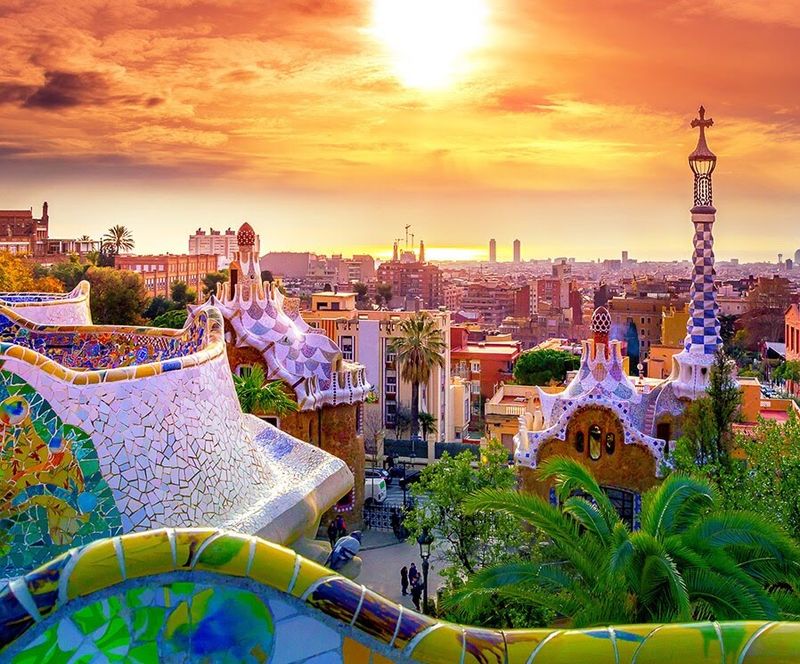
Stepping into Park Güell feels a bit like walking into a fairy tale that someone accidentally left running. The mosaic-covered serpentine bench wrapping around the main terrace is one of the most photographed spots in all of Spain — and once you see it in person, that makes complete sense.
The colors pop, the shapes curve playfully, and the views of Barcelona stretching to the Mediterranean are simply unreal.
Gaudí originally designed the park as a private garden suburb for wealthy residents, but the project never took off commercially. Barcelona eventually turned it into a public park, and it has been drawing visitors ever since.
The famous gingerbread-style gatehouses at the entrance are among the first things visitors see, and they set the tone perfectly.
The park sits on a hill, so wear comfortable shoes — the walk up is worth it, but it is genuinely steep in places. The Monumental Zone requires a timed entry ticket, which you should book ahead online, especially during summer.
Early morning visits reward you with softer light, cooler temperatures, and far fewer crowds competing for the best photo angles.
Palau de la Música Catalana — Modernisme’s Jewel of Sound
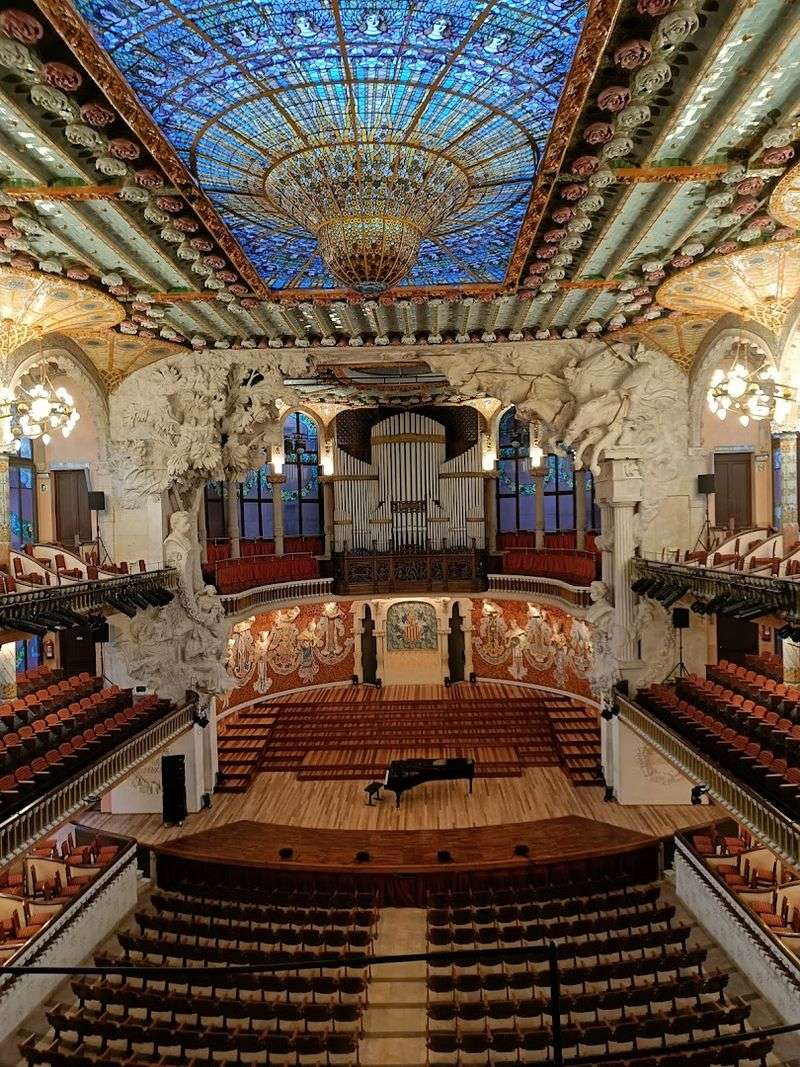
Sunlight does not just enter the Palau de la Música Catalana — it performs. The central stained glass skylight, an inverted dome of amber and blue glass, floods the concert hall with warm, shifting light that changes throughout the day.
It is one of the most breathtaking interior spaces in Europe, and that is not an overstatement.
Lluís Domènech i Montaner completed this UNESCO World Heritage Site in 1908, and it remains an active concert venue to this day. The exterior is equally dazzling, with a mosaic-covered column cluster, intricate stone carvings, and a ceramic-tiled facade that practically buzzes with energy.
No two surfaces seem to repeat themselves.
Attending a live performance here is the ultimate way to experience the building. Whether it is a classical concert, flamenco show, or choir performance, the acoustics are as impressive as the visuals.
Guided tours are available for those who want to explore the space without a performance, and they offer access to areas not normally open to the public. Either way, this building earns its reputation as the crown jewel of Catalan Modernisme without any argument.
Barcelona Cathedral — Gothic Majesty in the Heart of the Old City
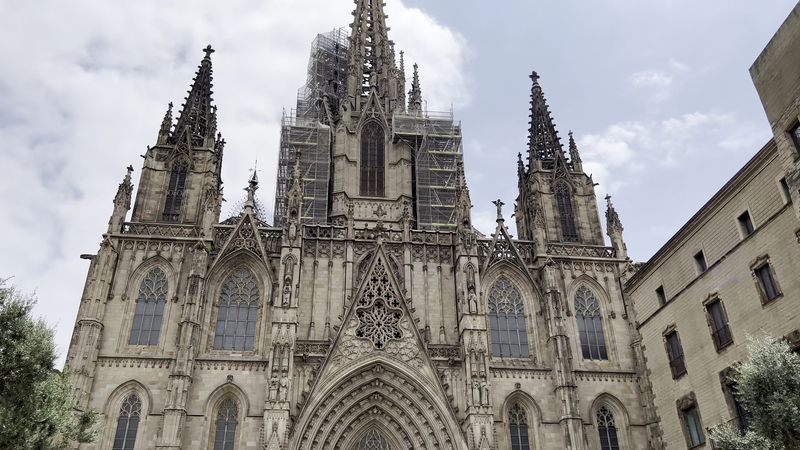
Walk through the narrow lanes of the Gothic Quarter and suddenly the Barcelona Cathedral rises before you like a stone giant waking from a very long sleep. Its three tall spires pierce the sky above Barri Gòtic, and the intricate carvings on the main facade reward anyone who stops long enough to really look.
This is not a building you can absorb in five minutes.
Construction began in 1298 on the site of an earlier Romanesque church, and the building was largely completed by the 15th century. The interior is vast and atmospheric, with 28 side chapels lining the nave and a beautifully carved choir in the center.
Beneath the altar lies the crypt of Saint Eulalia, Barcelona’s co-patron saint, which is a quiet and moving place to visit.
The cathedral’s cloister is one of its best-kept secrets. A garden of orange trees and palm fronds surrounds a central fountain, and a small flock of white geese has lived there for centuries — each one representing one of the years Saint Eulalia lived.
Entry to the cathedral is free in the mornings before a certain hour, making it a budget-friendly must-see.
Santa Maria del Mar — The “Cathedral of the Sea”
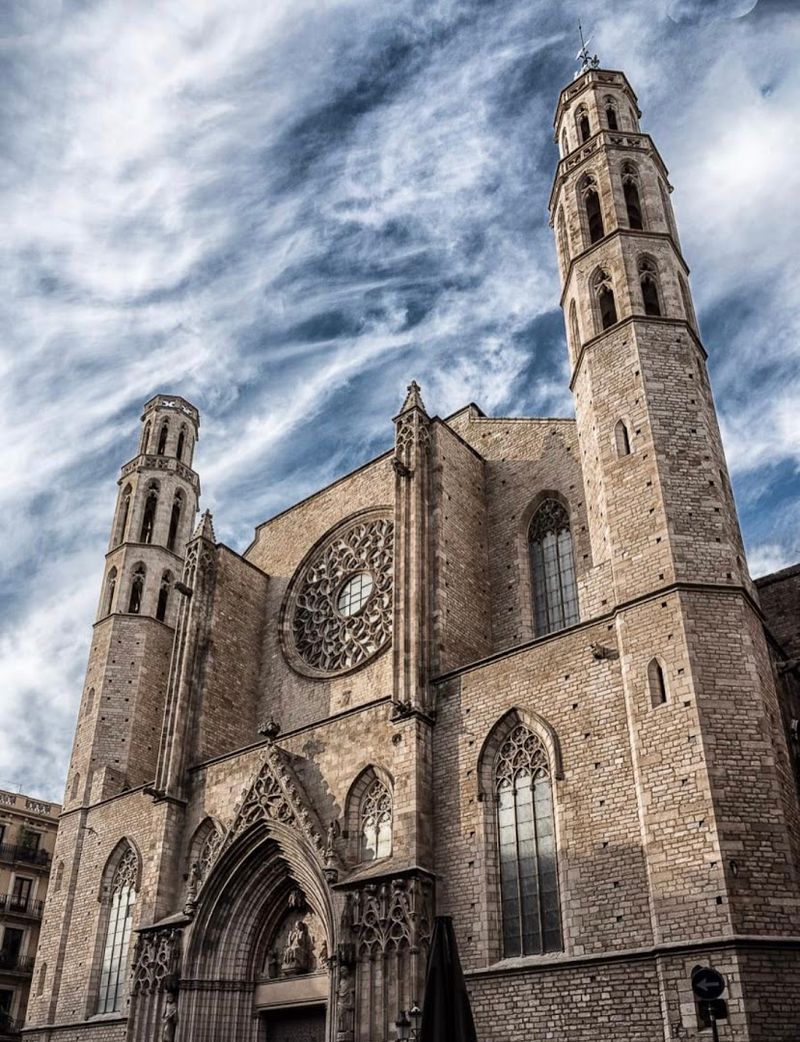
There is a reason this church earned the nickname “Cathedral of the Sea” — it was built by the people of the Ribera neighborhood, including sailors, fishermen, and merchants who carried the stones themselves from a nearby quarry. That community effort, completed in just 55 years between 1329 and 1384, produced one of the purest examples of Catalan Gothic architecture anywhere in the world.
Unlike Barcelona’s main cathedral, Santa Maria del Mar has a clean, almost minimalist interior. Three slender octagonal columns divide the nave, and the wide spacing between them creates a feeling of openness and calm that is genuinely rare in medieval churches.
The stained glass windows cast soft, jewel-toned light across the stone floor throughout the day.
The church sits in the heart of El Born, one of Barcelona’s trendiest neighborhoods, surrounded by tapas bars, boutiques, and art galleries. It is easy to combine a visit here with an afternoon of exploring the area.
A nighttime concert inside Santa Maria del Mar is an unforgettable experience — the acoustics are superb and the atmosphere is electric. Entry is free during certain hours, so timing your visit right saves you money.
Casa Vicens — Gaudí’s Early Modernisme Breakthrough
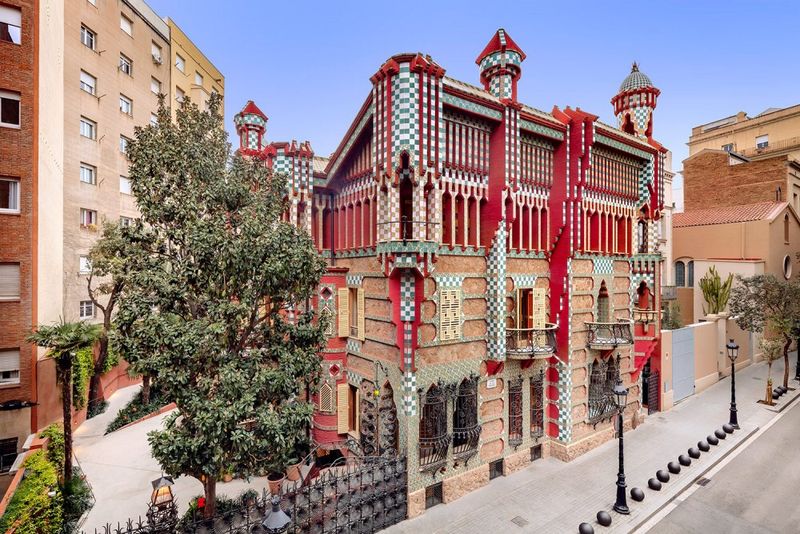
Before Gaudí became the name everyone associates with Barcelona, he was a young architect experimenting boldly on a quiet street in the Gràcia neighborhood. Casa Vicens, built between 1883 and 1885, was one of his first major commissions, and it already showed the world that this architect played by completely different rules.
The facade is a riot of green and white checkerboard tiles, orange marigold motifs, and Moorish-inspired arched windows.
The house was designed as a summer retreat for the Vicens family, and Gaudí incorporated references to the natural surroundings, including palm trees and local flora, into the ironwork and tilework throughout. It feels simultaneously exotic and rooted in its Catalan context.
Oriental influences mingle with local craft traditions in a way that feels experimental but never chaotic.
For years, Casa Vicens was privately owned and largely inaccessible to the public. It only opened as a museum in 2017, making it one of the newer Gaudí experiences in the city.
The interior has been beautifully restored and gives visitors a rare glimpse into how Gaudí thought early in his career. It is quieter than his more famous buildings, which makes it feel like a genuine hidden treasure.
Casa Amatller — A Modernist Neighbourhood Icon
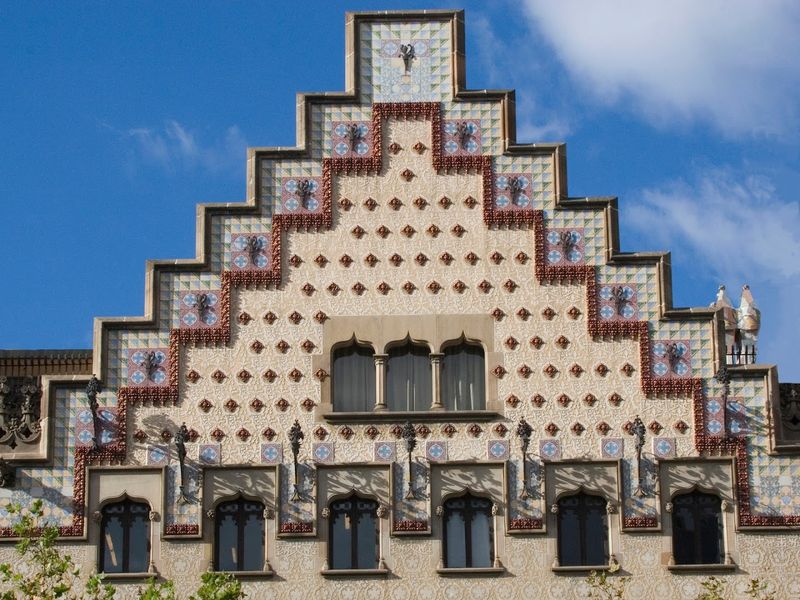
Sandwiched between two of Gaudí’s most famous buildings, Casa Amatller holds its ground with extraordinary confidence. Designed by Josep Puig i Cadafalch and completed in 1900, its stepped Dutch-style gable roofline is instantly distinctive, topped with colorful ceramic tiles and decorated with playful animal sculptures.
It does not try to compete with its neighbors — it simply does its own thing, brilliantly.
The building was commissioned by Antoni Amatller, a wealthy chocolate manufacturer with a passion for photography and travel. Puig i Cadafalch filled the facade with references to Amatller’s interests, including carved figures of animals engaged in human activities like making chocolate.
The Gothic-inspired doorway is particularly stunning, with intricate stonework that rewards a close look.
Today, the ground floor houses the Amatller Institute of Hispanic Art, and guided tours of the interior are available. The original apartments have been partially preserved, giving visitors a sense of how Barcelona’s elite lived during the Modernisme era.
The building is also home to a small chocolate shop, which feels entirely appropriate given the original owner’s profession. Standing across the street and looking at Casa Amatller, Casa Batlló, and Casa Lleó Morera side by side — the so-called Block of Discord — is one of Barcelona’s great architectural pleasures.
Palau Güell — Early Gaudí Opulence
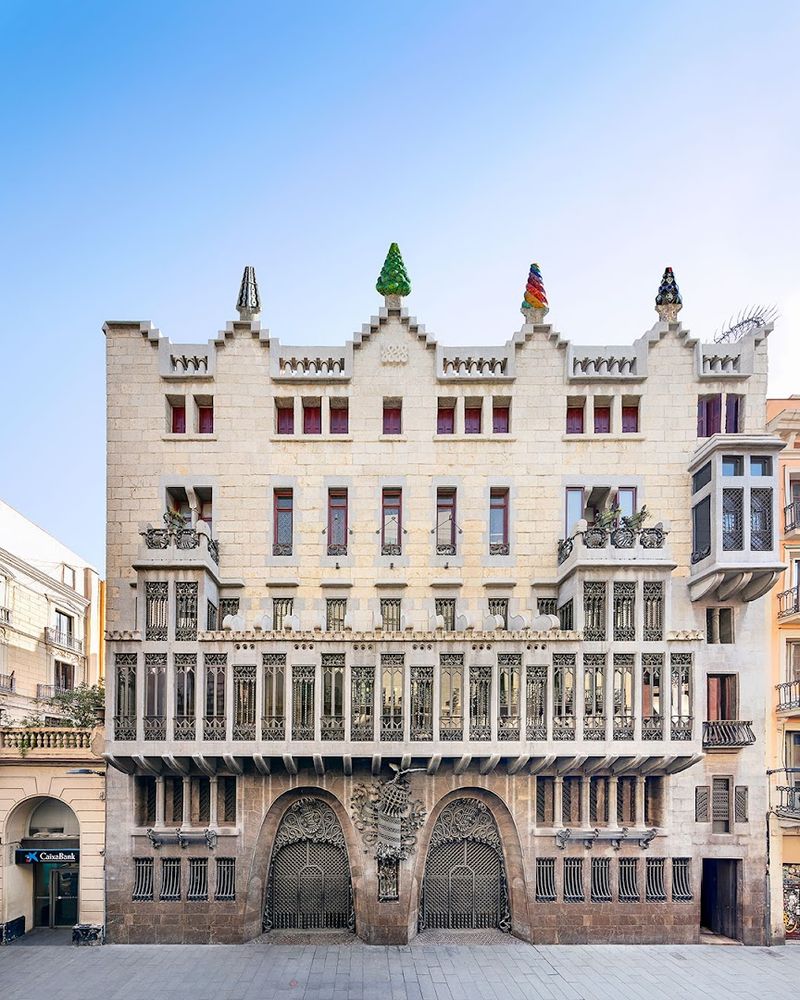
Long before Gaudí became a household name, he had one very important fan: Eusebi Güell, one of Barcelona’s most powerful industrialists. Güell gave Gaudí nearly unlimited creative freedom on Palau Güell, built between 1886 and 1890, and the result is one of the most opulent and inventive buildings of its era.
It was the first work by Gaudí to earn international recognition.
The facade on Carrer Nou de la Rambla features two enormous parabolic iron gates — still used today — that open onto a dramatic entrance hall. Inside, the central salon rises through multiple floors beneath a parabolic dome pierced with small holes that let in pinpoints of light, creating a star-like effect.
Every surface, from the carved wood ceilings to the marble floors, speaks of extraordinary craftsmanship.
The rooftop is a preview of what Gaudí would later perfect at Casa Milà. Twenty chimneys, each uniquely decorated with ceramic fragments and colored glass, stand like abstract sculptures against the Barcelona sky.
The building sits in the Raval neighborhood, just off La Rambla, and is often overlooked in favor of Gaudí’s later works. That is a mistake worth correcting — entry is affordable and the crowds are far more manageable than at his other sites.
Recinte Modernista de Sant Pau — Modernisme Healthcare Utopia
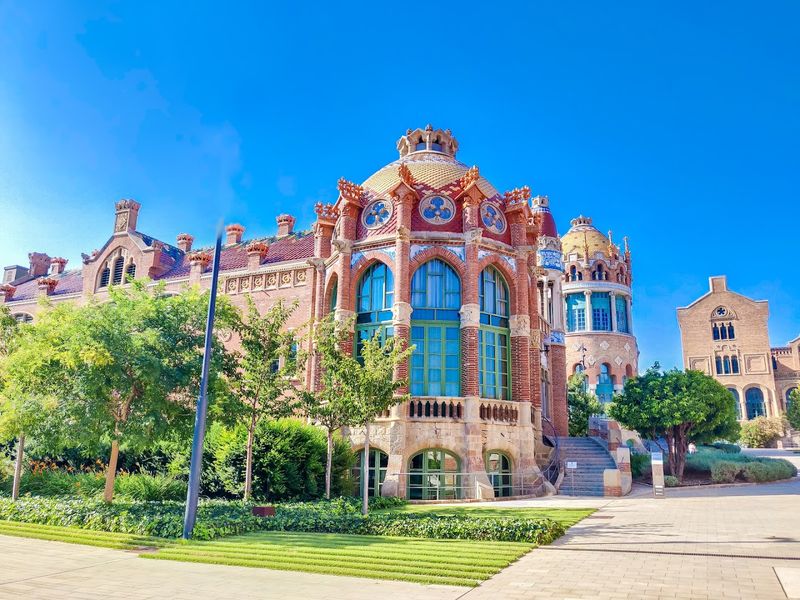
Imagine checking into a hospital where the walls are covered in colorful mosaics, the gardens are immaculately landscaped, and the architecture feels more like a palace than a medical facility. That was exactly the vision of Lluís Domènech i Montaner when he designed the Hospital de Sant Pau, now known as the Recinte Modernista de Sant Pau, between 1901 and 1930.
Domènech i Montaner believed that beautiful surroundings could help patients heal faster — a remarkably progressive idea for the time. The complex is made up of 48 buildings connected by underground tunnels, arranged diagonally across a large site to maximize sunlight in every ward.
Each pavilion is unique, decorated with sculptures, ceramic tiles, and stained glass that vary in theme and color.
The hospital remained in active medical use until 2009, at which point it was carefully restored and opened as a cultural heritage site. Today it is a UNESCO World Heritage Site and one of the finest examples of Modernisme in Barcelona — arguably rivaling even the Sagrada Família in its decorative richness.
It sits at the end of Avinguda de Gaudí, a straight avenue that points directly at the Sagrada Família, creating a deliberate architectural dialogue between the two great Modernisme masters.
Torre Bellesguard — Gaudí’s Elegant Hidden Gem
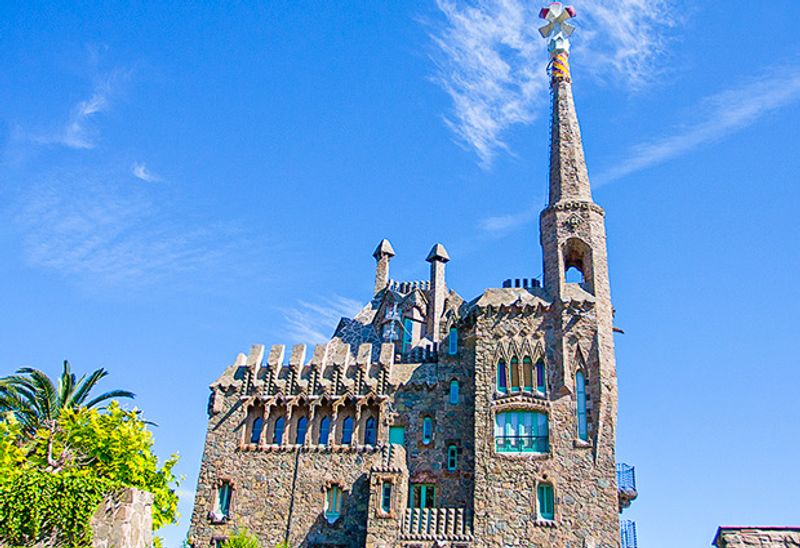
Most visitors to Barcelona never make it to Torre Bellesguard, and that is genuinely their loss. Hidden in the foothills of the Collserola range, this Modernist manor designed by Gaudí between 1900 and 1909 is one of the most serene and surprising buildings he ever created.
Unlike the exuberant curves of his more famous works, Bellesguard is restrained, almost medieval in character.
The site itself carries deep historical weight. King Martin I of Aragon built his summer palace here in the early 15th century, and Gaudí incorporated the ruins of that original structure into his design as a deliberate act of historical respect.
The name Bellesguard means “beautiful view” in Catalan, and the hilltop location absolutely delivers on that promise.
The building’s exterior is dominated by narrow Gothic windows, a slender tower topped with a four-armed cross, and geometric mosaic details along the roofline. Inside, the vaulted brick ceilings in the basement create a forest-like atmosphere that echoes the natural landscape outside.
Guided tours of the interior are available by appointment and are run by the Guilera family, who still own the property. The combination of history, architecture, and tranquility makes this one of the most rewarding Gaudí experiences in the entire city.
Arc de Triomf — Neo-Mudéjar Urban Gate
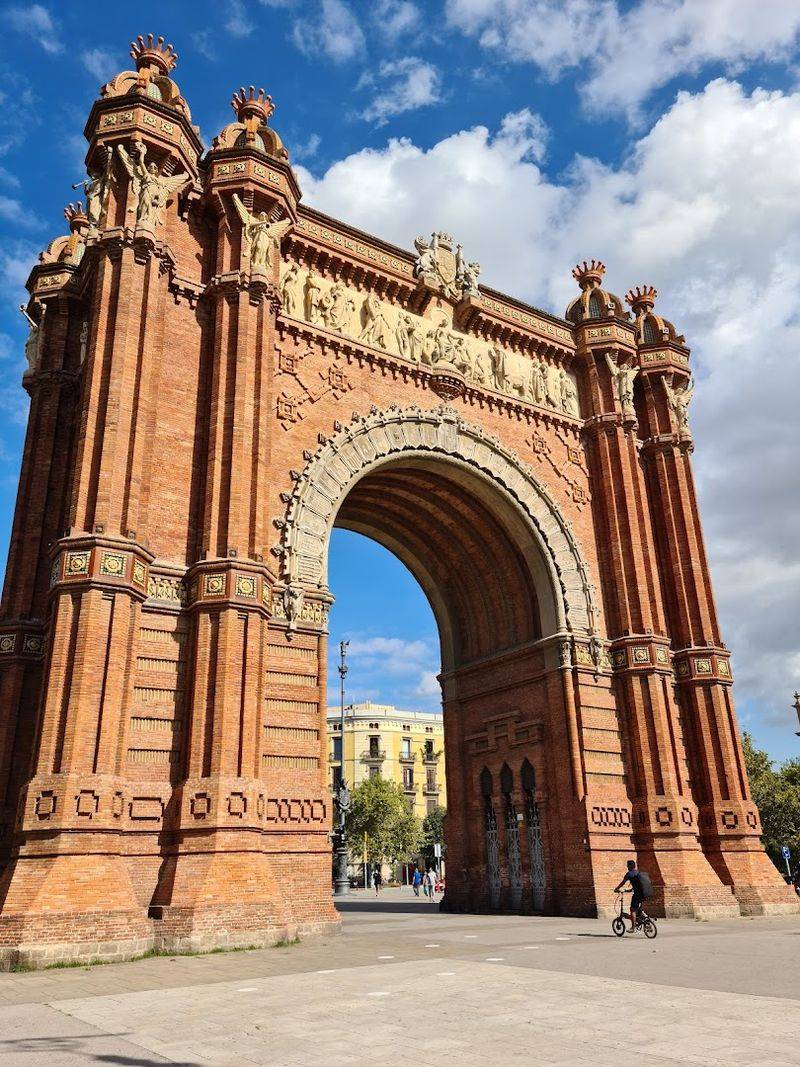
Not every architectural landmark needs to be draped in ceramic tiles or shaped like a wave to make an impression. The Arc de Triomf proves that bold simplicity, combined with rich decorative detail, can stop people in their tracks just as effectively.
Built in 1888 as the grand entrance to Barcelona’s Universal Exposition, this red brick arch stands at the top of a wide, palm-lined promenade that leads straight to the Ciutadella Park.
Architect Josep Vilaseca i Casanovas designed it in a Neo-Mudéjar style — a Spanish architectural tradition that blends Moorish and Christian influences using elaborate brickwork and ceramic tile. The main frieze above the arch depicts Barcelona welcoming the nations of the world, a fitting image for a structure built to greet international visitors.
The two smaller arches flanking the central span add symmetry and grandeur without overwhelming the design.
Unlike most of Barcelona’s major landmarks, the Arc de Triomf requires no entry ticket and no advance booking. You can simply walk up to it, around it, and beneath it at any time of day.
Early mornings and late evenings offer the best light for photography, and the promenade behind it is a lovely spot for a relaxed stroll between sightseeing stops.
Palau Nacional — Montjuïc’s Grand Art Palace
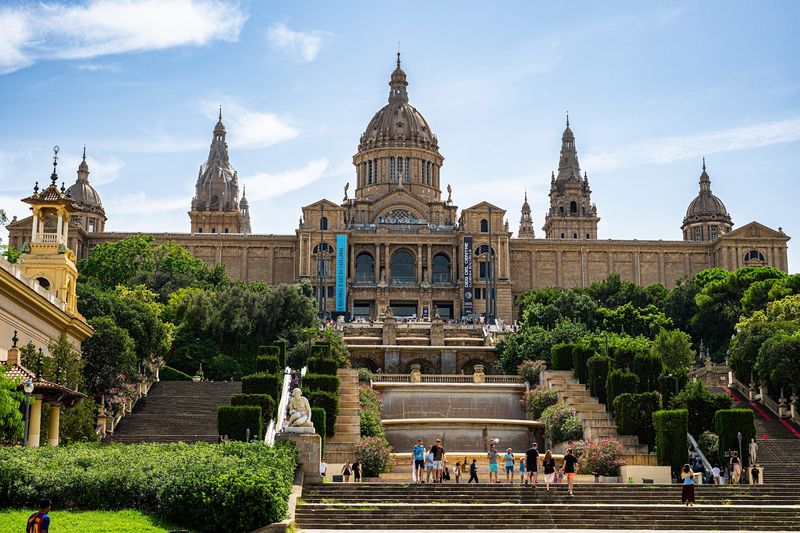
From the base of Montjuïc hill, the Palau Nacional commands attention the way a very confident person enters a room — you notice it immediately and cannot quite look away. Built for the 1929 Barcelona International Exposition, this vast building was designed to impress on an almost theatrical scale, with a broad dome, twin towers, and a monumental staircase that descends toward the city below.
Today it houses the National Art Museum of Catalonia, known as MNAC, which holds one of the finest collections of Romanesque art in the world. The collection of medieval frescoes salvaged from Pyrenean churches is considered extraordinary by art historians globally.
Beyond the permanent collection, the building regularly hosts temporary exhibitions covering everything from photography to design.
The views from the terrace in front of the Palau Nacional are spectacular, stretching across the rooftops of Barcelona all the way to the sea on clear days. The Magic Fountain of Montjuïc sits directly below, and on evenings when the fountain’s light and music show runs, the combination of the illuminated palace and the dancing water is genuinely spectacular.
Getting here by cable car or escalator adds an extra layer of fun to the whole experience.
Mercat del Born — Modernisme Meets Industrial Heritage
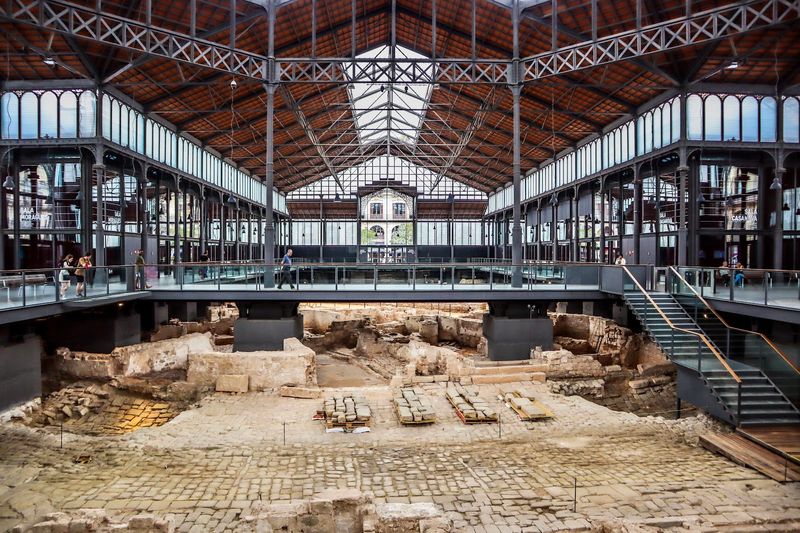
Cast iron has never looked this good. The Mercat del Born, completed in 1876, is one of the earliest and most impressive examples of iron-frame construction in Spain, and its soaring interior feels more like a grand railway station than a former market hall.
The combination of exposed iron columns, graceful arches, and glazed roof panels creates a light-filled space that feels both industrial and surprisingly beautiful.
The market served the Born neighborhood for nearly a century before closing in 1971. During renovation work in the early 2000s, workers uncovered the remains of an entire neighborhood destroyed during the 1714 Siege of Barcelona.
Rather than covering it up, the city made it a centerpiece — the ruins are now preserved beneath the iron structure and visible from a series of elevated walkways throughout the building.
Today the Mercat del Born functions as a cultural center hosting exhibitions, events, and a permanent display about the 1714 siege. The ground floor archaeological site is genuinely fascinating, offering a window into 18th-century urban life in Barcelona.
The surrounding Born neighborhood is packed with excellent restaurants and independent shops, making this a natural starting point for a full afternoon of exploration. Entry to view the ruins requires a ticket, but the building itself is free to enter.
Share this story