Deep in the heart of the New Jersey Pinelands, there is a place that most people drive right past without ever knowing it exists. It has open water, twisted cedar trees, cranberry bogs that turn brilliant red in fall, and a quiet that is hard to find anywhere else on the East Coast.
Most visitors to New Jersey head straight for the shore, and that means this remarkable wetland landscape stays almost entirely to itself. Whitesbog, tucked inside Burlington County, is the kind of place that makes you stop and think about how much wild, beautiful land is hiding in plain sight.
This article walks you through everything worth knowing before you visit, from the history behind the bogs to the best trails, the wildlife you might spot, and the practical details that will make your trip smooth and memorable.
Where Exactly Whitesbog Is and How to Get There
Whitesbog is located at Whitesbog Road in Pemberton Township, NJ 08015, inside Brendan T. Byrne State Forest in Burlington County, New Jersey.
The address most people use to navigate there is 120 W. Whites Bog Rd, Browns Mills, NJ 08015.
Getting there is straightforward if you follow Route 70 or Route 530 through the Pinelands. There are no traffic lights once you turn off the main road, and the entrance opens up quickly into a wide gravel lot near the historic village center.
The site is managed by the Whitesbog Preservation Trust and is open to the public year-round. No admission fee is charged for general access, which makes it an easy day trip from Philadelphia or the Jersey Shore.
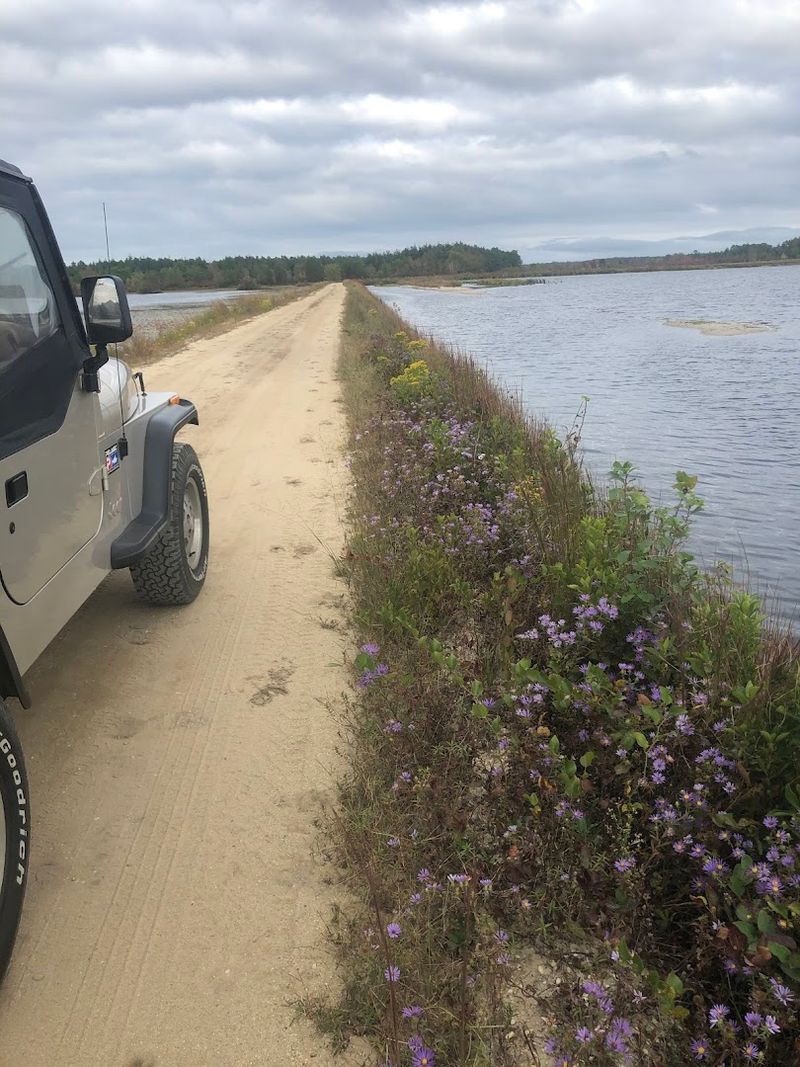
The roads inside the property are unpaved, so low-clearance vehicles should take it slow on the sandy paths.
The Fascinating History Behind the Bogs

Whitesbog has a history that goes back to the 1860s, when Joseph J. White began farming cranberries on the boggy, acidic land of the New Jersey Pinelands.
The operation grew into one of the largest cranberry farms in the state, covering thousands of acres at its peak.
The White family also played a central role in developing the commercial blueberry industry. Elizabeth Coleman White, daughter of Joseph, partnered with botanist Frederick Coville in the early 1900s to cultivate the first commercially grown highbush blueberries right here on this property.
That work changed American agriculture in a big way.
Today, the historic village buildings still stand and have been preserved as a reminder of what life looked like for the workers who lived and labored on the farm. Walking through the village feels like flipping through a photo album of New Jersey agricultural history, page by page.
Why It Looks So Much Like the Everglades
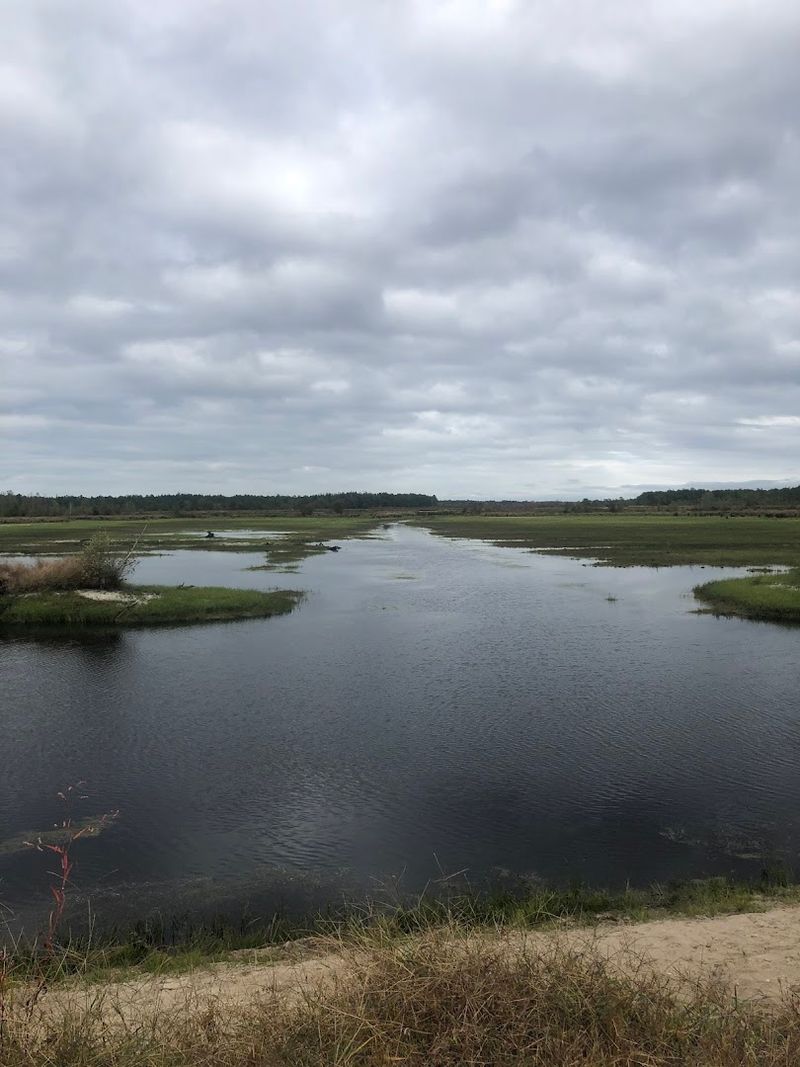
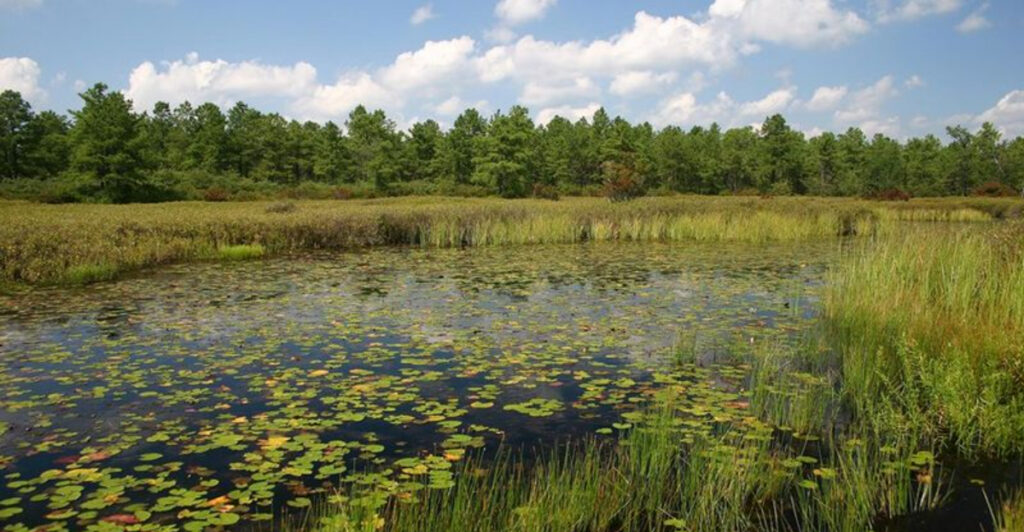
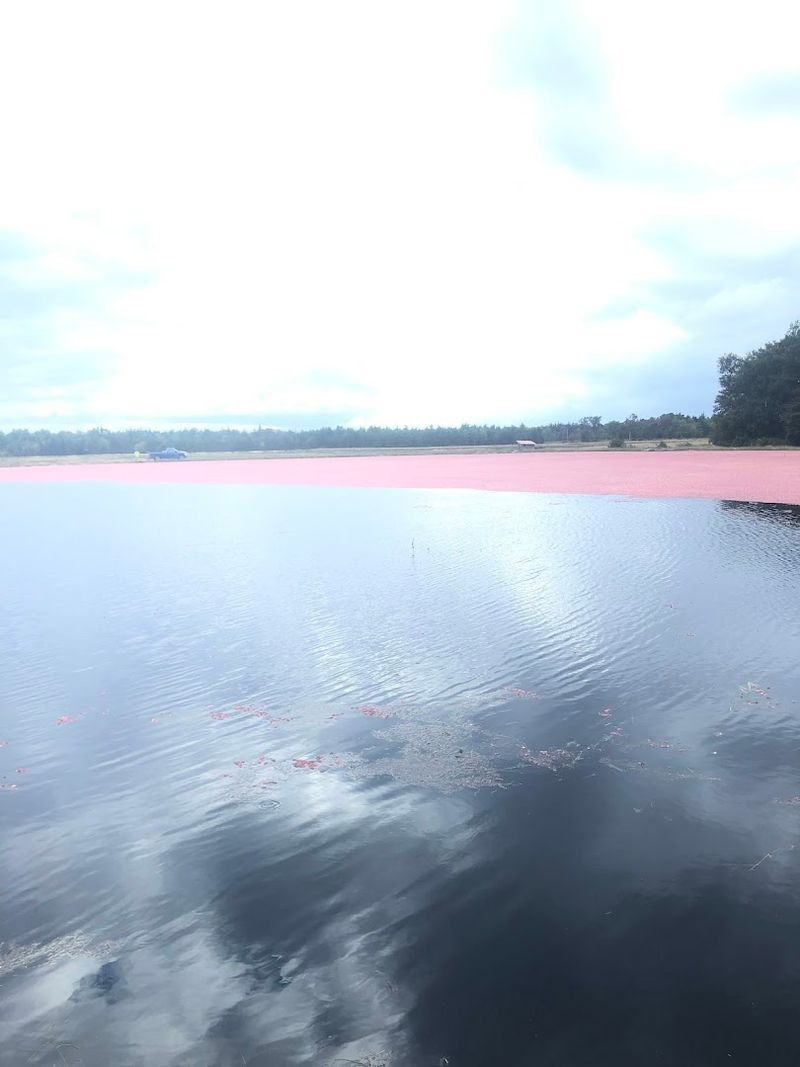
The comparison to the Everglades is not an exaggeration. When the cranberry bogs are flooded in the fall for harvest, the landscape opens up into wide, glassy sheets of water that stretch toward the tree line with almost no interruption.
Atlantic white cedar trees grow in dense clusters along the bog edges, their trunks rising straight out of the dark water. The water itself is tinted a rich amber color from the natural tannins released by decaying pine needles and organic matter in the soil.
The flatness of the terrain and the openness of the sky above the bogs give the whole area a remote, almost otherworldly quality that feels very different from the rest of New Jersey. Visitors who arrive during the October flooding period often stand at the water’s edge in genuine disbelief, because nothing about this place matches their expectations of what the Garden State looks like.
The Cranberry Harvest Season Is Something Else
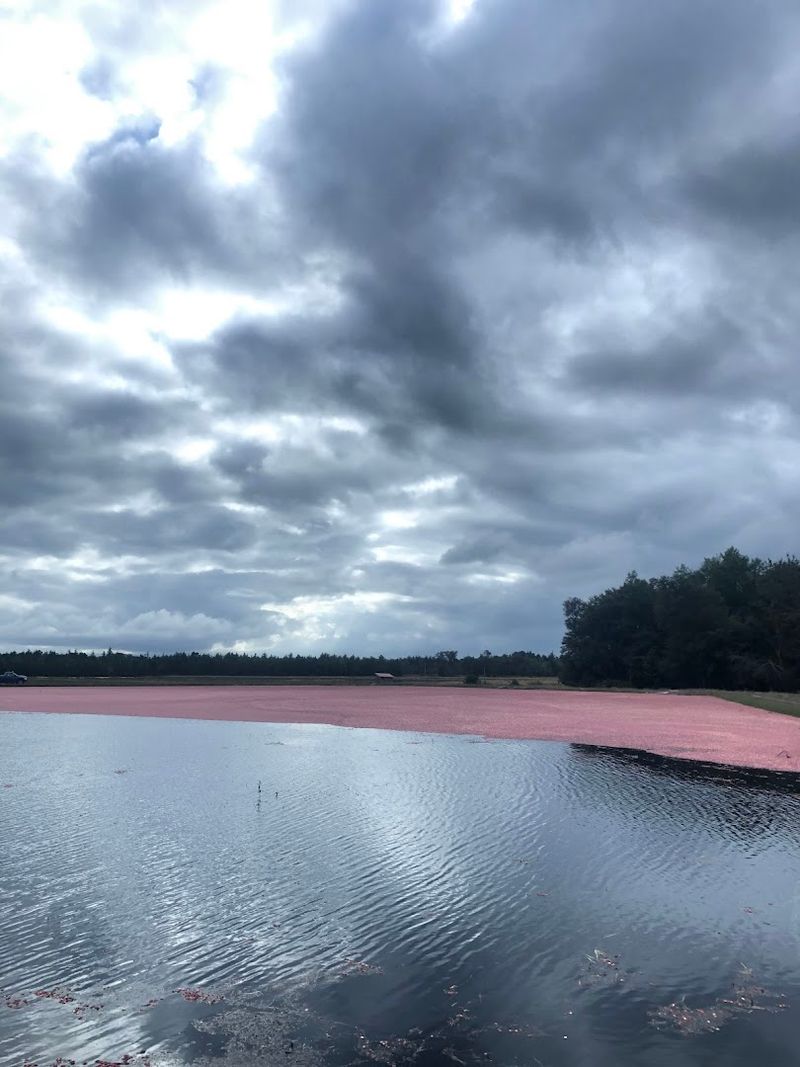
Every October, parts of the bogs at Whitesbog are still actively farmed, and the wet harvest method turns the fields into something genuinely dramatic. Cranberries float naturally, so growers flood the fields and use water reels to knock the berries loose from the vines.
The result is a surface covered so thickly in bright red fruit that the water underneath becomes invisible. Workers in chest waders wade through the mass of berries, corralling them toward pumps and conveyors for collection.
The Whitesbog Preservation Trust often hosts harvest festival events in October, which bring in families, photographers, and history enthusiasts from across the region. Even outside of organized events, the harvest activity is usually visible from public paths along the bog edges.
Timing a visit to coincide with the October harvest window gives you the best chance of seeing the bogs at their most dramatic and colorful point of the entire year.
Blueberry Fields That Changed American Agriculture
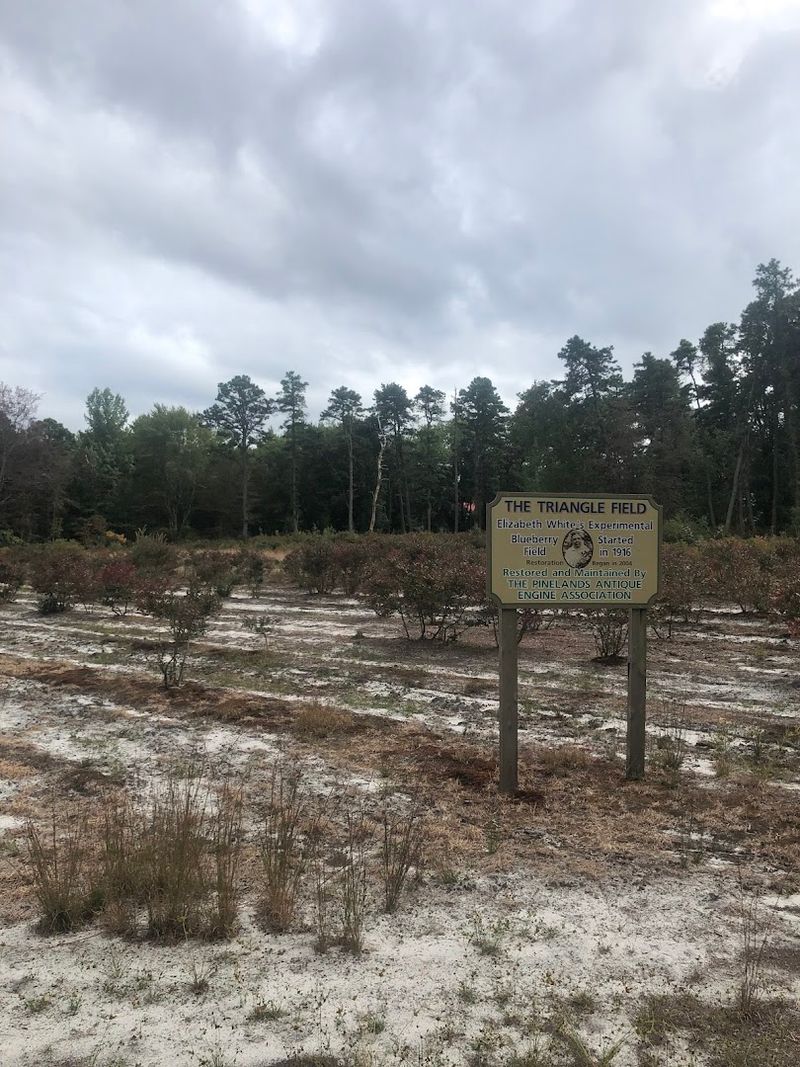
The blueberry bushes at Whitesbog are not just a farming curiosity. They represent the literal birthplace of the commercial blueberry industry in the United States.
Before Elizabeth Coleman White and Frederick Coville figured out how to cultivate highbush blueberries here in the early 1900s, blueberries were only available as wild-picked fruit.
White worked with local Piney woodsmen to identify the best wild plants, and Coville provided the scientific knowledge to develop reliable cultivation methods. Together, they produced the first successful crop of commercially grown blueberries around 1916.
Today the fields are still farmed, and the rows of mature bushes are a living piece of agricultural history. Visiting in June or July means the bushes are heavy with fruit, and the fields carry that particular deep green color that only comes with a healthy, well-established crop.
The blueberry connection alone makes Whitesbog worth a dedicated visit.
Wildlife You Can Actually Expect to See
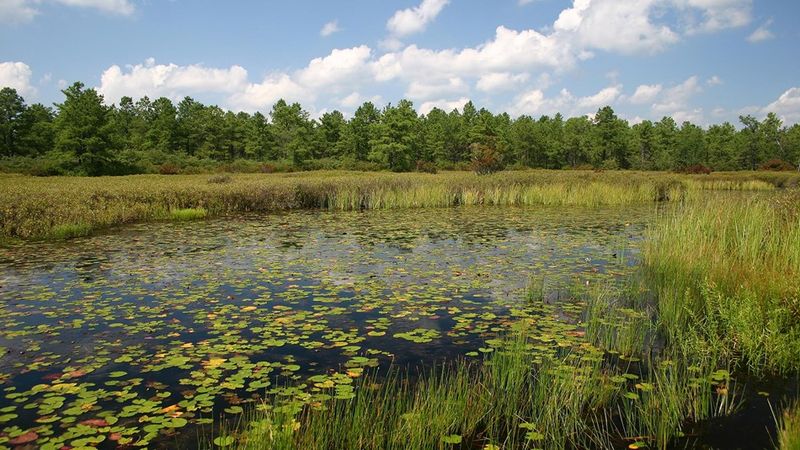
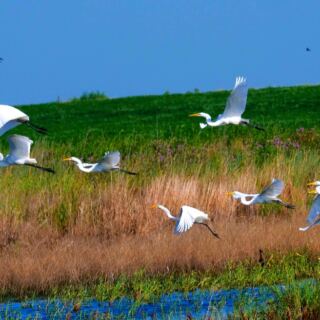
Whitesbog sits inside the New Jersey Pinelands, one of the largest areas of open land in the northeastern United States, and the wildlife reflects that. Great blue herons are common along the bog edges, standing motionless in the shallow water as they wait for fish.
Osprey nest in the area and are frequently spotted circling overhead before diving toward the water. Painted turtles line up on logs along the drainage ditches, and river otters have been documented in the bog system as well.
Birdwatchers consistently find this location productive across multiple seasons. Spring migration brings warblers through the cedar stands, and winter months attract raptors including red-tailed hawks and the occasional bald eagle.
The combination of open water, dense pine forest, and Atlantic white cedar swamp creates a range of habitat types that supports an unusually diverse mix of species for a single property this size.
Trails and Walking Routes Worth Knowing
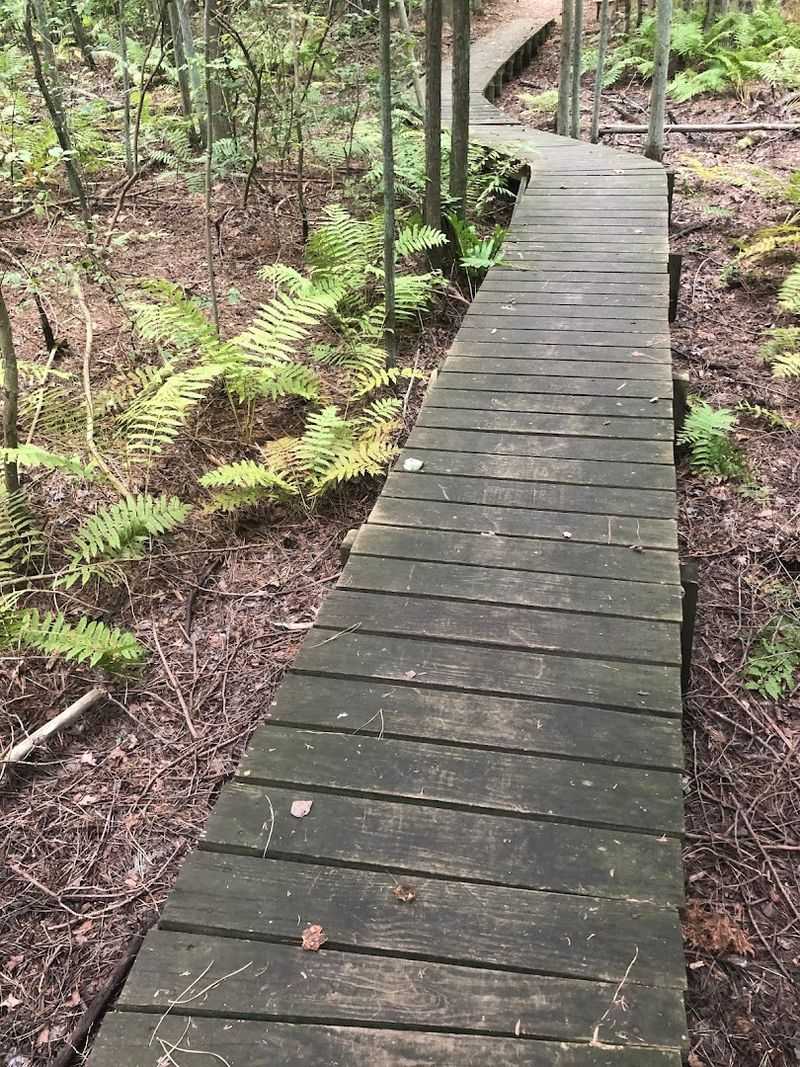
The trail network at Whitesbog is mostly flat, which makes it accessible for a wide range of visitors. The main loop around the bogs covers several miles and follows unpaved sand roads and earthen dike paths that were originally built for farming operations.
The dike roads that separate individual bog sections are some of the best walking routes on the property. They put you directly at water level, with open bog on both sides and a clear view of the tree line in every direction.
There are no formal trail markers in many sections, so downloading an offline map or picking up a paper map from the Preservation Trust office before heading out is a smart move. The terrain is flat enough that navigation is rarely confusing, but the sandy road network branches frequently, and it is easy to extend your walk well beyond what you originally planned without realizing it.
The Historic Village Buildings Still Standing
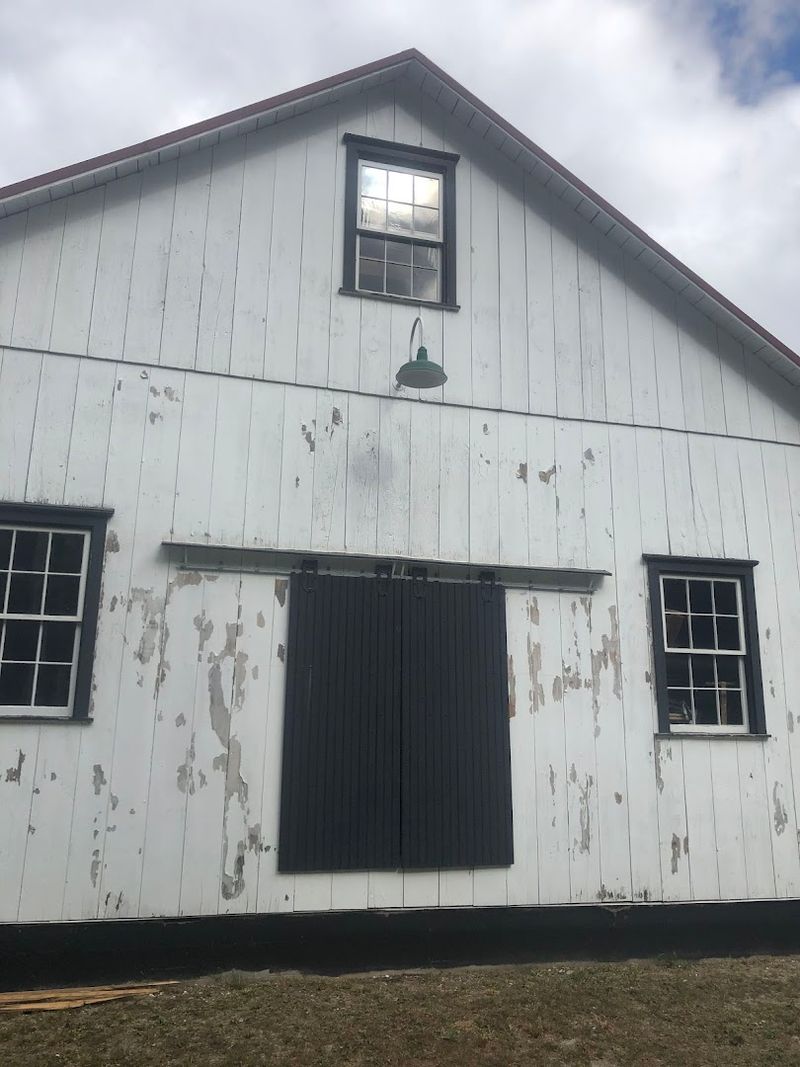
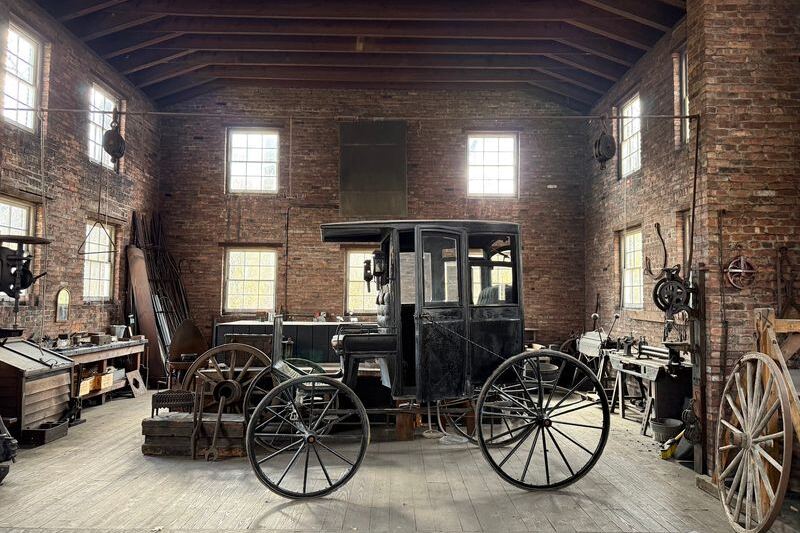
The village at the center of the Whitesbog property includes a collection of original buildings from the farming operation’s peak years. Worker cottages, a general store, a packing house, and other agricultural structures have been preserved and are maintained by the Whitesbog Preservation Trust.
The buildings are modest and practical, which is exactly what they were designed to be. Workers who lived at Whitesbog during the cranberry and blueberry seasons occupied these cottages, and the general store served as the social and commercial hub of the community.
The Preservation Trust uses the village as an educational center and event space. Guided tours are available on select dates, and the buildings are regularly opened for public programs throughout the year.
Walking through the village on your own gives you a quiet, unhurried look at how a self-contained agricultural community functioned in the early twentieth century, right here in the middle of the Pinelands.
Best Times of Year to Plan Your Visit
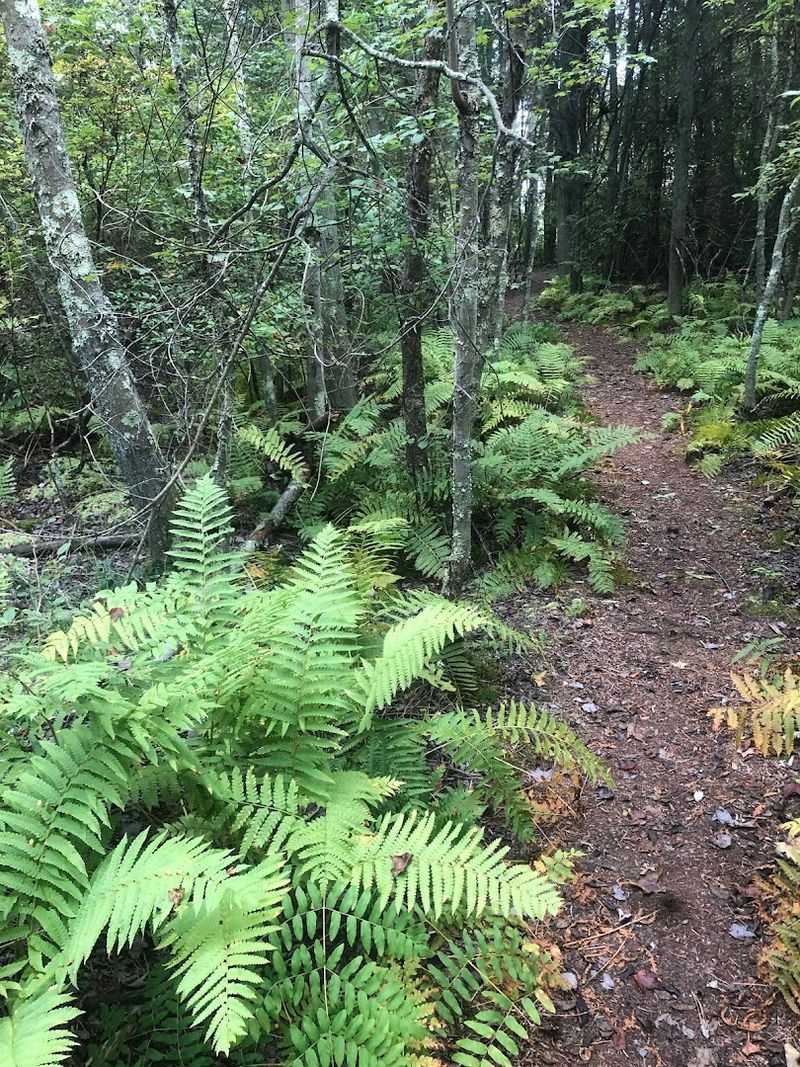
Each season at Whitesbog brings a completely different character to the property. Spring is the quietest period, with the bog vegetation greening up and migratory birds moving through the cedar swamps in good numbers through April and May.
Summer turns the blueberry fields productive and the bog vegetation dense. The heat can be significant in July and August, so early morning visits work best during those months.
Fall is the most visually dramatic season, particularly in October when the cranberry harvest floods the bogs and the surrounding vegetation shifts into red and orange tones.
Winter visits are underrated. The bare trees open up long sight lines across the bog landscape, and the chance of seeing raptors increases considerably.
The property never closes for weather, and weekday visits in any season give you a much quieter experience than weekend trips. Arriving at or shortly after sunrise on any day of the year tends to reward you with the best light and the fewest other people.
The New Jersey Pinelands Connection
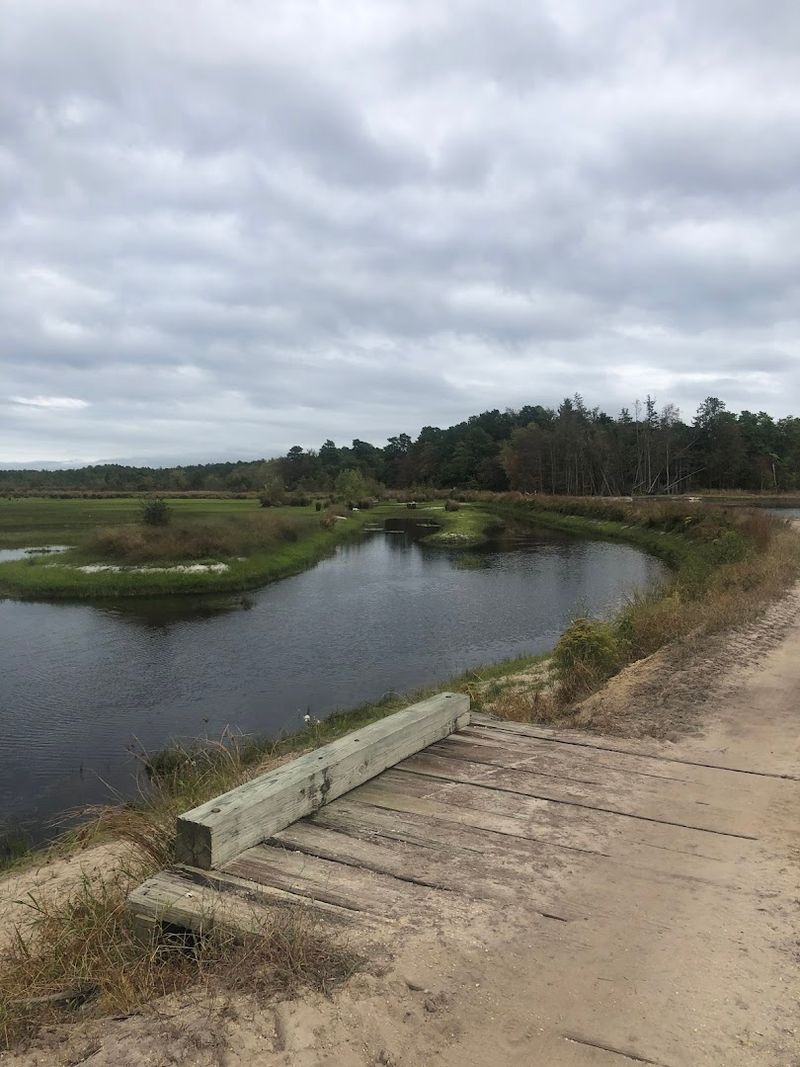
Whitesbog does not exist in isolation. It sits within the New Jersey Pinelands National Reserve, a federally designated area covering more than one million acres of coastal plain across seven counties in southern New Jersey.
The Pinelands is one of the largest undeveloped areas between Boston and Washington D.C.
The ecosystem here is ecologically unusual. The soil is extremely sandy and nutrient-poor, which filters groundwater naturally and supports plant communities found almost nowhere else on the East Coast.
The Pinelands aquifer below the surface holds an estimated 17 trillion gallons of water.
Whitesbog gives visitors direct access to this ecosystem without requiring any special permits or backcountry preparation. The bog landscape that the property preserves is one of the most characteristic features of the Pinelands, and understanding that broader context makes the visit feel less like a local curiosity and more like a window into one of the most ecologically significant landscapes in the eastern United States.
Photography Opportunities That Are Hard to Beat
Whitesbog is a legitimate destination for photography, not just a scenic side stop. The combination of flat terrain, open water, and unobstructed sky gives photographers the kind of wide-angle compositions that are genuinely difficult to find in New Jersey.
The flooded bogs in October are the most photogenic feature on the property. The red cranberries against the dark amber water, with the white cedar tree line behind, creates a color palette that works well in almost any light condition.
Early morning fog over the water adds another layer of visual interest during cooler months.
The historic village buildings also photograph well, particularly the worker cottages with their simple white facades and the old packing house structure. Drone photography requires a permit and prior coordination with the Whitesbog Preservation Trust, but ground-level photography is unrestricted throughout the public access areas.
The flat terrain means that wide lenses capture the full scale of the bog landscape in a single frame.
Practical Tips Before You Head Out
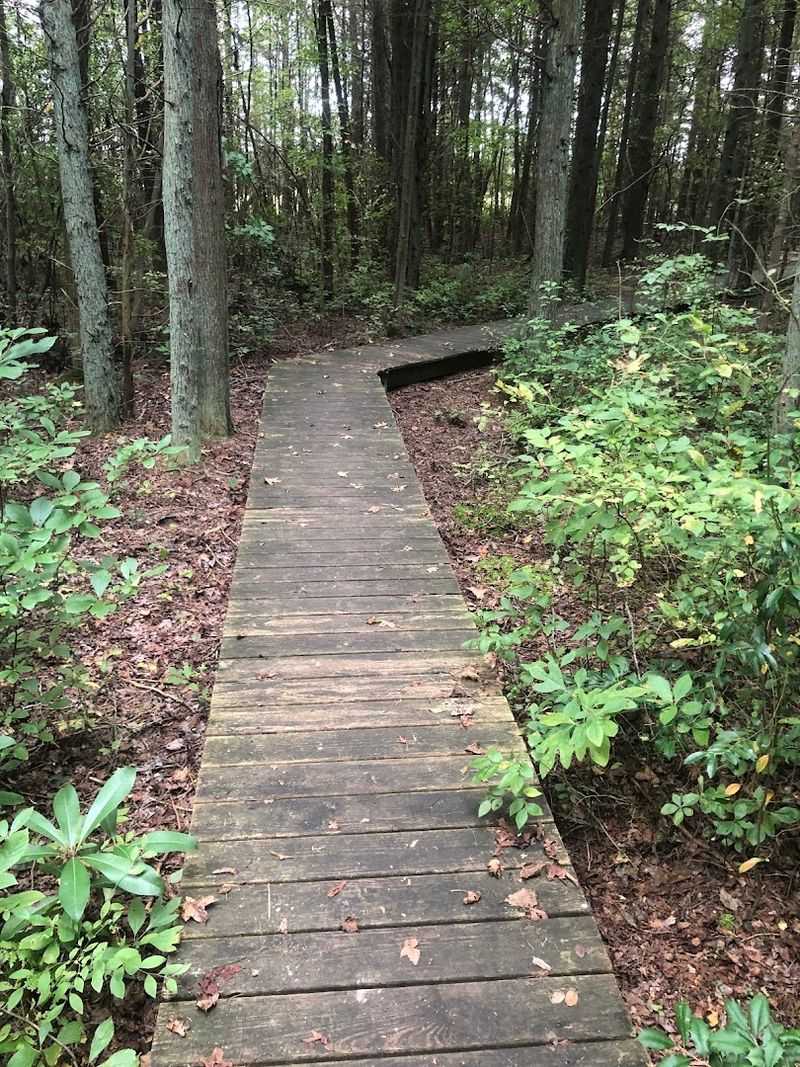
A few practical details will make your trip to Whitesbog much smoother. The roads inside the property are unpaved sand and gravel, which means standard passenger cars handle them fine in dry conditions, but soft spots can appear after heavy rain.
Mosquitoes are a real factor from late spring through early fall. Bringing effective insect repellent is not optional during those months.
The bog environment supports large mosquito populations, and an unprotected visit in July can become uncomfortable quickly.
There are no food vendors or restaurants on the property, so bringing water and snacks is essential, especially for longer walks. Cell service is inconsistent inside the Pinelands, so downloading maps before arrival is worth doing.
Restrooms are available near the village center area during regular operating hours. Parking is free and the lot is large enough to handle busy weekend crowds, though overflow parking on the grass near the entrance is sometimes necessary during fall festival events.
Why This Place Deserves Far More Visitors
Whitesbog is the kind of place that gets overlooked because it does not fit neatly into the usual New Jersey travel narrative. It is not the Shore.
It is not the Delaware Water Gap. It does not have a famous boardwalk or a well-known restaurant strip.
What it has is something harder to find and arguably more valuable: a genuinely preserved piece of the landscape that made New Jersey ecologically distinctive long before the state became famous for anything else. The agricultural history alone is worth the trip, and the wildlife, the bog landscape, and the historic village make it a destination with real depth.
Most visitors who discover Whitesbog for the first time say they cannot believe they had never heard of it before. That reaction is understandable, because the place earns it honestly.
The fact that it remains this quiet and this accessible is a good reason to go sooner rather than later, before the secret gets fully out.
Share this story