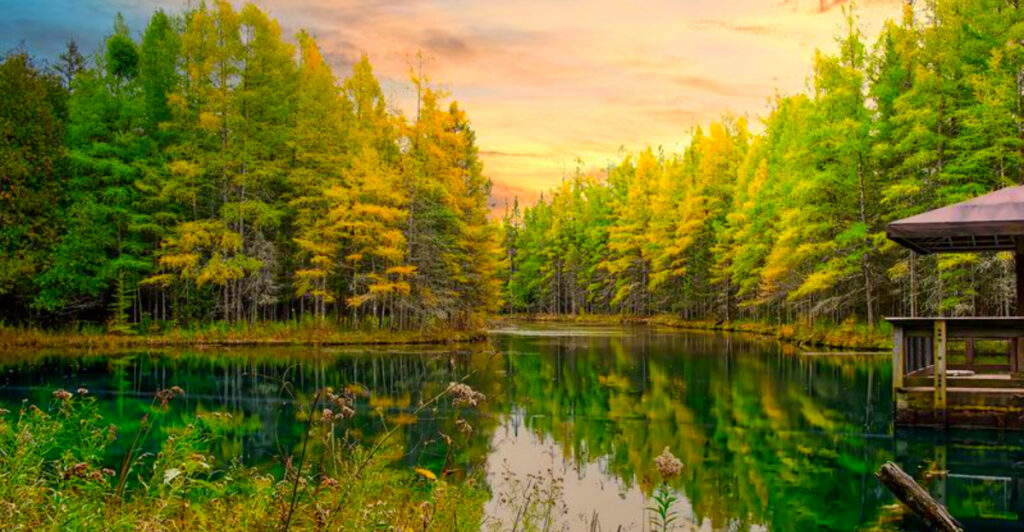
There is a place in Michigan where the water looks like polished glass and the bottom seems close enough to touch. The catch is that it never freezes and never warms up, staying a steady chill while pushing out an eye-popping flow every minute.
I rode a quiet wooden raft to its center, watched sand plume like underwater fireworks, and felt time slow down in the best way. Keep reading and I will show you how to see the same hypnotic show, avoid the long lines, and leave with memories that feel brighter than the water itself.
Where It Is And How To Find It
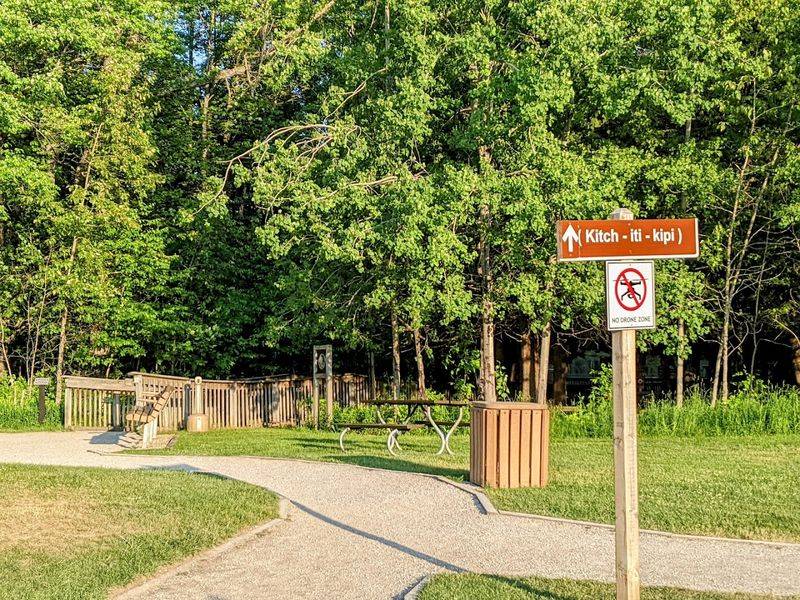
The spring with the unforgettable name sits inside Palms Book State Park at Sawmill Rd, Manistique, MI 49854, in Michigan’s Upper Peninsula. You will see signs for the park as you approach Manistique, then follow a short, paved road to a large parking lot near the gift shop and trailhead.
Everything about arrival is simple, which is part of the charm. A short, mostly level boardwalk leads from the lot to the viewing area and down to the self-operated raft that glides across the pool.
Before stepping aboard, I paused at the interpretive panels to get the lay of the land. They explain that Kitch-iti-kipi translates to big cold spring and that it pushes more than 10,000 gallons per minute.
The first view of the water caught me off guard with its clarity. Trees reflect like ink drawings while, below, fish hang over pale sand as if pinned to the page.
Navigation is straightforward, but timing matters. Arrive early in the morning or near dusk to skip the longest lines and catch the color shift as the sun angles low over the forested shoreline.
The Water That Never Stops
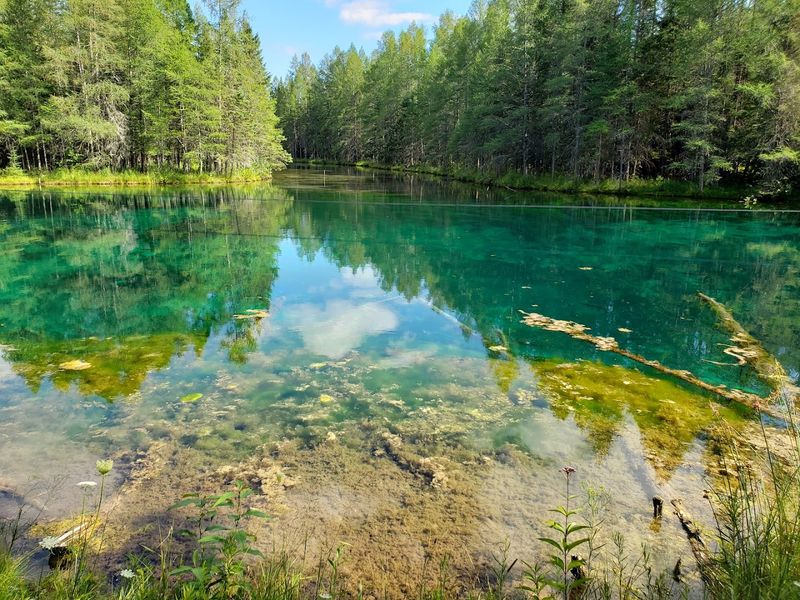
Staring into the pool, I could actually see the source at work. Pale sand puffed and tumbled where groundwater surged up through limestone fissures, a gentle boil that never quits.
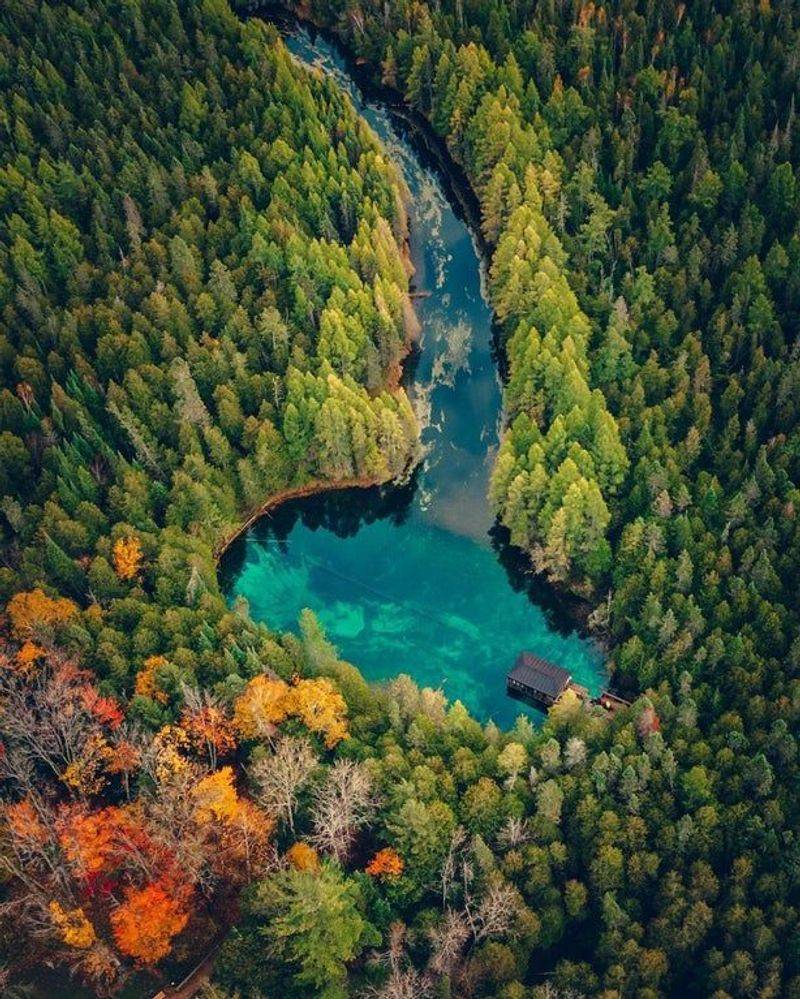
The numbers tell a story you can feel. More than 10,000 gallons every minute push through this oval basin about 300 by 200 feet and roughly 40 feet deep.
That constant motion keeps the water at about 45 degrees all year. It is striking to watch trout hover in place over the vents like kites in a steady breeze.
The color reads as turquoise with emerald edges where the forest leans over the rim. Sunlight turns the scene into a living lightbox, revealing lime-encrusted branches below.
No swimming or fishing keeps the system pristine. You are here to witness, not to stir, and the clarity rewards that restraint with astonishing detail.
Riding The Self-Operated Raft
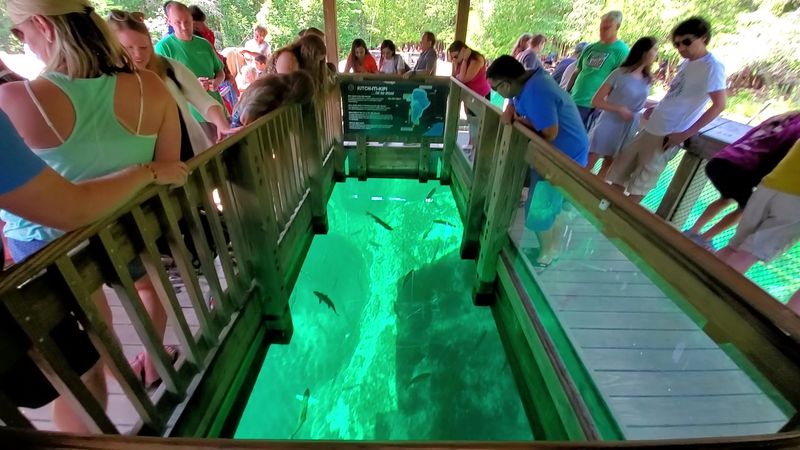
The raft is the quiet heart of the visit. A wooden platform slides along a cable across the spring, and a big hand wheel lets passengers move the craft at an easy pace.
In the center, a viewing well with glass sides opens a window to the underwater world. That cutout shields glare so you can study fish scales, sand plumes, and sunken logs.
I took a turn on the wheel and felt the light resistance of the line. It is smoother than it looks and oddly satisfying, like turning a page with a view attached.
Staff keep the queue moving efficiently, but teamwork helps inside the raft. People trade spots by the window so everyone gets a fair look at the vents and trout.
Photography works best when the raft pauses over the most active boils. A slow spin brings different angles, and patient framing rewards you with razor-sharp shots.
Geology In Motion
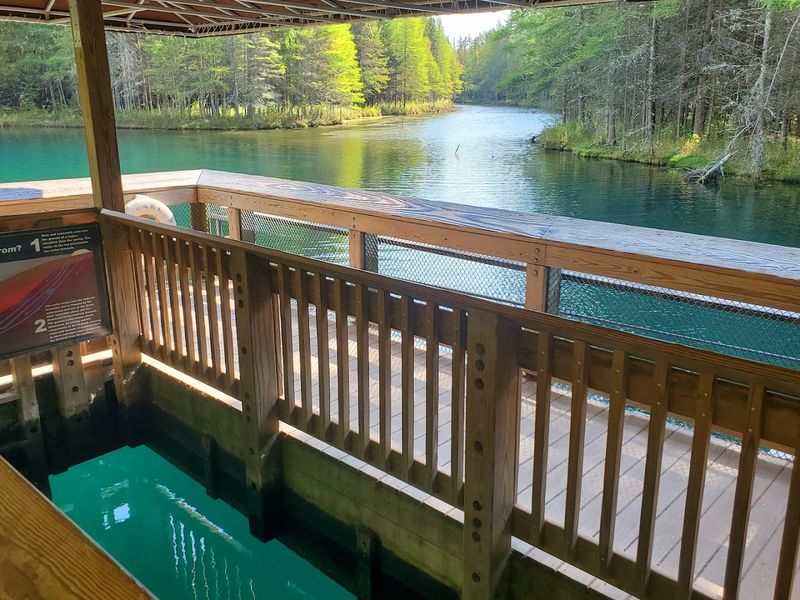
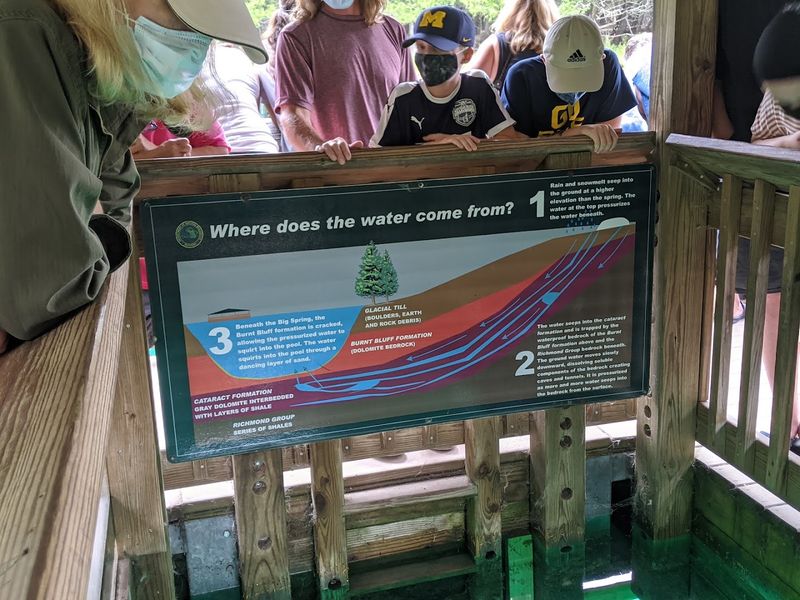
Beneath the surface sits a karst puzzle shaped by dissolving limestone. Groundwater carved voids that later collapsed, leaving the elongated bowl we stare into today.
Those hidden conduits are the reason the spring breathes so steadily. Pressure pushes water up through cracks in the carbonate bedrock, agitating sand like a shaken snow globe.
I love that you can read geology in real time here. The bottom looks static, yet every swirl of sand marks a pulse in a system that stretches for miles.
Lime coats ancient logs and branches that fell long ago. Mineral-rich water leaves a crust that turns timber into pale sculptures against the blue.
Interpretive signs explain the process plainly and avoid jargon. A short pause by the panels pays off when you recognize each feature during the raft ride.
Fish And Underwater Life
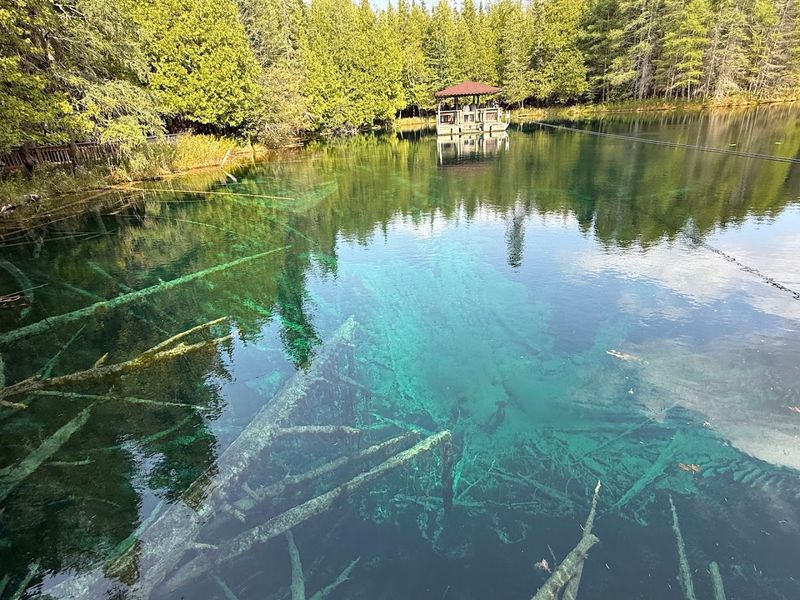
Fish seem to float in air here. Lake trout, brown trout, and brook trout hang in gentle currents over cream-colored sand while their shadows skate across the bottom.
The raft’s viewing well turns you into a respectful spectator. No casting lines or feeding means the fish behave naturally, unfazed by faces peering from above.
I watched a hefty trout slide past an encrusted log, every fin ray visible. A flick of the tail sent a ribbon of sand curling behind like a quiet signature.
Look for smaller minnows along the edges where light dims. They thread through branches and reappear like quick punctuation in the green hush.
Patience pays when clouds pass and the surface calms. Details sharpen, colors intensify, and the entire scene resolves into a crisp exhibit of Upper Peninsula freshwater life.
Best Times And Seasons
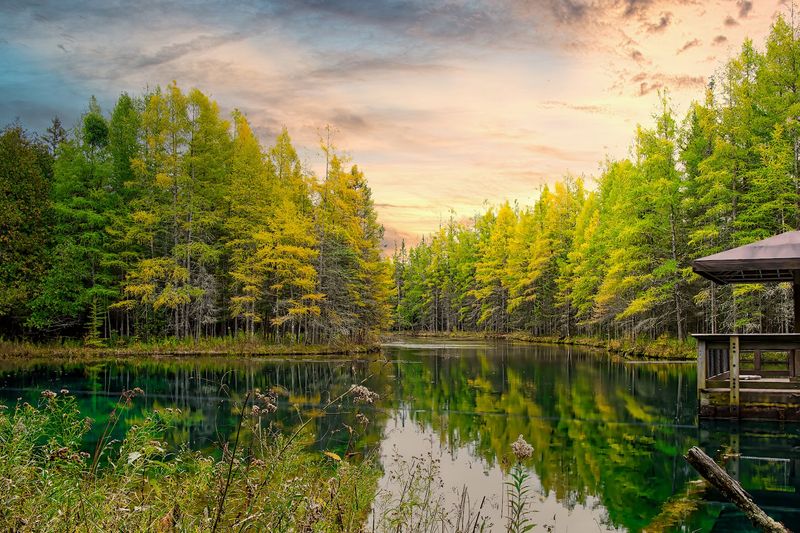
Timing shapes the experience as much as location. Morning light turns the water bright and reduces glare, and early arrivals beat the longest lines by a comfortable margin.
Summer brings peak crowds and fast-moving queues. Shade along the walkway helps, but patience is part of the price for prime color and warm breezes.
Autumn is my favorite for reflections. Gold and crimson leaves paint the surface and the lower sun angle deepens the tone of the pool.
Winter visits feel hushed and otherworldly. The water stays liquid at about 45 degrees while snow stacks on rails and evergreens, setting up dramatic contrast.
Spring delivers a fresh look with new needles and cool air. You get clarity, fewer people, and the sense that the place is breathing in after a long rest.
Accessibility And On-Site Amenities
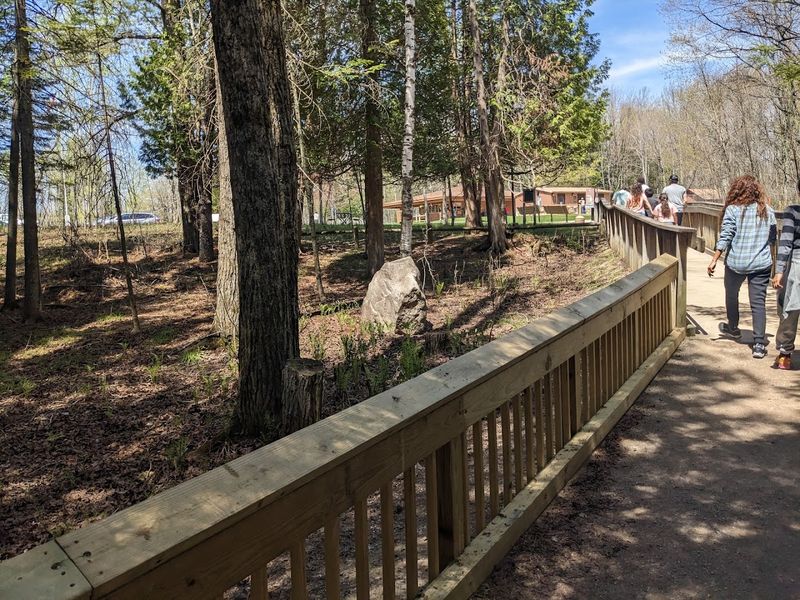
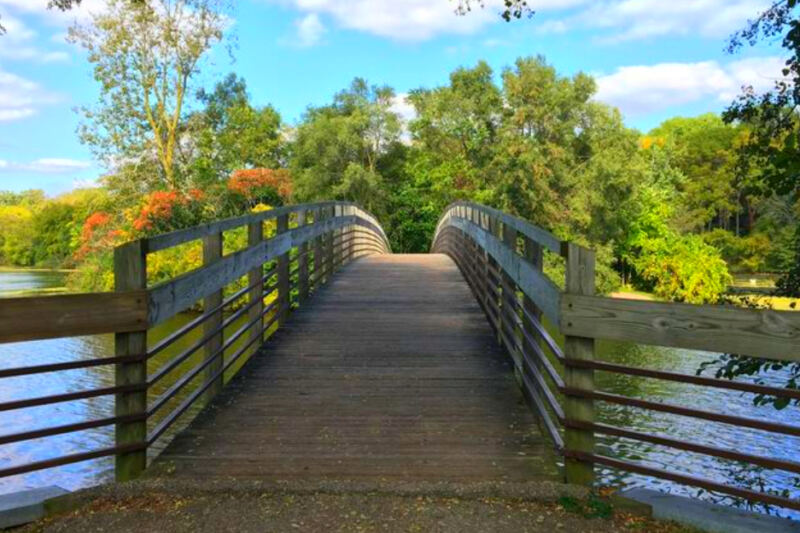
Access is refreshingly straightforward. A wide, well-kept boardwalk with railings leads from the parking area to the viewing platform and raft boarding point.
Restrooms sit near the lot and are notably clean. The gift shop stocks maps, books, souvenirs, and warm layers for breezy days near the water.
Park entry requires a Michigan Recreation Passport for residents or a day permit for visitors. Once you are in, the raft ride itself does not require a separate ticket.
Benches provide rest spots while you wait. Shade from tall pines keeps the line comfortable, and staff organize boarding so the flow stays steady.
Dogs are welcome on leash in the park but not inside buildings. Plan water and short breaks so four-legged companions enjoy the visit as much as you will.
Photography Tips Without The Glare
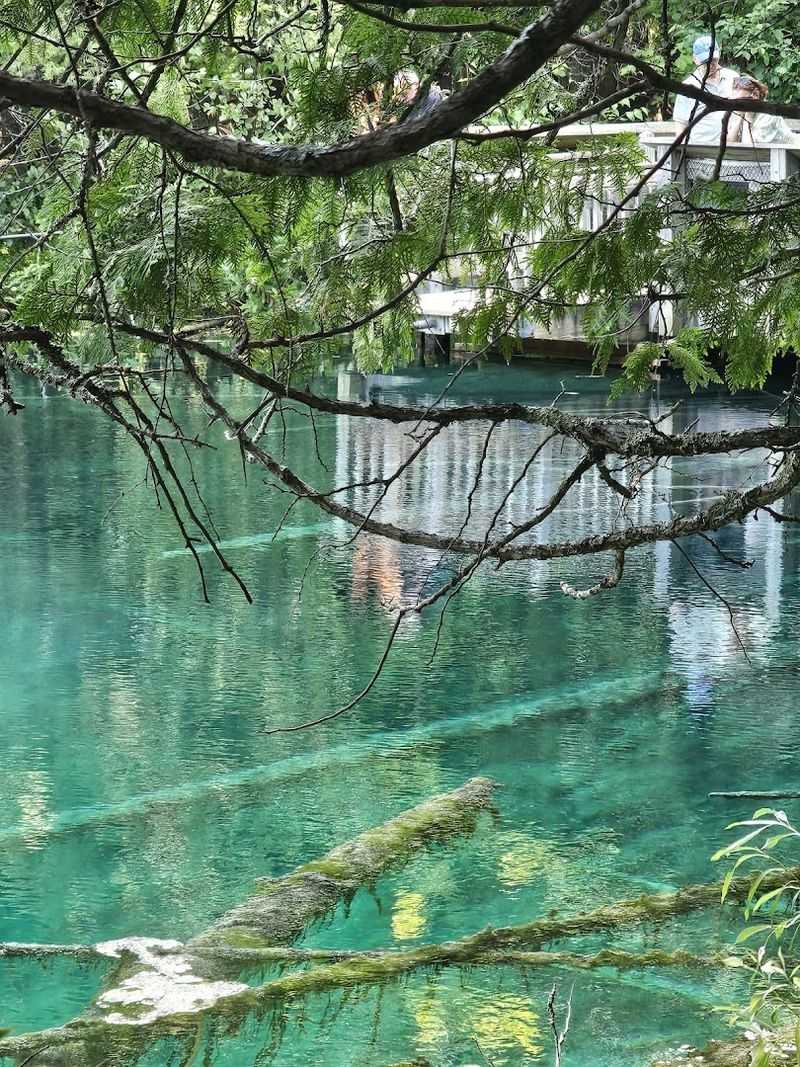
Glare is the only real rival to this view. A circular polarizer on a camera or phone attachment helps cut surface reflections and brings the bottom into crisp relief.
I position the lens over the raft’s viewing well whenever possible. That shaded window slashes glare by design and makes autofocus happier.
Short bursts beat long videos here. The raft moves slowly, so quick stills at pauses capture the sand boils and fish with sharp edges.
Meter for the mid-tones in the water, not the bright sky. Exposure that favors the pool keeps colors believable and holds detail in the pale sand.
Finally, wait for a cloud or turn your body to block stray light. Small moves make big differences when the subject is forty feet of amplified clarity.
Local History And The Name
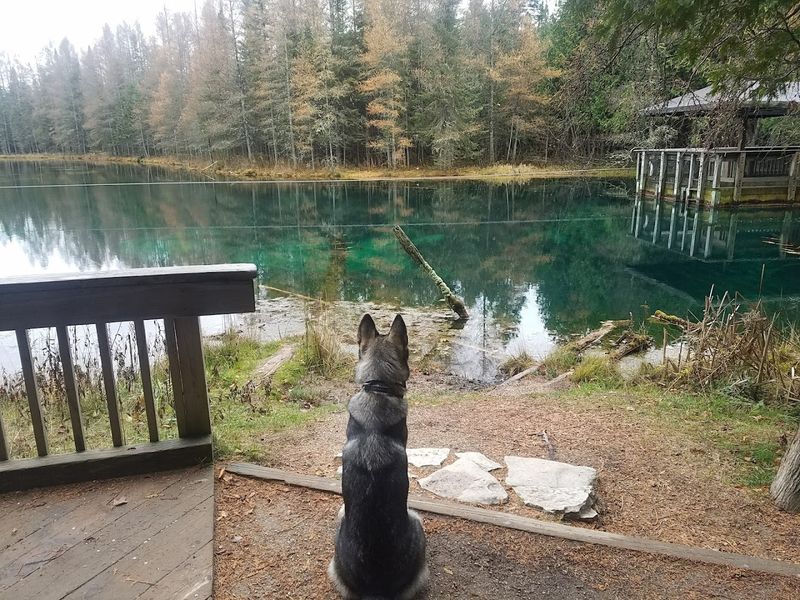
The name carries weight and temperature in one breath. Kitch-iti-kipi translates to big cold spring in the Ojibwe language, and the description fits with perfect accuracy.
Early accounts mention local stories that drew curiosity to this exact pool. Later, conservation efforts preserved access while protecting the fragile water system.
Reading the panels near the boardwalk added context to the spectacle. The displays connect Indigenous language, geology, and state stewardship without fluff.
I appreciated how the park keeps the focus on learning rather than spectacle. There is no soundtrack or loud signage, just quiet and clear information.
Walking back from the raft, the meaning of the name stuck even more. The air felt cooler by the shoreline, and the word cold sounded like praise rather than warning.
Practical Planning And Fees
Planning is easy with a few basics in mind. Park hours commonly run from morning to evening, and a Michigan Recreation Passport or day pass covers entry.
I budget at least an hour, longer on peak weekends. That window allows time for the boardwalk walk, raft wait, slow crossing, photos, and one more look from the platform.
Bring layers because the shoreline breeze can feel cool. Shoes with decent grip help on damp boards, and a microfiber cloth clears mist from camera lenses.
Cell service can be spotty in the Upper Peninsula. Download an offline map and confirm closing times so you are not rushing at the end.
Most of all, plan for unhurried minutes. The water rewards stillness, and rushing past it shortchanges the very reason you came.
Crowd-Savvy Strategies
Peak days bring a lively line, but a few tricks keep the mood easy. Mornings right at opening or late afternoons after the rush cut waits dramatically.
Shade covers most of the queue, which helps on warm days. I bring water, a small snack, and curiosity about the geology panels near the start.
When the raft docks, let the group clear a bit. Boarding a beat later opens good spots by the viewing well without elbow acrobatics.
Patience also buys better photos as people naturally rotate through. I have never failed to find space by simply staying calm and moving with the raft’s rhythm.
And if the line looks daunting, take a quick walk along the boardwalk. Returning with fresh eyes makes the ride feel like a new chapter rather than a chore.
What You Will See From The Window
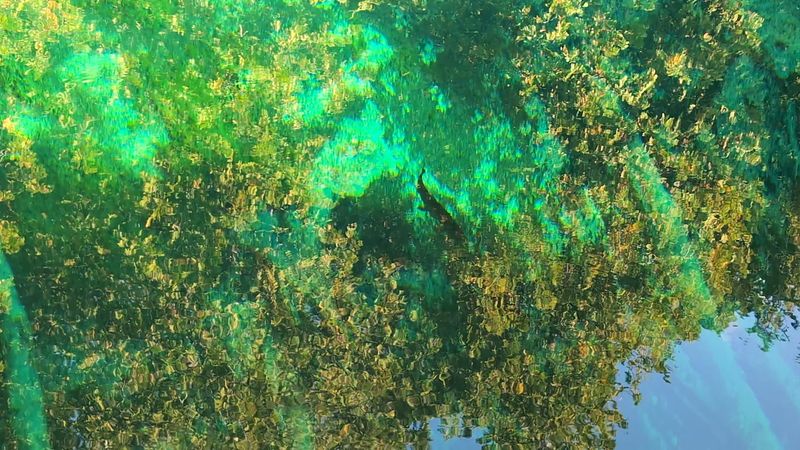
The viewing window frames an evolving scene. Sand exhales from vents in soft bursts, draping the bottom with shifting ripples that look freshly ironed.
Logs coated in pale mineral crust cross the basin like quiet bridges. Each one hosts small details that jump into focus as the raft inches along.
Fish drift and pivot in the gentle upwelling. Fins twitch, shadows bend, and the whole column of water reads like stacked panes of glass.
Color changes with the angle of light. Aqua deepens to jade near the edges, then flips to mirror mode where tall pines paint the surface.
Give yourself time to simply stand and stare. The scene rewrites itself every few seconds, and catching the changes feels like reading a living page.
A Peaceful Exit And Final Look
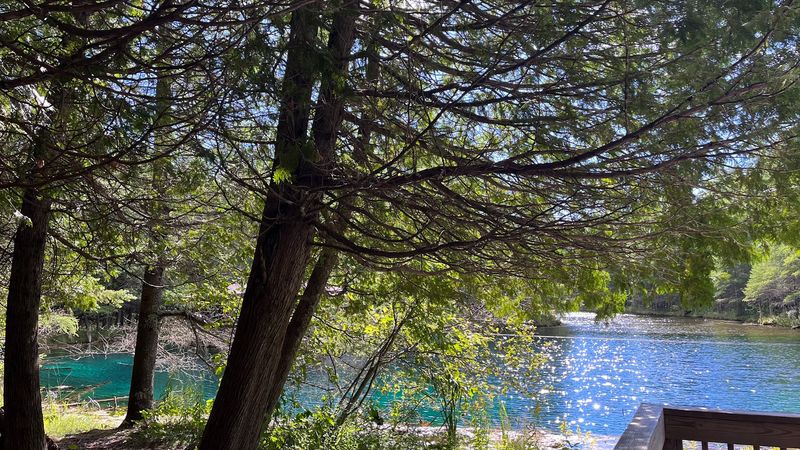
Leaving is the hardest part because the water pulls at your attention. I always pause at the rail for one last slow scan across the oval pool.
Details snap into memory in that final minute. A trout’s pale edge, a ripple over sand, a log turned sculpture by time and minerals.
The boardwalk returns you through cedar and spruce. Birds chatter at the edge, and the parking lot feels politely distant from the quiet you just borrowed.
I pass the gift shop and consider an extra layer or a postcard. Then I carry the color in my head, which may be the best souvenir on offer.
All told, the stop feels compact yet deep. It is a rare place that lets you slow down while an entire spring refuses to do the same.
Share this story