Some weapons are more than sharp edges and strong arms. Across countless Native American nations, the tools of war, hunt, and ceremony carried layers of meaning that went far beyond the battlefield.
A carved club or a painted shield could hold prayers, honor ancestors, and speak to the spirit world. I got hooked on this topic while researching Indigenous history, and what I found completely changed the way I look at these remarkable objects.
The Pipe Tomahawk: Peace and War in One Object
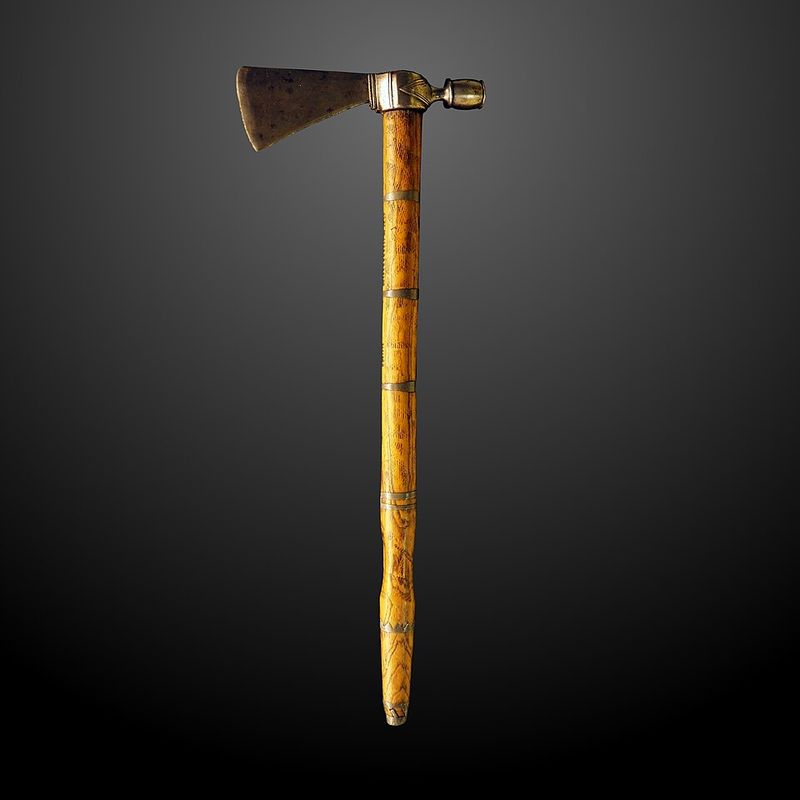
Half weapon, half peace pipe, the pipe tomahawk is basically the Swiss Army knife of diplomacy. One end could split a skull; the other could seal a treaty over shared smoke.
That contrast is not accidental.
Museums document these as formal diplomatic tools, gifted during treaty negotiations between Native nations and European colonizers. The pipe function connected the object directly to prayer, council, and ceremony.
Lighting the pipe was a sacred act, calling on spiritual witnesses to honor agreements.
I came across one of these in a museum case and genuinely stopped walking. The craftsmanship was stunning, but the meaning hit harder.
Carrying both conflict and peace in one hand forced the holder to choose which end to use. That choice was a moral and spiritual responsibility.
No other weapon in history makes you think about restraint quite so literally. It is a philosophy carved in iron and wood.
The Ball-Headed War Club: Power Carved Into Spirit Imagery
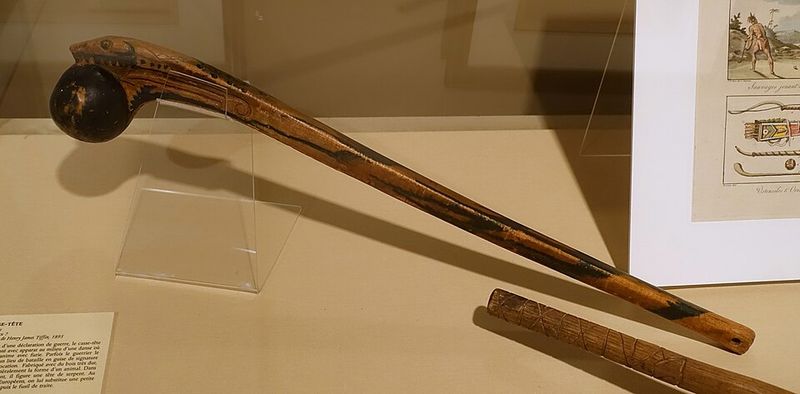
Round, heavy, and covered in carved spirits, the ball-headed war club meant serious business on two levels at once. Eastern Woodlands warriors used these to deliver devastating strikes in close combat.
But the carvings told a completely different story.
Museum collections include examples explicitly featuring supernatural beings, carved directly into the wood. These figures were not decoration.
They signaled lineage, spiritual protection, and the power the warrior carried into battle. Owning one of these clubs was a statement about who you were and what forces stood behind you.
What fascinates me most is how the weapon communicated before it was ever swung. An enemy who recognized the imagery on that club understood immediately what kind of warrior they were facing.
The spiritual iconography was part of the threat and part of the identity. Function and belief were not separate categories here.
They were carved into the same piece of wood, inseparable by design.
The Gunstock War Club: A Weapon Shaped Like a Changing World
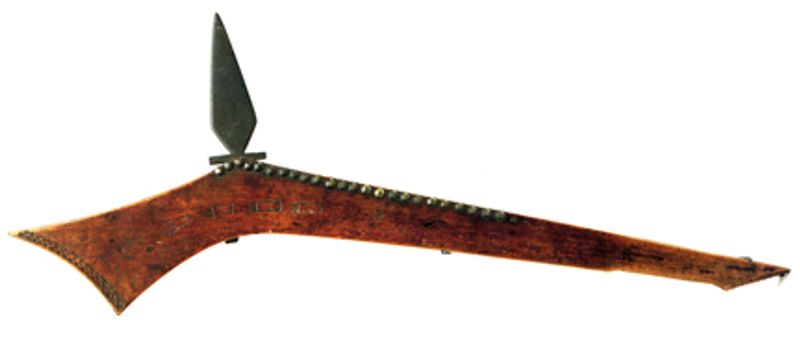
Few weapons tell a story of cultural adaptation quite as bluntly as the gunstock war club. Named for its unmistakable resemblance to a firearm stock, this club emerged widely in the 18th and 19th centuries.
Native warriors essentially looked at European guns and said, we can work with that shape.
Used across Eastern Woodlands, Great Lakes, and Plains nations, the gunstock club was a practical combat weapon. But the decorative elements added to many surviving examples reveal something deeper.
Brass tacks, painted symbols, and beadwork turned these clubs into identity markers. Warriors communicated status, affiliation, and personal history through the ornamentation.
What strikes me about this weapon is the defiance baked into its design. Colonizers brought guns to change everything.
Native craftsmen took the gun’s silhouette and made it their own, on their own terms. The gunstock club is adaptation as resistance.
It is a weapon that says: we are still here, still skilled, still ourselves. That is a powerful message carved in wood.
The Bow and Arrow: More Than a Hunting Tool
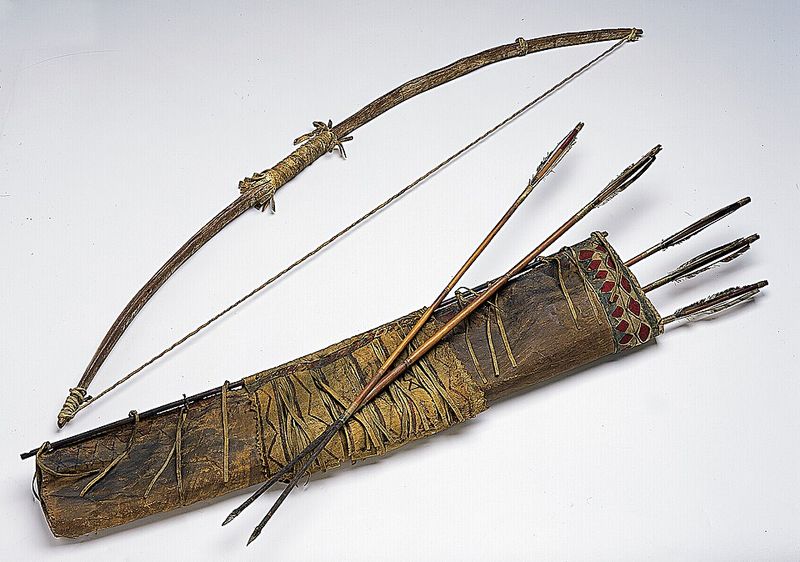
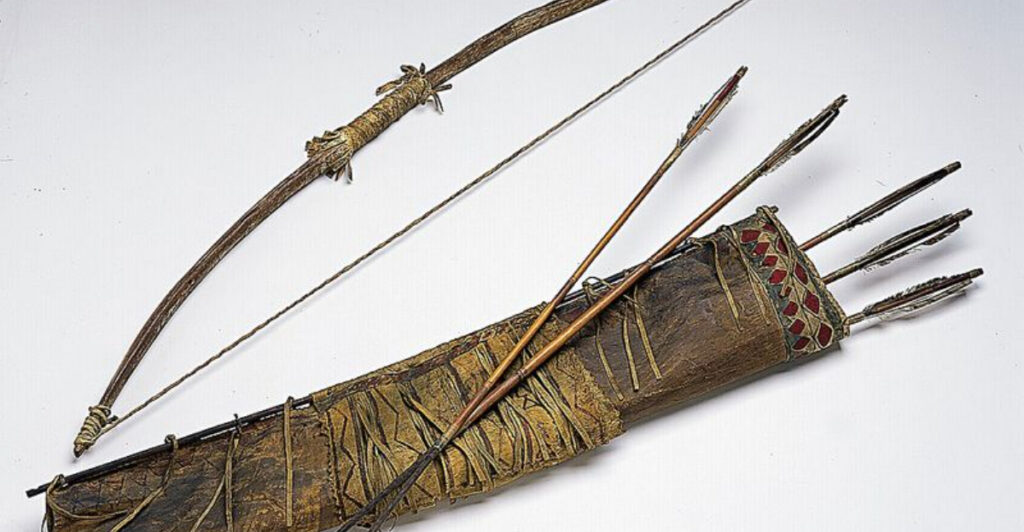
Every kid who has ever picked up a toy bow probably had no idea they were holding a teaching tool. In Lakota tradition and others, the bow and arrow carries layers of meaning that have nothing to do with hitting a target.
The lessons are about life itself.
Sources discussing Lakota teachings describe the bow and arrow as holding wisdom about connection, responsibility, and the relationship between human beings and the natural world. Making a bow was a respected craft tied directly to cultural identity.
The process mattered as much as the product.
Selecting the right wood, preparing the sinew, shaping the stave properly, all of it required knowledge passed from one generation to the next. Each step was a conversation between the maker and their ancestors.
I find that idea genuinely moving. A weapon built with that kind of intentionality is not just a tool.
It is a living piece of tradition, strung tight and ready to carry teachings forward through time.
The Cherokee Blowgun: Quiet Skill, Living Tradition
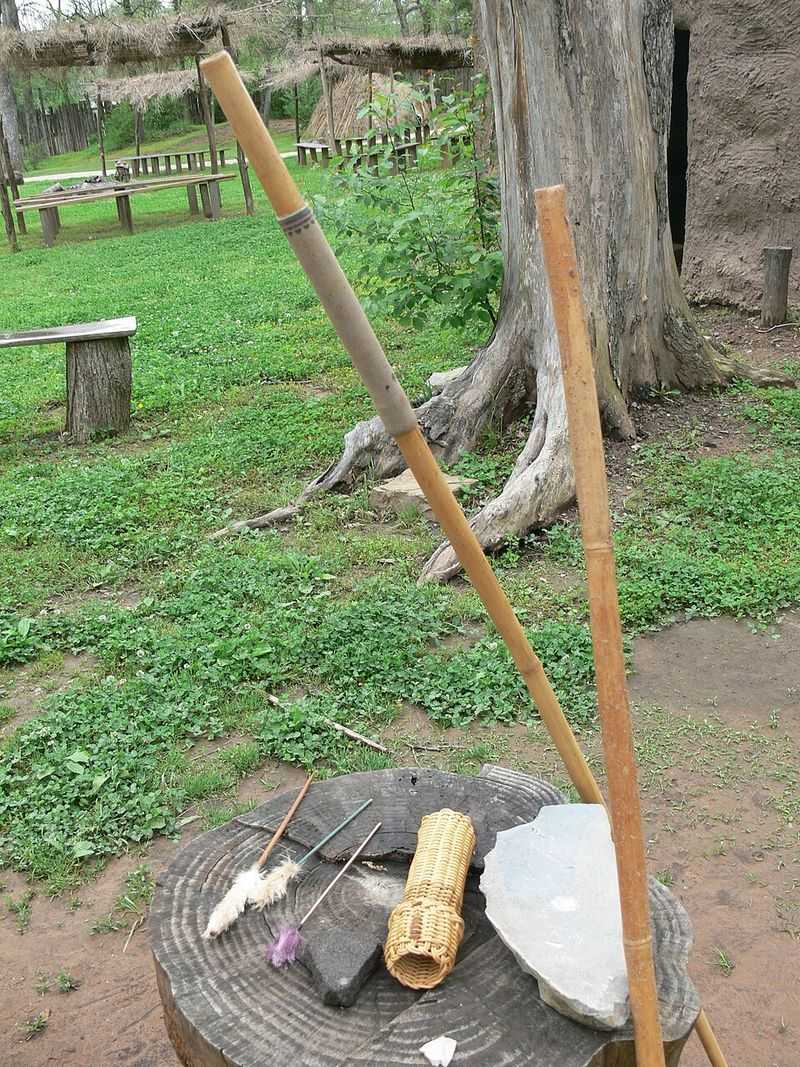
Silent, precise, and surprisingly deadly at short range, the Cherokee blowgun is the weapon that rewards patience over power. Made from rivercane, these blowguns were used traditionally for hunting small game like squirrels and rabbits.
They can reach impressive lengths, sometimes over six feet of carefully prepared cane.
What makes the blowgun remarkable is not just the mechanics. It represents an entire knowledge system.
A practitioner needs to know which rivercane to harvest, when to harvest it, how to dry and straighten it, how to craft the darts, and how to shoot with consistent accuracy. Each piece of that knowledge was taught, not discovered alone.
Cherokee communities continue to practice and teach blowgun use today, including in competitive contexts. Watching a skilled blower hit a small target with quiet confidence is genuinely impressive.
The weapon carries the fingerprints of every teacher who passed it forward. That chain of instruction across generations is exactly what transforms a hollow reed into something spiritually significant and culturally irreplaceable.
Obsidian Blades: Stone That Traveled Like Treasure
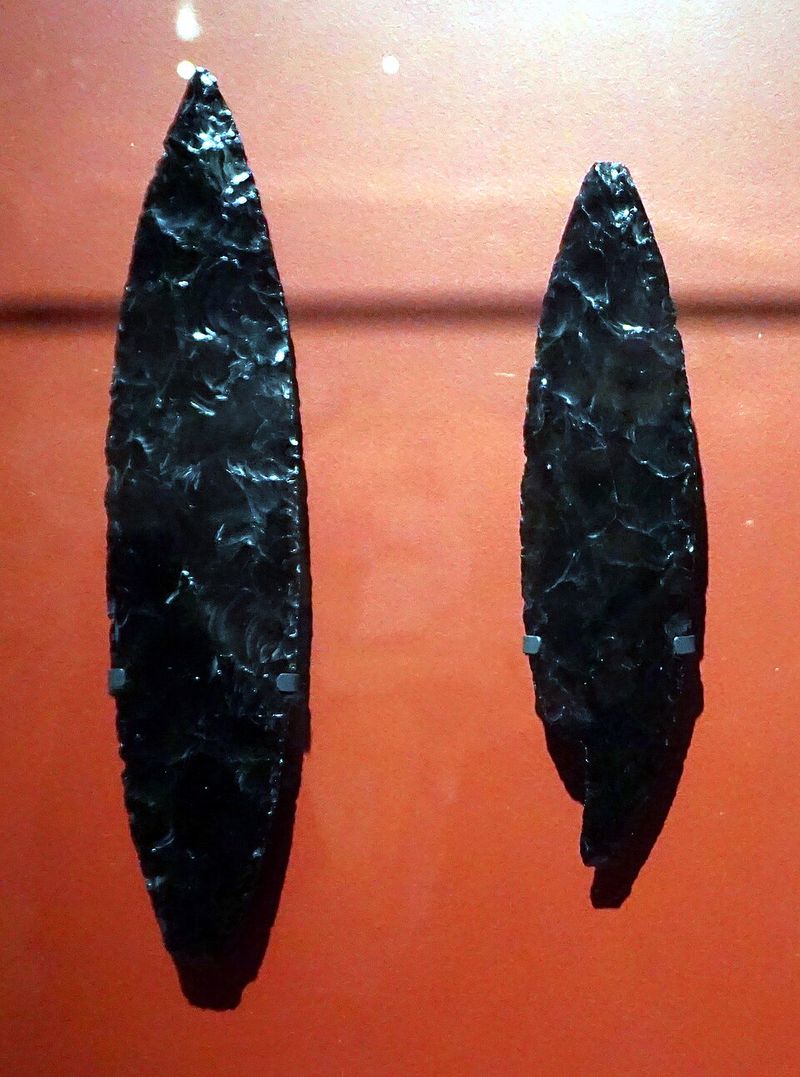
Volcanic glass that cuts sharper than surgical steel sounds like science fiction, but obsidian blades were a real and widely traded reality across ancient North America. The National Park Service notes that obsidian sourced from places like Yellowstone has been found hundreds of miles from its origin, carried through extensive trade networks.
That travel distance tells a fascinating story. Communities valued obsidian so highly they traded it across enormous geographic areas.
Sharp, reliable, and visually striking, obsidian was not just a practical material. Its rarity and quality gave it status.
Objects made from rare materials carry cultural weight that ordinary stones simply cannot match.
Archaeologists use obsidian source analysis to map ancient trade routes, essentially reading the social networks of people who lived thousands of years ago. Every blade is a clue about relationships, commerce, and cultural exchange.
There is something almost poetic about a piece of volcanic glass carrying that much history inside its glossy, razor-edged surface. Worth more than most people realize.
Grooved Stone Axes: Ancestral Craft, Everyday Power
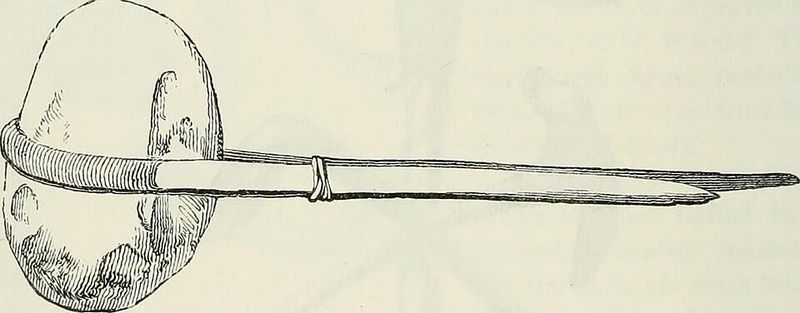
Before metal arrived, grooved stone axes were doing the heavy lifting, literally. The National Park Service describes these as major tools used for chopping and splitting wood, core activities for shelter, fire, and survival.
Every community needed them, which means skilled axe-makers were genuinely valuable people.
Creating a grooved axe required selecting the right stone, shaping it through careful pecking and grinding, and carving the groove that allowed secure hafting to a wooden handle. That process took real skill and considerable time.
A well-made axe was not disposable equipment.
When a tool is foundational to keeping people warm, housed, and fed across generations, it accumulates meaning beyond its function. Grooved axes appear in archaeological contexts across enormous time spans, which means communities kept making and using them through enormous cultural changes.
That persistence is its own kind of spiritual statement. The axe sustained the people, and the people sustained the knowledge of how to make it.
A quiet, powerful loop.
Inuit Harpoons: Hunting With Respect for Animal Spirit
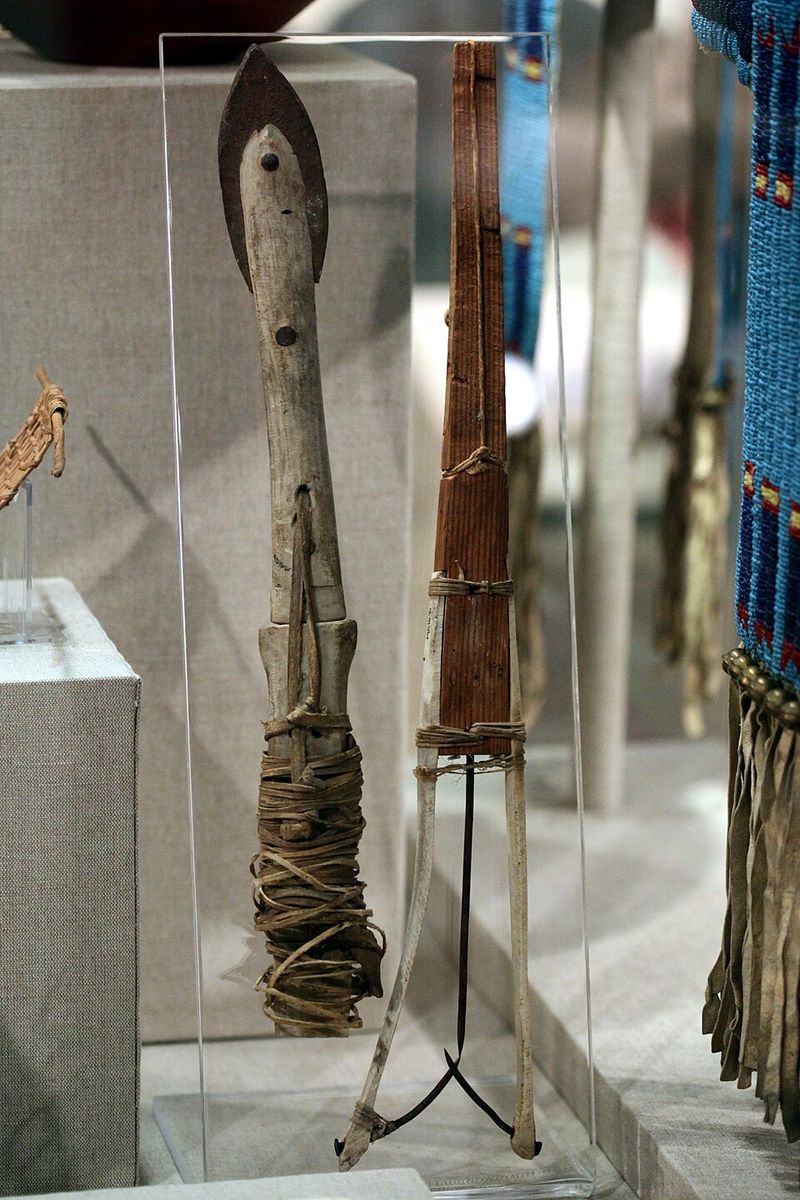
The Inuit harpoon is not just a hunting tool. It is the centerpiece of a relationship.
In Inuit cultural understanding, the bond between hunter, animal, and environment carries deep spiritual weight. A harpoon built carelessly, or used without proper respect, could damage that relationship in ways that mattered beyond the immediate hunt.
Ritual preparation, careful craftsmanship, and respectful handling of the animal after the hunt were all part of a larger framework of reciprocity. The animal was understood as offering itself to the hunter, and that gift required acknowledgment.
Hunters maintained their tools with the same seriousness they brought to the hunt itself.
What strikes me about this approach is how it reframes the entire concept of a weapon. The harpoon is not an instrument of domination over nature.
It is a point of contact between human beings and the living world around them, requiring skill, respect, and spiritual attentiveness in equal measure. That philosophy makes the harpoon one of the most thoughtfully constructed tools in human history.
Share this story