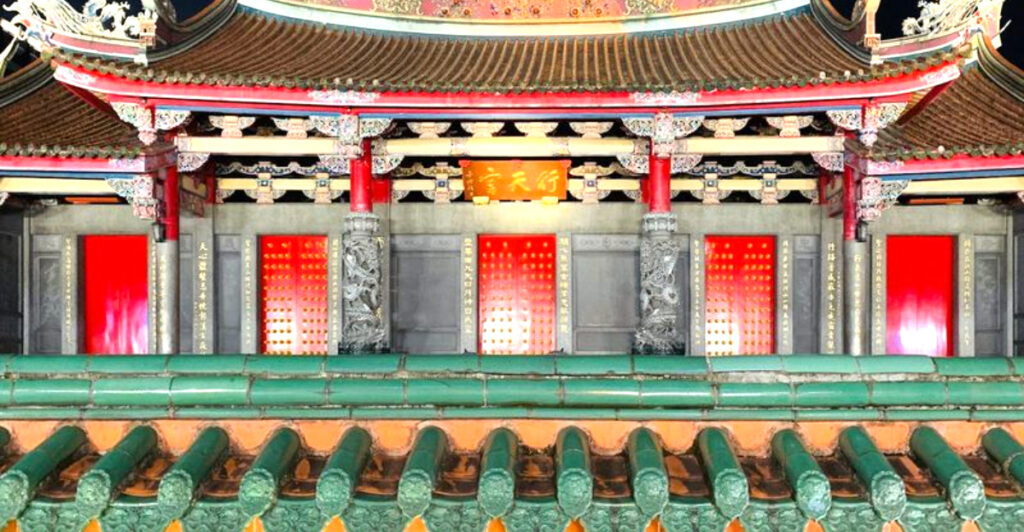
Taiwan is home to thousands of temples, but only a handful stop you in your tracks with their sheer beauty and spiritual power. From sweeping golden rooflines to hand-carved dragon columns, these sacred spaces are living works of art.
Each temple tells a story about the people who built it, the gods they honored, and the communities that have gathered there for generations. Whether you are a history lover, an architecture fan, or simply curious, these 15 temples are guaranteed to leave a lasting impression.
Longshan Temple — Taipei
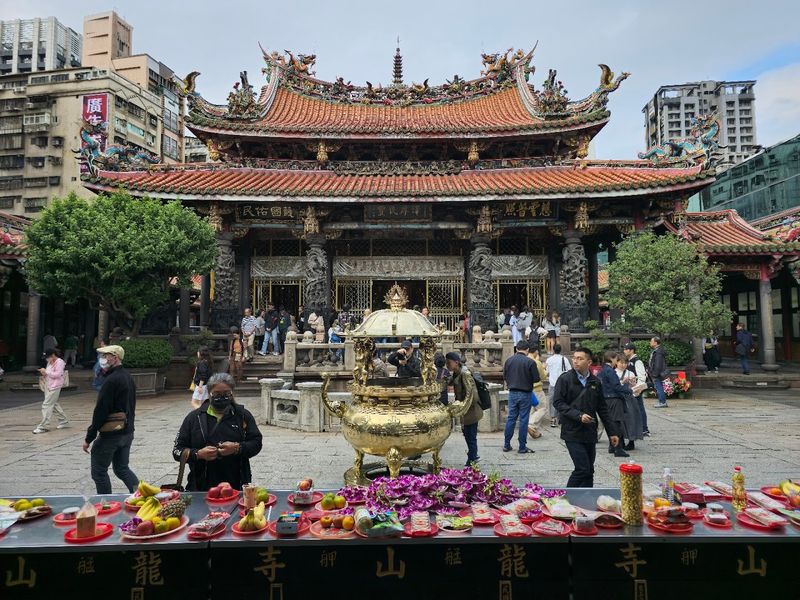
Step through the gates of Longshan Temple and you are immediately wrapped in a world of color, smoke, and centuries of devotion. Founded during the Qing Dynasty, this iconic Taipei landmark is one of Taiwan’s oldest and most treasured religious sites.
The architecture follows the classic Minnan style from southern Fujian, featuring sweeping curved eaves, richly painted beams, and columns carved with spiraling dragons.
Every surface tells a story. Stone reliefs, gilded panels, and ceramic roof figures compete for your attention in the most spectacular way.
The main hall glows with candlelight and the constant hum of prayer, creating an atmosphere that feels both ancient and alive. Locals visit daily to seek blessings for health, wealth, and family harmony.
What makes Longshan truly special is that it functions as a real working temple, not just a tourist showpiece. Worshippers and visitors share the same space, creating a rare and genuine energy.
The central courtyard, open to the sky, lets natural light flood the space and adds to its dramatic visual impact. Visiting Longshan Temple is less like sightseeing and more like stepping into a living, breathing piece of Taiwanese history.
Fo Guang Shan Buddha Memorial Center — Kaohsiung
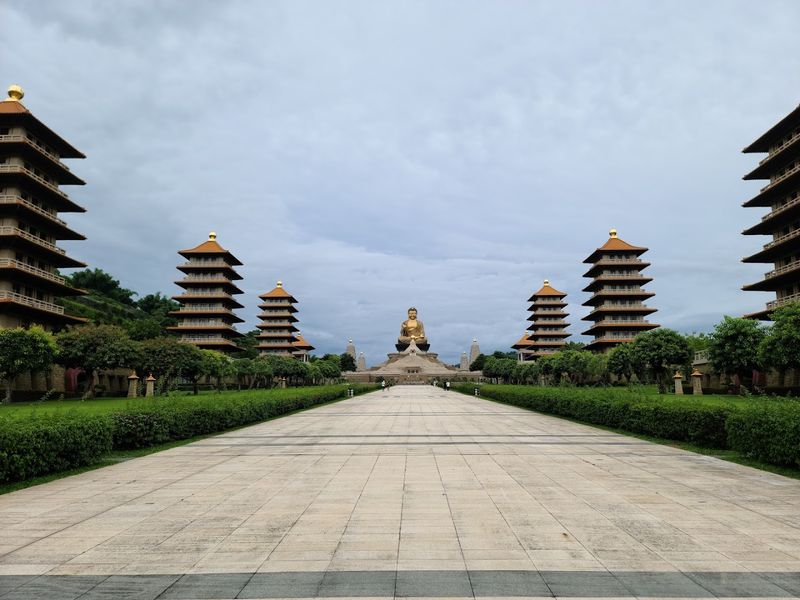
Few places in Taiwan prepare you for the sheer scale of Fo Guang Shan Buddha Memorial Center. Situated near Kaohsiung, this monumental Buddhist complex stretches across an enormous campus filled with pavilions, pagodas, and perfectly symmetrical gardens.
The centerpiece, the Great Buddha Hall, houses one of the largest Buddha statues in the world, framed by graceful colonnades and shimmering lotus ponds.
The design draws heavily from classical Chinese monastic architecture but amplifies every element to an almost cinematic scale. Wide stone pathways lead visitors through a carefully choreographed spiritual journey, where each gate and garden is meant to calm the mind and open the heart.
The lotus motifs carved throughout the complex represent purity and enlightenment in Buddhist tradition.
What is remarkable here is how modern construction techniques have been used to honor ancient religious aesthetics without losing any of their warmth or meaning. The center welcomes millions of visitors each year, from devoted Buddhist pilgrims to curious architecture enthusiasts.
Evening lighting transforms the complex into a glowing spectacle, making it equally stunning after dark. Fo Guang Shan proves that faith-inspired architecture is not just a relic of the past but a living, evolving art form.
Confucius Temple — Tainan
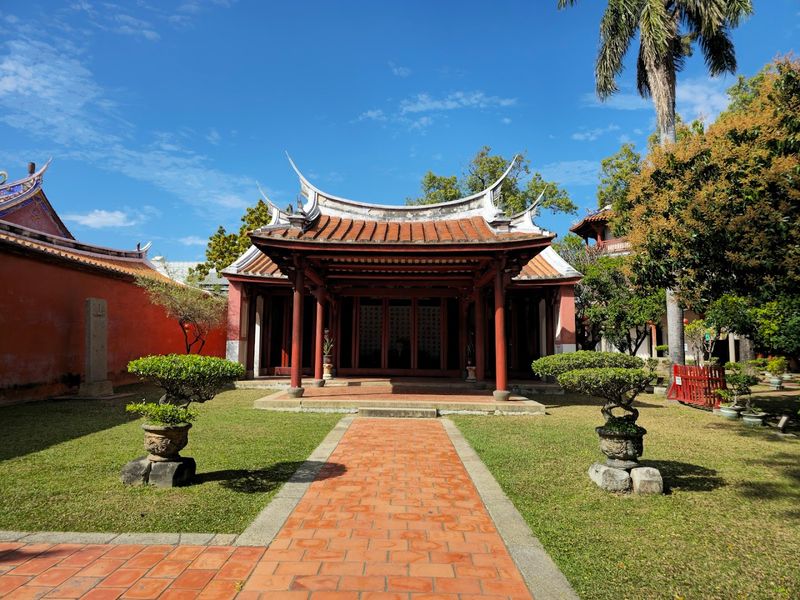
Quiet, dignified, and impossibly elegant — the Confucius Temple in Tainan carries the kind of calm authority that makes you instinctively lower your voice the moment you walk in. As one of the oldest Confucian temples in Taiwan, it has been a center of scholarship and ritual for hundreds of years.
The architecture prioritizes balance, proportion, and serenity above all else, perfectly mirroring the Confucian values of order and harmony.
The layout follows a traditional axial plan, with courtyards and halls arranged in careful symmetry. Graceful rooflines curve upward at the corners, and red-lacquered columns line the covered walkways.
Unlike the busier folk temples found elsewhere in Taiwan, this space feels more like a scholar’s retreat than a festival ground. That contrast is part of its appeal.
Designated as a protected cultural heritage site, the temple has been carefully maintained and restored over the centuries. Ancient trees shade the inner courtyards, adding to the sense that time moves differently here.
Visiting during the annual Teacher’s Day ceremony in September is especially rewarding, as traditional Confucian rituals are performed in full costume. For anyone interested in how philosophy shaped built space, this temple is an unmissable stop in Tainan.
Mengjia Longshan Temple — Taipei’s Cultural Heart
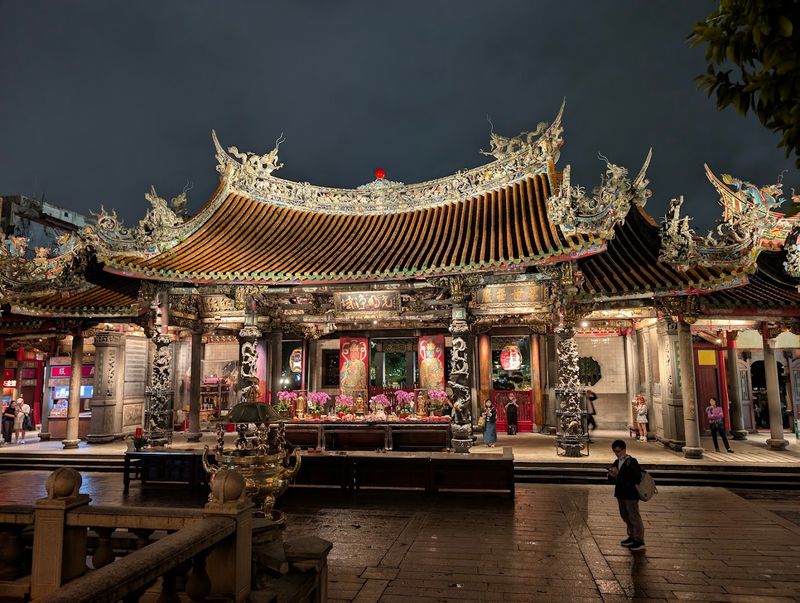
Walk past the dragon columns at Mengjia Longshan Temple and you will quickly understand why locals call it a living museum. This temple, nestled in the Wanhua district of Taipei, is packed with some of the finest examples of traditional Taiwanese temple craftsmanship you will find anywhere on the island.
Every column, every beam, and every rooftop figure was created by skilled artisans who treated their work as an act of devotion.
The tile mosaics alone are worth the visit. Vibrant ceramic pieces form sweeping scenes of mythology, nature, and legend across the temple’s walls and roof ridges.
Dragons coil around stone pillars while phoenixes spread their wings across painted beams above. The level of detail is almost overwhelming, in the best possible way.
Beyond the visual spectacle, Mengjia Longshan Temple is deeply embedded in community life. Elderly residents gather here early in the morning to pray, young couples come to seek blessings from the moon god, and tourists wander wide-eyed through the incense-filled halls.
The temple has survived earthquakes, fires, and wartime bombing, yet it keeps rising and renewing itself. That resilience feels like its own kind of faith.
Visiting here is genuinely one of Taipei’s most memorable experiences.
Xingtian Temple — Taipei
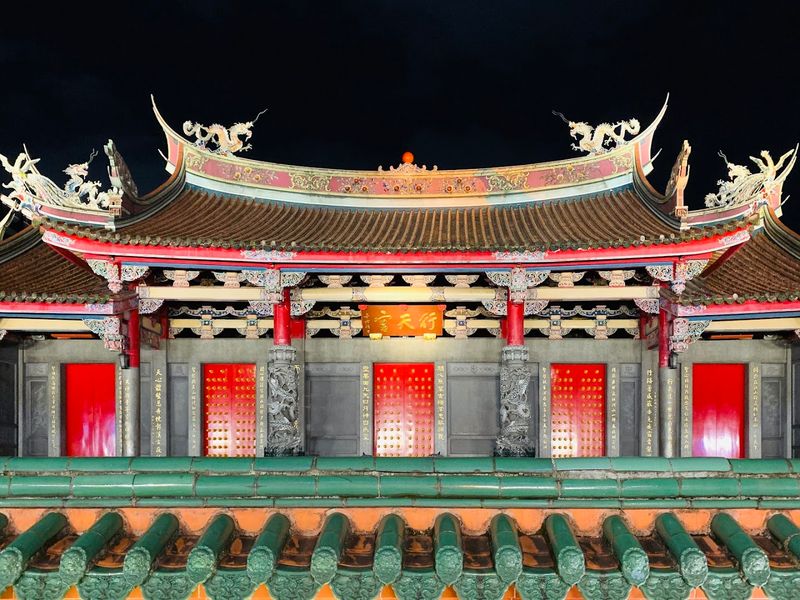
Red, bold, and unapologetically dramatic — Xingtian Temple commands attention the moment it comes into view on the streets of central Taipei. Dedicated to Guan Yu, the legendary warrior god of loyalty, righteousness, and brotherhood, this temple reflects its deity’s fierce and honorable character through every architectural choice.
The rooflines jut upward with confident energy, and the guardian statues flanking the entrance look ready for battle.
Unlike quieter, more contemplative temples, Xingtian has an electric atmosphere. Business owners visit in droves to pray for prosperity and protection, believing Guan Yu watches over honest commerce.
The constant flow of worshippers, the smell of incense drifting through the air, and the sound of murmured prayers create an immersive sensory experience that is hard to replicate.
The decorative carving work here is precise and powerful. Stone reliefs depicting Guan Yu’s legendary battles line the outer walls, and the interior columns are wrapped in intricately detailed motifs.
One fun detail worth noticing: Xingtian Temple does not allow paper money burning, a relatively rare policy among major Taiwanese temples. That conscious choice reflects a modern, environmentally aware approach without sacrificing any of the temple’s deep spiritual and architectural character.
It is tradition and change living side by side.
Zhenlan Temple — Taichung
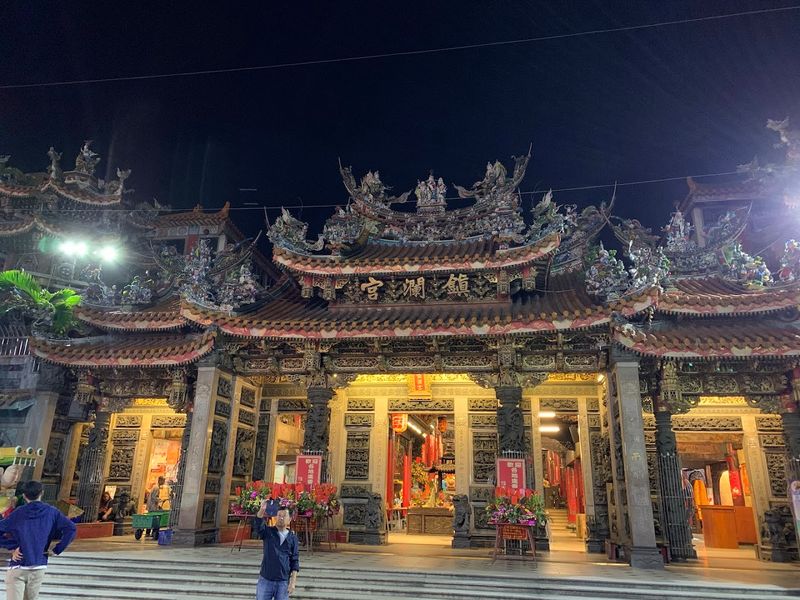
Tucked inside Taichung’s Dajia district, Zhenlan Temple is the starting point of one of the most extraordinary religious events in the world. Every year, millions of pilgrims follow the temple’s Mazu statue on a nine-day, 340-kilometer procession across Taiwan.
That single fact tells you everything about how deeply this temple is woven into the spiritual fabric of the island. The architecture matches the devotion — richly ornamented and powerfully expressive.
The roof curves are among the most beautifully proportioned you will see in a Taiwanese folk temple. Ceramic figures of gods, dragons, and mythical creatures crowd every ridge and corner, each one hand-crafted and full of personality.
Dragon balustrades frame the main staircase, and the entrance doors are painted with vivid door gods in warrior poses. Taoist symbols and folk religious elements blend seamlessly throughout the design.
Inside, the central altar glows with golden light and the scent of sandalwood incense. Side halls dedicated to various deities offer quieter spaces for personal prayer.
Zhenlan Temple is not just architecturally impressive — it is a place where you can feel the weight of collective belief in the air around you. Visiting outside of the major pilgrimage season means smaller crowds but no less spiritual intensity.
A remarkable place in every sense.
Lukang Mazu Temple — Changhua
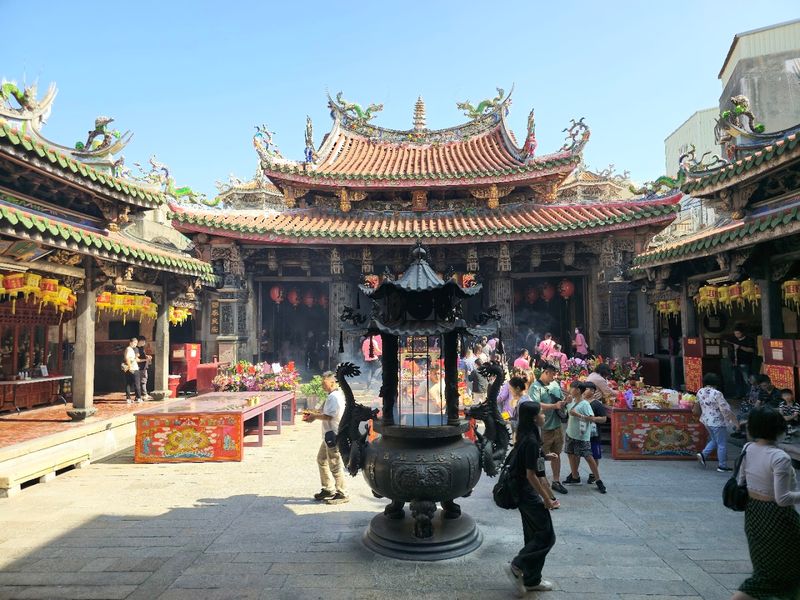
Sailors once prayed here before setting out to sea, trusting that Mazu would guide them home safely. Lukang Mazu Temple in Changhua County has been a place of maritime faith for centuries, and that oceanic spirit is embedded in its every decorative detail.
The roof ridges shimmer with ceramic figures depicting sea creatures, guardian deities, and legendary voyages, making the building feel like a visual epic of Taiwan’s seafaring past.
Lukang itself is one of Taiwan’s best-preserved historic towns, and the temple sits at its spiritual core. The woodcarvings inside are extraordinarily fine, with lacquered panels depicting stories from religious mythology and coastal life.
The interplay between deep reds, golds, and greens gives the interior a jewel-box quality that photographs cannot fully capture. You really need to stand inside it to feel the full effect.
The stone relief panels on the outer walls are equally impressive, layered with narrative detail that rewards slow, careful looking. Pilgrims arrive year-round to offer thanks and seek blessings from the goddess of the sea.
Many travel from other parts of Taiwan specifically to visit this temple, which speaks to its spiritual prestige. For anyone exploring Taiwan’s central-west coast, Lukang Mazu Temple is an essential and genuinely moving stop.
Beigang Chaotian Temple — Yunlin
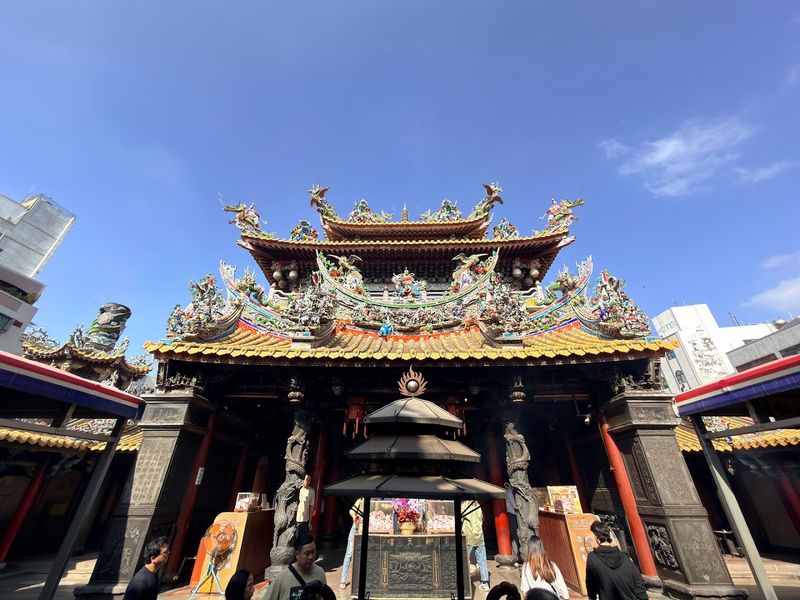
During Mazu’s birthday celebrations, the streets around Beigang Chaotian Temple erupt into one of Taiwan’s most spectacular religious festivals. Firecrackers crackle, dragon dancers weave through the crowds, and tens of thousands of pilgrims flood the area in an explosion of faith and color.
The temple at the center of it all is every bit as dramatic as the events it hosts. Its facade is a riot of carved figures, painted murals, and soaring roof ridges that seem to reach toward heaven.
Founded over three centuries ago, Beigang Chaotian Temple is one of the most historically significant Mazu temples in Taiwan. The level of artisanal detail throughout the building reflects generations of devotion and craftsmanship.
Stone lions guard the entrance, painted door gods stand watch on the main gates, and every interior surface is covered in gilded carvings, colorful tiles, or intricate lacquerwork.
Even on a quiet day outside of festival season, the temple buzzes with activity. Local vendors line the surrounding streets, worshippers stream in and out, and the smell of incense hangs thick in the air.
The whole neighborhood has grown up around the temple’s spiritual gravity. Beigang Chaotian is not just a building — it is the beating heart of an entire community, and visiting feels like being welcomed into something genuinely alive.
Xiluo Guangfu Temple — Yunlin
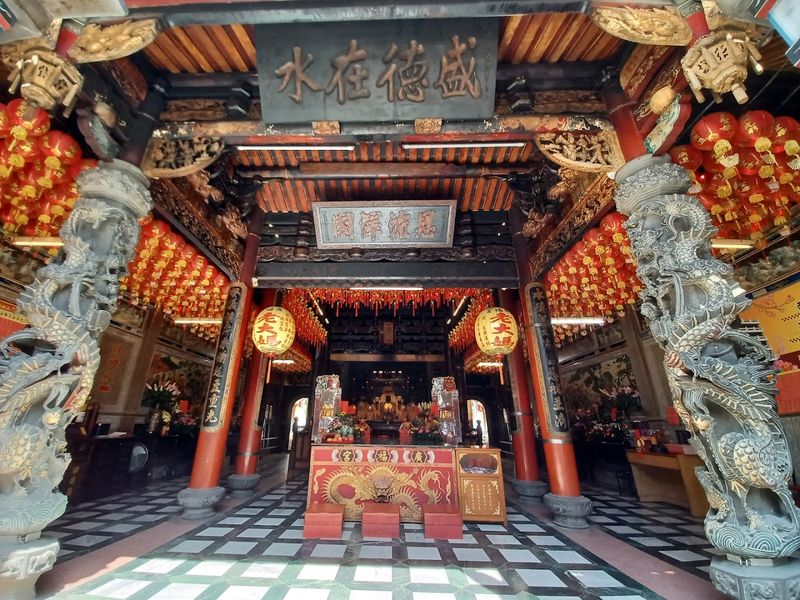
Not every great temple makes the tourist headlines, and Xiluo Guangfu Temple is proof that the most rewarding discoveries are sometimes the quieter ones. Nestled in the small town of Xiluo in Yunlin County, this temple is a local treasure that showcases Ming-Qing architectural principles with quiet confidence.
A grand stone staircase leads up to the main entrance, framing the approach in a way that feels both ceremonial and welcoming.
The central shrine hall is richly decorated with painted beams, gilded altar pieces, and carefully carved stone pillars. The side halls that flank the main structure follow the classic symmetrical layout typical of southern Taiwanese temple design.
Together, they create a harmonious spatial sequence that guides visitors naturally from the outer world into a place of focused devotion. The rooflines curve upward with characteristic elegance, topped with colorful ceramic figures.
What sets Xiluo Guangfu Temple apart is its sense of genuine community ownership. This is not a temple maintained for tourism — it is a living place of worship that happens to be architecturally beautiful.
Regulars come here for morning prayers, seasonal festivals, and milestone life ceremonies. Wandering through its courtyards on a weekday morning, when only a handful of worshippers are present, offers a rare and peaceful glimpse into everyday Taiwanese religious life.
Wenwu Temple — Sun Moon Lake
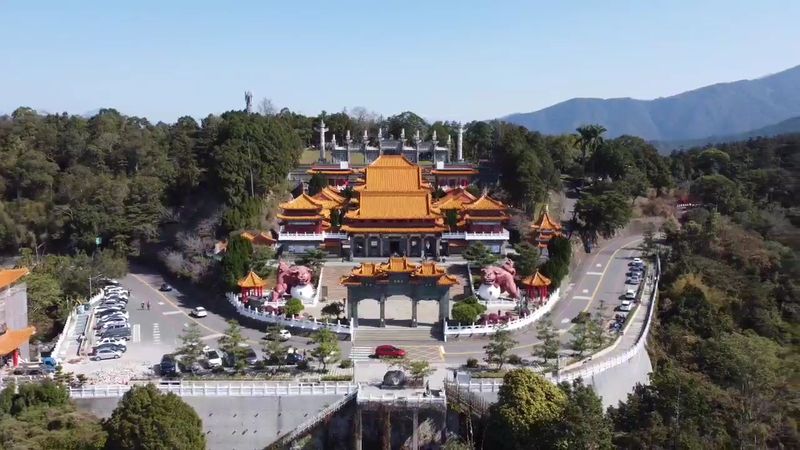
Perched dramatically above the glittering waters of Sun Moon Lake, Wenwu Temple may have the most breathtaking setting of any temple in Taiwan. The view alone — sweeping mountains, mirror-still water, and a sky that shifts moods by the hour — would make any structure look magnificent.
But Wenwu Temple earns its place in that landscape through genuinely impressive architecture, not just lucky geography.
The complex blends Confucian, Taoist, and martial deity worship under one spectacular roof system. Grand stone staircases cascade down toward the lake, flanked by enormous stone lion guardians that have become iconic symbols of the site.
The multi-tiered rooflines in bold red and gold create a striking contrast against the green mountains behind. Every angle of the temple offers a different and equally impressive composition.
Inside, the halls are dedicated to Guan Yu and Yue Fei, two of Chinese history’s most celebrated warrior-scholars, alongside Confucian deities. The combination reflects a uniquely Taiwanese approach to religious synthesis, where multiple belief systems coexist gracefully within a single space.
Visiting at sunrise or just before sunset produces extraordinary light that turns the temple’s colors impossibly vivid. Whether you come by boat across the lake or by road, arriving at Wenwu Temple always feels like a proper arrival.
Nanyao Temple — Tainan
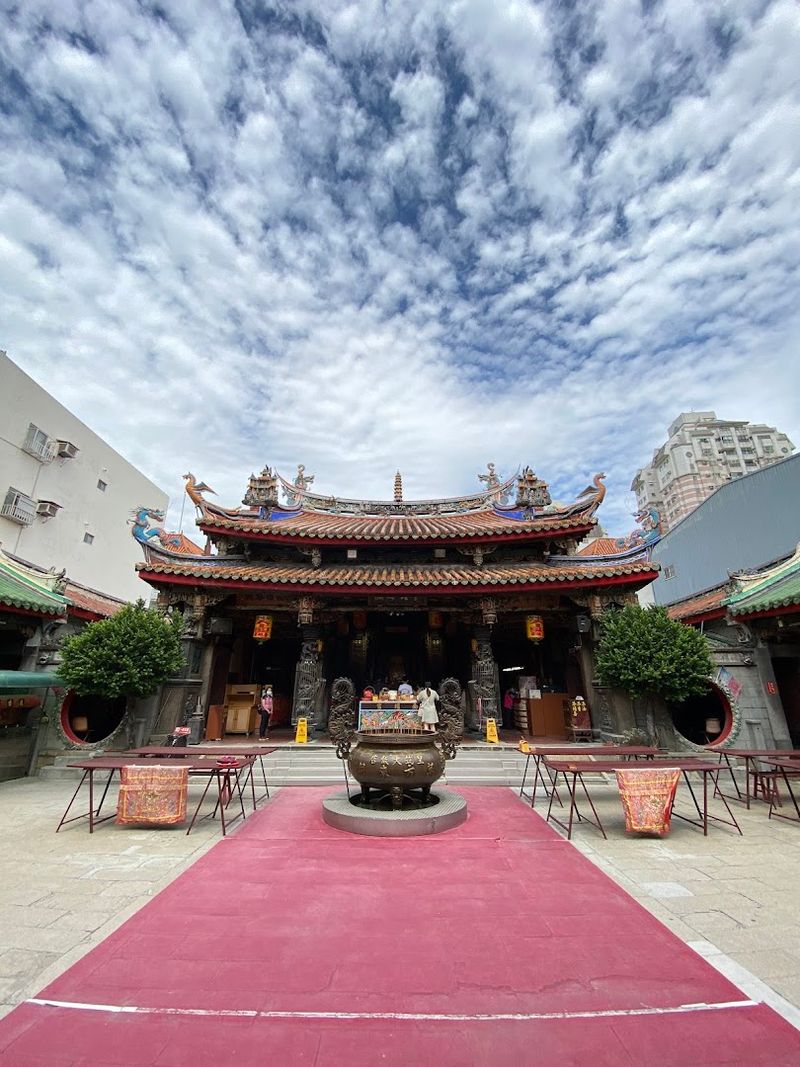
Some temples feel old in the best possible way — like they have absorbed centuries of prayers into their very walls. Nanyao Temple in Tainan is exactly that kind of place.
As one of the oldest temples in Taiwan, it carries a weight of history that you can almost physically feel the moment you step through its gates. The carved wooden beams overhead show the artistry of craftsmen who worked without power tools, relying entirely on skill and patience.
The roof ridges at Nanyao are dramatically sculpted, rising in bold curves and crowded with ceramic guardian figures that have watched over the community for generations. The stone courtyard in front of the main hall is worn smooth by centuries of foot traffic, a quiet testament to how many people have passed through seeking solace, guidance, or simply connection with something larger than themselves.
Tainan itself is known as Taiwan’s cultural capital, and Nanyao Temple fits perfectly into that identity. It is not the flashiest temple in the city, but it might be the most atmospheric.
The interiors are lit primarily by candlelight and the glow of oil lamps, which gives the space a warmth that modern lighting simply cannot replicate. Visiting here feels less like tourism and more like time travel into Taiwan’s earliest days of settlement and faith.
Yingge Nankunshen Temple — Tainan
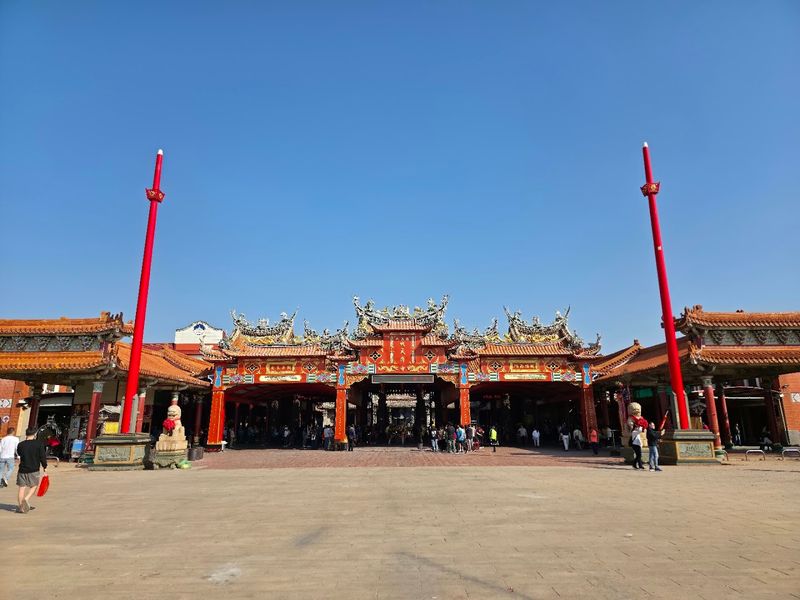
Grand does not begin to cover it. Nankunshen Temple in Tainan is one of those places that stops you mid-step as the full scale of the complex comes into view.
The layered roofs stack one above the other in a rhythmic sequence of curves and ridges, each one more elaborately decorated than the last. This is a temple that was built to impress — and centuries later, it absolutely still does.
Dedicated to the Five Plague Emperors, Nankunshen holds a unique place in Taiwanese religious history. Its architectural lineage traces directly back to Ming and Qing dynasty design principles, adapted with local materials and regional craftsmanship traditions.
The wide ceremonial courtyards create a sense of procession and ritual that draws visitors naturally from the outer gates toward the sacred inner halls. Large bronze incense burners stand at key points along the approach, always trailing smoke.
The decorative program inside the temple is staggering in its ambition. Stone carvings, woodwork, painted murals, and ceramic inlays cover virtually every surface, telling stories from religious mythology and historical legend.
The sheer density of imagery rewards repeated visits — there is always something new to notice. For anyone tracing the architectural evolution of Taiwanese temple design, Nankunshen is an unmissable reference point that shows just how ambitious and sophisticated the tradition can be.
Baosheng Dadi Temple — Tainan
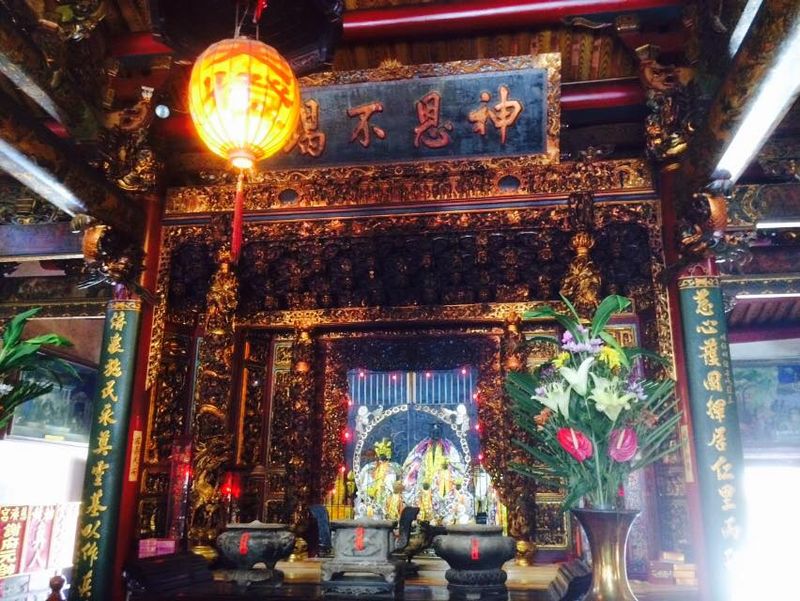
Dedicated to Baosheng Dadi, the God of Medicine and Health, this temple in Tainan carries a sense of quiet reverence that sets it apart from more theatrical religious sites. People come here when they are worried, when someone they love is unwell, or when they simply need to feel that a benevolent force is paying attention.
The architecture reflects that emotional register — refined, composed, and deeply intentional in every detail.
The stone carvings on the exterior walls are among the most accomplished you will find in southern Taiwan. Floral patterns, mythological creatures, and scenes from religious narratives are rendered with a precision that speaks to the high level of skill the temple’s builders brought to their work.
The spatial rhythm of the complex — moving from outer courtyard to inner sanctuary — feels carefully designed to slow visitors down and encourage reflection.
Seasonal festivals here are genuinely moving events. During the Baosheng Cultural Festival, traditional ritual performances, puppet theater, and ceremonial processions fill the temple grounds with energy and color.
But even on an ordinary afternoon, the temple has a special quality. The way light filters through the incense smoke and catches the gilded altar pieces creates an atmosphere that feels simultaneously sacred and welcoming.
It is a place that reminds you why humans have always built beautiful spaces to hold their hopes.
Ciyou Temple — Taipei
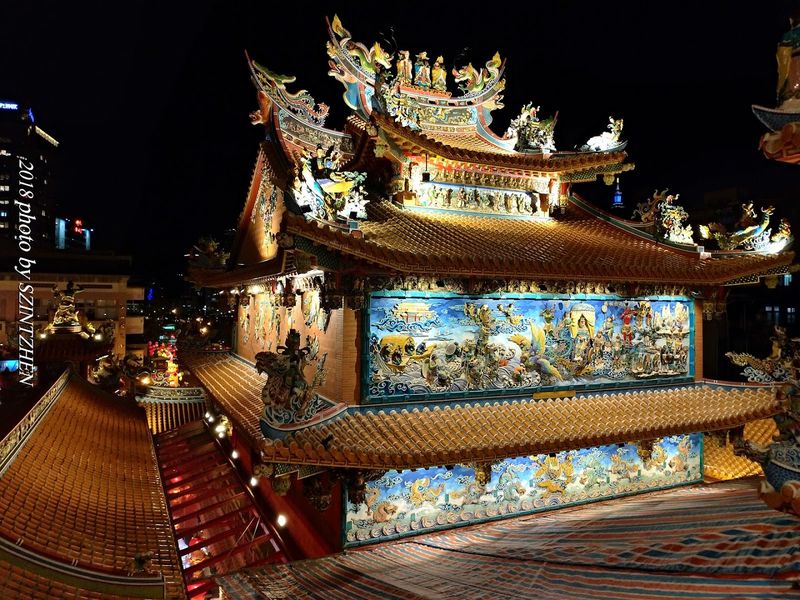
Right next to the famous Raohe Street Night Market, Ciyou Temple manages to hold its own against the sizzle and neon of one of Taipei’s busiest food streets. That is no small feat.
Dedicated to Mazu, the goddess of the sea, the temple draws a constant stream of worshippers and curious visitors who duck in between bites of pepper buns and stinky tofu. The contrast between the sacred and the street-food festive is oddly charming.
The roof of Ciyou Temple is a genuine showstopper. Dragons and phoenixes wind across the ridgelines in vivid glazed ceramic, their colors intensified by the evening lights that illuminate the facade after dark.
Lanterns line the interior corridors, casting warm amber light over the painted columns and gilded altar. The decorative scheme is bold, layered, and utterly committed to visual abundance.
What makes Ciyou Temple particularly enjoyable is how accessible it feels. There is no formality or distance here — it is a neighborhood temple in the fullest sense, where locals pop in for a quick prayer as naturally as they stop for a snack next door.
Tourists are warmly received, and the temple staff are accustomed to curious visitors with cameras. Visiting in the evening, when the lanterns are lit and the night market hums outside, is an experience that captures the lively, layered soul of Taipei beautifully.
Sam Hua Temple — Hsinchu
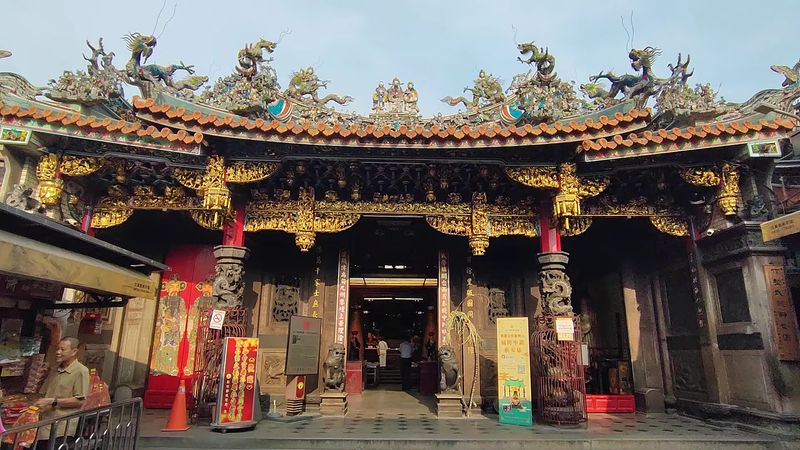
Hsinchu may be best known as Taiwan’s technology hub, but Sam Hua Temple is a reminder that the city has deep roots in faith and craftsmanship that long predate any silicon wafer. The temple presents a beautifully balanced composition of sculptural detail, vivid color, and traditional roofing techniques that feel entirely at home among the city’s older streets.
Standing in front of it, the contrast between ancient devotion and modern surroundings makes the experience unexpectedly poignant.
The exterior is a confident display of Taiwanese temple aesthetics. Carved stone pillars frame the entrance, painted door gods stand guard in fierce postures, and the roof ridge is crowded with ceramic deity figures in dynamic poses.
The color palette — deep reds, vivid greens, and burnished golds — pops against the sky in a way that makes the building look perpetually festival-ready.
Inside, the altar arrangements honor Mazu alongside other revered deities, reflecting the inclusive, syncretic spirit that characterizes so many Taiwanese temples. Regular worshippers come for morning prayers, and the temple hosts seasonal festivals that bring the surrounding neighborhood to life.
For travelers passing through Hsinchu, Sam Hua Temple offers a genuine and unhurried encounter with Taiwan’s living religious culture. It is the kind of place that rewards a slow visit and an open mind — craftsmanship and conviction working beautifully together.
Share this story